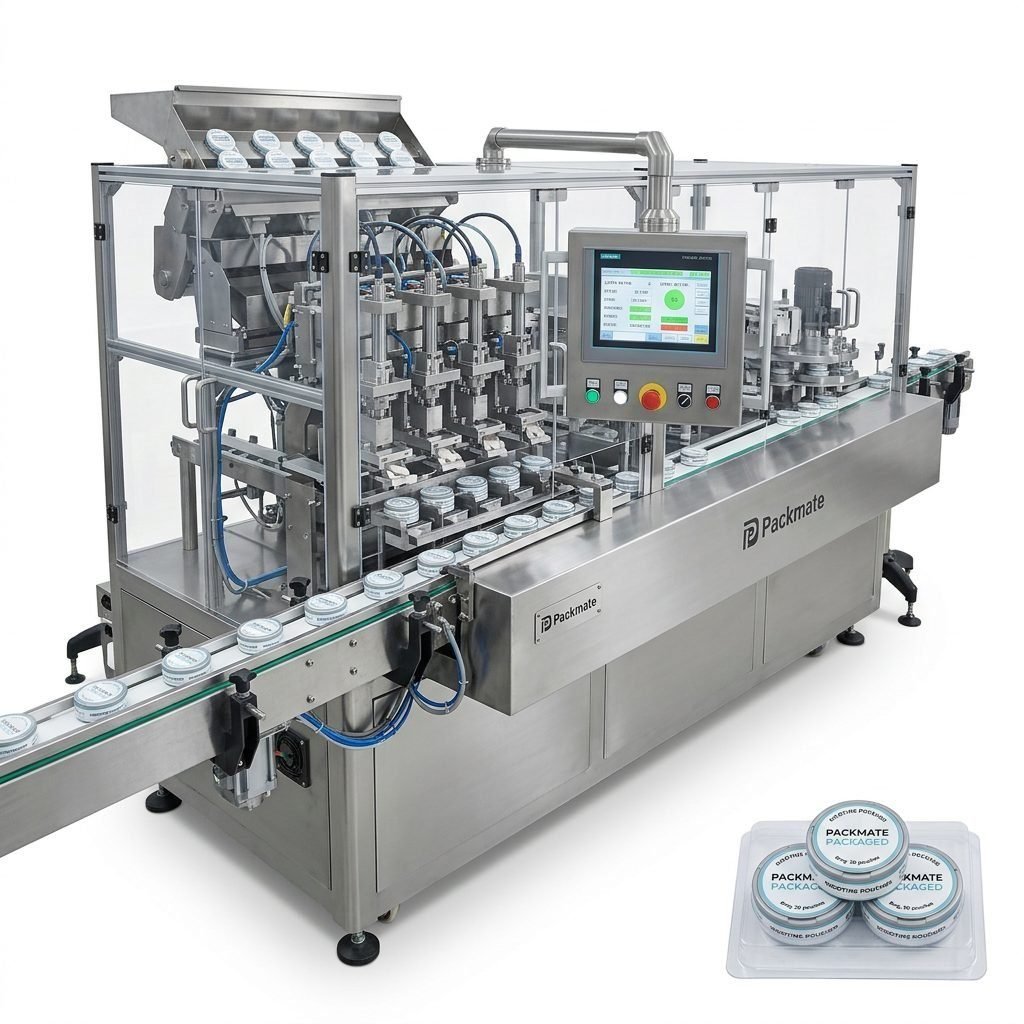
Choosing the right snus packaging machine in Pakistan requires balancing production capacity, product format, budget, and long-term service support. This guide walks you through the practical steps to select a machine that meets regulatory requirements, throughput targets, and product quality expectations while minimizing downtime and ensuring a quick return on investment.
Understanding Snus Packaging Needs in Pakistan
Pakistan’s market for nicotine pouches and related products is evolving, and manufacturers need machines that can handle small-dose pouches, high-speed multi-lane production, and varied packaging formats. Before you approach suppliers, clarify the following production requirements to narrow down the right equipment:
✓ Production target: Daily and monthly volume goals (pouches per minute/hour/day).
✓ Product format: Stick packs, sachets, multi-lane small pouches, or custom shapes.
✓ Filling type: Powder, granules, liquid, or nicotine pouch material, and the required dosing accuracy.
✓ Regulatory packaging: Child-resistant options, tamper evidence, and labeling or serialization needs.
Why the right machine matters
Investing in the wrong machine can cause frequent changeovers, higher scrap rates, inconsistent weight control, and costly downtime. A well-chosen machine reduces waste, improves product consistency, and supports scaling your operation in Pakistan and for export markets.
Machine Types and Their Best Uses
There are several machine architectures to consider. Each is optimized for different production profiles:
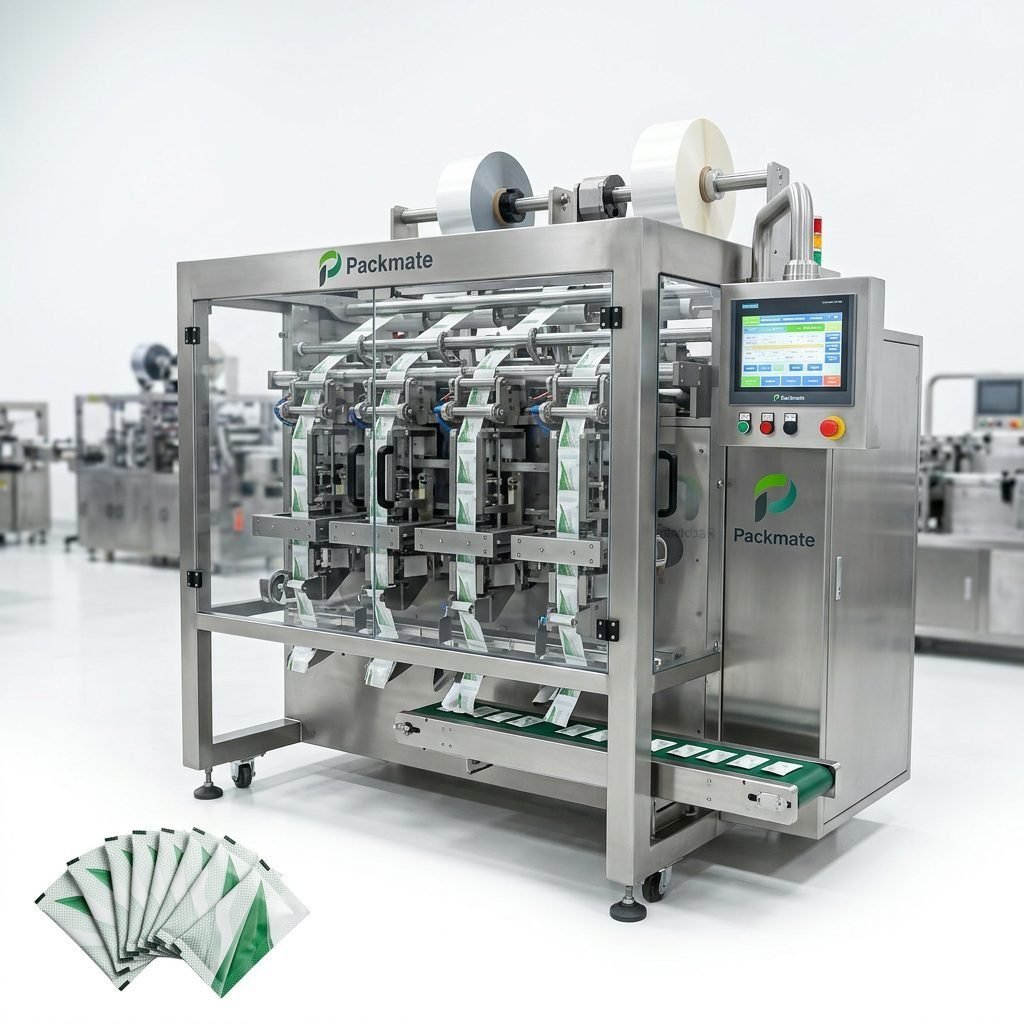
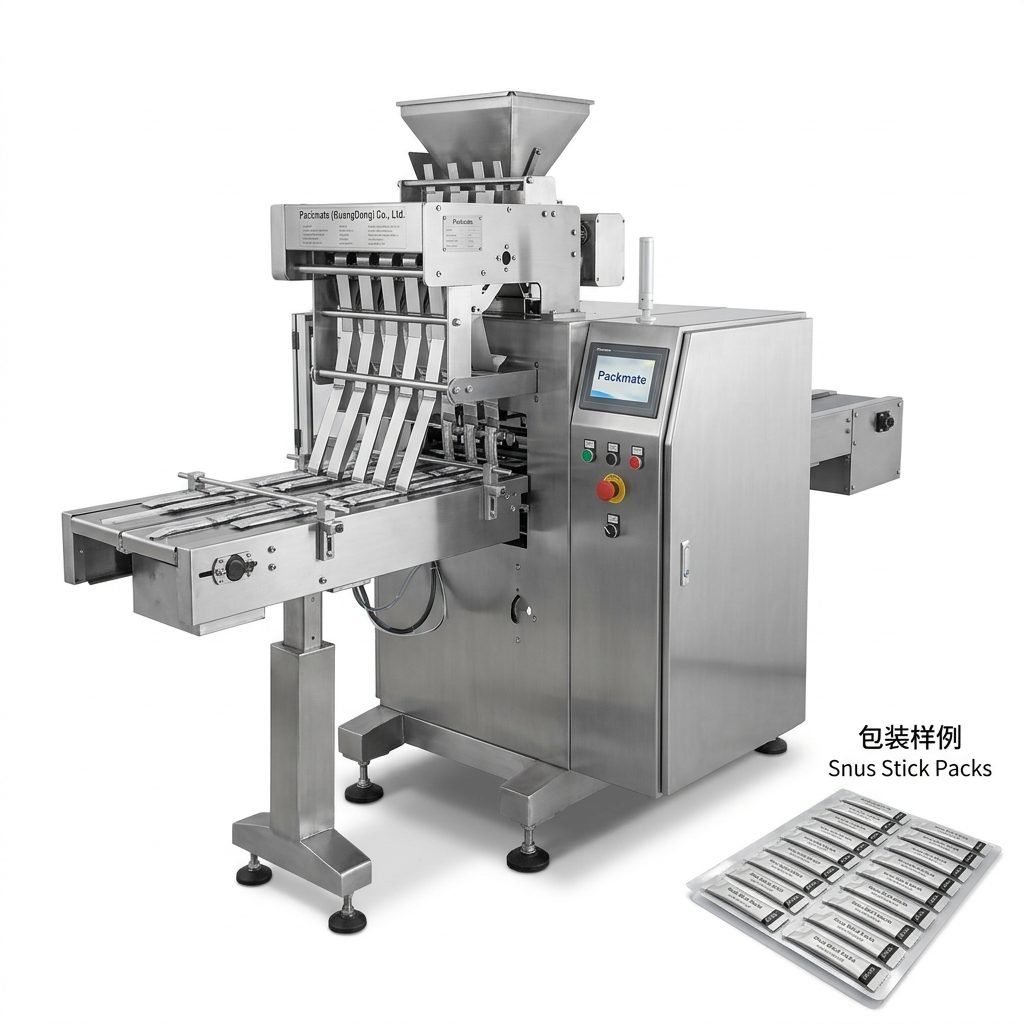
⚙️ Stick Pack Machines — Ideal for single-dose, pillow-style packaging where high speed and minimal packaging material are priorities. See examples under Sachet & Stick Pack Machines.
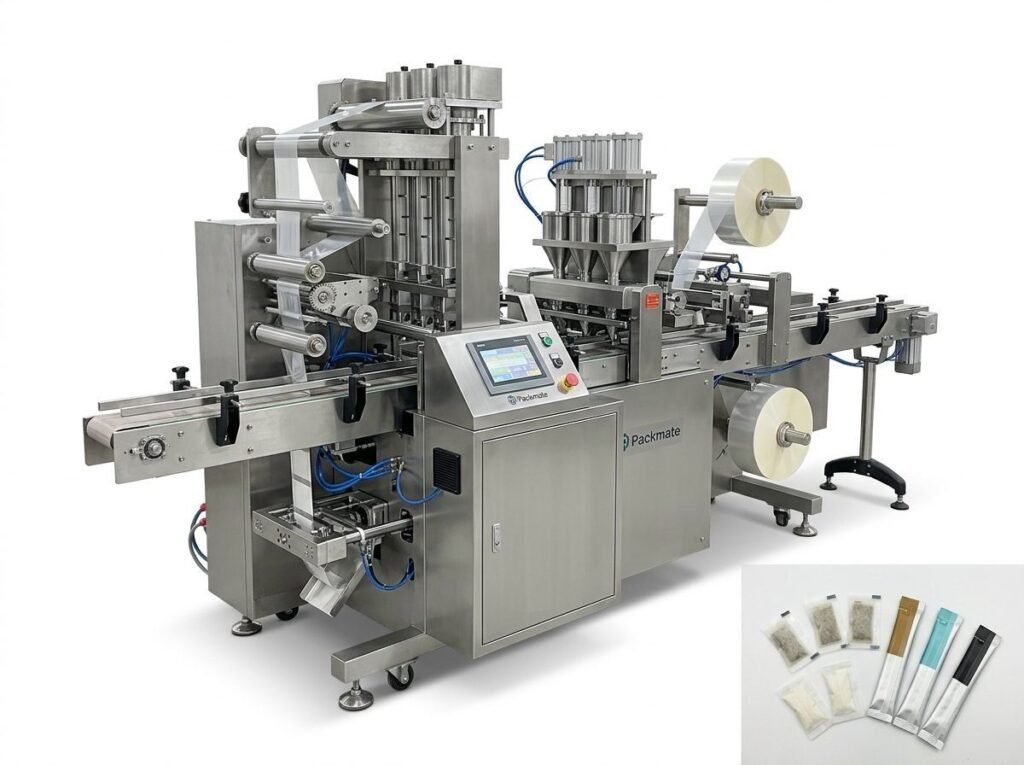
🧾 Sachet Machines — Best for small sachet formats with precise dosing for powders, granules, or liquids. Sachet solutions can offer great flexibility for sampling packs or single-dose nicotine pouches.
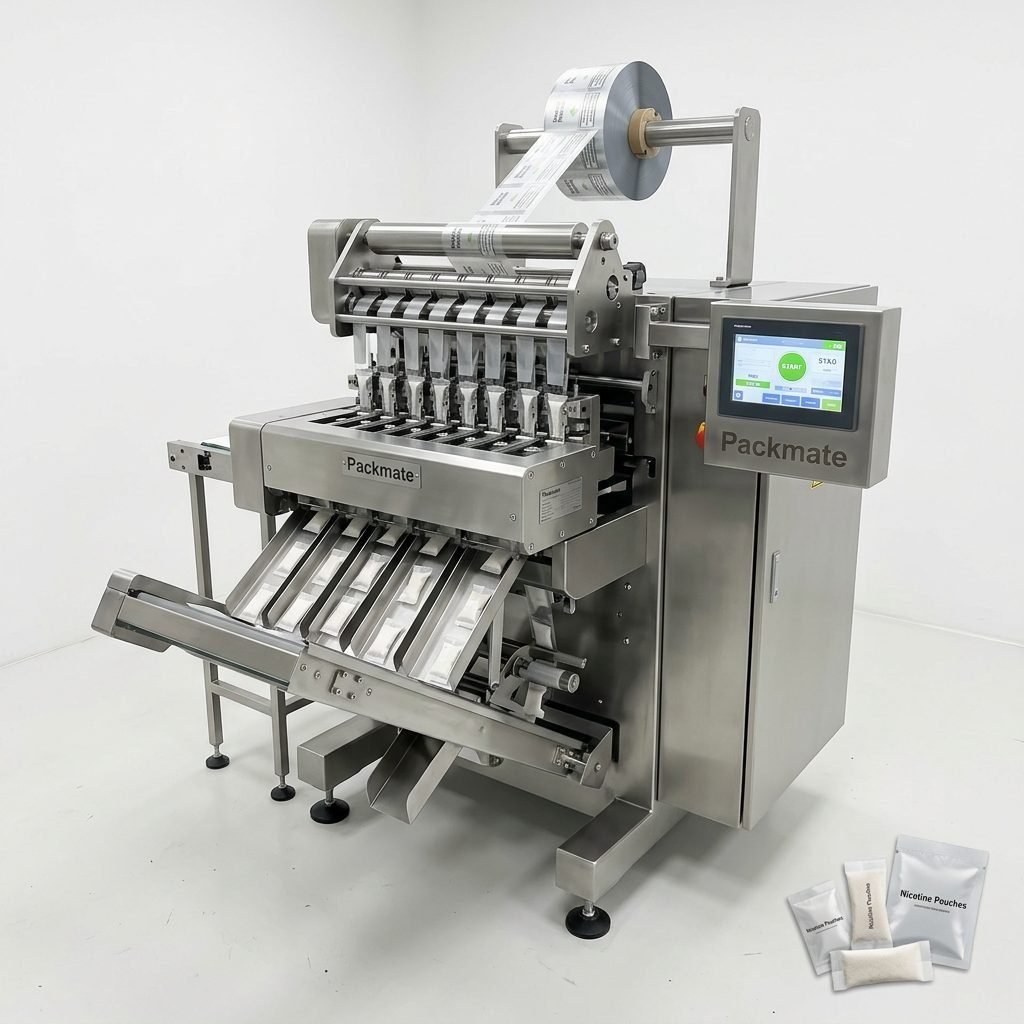
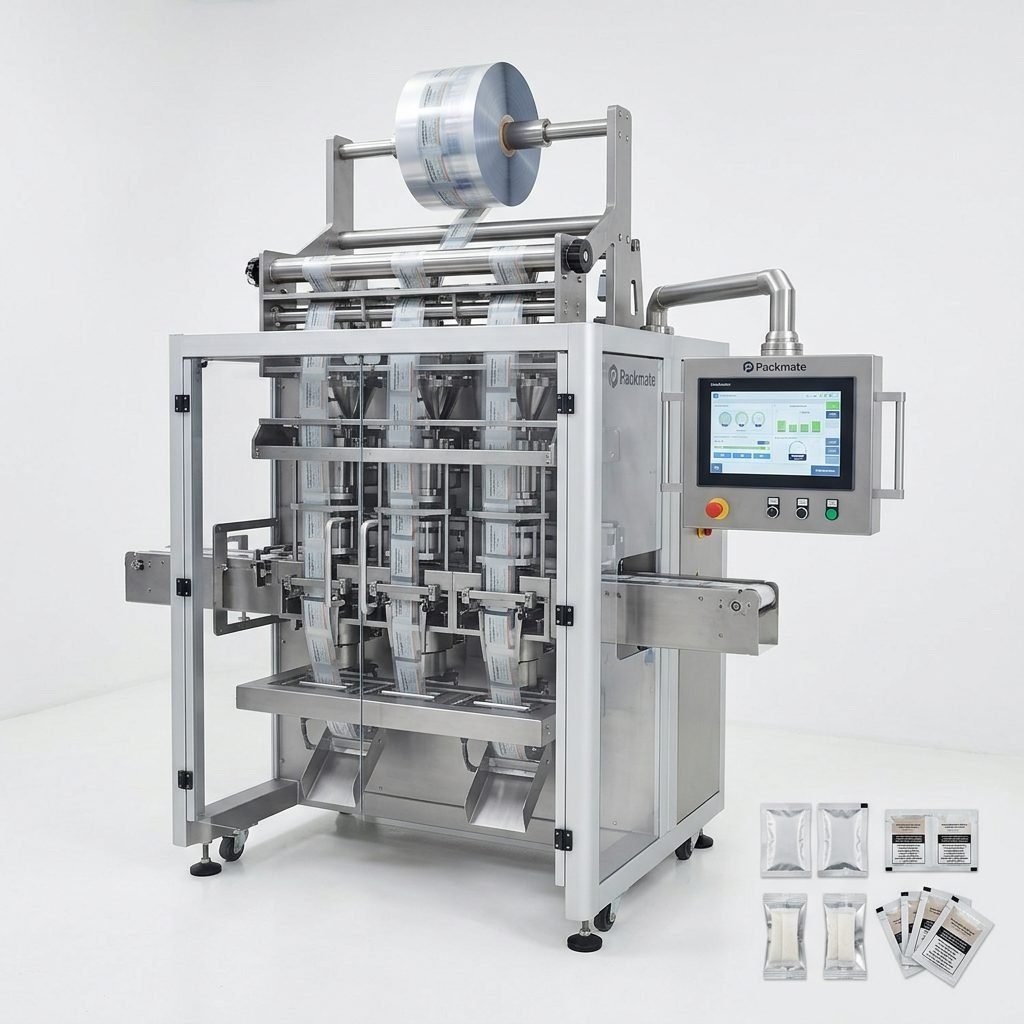
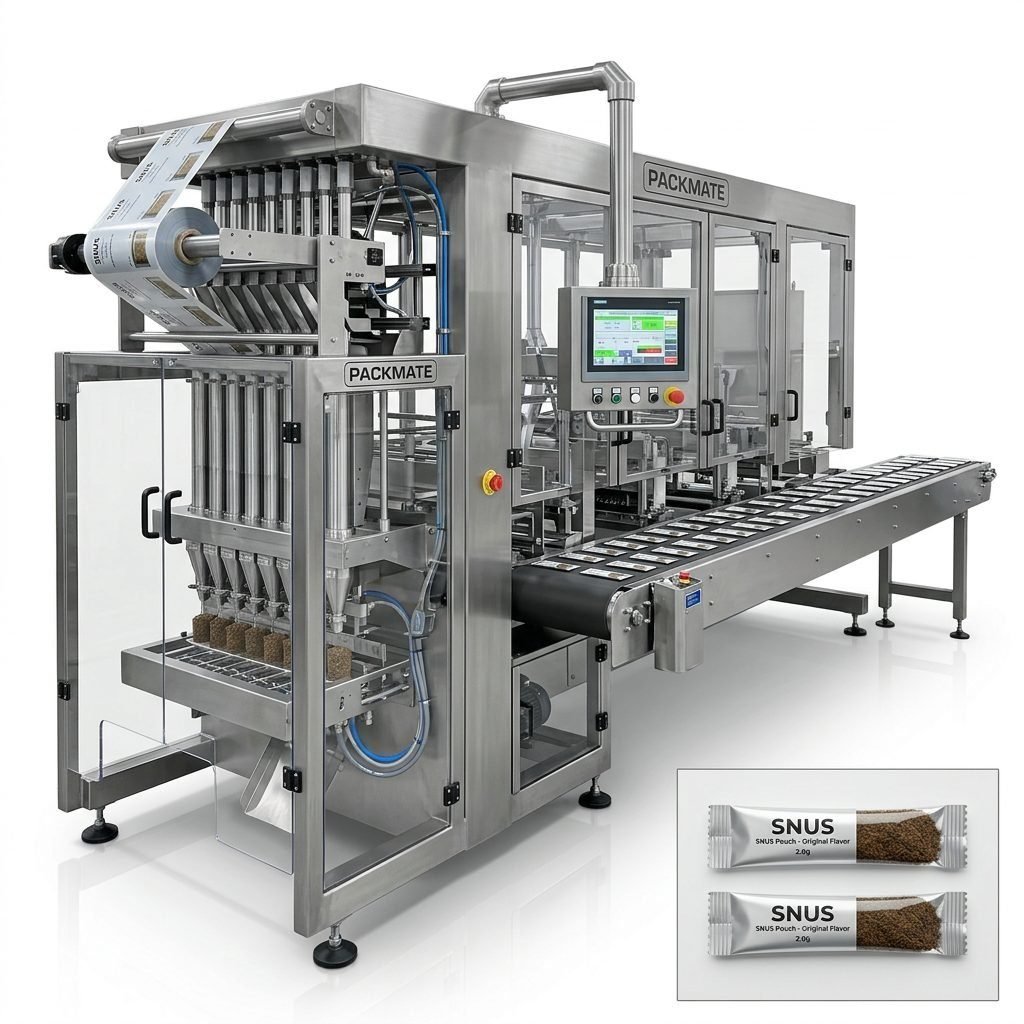
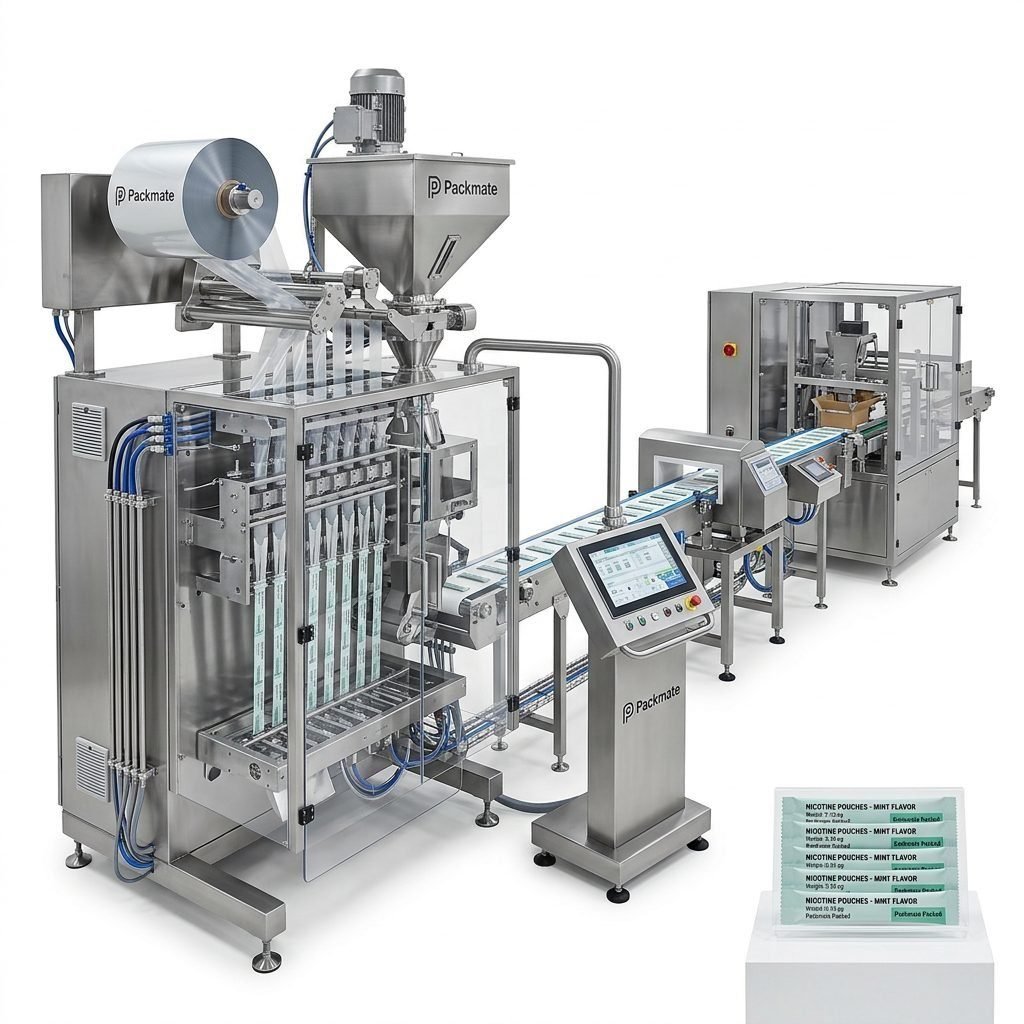
🔀 Multi-lane Snus Packaging Lines — When you need to multiply output without increasing floor footprint, multi-lane systems are the most efficient. These are commonly used for nicotine pouch production and small-dose snus lines. More technical options are available at Snus & Nicotine Packaging Machines.
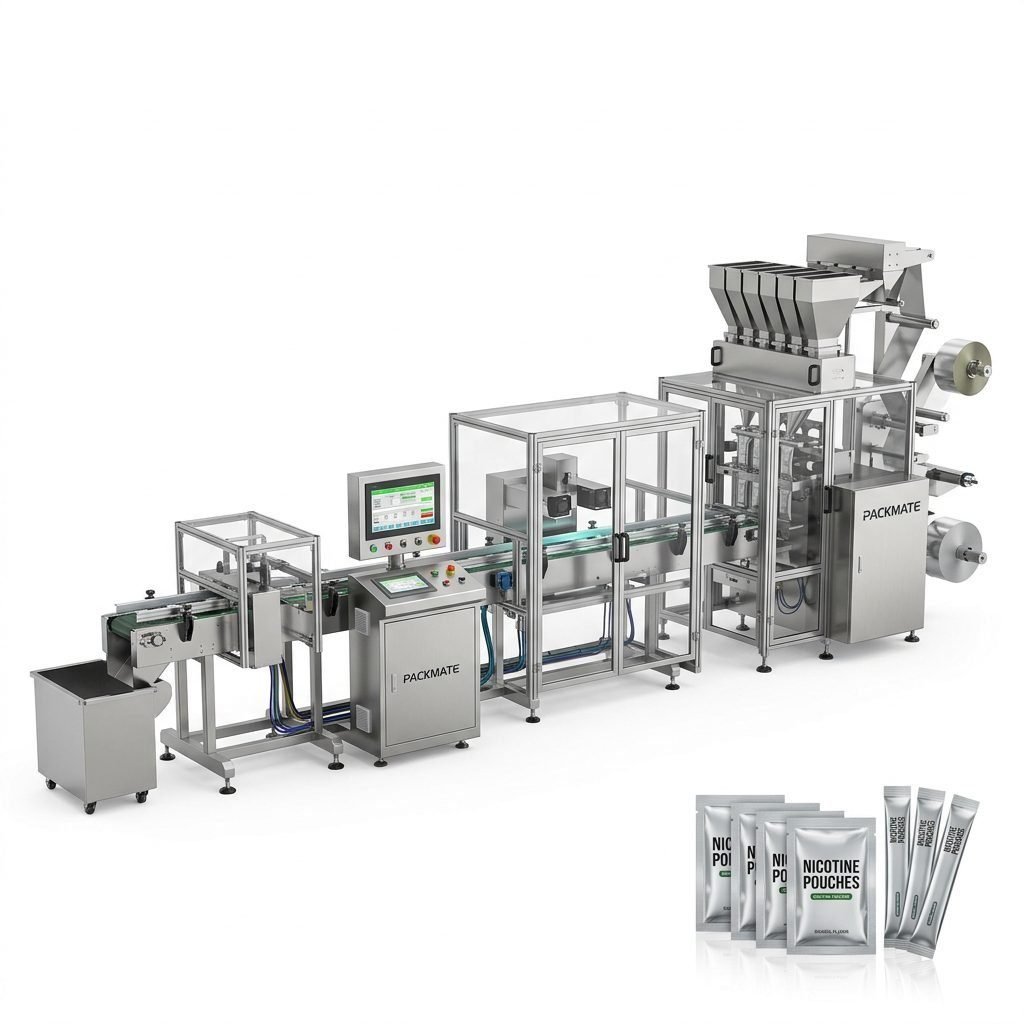
🔁 Integrated Filling & Packaging Lines — For fully automated processes from filling, dosing to final pouch sealing and secondary packaging, consult Filling & Packaging Lines.
Selecting by capacity and speed
Match the machine’s rated pouches/minute to your peak and average production needs. Consider a buffer: choose slightly higher capacity than current demand to allow future growth without a large capital expenditure.
Technical Criteria: Accuracy, Materials, and Automation
Prioritize machines with robust dosing systems, stable sealing units, and easy-to-replace wear parts. Accuracy and repeatability are essential for nicotine dosing to meet legal limits and maintain product safety.
Material compatibility: Ensure the machine handles your pouch materials (paper/film/foil laminates) without compromising seals.
Weighing & dosing accuracy: Look for integrated Weighing & Packaging Systems that maintain +/- acceptable tolerances for nicotine content.
Automation features: HMI controls, recipe management, and quick-change tooling significantly reduce changeover time and operator error.
Hygiene and Maintenance
Choose stainless-steel contact parts, easy-to-clean surfaces, and modular components that can be swapped quickly. Machines certified to international standards such as CE and ISO offer better assurances of build quality.
Customization and Turnkey Solutions
Many manufacturers offer standard machines and fully customized turnkey lines. If your business requires integrated conveyors, secondary packaging, or automated case packing, seek suppliers who can deliver end-to-end solutions.
Turnkey benefits: Reduced project management burden, single-point responsibility, and smoother commissioning.
Customization: Tailored feeders, labeling modules, vacuum or piston fillers adapted for nicotine pouch textures, and child-resistant features if required.
Evaluating Suppliers — What to Ask
When comparing quotes from suppliers, focus beyond price. Use this checklist to evaluate reliability and long-term value:
ℹ️ Experience & Track Record: Ask for references and real-world case studies demonstrating similar installations. Browse customer cases at Case.
📄 Certifications: Confirm CE/ISO compliance and material traceability; see supplier certificates at Certificate.
🛠 After-sales and spare parts: Lead times for spare parts and local service availability are critical for minimizing downtime.
📦 Installation & Training: Does the supplier provide on-site commissioning, operator training, and detailed documentation?
Site considerations in Pakistan
Ensure your facility has adequate power supply, compressed air quality, and dust control. Factor in local climate and humidity for storage and machine operation—machines often need protective measures against high humidity.
Costing, ROI, and Financing
Calculate the total cost of ownership (TCO), including purchase price, installation, tooling, spare parts, consumables, and projected energy and labor costs. Balance initial capital with long-term efficiency gains. For many businesses, a slightly higher upfront cost for automation yields faster ROI through labor savings and reduced waste.
Financial tips: Consider leasing options or staged purchases (start with a module, expand lanes later) to align capital outlay with market growth.
Installation, Training and Local Support
A supplier who provides robust installation support, operator training, and quick spare parts delivery will shorten time-to-market. Verify local representation or a technical partner to reduce lead times for repairs.
Reach out to Packmate for inquiries about service and support via their Service and Contact Us pages.
Testing and FAT (Factory Acceptance Testing)
Insist on FAT with your actual product to validate dosing accuracy, seal integrity, and cycle rates. Where possible, visit supplier facilities or request live demos at exhibitions — many manufacturers demonstrate machines internationally; check Our Exhibition.
Making the Final Decision
Rank suppliers by technical fit, service network, cost of ownership, and proof of performance. If you manufacture multiple SKUs, flexibility and changeover speed become top priorities. For single SKU high-volume production, prioritize reliable high-speed multi-lane machines.
Final checklist before purchase:
• Demonstrated throughput with your product, FAT documentation, spare parts list, warranty terms, and training plan.
• References from similar installations and clear escalation channels for technical support.
Why Choose an Experienced Manufacturer
Manufacturers with decades of experience understand the nuances of snus and nicotine pouch packaging. Look for partners with a broad product lineup and proven turnkey capabilities; for example, learn about Packmate’s expertise on their About Packmate page.
Proven manufacturing strength
A robust factory, advanced CNC centers and precision assembly lines help ensure that the delivered machine performs reliably for years. Certifications like CE and ISO add assurance for international compliance.
Summary — Steps to Choose the Right Snus Packaging Machine
1. Define production targets, product format, and dosing accuracy requirements.
2. Choose machine architecture (stick pack, sachet, multi-lane) that matches throughput and flexibility.
3. Verify supplier experience, FAT testing, certifications, and spare parts availability.
4. Evaluate TCO, ROI, and available financing or phased investment options.
5. Secure a supplier who can provide installation, operator training, and responsive after-sales service.
Useful Resources
Explore product lines and technical specifications for further research: Bag & Pouch Packaging Machines, Auxiliary Packaging Equipment, and the Catalog.
Need support selecting equipment?
Contact the supplier directly to discuss sample tests, machine demos, and tailored turnkey solutions. A conversation that includes production targets, SKU mix, and facility constraints will help create the right specification for your Pakistani operation.
Frequently Asked Questions
Q1: What machine type is best for small-batch snus production?
A1: For small batches and frequent SKU changes, a flexible sachet or single-lane stick pack machine with fast changeover tooling is recommended.
Q2: How do I verify dosing accuracy before purchase?
A2: Request a Factory Acceptance Test (FAT) using your actual material and target pouch weight to verify dosing accuracy and cycle rates.
Q3: Are multi-lane machines suitable for nicotine pouches?
A3: Yes. Multi-lane snus packaging machines are ideal when you need high output without expanding floor space, provided they support accurate dosing and gentle handling.
Q4: What after-sales services should I expect?
A4: Look for installation, on-site training, spare parts kits, remote troubleshooting, and clear warranty agreements to ensure continuous production.
Q5: Where can I find verified machine models and specifications?
A5: Manufacturer websites and product pages list detailed specs — for example, explore Packmate’s machine lines and support resources to compare models.