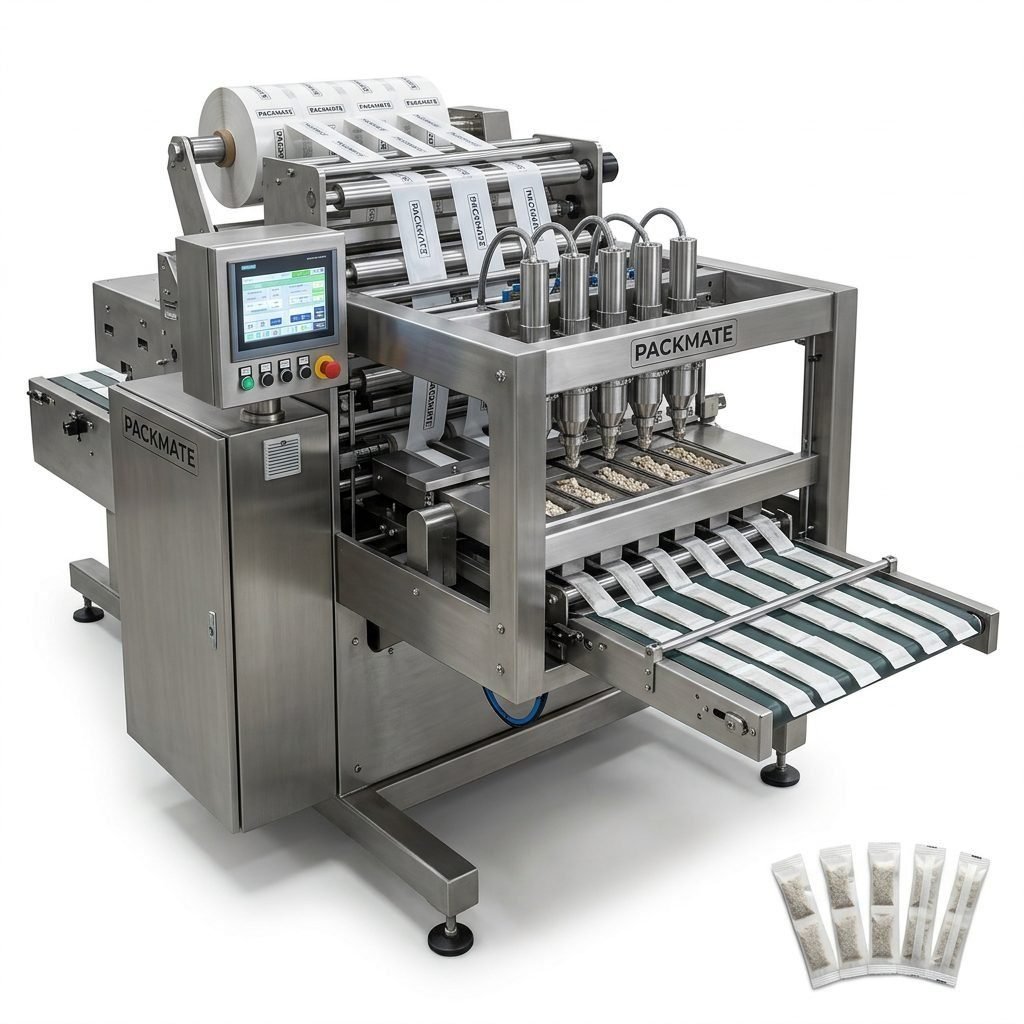
Choosing the right nicotine packaging machinery in the Republic of Congo requires a clear understanding of your production goals, local market demands, regulatory requirements, and long-term business strategy. This guide helps manufacturers, operations managers, and procurement teams evaluate options — from single-lane snus pouch machines to fully automated multi-lane lines — and make decisions that balance reliability, cost, and scalability.
🔍 Understand Your Production Requirements
Begin with the fundamentals: target daily output, product format (nicotine pouch, snus sachet, stick pack), pouch size, and materials (foil, paper, or laminated films). Production planners should translate market forecasts into hourly and daily throughput targets so that machine selection matches actual demand without over-investing.
Key questions to answer
– What is the target units per minute/hour/day?
– Which packaging format(s) will you produce now and in the near future?
– Are there multiple SKUs or frequent changeovers?
– What raw material types and thicknesses will be used?
⚙️ Machine Types and When to Choose Each
Nicotine packaging equipment falls into several main categories. Match machine type to product and production strategy:
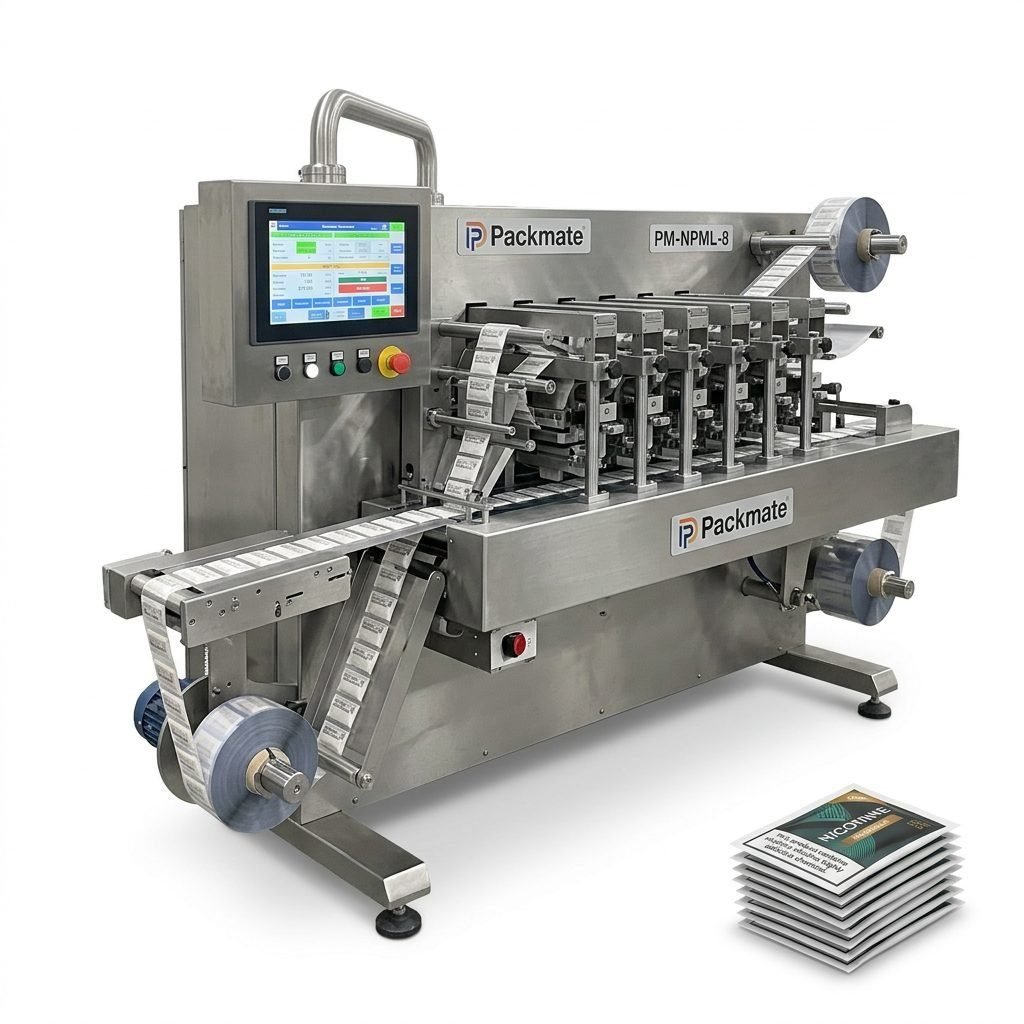
Snus & Nicotine Pouch Machines
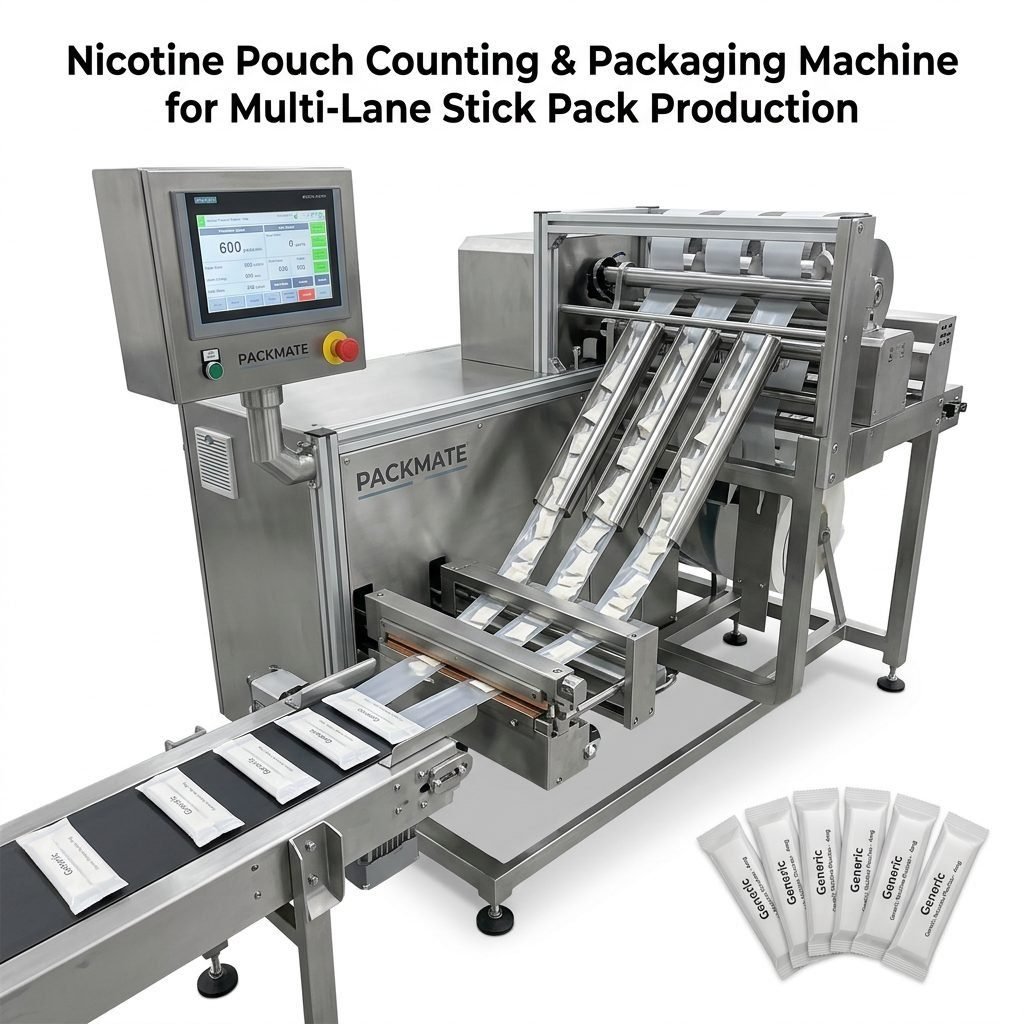
Designed specifically for small-dose pouches and snus. These machines often offer precise dosing and gentle handling to preserve product consistency. If your core product is nicotine pouches, prioritize machines built for pouch accuracy and stable temperature control.
For product details and models, see Snus & Nicotine Packaging Machines.
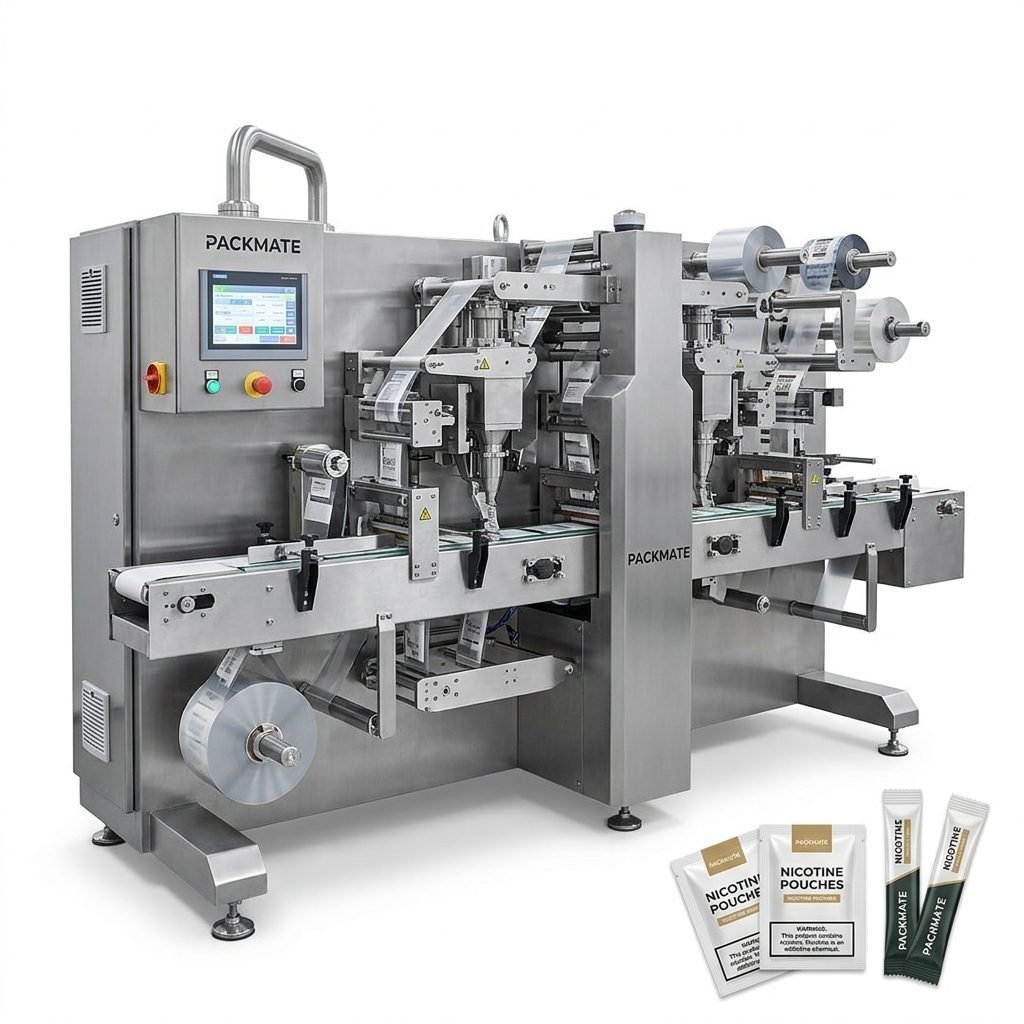
Sachet & Stick Pack Machines
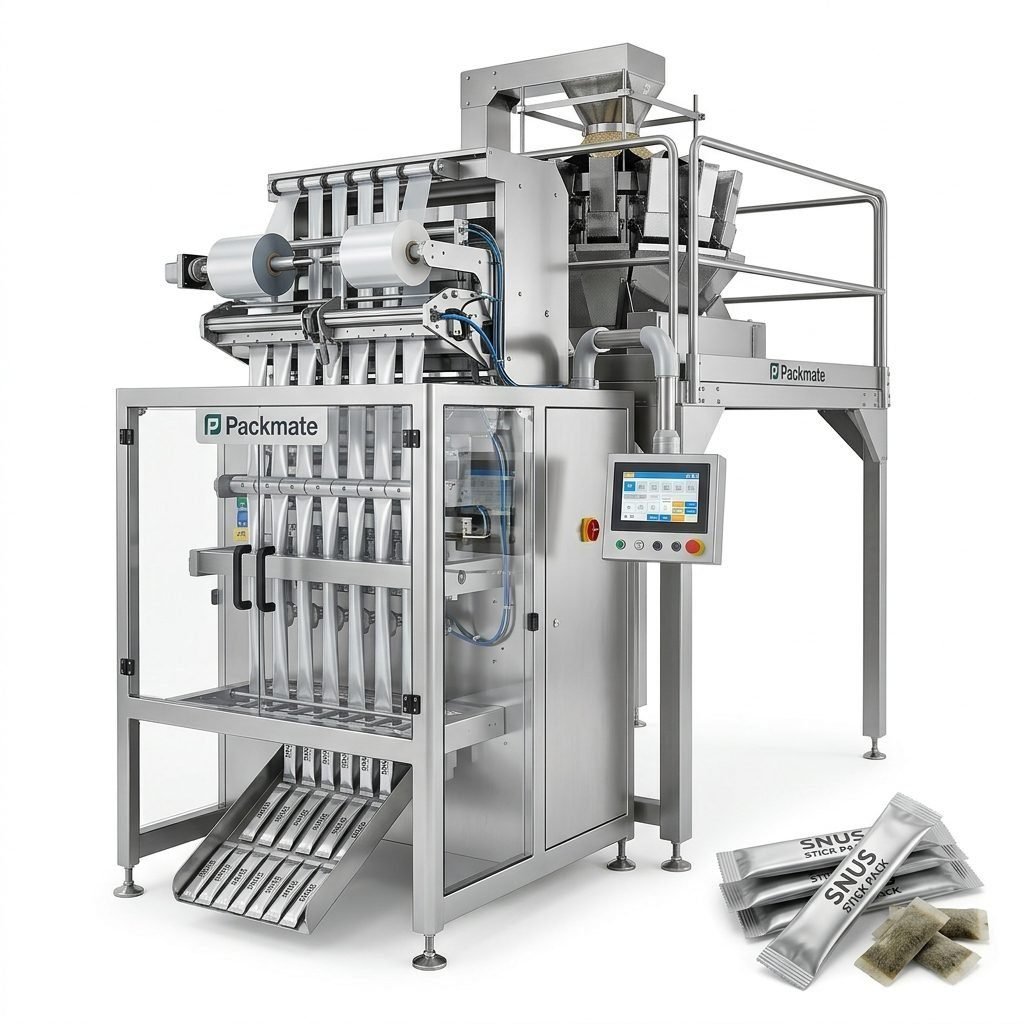
Best for single-dose stick or sachet formats. These are suitable when consumer convenience and single-serve usage matter. Stick pack formats may offer faster speeds for powdery or granular nicotine blends.
Browse options: Sachet & Stick Pack Machines.
Multi-lane Systems
Multi-lane systems increase throughput while saving floor space per unit produced. Ideal for scaling operations or serving multiple SKUs in parallel. Consider lane changeover complexity and the precision of dosing across lanes.
📈 Production Speed, Scalability & Layout
Evaluate both current and future demand. A machine with modest extra capacity avoids early replacement, but over-specifying capacity ties up capital. For the Congo market where growth can be rapid, modular systems or machines that can be expanded (additional lanes or upstream feeders) are advantageous.
Quick guideline: If you expect production to double within 24–36 months, choose a system with modular expandability or a multi-lane base model to minimize future capital expenditure.
🧪 Material Compatibility & Dosing Accuracy
Nicotine pouches and snus require precise dosing to meet product quality and regulatory limits. Make sure the machine supports your pouch materials, sealing temperatures, and dosing tolerances. Machines with advanced metering or weigh-scale integration reduce variability and waste.
🔁 Automation, Integration & Upstream Equipment
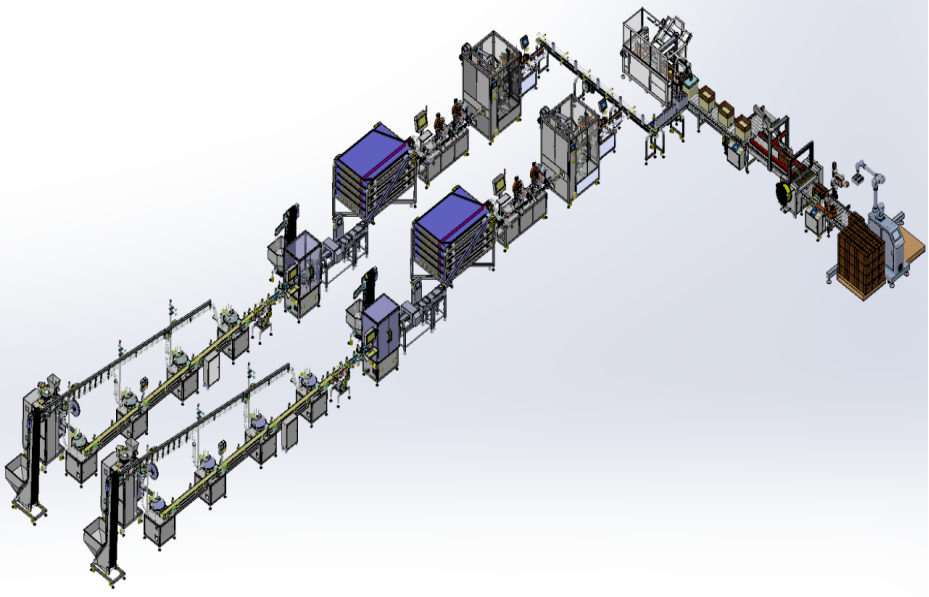
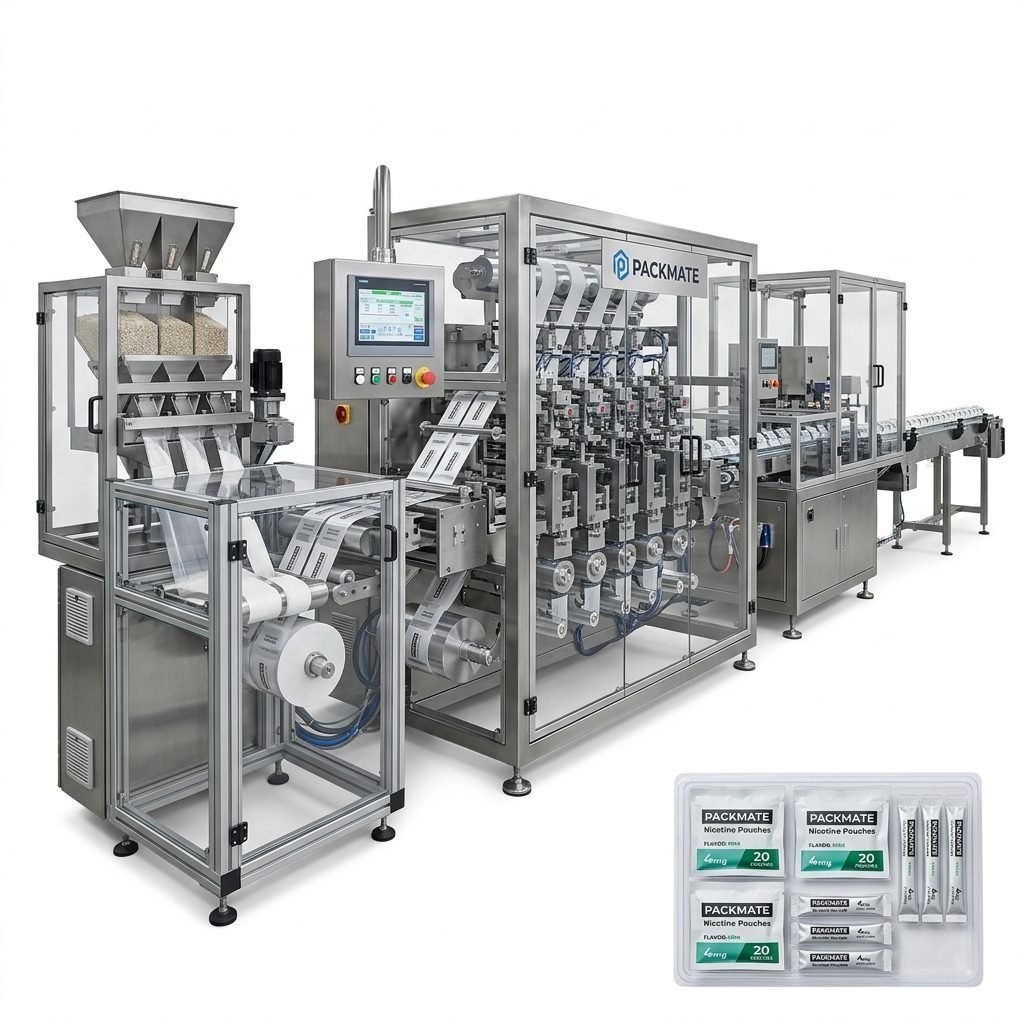
End-to-end production lines include fillers, conveyors, metal detectors, checkweighers, and cartoning or boxing systems. If you plan for fully automated output, confirm compatibility with:
– automatic feeders and hoppers
– vision systems for print and seal inspection
– in-line weighing and metal detection
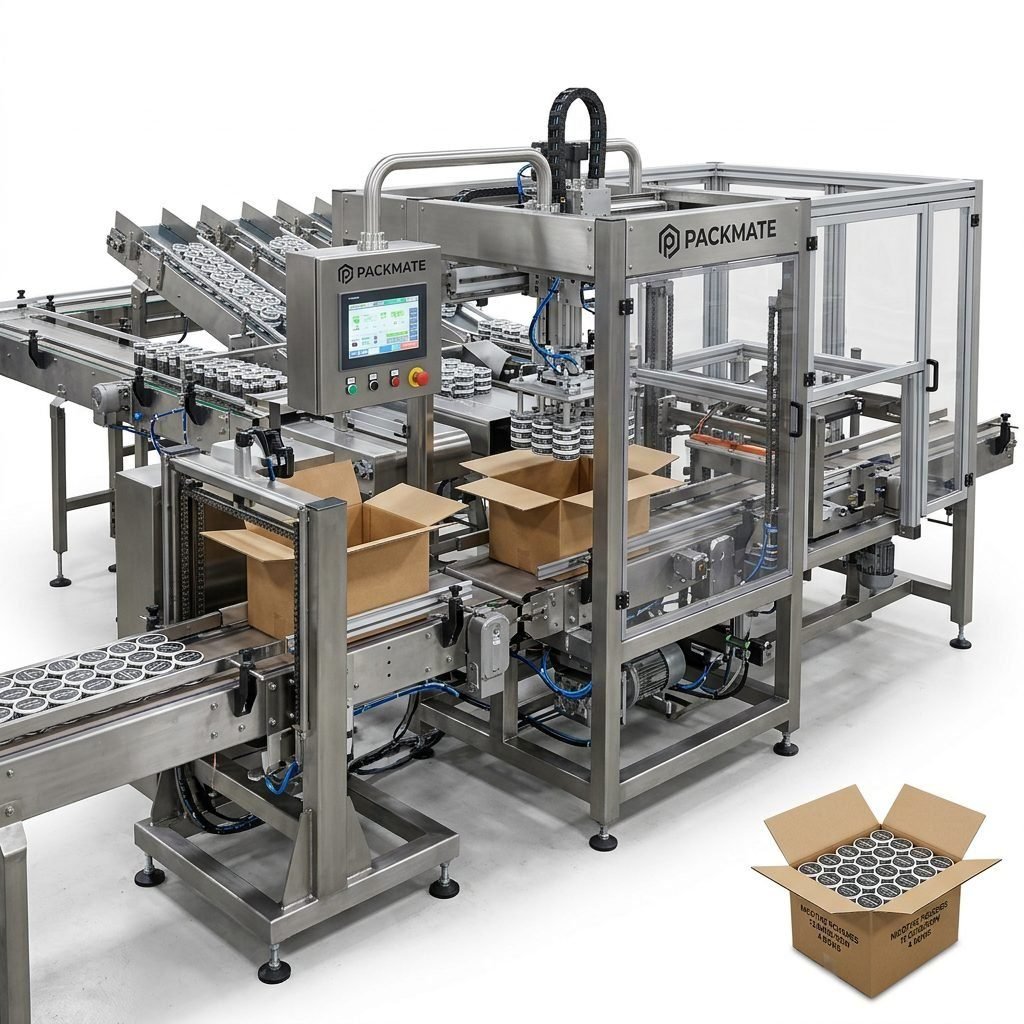
– downstream packaging and case packing
Consider the manufacturer’s ability to provide turnkey solutions: see Filling & Packaging Lines and Weighing & Packaging Systems.
✅ Quality, Certifications & Regulatory Compliance
Choose machines from manufacturers that comply with international standards such as CE and ISO to ensure safety and reliability. Certifications simplify import processes and reassure partners. Packmate Snus Machine, for example, highlights CE and ISO compliance across its equipment portfolio.
🛠️ After-Sales Service, Spare Parts & Local Support
In the Congo, reliable after-sales service and local or regional support are essential. Ask suppliers about:
– spare parts availability and lead times
– remote diagnostics and software support
– on-site installation and training
– preventive maintenance schedules
Tip: Prioritize suppliers who provide installation, commissioning, and operator training. A short training period reduces downtime and avoids early production issues.
💰 Total Cost of Ownership & Return on Investment
Beyond purchase price, calculate energy use, spare parts, maintenance, consumables, and expected lifetime. Machines with higher initial cost but lower downtime and better accuracy often deliver superior ROI. Include customs, shipping, installation, and validation costs in your budgeting.
🏭 Factory Capabilities & Manufacturer Reputation
Evaluate the manufacturer’s production capability and track record. A factory with advanced CNC machining, precision assembly, and rigorous testing can deliver more reliable machines. Packmate Snus Machine describes a 20,000㎡ facility, 30+ years of engineering experience, and more than 50 machine models — factors that indicate mature manufacturing capacity.
Learn more about the company at About Packmate.
📦 Turnkey Solutions & Customization
If you need a complete production line — from filling to packaging to case-packing — select a supplier capable of designing turnkey solutions and customizing machines for unique product requirements. Modular designs, custom tooling, and dedicated R&D support help adapt to local market preferences and regulatory changes.
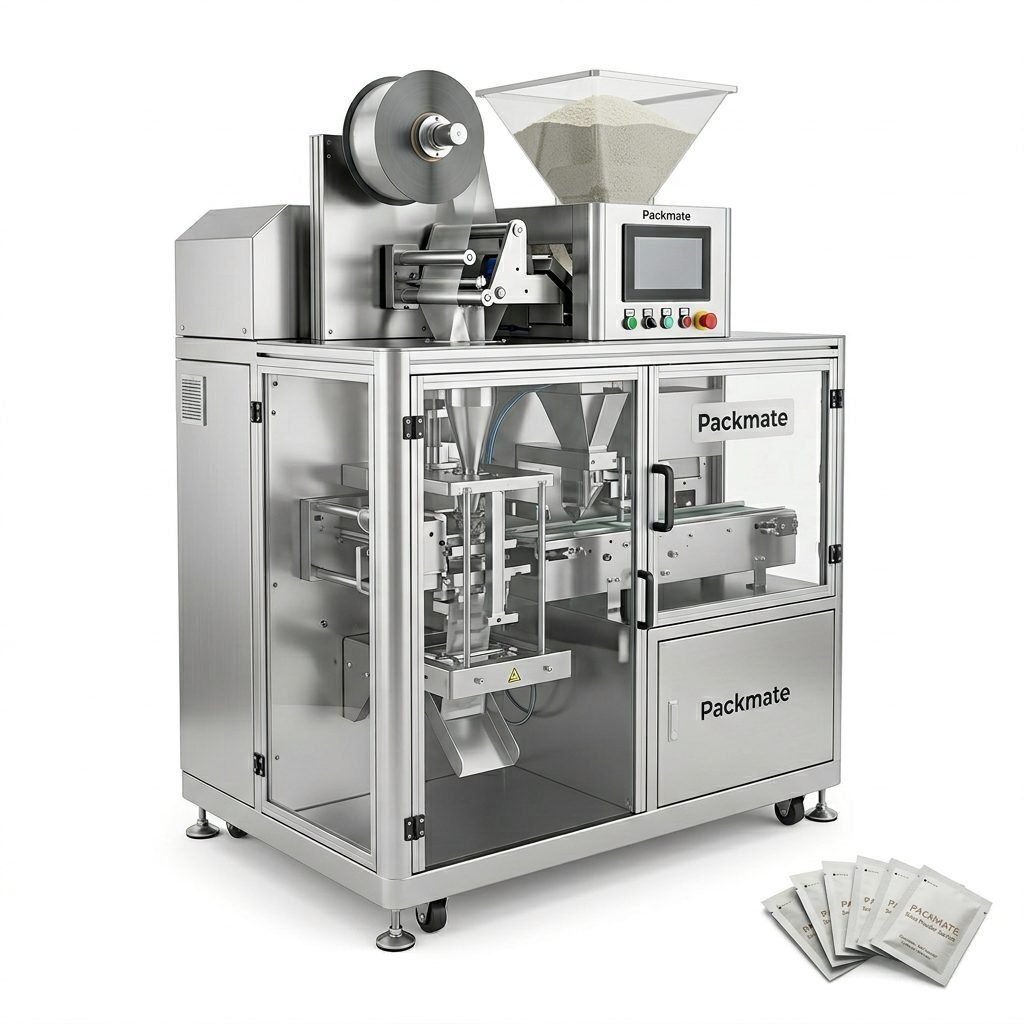
Explore product families: Bag & Pouch Packaging Machines.
📝 Pre-Purchase Checklist
🔧 Technical fit
– Confirm target throughput and machine cycle time.
– Validate material compatibility and dosing accuracy.
– Check sealing, cut, and finishing quality on sample materials.
📑 Commercial & service terms
– Warranty period and coverage details.
– Spare parts kit and suggested inventory.
– Training and commissioning plan.
📍 Installation, Utilities & Site Preparation in Congo
Plan for power requirements, compressed air, material handling lines, and stable floor load capacity. Ensure the supplier provides detailed site plans and a utility matrix before equipment arrival. Local infrastructure can vary; coordinate with logistics partners for customs clearance, transport, and on-site crane or forklift needs.
🧭 Practical Procurement Tips
– Request factory acceptance tests (FAT) or video demonstrations of machines running your product.
– Ask for customer references in similar climates and regulatory environments.
– Negotiate spare parts packages and remote support SLAs.
– Consider phased purchases: start with a base line and reserve budget for expansion based on early sales.
📚 Additional Resources & Case Studies
Review real-world case studies of snus and nicotine pouch lines to understand common pitfalls and successful implementations. Visit the manufacturer’s case portfolio to see equipment in operation and learn from global deployments: Case.
🔐 Final Selection Roadmap
1) Define product specs and throughput goals.
2) Shortlist machine types and vendors based on compatibility and certifications.
3) Request FATs and sample runs.
4) Confirm service, spare parts, and training.
5) Plan site utilities and installation timelines.
6) Complete purchase with clear SLA and acceptance criteria.
Remember: The best machine is the one that meets your product quality needs, integrates with your line, and is supported locally with parts and service.
❓ Frequently Asked Questions (FAQ)
Q1: What documentation should I request before buying?
A1: Request machine specifications, FAT reports, electrical and pneumatic requirements, spare parts lists, CE/ISO certificates, and sample run videos or acceptance test results.
Q2: How important is local service in Congo?
A2: Extremely important. Local or regional service reduces downtime, shortens spare parts lead times, and ensures faster technical support for critical operations.
Q3: Should I buy single-lane or multi-lane equipment?
A3: It depends on projected throughput and SKU mix. Multi-lane is efficient for scale, while single-lane is flexible and lower cost upfront. Choose modular options if growth is likely.
Q4: What are the main cost drivers after purchase?
A4: Spare parts, maintenance, consumables (films, sealing elements), energy consumption, and staff training. Include these in your TCO calculation.
Q5: Where can I find reliable packaging solutions and support?
A5: Look for suppliers with proven global installations, comprehensive product lines, and turnkey service offerings such as those showcased in the manufacturer’s product and service pages: Auxiliary Packaging Equipment and Service.