Choosing the right snus packing machine for tobacco pouch production is a pivotal decision that affects product quality, compliance, throughput, and long-term profitability. This guide explains the technical differences between machine types, the factors to evaluate for automatic packing solutions, and practical tips to help manufacturers — whether scaling a startup or upgrading an industrial line — select the best equipment for nicotine pouches and snus production.
Understand the product: What makes snus and nicotine pouches unique
Snus and nicotine pouches are small-dose products that demand strict consistency in weight, sealing quality, and pouch appearance. Unlike bulk powders or granular products, these pouches require:
- High-precision dosing to maintain consistent nicotine content and regulatory compliance
- Delicate handling to avoid tearing or deforming soft pouches
- Reliable hermetic sealing to prevent moisture ingress and extend shelf life
- Fine printing and cutting for brand aesthetics and traceability
Choose machines engineered for small-dose pouches and multi-lane production if you need high throughput with tight tolerances.
Main machine types used for snus/nicotine pouch production
Several packaging formats and machine families are commonly used in the industry. Knowing each type’s strengths helps you align your product needs with the right equipment.
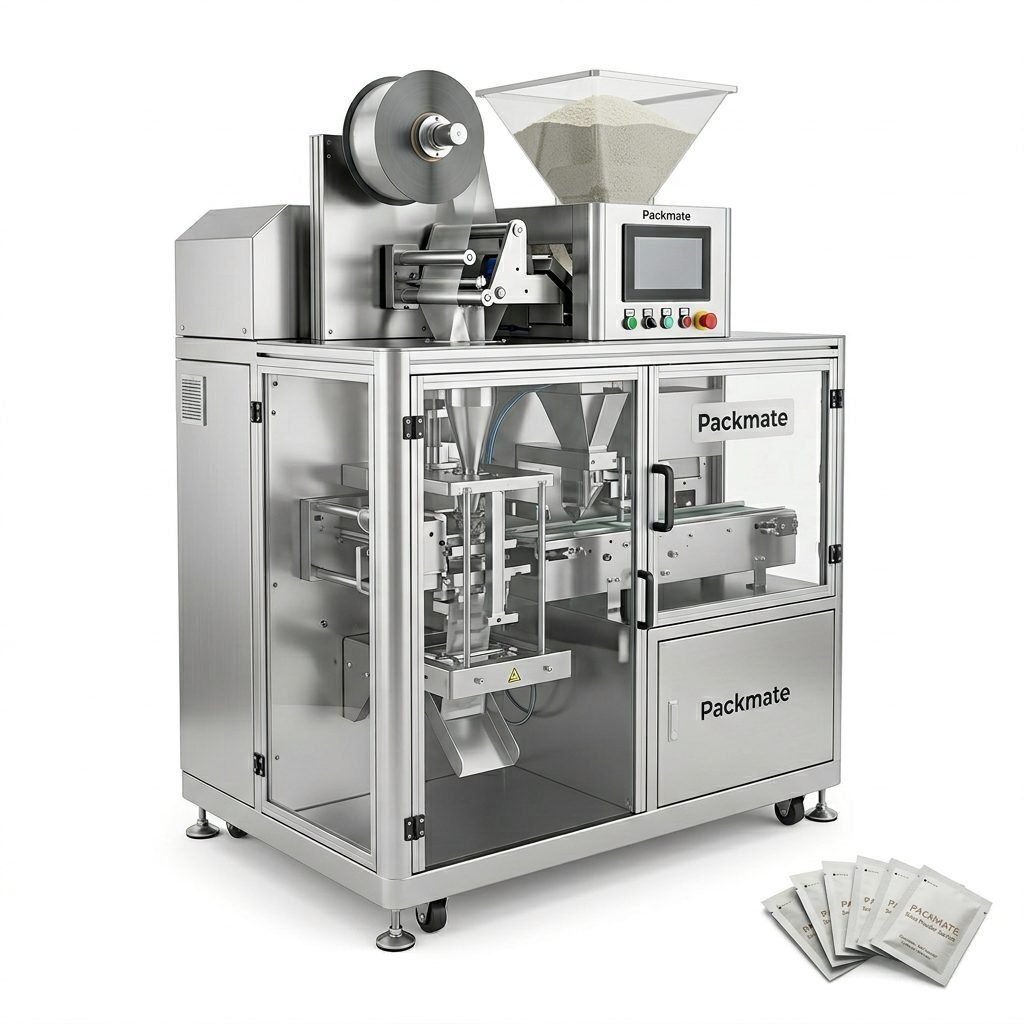
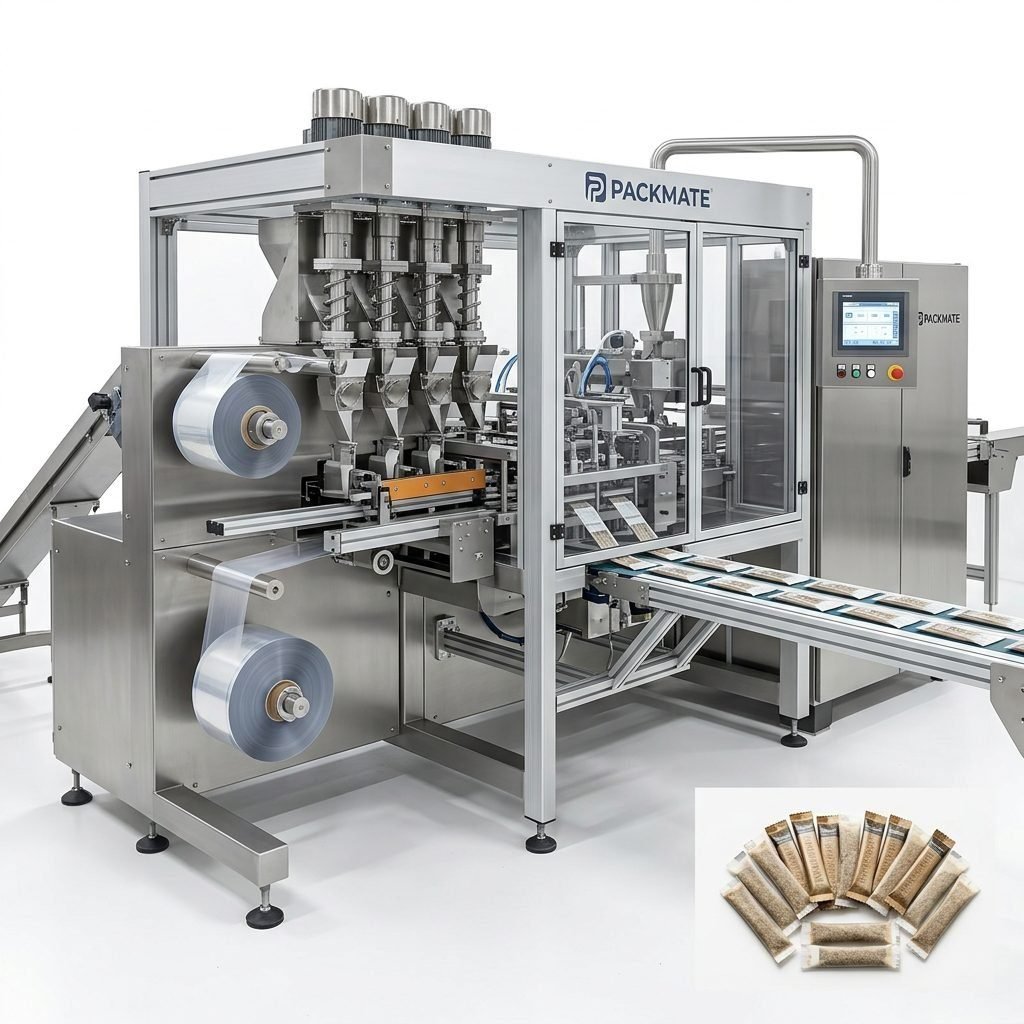
Rotary stick & sachet machines
These machines form, fill, and seal single-dose sachets or sticks and are suitable for small to medium pouch sizes. They are compact and usually easier to validate for regulated environments.
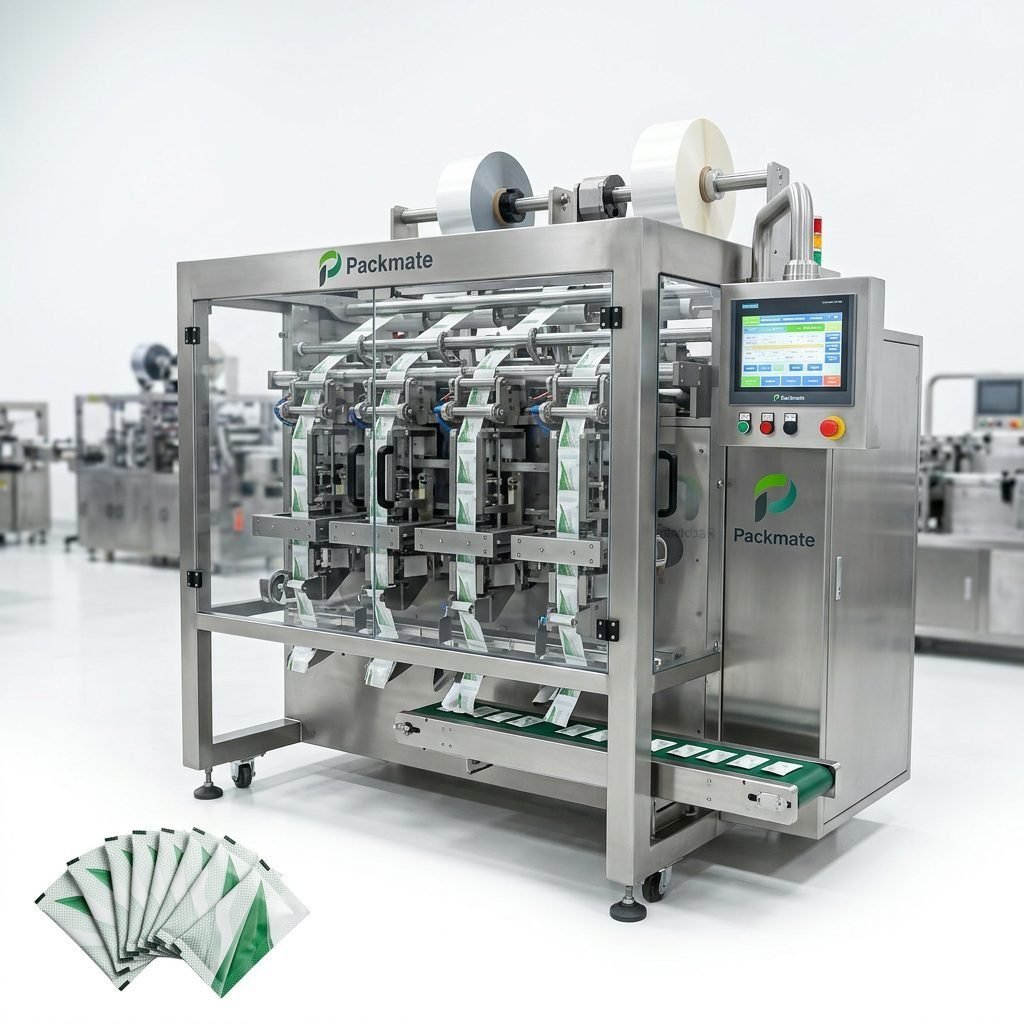
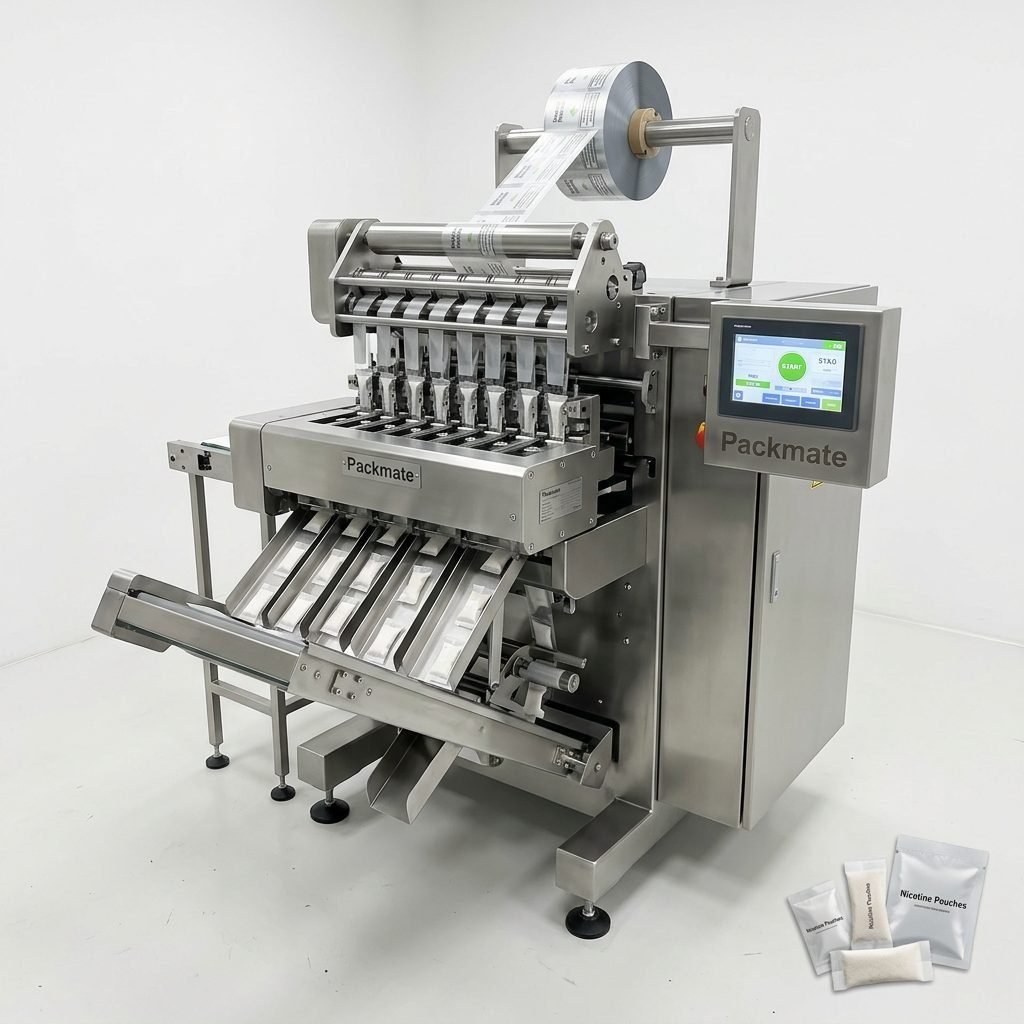
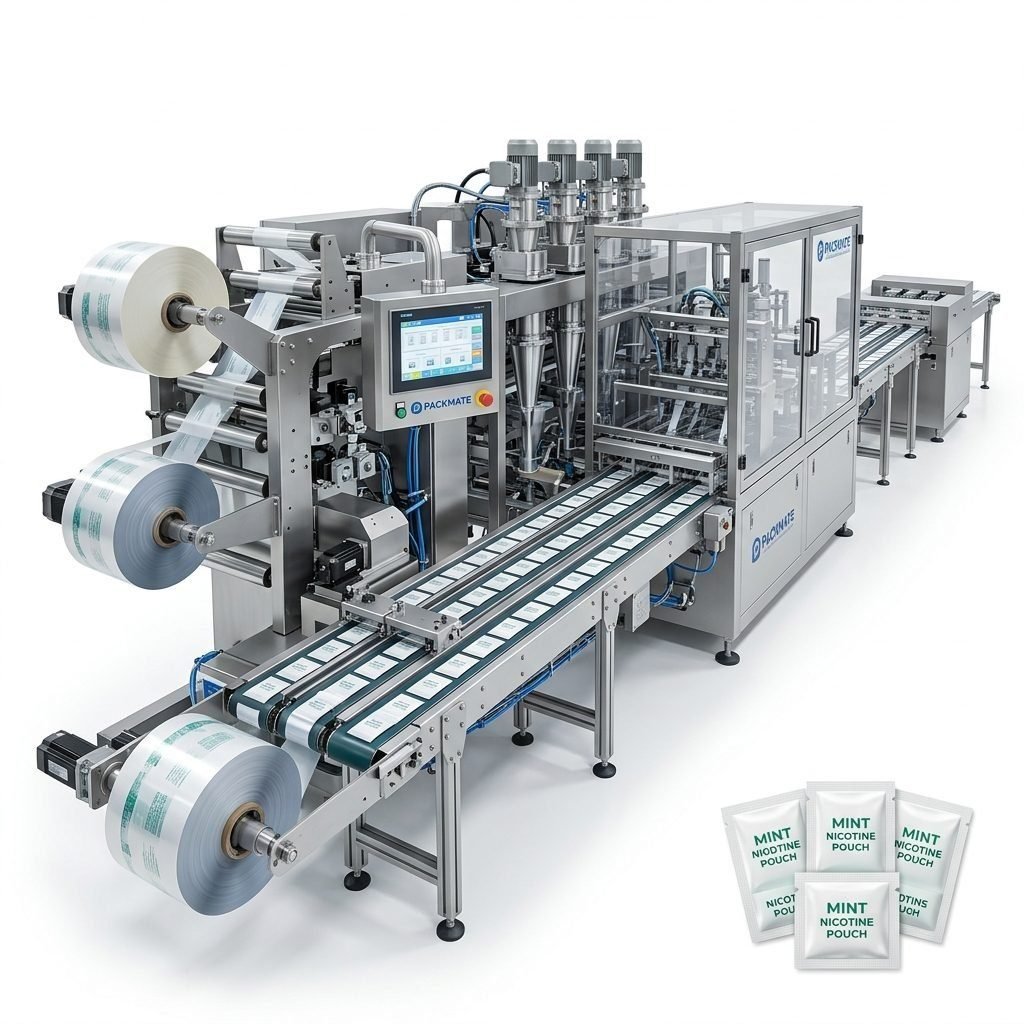
Multi-lane pouch packaging systems
When your priority is maximizing output, multi-lane systems run many pouches across parallel lanes at once. They demand precise synchronization and higher initial investment but deliver the best throughput per floor space.
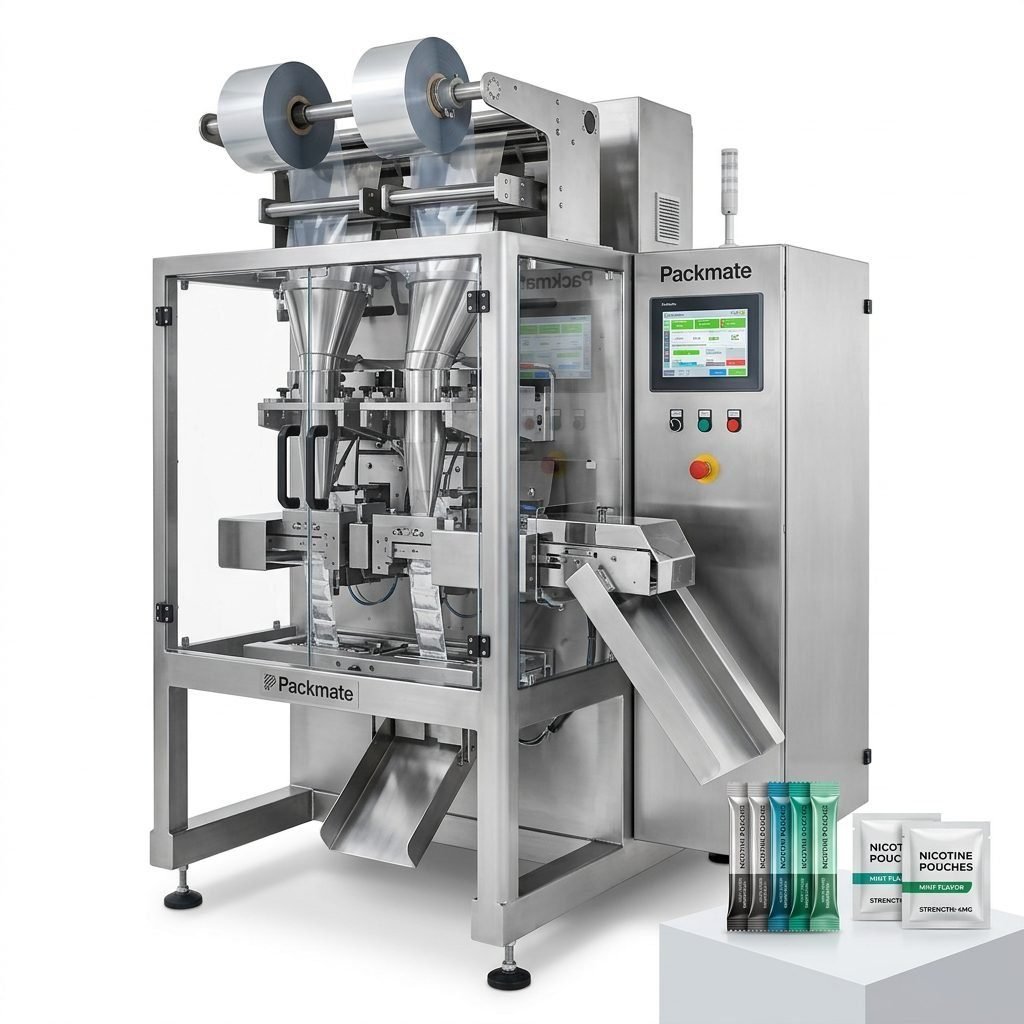
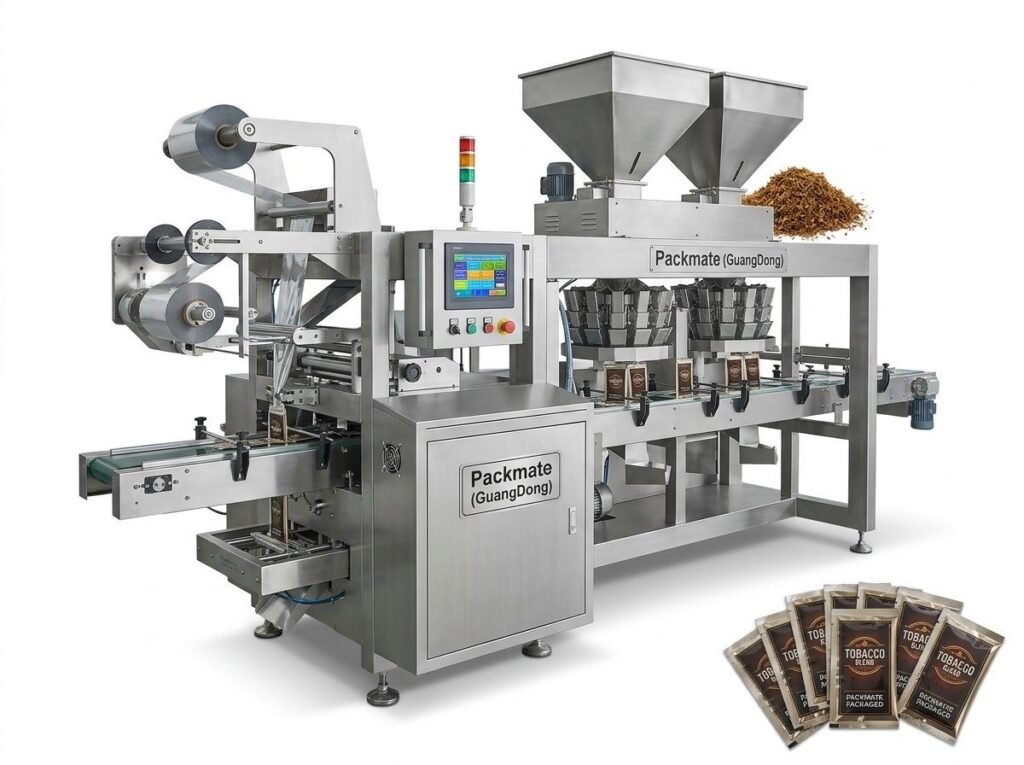
Vertical form-fill-seal (VFFS) vs horizontal systems
VFFS systems are versatile and can be adapted for snus pouches with specialized dosing and pouch forming modules; horizontal systems can be gentler for delicate pouches and are often used where the pouch shape and orientation are critical.
Critical selection criteria for the best snus packing machine
Buying a snus packing machine requires balancing technical features, operational requirements, and long-term serviceability. Below are the essential criteria to evaluate.
1. Throughput and scalability
Estimate your hourly pouch output target and consider future growth. Multi-lane systems and high-speed stick machines excel for high-volume production. A machine that supports modular upgrades prevents costly obsolescence.
2. Dosing accuracy and filling technology
Weighing vs volumetric dosing: For nicotine products where content uniformity is critical, electronic weighing systems or small-dose multi-head weighers provide superior accuracy. Augment with feedback control to maintain tight tolerances.
3. Material compatibility and pouch formats
Ensure the machine supports the film materials and pouch constructions you plan to use (e.g., laminated barrier films, biodegradable films). Check capabilities for stick, sachet, round or oval pouch shapes.
4. Sealing quality and process control
Heat-seal dynamics, temperature control, and jaw pressure consistency are crucial. Machines with PLC-based control and recipe storage simplify repeatable settings and reduce setup time between SKUs.
Pro tip:
Request validation data and test runs with your exact material and product before final purchase.
5. Changeover time and operator ergonomics
Look for quick-change tooling, recipe memory functions, and user-friendly HMI. Reduced changeover time increases effective production uptime, particularly for companies running multiple SKUs.
6. Cleanability and maintenance accessibility
Sanitary design, easy access to wear parts, and modular assemblies reduce downtime. Verify availability of spare parts and turnaround time for service in your region.
Compliance, certifications and market-specific considerations
Regulatory requirements vary by market. Machines supplied with CE and ISO certifications demonstrate adherence to international quality and safety standards, but local labeling, nicotine content reporting, and packaging regulations must also be considered.
For manufacturers targeting European markets, expect strict rules on nicotine product labeling and traceability. If entering markets in the Americas or Asia, verify local customs and consumer packaging preferences — such as pouch size, flavor labeling, and hygiene expectations.
Localization and cultural habits
In regions with strong snus traditions, such as parts of Scandinavia, consumers expect compact, discreet pouches with premium finishing. In markets adopting nicotine pouches more recently, demand may favor larger pouch counts per can and robust sealing for shelf stability. Align machine capabilities with the cultural expectations of your target market.
Integrations and turnkey production lines
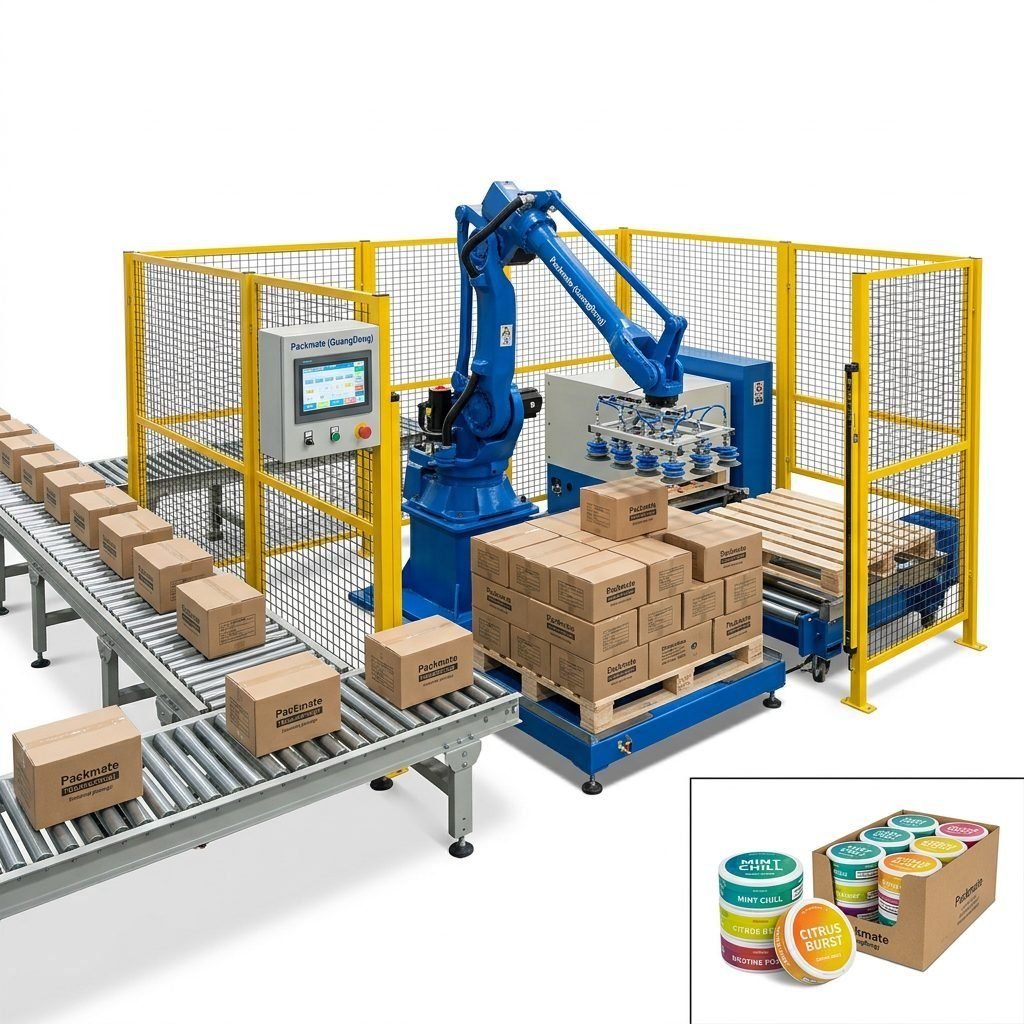
A single packaging machine is one part of the production flow. Consider integrated solutions that connect feeding, dosing, pouch forming, auxiliary equipment (such as metal detectors, check weighers), and secondary packaging like can filling or carton packing. Suppliers that provide turnkey lines can reduce integration risks and shorten project timelines.
Explore comprehensive product portfolios such as Snus & Nicotine Packaging Machines, Bag & Pouch Packaging Machines, and Sachet & Stick Pack Machines to assemble a cohesive production line tailored to your needs.
Case & reference checks
Request references and case studies showing real-world deployment. Evaluate machines under real-product conditions — many manufacturers offer demo lines or pilot production to validate performance. See examples at Case and Exhibition pages for proof of performance.
Total cost of ownership (TCO) — beyond the sticker price
TCO includes initial capital, installation, commissioning, validation time, spare parts, utilities, operator training, and expected service life. Low-priced machines often lead to higher operational costs; prioritize machines with proven reliability, lower energy consumption, and accessible local service.
Checklist for a realistic TCO estimate:
- Spare parts lead time and pricing
- Warranty terms and extended coverage
- Local service network and remote support capabilities
- Expected consumable rates (seals, blades, belts)
After-sales support and training
Effective after-sales support reduces downtime and maximizes equipment life. Assess the supplier’s training programs, spare parts logistics, and remote diagnostics. Companies with global presence and exhibition participation often offer better service coverage and transparent performance records — explore About Packmate and Contact Us pages for service offerings and global support.
Installation and ramp-up
A well-planned installation includes FAT (Factory Acceptance Testing), SAT (Site Acceptance Testing), and operator training. Confirm the supplier’s role in commissioning and whether installation costs, site adaptation, and validation are included in the quotation.
Common technical features to demand
Request documentation or demonstration of the following features to ensure the machine meets snus production demands:
- PLC control with recipe management and multi-language HMI
- High-precision weighers or dosing units with feedback loops
- Servo-driven film feeding and cutting systems for repeatable pouch dimensions
- In-line QA modules: check weighers, metal detection, vision inspection
- Sanitary design and easy-clean components
Customization and modularity
Look for platform-based machines that support modular upgrades like additional lanes, secondary packaging modules, integrated can fillers, or labeling stations. Such flexibility lowers future expansion costs.
Real-world example: Selecting a multi-lane snus pouch line
Suppose a manufacturer targets 120,000 pouches per hour with 6 lanes. The selection steps might include:
- Verify dosing method: small-dose weighers with ±1% accuracy
- Confirm film compatibility and sealing parameters
- Require in-line QA: vision check for print quality and pouch integrity
- Plan for can filling and secondary packaging with downstream conveyors
- Schedule FAT using your product samples to validate performance
Warning:
High-speed multi-lane systems place more demand on upstream feeding and downstream packaging — plan the entire line holistically.
Why choose an experienced supplier?
A supplier with decades of experience in snus packaging understands the nuanced interplay between dosing, sealing, and pouch integrity. They offer field-tested solutions, customization options, and global service networks — beneficial for manufacturers seeking a reliable partner. Check product categories like Weighing & Packaging Systems and Filling & Packaging Lines to compare technologies.
Questions to ask potential suppliers
When evaluating vendors, ask for:
- Factory acceptance and trial documentation with your product
- Spare parts list and typical lead times
- References in your target market and case studies
- Training programs and local service support
Making the final decision: a practical buying roadmap
Follow this step-by-step roadmap to reduce procurement risk and ensure a smooth start-up:
- Define product specs, target throughput, and regulatory needs
- Shortlist machines based on throughput and dosing tech
- Request pilot runs or FAT with your materials
- Evaluate TCO and support offerings
- Finalize contracts with clear acceptance criteria and spare parts plan
Useful resources and next steps
For product catalogs and line examples, explore manufacturer product pages such as Snus & Nicotine Packaging Machines, Bag & Pouch Packaging Machines, and Sachet & Stick Pack Machines. To learn about supplier background, visit the About Packmate page and get in touch via Contact Us for quotations and FAT scheduling.
Conclusion
Selecting the best snus packing machine is about aligning machine capabilities with your product demands, regulatory environment, and growth plans. Prioritize dosing accuracy, sealing integrity, modularity, and reputable service support. Investing in a reliable, scalable solution pays dividends in consistent product quality, lower downtime, and a faster route to market.
Frequently Asked Questions
Q1: What is the recommended dosing method for nicotine pouches?
A1: Electronic weighing systems or small-dose multi-head weighers are recommended for precision and compliance, especially when nicotine content must be tightly controlled.
Q2: How do I validate a snus packing machine before purchase?
A2: Insist on FAT with your actual product and film, review performance data, and require acceptance criteria for weight accuracy, seal integrity, and throughput.
Q3: Is a multi-lane machine always the best choice for high output?
A3: Multi-lane systems offer high throughput but require robust upstream feeding and downstream packaging; assess the whole line and facility layout before deciding.
Q4: What certifications should a reputable supplier provide?
A4: Look for CE and ISO certifications as a baseline; also request documentation related to safety, electrical standards, and material handling that apply to your market.
Q5: How important is after-sales support and spare parts availability?
A5: Extremely important — fast spare parts delivery, remote diagnostics, and timely field service minimize costly downtime and protect your production schedule.