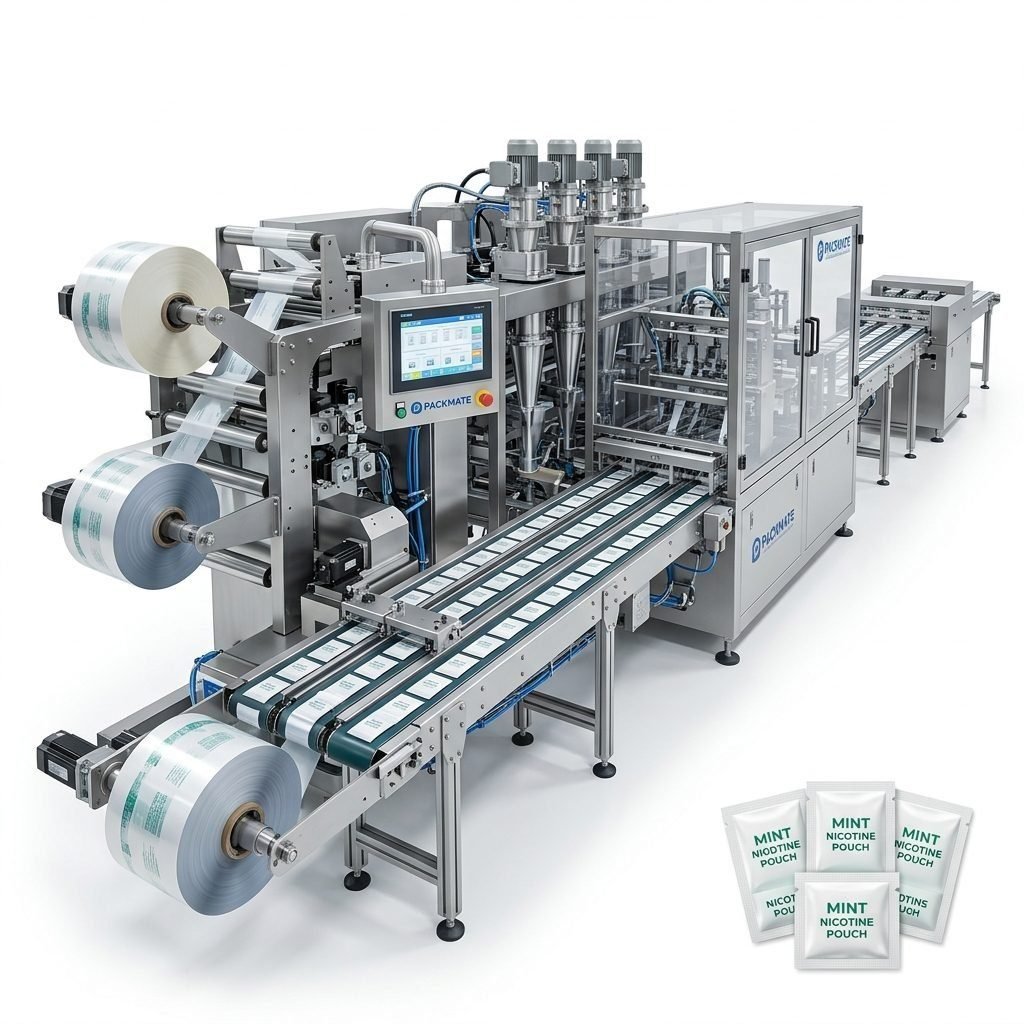
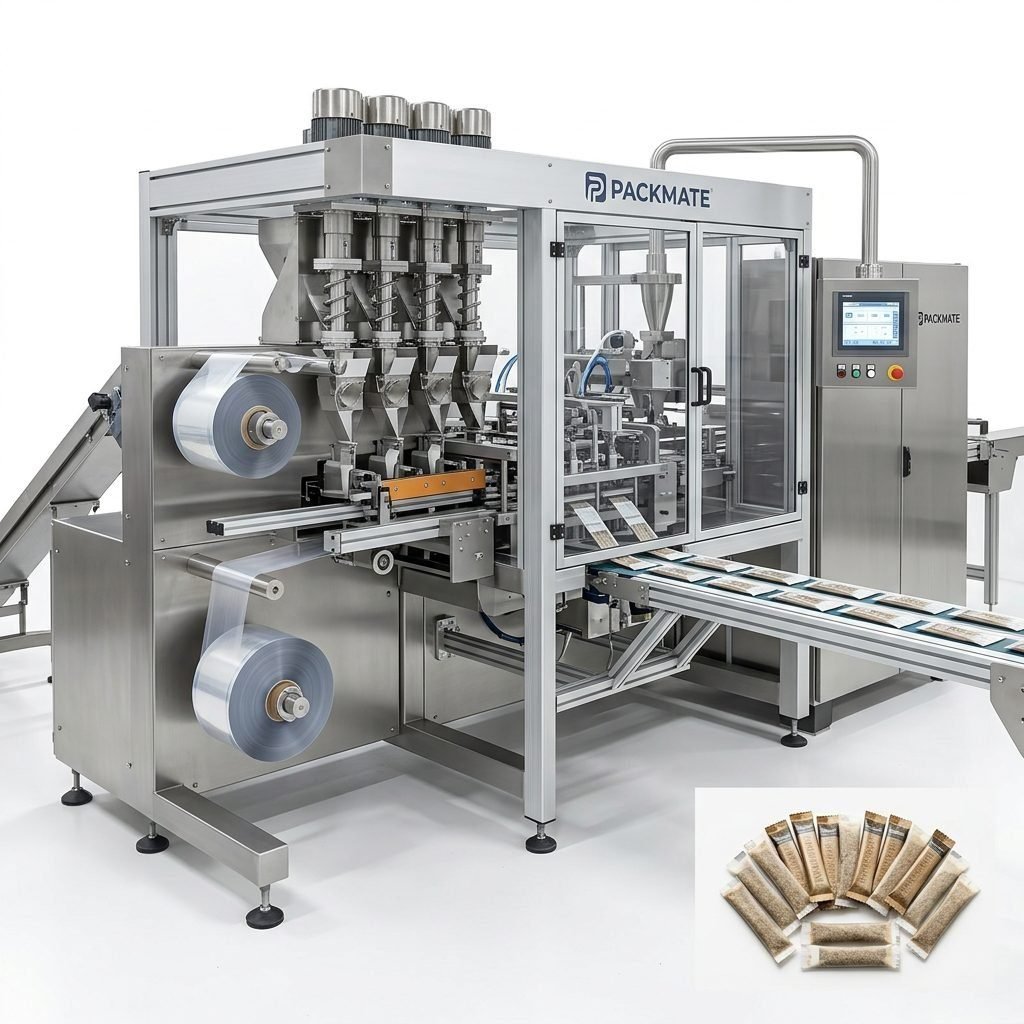
Entering or expanding production of snus and nicotine pouches in Canada requires more than picking a machine off a catalog. You need a reliable supplier that understands regulatory nuance, bilingual labelling, seasonal logistics, and the specific packaging formats popular with Canadian consumers. This guide walks Canadian manufacturers and contract packers through how to choose the best snus packaging machinery supplier to match your production needs, reduce time-to-market, and protect long-term profitability.
Why the right supplier matters for snus production in Canada
Canada’s market for nicotine pouches is evolving rapidly. A supplier that only sells machines is not enough — you need a partner who can advise on machine format selection, ensure compliance with provincial and federal rules, and provide ongoing service. Choosing poorly risks costly downtime, compliance problems, and substandard packaging that damages brand reputation.
Key Canadian considerations
Canadian buyers should prioritize suppliers that understand:
🔍 • The bilingual requirement in Quebec and label regulations in other provinces
⚖️ • How health and product classification rules can affect nicotine pouch production and packaging claims
❄️ • Climate and storage challenges across Canada — from coastal humidity to winter shipping — that can affect machine setup and material selection
Step 1 — Define your production needs clearly
Start with a clear production brief. This reduces supplier ambiguity and ensures quotes match your true needs.
Production brief checklist: target daily throughput, pouch formats (single-dose cans, sachets, stick packs, multi-lane), expected SKU range, target automation level, space constraints, and required integration with upstream weighing or downstream case packing.
Estimate capacity and flexibility
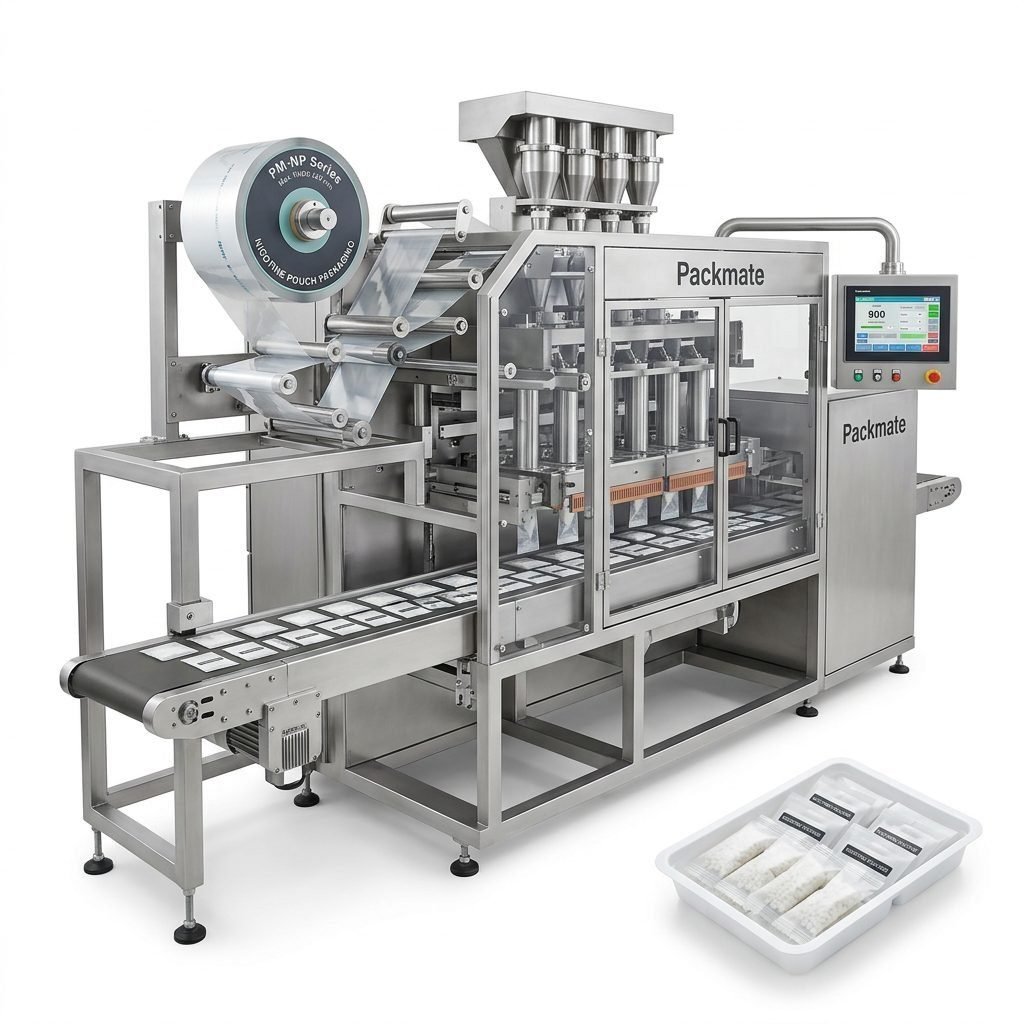
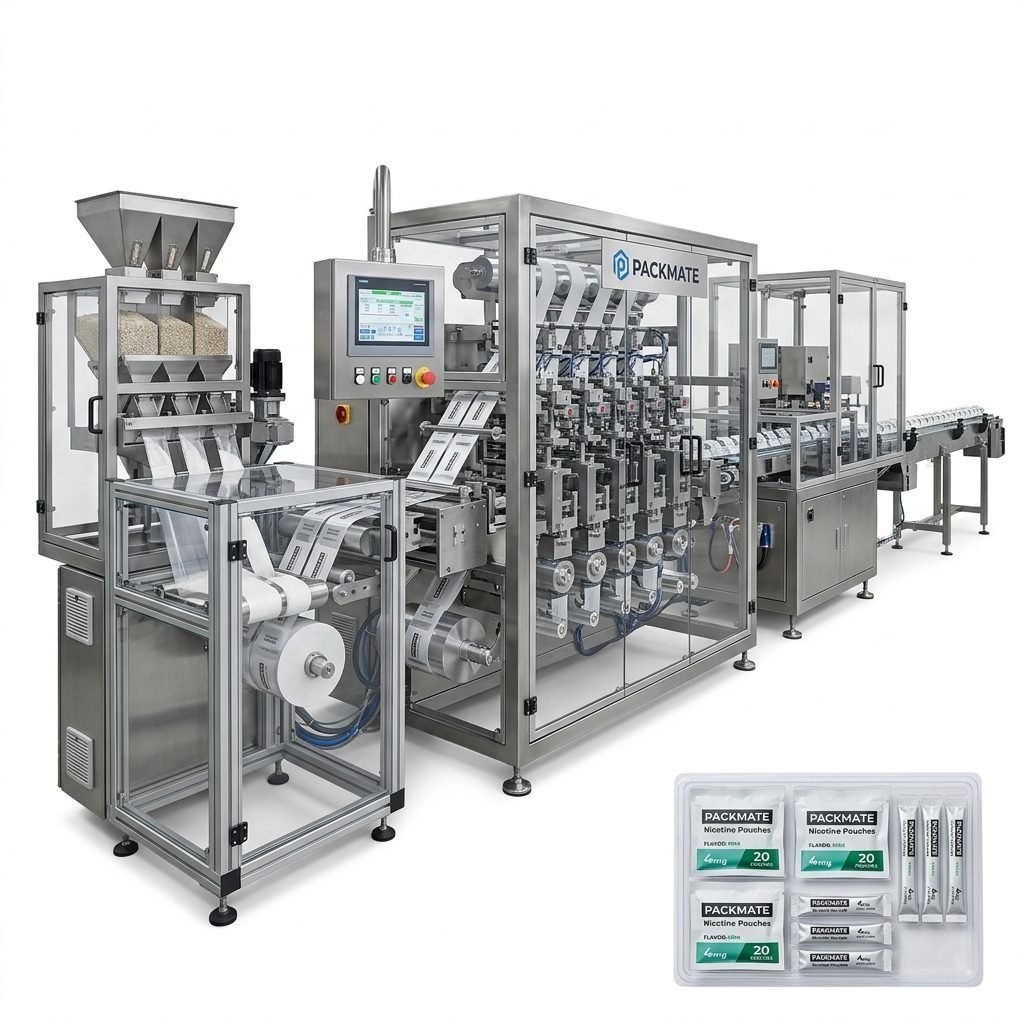
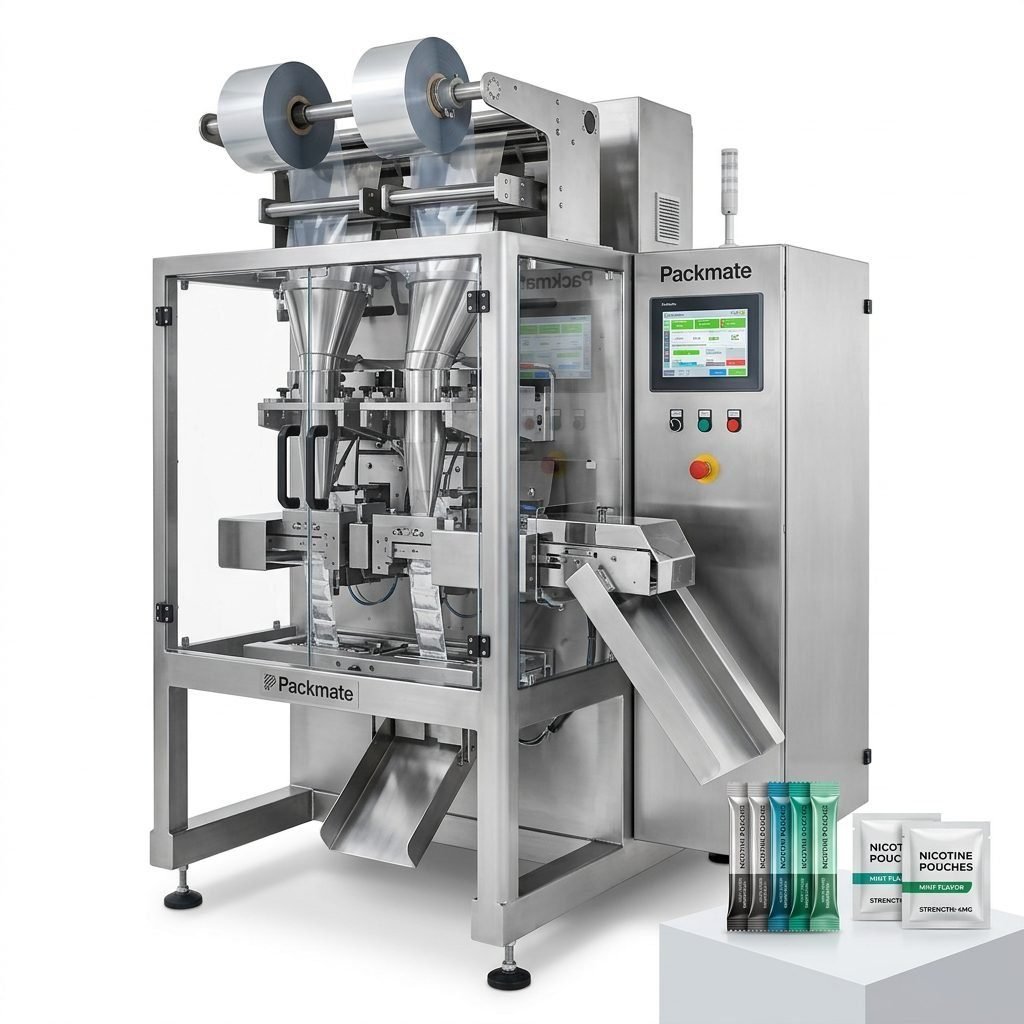
Decide whether you need a high-speed multi-lane system for large volume snus pouches or a modular line that can handle multiple small-batch SKUs. Suppliers like Packmate offer both multi-lane high-performance lines and flexible sachet/stick pack solutions — check product pages such as Snus & Nicotine Packaging Machines and Sachet & Stick Pack Machines.
Step 2 — Understand machine types and what suits your SKUs
Common packaging formats include stand-up pouch, sachet, stick pack, portion pouches, and multi-portion cans. Each format has different machine footprints, speeds, and material compatibility.
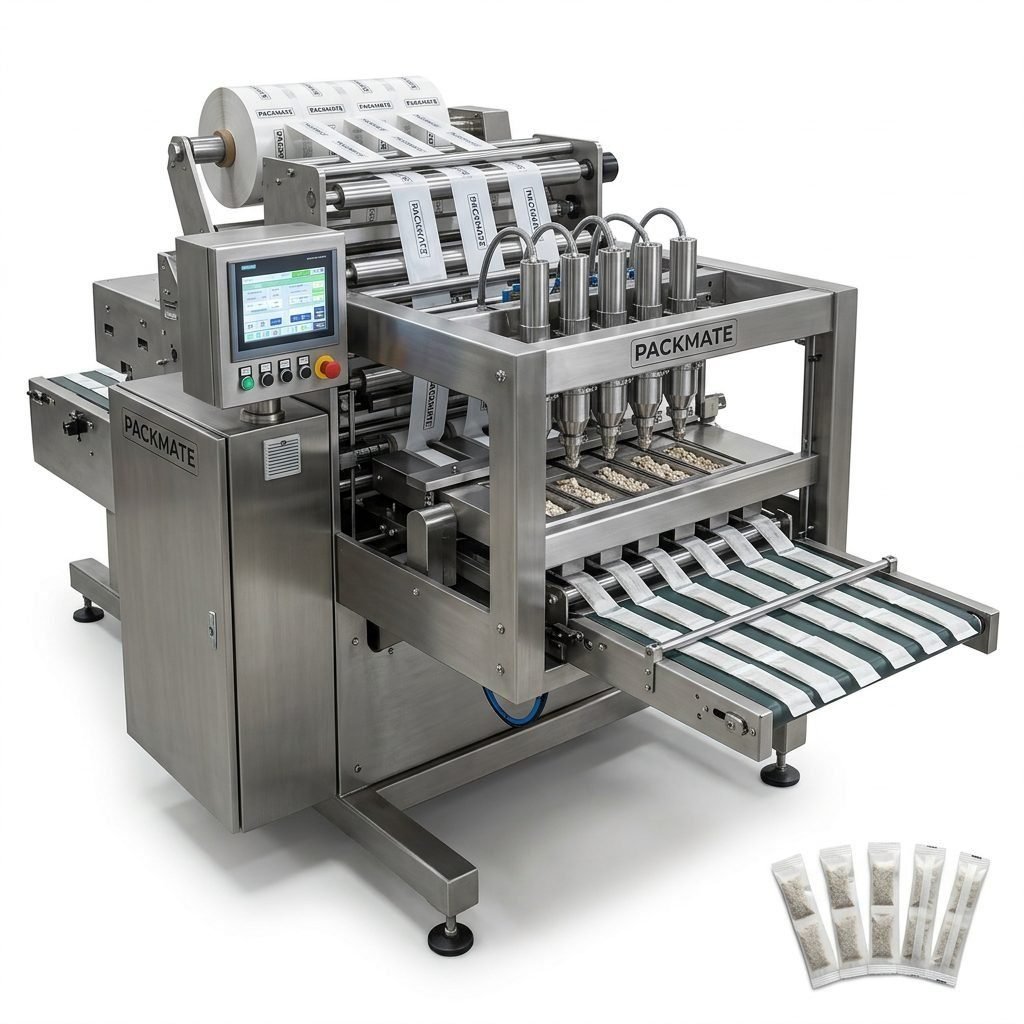
Stick packs and sachets
Stick packs are efficient for single-portion deliveries and retail display. Sachet machines are well suited for small pouches and can be adapted for moisture-sensitive products. If you plan mixed formats, look for a supplier offering modular solutions.
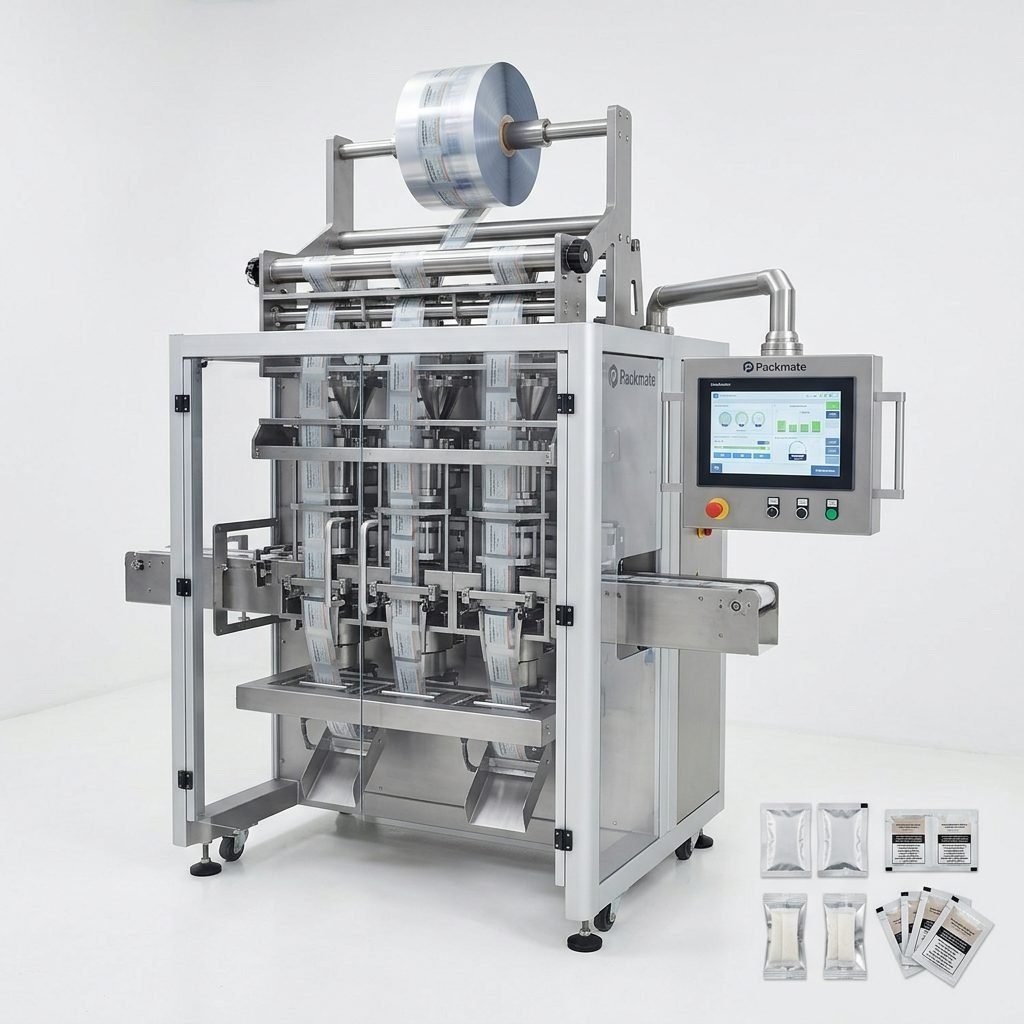
Multi-lane pouch systems
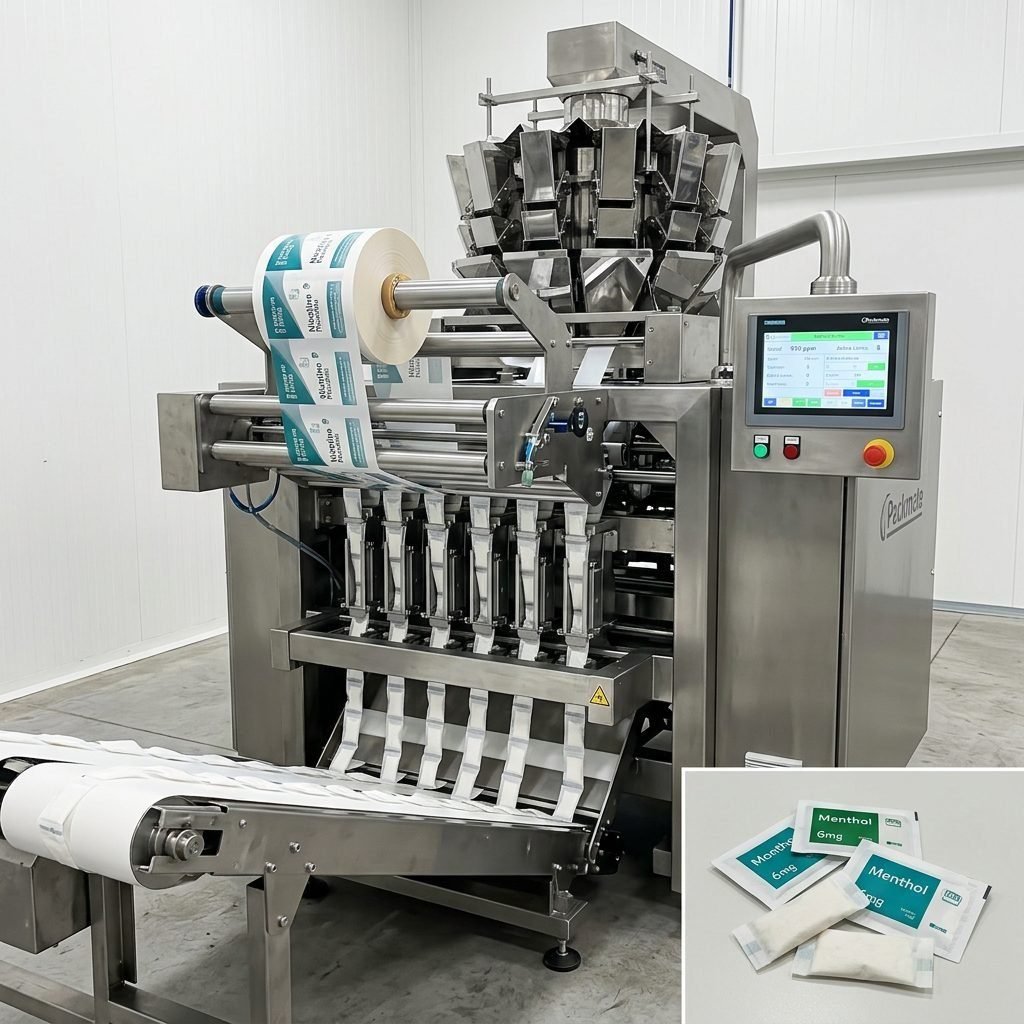
High-volume nicotine pouch producers often choose multi-lane lines to scale output. These systems require stronger support in commissioning and maintenance, so factory capability and engineering experience are essential.
Step 3 — Vet supplier manufacturing strength and track record
Look beyond brochures: check factory size, machining capabilities, quality control, certifications, and real-world case studies.
Packmate Snus Machine, for example, highlights a 20,000㎡ facility, advanced CNC centers, and 30+ years of experience — indicators of capacity to deliver complex turnkey lines. See their company overview at About Packmate.
Red flags to watch for: suppliers without on-site CNC or assembly lines, no factory tours, or limited references for snus/nicotine pouch projects.
Step 4 — Verify quality, compliance and certifications
Machinery should meet international safety and quality standards (CE, ISO). Also confirm material compatibility (PE/PA laminates, aluminized films), servo control precision, and sanitary design for easy cleaning.
If regulatory conformity is critical, request certificate copies and ask about previous installations in regulated markets. Packmate lists certifications and shows global compliance history on their Certificate page.
Ask for tech dossiers and FAT documentation
Factory Acceptance Test (FAT) reports, spare parts lists, electrical schematics, and operating manuals should be available before signing. These documents reduce surprises during installation and commissioning.
Step 5 — Evaluate after-sales service and spare parts availability
For high uptime, service support matters as much as build quality. Confirm guaranteed response times, remote support options, and availability of wear parts. Confirm whether the supplier offers training at your site in Canada.
Check the supplier’s service commitments and warranty policy at their Service page and contact channels at Contact Us.
Essential service guarantees: on-site commissioning, remote diagnostics, spare parts shipment within a defined SLA, and operator training packages.
Step 6 — Consider turnkey vs modular delivery
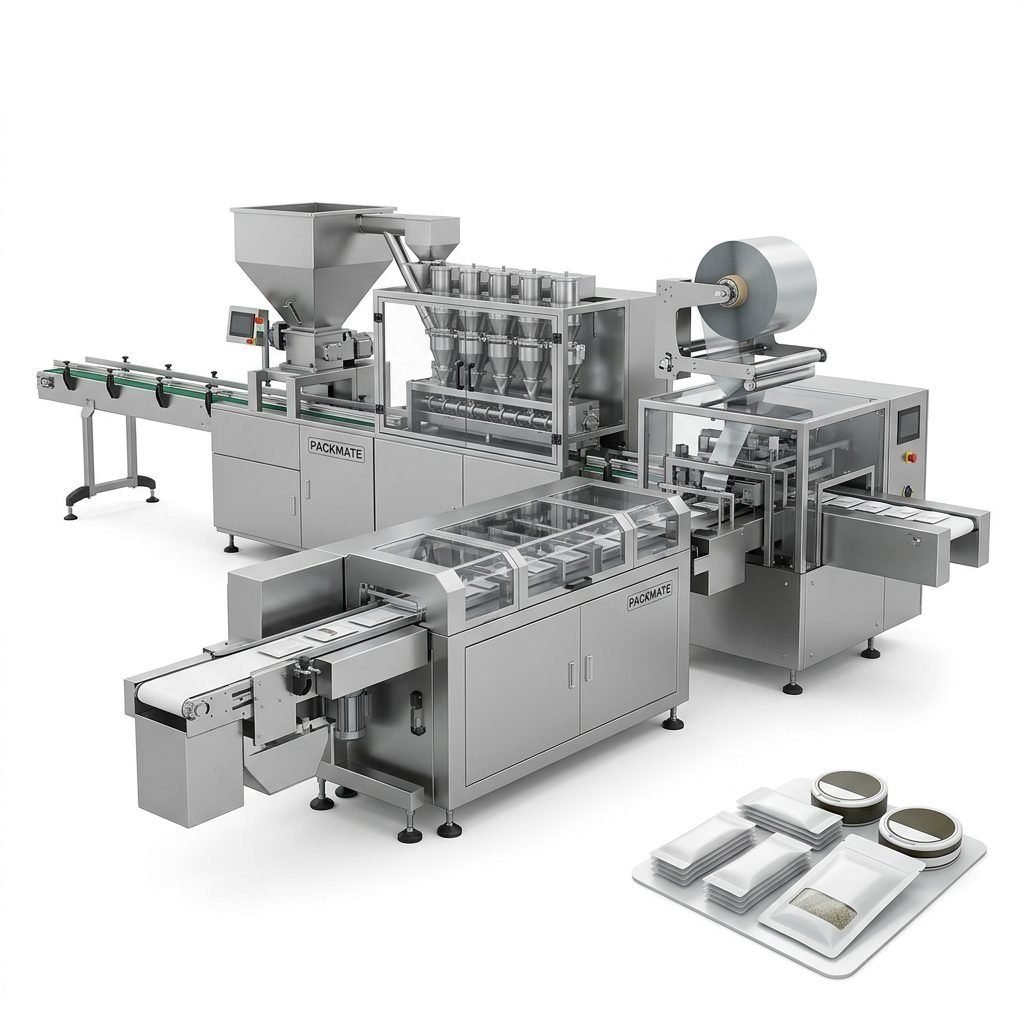
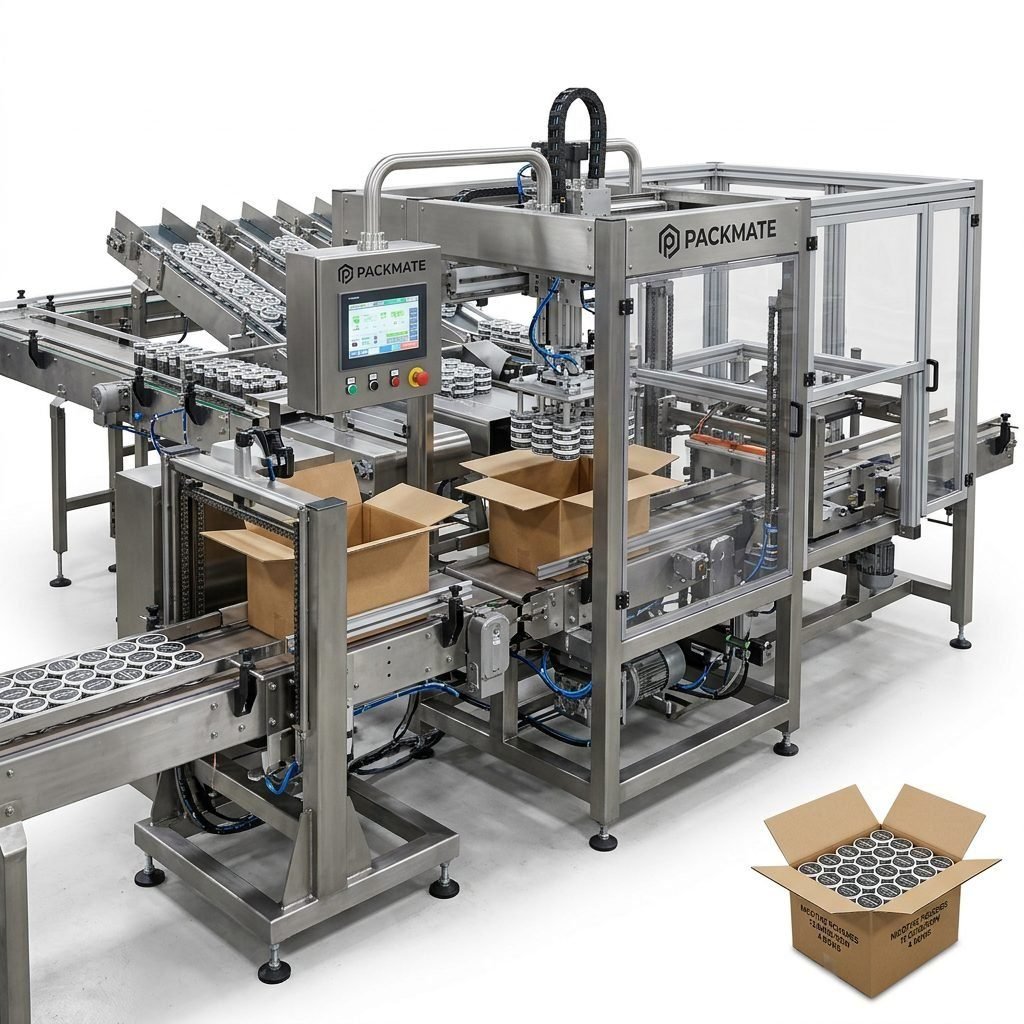
Turnkey suppliers manage integration of weighing, filling, form-fill-seal, labeling, and case packing. Modular vendors allow phased investment. Both models have pros and cons: turnkey reduces integration risk but requires larger upfront capital; modular allows gradual scaling.
If you need a full line, review Filling & Packaging Lines to understand typical line architectures and how suppliers like Packmate deliver integrated systems.
Step 7 — On-site audit and factory visit checklist
Whenever possible, visit supplier factories or demand live video tours. Use this checklist during the audit.
✅ Production floor cleanliness and organization
✅ CNC and machining capability evidence
✅ Assembly lines and test benches for snus machines
✅ FAT reports and demonstration videos of similar projects
✅ Spare parts warehouse and lifecycle planning
Step 8 — Commercial terms and total cost of ownership (TCO)
Price is important but should be evaluated against TCO: reliability, energy consumption, spare parts cost, and expected yield. Ask suppliers for lifecycle cost estimates and examples of ROI from existing customers.
Negotiation tips
Negotiate performance acceptance criteria, downtime allowances, payment milestones tied to FAT and SAT (site acceptance test), and penalties for missed delivery where appropriate.
Step 9 — Installation, validation and operator training
For regulated products, validate your line and document qualification protocols: IQ/OQ/PQ. Ensure the supplier provides detailed commissioning support, training for operators and maintenance crew, and clear SOPs.
Step 10 — Cultural fit and long-term partnership
A supplier’s willingness to support after purchase, train local teams, and adapt to Canadian regulatory updates is crucial. Look for a company with long-term vision, demonstrated by continuous improvement and global service footprint.
How Packmate positions itself
With 30+ years in packaging machine engineering and a wide portfolio of snus, sachet, and pouch systems, Packmate often highlights turnkey solutions, factory strength and exhibition presence that can reassure Canadian buyers. Explore real project examples on their Case page and review upcoming shows on Our Exhibition to see live demonstrations.
Practical procurement checklist before signing
Confirm the following items are in writing:
🔧 Detailed machine specification and capacity guarantees
📦 Spare parts list, recommended spares and lead times
🧾 FAT/SAT acceptance criteria and test protocols
🤝 Service level agreement and training scope
💳 Payment terms, warranty duration and penalties
Pro tip: retain a third-party engineering review if your program involves high automation or complex integration — this often uncovers hidden costs before procurement.
Local logistics and supply chain considerations in Canada
Factor in customs, duties, and the potential need for machine reconfiguration for Canadian electrical standards. Consider service hubs or local partners to shorten downtime response, and plan shipping to avoid delays during harsh winter months.
Final selection tips
When comparing finalists, score each vendor on production fit, engineering depth, compliance documentation, local support path, and total lifecycle cost. A balanced choice often beats the lowest bid when factoring reliability and service.
Decision matrix example (simple)
Score each supplier 1–5 on: Machine performance, Experience with snus, Factory capability, After-sales service, TCO. Prioritize suppliers with consistently high scores across technical and service metrics.
Conclusion
Choosing the best snus packaging machinery supplier in Canada requires careful alignment of technical capability, regulatory understanding, and long-term service support. Define your needs, vet factories, demand documentation, and prioritize partners who provide transparent TCO and strong post-sale service. Suppliers with proven turnkey experience and local support pathways will minimize risk and accelerate market entry.
Frequently Asked Questions
Q1: How important is bilingual packaging capability for suppliers serving Canada?
A: Very important. Quebec requires French on labels; many Canadian provinces expect clear consumer information. Ensure your supplier understands bilingual printing and label placement to avoid compliance issues.
Q2: Should I buy a turnkey line or assemble modules from different vendors?
A: Turnkey reduces integration risk and supplier finger-pointing but costs more upfront. Modular buys allow phased investment. Choose based on your in-house integration skills and capital plan.
Q3: What post-sale services should be mandatory in a contract?
A: Include commissioning, operator training, defined response times for critical faults, spare parts lead times, and remote diagnostic support.
Q4: How do climate factors in Canada affect machine selection?
A: Humidity and cold can affect film behavior and machine pneumatics/electronics. Ensure machines are configured for local conditions, and plan climate-controlled storage for sensitive materials.
Q5: Where can I see real examples of snus lines before purchasing?
A: Visit supplier case studies, attend industry exhibitions, or request live demos. Packmate publishes project cases and exhibition plans that can help validate performance.