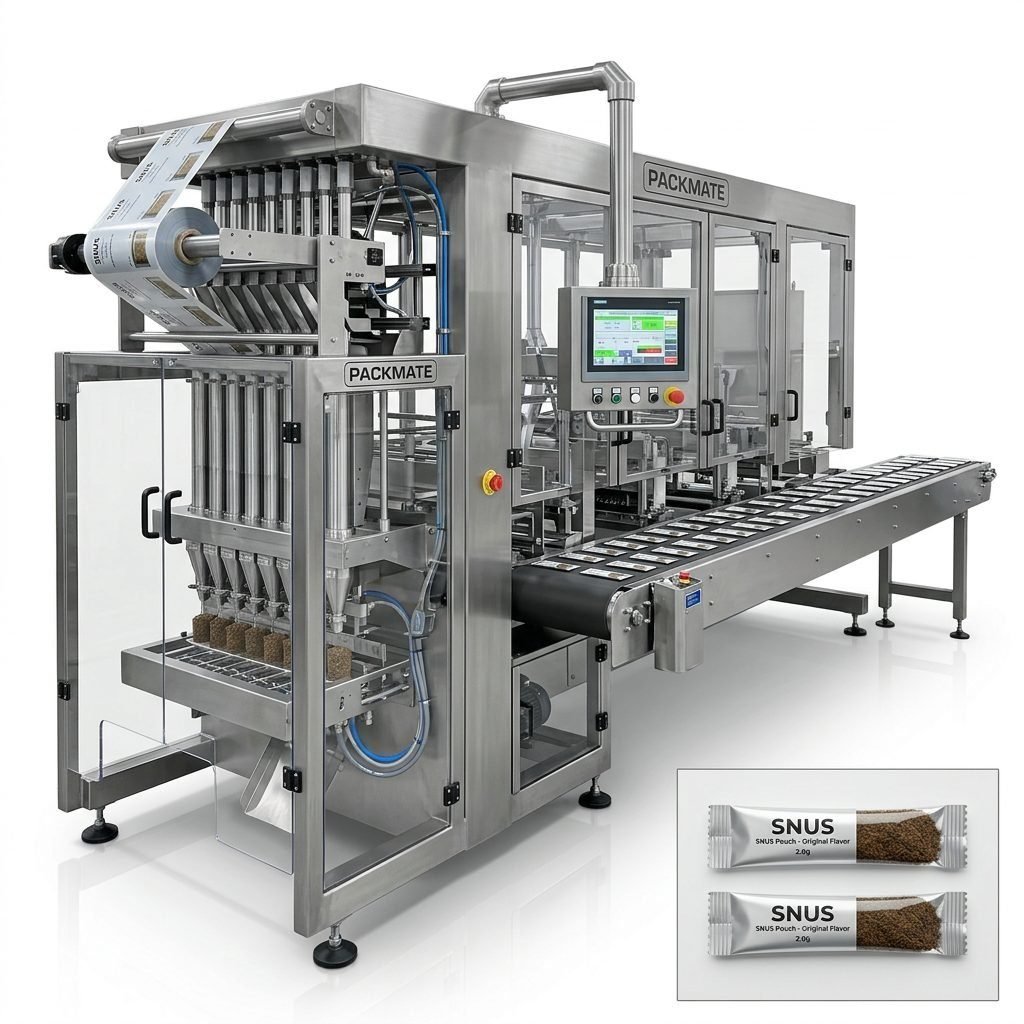
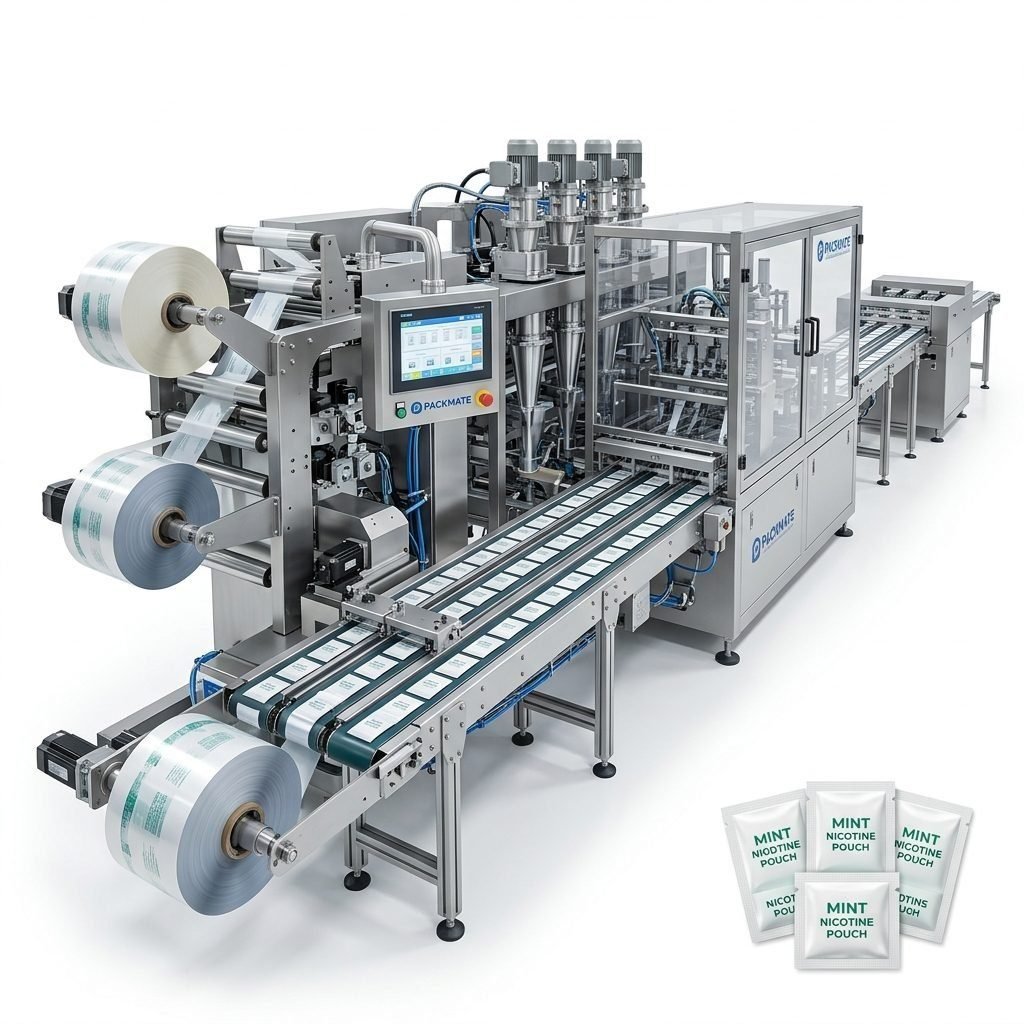
Introducing practical guidance for packaging managers, production planners, and business owners in the Dominican Republic who are evaluating snus packaging machinery for their operations. This article walks through the technical choices, local considerations, and commercial factors that matter when selecting equipment — from single-lane sachet machines to high-speed multi-lane nicotine pouch lines.
Why the Dominican Republic market needs a tailored approach
The Dominican Republic presents unique opportunities and constraints for snus and nicotine pouch production. Local climate (hot and humid coastal zones), consumer habits that favor discreet formats, and import rules for packaging materials all influence machine selection. A packaging line that works well in northern Europe may require modifications for heat-resistant seals, higher barrier films, and robust humidity control when installed in the Caribbean. Also consider that Spanish-language labeling and consumer preference for compact retail-ready pouches are common — selecting machines with flexible printing and labeling integration will make market entry smoother.
Key local factors to keep in mind
• Climate resilience: choose machines and materials rated for higher ambient temperatures and humidity to avoid seal failures and spoilage.
• Packaging size trends: many Dominican consumers prefer small, discreet pouches — high-precision multi-lane machines that handle low-dose filling are advantageous.
• Regulatory & labeling: ensure integration of labeling printers capable of Spanish text and batch traceability for local authorities.
• After-sales proximity: prefer suppliers with reliable global support, spare parts access, and remote troubleshooting to reduce downtime.
Understand your production needs: capacity, format, and flexibility
The first step is a clear assessment of your target output. Are you planning a pilot line with a daily output of a few thousand pouches, or a full-scale production line delivering several hundred thousand per day? Production capacity determines the class of machine you need:
Low-volume / Pilot Production
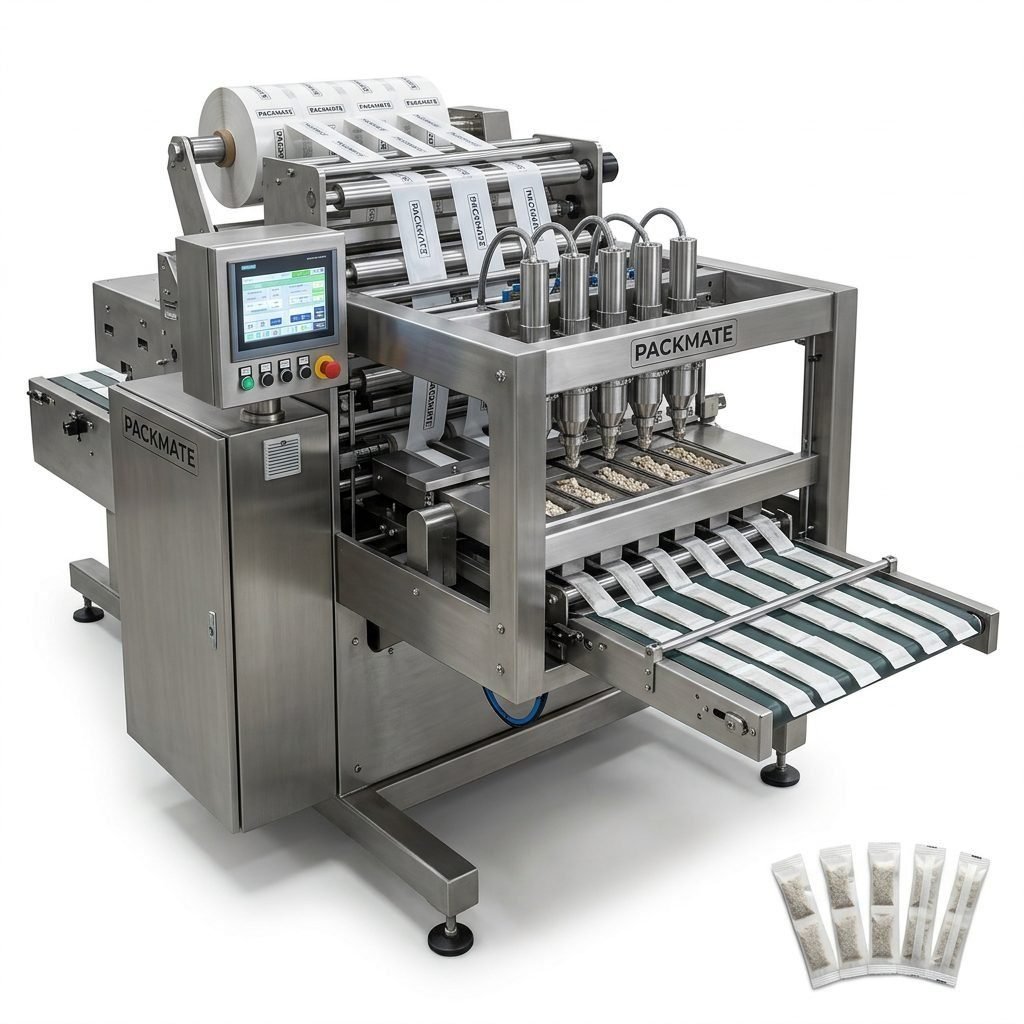
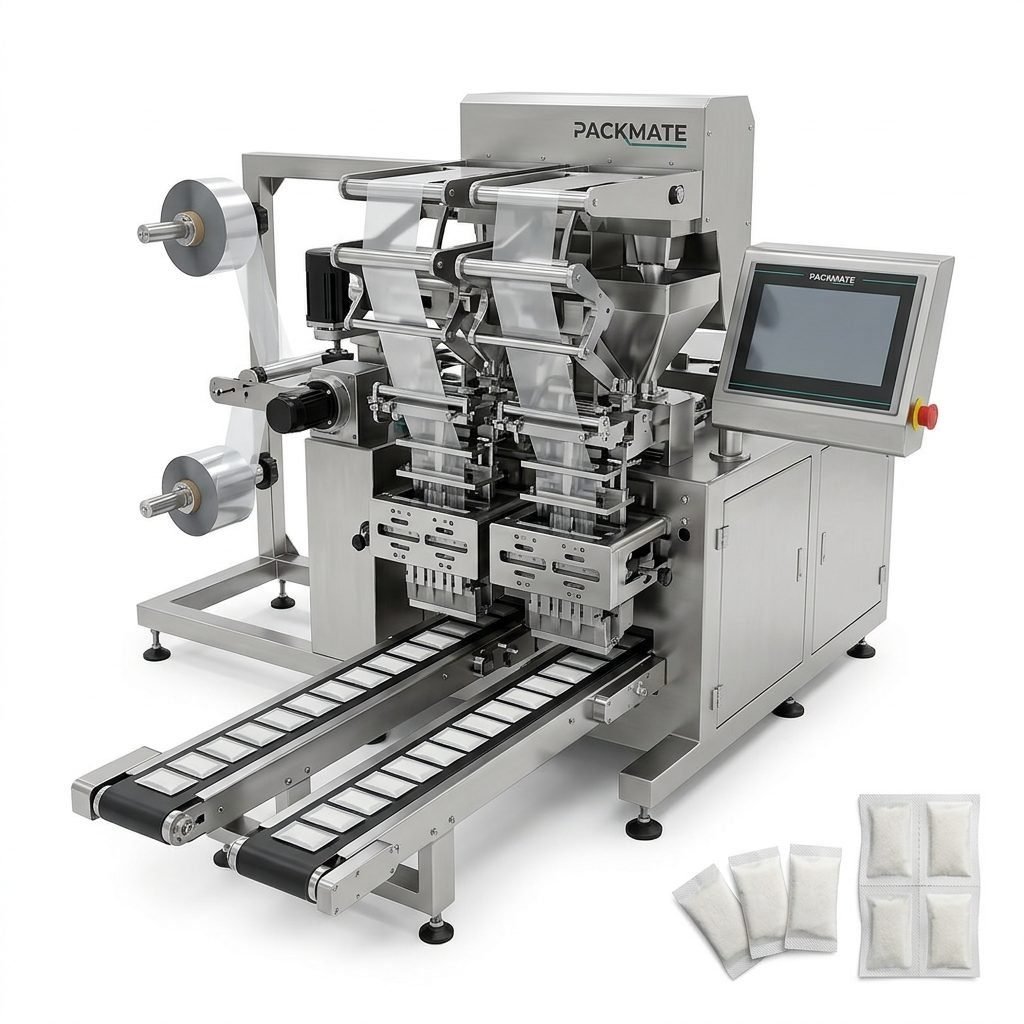
For startups or R&D facilities, a single-lane sachet or stick pack machine that offers easy changeovers, simple dosing options, and modest footprint is ideal. These machines lower initial capital expenditure while allowing product development and market testing.
Mid to High-volume Production
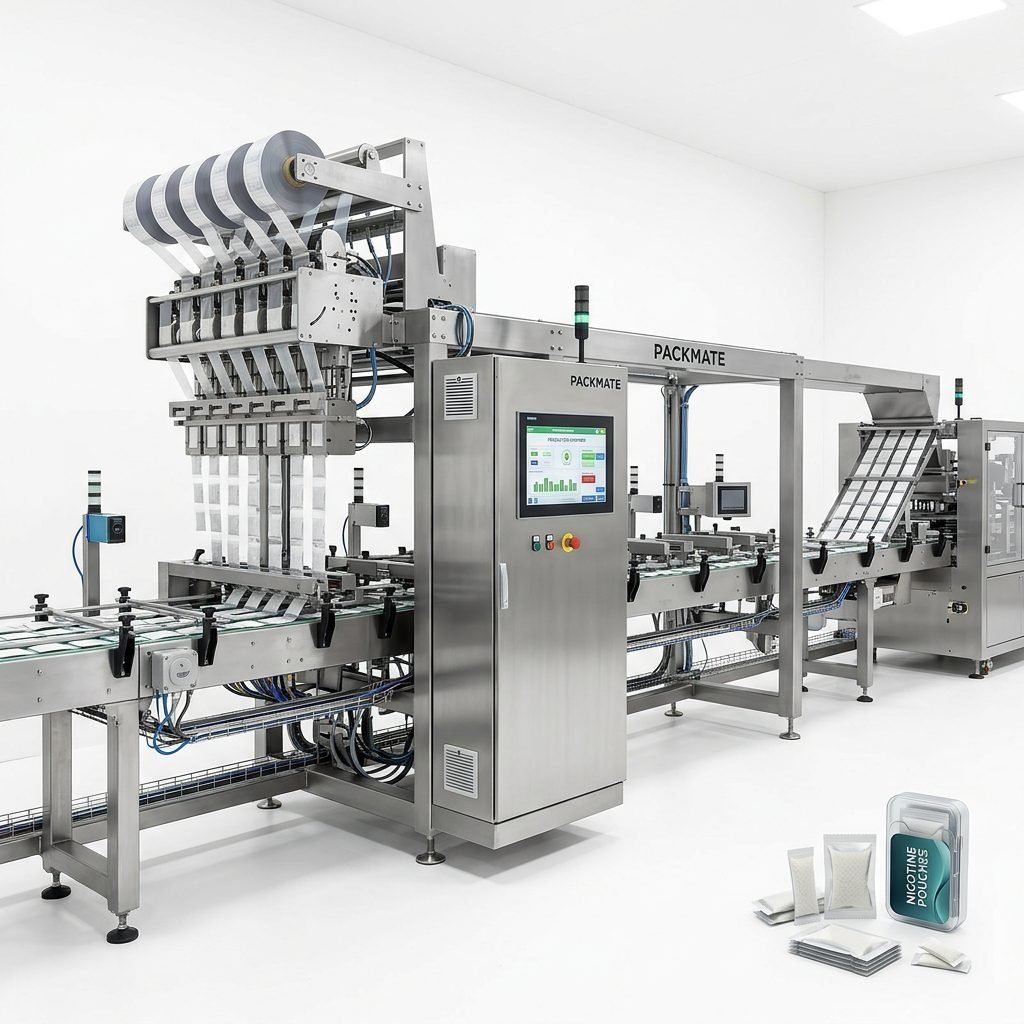
Multi-lane packaging systems, automated feeding, and in-line checkweighers become essential at commercial scale. Look for proven multi-head or volumetric dosing modules that maintain accuracy across lanes and offer synchronized sealing and cutting to meet high output without compromising quality.
Which machine types to consider?
Different product presentations require different equipment. The main categories to evaluate:
Sachet & Stick Pack Machines
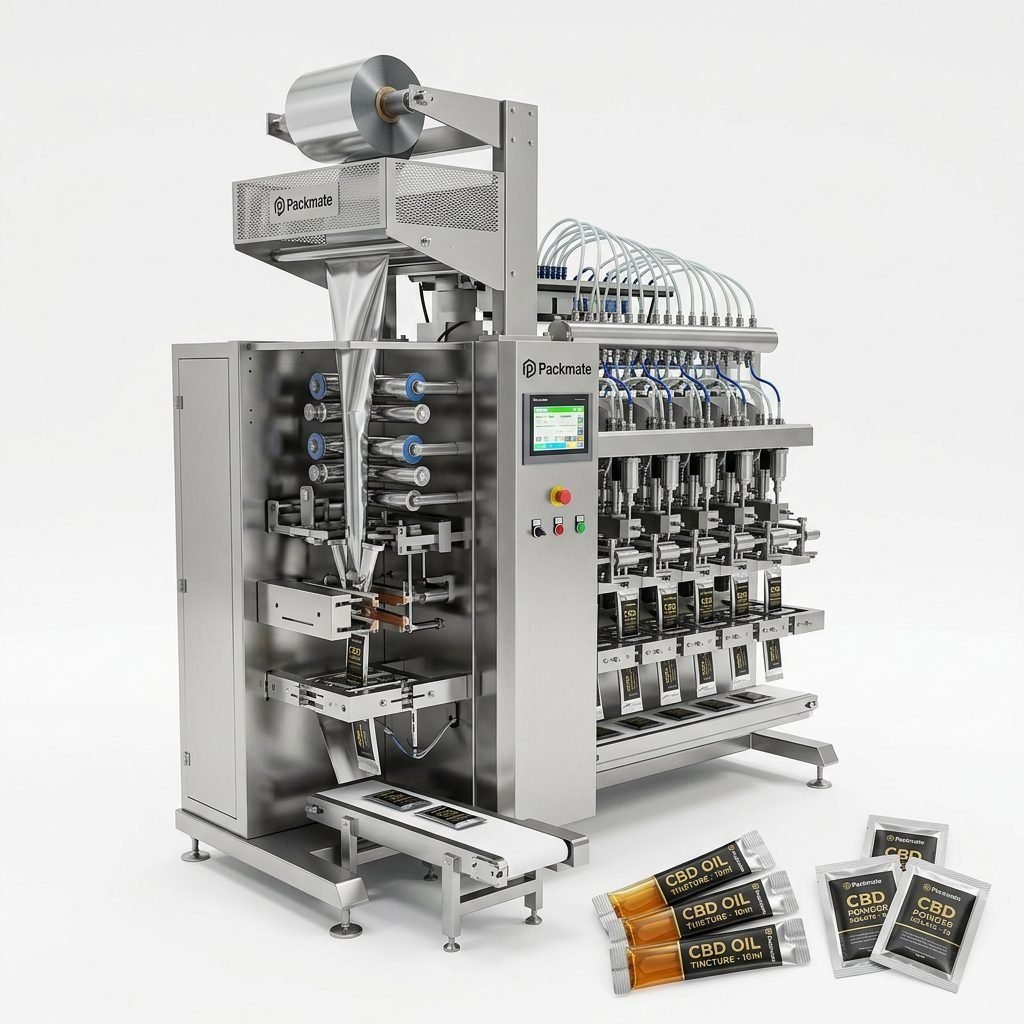
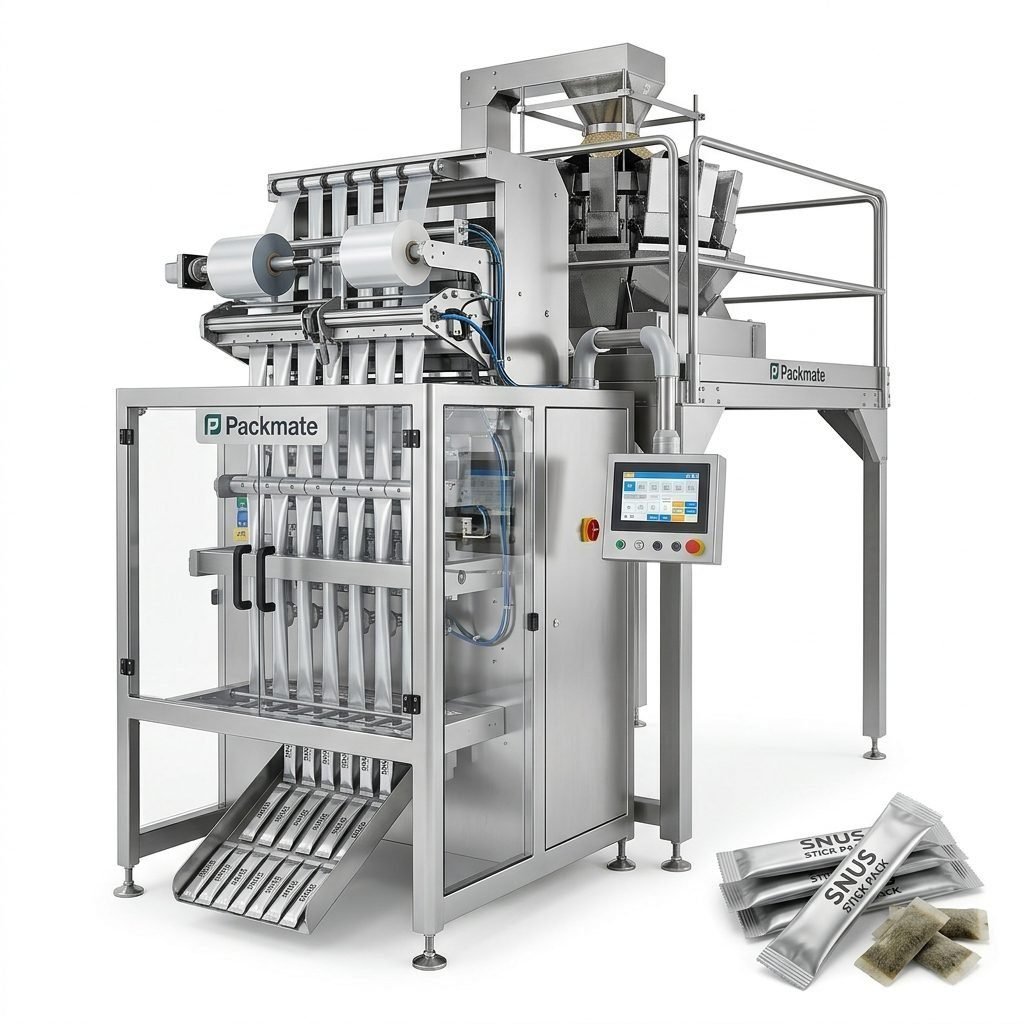
Best for single-dose formats with precise portioning. These machines can produce small sealed pouches easily and are economical for many snus-style products. See examples of high-performance sachet & stick pack machines for reference:
Sachet & Stick Pack Machines.
Multi-lane Snus / Nicotine Pouch Machines
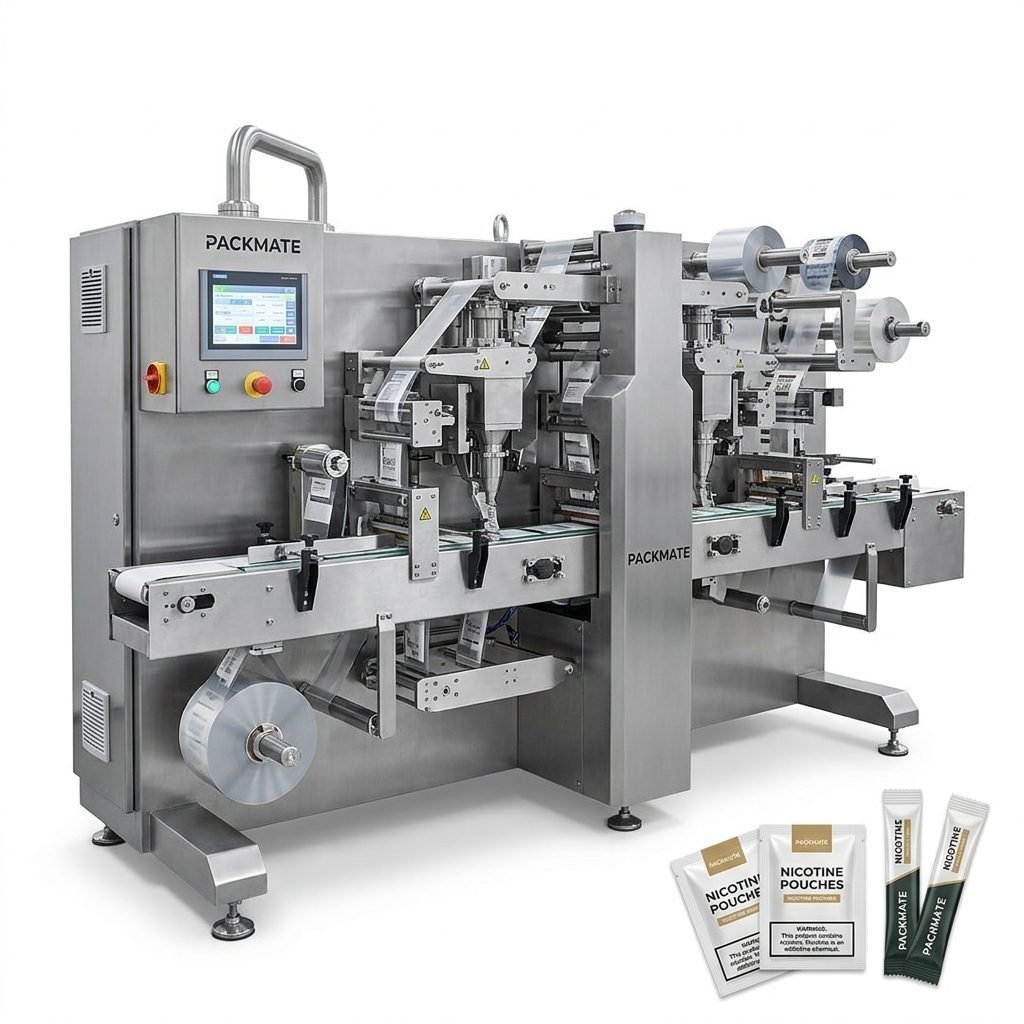
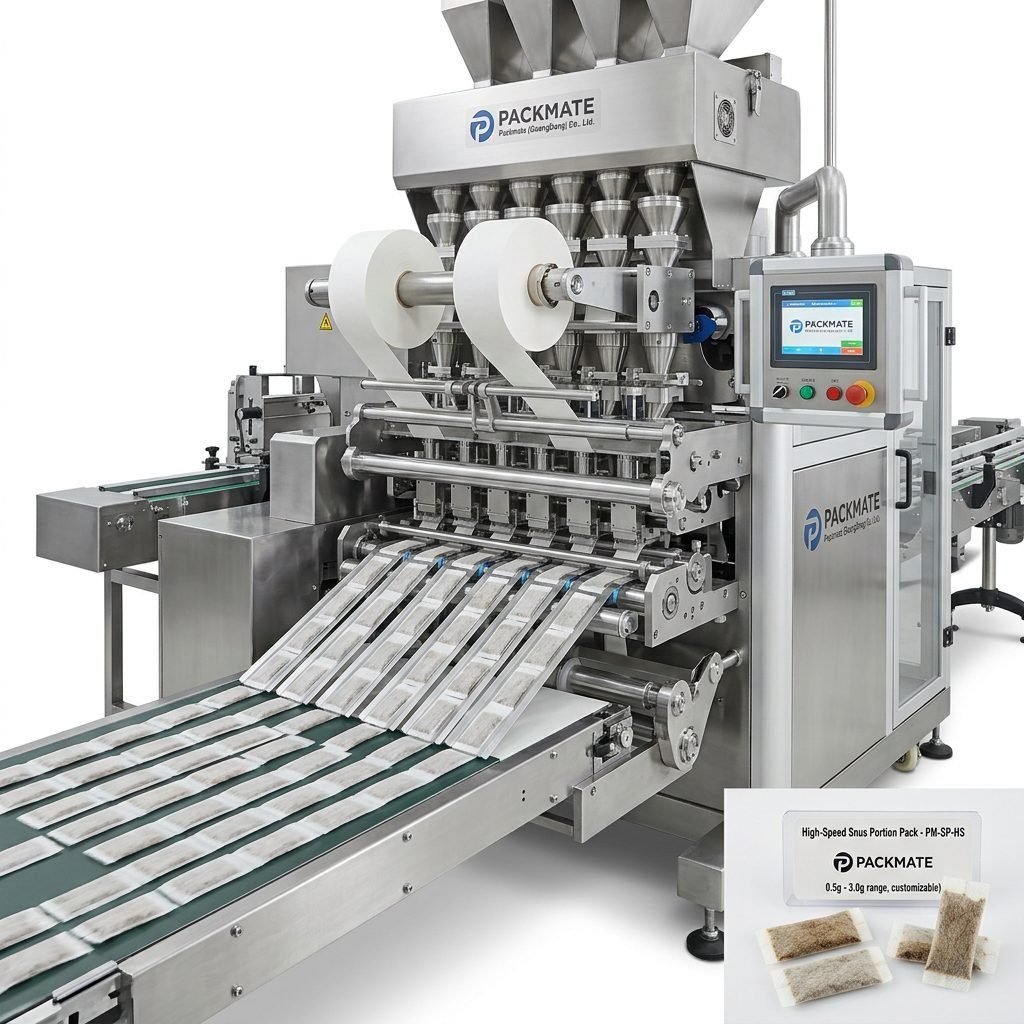
When small-dose nicotine pouches are your core product, multi-lane packaging machines increase throughput without enlarging the factory footprint. Choose models with accurate dosing for powders or moisture-controlled blends, synchronized sealing for consistent pouch weights, and CIP-friendly designs if hygiene is critical. For an overview of industry solutions, you can view:
Snus & Nicotine Packaging Machines.
Filling & Continuous Packaging Lines
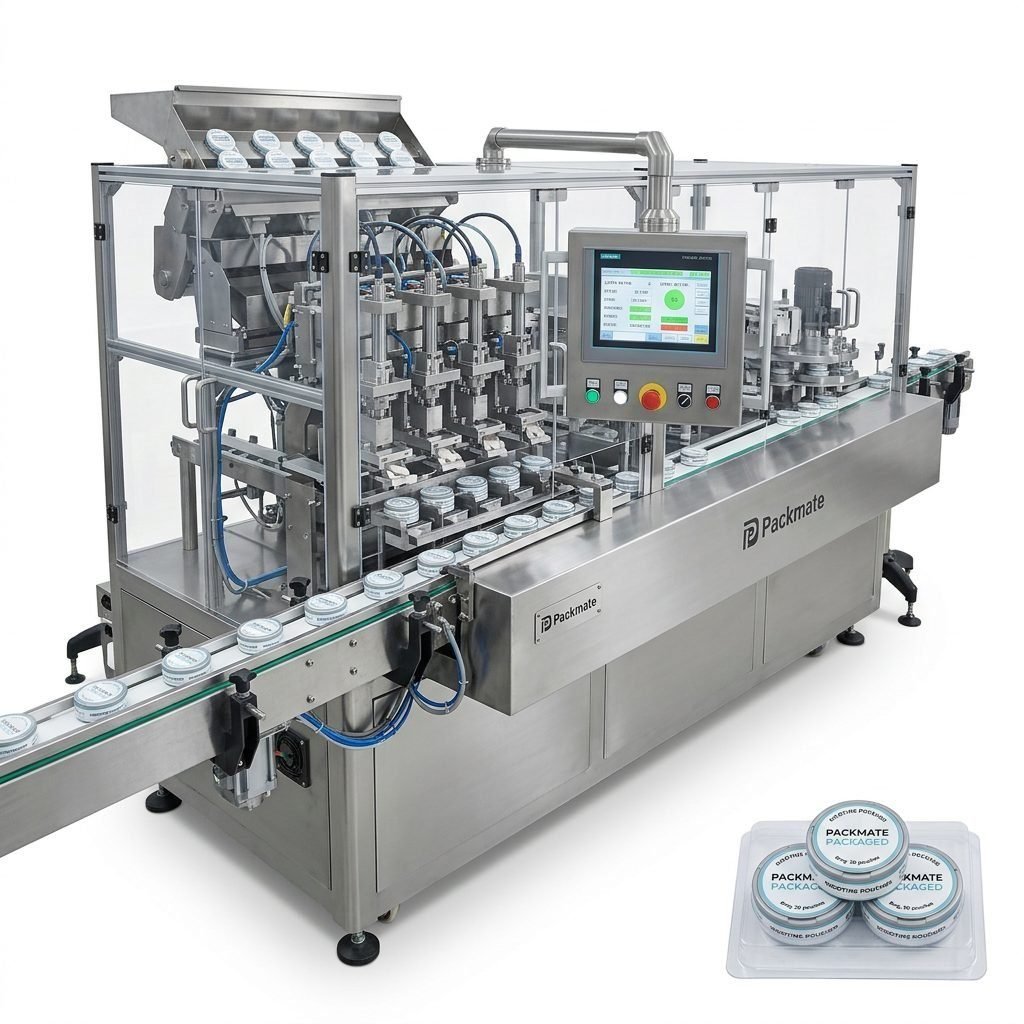
For liquid or paste fillings used in some product variants, integrate filling systems with pouch forming, sealing, and secondary packaging. Look for synchronized lines that reduce manual handling and ensure consistent fill volumes:
Filling & Packaging Lines.
📌 Quick takeaway: For Dominican Republic conditions, prioritize machines with robust sealing, humidity control, and flexible labeling. Multi-lane systems are preferable for commercial growth; single-lane lines are perfect for pilots.
Material compatibility and barrier requirements
Materials are as important as machinery. High-barrier laminates protect nicotine pouches from moisture and oxidation — a must in warm and humid climates. Machines must handle varying film thicknesses and multiple laminate constructions while maintaining seal integrity. Confirm that the selected equipment supports temperature-controlled sealing jaws and programmable dwell time for optimal seal strength.
Packaging film & pouch considerations
• Barrier layer: aluminum or metallized films offer excellent oxygen/moisture protection.
• Heat-seal performance: choose sealant combinations compatible with your machine’s heating profile.
• Secondary packaging: cartons and display-ready trays should be considered when sizing your line and timing secondary packaging equipment.
Automation, integration and line footprint
Automation levels range from semi-automatic machines requiring manual pouch loading to fully automated turnkey lines with automatic feeders, inline checkweighers, vision inspection, and case packers. In the Dominican Republic, factory space and labor costs may influence your automation choice; however, investing in automation will usually pay off through reduced variability and improved hygiene.
Integration checklist
• HMI and recipe management for quick product changeovers.
• In-line quality control: checkweighers and vision systems to ensure label and print accuracy.
• Remote diagnostic capability for fast troubleshooting and lower service visits.
• Modular design that allows future expansion (add lanes or upstream filling modules).
Certifications, compliance and after-sales support
When selecting a supplier, confirm compliance with international standards such as CE and ISO — this indicates robust safety and manufacturing practices. Also prioritize vendors who provide training, spare parts packages, and documentation in Spanish if needed. Reliable global partners with exhibition presence and case histories tend to deliver better long-term support. For more company details or to check verified cases and certifications, consult:
About Packmate,
Case,
Certificate.
Service, spare parts and training — reducing downtime in the Caribbean
Minimizing downtime is critical. Identify suppliers that provide:
• Localized training for Dominican staff or Spanish-language manuals.
• Fast shipping of spare parts and a standard spare-parts kit for critical wear items (sealing bars, sensors, belts).
• Remote technical support with clear escalation procedures to solve issues after hours.
⚠️ Important: Confirm spare-part lead times to the Dominican Republic and include customs clearance time into your maintenance SLR (service level requirements).
Budgeting and ROI: what to calculate
A pragmatic ROI analysis includes initial CAPEX, installation and commissioning, expected throughput, scrap/waste rates, labor savings from automation, utility consumption, and maintenance costs. Factor in material cost differences for high-barrier films versus standard materials, because climate-adapted packaging may increase material cost but drastically extend shelf life and reduce returns.
Sample ROI items
• Payback period from reduced labor and scrap.
• Increased revenue from higher-quality packaging and longer shelf life.
• Savings from integrated inspection systems that cut rework rates.
Practical selection checklist (use this before purchasing)
✅ Machine selection checklist
• Production capacity requirement and expected growth plan.
• Product format compatibility (pouch size, fill type: powder/liquid/gel).
• Film compatibility and sealing capability under humid conditions.
• Automation level and HMI for multilingual support.
• Spare parts availability and local service options.
• Regulatory compliance and traceability features.
Why partner with experienced manufacturers
Working with manufacturers that have decades of experience ensures you get mature engineering solutions, tested multi-lane systems, and a partner that can deliver turnkey lines with customized dosing and sealing technologies. Packmate Snus Machine, for example, offers a wide range of snus and nicotine packaging machines and complete production solutions that include advanced CNC manufacturing, global certifications, and an established track record in multiple markets. Explore product categories and auxiliary equipment to plan a complete line:
Auxiliary Packaging Equipment,
Weighing & Packaging Systems.
Choosing the right partner — questions to ask vendors
• Do you provide on-site installation and startup support in the Caribbean region?
• What is the average lead time for spare parts and consumables to the Dominican Republic?
• Can the machine handle local film constructions and sealing specifications?
• What training programs are available for local operators and maintenance staff?
• Are there references or case studies in similar climate or market contexts?
Installation and commissioning tips for Dominican facilities
Ensure your production area has adequate climate control where possible. When full AC is not feasible, place critical components away from direct sunlight and allow space for ventilation. Schedule commissioning during off-peak import months to allow buffer time for customs clearance on spare parts and tools. Consider hiring local electricians familiar with machine voltage and grounding norms.
📌 Final recommendation: Use a phased approach — start with a pilot single-lane line if you are new to the market, then scale to multi-lane systems as demand stabilizes. Engage a supplier capable of turnkey delivery and long-term partnership.
Further resources and how to get support
For more details on product lines, support, and contact options, visit the manufacturer’s service and contact pages to request a proposal, technical specifications, or an on-site evaluation:
Service,
Contact Us.
Common Questions (FAQs)
Q1: How do I choose between single-lane and multi-lane machines for the Dominican market?
A1: Start with expected daily output and growth projections. For pilot volumes and quick product changes, single-lane is practical. For commercial volumes and lower unit labor costs, multi-lane systems are more efficient.
Q2: What packaging film is best for tropical climates?
A2: High-barrier laminates with metallized or aluminum layers combined with a heat-sealable layer are optimal. Ensure your sealing system can handle thicker films and has adjustable sealing parameters to maintain reliable seals in humidity.
Q3: How important is local training and spare-parts availability?
A3: Critical. Local training reduces operator errors and downtime. Fast spare-parts delivery reduces production interruptions; check vendor lead times to the Dominican Republic before purchase.
Q4: Can machinery handle Spanish labeling and traceability needs?
A4: Yes — most modern packaging machines support integrated printers and database-driven recipe management that can print Spanish-language labels and batch codes for compliance.
Q5: Where can I see real cases and machine demos?
A5: Request case studies and exhibition schedules from manufacturers. Many vendors provide video demonstrations and customer case references online to validate performance before purchase.