Choosing the right packing equipment for snus and nicotine pouches in Denmark requires a careful balance of regulatory awareness, production efficiency, product presentation, and local consumer preferences. This guide walks you through the critical factors to evaluate—from machine types and throughput to automation level, maintenance, and ecological considerations—so you can select the best snus packaging machinery for your Danish production line.
Understand Denmark’s Market & Consumer Habits
Denmark sits in the heart of Scandinavian oral nicotine culture where discreet consumption, high-quality presentation, and environmental responsibility are valued. Consumers often prefer low-dose, flavor-varied, and compact pouches that fit modern on-the-go lifestyles. Retail packaging commonly emphasizes minimalism, clear labeling, and recyclable materials. From a regulatory standpoint, while traditional snus (with tobacco) faces EU restrictions, tobacco-free nicotine pouches have seen rapid growth in Denmark and neighboring countries—so your machinery choices should support accurate labeling, batch tracking, and flexible pouch formats to adapt to evolving local rules and retailer demands.
Why local customs affect equipment selection
Producers in Denmark often prioritize:
- Discreet, compact packaging sizes for urban consumers
- Smaller batch runs for multiple flavors and SKUs
- High hygiene and CE/ISO-compliant manufacturing standards
- Recyclability and sustainability labeling to satisfy eco-conscious buyers
Key Machine Types for Snus & Nicotine Pouches
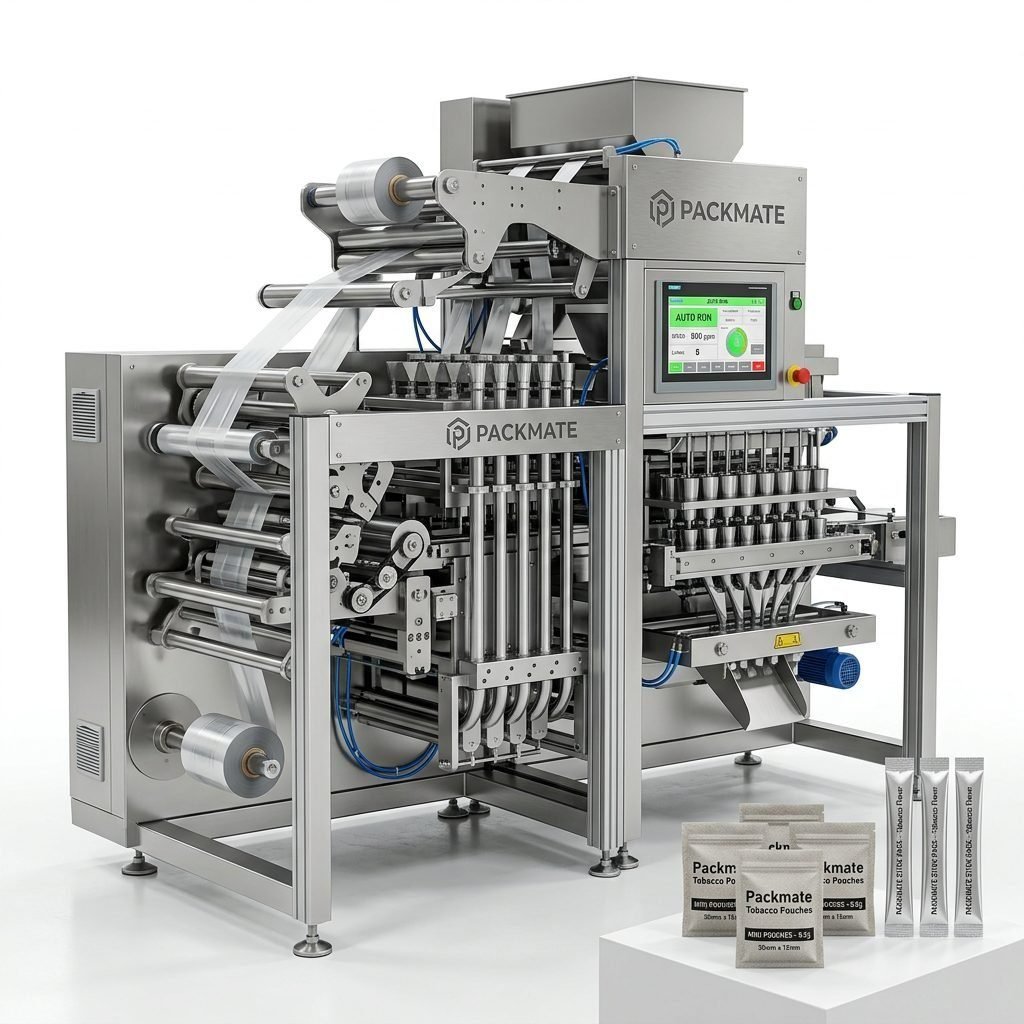
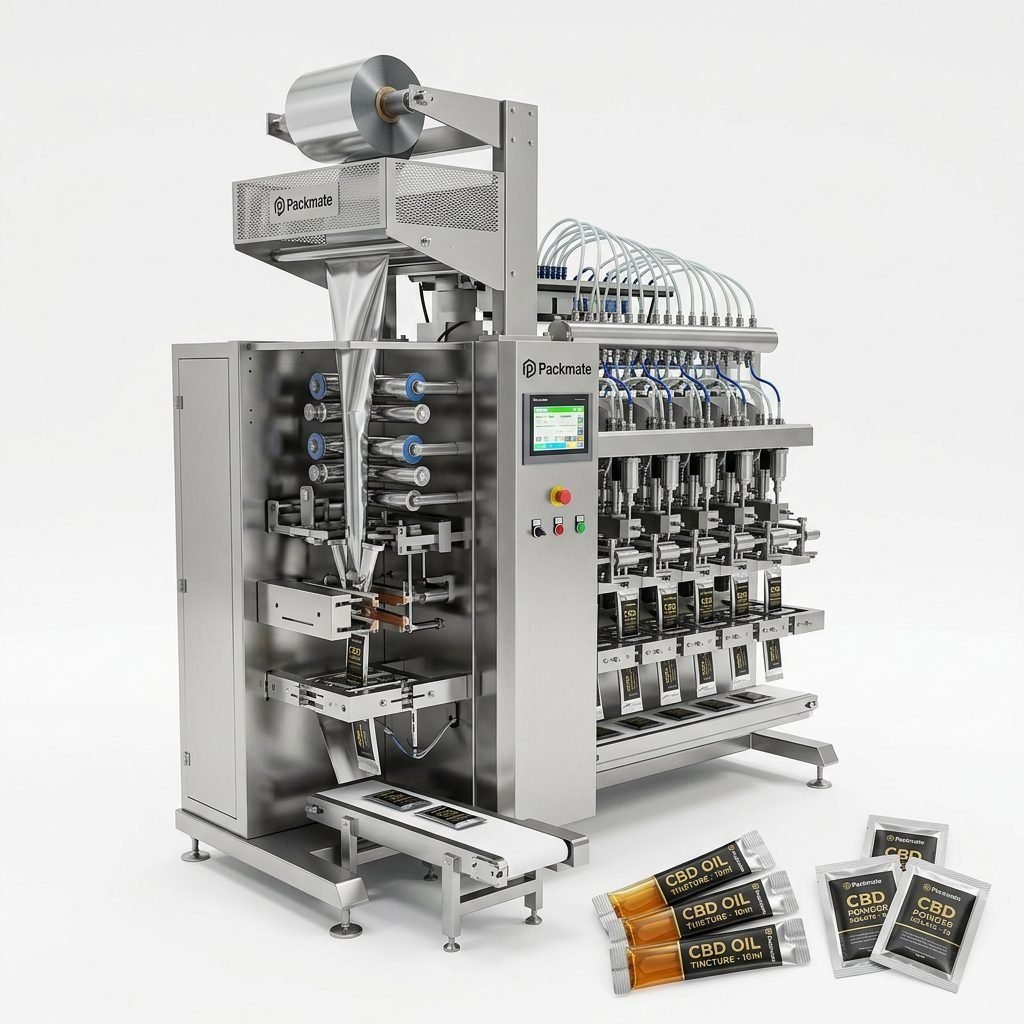
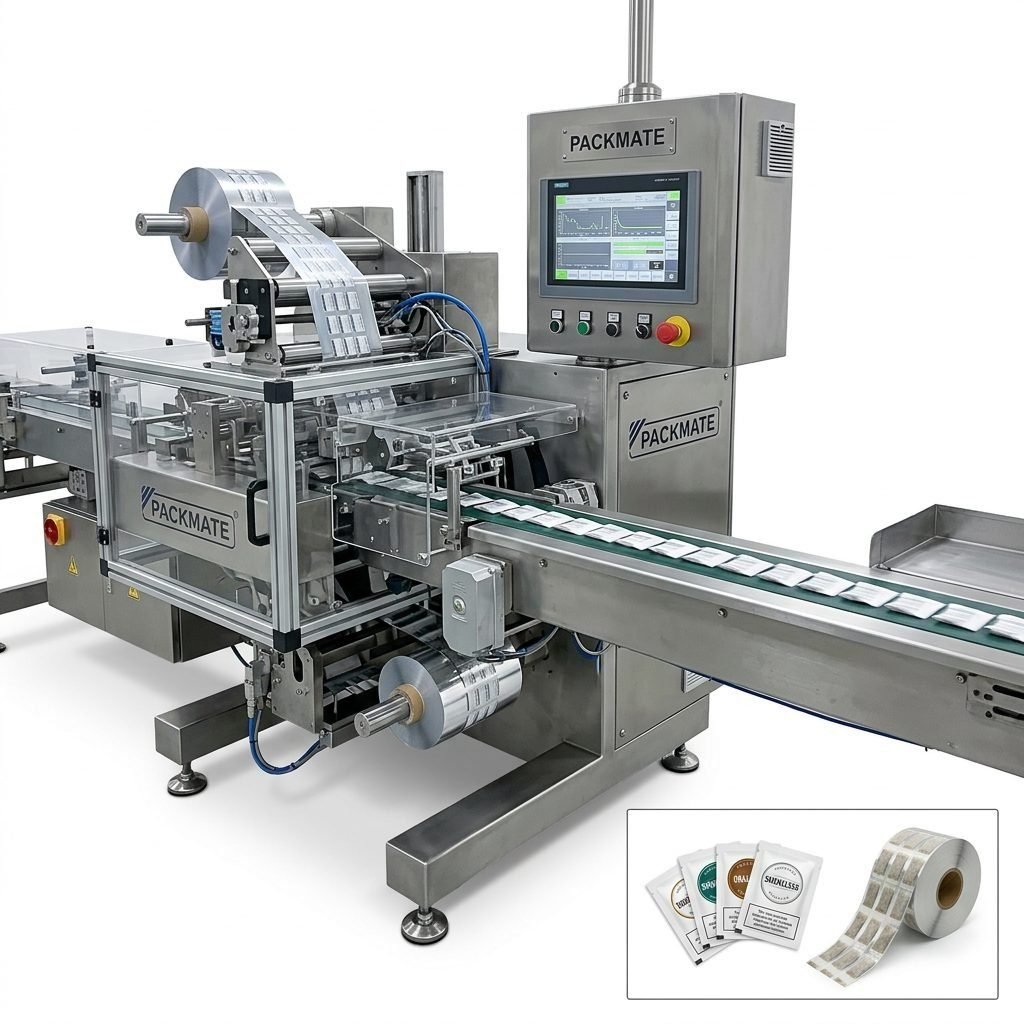
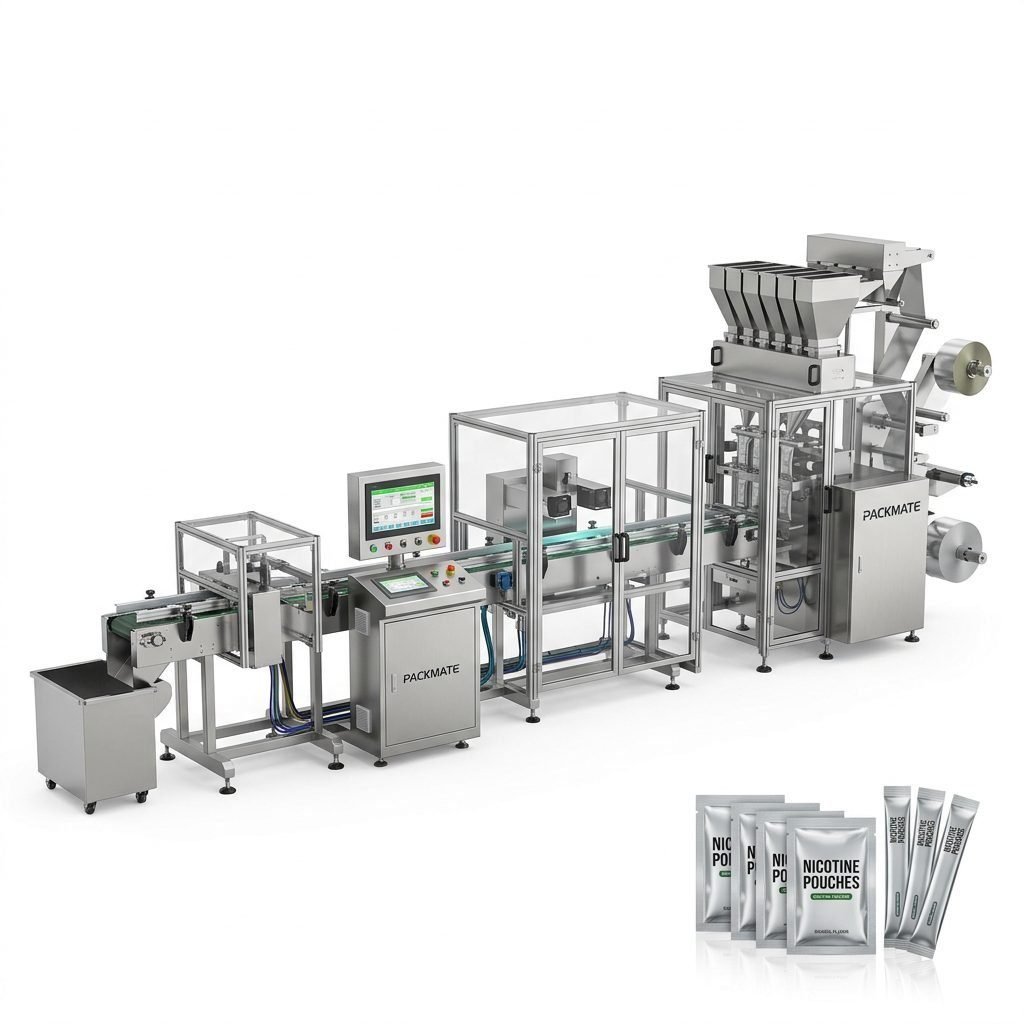
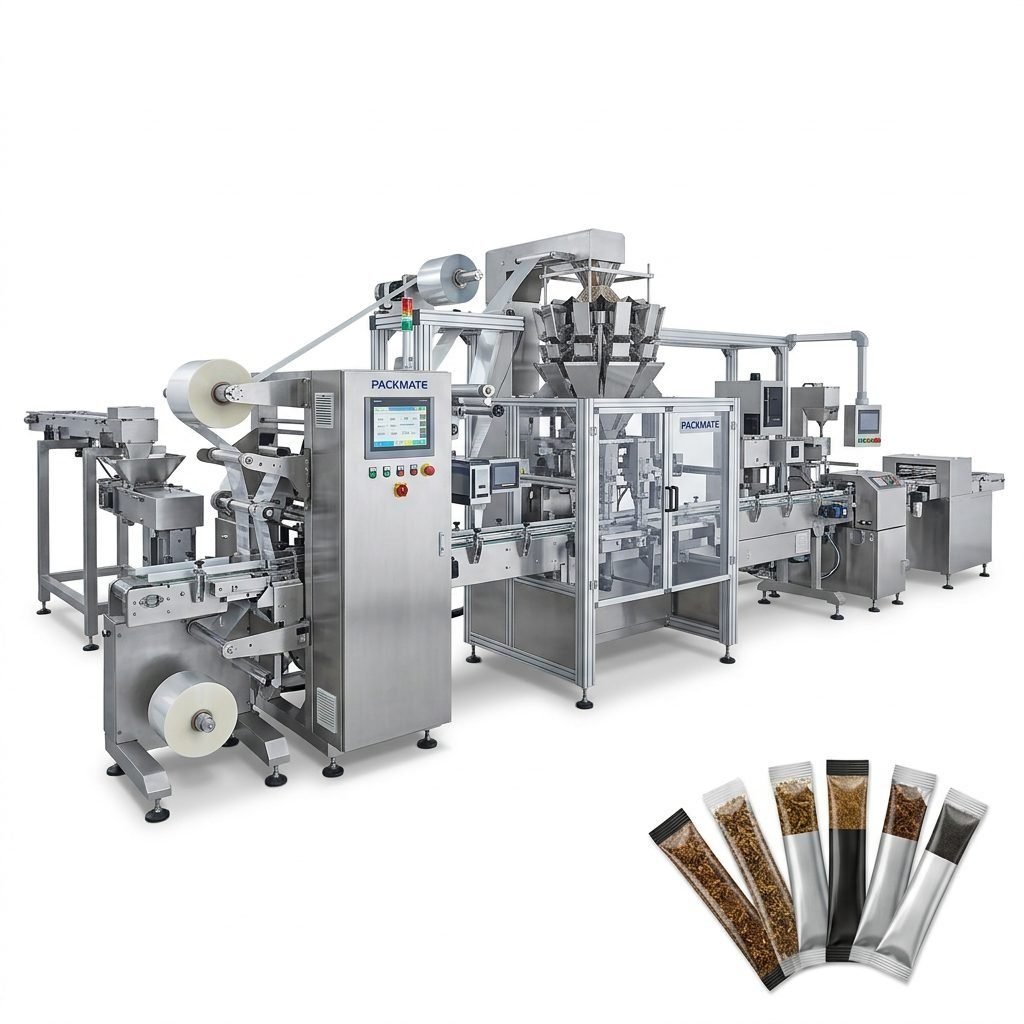
The right machine depends on the pouch format, production volume, and desired finish. Common equipment classes include stick pack machines, sachet pouch machines, multi-lane snus pouch systems, and full filling-to-packaging lines. Explore modular and multi-lane options if you want flexibility and high output.
Tip: If you plan on producing multiple flavors and SKUs in Denmark’s market, consider a multi-lane pouch system that reduces changeover time and increases overall equipment efficiency.
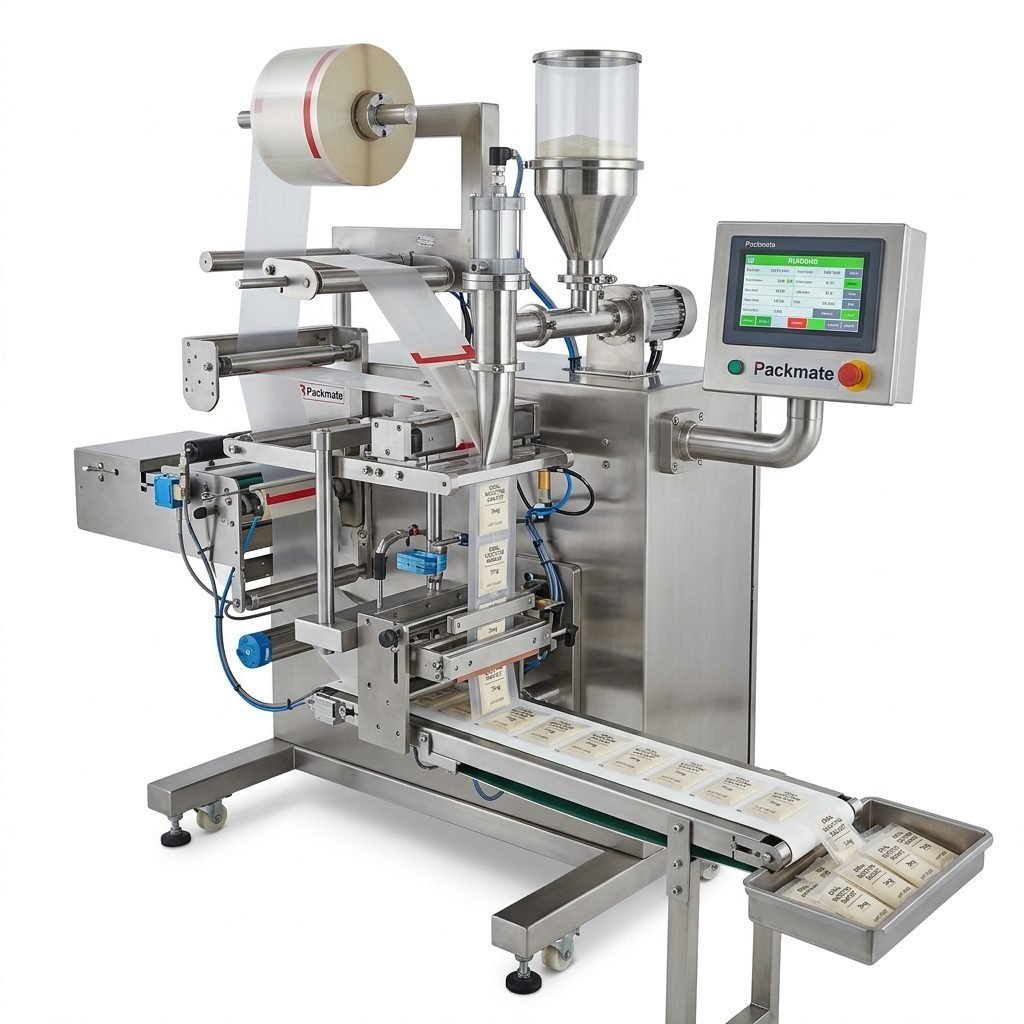
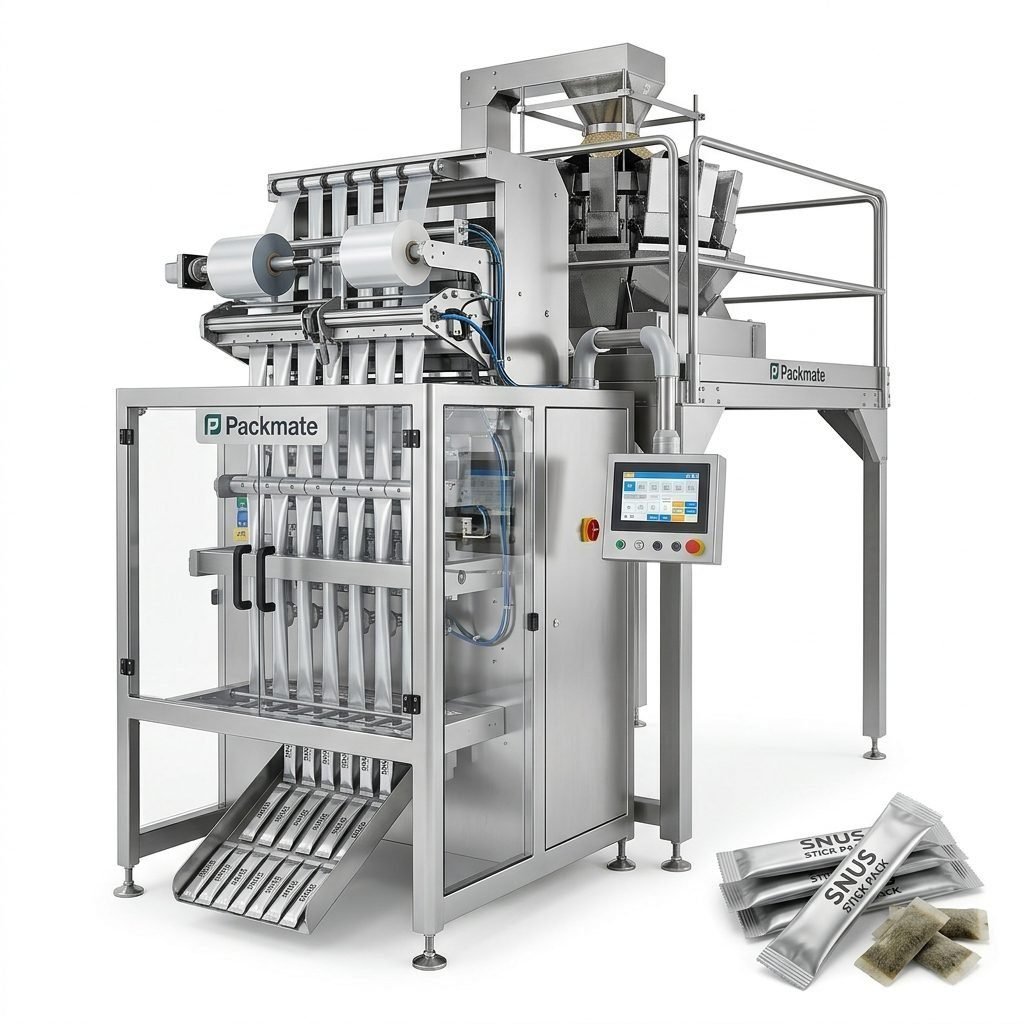
Stick Pack & Sachet Machines
Stick packs and sachets are ideal for single-dose or portioned nicotine pouches. These machines are compact, quick to changeover, and suitable for small to medium runs. They can produce tapered or straight stick shapes, and with modern dosing systems they maintain high accuracy for small-dose nicotine products.
Multi-lane & Continuous Pouch Lines
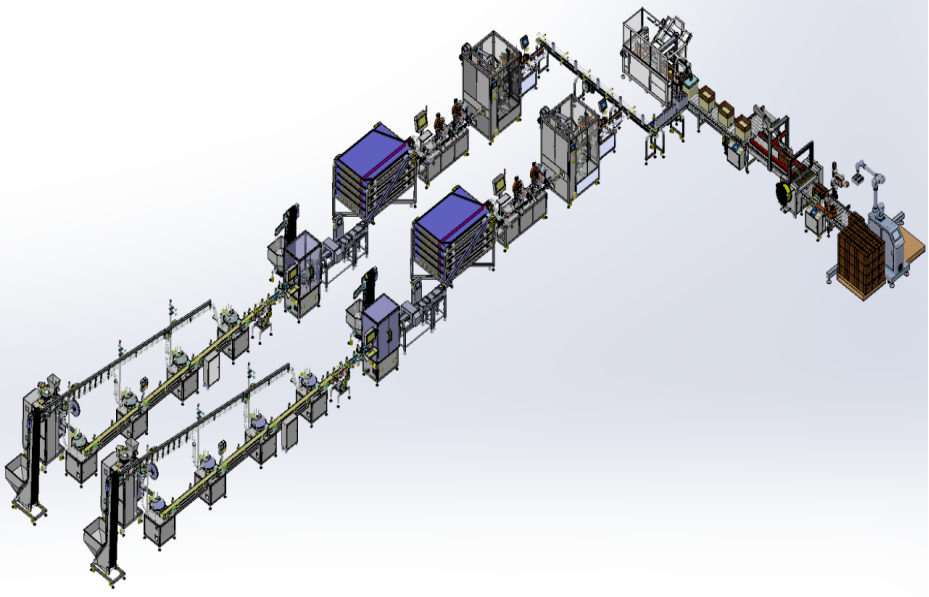
For scale, multi-lane systems deliver high throughput with several lanes running in parallel. These lines can be configured for different pouch widths and are especially useful when demand in Denmark requires higher daily outputs while preserving flexibility for varied SKUs.
Essential Technical Features to Compare
When evaluating machines, prioritize features that directly impact yield, product safety, and regulatory compliance.
1. Filling Accuracy & Dosing System
Small-dose nicotine requires precise dosing. Choose machines with high-precision auger, vibratory, or volumetric dosing systems and closed-loop controls to minimize variance and reduce product giveaway.
2. Speed vs. Flexibility
High-speed machines increase output but can be less forgiving for frequent recipe changes. If Denmark’s market requires many short runs with multiple flavors, balance speed with quick-change tooling and automated recipe recall.
Operational priority: If your business emphasizes variety and small batches, put quick-change capability and recipe management at the top of your checklist.
3. Hygiene, Cleanability & Materials
Stainless steel contact parts, tool-less disassembly, and hygienic design reduce cleaning time and cross-contamination risk. Denmark’s retailers and consumers appreciate visible hygiene practices—select machines with FDA- or CE-compliant contact surfaces where relevant.
4. Automation & OEE Monitoring
Modern packaging lines include HMI touchscreens, PLC controls, automatic product changeover, and OEE (Overall Equipment Effectiveness) dashboards. These features help Danish manufacturers maintain uptime, quickly troubleshoot, and meet delivery schedules.
Compliance, Certification & After-Sales Support
Select vendors with international certifications (CE, ISO) and traceable quality assurance. Packmate Snus Machine, for example, designs equipment to meet CE and ISO standards and can provide factory acceptance tests, machine FAT reports, and documentation to support Danish market entry.
Installation, Training & Spare Parts
Installation and staff training are critical. Ensure your supplier offers on-site commissioning, operator training, and fast spare parts delivery in Europe. Remote diagnostics and preventative maintenance plans minimize downtime for Danish operations.
Packaging Materials & Sustainability Considerations
Consumers in Denmark value sustainability. Your packaging machinery should be compatible with recyclable films, mono-material laminates, and compostable substrates when available. Machines capable of handling thinner films without tearing, with adjustable sealing profiles, will give you more eco-friendly options.
Sustainability tip: Choose equipment that allows precise temperature control and seal dwell adjustments to support low-gauge and mono-material films—this reduces material waste and improves recyclability.
Evaluating Total Cost of Ownership (TCO)
Purchase price is only part of the story. Consider energy usage, maintenance intervals, spare parts pricing, labor requirements, and the expected lifetime of critical components. A robust multi-lane system may cost more up-front but often reduces per-unit cost for high-volume Danish distribution.
Warranty & Remote Support
Verify warranty terms, service-level agreements, and remote-support capabilities. Suppliers with European service partners or quick shipment of spare parts are advantageous for Danish producers needing minimal disruption.
Choosing a Supplier: Questions to Ask
Use the following checklist when talking with vendors:
- Can you provide CE and ISO certificates and FAT documentation?
- Do you offer on-site commissioning and operator training in Europe?
- What is the expected throughput and product accuracy for my SKU range?
- How quickly can spare parts be delivered to Denmark?
- Do you have references or case studies from similar snus/nicotine pouch lines?
Useful resources
For machine categories and technical specifications, browse manufacturer’s product pages such as Snus & Nicotine Packaging Machines, the Sachet & Stick Pack Machines section, or check integrated solutions on Filling & Packaging Lines. For background about the manufacturer, see About Packmate.
Real-World Case Considerations for Denmark
Consider a Danish firm launching several nicotine pouch flavors with small initial runs. A practical approach is to start with a flexible sachet/stick pack machine that supports rapid changeovers and add a multi-lane module as demand consolidates. Alternatively, established brands supplying retail chains might prioritize high-speed multi-lane systems with integrated weighing and cartoning to meet supermarket order volumes.
Integration with upstream & downstream systems
Integrate filling and packaging with weighing, metal detection, and serialization where required. Danish retailers that export to other EU markets may require traceability features that your supplier should support.
After-Sales & Lifecycle Support
After installation, reliable after-sales service keeps lines running. Prioritize suppliers with spare-part inventories, remote diagnostics, and scheduled maintenance contracts. A partner providing a local European presence or fast logistics will reduce downtime and total operating risk.
Choosing Packmate: With 30+ years of packaging experience, Packmate Snus Machine offers turnkey solutions, multi-lane snus systems, and worldwide support—details are listed on their About Packmate page and product categories.
Action Plan: Steps to Pick Your Best Machine
Follow these practical steps to finalize your purchase:
- Define product SKUs, pouch formats, and target daily output.
- Decide on packaging materials and sustainability goals.
- Shortlist machines by throughput, dosing accuracy, and hygiene design.
- Request FAT, CE/ISO certificates, and reference case studies.
- Plan installation, staff training, and spare parts logistics for Denmark.
Where to get more technical info
For detailed specs on machine ranges and supporting equipment, visit the Packmate product categories such as Bag & Pouch Packaging Machines and the Weighing & Packaging Systems pages.
Final considerations for Danish producers
Denmark’s combination of high consumer expectations and sustainability awareness means packaging machinery should be flexible, hygienic, and capable of supporting eco-friendly materials. Choose vendors with proven manufacturing quality, CE/ISO compliance, and strong after-sales presence in Europe to secure smooth market entry and long-term reliability.
FAQs
Q1: What machine type is best for small-batch flavored nicotine pouches in Denmark?
A: For small batches and frequent flavor changes, sachet or stick pack machines with quick-change tooling and recipe memory are ideal.
Q2: How important is certification for packaging machines sold into Denmark?
A: Very important—CE and ISO compliance are standard expectations, and documentation helps with retailer acceptance and export requirements.
Q3: Can machines handle recyclable or mono-material films?
A: Yes—choose machines with adjustable sealing systems and temperature control designed for thinner or mono-material films to improve recyclability.
Q4: What after-sales services should I require from a supplier?
A: On-site commissioning, operator training, remote diagnostics, spare parts availability, and clear warranty terms are essential.