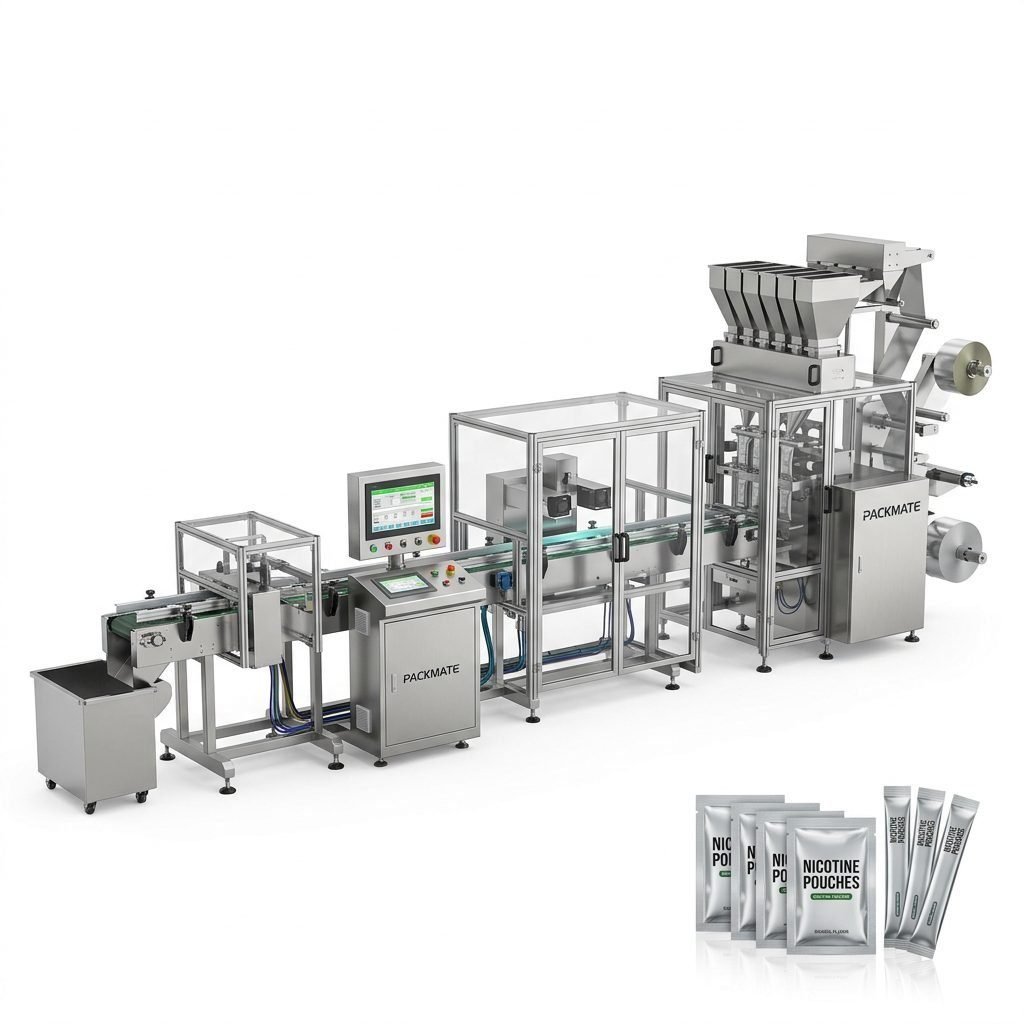
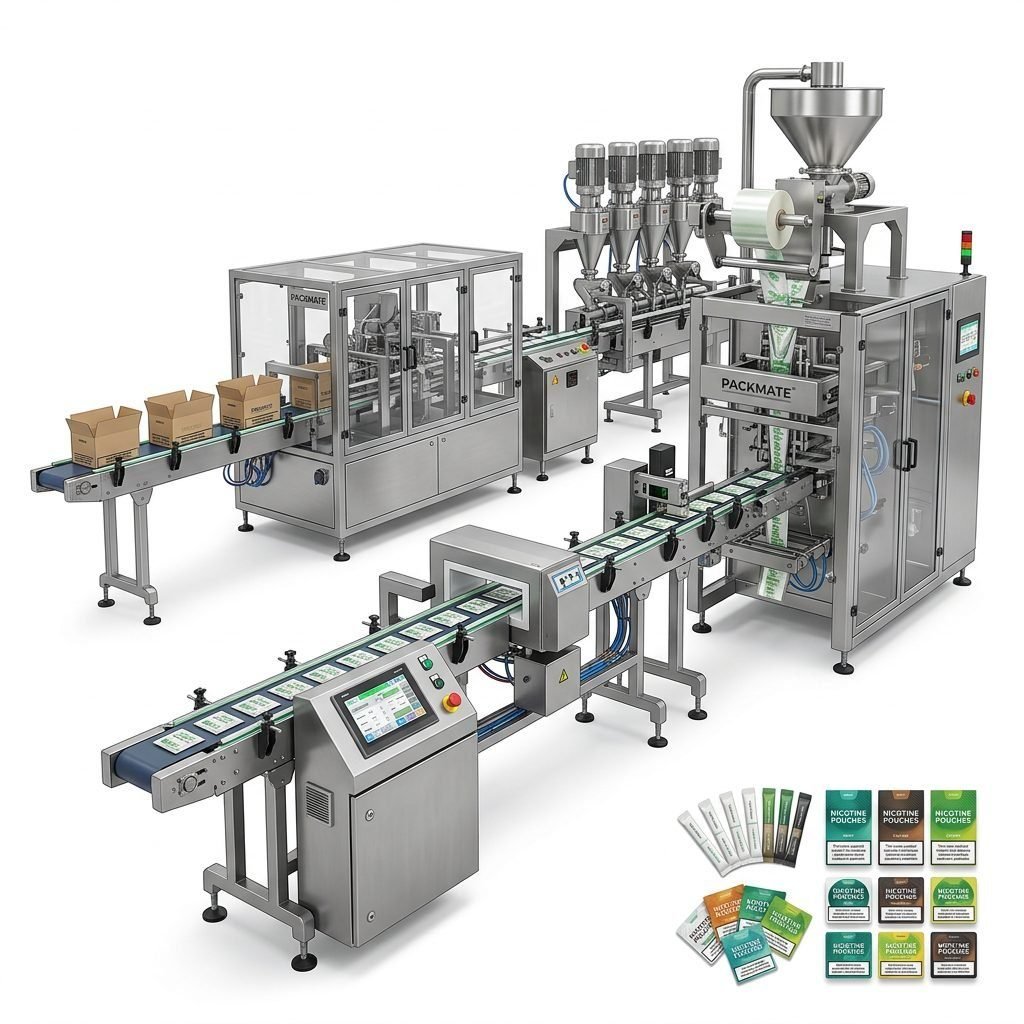
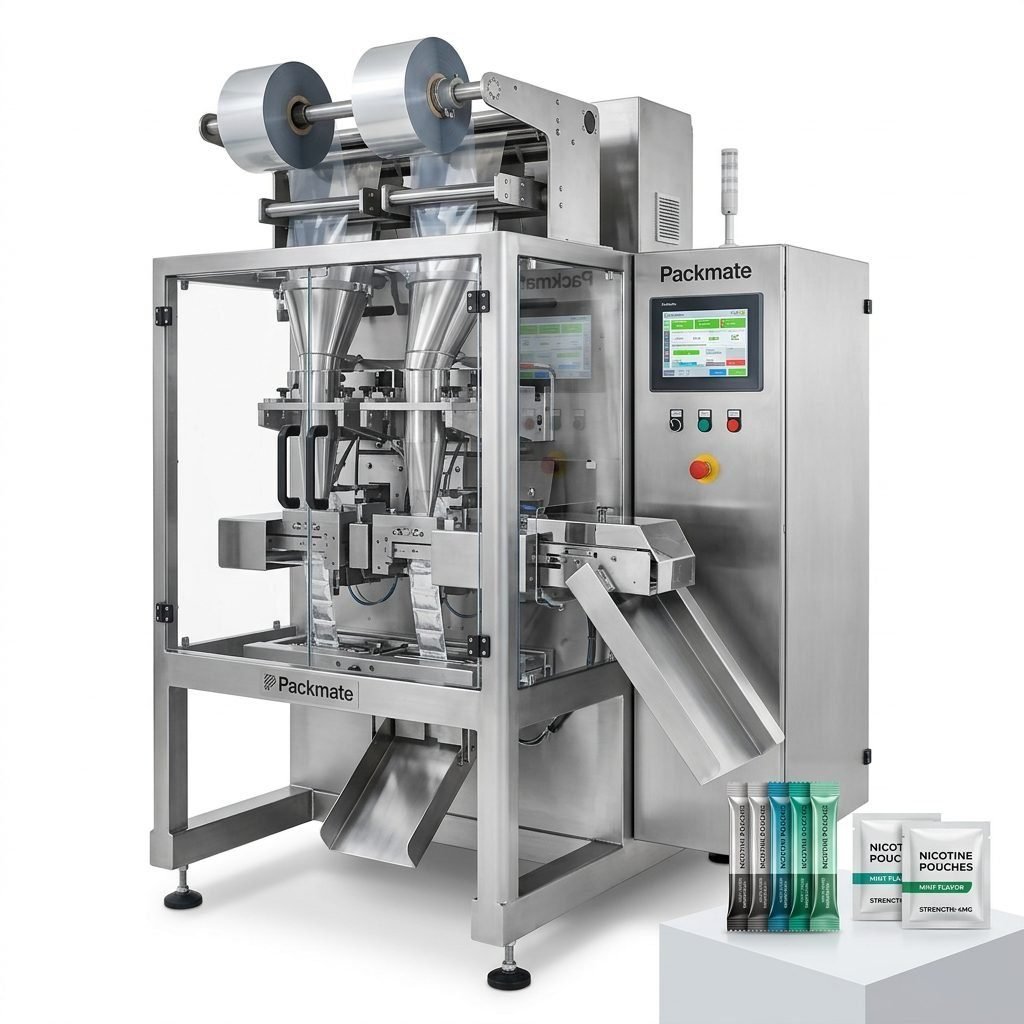
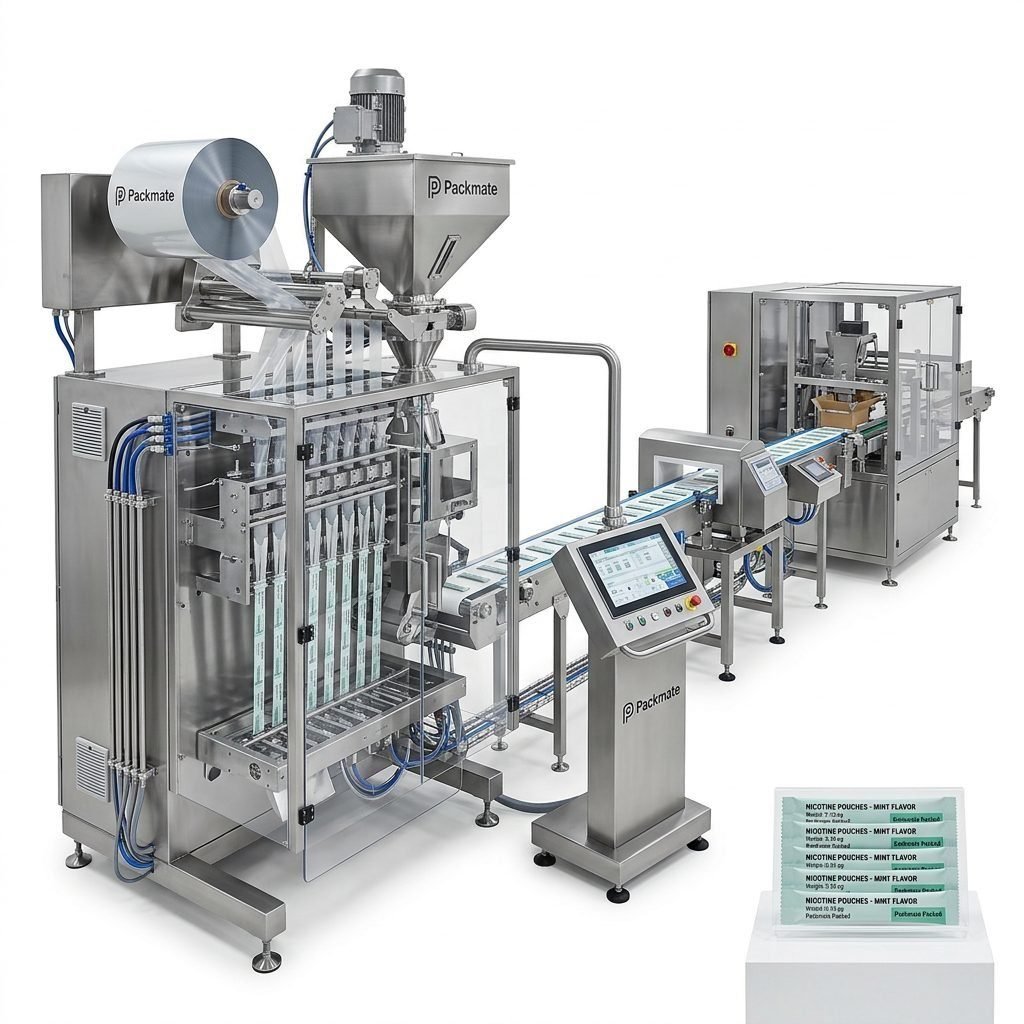
Choosing the right snus packaging machine for your business in Tanzania is a strategic decision that affects product quality, production efficiency, compliance, and profitability. This guide walks you through the technical, commercial, and operational factors to consider when selecting a snus or nicotine pouch packaging solution, with practical advice tailored to the Tanzanian market and global best practices.
Why the Right Snus Packaging Machine Matters
Investing in the correct snus packaging machine ensures consistent pouch quality, accurate dosing, reliable sealing, and efficient output. For businesses in Tanzania, machine choice also impacts regulatory compliance, supply chain resilience, and the ability to scale. A well-matched machine reduces waste, minimizes downtime, and speeds up your path to profitability.
Core business outcomes influenced by machine selection
✓ Product consistency: Exact pouch weight and uniform sealing matter for customer satisfaction and compliance.
✓ Production cost: Throughput and yield determine unit cost.
✓ Time to market: Flexibility in pouch formats and fast changeovers enable new SKUs quickly.
Common Types of Snus Packaging Machines
Selecting a machine starts with understanding different packaging formats and technologies. Below are the most common systems used for snus and nicotine pouches:
Stick pack machines
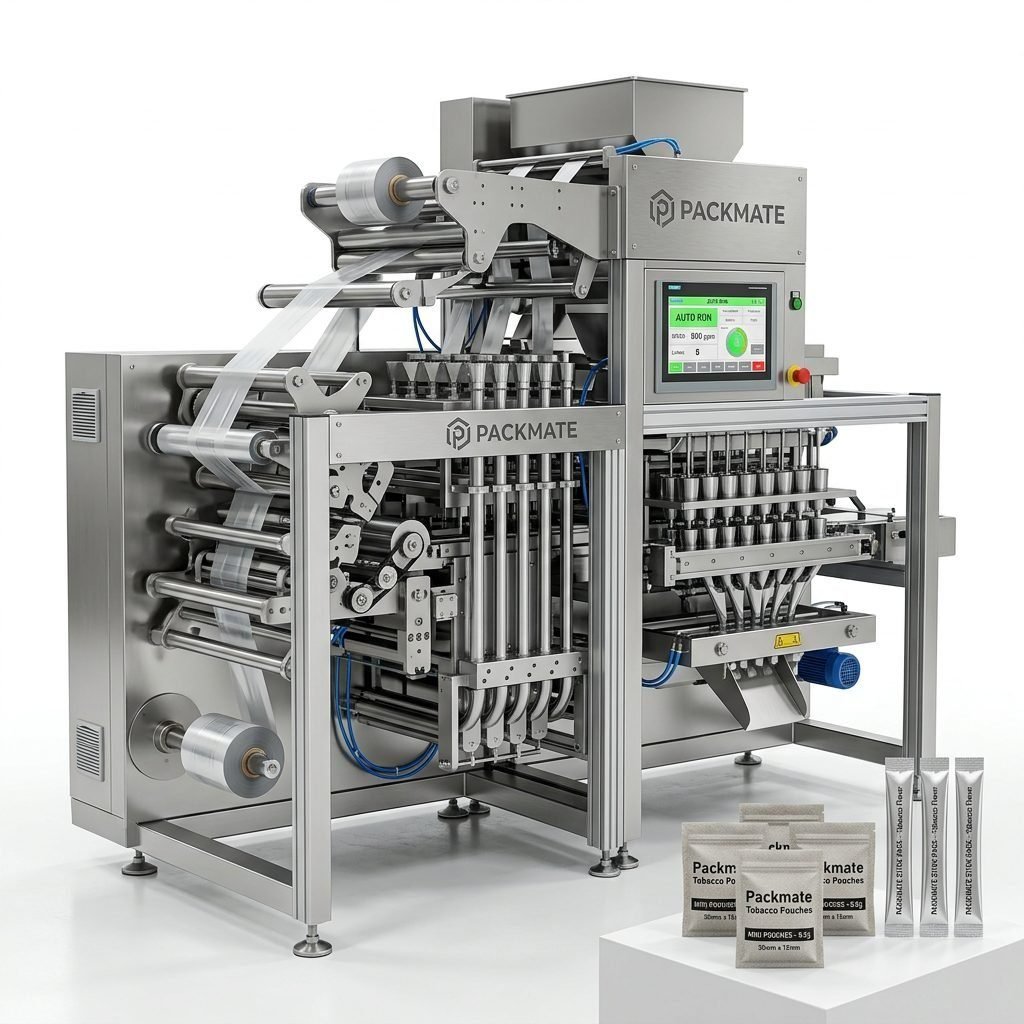
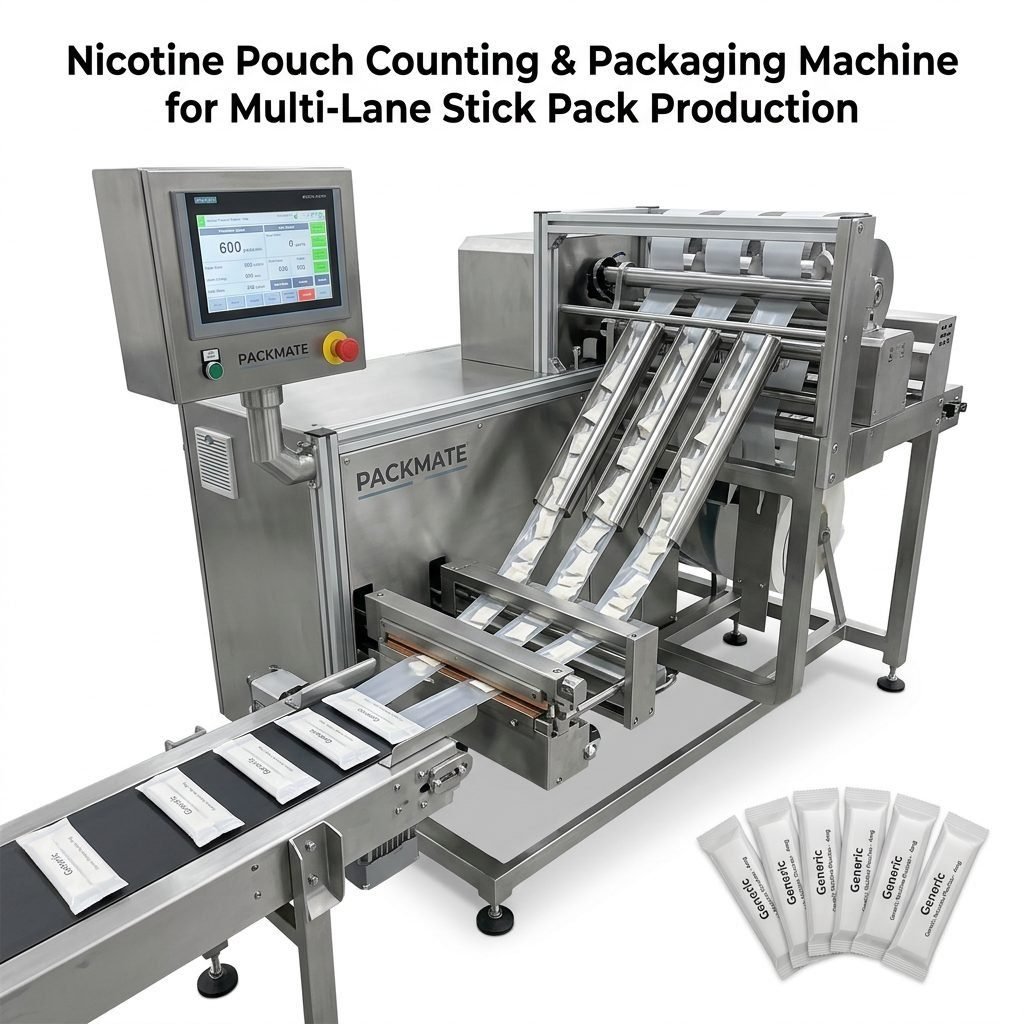
Stick packs are long, narrow pouches ideal for single-dose presentations. They are fast and cost-effective for many tobacco-adjacent products. If you need high-speed single-dose outputs, stick pack systems are worth considering. Explore optimized solutions at the Stick & Sachet product line for detailed specifications.
Sachet and multi-lane pouch systems
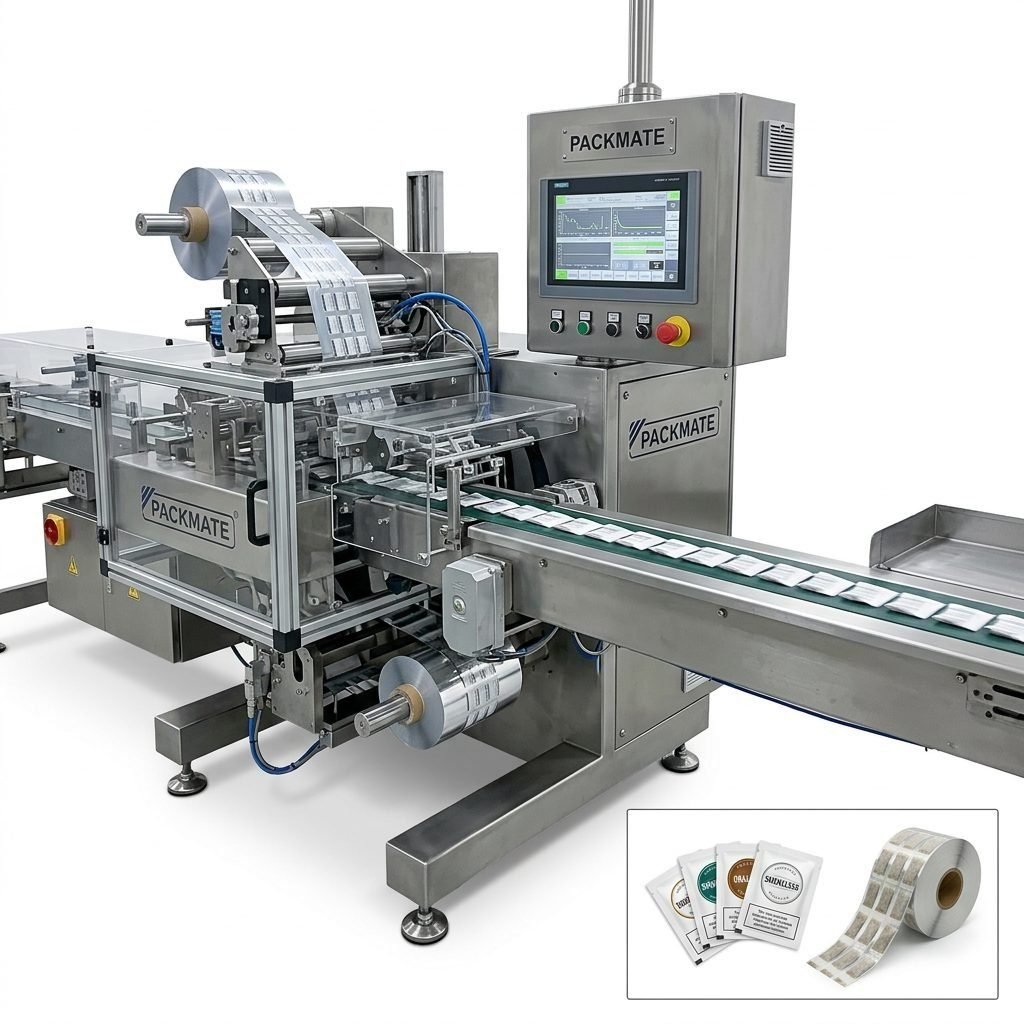
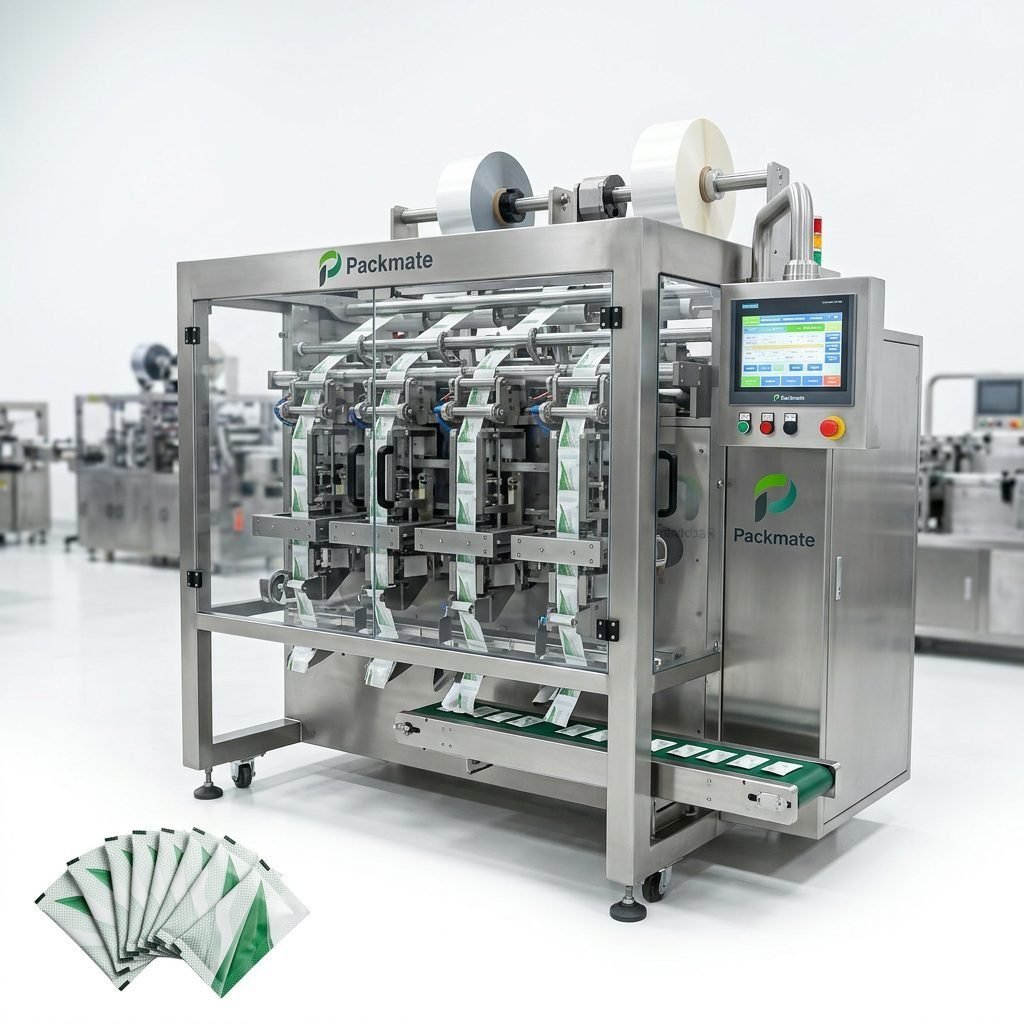
Sachet machines and multi-lane systems are popular for multi-unit production runs, offering compact pouch formats and high throughput. They provide excellent control for weight accuracy and sealing quality. See examples and configurations in the Sachet & Stick Pack Machines range.
Custom snus/nicotine pouch lines
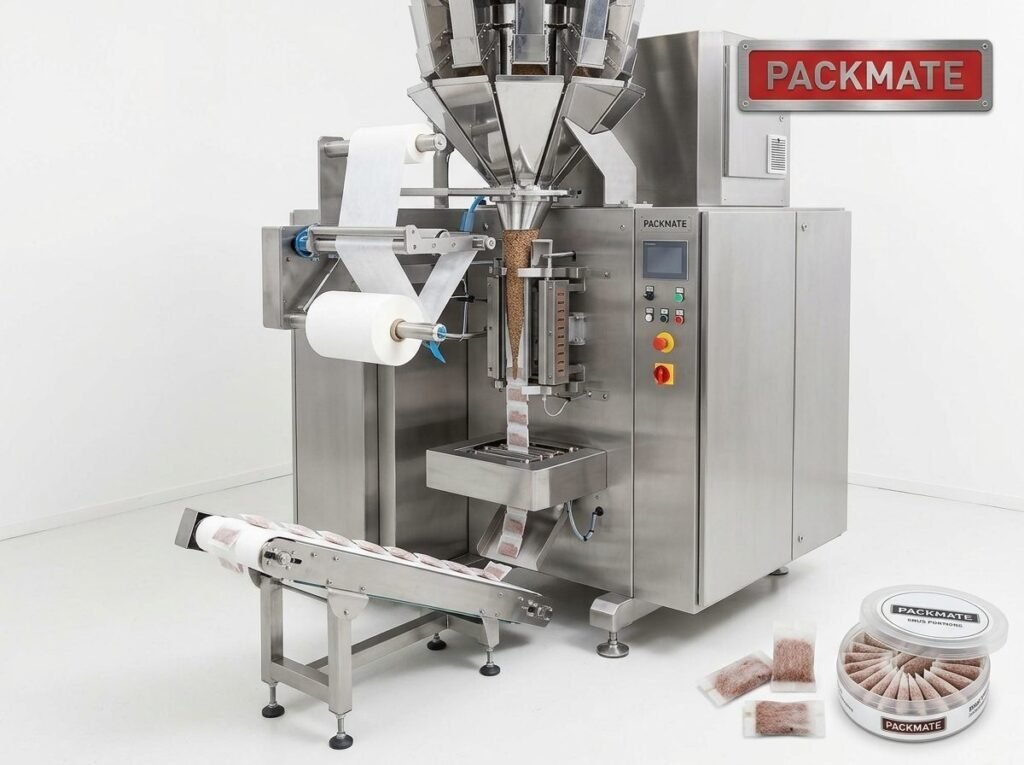
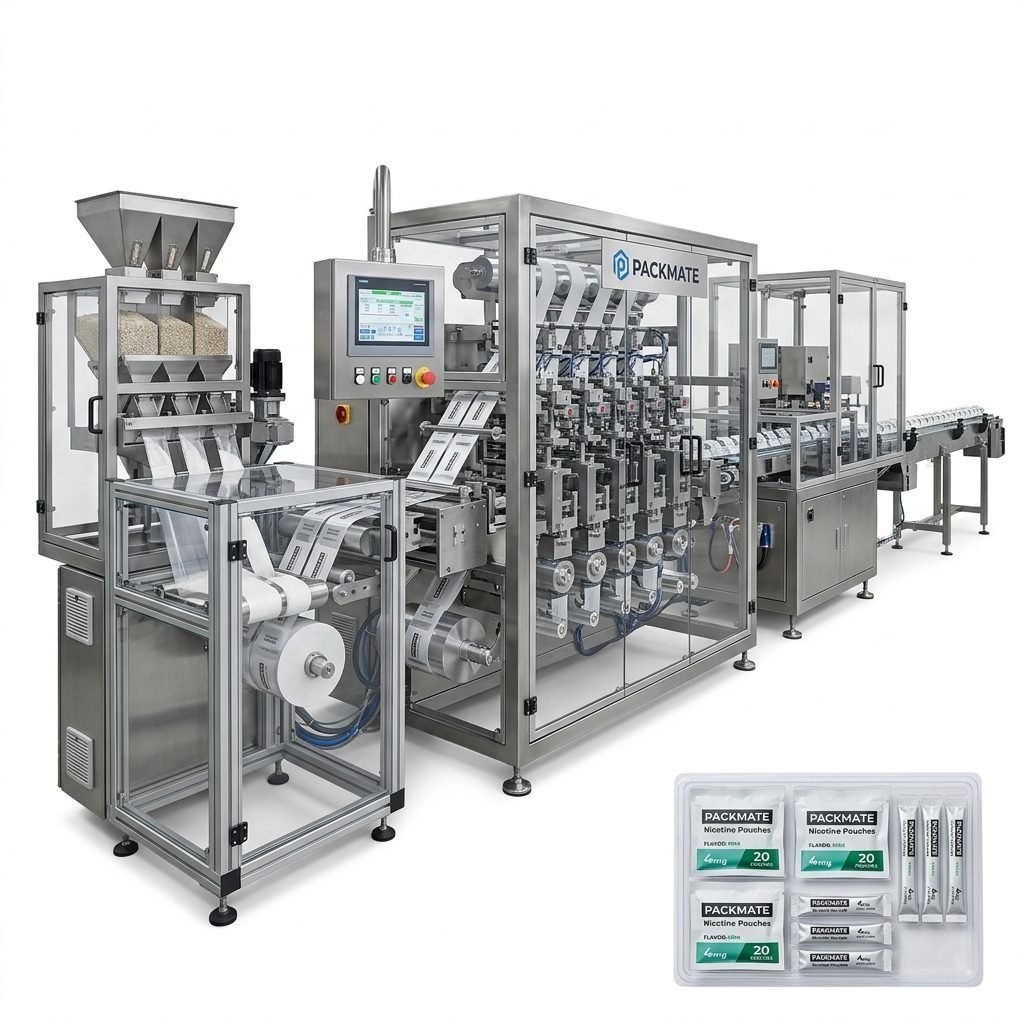
For businesses targeting multiple SKUs, combined filling and vertical pouch forming lines (with integrated weighing and auxiliary equipment) offer end-to-end automation. Consider integrated lines if you expect to scale rapidly or require complex packaging sequences. Packmate provides several turnkey Filling & Packaging Lines and Weighing & Packaging Systems that can be tailored to your needs.
Key Technical Specifications to Evaluate
When comparing machines, focus on specifications that directly influence productivity, reliability, and product integrity.
🔧 Throughput (packs/min): How many pouches per minute can the machine produce? Match throughput to your sales forecasts and planned operating shifts. Higher throughput reduces unit cost but may increase capital cost.
⚖️ Filling accuracy: For nicotine pouches, dosing precision is critical both for compliance and consumer safety. Check the accuracy of the weighing or dosing system and the tolerance range.
🔁 Number of lanes: Multi-lane machines multiply output without increasing footprint proportionally. Determine the lane count that suits your volume and SKUs.
🔒 Sealing and materials compatibility: Ensure the sealing temperature range and sealing technology are compatible with your chosen pouch films and barriers for shelf life and tamper evidence.
Operational Considerations for Tanzania
Operating conditions, infrastructure, and regulatory requirements in Tanzania should influence your purchase decision.
Power, utilities and factory readiness
Check the machine’s power requirements, voltage options, and compressed air usage. Ensure your facility can support continuous operation with stable power or consider adding power conditioning and backup systems to reduce downtime.
Local regulations and compliance
For nicotine-containing products, packaging must meet local labeling and safety regulations. Work with suppliers who understand global standards and can provide documentation — e.g., CE or ISO certificates — to streamline approvals. Packmate’s facility and products are supported by international certificates and compliance documentation.
Spare parts and service network
Ensure fast access to spare parts and technical support. Ask suppliers about lead times for critical components and local service partners. A strong global supplier with transparent spare-parts logistics reduces production risk.
Commercial Factors: Price, ROI, and Total Cost of Ownership
Purchase price is only part of the picture. Calculate the total cost of ownership (TCO), including spare parts, consumables, installation, training, and expected downtime.
To estimate ROI:
– Estimate annual production volume.
– Calculate unit cost differences between machine options (energy, labor, consumables).
– Add predictable maintenance and spare parts expense.
– Consider financing, uptime guarantees, and warranty terms to model expected payback period.
Choosing a Manufacturer: What to Inspect
Selecting a reputable manufacturer reduces technical risk. Evaluate suppliers against these criteria:
✔ Manufacturing experience and scale: Look for a manufacturer with decades of engineering experience and modern production facilities. A factory with CNC machining centers and precision assembly lines signals capability.
✔ Product range and customization: Choose suppliers offering multiple machine models and customization options for pouch formats and production speeds.
✔ Certifications and quality control: Ensure the supplier complies with international standards and has robust testing procedures.
Packmate Snus Machine is positioned as a global supplier with 30+ years of engineering experience, a 20,000㎡ manufacturing facility, and a wide product range that includes snus & nicotine packaging machines, bag & pouch packaging machines, and auxiliary equipment. Learn more about the company profile and certifications via About Packmate and Certificate for verification.
Installation, Training and After-Sales Support
Effective installation and operator training shorten ramp-up time. Clarify these items in your purchase agreement:
- On-site installation and commissioning timeline
- Operator and maintenance training scope and language options
- Remote support and diagnostic tools
- Spare parts kit and recommended stock levels
- Warranty terms and service response SLA
Reliable suppliers offer service packages and remote diagnostic tools to minimize downtime. Ask about local partners or field service availability for Tanzania specifically.
Practical Tips for Buying in Tanzania
Use these practical tips to avoid common pitfalls and accelerate a successful purchase.
⚠️ Regulatory readiness: Ensure packaging, markings, and product documentation comply with Tanzanian regulations before ordering machines.
Conduct a factory acceptance test (FAT) or request video demonstrations of the specific machine model running a similar product. Practical trials validate dosing, sealing, and overall performance before shipment.
When evaluating quotes, request line-level breakdowns: machine price, shipping, installation, training, spare parts, and optional accessories. This helps compare true costs and hidden fees like customs duties.
Sample Machine Configurations for Typical Use Cases
Below are representative configurations to match common production goals:
Small-batch artisan brand (low volume)
– Single- or dual-lane sachet machine
– Manual or semi-automatic auxiliary feeding
– Emphasis on flexibility and quick changeover
– Lower initial capital outlay
Medium-volume brand
– Multi-lane sachet or stick pack machine (4–8 lanes)
– Integrated dosing with weighing system
– Moderate automation for consistent output and predictable labor
High-volume manufacturer
– High-speed multi-lane lines (8+ lanes)
– Turnkey filling & packaging line with inline weighing and cartoning
– Emphasis on low TCO, automation, and minimal manual intervention
Where to Find Reliable Machine Models and Resources
Research manufacturers with proven global installations and clear documentation. Useful resources include the product pages, case studies, and service sections of established suppliers. Examples:
– Snus & Nicotine Packaging Machines: View models
– Bag & Pouch Packaging Machines: Explore options
– Company background and credentials: About Packmate
Checklist Before You Order
Before finalizing your purchase, confirm the following items:
- Machine runs your product in a FAT or live demo
- Complete technical specification sheet and electrical requirements
- Warranty, spare parts list and recommended spares kit
- Installation, training and lead times clearly defined
- Service SLA and spare parts logistics to Tanzania
- Compliance documentation: CE, ISO certificates where applicable (see Certificate)
Final Selection Tips
– Prioritize reliability and serviceability over the cheapest upfront option.
– Choose modular platforms that scale with your business.
– Build a relationship with the supplier: responsiveness, clear communication, and proven installations matter.
– Consider visiting an existing customer or exhibition to see machines running — Packmate exhibits globally; check Our Exhibition for upcoming shows.
Key takeaway
✔ Match machine capacity to realistic demand forecasts.
✔ Verify dosing accuracy and sealing integrity on your product.
✔ Confirm after-sales support and spare parts logistics for Tanzania before purchasing.
Further Reading & Contacts
For product catalogs, case studies and service details, visit the manufacturer’s product pages and service sections:
– Product portfolio and case studies: Case
– Service & support information: Service
– Contact the supplier to request a customized proposal or schedule a FAT: Contact Us
Common Questions (FAQ)
Q: What machine type is best for a new small brand in Tanzania?
A: For small brands, a flexible single- or dual-lane sachet or stick pack machine provides lower capital cost and easy changeover for multiple SKUs. Prioritize dosing accuracy and ease of cleaning.
Q: How important is a FAT (Factory Acceptance Test)?
A: FAT is critical. It verifies performance with your product before shipment, reducing risk and avoiding surprises during installation. Request video documentation or on-site attendance if possible.
Q: What certification should I request from suppliers?
A: Request CE and ISO documentation, material certificates for food-contact parts, and any test reports relevant to sealing and dosing accuracy. Check the supplier’s Certificate page for evidence.
Q: How do I ensure spare parts availability in Tanzania?
A: Discuss spare parts logistics with the supplier, identify critical parts to stock locally, and consider a spare parts kit at purchase. Ask about lead times and local distributors or partners.
Q: Can the machine be customized for multiple pouch sizes and formulations?
A: Many manufacturers offer modular designs and customization for various pouch sizes and formulations. Confirm the range of adjustability and any required tooling for each pouch format.