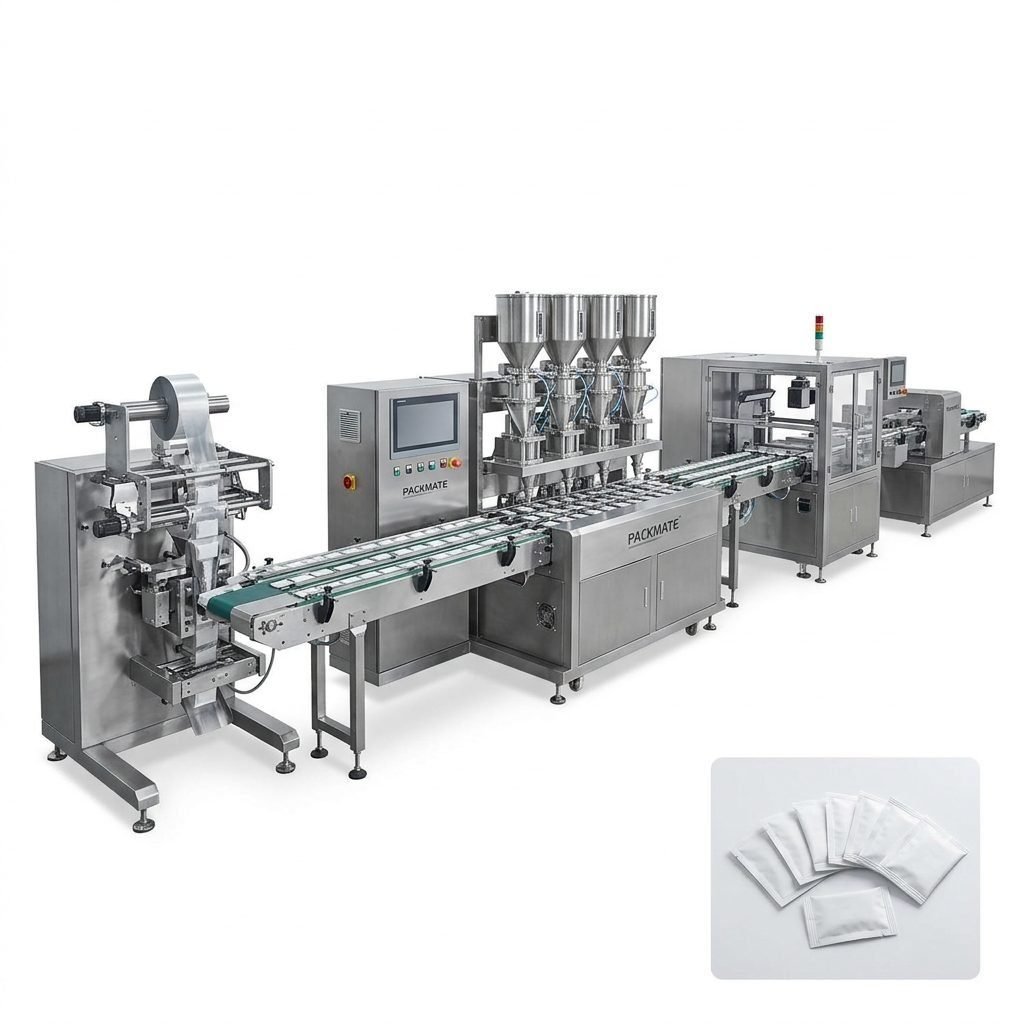
Choosing the right snus packaging machine for the Mongolian market is more than picking the fastest or cheapest option. It requires balancing product type, production volume, local logistics, regulatory compliance, and long-term serviceability. This guide walks you through every crucial factor—so you can make an informed investment that drives productivity and protects product quality.
Understand Your Product and Market Requirements
Start by defining the exact characteristics of the snus or nicotine pouch you plan to package. Key variables include pouch size, pouch material (paper, foil, laminated film), fill type (powder, granules, paste), and whether secondary packaging (boxes, sleeve wrap) is required. In Mongolia, seasonal storage and cold winters may influence material choices and machine environment — make sure your machine handles humidity and temperature ranges without degrading performance.
Product Fit: Pouch Types and Compatibility
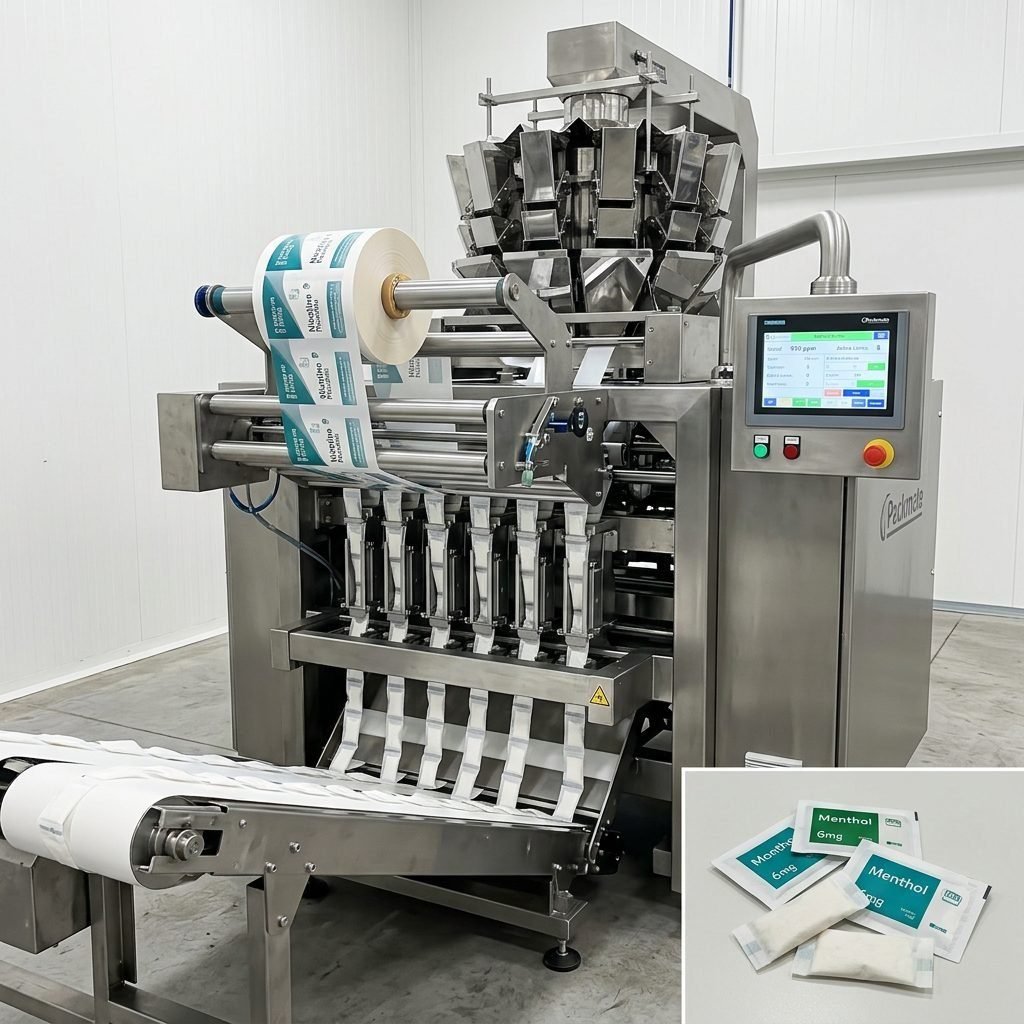
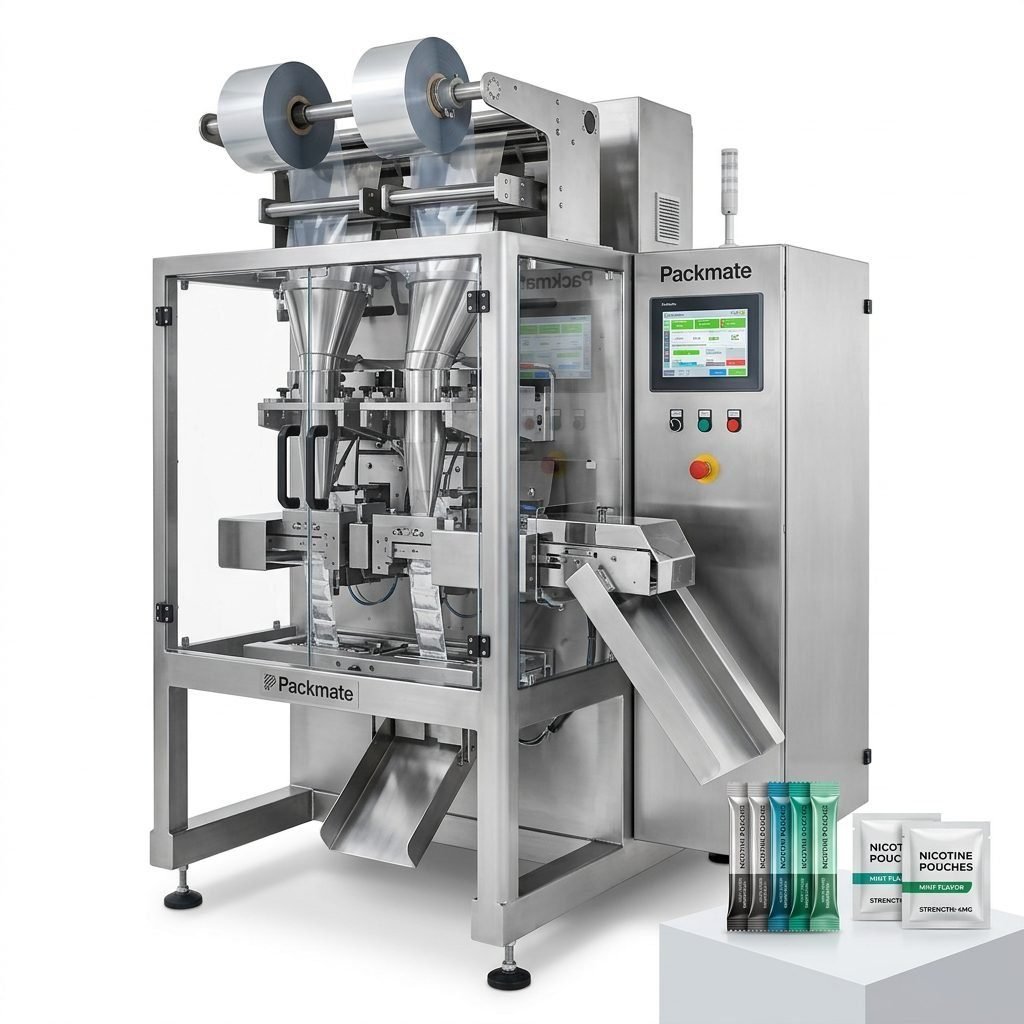
Different machines excel with specific pouch formats. Multi-lane snus packaging machines are ideal for high-volume small-dose pouches, while stick pack or sachet machines can suit single-serve formats. If you expect to expand product lines, prioritize a modular system that supports multiple pouch styles with quick changeovers.
Key reminder: Always test the target pouch material and nicotine product on the machine before final purchase. Field trials reveal unexpected sealing or dosing issues early.
Types of Snus Packaging Machines — Which to Choose?
There are several mainstream machine types to consider for snus and nicotine pouches. Understanding their strengths helps match machine capability to your business goals.
Multi-lane Pouch Machines
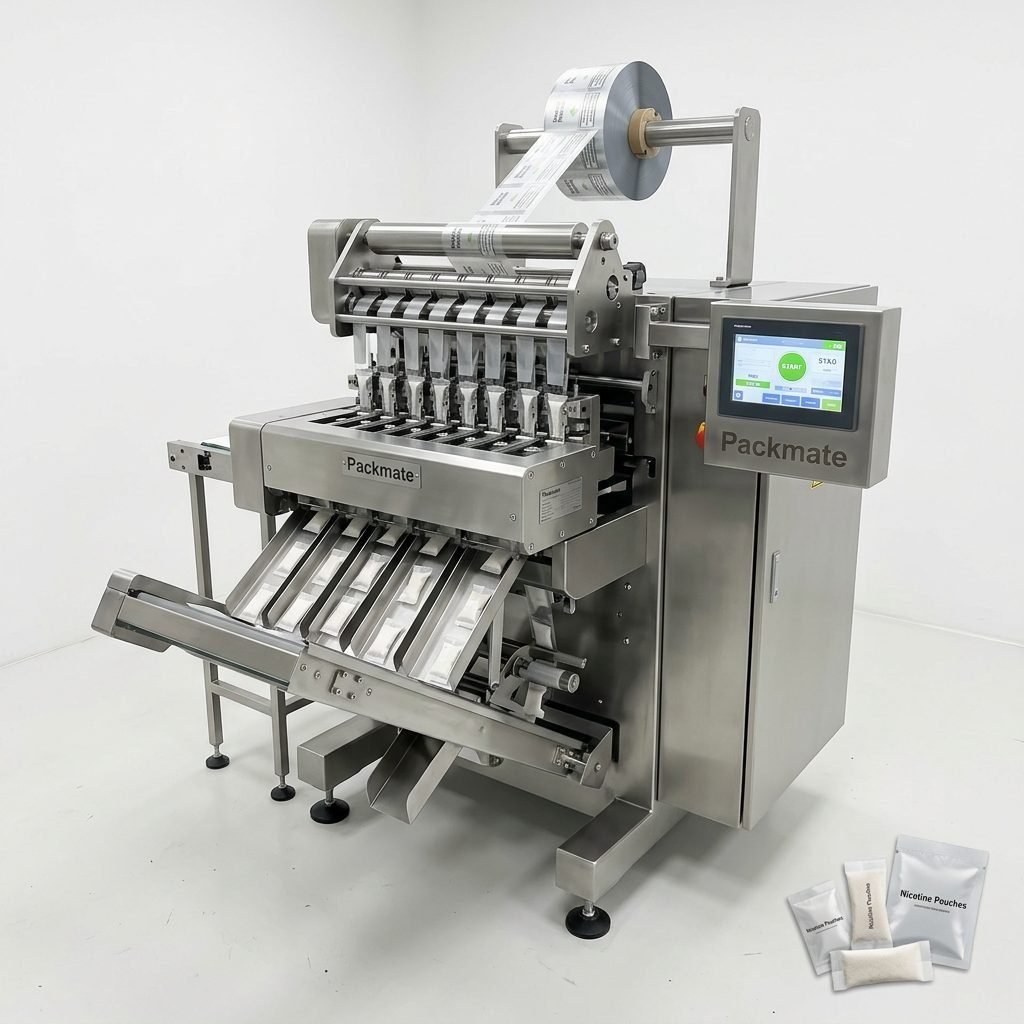
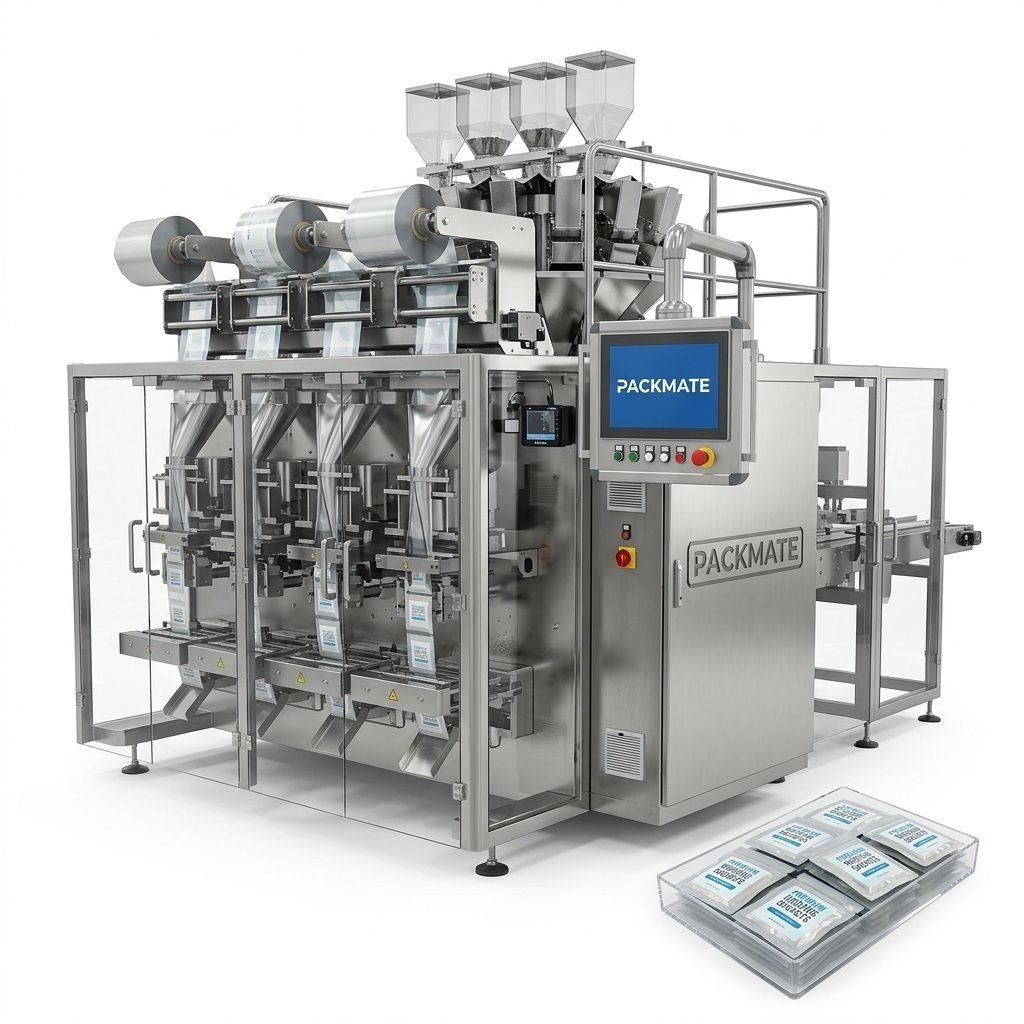
Multi-lane systems are designed for very high throughput, producing multiple small pouches simultaneously. These are well-suited for nicotine pouches where consistency and speed are critical. Choose a reputable manufacturer with experience in multi-lane platforms to ensure synchronized feeding and accurate sealing across lanes.
Stick Pack & Sachet Machines
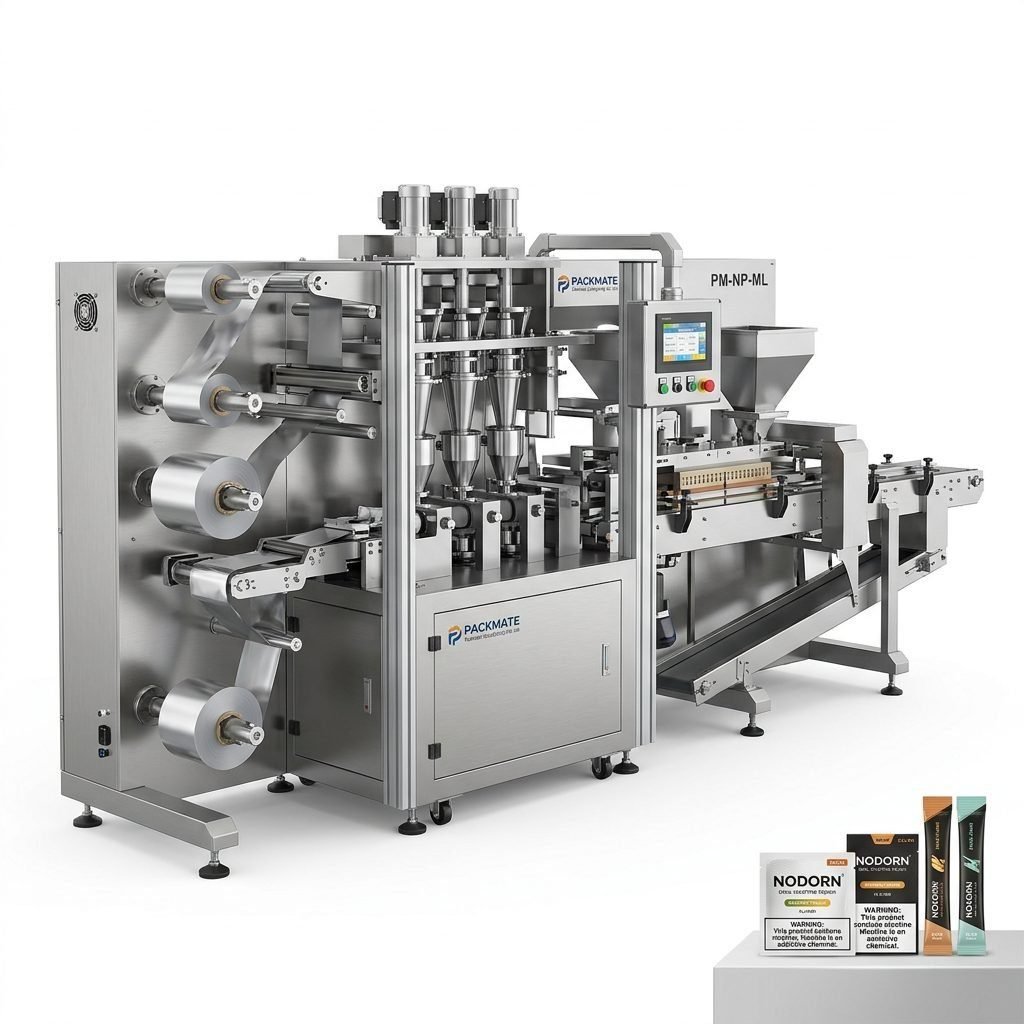
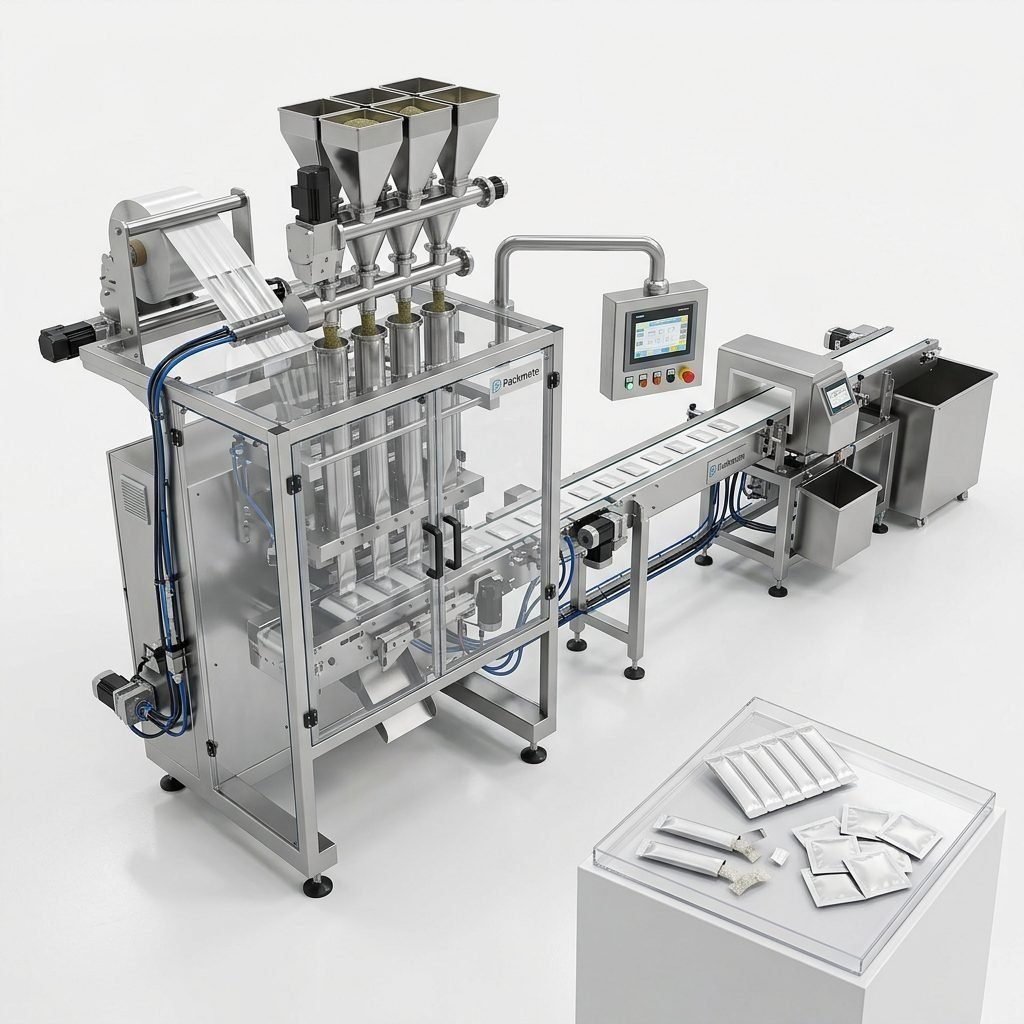
Stick pack and sachet machines offer flexible formats for single-serve applications and often come with options for different dosing heads and sealing technologies. If you plan to market varying formats (sachets for samples, stick packs for retail), a convertible machine can cut long-term costs.
Throughput, Speed and Cycle Time
Calculate required throughput from daily production targets, SKU variety, and downtime allowances. Manufacturers list nominal speeds, but real-world throughput depends on changeover time, operator skill, and product stability. Aim for a machine with some headroom above your peak demand to avoid bottlenecks during growth.
Tip: Prioritize consistent output over advertised maximums — steady, reliable throughput often beats sporadic peak speed.
Accuracy, Filling Systems and Product Loss
Dosing accuracy affects both product quality and material costs. For powder or granule nicotine pouches, gravimetric or volumetric dosing systems can be used. Gravimetric (weighing) systems provide better precision for varying densities. If you choose a volumetric feeder, ensure it has quick calibration and minimal product waste.
Avoiding Product Waste
Look for machines with efficient feeding pockets, anti-static devices, and gentle handling to prevent product aerosolization or clumping. In markets with high material costs, even small reductions in loss improve profitability.
Materials, Films and Sealing Quality
Material compatibility is crucial. Machines must handle your chosen films (aluminum foil laminates, PET/PE, paper laminates) and deliver consistent seal integrity. Poor seals risk contamination and short shelf life — particularly critical for nicotine products where moisture control matters.
Sealing Technology
Look for precise temperature control zones, reliable drive systems, and easy replacement heater tools or jaws. For complex laminates, ultrasonic sealing may be available; otherwise, ensure the thermal sealing parameters are well-documented and adjustable.
Automation, PLCs and Integration
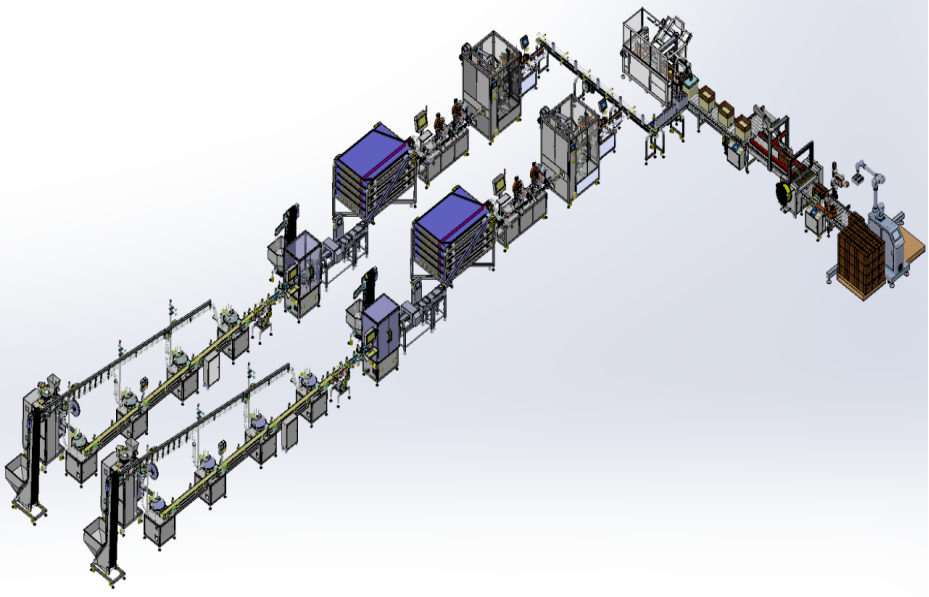
Automation level affects labor requirements and traceability. Modern machines offer PLC control, HMI touchscreens, recipe management, and remote diagnostics. If you plan a full production line, verify the machine supports synchronization with upstream weighers and downstream cartoners or tray packers.
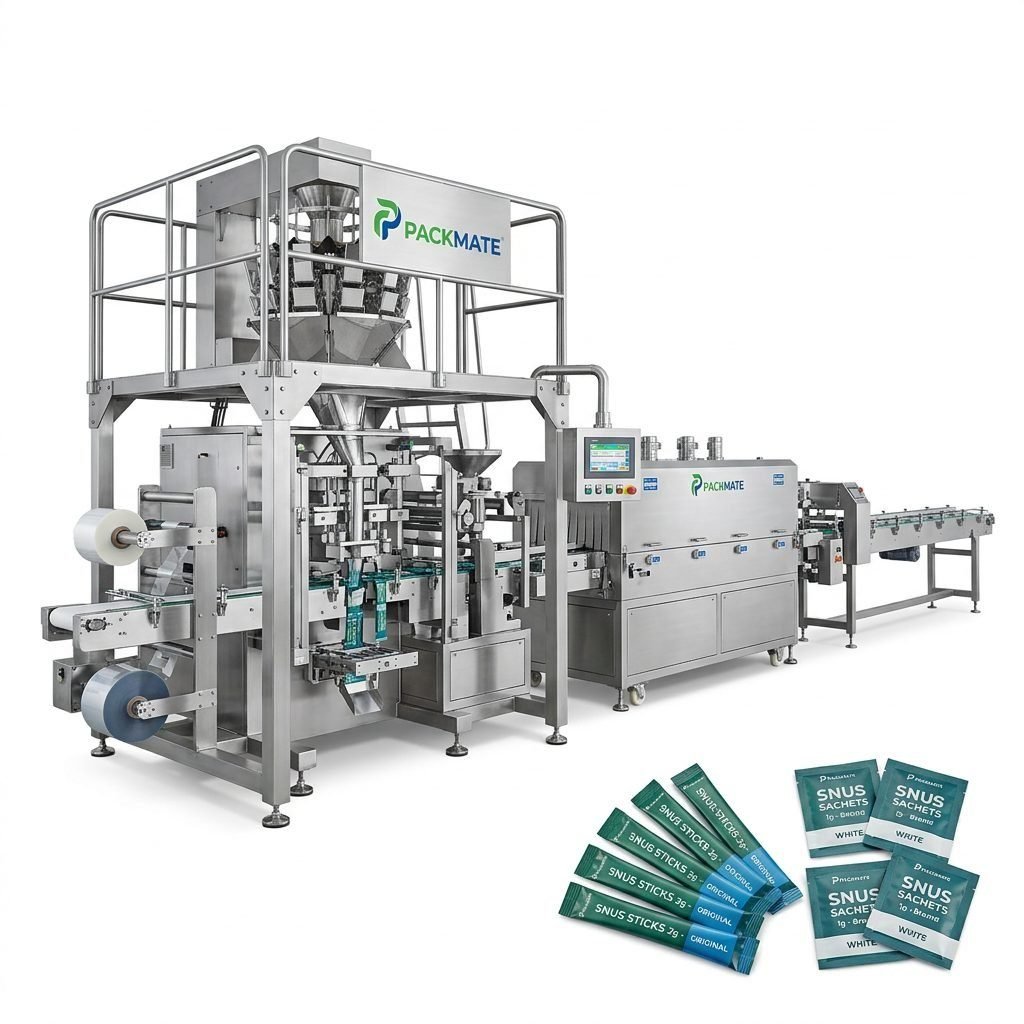
For complete production lines and integrated solutions, explore options for filling & packaging lines and weighing systems to achieve a seamless flow. Consider visiting manufacturer case studies to see real-world line layouts and outcomes.
Recommended resources: Snus & Nicotine Packaging Machines, Filling & Packaging Lines, and Weighing & Packaging Systems.
Quality, Certifications and Compliance
Certifications such as CE and ISO indicate adherence to international safety and quality standards — important for export and local regulation. Ask the manufacturer for documentation and verification of conformity. Packmate Snus Machine, for example, lists CE and ISO as part of their compliance offerings.
Reminder: Regulatory requirements for nicotine products vary by country. Confirm labeling, tamper-evidence, and child-resistant packaging rules that apply in Mongolia before finalizing line design.
Service, Spare Parts and Local Support
After-sales support is a top factor in long-term uptime. Review the manufacturer’s service network, spare parts availability, and remote support capabilities. Choose a supplier that offers training and installation assistance so your operators reach full productivity quickly.
For manufacturer information, service options, and contact details consider visiting the supplier’s pages such as About Packmate and their Service page to evaluate warranty and technical support offerings.
Factory Strength, Customization and Proven Cases
A strong manufacturing base signals reliability. Facilities with advanced CNC machining centers, precision assembly lines, and comprehensive quality testing help guarantee machine longevity. Ask for factory photos, QA procedures, and references. If possible, review case studies to verify performance in similar product lines.
See practical examples and case outcomes on the manufacturer’s case page to assess field performance and customer satisfaction: Case Studies.
Budgeting, ROI and Total Cost of Ownership
Price is important, but the purchase price is only one element of total cost of ownership. Consider installation, training, spare parts, consumable tooling, power consumption, maintenance intervals, and anticipated downtime. Higher initial investment in precision equipment often returns value through lower scrap, reduced labor, and greater uptime.
Financial tip: Use a 3–5 year ROI model that includes replacement parts and lost production time to compare competing machines fairly.
Local Considerations for Mongolia
Mongolia’s climate, import logistics, and workforce skills influence machine choice. Consider:
- Climate control: cold winters may require indoor heated production areas or machine components rated for low temperatures.
- Spare parts inventory: keep critical spares locally to reduce downtime due to shipping delays.
- Power supply: verify voltage and phase requirements and arrange stabilizers if grid fluctuation is common.
- Training: plan on on-site commissioning and operator training to ensure efficient changeovers and maintenance.
Pre-Purchase Checklist
Before signing a contract, run through this practical checklist to reduce risks and secure better outcomes:
✔️ Confirm machine compatibility with your pouch materials and nicotine formulation.
✔️ Request a live demonstration or video of your exact product on the machine.
✔️ Verify spare parts list, lead times, and recommended spares to stock locally.
✔️ Check warranty terms, service scope, and availability of remote diagnostics or on-site engineers.
✔️ Get a detailed quote including installation, training, and commissioning costs.
How to Evaluate Suppliers
Choose suppliers with proven expertise in snus and nicotine pouch packaging and the capacity to supply turnkey lines. Assess factory capabilities, number of models offered, experience, and long-term technical support. Packmate Snus Machine highlights decades of engineering and a 20,000㎡ facility—factors that signal strong manufacturing depth.
If you need specialized equipment such as bag & pouch packaging machines or auxiliary equipment, review dedicated product pages to match features with your requirements: Bag & Pouch Packaging Machines and Auxiliary Packaging Equipment.
Installation, Training and Ramp-Up
Plan for an installation phase that includes site preparation, electrical and compressed air hookups, operator training, and initial line trials. Effective supplier-led commissioning shortens ramp-up time and reduces early-life failures. Ensure your contract includes a clear schedule and performance acceptance criteria.
Final Decision Framework
When comparing final proposals, weigh these factors:
- Reliability & proven uptime data
- Service support and spare parts lead time
- Production fit for your current SKUs and planned expansion
- Total cost of ownership over 3–5 years instead of upfront cost only
- Compliance with local and export regulations
Decision shortcut: If two suppliers look similar, prioritize the one that offers better local support, faster spare part access, and verifiable case studies for snus/nicotine lines.
Next Steps After Selection
Sign a detailed contract with delivery and acceptance milestones. Request an acceptance test plan that includes speed, sealing quality, weight accuracy, and product integrity checks. Schedule on-site commissioning, training, and a spare parts handover so your team can run the line with confidence.
Contacts and Additional Resources
For more product lines, technical specifications, or to arrange a demo, visit the manufacturer’s contact page: Contact Us. Explore catalogs and FAQs to prepare questions before vendor calls.
Frequently Asked Questions
Q1: How do I choose between a multi-lane machine and a single-lane sachet machine?
A1: Choose multi-lane if you need very high volumes of small-dose pouches with consistent output. Single-lane sachet or stick pack machines are better for lower volumes or diverse SKUs. Balance expected throughput, footprint, and changeover flexibility.
Q2: What are the most common causes of downtime for snus packaging lines?
A2: Downtime typically comes from sealing issues due to wrong temperature settings or film mismatch, filling inaccuracies from inconsistent product feed, and delayed spare parts. Preventive maintenance and correct spare parts stocking reduce these risks significantly.
Q3: Can snus packaging machines be customized for new pouch sizes later?
A3: Many modern machines are modular and support conversions through change parts and software recipes. Discuss future product roadmaps with suppliers to ensure the selected platform supports your growth.
Q4: What spare parts should I stock locally for a snus packing machine?
A4: Keep critical consumables on hand: sealing jaws/heaters, belts, sensors, electrical fuses, dosing components, and a small selection of commonly used PLC modules. Your supplier’s recommended spare parts list is the best starting point.
Q5: How do I verify a supplier’s claims about machine performance?
A5: Request on-site demos or video trials with your exact product, ask for references, review case studies, and verify CE/ISO certificates. Confirm that acceptance tests will be performed at delivery to validate speed, accuracy, and sealing under your production conditions.