Choosing the right nicotine packaging machinery manufacturer for the Afghan market requires a practical blend of technical knowledge, cultural awareness, and logistical planning. Afghanistan’s unique business environment, ranging from varied import routes to strong local customs, means you should prioritize reliability, compliance, and long-term support when selecting a partner. This guide outlines the critical factors to consider, practical steps for verification, and tips to ensure a smooth procurement, installation, and after-sales experience.
Understand the local market and cultural context
Afghanistan’s market is shaped by regional trading patterns, religious and social sensitivities, and logistical realities. While nicotine products are consumed in various forms across the region, business dealings are often relationship-driven. Building trust, respecting local holidays such as Ramadan, and engaging with local partners or agents can significantly accelerate procurement and regulatory clearance. Always consider that communication in Dari or Pashto may be helpful — providing translated manuals or bilingual training can be a strong differentiator from suppliers who only communicate in English or Mandarin.
Why cultural fit matters
Suppliers who understand Afghan trade routes, payment norms, and scheduling sensitivities are more likely to provide realistic delivery timelines. Prioritize partners that demonstrate experience with similar markets in Central or South Asia and can handle customs documentation and local logistics.
Key technical criteria to evaluate
When assessing manufacturers for nicotine pouch and snus packaging, focus on machine performance, flexibility, and compliance. The main criteria include build quality, throughput, lane configuration, filling accuracy, and adaptability to different pouch sizes and materials.
🔧 Critical checklist:
production speed, multi-lane capability, dosing precision, material compatibility, and ease of changeover.
Machine types to consider
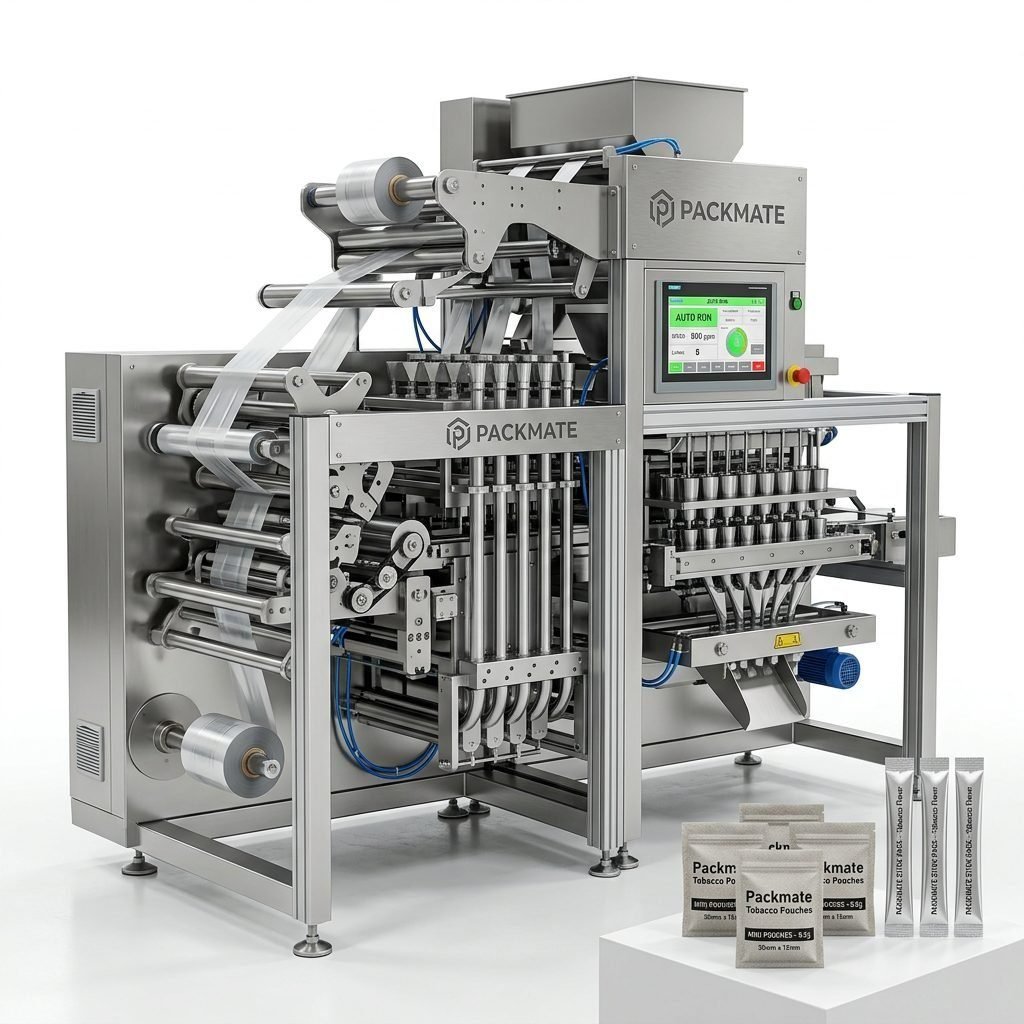
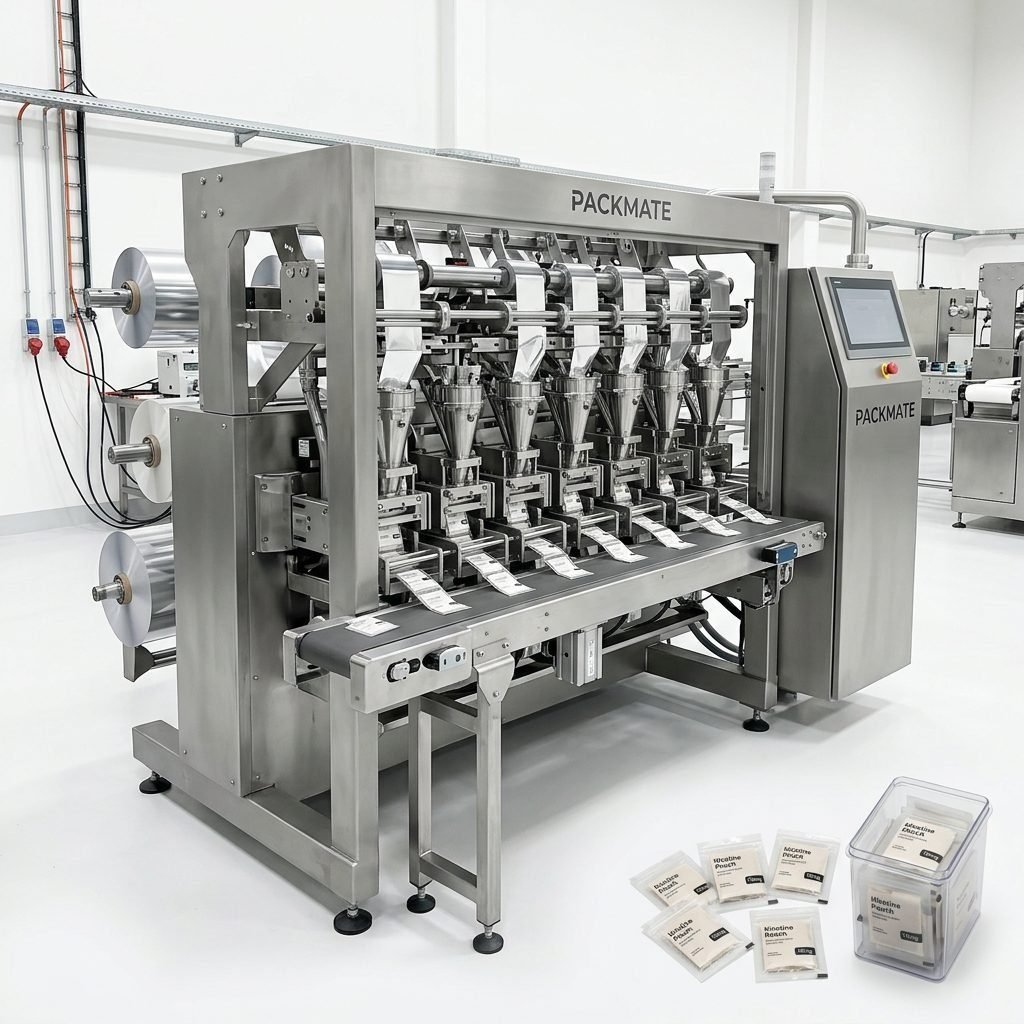
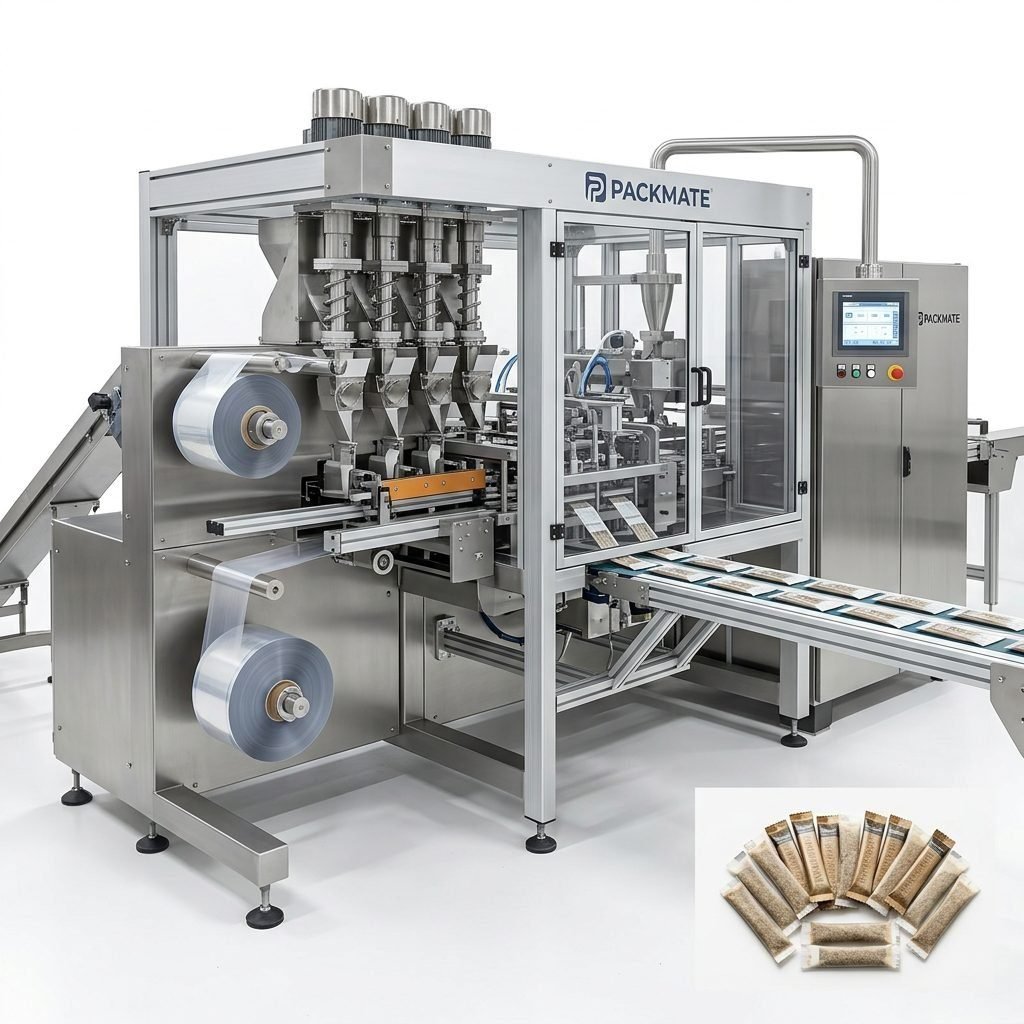
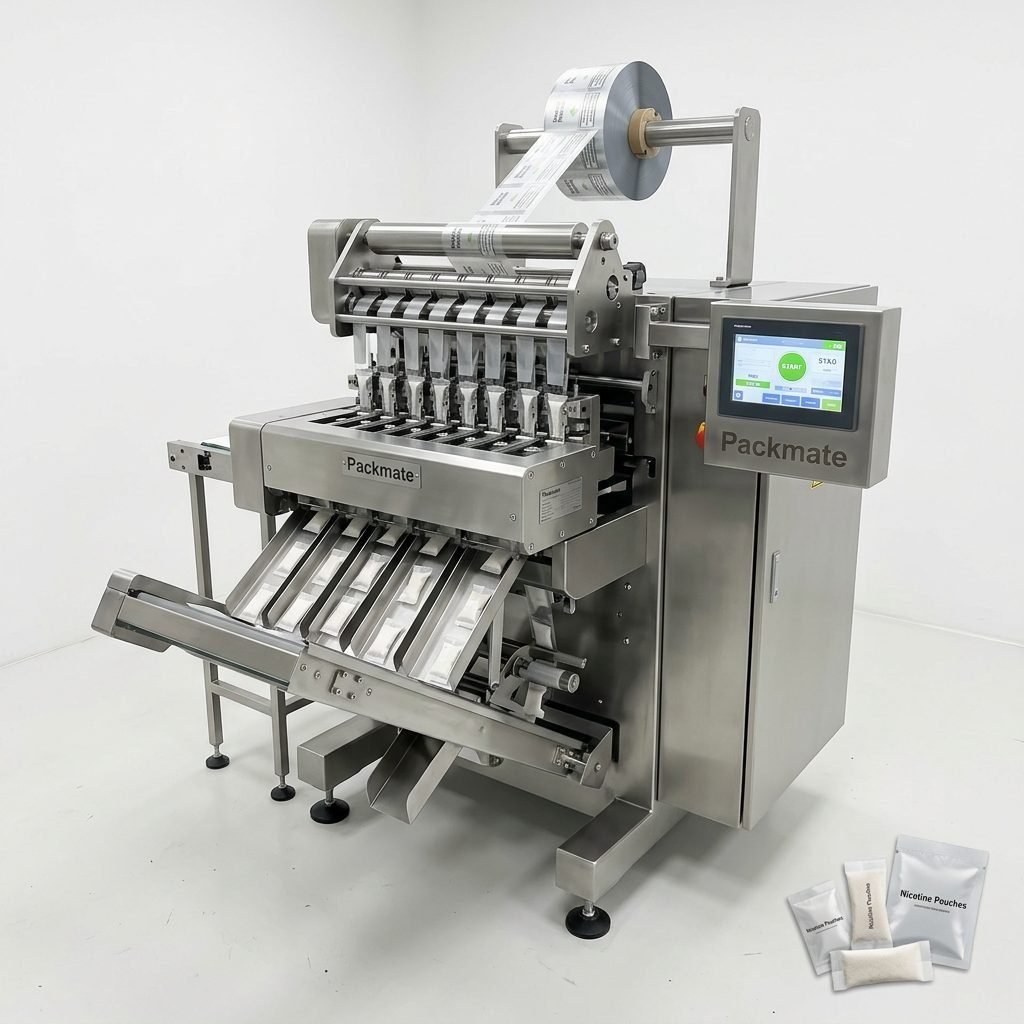
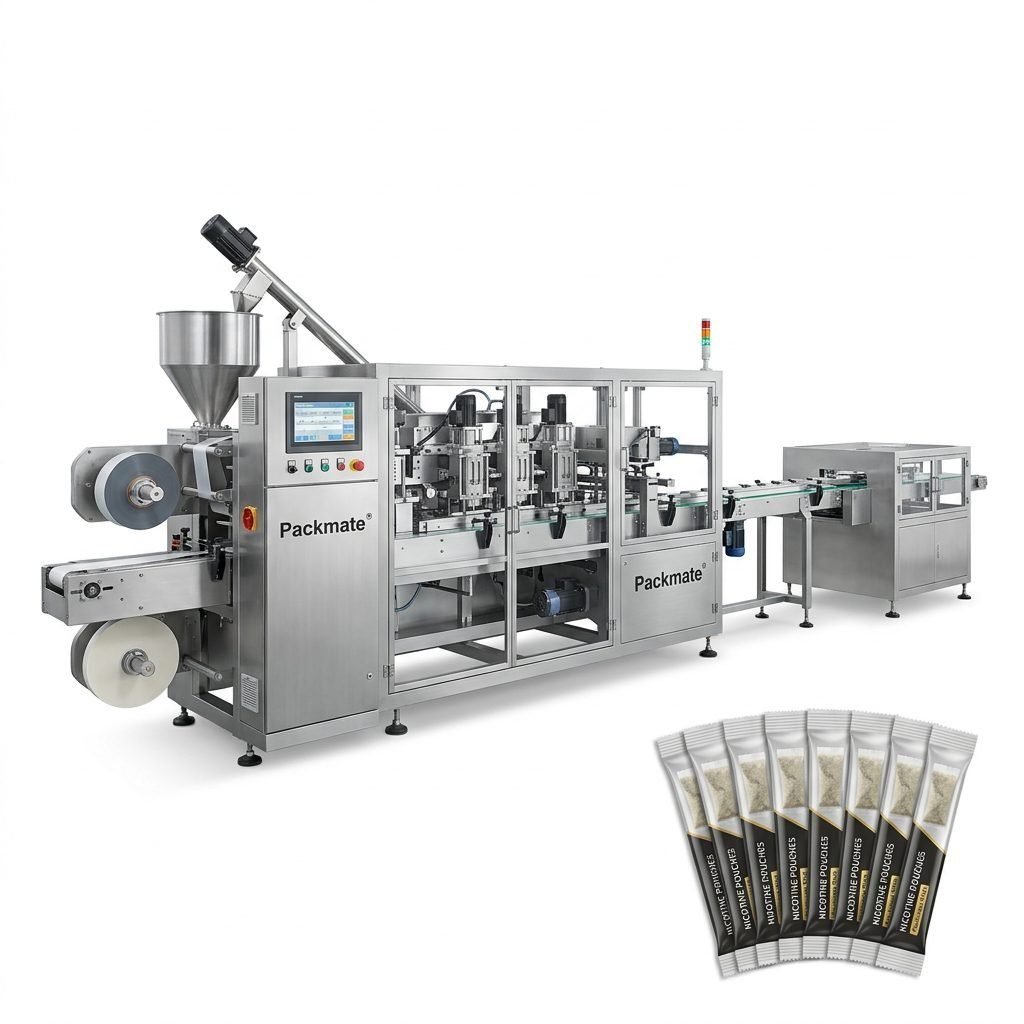
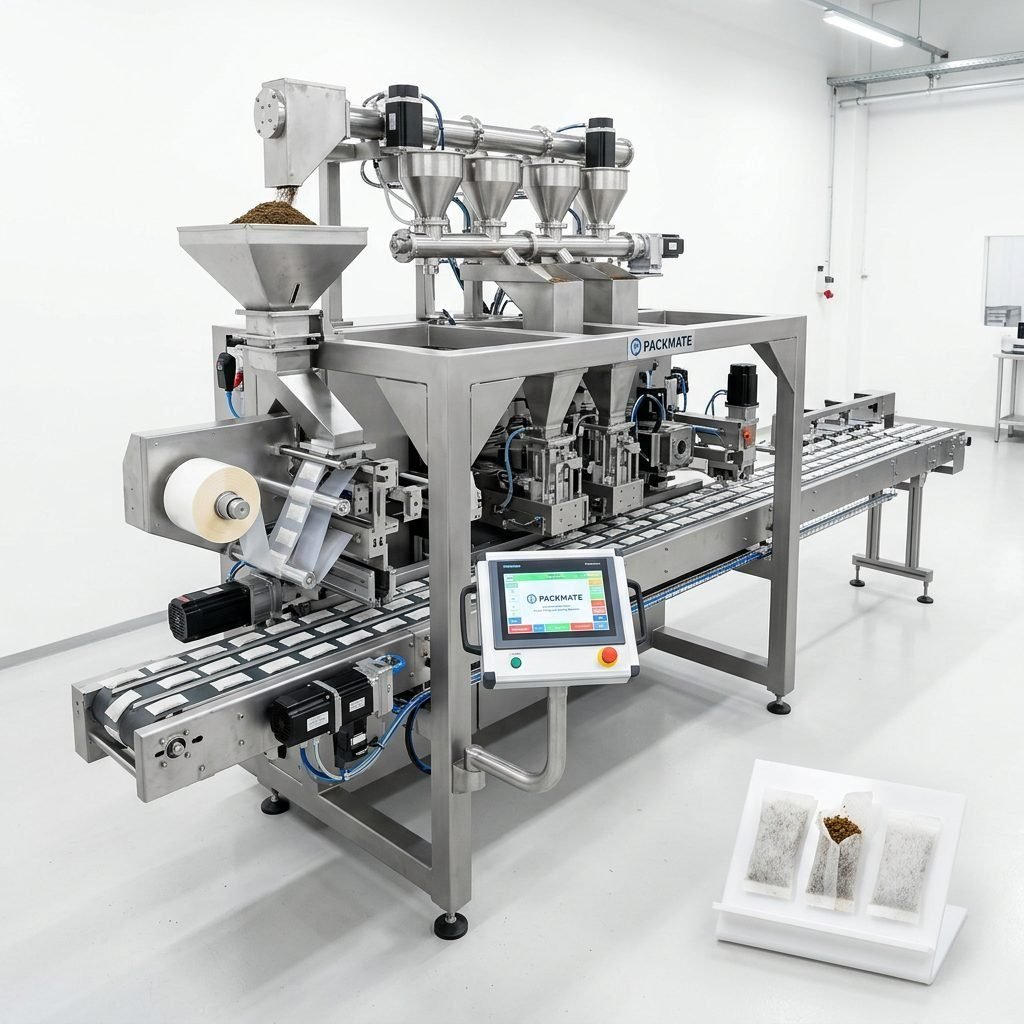
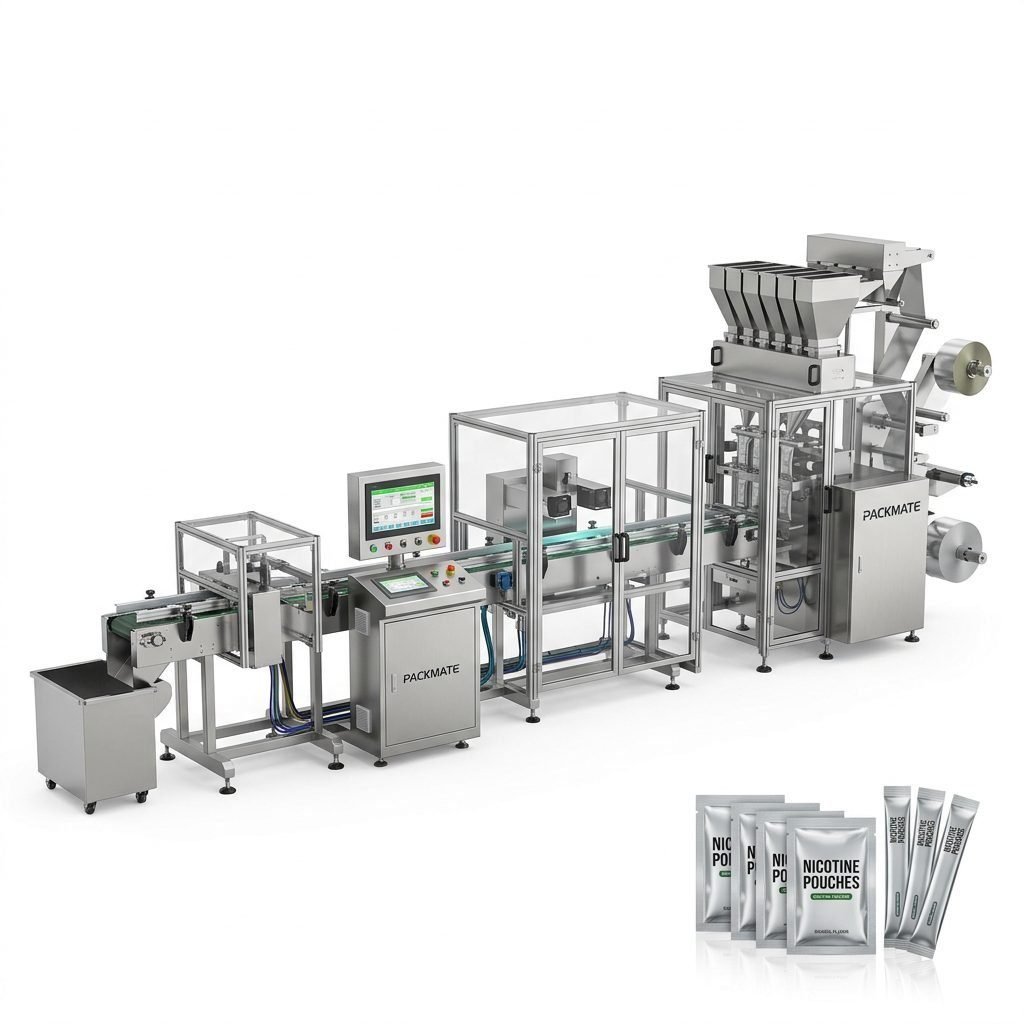
Different factories have different needs. Typical machines for nicotine pouch production include:
- Stick pack machines for single-dose, high-speed output.
- Sachet & multi-lane snus packaging lines for small pouches and high yield (consider multi-lane if you plan to scale).
- Filling & weighing systems for accurate low-dose pouch filling.
- Auxiliary equipment like conveyors, case packers, and checkweighers to build a turnkey line.
If you want to review specific machine models, explore product categories such as Snus & Nicotine Packaging Machines, Sachet & Stick Pack Machines, and Filling & Packaging Lines.
Manufacturer credibility: certificates, factory strength, and track record
Prioritize manufacturers with verifiable credentials. International standards such as CE and ISO are indicators of consistent quality and safety. Also evaluate factory capacity — a modern 20,000㎡ facility with CNC machining centers and precision assembly lines often translates into reliable performance and spare parts availability.
✅ Red flag:
Manufacturers who refuse factory visits, cannot provide references, or have no record of export experience to similar markets should be treated cautiously.
Ask for proof:
Request recent case studies, photographs of production lines, client references, and certificates. Many reputable manufacturers publish their exhibition appearances and certificates — see pages like Our Exhibition and Certificate.
Customization, flexibility and future-proofing
Afghanistan’s market often requires fast adaptation due to changing regulations or packaging preferences. Look for manufacturers that offer:
- Modular machine designs for quick retrofits.
- Custom tool sets for different pouch sizes or formats.
- Software control systems that support local language labels and easy recipe management.
Turnkey solutions vs. single machines
If you plan vertical integration, a turnkey line (weighing, filling, sealing, packing, and case packing) reduces integration risk. Suppliers that provide full production line services can save time on installation and reduce hidden costs. For turnkey examples, review manufacturers’ case pages such as Case.
After-sales service, spare parts and training
For operations in Afghanistan, prompt support and ready spare parts are critical. Ask potential suppliers about:
- Spare parts lead times and local stocking options.
- Remote diagnostics and software support packages.
- On-site commissioning and operator training (ideally with bilingual trainers).
📦 Practical tip:
Keep a one-year spare parts list and negotiate initial spare-kit pricing into the contract to avoid long downtime in remote areas.
Logistics, import compliance and payment considerations
Importing heavy machinery into Afghanistan can be complex due to multiple borders, security checkpoints, and variable port access. Work with a supplier experienced with the region and capable of handling international shipping documentation, customs tariffs, and safe delivery to your site.
Suggested contractual protections
Include clear Incoterms, agreed acceptance testing procedures, warranty terms, and penalty clauses for delayed delivery. Where possible, protect payments using staged LC or escrow arrangements and ensure clear terms for spare parts and service response times.
Choosing the right supplier profile
Different supplier profiles suit different buyers:
- Specialist manufacturers focused on snus/nicotine machines offer deep technical know-how and tailored features.
- Large OEMs provide broader support networks and easier access to certified components.
- Local agents can help with language, customs, and on-the-ground coordination — but verify their technical backup.
For specialist lines, manufacturers like Packmate (Packmate Snus Machine) have decades of experience and a comprehensive product range — see their About Packmate for company history and capabilities.
Factory visits, acceptance tests and pilot runs
Whenever possible, arrange a factory acceptance test (FAT) at the manufacturer’s site. A FAT verifies machine performance under real production conditions and reduces risks during final installation. If on-site visits are not feasible, insist on live video trials and detailed performance logs. For initial production confidence, request a pilot run with your actual pouch materials and nicotine formulations to check sealing, dosing, and package integrity.
What to include in acceptance testing
Throughput verification, weight accuracy, sealing integrity tests, and changeover time demonstrations should be documented and signed off by both parties before shipment.
Security, insurance and risk mitigation
Given regional security concerns, ensure that your transport insurance covers transit to the final destination and that the supplier can assist with secure routing. Where necessary, use bonded logistics or trusted freight forwarders with experience in Afghan deliveries.
⚖️ Compliance reminder:
Ensure your product and packaging comply with local advertising and labeling rules — some regions have strict rules about nicotine product displays and wording.
Negotiating price vs. total cost of ownership
Don’t focus solely on purchase price. Consider lifecycle costs: spare parts, service visits, energy consumption, and downtime risk. A slightly higher upfront investment in a robust, well-supported machine often delivers a lower total cost of ownership (TCO) in remote or emerging markets.
Warranty & service agreements
Negotiate a clear warranty period, defined response times, and options for extended support or local technician training. Some suppliers offer annual maintenance contracts that can be especially valuable when spare part delivery is slow.
Final selection steps: a practical buying checklist
Follow these practical steps before signing a contract:
- Verify factory credentials, certificates, and export experience.
- Request and witness a FAT or live video performance test.
- Confirm spare parts availability and lead times in writing.
- Negotiate clear acceptance criteria, warranty, and payment milestones.
- Plan installation logistics, customs clearance, and operator training.
For a direct inquiry or to discuss turnkey options, you can reach a supplier via their Contact Us page. Suppliers with a strong exhibition presence and documented global cooperation cases typically handle international logistics and remote support better — check their Case examples for references.
Local partnerships and long-term planning
Consider partnering with a local distributor or technician who can provide routine maintenance and emergency response. Long-term relationships, built on mutual respect and clear contracts, will reduce downtime and help scale production as demand grows.
📌 Quick summary:
Prioritize manufacturers with proven snus/nicotine experience, strong factory capabilities, clear certification, and demonstrated support for export markets.
Next steps for Afghan buyers
1) Shortlist 3 reputable vendors with relevant export experience. 2) Arrange FATs or video trials using your materials. 3) Negotiate TCO-focused contracts including spare parts and local training. 4) Secure logistics and insurance with experienced forwarders.
Frequently Asked Questions
Q1: How do I verify a packaging machine supplier’s credibility for shipping to Afghanistan?
A: Ask for certificates (CE/ISO), export references to similar markets, recent case studies, and, if possible, conduct a factory acceptance test. Verified documentation and client references reduce risk.
Q2: What are the common hidden costs when buying nicotine packaging machines?
A: Hidden costs often include spare parts shipping, international service visits, customs duties, on-site installation, and additional tooling for format changes. Factor these into your TCO.
Q3: Is it better to buy a turnkey line or individual machines?
A: Turnkey lines reduce integration risk and usually include coordinated installation and testing. If you have strong local engineering and prefer staggered investments, select modular machines that can be integrated later.
Q4: How do I ensure reliable after-sales support in Afghanistan?
A: Choose suppliers who offer spare-part kits, remote diagnostics, training for local technicians, and documented lead times. Establish a local agent or service agreement to minimize downtime.