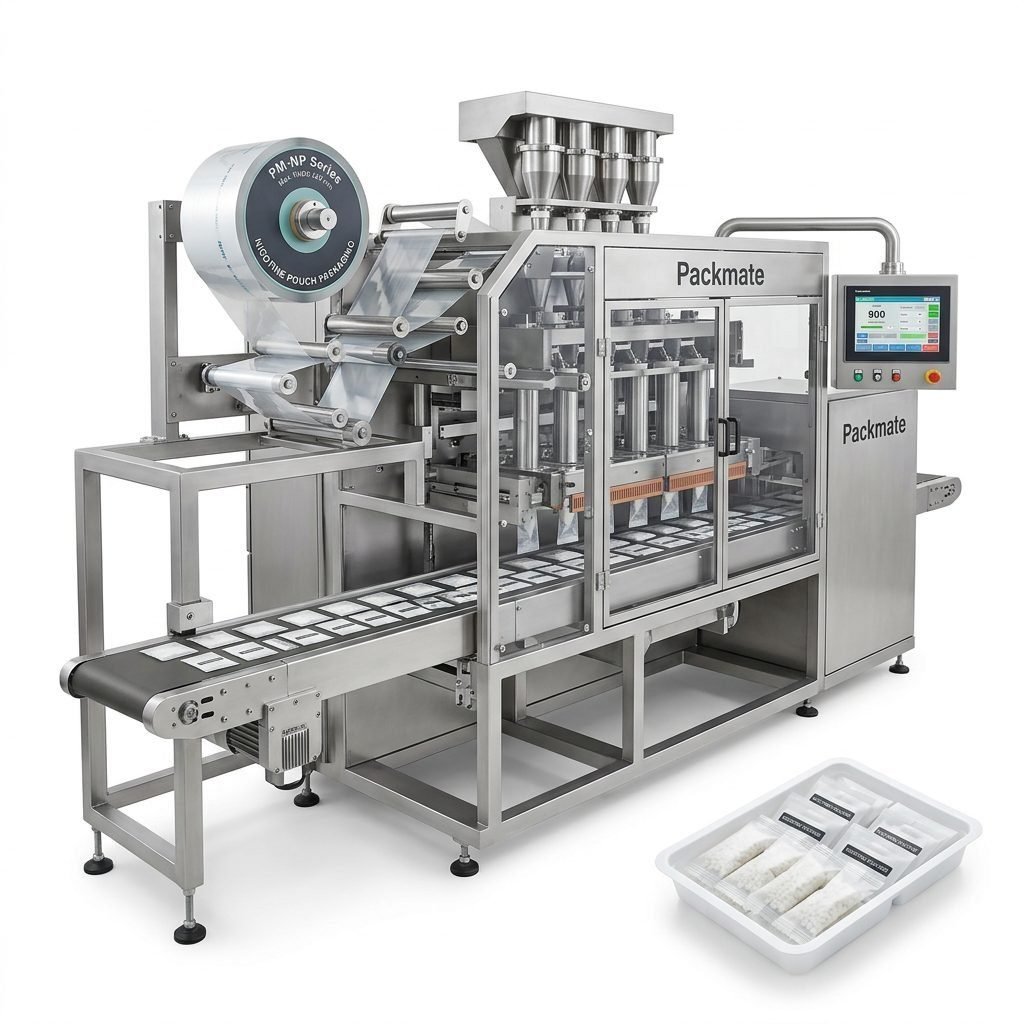
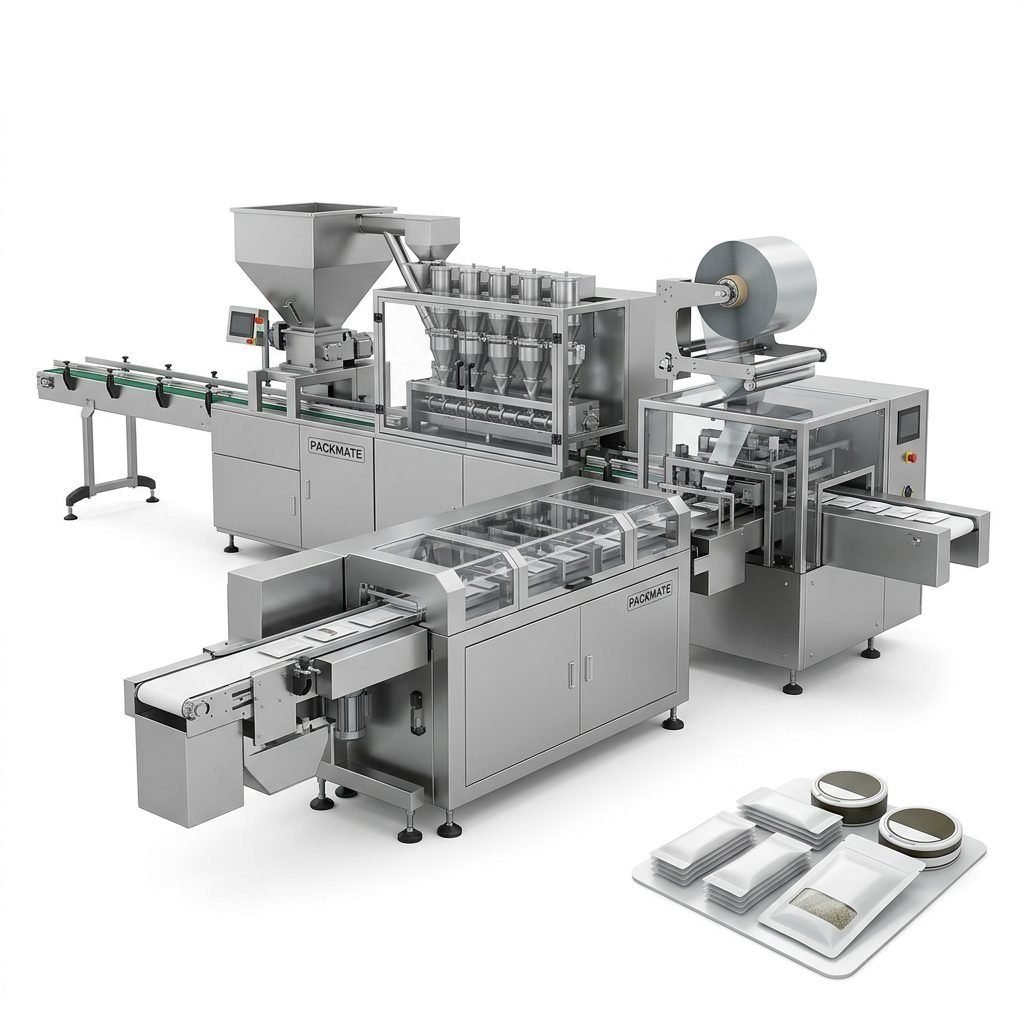
Choosing the right nicotine packaging machine in Sudan requires a practical understanding of local market needs, regulatory requirements, machine capabilities, and supplier reliability. This buyer’s guide walks you through every critical decision point — from production capacity and pouch formats to installation, certification, and after-sales support — so you can make a confident purchase that protects both product quality and your bottom line.
Why invest in a dedicated nicotine pouch packaging machine?
The nicotine pouch market demands precise portioning, tamper-proof seals, consistent dosing, and attractive consumer packaging. A specialized machine delivers:
🔹 Consistency — Accurate dosing and uniform pouch formation to maintain product reputation.
🔹 Efficiency — High-speed continuous production that lowers per-unit costs.
🔹 Compliance — Machines designed to meet CE/ISO and other international standards, reducing regulatory risk.
🔹 Flexibility — Ability to run multiple pouch sizes and formats (stick pack, sachet, multi-lane pouches).
Understand your product and market requirements
Start by mapping the product attributes and market expectations in Sudan: pouch weight ranges, moisture sensitivity, desired packaging materials (foil, paper, laminates), labeling needs, and humidity control during production. Your answers will determine machine type, materials handling, and ancillary equipment.
📌 Quick checklist (use this during RFQ): pouch format(s), target output (pcs/min or pcs/hour), pouch weight range, packaging film type, sealing method, required integrations (weighers, metal detectors, cartoners), local power supply, and expected working shifts.
Key machine types and when to choose them
There are several packaging formats used for nicotine pouches. Select the machine type that best matches your product strategy:
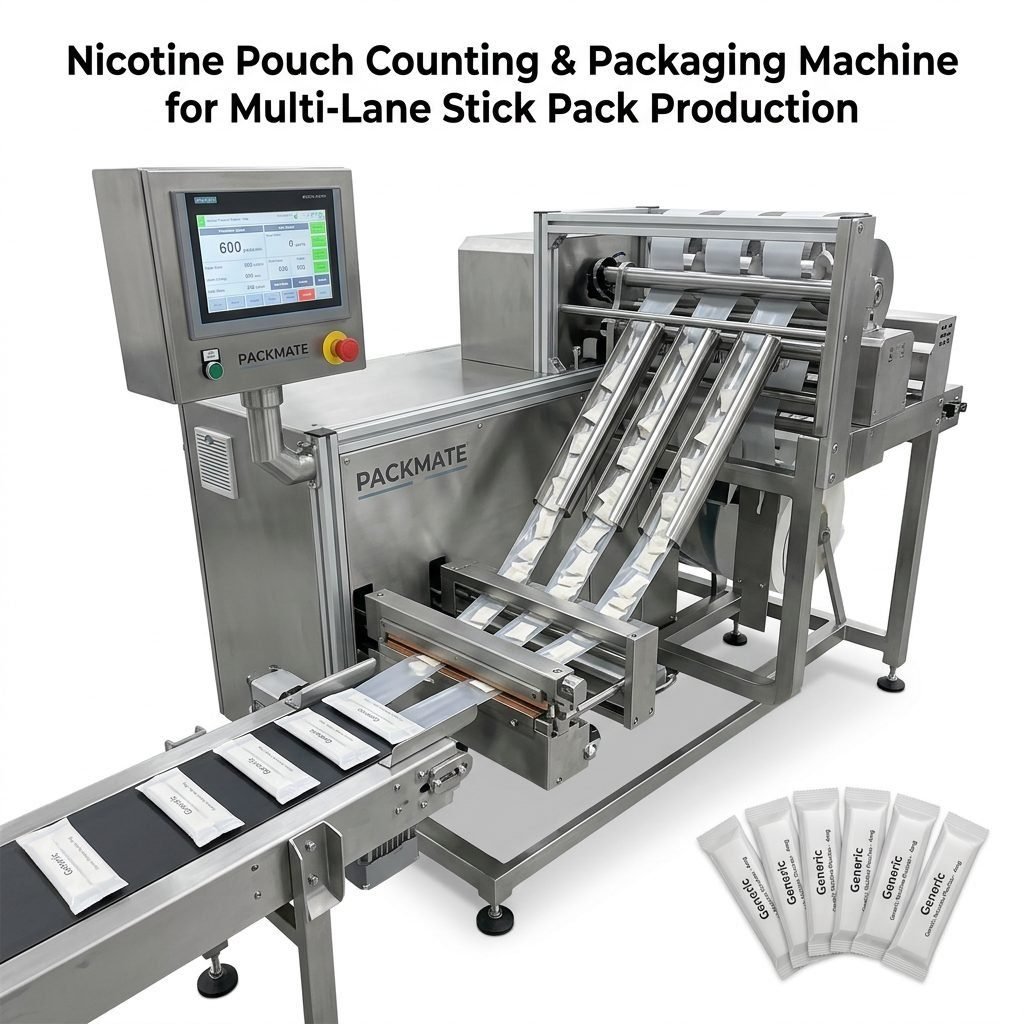
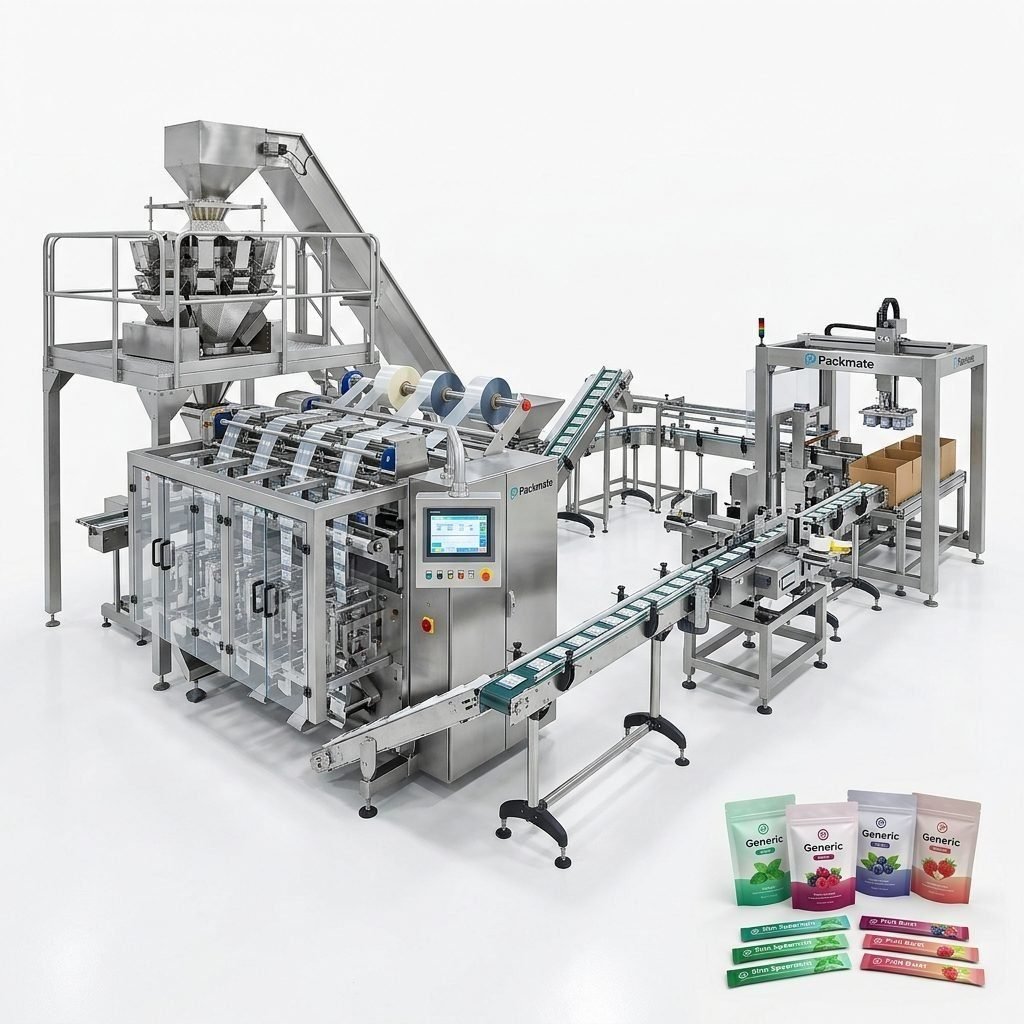
⚙️ Stick pack machines — Ideal for single-dose portions and compact consumer packs. Good for high-speed lines and simple pouch designs.
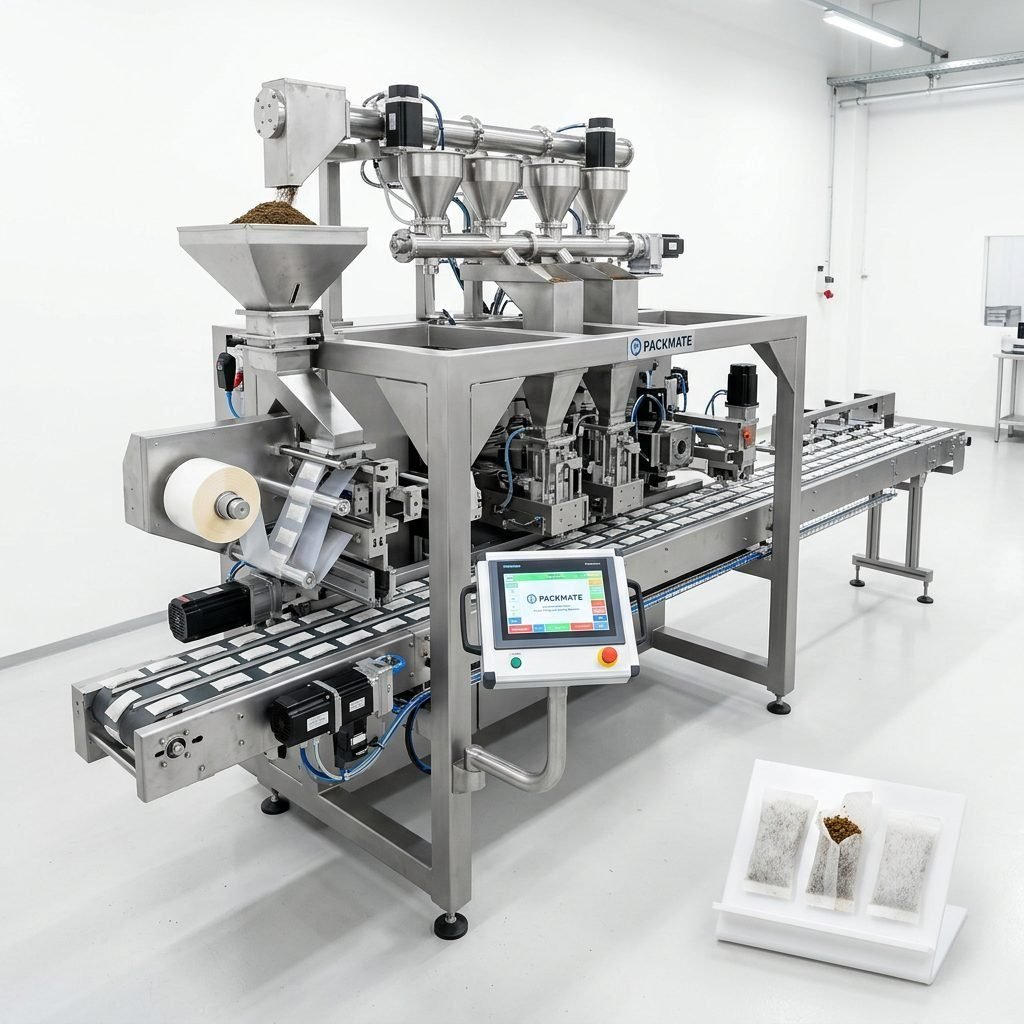
⚙️ Sachet & multi-lane machines — Best for higher throughput with multiple lanes producing identical pouches simultaneously. Perfect for scaling production without a larger footprint. See suitable models: Sachet & Stick Pack Machines.
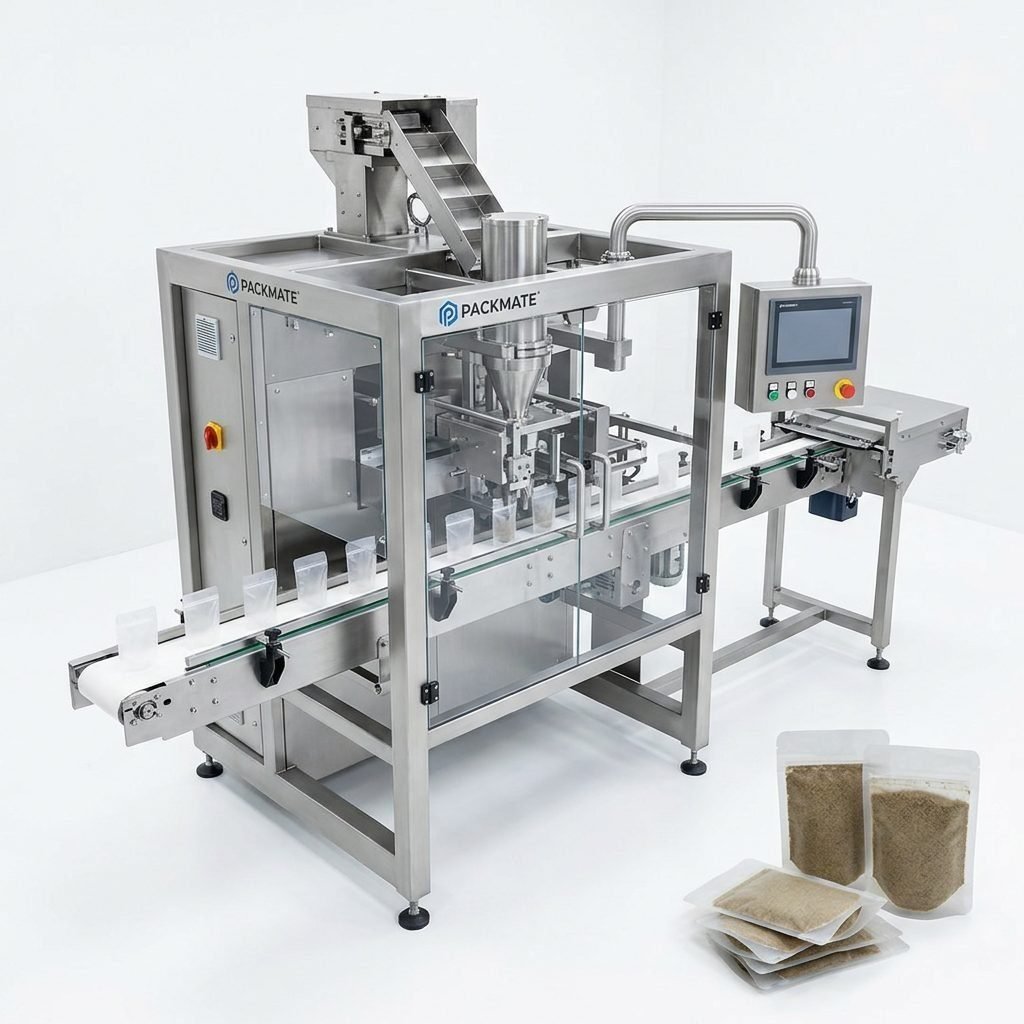
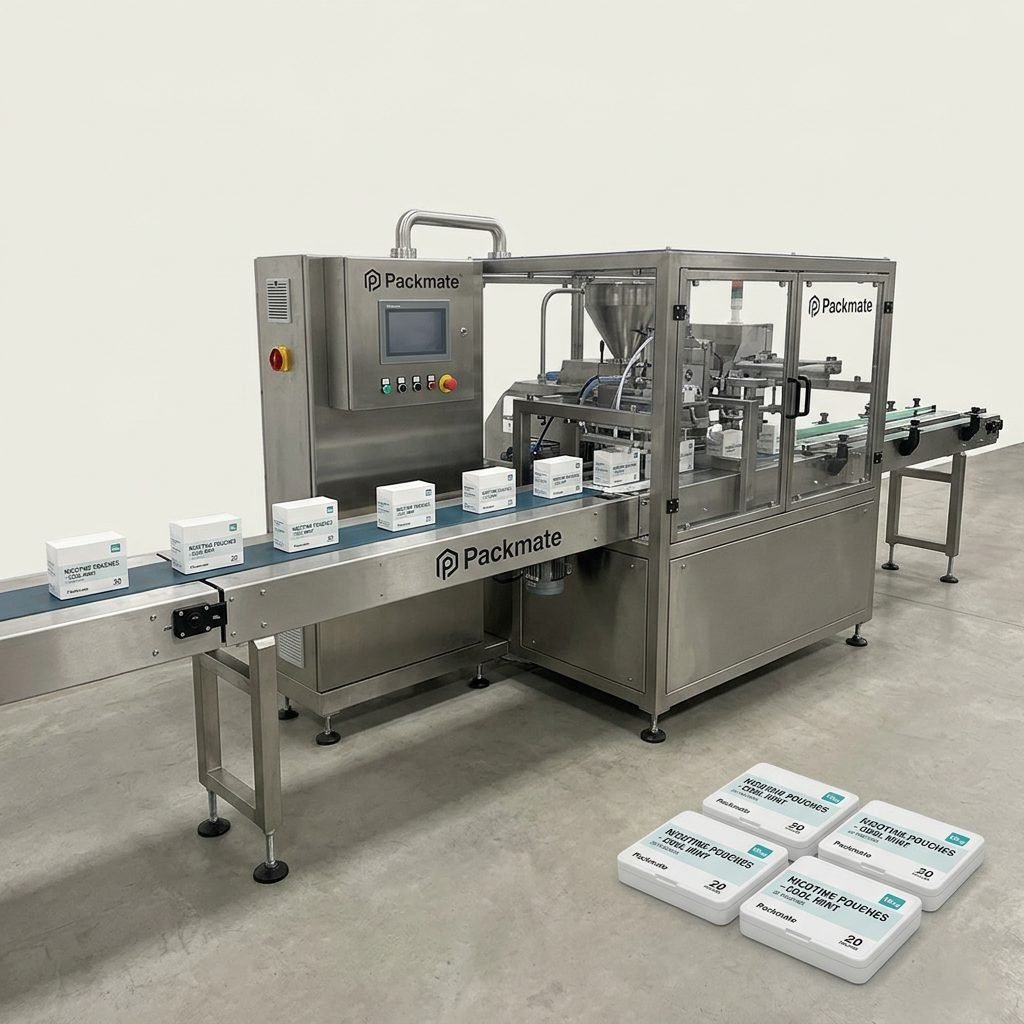
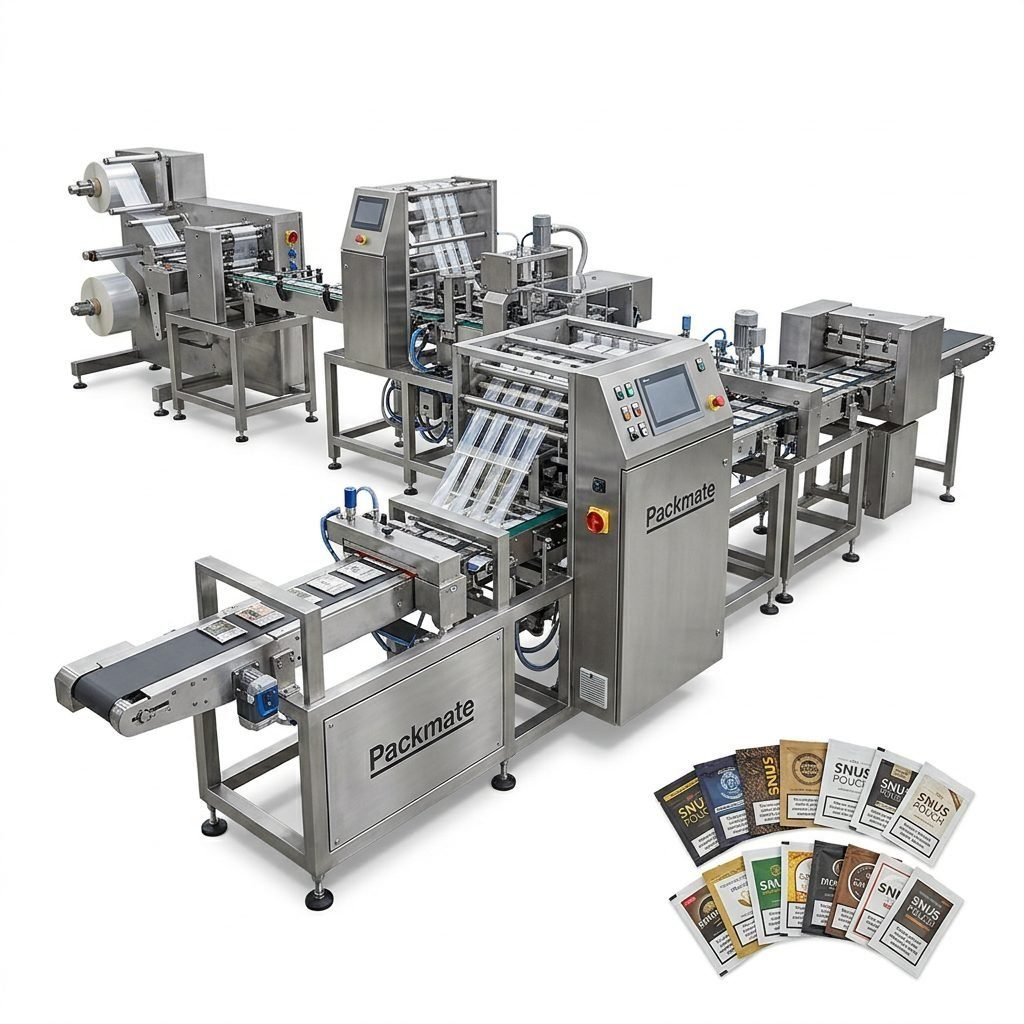
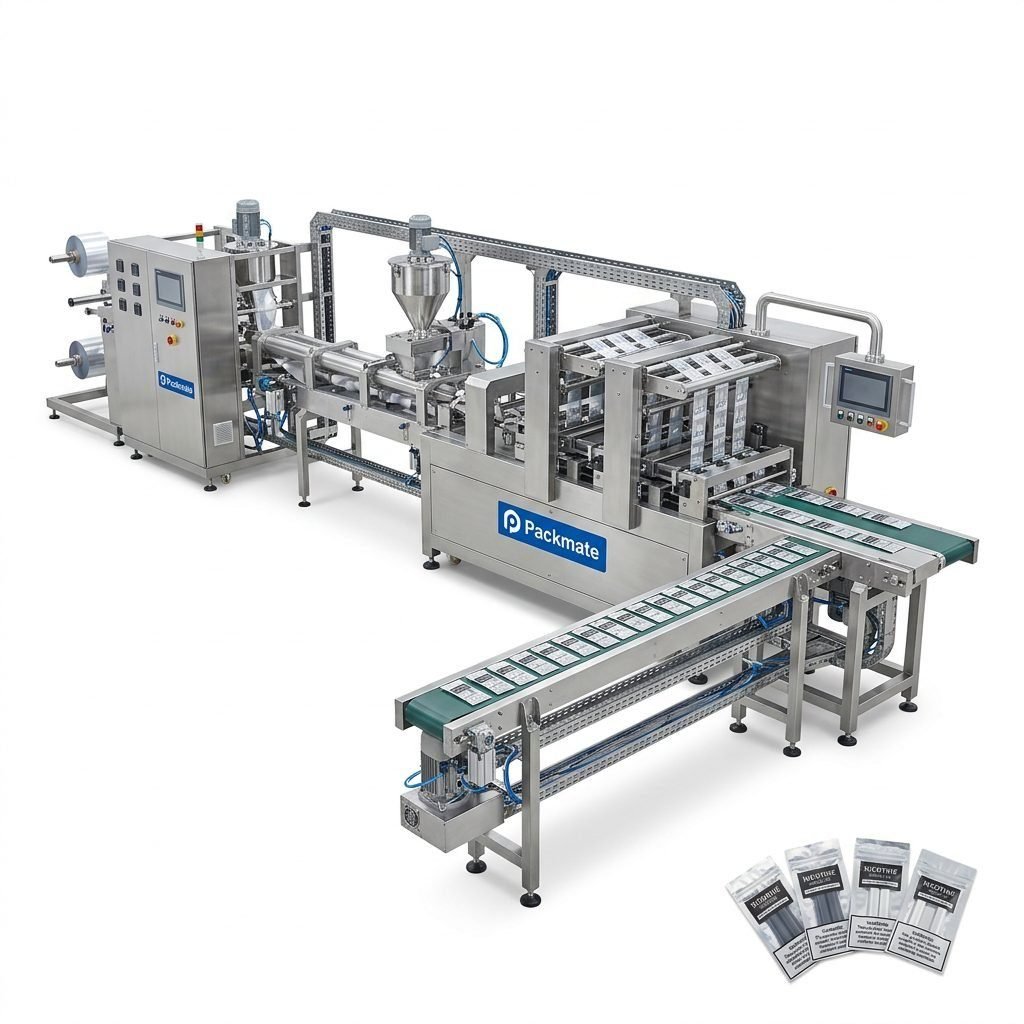
⚙️ Snus / Nicotine pouch machines — Purpose-built for snus and nicotine pouch formats, offering precise dosing and pouch shaping. Explore dedicated solutions: Snus & Nicotine Packaging Machines.
Capacity & speed considerations
Calculate realistic capacity needs based on forecasted sales, expansion plans, and shift patterns. Avoid overbuying a machine that operates far below its rated capacity; conversely, undersized machines create bottlenecks. Key metrics:
• Output per lane and total lanes.
• Cycle time per pouch.
• Changeover time between formats.
⚡ Pro tip: Choose modular multi-lane systems if you expect demand growth. Multi-lane lines allow capacity scaling with lower incremental investment.
Pouch formats, materials & sealing technology
Match your packaging film and sealing type to product preservation needs. Nicotine pouches require barrier films for shelf life and consistent sealing to prevent moisture ingress.
Consider:
• Heat-sealable laminates vs. cold-seal films.
• Foil-laminated films for high barrier performance.
• Compatibility with printed films and pre-made pouches if you want customized branding.
Compliance, safety & certifications
Regulatory compliance in packaging equipment is non-negotiable. Prioritize machines with CE and ISO certifications to ease customs clearance and meet retailer standards. Machines often integrate safety guards, emergency stops, and sanitary design features for easy cleaning.
✅ Look for documented certifications and test reports. If you need machines that comply with specific export markets, request related compliance documentation during RFQ.
Factory capability and quality assurance
Selecting a reliable supplier means assessing their manufacturing strength: machining centers, assembly lines, quality control, and track record. Suppliers with 20,000㎡ facilities, advanced CNC equipment, and decades of experience typically deliver more consistent machines and customization capabilities.
Packmate is an example of a specialist with deep experience in snus and nicotine pouch solutions. Learn more about the company and capabilities: About Packmate.
After-sales service, spare parts & training
Ensure the supplier offers robust after-sales support: remote diagnostics, on-site commissioning, operator training, and a clear spare parts policy. Downtime in production is costly — select a partner with local service options or fast international support.
🔧 Service checklist: guaranteed response time, spare parts lead times, remote support capability, operator training syllabus, and documented maintenance schedules. You can review typical service offerings here: Service.
Site preparation, utilities & installation
Before machine arrival confirm floor loading capacity, clear working space, power supply (voltage, phase, frequency), compressed air quality, and environmental controls (humidity/temperature). Ask the supplier for an installation checklist and local power compatibility.
• Electrical requirements and breakers.
• Compressed air consumption and filtration.
• Drainage for liquid handling machines.
• Clean room or dust control needs if applicable.
Budgeting, ROI & total cost of ownership
Purchase price is only one component. Factor in installation, training, spare parts, consumables, energy consumption, maintenance labor, and downtime risk to estimate total cost of ownership (TCO). A higher initial investment in automation can pay off quickly via lower labor costs, higher throughput, and reduced waste.
Financing and warranties
Negotiate warranty terms, extended coverage, and payment terms. Some manufacturers offer turnkey financing, EXW/CIF shipping options, and training packages that reduce cash strain and risk.
How to evaluate suppliers and factory visits
Shortlist suppliers by reputation, certifications, and case studies. Ask for references from similar projects and visit the factory if possible. During a visit, inspect assembly lines, test runs, witness quality checks, and meet the engineering team.
Useful reference resources and machine portfolios are available online: Case and product pages like Bag & Pouch Packaging Machines.
Technical acceptance test (FAT) & pre-shipment checks
Require a Factory Acceptance Test (FAT) with your product or a close analog. FAT should demonstrate speed, accuracy, sealing integrity, and integration with your upstream/downstream equipment. Get FAT reports and video evidence before shipment.
Ordering, lead times & delivery
Typical lead times depend on customization and production schedules. Standard machines may ship within weeks; custom multi-lane systems require longer manufacturing and testing time. Confirm packing, shipping terms, and customs documentation to avoid delays at port.
📦 Shipping tip: Clarify whether the supplier provides installation and commissioning at your site. If you handle import, ensure all certificates and commercial invoices match customs requirements.
Final purchasing checklist
Use this condensed checklist to finalize your decision:
✅ Machine type matches pouch format and capacity requirements.
✅ Material compatibility and sealing method verified.
✅ CE/ISO documentation and test reports available.
✅ Factory run (FAT) completed with your product.
✅ Warranty, spare parts lead times, and remote support agreed.
✅ Installation, training, and commissioning included or clearly quoted.
✅ Total cost of ownership assessed (energy, consumables, maintenance).
Why choose an established snus packaging specialist?
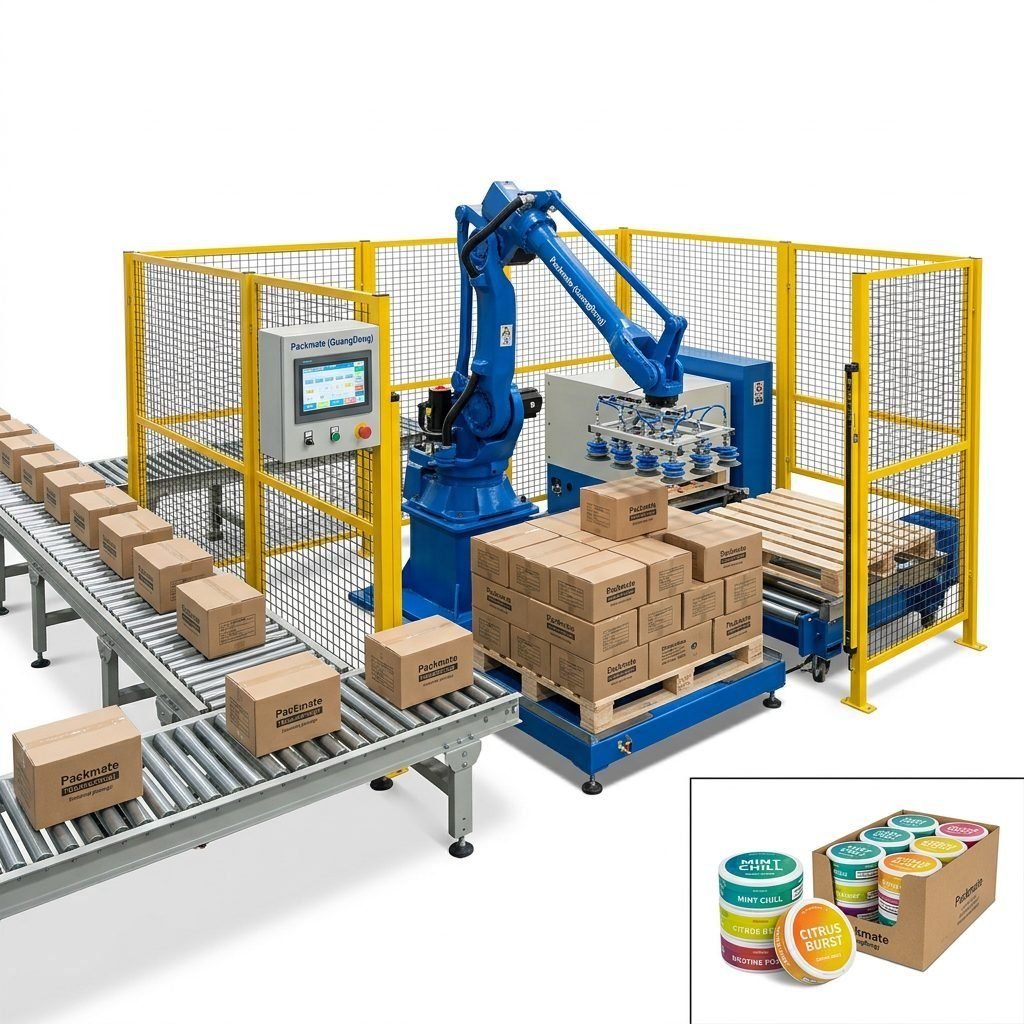
Working with a specialist gives you access to decades of engineering improvements tailored to nicotine pouch production. Suppliers with long histories in the field understand dosing nuances, multi-lane balancing, and hygienic design — all critical for a reliable operation. To explore specialized product lines, review the dedicated collections like Weighing & Packaging Systems and Filling & Packaging Lines.
Next steps: from quote to production
Request detailed quotes from 2–3 qualified suppliers, specifying desired outputs, pouch formats, and integration needs. Prioritize clarity on lead time, training, spare parts lists, and acceptance criteria. After purchase, schedule FAT, confirm site readiness, and plan operator training ahead of machine arrival.
Contact & further resources
For more detailed specifications or to request a consultation, reach out to manufacturers directly through their contact pages and catalogs: Contact Us and browse technical catalogs: Catalog.
Common questions (FAQs)
Q1: What speed should I choose for my first production line?
A1: Choose a machine that meets current demand with a 20–50% headroom for growth. Multi-lane modular machines are a safe option if you anticipate quick scaling.
Q2: How important are CE and ISO certifications?
A2: Very important. These certifications indicate adherence to international safety and quality standards, simplify export processes, and reduce risk during inspections.
Q3: What spare parts should I stock initially?
A3: Stock critical wear parts such as sealing jaws, belts, cutters, bearings, sensors, and essential electrical components. Suppliers usually provide a recommended spare parts list tailored to your machine model.
Q4: Can I run different pouch sizes on the same machine?
A4: Many modern machines support quick format changeovers and adjustable tooling. Confirm changeover time and whether additional kits are required for each size.
Q5: How do I minimize contamination and maintain hygiene?
A5: Choose machines with hygienic design, use food-grade materials, implement cleaning SOPs, and maintain proper environmental controls (humidity, dust control). Regular preventive maintenance is also crucial.