Buying a nicotine pouch or snus packaging line in Sweden requires more than comparing price tags — it demands understanding local habits, regulatory nuances, machine performance and long-term support. This practical buyer’s guide walks Swedish buyers and European importers through the exact steps to select a reliable supplier, evaluate technical fit, and minimize operational risks so your production line runs smoothly from installation to full-scale output.
Why Sweden is a unique market for nicotine packaging ⚖️
Sweden has a long-standing tradition with snus and a sophisticated consumer base that values product discretion, consistent dosing and high packaging aesthetics. In addition, Swedish buyers expect strong environmental responsibility — recyclable materials, reduced plastic use and EPR-compliant packaging solutions are prioritized by both regulators and consumers.
Regulatory context matters: while Sweden historically allows snus domestically, nicotine pouches now face evolving rules across the EU. For Swedish manufacturers and exporters, choosing machines that support compliant labeling, traceability features and adaptable materials is essential.
Key factors when choosing a nicotine packaging machine supplier ✅
🔍 Product fit: Can the machine handle nicotine pouches, snus cans, stick packs or sachets? Look for suppliers offering multi-format capability or quick changeovers.
⚙️ Technical performance: speed (pouches/min), dosing accuracy, sealing integrity and multi-lane configurations — these metrics determine throughput and waste.
🛡️ Compliance & certifications: CE and ISO compliance, plus documentation for material safety, electrical conformity and factory quality systems.
🔧 After-sales & spare parts: response times, local service capability (or fast remote diagnostics) and availability of critical spares.
📈 Long-term partnership: training, upgrades, retrofit options and a clear warranty/support agreement that fits your scaling plans.
Technical specifications you should prioritize 🧩
Focus on specifications that translate to consistent production and low scrap rates: dosing precision (mg tolerance), lane count and lane balance, packaging film compatibility (laminates, compostable films), seal temperature control, and servo-driven motion for repeatability. For nicotine pouches, small-dose accuracy and gentle handling are critical to maintain product integrity.
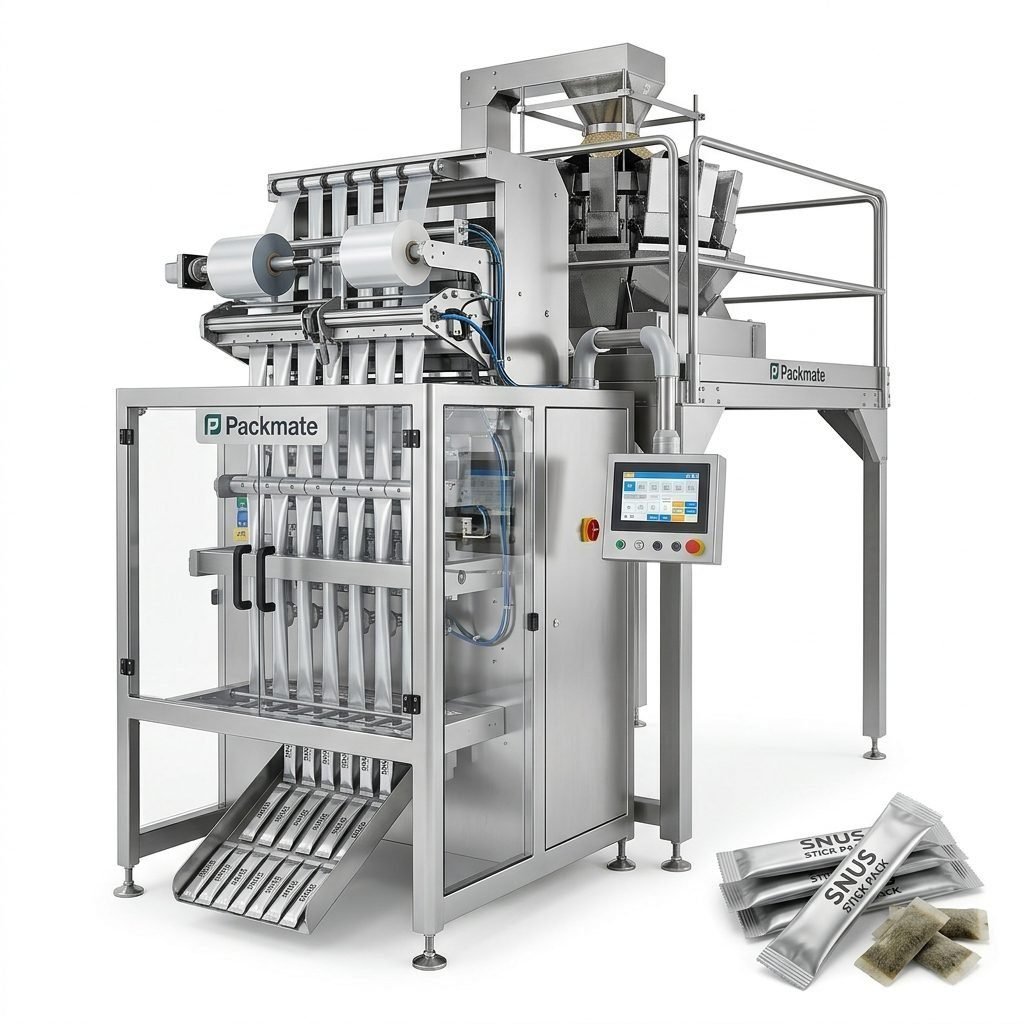
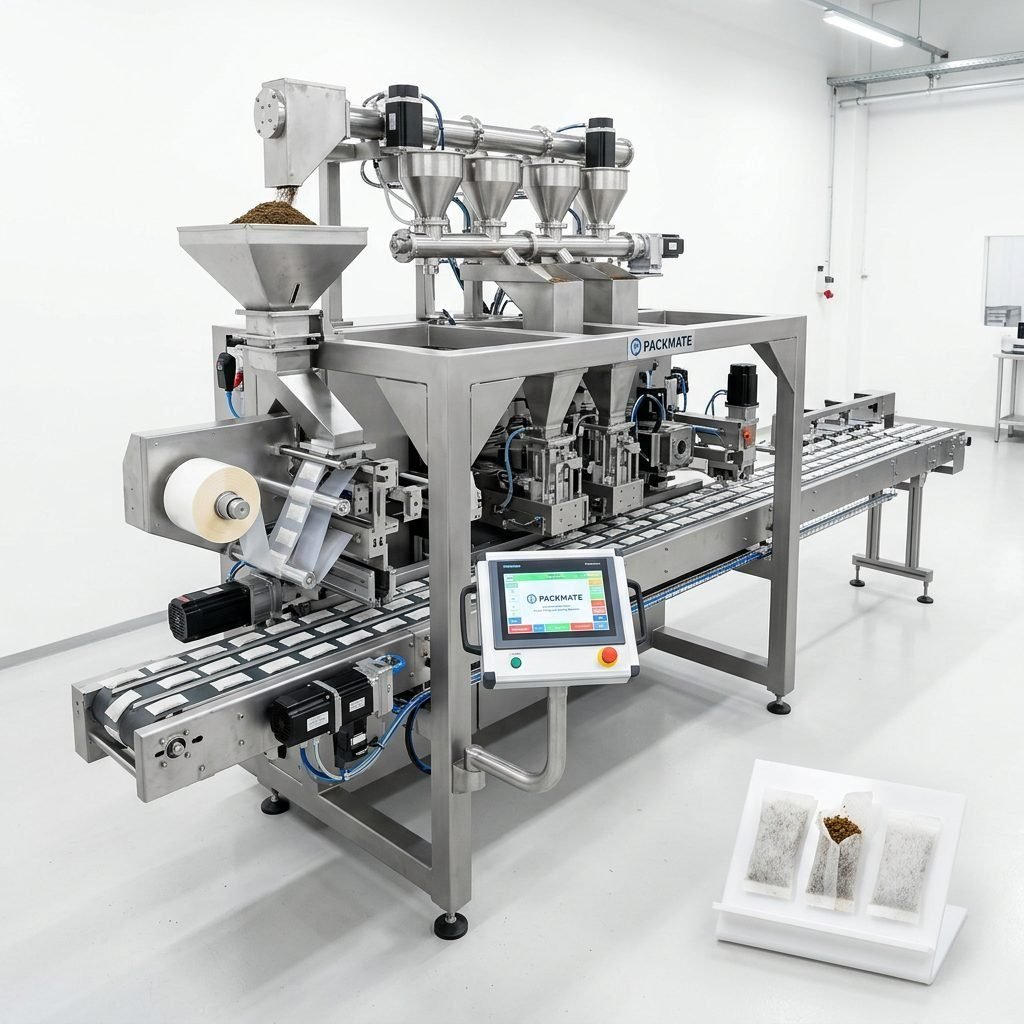
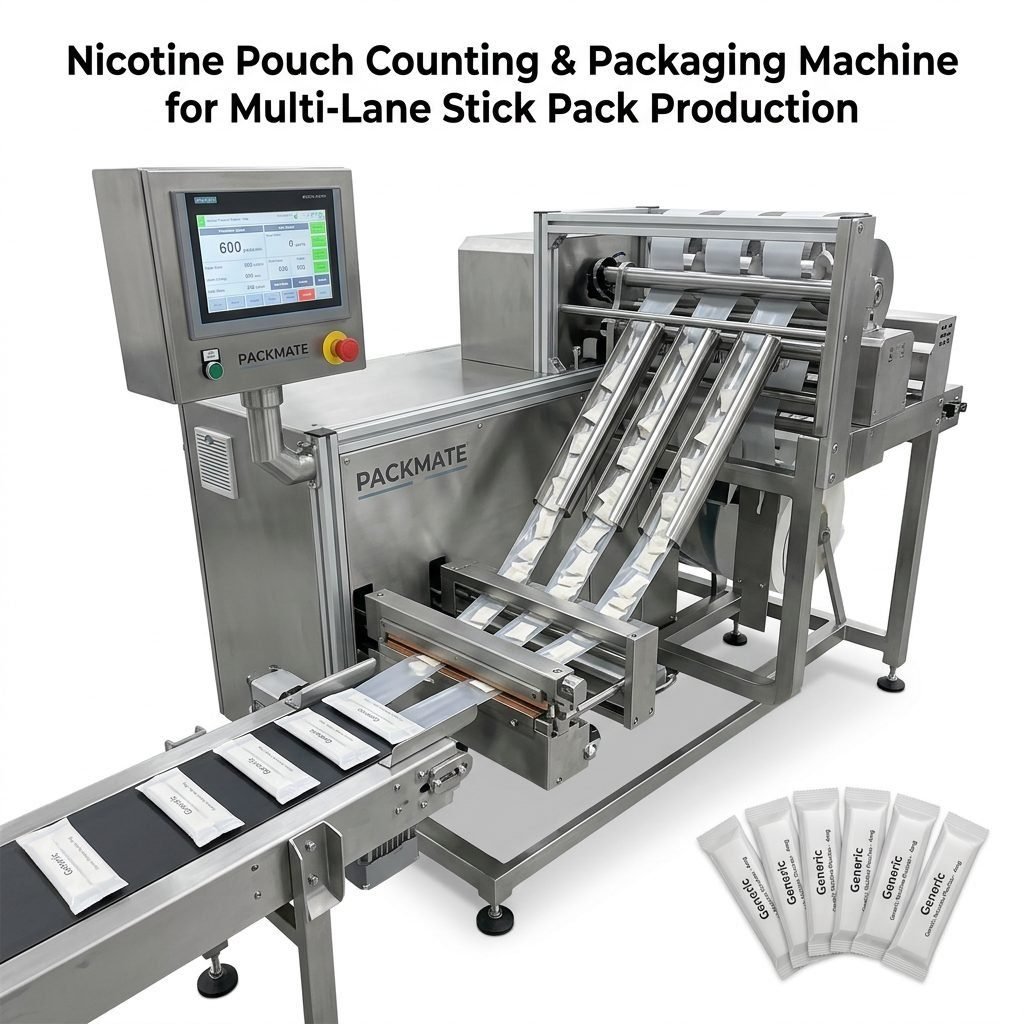
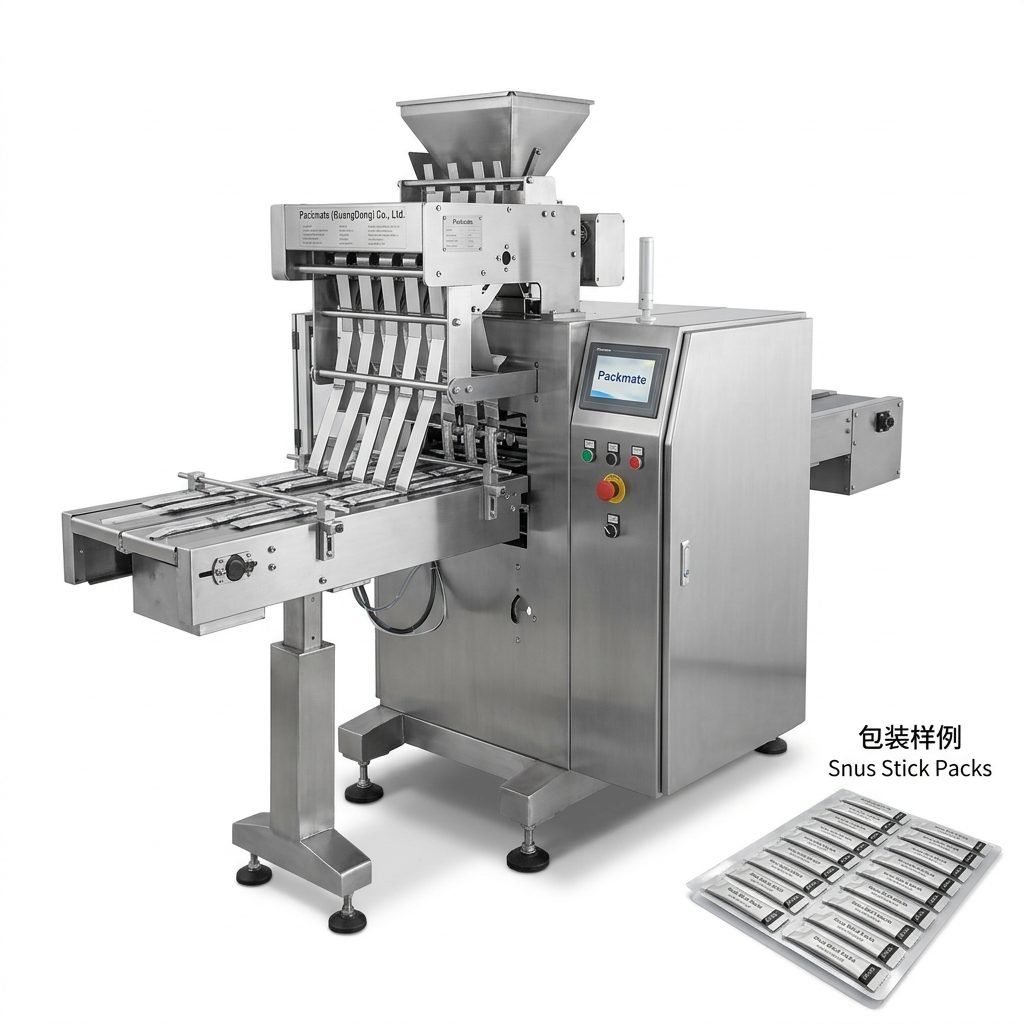
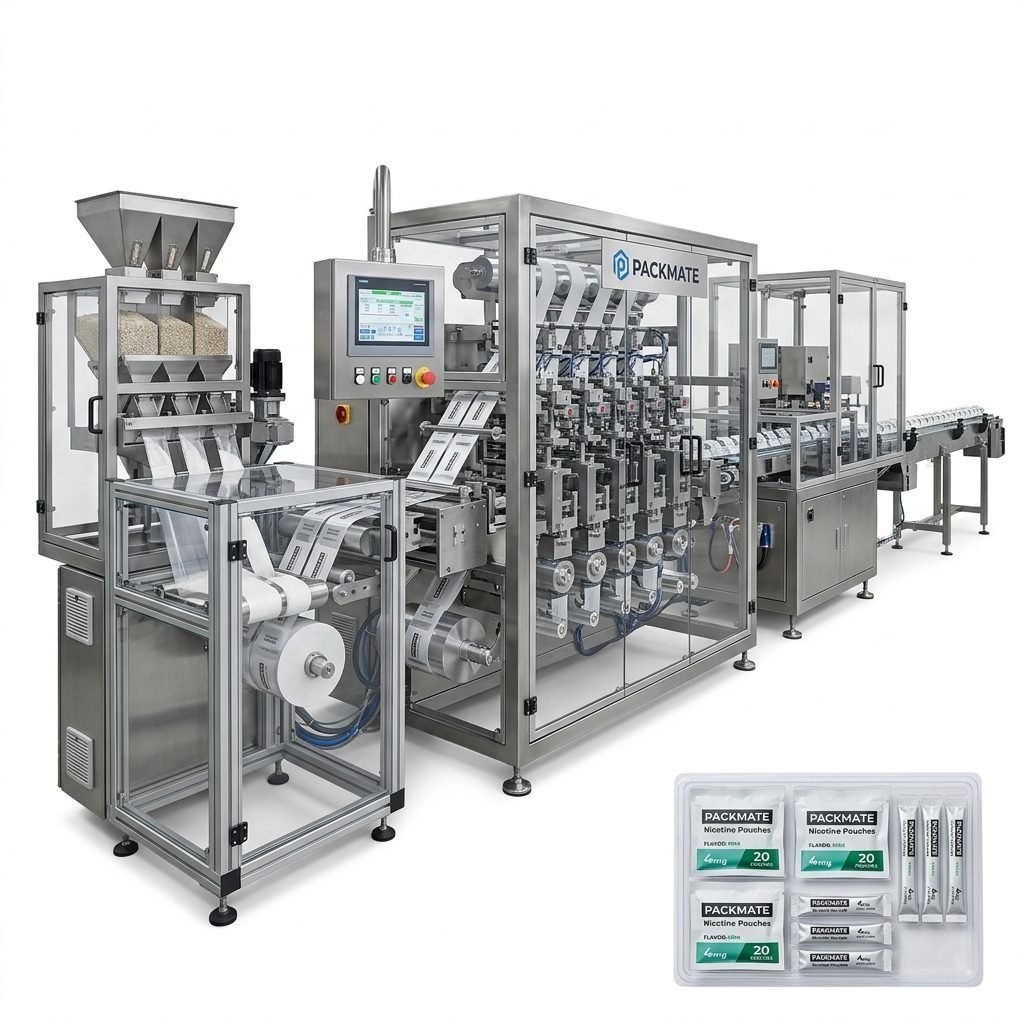
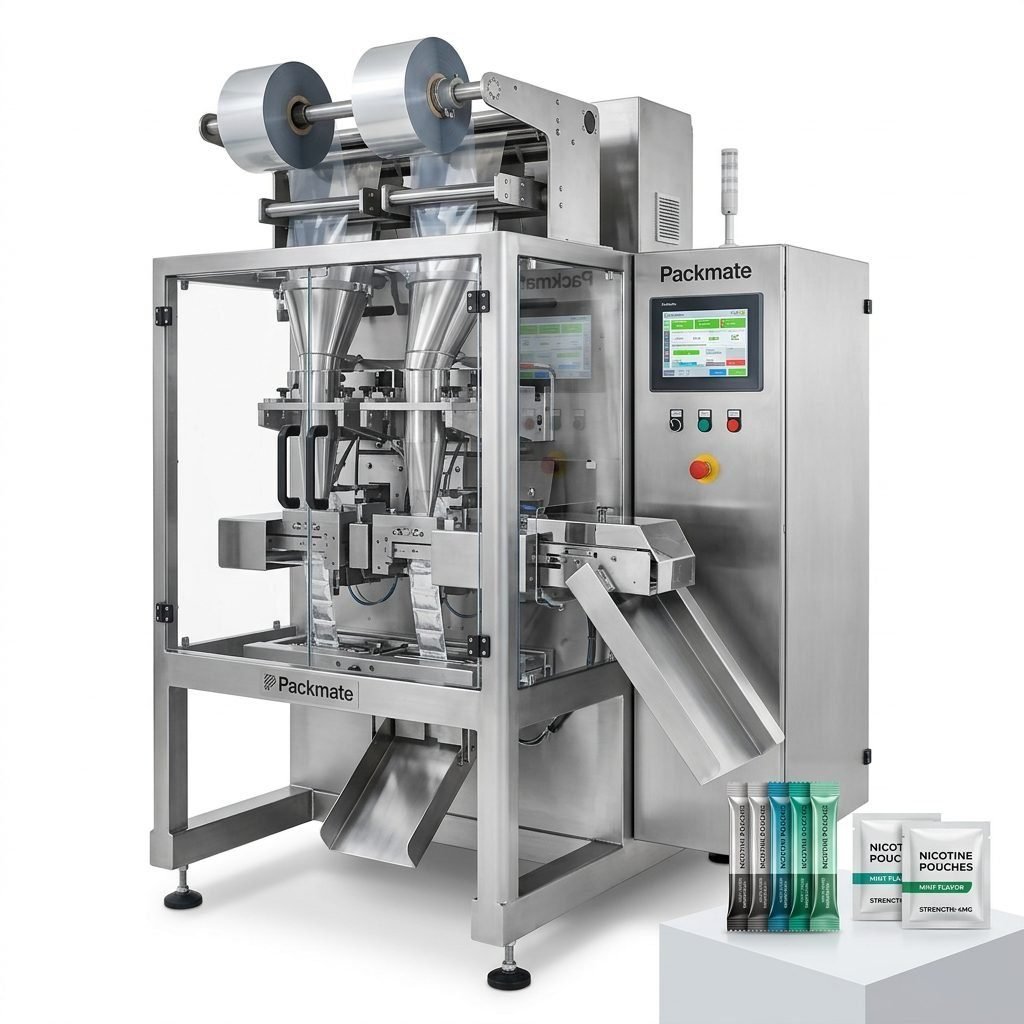
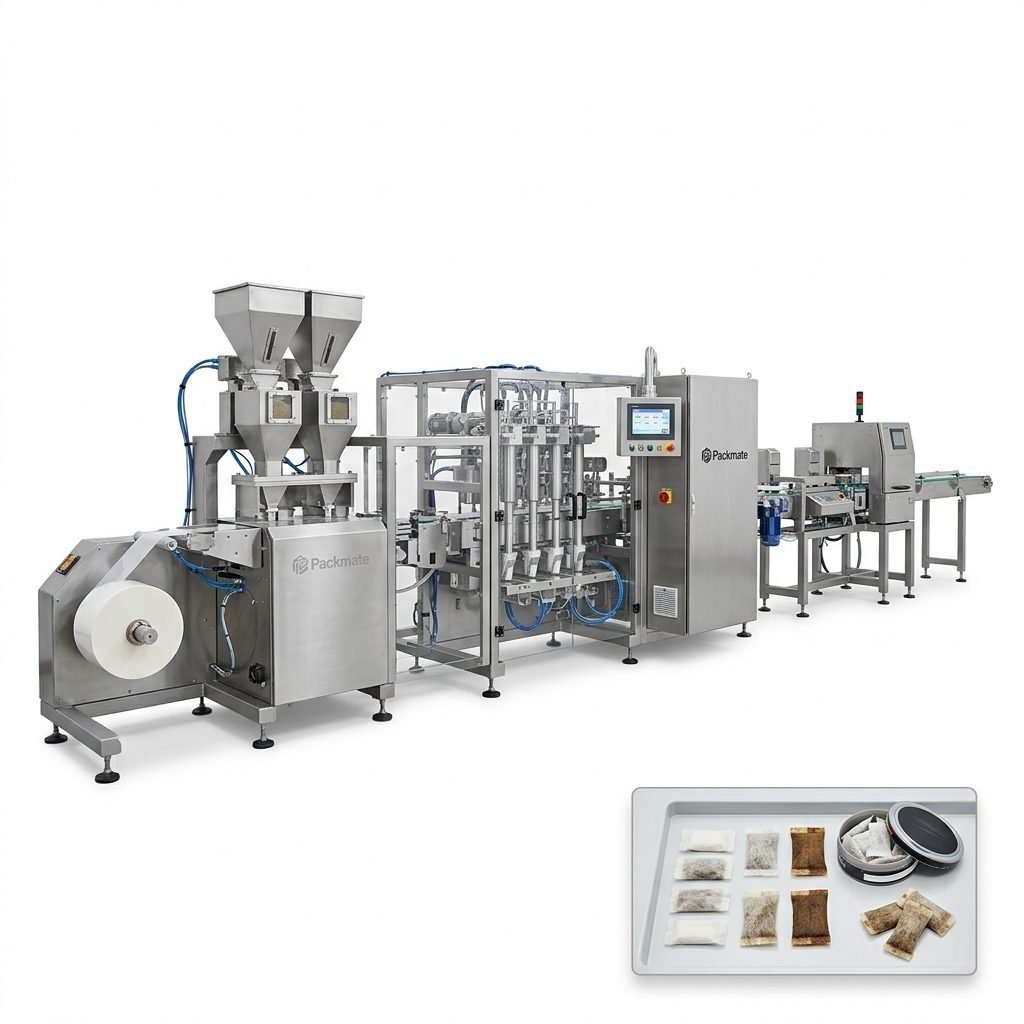
Suppliers with demonstrated multi-lane snus solutions and stick pack / sachet experience are preferred because they often provide adaptable tooling and software to scale production without full machine replacement. See example product lines such as Snus & Nicotine Packaging Machines and Bag & Pouch Packaging Machines.
Regulatory and environmental considerations in Sweden 🇸🇪
Swedish buyers should insist on machine features that support regulatory compliance: label printing and serialisation, allergen and ingredient traceability, waste reduction and compatibility with recyclable/substituted films. Also check whether the supplier provides documentation to meet CE/ISO audit requirements and local environmental regulations, including recycling and EPR (Extended Producer Responsibility) alignment.
Quality assurance & factory capabilities 🏭
Inspect the supplier’s manufacturing footprint and quality controls: advanced CNC centers, precision assembly lines and strict QC systems matter. A supplier with a large, experienced factory (for example, a 20,000㎡ facility and 30+ years of engineering heritage) typically offers better consistency, spare parts supply and R&D capacity. Learn more about established suppliers via their About pages and certificates: About Packmate and Certificate.
Service, installation and training — non-negotiable elements 🔧
Strong after-sales service is essential in Sweden where uptime and quality control are expected. Ask about:
• On-site commissioning and operator training in English or Swedish
• Remote diagnostics, PLC backups, and spare parts lead times
• Preventive maintenance schedules and OEM consumables availability
• Clear warranty terms and performance guarantees
A practical supplier assessment checklist for Sweden ✔️
1) Factory evidence — photos, videos, and a capability statement demonstrating CNC machining, assembly lines, and testing labs.
2) Performance documentation — machine acceptance reports, real production trial data and references from European clients.
3) FAT & SAT procedures — defined Factory Acceptance Tests and Site Acceptance Tests with formal pass/fail criteria.
4) Spare parts & lead times — list of critical spare parts, MTTR estimates and local stocking options.
5) Compliance pack — manuals, CE declarations, electrical drawings and software BOM for integration with your MES/ERP.
6) Commercial clarity — transparent pricing (machine, tooling, spares, shipping, customs), payment terms and warranty scope.
Comparing quotes and calculating total cost of ownership (TCO) 💶
The cheapest upfront cost rarely leads to the lowest long-term cost. Build a TCO model that includes:
• Energy consumption and utility needs
• Changeover time, tooling costs and format parts
• Warranty period and expected MTBF (Mean Time Between Failures)
• Spare parts pricing and stocking strategy
• Downtime cost per hour and supplier SLA penalties (if applicable)
FAT, SAT and acceptance testing — protect your investment 🧾
Require a formal Factory Acceptance Test with samples, production speeds and quality checks before shipment. On-site Site Acceptance Test should confirm the machine meets agreed performance in your environment. Include IQ/OQ where applicable and retain clear pass/fail criteria tied to payment milestones.
Local adaptation — packaging formats and consumer preferences in Sweden 🎯
Swedish consumers favor low-visibility, consistent-dosing pouch formats and increasingly expect sustainable packaging. Machines that support slim-profile pouches, recyclable films and precise metering will give you a competitive advantage. Also consider bilingual printing and discreet retail packaging designs for the Nordic market.
Why consider Packmate Snus Machine as a supplier?
Packmate has more than three decades of experience in packaging engineering and a focused product range for snus and nicotine pouches. Key strengths to evaluate:
• 30+ years of engineering experience and 20,000㎡ factory with advanced CNC and precision assembly lines.
• 50+ machine models including high-performance multi-lane systems for nicotine pouches and stick packs.
• Global turnkey solutions and references — review customer cases to validate real-world performance: Case.
• Product pages and lines for detailed specs: Snus & Nicotine Packaging Machines, Filling & Packaging Lines.
Negotiating contracts and arranging logistics 🚚
For Sweden, factor in import documentation, VAT handling, customs clearance and local installation permits. Agree on clear delivery INCOTERMS, spare parts shipments and training windows. Make payment schedules conditional on passing FAT/SAT to reduce risk.
Integration with upstream & downstream equipment 🔗
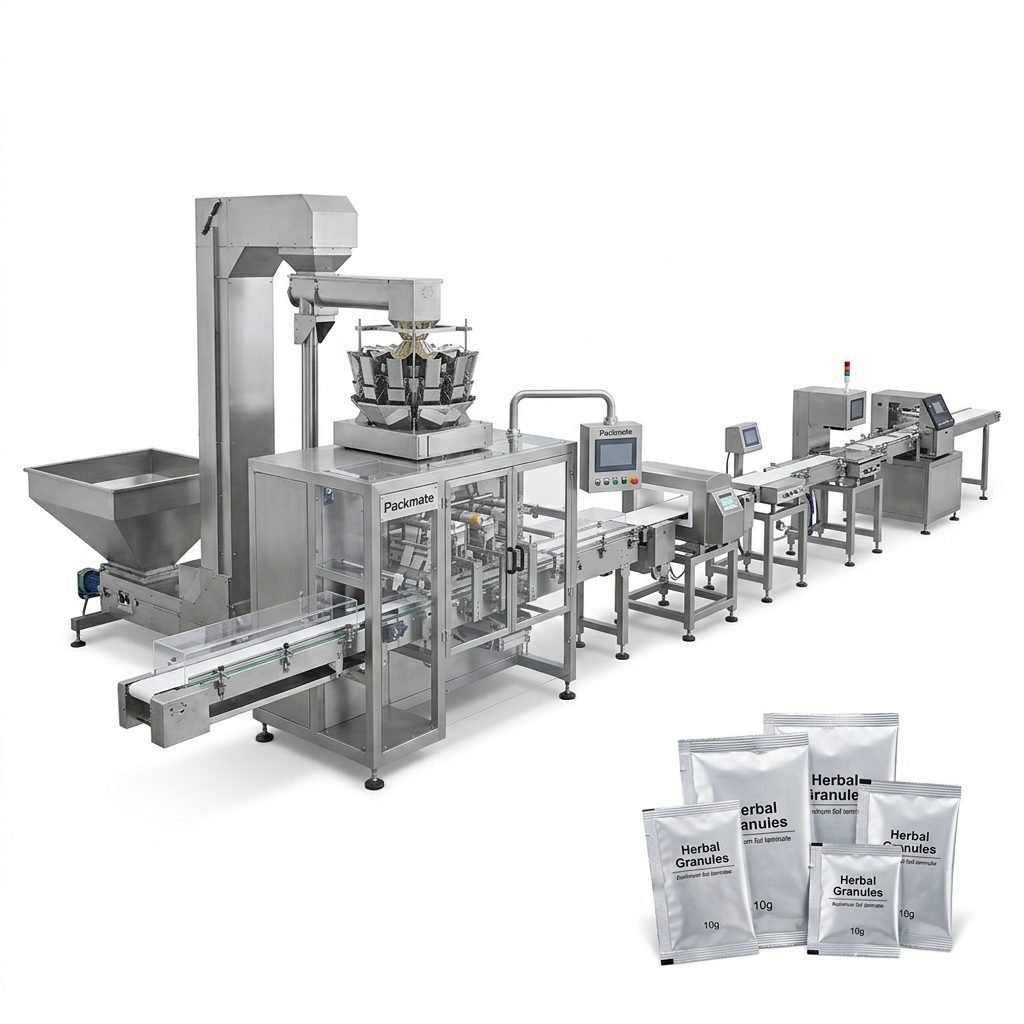
Packaging machines rarely operate alone. Ensure the supplier can integrate weighing, dosing and secondary packaging — or has proven interfaces with third-party equipment such as Weighing & Packaging Systems and Auxiliary Packaging Equipment. Confirm electrical, pneumatic and data interface protocols to avoid surprises.
Practical timeline: from enquiry to production 📅
Typical timeline for a custom snus/nicotine pouch line:
• Enquiry & specification alignment: 2–4 weeks
• Technical drawing, commercial offer & contract signing: 2–6 weeks
• Manufacturing & FAT preparation: 8–16 weeks depending on complexity
• FAT, shipping, customs & site installation: 4–8 weeks
• SAT, training & ramp-up: 2–6 weeks
Making the final decision — checklist before signing
Before committing, verify these items are in writing: performance guarantees, spare parts list and lead times, warranty terms, detailed FAT criteria, training schedule, and a clear escalation path for service issues. Confirm whether the supplier will provide installation drawings, CE paperwork and any required commissioning consumables.
If you want to review product categories or request a quote, visit the supplier’s product pages and contact team for tailored configurations: Contact Us.
Final recommendations for Swedish buyers 📝
1) Prioritize suppliers with proven multi-lane snus/nicotine experience and European references. 2) Demand a comprehensive FAT and clear acceptance criteria. 3) Factor sustainability and EPR into the packaging material choices and machine capability. 4) Secure robust after-sales support and spare parts commitments to minimize downtime.
Useful links
Product lines and resources to explore: Snus & Nicotine Packaging Machines, Sachet & Stick Pack Machines, Service.
Frequently Asked Questions (FAQ)
Q1: How do I verify a supplier’s production capability before ordering?
A1: Request factory photos/video, a capability statement, sample production data, and arrange a remote or on-site visit. Require a structured FAT with agreed KPIs and sample outputs to validate claims.
Q2: What certifications are essential for nicotine packaging machines sold into Sweden?
A2: CE marking and ISO quality system evidence are minimums. Also request electrical safety documentation, material contact certificates and any regional compliance documentation supporting labeling and waste handling.
Q3: How important is local language support and training?
A3: Very important. Training in English or Swedish reduces operator errors, improves uptime and accelerates ramp-up. Confirm language capabilities during commercial negotiations.
Q4: Can machines be adapted later for new formats or sustainability upgrades?
A4: Choose suppliers that offer modular designs and clear upgrade paths. Modular servo drives, exchangeable tooling and software-based recipe control make format changes and material switches much easier and cheaper over time.
Q5: Where can I find real customer cases and references?
A5: Ask the supplier for case studies and client contactable references. Many suppliers publish cases showing European installations — review those and request performance metrics similar to your target output.