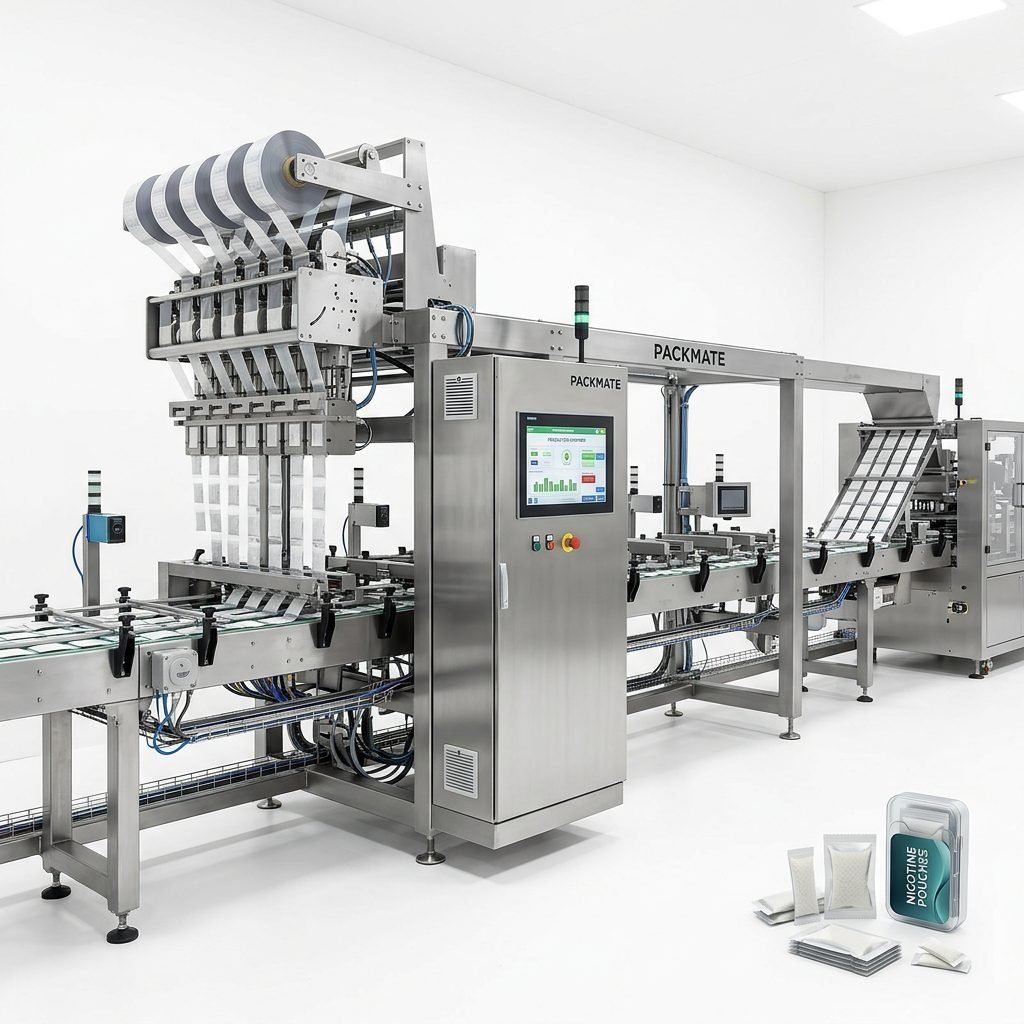
Choosing the right nicotine packaging machine supplier for your production in Slovakia requires more than just comparing prices. You need a partner who understands EU regulations, local market preferences, and the technical needs of nicotine pouch production. This guide walks Slovak manufacturers and contract packers through practical steps to select a supplier that delivers compliant, high-performance machinery and reliable long-term support.
Understand the Slovak market and regulatory context
Slovakia is an EU member with stringent product and machinery safety expectations. Note that traditional snus is banned for sale in most EU countries, but tobacco-free nicotine pouches and certain nicotine products follow different rules and may be allowed under specific national regulations. When evaluating suppliers, make sure they understand local labeling requirements (Slovak language labels often required), product classification, and CE conformity for machinery.
Practical tip: request suppliers to confirm machine CE and ISO documentation, plus compatibility with 230V/50Hz power systems common in Slovakia and Europe.
Key factors to evaluate when choosing a supplier
Experience & reputation
Look for a supplier with decades of engineering experience and a track record in nicotine pouch or snus packaging. A seasoned manufacturer demonstrates consistent design improvements, stability in production lines, and case studies across regions — especially within Europe. Packmate, for example, highlights over 30 years of engineering and global turnkey solutions.
Certifications, safety and compliance
Compliance is non-negotiable. Confirm that machines carry relevant certifications (CE, ISO) and that the supplier can provide documentation for customs and local inspectors. Ask how the supplier supports CE marking processes and electrical safety tests tailored to EU standards.
Machine performance, formats and flexibility
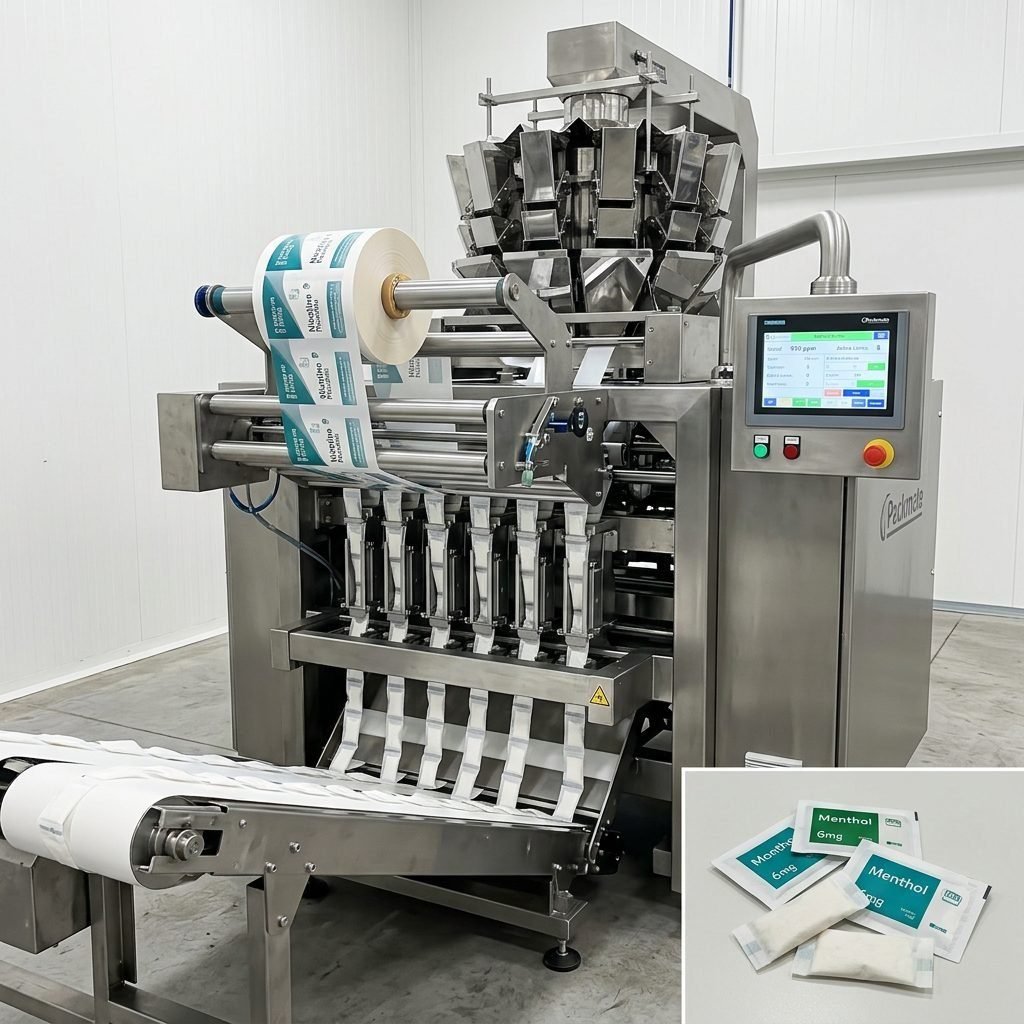
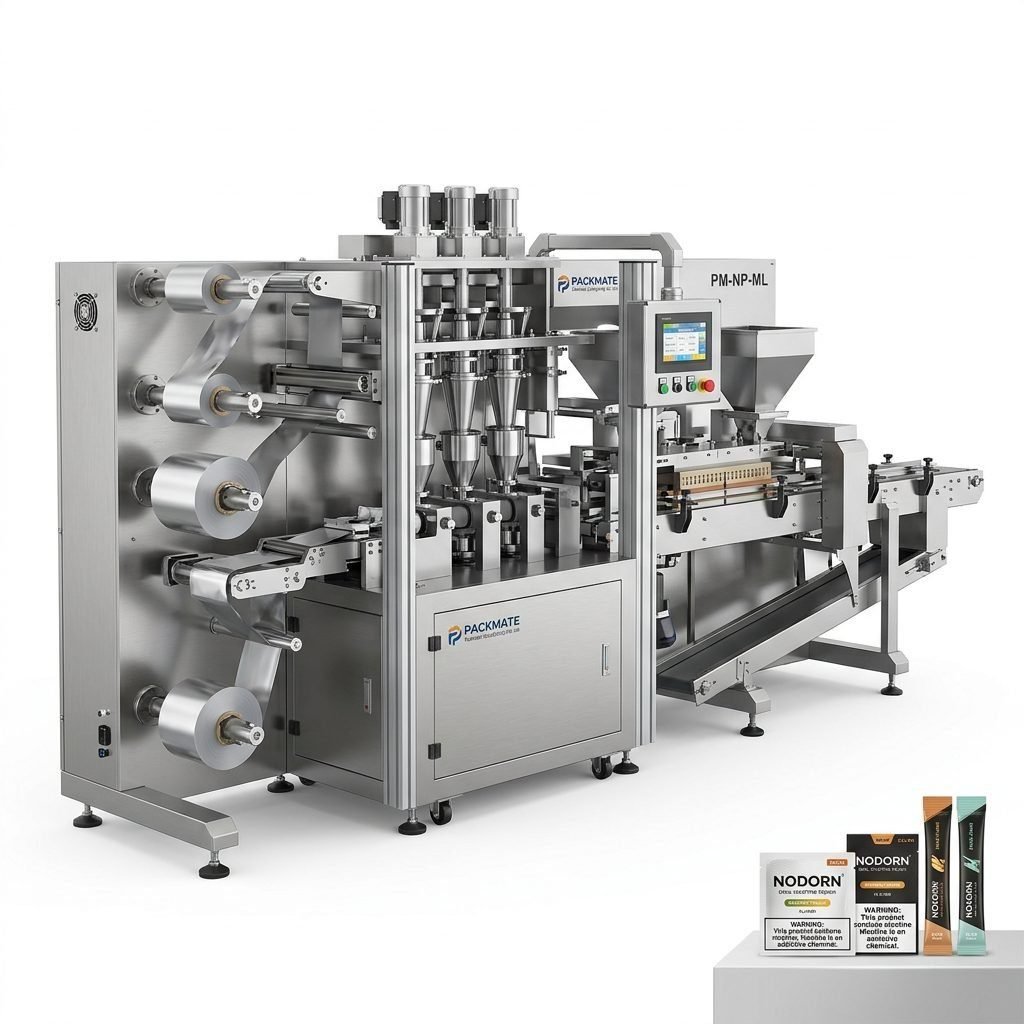
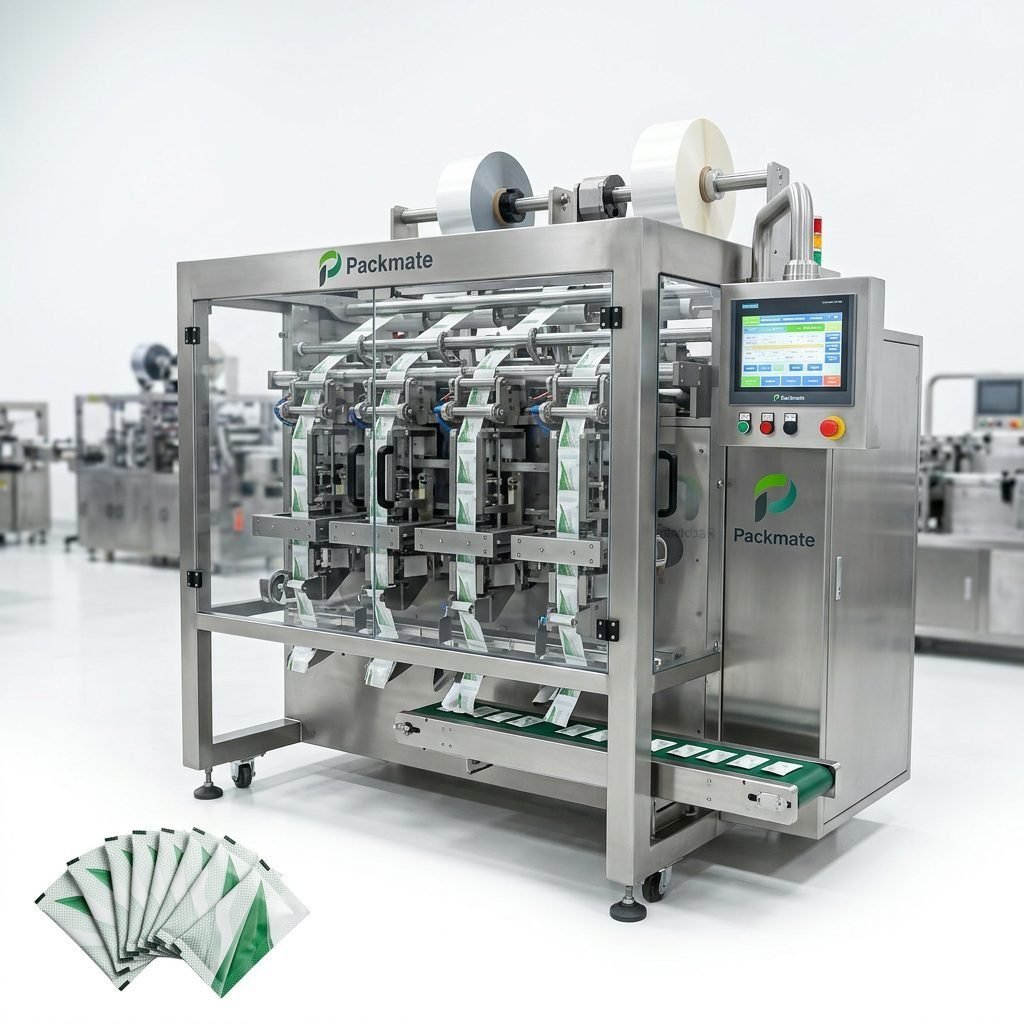
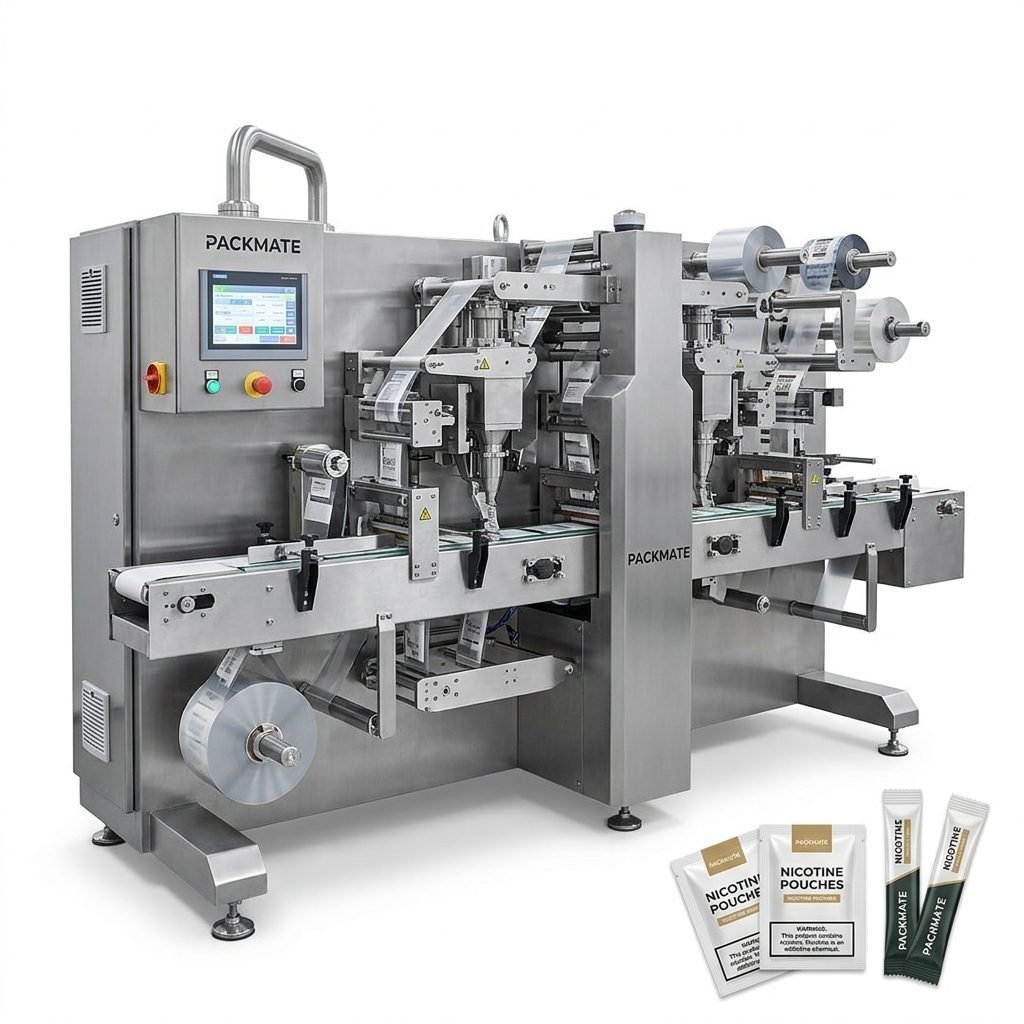
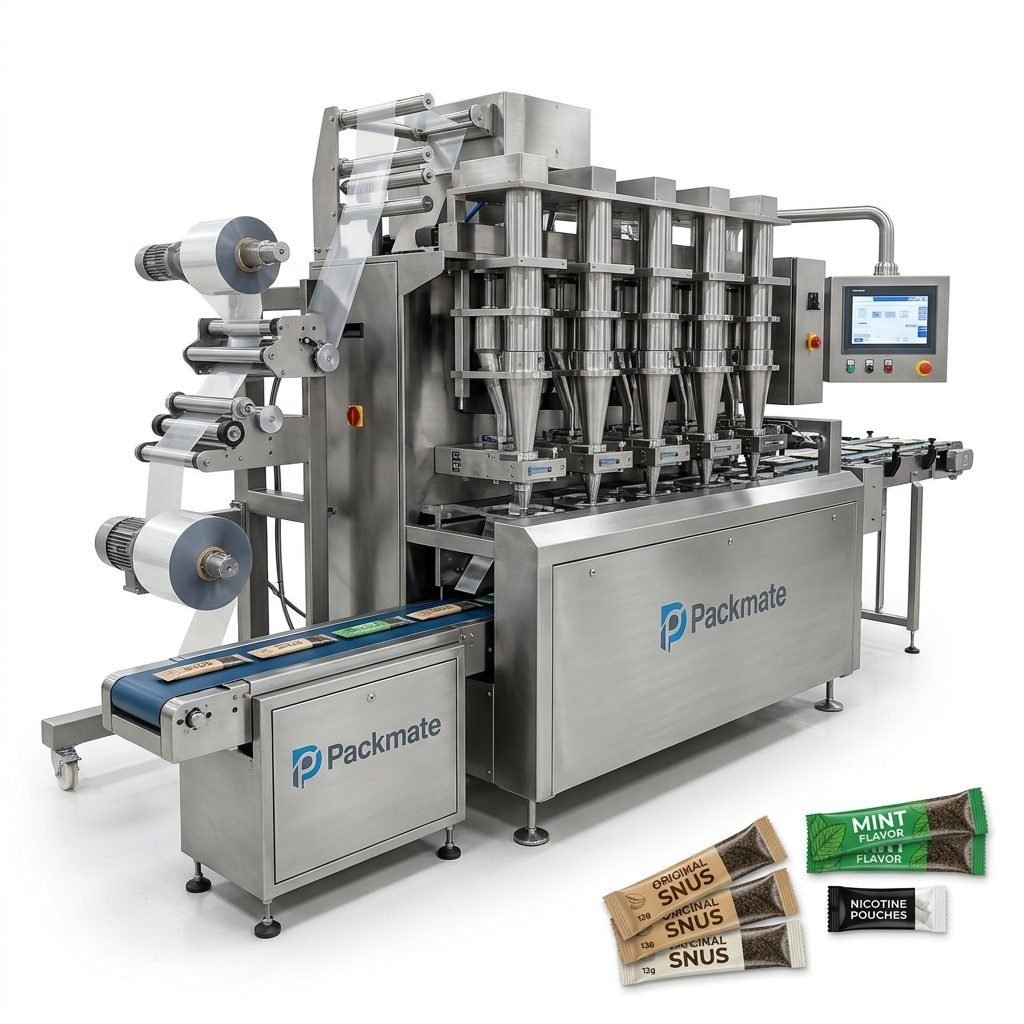
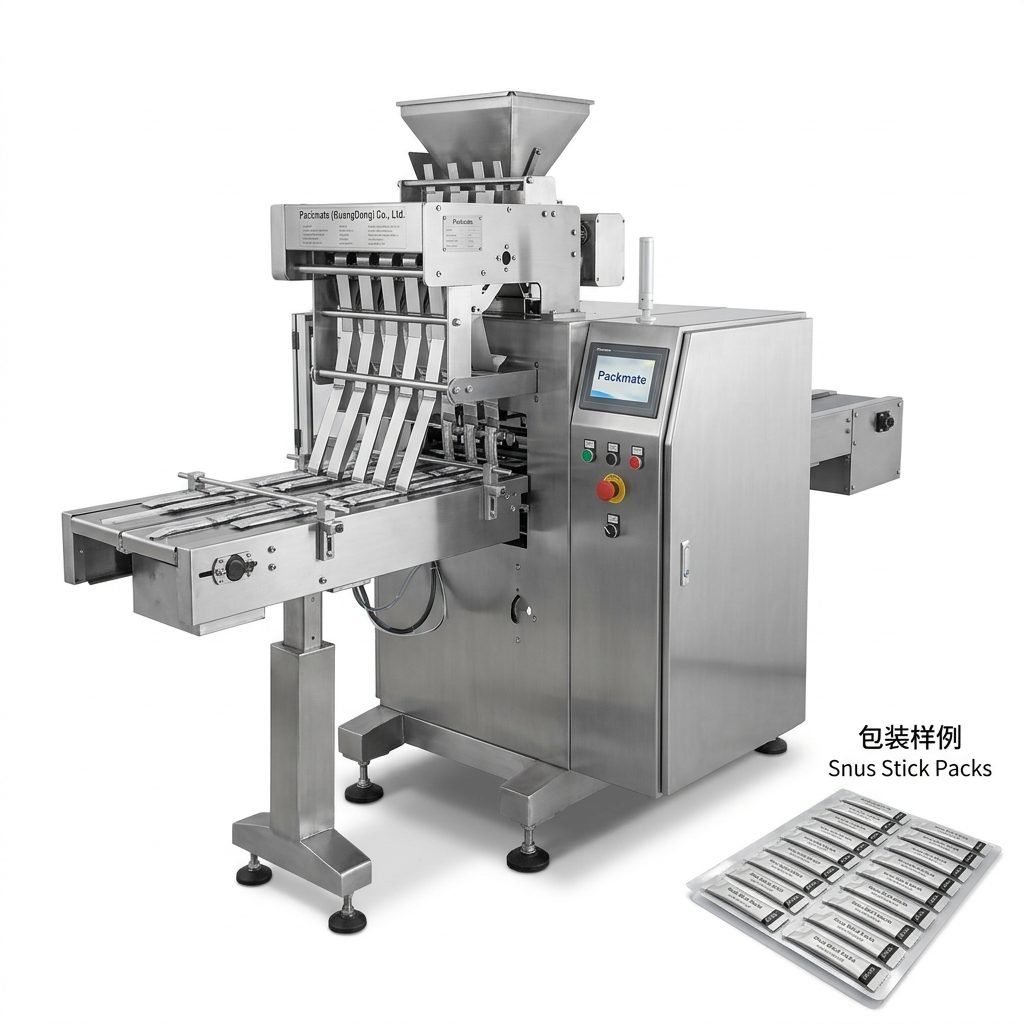
Your supplier should demonstrate machines capable of your target formats — single pouches, multi-lane small-dose systems, stick packs or sachets. Evaluate:
✓ Output capacity (pouches per minute), especially for peak runs.
✓ Multi-lane solutions for scalability and small-dose pouch production.
✓ Changeover speed and tool-less adjustments for short production runs common in craft or regional brands.
Turnkey solutions and integration
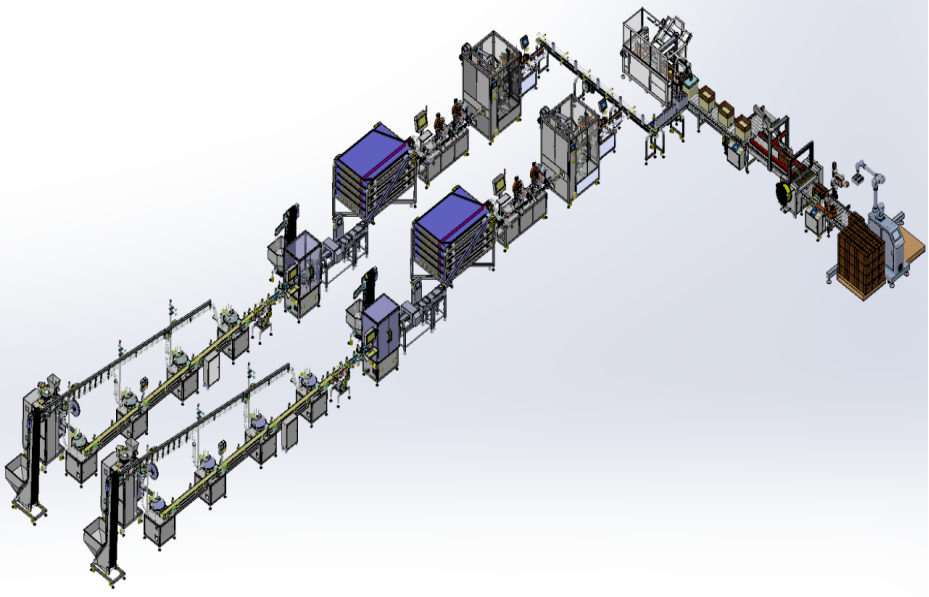
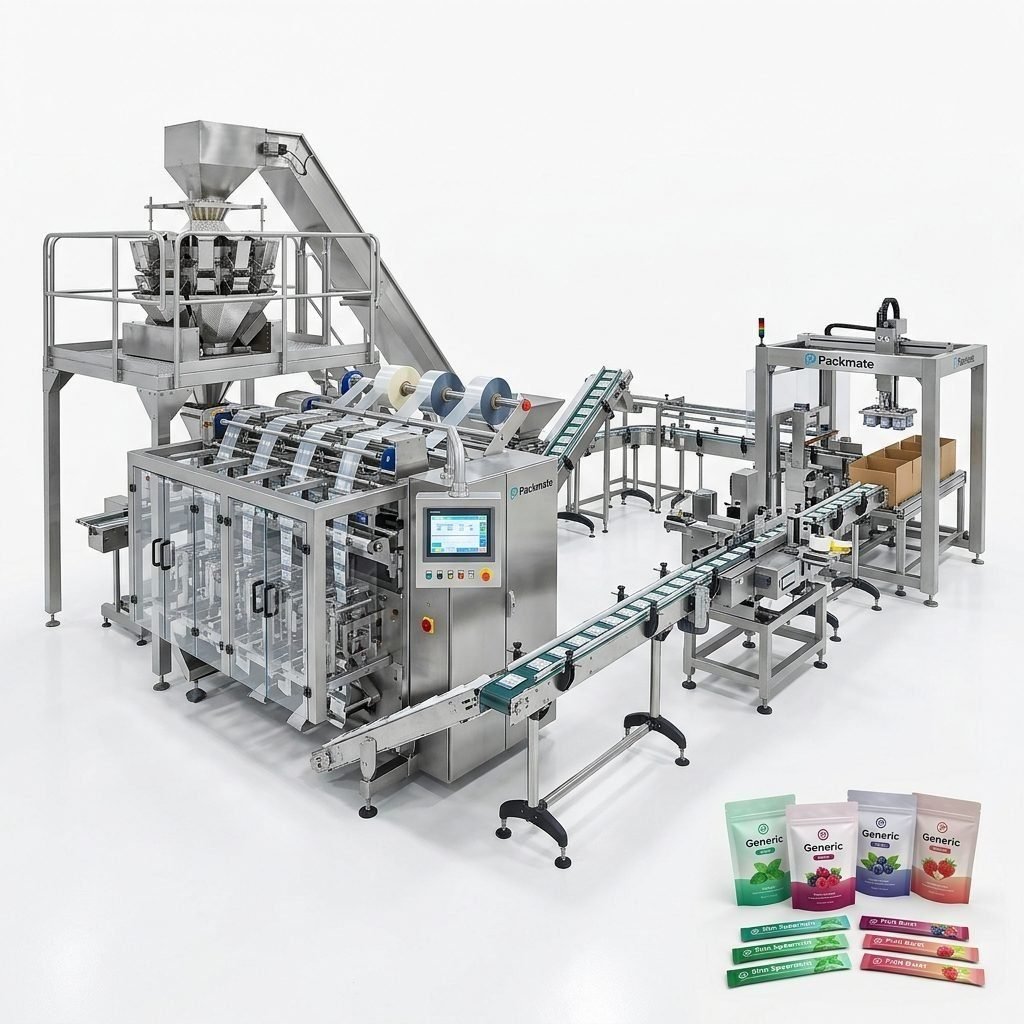
If you plan a full production line, prefer suppliers who offer integrated weighing, filling, sealing, labeling and packaging lines to reduce interface issues. Turnkey suppliers handle system integration, SCADA or PLC setups, and final validation — a major advantage when installing in Slovakia.
After-sales service, spare parts and training
Reliable local support or timely international service is essential. Confirm spare-parts availability, typical lead times for replacements, and whether the supplier provides:
✅ on-site commissioning and operator training in English or Slovak;
✅ remote troubleshooting and PLC support;
✅ spare parts kits and preventive maintenance plans.
Customisation & packaging aesthetics
Slovak consumers value clean, compliant labeling and packaging that meets retail shelf expectations. Ensure the supplier can adapt pack sizes, print registration, and apply tamper-evident or child-resistant features where required.
Cost vs. total cost of ownership (TCO)
Initial price is only part of the story. Estimate TCO including energy use, spare parts, service contracts, operator training and expected uptime. A slightly higher-capability machine with a robust warranty often delivers faster ROI through reduced downtime and waste.
Quick RFP checklist:
• Desired output (pouches/min) and formats (single/multi-lane).
• Required certifications (CE/ISO) and documentation for EU import.
• Power supply and site utilities (230V/50Hz compatibility).
• Spare parts lead time and recommended maintenance intervals.
• On-site commissioning, training languages and warranty terms.
Verify supplier credibility with references and factory capability
Request case studies and ask for references operating in Europe. Check whether the supplier hosts visits to their manufacturing facility or demonstrates machines at trade fairs — seeing a machine in operation provides clarity on build quality and ease of use.
For example, suppliers that show a large factory footprint, advanced CNC machining centers, and a range of proven models (50+ models) indicate capacity to support custom requests and volume orders. You can review product families and example lines on the supplier’s product pages: Snus & Nicotine Packaging Machines, Bag & Pouch Packaging Machines, and Case studies.
Why a European-focused supplier relationship matters for Slovakia
Proximity or familiarity with the European market helps with faster spare-part shipments, clearer documentation for customs, and compliance guidance. Suppliers who regularly exhibit in Europe or provide local technical partners can reduce downtime and simplify installation logistics. Check exhibitor history and certifications: Our Exhibition, Certificate.
Negotiating terms: warranty, spare parts and training
Ask for a clear warranty scope (mechanical components, electronics, PLC), response times for service calls, and availability of local engineers. Confirm whether the supplier includes initial operator training, process optimization support, and bilingual manuals (English + Slovak) as part of the package.
Logistics and installation in Slovakia
Verify shipping incoterms, expected lead times, and whether the supplier handles installation or provides a recommended local integrator. Consider customs clearance, VAT and documentation needed for EU import. A supplier experienced in global deliveries will provide packing lists, CE declarations, and wiring diagrams to streamline on-site work.
Implementation tips for Slovak producers and packers
• Plan a trial production run to validate pouch integrity, seal strength, and label accuracy in Slovak language.
• Ensure waste handling and recycling pathways comply with Slovak environmental regulations; request machines with low material waste features.
• Prioritize machines with low noise and dust control if your facility is near residential areas or shared industrial parks in Slovakia.
Operator training and documentation
Operators should receive hands-on training and a maintenance manual. Request troubleshooting checklists, electrical schematics, and spare part lists in English and, if possible, Slovak. Many European sites expect machine manuals to include safety signage and lockout procedures.
Questions you should ask shortlisted suppliers
🔍 Can you provide CE/ISO certificates and references from European customers?
🔍 What is the expected uptime and MTBF for the machine?
🔍 Do you offer multi-lane systems for small-dose pouches and what are changeover times?
🔍 What are spare parts lead times to Slovakia and do you keep critical parts in EU warehouses?
🔍 What on-site services are included for commissioning and training?
How Packmate’s capabilities align with Slovak producers
When evaluating suppliers, consider manufacturers that offer comprehensive solutions: established R&D history, large manufacturing facilities, diverse machine models and turnkey service. Packmate Snus Machine, for instance, highlights 30+ years of engineering, a 20,000㎡ factory, and 50+ machine models — all relevant when you need scalability or customization for nicotine pouches. Explore product options and support pages: About Packmate, Snus & Nicotine Packaging Machines, Contact Us.
Decision anchor: Prioritize safety & compliance first, then serviceability, and finally TCO. A machine that meets EU compliance and offers fast local support will protect your production continuity in Slovakia.
Final considerations before signing a purchase agreement
Review warranty terms carefully, confirm spare-part pricing, request a factory acceptance test (FAT) or video demo, and document acceptance criteria for performance and product quality. Negotiate service-level agreements (SLA) for response times and include penalty clauses for extended downtime where possible.
Sustainability and materials
Consider suppliers that help minimize packaging waste and use recyclable materials. With rising consumer interest in sustainability in Slovakia, eco-friendly packaging options can support brand positioning and retailer acceptance.
Next steps for Slovak buyers
1. Prepare your RFP using the checklist above.
2. Shortlist suppliers with verified European references and certifications.
3. Request FAT, sample runs, and detailed spare-parts lists.
4. Confirm installation, training and SLA terms in your contract.
For more product-specific information, consider reviewing specialized machine categories such as Sachet & Stick Pack Machines and auxiliary systems like Auxiliary Packaging Equipment.
Key takeaway
The best supplier for your Slovak production combines EU compliance, strong after-sales support, and machines tailored for nicotine pouch formats. Focus on certifications, local compatibility, and a clear service plan to ensure reliable production and regulatory peace of mind.
Frequently Asked Questions
Q1: Are nicotine pouch packaging machines legal to import and operate in Slovakia?
A1: Legality depends on the product classification (tobacco vs. tobacco-free nicotine). Machines themselves are legal, but finished products must comply with EU and Slovak regulations. Confirm product-specific rules and ensure your labeling and product contents meet local laws.
Q2: What certifications should I insist on when buying packaging machinery for nicotine pouches?
A2: Insist on CE conformity for machinery safety, ISO management certifications, and full documentation for electrical and mechanical safety. Request test reports and a declaration of conformity for EU import clearance.
Q3: How important is local support and spare parts availability?
A3: Extremely important. Fast access to spare parts and responsive service reduces downtime and protects production schedules. Ask whether suppliers maintain parts in EU warehouses or offer fast courier options to Slovakia.
Q4: Should I buy a single high-speed line or multiple smaller lines?
A4: It depends on your product mix and order variability. Multi-lane or modular machines offer flexibility and faster changeovers for multiple SKUs; a high-speed dedicated line may be preferable for large, stable volumes.
Q5: How do I validate a machine’s performance before purchase?
A5: Request a factory acceptance test (FAT) with your product samples, video demonstrations, and clear acceptance criteria for pouch integrity, speed, and wastage. Include FAT results in the purchase agreement to avoid disputes at delivery.