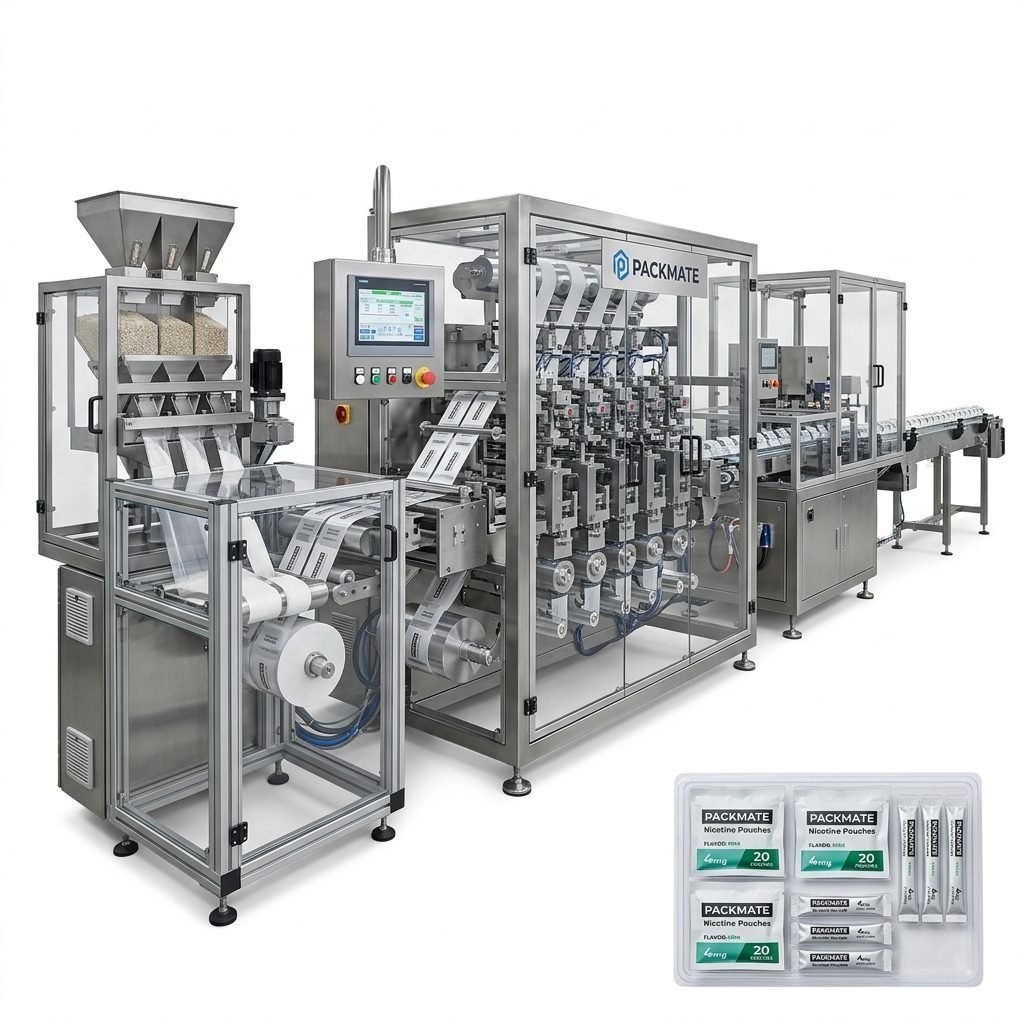
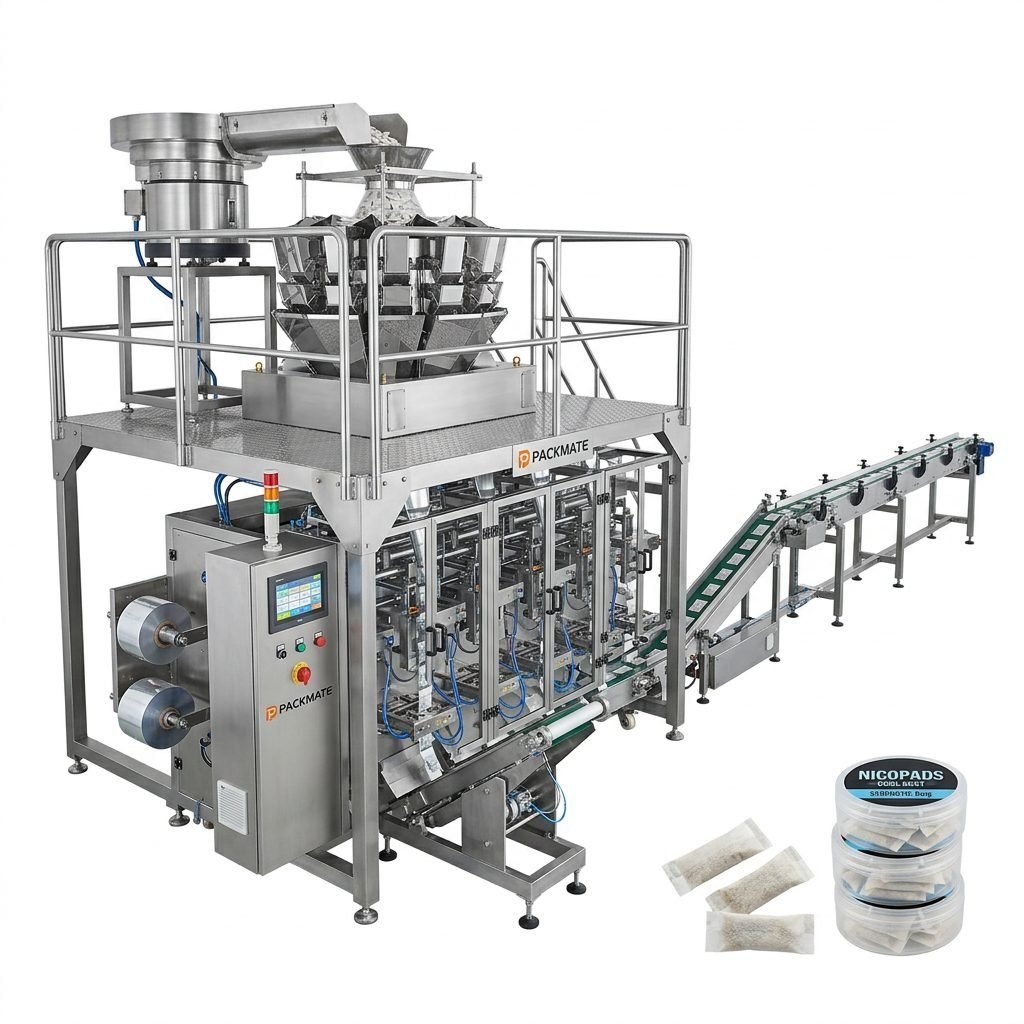
Cameroon represents a growing opportunity for manufacturers and distributors of nicotine pouches and snus products. Choosing the right packaging machine for nicotine products in this market requires careful consideration of regulations, production targets, and long-term operational costs. This guide walks you through the essential factors to evaluate so you can make a confident investment in a nicotine packaging machine that fits Cameroon’s unique market conditions.
Market Overview & Regulatory Considerations
Before selecting equipment, understand local regulations affecting nicotine product packaging, labeling, and materials. In Cameroon, like many countries, packaging must meet import/export and consumer safety rules. Confirm packaging compliance for ingredients disclosure, tamper-evident features, and child-resistant options if required. Engage with local legal counsel or regulatory consultants to verify standards and avoid costly redesigns after procurement.
Types of Packaging Machines to Consider
Nicotine pouches and snus can be packaged using several machine formats. Choose a format that aligns with your product type, packaging style, and production volume.
Sachet & Stick Pack Machines
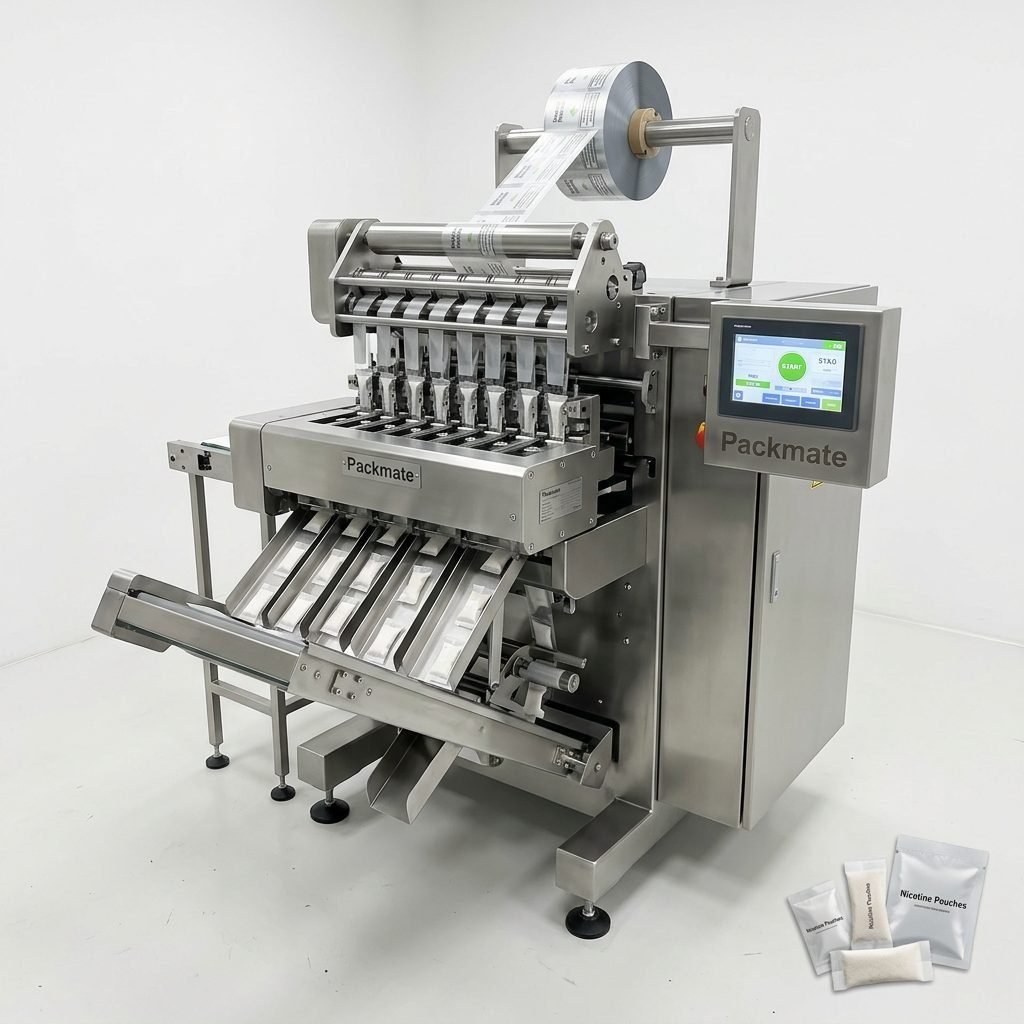
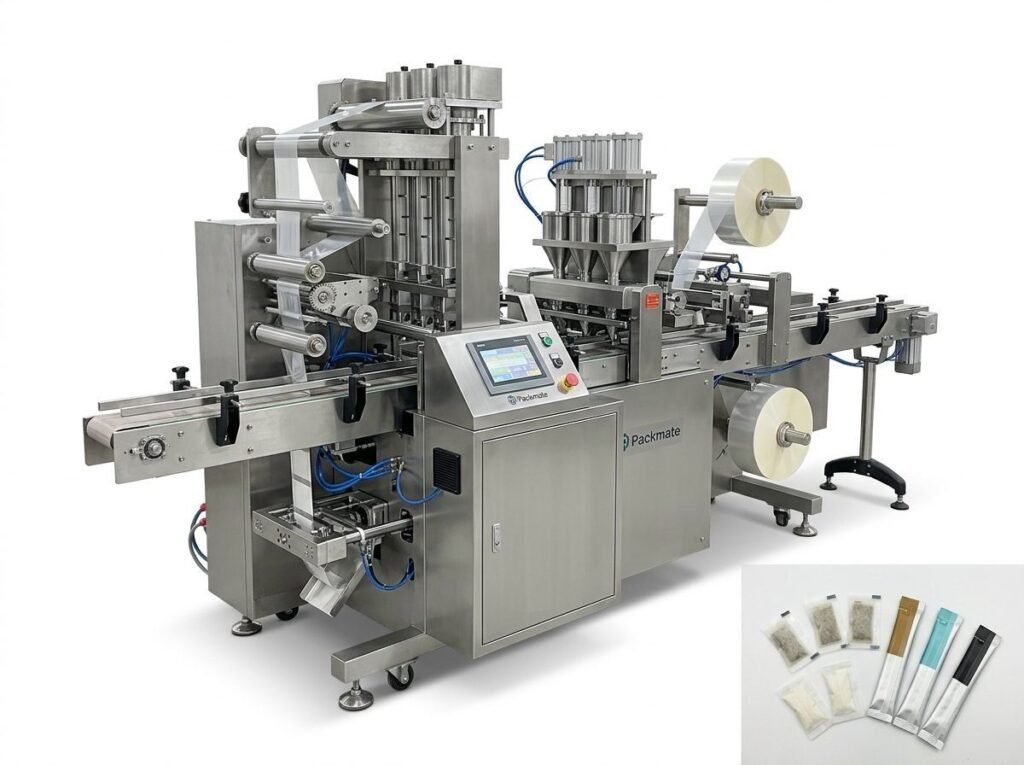
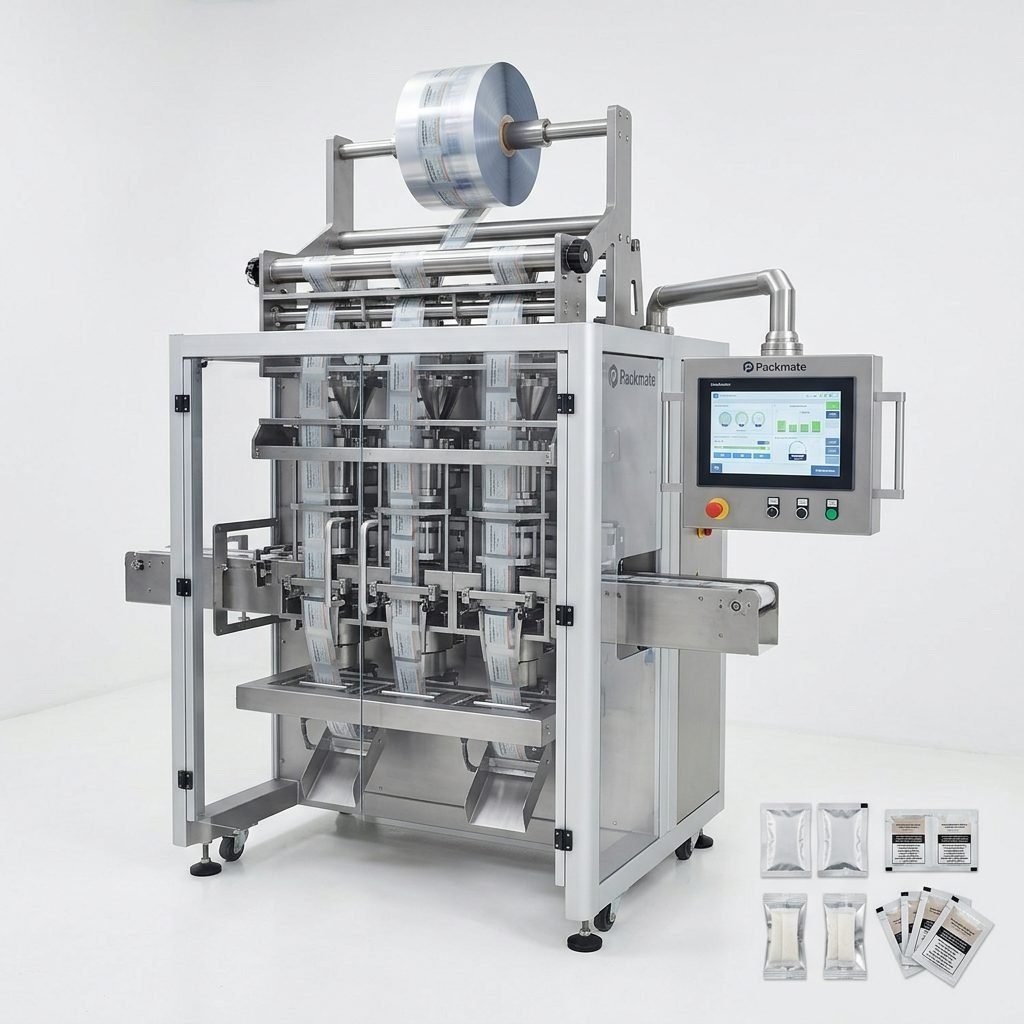
Sachet and stick pack machines are ideal for single-dose and convenience formats. They offer high speed for small, sealed pouches and can be tuned for powders or moist snus. If you plan to produce single-use pouches with printed branding and tear-notches, consider this class of machines. Explore advanced options at Sachet & Stick Pack Machines.
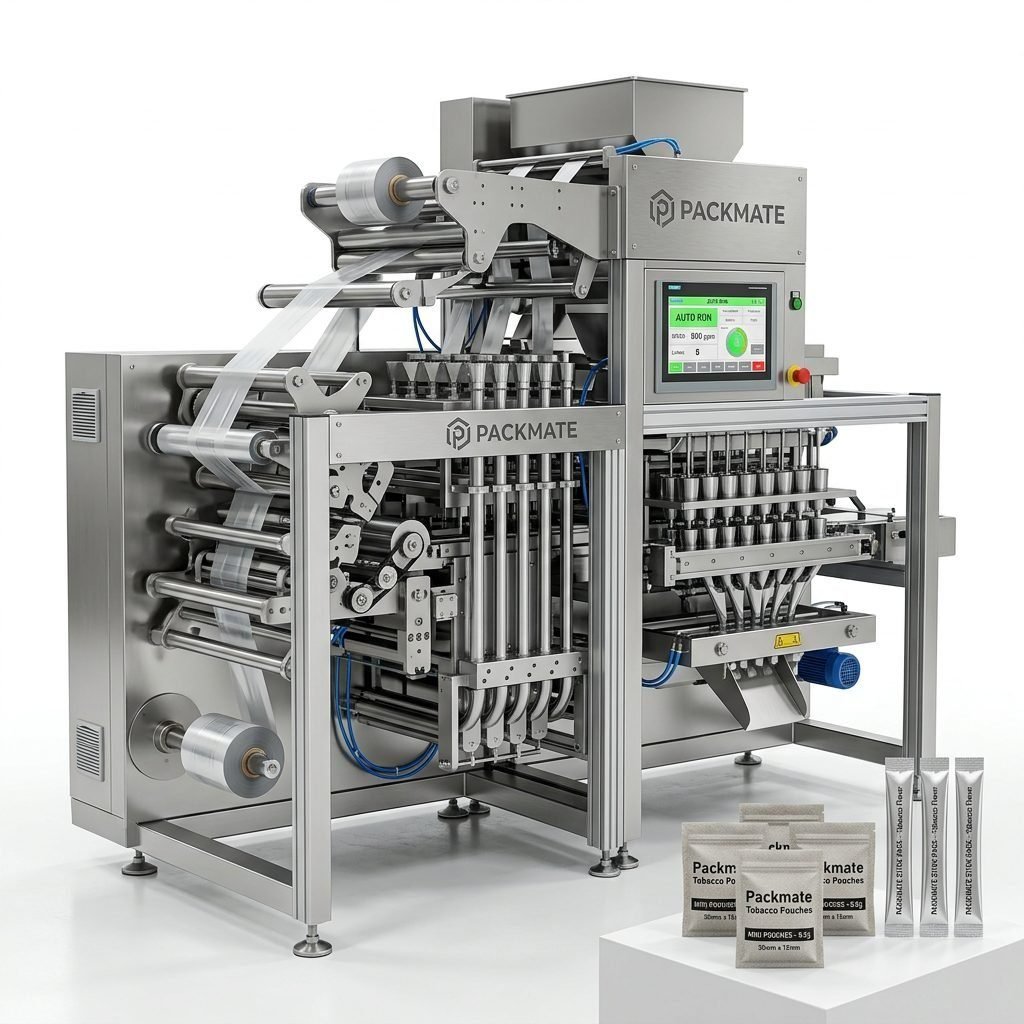
Multi-Lane Snus / Nicotine Packaging Machines
Multi-lane systems dramatically increase throughput by producing multiple pouches simultaneously. These are best for medium-to-high volume production and can reduce floor space per unit output. For manufacturers expanding production, multi-lane designs provide the best scalability.
Bag & Pouch Packaging Machines
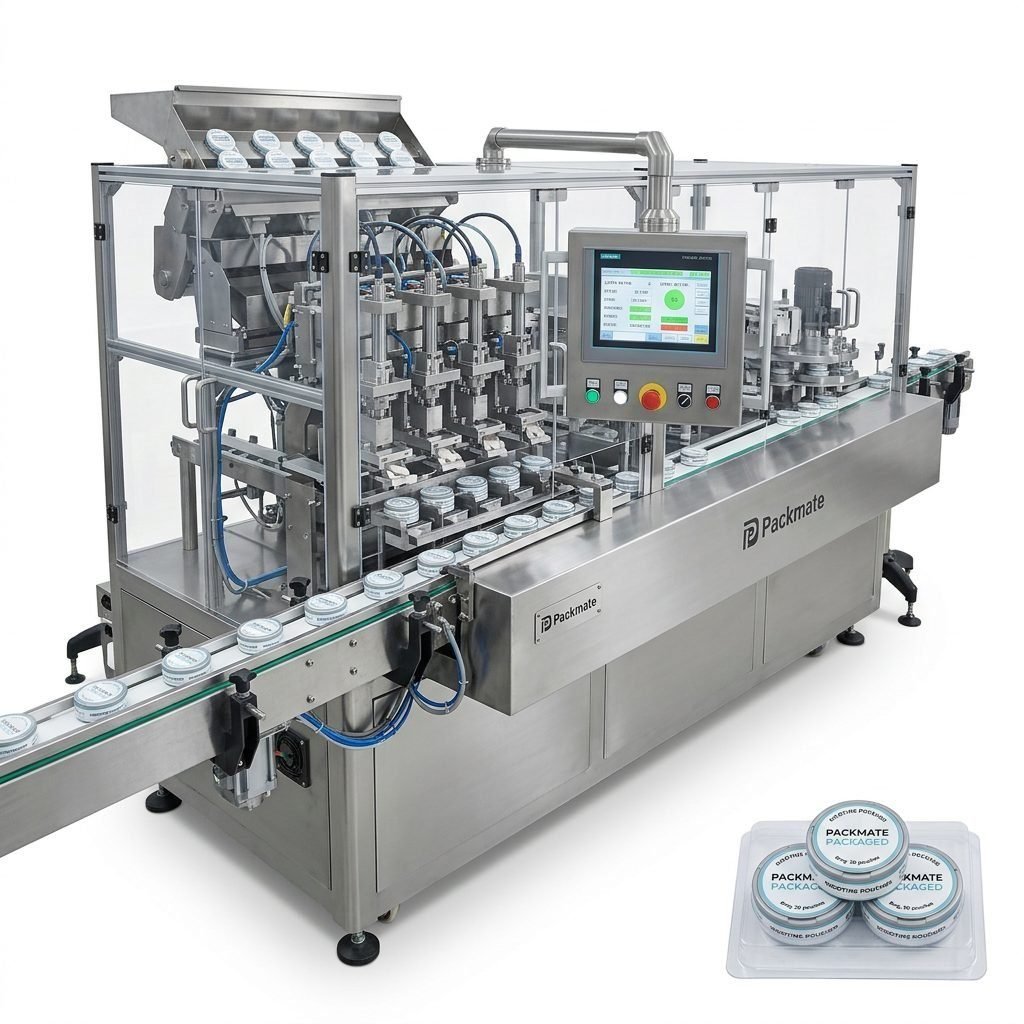
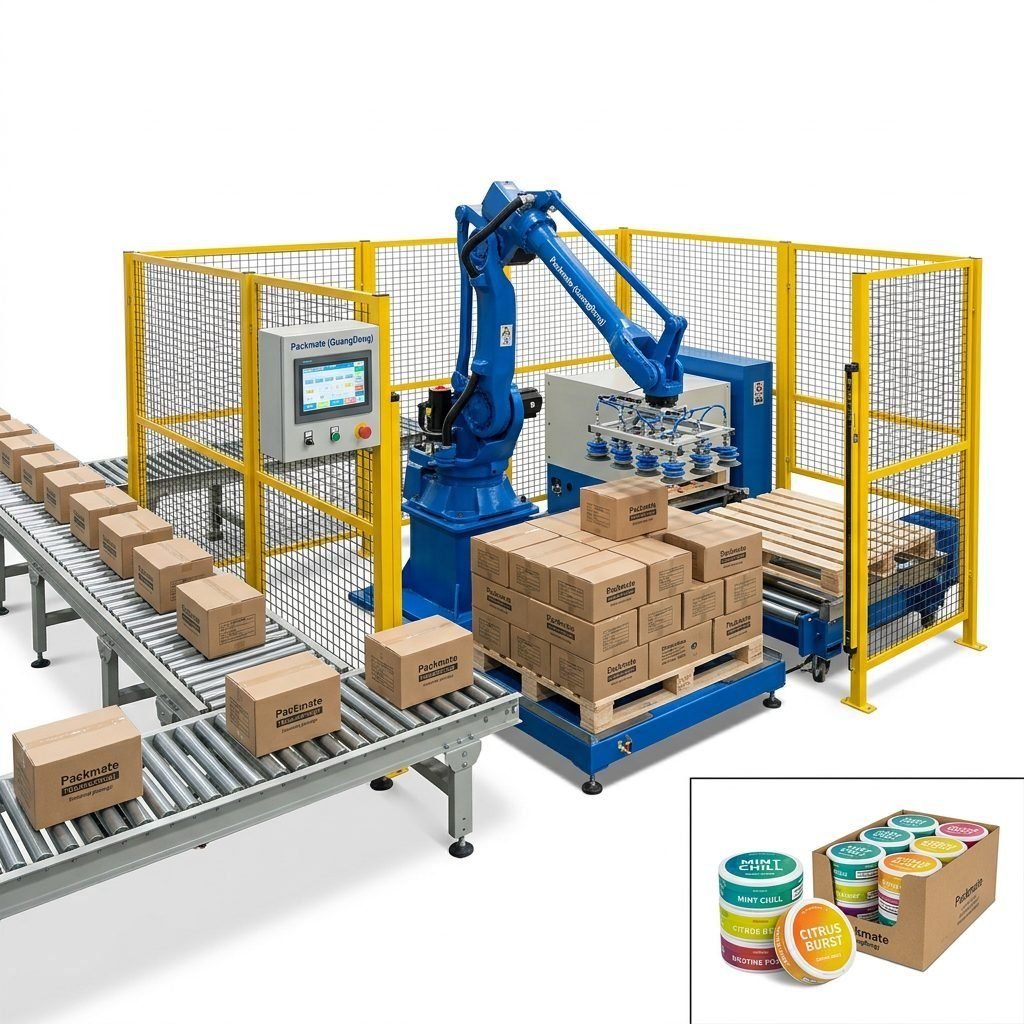
If your product requires outer bags, tubs, or reclosable pouches, a bag & pouch machine is necessary. These complement primary pouch lines and help package multiple pouches into retail-ready formats. See compatible systems at Bag & Pouch Packaging Machines.
Key Selection Criteria
When assessing systems, focus on operational performance, product compatibility, and after-sales support. The following criteria are essential.
1. Production Capacity and Speed
Estimate your target throughput in pouches per minute (PPM) and per shift. Machines vary widely in speed—single-lane sachet machines may offer moderate speeds, while multi-lane machines multiply output. Select a model that meets current needs and allows capacity growth. Remember to factor in downtime for maintenance and format changeovers.
2. Filling Accuracy & Dosing Technology
Precise dosing is crucial for nicotine products, both for consumer safety and regulatory compliance. Consider machines with advanced weighing and volumetric dosing systems, or integrated weighing & packaging systems for highest accuracy. Look into options at Weighing & Packaging Systems.
Tip: For nicotine pouches, even small dosing errors can impact product consistency—prioritize machines with fine-tuned dosing control and easy calibration.
3. Material Handling & Compatibility
Confirm the machine can handle your chosen pouch materials (paper, laminated films, biodegradable films). Evaluate sealing technologies (heat-seal, ultrasonic, or adhesive) suitable for the moisture and oil content of snus or nicotine pouches.
4. Automation Level & Integration
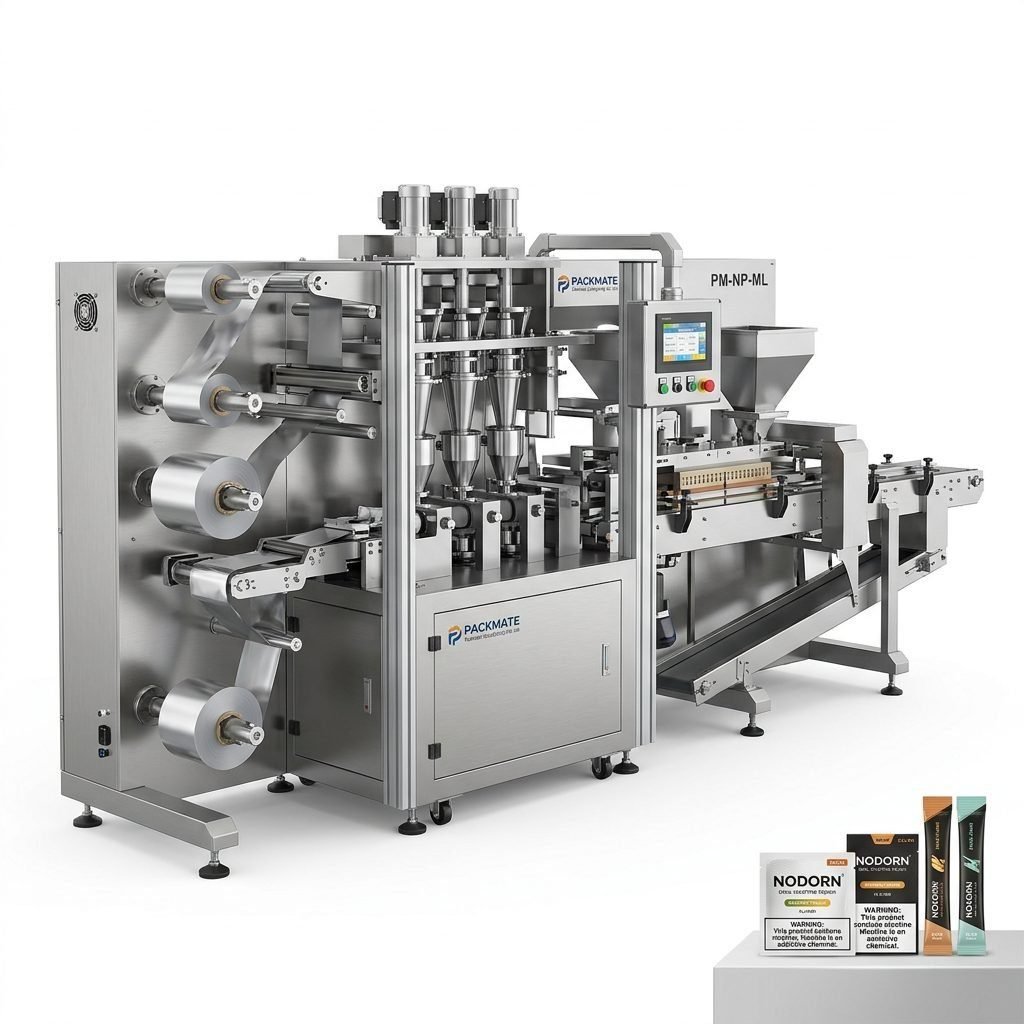
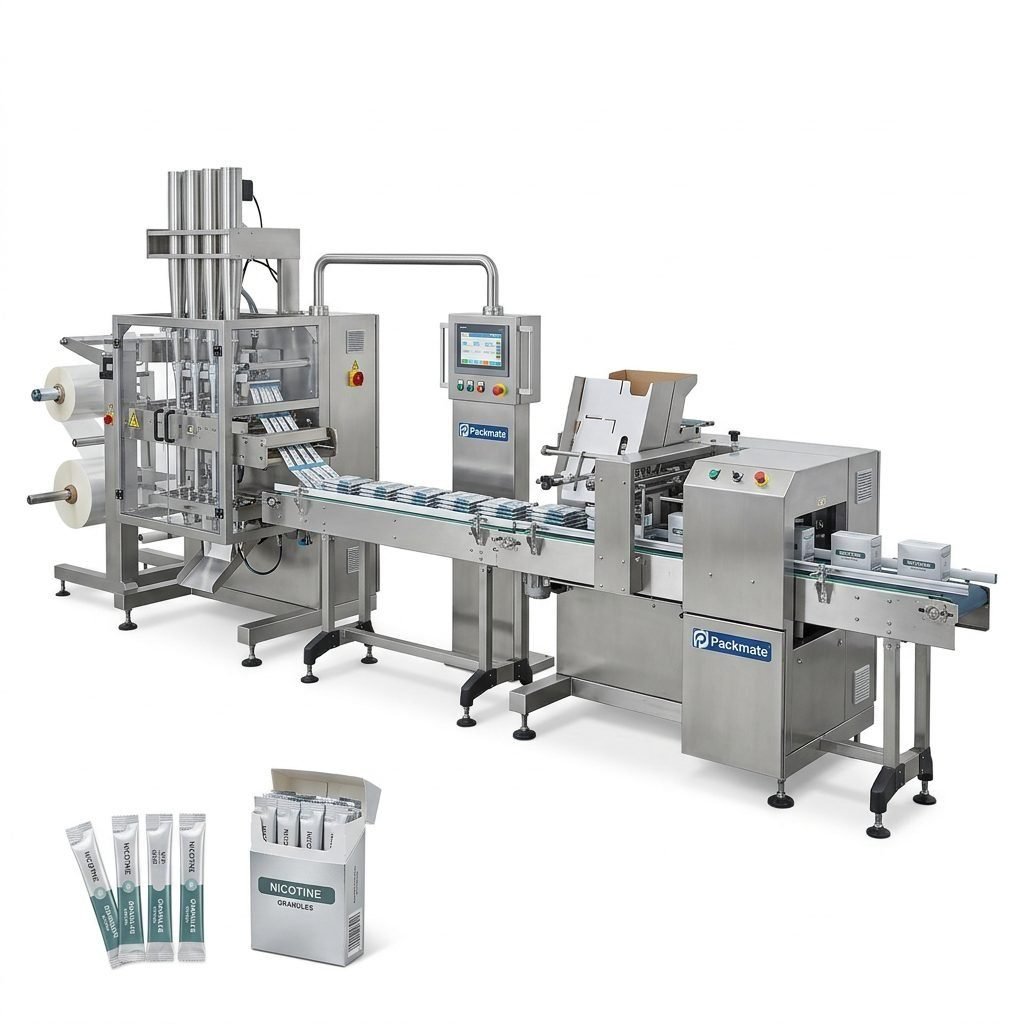
Decide how much automation you require. Fully automated lines (including filling, dosing, pouch forming, sealing, and counting) minimize manual labor and contamination risks. Check for compatibility with upstream/downstream equipment—e.g., feeding hoppers, conveyors, baggers, and boxing machines. Packmate provides turnkey lines that integrate filling & packaging; see Filling & Packaging Lines.
5. Footprint & Facility Requirements
Evaluate the machine’s physical footprint, power consumption, and compressed air needs. Cameroon facilities may have power fluctuations—ask about voltage tolerances, stabilizers, and backup options. Also consider access for maintenance and spare parts storage.
6. Quality, Certifications & Vendor Credentials
Choose manufacturers with strong engineering credentials, quality control, and international certifications (CE, ISO). A provider with 30+ years of experience and a large factory footprint is often a safer partner for long-term projects. Learn about the company background and certifications at About Packmate and Certificate.
Operational Considerations in Cameroon
Local conditions influence machine selection and lifecycle costs. Consider availability of skilled technicians, spare parts lead-time, and language support for manuals and training.
Local Service & Spare Parts
Reliable after-sales service is critical. Ask the vendor about spare parts shipping times to Cameroon, local agents or service partners, and remote troubleshooting capabilities. A supplier with global reach and exhibition presence often offers better support—see examples of global engagements at Our Exhibition.
Operator Training & Documentation
Ensure comprehensive training for operators and maintenance staff. Request documentation in preferred languages and plan for periodic refresher training to minimize downtime.
Quick Checklist: Confirm power specs, spare parts availability, local technical support, and operator training before signing a purchase contract.
Total Cost of Ownership & ROI
Purchase price is just the beginning. Calculate the total cost of ownership (TCO) including installation, shipping, customs duties, training, spare parts, maintenance, and utilities. Evaluate ROI based on throughput improvements, labor savings, and reduced material waste from accurate dosing and consistent seals.
Testing, Trials & Customization
Always request product trials with your actual formulation and pouch material. Reputable manufacturers offer sample testing and machine demonstrations. Ask about customization options for pouch size, printing registration, multi-lane configurations, and dedicated tooling for unique formats.
Installation & Commissioning
Professional installation reduces start-up problems. Confirm whether the vendor includes on-site commissioning, line balancing, and initial production runs as part of the contract. Remote commissioning can be useful, but on-site support is preferred for first-time setups.
Maintenance Best Practices
Implement a preventive maintenance schedule to prolong machine life and maintain consistent product quality. Keep critical spare parts in inventory and document routine checks for seals, sensors, and moving components. Consider service contracts to reduce unexpected downtime.
Choosing a Vendor: Questions to Ask
When contacting suppliers, ask these essential questions to compare offers:
⚙️ What is the machine’s nominal PPM and typical uptime in similar installations?
⚙️ Can you provide customer references or case studies for nicotine pouch production? (Case)
⚙️ What certifications does the machine carry (CE, ISO)? (Certificate)
⚙️ Do you offer full turnkey lines including weighing, filling, pouch forming, and secondary packaging? (Snus & Nicotine Packaging Machines)
⚙️ What is included in warranty, and what are typical spare part lead times to Cameroon?
Important: Obtain a written service and spare parts agreement before purchase to avoid long downtimes from delayed shipments.
Why Work with Established Manufacturers
Established manufacturers with factory capacity, CNC machining, and precision assembly lines can deliver higher-quality machines and faster spare parts supply. Vendors with proven multi-lane systems and turnkey capabilities reduce integration risk. Consider manufacturers that showcase production facilities, product catalogs, and a range of machine models.
If you want a reliable partner that provides product-specific solutions and global support, check company profiles and service pages like Service and Catalog.
Practical Purchase Roadmap
Follow this step-by-step roadmap to make a confident purchase:
1. Define production targets, pouch formats, and materials.
2. Shortlist machine types (single-lane, multi-lane, stick pack, bagger).
3. Request detailed specs, certifications, and customer references.
4. Send product samples for in-factory testing and validation.
5. Compare TCO and ROI across quotes—including shipping, customs, and service.
6. Negotiate warranty, spare parts agreements, and training requirements.
7. Schedule installation, commissioning, and production validation.
Pro tip: Visiting the manufacturer or attending a live exhibition demonstration provides clarity on machine reliability. Consider meeting vendors at global events to witness machines in operation.
Final Considerations
Selecting the best nicotine packaging machine in Cameroon requires balancing speed, accuracy, compliance, and serviceability. Prioritize dosing accuracy and material compatibility for nicotine products, verify the vendor’s global experience, and secure strong after-sales support. With careful selection and a reliable partner, your packaging investment will deliver consistent product quality and scalable production.
Frequently Asked Questions
Q1: What certifications should a nicotine packaging machine have for global trade?
A1: Look for CE and ISO certifications for safety and quality standards, plus any region-specific compliance needed for electronic components or food-contact surfaces.
Q2: How long does it take to commission a typical multi-lane snus packaging line?
A2: Commissioning time depends on complexity, but plan for 2–4 weeks on-site for installation, adjustment, and trial runs. Allow additional time for training operators.
Q3: Are turnkey lines available that include weighing and secondary packaging?
A3: Yes. Many suppliers offer turnkey solutions integrating weighing, filling, pouch forming, and secondary packaging. Refer to filling & weighing product lines for integrated choices.
Q4: What ongoing costs should be budgeted besides the machine price?
A4: Budget for spare parts, preventive maintenance, power and compressed air, operator wages, installation, customs duties, and training. Also account for potential tooling changes and consumables.
Q5: How can I verify a manufacturer’s reliability before purchase?
A5: Request factory visits, client references, case studies, video demos, and documentation of CNC machining and assembly capacity. Check supplier pages such as About, Case, and Service for more details.