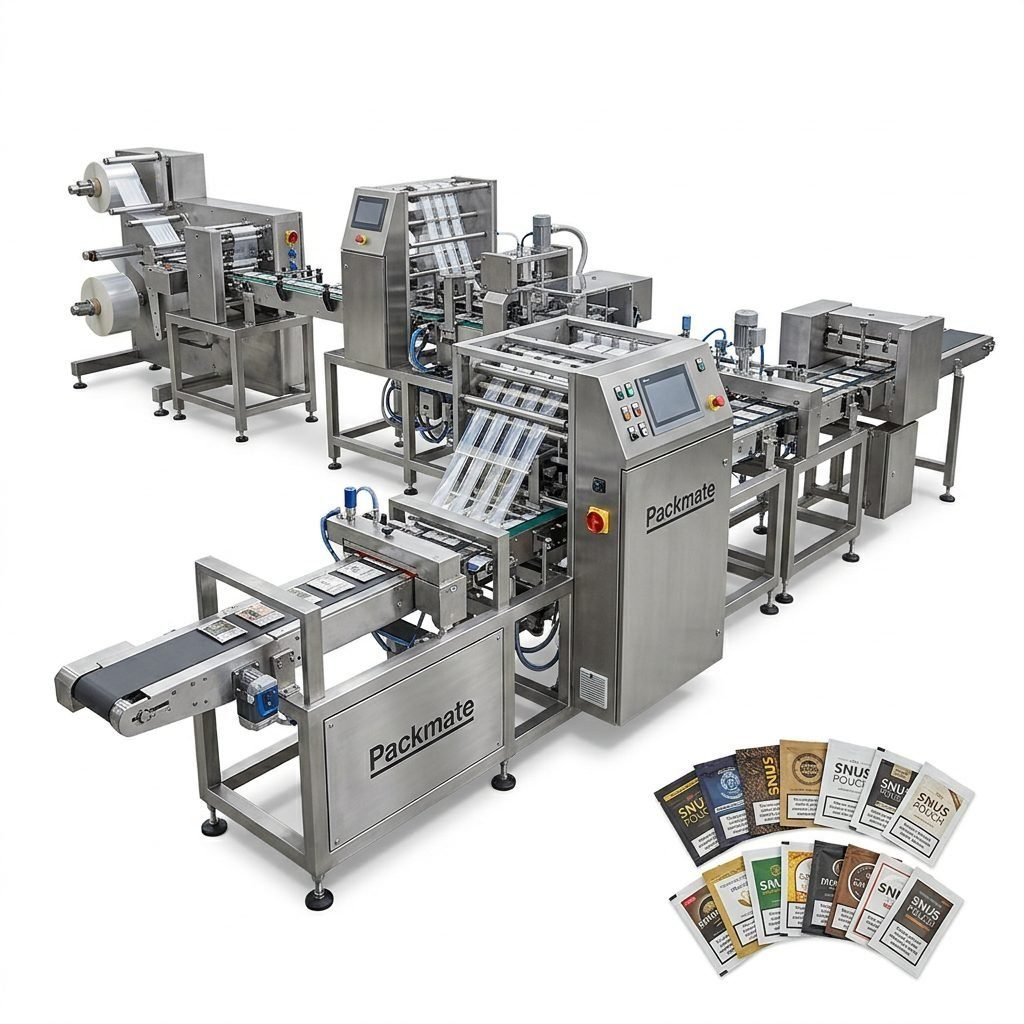
Choosing the right nicotine packaging machine for your business in Togo is a pivotal decision that affects product quality, regulatory compliance, and long-term profitability. This guide walks you step-by-step through the technical, commercial, and operational considerations specifically tailored for the nicotine pouch and snus market. Whether you are launching a small local brand or scaling to regional distribution across West Africa, understanding machine types, capacity planning, supplier reliability, and after-sales support will save time and reduce risk.
Why the Right Machine Matters for Togo’s Market
The nicotine pouch market demands consistent dosing, airtight packaging, and stable sealing to maintain shelf life and consumer safety. In Togo, you must also factor in local climate (humidity and temperature), import logistics, and evolving regulatory expectations. Selecting a machine that aligns with your product format and throughput goals ensures you avoid costly rework, recalls, or downtime.
Key Local Considerations
Regulatory compliance — Machines that support traceability and clean design help meet health and safety regulations.
Climate resilience — Choose equipment tolerant of higher humidity and temperature fluctuations.
Serviceability — Local or regional service partners reduce repair lead times and shipping costs for parts.
If you plan to export from Togo, choose machines with global certification (CE/ISO) and modular formats that allow quick format changes for different markets.
Step 1 — Define Your Product and Format Needs
Start by defining the pouch type (snus, nicotine pouch, sachet), dose size, and packaging style (single-lane or multi-lane). For nicotine pouches, common formats include small single-dose pouches in tin, stick packs, or sachets. These choices directly determine the type of filling and forming station required.
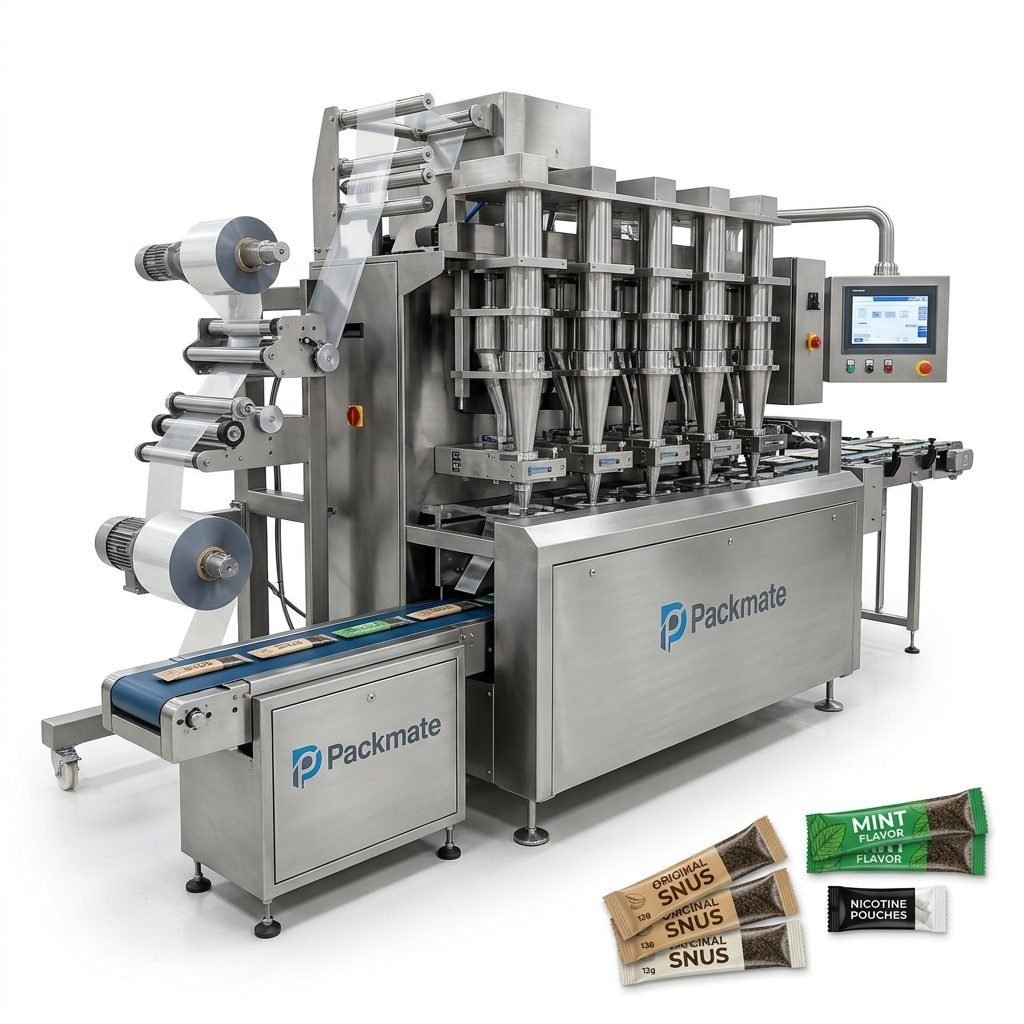
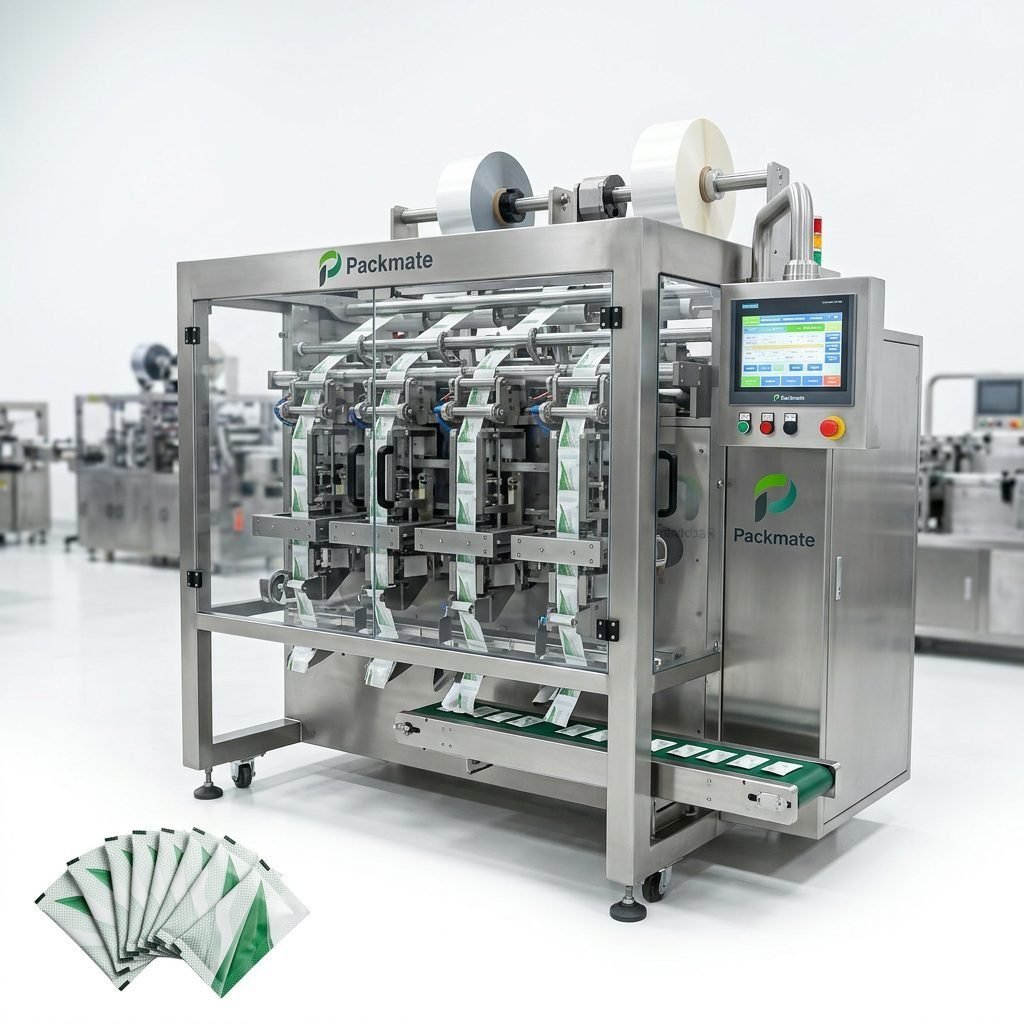
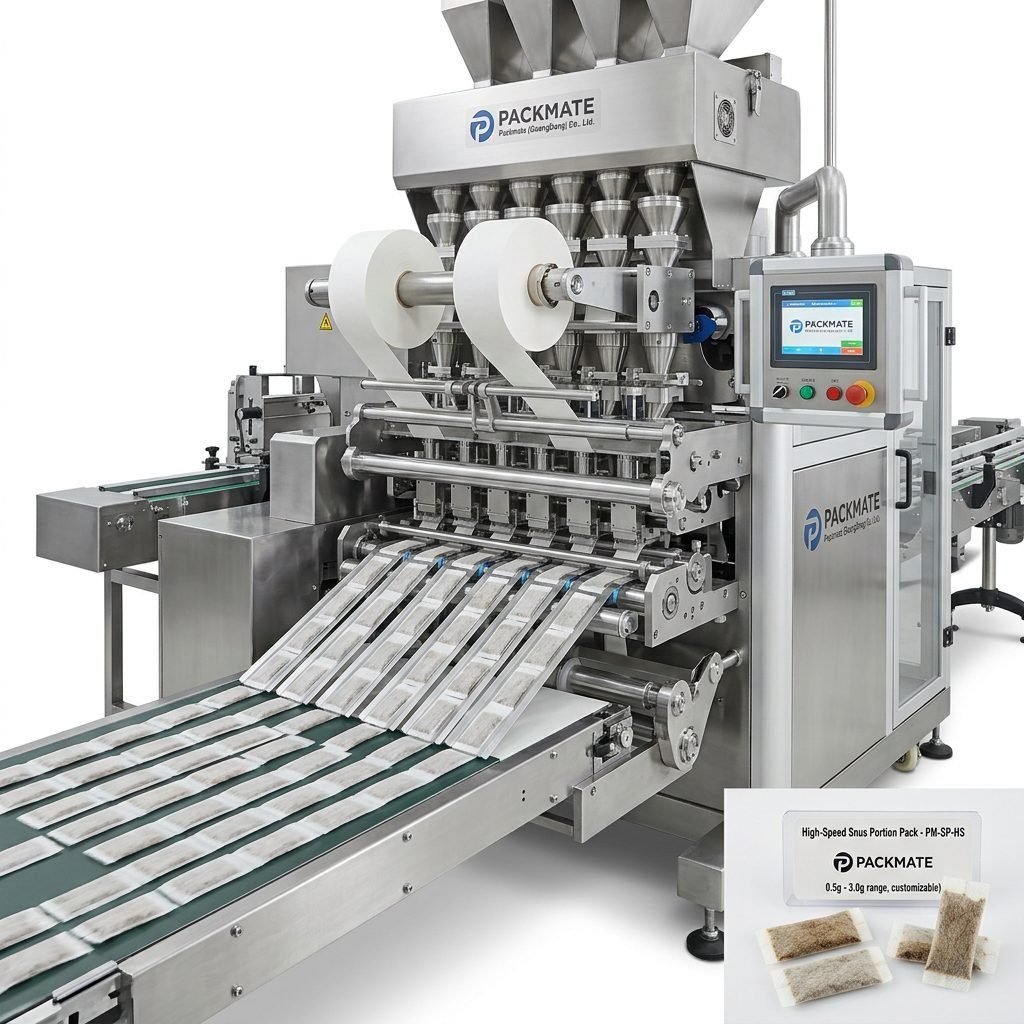
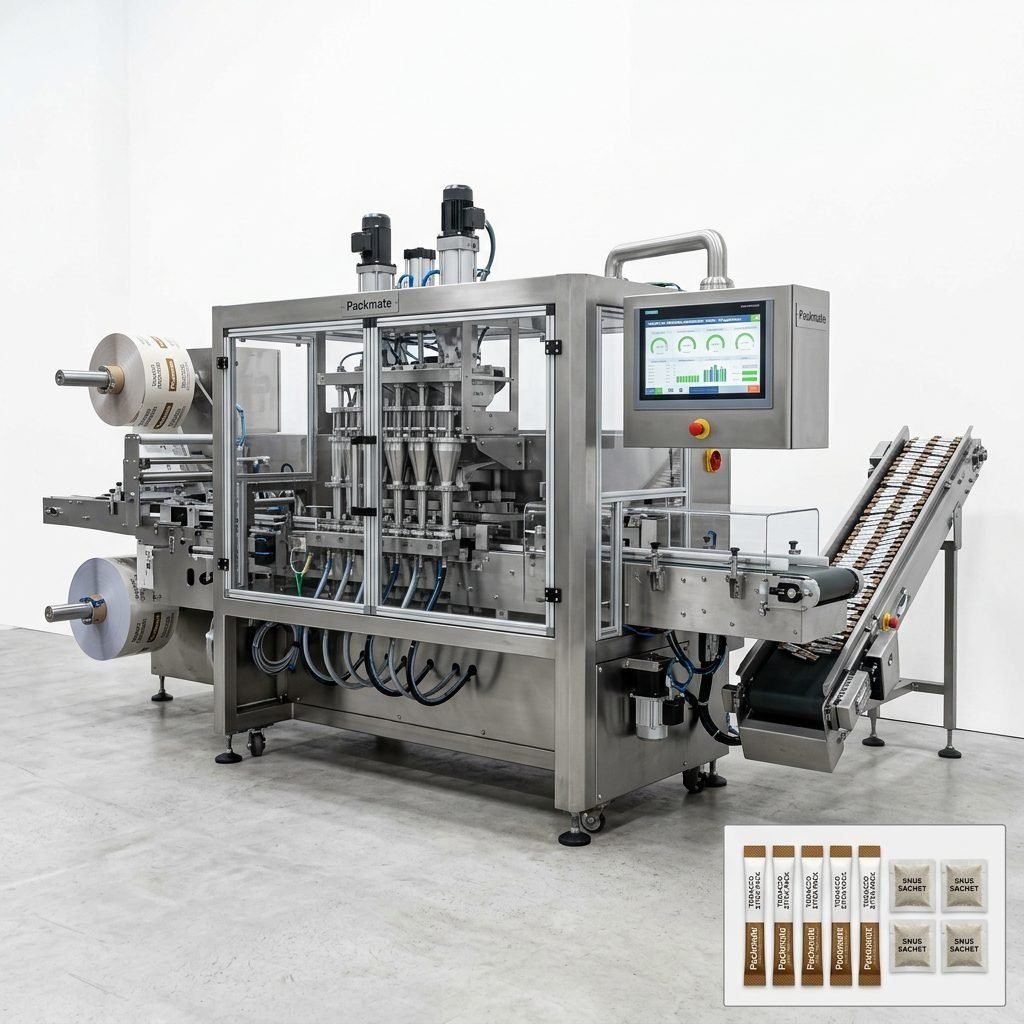
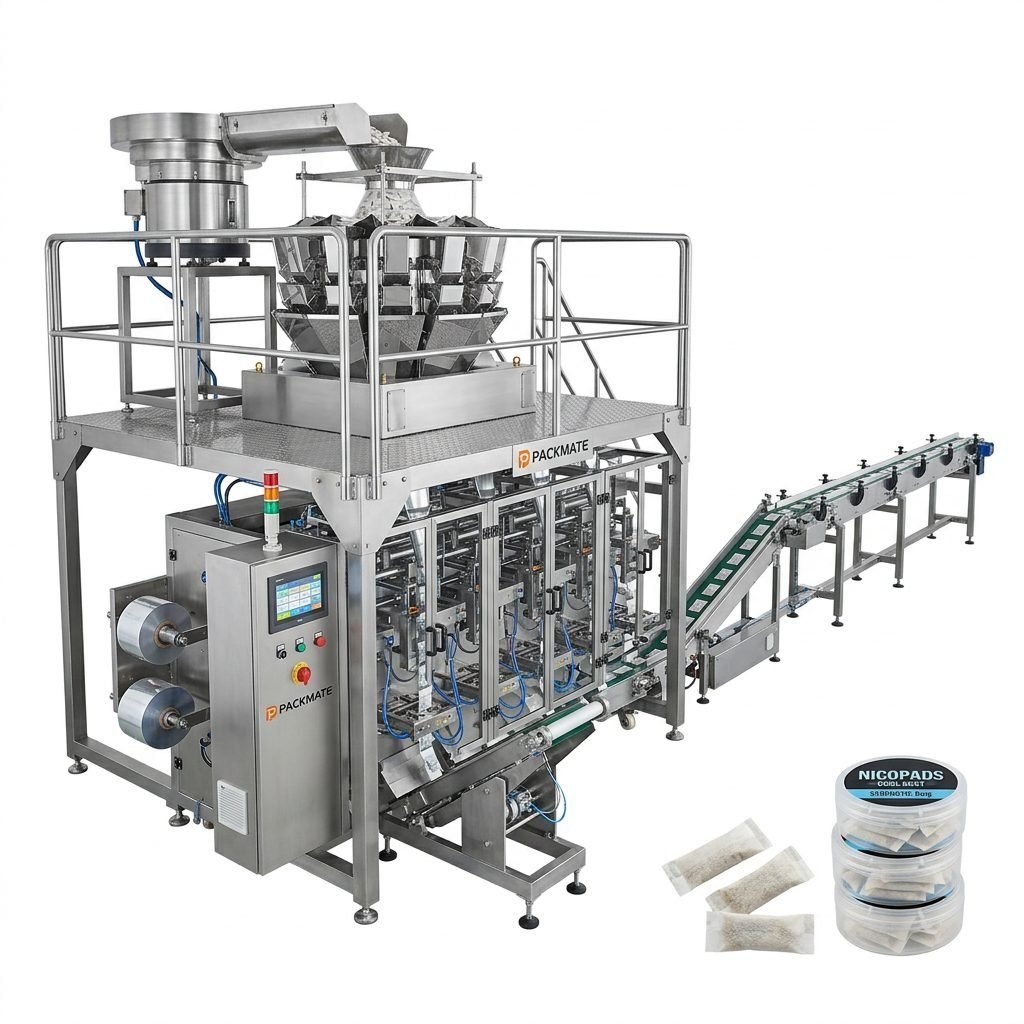
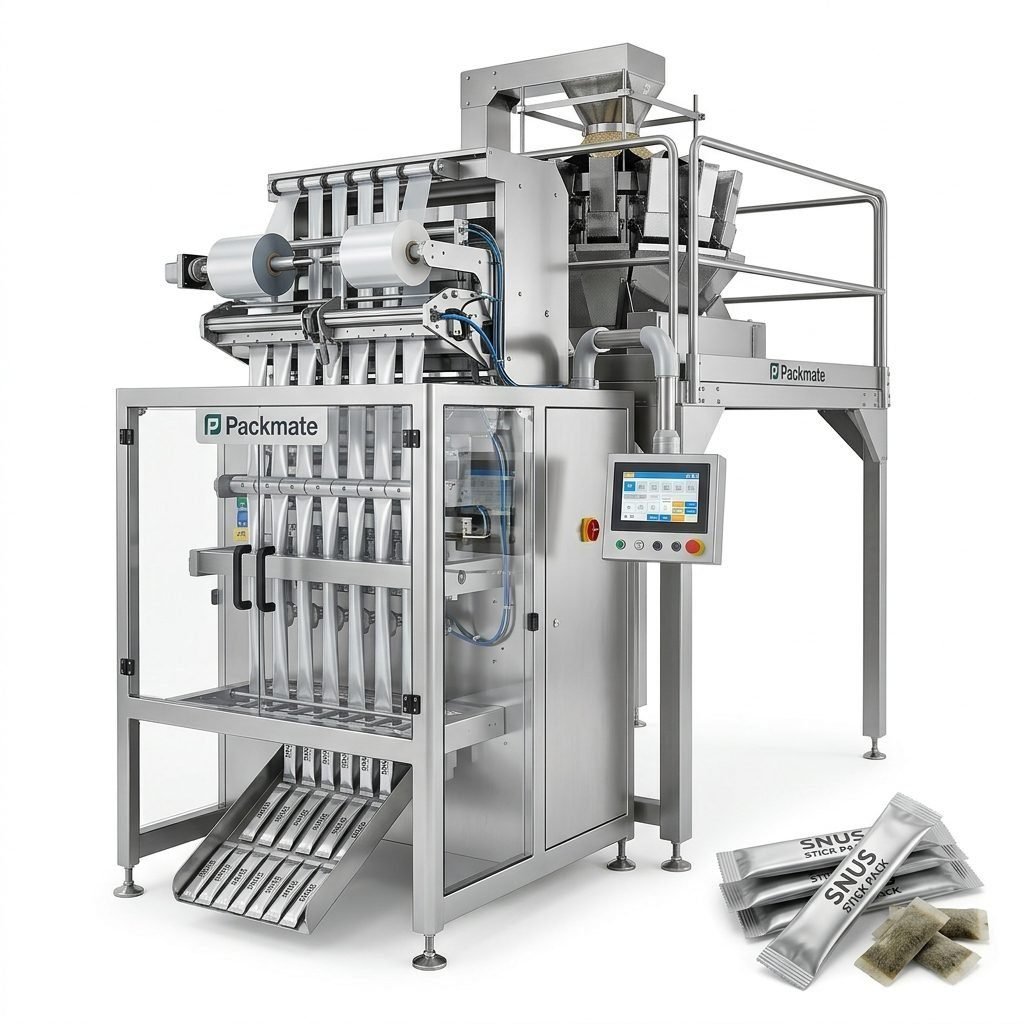
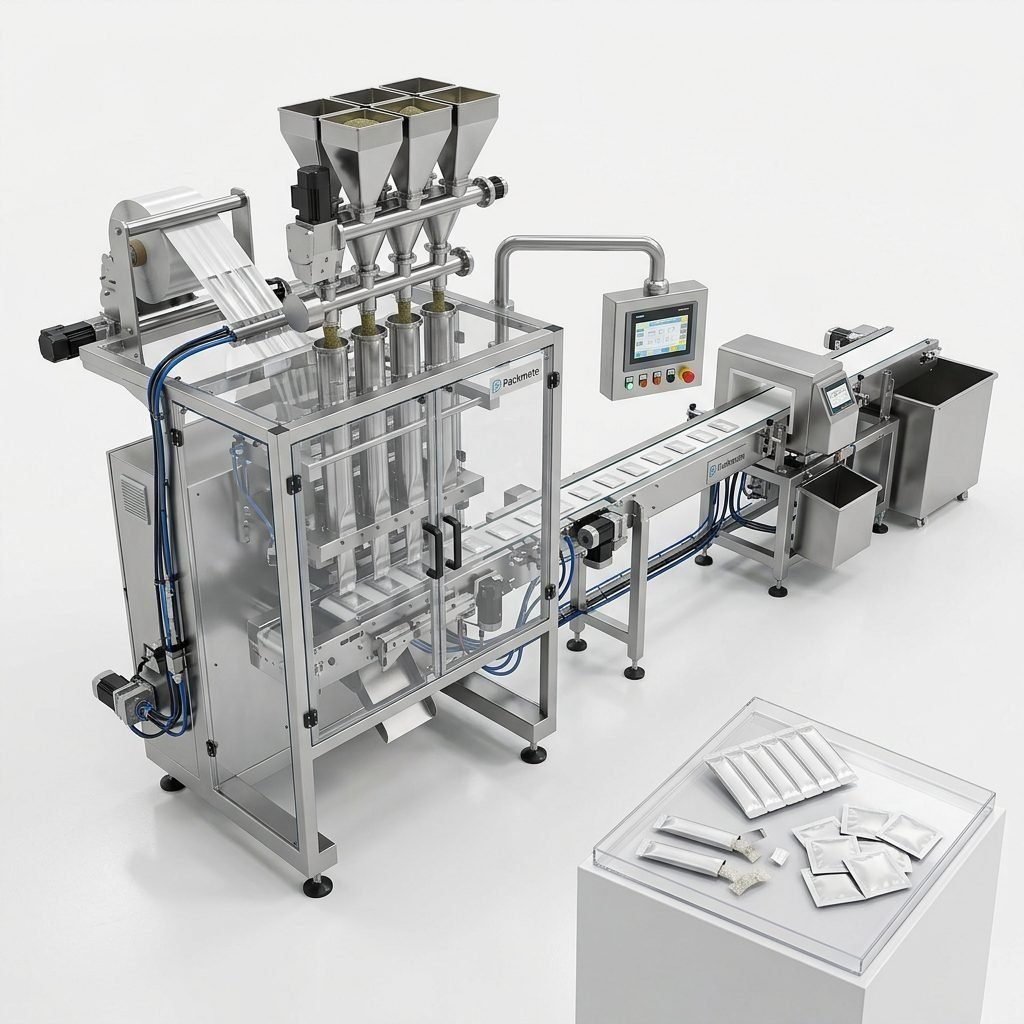
Machines vary: stick pack and sachet systems are ideal for long, narrow packets; vertical form-fill-seal (VFFS) or dedicated snus pouch machines are tailored for small-dose pouches. Explore product-specific solutions like Snus & Nicotine Packaging Machines and Sachet & Stick Pack Machines.
Step 2 — Throughput and Capacity Planning
Estimate your realistic daily and monthly production targets. Machines are specified by pouches per minute (ppm) or packs per hour. When planning capacity, account for:
✔️ Peak demand seasons and promotional runs
✔️ Maintenance windows and expected uptime (look for >92% uptime in proven lines)
✔️ Future expansion — consider modular, multi-lane systems to increase throughput without replacing the whole line
Buy a machine that can handle 20-25% more than your projected peak to avoid bottlenecks.
Step 3 — Technical Features to Prioritize
When evaluating models, focus on these technical attributes:
Precision Filling & Dosing
Accurate dosing is critical for nicotine products. Machines that use volumetric or weight-based dosing with feedback control minimize variation and waste.
Sealing Quality & Barrier Control
High-quality sealing prevents moisture ingress and preserves freshness. Look for advanced sealing systems with temperature control and fast changeover features.
Multi-Lane Flexibility
Multi-lane machines exponentially increase throughput for small-dose pouches. Choose designs with balanced lane control and simple lane on/off capability to match batch sizes.
Automation & HMI
A modern HMI with recipe management, automatic fault diagnostics, and remote access reduces operator errors and speeds troubleshooting.
Step 4 — Evaluate Manufacturer Reliability and Support
Supplier reliability is as important as the machine itself. Consider:
• Track record and years in industry — experience matters in niche markets
• Factory capabilities and QC systems — look for manufacturers with advanced CNC and assembly lines
• Certifications — CE and ISO compliance is a strong indicator of global standards
A practical example: Packmate Snus Machine combines 30+ years of engineering experience, a 20,000㎡ facility, and multiple model lines designed for snus and nicotine pouches. Learn more About Packmate.
• On-site testing and FAT procedures
• Spare parts availability and regional stocking
• Installation and operator training plans
Step 5 — Installation, Footprint & Utilities
Plan your production floor layout early. Machine footprint, conveyor integration, and ergonomic access for cleaning and maintenance are vital. Confirm the following utilities:
• Electrical supply and harmonics protection
• Compressed air (quality and pressure)
• Dust extraction and local ventilation
Step 6 — Total Cost of Ownership & ROI
Purchase price is only part of the equation. Consider TCO over 3-5 years:
• Energy consumption and efficiency
• Spare parts and consumables
• Planned maintenance labor
• Expected production yield and waste rate
An efficient multi-lane snus packaging line can reduce labor costs per pouch dramatically — project ROI based on real cycle times supplied by the manufacturer during FAT.
Step 7 — After-Sales Service and Spare Parts
Downtime in Togo can be costly due to shipping times for replacement parts. Prioritize suppliers who provide:
• Regional spare parts depots or fast shipping options
• Remote diagnostics and training for local technicians
• Long warranty options and service contracts
How to Compare Machines — A Practical Checklist
🔎 Functionality: Can the machine handle your pouch geometry, weight range, and materials?
🔩 Changeover: How long does it take to switch formats?
📈 Performance: Measured pouches per minute and actual yields during FAT
🧰 Service: Local support, spare part lead times, and training programs
🔒 Compliance: Certifications such as CE/ISO and hygienic design
Real-World Example: Choosing a Multi-Lane Snus Line
Imagine you plan to produce 2 million pouches per month. A single-lane machine running at a high speed might meet peak rates but will require frequent changeovers and more operator intervention. A 4-lane system with automated dosing, synchronized lane control, and a centralized sealing module will achieve higher continuous throughput with less manual handling — reducing costs and improving consistency. For such needs, review multi-lane options under Snus & Nicotine Packaging Machines and consult case studies at the manufacturer site.
Integrating Ancillary Equipment
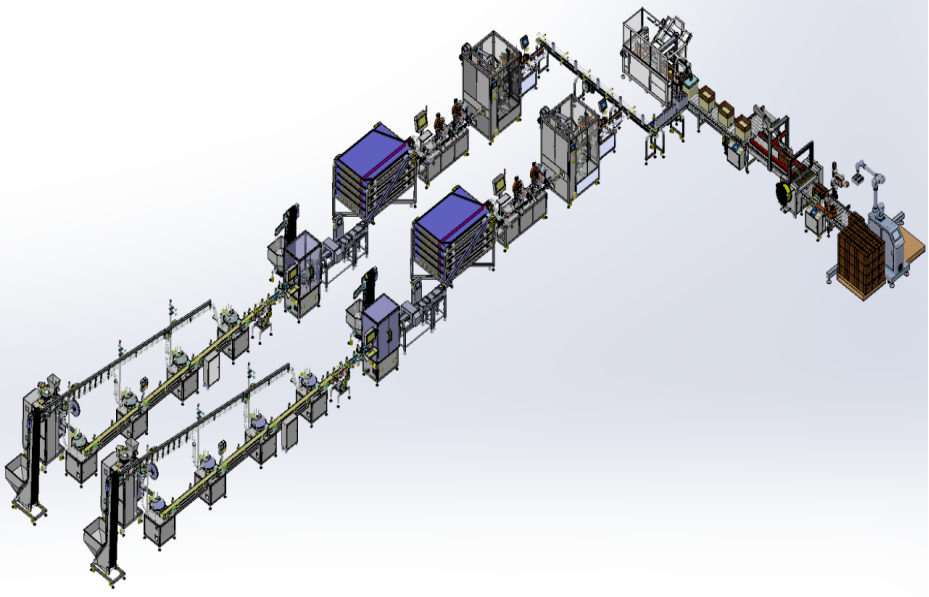
Your packaging line may also require weighing, dosing feeders, conveyors, and boxing equipment. Evaluate the compatibility of auxiliary systems and consider a turnkey supplier to avoid integration issues. Packmate offers modular options across Weighing & Packaging Systems and Auxiliary Packaging Equipment.
Logistics: Importing into Togo
Factor in customs clearance, local taxes, and freight. Machines often ship in crates or containers. Work with suppliers who have export experience and provide complete documentation (packing lists, bills of lading, certificates) to speed customs processing.
Ensure the supplier provides detailed installation drawings and electric/mechanical requirements before shipment.
Selecting a Supplier — Questions to Ask
When you contact potential suppliers, ask:
• Can you provide FAT videos and customer references for similar machines?
• What is your average lead time for delivery and installation?
• How do you support spare parts and urgent repairs in West Africa?
• Do you offer training on-site and remote technical support?
• What are the warranty terms and optional service contracts?
Why Consider Turnkey Solutions?
Turnkey suppliers reduce integration risk by delivering a tested production line, including material handling, packaging, and end-of-line systems. This approach shortens commissioning time, centralizes accountability, and often results in a better total installed performance.
To explore turnkey options and full production line offerings, check manufacturer sections like Filling & Packaging Lines.
Making the Final Decision
Balance technical fit, supplier reliability, and financial viability. Use FAT results, references, and a weighted scoring matrix to objectively compare offers. Score machines on throughput, yield, energy use, spare parts policy, warranty, and local serviceability.
Final Buying Checklist
1. Technical fit for product — verified by sample runs
2. Clear uptime & maintenance expectations
3. Spare parts lead times and local stock strategy
4. Training and remote support commitments
5. Documented FAT and installation plan
Next Steps: Get a Quote and Arrange a Factory Visit
Shortlist manufacturers and request detailed proposals that include machine specs, acceptance criteria, spare parts kits, and shipping timelines. If possible, arrange a factory acceptance test or attend an exhibition to see machines in operation. For direct contact and personalized consultation, vendors such as Packmate make it straightforward to request quotes and technical drawings — visit Contact Us.
Conclusion
Selecting the best nicotine packaging machine for your business in Togo requires a holistic approach: know your product format, plan capacity with future growth in mind, prioritize quality and service, and choose suppliers with proven experience in snus and nicotine pouch technologies. Investing in the right equipment and reliable support will pay off in consistent product quality, regulatory compliance, and lower operating costs.
Frequently Asked Questions (FAQs)
Q1: What machine type is best for small-batch nicotine pouches?
A1: For small batches, a flexible single or dual-lane snus pouch machine with quick changeover and small-lot recipe management is ideal. Consider modular lines that allow scaling to multi-lane when needed.
Q2: How long does installation and commissioning typically take in Togo?
A2: Installation and commissioning vary by scope; simple machines may be commissioned in 1-2 weeks, while full turnkey lines often take 4-8 weeks including site prep and validation. Remote pre-commissioning checks can speed the process.
Q3: What spare parts should I stock locally?
A3: Stock critical wear parts (seals, belts, sensors, heating elements) and a basic electronics kit. Discuss a recommended spare parts list with the supplier to minimize downtime.
Q4: Are there turnkey suppliers that handle integration and packaging lines?
A4: Yes. Many experienced manufacturers offer turnkey services including fillers, conveyors, weighing systems, and end-of-line boxing. Review turnkey offerings and case studies to evaluate compatibility with your needs.
Q5: How can I verify a supplier’s claims about machine performance?
A5: Request FAT videos, performance data, customer references, and sample production runs. If possible, visit an exhibition or the supplier factory to see machines under real operating conditions.