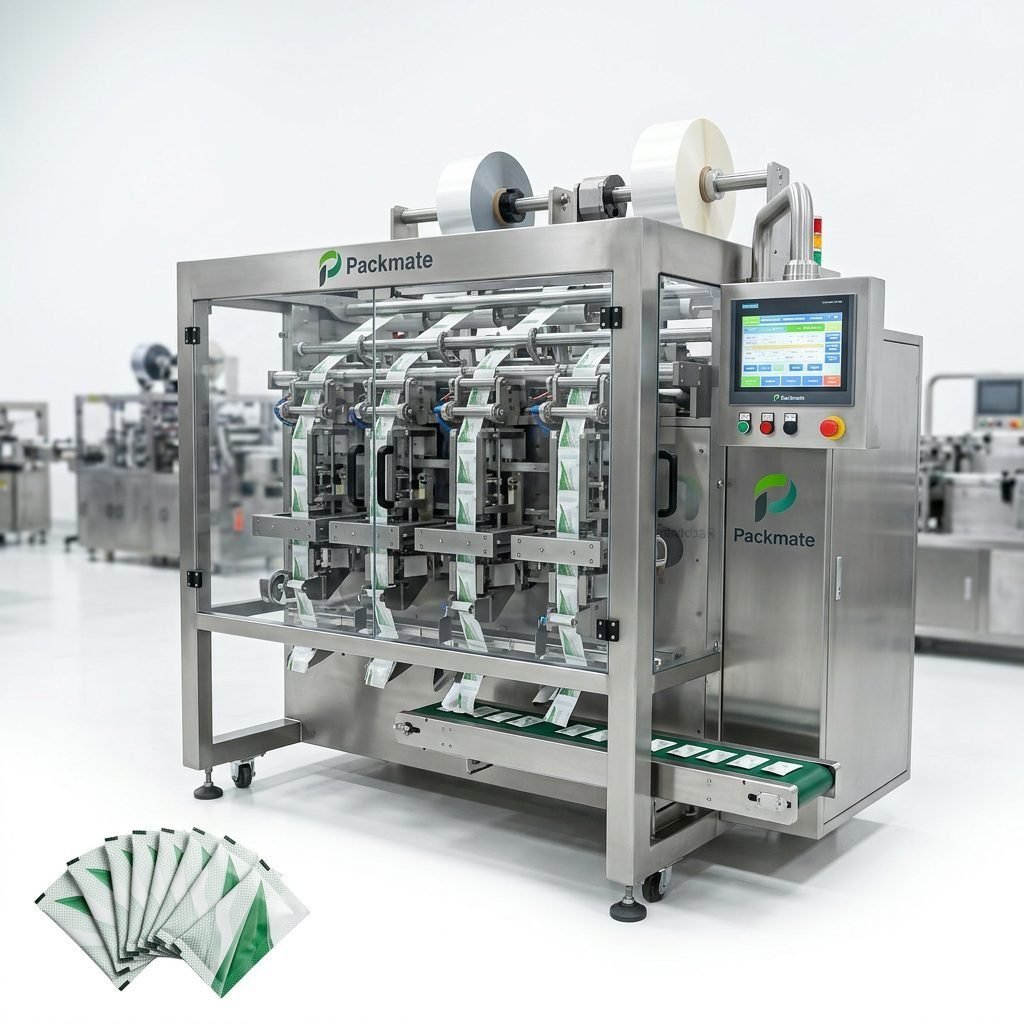
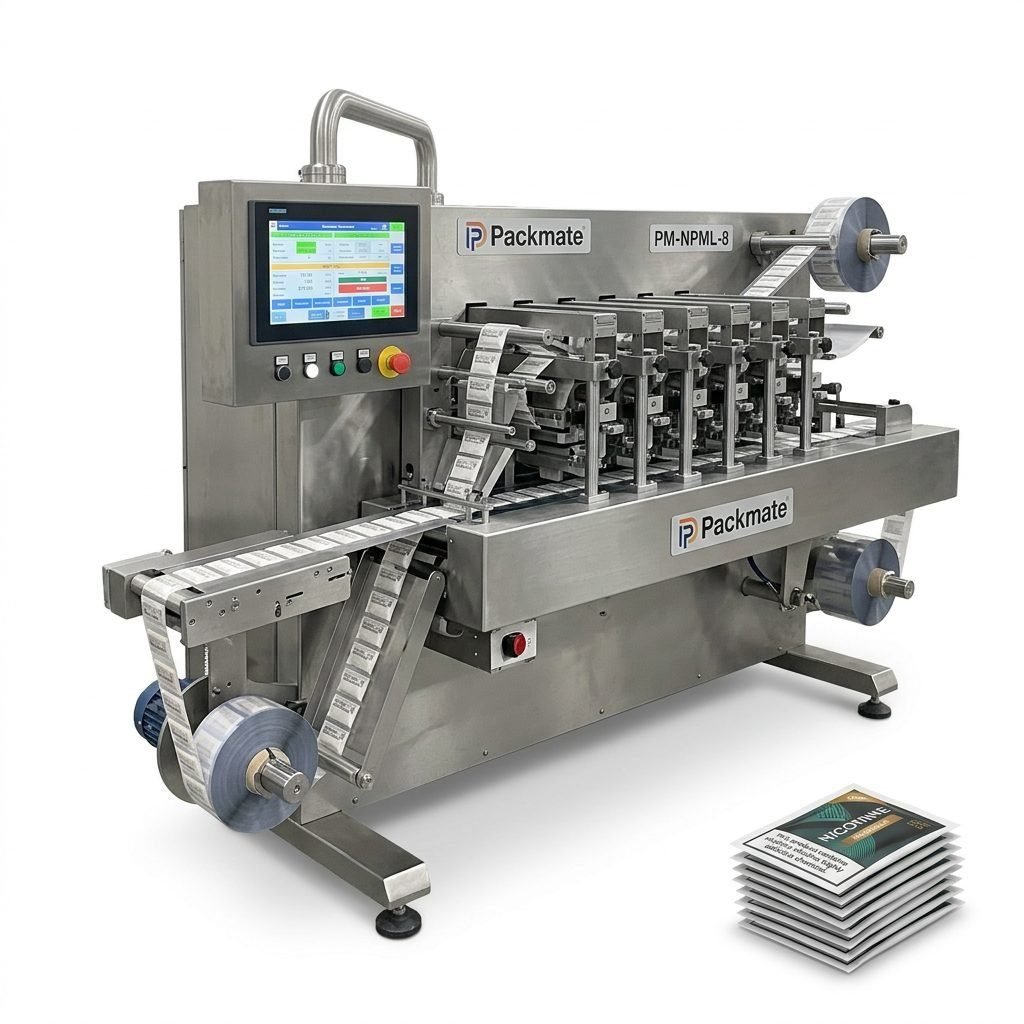
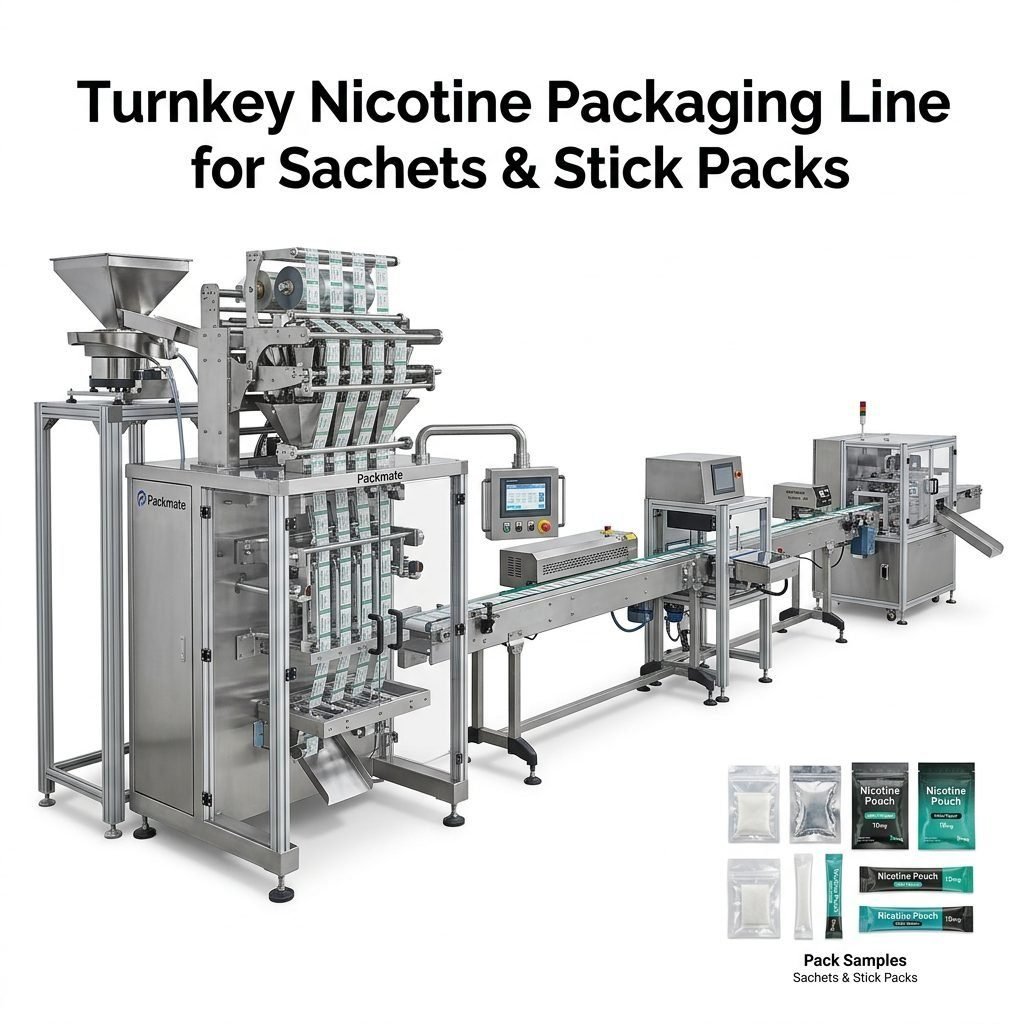
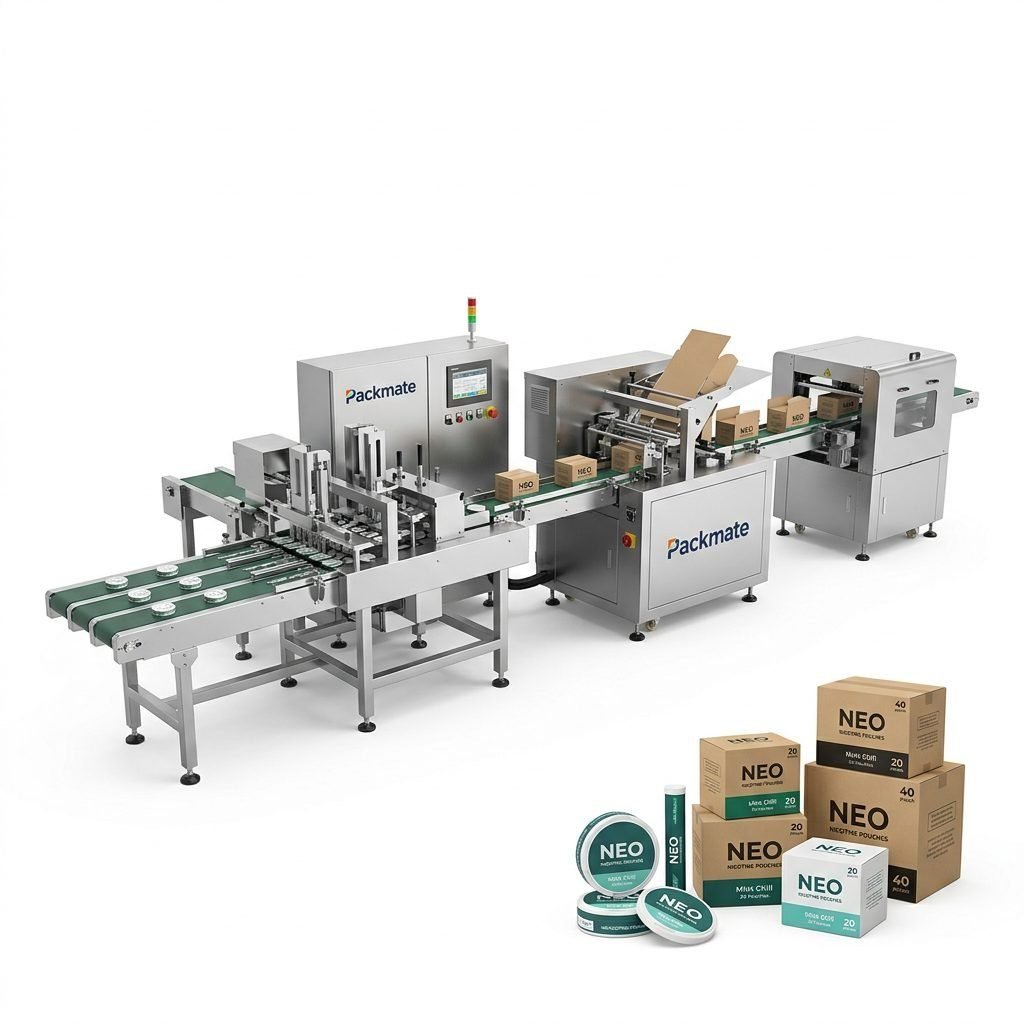
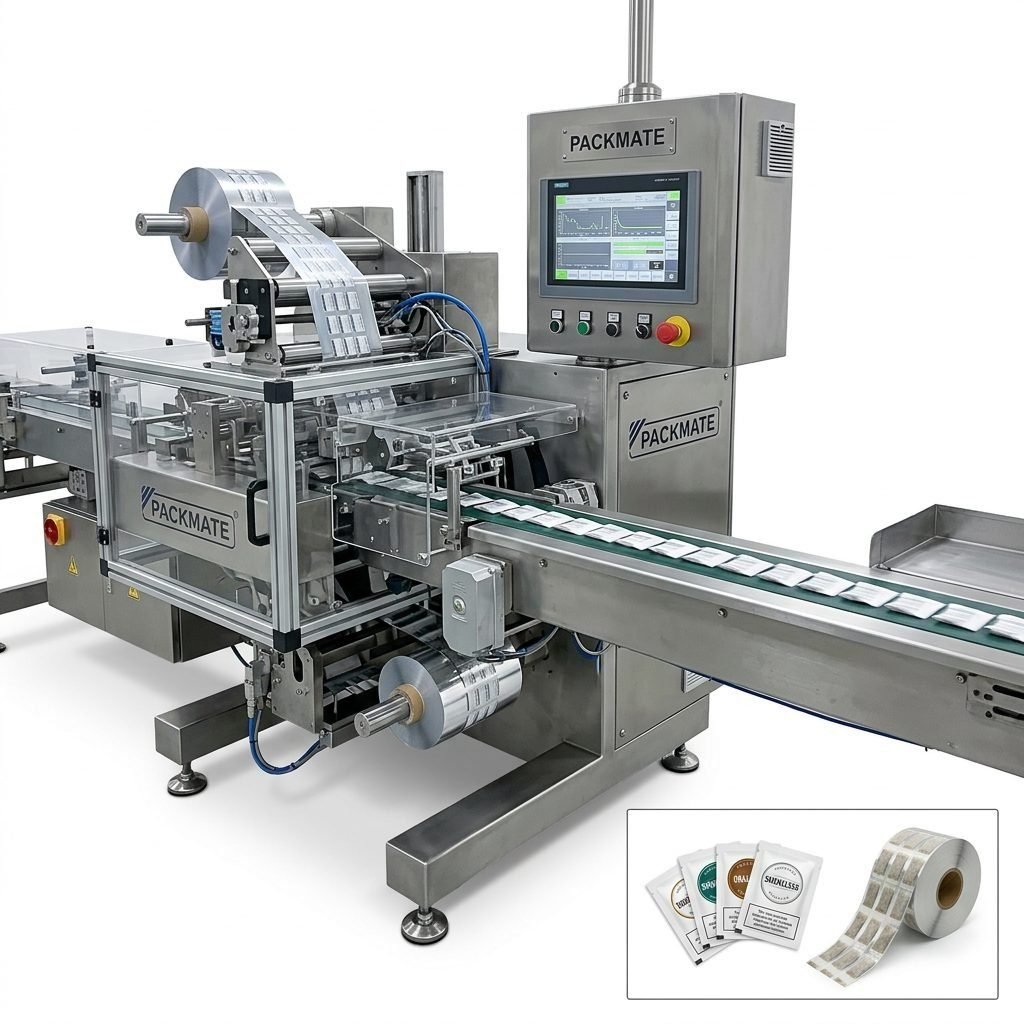
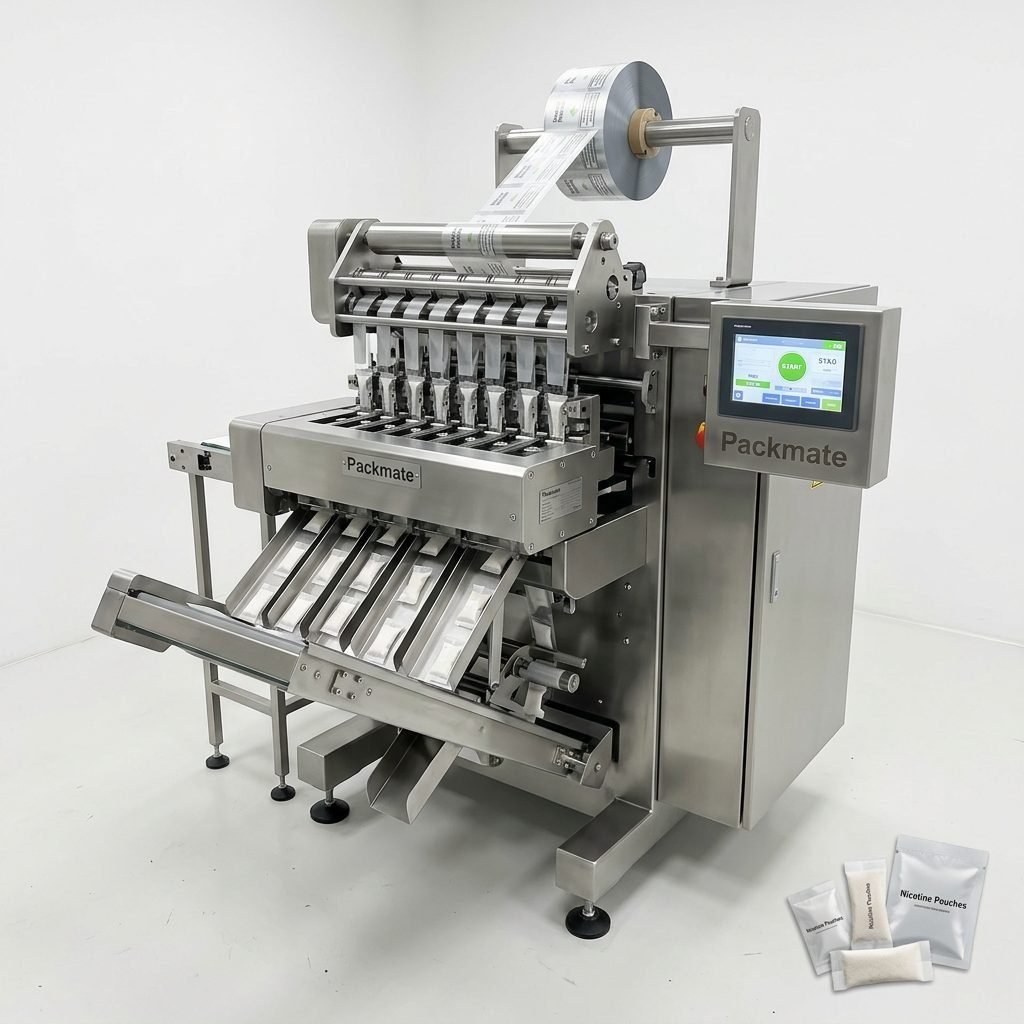
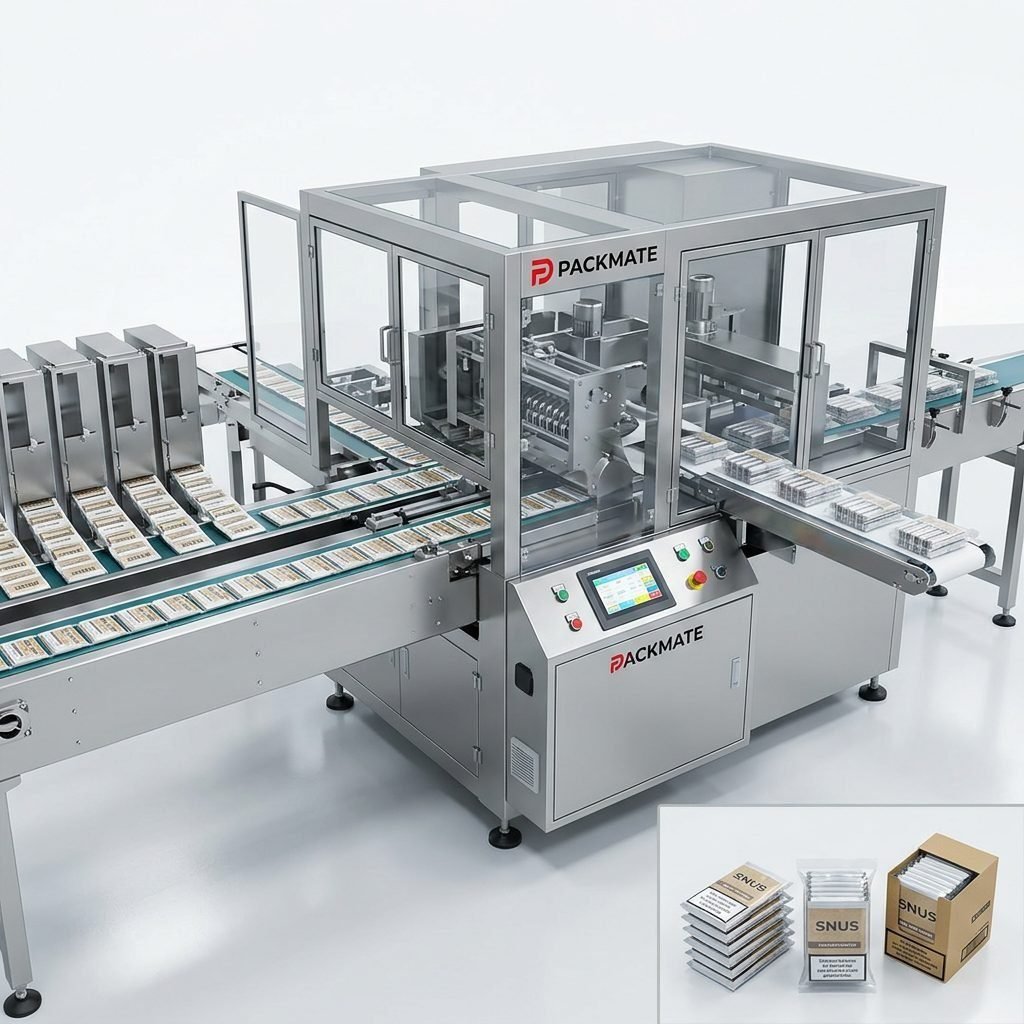
Multi-lane snus packing machines are transforming the way manufacturers scale up production for portion snus, nicotine pouches, and other small-dose sachets. These systems balance high output, precise dosing, and gentle product handling, enabling brands to meet growing demand while maintaining consistent pouch quality and regulatory compliance.
Why Multi-Lane Snus Packing Machines Matter
🔴 High throughput without compromising precision is the main advantage. Multi-lane systems run many lanes in parallel, multiplying output while keeping footprint compact. For manufacturers aiming to move from pilot production to full-scale runs, multi-lane technology offers a scalable path.
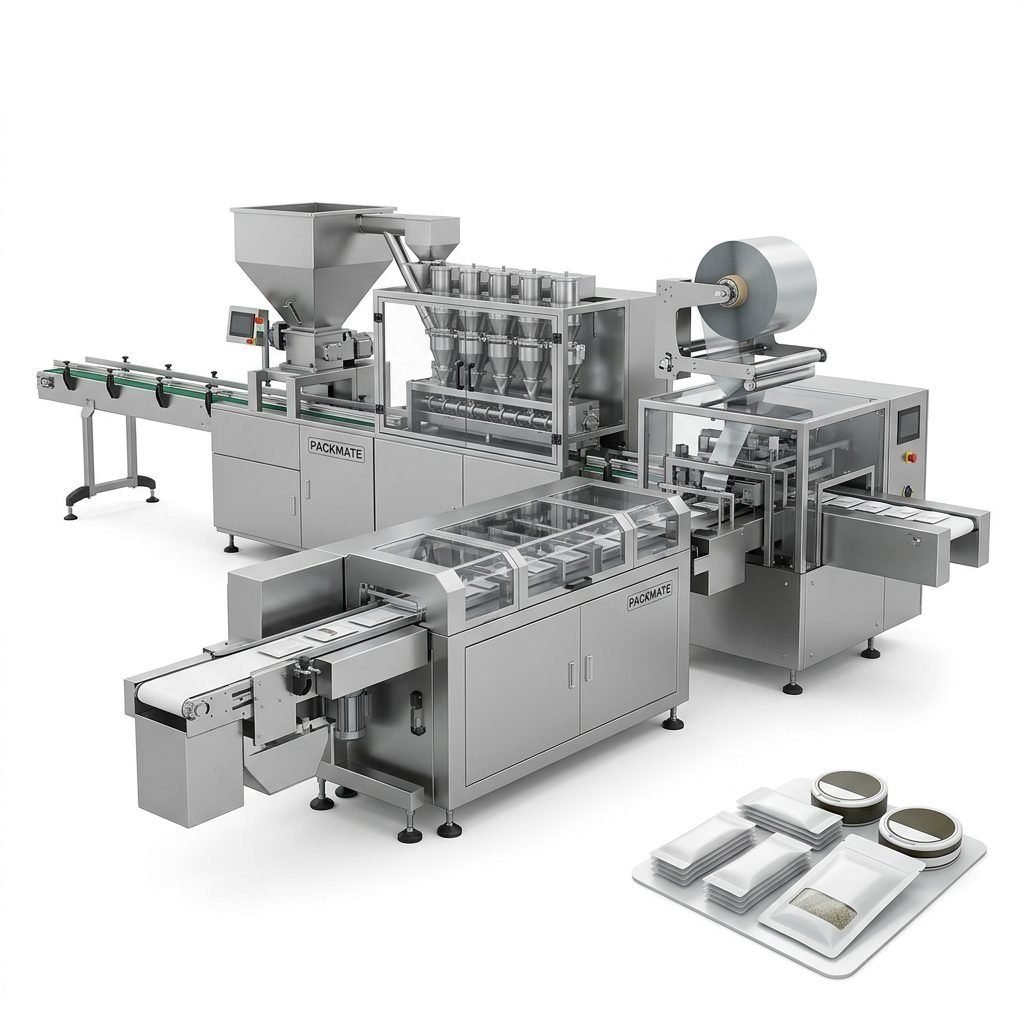
⚙️ These machines are ideal for a wide range of formats — from round and flat sachets to stick packs and shaped nicotine pouches — and can be integrated with upstream weighing systems and downstream cartoning or case packing lines.
Key Technical Features and Why They Matter
Speed & Lane Configuration
✅ Multi-lane machines typically offer configurations such as 4, 8, 12 or more lanes. Selecting the right lane count balances output targets with product handling needs.
Precision Dosing & Filling
✅ High-accuracy dosing systems (electronic piston, auger, vibratory dosing or integrated weighers) ensure each pouch contains the correct portion. This reduces waste and supports compliance with labeling and supply chain traceability.
Material Handling & Gentle Processing
✅ Servo-driven conveyors and synchronous film feeders protect delicate ingredients and ensure proper seal formation. Reduced product degradation is critical for nicotine pouches, moisture-sensitive fillings, and tea-based snus.
Construction, Controls & Hygiene
📦 Modern snus packers are built from stainless steel with hygienic design principles: easy-to-clean surfaces, CIP-friendly components, and protective covers to maintain product quality. PLC and HMI systems offer recipe management, error diagnostics, and remote access for troubleshooting.
Automation & Integration
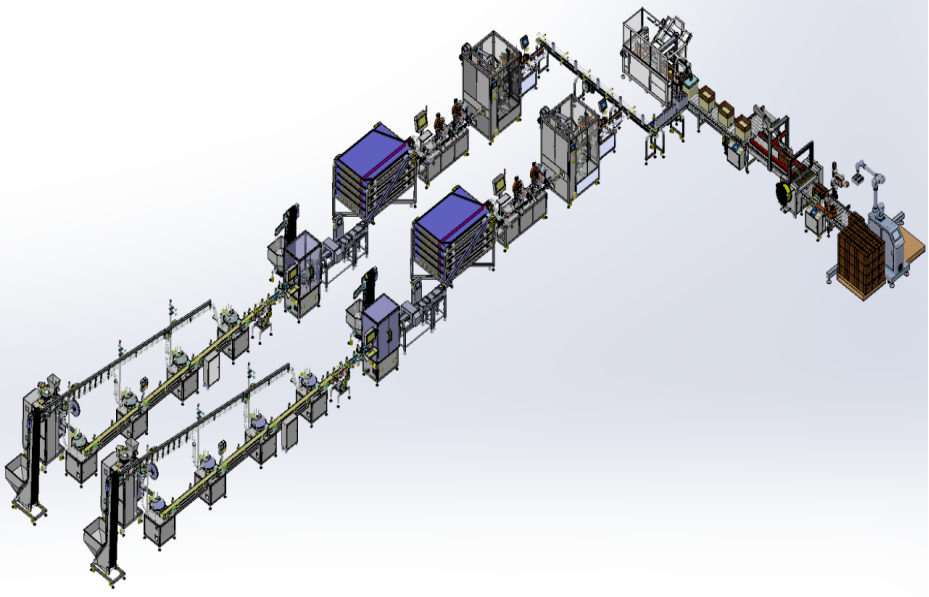
Integrating the packer with weighing systems, feeding hoppers, and downstream cartoning or pouch-counting systems creates a smooth production line with minimal manual intervention. This lowers labor costs and improves overall equipment effectiveness (OEE).
Manufacturing Strength & Compliance
Packmate Snus Machine brings over 30 years of engineering experience to multi-lane packaging. With a 20,000㎡ factory, advanced CNC machining, and strict quality control, the company delivers machines built to CE and ISO standards. Review certifications and factory capabilities to validate supplier reliability.
Learn more about the manufacturer and their credentials at About Packmate and view formal credentials at Certificate.
Applications: What Products Work Best
Multi-lane snus machines are most commonly used for:
🔹 Nicotine & snus portion pouches
🔹 Tea, herbal sachets
🔹 Powder and fine granules
🔹 Small-dose pharmaceuticals and supplements
For a complete overview of machine types, explore Snus & Nicotine Packaging Machines and Bag & Pouch Packaging Machines.
How to Choose the Right Multi-Lane Packer: A Practical Buying Guide
Selecting the right machine is a combination of technical specs and long-term business planning. Consider the following checklist:
Throughput & Lane Count
How many finished pouches per minute or per hour do you need? Match production targets to lane count and maximum machine speed. Higher lane counts increase throughput but also require more precise synchronization.
Pouch Format & Material Compatibility
Choose a machine that supports your preferred pouch size and material (laminates, paper, biodegradable films). Verify sealing temperature ranges and film tension control for consistent seals and minimal film waste.
Dosing Accuracy & Product Type
Powders and fine granules may need special dosing systems (e.g., vibratory belt feeders or load-cell based weighers) while pastes or moist products may need piston fillers. Confirm the supplier’s experience with similar products.
Flexibility & Changeover Time
If you plan to run multiple SKUs, look for quick-change tooling, recipe stores, and adjustable lane modules. Reduced changeover time translates directly to higher productive hours.
Total Cost of Ownership & ROI Considerations
Initial cost is only part of the story. Account for spare parts, consumables, energy consumption, labor savings from automation, expected uptime, and service agreements. A well-specified multi-lane packer can deliver a rapid payback through increased capacity and reduced unit costs.
Service & After-sales
✅ Ensure the supplier offers training, spare parts, and remote support. Explore the manufacturer’s Service options and verify response times for global shipments. For a direct inquiry, use Contact Us.
Installation, Commissioning & Production Ramp-up
Proper installation and commissioning ensure your line hits performance targets quickly. Plan for FAT/SAT (Factory and Site Acceptance Tests), operator training, and a ramp-up period with sample runs. Many suppliers provide on-site commissioning and remote performance tuning.
Typical Case Studies & Global Deployments
From Europe to Asia and the Americas, Packmate has deployed systems that demonstrate reliability and consistent output. Real-world installations include full lines for nicotine pouches with integrated weighing, sealing, and cartoning. Browse live examples at the Case page to see validated performance metrics.
Regulatory Compliance & Traceability
Ensure the machine supports lot coding, batch tracking, and integration with your ERP or MES for traceability. Compliance with CE, ISO, and local regulations is essential for market access and product safety.
Maintenance Best Practices
Routine preventive maintenance extends machine life and safeguards production uptime:
🔧 Daily checks: clean sealing jaws, inspect film paths, and verify alignment.
🔧 Weekly: lubrication points, belt tension checks, and electrical cabinet cooling.
🔧 Monthly: calibrate dosing systems and run full diagnostic tests with sample loads.
Spare Parts & Critical Components
Keep a minimal stock of consumables (sealing jaws, belts, sensors) to minimize downtime. Confirm lead times for major components and whether the manufacturer provides global distribution centers or local partners for expedited service.
Customization & Turnkey Lines
Many customers require turnkey lines: feeding, dosing, multi-lane packaging, metal detection, checkweighers, and cartoning. Discuss customization options early to optimize layout, utility requirements, and automation level. Packmate offers end-to-end solutions including Filling & Packaging Lines and auxiliaries.
Exhibition & Technical Demonstrations
Seeing machines in action is invaluable. Attend live demonstrations at industry exhibitions or schedule factory visits to observe performance, build quality, and technical expertise. Check upcoming events at Our Exhibition.
In summary, multi-lane snus packing machines are the cornerstone of modern high-volume, precise pouch production. Prioritize lane configuration, dosing accuracy, material compatibility, hygienic design, and supplier support when making a purchasing decision. With the right partner, a multi-lane system can deliver significant productivity gains, improved product consistency, and a fast return on investment.
Common Questions (FAQs)
Q1: What throughput can I expect from a 12-lane snus packing machine?
A1: Typical outputs vary by machine and pouch format; a well-configured 12-lane system often achieves several thousand pouches per minute in aggregate. Exact numbers depend on pouch size, filling system, and line integration.
Q2: How long does changeover take between different pouch sizes?
A2: With quick-change tooling and saved recipes, changeovers can be as short as 15–45 minutes. More complex format switches may take longer; factor in operator training and setup validation.
Q3: Does the machine support biodegradable or specialty films?
A3: Yes, many modern packers are compatible with a wide range of films, including biodegradable laminates. Confirm sealing parameters and perform material trials to ensure seal integrity and shelf life.
Q4: What after-sales support should I expect?
A4: Reliable suppliers provide installation, commissioning, operator training, spare parts, and remote diagnostic support. Review service contracts and local support options to ensure rapid response to issues.