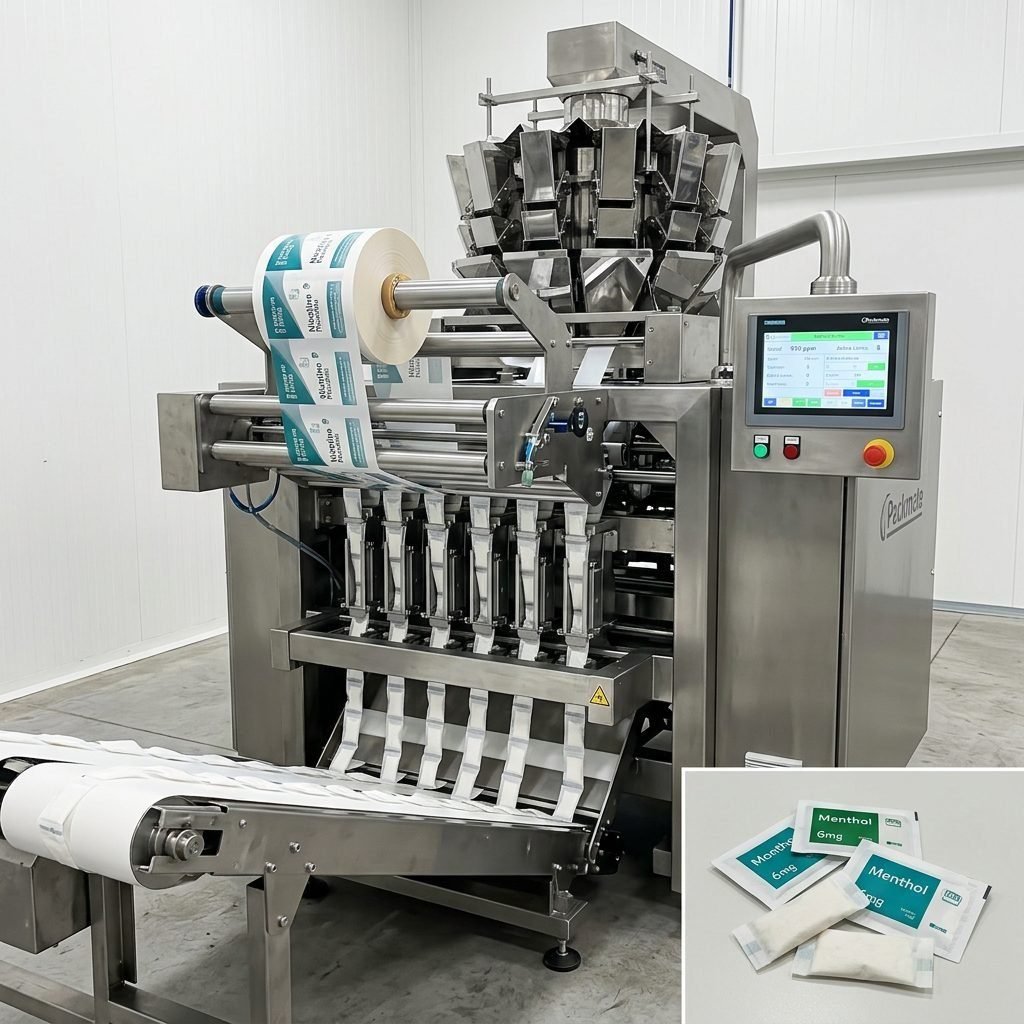
Choosing the right snus machine for production in the European Union is more than a procurement decision — it is a regulatory, technical, and commercial strategy. This guide walks through practical steps to select a fully legal, TPD-ready snus and nicotine pouch production line that meets EU requirements while delivering high-efficiency output. It highlights machine features, documentation expectations, supplier qualifications, and operational best practices so your line is compliant from installation to routine operation.
Understanding EU TPD & Snus Regulation
The Tobacco Products Directive (TPD) and related national laws establish strict rules for manufacturing and selling tobacco-related products, including nicotine pouches and snus in EU member states where they are permitted. Manufacturers and packagers must ensure product traceability, ingredient transparency, packaging integrity, and labeling accuracy. Machines that enable precise dosing, hermetic sealing, and reliable batch traceability simplify compliance and reduce the risk of regulatory non-conformance.
Why machine selection affects legal compliance
A production line that lacks features for traceability, fails to maintain cleanroom-compatible hygiene, or produces inconsistent pouch weights can create regulatory headaches. Investing in a TPD-ready machine reduces manual interventions, ensures repeatable quality, and makes documentation easier for audits. Key points regulators inspect include accurate weight control, tamper-evident seals, and reliable batch coding.
Quick takeaway: Choose equipment that supports automated dosing, integrated coding/traceability, and hygienic design. These features directly support TPD requirements and ease product registration in EU markets.
Core machine capabilities required for EU compliance
Here are the machine capabilities that matter most when preparing for TPD and EU market entry:
✅ Precise dosing and weight control — Electronic weighing and multi-head dosing reduce variance and help you comply with declared nicotine and mass limits.
✅ High-accuracy filling across lanes — Multi-lane systems must maintain consistency between lanes to avoid mixed-batch failures or rejected lots.
✅ Hermetic sealing or tamper-evident closure — Packaging integrity ensures product safety and preserves shelf life for regulatory sampling.
✅ Integrated coding and serialization — Date, batch, and lot codes must be reliably applied and readable for traceability.
✅ Cleanable, GMP-friendly machine design — Materials and surfaces must support routine cleaning and avoid contamination risks.
Selecting the Right Machine Type
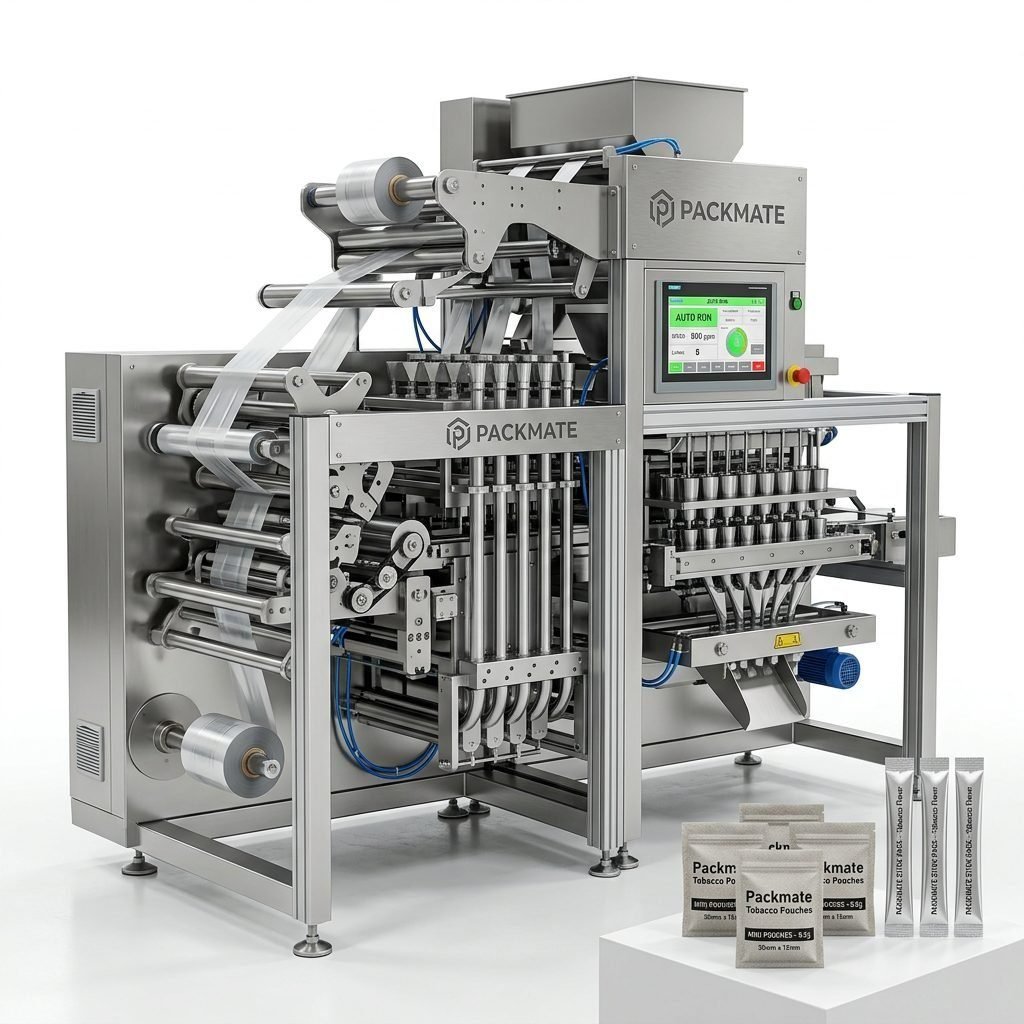
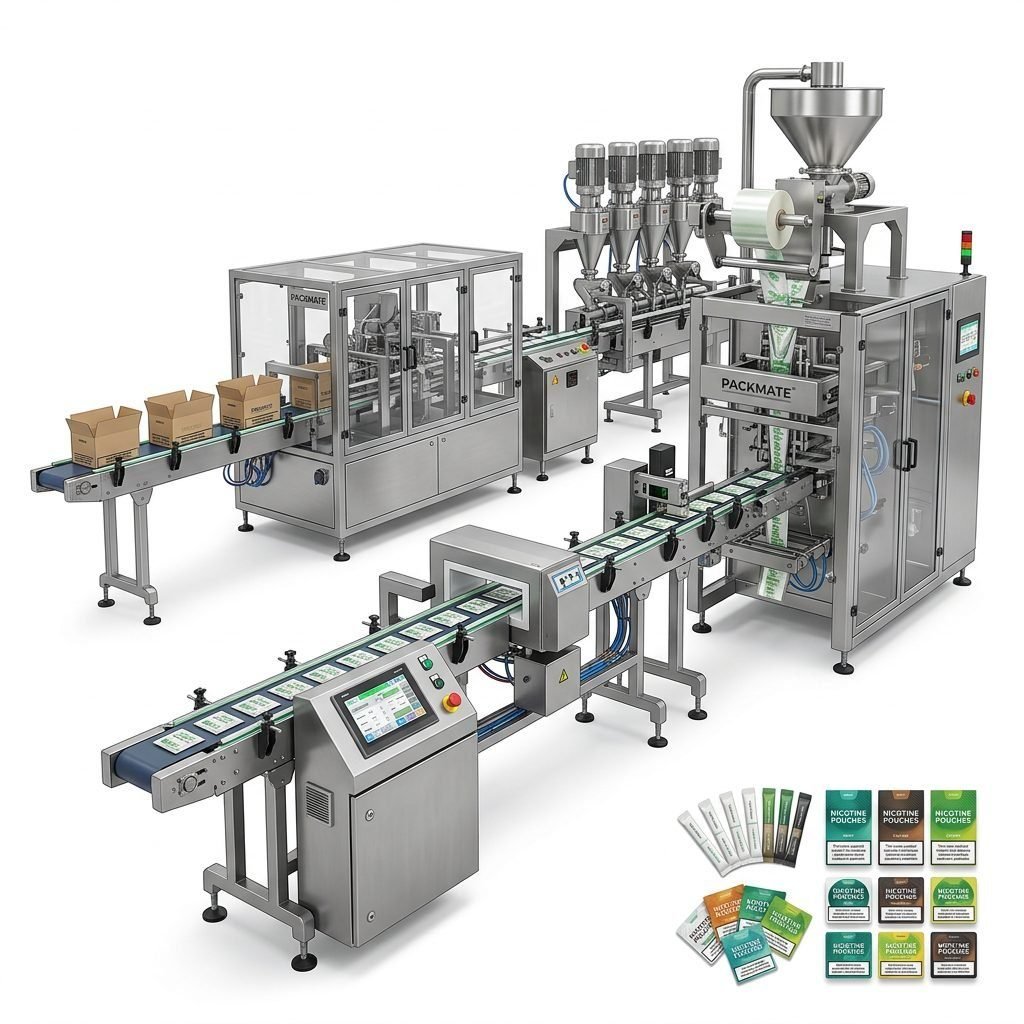
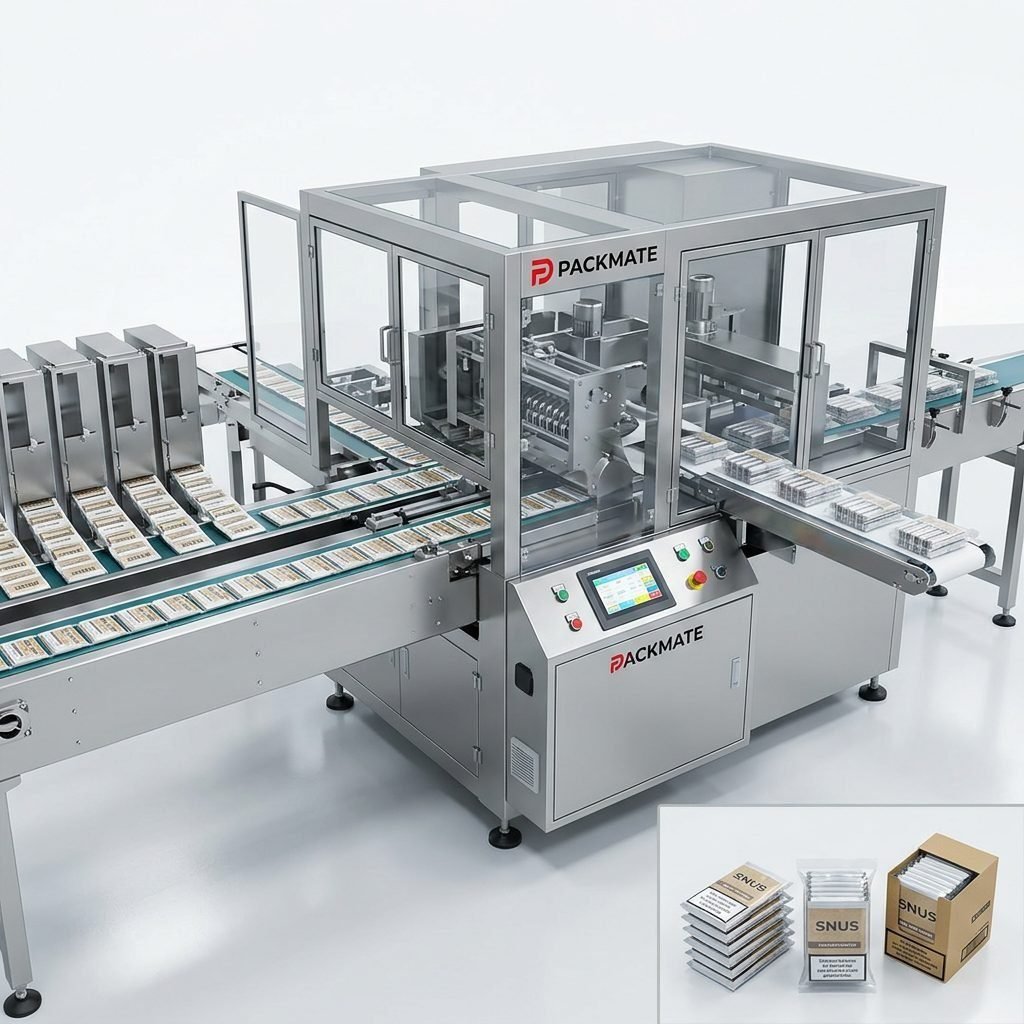
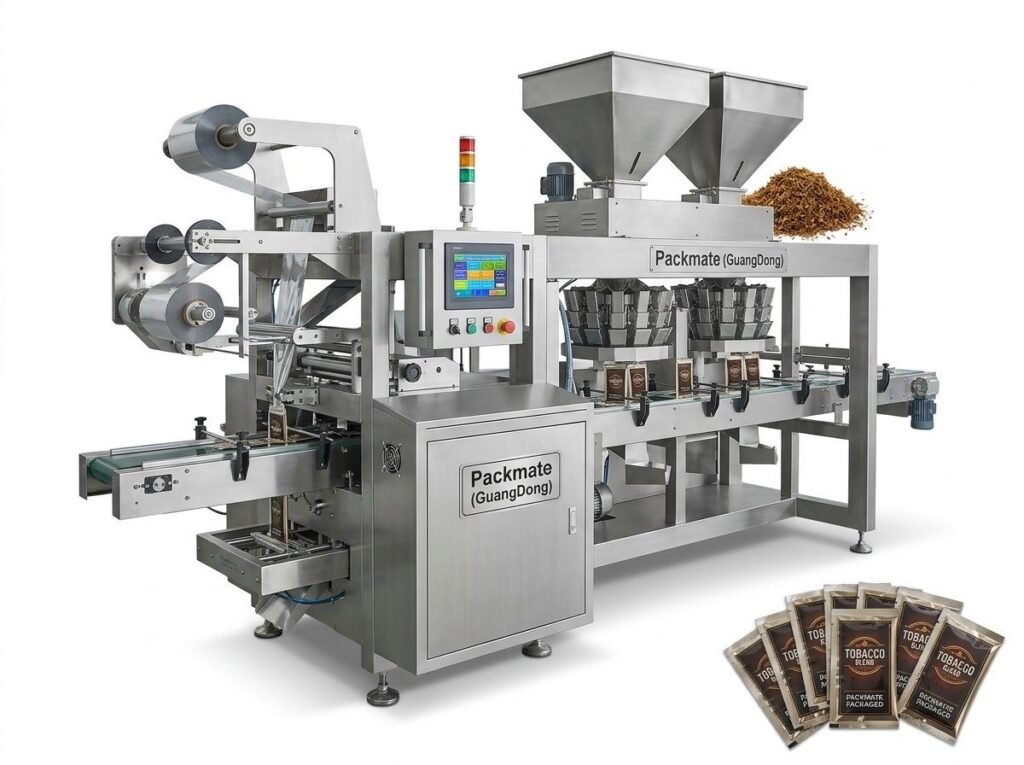
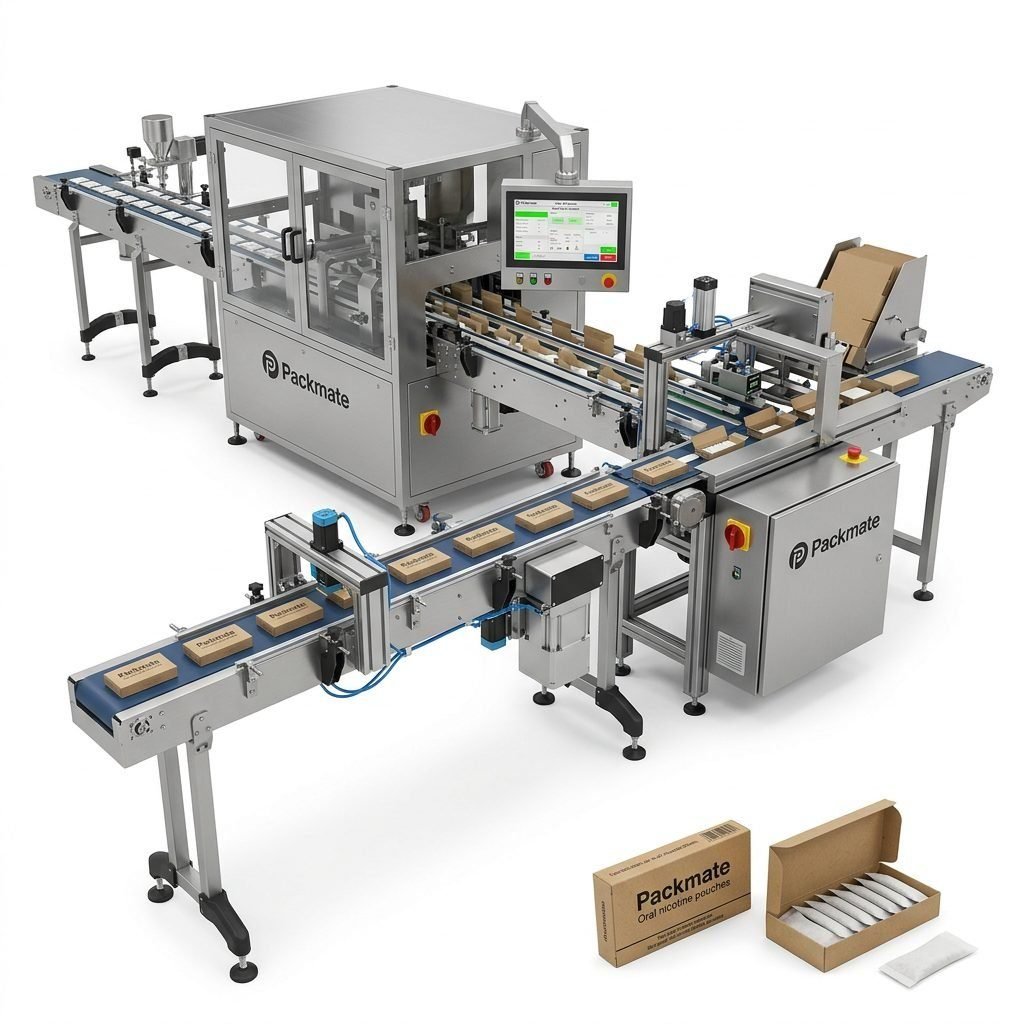
Snus, nicotine pouches, and similar small-dose products can be packaged using stick pack, sachet, multi-lane pouch lines, or specialized snus pouch machines. Your selection should reflect product format, target throughput, and future scalability.
Common machine families
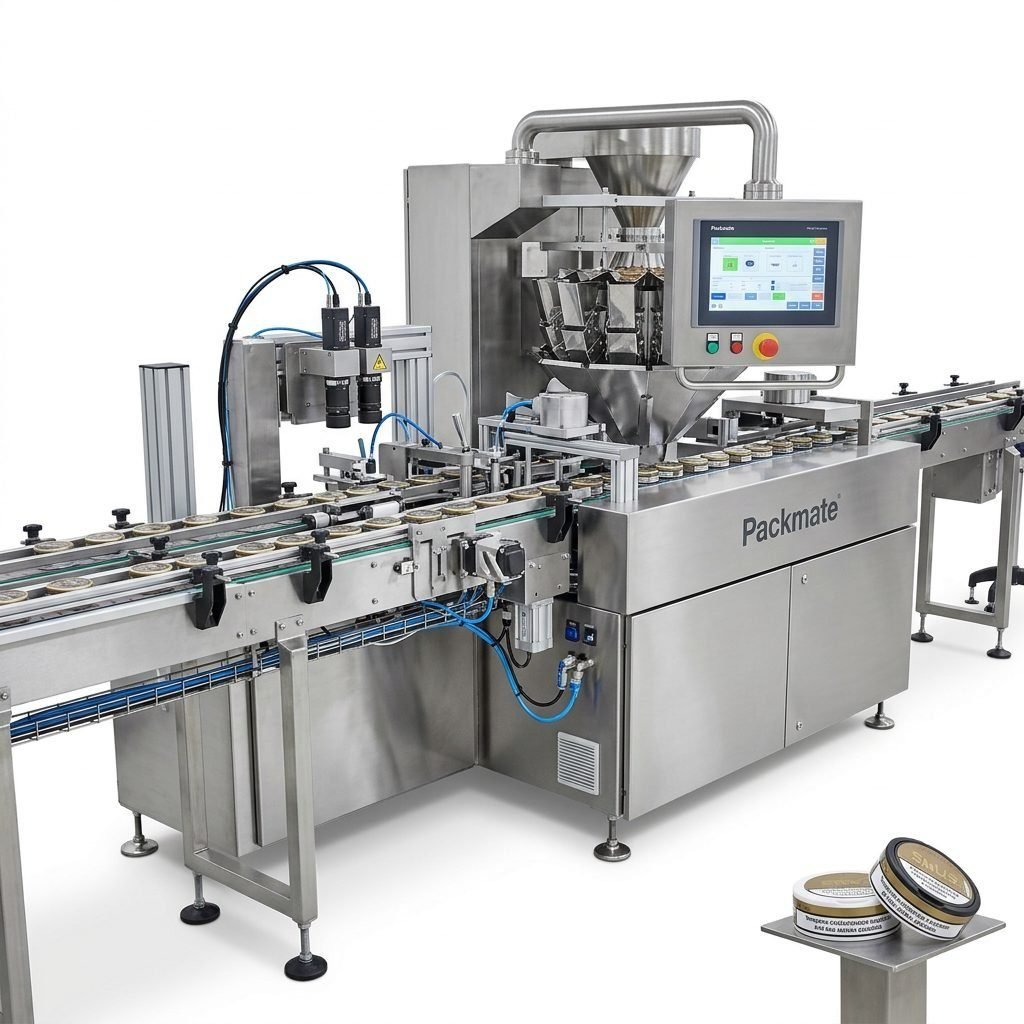
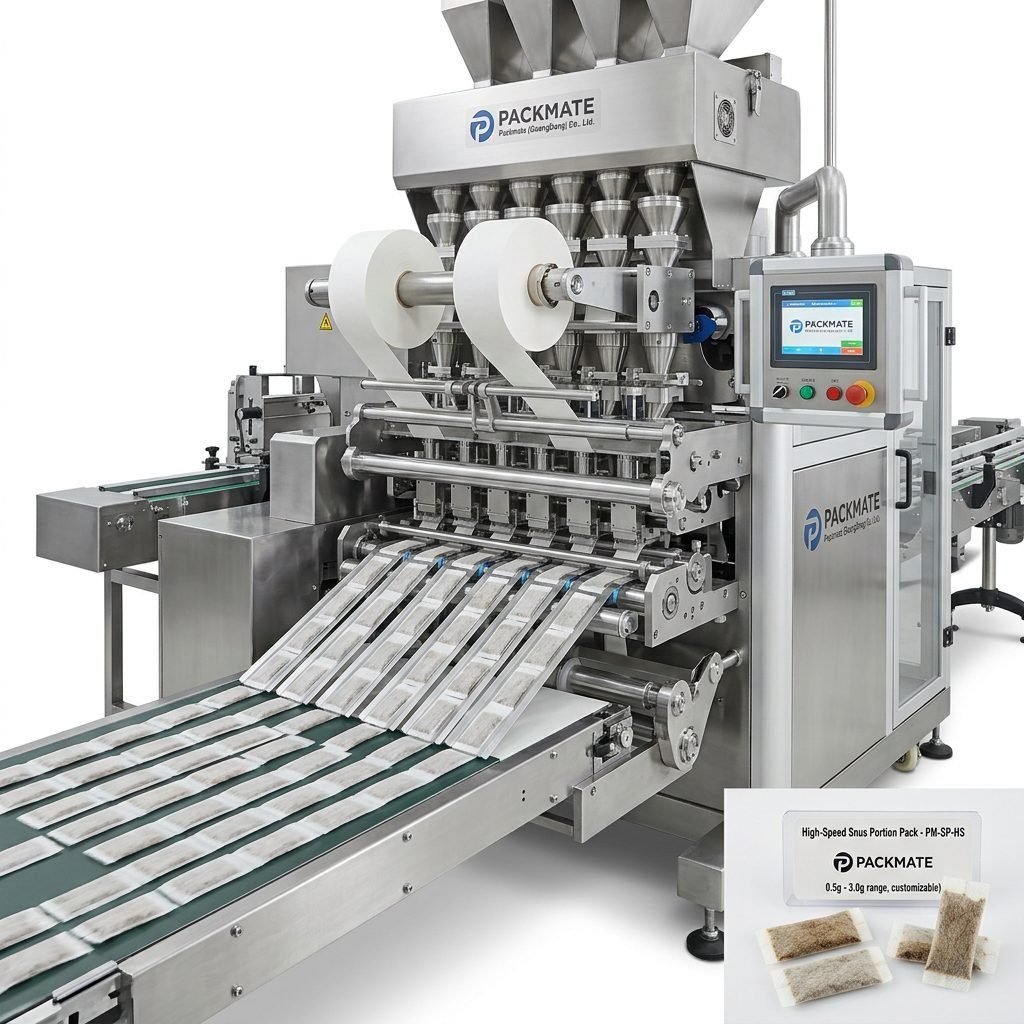
• Snus & Nicotine Packaging Machines — Dedicated snus systems optimized for pouch shape and dosing accuracy. (See supplier models Snus & Nicotine Packaging Machines.)
• Sachet & Stick Pack Machines — Flexible machines for stick or sachet formats; useful if you plan multiple SKUs. (Explore options: Sachet & Stick Pack Machines.)
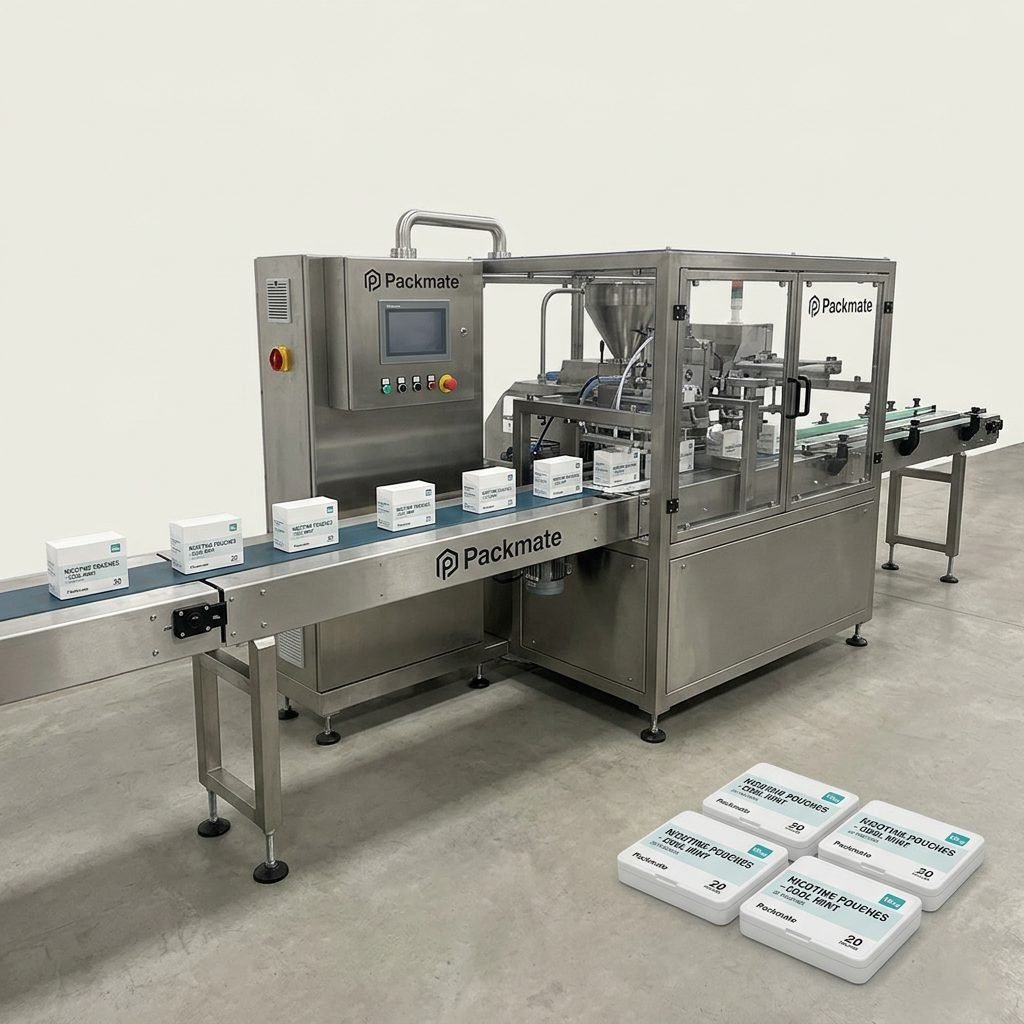
• Multi-lane pouch systems — High throughput solutions that scale by adding lanes; ideal for large production needs.
Tip: If you expect rapid SKU growth, prioritize flexible platforms that support tool-less changeovers and modular additions.
Documentation, Certification & Validation
Regulatory authorities and commercial partners will expect machine-related documentation. Ensure suppliers provide comprehensive paperwork and support for validation activities.
Essential documentation to request
🔧 CE Declaration of Conformity and machine manuals.
🔧 Material certificates for contact parts (e.g., stainless steel grades), surface finish details, and cleanability guidance.
🔧 Calibration certificates for weighing and dosing systems, and IQ/OQ/PQ support for installation and performance qualification.
🔧 Traceability and software source code or HMI backup options for audit trails.
Well-documented machines and supplier support reduce regulatory friction. For trusted suppliers and certificate examples view Certificate and company details at About Packmate.
Supplier Evaluation: What to Ask and Verify
Choosing the right manufacturer matters. Beyond price, evaluate a supplier’s engineering depth, after-sales service, and experience with snus or nicotine pouch lines.
Checklist for supplier due diligence:
• Years of experience in snus/nicotine packaging and references from EU projects.
• Factory tour or virtual inspection of machining centers and assembly lines (Packmate operates a 20,000㎡ facility with advanced CNC capabilities).
• Availability of spare parts, technical training, and remote support agreements.
Ask about real-world cases and exhibitions
See actual deployments and machine demos. Reputable suppliers publish case studies and participate in trade shows — a sign of transparency and ongoing industry engagement. Visit the supplier’s Case pages and Our Exhibition details to verify performance claims.
Operational Considerations for EU Production
Compliance extends beyond the machine: factory environment, personnel practices, and QC systems are integral to meeting TPD obligations.
Factory setup and hygiene
Maintain a controlled production area with clear cleaning SOPs. Machines should be accessible for cleaning, with minimal dead zones and easily removable contact parts for sterilization.
Choose materials and surface finishes that withstand routine disinfectants and avoid contamination risks.
Quality assurance and in-process controls
Implement continuous in-line checks: weight verification, seal integrity sensors, and automatic rejection of out-of-spec pouches reduce the number of non-conforming products reaching the market. A robust MES or QA system that logs batches and rejects supports rapid recall response if needed.
Cost vs. Compliance: Making the Right Investment
The cheapest machine is rarely the most cost-effective for regulated products. Consider total cost of ownership: downtime risk, spare part availability, training costs, and regulatory compliance expenses. Investing in a reputable manufacturer with 30+ years of engineering expertise often reduces hidden costs and speeds time-to-market.
Value indicators: modular design, proven multi-lane performance, extensive documentation, and an active spare parts network.
How Packmate Aligns with TPD-Ready Needs
Packmate Snus Machine offers a broad product range — from snus-specific machines to sachet & stick pack options and auxiliary equipment — built on decades of experience and a 20,000㎡ factory presence. Their models are designed for high-precision, multi-lane production and include documentation and service support that simplify EU market entry. Explore product families such as Snus & Nicotine Packaging Machines and Weighing & Packaging Systems to match your needs.
Service, training and spare parts
Verify on-site training offerings, remote diagnostics, and guaranteed spare part lead times. A manufacturer that provides installation qualification and performance validation will speed regulatory acceptance and minimize operational disruption.
Practical Steps to Buy a TPD-Ready Snus Machine
Use the following roadmap when you evaluate machines and suppliers:
1) Define product specs: format, target output, pouch weight tolerance, and shelf life expectations.
2) Prioritize features: dosing accuracy, hermetic sealing, serialization, and clean design.
3) Request documentation: CE, material certificates, calibration records, and IQ/OQ protocols.
4) Inspect factory: review machining centers and assembly workflows; confirm build quality and finishing.
5) Pilot runs: ask for live demos or sample runs with your product formulation to validate performance.
6) Negotiate service terms: commissioning, training, spare parts, and warranty resolution timelines.
Note: Always validate machine performance with your exact product mix. Small changes in moisture, particle size, or humidity can affect dosing and sealing.
Final thoughts before purchase
Selecting a snus machine for EU compliance is a long-term decision that impacts regulatory standing, brand reputation, and operational efficiency. Seek suppliers who not only deliver robust equipment but also back it up with comprehensive certification, service, and real-world case experience. For a full view of packaging options and turnkey solutions, consider supplier catalogs that include bag & pouch, auxiliary, and filling lines: Bag & Pouch Packaging Machines and Filling & Packaging Lines.
Common Questions
Q1: How do I confirm a machine is truly TPD-ready?
A: Request machine-level documentation (CE, material certificates, calibration logs), observe pilot runs with your product, and verify the supplier provides IQ/OQ/PQ support and serialization options.
Q2: What is the minimum feature set for regulatory compliance?
A: At minimum, precise dosing with calibration, reliable sealing, batch/date coding, and cleanable contact surfaces. Additional features like automatic weight checks and automated rejection improve compliance.
Q3: Should I choose a dedicated snus machine or a flexible stick/sachet platform?
A: If your product portfolio is focused on snus/nicotine pouches, a dedicated machine may optimize yield and efficiency. If you expect frequent SKU changes, a flexible platform (stick/sachet capable) may be more cost-effective.
Q4: How important is supplier location and local support?
A: Very important. Fast spare parts delivery and timely service reduce downtime. Confirm local support options or guaranteed remote diagnostics and parts shipments.
Q5: Where can I see machine examples and case studies?
A: Visit supplier case sections and exhibition pages to view demo videos and references. For Packmate, review Case and Our Exhibition.