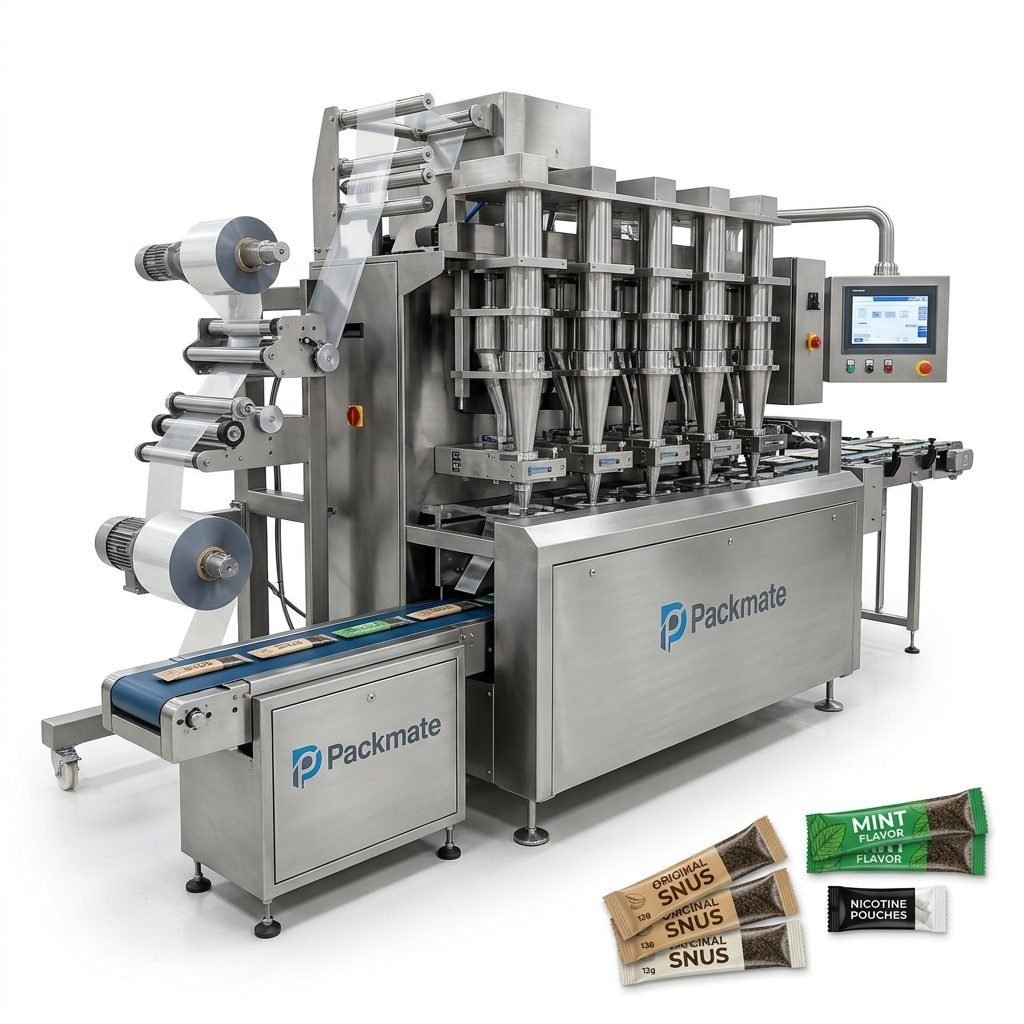
Choosing the right nicotine packaging machine for your production in Kyrgyzstan requires a careful balance of technical fit, local regulations, cost-effectiveness, and long-term service. This guide walks you through the practical steps to evaluate machines, compare vendors, and select a solution that keeps uptime high, waste low, and compliance intact.
Understanding Your Production Needs
Start by defining your core production metrics: daily output (units/day), pouch formats (portion, loose, stick, sachet), target speeds (pouches/minute), and the types of fillings (powder, granule, moisture-sensitive nicotine pouches). These parameters determine whether you need a single-lane servo-driven unit or a high-throughput multi-lane line.
⚠️ Key measurement: expected daily production is the most important number — it drives machine class, lane count, and automation level.
Machine Types: Pick the Right Format
Different nicotine products require different packaging platforms. Familiarize yourself with common machine families and their best-use scenarios.
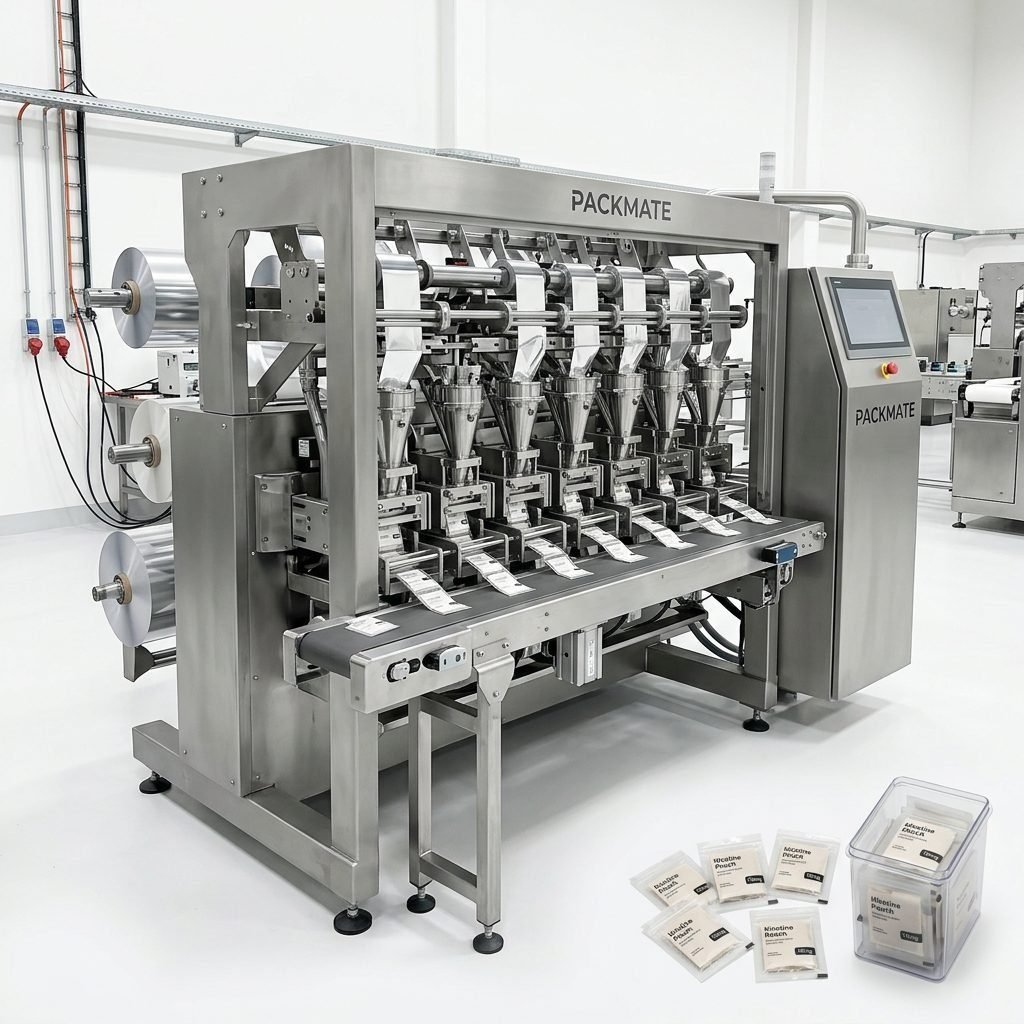
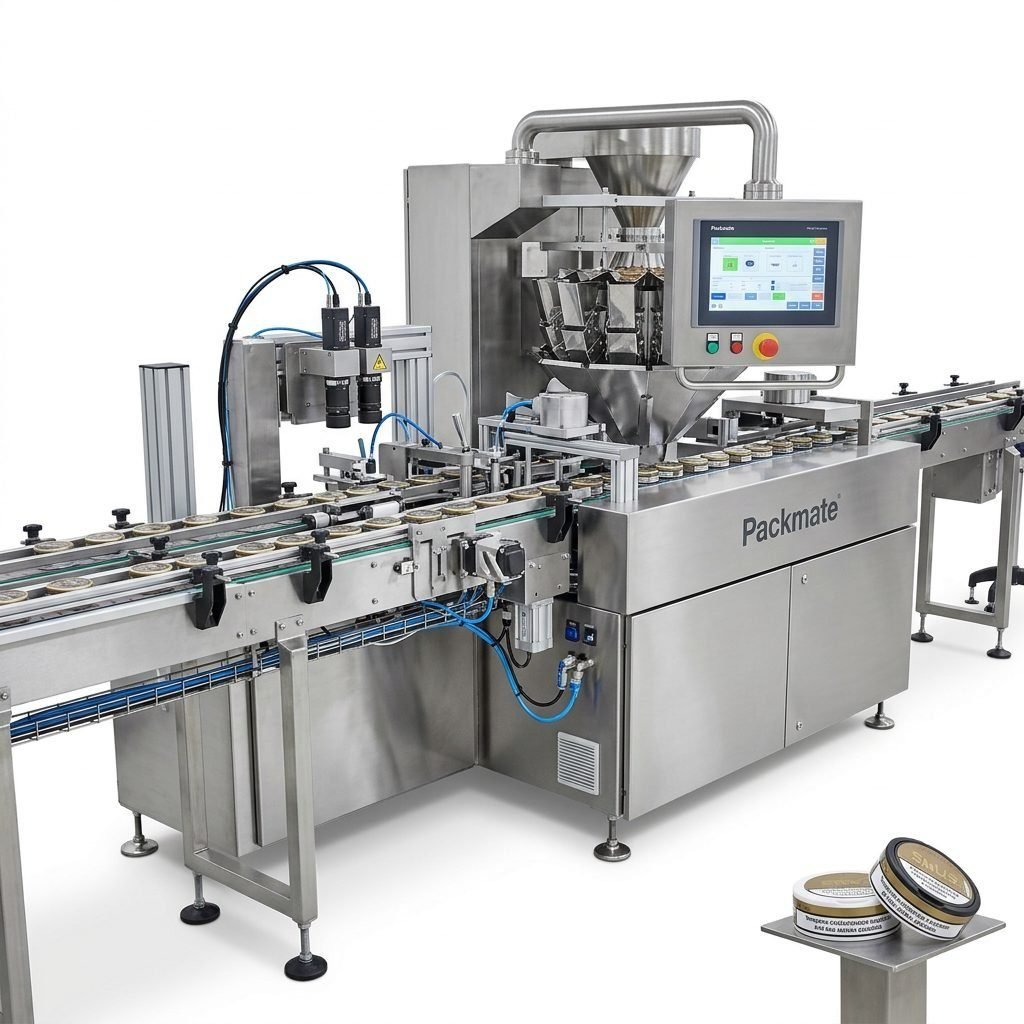
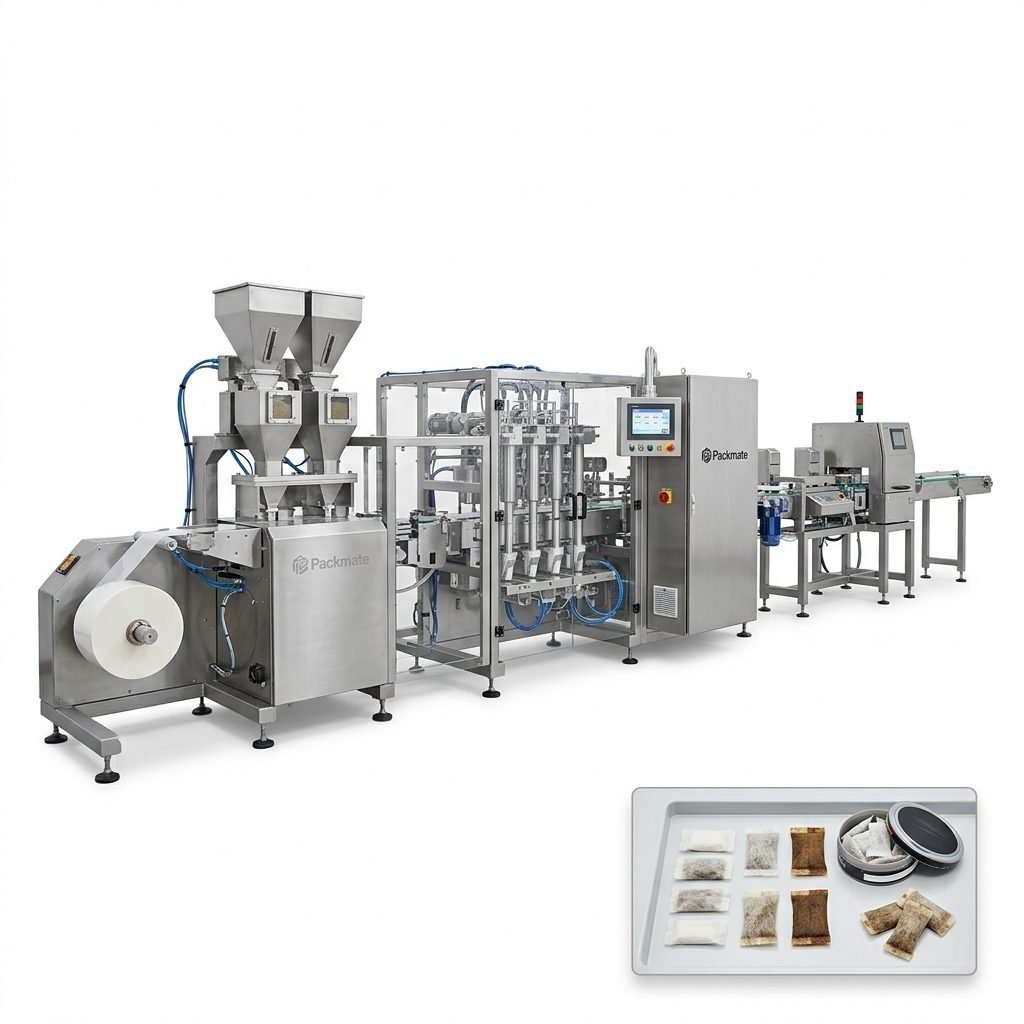
• Snus & Nicotine Pouch Machines: Optimized for small-dose pouches with precision dosing, gentle handling, and high hygiene standards — ideal for premium portion products. (See product details: Snus & Nicotine Packaging Machines)
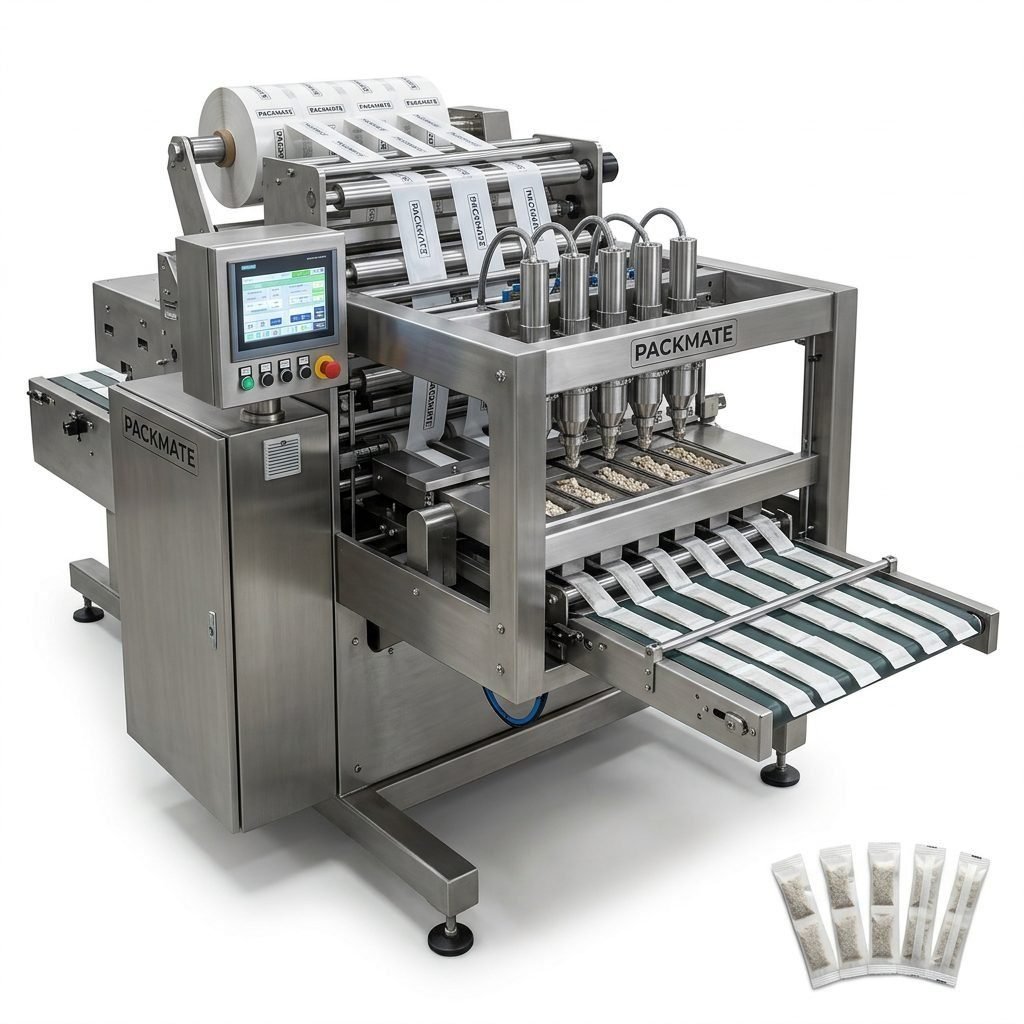
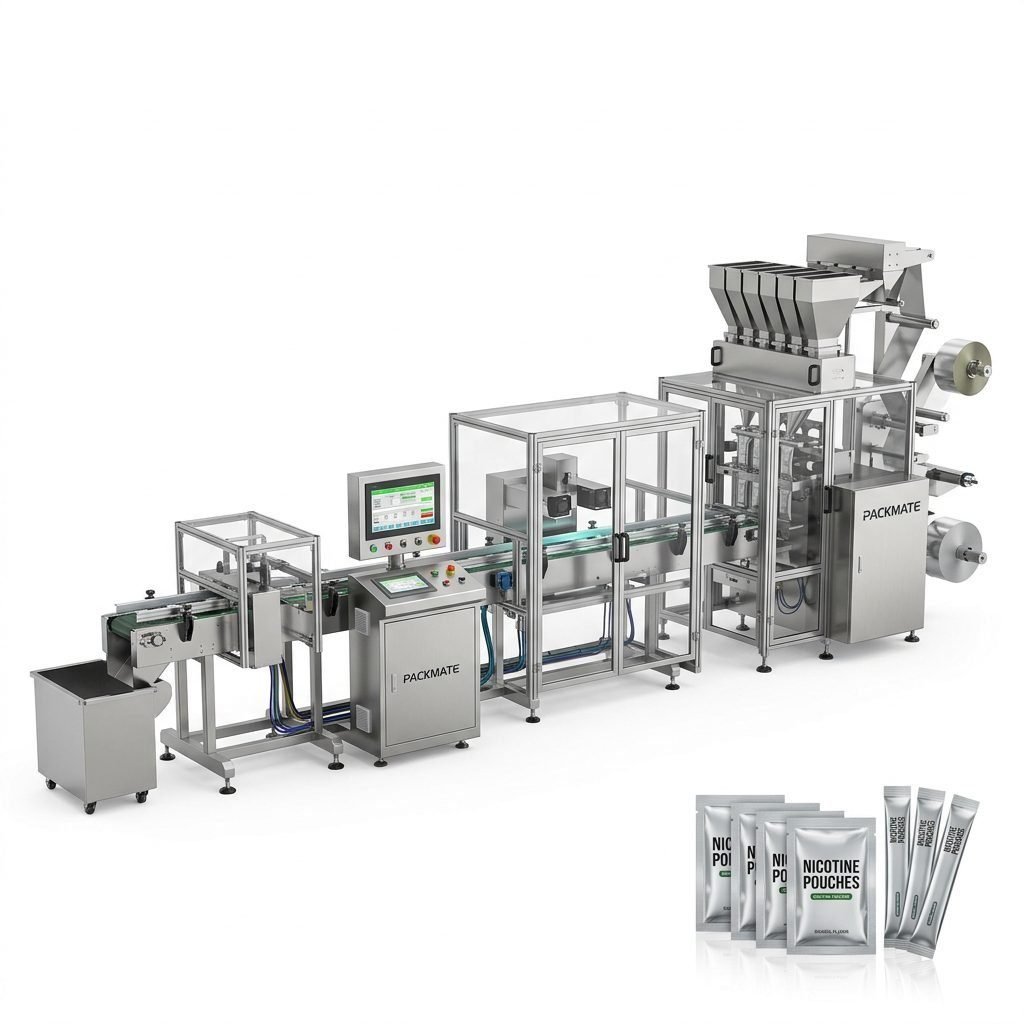
• Stick Pack & Sachet Machines: Good for single-serve stick formats and tear-open sachets, often used for flavored nicotine or complimentary items. (Sachet & Stick Pack Machines)
• Bag & Pouch Systems: For secondary packaging, reclosable pouches, and family packs; pairing primary snus lines with pouch packers improves shelf presentation. (Bag & Pouch Packaging Machines)
When to choose multi-lane systems
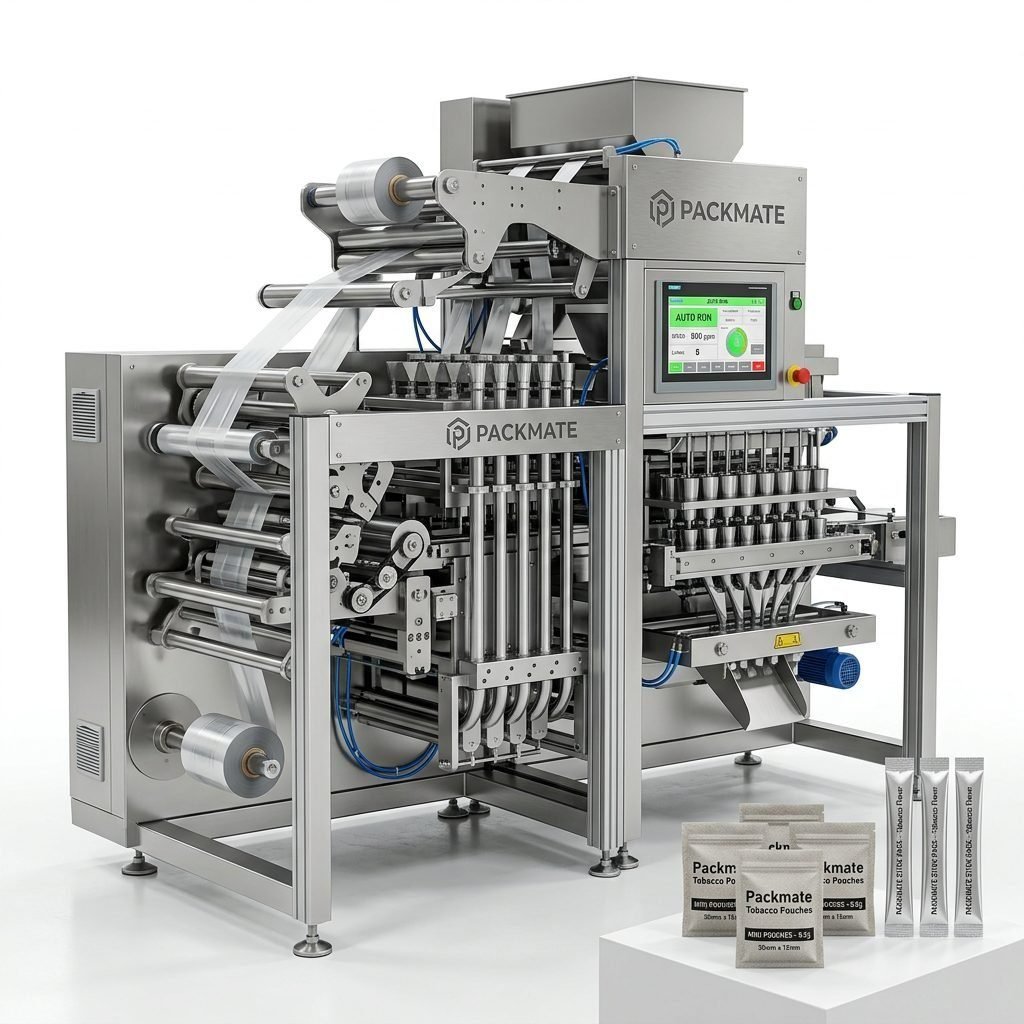
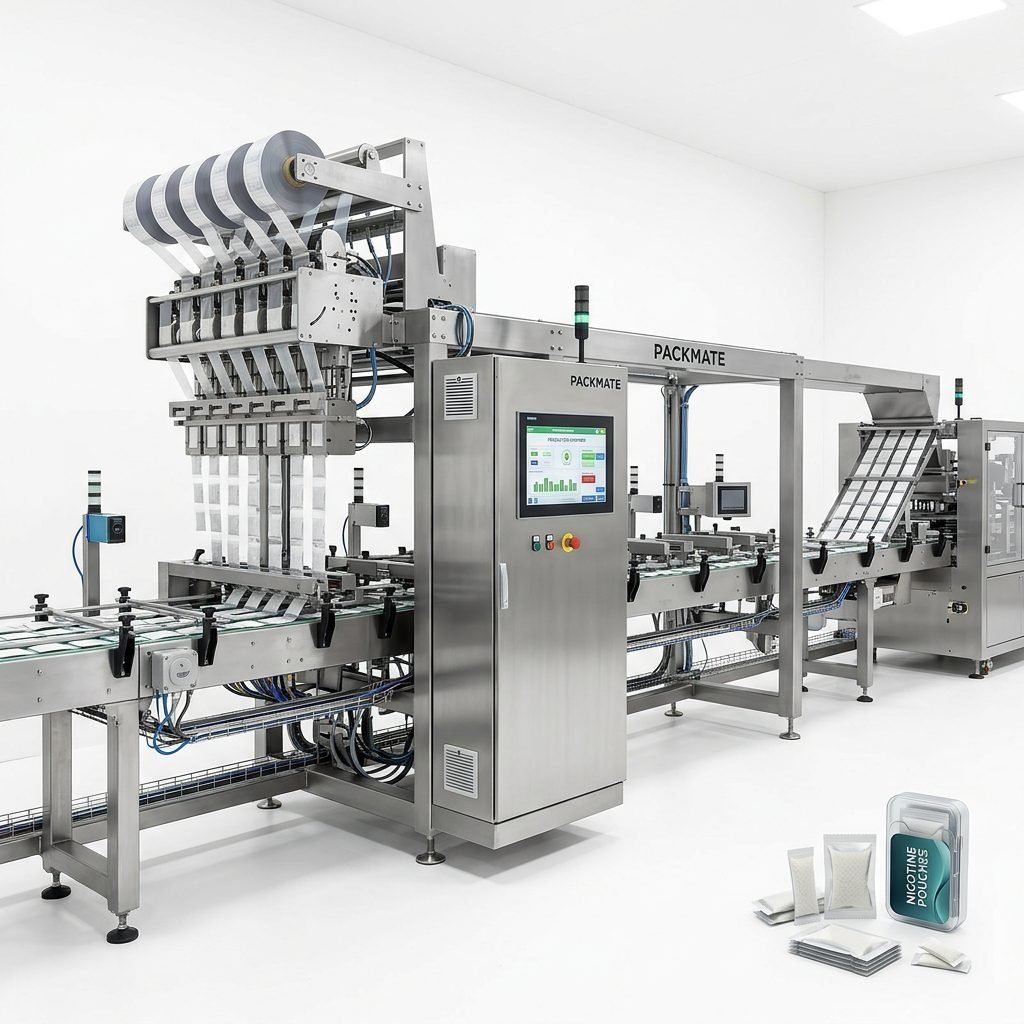
If your target volumes are high and you need to keep footprint small, multi-lane snus lines deliver high output by running several lanes in parallel. These systems require advanced synchronization and robust feeding mechanisms.
✅ Pro tip: For small-dose nicotine pouches, choose a manufacturer with proven multi-lane experience and CNC precision — it reduces pouch weight variance and rejects.
Evaluate Performance Metrics
When comparing models, look beyond maximum speed. Focus on real-world metrics that affect yield and cost:
• Changeover time — how long to switch sizes or recipes; shorter changeovers mean more flexibility for small-batch runs.
• Yield & rejection rate — measured as percentage of acceptable pouches; ask for performance data from machines running similar materials.
• OEE influences — uptime, speed, and quality combine to form overall equipment effectiveness; request documented OEE figures or references.
Material Compatibility & Feeding Systems
Nicotine pouches often contain hygroscopic powders and delicate substrates. Check that the machine supports:
• Precise dosing solutions for low-weight portions (milligram-level accuracy).
• Gentle transfer systems to preserve pouch shape and avoid tearing.
• In-line climate control or nitrogen flushing if your formulation requires moisture or oxygen control.
🔬 Technical check: Validate the dosing head tolerance and feeder compatibility with your exact powder/granule characteristics before ordering.
Automation, Integration & Auxiliary Equipment
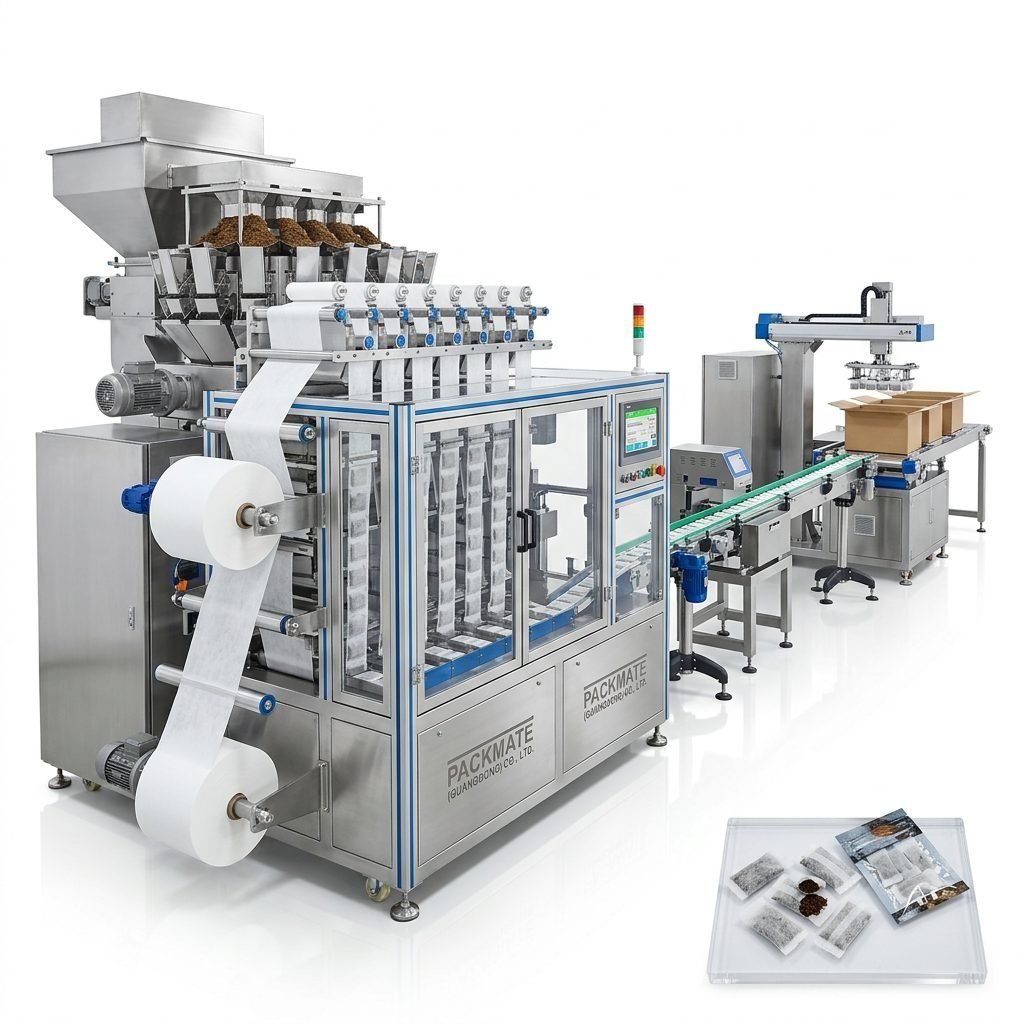
High-efficiency production requires more than a single wrapper — consider integrated systems for weighing, inspection, and secondary packaging. Suppliers often provide turnkey lines that combine primary pouchers with weighing, case packing, and labeling.
Explore complementary systems such as weighing & packaging systems and auxiliary packaging equipment to create a controlled, automated flow that reduces manual handling and contamination risk.
Local Considerations for Kyrgyzstan
Operating in Kyrgyzstan presents specific logistical and regulatory factors to keep in mind:
• Import duties & shipping: Heavy machinery shipping routes and customs clearance can add weeks — partner with a vendor experienced in cross-border logistics.
• Local service availability: Confirm spare parts stock, on-site commissioning, and remote support capability to minimize downtime.
• Regulatory compliance: Ensure the machine and production process can meet Kyrgyzstan’s import and product labeling rules for nicotine products.
Supplier Credibility & Factory Strength
Choosing a reputable supplier reduces risk. Look for manufacturers with long-term engineering experience, certified manufacturing facilities, and proven global installations. Suppliers who publish factory capacity, certifications, and case studies demonstrate transparency.
Example: Packmate Snus Machine highlights 30+ years of engineering, a 20,000㎡ factory with CNC centers, and international certifications — criteria that often correlate with stable supply and quality. Learn more: About Packmate
What to verify on-site or by reference
Ask for factory tours (virtual or in-person), references from customers running similar products, and machine performance logs. Verified case studies and exhibition demos add confidence. (Case examples | Exhibitions)
After-Sales Support & Training
Strong after-sales service is critical — especially when your factory is far from the manufacturer’s base. Confirm the following:
• Commissioning scope — is on-site setup and trial production included?
• Training program — operator and maintenance training should be delivered during commissioning.
• Spare parts & service contracts — lead times for critical spares and options for preventive maintenance contracts.
Budgeting and Return on Investment
Establish a total cost of ownership (TCO) rather than just comparing purchase prices. TCO includes purchase price, installation, spare parts, energy consumption, operator wages during manual tasks, and expected downtime costs. High-efficiency machines with lower reject rates often provide faster ROI even if the initial price is higher.
💡 Financial tip: Model a 3-year ROI scenario using realistic uptime assumptions (not just ideal factory floor speeds).
Ordering Checklist — Ask Before You Buy
Before signing a purchase order, ensure you have answers to these critical questions:
1. What is the guaranteed daily throughput and acceptable rejection rate under my product specifications?
2. What are lead times for manufacturing and shipping to Kyrgyzstan, and who manages customs clearance?
3. What is included in commissioning and training, and are spare parts kits provided with the machine?
4. Are CE/ISO certificates available and applicable to my export/import documentation? (See company certificates: Certificate)
Practical Tips for Kyrgyz Production Lines
– Start with pilot runs to validate formulations and packaging films before committing to full-scale multi-lane configuration.
– Prioritize modularity: machines with modular attachments simplify future upgrades.
– Negotiate spare parts delivery times and consider stocking critical items locally to avoid long downtimes.
– Confirm local power compatibility and environmental controls for machine electronics.
🔧 Long-term advice: A reliable supplier provides clear documentation, remote troubleshooting tools, and optional service contracts — these save money and headaches over the machine lifetime.
Where to See Machines in Action
If you want live demonstrations and to assess real performance, visit manufacturer exhibitions or request video demos from lines producing similar products. Packmate often demonstrates full lines at international shows (see Our Exhibition).
Next Steps: How to Proceed
1) Compile your product specs and target throughput.
2) Request line proposals from 2–3 experienced suppliers including layout, OEE expectations, and full TCO.
3) Arrange a virtual or in-person factory visit and ask for references running similar nicotine pouch formats.
4) Negotiate warranty, spare parts, and training terms before finalizing the contract. You can contact Packmate for tailored solutions and turnkey packaging lines: Contact Us
Relevant product categories to review
Explore the supplier’s portfolio to ensure they cover your whole line: Filling & Packaging Lines, primary pouch machines, and secondary packaging machines.
📌 Quick checklist before purchase: production specs, verification samples, spare parts list, commissioning plan, training schedule, export paperwork, and warranty terms.
Frequently Asked Questions (FAQs)
Q1: What capacity should I choose for initial production in Kyrgyzstan?
A1: Choose a capacity that covers forecasted demand plus 20–30% headroom. If you plan product expansion, modular multi-lane systems help scale without full replacement.
Q2: How important are certifications like CE and ISO when buying a snus packing machine?
A2: Very important — certifications indicate compliance with international safety and quality standards and ease customs clearance. Always request copies of certificates and confirm they apply to the delivered model.
Q3: Can I expect full spare parts support in Kyrgyzstan?
A3: Some vendors maintain regional stock or fast international shipping. Negotiate spare parts kits to be included with the first shipment and a service SLA for critical components.
Q4: Is remote support reliable for commissioning and troubleshooting?
A4: Yes — many experienced suppliers provide remote commissioning assistance, PLC access, and video-guided troubleshooting. However, initial on-site commissioning by trained engineers is recommended for complex multi-lane lines.
Q5: How do I validate machine performance before purchase?
A5: Request live demos with the same product specification, obtain performance logs, and visit customer installations when possible. Contract performance guarantees in writing.
Choosing the best nicotine packaging machine for Kyrgyzstan means balancing technical fit, regulatory requirements, supplier reliability, and total cost of ownership. By using the checklist above, verifying references, and prioritizing modular, serviceable solutions, you can secure a line that meets production goals and grows with your business.