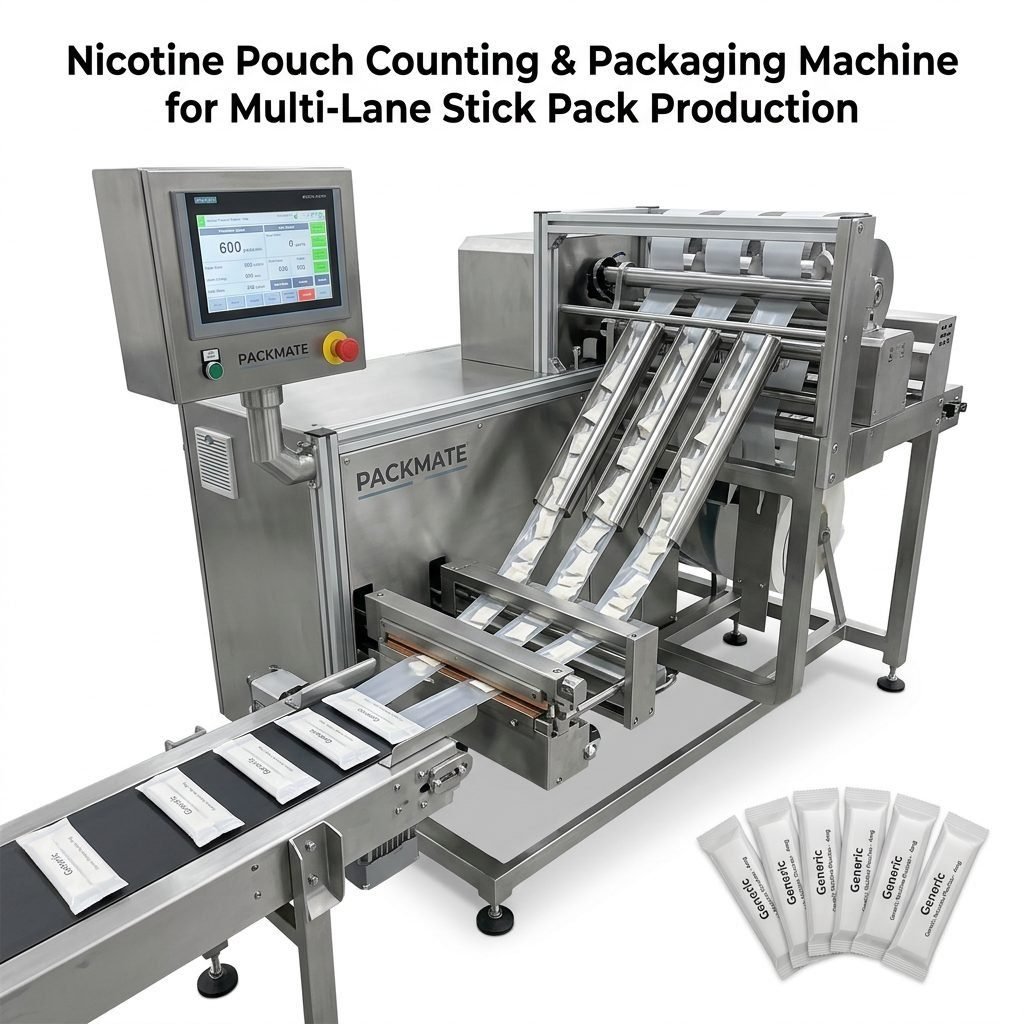
In the competitive world of modern snus and nicotine pouch production, choosing the right equipment is critical to achieving consistent quality, regulatory compliance, and efficient throughput. This guide walks you through the complete landscape of snus production factory equipment — from single machines to integrated production lines and packaging systems — helping manufacturers, contract packers, and brand owners make informed decisions.
Overview of Snus Production Equipment
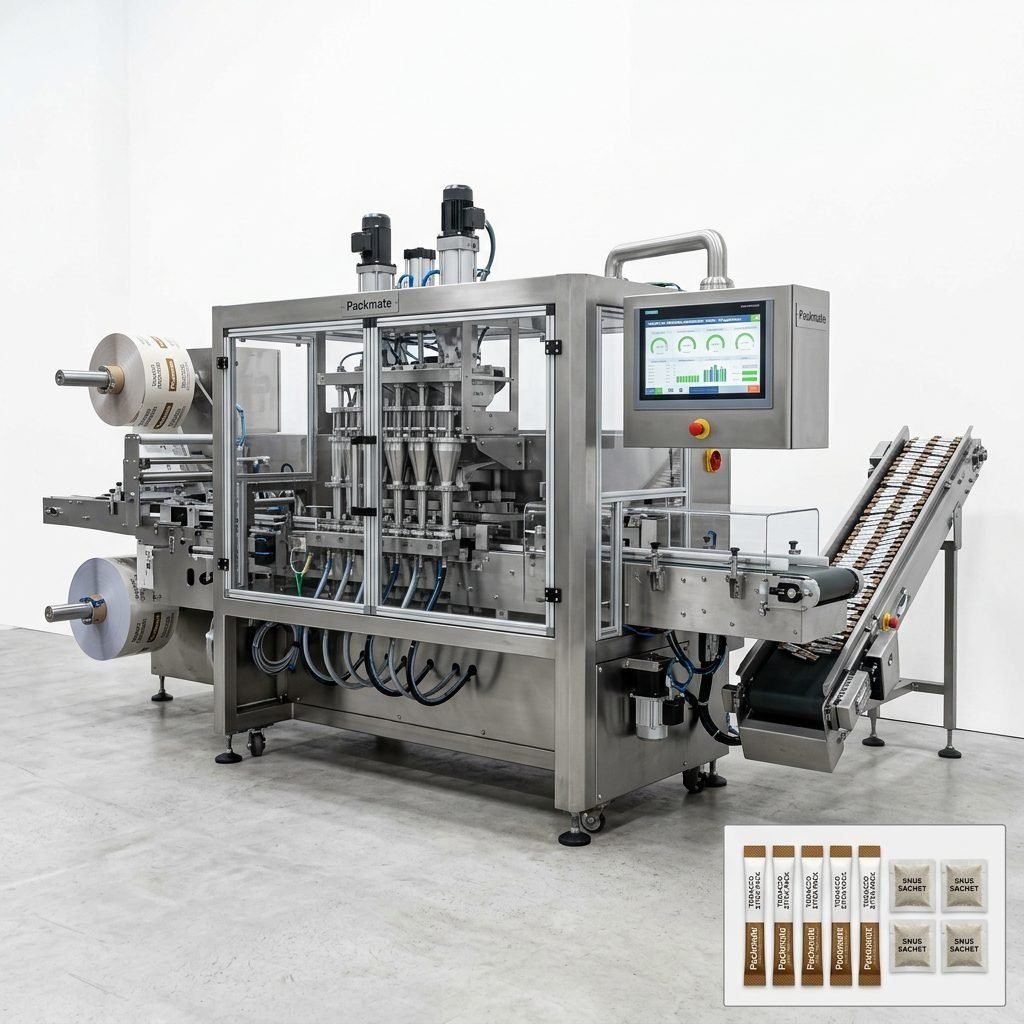
Snus production typically requires a coordinated set of machines for dosing, pouch forming, filling, sealing, labeling and secondary packaging. Modern factories rely on modular, automated solutions to handle small-dose nicotine pouches, sachets, stick packs, and cartons. Key equipment categories include:
✓ Filling & Portioning: Precision dosing units for powders, granules or moist blends to ensure consistent weight and nicotine levels.
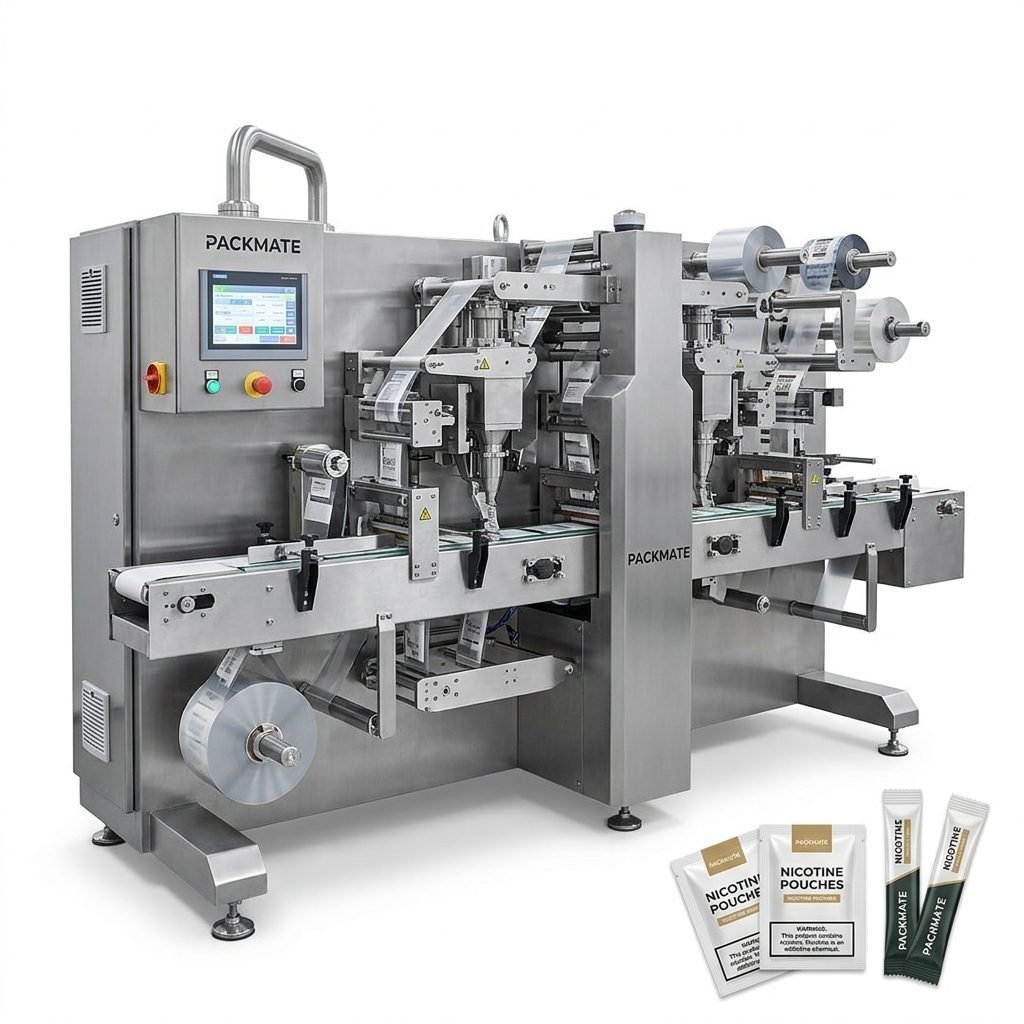
✓ Pouch/Forming Machines: Machines that form sachets, stick packs or multi-lane pouches for nicotine products.
✓ Sealing & Cutting: High-speed heat-seal or ultrasonic sealers designed for hygienic, tamper-evident closures.
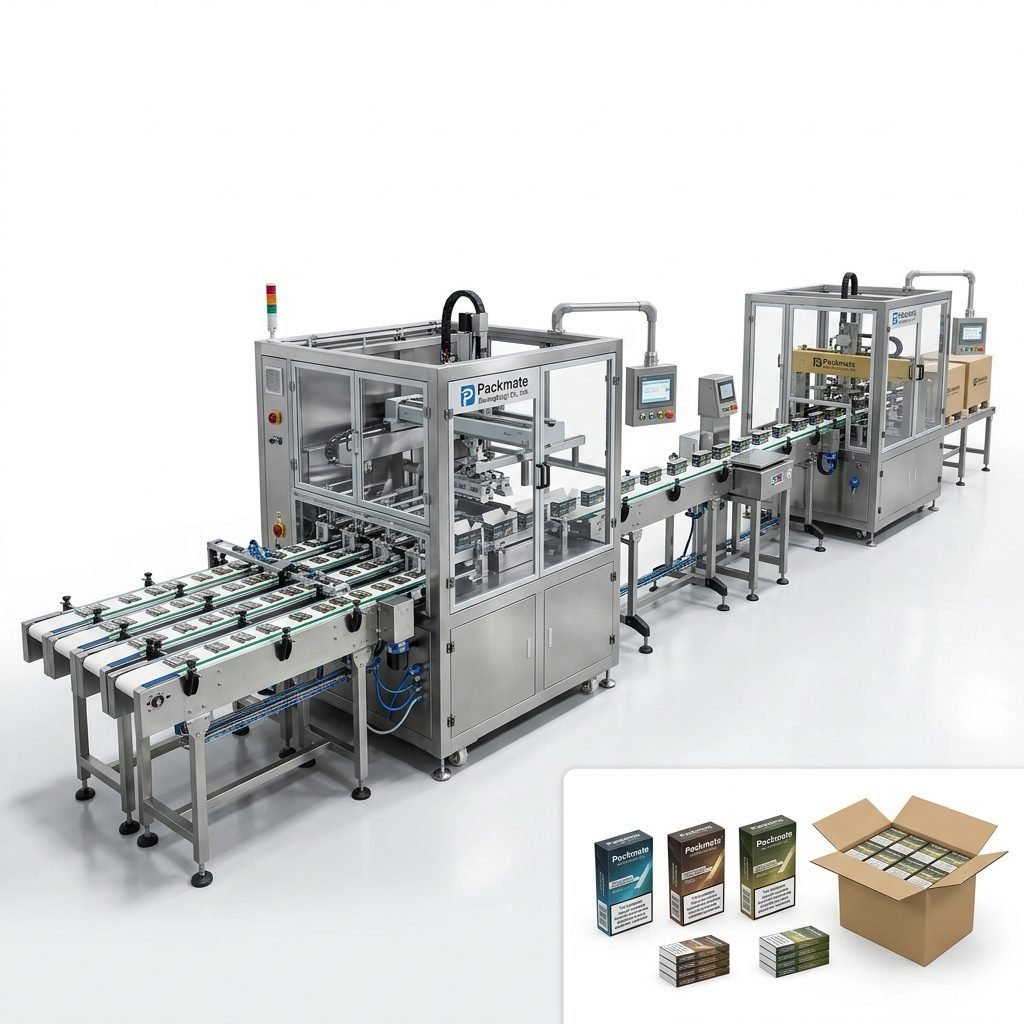
✓ Secondary Packaging: Cartoning, case packing and shrink-wrapping systems for retail-ready presentation.
Key Machine Types Explained
Understanding each machine type helps you design a production layout that meets capacity and quality targets.
Stick Pack Machines
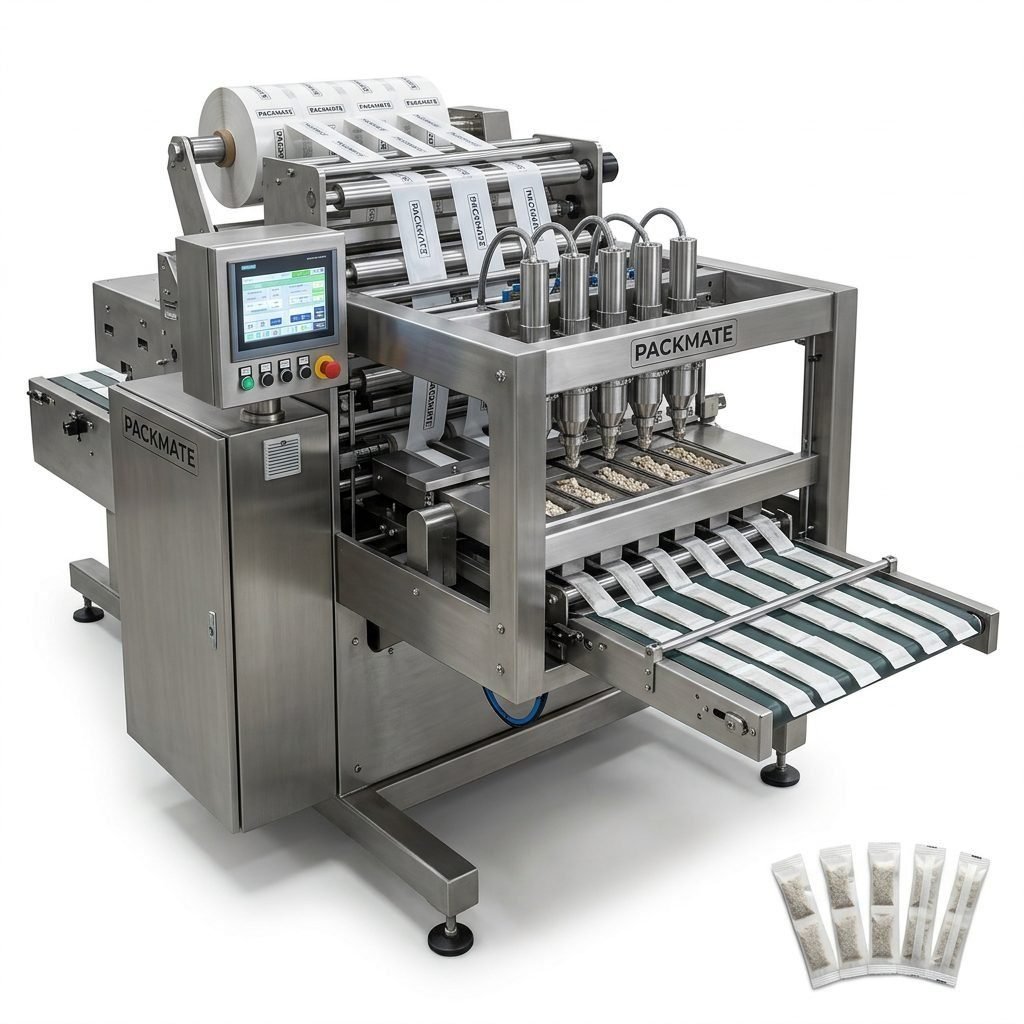
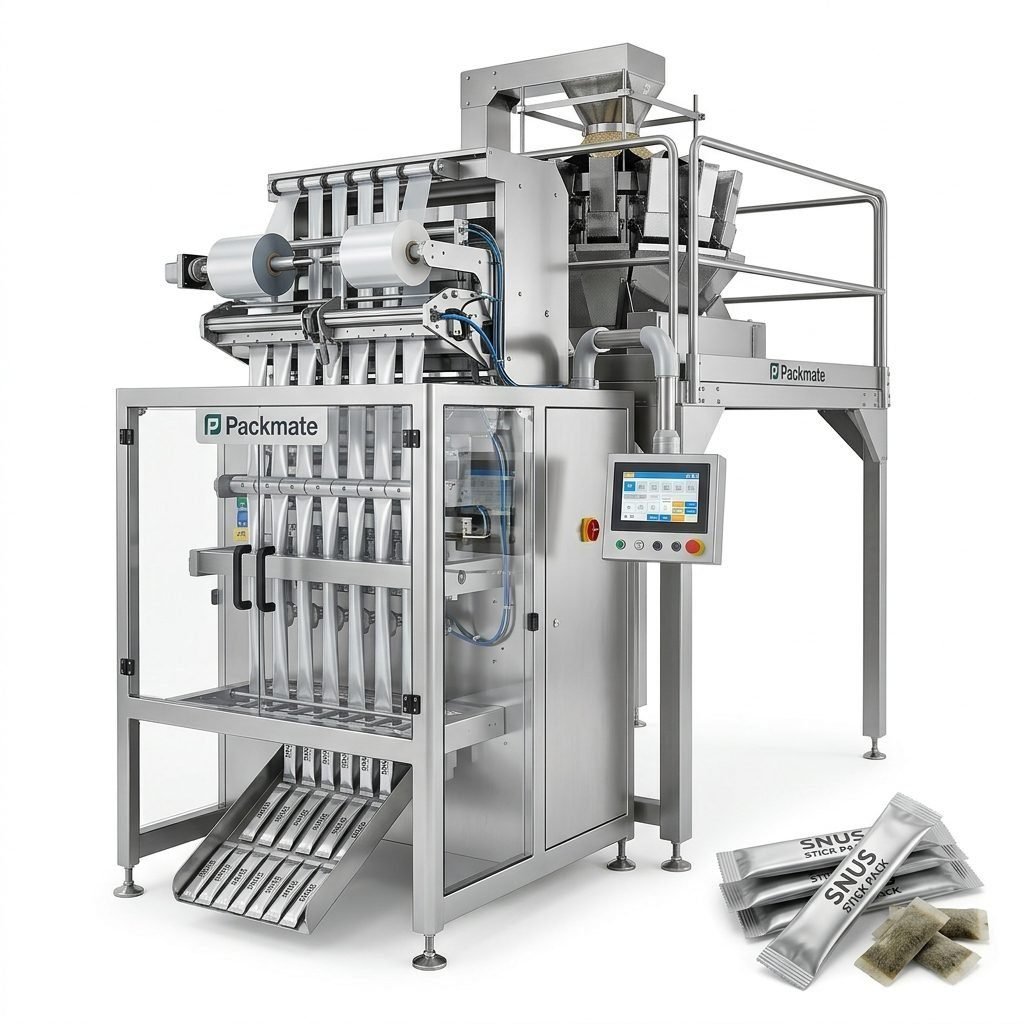
Stick pack machines are ideal for single-dose applications and offer very high speeds for horizontal or vertical formats. For snus brands focusing on individual sachets, stick pack lines deliver excellent portion control and minimal product waste.
Sachet & Multi-Lane Pouch Systems
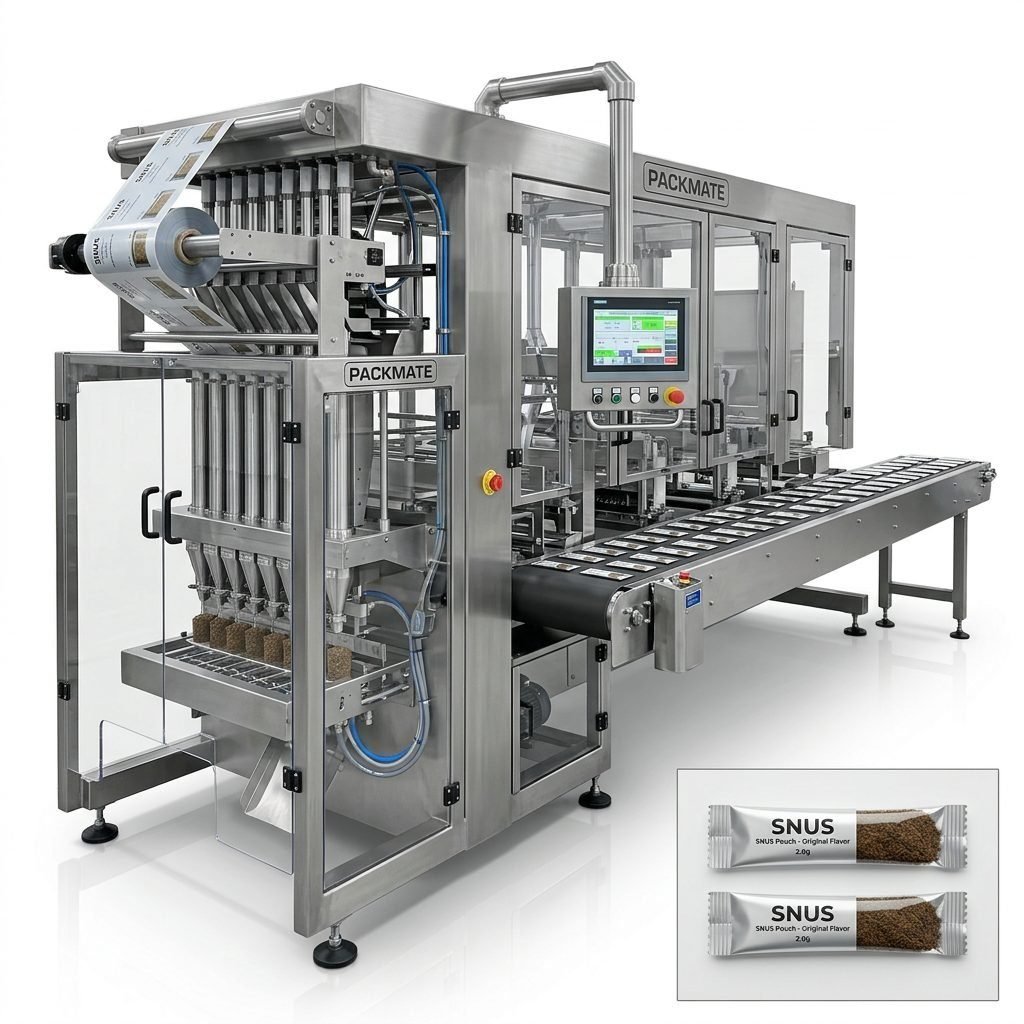
Multi-lane sachet systems allow several parallel lanes of pouches to be formed and filled simultaneously — a popular approach to scale production while keeping machine footprint compact. These systems are especially useful for nicotine pouches where consistent small-dose filling is required.
For details on specialized equipment, see Snus & Nicotine Packaging Machines.
Weighing & Dosing Systems
Accurate weighing systems (multi-head weighers, loss-in-weight feeders) are often coupled with pouch machines to ensure each portion meets strict weight tolerance. Reliability here reduces waste and ensures compliance with labeling claims.
Designing a Production Line: From Raw Materials to Ready Packs
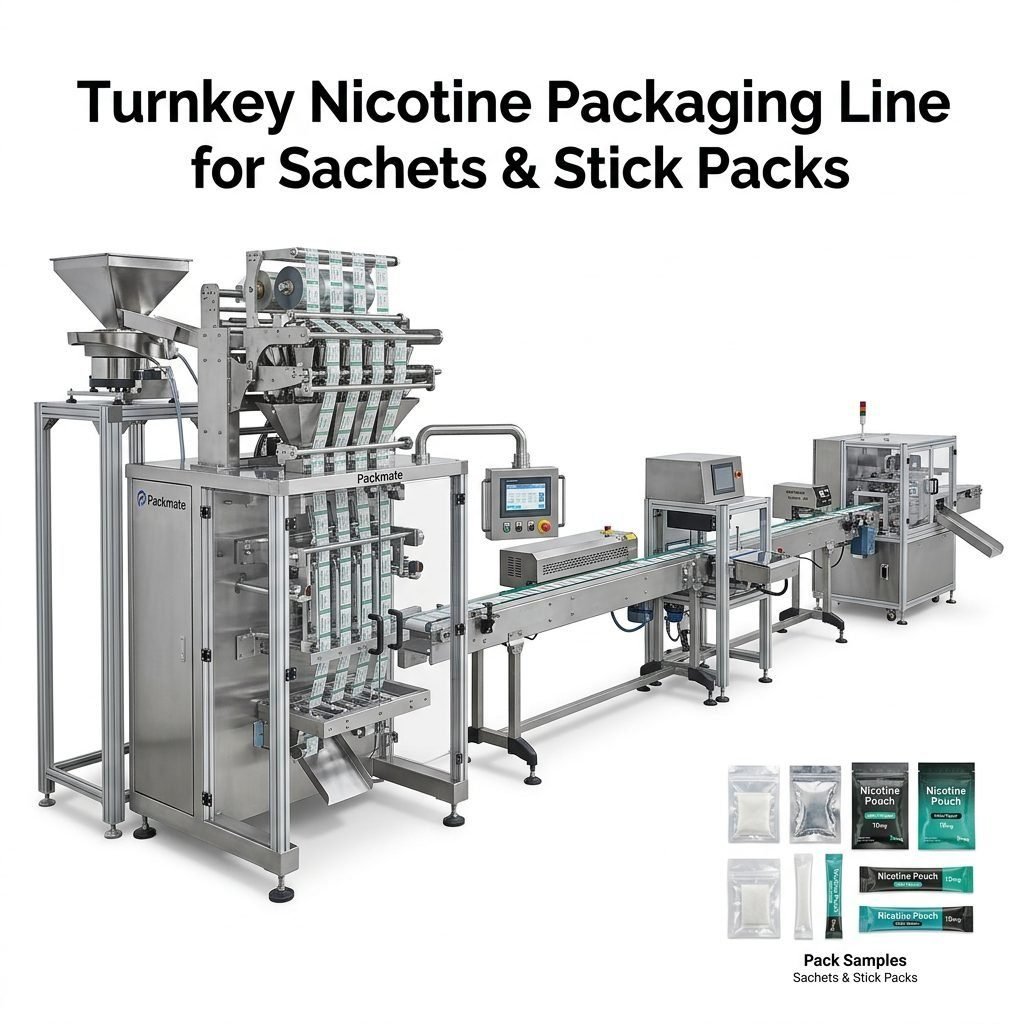
A full production line integrates upstream material handling, dosing, pouch forming, sealing, quality inspection and downstream packaging. The right layout optimizes space, improves hygienic flow and minimizes cross-contamination risks.
📌 Upstream: Bulk handling, precision feeders, and conditioning units to stabilize humidity and texture.
📌 Midline: Pouch forming, filling, sealing and inline metal detection/inspection systems for safety and quality assurance.
📌 Downstream: Date-coding, labeling, cartoning, batch tracking and case packing for logistics and retail.
Automation & Control
Advanced PLC and HMI systems provide recipe management, fault diagnostics and remote access. High-end snus lines include servo-driven motions for precise pouch indexing and minimal mechanical wear, resulting in fewer stoppages and simpler maintenance.
Selecting Equipment: Practical Criteria
When evaluating suppliers and machines, consider these practical factors to match your production goals:
⚙️ Throughput Requirements: Calculate daily unit targets and include OEE projections to determine machine speeds and number of lanes.
🏭 Factory Footprint: Multi-lane machines save footprint but increase complexity. Match equipment to available floor space.
🛡️ Hygiene & Materials: Stainless steel, easy-to-clean designs and sanitary components are critical for nicotine and food-adjacent products.
🔧 Service & Spare Parts: Factory support, spare parts availability and training reduce downtime — choose suppliers with demonstrated global service networks.
Customization & Turnkey Solutions
Many manufacturers require custom solutions to meet specific product formats, artwork, or regulatory demands. Turnkey suppliers will provide layout design, utilities planning, FAT/SAT testing and commissioning. For a portfolio and factory capacity overview, visit About Packmate.
Quality, Compliance & Certifications
Equipment must meet international standards including CE and ISO. Additionally, manufacturers should support documentation for validation, traceability and hygienic design. Inline inspection options include metal detectors, check weighers and vision systems to verify sealing, fill level and coding.
🔍 Testing & Certification: Ensure vendor provides CE/ISO support and assists with local regulatory documentation.
✅ Factory Acceptance Testing (FAT): Insist on FAT to confirm performance before shipment.
Factory Capabilities: Why Equipment Source Matters
A supplier’s manufacturing strength — machining centers, assembly lines and quality control — impacts delivery time and equipment reliability. Packmate’s 20,000㎡ facility with advanced CNC machining and precision assembly lines supports bespoke snus lines and quick ramp-up for large orders. Explore case studies at Case.
Service & Global Support
Global customers benefit when suppliers provide training, spare parts kits, online diagnostics and timely field service. When selecting a partner, verify the reach of their service network and availability of consumables.
Packaging Systems & Secondary Processes
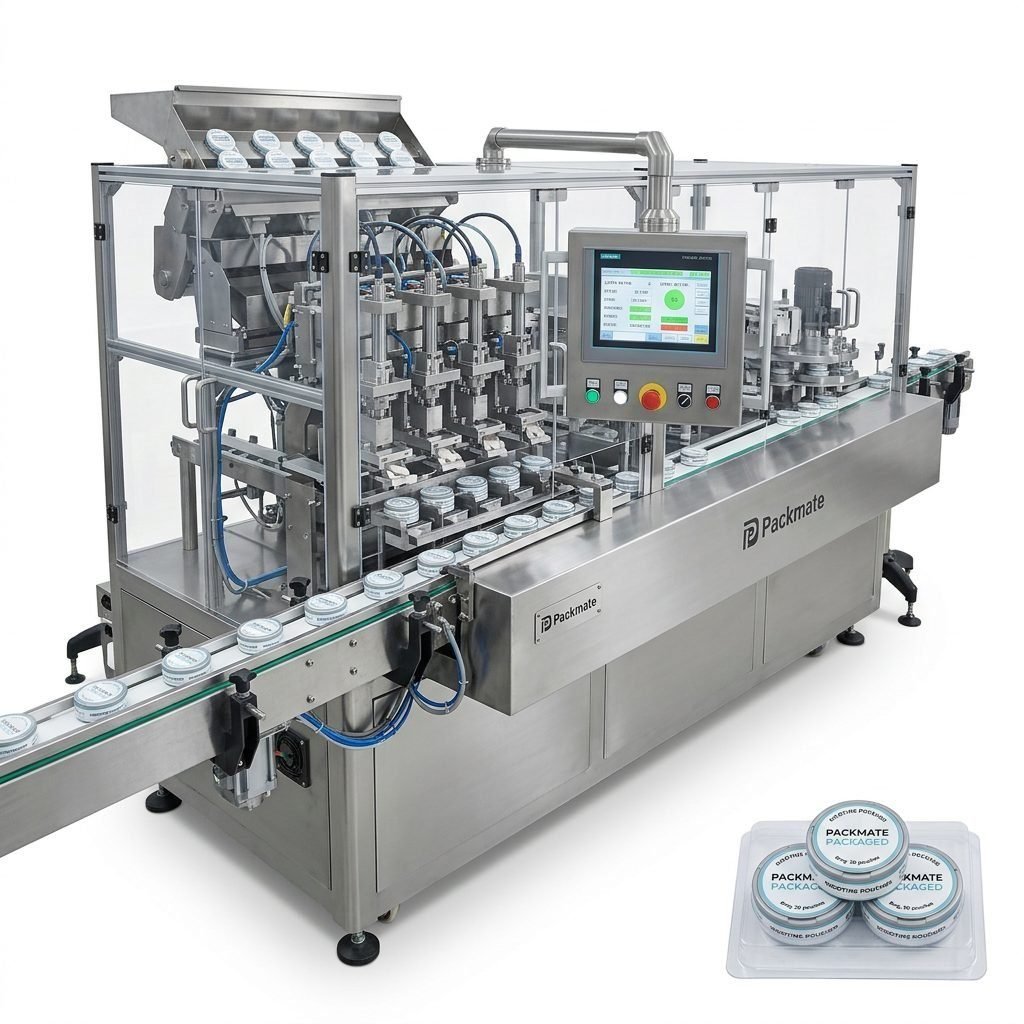
After primary sealing, make sure your line integrates robust secondary packaging — counting/sleeving, cartoning, wrap-around and case packing. For add-on solutions like auxiliary feeders and palletizers, see Auxiliary Packaging Equipment.
📦 Cartoning & Case Packing: Choose machines that support variable pack sizes and integrate labeling and date-coding in-line.
🚚 Logistics-Ready Packs: Design packaging to balance shelf appeal with transport efficiency and regulatory labeling.
Procurement Checklist
Use this checklist to compare proposals:
➤ Performance Specs: Max speed, lane count, yield percentages, and power consumption.
➤ Hygiene Design: CIP-friendly parts, accessible seals and stainless construction.
➤ Documentation: Drawings, electrical schematics, spare lists, and validation packs.
➤ Warranty & Training: On-site commissioning, operator training and service SLA options.
Real-World Examples & Exhibitions
Leading suppliers showcase machine demonstrations at major trade shows. Visiting exhibitions allows you to observe speed, format changeover times and sanitation features. Check upcoming shows and demonstrations at Our Exhibition.
Case Snapshot
A European contract packer deployed a 6-lane sachet machine with integrated multi-head weighing to triple output while retaining tight weight control for nicotine pouches. Such real-world deployments illustrate how multi-lane systems achieve high throughput without proportionally increasing floor area.
Maintenance & Lifecycle Management
Preventive maintenance programs and predictive analytics extend machine life and reduce unexpected downtime. Insist on spare parts availability and offer training packages to operators. Remote support capabilities speed troubleshooting and reduce service visits.
Sustainability Considerations
Energy-efficient motors, reduced packaging waste designs and recyclability of pack materials are increasingly important. Manufacturers can design lines to minimize scrap, recycle trim and optimize material usage to meet corporate sustainability goals.
Partnering with a Supplier: Questions to Ask
When evaluating a prospective supplier, confirm the following:
• Lead Times & Capacity: Can they meet your timeline and volume needs?
• References: Request case studies from similar product types and regions.
• Spare Parts & Service Network: What are the SLAs for critical part delivery?
How Packmate Supports Snus Manufacturers
Packmate Snus Machine combines 30+ years of packaging expertise with a 20,000㎡ facility, delivering over 50 validated machine models and turnkey production lines. Their global experience spans Europe, Asia and the Americas and includes field service, FAT support and ongoing spare parts provisioning. Learn more about services at Service and view product catalogs at Catalog.
Buying & Next Steps
Start with a capacity and product audit, request layout proposals and insist on FAT prior to delivery. Engage engineering early to coordinate utilities, extraction, compressed air and automation integration. For direct inquiries, contact the manufacturer via Contact Us.
Conclusion
Selecting the best snus production equipment requires balancing throughput, hygiene, flexibility and lifecycle support. Multi-lane systems, precise dosing and integrated inspection form the backbone of modern nicotine pouch manufacturing. Work with experienced suppliers that can deliver turnkey solutions, robust after-sales service and clear validation documentation to accelerate your production ramp-up.
Common Questions (FAQ)
Q1: How do I choose between stick packs and sachet/multi-lane systems?
Consider your unit size, desired throughput and packaging aesthetics. Stick packs are ideal for single-dose formats with very high speed, while sachet/multi-lane systems scale throughput more efficiently when you need compact factory footprints and parallel processing.
Q2: What documentation should a reputable supplier provide?
Ask for CE/ISO certificates, electrical and mechanical drawings, FAT reports, spare parts lists, and validation packs that support your regulatory filing and commissioning activities.
Q3: How important is multi-lane capability for nicotine pouch production?
Multi-lane capability offers major throughput advantages while keeping equipment footprint efficient. It’s especially valuable for brands scaling production without expanding facility size significantly.
Q4: What after-sales support should I expect?
Expect commissioning support, operator training, remote diagnostics, and a clear spare parts supply chain. Service-level agreements for critical components will reduce downtime risk.
Q5: How can I arrange a factory visit or machine demo?
Contact the supplier to schedule a factory tour or attend industry exhibitions where live demos are often available. For Packmate demo requests and exhibition information, visit Our Exhibition.