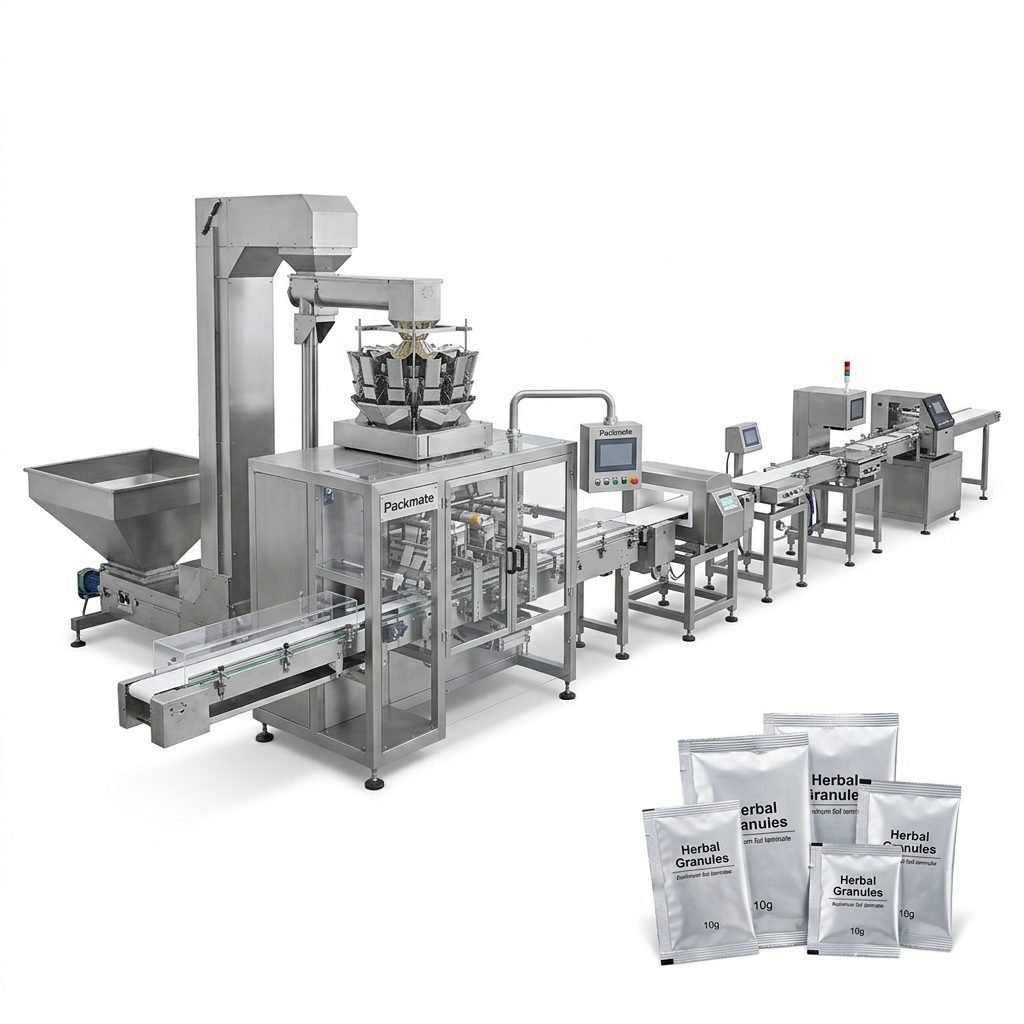
Designing a nicotine pouch packaging line requires precision engineering, careful workflow planning, and strict adherence to regulatory standards. This guide walks you through practical decisions—from core machine selection to production layout, automation strategies, and compliance checks—so your operation can achieve high speed, consistent quality, and reliable uptime.
Overview: What a Complete Nicotine Pouch Packaging Line Includes
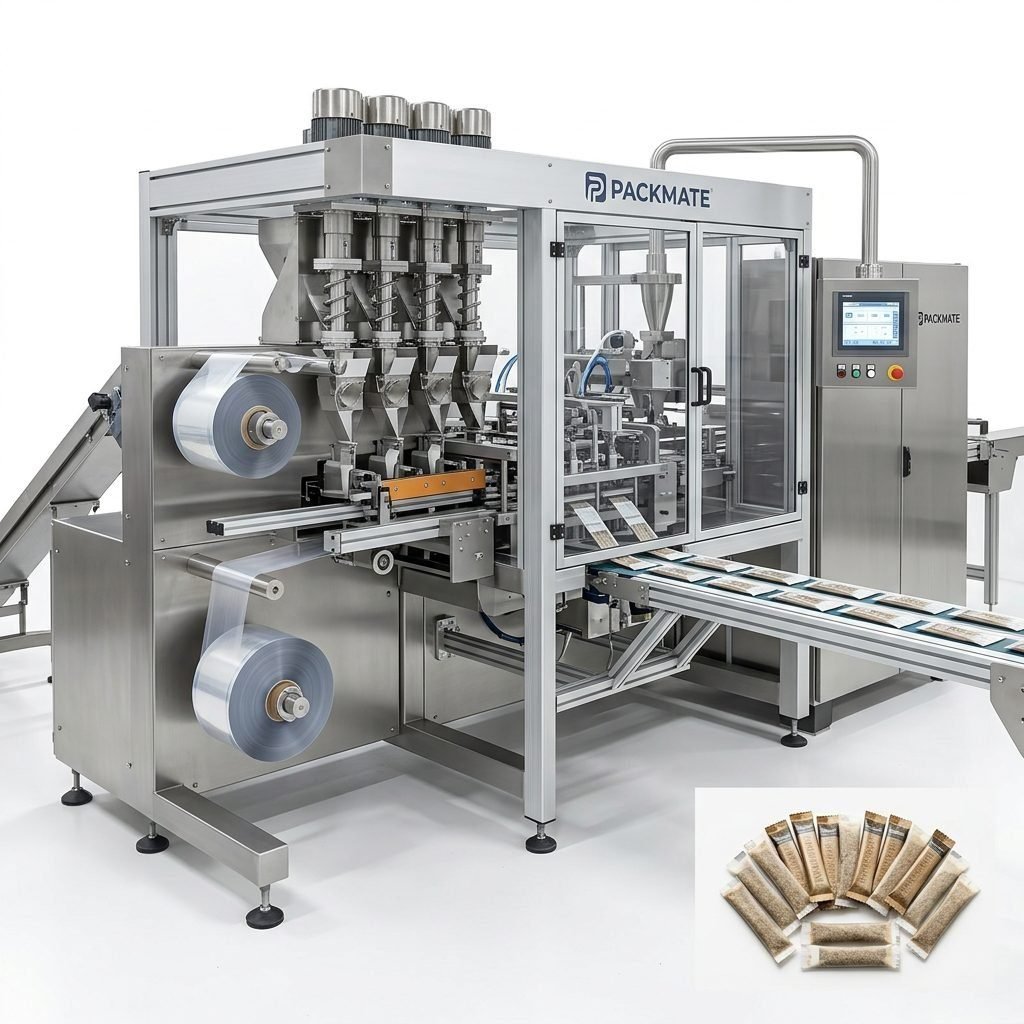
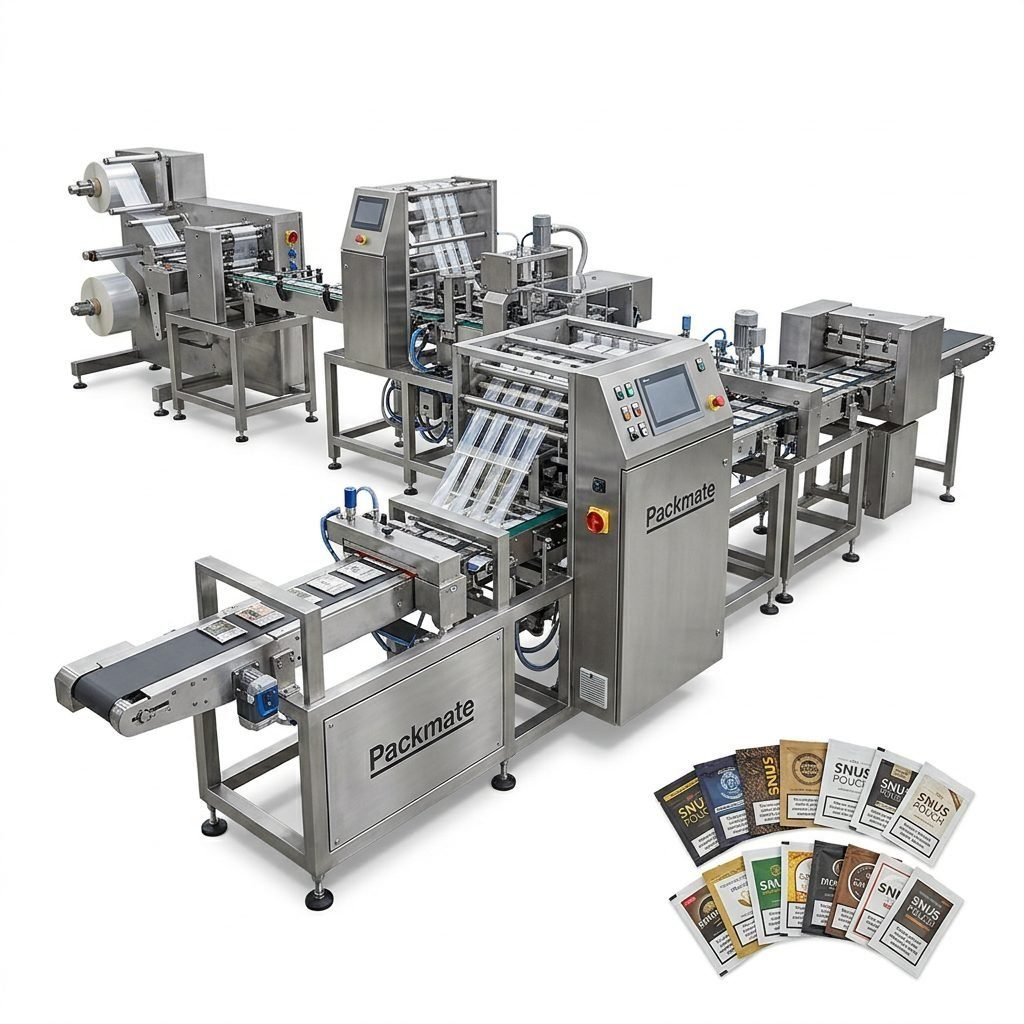
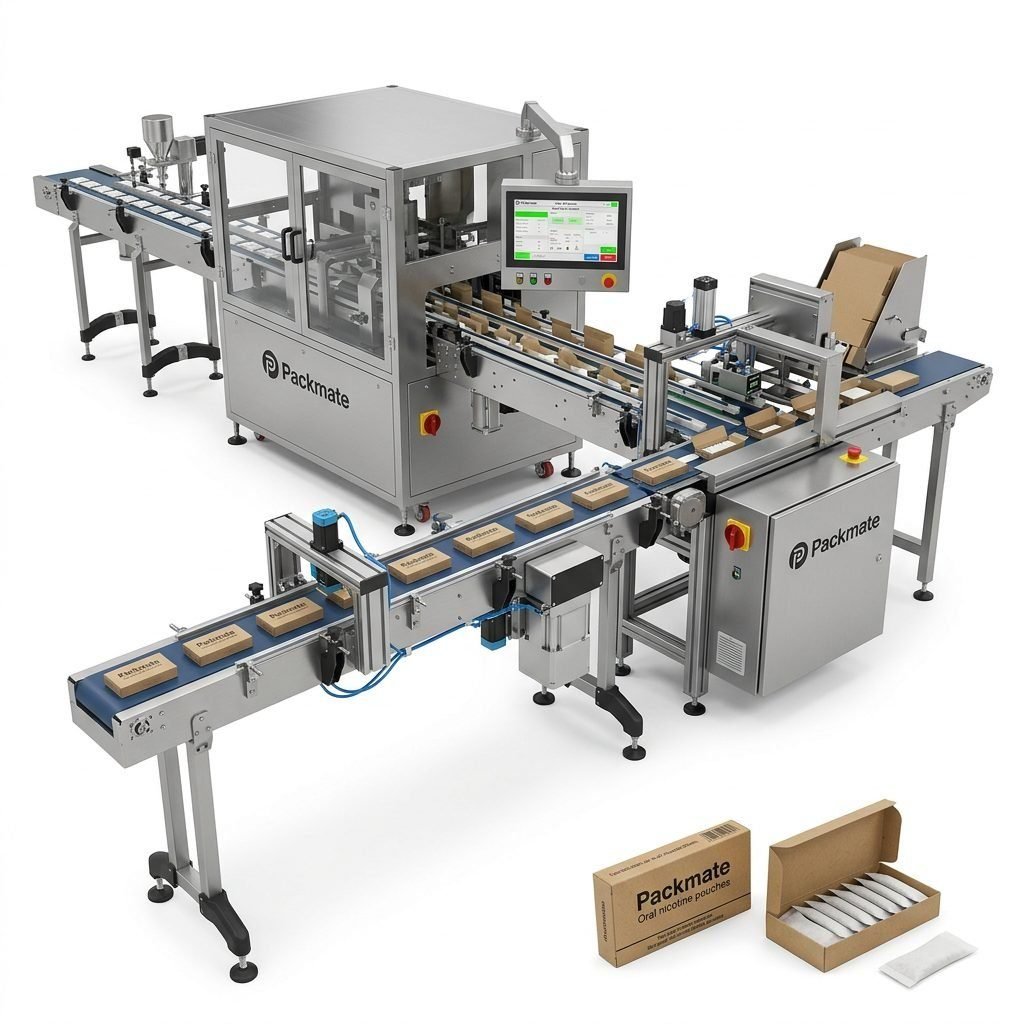
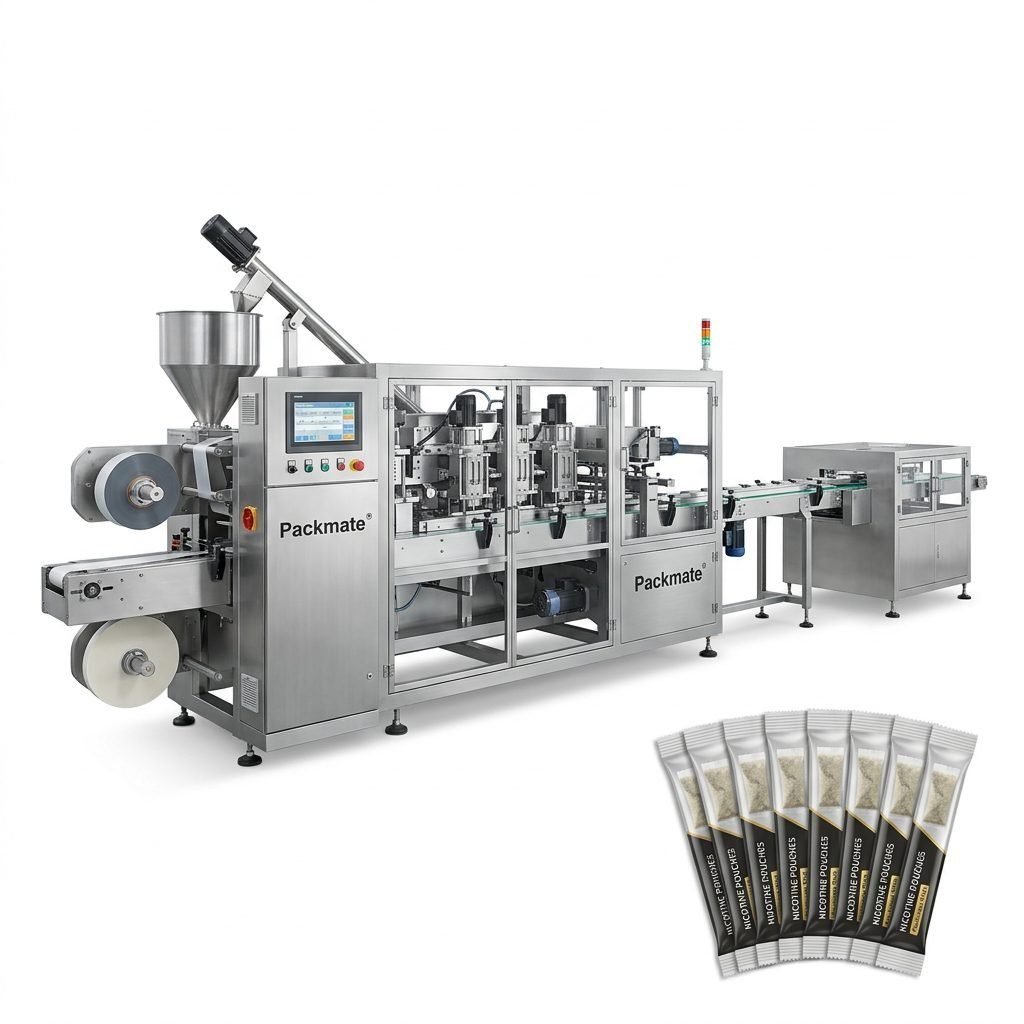
A complete production line for nicotine pouches typically integrates several synchronized systems: feeding and dosing, pouch forming or sachet/stick pack forming, sealing, slitting (if applicable), labeling, secondary packing (cartoning & case packing), and palletizing. To support stable output, add auxiliary systems such as conveyors, metal detectors, checkweighers, and automated vision inspection.
Key outcome: A well-designed line delivers consistent dosing, reliable sealing, and throughput that matches your business targets while meeting safety and certification requirements.
Core Equipment Selection
Choosing the right machines is the foundation. For nicotine pouch production consider these core systems:
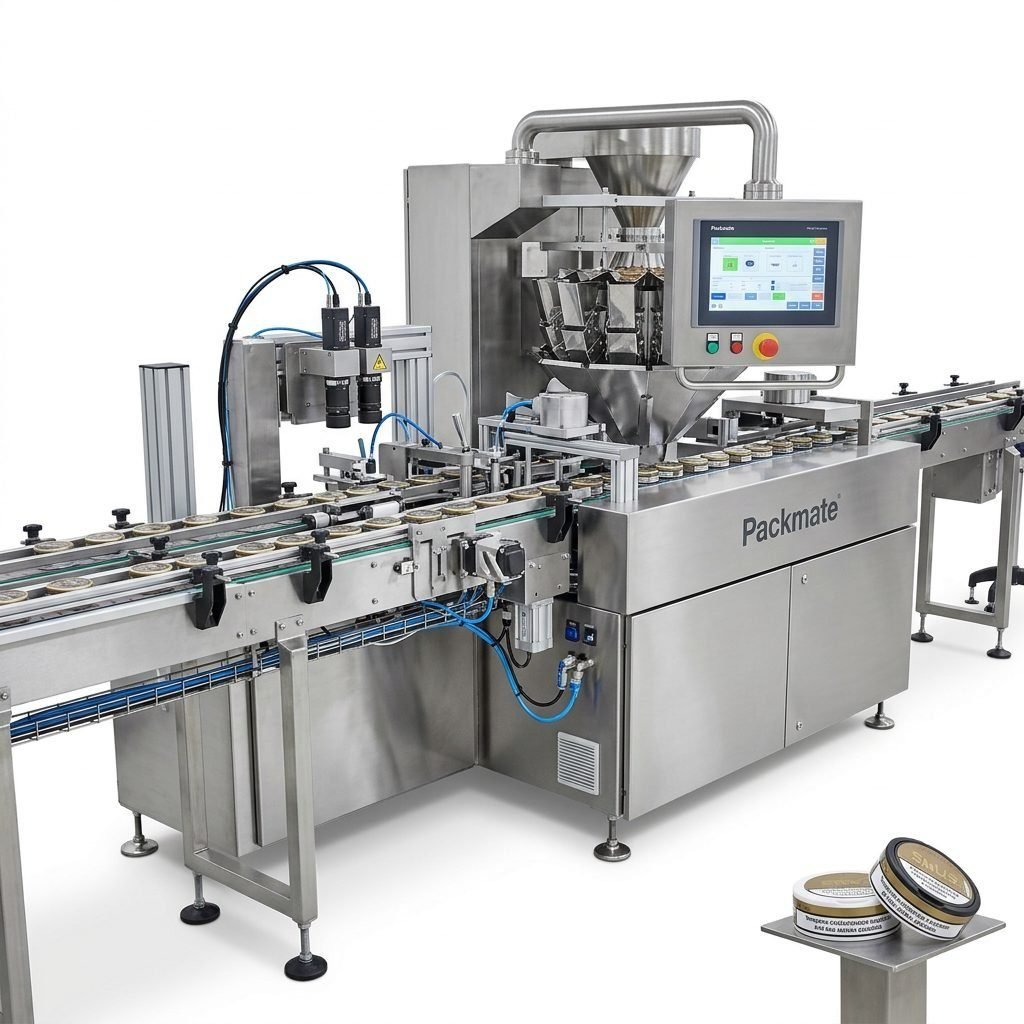
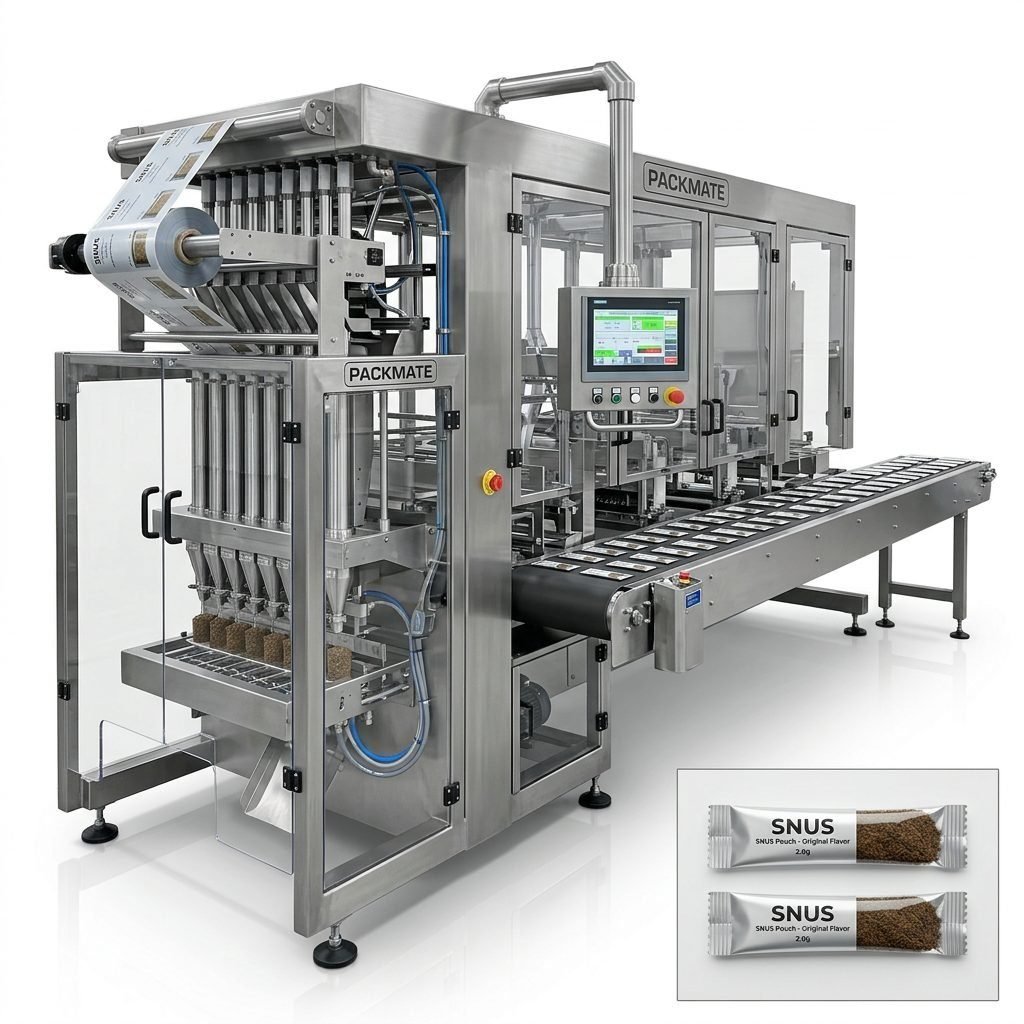
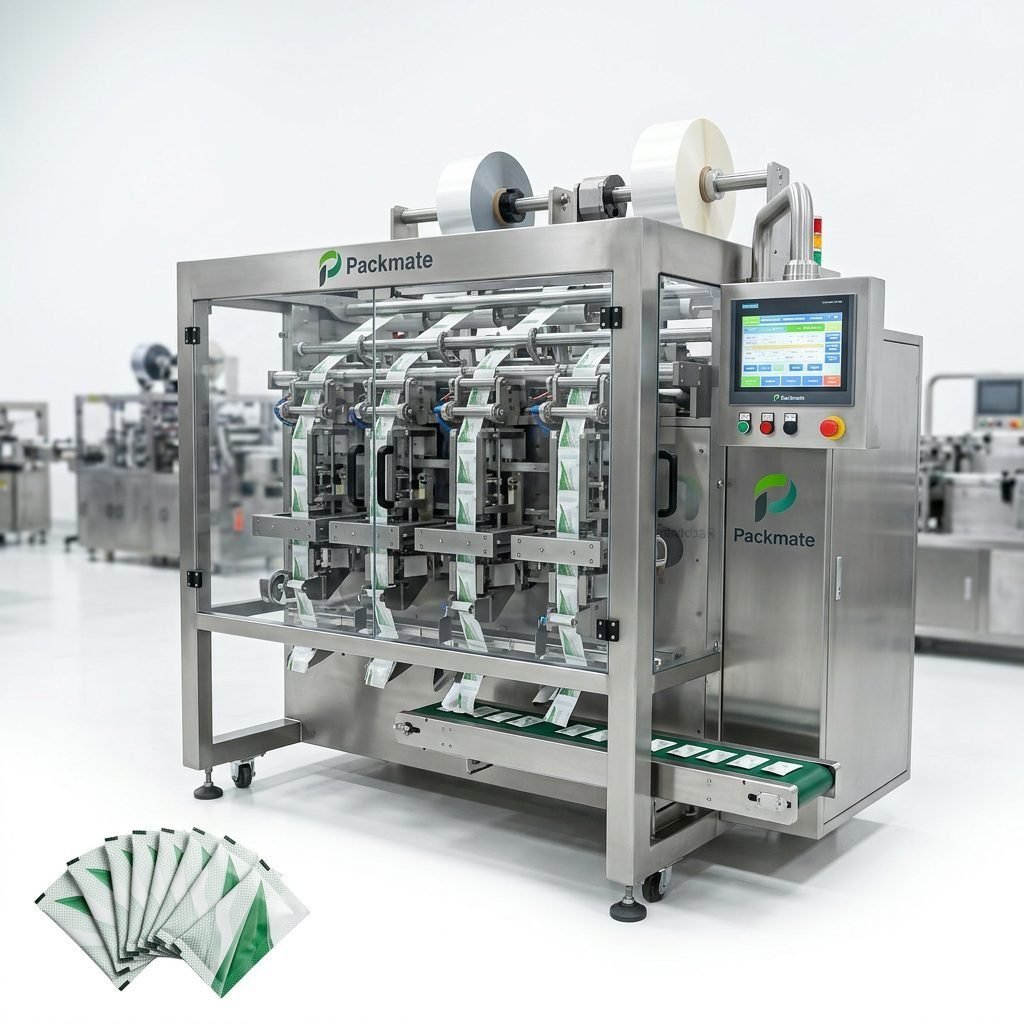
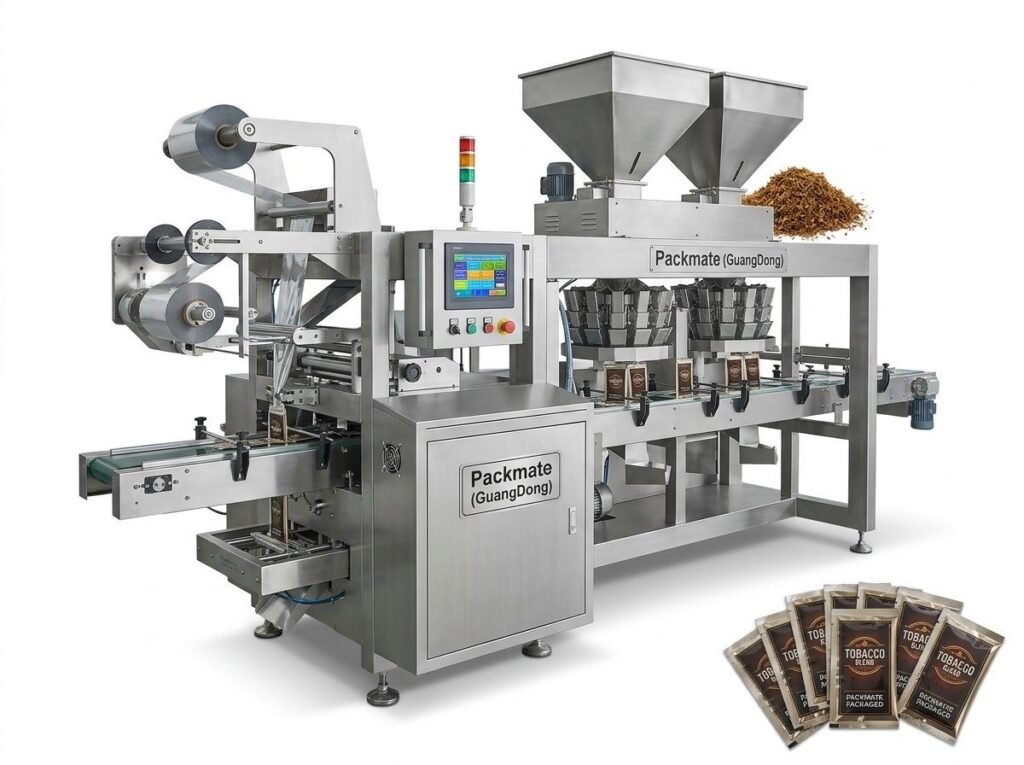
🔧 Pouch/Stick/Sachet Forming Machine: Multi-lane options accelerate output for small-dose pouches. Select models capable of precise web handling and robust sealing to avoid leaks and product loss. Explore advanced models at Snus & Nicotine Packaging Machines.
⚖️ Weighing & Dosing Systems: High-accuracy auger or volumetric dosing is essential. Combine with multi-head weighers for granules or powders; ensure dosing repeatability to minimize waste. See Weighing & Packaging Systems.
🔁 Filling, Sealing & Cutting Units: Machines must manage film tension and heat-seal profiles for different substrates (foil, laminated film). For stick & sachet formats, choose precise cross-seal and longitudinal seal controls; visit Sachet & Stick Pack Machines.
📦 Secondary Packaging: Cartoners, case packers and palletizers synchronize with the primary packaging speed. Modular options let you scale as demand grows. See integrated solutions at Filling & Packaging Lines.
Layout and Line Flow Principles
A compact, logical layout reduces material handling and operator interventions. Follow a linear flow: raw material → dosing → pouch forming → sealing → inspection → secondary packing → palletizing. Use buffer conveyors and accumulation zones to decouple slower downstream processes and avoid stoppages.
✔ Best practice: Provide access aisles around each machine for maintenance, and route utilities (air, power) along the production side to keep operator and service paths clear.
Speed, Throughput and Line Balancing
Throughput planning starts by defining pouch size, lanes per machine, and planned operating hours. Multi-lane machines can multiply throughput but require precise synchronization. Balance upstream dosing capacity with downstream sealing and inspection speed—overcapacity in one station means idle equipment elsewhere.
Calculation tip: Determine target pouches per minute, then derive the required lanes and cycle time. Always include a contingency factor (10-20%) to account for changeover or short stops.
Regulatory Compliance, Safety and Certifications
Regulatory frameworks for nicotine products vary by market. Equipment should meet international safety and quality standards like CE and ISO. Implement traceability systems to capture batch codes, machine parameters, and operator logs to support audits and recalls.
⚠ Safety focus: Install emergency stops, guarded moving parts, and access interlocks. Design for easy cleaning to control contaminants and residue build-up—critical for nicotine handling.
Material Selection and Barrier Properties
Nicotine pouches require packaging films with excellent barrier properties to control moisture, oxygen, and nicotine migration. Common structures include aluminum foil laminates and metallized films. Select sealant layers compatible with heat-seal settings and low-temperature sealing for sensitive formulations.
Packaging design tip: Test film seals under real production speeds and temperatures. Incorporate tamper-evident features, clear lot coding areas, and printable surfaces for brand and regulatory text.
Quality Control & In-Line Inspection
Quality systems should include fill-weight verification, metal detection, X-ray where required, and machine vision for seal and print inspection. Real-time SPC dashboards help detect drift early. Integrate automatic reject mechanisms to remove non-conforming packs without stopping the line.
🔍 Critical control point: Checkweigh every X minutes and perform seal integrity tests at planned intervals to maintain product integrity.
Auxiliary Equipment and Utilities
Auxiliary systems keep the main line efficient: vacuum conveyors, vibratory feeders, dust extraction, chillers for heat-seal control, and PLC-based control panels. Choose components with remote support capability to reduce downtime.
Automation, Data and Industry 4.0
Implement centralized SCADA/PLC systems to manage alarms, recipe changes, and performance metrics. Use IoT sensors for predictive maintenance—monitor motor currents, vibration, and servo performance to schedule downtimes proactively.
Data advantage: Historical production data reduces changeover time and speeds troubleshooting by identifying recurring faults at specific line speeds or materials.
Maintenance and Spare Parts Strategy
A preventive maintenance schedule extends machine life and maintains line efficiency. Stock critical wear parts (seals, cutters, belts, sensors) and request spare parts kits from your OEM. Modular design allows quick swap of assemblies to minimize production loss.
🛠 Maintenance tip: Train operators in first-line troubleshooting and basic mechanical checks. This reduces service calls and unscheduled stoppages.
Commissioning, Validation and Ramp-Up
Commissioning should include IQ/OQ/PQ protocols: Installation Qualification, Operational Qualification, and Performance Qualification. Document results, train staff on SOPs, and perform a controlled ramp-up to full speed to validate equipment and processes under production loads.
Ramp-up checklist: test different film batches, run extended stability tests, and verify traceability systems under live conditions.
Cost, ROI and Scalability
Calculate total cost of ownership: initial capital, installation, training, consumables, energy, and downtime risk. A multi-lane high-speed line often has higher upfront cost but a lower per-unit cost. Plan for modular expansions—add lanes, secondary packaging, or an extra cartoner to grow with demand.
ROI drivers: lower scrap, reduced labor, higher throughput, and fewer quality-related reworks.
Choosing an OEM and After-Sales Support
Partner with suppliers that provide full turnkey solutions, on-site commissioning, and global spare parts logistics. Check references, factory capacity, and machine models. For nicotine pouch lines, working with experienced snus packaging specialists ensures faster implementation—learn more About Packmate.
📁 Documentation: Request certificates (CE, ISO), maintenance manuals, and a list of recommended spare parts at purchase.
Real-World Case Uses & Demonstrations
Factory demonstrations and reference cases are valuable. Visit trade shows or factory lines to view multi-lane snus systems in action—this is the best way to confirm stability at your target speeds and pouch formats. View case studies to understand typical implementations and outcomes: Case.
Final operational checklist before production start
– Validate dosing accuracy across all lanes and pouch sizes.
– Confirm seal integrity and run accelerated shelf-life tests on packaged pouches.
– Ensure full integration between vision inspection and reject mechanisms.
– Train operators on changeovers, safety, and cleaning procedures.
– Establish spare parts stock and remote support agreements.
✅ Remember: Early investment in automation and quality control reduces long-term costs and supports faster market expansion.
Further Resources
For detailed machine specifications, spare parts lists, and service options, consult the OEM product pages and catalogs. Useful references include product categories for bag & pouch machines and auxiliary equipment: Bag & Pouch Packaging Machines and Auxiliary Packaging Equipment.
Common Questions (FAQs)
Q1: How do I choose between multi-lane and single-lane machines?
A1: Choose multi-lane if you need high throughput with consistent small-dose accuracy. Single-lane is flexible for small batches and frequent format changes. Consider changeover time, footprint, and product variety when deciding.
Q2: What are the most common causes of seal failures and how to prevent them?
A2: Seal failures often result from incorrect temperature, contaminated films, or worn sealing jaws. Prevent by controlling web tension, regular jaw maintenance, and verifying seal profiles during changeovers.
Q3: How much floor space is typically required for a full turnkey line?
A3: Space varies with capacity and layout. A compact multi-lane primary line with secondary packaging needs a clear area for equipment and service aisles—typically several hundred square meters. OEMs will provide detailed layouts for accurate planning.
Q4: What certifications should I verify on equipment for international markets?
A4: At minimum check CE and ISO certifications. Depending on the market, additional approvals for electrical safety, EMC, or specific country standards might be required.
Q5: Can I integrate existing machines into a new line design?
A5: Yes—modular design and proper control integration allow reuse of existing equipment. Ensure synchronization via PLC/SCADA and verify mechanical compatibility (speeds, conveyor heights, interfaces) during engineering.