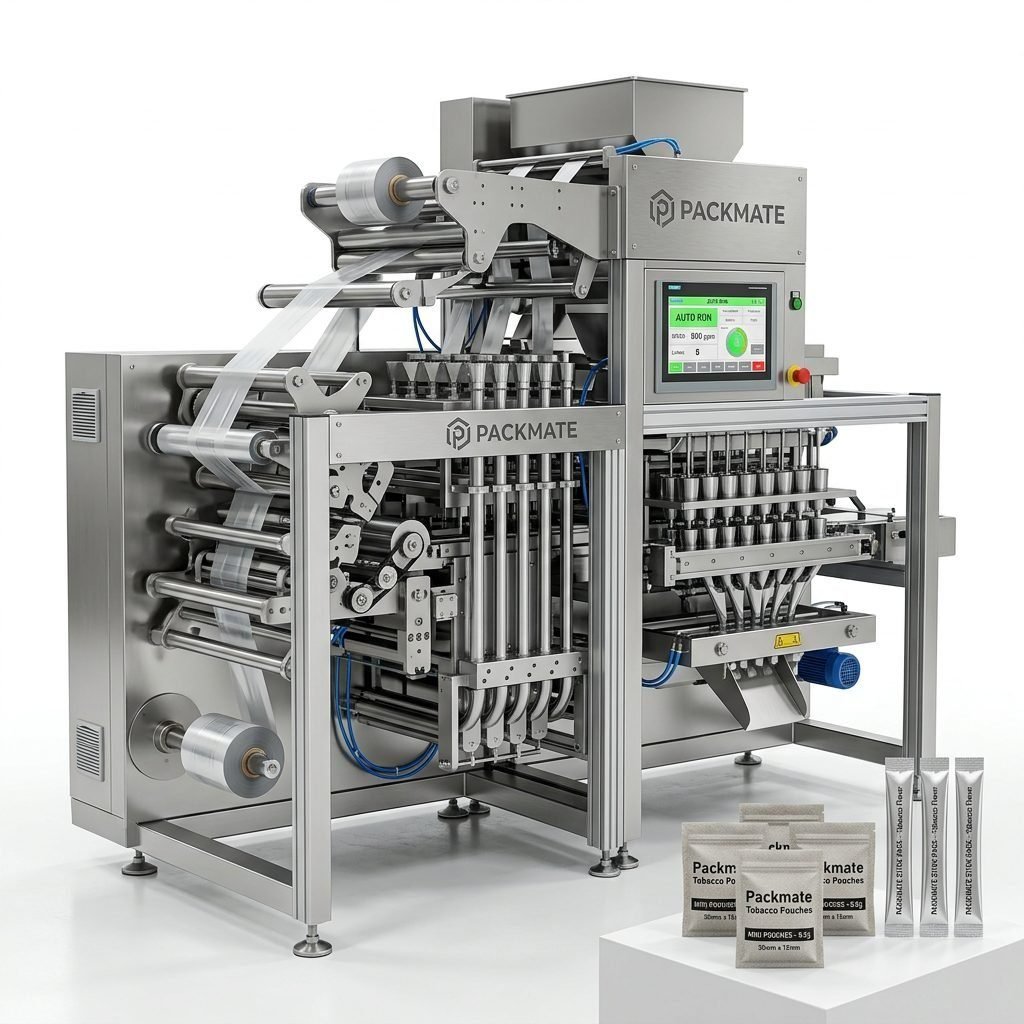
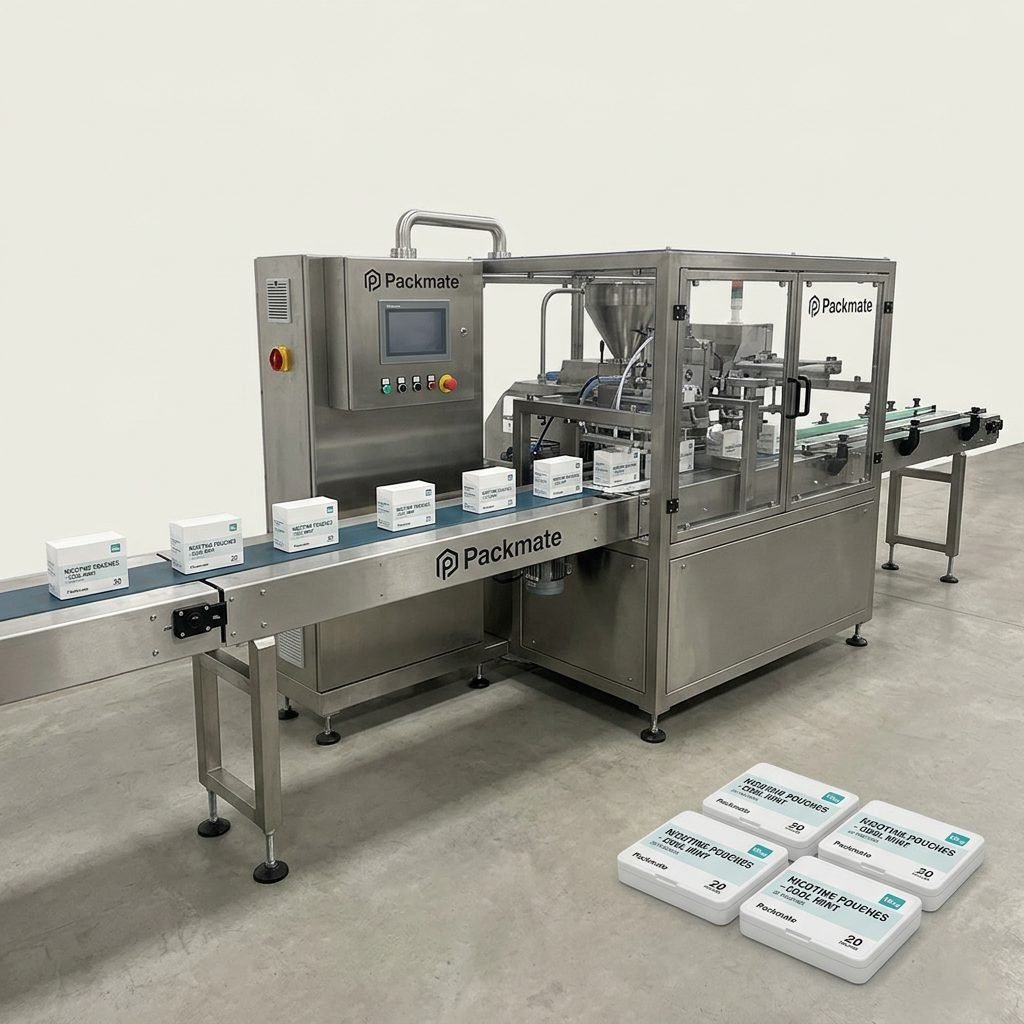
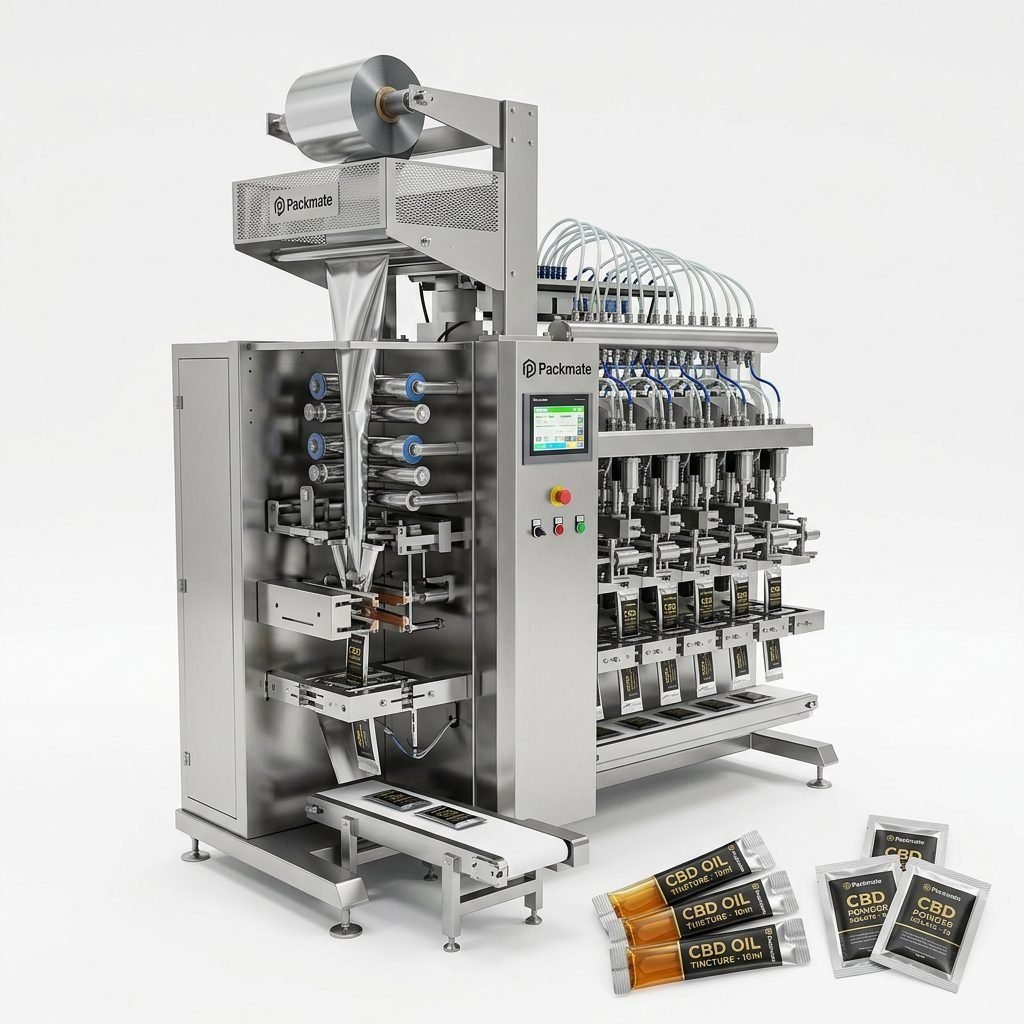
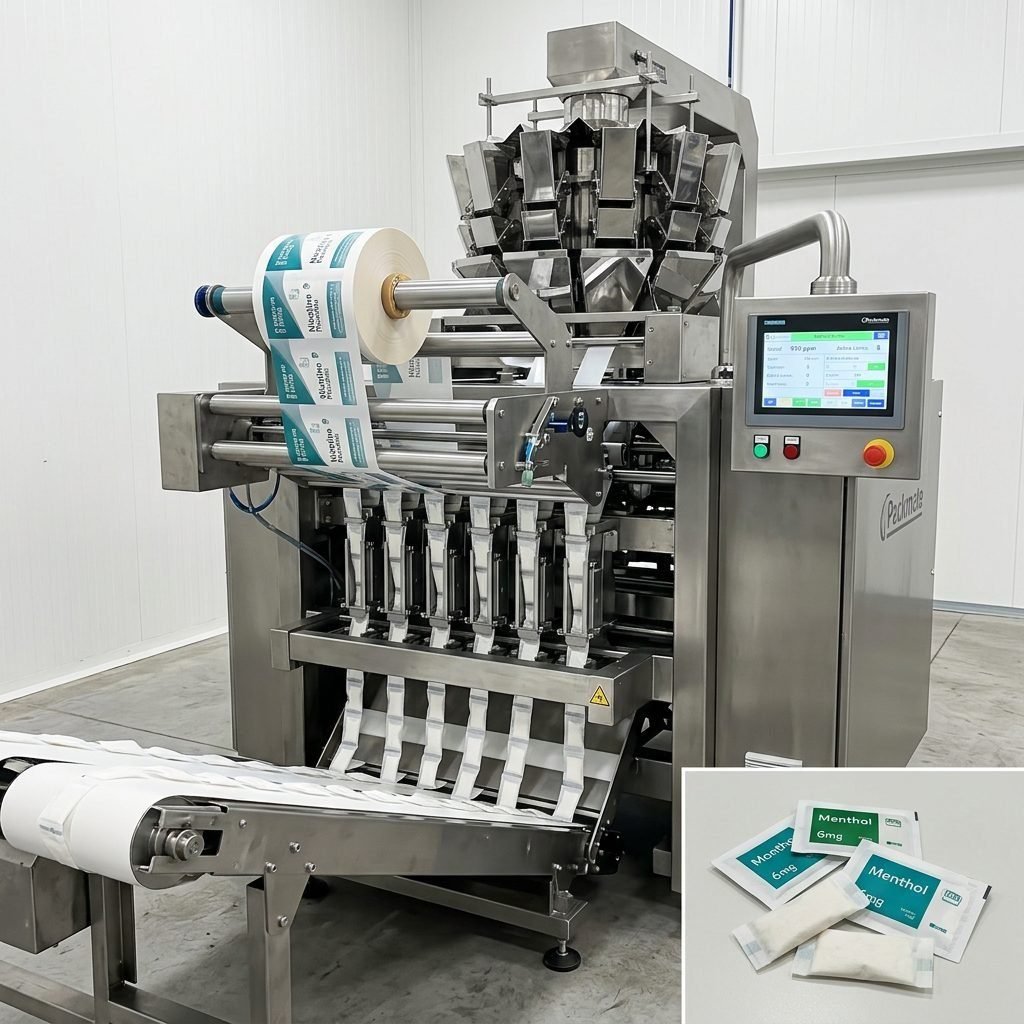
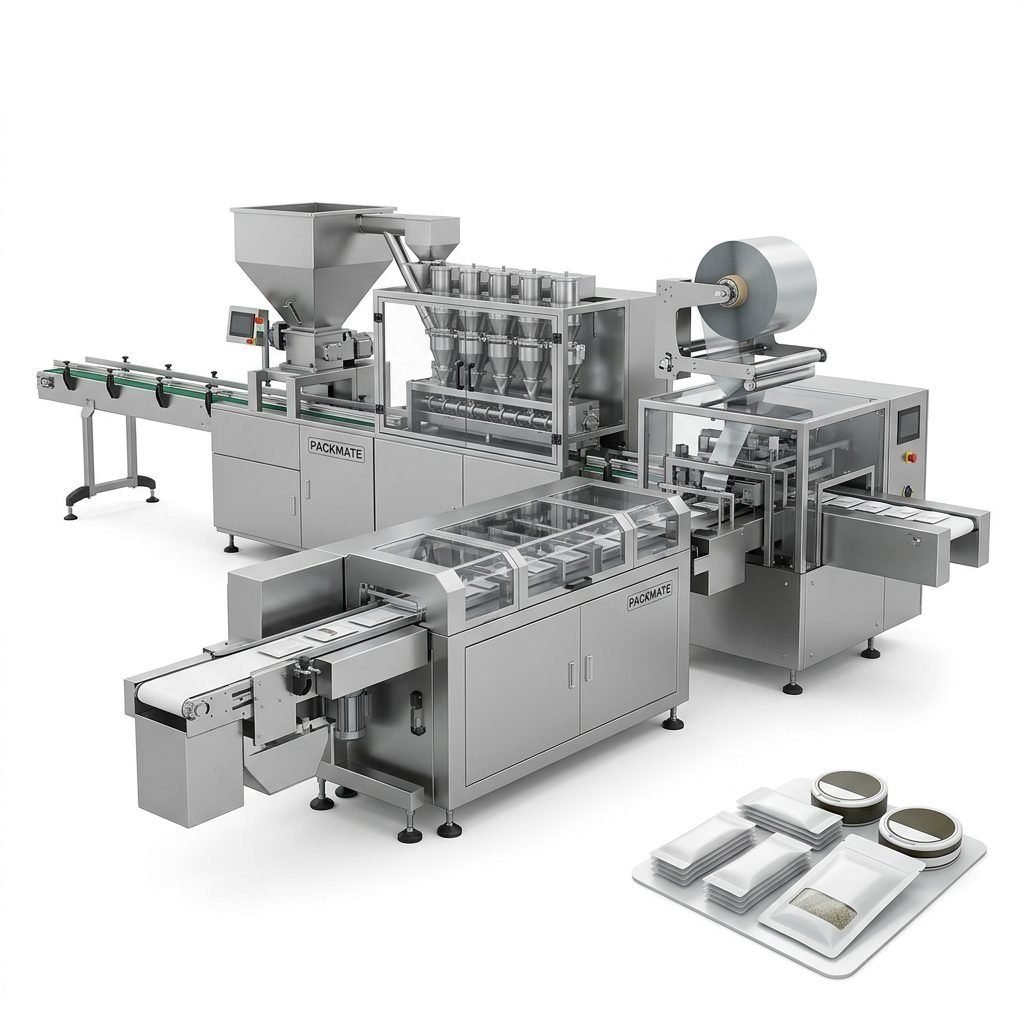
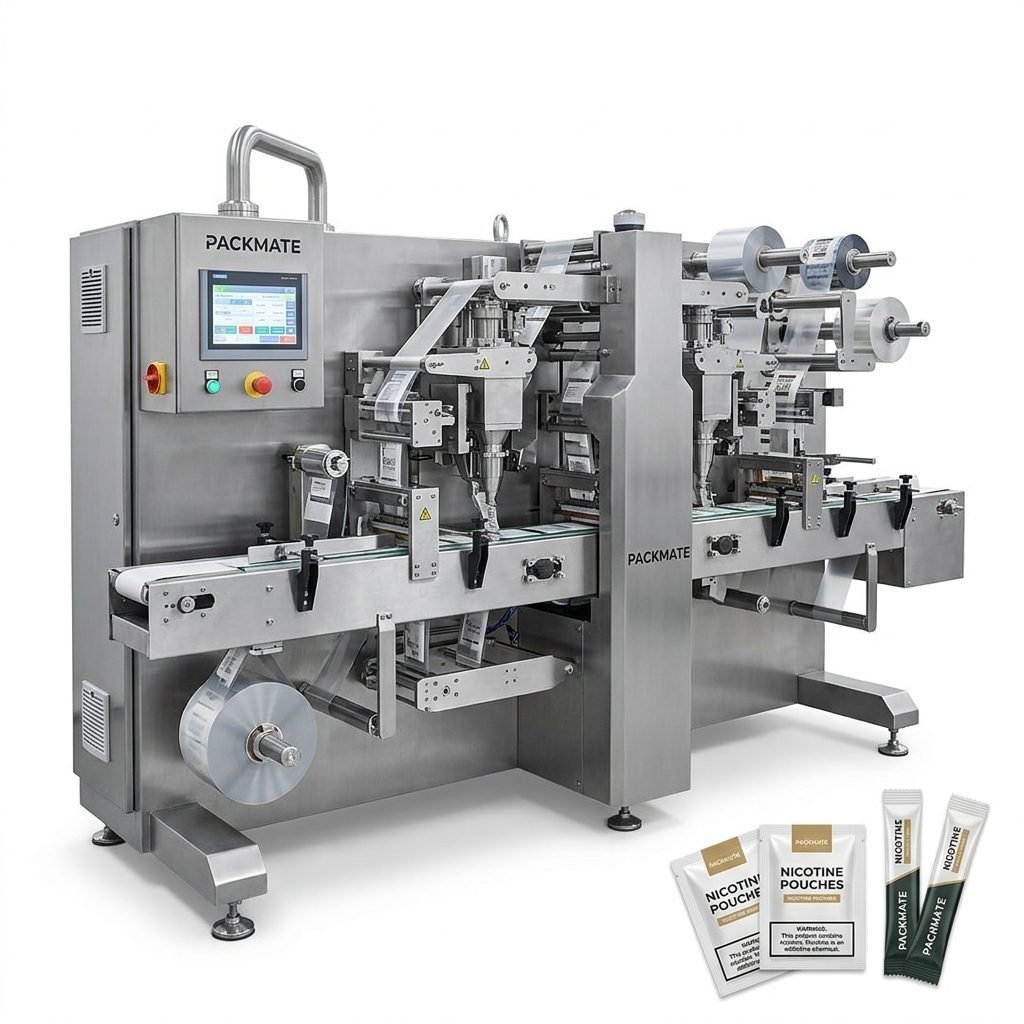
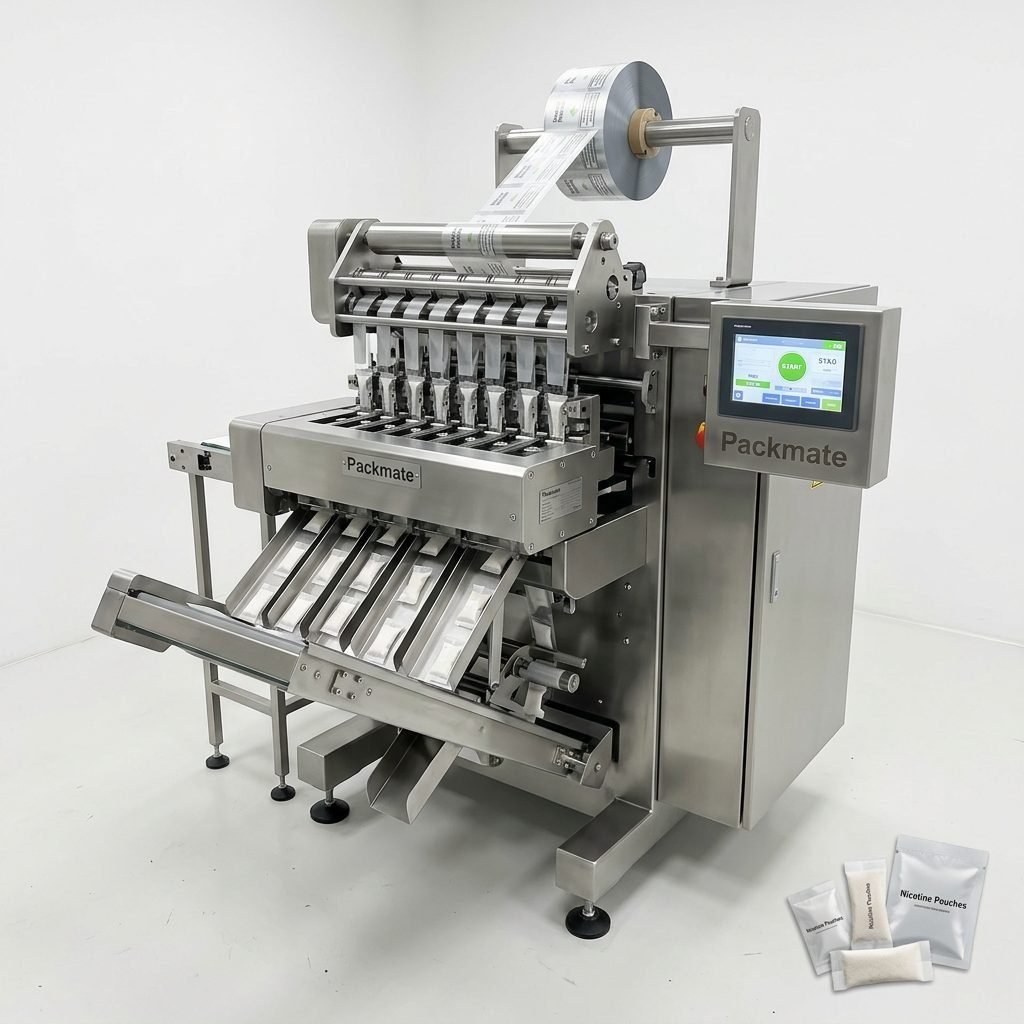
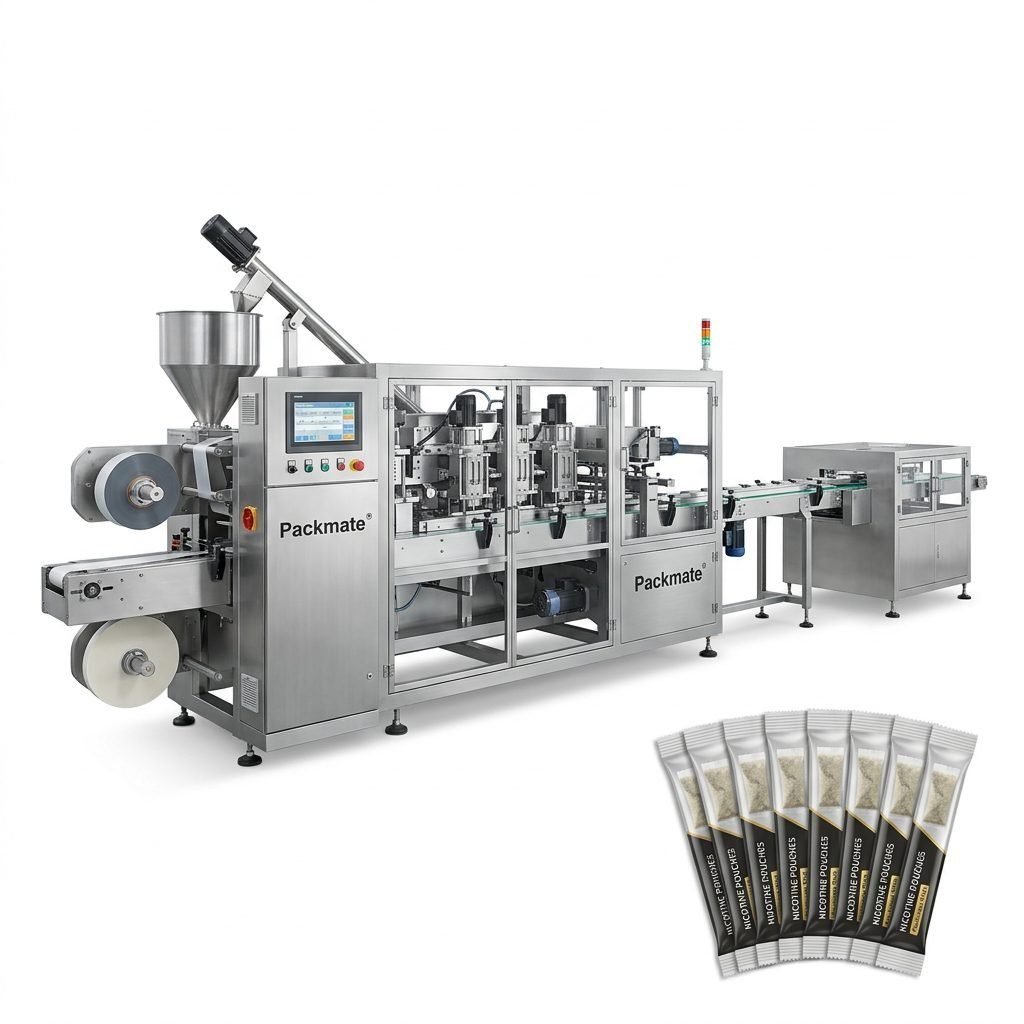
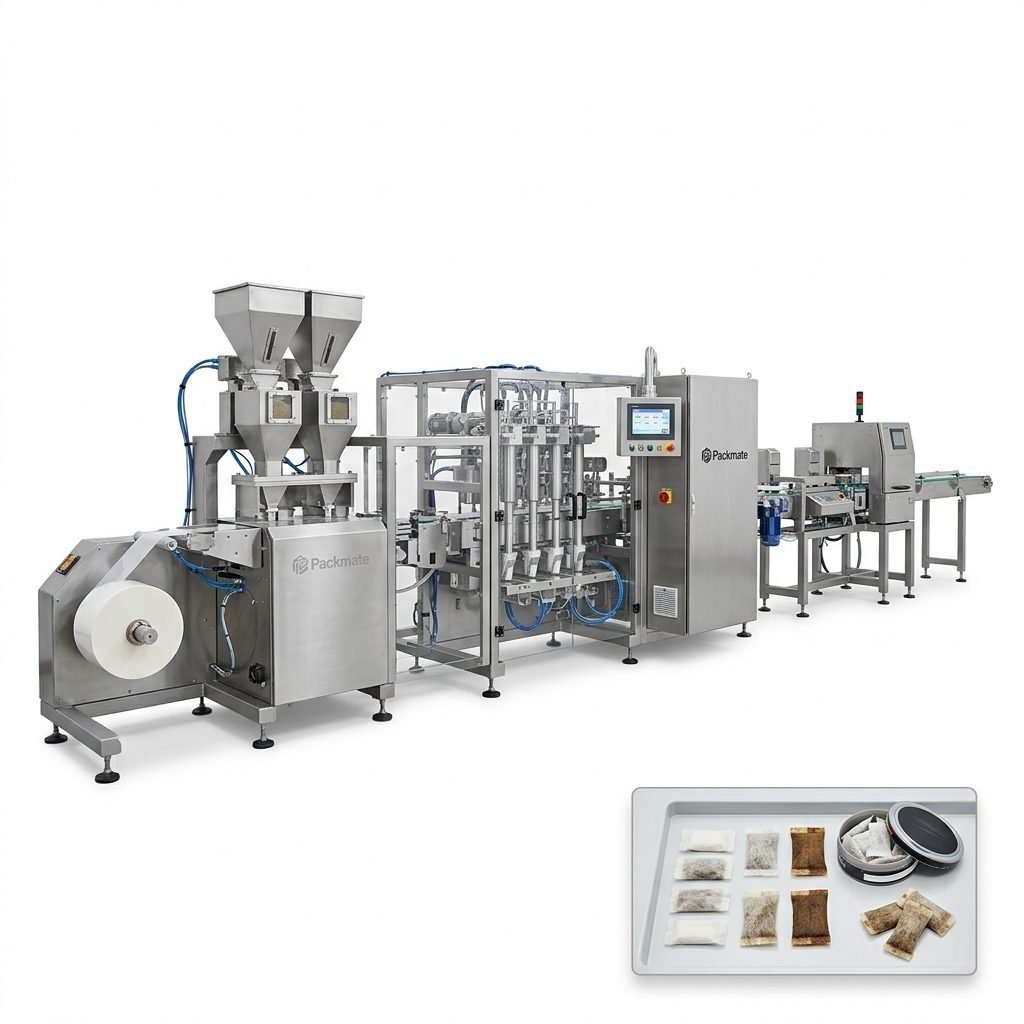
The modern nicotine pouch market demands precision, speed, and absolute consistency. An Automatic Nicotine Pouch Line integrates high-precision dosing, multi-lane forming, accurate filling, and robust packaging to deliver scalable production for nicotine pouches, snus, and similar small-dose products. This article walks through the essential components, performance metrics, customization options, and operational best practices for a fully automated production, filling, and packaging solution.
Overview: What an Automatic Nicotine Pouch Line Delivers
A turnkey nicotine pouch line is built to handle successive production steps with minimal human intervention: material feeding, pouch forming, precision filling, sealing, post-process inspection, and final packaging. These lines offer advantages in consistency, throughput, and regulatory traceability. Manufacturers like Packmate provide end-to-end solutions that combine machinery expertise with global support and certifications.
Key Benefits at a Glance
✓ Increased output and minimized labor costs
✦ High-precision dosing for consistent pouch weight and nicotine content
✓ Integrated quality control for sealed package integrity and foreign-particle detection
✦ Scalable multi-lane configurations to match your production targets
Core Components of a Fully Automated Line
A reliable nicotine pouch line typically includes the following modules. Each is designed for precise coordination under PLC/SCADA control, ensuring synchronous operation and rapid format changes.
1. Raw Material Handling & Feeding
Automated feeders and conveyors manage bulk nicotine pouch materials, pouches, and sachet substrates. Controls ensure consistent supply to downstream forming and filling units, reducing downtime and manual interventions.
2. Multi-Lane Forming & Pouch Assembly
Multi-lane forming stations enable simultaneous production across several channels, dramatically increasing throughput—ideal for businesses moving from pilot to full-scale manufacturing. Typical designs support quick changeovers and modular lane counts.
3. Precision Dosing & Filling Systems
Gravimetric or vibratory dosing systems provide sub-milligram accuracy for nicotine pouch fill weights. Closed-loop feedback and weight verification ensure each pouch meets tight specification tolerances.
4. Sealing, Cutting & Final Packaging
High-speed sealing and cutting mechanisms secure product integrity. Downstream, automated collating, cartoning, and case-packing prepare finished goods for shipment. Integration with secondary packaging equipment allows one-line delivery from raw input to boxed pallet output.
Automation & Control: The Brain of the Line
Modern lines utilize PLCs, HMI panels, and centralized control systems for synchronized operation. Features commonly included:
⚙️ Recipe management for different pouch sizes and formulations
⚙️ Real-time alarms and predictive maintenance alerts
⚙️ Data logging for batch traceability and compliance
Customization: Fit the Line to Your Product
Every nicotine pouch product has unique requirements—substrate type, pouch shape, nicotine concentration, and secondary packaging formats. Leading manufacturers offer modular platforms that can be tailored: lane counts, dosing technologies, nitrogen flushing, labeling and serialization, and integration with your upstream/downstream systems.
Tip: Choose a vendor able to provide both snus & nicotine packaging machines and broader filling & packaging lines to ensure seamless integration and single-point responsibility.
Performance Metrics You Should Expect
When evaluating solutions, compare these key performance indicators:
- Throughput (pouches per minute and per lane)
- Fill weight accuracy (% deviation)
- Changeover time between SKUs
- OEE (Overall Equipment Effectiveness)
Quality Assurance & Compliance
Compliance with international standards (CE, ISO) and rigorous quality testing are essential for nicotine pouch equipment. Look for suppliers with documented certifications and an established QA process, from incoming materials to final goods inspection.
Installation, Training & After-Sales Support
A thorough installation plan, operator training, and remote diagnostics reduce ramp-up time and improve long-term uptime. Select manufacturers who provide spare parts, on-site commissioning, and global service networks. Learn more about Packmate’s global support and company background on their About Packmate page.
Factory Capabilities & Manufacturing Strength
Robust manufacturing is the foundation of reliable production lines. Key indicators include a dedicated factory area, advanced CNC machining centers, precision assembly lines, and rigorous quality testing. Vendors with decades of engineering experience and a broad machinery portfolio can better support custom and high-volume projects.
Learn how production lines are applied in real projects by exploring case studies and exhibition records: Case and Our Exhibition.
Return on Investment & Cost Considerations
Capital investment in a fully automated line is offset by reduced labor costs, higher yields, and improved product consistency. Consider total cost of ownership: equipment, installation, spare parts, energy consumption, and maintenance. Vendors should provide a detailed ROI analysis tailored to your expected volumes and product specifications.
Selecting a Supplier: Checklist
Use this checklist when evaluating suppliers:
- Proven multi-lane solutions and flexible formats
- Certifications and compliance records
- After-sales network and spare parts availability
- References and case studies from similar projects
Integration with Upstream/Downstream Systems
For a truly automated factory, the pouch line must integrate with upstream filling, blending or granulation equipment and downstream cartoning, palletizing, and warehouse systems. Vendors providing both primary machines and auxiliary equipment simplify integration—see Auxiliary Packaging Equipment.
Real-World Example: From Pilot to Mass Production
A mid-size manufacturer transitioning from manual sachet lines to a multi-lane nicotine pouch line achieved a 5x increase in output while improving fill-weight accuracy and reducing waste. Their chosen solution included modular lanes, gravimetric dosing, and automated cartoning—reducing labor needs and producing consistent, certification-ready batches.
Sustainability & Waste Reduction
Efficient dosing, minimal overfill, and optimized material handling reduce product waste. Consider equipment that supports recyclable substrates, reduced-energy motors, and intelligent idle-state power savings to improve your environmental footprint.
If you need specific product solutions, explore the full product range including Sachet & Stick Pack Machines and Weighing & Packaging Systems.
Final Considerations Before Purchase
Evaluate the supplier’s engineering depth, workshop capabilities, and willingness to provide site acceptance testing. A full factory acceptance test (FAT) and clear documentation for maintenance and spare parts will shorten commissioning time and ensure reliable long-term operation.
Contact & Next Steps
For detailed specifications, machine models, or to request a quote and project consultation, reach out via the official Contact Us channel. A qualified engineering team can assess your product needs and propose a tailored, scalable line.
Frequently Asked Questions
Q1: What throughput can I expect from a multi-lane nicotine pouch line?
Throughput depends on lane count, pouch format, and dosing speed. Typical multi-lane systems scale from hundreds to thousands of pouches per minute when aggregated across lanes. Talk to your supplier for performance data specific to your SKU profiles.
Q2: How accurate are the dosing systems?
Modern gravimetric and vibratory dosing systems offer sub-milligram repeatability and typically achieve fill-weight deviations well within industry tolerance requirements. Inline weight checks and feedback loops further enhance consistency.
Q3: What certifications should a reliable supplier have?
Look for CE and ISO compliance as a baseline. Reliable suppliers will also provide documentation for electrical safety, machine guards, and quality system traceability.
Q4: Can lines be upgraded later if production increases?
Yes. Many systems are modular by design: you can add lanes, upgrade dosing modules, or integrate additional packaging modules as demand grows. Plan for scalability when selecting your initial configuration.
Q5: Where can I see real-world installations?
Review supplier case studies and exhibition demos for real-world examples; explore Packmate’s project showcase in the Case section for reference installations.