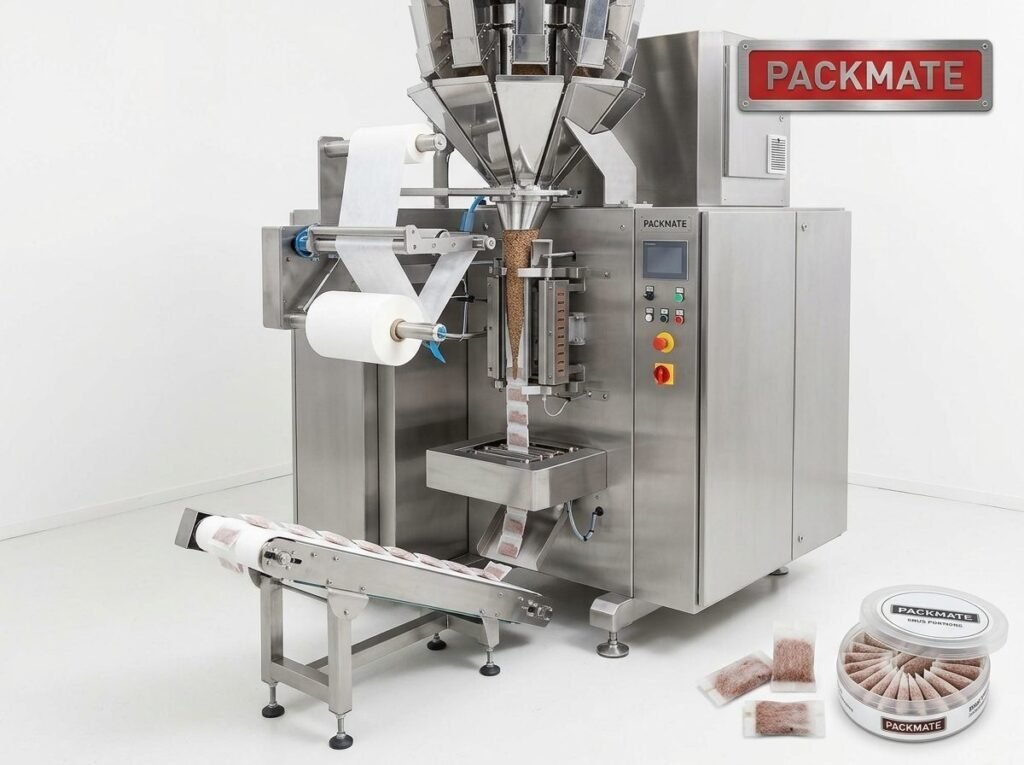
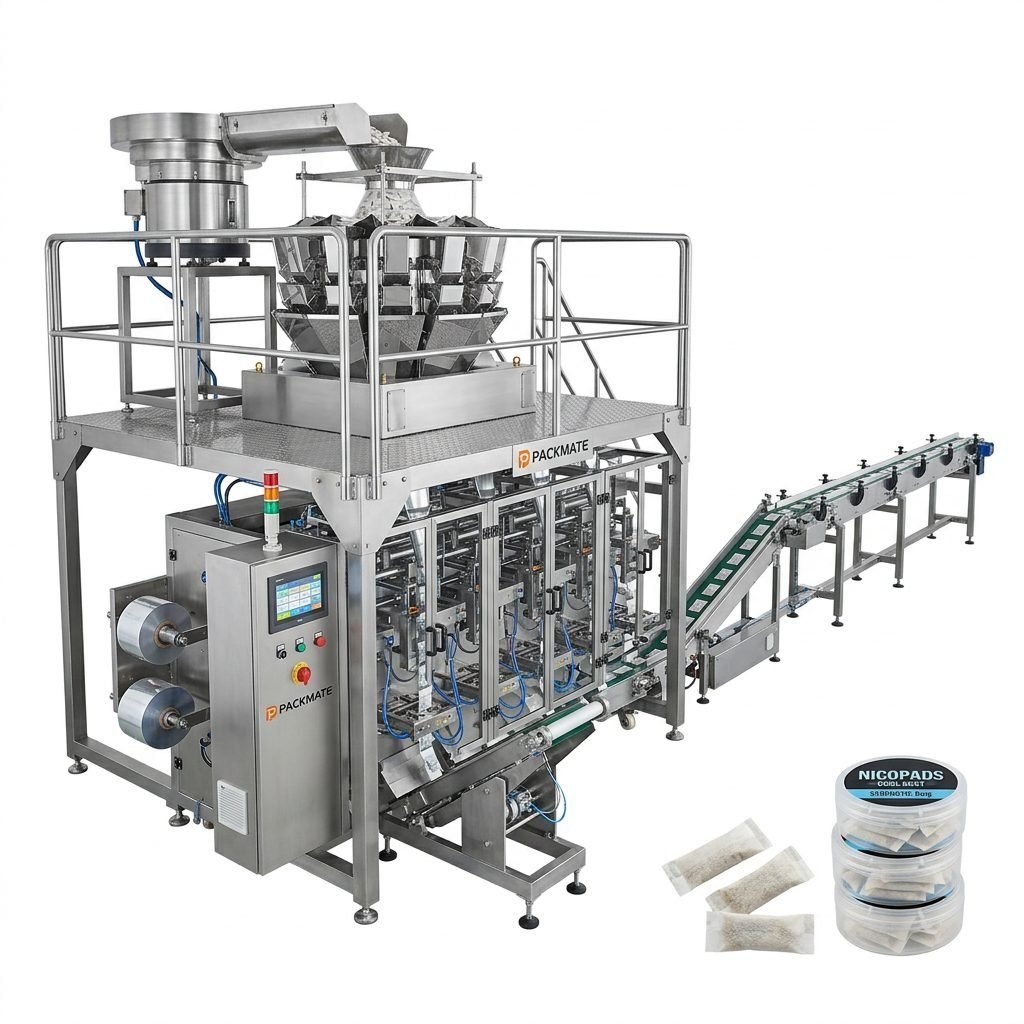
The nicotine pouch market is growing fast, powered by consumer demand for smoke-free nicotine alternatives and brand innovation. For manufacturers and packagers, a reliable production line that delivers consistent pouch weight, sealing quality and throughput is essential. This guide explains how a high quality nicotine pouch production line is designed, the main equipment types, process steps, cost drivers and operational considerations so you can plan investment, production and compliance with confidence.
Overview: What a Complete Nicotine Pouch Production Line Comprises
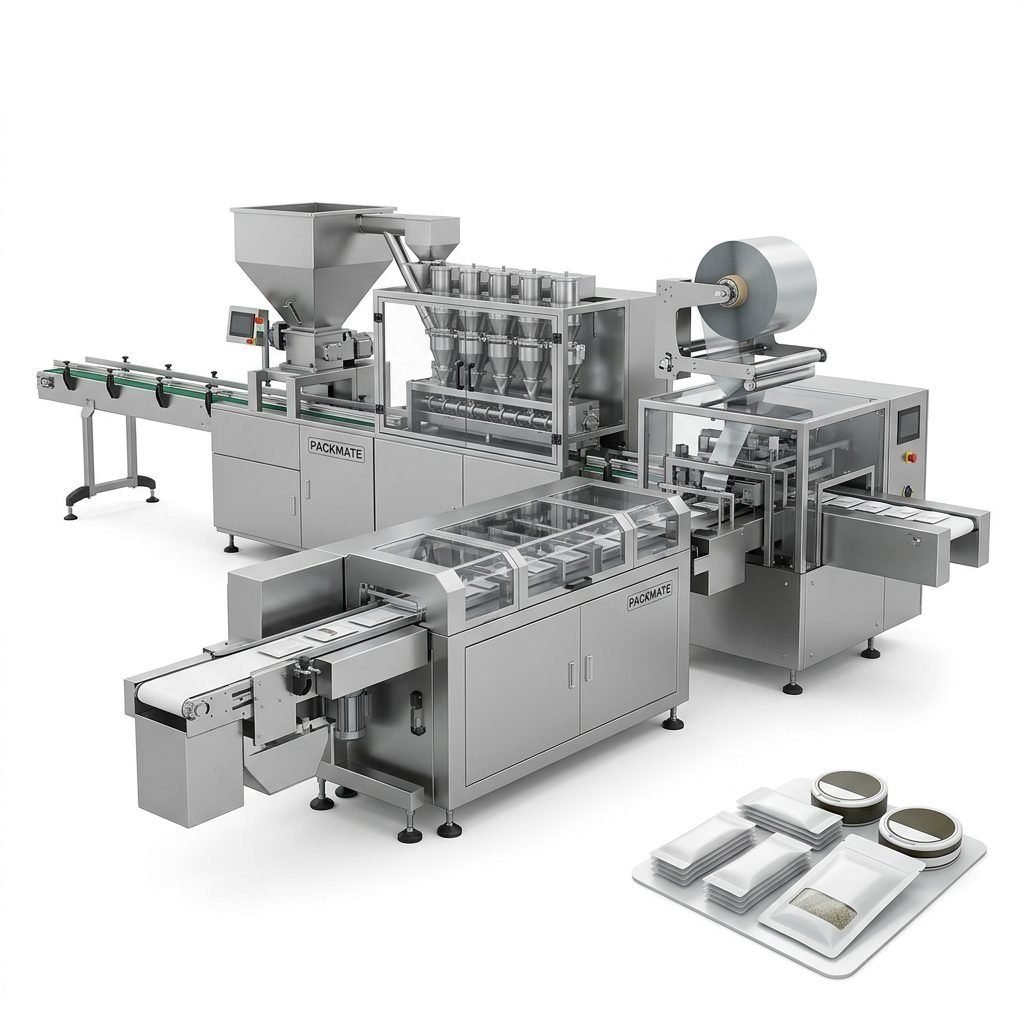
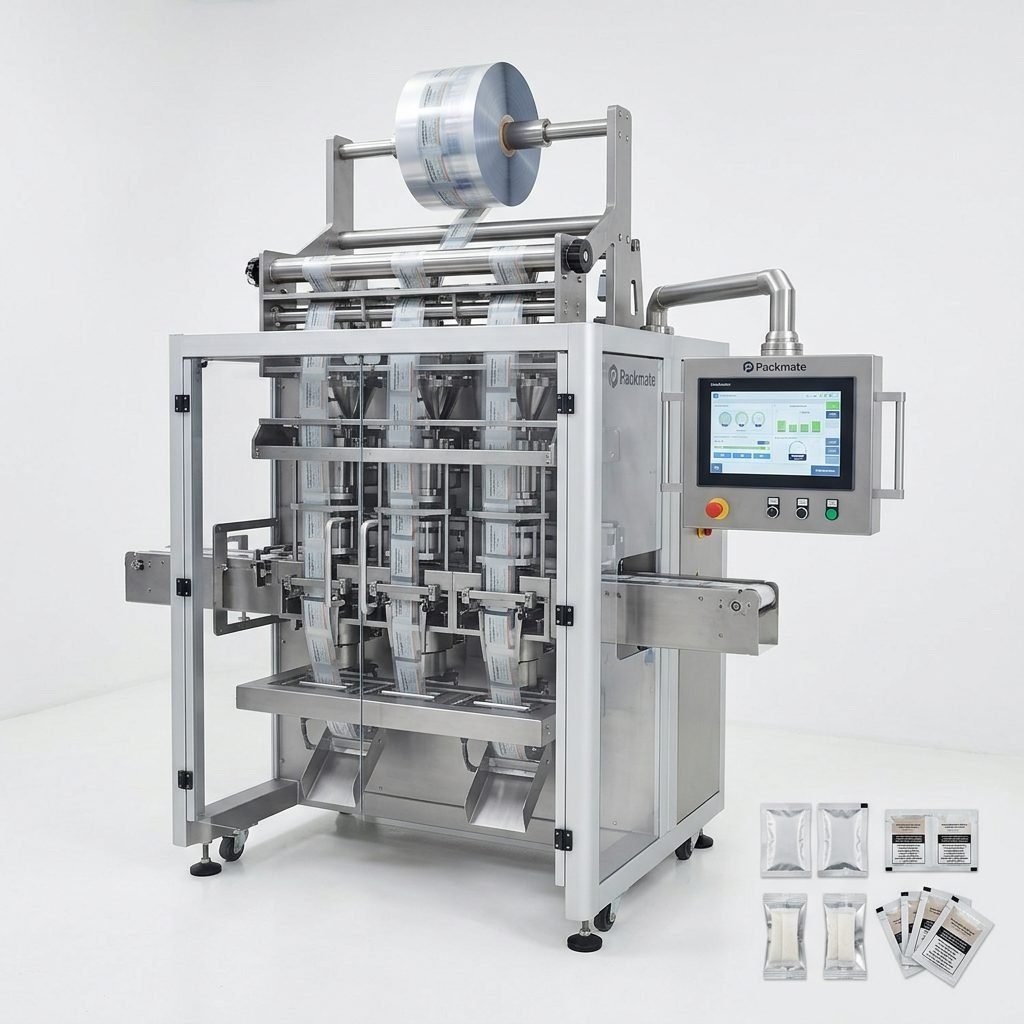
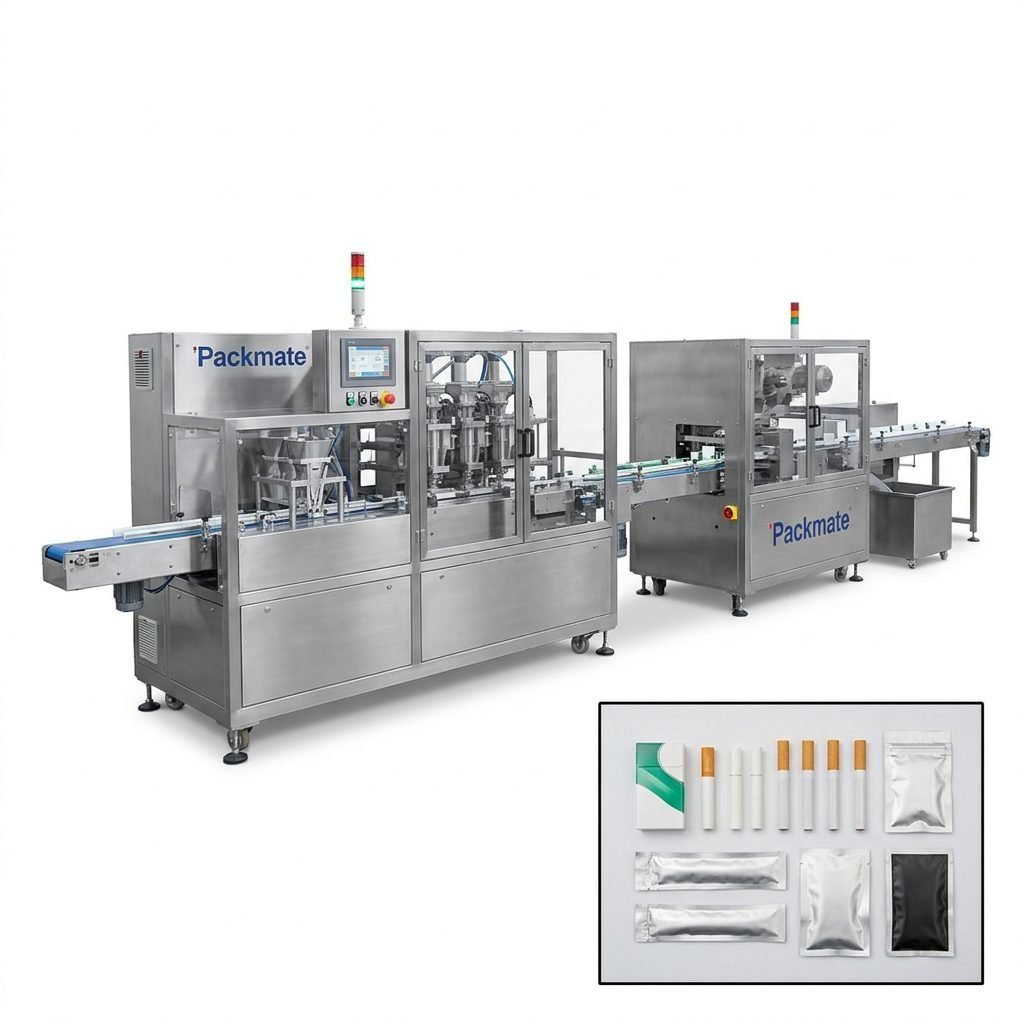
A full nicotine pouch production line integrates multiple subsystems to convert raw materials into packaged single-dose pouches. Typical modules include feed and dosing systems, pouch forming and filling machines, sealing and cutting stations, single- or multi-lane pouch transport, checkweighers, metal detectors, secondary packaging and case packing. Leading equipment suppliers deliver turnkey solutions combining these modules for continuous, automated production.
📌 Key takeaway: A well-balanced line reduces manual handling, improves hygiene, and increases yield. Investing in modular equipment means you can scale up lanes or capacity as demand grows.
Main Equipment Types
Depending on your product format — loose nicotine pouches (snus-style), sachets, stick packs or multi-compartment pouches — the equipment list changes. Common machines include:
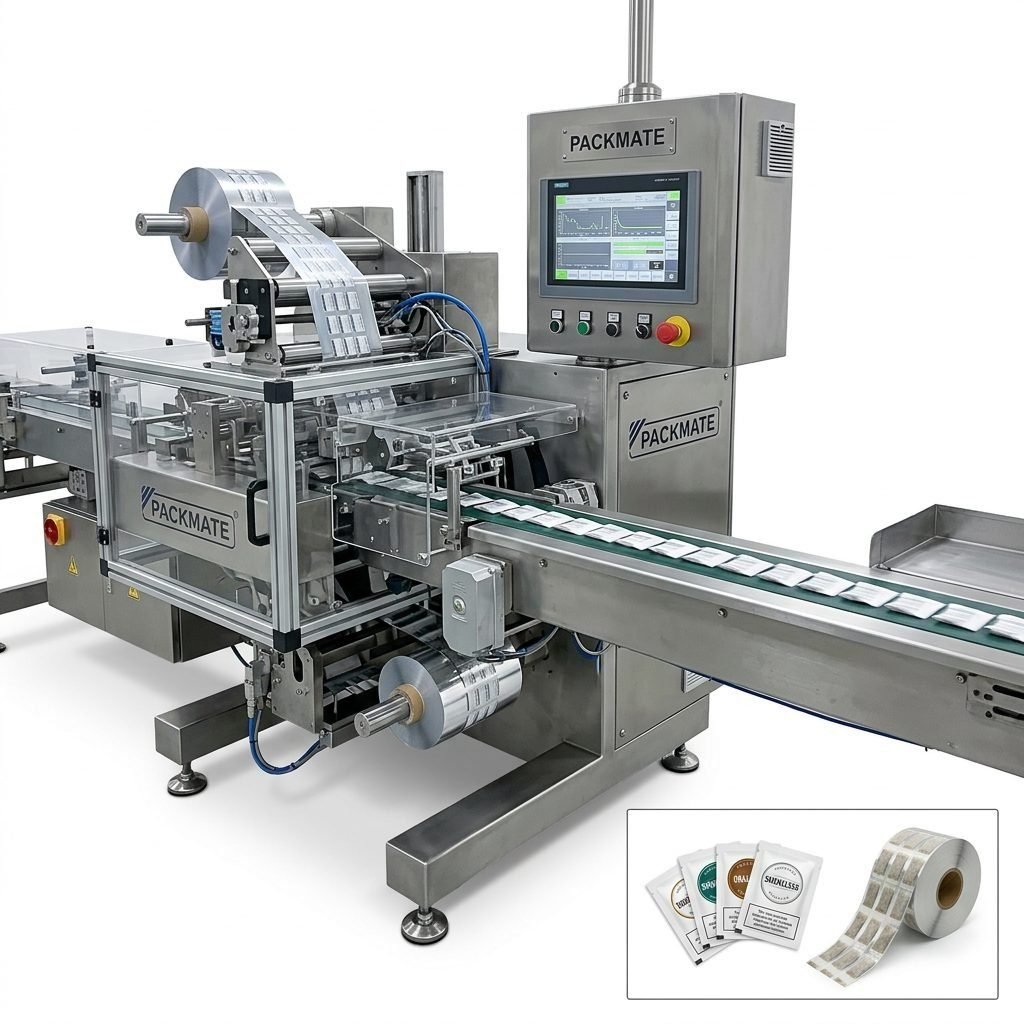
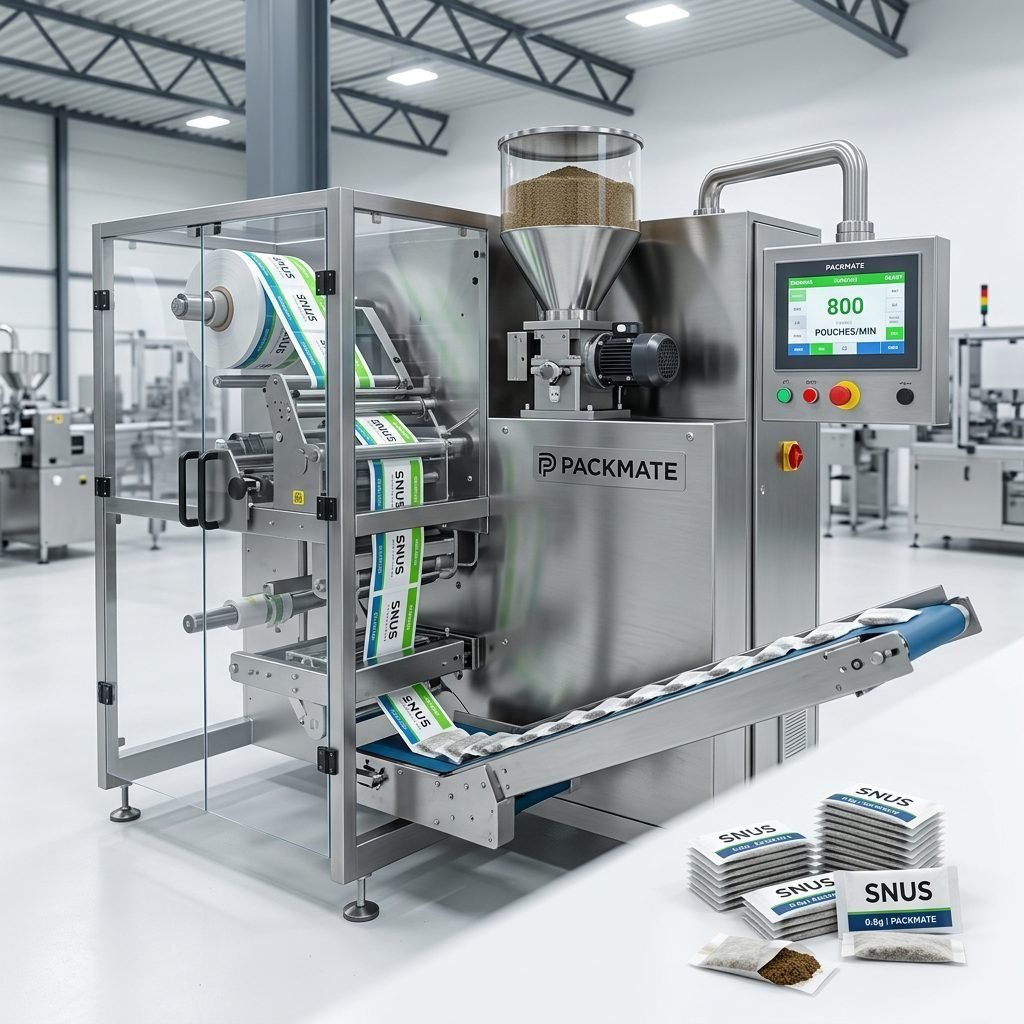
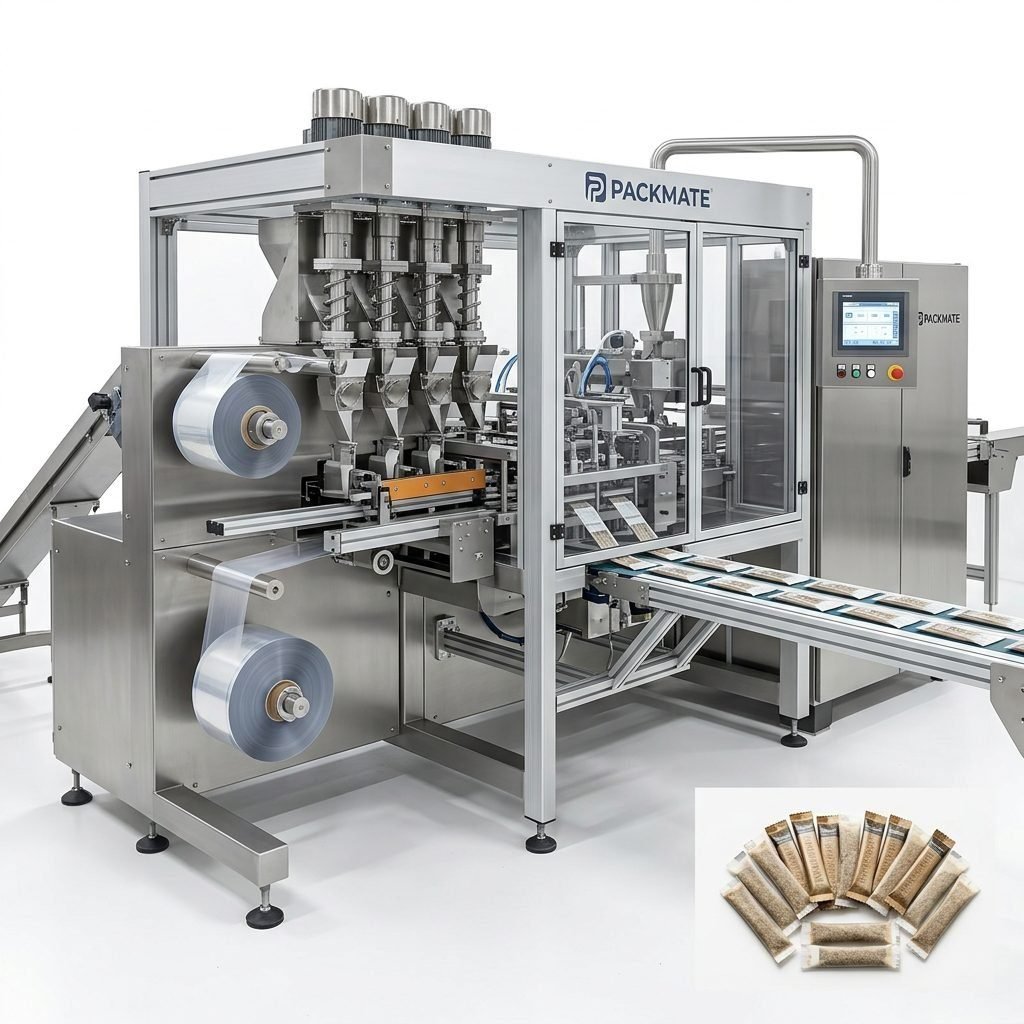
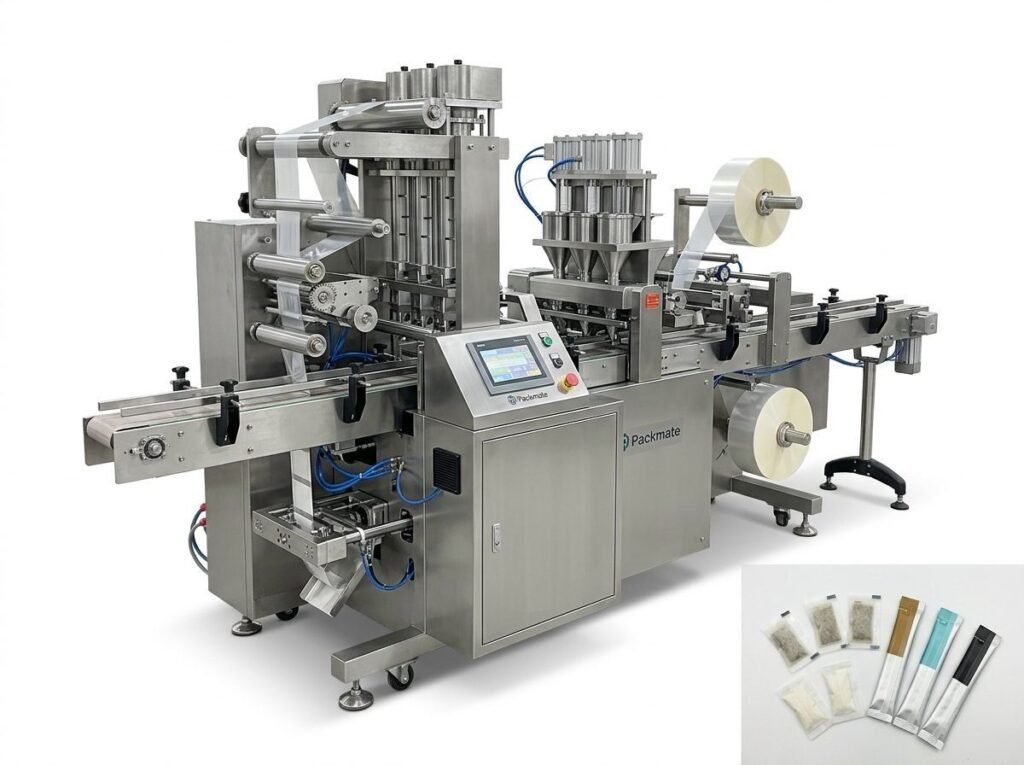
➤ Form-fill-seal pouch machines for sachet and snus pouches that cut, fill and seal in one pass. See advanced models in Snus & Nicotine Packaging Machines.
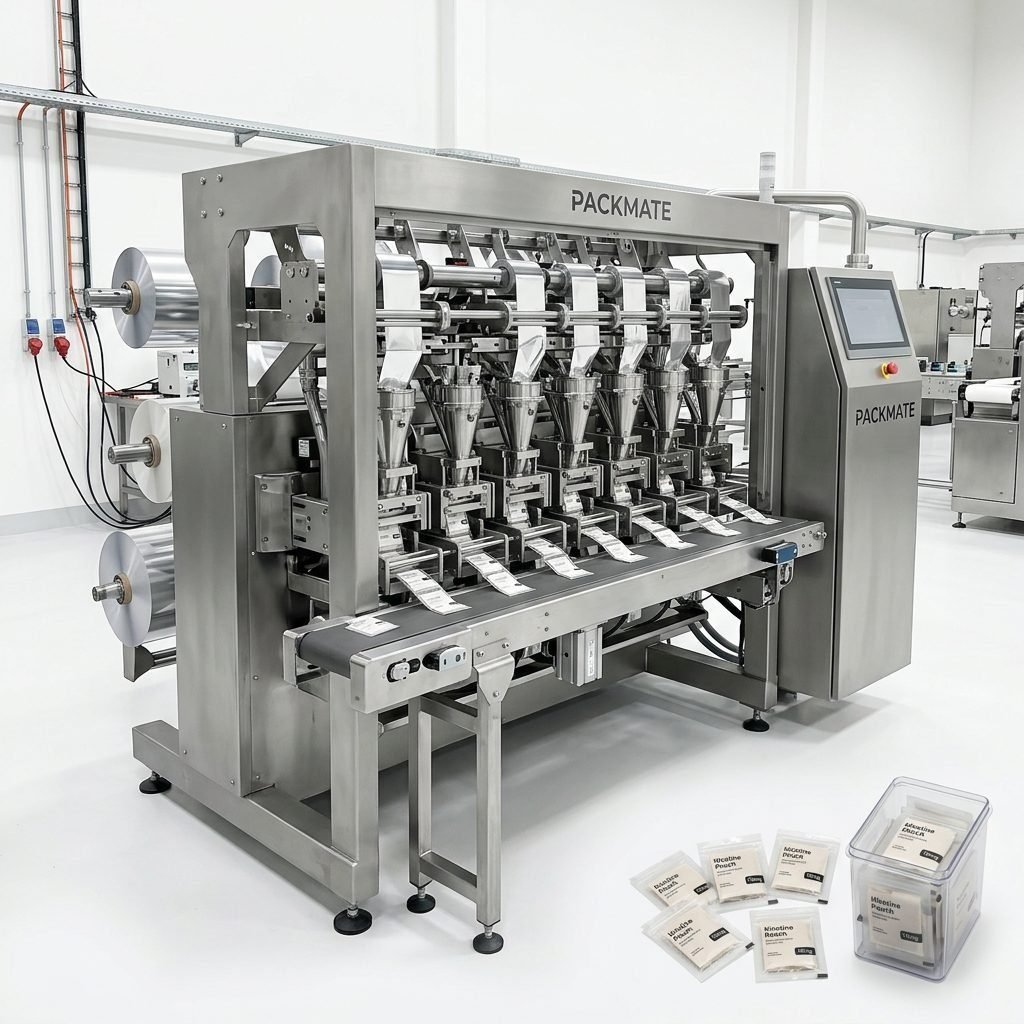
➤ Multi-lane pouch systems for high throughput small-dose pouches, often with synchronized dosing and continuous sealing heads.
➤ Precision dosing and weighing systems that measure nicotine blend and cellulose matrix to exact grams per pouch — visit Weighing & Packaging Systems for examples.
➤ Auxiliary equipment such as vibratory feeders, metal detectors, checkweighers and case packers that ensure compliance and complete downstream packaging.
Typical Production Process (Step-by-step)
The production flow for nicotine pouches generally follows these stages:
1. Raw material preparation — nicotine blends, fillers (e.g., microcrystalline cellulose), flavorings and pouch substrate (non-woven fibers or paper).
2. Dosing and mixing — accurate proportioning of active and excipients using volumetric or gravimetric feeders and mixers.
3. Pouch formation — forming a uniform pouch bed or converting web into individual pockets.
4. Filling — depositing precise amounts into each pouch lane; multi-head dosing reduces cycle time.
5. Sealing and cutting — continuous heat sealing or ultrasonic sealing, then cutting to finished pouch shape.
6. Inspection — checkweighing, vision inspection and metal detection to reject non-conforming pouches.
7. Secondary packaging — grouping into tins, cartons or flow-wrapped bundles and case packing for distribution.
✓ Production tip: Synchronizing dosing and sealing speeds minimizes bruising and dust, and keeps pouch shape consistent across lanes.
Choosing the Right Machine Configuration
Start with your product spec and expected volumes. If you produce multiple SKUs with frequent changeovers, prioritize flexible format tooling and quick-change systems. For high-volume single-SKU production, multi-lane form-fill-seal solutions yield the best cost-per-pouch. Manufacturers like Packmate offer both modular and multi-lane systems tailored for nicotine pouch lines — learn more on Bag & Pouch Packaging Machines.
Key performance indicators to evaluate
• Throughput (pouches/min) — measured per lane and total line capacity.
• Weight accuracy — typical tolerance ±0.02–0.05 g depending on dosing tech.
• Yield & uptime — target >92% for mature lines.
• Changeover time — tool-less or fast-change systems save hours per SKU swap.
Quality Control and Certifications
Quality control is critical for nicotine pouch production. Integrated systems should include weight checkweighers, vision inspection for sealing integrity, and in-line metal detection. Equipment suppliers typically validate machines against CE and ISO standards; choose vendors that provide calibration documentation, IQ/OQ/PQ support and traceability for critical parameters. See Certificate for typical certification information.
Cost Components: Capital and Operating Expenses
Understanding the cost structure helps build realistic ROI models. Primary cost drivers include:
• Capital expenditure (CAPEX): core form-fill-seal machines, dosing/weighing systems, auxiliary equipment, conveyors and electrical controls. Multi-lane systems cost more upfront but lower per-unit costs at scale.
• Installation & commissioning: site-specific mechanical and electrical work, IQ/OQ, and operator training.
• Operating expenditure (OPEX): energy consumption, consumables (film, pouches, sealing jaws), maintenance parts, and labor.
• Regulatory compliance: testing, certification renewals and quality assurance staffing.
⚠️ Budgeting note: Factor 10–25% of machine CAPEX for installation & validation. Spare parts and service contracts preserve uptime and are cost-effective on long-run production.
Layout, Utilities and Factory Requirements
Nicotine pouch lines require clean, ventilated production areas, controlled humidity for certain substrates, stable compressed air, and sufficient electrical supply. Plan a linear layout from dosing to case packing to minimize transfers. Allocate space for raw material storage, finished goods staging and a QC laboratory. Suppliers can design turnkey factory layouts based on your facility; explore Filling & Packaging Lines for integrated examples.
Installation, Commissioning and Training
Professional installation and commissioning are essential. A thorough handover includes mechanical alignment, PLC and HMI configuration, process validation, and operator training on maintenance and sanitation. Look for suppliers offering on-site commissioning or remote support packages — About Packmate outlines typical service offerings and long-term support options.
Maintenance Best Practices
Preventive maintenance maximizes uptime. Key practices include scheduled inspections of seals and jaws, periodic calibration of dosing heads, lubrication of moving parts, and replacement of wear components on predictable cycles. Keep a documented spare parts kit for critical items (sealing bars, drive belts, sensors). Automated line data and alarm logs help identify fault trends before major failures occur.
Customization and Turnkey Solutions
Many manufacturers need custom features such as special pouch shapes, branded tins, or nitrogen flushing for extended shelf life. Working with a vendor that offers engineering, tooling design and process optimization shortens ramp-up time. Full turnkey providers handle packaging, labeling, and case packing integration to deliver a production-ready line.
When to pick a turnkey vs modular approach
Choose turnkey if you need a fast ramp and single-vendor responsibility. Choose modular if you prefer mixing best-in-class components or plan frequent line reconfiguration. The right approach balances project timeline, capital constraints and long-term flexibility.
Global Applications & Case Perspectives
Nicotine pouch lines are in demand worldwide: established European snus markets favor high-quality, precision pouching; North American customers emphasize flavor variety and packaging design; Asian markets prioritize high-volume, compact multi-lane systems. Global suppliers regularly exhibit at trade shows and present case studies demonstrating performance improvements and quality gains. For examples and case references, see Case and Our Exhibition.
Selecting a Supplier: Checklist
Use this quick checklist when evaluating vendors:
• Production references for nicotine pouch projects.
• On-site commissioning and training services.
• Spare parts availability and lead times.
• Compliance with CE/ISO and documented validation support.
• Options for multi-lane scaling and format flexibility.
📌 Pro tip: Ask for a complete performance guarantee — throughput, weight accuracy and uptime — and include penalties or remediation steps in the purchase agreement.
Real-world Example: Multi-lane Snus Line
A modern multi-lane snus line combines a centralized gravimetric dosing station feeding a 6- or 8-lane form-fill-seal head. With synchronized indexing and continuous sealing, a single line can reach several thousand pouches per minute of aggregate output. Integration with automated carton erectors and case packers minimizes labor and improves traceability. Many established manufacturers supply these scalable systems; review the product range under Sachet & Stick Pack Machines.
Regulatory, Safety and Environmental Considerations
Nicotine handling requires strict safety controls due to toxicity at high concentrations. Incorporate closed dosing systems, local exhaust ventilation, PPE protocols and spill containment. Waste streams from film trim and used purge should be managed per local regulations. Verify that your supplier’s machines meet electrical safety and CE directives, and that documentation supports audits and regulatory reviews.
After-sales Service and Lifecycle Support
A strong after-sales program includes remote diagnostics, planned maintenance contracts, and fast spare parts shipping. Choose partners with global service networks or demonstrated export experience. For manufacturer background and service offerings, consult About Packmate and Service.
Final Considerations Before Investment
Align technical specs with business goals: expected SKUs, planned growth rates, and regulatory markets. Use pilot runs or contract manufacturing to validate recipes and production tolerances before committing to full-scale equipment purchases. Negotiate training, service response times and acceptance testing into contracts to protect production targets.
✓ Quick resources: Browse product categories for equipment matching your needs: Snus & Nicotine Packaging Machines, Bag & Pouch Packaging Machines, and Weighing & Packaging Systems.
Summary
A high quality nicotine pouch production line is a combination of precise dosing, reliable sealing, robust inspection and efficient secondary packaging. Selecting the right configuration depends on product format, throughput needs and regulatory environments. Invest in validated suppliers, spare parts strategies and staff training to maximize uptime and product consistency.
Common Questions (FAQs)
Q1: How do I estimate the right throughput for initial investment? — Estimate current and projected demand for at least 12–36 months, include SKU growth, and choose modular systems that can add lanes or parallel machines as volume increases.
Q2: What are typical tolerances for pouch weight and how are they achieved? — Typical tolerances range from ±0.02–0.05 g; achieve them with gravimetric dosing, regular calibration, and high-precision feeders.
Q3: What safety features are important for nicotine handling? — Closed dosing, ventilation and extraction, appropriate PPE, spill containment, and clearly documented SOPs for handling and cleaning.
Q4: Can I get end-to-end turnkey supply and factory layout support? — Yes, many suppliers provide turnkey services including layout design, installation, commissioning and training; contact vendor service teams for tailored proposals or see the company’s Service page.
Q5: How soon can a new line be commissioned? — Typical timelines from order to commissioning vary by complexity: simple modular lines might be 8–12 weeks; full multi-lane turnkey installations may take 12–28 weeks including FAT, shipping and onsite commissioning.