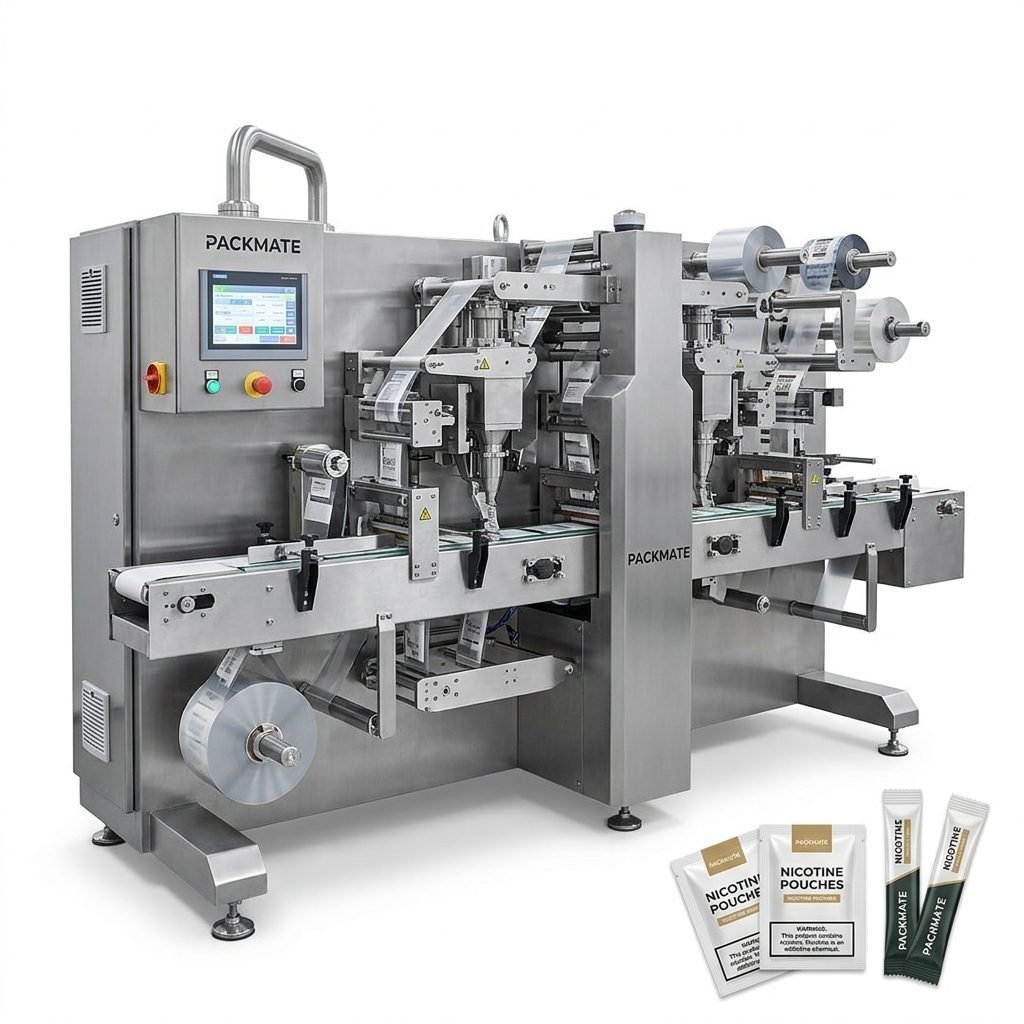
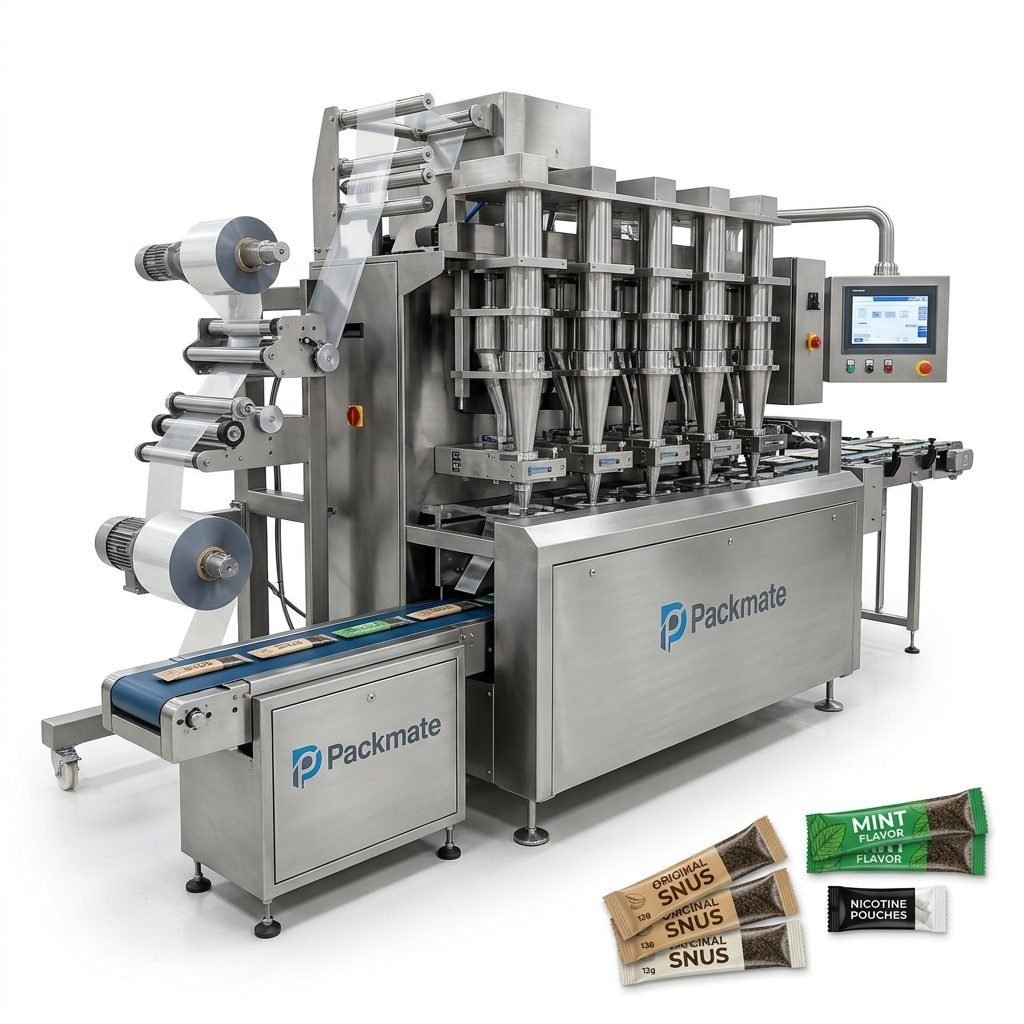
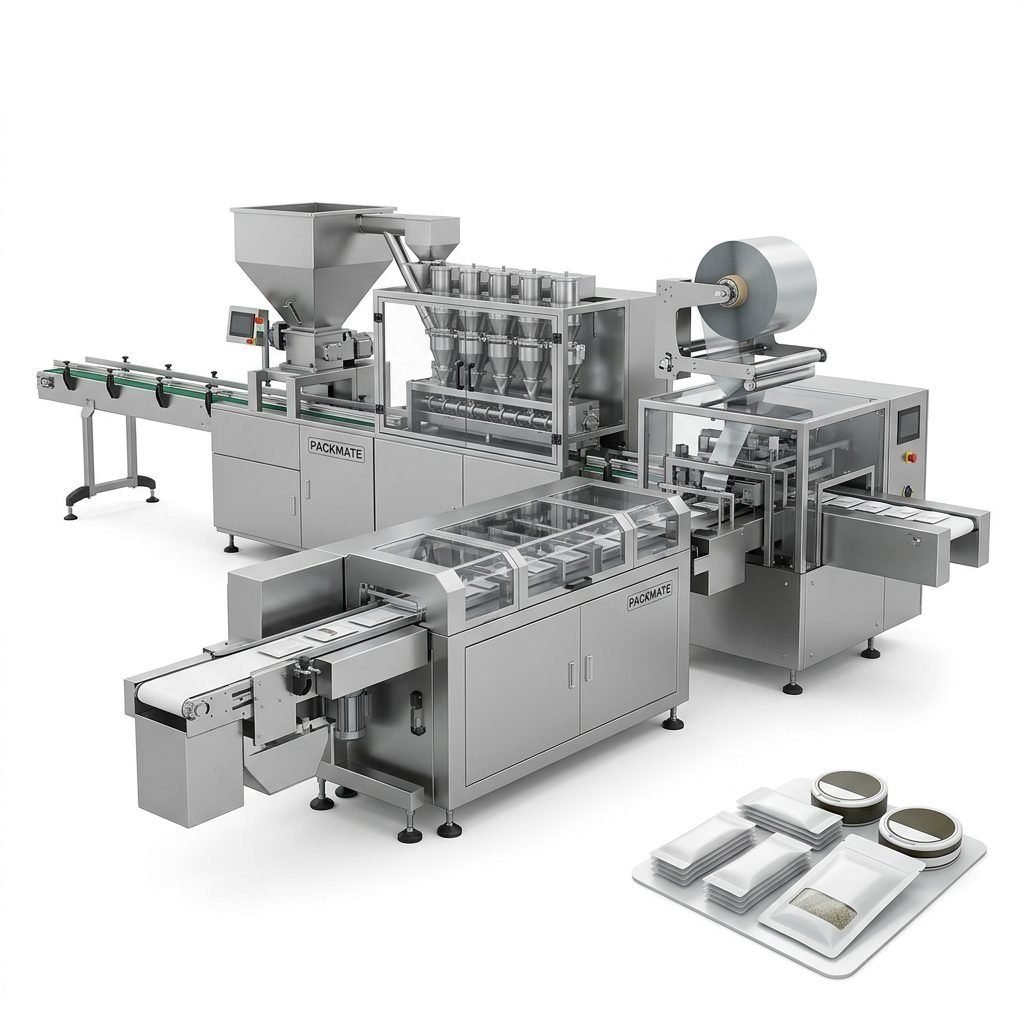
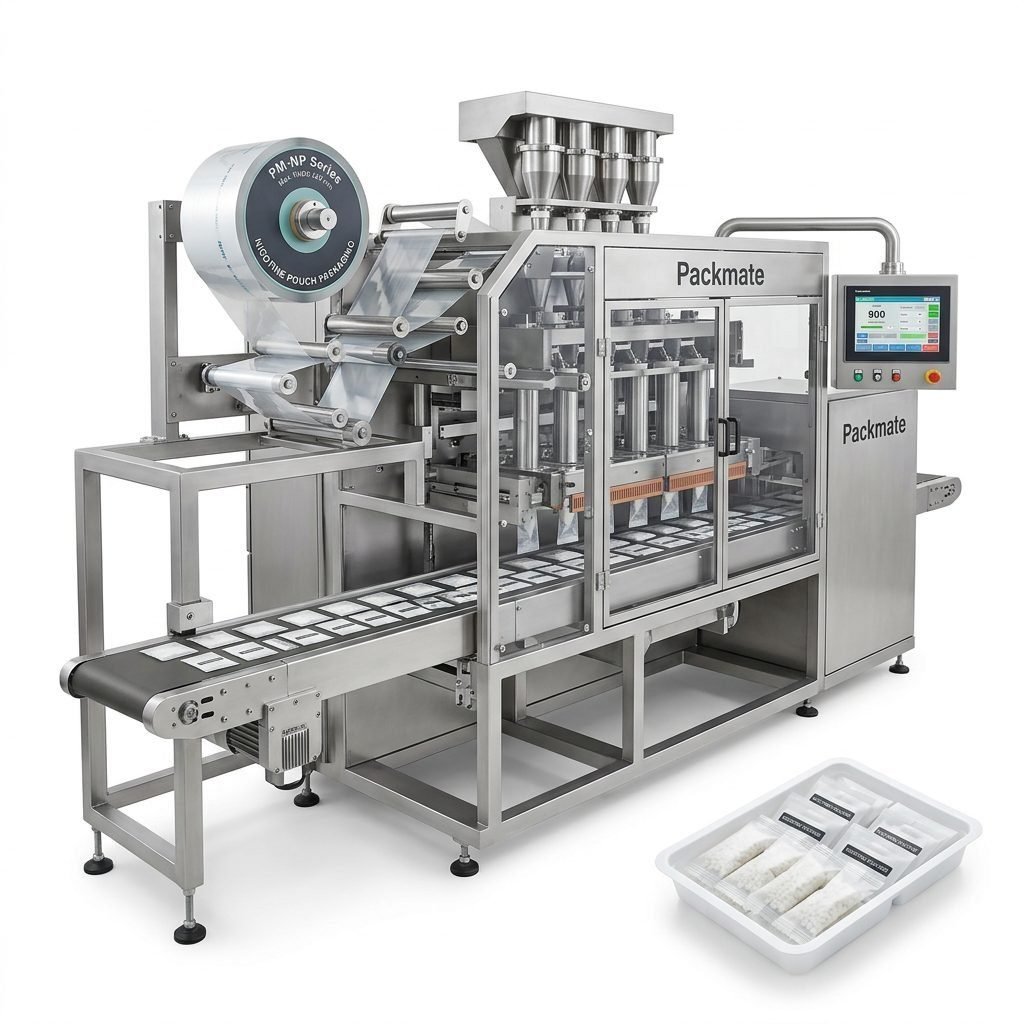
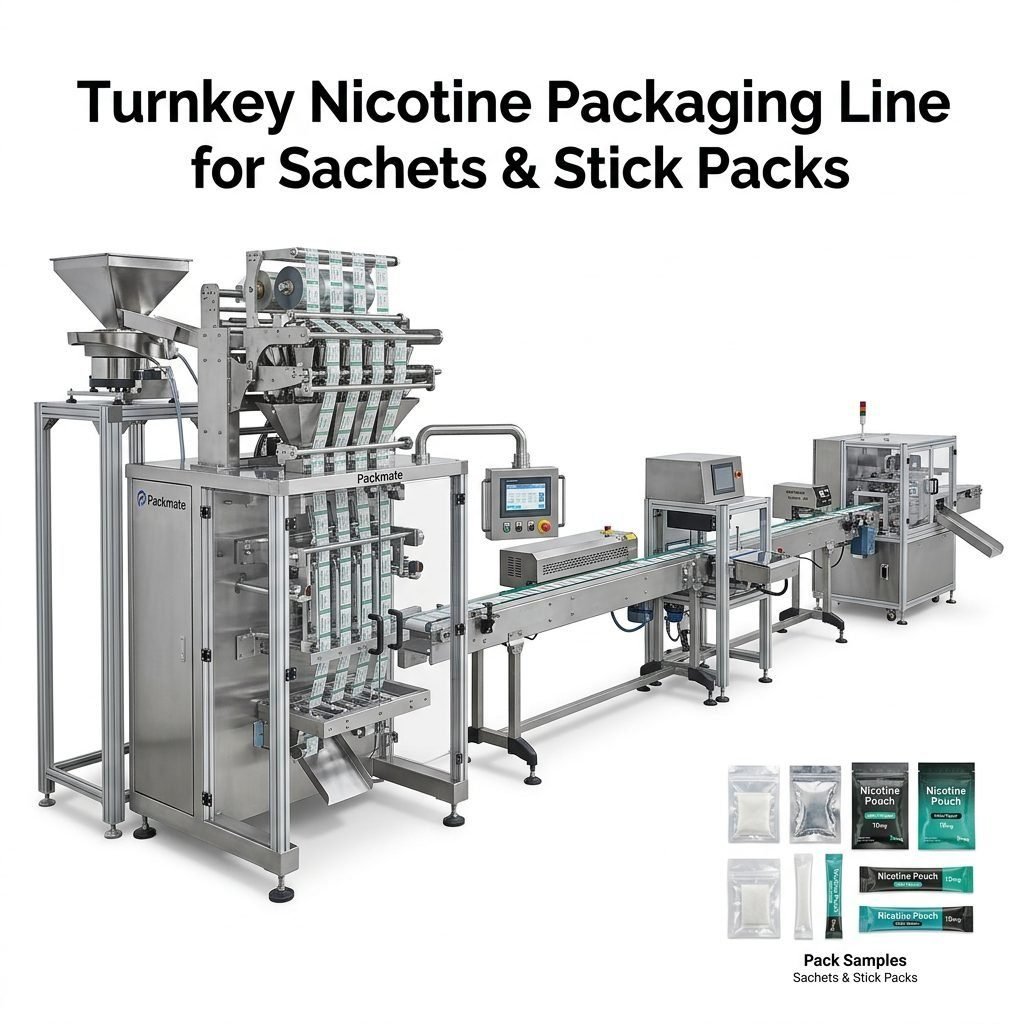
The nicotine pouch market is growing rapidly and manufacturers need reliable, high-speed packaging solutions to keep up with demand. This guide explores the best nicotine pouch packaging machinery available today, focusing on high-speed automatic systems that deliver precision, flexibility, and long-term value. Whether you manufacture snus, nicotine pouches, or similar small-dose products, you’ll find practical advice on selecting, configuring, and maintaining machines that optimize throughput and product quality.
Why High-Speed Automatic Machines Matter for Nicotine Pouches
Modern nicotine-pouch production demands machines that combine speed with delicate handling. High-speed automatic packaging machines reduce labor costs, minimize human error, and maintain consistent pouch weight and sealing quality across thousands of cycles per hour. For manufacturers targeting retail and export markets, the difference between an industrial-grade system and a basic machine can mean higher yield, fewer recalls, and better margins.
⚙️ Key advantage: High-speed multi-lane systems can multiply output while keeping the same footprint—ideal for manufacturers scaling production without expanding factory area.
Top Machine Types for Nicotine Pouch Production
There are several machine formats suited to nicotine pouches. Choosing the right type depends on your product format, dose size, material, and target speed.
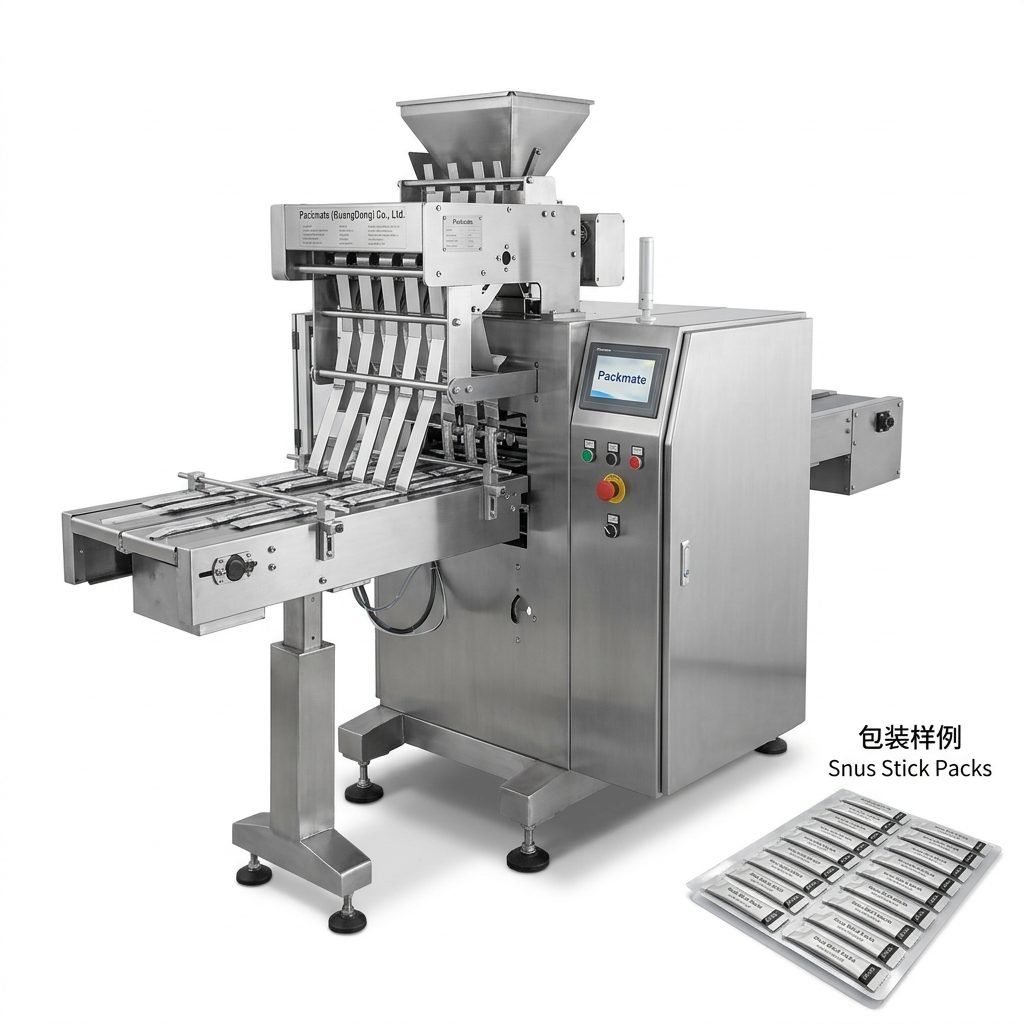
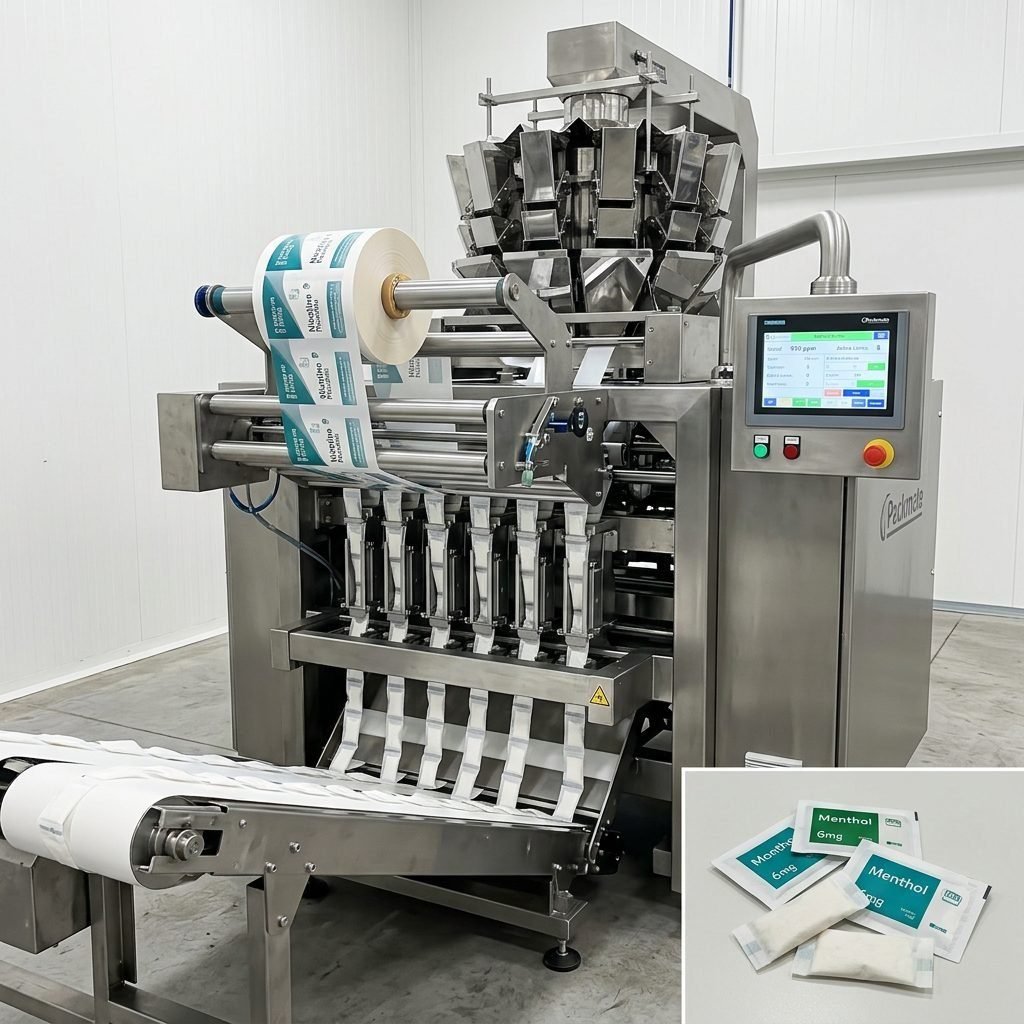
✓ Multi-lane pouch packaging machines — deliver very high throughput for small-dose pouches and snus-style products. Ideal for large-volume producers.
✓ Sachet & stick pack machines — flexible for single-dose formats and easy to configure for trial lines and small runs. See options for Sachet & Stick Pack Machines.
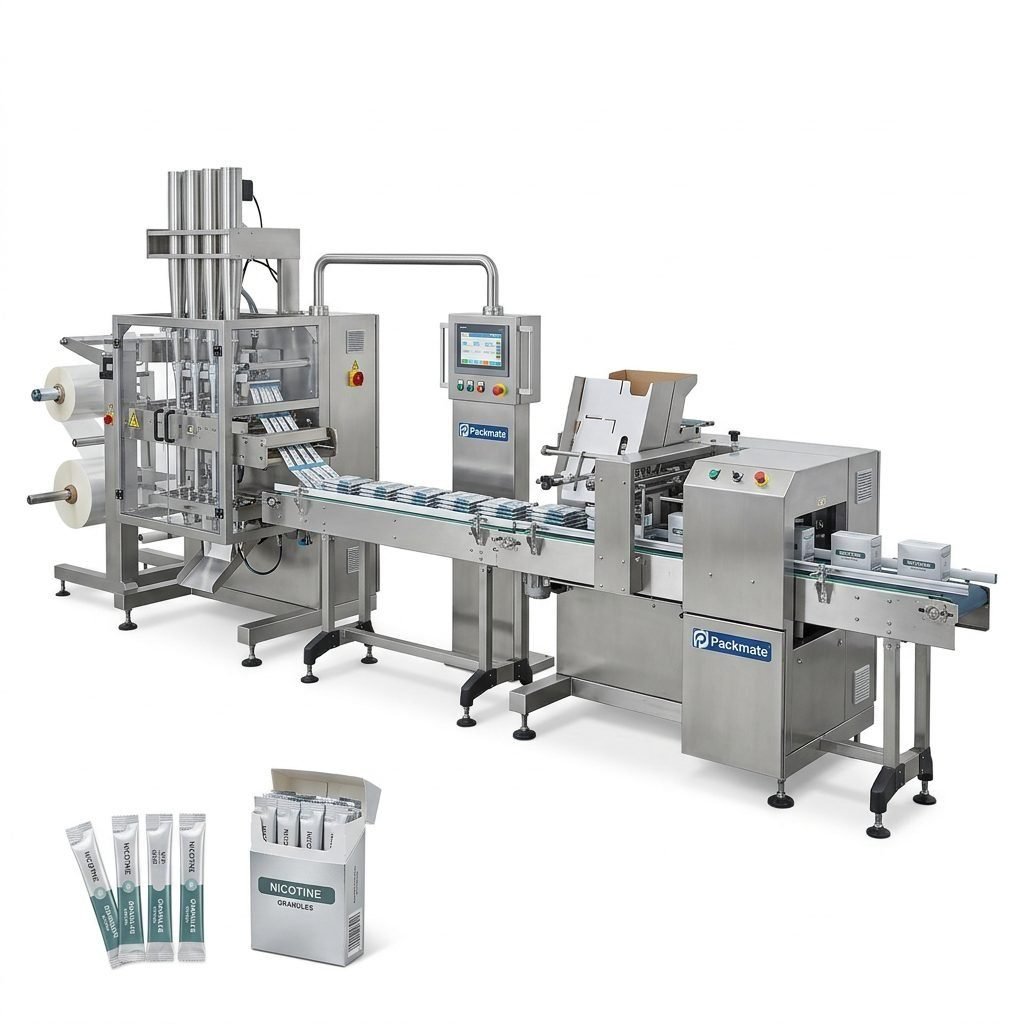
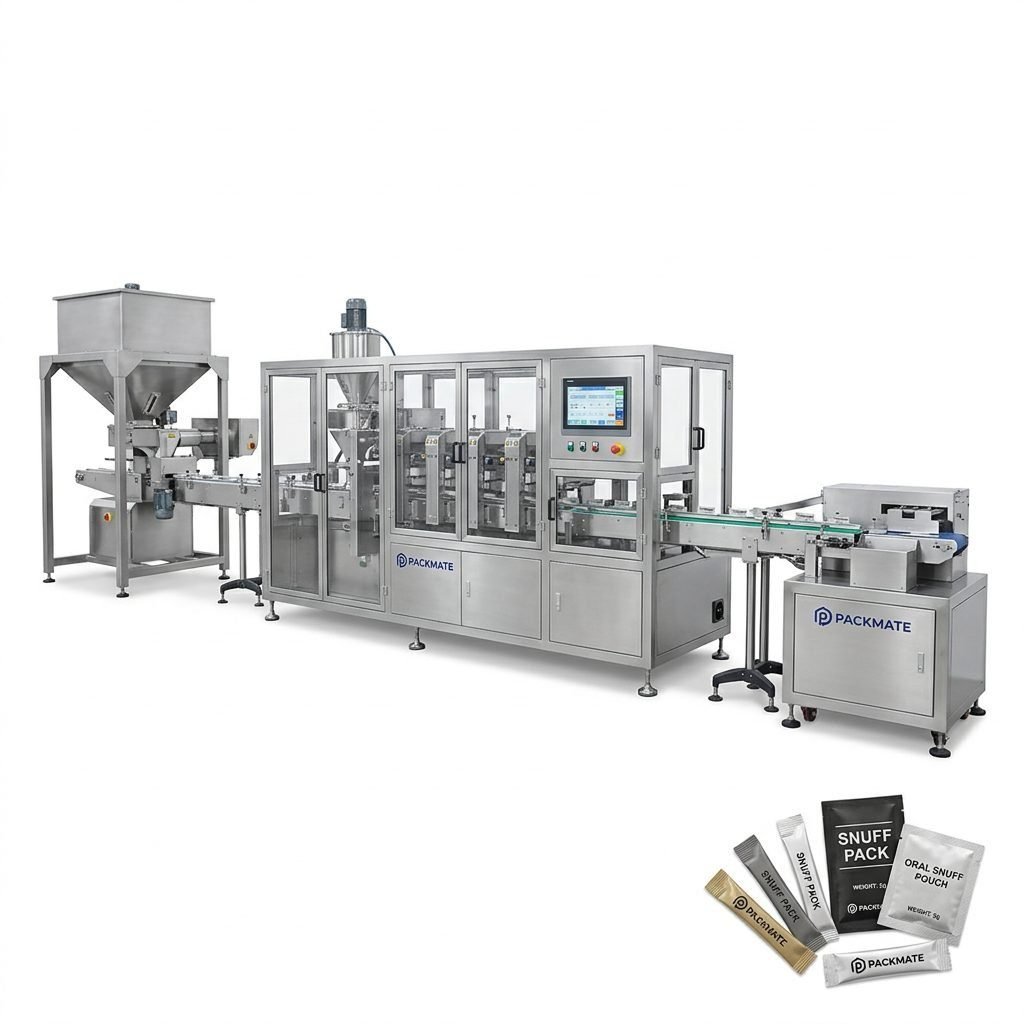
✓ Form-fill-seal lines with precision weighing — essential when you need exact dosing and integrated weighing equipment. Check integrated Weighing & Packaging Systems.
✓ Auxiliary packaging equipment — conveyors, metal detectors, and secondary wrapping machines help finish a turnkey production line. Explore Auxiliary Packaging Equipment.
What Makes a Machine ‘Best’ for Nicotine Pouches?
Not all machines are created equal. Look for features that support product integrity, speed, and regulatory compliance:
⚡ High-precision dosing: Stable dosing systems that keep pouch weights within narrow tolerances reduce waste and regulatory risk.
🔒 Reliable sealing: Robust sealing stations prevent leaks and extend shelf life—critical for tobacco alternatives and nicotine pouches.
🤖 Automation & control: PLC controls, recipe storage, and touchscreen HMI for quick changeovers and reproducible production settings.
🛠️ Serviceability: Easy access panels, modular components, and global spare-part availability reduce downtime.
✅ Pro tip: Choose a manufacturer with strong global service and exhibition presence so you can inspect machines in person and validate performance — see the company’s exhibition history.
Key Specifications to Compare
When evaluating machines, compare these specification areas to match your production targets:
⚙️ Speed (pouch/min or lanes × pouches/min)
📏 Pouch size range and material compatibility (paper, film, non-woven, etc.)
⚖️ Dosing accuracy (± tolerance)
🔁 Changeover time and ease of tool-less adjustments
🔌 Electrical and pneumatic demands—verify compatibility with your factory utilities
Why Multi-Lane Systems Are a Game Changer
Multi-lane machines deliver high throughput by running several lanes in parallel. This approach is efficient for small pouch sizes where the limiting factor is the number of pouches per minute per lane.
• They reduce floor space per output unit compared to multiple single-lane machines.
• Centralized controls mean fewer operators and faster central maintenance.
• Ideal for companies moving from pilot to full-scale production without retooling their layout.
📦 Example: A 6-lane snus packing machine can often match or exceed the output of several single-lane units while conserving factory space and simplifying process control.
Selecting the Right Supplier: What to Expect
A reputable supplier provides more than a machine. Expect engineering support, installation, commissioning, and ongoing service. Check for:
🔍 Factory tours and machine demonstrations — validate claims and see real-world performance.
📄 CE and ISO certifications — confirm compliance with international manufacturing standards.
🔁 Turnkey solutions — integration with weighing, filling, and secondary packaging lines. Explore Filling & Packaging Lines for full-line options.
🤝 After-sales service and spare parts availability — critical for uptime in 24/7 operations.
A Closer Look: Packmate Snus Machine Capabilities
Companies like Packmate bring decades of engineering experience to nicotine pouch packaging. With an expansive factory footprint and advanced CNC capabilities, they offer:
• 30+ years of industry knowledge and 50+ machine models tailored to snus and nicotine products.
• Turnkey solutions for snus, stick packs, sachets, powders, granules, and liquids.
• Strict quality testing and global certifications — see their certificates and manufacturing strength.
Practical Guidance: Choosing the Right Configuration
Start with your product profile and growth plan. Here are practical steps to narrow choices and protect your investment.
1) Define your maximum target throughput (pouches per minute) and typical production runs.
2) Specify acceptable tolerance for pouch weight and sealing quality.
3) Decide on lane count vs. machine speed—multi-lane may yield better ROI long-term.
4) Factor in layout, utilities, and local safety regulations; request on-site surveys when possible.
📈 ROI tip: Consider modular systems that allow additional lanes or modules later—this keeps initial CAPEX manageable while allowing future expansion.
Installation, Commissioning, and Training
Proper installation and operator training determine how quickly you reach target output. A good supplier will provide:
• On-site commissioning with performance validation and adjustment.
• Comprehensive operator and maintenance training, plus documentation and spare parts kits.
• Remote support and service contracts to minimize downtime and ensure consistent performance.
Maintenance Best Practices for Long-Term Reliability
Regular maintenance protects your investment and keeps packaging quality stable. Adopt a preventative maintenance schedule that includes:
• Daily cleaning and inspection of sealing jaws and dosing components.
• Scheduled replacement of wear parts and alignment checks every set number of operating hours.
• Keep a small inventory of critical spares locally to avoid long lead-time outages.
Compliance and Market Considerations
Nicotine pouch products face varying regulatory requirements depending on market and region. Ensure your production line supports traceability, tamper-evident features, and any special labeling or packaging constraints required by local authorities. If you are expanding globally, verify the machine and materials comply with export market standards.
Real-World Case Studies and Demonstrations
Practical evidence matters. Request case studies from suppliers showing similar product types, production volumes, and environments. Packmate’s global cases highlight diverse installations across Europe, Asia, and the Americas—review their customer examples on the Case page.
How to Request a Quote and What to Prepare
When contacting manufacturers, prepare detailed product specs to get accurate quotes:
• Target daily or hourly output and pouch format
• Material types and pouch dimensions
• Dosing accuracy requirements and any special handling considerations
• Your factory utilities and layout constraints
• Request references, photos, and video of similar installations
Contact the manufacturer directly to discuss tailored solutions and ask for on-site or virtual demonstrations: Contact Us.
Final Considerations Before Purchase
Invest time in evaluating supplier responsiveness, spare parts lead times, and the clarity of warranties. A well-engineered packaging line from an experienced supplier can provide years of dependable operation and a measurable return on investment.
🔎 Next step: Review available machine models and request a customized line design that fits your product portfolio—visit Snus & Nicotine Packaging Machines for technical options.
Frequently Asked Questions
Q1: How fast can a high-speed nicotine pouch machine run?
A1: Speeds vary by design and lane count. Single-lane machines may produce hundreds of pouches per minute, while multi-lane systems can achieve several thousand pouches per minute in aggregate, depending on pouch size and dosing method.
Q2: What maintenance is required to keep sealing quality consistent?
A2: Daily cleaning, routine inspection of sealing jaws, periodic replacement of wear parts, and calibration of dosing equipment are standard. A preventative maintenance schedule reduces unscheduled downtime and maintains product integrity.
Q3: Can machines handle different pouch materials and sizes?
A3: Most modern machines are designed for material flexibility, but you should confirm material compatibility and minimum/maximum pouch dimensions. Some models offer quick-change tooling for efficient format changes.
Q4: What certifications should I expect from a reputable supplier?
A4: CE and ISO certifications are common indicators of compliance with international quality and safety standards. Always request documentation and factory inspection options.
Q5: How can I evaluate a supplier before buying?
A5: Ask for references, on-site demos, videos of similar installations, and a clear service and spare-parts policy. Visiting trade shows or supplier factories provides valuable insights—see About Packmate to learn more about their expertise and history.