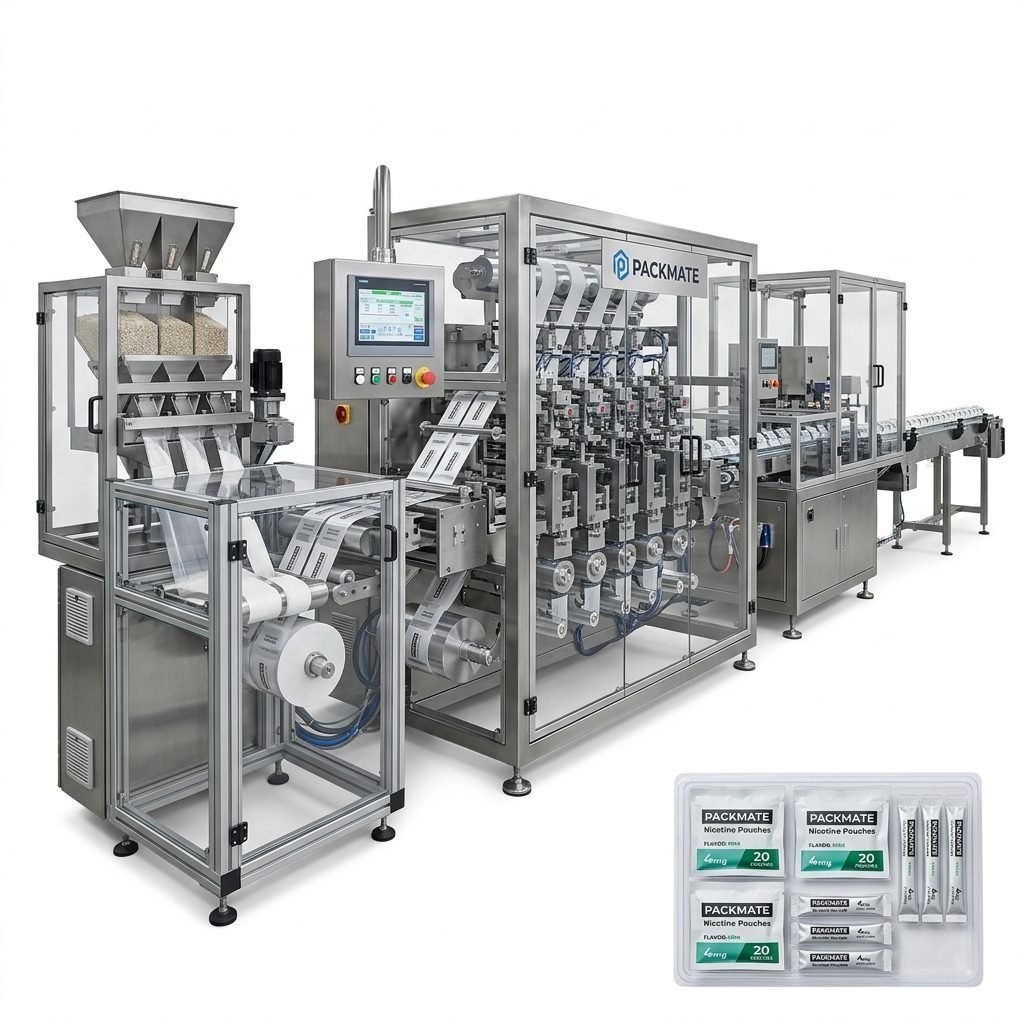
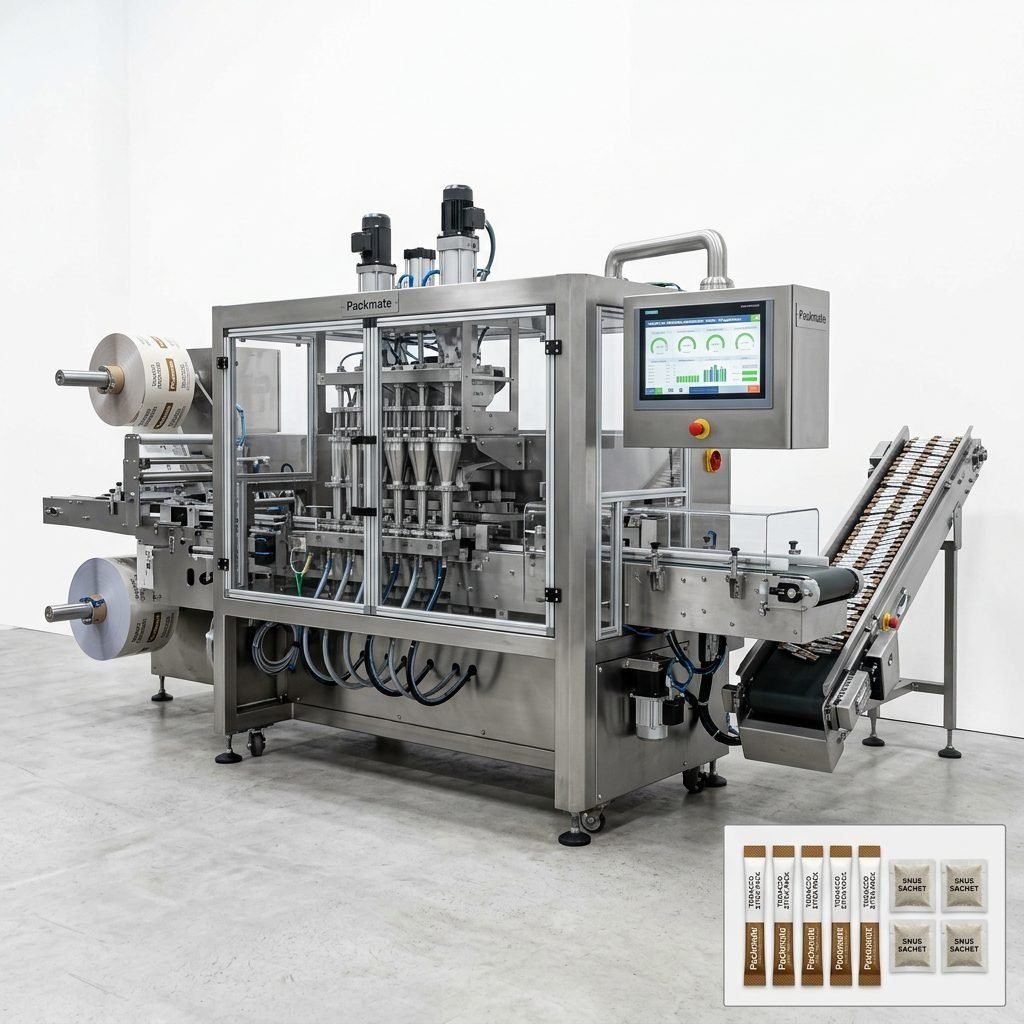
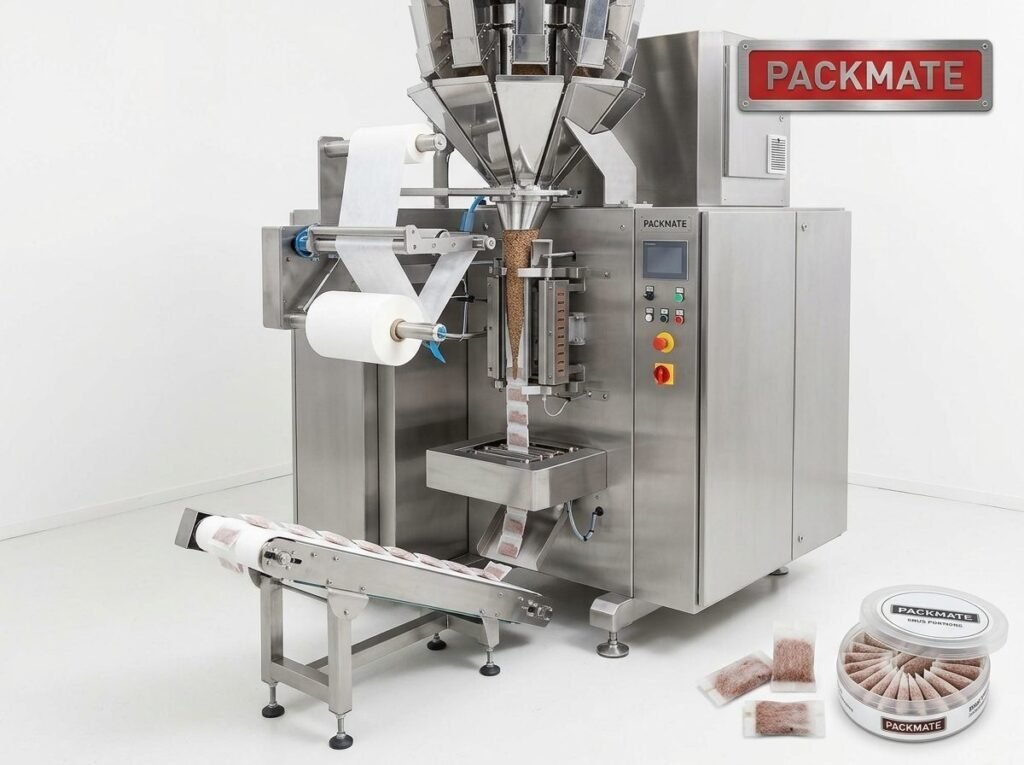
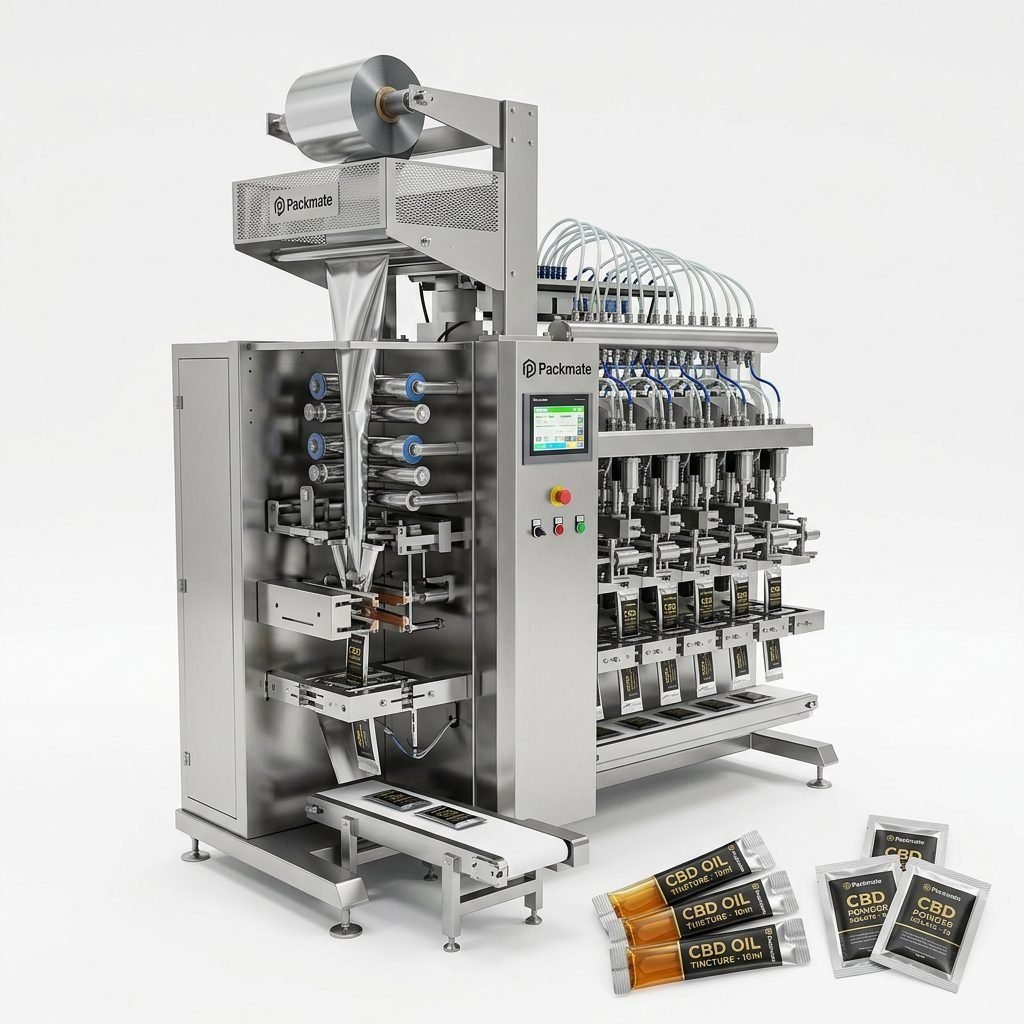
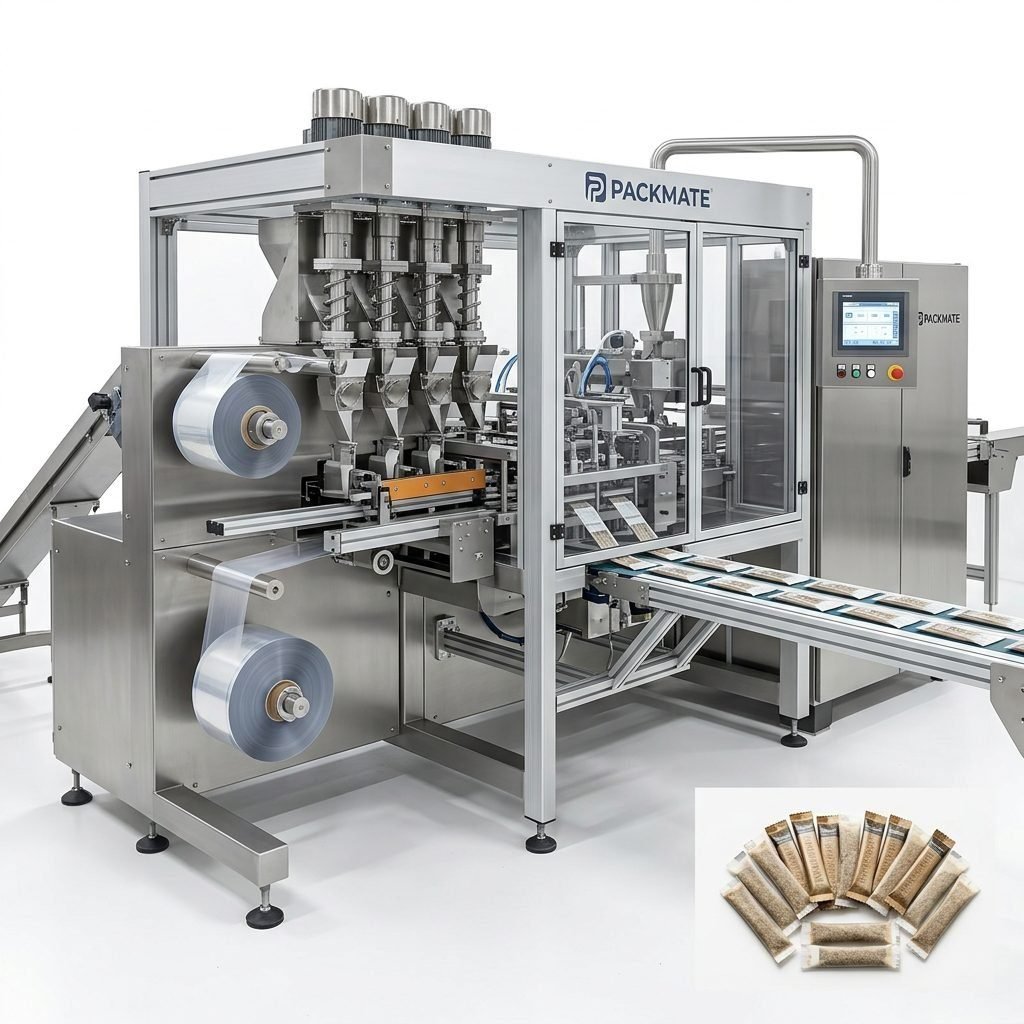
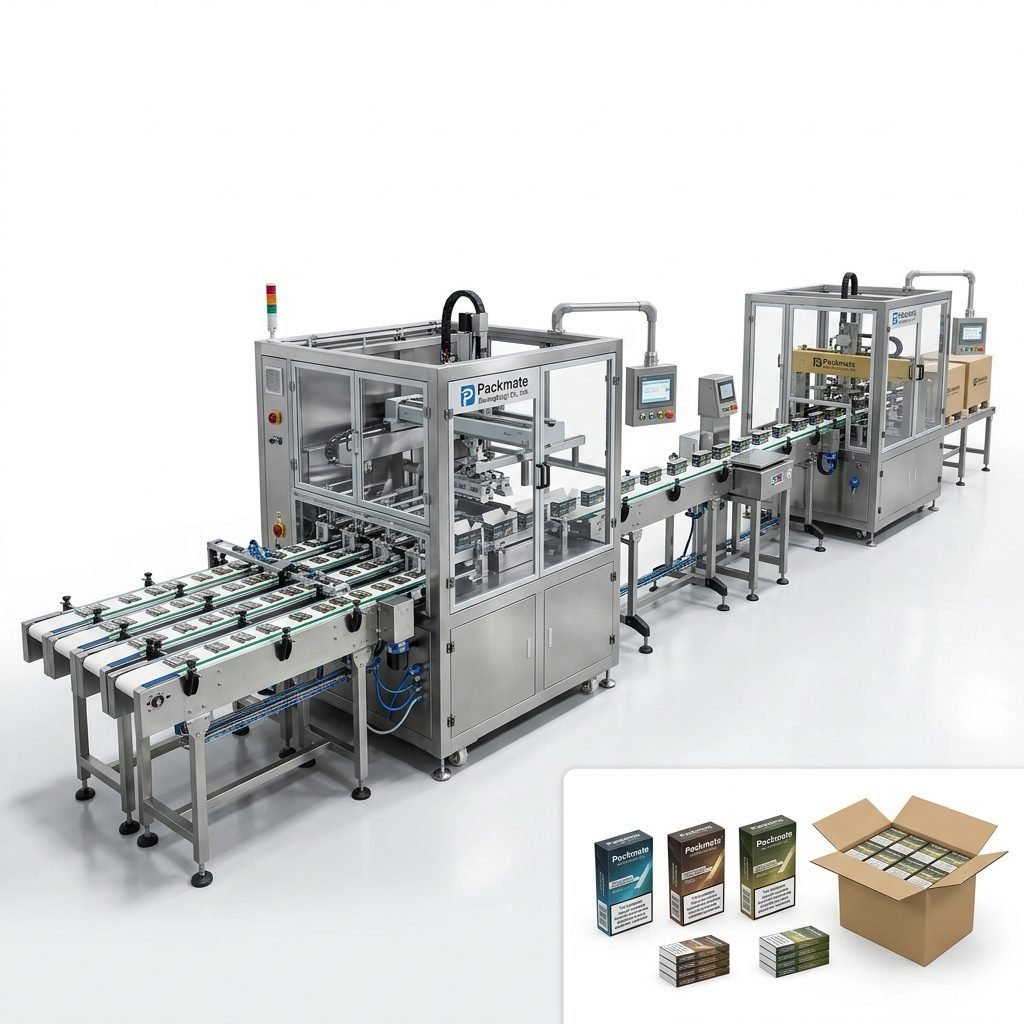
In the rapidly evolving nicotine pouch market, selecting the right packaging line is a decisive factor for product quality, production cost, and regulatory compliance. This guide explores the best nicotine pouch packaging equipment available today — from high-speed multi-lane pouch machines to precise sachet and stick pack systems — and explains how to choose, integrate, and maintain machines that deliver fast, accurate, and compliant production.
Why Specialized Nicotine Pouch Packaging Equipment Matters
Nicotine pouches (also known as snus or oral nicotine pouches) demand specialized handling: small-dose filling, airtight sealing, consistent pouch shape, and strict traceability. Generic packaging equipment often cannot achieve the combination of speed, precision, and hygiene required. Investing in machines designed specifically for snus and nicotine pouch formats reduces waste, avoids quality fluctuations, and helps you meet regulatory and market expectations.
⚠️ Key takeaway: Equipment tailored to nicotine pouches delivers consistent pouch weight, uniform sealing, and minimal cross-contamination risks, all of which are essential for consumer safety and brand reputation.
Primary Machine Types for Nicotine Pouch Production
Manufacturers typically use several types of packaging equipment depending on format, output, and automation level:
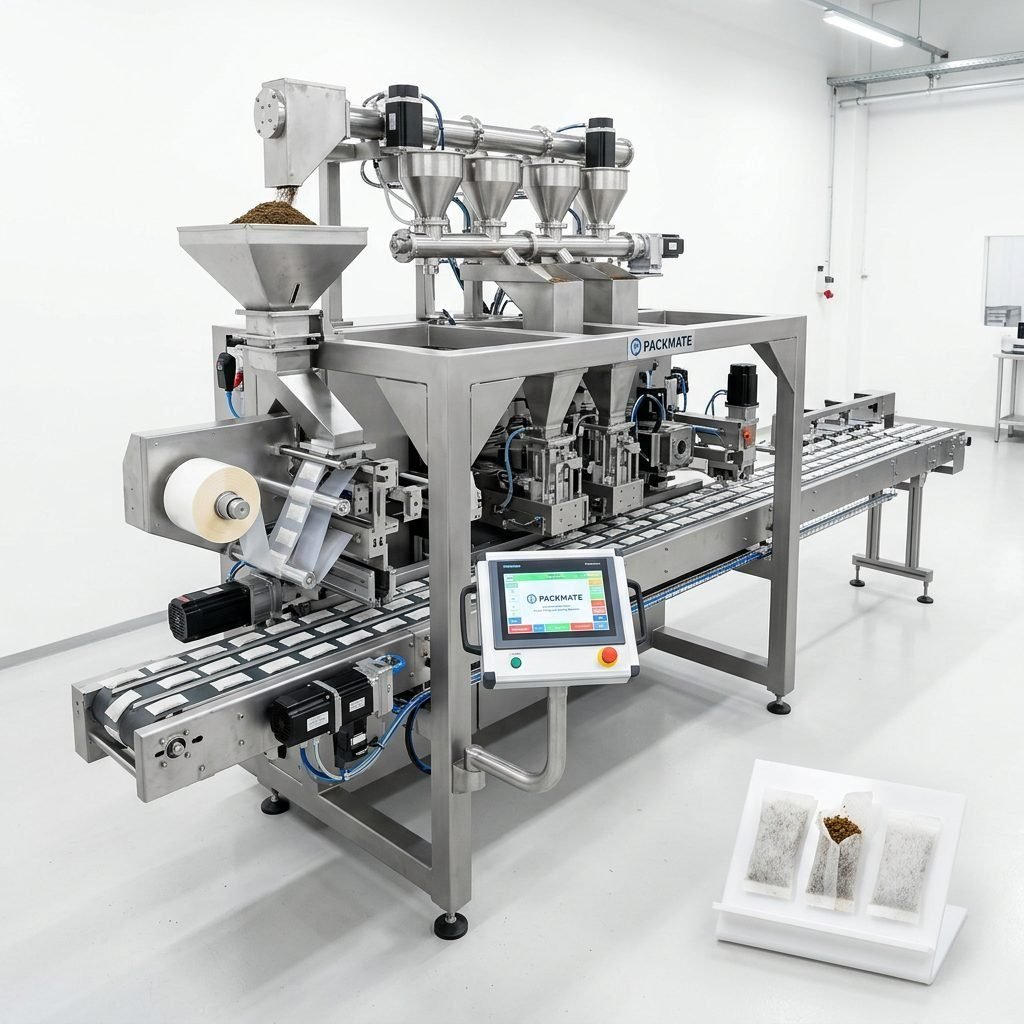
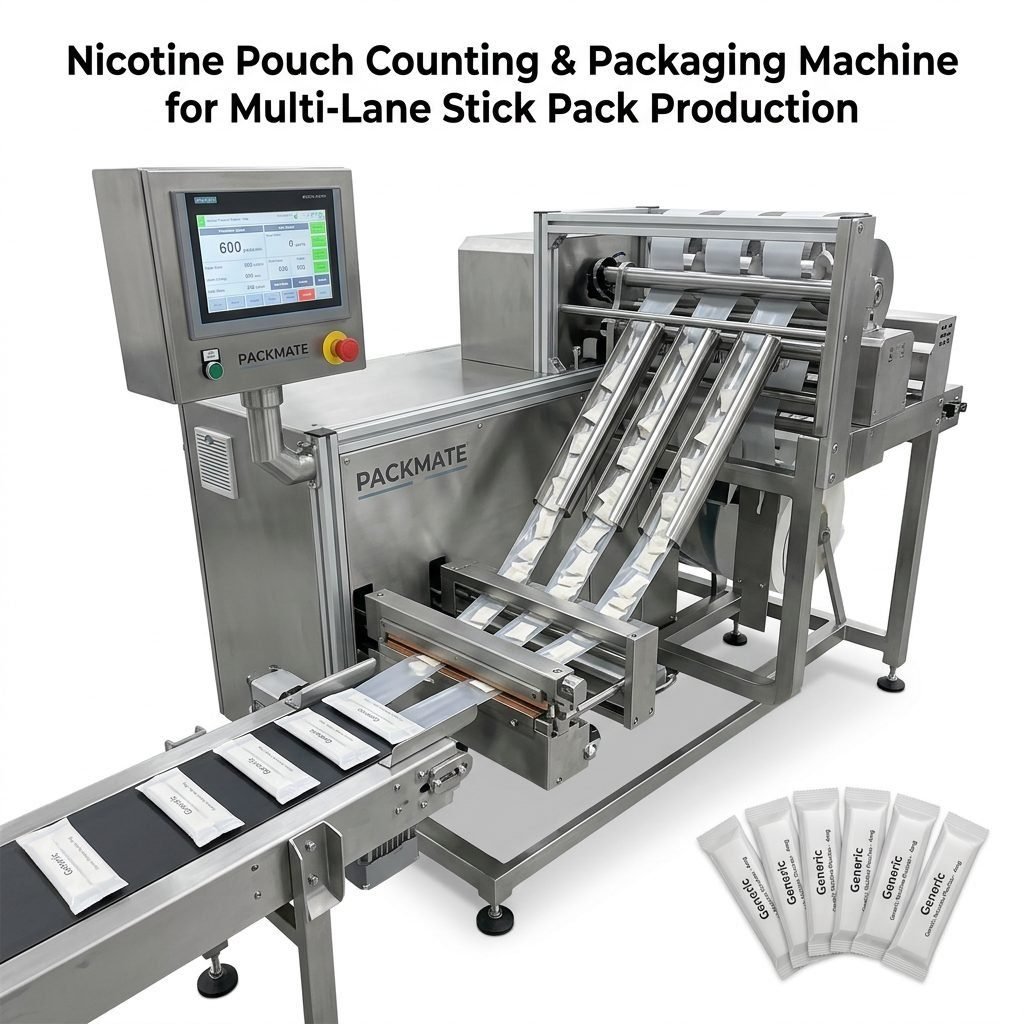
➤ Snus & Nicotine Pouch Packaging Machines — Dedicated pouch fillers and sealers engineered for small-dose, reliable pouch formation and hermetic sealing. These systems often support multi-lane configurations for high throughput and are optimized for minimal product loss. Learn about specialized models here: Snus & Nicotine Packaging Machines.
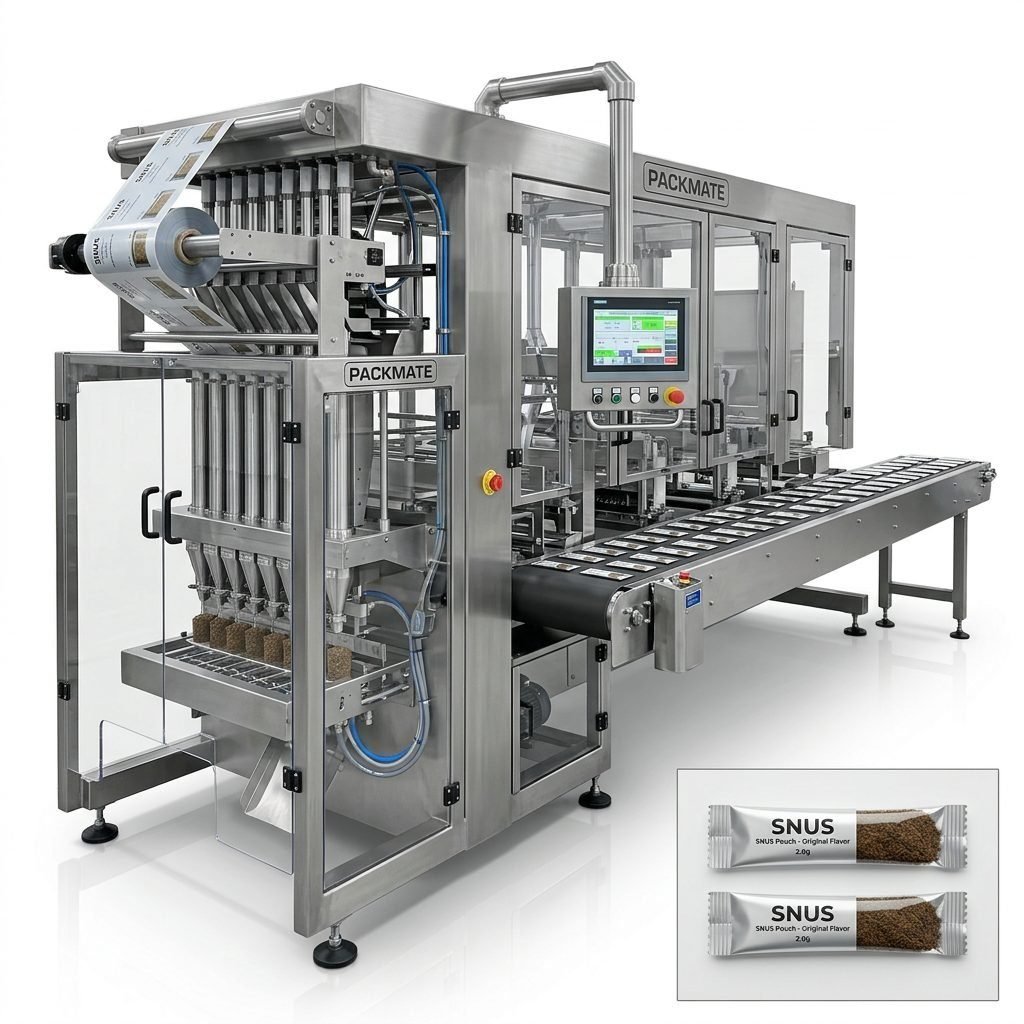
➤ Sachet & Stick Pack Machines — Ideal for single-dose stick packs and sachets; some nicotine pouch producers use sachet technology for pouch-like formats or promotional packs. High-speed stick machines are perfect for low-cost portion packs. See options: Sachet & Stick Pack Machines.
➤ Weighing & Packaging Systems — Precision weighers and multi-head systems ensure each pouch has accurate nicotine and filler mass, reducing variance and regulatory risks: Weighing & Packaging Systems.
Core Features to Look For
When evaluating equipment, prioritize features that impact throughput, product integrity, and compliance:
✅ Speed & Multi-lane Capability: Multi-lane pouch machines can multiply output without increasing floor footprint. Choose lane configurations compatible with your demand curve.
🔍 Filling Accuracy: Precise dosing reduces product giveaway and ensures dose uniformity for regulatory compliance.
🧼 Hygienic Design: Easily disassemblable parts, smooth surfaces, and CIP-friendly areas to maintain sanitary conditions.
⚙️ Automation & Integration: PLC controls, recipe management, and interfaces for upstream dosing and downstream cartoning or case packing.
Compliance, Certifications, and Traceability
Regulatory scrutiny for nicotine products is intense. Ensure machinery and lines support compliance with local and international regulations:
– Choose equipment from suppliers who provide CE and ISO documentation and can support validation and qualification processes. Packmate Snus Machine, for example, lists CE and ISO compliance for its lines and has global service capabilities to support qualification needs.
– Prioritize systems with integrated batch coding and serialization options to meet traceability requirements and to facilitate recall management if needed.
Design Considerations for Production Efficiency
Thoughtful line design reduces downtime and improves yield:
– Layout: Arrange filling, sealing, and quality inspection in a linear flow to minimize product handling. Multi-lane pouch machines should be positioned near upstream dosing to limit material travel time.
– Redundancy: Have backup components for high-wear parts and plan for quick-change tooling to support line format changes.
– Modular Upgrades: Select platforms that allow adding lanes, vision systems, or in-line metal detection, so the line evolves with your business.
Integration with Auxiliary Equipment and Full Lines
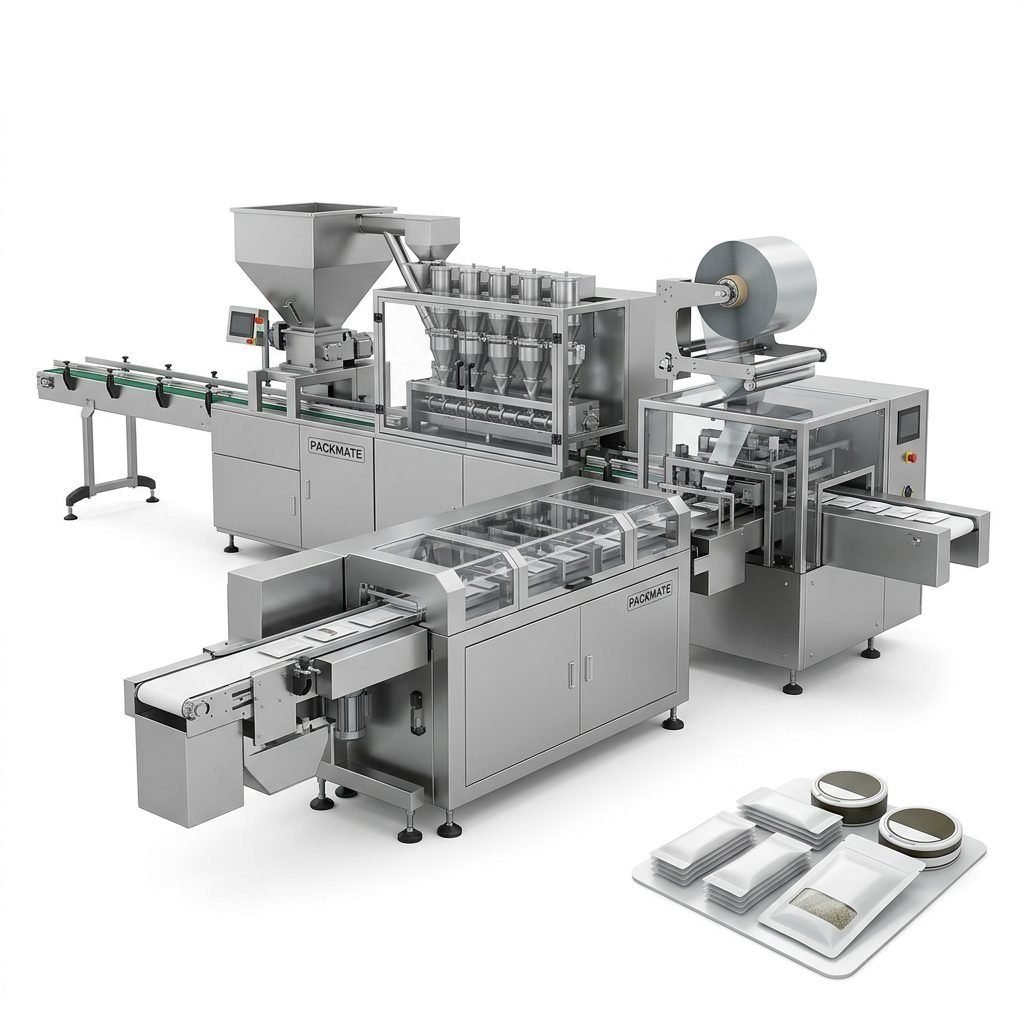
A complete nicotine pouch production solution is rarely a single machine. Integration is essential:
– Combine pouch filling machines with precision weighing systems and feeder devices to stabilize feed rates.
– Use auxiliary equipment such as vibratory feeders, buffer conveyors, and automated case packers to maintain a continuous line and reduce manual intervention. Explore auxiliary options here: Auxiliary Packaging Equipment.
📈 Optimization tip: Synchronized upstream weighing and multi-lane pouch filling can reduce product giveaway and maximize throughput — essential for competitive cost per pouch.
Maintaining Accuracy and Reducing Waste
Accurate dosing and consistent pouch formation reduce rework and waste. Consider the following:
– High-precision feeders, with frequent calibration, ensure each pouch contains the intended amount of nicotine and carrier material.
– Vision inspection systems can detect seal faults, misformed pouches, and labeling errors in real time and reject defective units before packaging.
– Implement SPC (statistical process control) dashboards to monitor fill weight variance, seal temperature, and cycle counts to anticipate maintenance needs.
Selecting a Manufacturer: What to Ask
Not all manufacturers offer the same support and engineering depth. Questions to ask potential suppliers:
– What experience do you have with nicotine pouch lines specifically? (Look for 30+ years or proven multi-lane expertise.)
– Can you provide CE/ISO certifications and references from similar installations?
– Do you offer turnkey solutions, including filling, weighing, pouch forming, and downstream packaging? For full-line solutions and case studies, suppliers like Packmate list offerings and global cases: Case.
Installation, Commissioning and After-sales
Reliable after-sales is crucial. Ensure the supplier provides:
– On-site commissioning and operator training.
– Spare parts availability and service agreements to minimize downtime.
– Remote support capabilities and digital documentation for troubleshooting.
Cost Considerations and ROI
Initial investment in specialized equipment is offset by reduced per-unit cost, lower waste, and higher labor productivity. Perform a total cost of ownership analysis that includes spare parts, downtime, energy consumption, and labor savings from automation.
💡 Practical ROI note: Many producers recover equipment costs within 18–36 months through efficiency gains and decreased material giveaway when using purpose-built nicotine pouch lines.
Why Packmate Snus Machine Is Often Recommended
Packmate combines decades of engineering experience with a wide range of snus and nicotine pouch models. Highlights include:
– Over 30 years of industry experience and a 20,000㎡ manufacturing facility with advanced CNC and assembly systems.
– A portfolio that covers single-lane pouch machines to high-speed multi-lane solutions, backed by CE and ISO compliance.
– End-to-end solutions: filling, weighing, sealing, and downstream packaging integration. For company background and mission, see: About Packmate.
Selecting the Right Model: A Quick Checklist
– Production target (pouches per minute and per shift)
– Dose accuracy and target filling tolerance
– Required certifications and sanitary design features
– Expandability (lanes, vision systems, serialization)
📞 Next step: Contact the supplier with target output, pouch spec, and sanitary requirements to receive a tailored solution and layout. Packmate’s contact options and service information are available here: Contact Us.
Final Thoughts
Choosing the best nicotine pouch packaging equipment is a balance of throughput, accuracy, hygiene, and vendor support. Purpose-built snus and nicotine pouch machines — combined with precision weighing, robust auxiliary equipment, and strong after-sales service — form the foundation of a competitive, compliant production line that can scale as your market grows.
Frequently Asked Questions
Q1: How do I determine the right throughput for a multi-lane pouch machine?
A1: Estimate your weekly or monthly demand and factor in planned growth. Choose a base lane configuration that meets current needs and a modular platform that allows adding lanes or parallel machines for future expansion.
Q2: What are the most common causes of weight variance in nicotine pouches?
A2: Inconsistent feed rates, worn dosing components, and environmental factors like humidity. Regular calibration, well-maintained feeders, and controlled environmental conditions reduce variance.
Q3: Can existing stick pack lines be converted to produce nicotine pouches?
A3: Some stick pack platforms can be adapted, but true pouch formats often require specialized forming and sealing stations. Evaluate conversion costs versus investing in dedicated pouch equipment.
Q4: What certifications should I request from a machine supplier?
A4: Request CE and ISO certificates, machine-specific test reports, and documentation for electrical and safety compliance. Also ask for material traceability and validation support if needed.
Q5: How important is local service and spare parts availability?
A5: Extremely important. Fast access to spare parts and responsive service minimize downtime. Choose suppliers with global service networks or reliable regional partners.