Choosing the right nicotine packaging machinery supplier for your factory in Guinea is a strategic decision that affects product quality, regulatory compliance, and long-term operational costs. This guide walks factory owners, procurement managers, and production engineers through practical steps and local considerations to help you select a supplier who delivers performance, reliability, and after-sales support adapted to Guinea’s market and business culture.
Understand the Guinea Market and Local Business Culture
Guinea’s market landscape is shaped by its trade routes, local regulations, and relationship-driven business style. Conakry is the key import hub; shipments commonly arrive at the Port of Conakry before inland distribution. When evaluating suppliers, consider their experience managing shipping, customs documentation, and delivery to Conakry or other Guinean regions.
Business etiquette in Guinea values personal relationships, respect for hierarchy, and punctual, polite communication. Many business negotiations are conducted in French — ensure supplier documentation and training materials can be provided in French or translated accurately. Also be mindful of religious and cultural rhythms (for example, Ramadan schedules) which can affect installation timelines and local labor availability.
Key Local Considerations
⚠️ Regulatory checks: Confirm local nicotine and tobacco product regulations, labeling requirements, and import restrictions. Engage a local customs broker early on to avoid delays.
📦 Logistics: Choose suppliers familiar with shipping to West African ports and who can coordinate inland transportation, spare parts shipments, and urgent replacements.
Technical Criteria: What to Ask About the Machines
When reviewing proposals, focus on machine performance and flexibility. Nicotine pouch production demands small-dose precision and stable multi-lane throughput. Important technical questions include:
- What is the throughput (pouches/min) for single-lane and multi-lane configurations?
- Does the machine support different pouch formats (stick, sachet, pouch)?
- What is the dosing accuracy and how is it verified?
- Which control systems are used (PLC, motion controllers), and are interfaces available in French and English?
- What are power, air, and space requirements for installation in your factory?
🔎 Pro tip: Request a live or video demonstration of the exact model running nicotine pouches or a similar product. Watching the machine under load reveals stability, changeover speed, and packaging quality.
Machine Types and Configurations
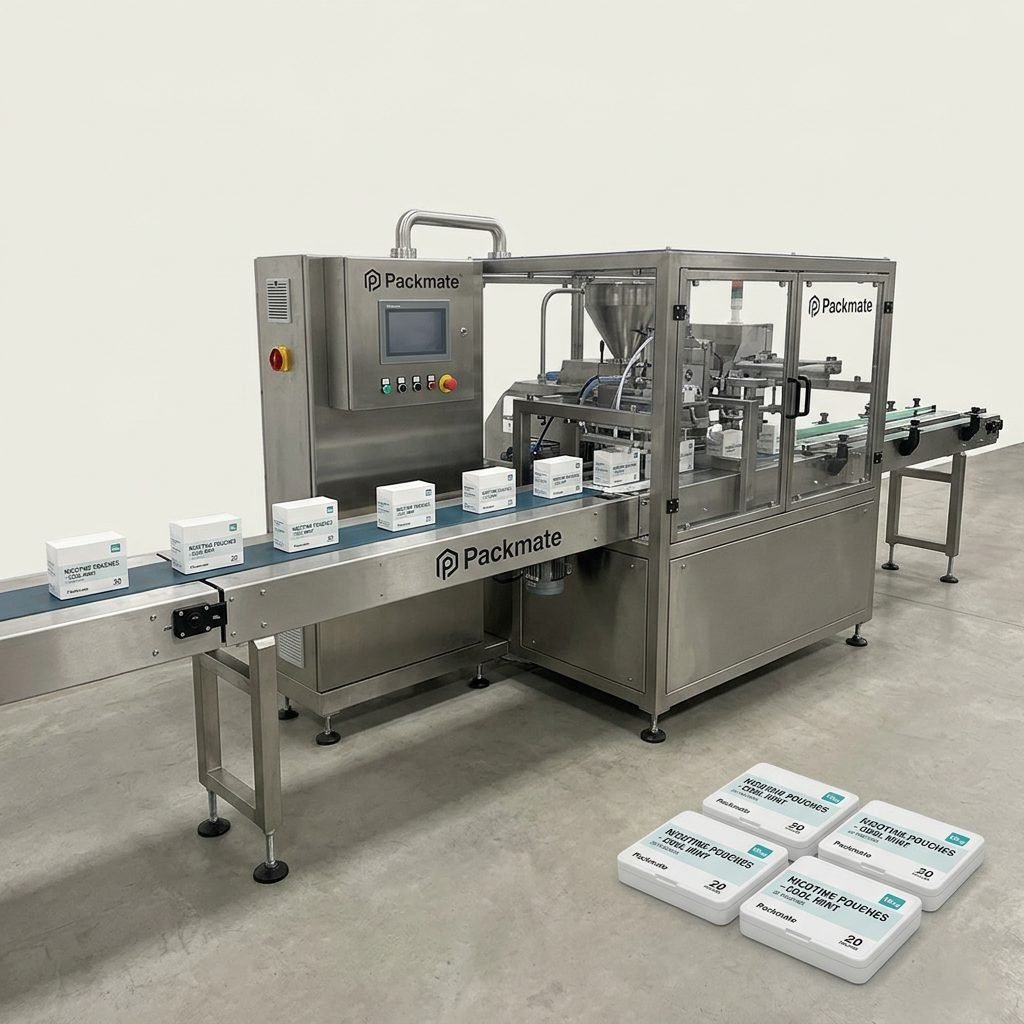
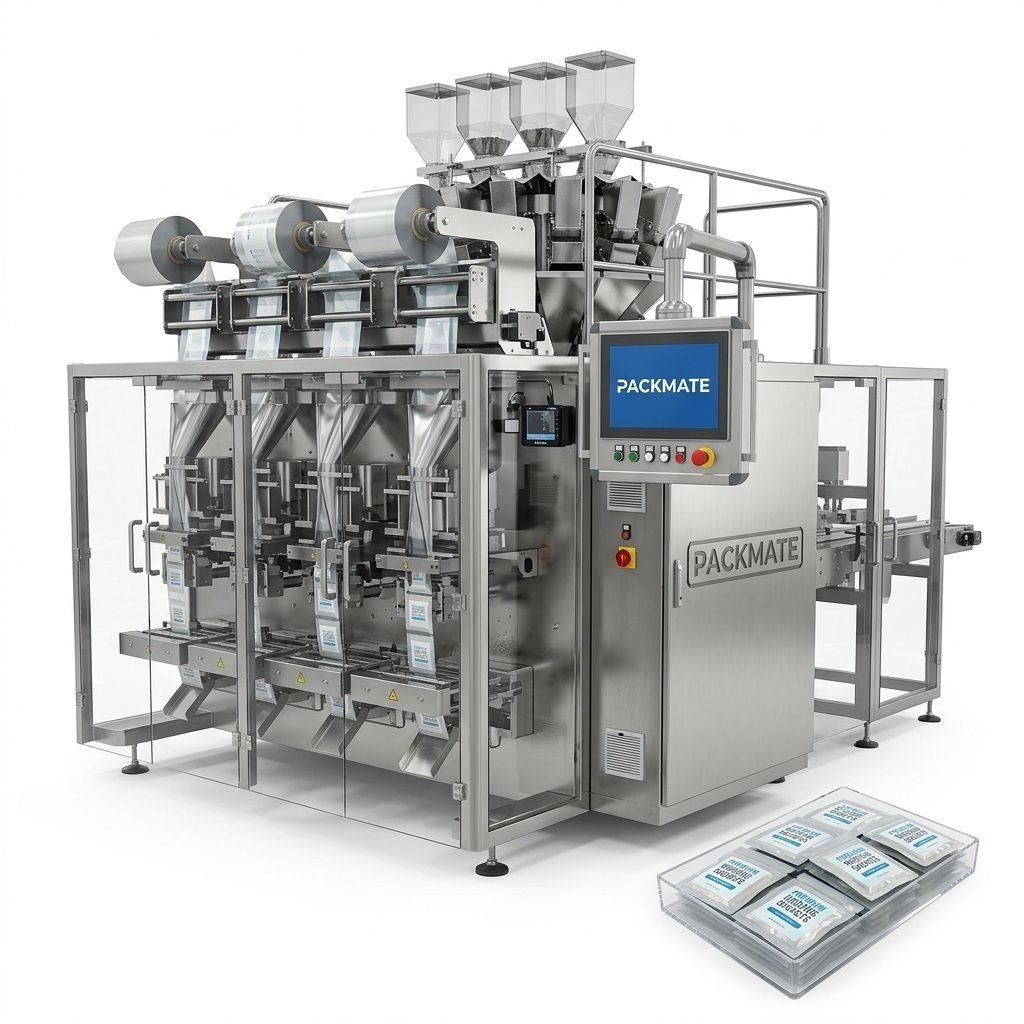
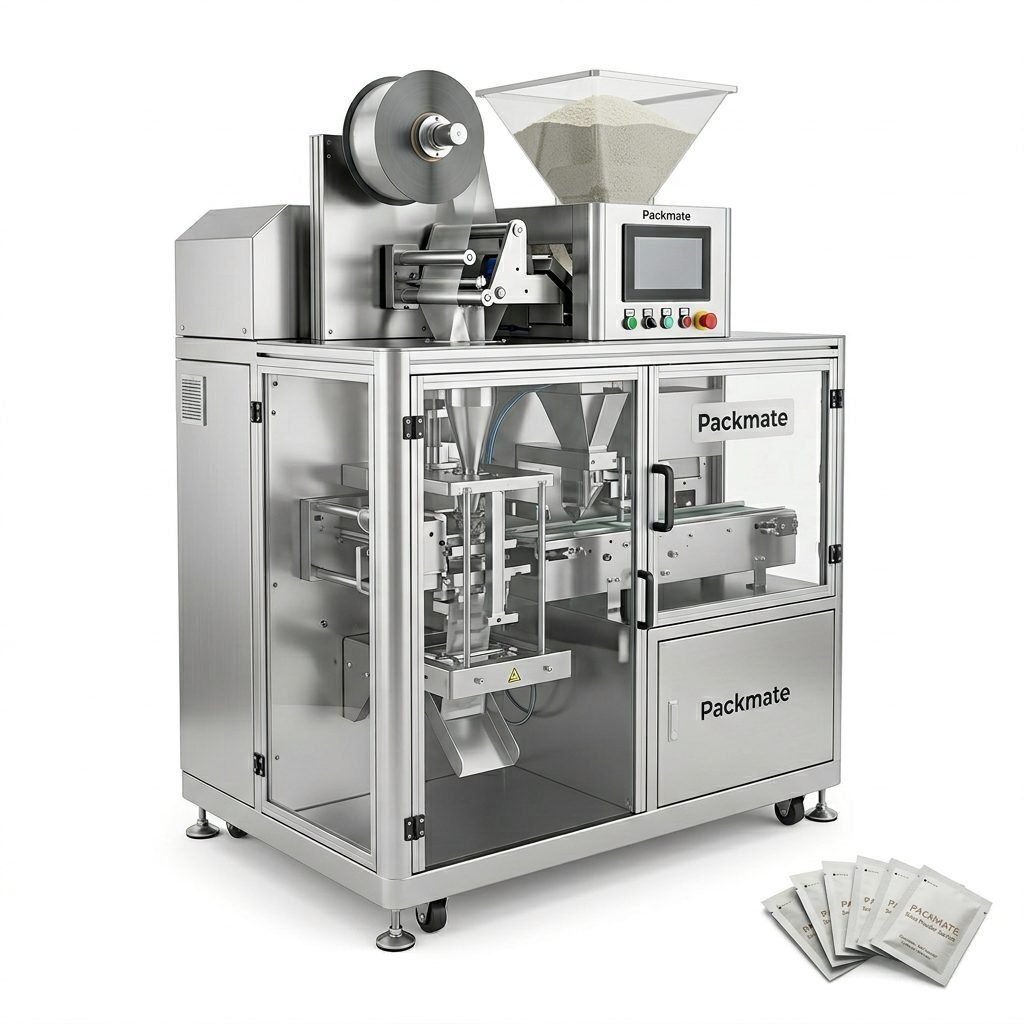
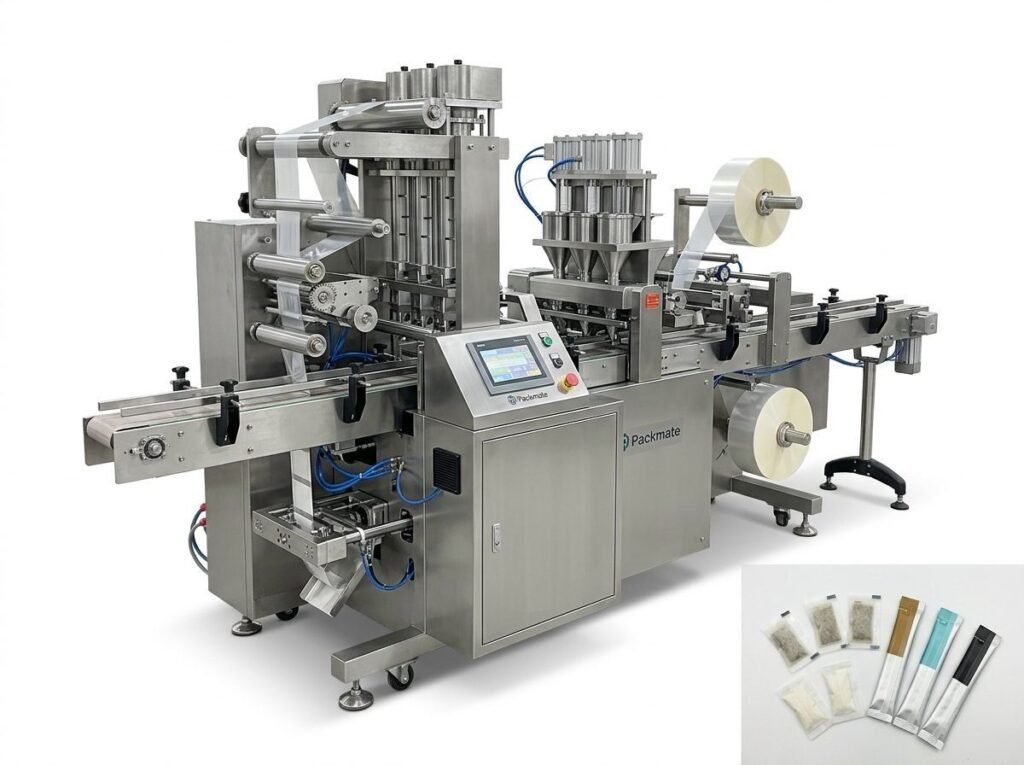
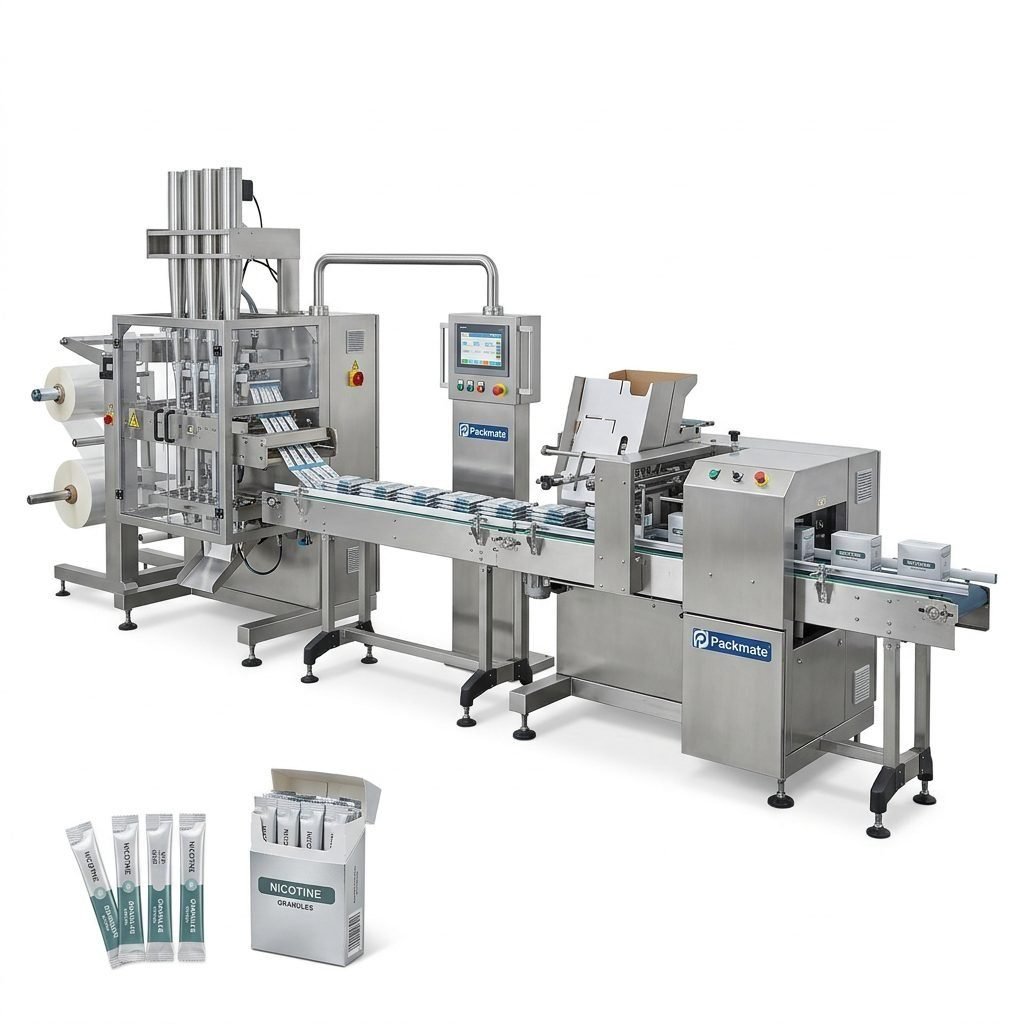
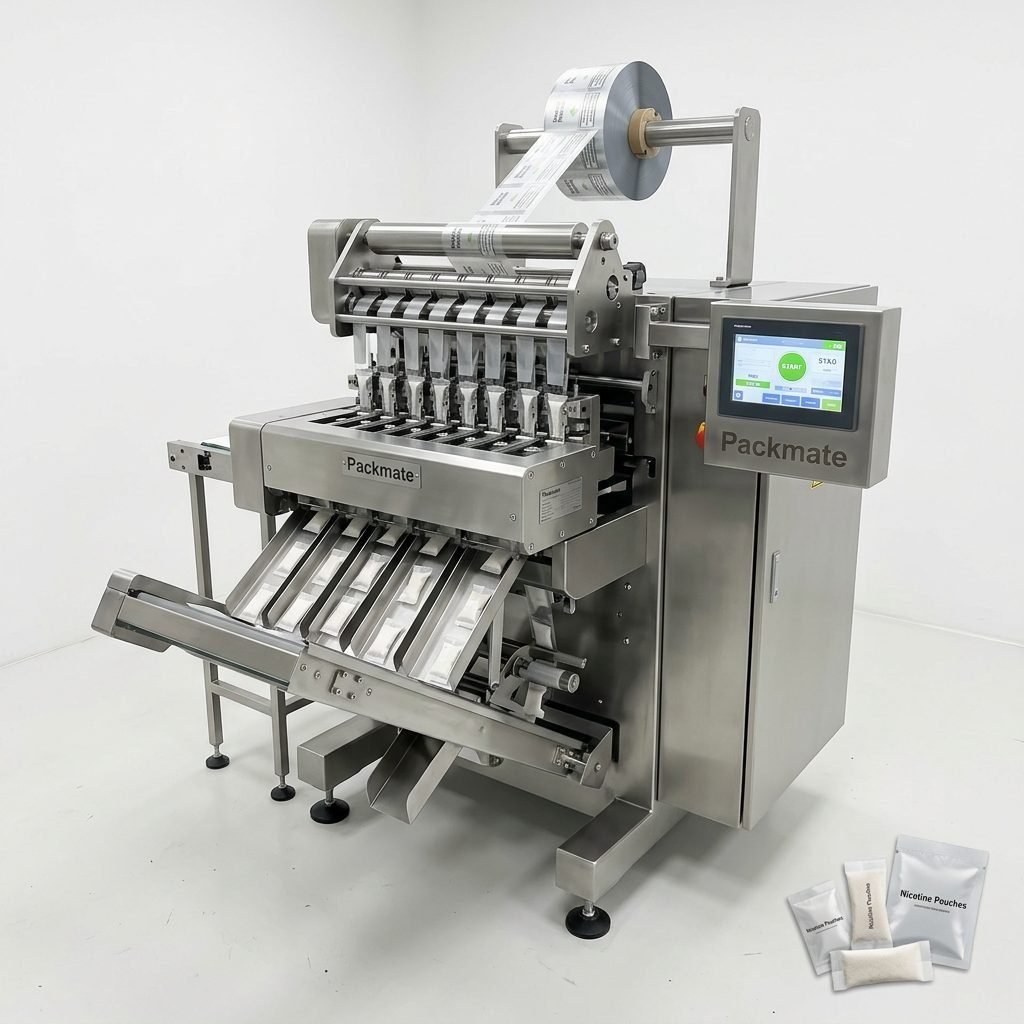
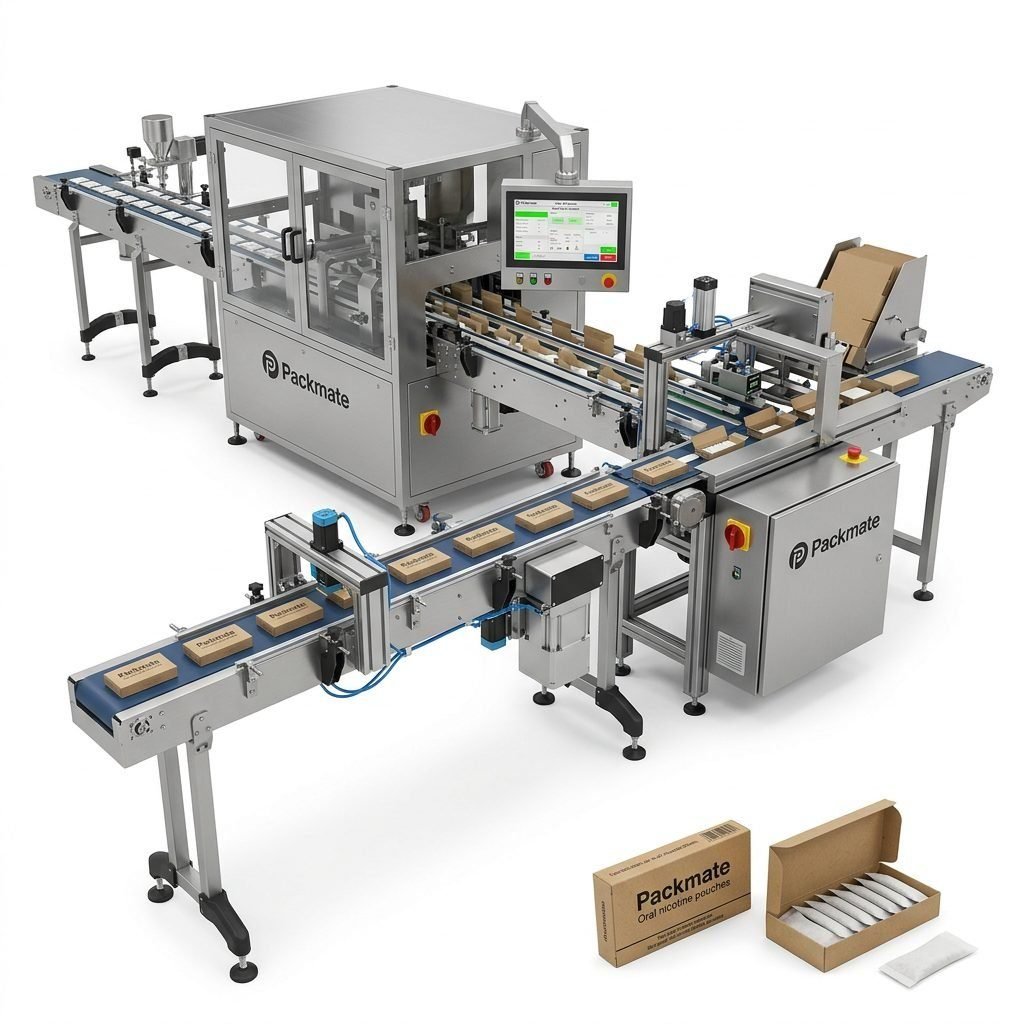
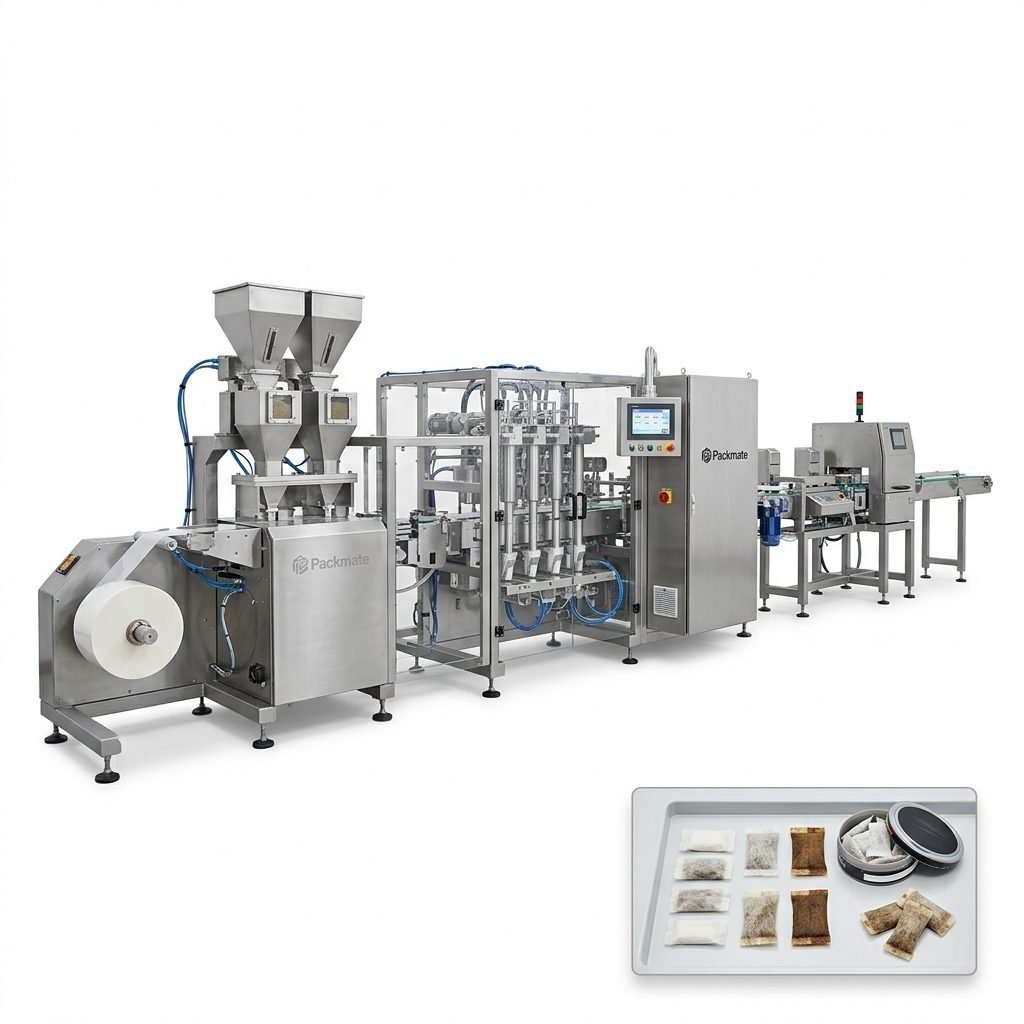
Consider whether you need stick pack machines, sachet machines, multi-lane pouch systems, or a combination. Suppliers that provide modular and scalable solutions will help you expand capacity without full-line replacement. Explore product lines like Snus & Nicotine Packaging Machines and Sachet & Stick Pack Machines for options tailored to nicotine pouches.
Supplier Capabilities: Engineering, Factory Strength and Certifications
A supplier’s manufacturing capacity and certification records reveal their reliability. Look for suppliers with:
- Proven factory scale and CNC machining capabilities
- Long industry history and documented case studies
- International standards certifications such as CE and ISO
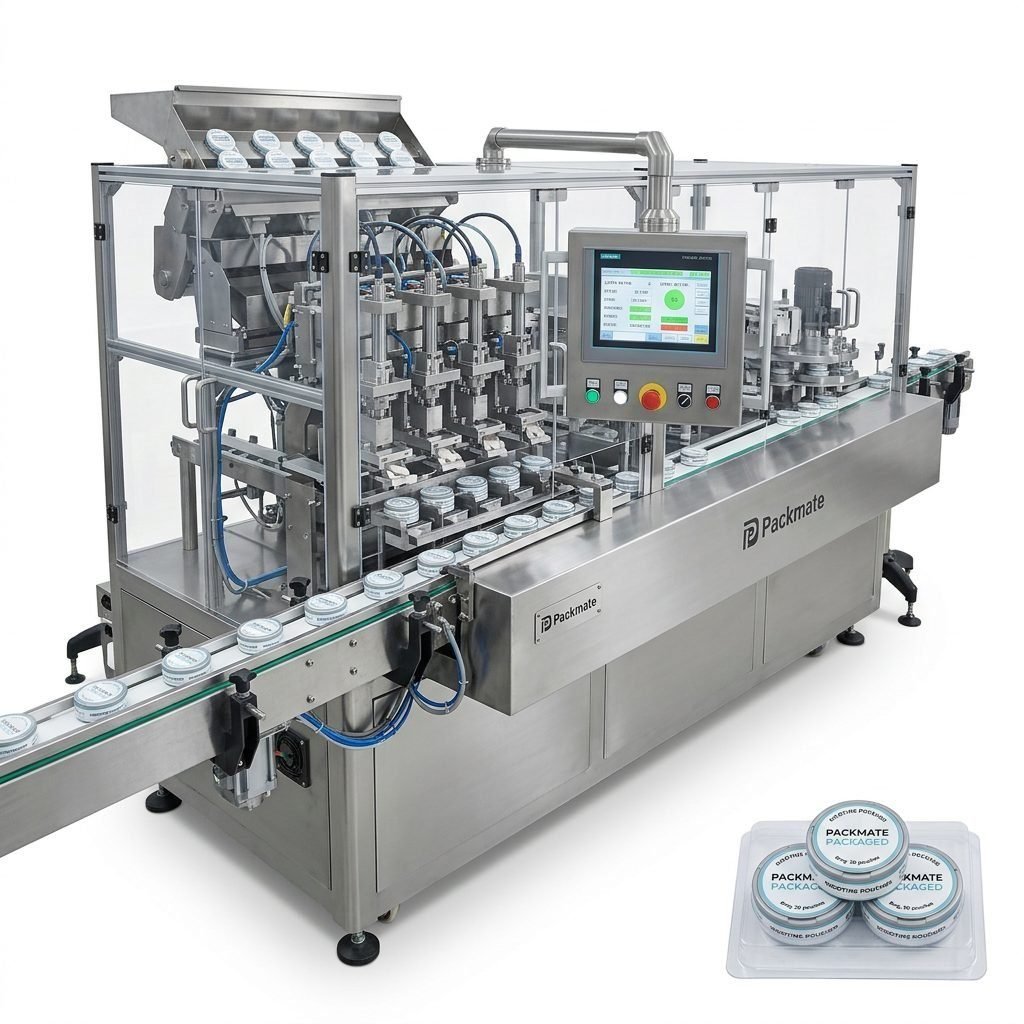
Packmate Snus Machine is an example of a supplier with over 30 years of engineering experience, a 20,000㎡ manufacturing facility, and CE/ISO compliance. Learn more on their About Packmate page and review global examples in their Case library.
Why Certifications Matter
Certifications ensure machines meet safety, electrical and production standards expected in export markets. For nicotine products, robust quality controls and CE/ISO marks help when your finished goods face international audits or retail chain inspections.
After-Sales Support, Spare Parts and Training
After-sales service is crucial when operating in Guinea, where local technical talent may need supplier-led training. Evaluate a supplier’s ability to provide:
- On-site installation and commissioning
- Operator and maintenance training in English/French
- Fast spare parts delivery and stock planning
- Remote troubleshooting and spare PLC/software backups
✅ Priority check: Ask for a spare parts list with lead times and recommended local stock levels. Confirm whether the supplier has regional distributors or a direct shipping plan to Guinea.
Training & Language
Ensure training materials and machine HMI screens are available in French, and request bilingual manuals. Plan training sessions outside major religious holidays to respect local schedules and ensure attendance.
Commercial Terms, Warranty and Contract Essentials
When negotiating, clarify these commercial items:
- Warranty period and what it covers (mechanical, electrical, PLC).
- Payment terms, letters of credit, and currency considerations (Guinean Franc vs USD/EUR).
- Lead time and shipment incoterms (FOB, CIF to Conakry).
- Acceptance testing procedures and penalties for missed performance guarantees.
Contracts and Local Partners
Partnering with a local agent or distributor can ease customs clearance and provide immediate technical presence. Include clauses detailing responsibilities for import duties, local installation permits, and after-sales roles.
Factory Acceptance Test (FAT) and Site Acceptance Test (SAT)
A rigorous FAT at the supplier’s factory is essential. Request live runs with your formula or a close analog and record performance metrics. After shipment, perform SAT in Guinea to verify installation, integration to upstream/downstream lines, and operator competency.
Include acceptance criteria such as sustained throughput, packaging integrity, and dosing accuracy. Require video proof or third-party witness if you cannot attend FAT in person.
Total Cost of Ownership (TCO) and Return on Investment
Evaluate not only initial CAPEX but long-term OPEX: energy consumption, maintenance intervals, consumables, and spare parts. A slightly higher upfront investment in a robust system often reduces downtime and saves money over time.
Calculate ROI
Build a 3-5 year projection that includes expected production volumes, waste rates, labor savings from automation, and spare parts expenditure. Use realistic local cost assumptions for utilities and wages in Guinea.
📌 Quick checklist: Machine performance, FAT & SAT plans, warranty terms, spare part lead times, language support, shipping to Conakry, and local training.
Why Packmate Snus Machine Can Be a Strong Candidate
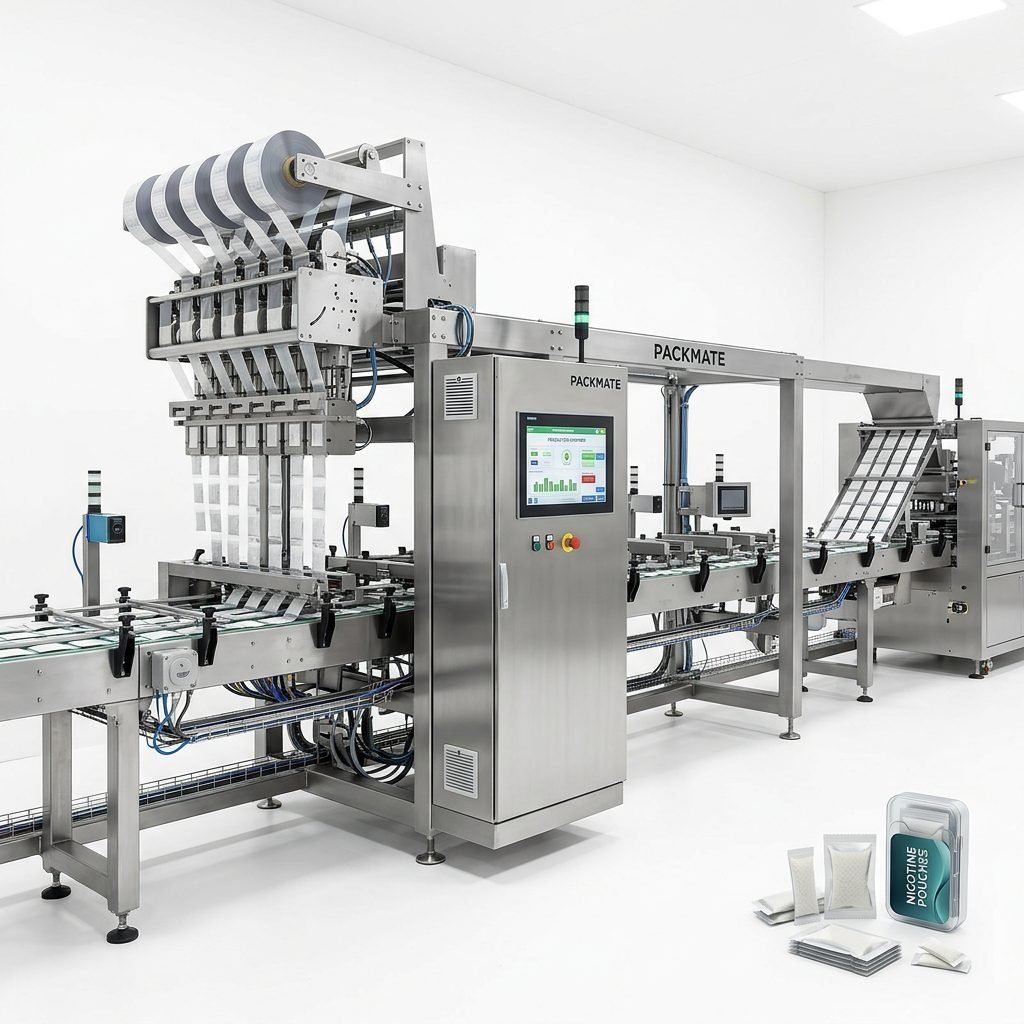
Packmate offers specialized snus and nicotine pouch packaging machines with over 30 years of engineering experience and a large manufacturing footprint. Their product range includes multi-lane snus packing systems and auxiliary equipment that can deliver high-precision dosing and reliable multi-lane throughput. Explore their product portfolio such as Snus & Nicotine Packaging Machines and the broader Filling & Packaging Lines.
They provide global turnkey solutions, factory certifications, and a documented case history across continents. For procurement teams in Guinea, Packmate’s combination of manufacturing strength, international certifications, and turnkey services can shorten implementation risk and simplify compliance.
Implementation Timeline and Practical Next Steps
Typical procurement and implementation steps:
- Clarify product formats and projected volumes.
- Request quotations, technical datasheets, and references.
- Attend FAT or request recorded demos.
- Finalize contract with clear FAT/SAT acceptance criteria.
- Arrange shipping, customs clearance, and local installation dates.
- Complete SAT and operator training; begin ramp-up runs.
Contact and Documentation
Collect complete documentation including electrical diagrams, PLC backups, spare parts lists, and maintenance manuals. Use the supplier’s contact channels for pre-sales and after-sales: for example, review Packmate’s Contact Us page and check certificates at Certificate.
Final Selection Tips
– Prioritize suppliers who demonstrate experience with nicotine pouch applications and who can prove consistent performance in similar markets.
– Ask for references in West Africa or similar logistics environments.
– Ensure bilingual documentation and training, and validate spare parts supply chains for Guinea.
– Negotiate clear warranty, spare parts, and local support commitments to reduce risk.
Remember
Choosing the best supplier combines technical fit, local logistics experience, cultural sensitivity, and strong after-sales support. A careful evaluation and a clear FAT/SAT regimen will safeguard your investment and ensure stable production for your nicotine pouch lines in Guinea.
Frequently Asked Questions
Q1: How long does it typically take from order to installation in Conakry?
A1: Depending on customization, machine model, and shipping schedule, expect 12–20 weeks for production, plus 4–8 weeks for shipping and customs clearance. Expedited options may be available at additional cost.
Q2: What language support should I require?
A2: Require French and English manuals, French HMI option where possible, and bilingual training sessions to ensure local teams are fully capable of operating and maintaining the equipment.
Q3: What spare parts should be stocked locally?
A3: Stock belts, seals, dosing nozzles, sensors, and a PLC backup. Request the supplier’s recommended spare parts list and lead times for critical components.
Q4: How can I verify supplier reliability remotely?
A4: Ask for factory tour videos, recorded FATs, client references, and access to real-time video demos. Verify certifications and request performance data from similar installations.
Q5: Are turnkey solutions available that include auxiliary equipment?
A5: Yes — many suppliers provide full lines including weighing, filling, capping, and auxiliary equipment. Review integrated solutions like their Weighing & Packaging Systems and Auxiliary Packaging Equipment to simplify procurement and installation.