Choosing the right snus production machine is a decisive step for any manufacturer aiming to scale up nicotine pouch or snus production with consistent quality, regulatory compliance, and efficient throughput. This guide breaks down the technical, operational, and commercial considerations you need to evaluate when investing in a modern snus manufacturing line, and highlights the key machine types and features that deliver reliable, high‑quality output.
Why the right machine matters
The snus and nicotine pouch industry demands precision dosing, gentle handling of sensitive powders and granules, and packaging solutions that preserve product integrity. A poorly chosen machine can lead to inconsistent weights, high material wastage, frequent downtime, and regulatory headaches. By contrast, a purpose‑built snus production machine reduces variation, speeds up time‑to‑market, and protects margin through lower waste and predictable OEE (Overall Equipment Effectiveness).
Key production outcomes to expect
A high‑performance line should deliver: accurate single‑dose filling, consistent pouch sealing, multi‑lane scalability for higher throughput, hygienic construction for easy cleaning, and integrated inspection & rejection systems. Look for equipment proven across nicotine pouch, snus, tea, and other small‑dose applications to ensure versatility.
📌 Key takeaway: Invest in machines with proven dosing accuracy and modular expansion options — these offer the best balance of low waste and future scalability.
Types of snus and nicotine pouch machines
Depending on your product format and capacity targets, you will evaluate several machine classes. Each class has strengths for specific product styles:
Sachet & Stick Pack Machines
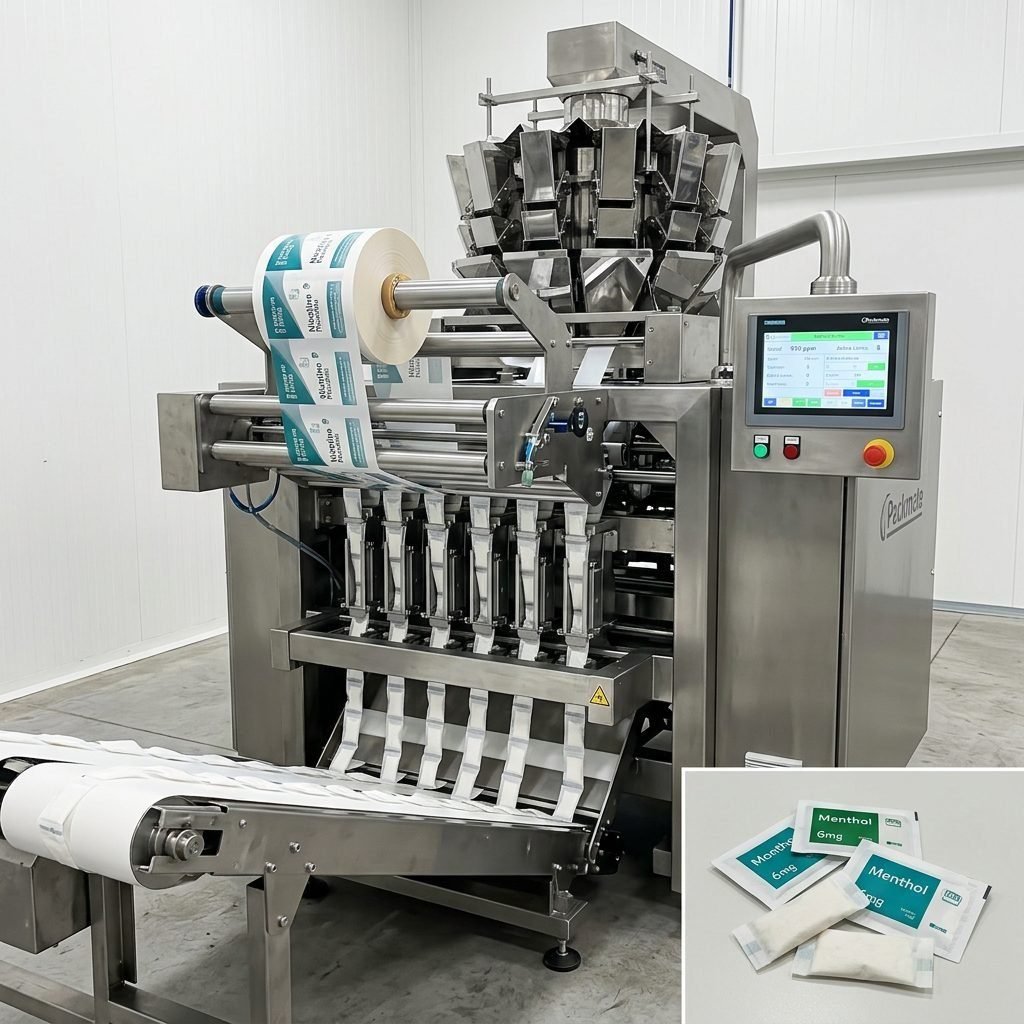
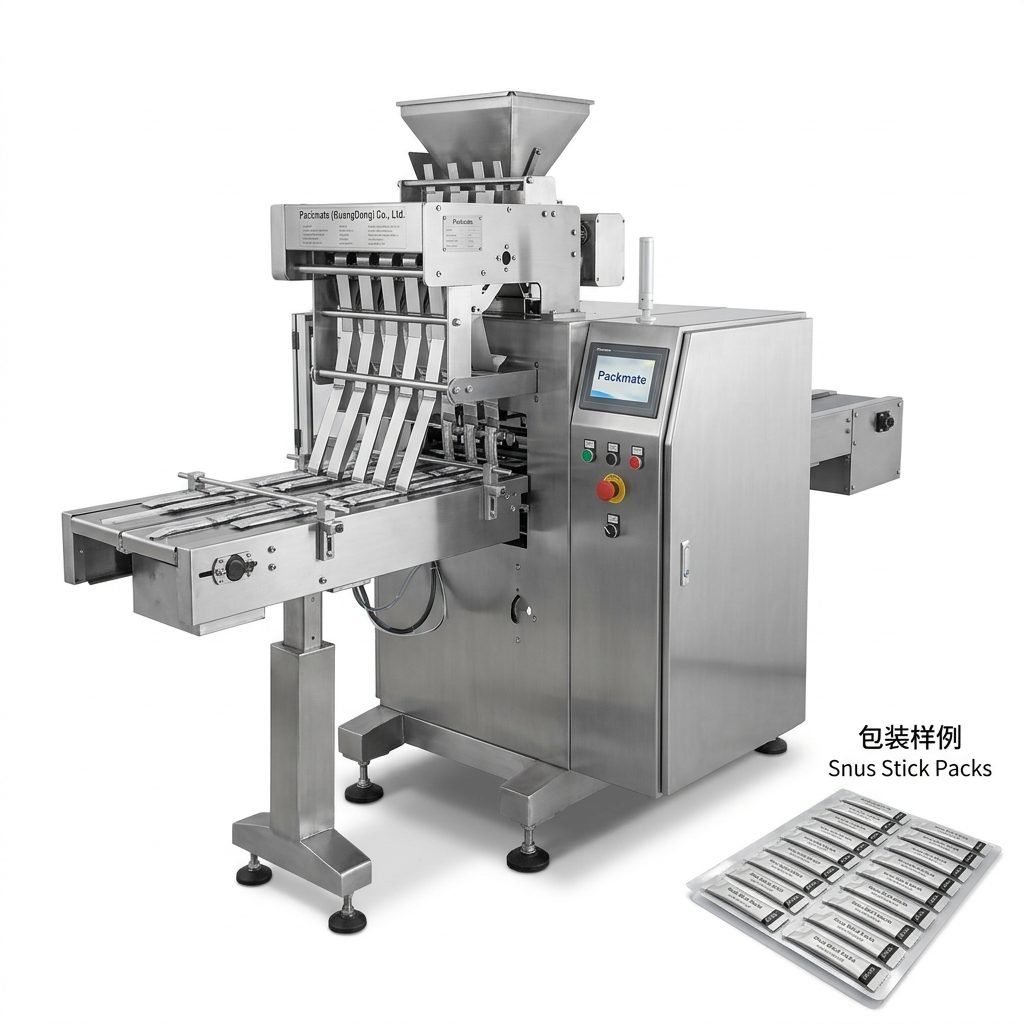
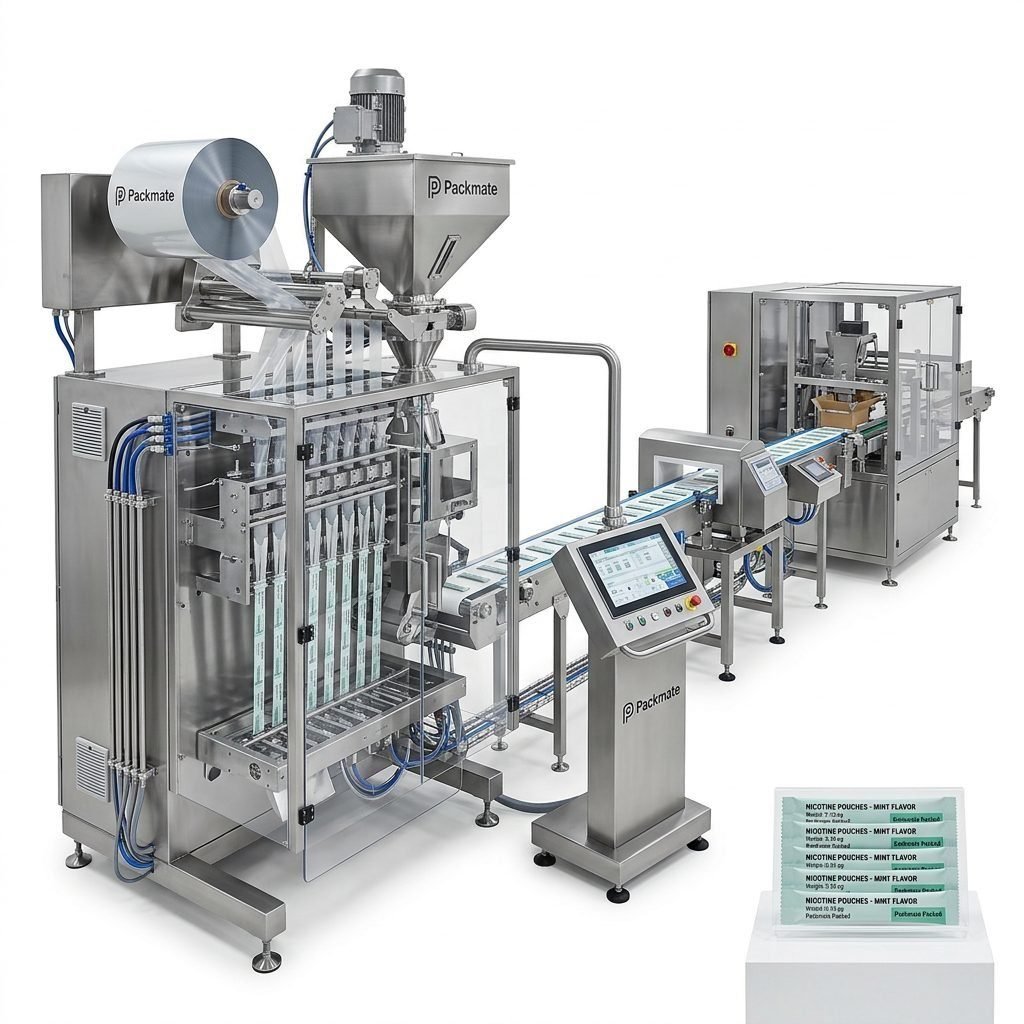
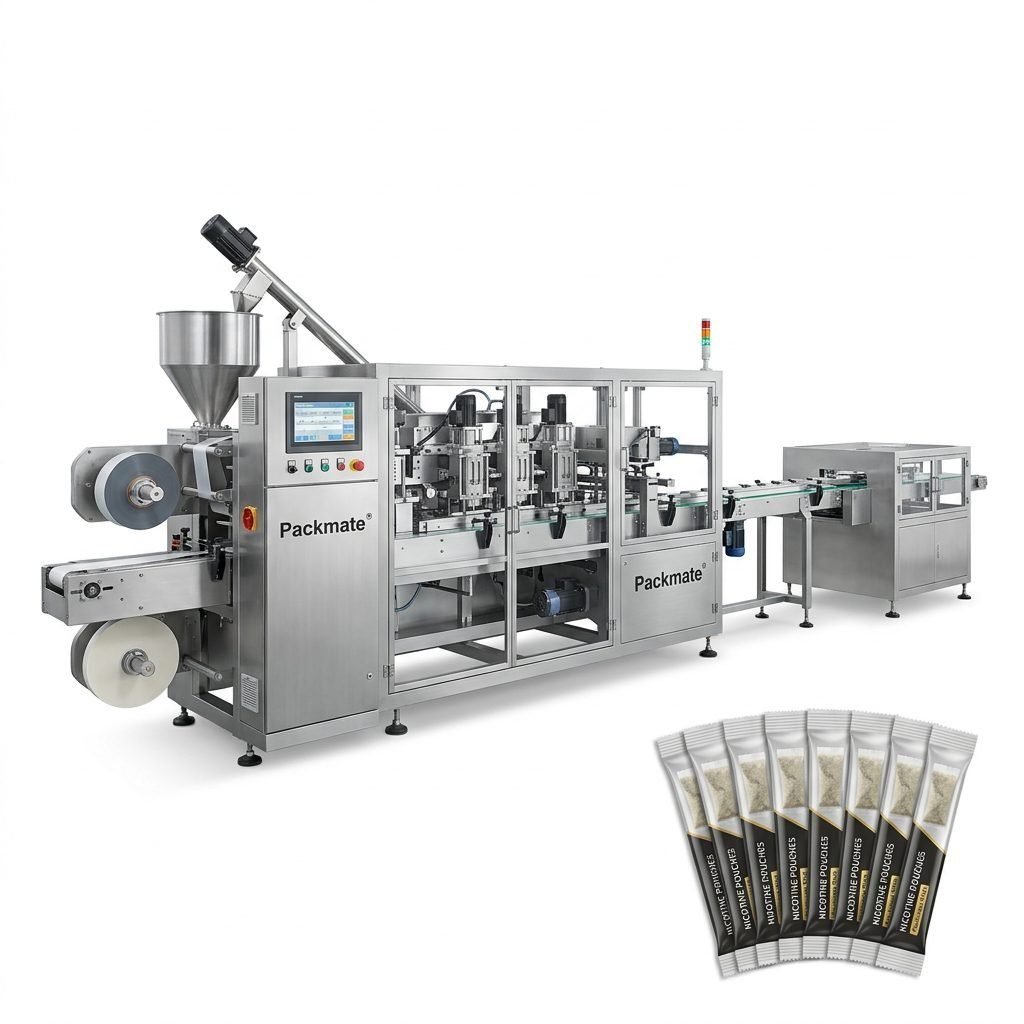
Sachet and stick pack lines are ideal for single‑portion pouches and fast packaging speeds. For nicotine pouches designed as small sachets, these machines deliver high throughputs and precise sealing. If your product is compatible with stick or sachet formats, these units can be cost‑efficient and compact. See options for Sachet & Stick Pack Machines for models and specs.
Multi‑lane Snus Pouch Systems
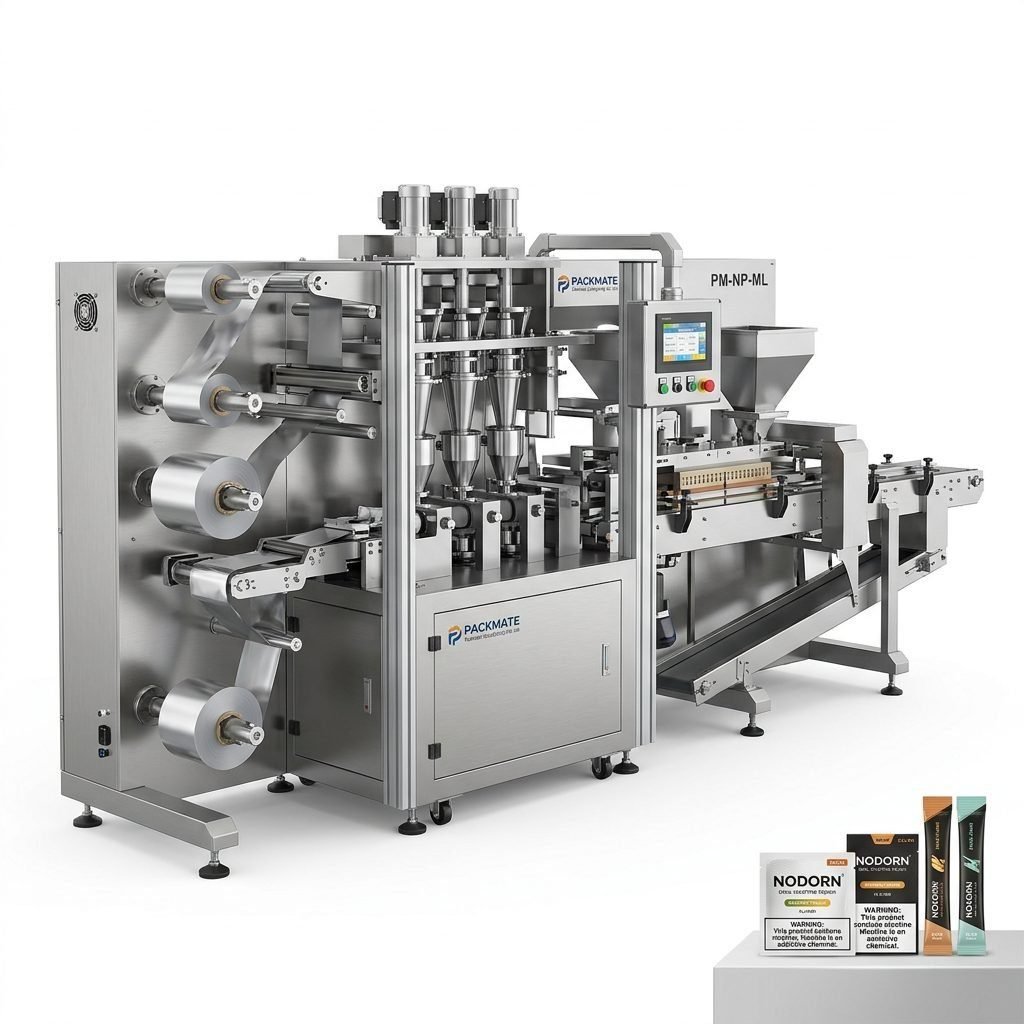
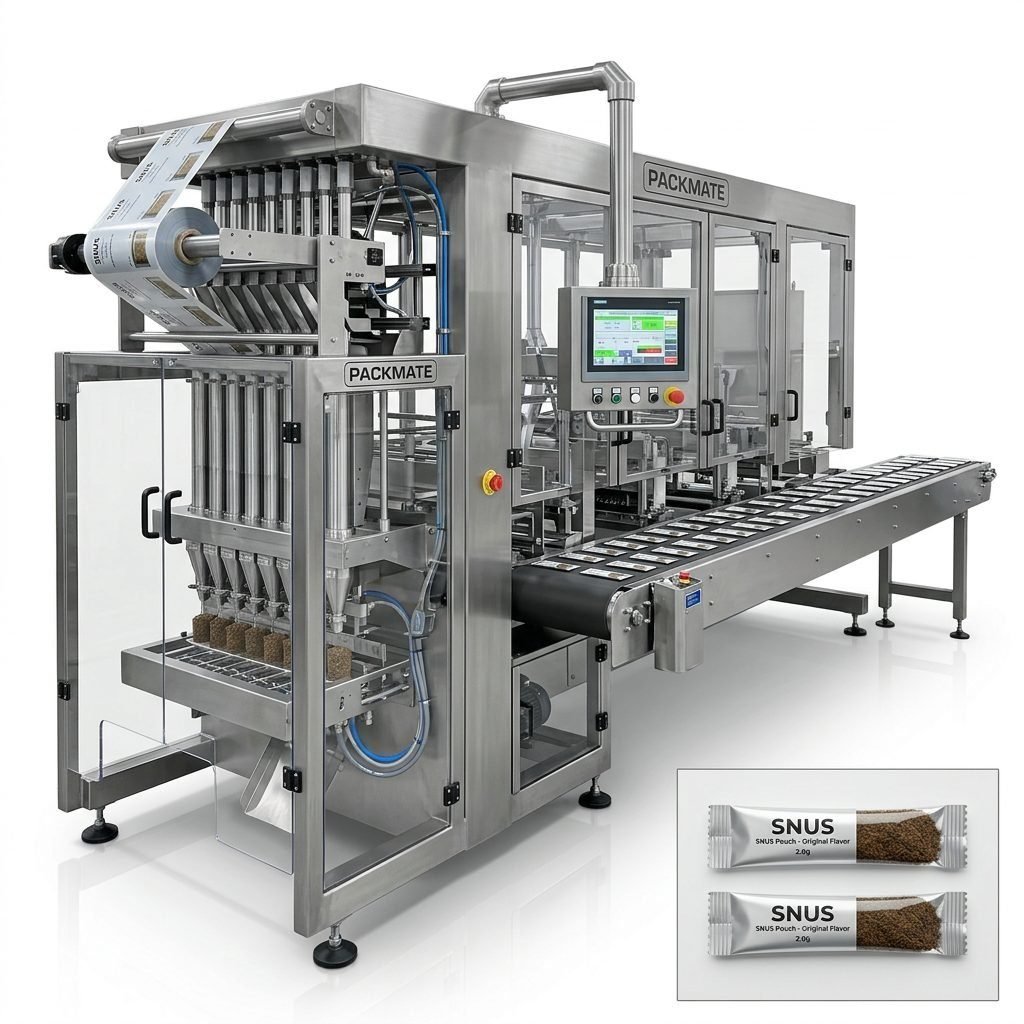
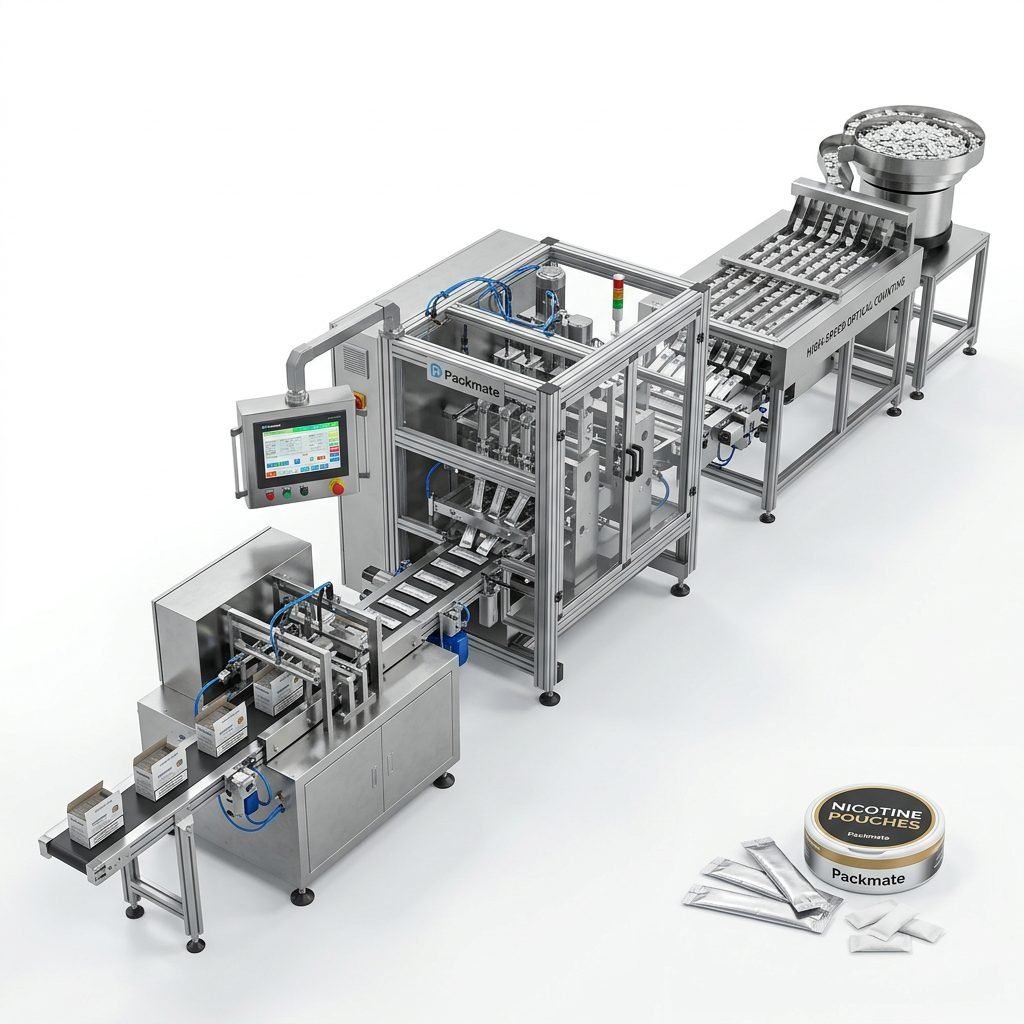
Multi‑lane systems are built specifically for high‑volume snus and nicotine pouch production. These lines run parallel lanes to multiply output without increasing cycle time. Look for independent lane control, synchronized filling, and easy lane changeover for flexible SKU management.
Filling & Packaging Lines
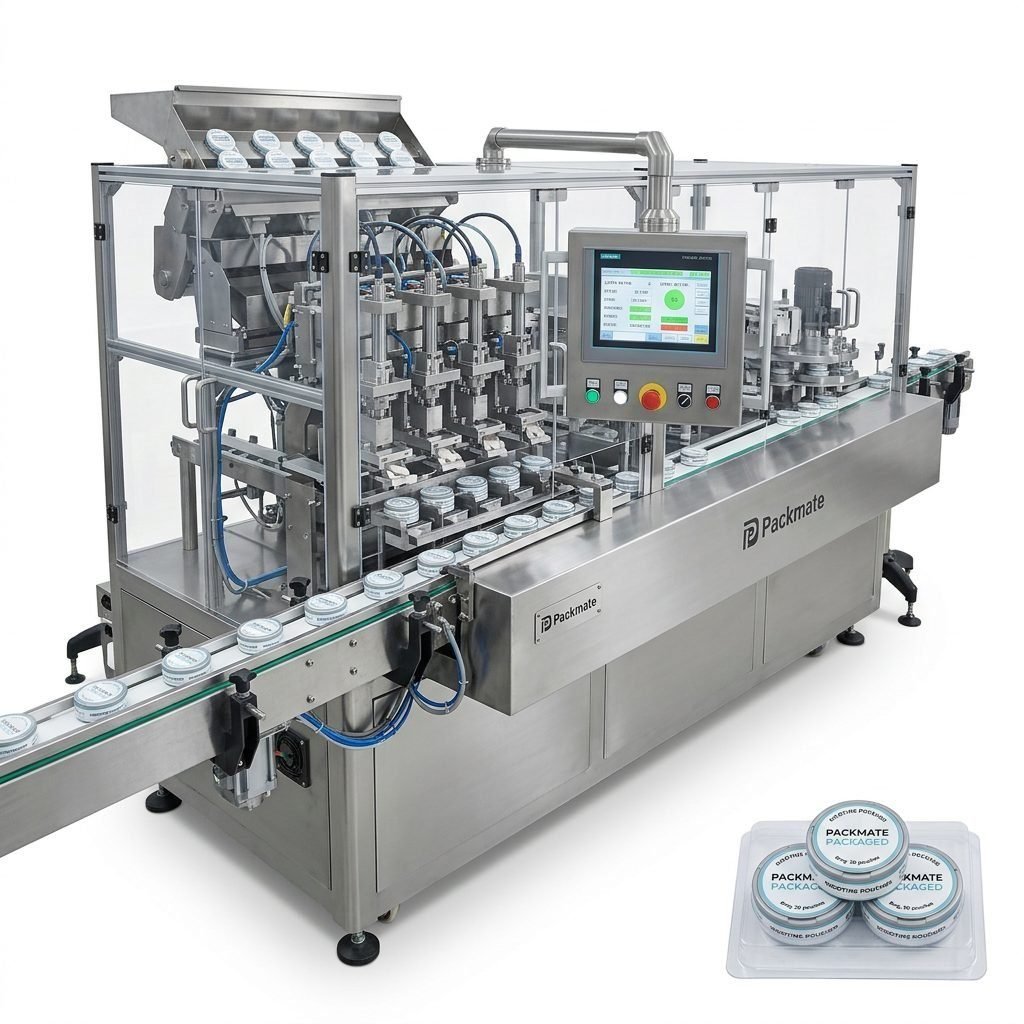
Complete filling and packaging lines combine dosing, forming, sealing, and secondary packaging. For full turnkey solutions — from bulk powder handling to final cartons — evaluate filling & packaging lines that include integrated weighing, metal detection, and vision inspection to ensure end‑to‑end control.
Explore a variety of solutions in Snus & Nicotine Packaging Machines and Sachet & Stick Pack Machines.
Critical technical specifications to evaluate
When comparing vendors and models, focus on specifications that directly impact quality, uptime, and cost of ownership:
- Filling accuracy and weight range — tolerance around target gram weight.
- Throughput (pouches/min) and scaling via multi‑lane options.
- Material compatibility — powders, granules, wet/dry blends, and humidity sensitivity.
- Changeover time between SKUs and lane configurations.
- Hygienic design — stainless steel contact parts, quick‑release components, and CIP compatibility.
- Automation level — sensors, PLC control, recipe management, and Industry 4.0 readiness.
- Inspection & rejection systems — weight checkers, vision systems, and metal detectors.
⚠️ Focus: Filling accuracy reduces material loss and regulatory risk. Prioritize machines with high‑precision dosing modules and robust calibration procedures.
Production capacity planning and ROI
Calculate realistic daily output by considering machine speed, planned uptime, and downstream packaging. Factor in changeover losses, maintenance windows, and the learning curve for operators. ROI models should include:
- Initial equipment cost and installation
- Utility consumption (power, compressed air)
- Material yield difference between old and new machines
- Labor savings from automation
- Service and spare parts agreements
A machine that reduces waste by even a small percentage can pay back quickly in high‑volume nicotine pouch production.
Hygiene, materials & regulatory compliance
Regulatory compliance is essential. Machines should be CE and ISO compliant for export and global market acceptance. Choose designs with FDA‑friendly finishes where applicable, and prioritize ease of cleaning to manage nicotine residues and cross‑contamination risk.
Packmate Snus Machine emphasizes robust quality systems; review certification pages like Certificate and quality documentation when vetting suppliers.
Materials of construction and serviceability
Stainless steel 304/316 contact parts, sealed bearings, and tool‑less access to wear components shorten maintenance cycles. Confirm the vendor’s spare parts lead times and on‑site service capabilities — rapid response minimizes costly downtime.
Automation, controls and operator experience
Modern snus lines use PLCs, touch HMI, recipe storage, and remote diagnostics. Check for the following:
- Intuitive HMI with clear error messages and step‑by‑step recovery
- Recipe management to save settings for each SKU
- Remote service support and data logging for troubleshooting
- Safety interlocks meeting global standards for operator protection
📌 Practical tip: Machines with remote diagnostics reduce service travel costs and speed repairs — ask potential suppliers about their remote support platform.
Customization and turnkey solutions
Many manufacturers need custom lanes, feeding systems, or secondary packaging to match their brand and logistics. Turnkey suppliers can manage integration of feeding, weighing, pouch forming, primary sealing, secondary cartoning, and palletizing — simplifying project management and reducing integration risk.
For complete packaging lines and factory‑level solutions, review offerings under Filling & Packaging Lines and Weighing & Packaging Systems.
Factory capability and vendor selection criteria
A vendor’s manufacturing strength, QA processes, and track record are crucial. Look for:
- Established factory with CNC centers and precision assembly
- Documented testing protocols and FAT (Factory Acceptance Test)
- Global references and exhibition presence for live demos
- Availability of training, spare parts, and local support network
Packmate’s 20,000㎡ facility and 30+ years of engineering experience underline the advantage of choosing a supplier with deep manufacturing capabilities and an established global footprint. Learn more About Packmate.
Commissioning, training & after‑sales
Successful ramp‑up depends on professional commissioning, operator training, and accessible after‑sales service. Confirm training scope — production operators, maintenance staff, and engineers should receive hands‑on sessions and documentation. Verify warranty terms and optional service contracts.
Installation and FAT/PAT
Insist on a detailed FAT at the vendor’s facility to validate performance under simulated product conditions. Post‑delivery, a comprehensive Installation & Qualification (IQ/OQ) and Performance Qualification (PQ) ensure the line meets production and regulatory requirements.
Common challenges and mitigation strategies
Challenges in snus production typically include dose variability, pouch sealing issues, bridging of powder in hoppers, and lane synchronization. Mitigation strategies:
- Use active hopper agitation and anti‑bridging designs for difficult powders.
- Install load cell feedback for closed‑loop filling correction.
- Opt for vision systems to monitor sealing quality and pouch integrity.
- Maintain scheduled preventive maintenance to avoid unplanned stops.
✅ Pro tip: Specify spare parts kits and a recommended PM schedule in the contract to lock in predictable uptime and spare part availability.
Budgeting and total cost of ownership (TCO)
Evaluate not only purchase price but also installation, validation, utility usage, consumables, spare parts, operator training, and expected lifespan. Lower initial cost machines can become expensive through higher downtime and waste — build a TCO model for a 3‑ to 5‑year horizon.
Why choose an experienced snus machine manufacturer?
Manufacturers with deep experience in snus packaging understand the nuances of nicotine pouch handling, relevant regulations, and continuous improvement methods. They provide tested multi‑lane solutions, validated dosing systems, and the option to pilot new product formats. Browse real project examples under Case to see proven implementations.
Practical checklist before placing an order
Use this quick checklist to compare vendors:
- Has the vendor demonstrated the machine with a similar product?
- Are FAT, IQ/OQ, and on‑site commissioning included?
- What certifications (CE/ISO) and documentation are provided?
- What are lead times for critical spares and service response times?
- Is training included and what is the scope of training materials?
- Can the line be upgraded for higher capacity or new pouch formats?
Next steps: sourcing and evaluation
Request a detailed equipment spec, a Bill of Materials, FAT plan, and references. Where possible, schedule a plant visit or live demonstration at exhibitions — many manufacturers showcase working lines that allow you to validate performance before purchase. Check upcoming appearances under Our Exhibition.
📞 Contact tip: Prioritize suppliers with clear service pathways — verify contacts for spare parts and local service via Contact Us.
Conclusion
Choosing the best snus production machine requires balancing throughput goals, product specifics, hygienic design, automation, and vendor reliability. Prioritize dosing accuracy, hygienic construction, modular scalability, and strong after‑sales support to secure consistent product quality and predictable production economics. A thoughtful TCO analysis and rigorous vendor validation will help you select a line that supports growth and compliance.
Frequently Asked Questions
Q1: How do I determine the right machine speed for my business?
A: Base the target speed on required daily output, expected uptime, and downstream packing capabilities. Include changeover and maintenance windows in realistic throughput calculations.
Q2: Are snus machines easy to clean and maintain?
A: Modern machines are designed for easy cleaning with quick‑release parts and hygienic finishes. Verify supplier cleaning procedures and recommended PM intervals.
Q3: What certifications should I ask for?
A: Typical certifications include CE and ISO for quality and safety. For export markets, ask about specific regulatory support and documentation the vendor can provide.
Q4: Can I expand capacity later?
A: Many suppliers design modular lines that allow additional lanes, upgraded dosing, or secondary packaging to be added. Confirm upgrade pathways and costs upfront.
Q5: How do I get a demonstration or pilot run?
A: Request an FAT or visit the supplier’s factory. Many vendors and exhibitors run live demos at trade shows — check exhibition schedules and case studies for demonstrations.