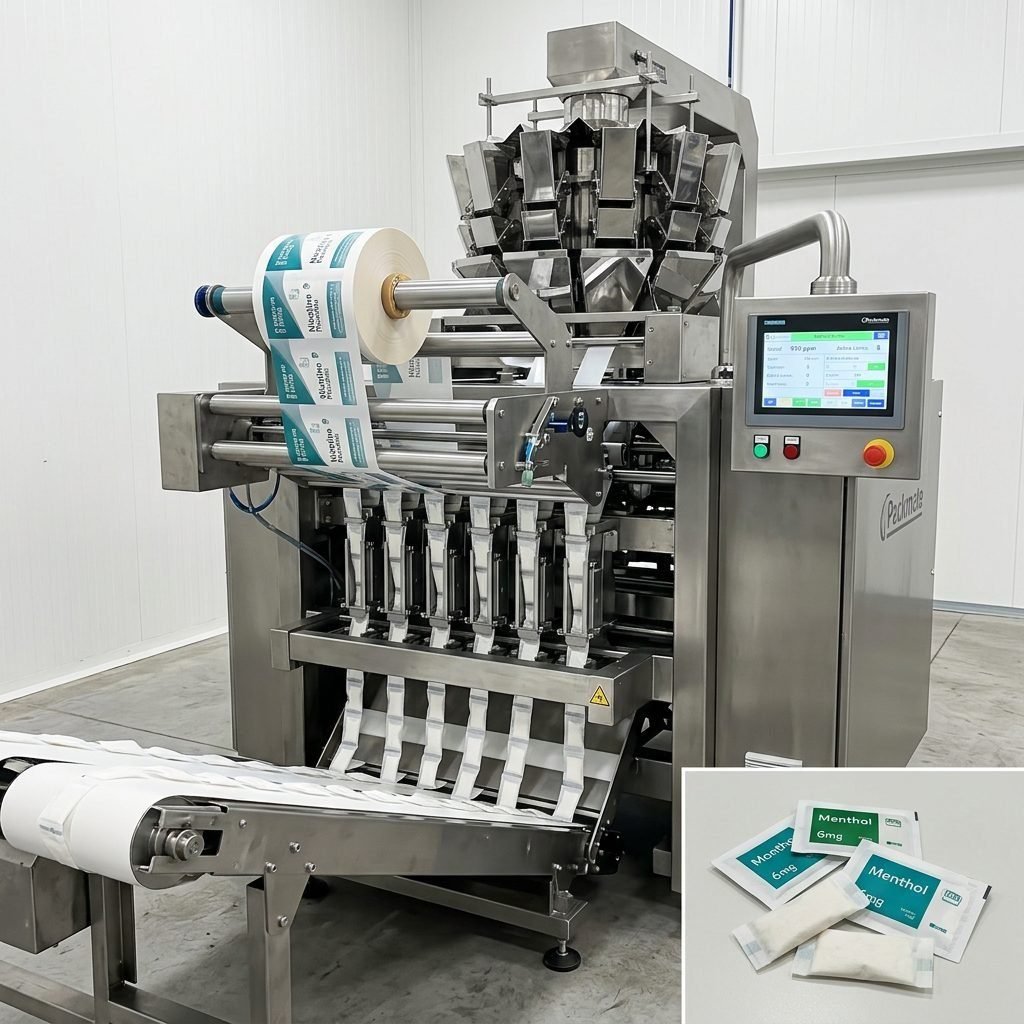
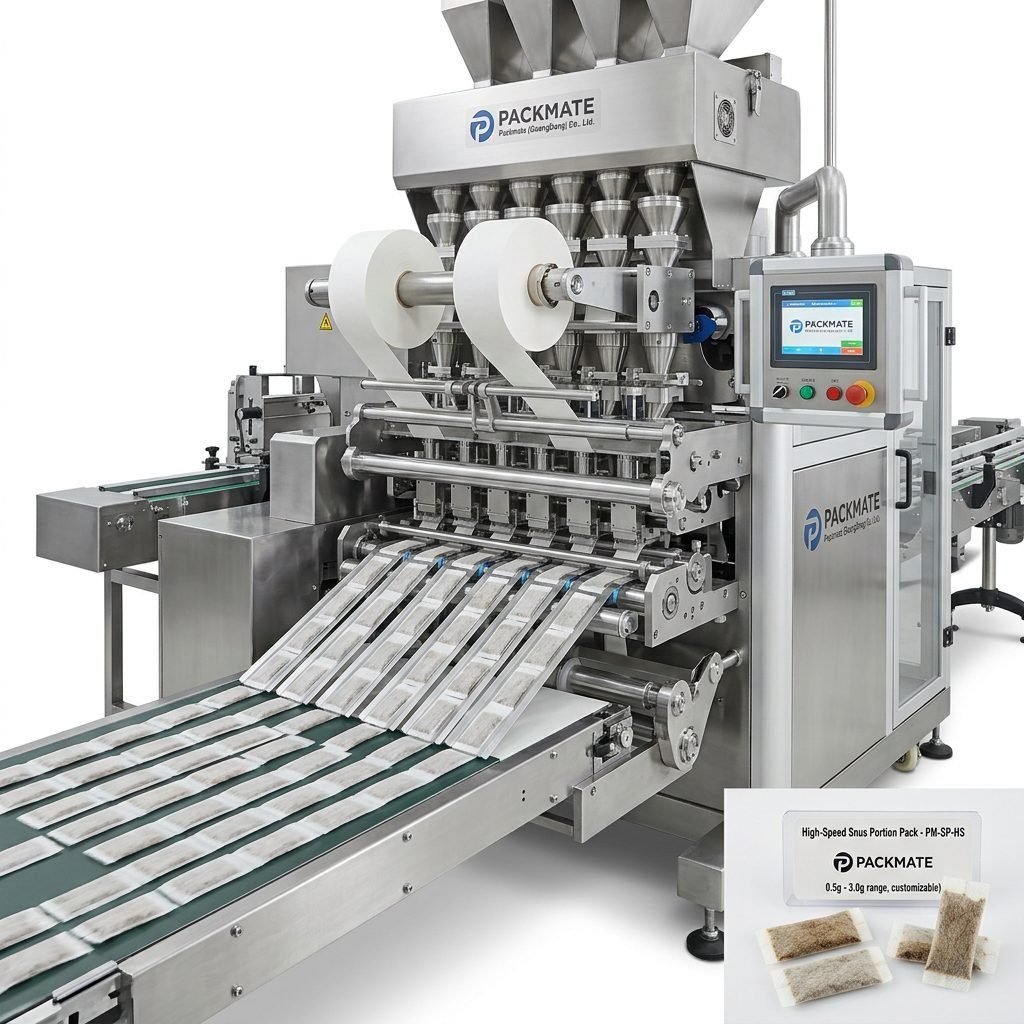
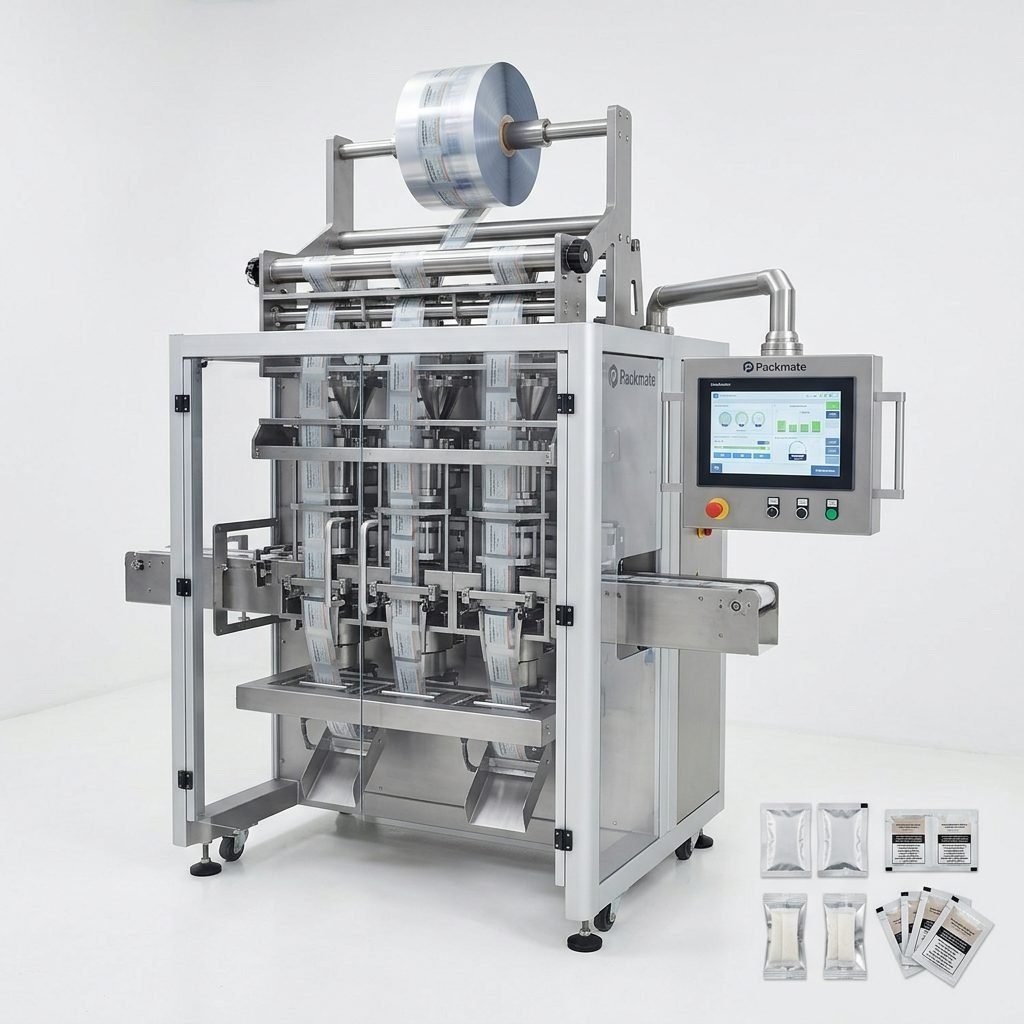
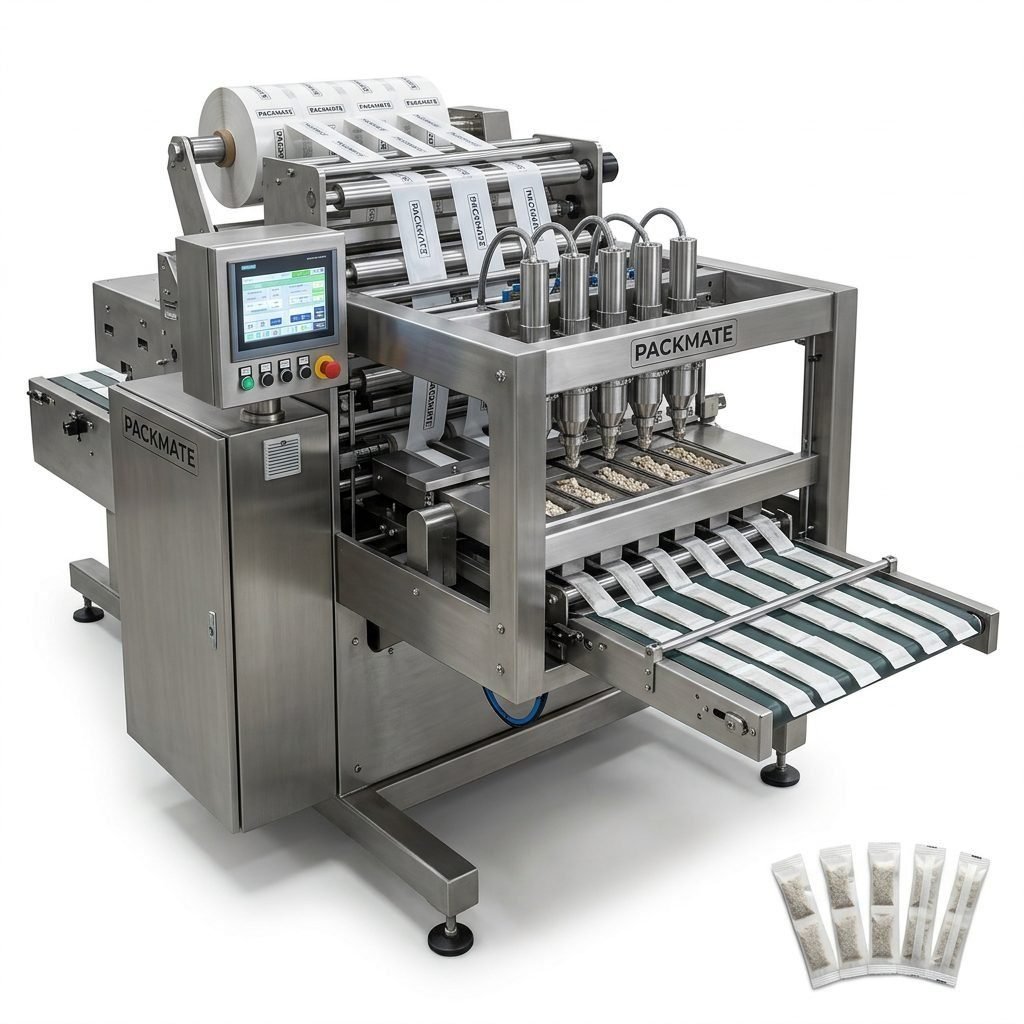
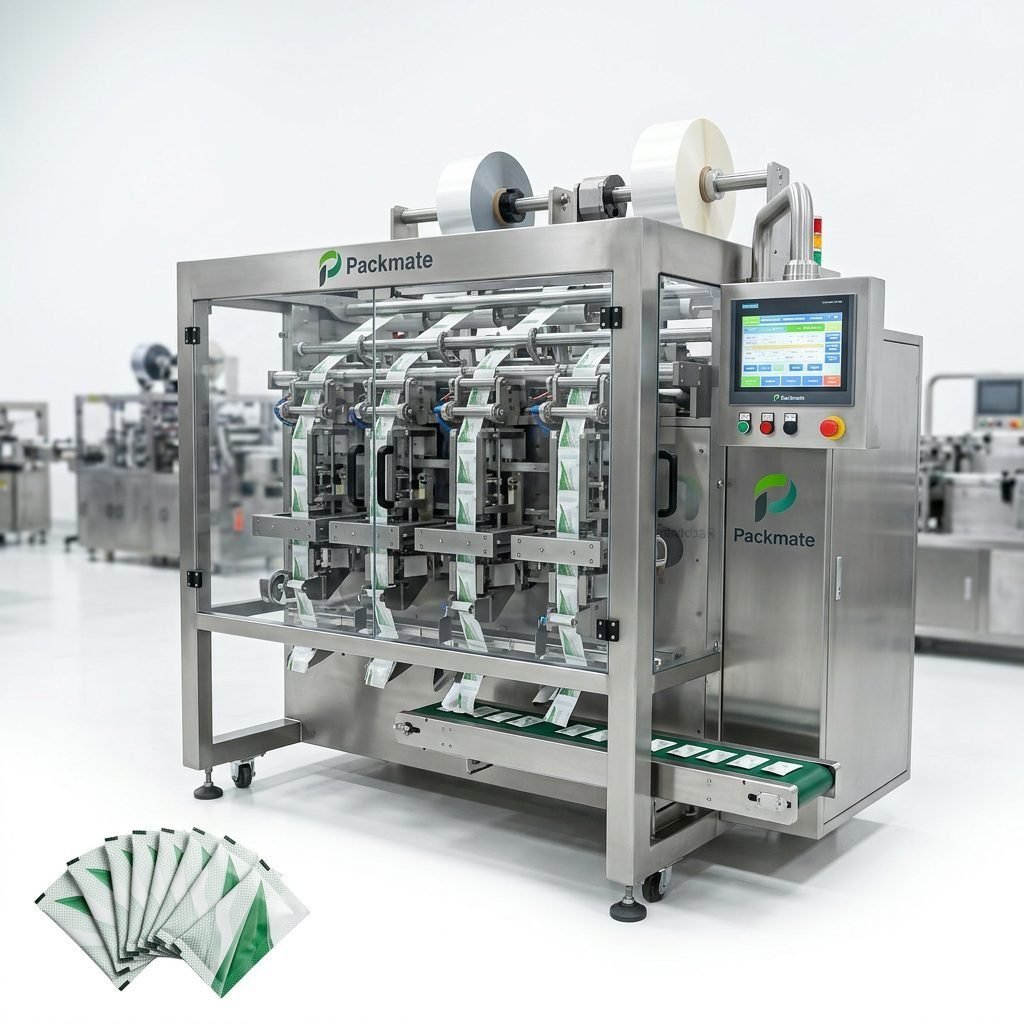
Buying reliable snus and nicotine pouch packaging machinery in Argentina requires more than price comparison — it demands an understanding of local market habits, regulatory nuances, logistics realities, and the technical details that ensure uninterrupted production. Argentina’s market mixes strict customs rules, Spanish-language labeling expectations, and a preference for proven suppliers that can provide robust after-sales support. This guide walks Argentine buyers step-by-step through how to find a trustworthy snus packaging machinery supplier, evaluate offers, and minimize risk from first contact to installation and ongoing operation.
Understand Argentina’s Market, Culture & Regulations
Argentina has its own regulatory framework for nicotine products and tobacco-related items. Buyers should be aware that packaging, labeling, and import rules may require Spanish-language labels, health warnings, and specific documentation for customs clearance. Additionally, nicotine pouch and snus consumption patterns in Argentina may differ from Northern European markets — consumers often adopt formats that match local preferences for strength, flavor, and convenience. When you evaluate suppliers, prioritize those who demonstrate knowledge of Argentine customs procedures, provide documentation in Spanish when needed, and can advise on compliance details. For supplier certification checks, look for CE and ISO documentation and ask for copies of factory certificates to ensure international compliance.
Key Regulatory and Cultural Considerations
🔶 Local labeling — Spanish-language labels and ingredient declarations are often expected by distributors and retailers.
🔶 Customs & duties — Argentina has variable import duties and administrative checks; complete packing lists, certificates of origin, and machine specifications shorten clearance time.
🔶 Consumer habits — nicotine pouches often compete with local tobacco products; offer flexible machine formats that can produce different pack styles to test market acceptance.
Define Your Production Requirements Clearly
Before contacting suppliers, create a clear technical brief. Include target daily throughput, pouch formats (portion, loose snus, stick packs, sachets), fill types (powder, granule, paste, liquid), lane count preferences, and future expansion plans. A well-defined brief helps suppliers propose the most cost-effective and scalable solution. For many buyers, multi-lane systems reduce per-unit costs, but they also require more precise dosing and synchronization. If you plan to produce multiple SKUs, ask about changeover time and tooling requirements.
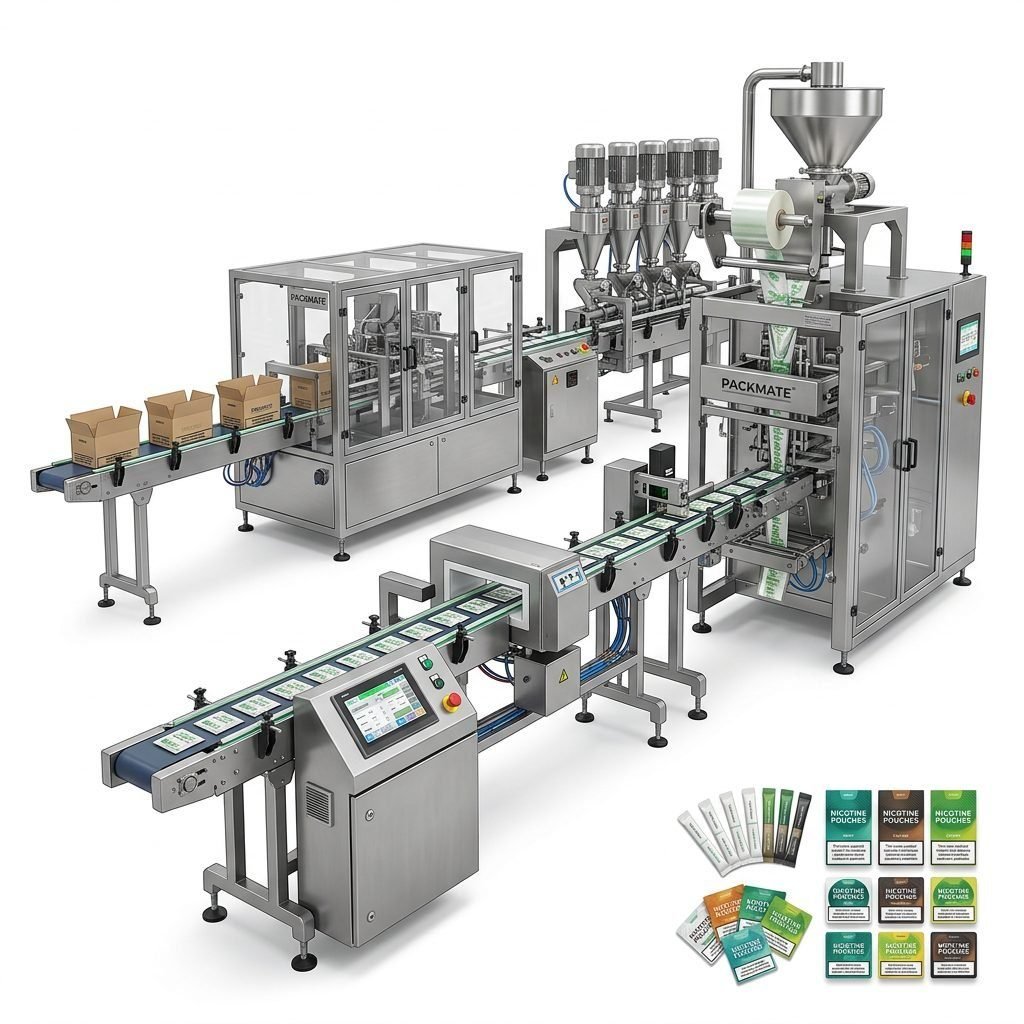
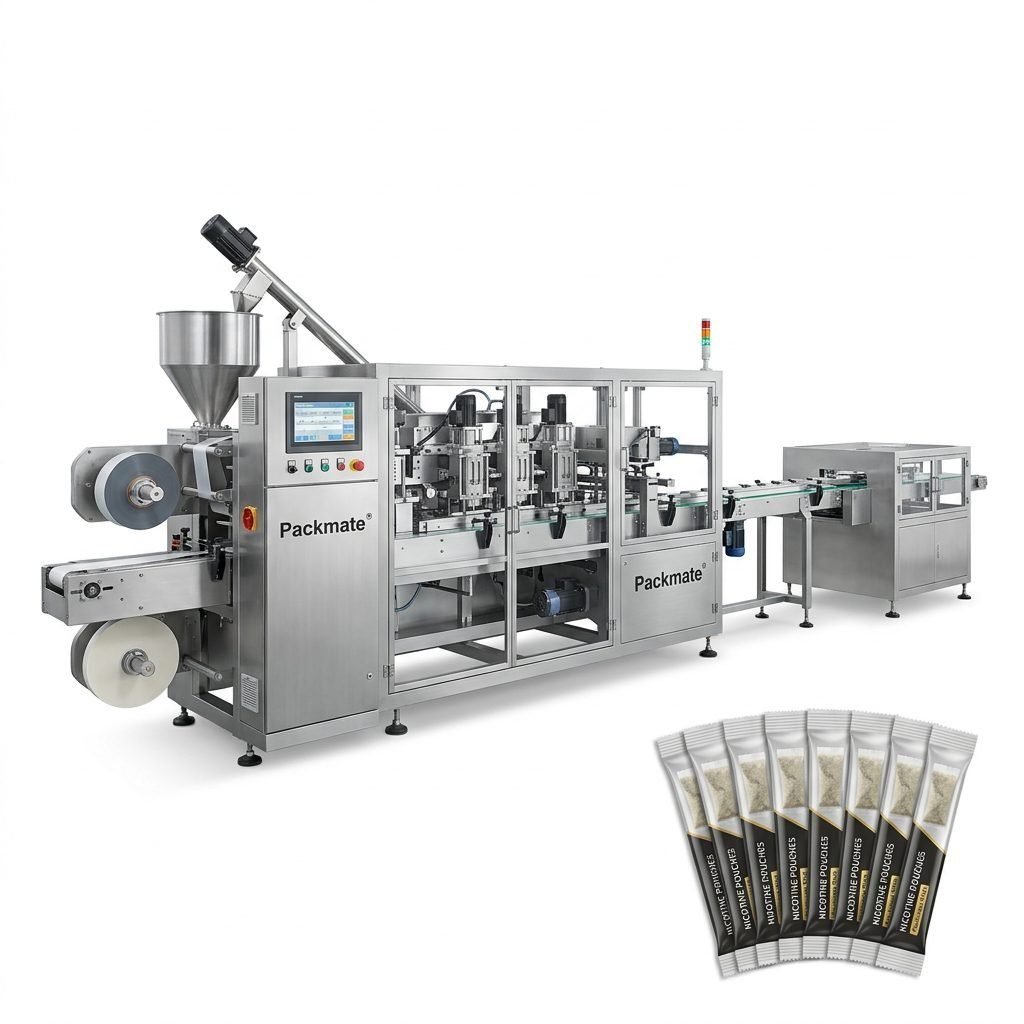
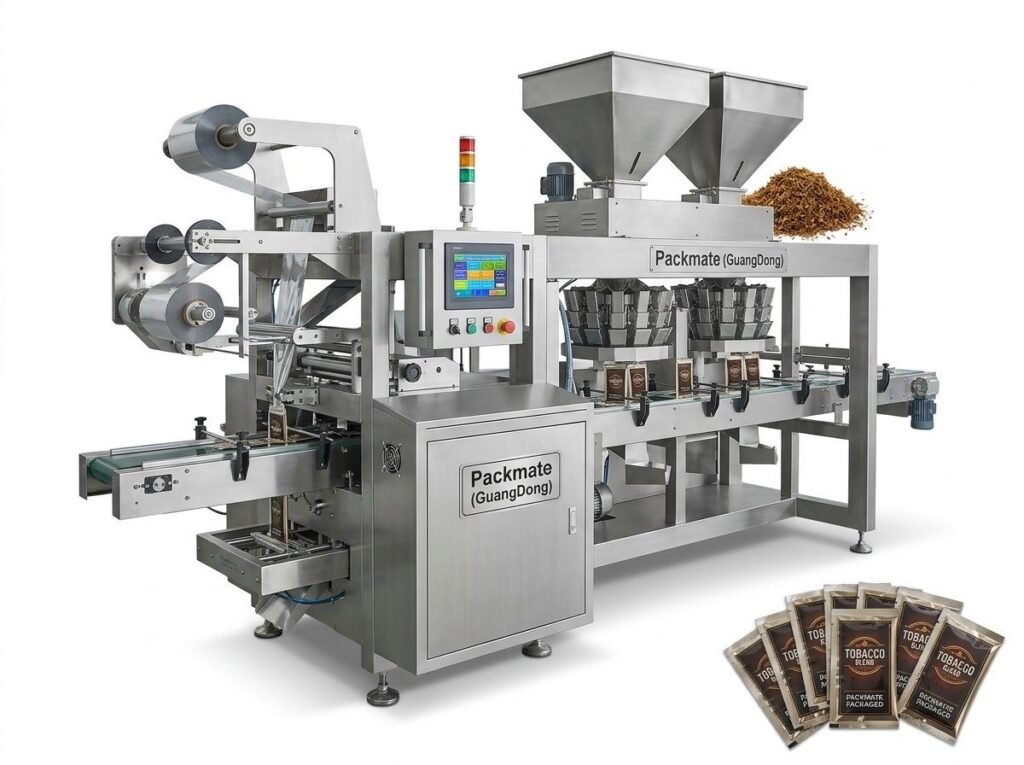
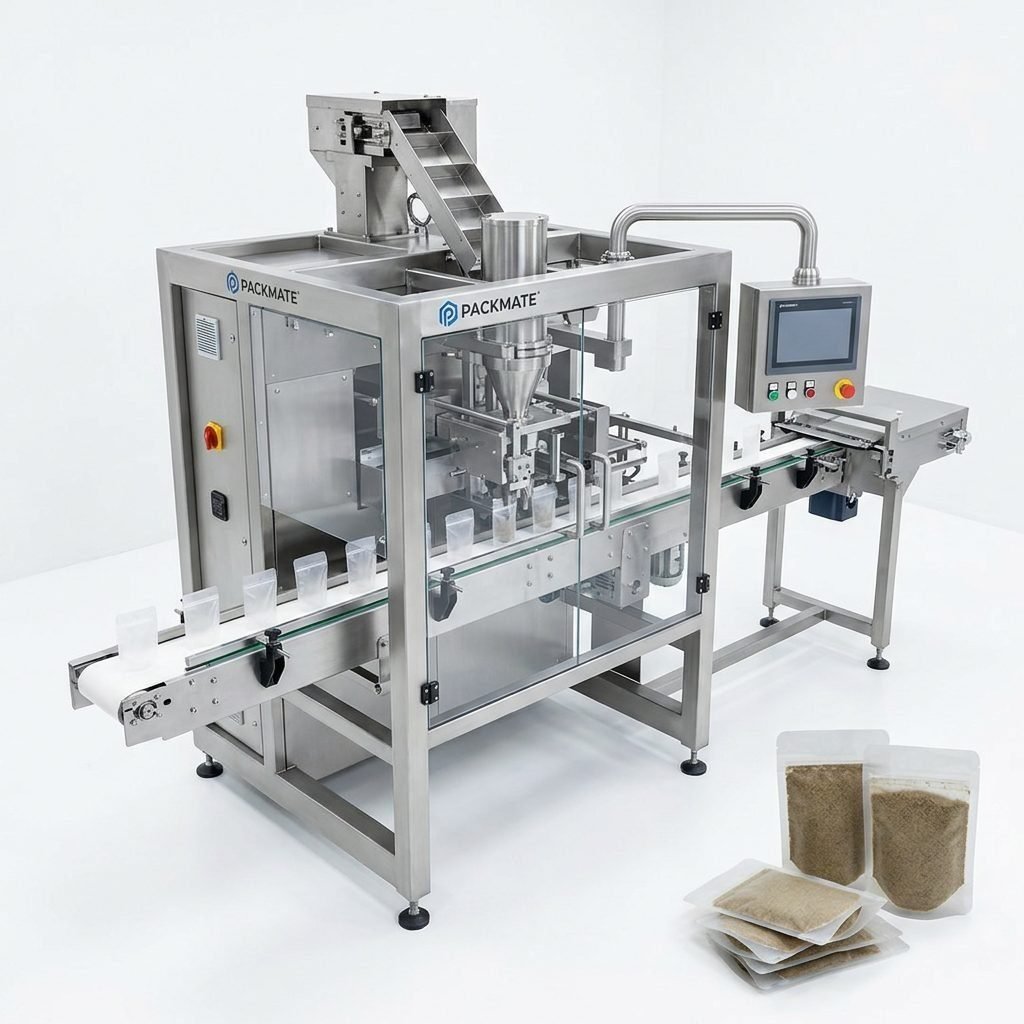
Consider visiting manufacturer product pages for model comparisons such as Snus & Nicotine Packaging Machines and Sachet & Stick Pack Machines to understand common configurations and available options.
Production Brief Checklist (Use this with potential suppliers)
✅ Target output — units per minute / per shift / per day (and seasonal peaks).
✅ Product formats — portion size, pouch shape, pack type (single, multi-pack, stick).
✅ Fill material — granules, powder, paste, or liquid and particle size distribution.
✅ Packaging film & material specs — laminates, barrier properties, printed film width.
✅ Future scale — whether you will increase lanes or add automation modules later.
Evaluate Supplier Experience, Factory Strength & Reputation
Supplier credibility is essential. Look for firms with decades of engineering experience, robust manufacturing facilities, and proven global deliveries. A supplier with a sizeable factory area, advanced CNC machining centers, and precision assembly lines demonstrates capacity to deliver consistent machines. Ask for a list of international references and case studies. Packmate Snus Machine, for example, advertises 30+ years of experience, a 20,000㎡ manufacturing site, and multiple successful global cases — information that buyers should verify through visits, video tours, or reference calls. Check supplier case studies and exhibition history to confirm real-world performance and customer feedback.
Useful links for verification and product inspection: About Packmate, Case, and Our Exhibition. These pages often include factory photos, testimonial videos, and exhibition demos that support credibility.
Factory Visit vs Remote Evaluation
Whenever possible, visit the factory. If travel is impractical, request a live virtual factory acceptance test (FAT). During visits or virtual FATs, observe machining centers, assembly lines, quality control stations, and final testing. Confirm that machines undergo stability testing with your product specification and ask for sample packs produced during FAT to validate sealing, dosing consistency, and pack aesthetics.
Technical Support, Spare Parts & After-sales Service
After-sales support separates a long-term partner from a short-term vendor. Confirm spare part lead times, availability of critical consumables, and local stocking options in South America. Ask whether technicians can be dispatched to Argentina for installation and commissioning, and whether remote troubleshooting (video calls, PLC screen-sharing) is supported. Ensure training is offered in Spanish or with a local translator — this expedites operator learning and reduces downtime.
Link to supplier service pages and FAQs can reveal responsiveness and scope: Service and FAQs are useful starting points to verify support structures.
Quality Standards and Certifications
Ensure the supplier holds recognized certifications like CE and ISO. These certifications indicate compliance with safety and manufacturing standards which are helpful for import approval. Additionally, confirm that materials in contact with product are suitable for nicotine and food-contact applications. Request material certificates and traceability documentation for critical parts that contact the product.
If you need official certificates for customs or local regulators, ask the supplier to provide notarized copies and translated documents as required.
Cost, Payment Terms, and Logistics
Total cost includes machine price, tooling, spare parts kit, training, shipping, insurance, customs duties, and local commissioning. Discuss Incoterms up front — FOB, CIF, DDP — to clarify who handles freight, insurance, and customs clearance. Argentina’s complex import process means DDP (Delivered Duty Paid) is attractive for first-time buyers but may increase the supplier’s handling complexity. If you prefer to manage local clearance, ensure the supplier provides accurate technical data sheets, packing lists, and certificates to avoid delays at port.
Packaging, Export Documentation & Argentine Customs Tips
Work with a local customs agent experienced in machinery imports. Ensure all documents list machine model, serial number, power requirements, and country of origin. A clearly itemized invoice and commercial invoice in Spanish or with Spanish translation reduce inspection time. Also prepare for potential import taxes and local homologation if the machine includes electrical components requiring local certification.
Ask the Right Questions During Supplier Evaluation
🔎 What is the machine’s actual tested throughput with my product?
🔎 Can you provide FAT videos and sample packs?
🔎 What spare parts are included in the shipment?
🔎 What warranty and service SLAs are offered for Argentina?
🔎 Are operator manuals and electrical diagrams available in Spanish?
Common Red Flags and Deal-breakers
Watch for vague answers about lead times, reluctance to provide FAT, missing quality certificates, or unwillingness to agree on clear warranty terms. If a supplier avoids providing client references or detailed technical schematics, probe deeper. Low price can hide poor build quality, non-standard electrical components, or absence of spare part availability — all of which increase total cost of ownership over time.
Balancing Standard Models vs Custom Solutions
Standard models reduce cost and lead time and are suitable for most common snus or pouch formats. Custom solutions are necessary for unique pack shapes, special dosing systems, or integrated secondary packaging. Ask the supplier to quantify extra cost, lead time, and validation steps for any customization. In Argentina, where launch windows and budgets can be tight, a staged approach (buy a standard line, then add a customization module) often works best.
Negotiating Contracts and Protecting Your Investment
Include clear acceptance criteria in the sales contract: tested throughput, product quality specs, FAT requirements, penalty clauses for late delivery, warranty duration, and spare parts kit level. Agree on training scope and language. Define spare part pricing adjustments for the first two years and confirm response times for critical failures. If possible, negotiate a local technician training clause so your staff can solve common issues without waiting for overseas support.
Logistics & Local Installation Practicalities
Coordinate machine delivery with site readiness: foundation, power supply, ventilation, and local safety requirements. Prepare to handle customs inspection and local certification if inspectors request. Consider hiring a local engineering firm to assist with mechanical and electrical checks during commissioning, especially when translations or local practice differ from supplier assumptions.
Useful Supplier Resources and Links
Explore product categories and company background pages to verify capabilities and product fit before inviting quotes. Helpful resource links: Snus & Nicotine Packaging Machines, Sachet & Stick Pack Machines, and About Packmate. For real-world examples, review the Case page and consider contacting the supplier via Contact Us to request references and FAT schedules.
Final Recommendations for Argentine Buyers
1) Prepare a detailed technical brief and ask suppliers to confirm tested throughput with your product. 2) Prioritize suppliers with strong factory evidence and proven export experience to Argentina. 3) Negotiate clear FAT, warranty, and spare parts terms. 4) Ensure documentation and training are available in Spanish. 5) Use a trusted customs agent and plan logistics early to avoid port delays. Following these steps helps minimize risk and ensures your snus or nicotine pouch production line arrives, installs, and performs as expected.
Summary — What to Look for at a Glance
Experience & Factory Strength — decades of R&D, advanced CNC, and precision assembly.
Certifications & FAT — CE/ISO, FAT reports, sample packs.
Service & Spare Parts — Spanish documentation, prompt technical support, stocked parts.
Frequently Asked Questions
Q1: What documents do I need to import a snus packaging machine into Argentina?
A1: Typical documents include commercial invoice, packing list, certificate of origin, machine technical datasheets, CE/ISO certificates if available, and any electrical compliance documentation. Ask your supplier for translated documents if needed and coordinate with a local customs agent to confirm any additional requirements.
Q2: Should I purchase a multi-lane machine or start with a single-lane line?
A2: It depends on expected volume and variability. Multi-lane systems lower per-unit cost for high volumes but require more sophisticated dosing and maintenance. If market demand is uncertain, starting with a flexible single- or dual-lane line and planning for modular upgrades is a prudent approach.
Q3: How can I verify a supplier’s claims about machine throughput and reliability?
A3: Request a Factory Acceptance Test (FAT) with your product specification, ask for video evidence of the machine running continuously for a set period, and request sample packs produced during FAT. Contact references and inspect case studies or exhibition demos where possible.
Q4: What warranty and support should I expect for machines shipped to Argentina?
A4: Expect at least a 12-month warranty for mechanical parts, with options to purchase extended coverage. Confirm response times for on-site support, availability of local technicians, spare part shipping times to Argentina, and remote troubleshooting capabilities. Include these details in the contract.
Q5: Where can I find more detailed product information and request quotes?
A5: Visit manufacturer product pages and contact their sales team with your technical brief. Useful links include Snus & Nicotine Packaging Machines, Filling & Packaging Lines, and Contact Us for direct inquiries. Request a formal quotation that includes lead time, warranty, and detailed scope of supply.