Choosing the right snus packaging machinery supplier in Liechtenstein requires a clear understanding of your production goals, local market characteristics, and regulatory responsibilities. This guide walks you through every critical consideration — from machine types and technical specifications to after-sales support, logistics, and compliance — so you can make a confident, ROI-focused decision for your nicotine pouch or snus production line.
Understand the Liechtenstein Market and Local Customs
Liechtenstein is a small, affluent country with close economic and cultural ties to Switzerland and Austria. Business here values precision, quality, discretion, and regulatory compliance. Buyers often prioritize long-term reliability and compact, efficient systems over the lowest upfront price. If your production is targeting local or nearby EU/EEA markets, expect strict expectations for product safety, traceability, and clean manufacturing processes.
🔍 Local considerations: German is the primary language for packaging and labeling; proximity to Switzerland affects logistics options; environmental and waste-handling expectations are high. Choose suppliers who understand cross-border compliance, CE/ISO certifications, and discreet, compact lines suitable for smaller factories.
Step 1 — Define Your Production Needs
Start with precise answers to these operational questions. Your requirements will determine machine configuration, lane count, and ancillary systems:
- What is your target daily/monthly output in pouches?
- What pouch formats will you run (portion/snuff, nicotine pouch, stick pack, sachet)?
- Do you need multi-lane capability for small-dose products?
- Are you using powders, granules, or liquids?
- Will you require nitrogen flushing, desiccant insertion, or vacuum sealing?
Match machine types to product formats
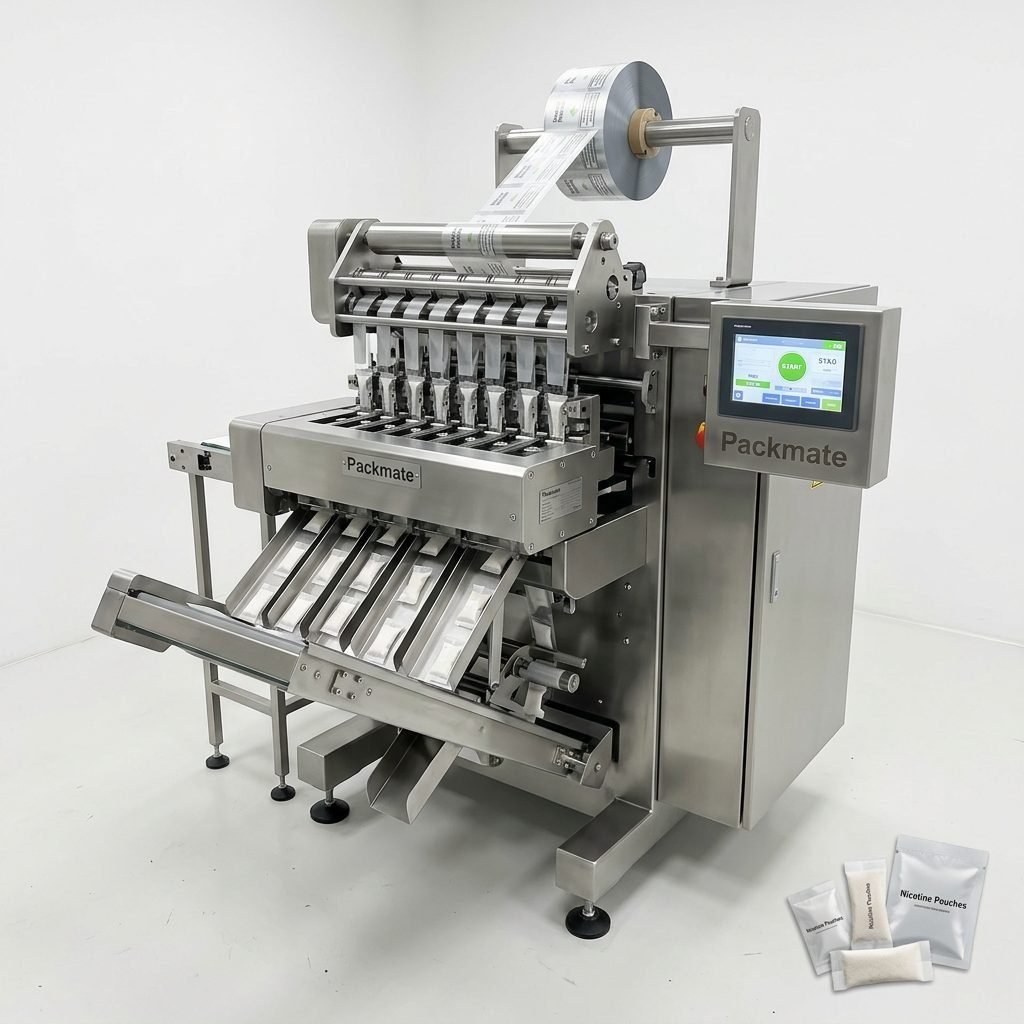
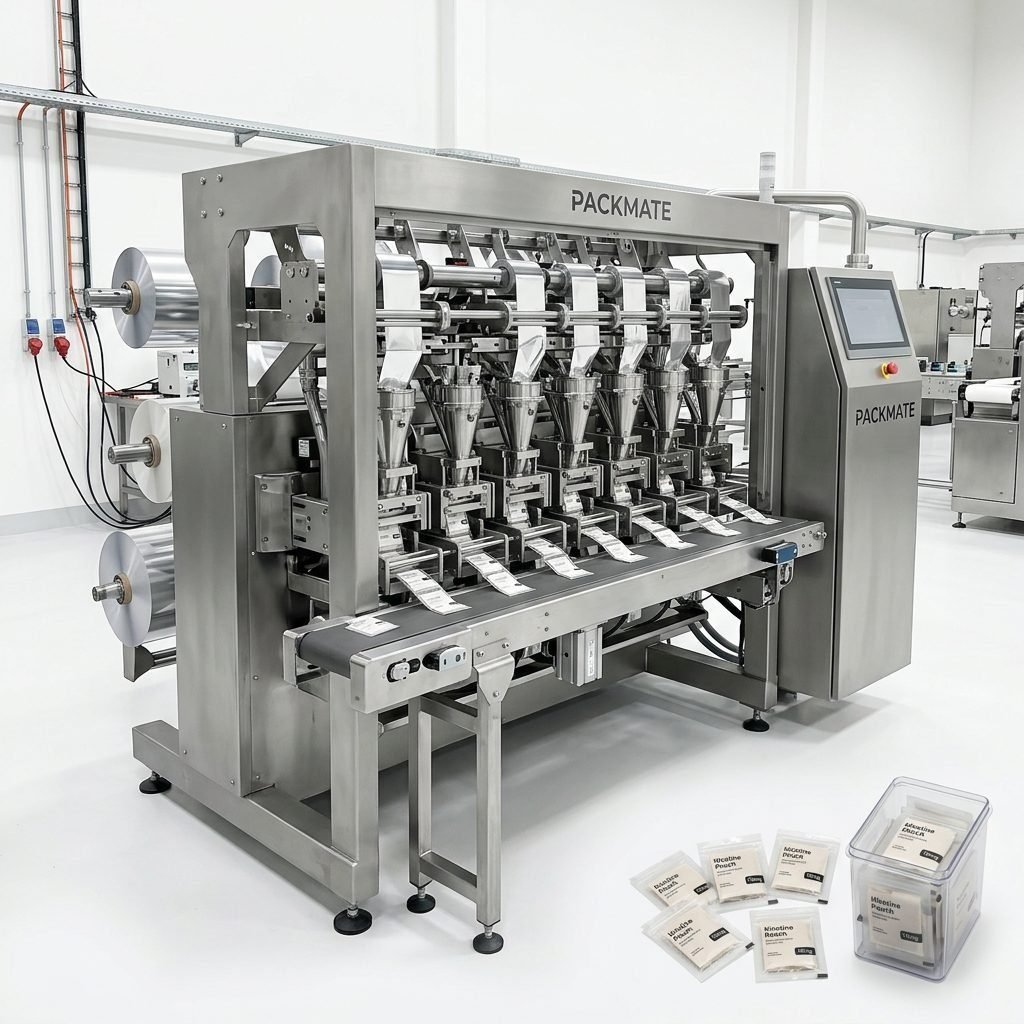
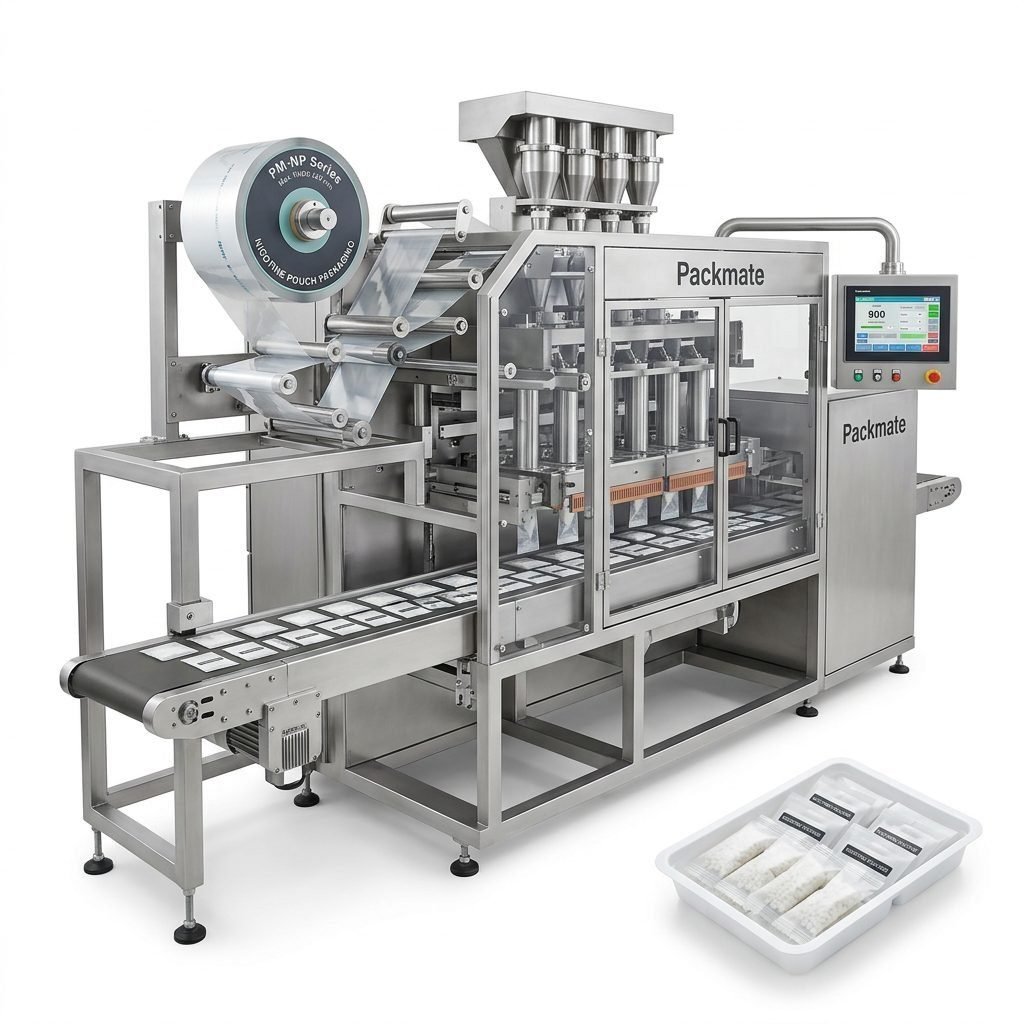
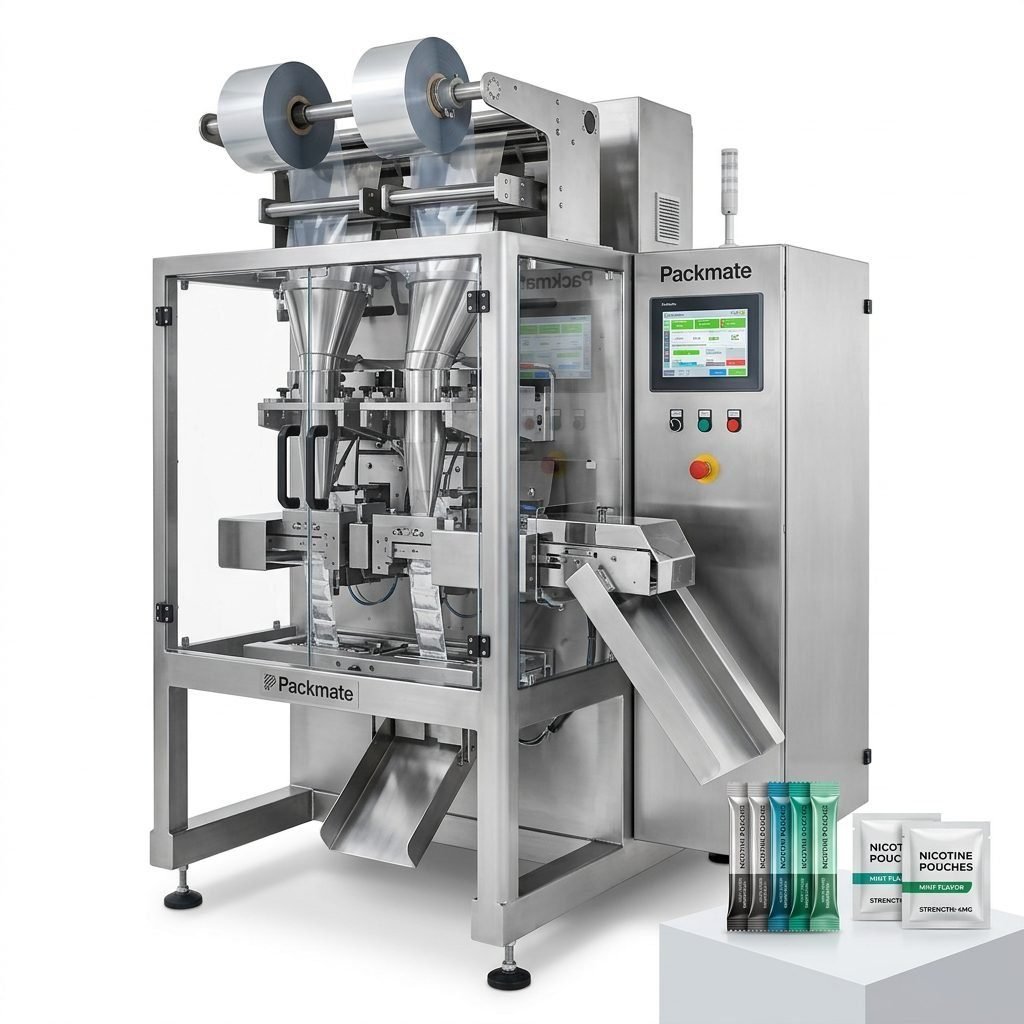
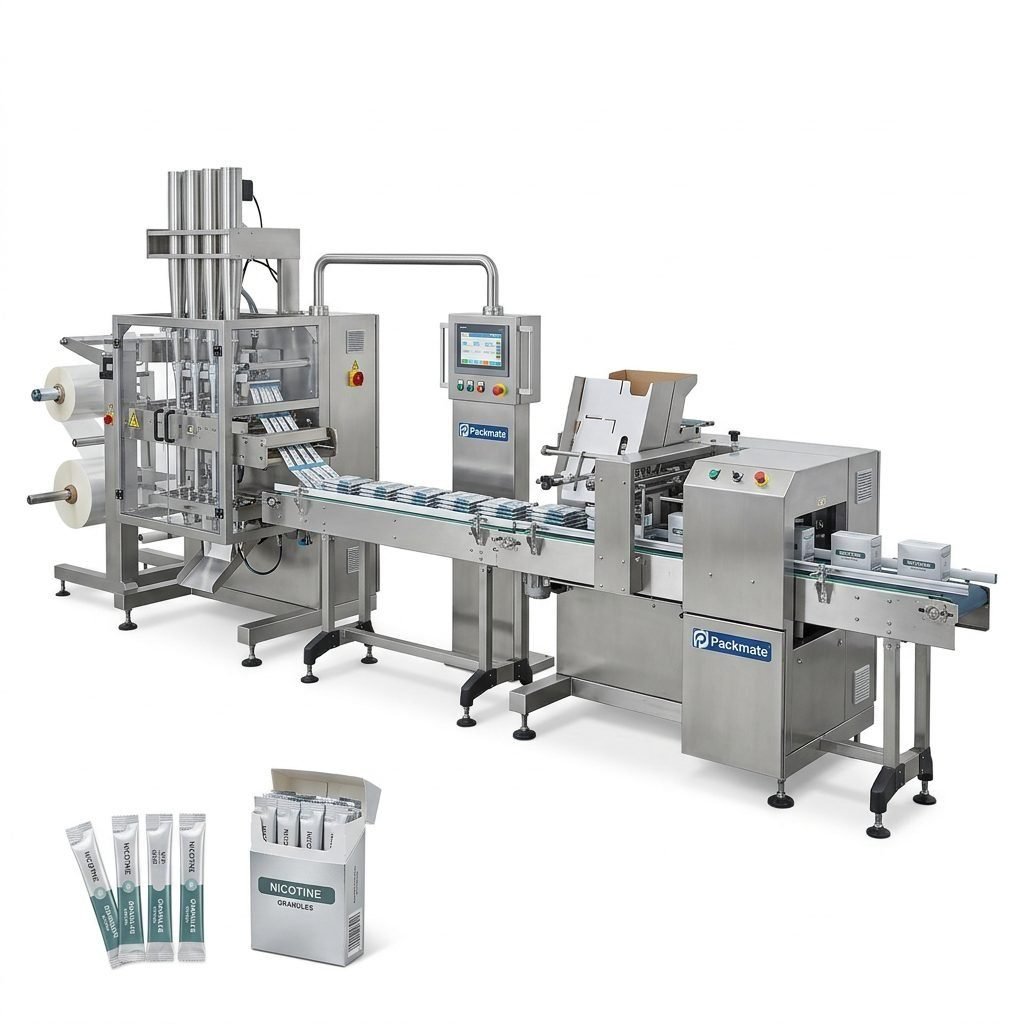
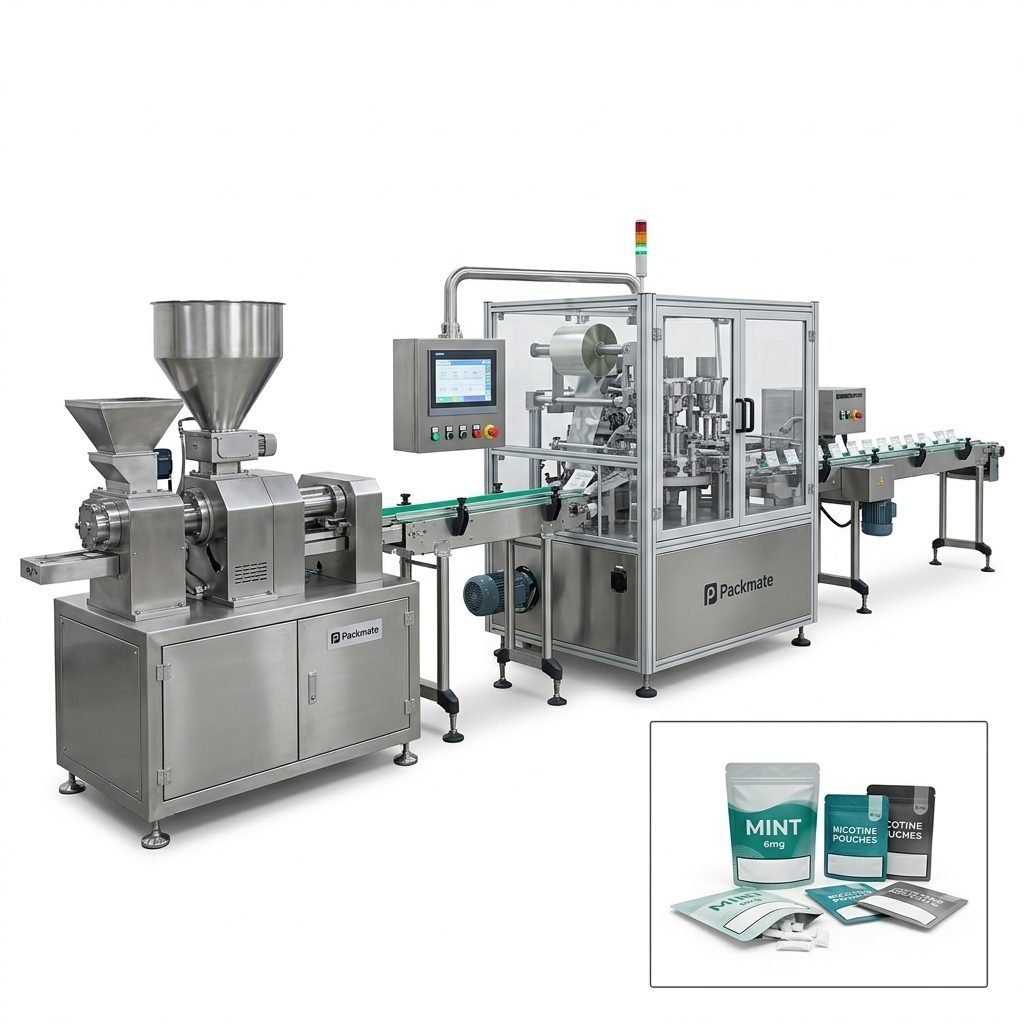
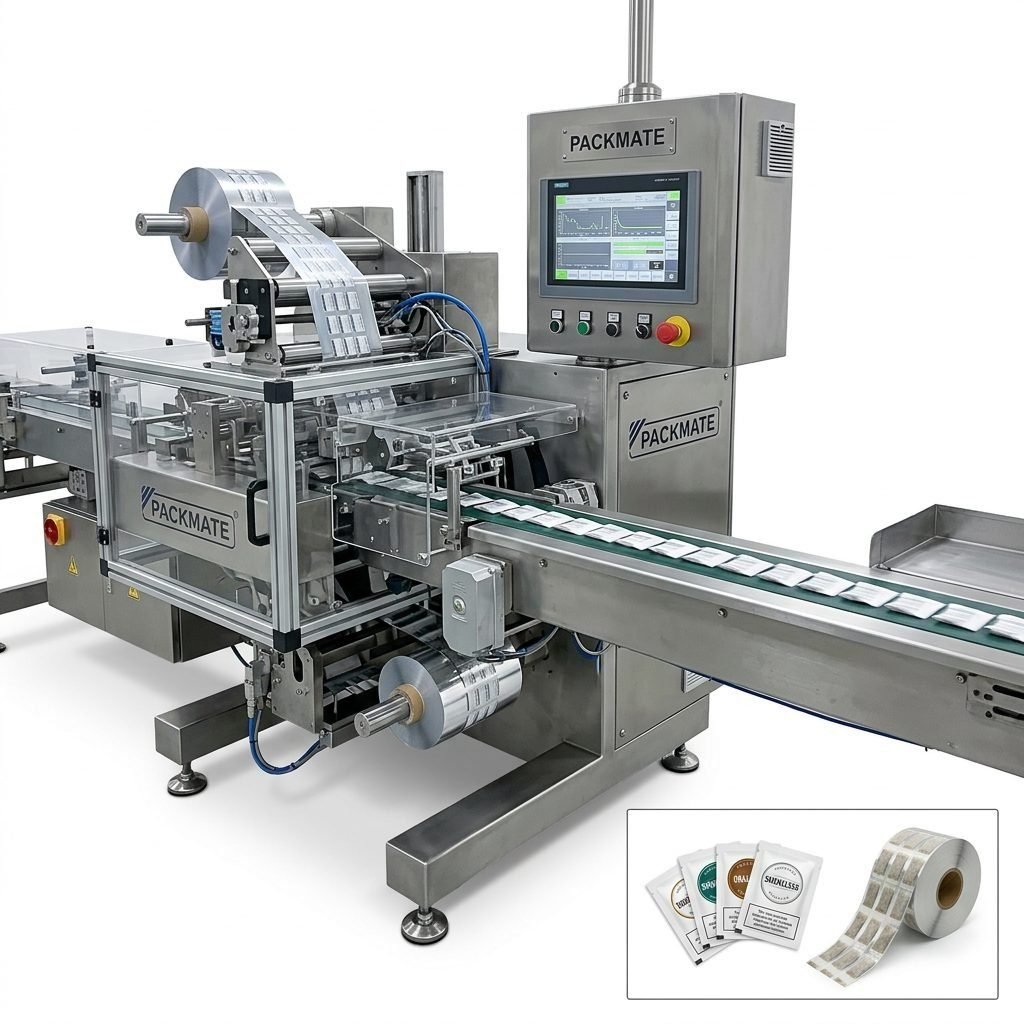
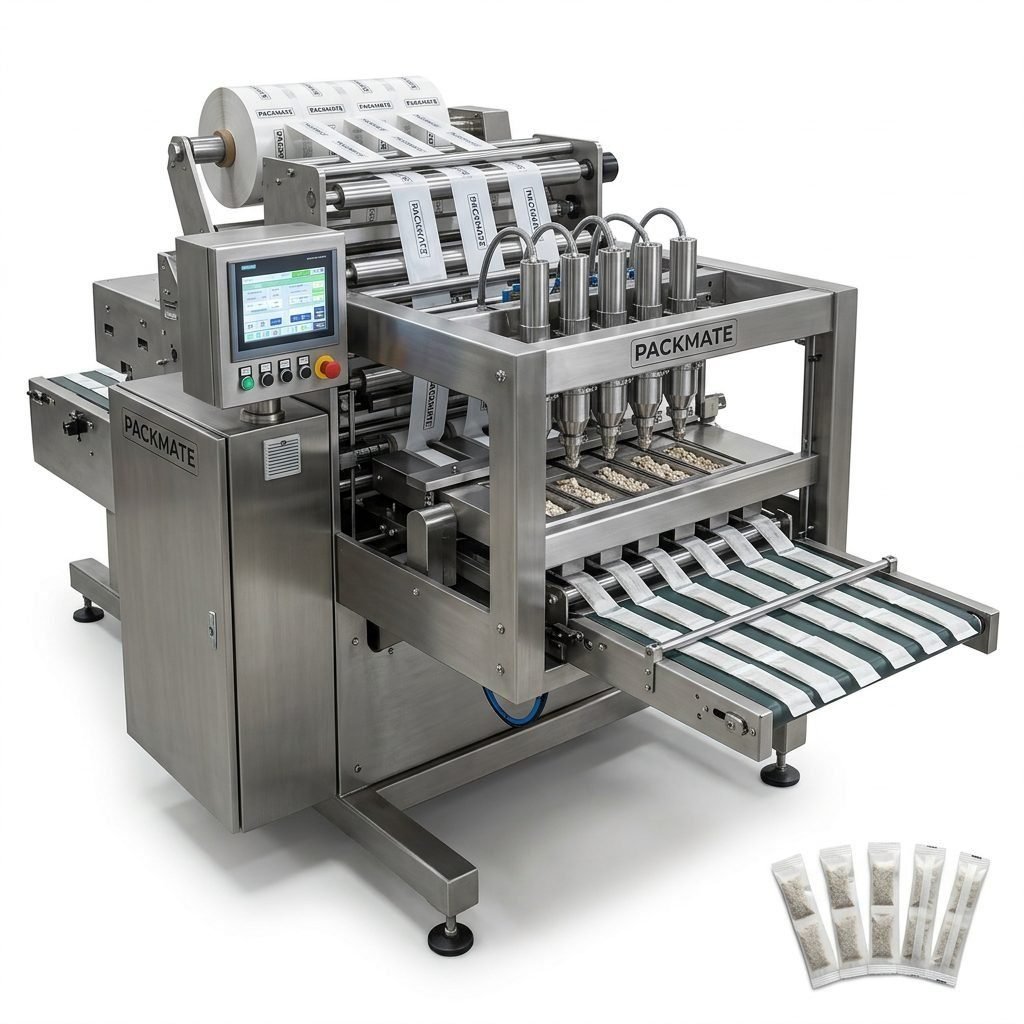
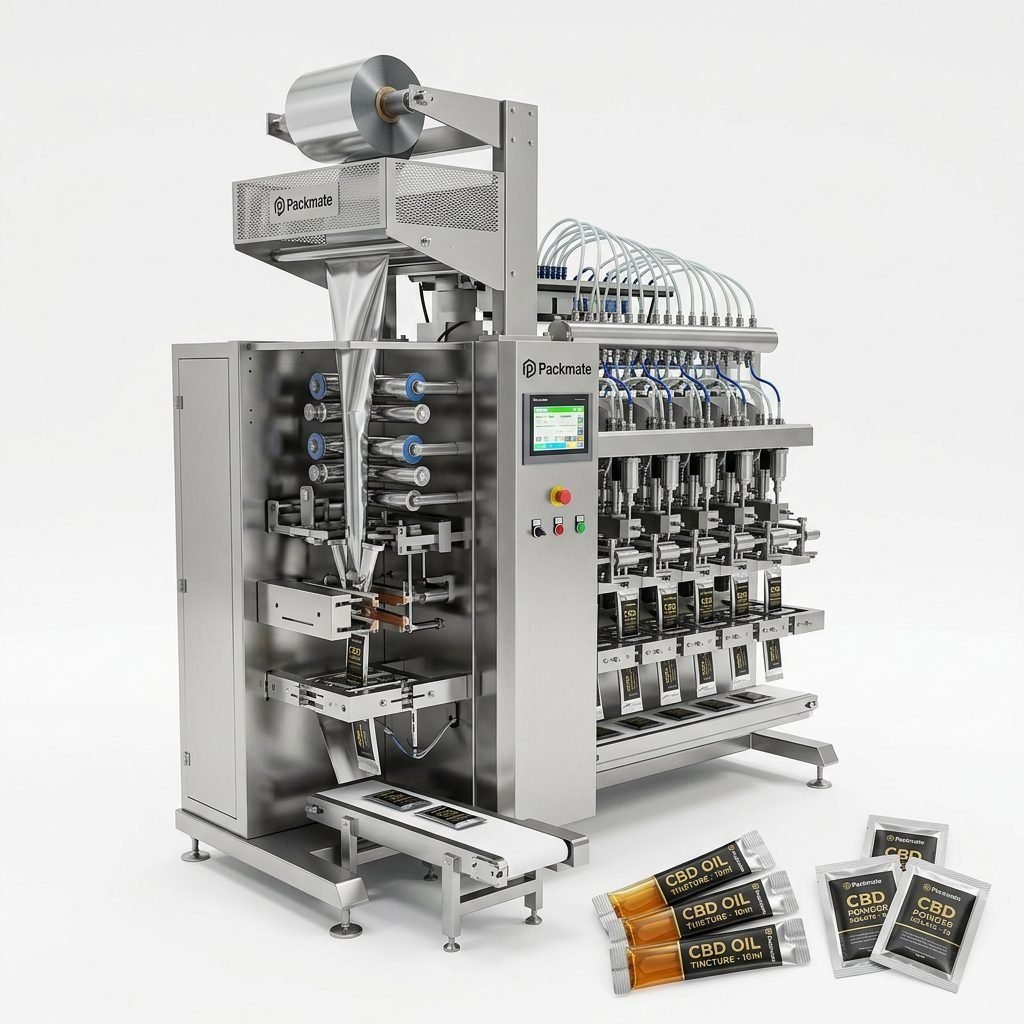
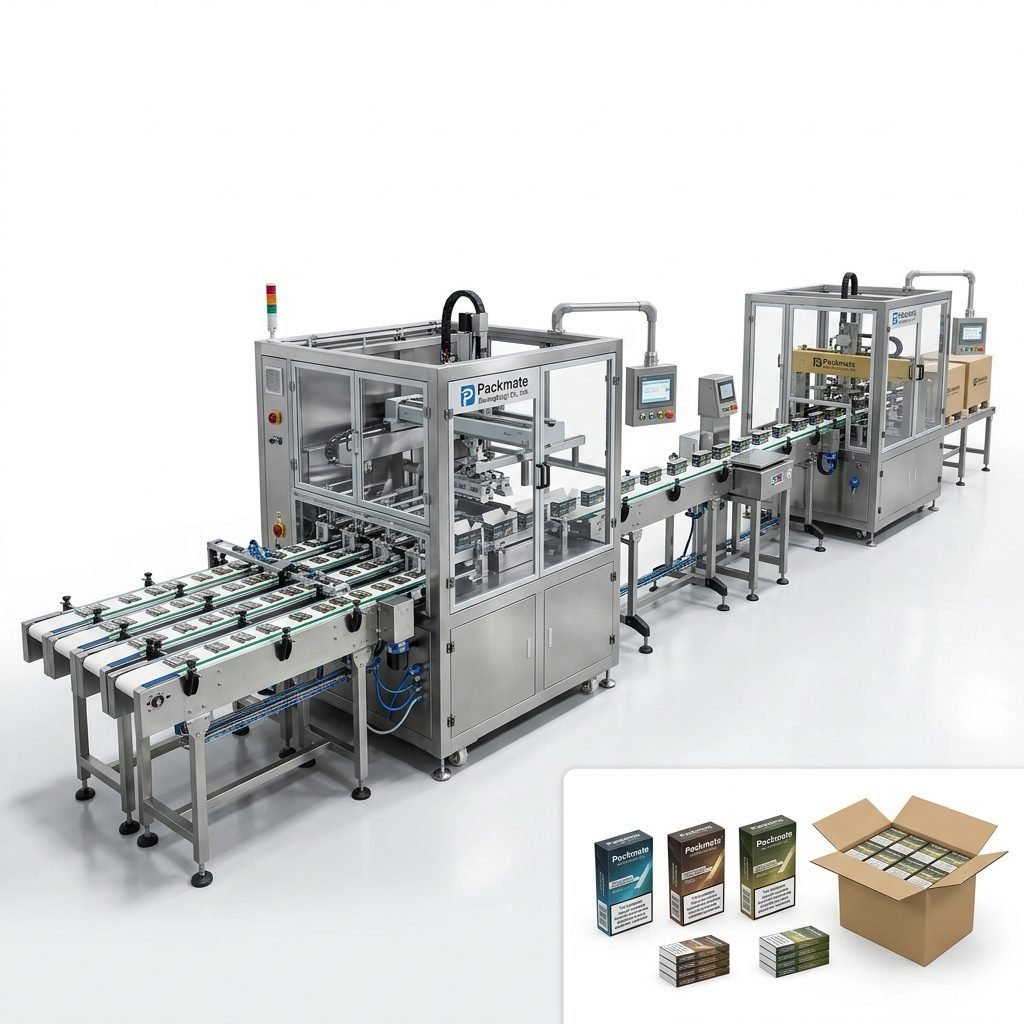
For nicotine pouches and snus, look at specialized pouch systems that can handle fine powders and low-dose filling with high accuracy. If you plan multiple product formats, consider modular lines that combine filling, sealing, and secondary packaging. Explore machines built for snus & nicotine packaging machines and sachet & stick pack configurations to ensure compatibility with your SKUs.
Useful references: Snus & Nicotine Packaging Machines, Sachet & Stick Pack Machines.
Step 2 — Evaluate Technical Capabilities and Quality
Technical performance, manufacturing precision, and long-term stability are non-negotiable. Seek suppliers with documented experience in small-dose, multi-lane systems — especially for nicotine pouch production where dosing accuracy is critical.
✅ Must-have technical features:
- High-precision dosing modules for powders and micro-doses
- Multi-lane synchronization and lane-failure tolerance
- Servo-driven components for stable speed and repeatability
- Easy-change tooling for fast format swapovers
- Hygienic design with easy-clean components and materials compliant with food/pharma contact
Manufacturing strength and certifications
A supplier with a solid factory setup — CNC machining, precision assembly lines, and rigorous testing — is essential. Verify CE and ISO certifications and ask for test reports and performance validation. Suppliers with global turnkey experience can better handle integration of weighing systems, filling lines, and auxiliary equipment.
Helpful resources: Certificate, Weighing & Packaging Systems.
Step 3 — Inspect Service, Spare Parts, and After-Sales Support
In Liechtenstein, responsiveness and trust matter. Your chosen supplier should provide fast spare parts delivery, remote technical support, qualification/validation assistance, and on-site training. Confirm guaranteed parts availability and mean-time-to-repair (MTTR) commitments.
⚙️ Support checklist:
- Local or regional service partners and availability windows
- Spare parts kits for critical wear components
- Remote diagnostics and PLC/HMI reproducibility
- Operator and maintenance training documentation in German
- Clear warranty terms and extended-service plans
Check service offerings: Service and contact options: Contact Us.
Step 4 — Verify Turnkey and Customization Capabilities
If you plan a complete line — from feeding/weighing to primary and secondary packaging — pick a supplier who can deliver integrated solutions. Look for companies with modular platforms that can adapt to future SKUs and production increases.
Integration and project management
A clear project timeline, validation plan, FAT/SAT procedures, and a single point of contact will reduce project risk. Confirm the supplier can manage electrical standards, software language localization, and mechanical interfaces for downstream carton or case packing equipment.
Step 5 — Consider Total Cost of Ownership (TCO) and ROI
Upfront price is only part of your investment. Evaluate lifecycle costs, energy consumption, production uptime, and changeover times. A higher-spec, more reliable machine may deliver better yield and lower operating costs over 5–10 years.
📈 TCO factors to model:
- Expected uptime and preventive maintenance schedule
- Yield/loss rates for new product formats
- Energy and consumables cost per 1,000 pouches
- Operator training time and labor efficiency
- Upgrade paths and spare parts pricing
Step 6 — Logistics, Compliance, and Cross-Border Considerations
Liechtenstein’s proximity to European markets eases freight, but customs and regulations vary by destination. Confirm export documentation, shipping methods, and installation support. If you plan to distribute within the EEA, ensure machines and your packaged products comply with applicable health and product laws.
Labeling should be available in German (and other languages as needed). Environmental handling of packaging waste and solvents is taken seriously; consider suppliers who use recyclable materials and low-waste processes.
Step 7 — Visit, Witness Tests, and Check References
If possible, arrange a factory visit or witness testing at an exhibition. Reliable suppliers welcome FAT (Factory Acceptance Test) visits and provide video demonstrations. Ask for customer references in Europe and ask about long-term support cases. A supplier with exhibition presence and global case studies shows maturity and trustworthiness.
Browse case studies and events: Case, Our Exhibition.
Practical Checklist Before Signing a Contract
✔️ Pre-contract checklist
- Clear machine specifications and performance guarantees
- Acceptance criteria, FAT/SAT schedules, and penalties for missed delivery
- Spare parts list, lead times, and initial spares included
- Training language, duration, and material format
- Warranty coverage, service SLAs, and remote support options
Why Packmate Could Be a Strong Candidate
With over 30 years of engineering experience and a 20,000㎡ manufacturing facility, Packmate Snus Machine offers specialized multi-lane snus and nicotine pouch packaging systems. Their experience in stick pack, sachet, and multi-lane snus production lines, combined with CE/ISO compliance and global turnkey solutions, makes them a competitor to consider for Liechtenstein operations. Ask for detailed references, factory tour options, and how they handle language/localization for German-speaking markets.
Explore their product pages: Snus & Nicotine Packaging Machines, Bag & Pouch Packaging Machines, and support details at Service.
Negotiation Tips and Contract Clauses
Negotiate clear acceptance criteria, spare parts inclusion, and training milestones. Include performance-based clauses tied to dosing accuracy, production speed, and line uptime. Ask for a breakdown of costs (machine, shipping, installation, validation) and an itemized spare parts recommendation for the first 12 months.
Protective terms to include
Request intellectual property clauses for custom designs, clear responsibility for electrical and software compliance in your country, and a documented escalation path for technical issues. For manufacturers outside Europe, a clause for customs clearance assistance and DDP/DDU options can streamline import to Liechtenstein.
Final Decision Framework
Weigh these factors in order of priority for your operation:
- Technical fit and dosing accuracy
- Service, spare parts, and language-localized training
- Factory capability, certifications, and testing transparency
- TCO and realistic ROI timeline
- Logistics, warranty, and contractual protections
🚀 Decision tip: Shortlist 2–3 suppliers, request FAT videos or visits, and run a pilot using your real materials. Pilot runs reveal dosing issues, inert material interactions, and true changeover times faster than spec sheets alone.
Conclusion — Make a Future-Proof Choice
Choosing the best snus packaging machinery supplier in Liechtenstein means balancing technical precision with dependable after-sales support and cross-border logistics knowledge. Prioritize suppliers who can demonstrate relevant multi-lane experience, certifications, local-language support, and a clear path for upgrades as your product line expands. With the right partner you’ll achieve consistent quality, efficient operations, and sustainable growth in a demanding regional market.
Common Questions
Q1: How long does it take to get a snus packaging line up and running?
A: Typical lead times vary by customization, but expect factory delivery in 3–6 months and onsite installation, validation, and training in 2–4 weeks. Turnkey projects with custom systems can take longer; schedule FATs early in the timeline.
Q2: What certifications should I insist on?
A: CE and ISO are standard; request material-contact certificates, electrical and software compliance for your jurisdiction, and documentary proof of performance tests for dosing accuracy and sealing integrity.
Q3: Can a supplier support multiple pouch formats on one line?
A: Yes, many modern systems offer modular tooling and quick-change components to switch formats. Verify documented changeover times and request demonstration runs on your SKUs.
Q4: How do I manage spare parts and maintenance?
A: Negotiate an initial spare parts kit and an ongoing parts supply agreement. Ensure critical items have short lead times; consider local stocking arrangements or regional partners for faster service in Central Europe.
Q5: Where can I find more product and company information?
A: For detailed product lines, technical specs, and company background, visit Packmate’s pages: About Packmate, product catalogs like Snus & Nicotine Packaging Machines, and support pages such as Contact Us.