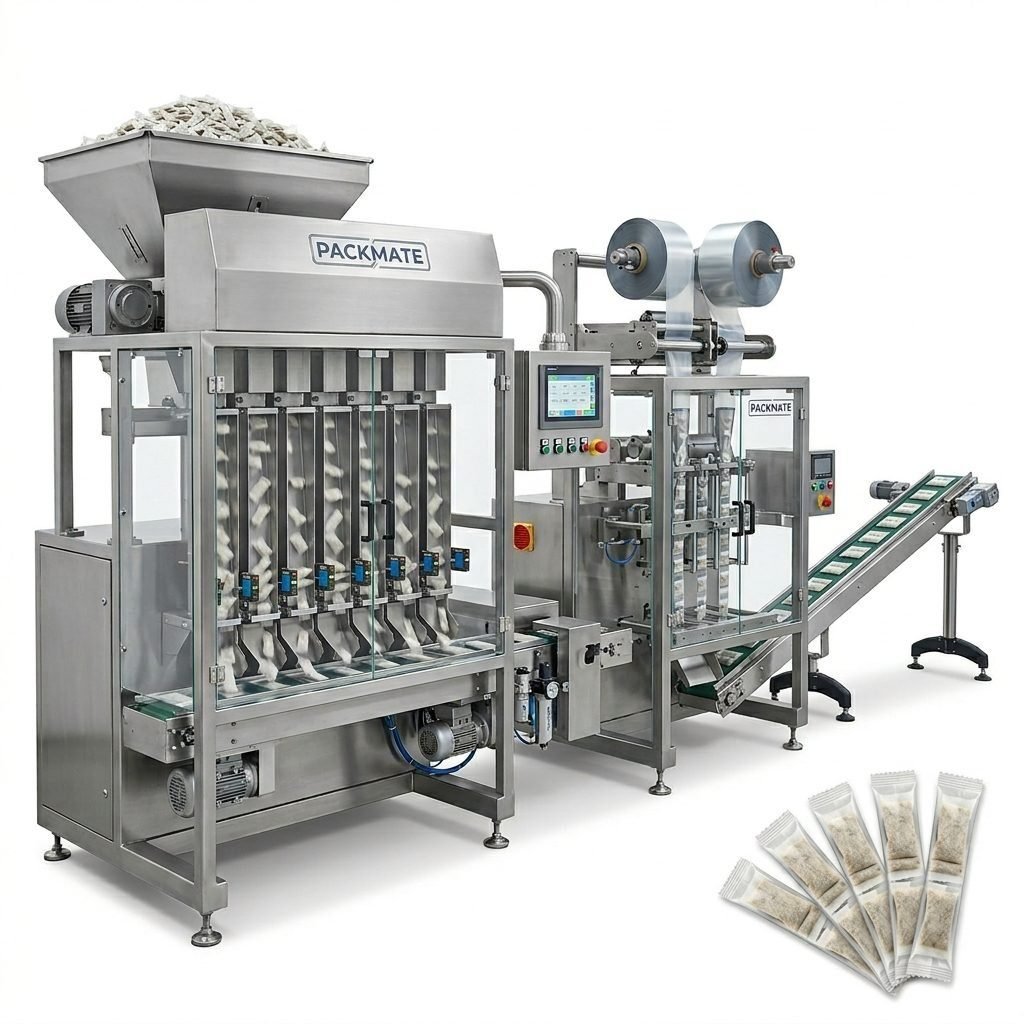
Choosing the right snus packaging machine for your business in Papua New Guinea requires more than just comparing price tags. Local climate, consumer habits, import logistics, and after-sales service all influence long-term performance and profitability. This guide walks you through practical considerations and actionable steps to select a machine that matches PNG’s market realities, production goals, and regulatory landscape.
Understanding the Papua New Guinea Market & Local Considerations
Papua New Guinea (PNG) is a culturally diverse nation with strong regional differences in consumption habits. In many provinces, traditional products like betel nut dominate oral consumption habits, while in urban centers (Port Moresby, Lae, Mt. Hagen) there is a growing exposure to global nicotine products. For entrepreneurs considering snus or nicotine pouches, two realities matter most:
Local habits: betel nut chewing is prevalent in rural PNG and variable in urban areas; nicotine pouches may appeal first to urban young adults and expatriate communities.
Environment: PNG’s tropical climate brings high humidity and temperature swings that affect packaging integrity and machine corrosion. Machines must be compatible with high-moisture production environments and offer excellent sealing performance.
Which Machine Types Fit Your Business?
There are several snus packaging formats. Choosing a machine depends on product type, target market, and expected volumes:
Stick Pack & Sachet Machines
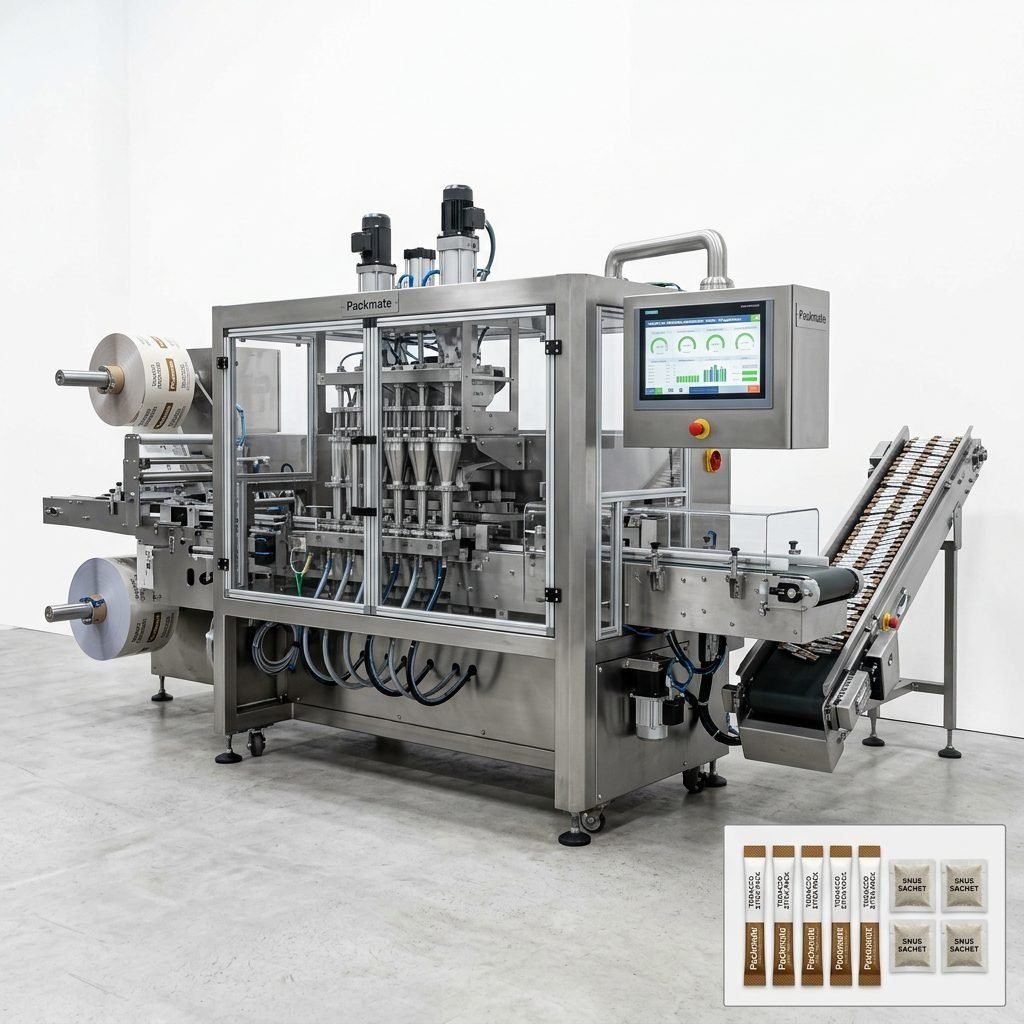
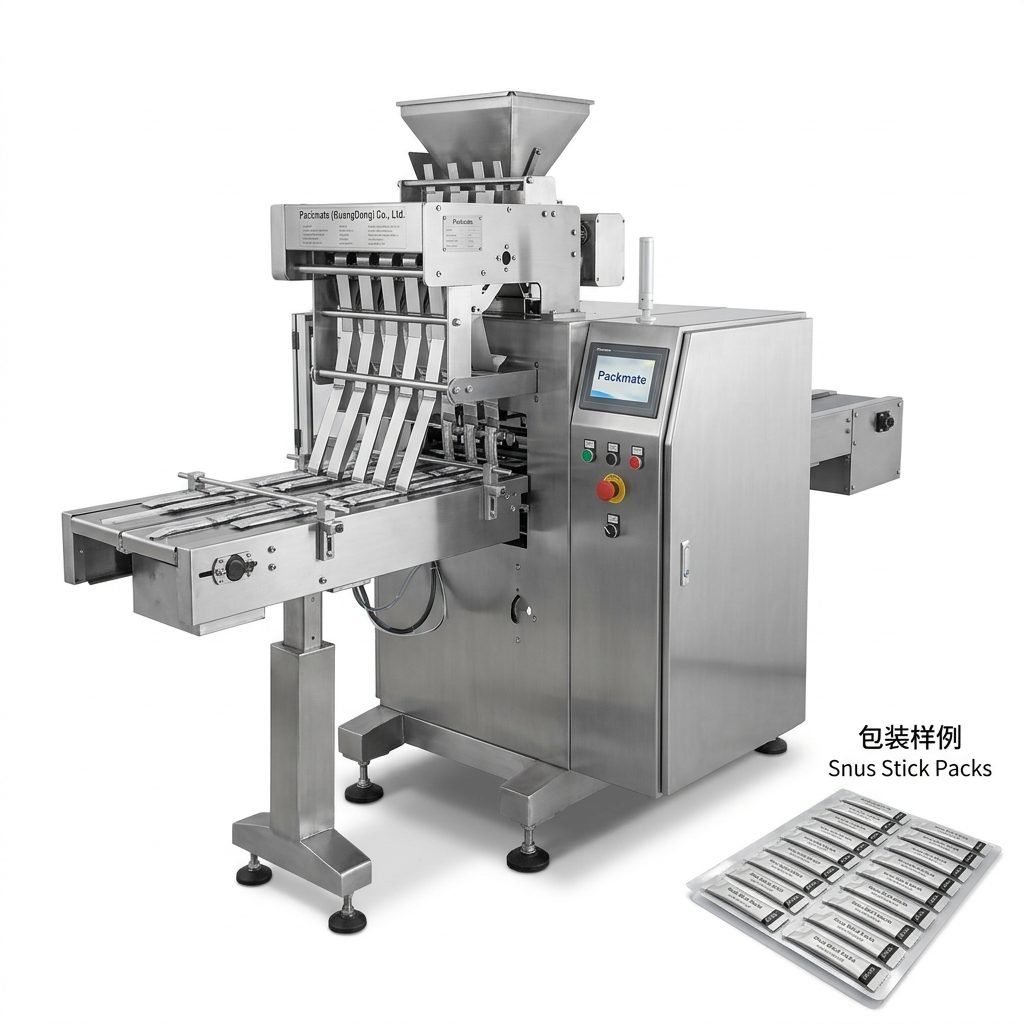
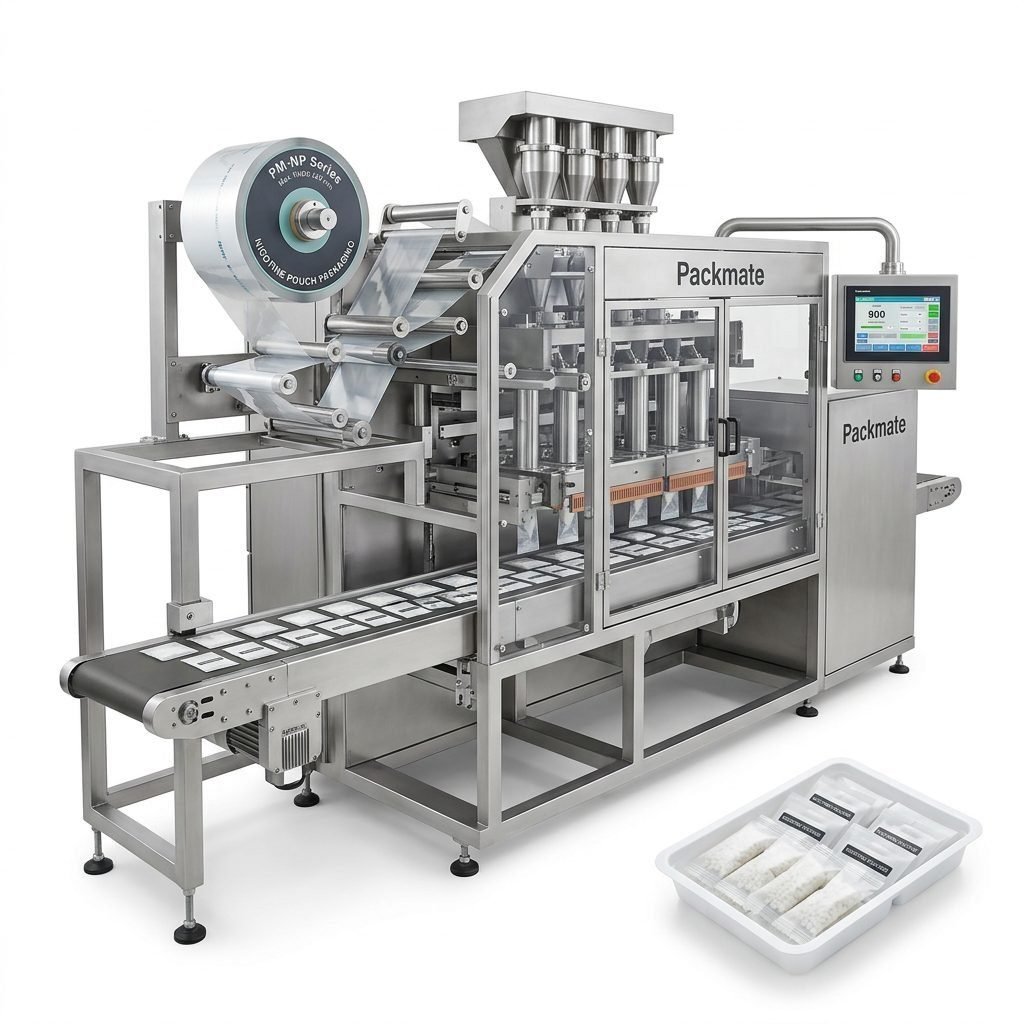
Stick pack and sachet machines are ideal for single-dose pouches and tear-open formats. These are often preferred for trial packs and retail-ready single-use pouches. For compact nicotine pouches, stick and sachet formats offer convenience and low material use.
Multi-lane Pouch Machines
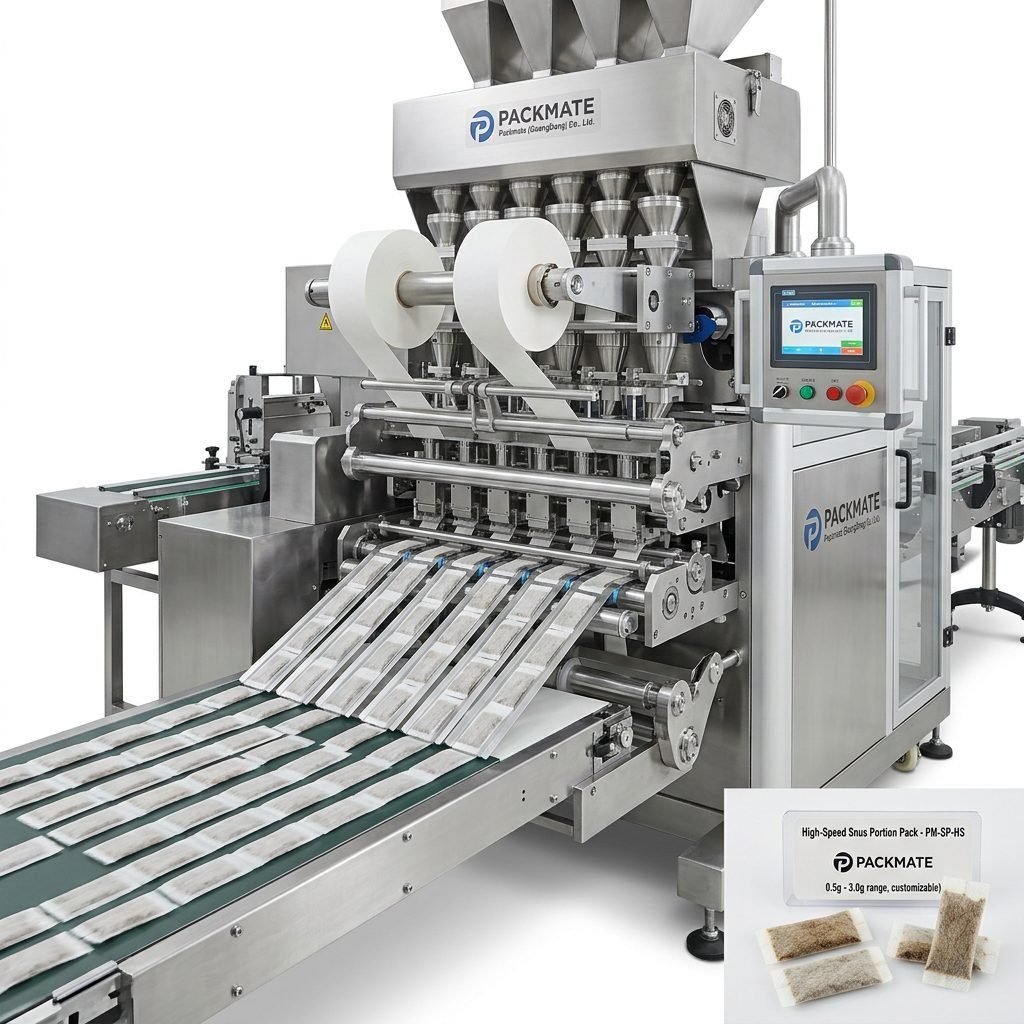
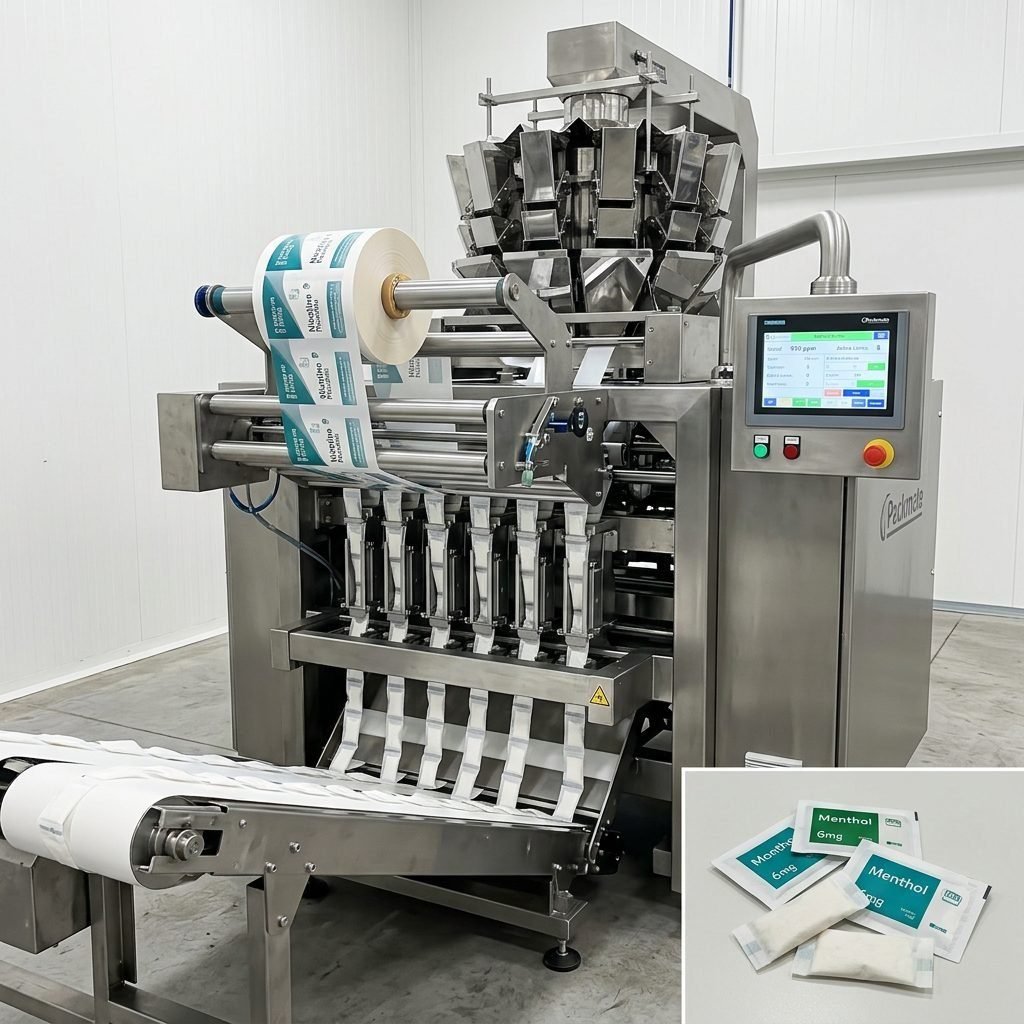
Multi-lane systems increase throughput by forming multiple pouches side-by-side, ideal for medium to high volume production. If you plan to scale exports to regional markets (Australia, SE Asia), consider multi-lane lines for cost efficiency.
Complete Integrated Lines
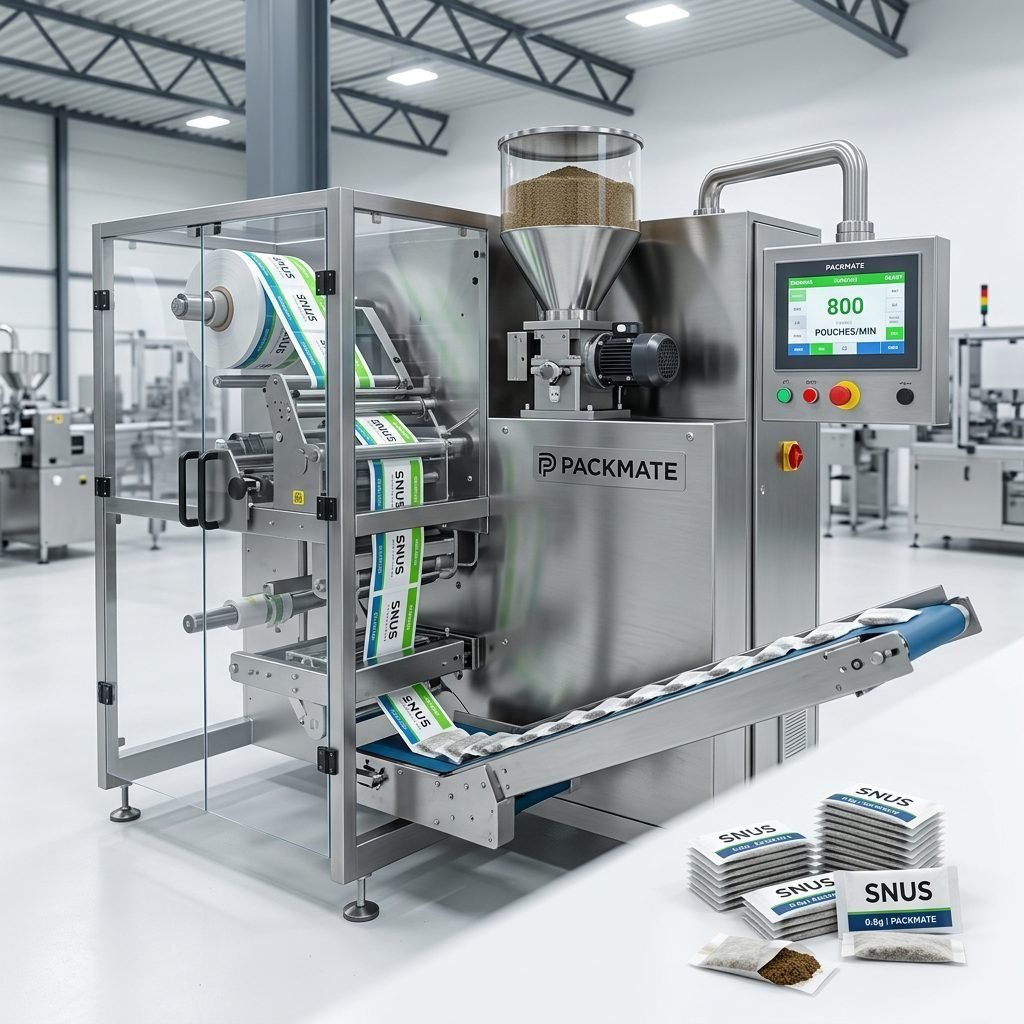
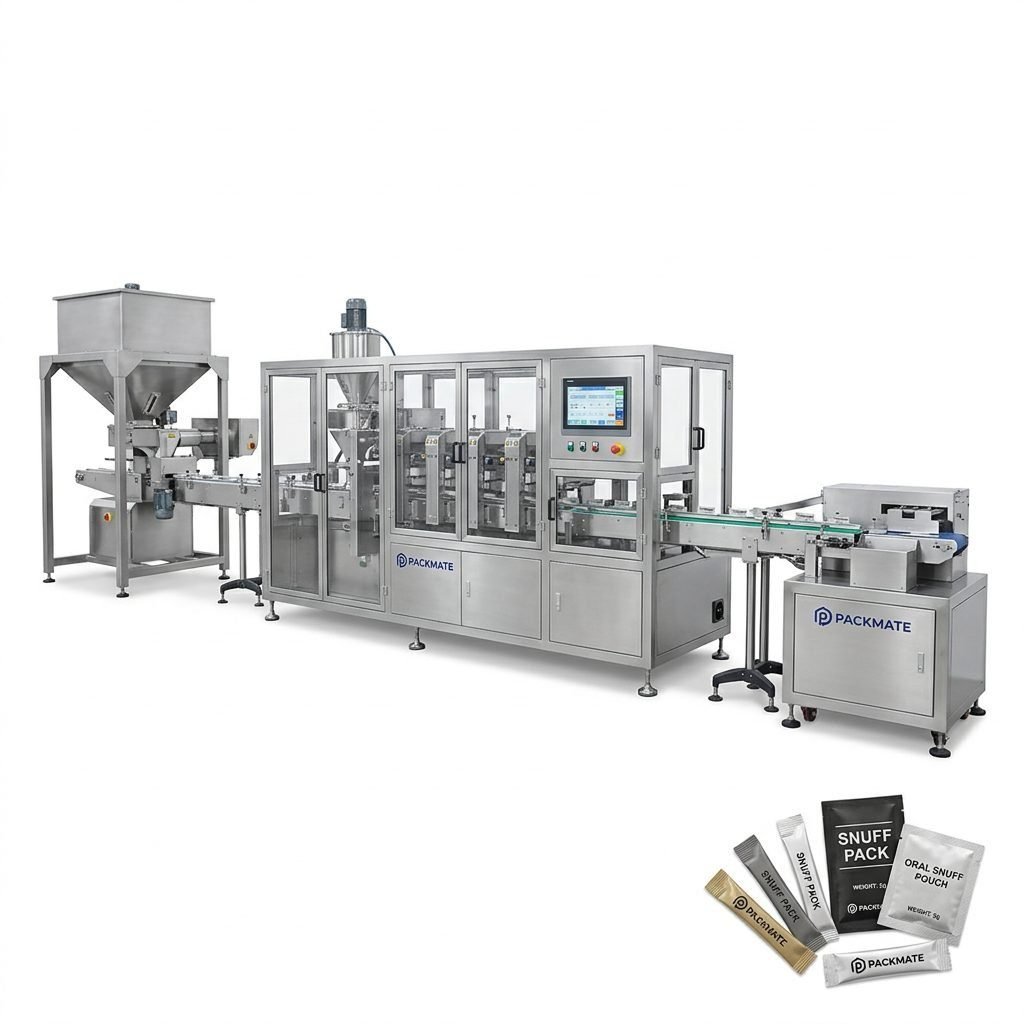
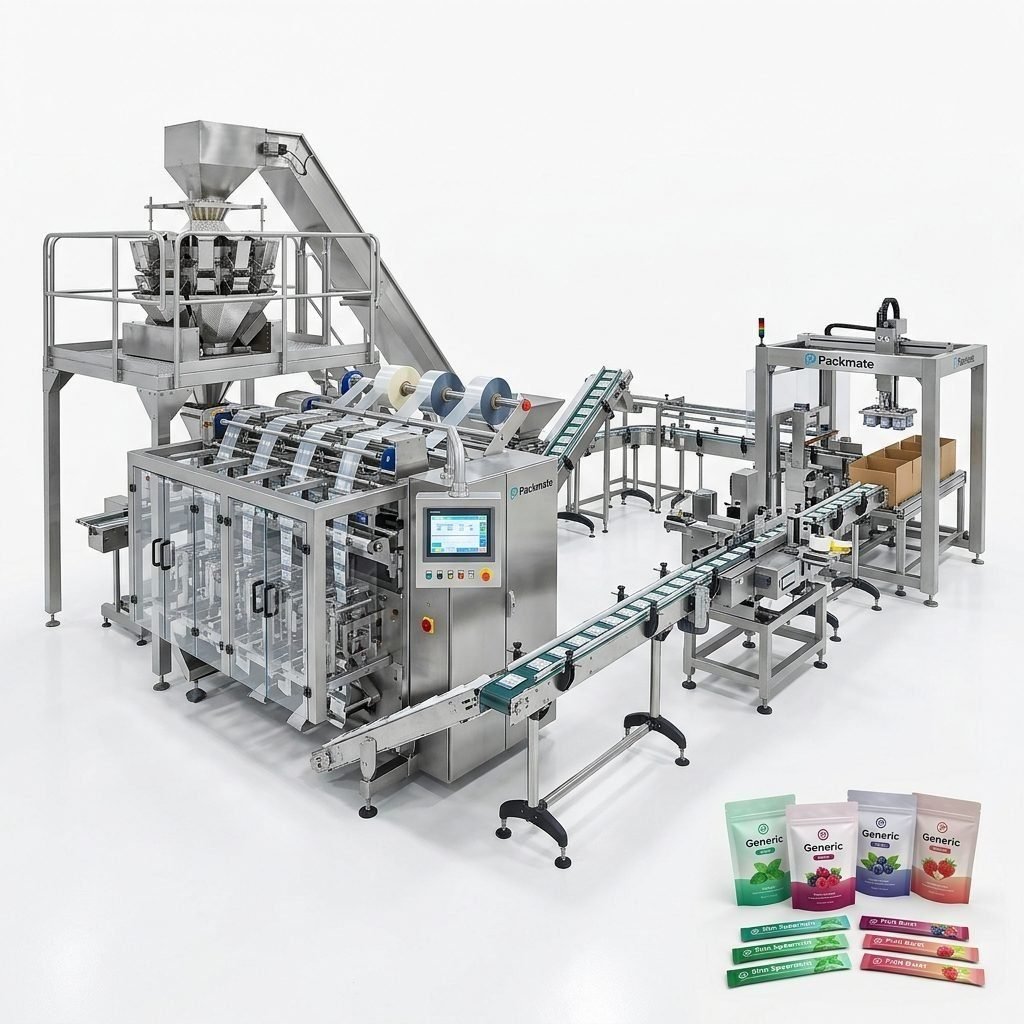
Fully integrated lines combine dosing, forming, sealing, and packing. Look for turnkey solutions that include weighing systems and secondary packaging to streamline operations and reduce labor requirements. For product exploration, review examples of targeted systems such as Snus & Nicotine Packaging Machines and Sachet & Stick Pack Machines.
Useful links for machine types and lines:
Snus & Nicotine Packaging Machines •
Sachet & Stick Pack Machines •
Weighing & Packaging Systems
🔧 Must-have for PNG: Machines with corrosion-resistant parts, strong heat-seal systems able to work with high-moisture films, and enclosed electronics to protect against humidity.
Key Technical Specifications to Evaluate
Selecting the right model requires a clear specification checklist. Prioritize machines with measurable performance metrics and proven accuracy.
Throughput and Lane Configuration
Throughput is often measured in pouches/minute. Decide whether single-lane flexibility or multi-lane high-capacity lines suit your growth plan. Multi-lane systems reduce per-unit cost at higher volumes but require larger footprint and higher initial investment.
Dosing Accuracy & Weighing Integration
Accurate dosing ensures consistent product weight, legal compliance, and consumer trust. Integrated weighing systems and precise feeders are essential for powdered or granular formulations. Consider lines that integrate with weighing & packaging systems to improve yield and reduce waste.
Control Systems & Servo Technology
Modern machines use PLC controls and servo motors for precise motion control and easy recipe changes. In PNG, where power fluctuations can occur, machines with robust servo drives and UPS/protection features reduce downtime.
Materials Compatibility & Film Handling
Confirm film roll widths, film thickness range, and compatibility with laminated barrier films. In tropical climates, barrier films with high moisture resistance are critical to preserve product shelf life.
Materials & Packaging Formats for PNG’s Climate
Humidity and heat are the biggest threats to product quality in PNG. Select packaging films and sealing technologies that ensure long shelf life even in warm, humid storage environments.
Recommended film characteristics: high barrier laminates (foil + PET/CPP), robust heat-seal layers, and anti-fog/anti-static properties where necessary. Work with suppliers to validate sealing parameters during sample runs.
✅ Tip: Run accelerated shelf-life tests in humid conditions before finalizing film selection.
Operational Considerations Specific to Papua New Guinea
Beyond machine specs, operational realities in PNG shape long-term success. Address these early during procurement and contract negotiations.
Power Supply & Electrical Protection
Power interruptions and voltage variations can damage sensitive controls. Choose machines with robust power protection, and plan for stabilizers or on-site UPS systems. Verify the vendor provides clear electrical diagrams for local electricians.
Local Training & Spare Parts
Select suppliers that include training for operators and maintenance staff. Availability of spare parts, either through local stocks or fast international shipping, is essential. Ask vendors about local partner networks or authorized technicians for PNG or nearby Australia.
Installation, Commissioning & Remote Support
On-site commissioning is highly recommended. Inquire about remote diagnostics, video-assisted troubleshooting, and training materials in English. A strong service contract reduces downtime and keeps production reliable.
Cost Considerations & Return on Investment (ROI)
Machine price is only part of the total cost. Calculate ROI by considering operating costs, material usage, labor savings, downtime, and expected throughput.
Key cost factors:
– Capital expenditure (machine + installation + optional accessories)
– Operating costs (electricity, film, maintenance parts)
– Labor (automation reduces operator headcount)
– Downtime and yield losses (choose reliable machines to minimize unplanned stoppages)
⚠️ Red flag: Extremely low-priced machines with limited documentation or no spare parts policy often lead to higher lifetime costs. Prioritize documented performance and customer references.
Selecting the Right Supplier — What to Ask
When evaluating vendors, verify these items to ensure secure procurement and long-term partnership.
Factory & Quality Certifications
Ask for factory tours (virtual or in-person), ISO/CE certificates, and production capacity details. A strong manufacturing base with CNC and precision assembly lines indicates consistent quality. For more on supplier background, review About Packmate and company certifications.
Useful links for supplier validation:
About Packmate •
Case •
Our Exhibition
Service Packages & Spare Parts Availability
Clarify warranty terms, spare parts delivery timelines, and optional extended service agreements. A clear contact for after-sales support reduces risks when operating from PNG.
Procurement & Implementation Roadmap
Follow a structured process to reduce surprises and accelerate time-to-production.
Step 1 — Define Product & Volume Targets
Document pouch size, dose, material, and target pieces per minute. This will determine machine family and lane count.
Step 2 — Request Samples & Factory Trials
Ask suppliers to run your formulations on similar machines and provide video or sample pouches. Lab and factory trials validate sealing, dosing, and appearance.
Step 3 — Negotiate Scope: Training, Installation & Spare Parts
Include on-site commissioning, operator training, and initial spare parts kits in the contract. Confirm shipping terms and customs documentation for PNG import.
Step 4 — Plan Local Set-up & Regulatory Compliance
Work with local authorities on product registration and labeling requirements. Prepare storage that maintains dry conditions, and train QA on humidity control and shelf-life testing.
Why Work with Established Manufacturers?
Reputable manufacturers deliver repeatable performance, compliance documentation, and predictable spare parts supply. Look for companies with decades of experience and global turnkey solutions that include dosing, packaging, and auxiliary equipment.
Packmate Snus Machine offers industry-focused lines with over 30 years of experience, advanced CNC facilities, and turnkey solutions that suit businesses targeting local and export markets. For service and inquiries, contact the vendor directly to verify local support and project timelines.
Contact resources:
Contact Us •
Service
📦 Checklist before purchase: performance data, sample pouches, spare parts list, training plan, warranty terms, CIF shipping and customs paperwork for PNG.
Final Recommendations
– Prioritize moisture-resistant sealing and corrosion protection for tropical environments.
– Choose machines with modular designs and proven multi-lane options if you expect to scale.
– Insist on trial runs, documented acceptance criteria, and a clear spare parts plan with shipping timelines.
– Verify supplier experience in nicotine pouch/snус packaging and request references or case studies to confirm real-world performance.
Common Questions (FAQs)
Q1: How important is film selection for humid climates like PNG?
A1: Extremely important — high-barrier laminated films with strong heat-seal layers are essential to maintain pouch integrity and product shelf life under high humidity and temperature. Always run sealing tests and accelerated shelf-life trials.
Q2: Do I need a multi-lane machine if I’m starting small?
A2: Not necessarily. Begin with a single-lane machine if volumes are modest, but choose a supplier offering easy upgrades or modular multi-lane expansions so you can scale without replacing the entire line.
Q3: What support should I expect from an international supplier?
A3: Expect documentation, CE/ISO certificates, operator and maintenance training, a spare parts kit, and service protocols. Remote diagnostics and clear escalation paths for on-site technical visits are critical for operations in PNG.
Q4: How can I reduce the risk of downtime in PNG?
A4: Invest in a comprehensive spare parts kit, training for in-house technicians, robust electrical protection, and a service agreement that covers timely parts delivery and remote troubleshooting.