The snus and nicotine pouch market demands precision, hygiene, and high throughput. This guide explains a complete nicotine pouch production line — from raw materials and core equipment to process flow, quality control, and turnkey delivery. It draws on industry practice and Packmate Snus Machine’s decades of engineering experience to help manufacturers select, design, and implement efficient automated lines that meet global standards.
Overview: What a Complete Nicotine Pouch Production Line Includes
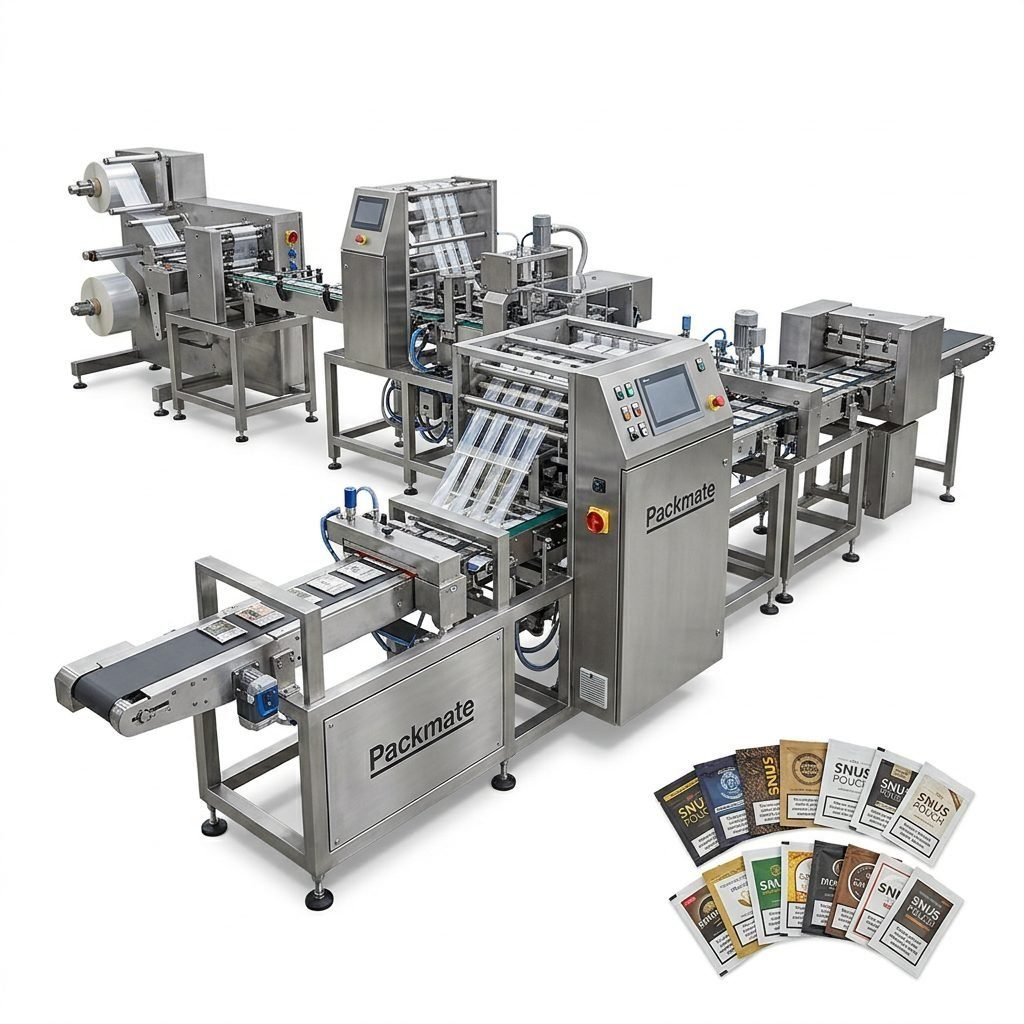
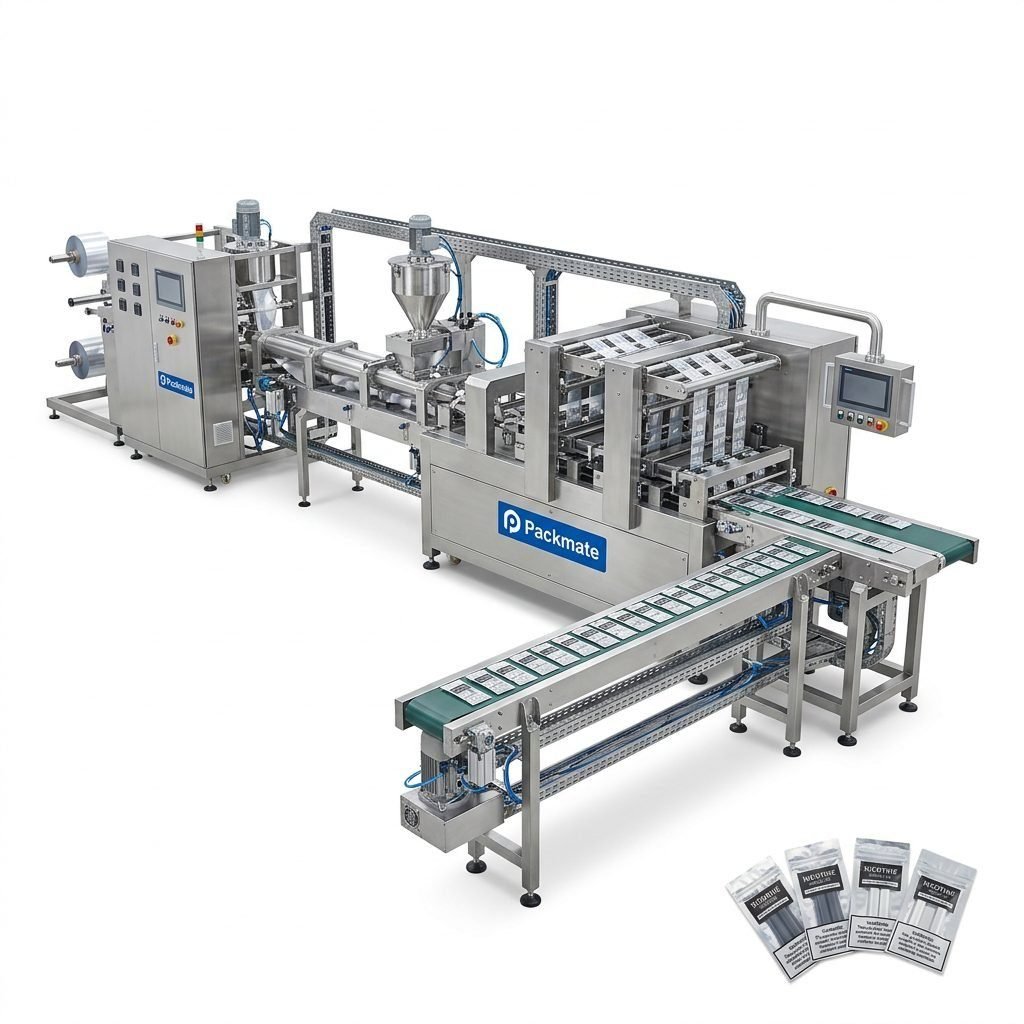
A full production line for nicotine pouches typically integrates raw material handling, blending & conditioning, pouch-forming and filling, sealing and cutting, primary and secondary packaging, and inspection systems. In turnkey projects, the supplier also provides layout engineering, utilities integration, installation, commissioning, and operator training. Key objectives are consistent pouch weight, clean sealing, precise dosing, and a compact footprint that supports multi-lane outputs.
Core Equipment List
Below are the essential machines you will find in a modern nicotine pouch production line:
✓ Material Handling & Dosing Systems — precise feeders and gravimetric or volumetric dosing for powders, granules and tobacco blends.
✓ Binder & Humidification Units — controlled moisture and binder addition for pouch integrity and mouthfeel.
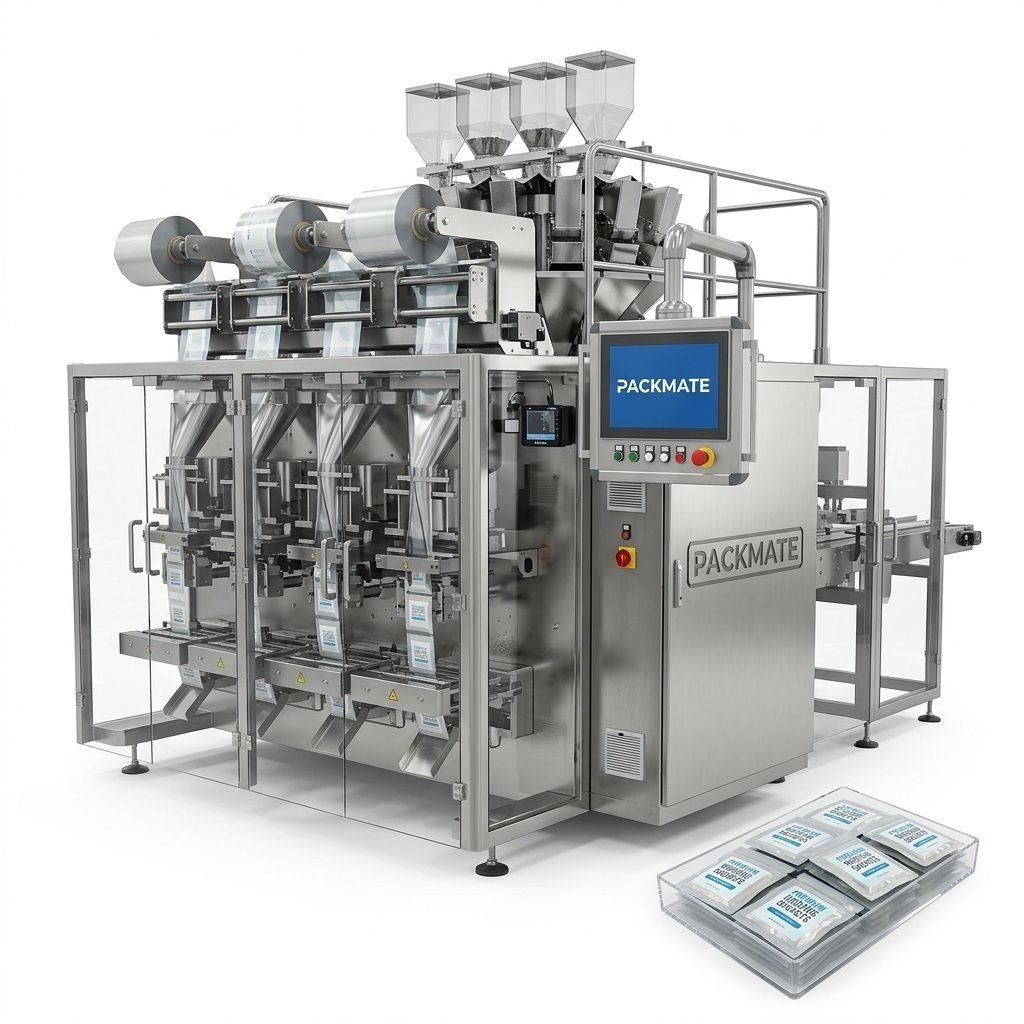
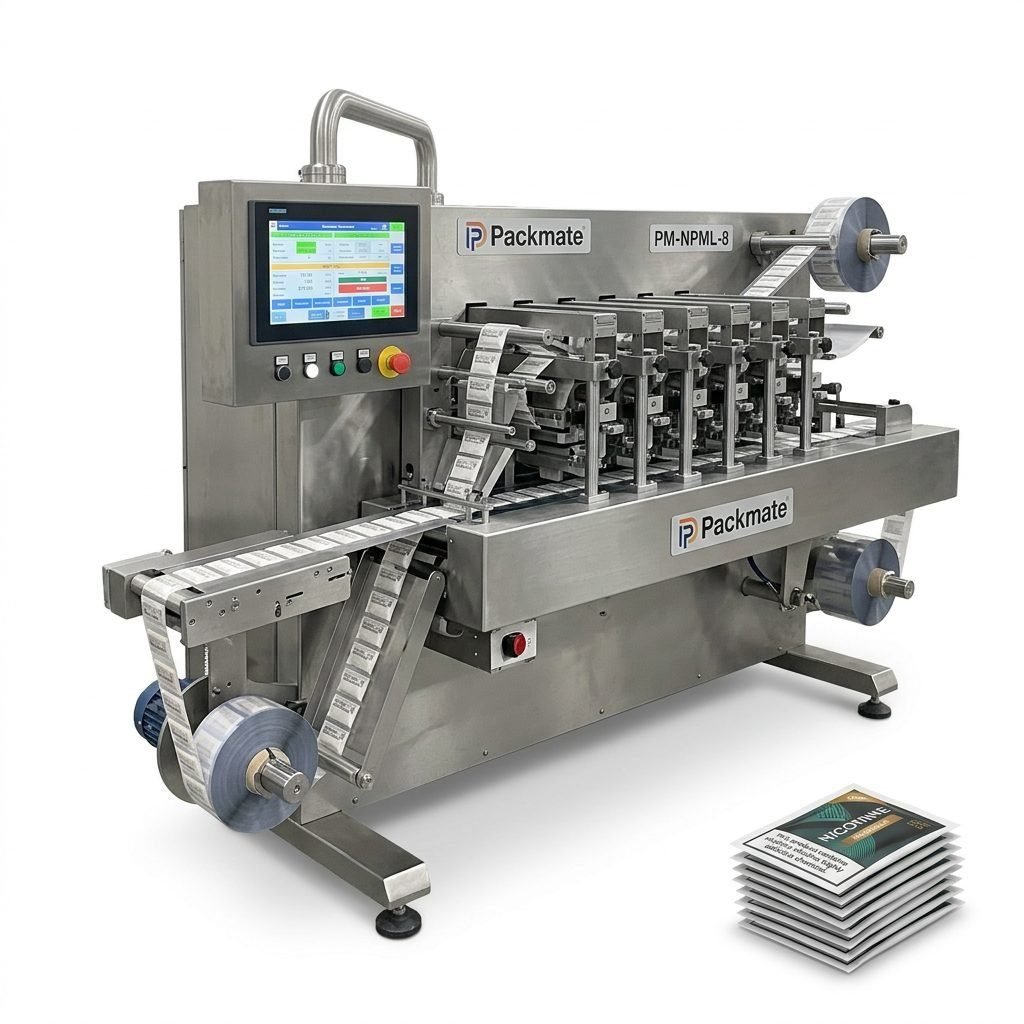
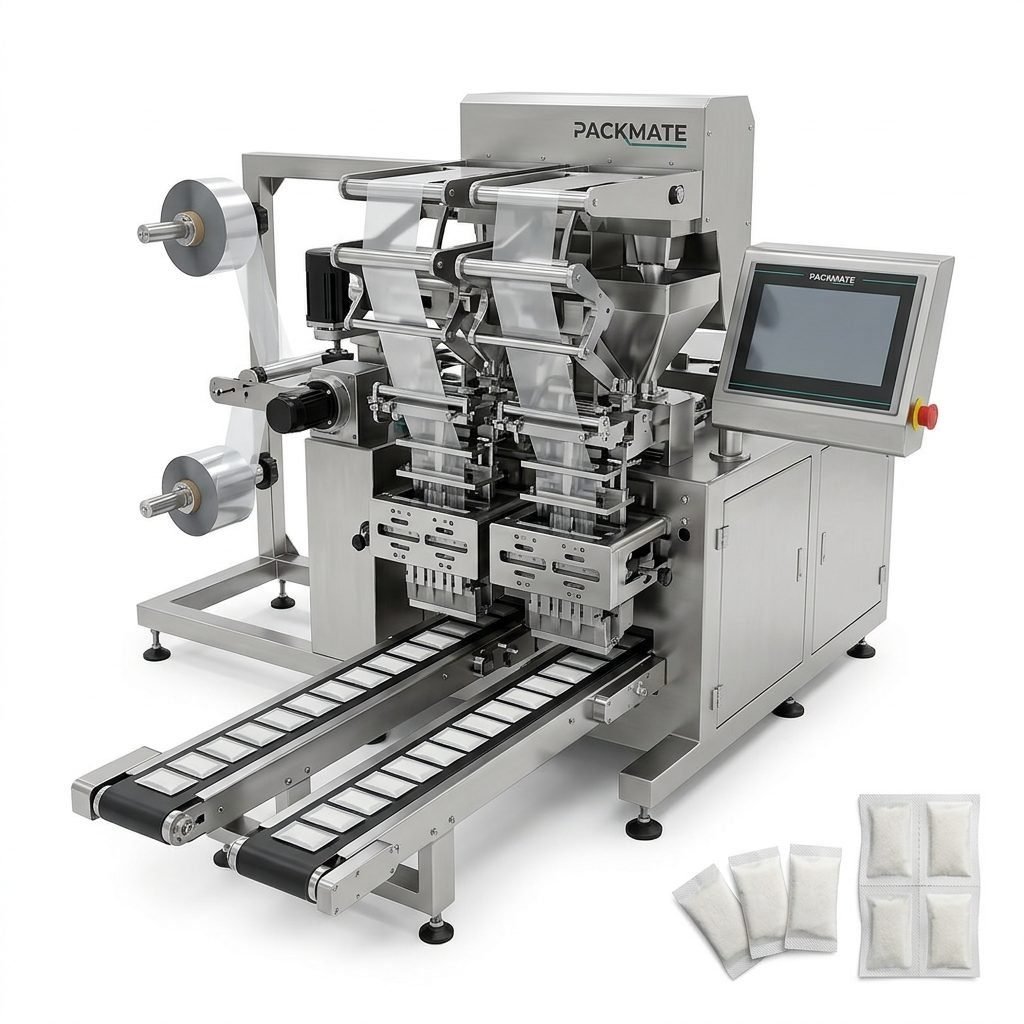
✓ Multi-Lane Snus/Nicotine Pouch Filling Machines — high-speed pouch/form-fill-seal machines supporting small-dose multi-lane outputs.
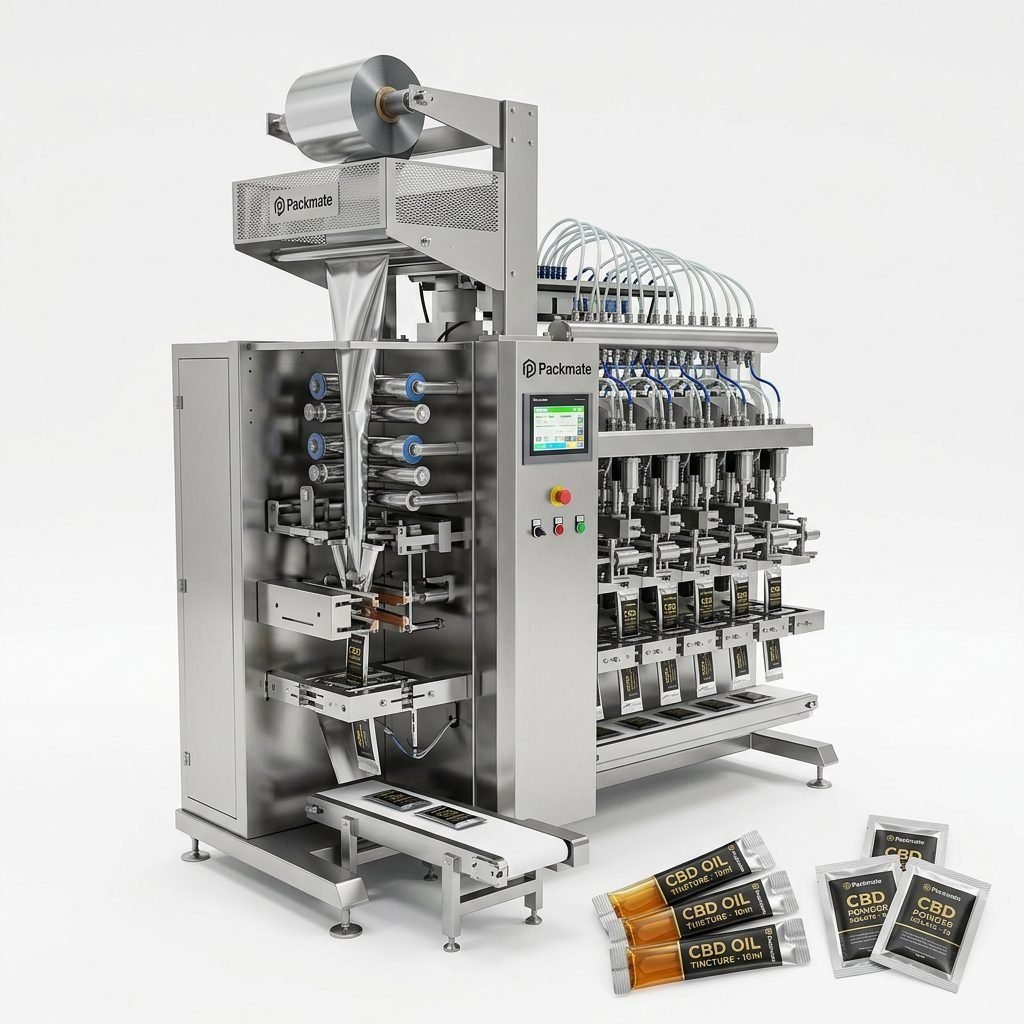
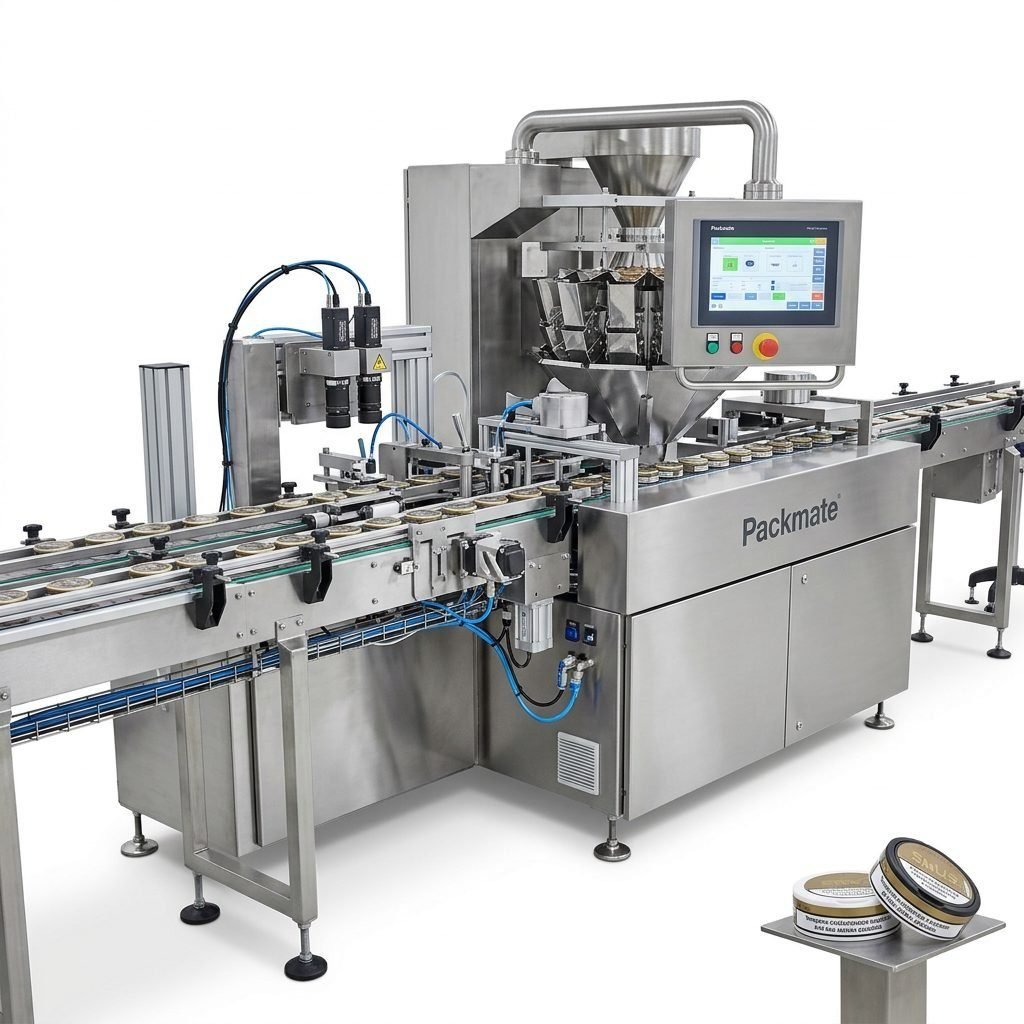
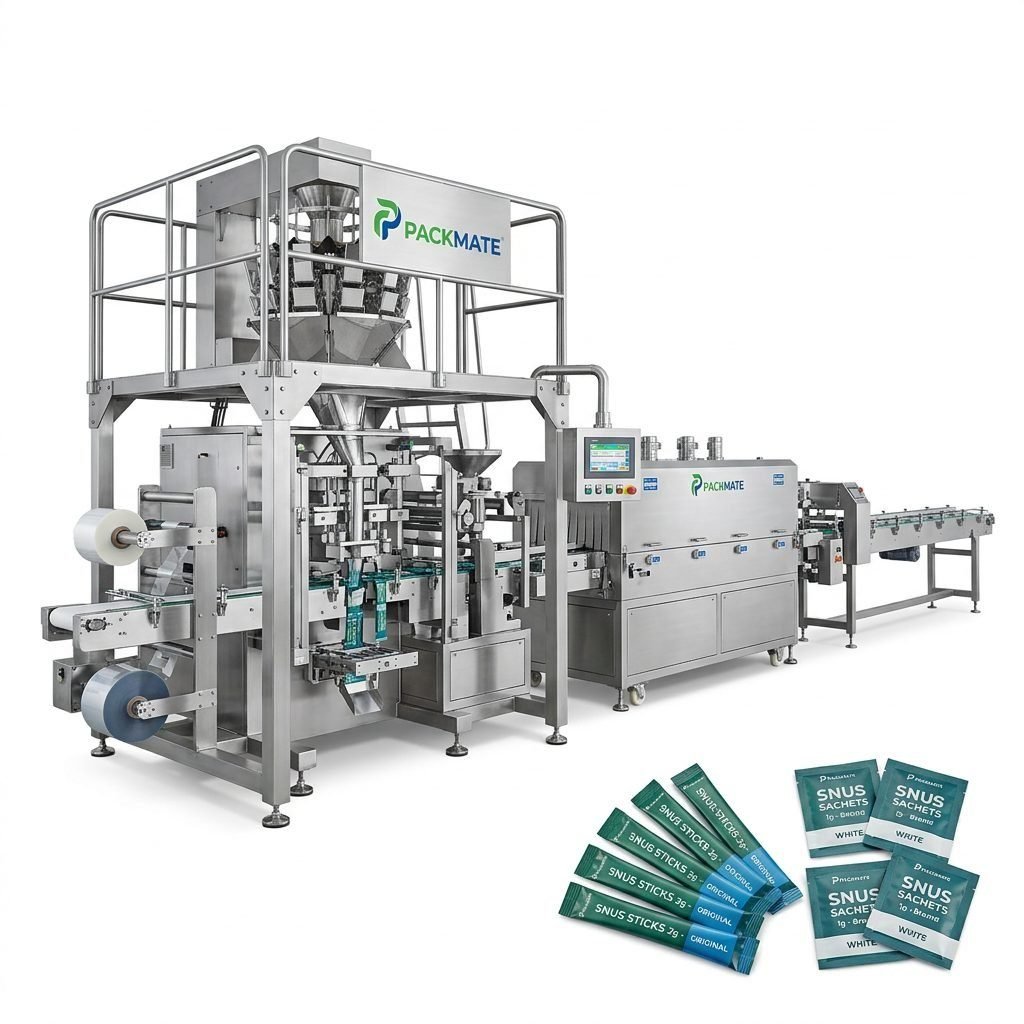
✓ Sealing, Cutting & Packaging Machines — precision cutting and hermetic sealing followed by stick, sachet or can/box packaging.
✓ Checkweighers, Metal Detectors & Vision Inspection — inline quality control ensures compliance and batch traceability.
Typical Process Flow Explained
The production flow is designed to preserve product quality and minimize contamination. A common sequence:
1) Raw material receipt & storage — secure, moisture-controlled silos or containers for nicotine, fibers, and flavor components.
2) Weighing & blending — precise proportioning using automated scales and mixers to achieve a homogeneous blend.
3) Conditioning — controlled humidification to reach specified water activity and ensure pouch cohesion.
4) Pouch forming and filling — multi-lane pouch machines form the substrate (non-woven or paper), fill with metered dose, and perform primary sealing.
5) Secondary packaging — stick packs, sachets, cans or boxes, including batch labeling and tamper-evident features.
6) Inspection, weighing, and final QC — automated systems remove out-of-spec packs and log production data for traceability.
7) Palletizing & storage — finished goods are prepared for distribution with clear labeling and lot control.
Design Considerations for Regulatory Compliance
Compliance with CE, ISO, and industry-specific regulations requires hygienic design, CIP-ready surfaces, and validated control systems. Material contact parts should be stainless steel 316L where appropriate, with polished finishes, minimal dead legs, and easy disassembly for cleaning. Complete lines must support electronic batch records and integrate with factory MES systems for data integrity.
⚙️ Safety & Traceability: Serialized batch IDs, tamper-evidence, and product genealogy are essential for market acceptance.
🧾 Validation & Documentation: IQ/OQ/PQ protocols and maintenance logs ensure both regulatory and operational confidence.
Choosing the Right Pouch Machine: Multi-Lane vs Single-Lane
Multi-lane machines increase throughput by producing several pouch tracks simultaneously — ideal for high-volume nicotine pouch brands. Single-lane or fewer-lane systems offer flexibility for small batches, R&D, or frequent format changes. Considerations:
– Line speed targets and annual production volumes.
– Desired pouch formats (round, tapered, portioned sachet) and materials.
– Ease of changeover and cleaning intervals to meet hygiene requirements.
– Integration with upstream dosing and downstream secondary packaging.
Automation & Control Features
Modern lines incorporate PLC-based control, recipe management, HMI panels, and Industry 4.0-ready I/O for remote diagnostics. Important features include:
🔧 Recipe Storage — store format settings for quick product changeovers and consistent quality.
🔍 Real-Time Monitoring — display flow rates, weights, and alarms to reduce downtime.
🔁 Automatic Fault Recovery — support for restart functions and minimal manual intervention.
Turnkey Solutions: What to Expect from a Supplier
A reputable turnkey provider delivers not only machines but also full project management: factory layout, civil & utilities guidance, FAT (Factory Acceptance Testing), on-site installation, training, and after-sales parts and service. Packmate’s experience in 50+ machine models and a 20,000㎡ facility ensures they can tailor lines for different capacities and product formats.
For more details on machine categories, review the company’s product lines such as Snus & Nicotine Packaging Machines and integrated Filling & Packaging Lines.
Factory Capabilities & Quality Assurance
Suppliers with in-house CNC machining, precision assembly lines, and strict QC protocols reduce lead times and improve consistency. Key factory strengths include:
– Machining accuracy for critical cams and filling heads.
– Modular assembly for flexible configurations and upgrades.
– Comprehensive certification (CE, ISO) to assure global compliance.
📜 Documentation & Support: IQ/OQ/PQ packages, spare parts lists, and remote service options are standard in professional turnkey offers.
Packaging Formats & Market-Specific Preferences
Different markets prefer different pouch types and packaging presentations. For example, in Nordic countries, traditional snus can formats remain popular, while in many other regions nicotine pouches in stick packs or sachets are growing fast. A flexible line should allow quick format conversions to meet regional preferences and regulatory packaging requirements.
If you are evaluating suppliers, check their case studies and exhibition presence to verify experience across markets: see Case and Our Exhibition.
Cost Drivers & ROI Considerations
Major cost factors include automation level, multi-lane complexity, material handling sophistication, and required validation documentation. To estimate ROI, consider throughput, scrap rates, labor savings, and flexibility for future SKUs. A well-designed turnkey line will reduce per-unit cost over time while improving product consistency and compliance.
Service, Spare Parts & After-Sales
Reliable after-sales service is essential. Choose suppliers offering fast spare parts delivery, remote troubleshooting, preventive maintenance contracts, and training. Packmate highlights global support and an extensive parts catalog to minimize downtime — contact options include their Contact Us page and service teams.
🔔 Maintenance Tip: Keep critical spares on hand (sealing jaws, dosing nozzles, sensors) to reduce mean time to repair.
Implementation Roadmap for a Turnkey Project
A structured approach ensures timely deployment:
– Requirements gathering & capacity planning.
– Conceptual layout & utilities design.
– Detailed engineering, procurement, and manufacturing.
– FAT, shipping, installation, and commissioning.
– Validation, training, and handover with performance guarantees.
Selecting a Supplier: Key Questions to Ask
Ask about lead times, references for similar projects, spare parts logistics, on-site commissioning support, and warranty terms. Review the supplier’s factory capabilities and certifications to ensure they meet your market and regulatory demands — see About Packmate for company background.
Final Considerations
Investing in a complete nicotine pouch production line is a strategic decision. Prioritize hygiene, accurate dosing, flexible formats, and a supplier with proven engineering capabilities and comprehensive after-sales service. This combination ensures your brand delivers consistent quality, meets regulatory expectations, and scales as demand grows.
ℹ️ Helpful Resources: Explore product categories for detailed specs: Sachet & Stick Pack Machines and auxiliary systems at Auxiliary Packaging Equipment.
Common Questions (FAQs)
Q1: How long does it take to install a complete nicotine pouch line?
A1: Typical turnkey projects vary by complexity; a mid-sized multi-lane line usually requires 12–20 weeks for design and manufacturing plus 2–6 weeks for installation and commissioning on-site.
Q2: What are the primary hygiene requirements?
A2: Use food-grade stainless steel, CIP-friendly designs, controlled humidity and cleanroom or controlled environments for filling areas, plus validated cleaning procedures.
Q3: Can one line handle multiple pouch sizes and formats?
A3: Yes — with modular tooling, recipe management, and easy-change components, a modern line can switch between sizes and formats with minimal downtime.
Q4: How do I ensure regulatory compliance for different markets?
A4: Work with suppliers that provide CE/ISO certifications, full documentation (IQ/OQ/PQ), and configurable lines that support labeling and tamper-evidence required by each market.
Q5: Where can I get more technical details and contact support?
A5: For product catalogs, technical sheets, and direct inquiries, visit the company’s product pages and contact channels: Catalog and Contact Us.