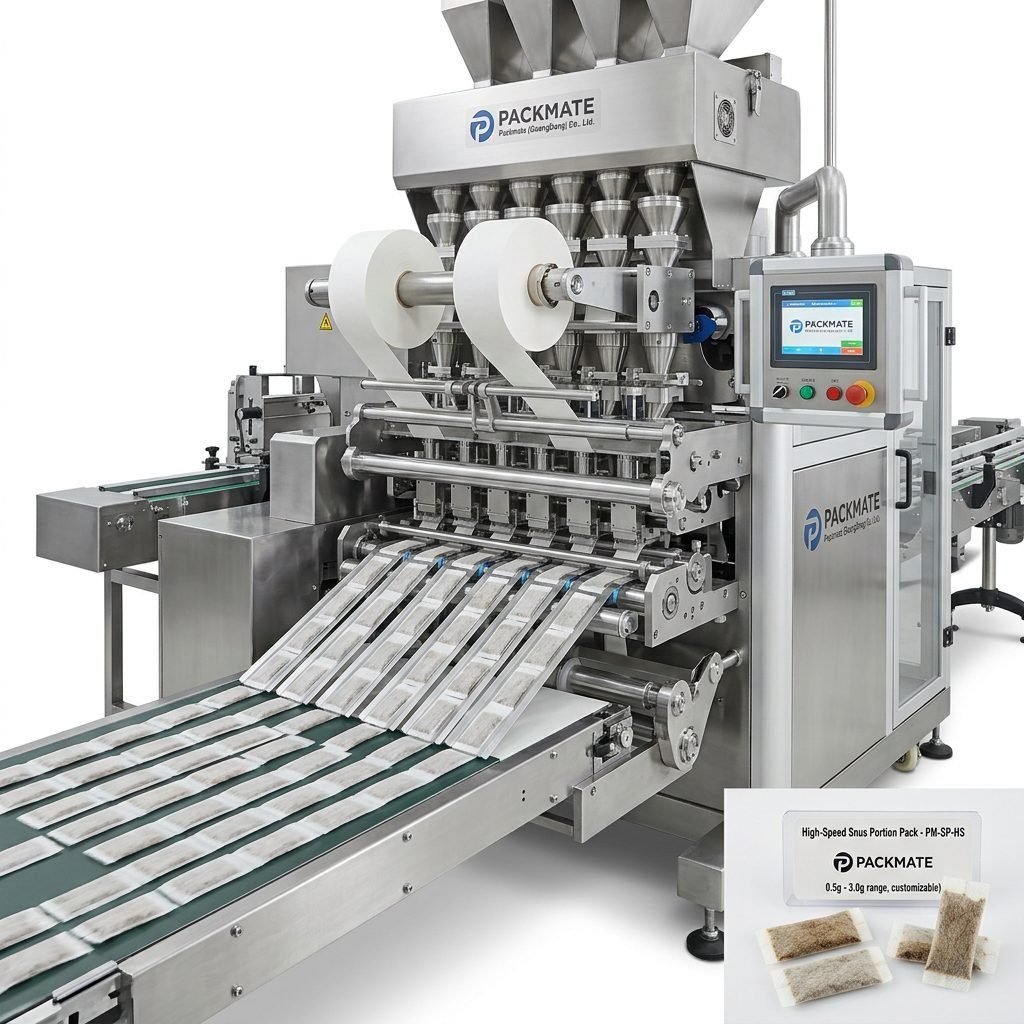
Choosing the right nicotine packaging machine in Portugal requires a careful balance of technical performance, regulatory compliance, and local market understanding. Whether you’re launching a new nicotine pouch brand for the Portuguese market or scaling an existing operation, the machine you select will determine your production efficiency, product quality, and long-term operating costs. This guide walks through practical steps and specific considerations for manufacturers and packagers operating in Portugal, with clear action points to help you make a confident purchase decision.
Understand the Portuguese Market & Consumer Habits 🇵🇹
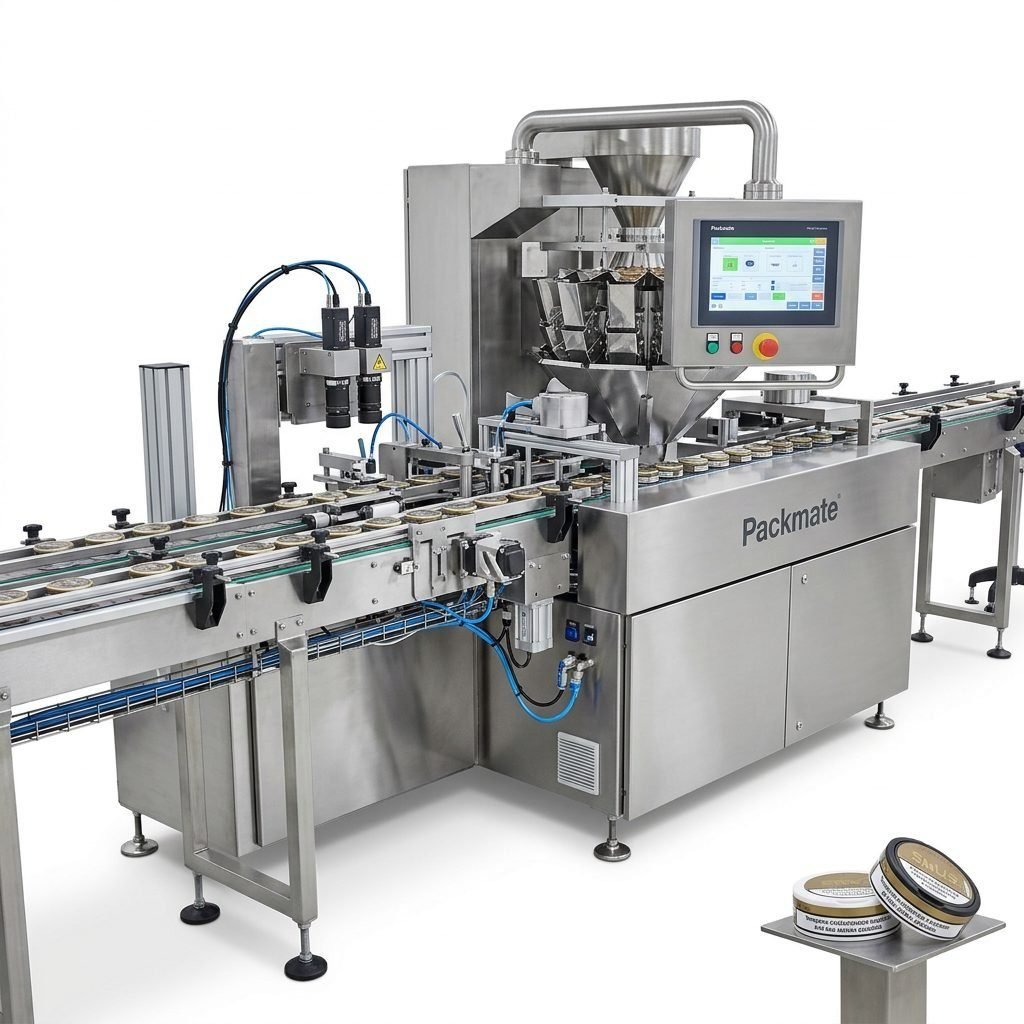
Portugal has a distinct consumption pattern influenced by Mediterranean culture — convenience, discreet use, and design-driven packaging matter. Consumers often prefer compact, user-friendly formats. For nicotine pouches, compact portion packs, resealable tins, and single-serve sachets can perform well. Also consider packaging with clear Portuguese labeling and multilingual instructions to build trust and meet local expectations.
Regulatory & compliance reminders
As an EU member state, Portugal follows EU regulations related to nicotine and tobacco-derived products. Ensure your production line supports traceability, accurate labeling, and tamper-evident options if required. Machines with precise dose control and documentation-friendly interfaces help simplify regulatory audits.
Match Machine Type to Your Product Format ⚙️
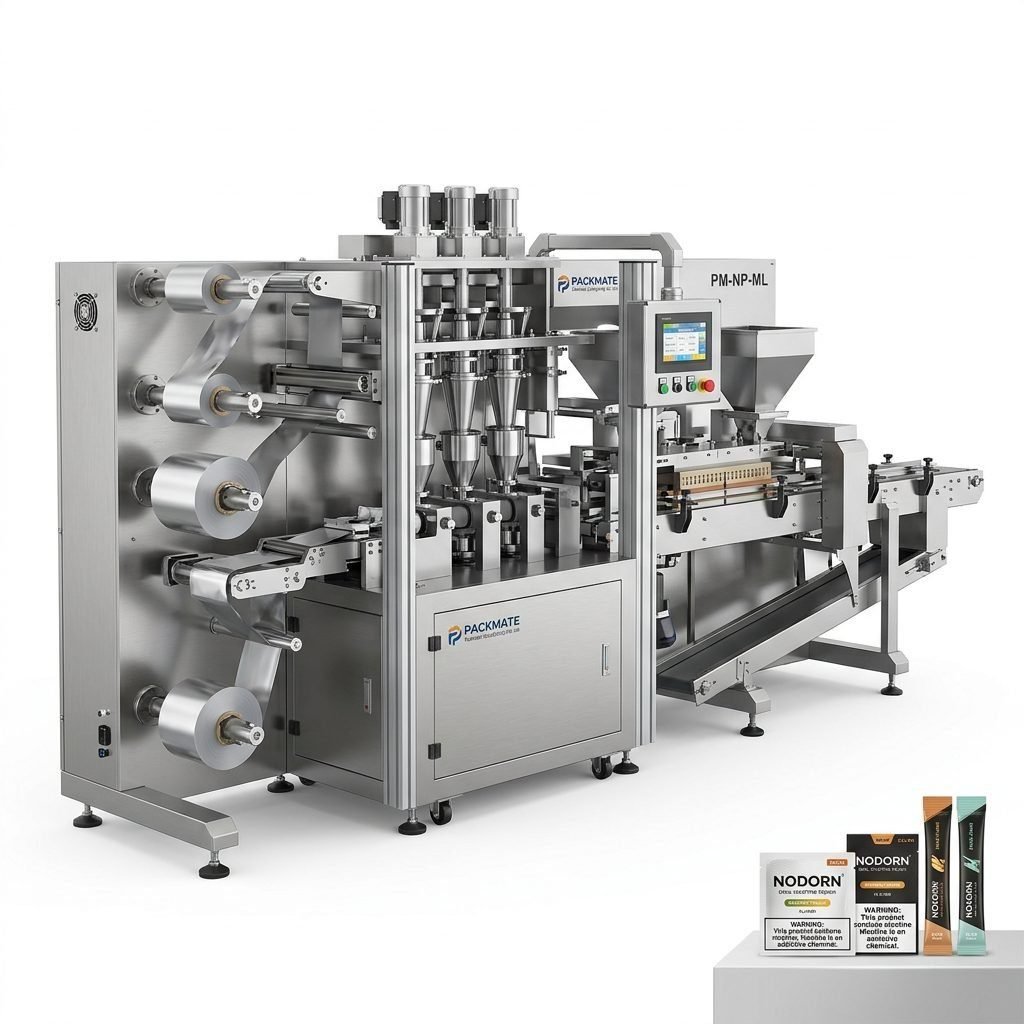
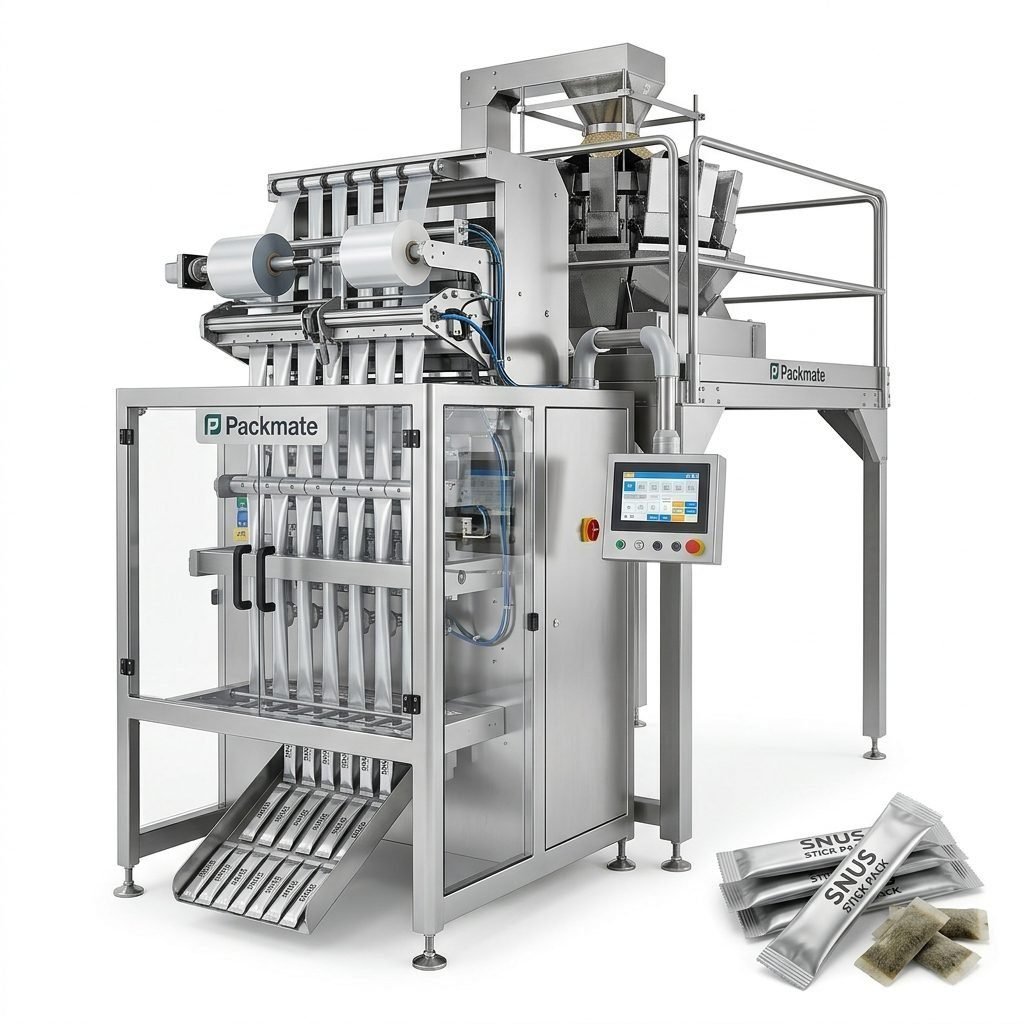
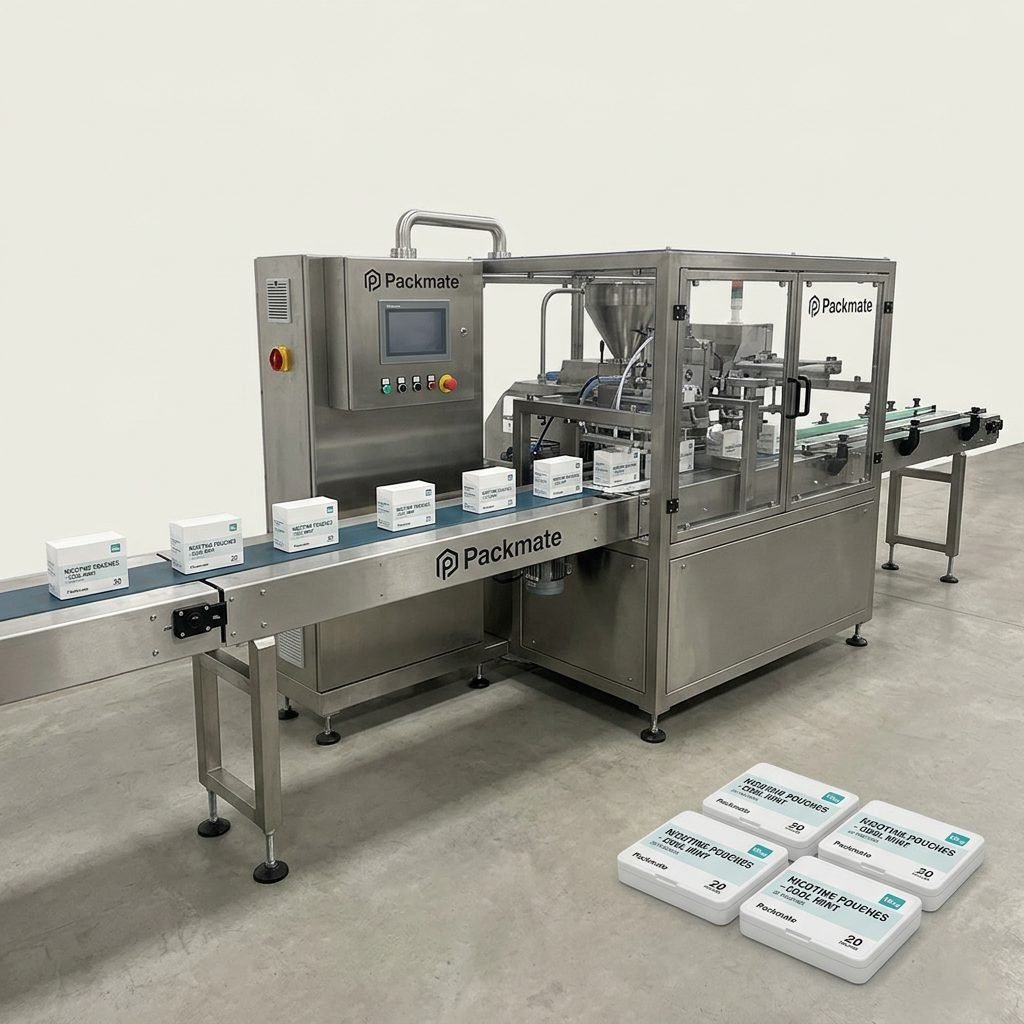
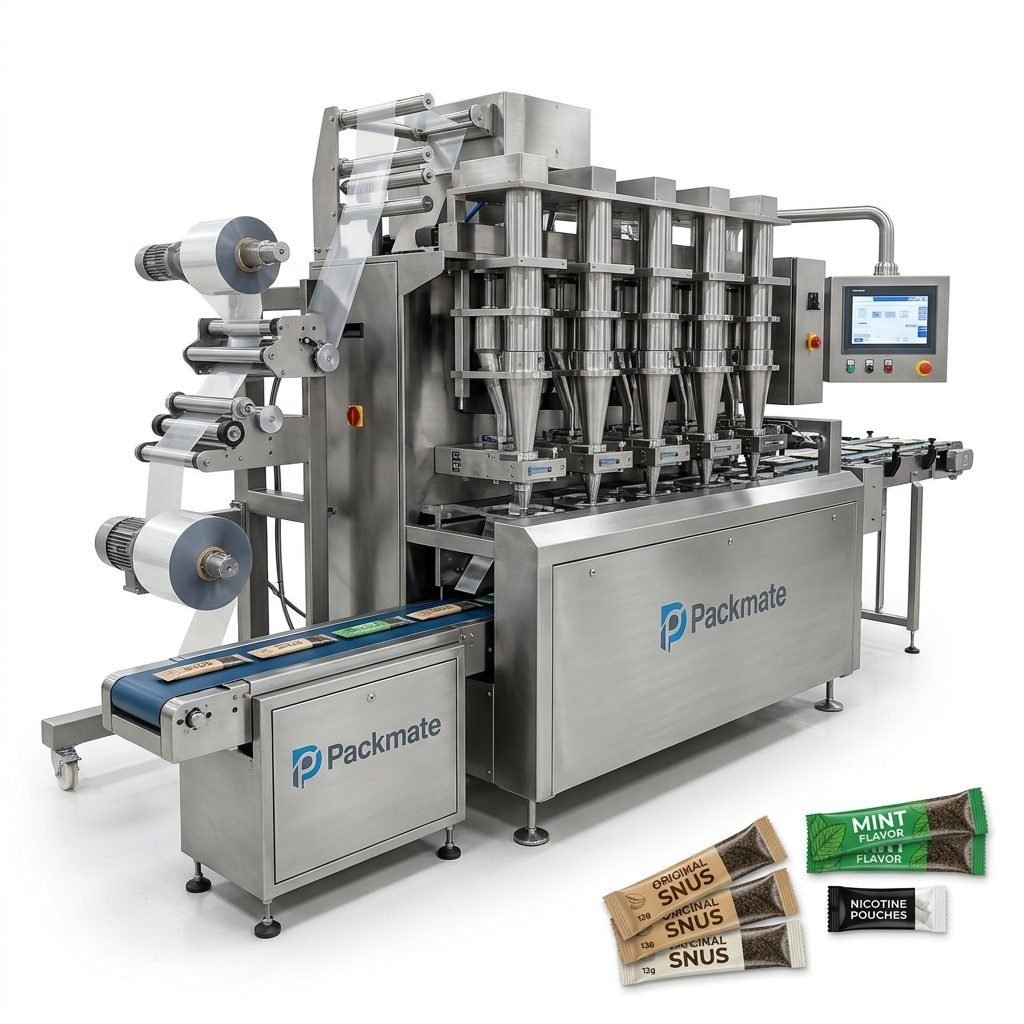
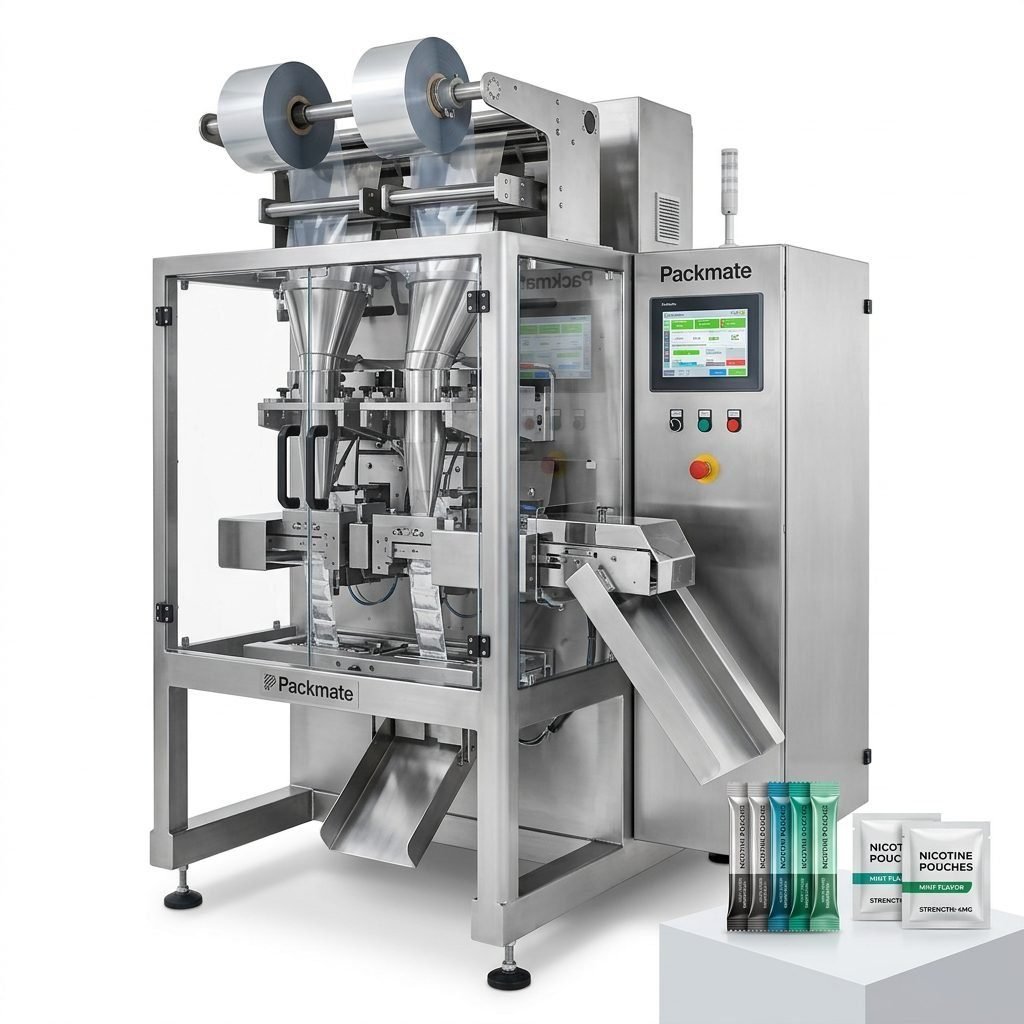
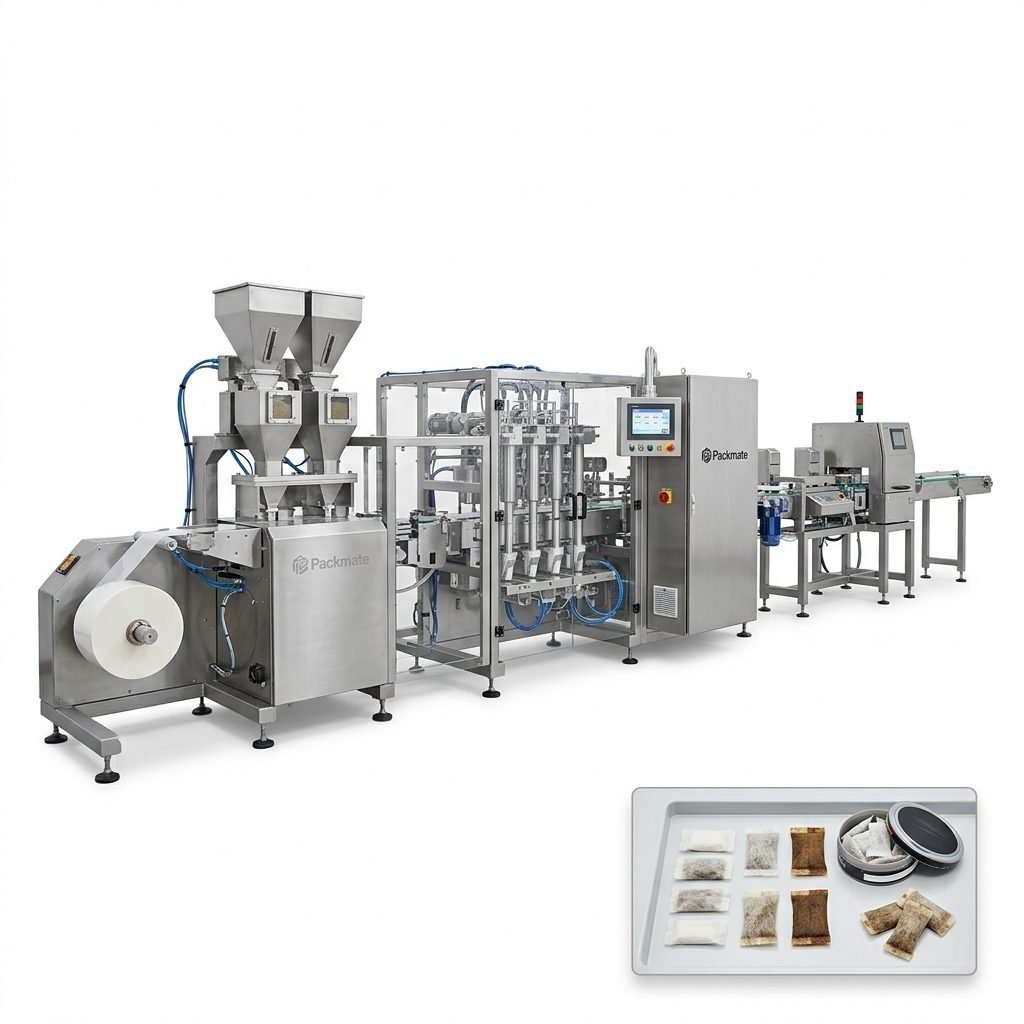
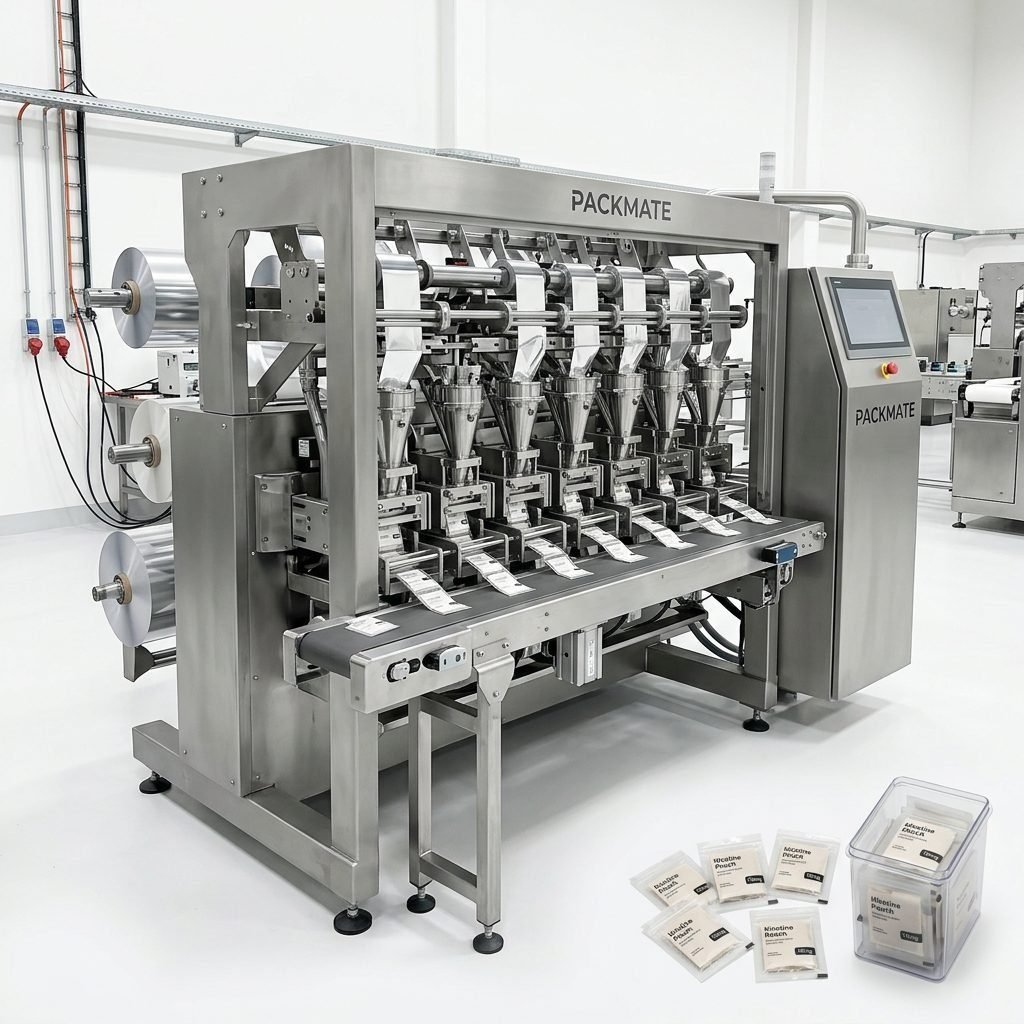
The first technical decision is the machine format. Typical options include stick pack, sachet, and multi-lane pouch machines designed specifically for small-dose nicotine pouches. Your choice depends on pouch size, fill material (powder vs. granule), desired speed, and final presentation.
Key formats to consider:
📦 Stick Pack — ideal for slim, single-dose pouches that are easy to distribute and use.
🟣 Sachet/Mini-Pouch — favoured for portioned pouches and premium presentation.
🔁 Multi-lane Systems — necessary when you need high throughput and consistent small-dose filling.
Product characteristics that determine machine choice
Consider particle size, moisture sensitivity, flowability, and whether the product is hygroscopic. Powdery nicotine formulations require gentle handling and dust control. Wet or sticky formulations may need special filling heads or anti-stick coatings. Choose machines with compatible contact materials and easy-clean designs to avoid cross-contamination.
Throughput, Lane Count & Scalability 📈
Evaluate your required output in pieces per minute (PPM). Small startups might start with 1–4 lanes and low PPM, while established plants need multi-lane machines capable of higher speeds. Selecting a modular system allows future expansion without a full line replacement.
Tip: If you anticipate rapid growth in Portugal or export to other EU markets, opt for multi-lane or scalable platforms to protect your investment.
Precision Dosing & Filling Accuracy 🎯
Nicotine pouches require accurate dosing for safety and regulatory reasons. Machines with servo-driven dosing units, precise weighers, or high-resolution auger systems reduce variation and waste. Look for machines that document weight data and support traceability for each batch.
Material Compatibility & Packaging Film Options
Decide whether you will use laminated films, paper-based pouches, or resealable containers. Machines must be compatible with film thickness, seal temperatures, and any oxygen or moisture barrier requirements. If sustainability matters to your Portuguese customers, consider machines that handle recyclable films or can integrate with recyclable packaging solutions.
Sustainability highlight: Machines that support thinner laminates, accurate film waste control, and off-line film splicing reduce costs and carbon footprint — factors increasingly appreciated by Portuguese consumers.
Hygiene, Cleaning & Maintenance 🧼
For nicotine pouch lines, ease of cleaning and maintenance directly affect uptime. Choose stainless-steel contact parts, quick-release assemblies, and open-frame designs for rapid washdown or dry cleaning procedures. A design focused on accessibility reduces downtime during changeovers and cleaning cycles.
Spare parts & local support in Portugal
Ensure spare parts availability and consider a supplier with European service channels or reliable global logistics. Packmate’s production capability and global service network can be beneficial if you want consistent after-sales support and parts supply.
Automation, Integration & Industry 4.0 📡
Modern lines benefit from integrated weighing stations, vision inspection, date/lot printing, and data logging. Choose a control system with open protocols (OPC-UA, Ethernet/IP) so the machine can integrate with your MES, ERP, or quality systems. Data-enabled machines simplify compliance reporting and make production more predictable.
Important: Remote diagnostics and predictive maintenance reduce service time. Confirm whether your supplier offers remote support and training in reasonable time zones for Portugal.
Operator Safety & Ergonomics 🦺
Machines for nicotine packaging must meet CE safety standards with appropriate guarding, emergency stops, and interlocks. Look for ergonomic loading positions, low-noise components, and clear HMI screens that support Portuguese language or icons for faster operator training.
Total Cost of Ownership (TCO) & ROI Calculations 💶
Don’t focus solely on purchase price. Include installation, training, spare parts, energy consumption, expected uptime, and film/consumable costs in your ROI calculation. A slightly higher capital cost can be justified by reduced downtime, lower waste, and higher precision dosing.
Quick ROI checklist:
• Expected production hours per day
• Yield and scrap rates with target machine
• Energy & film consumption estimates
• Support & spare part lead times within the EU
Factory Requirements & Site Preparation 🏭
Before ordering, confirm site conditions: power supply (voltage and phases), compressed air quality and flow, floor loading capacity, and available footprint. Plan for adequate ventilation if dust generation is significant. Also arrange for CE-related documentation, user manuals in Portuguese, and operator training schedules.
Choosing a Reliable Supplier — Why Proven Experience Matters
A supplier with deep experience in nicotine pouch lines can shorten your time-to-market. Packmate Snus Machine, for example, brings over 30 years of engineering experience and more than 50 machine models tailored for snus and nicotine pouch packaging. Their 20,000㎡ manufacturing facility and CE/ISO certifications give buyers confidence in build quality and compliance.
Explore Packmate’s portfolio for dedicated solutions:
Snus & Nicotine Packaging Machines,
Sachet & Stick Pack Machines,
and learn more About Packmate.
Inspection, Testing & Commissioning
Do FAT (Factory Acceptance Test) and SAT (Site Acceptance Test) with your specifications. Validate dosing accuracy, seal integrity, and cycle rates under production-like conditions. Insist on live demonstrations and documented performance data before shipment.
After-sales, training & spare parts
Confirm training packages, remote support availability, and local service partners. Check warranties and lead times for critical spare parts. For contact and further service details, you can reach out via Contact Us.
How to Evaluate Quotes — A Practical Checklist ✅
When comparing quotes, ensure they include:
• Machine model and full technical specifications
• Guaranteed speeds and acceptance tolerances
• Included accessories (weighers, printers, vision systems)
• Training, documentation in Portuguese, and commissioning details
• Warranty, spare-parts list, and lead times for replacement parts
Summary: Steps to a Confident Purchase
Start with product profiling, confirm throughput and packaging format, evaluate dosing accuracy, check hygiene and cleaning features, verify local support, and calculate TCO. Use FAT/SAT to validate performance and secure clear contractual terms on warranty and spares.
Next actions for Portuguese manufacturers
If you are ready to explore options, consider reviewing case studies and product lines such as Case and the full product catalog at Catalog. Engage with suppliers that provide local language materials and EU-compliant certifications like CE and ISO.
Frequently Asked Questions
Q1: What machine type is best for small-batch nicotine pouches?
For small-batch runs, choose a flexible single- or few-lane sachet/stick pack machine with quick changeover features and accurate low-volume dosing.
Q2: How important is CE and ISO certification?
CE and ISO certifications are essential for compliance and safety across the EU, including Portugal. They help ensure machine safety, reliability, and acceptance by regulatory bodies.
Q3: Can machines handle eco-friendly or recyclable films?
Many modern machines can be configured to run thinner, recyclable films. Discuss film specifications with your supplier to ensure reliable sealing and performance.
Q4: What after-sales support should I expect?
Expect commissioning, operator training (preferably in Portuguese), remote diagnostics, and a clear spare parts policy. Verifiable service references in the EU are a major advantage.
Q5: Where can I see real-world machine performance?
Ask for FAT videos, references, and case studies. Visit the supplier’s exhibition demonstrations and cases to validate claims — see Packmate’s exhibition and case pages for insights: Our Exhibition • Case.