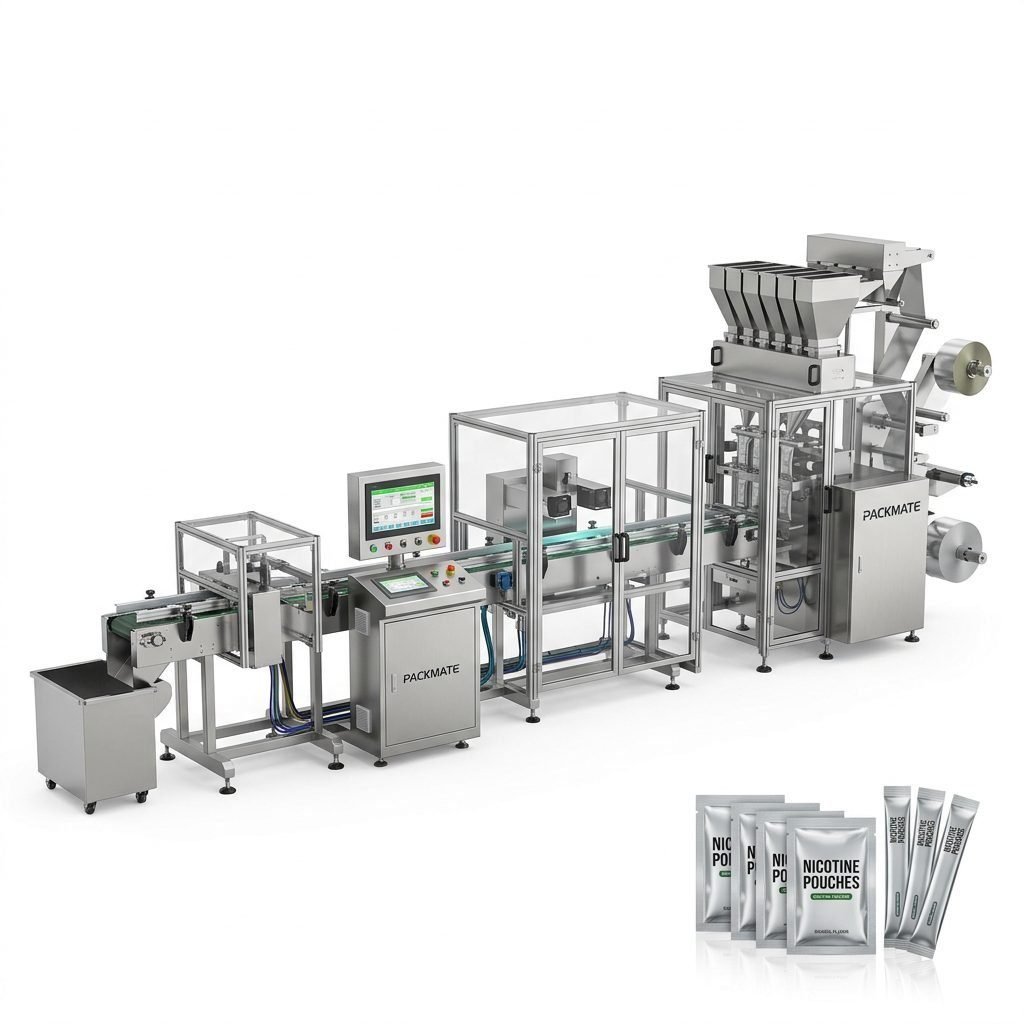
Choosing the right nicotine packaging machinery manufacturer for your business in India is a strategic decision that impacts product quality, compliance, production efficiency, and long-term cost of ownership. This guide walks you through practical, India-specific considerations — from regulatory awareness to after-sales service and ROI calculations — so you can confidently select a partner who aligns with your production goals and local market realities.
Understand the Indian Market Context
India’s manufacturing ecosystem, logistics network, and regulatory environment all shape how packaging machinery performs in daily operations. Consider these local factors:
⚙️ Regulatory environment: Nicotine pouch and snus packaging must comply with local laws and state-level regulations. Work with a manufacturer that understands import/export duties, GST implications, and packaging labeling norms applicable across different states.
🌧️ Climate and seasonality: Monsoon-related supply disruptions and dust/humidity considerations affect equipment choices and maintenance schedules.
🎯 Demand spikes around festivals: Diwali and other festivals can cause sudden demand surges. Ensure your line is scalable and your supplier can fast-track spare parts.
Why supplier location and local support matter
Choosing a manufacturer with established shipping channels to India or a local service partner shortens downtime. Quick access to spare parts, local language technical support (Hindi, regional languages), and field engineers can save tens of thousands in lost production hours.
Key technical criteria when evaluating machines
Not all packaging machines are created equal. Focus on technical fit for your product formats and production targets:
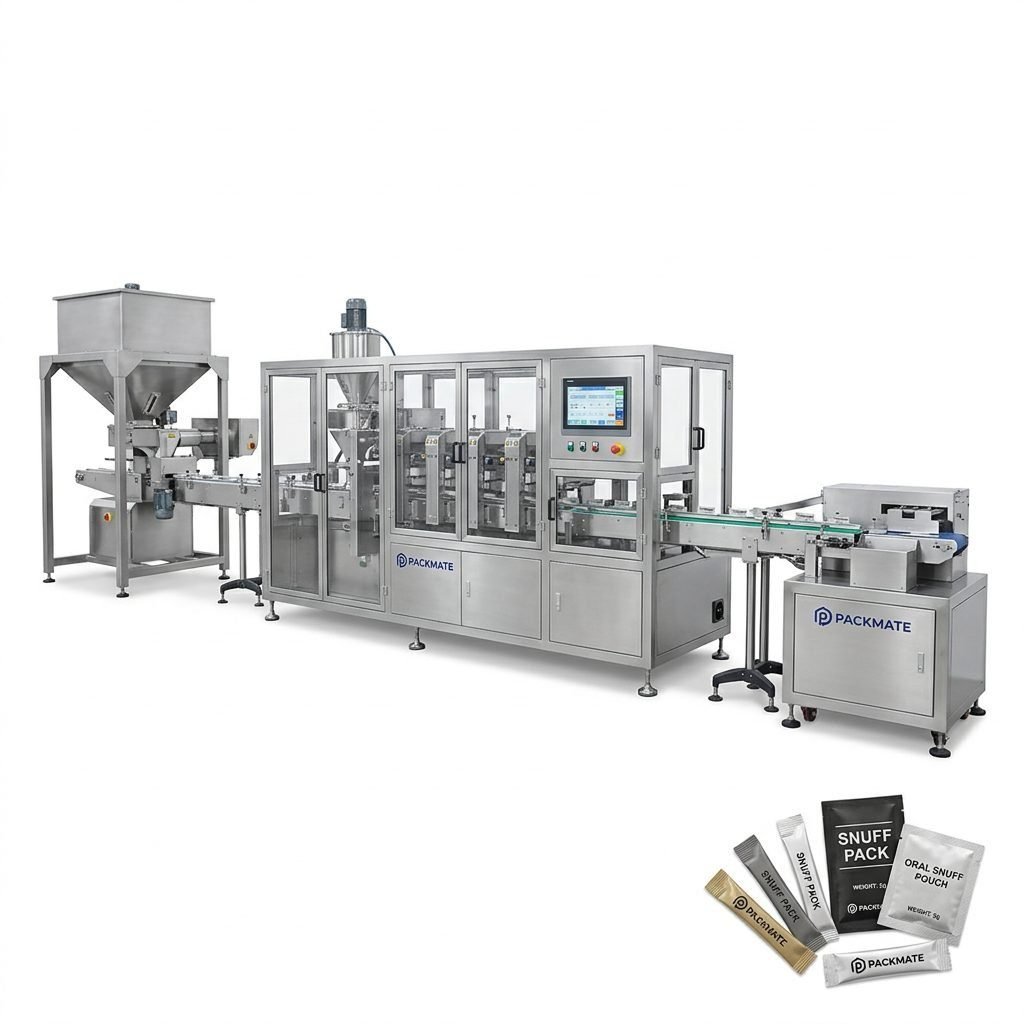
🔍 Format compatibility: Ensure the machine supports nicotine pouches, snus, sachets, or stick packs as needed. Multi-format capability reduces future capital spending.
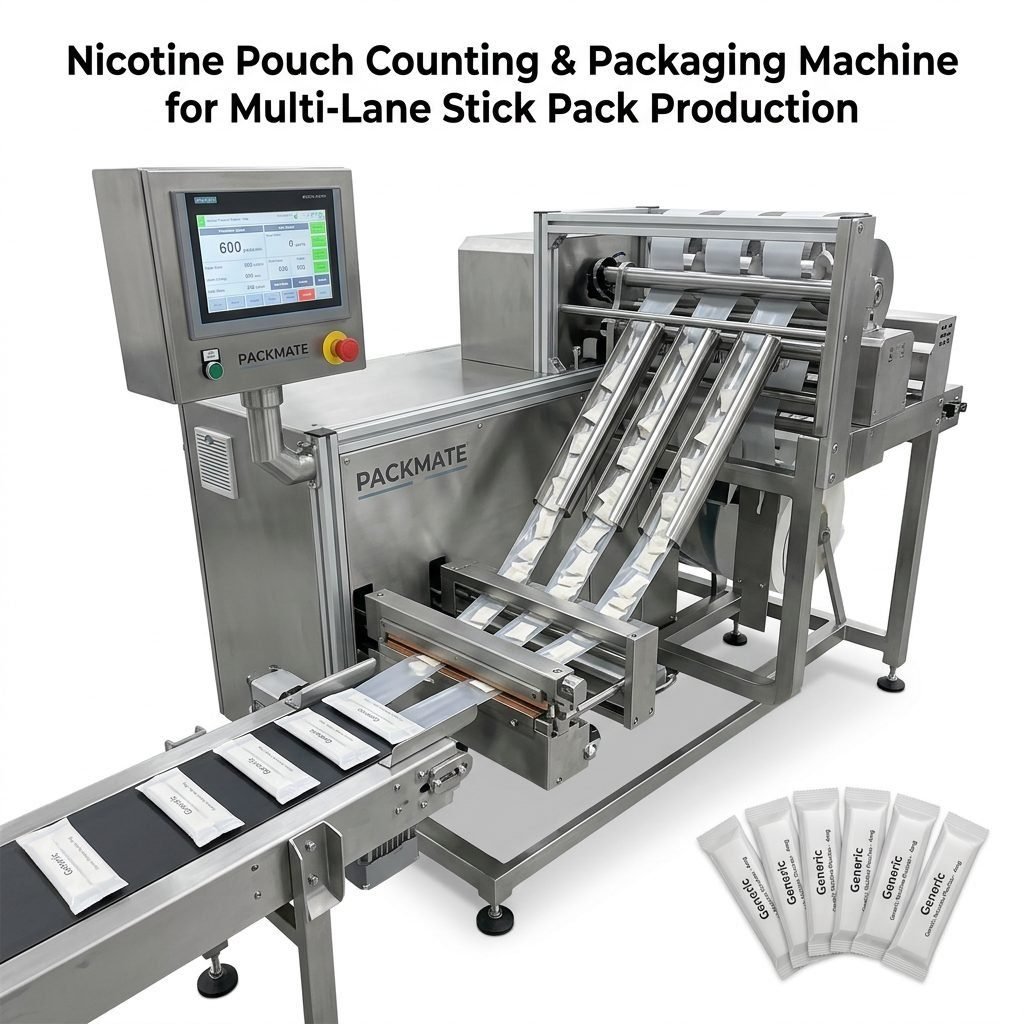
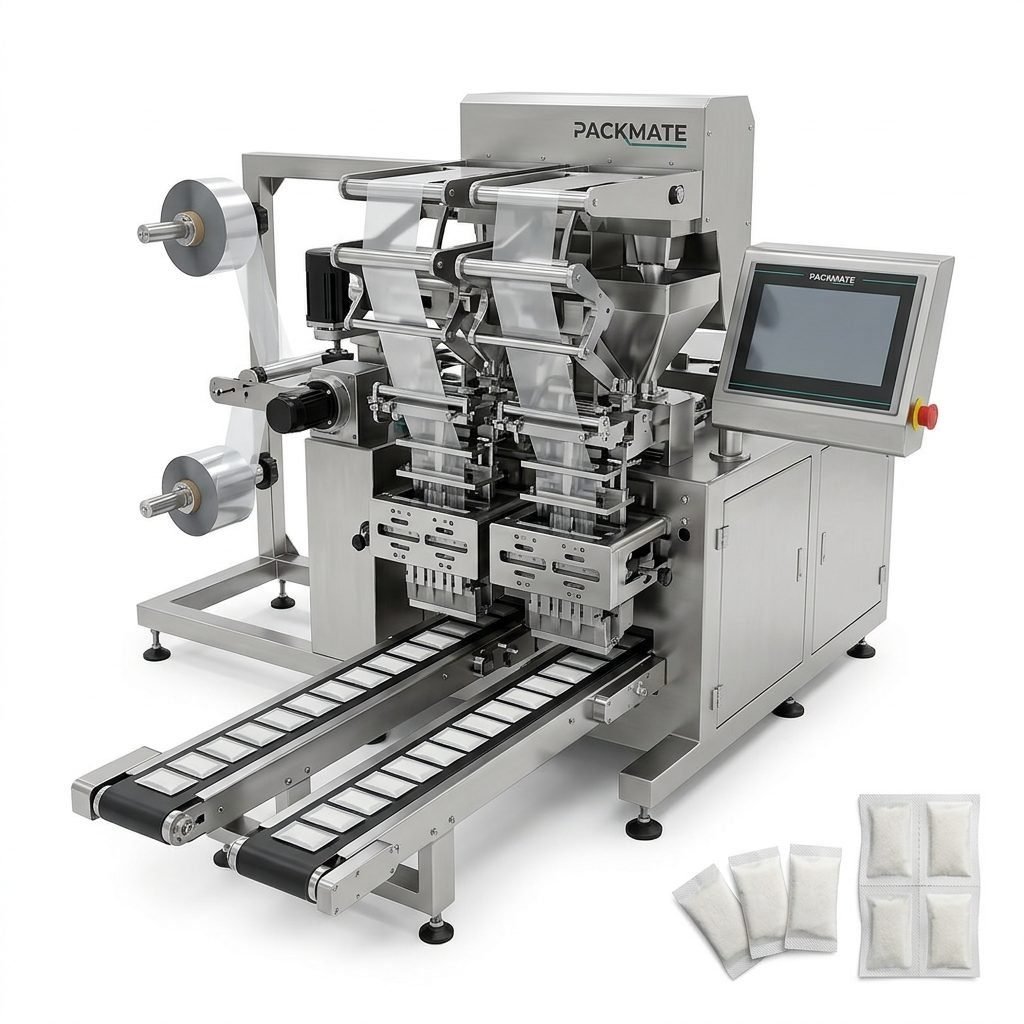
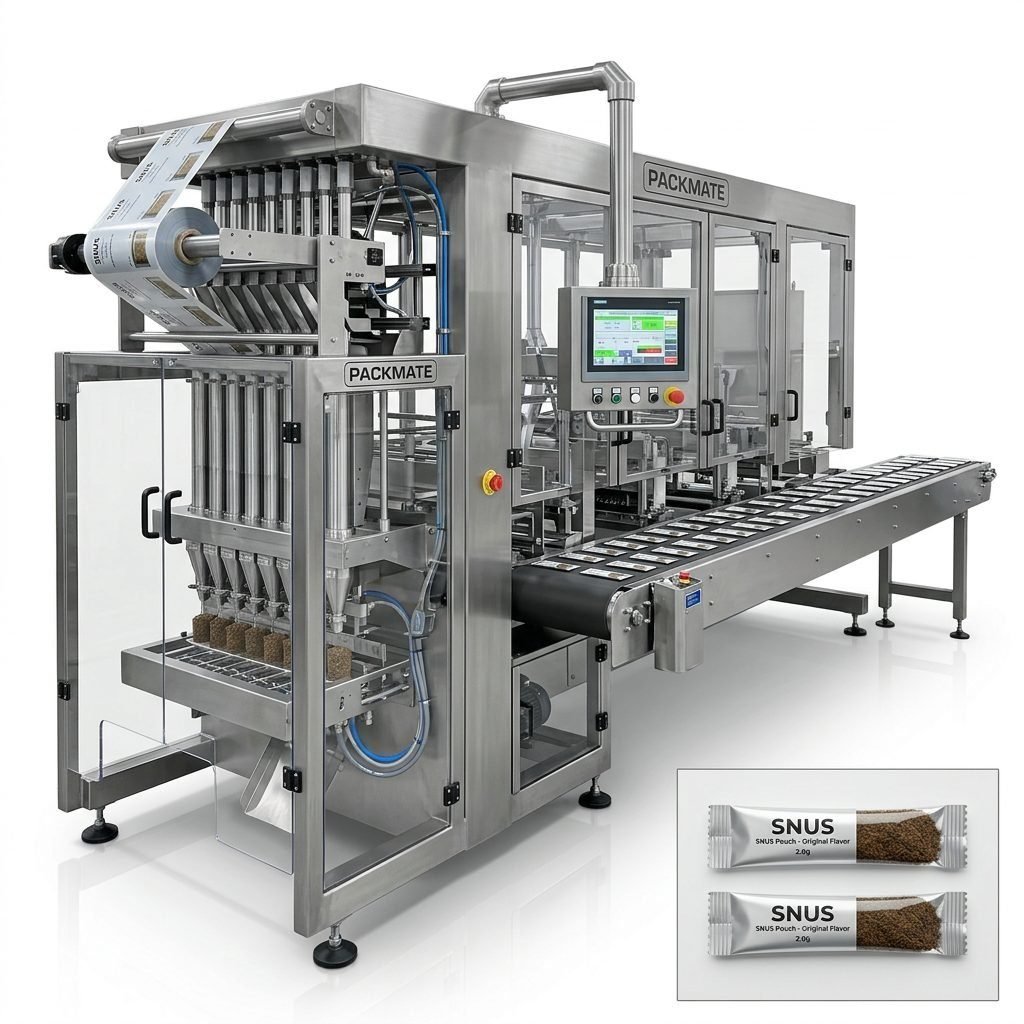
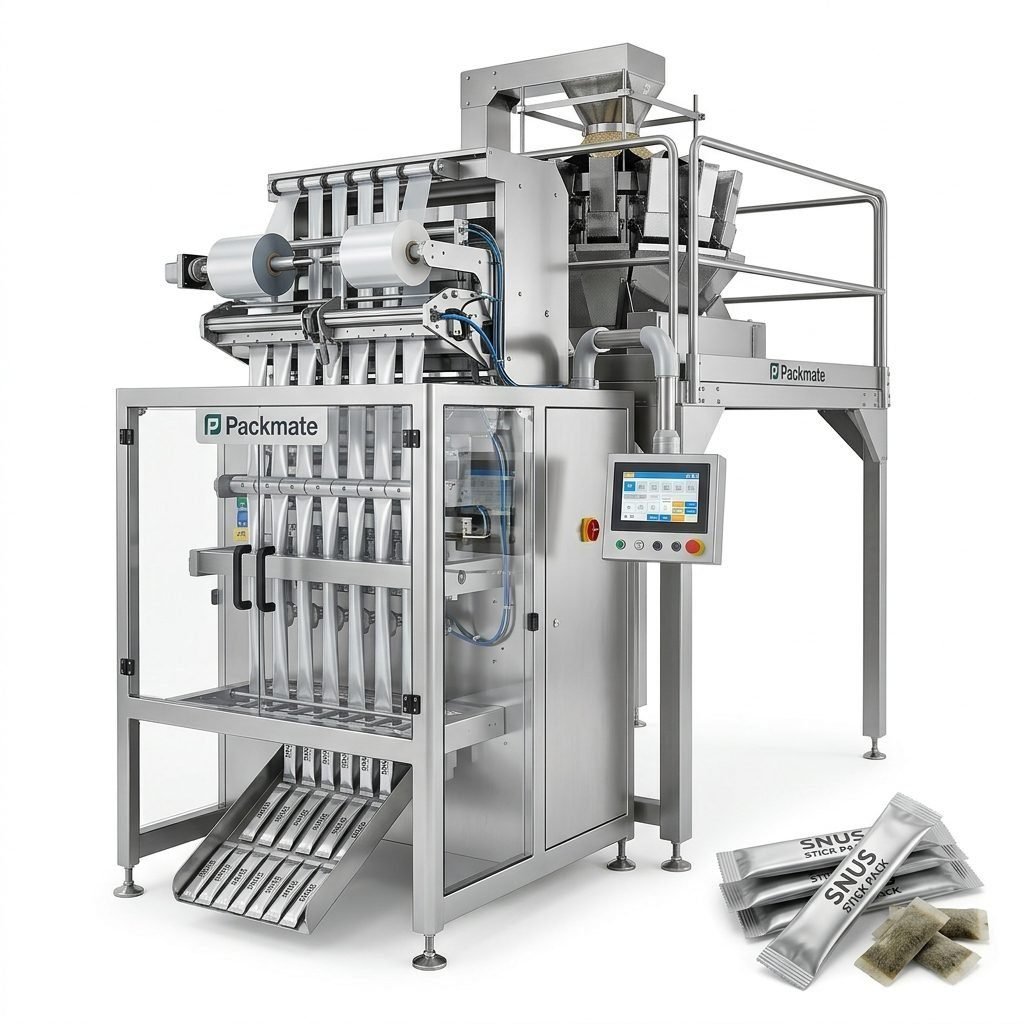
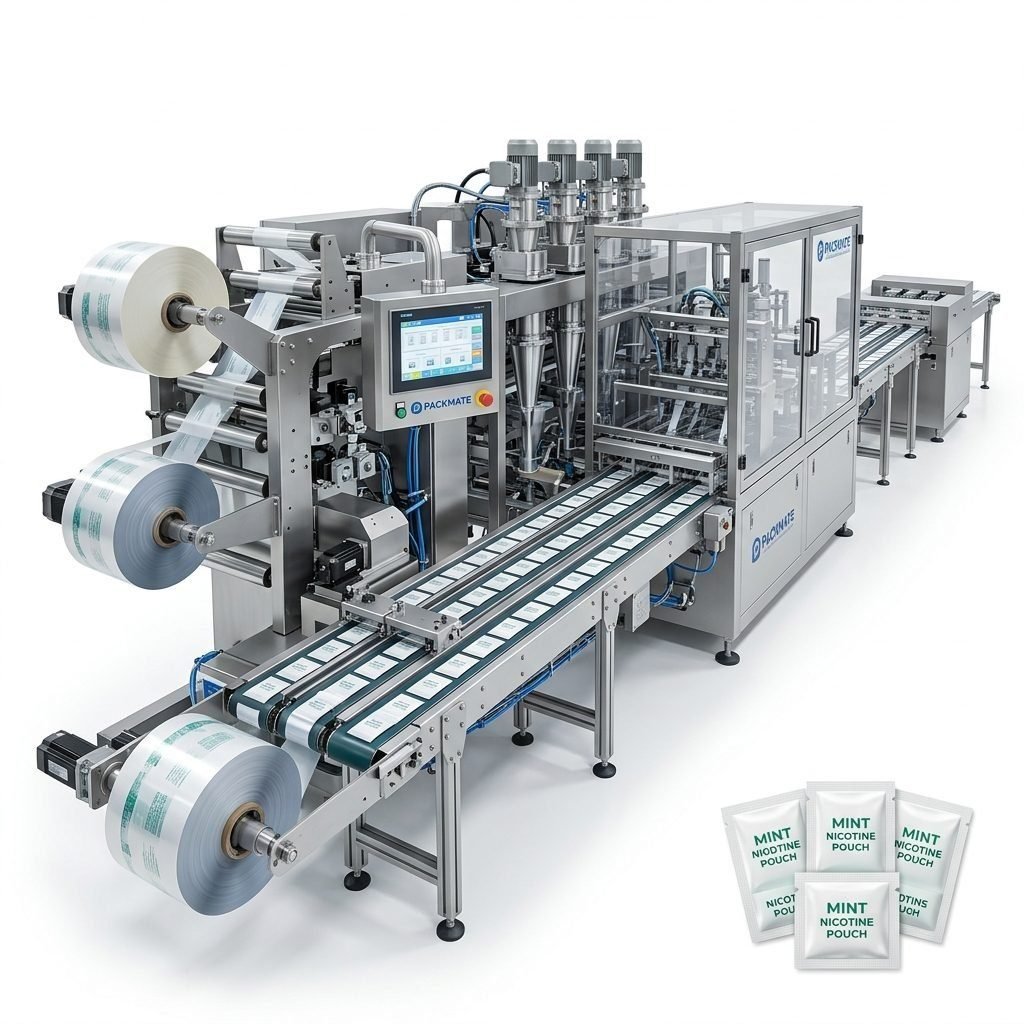
🚀 Throughput and multi-lane options: For small-dose products like nicotine pouches, multi-lane lines (4-12 lanes) are common to reach high output while maintaining dosing accuracy.
⚖️ Weighing and dosing accuracy: Small doses require precision weighing systems integrated with the packaging line to maintain regulatory compliance and reduce waste. Check compatibility with automated weighing solutions.
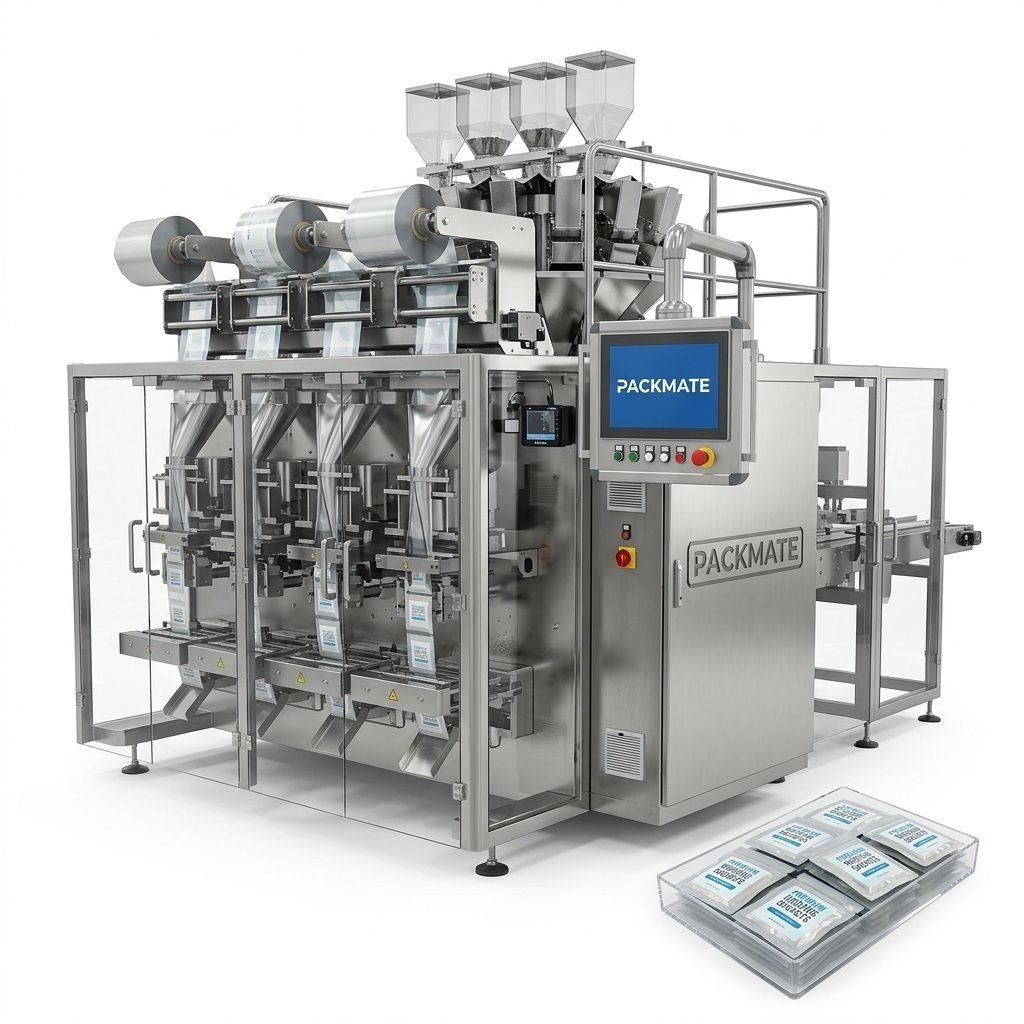
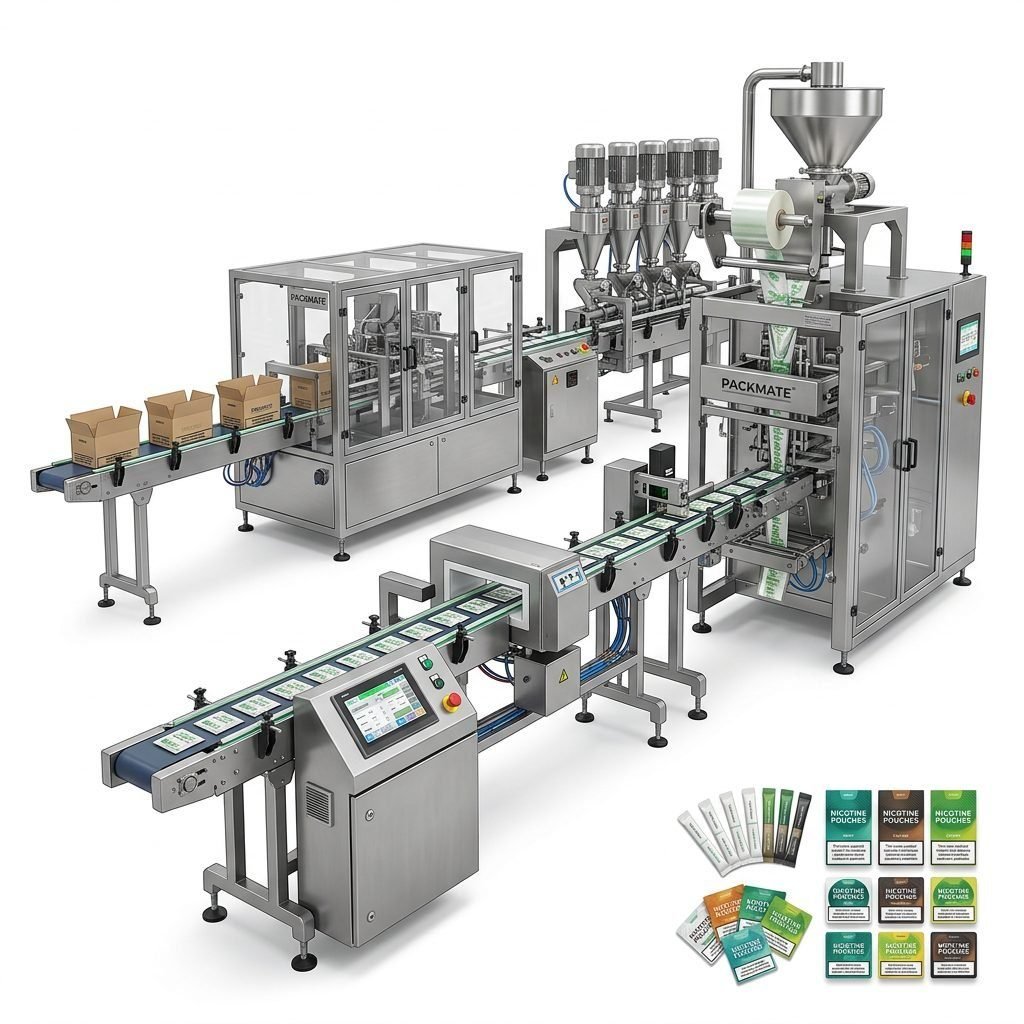
🔗 Integration with upstream and downstream equipment: Filling, sealing, cartoning, and case packers should smoothly connect to avoid bottlenecks. Ask for references of complete lines, not just standalone machines.
Important machine features to request
⚙️ Servo-driven motion for consistent speed and accuracy.
🛡️ Hygienic materials and easy-to-clean design for compliance and faster changeovers.
🔒 Tool-less change parts to minimize downtime during format changes.
Assess manufacturer credibility and track record
A dependable supplier demonstrates consistent quality, longevity, and a demonstrated ability to support clients worldwide. Use these signals to evaluate credibility:
✅ Years of experience and factory scale: Manufacturers with decades of engineering experience and sizeable facilities frequently deliver more reliable machines and faster custom solutions. Packmate Snus Machine’s 30+ years and 20,000㎡ factory footprint are examples of such scale.
🌍 Global customers and case studies: Ask for international references and case studies to assess how machines behave in diverse environments. Visiting an installed line or reviewing video demos can be invaluable.
🏷️ Certifications: CE, ISO, and other relevant certificates show adherence to international manufacturing standards. Verify documentation and confirm the certification scope.
Questions to ask during supplier evaluation
🔎 What are the standard lead times for a turnkey line?
🔎 Do you perform factory acceptance tests (FAT) with our product?
🔎 Is a site installation and commissioning team included?
🔎 What training and documentation are provided in English and locally relevant languages?
🔎 How is spare parts availability handled in India?
Service, spare parts, and warranty — the real differentiators
After-sales care determines how quickly you can recover from any downtime. Evaluate:
⏱️ Response time for field engineers and remote support: A supplier offering remote troubleshooting, PLC backups, and spare parts stocked near major Indian ports will reduce production losses.
📦 Spare parts policy and kits: Standard spare parts kits, consumables lists, and an express shipping option for critical parts are crucial.
🛠️ Training and documentation: Operator, maintenance, and troubleshooting manuals — ideally in English and regional languages — plus on-site training minimize operator errors.
Cost vs. total cost of ownership (TCO)
Upfront price is only one part of the equation. Calculate TCO by factoring in:
– Energy consumption and utility compatibility with Indian supply.
– Frequency and cost of spare parts and consumables.
– Downtime risk and average mean time to repair (MTTR).
– Training costs and time to reach target OEE (Overall Equipment Effectiveness).
Factory visits, FAT and sample runs
A thorough evaluation includes a factory acceptance test (FAT) where your product is run on the line. During visits, assess:
🧩 Build quality and precision of machined parts — check assembly tolerances and electrical cabinet layout.
🎬 Demonstrated runs with similar products and the availability of test reports for weight variation, seal quality, and format change times.
Customization, modular upgrades and futureproofing
The nicotine pouch market evolves quickly. Choose a partner who supports:
🔧 Modular designs that allow adding lanes, integrating inspection systems, or adding secondary packaging later.
♻️ Upgradeable controls and software to keep pace with Industry 4.0 and OEE monitoring.
Verify references and real-world performance
Speak directly with existing customers in similar markets or product segments. If possible, request contact details for clients in Asia or South Asia to understand how the line performs under comparable conditions.
Why Packmate Snus Machine can be a fit for Indian businesses
With 30+ years of engineering experience and a large manufacturing base, Packmate specializes in snus and nicotine pouch packaging lines, offering multi-lane systems and turnkey solutions tailored to small-dose pouch production. Their capabilities include CNC precision manufacturing, CE and ISO compliance, and global project experience — all useful when establishing a robust production line in India.
Explore relevant product pages to assess fit: Snus & Nicotine Packaging Machines, Weighing & Packaging Systems, and learn more About Packmate.
Practical procurement checklist for India-based buyers
Use this checklist during procurement:
1. Request machine datasheets and verify lane count, cycle speed, and dosing accuracy.
2. Confirm FAT with your own product and require video recordings.
3. Verify CE/ISO certificates and request safety compliance documentation.
4. Confirm lead times, shipping terms, installation, and commissioning scope.
5. Check spare parts list, pricing, and local stocking options.
6. Ask for a reference list of installations in climates similar to India.
7. Ensure warranty, service SLAs, and training are contractually defined.
Negotiation tips
– Bundle spare parts and installation into the purchase order to avoid surprise costs.
– Negotiate phased payments tied to milestones: order, FAT acceptance, shipment, and successful commissioning.
– Seek a trial period or acceptance criteria that protect your investment.
Final checklist before signing the purchase agreement
✔️ FAT completed with your product samples and documented results.
✔️ Clear delivery and commissioning timeline with penalties for delays.
✔️ Warranty terms and spare parts lead time guarantees.
✔️ Training schedule and technical documentation delivery.
✔️ Contact details for escalation within the manufacturer and regional support options.
Useful resources and next steps
Visit manufacturer case studies and technical catalogs to compare real installations and specification sheets before shortlisting. Packmate’s case page and product catalog are helpful starting points: Case | Catalog.
Frequently Asked Questions
Q1: How do I confirm a machine will meet Indian regulatory requirements?
A1: Request documentation of compliance certificates and ask the manufacturer to provide examples of installations in countries with similar regulatory frameworks. Verify labeling and traceability options that match your state-level requirements.
Q2: What is a realistic lead time for a turnkey nicotine pouch line?
A2: Lead times vary, but expect 12–24 weeks for a fully customized multi-lane line including FAT. Standard machines or semi-custom lines can be faster — always confirm in writing.
Q3: How important is a FAT and can it be done remotely?
A3: FAT is critical. While remote FAT can supplement on-site visits, physical FAT with your product provides the highest assurance. If travel is limited, require real-time video streaming and recorded cycles with your samples.
Q4: What spare parts should I stock locally?
A4: Stock critical wear parts (seals, belts, cutting blades), sensors, and a small PLC backup. Discuss a recommended kit with your supplier.
Q5: How do I evaluate total cost of ownership for different suppliers?
A5: Compare energy use, expected uptime, spare parts pricing and lead times, training costs, and projected maintenance frequency. Ask suppliers for OEE estimates from comparable installations.
For further assistance or to request a line specification, visit the manufacturer’s service and contact pages: Service | Contact Us.