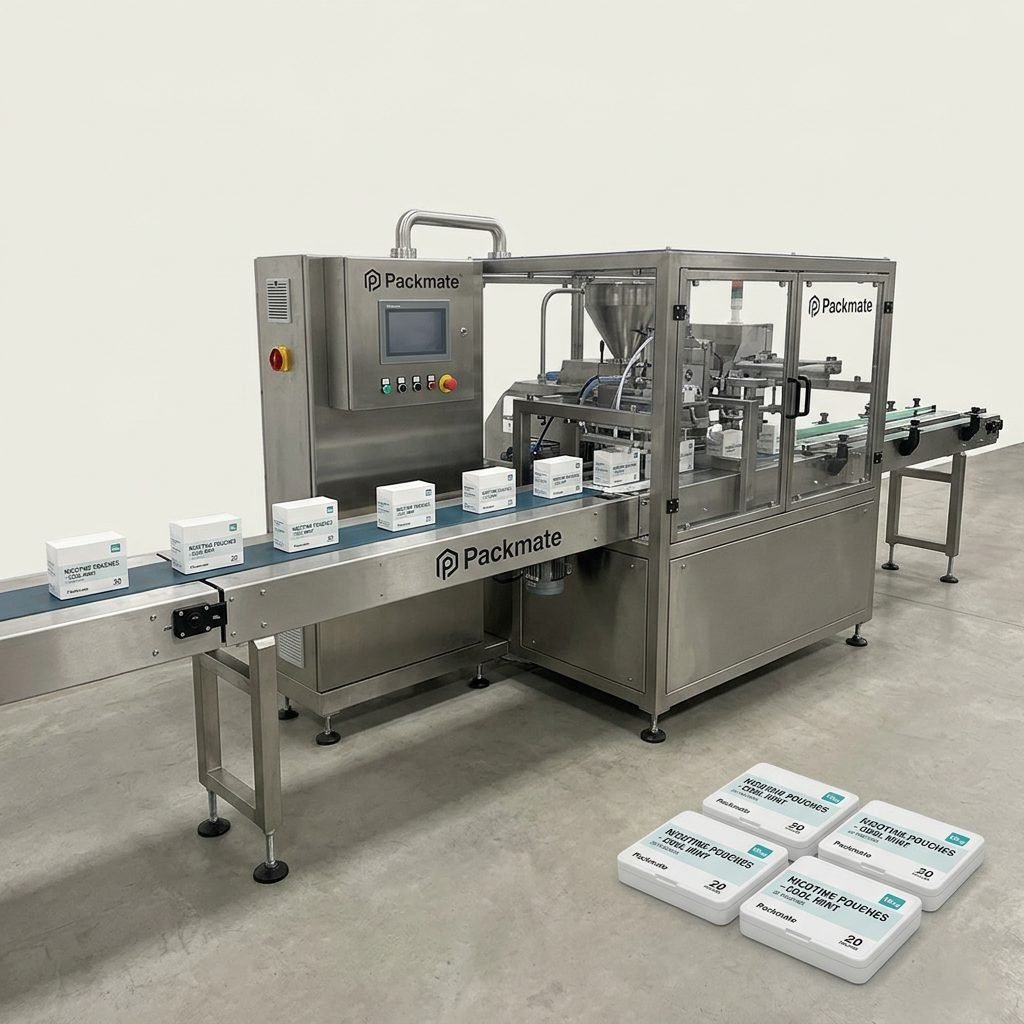
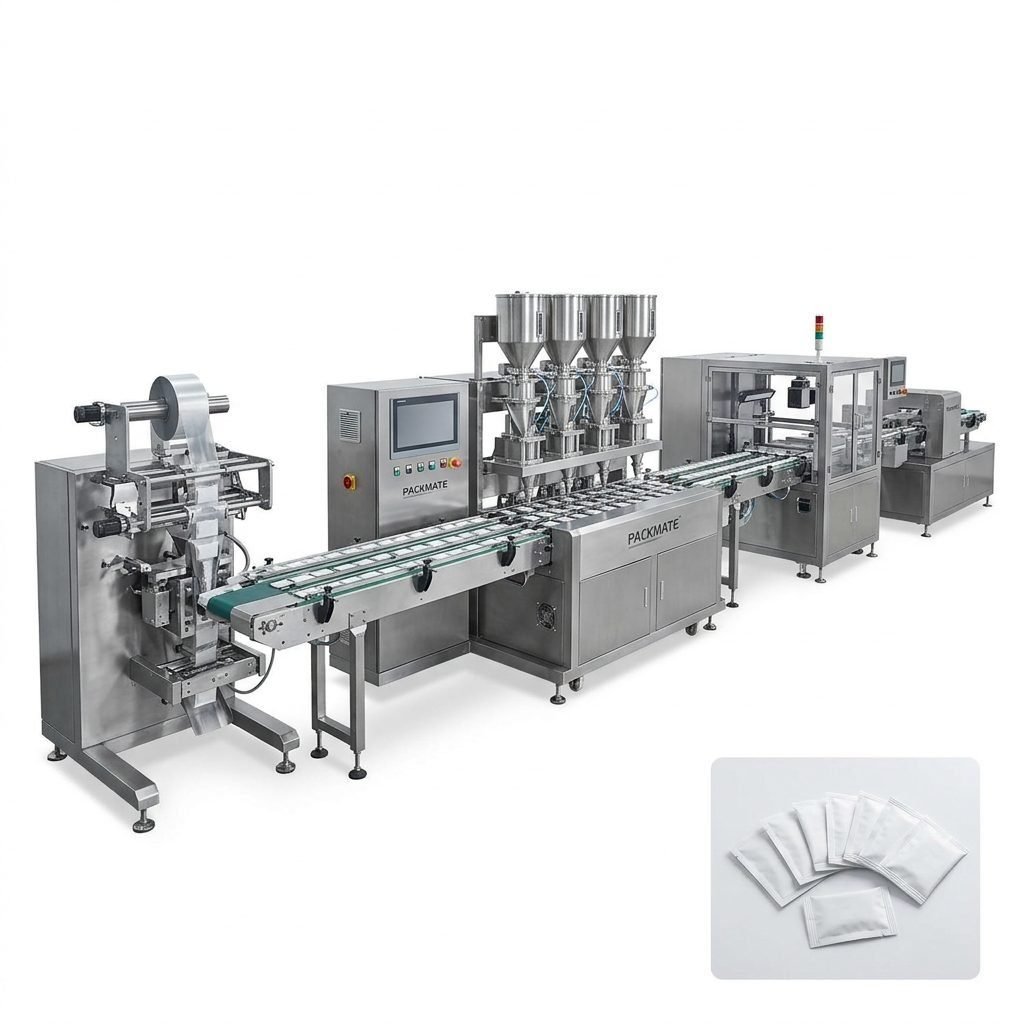
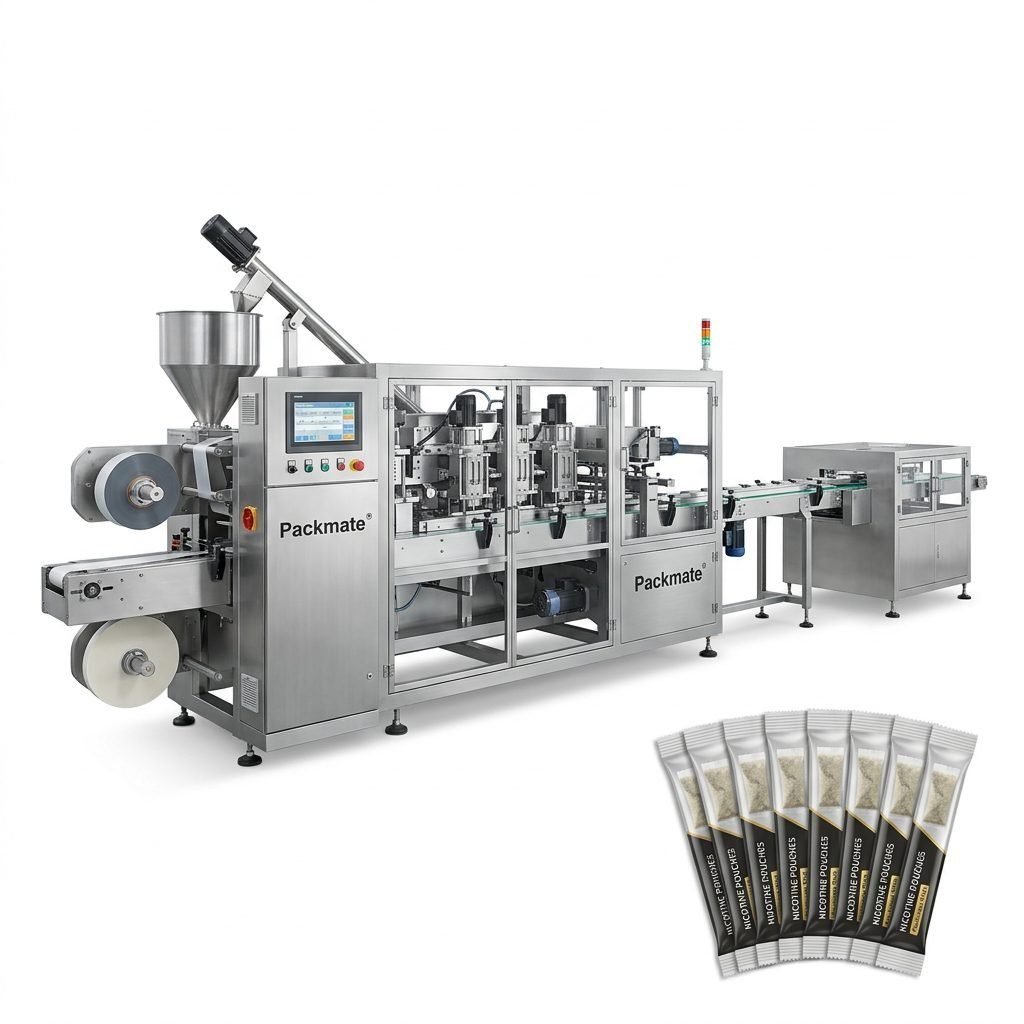
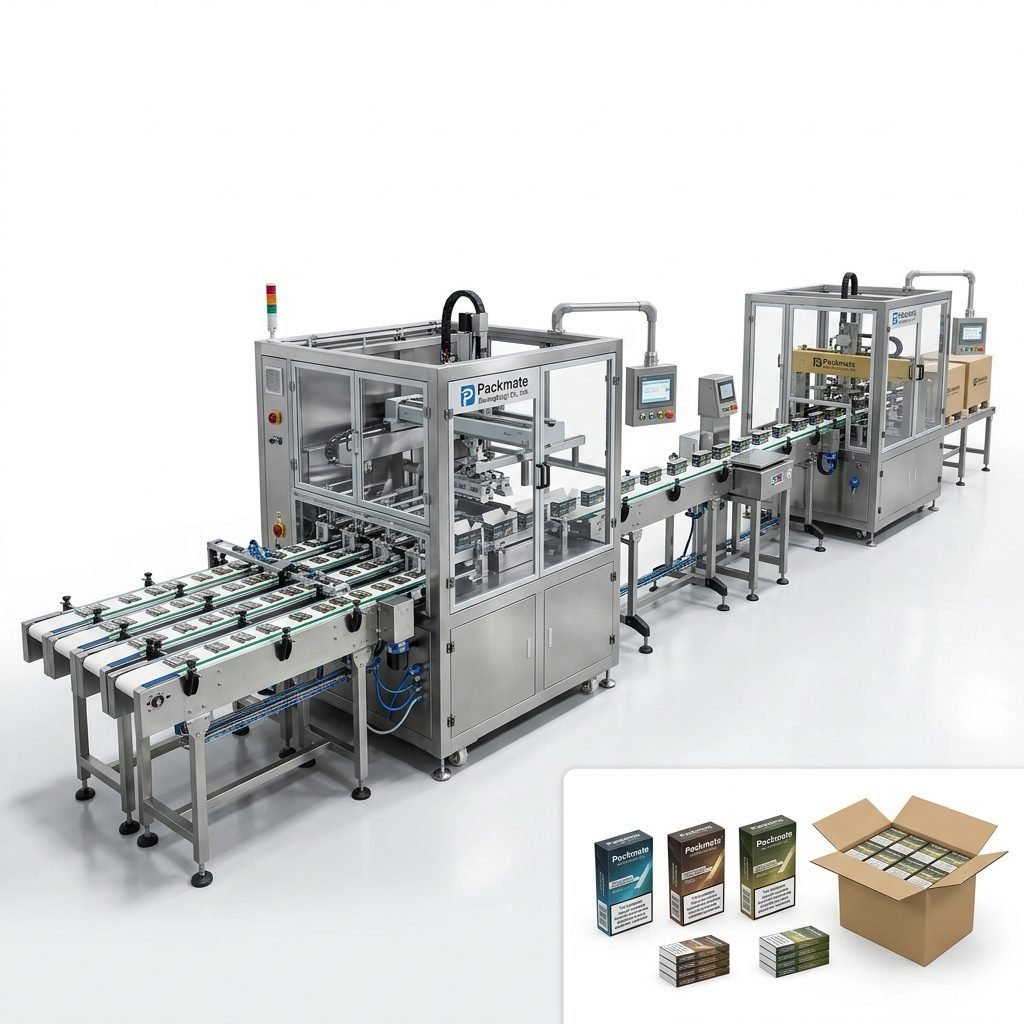
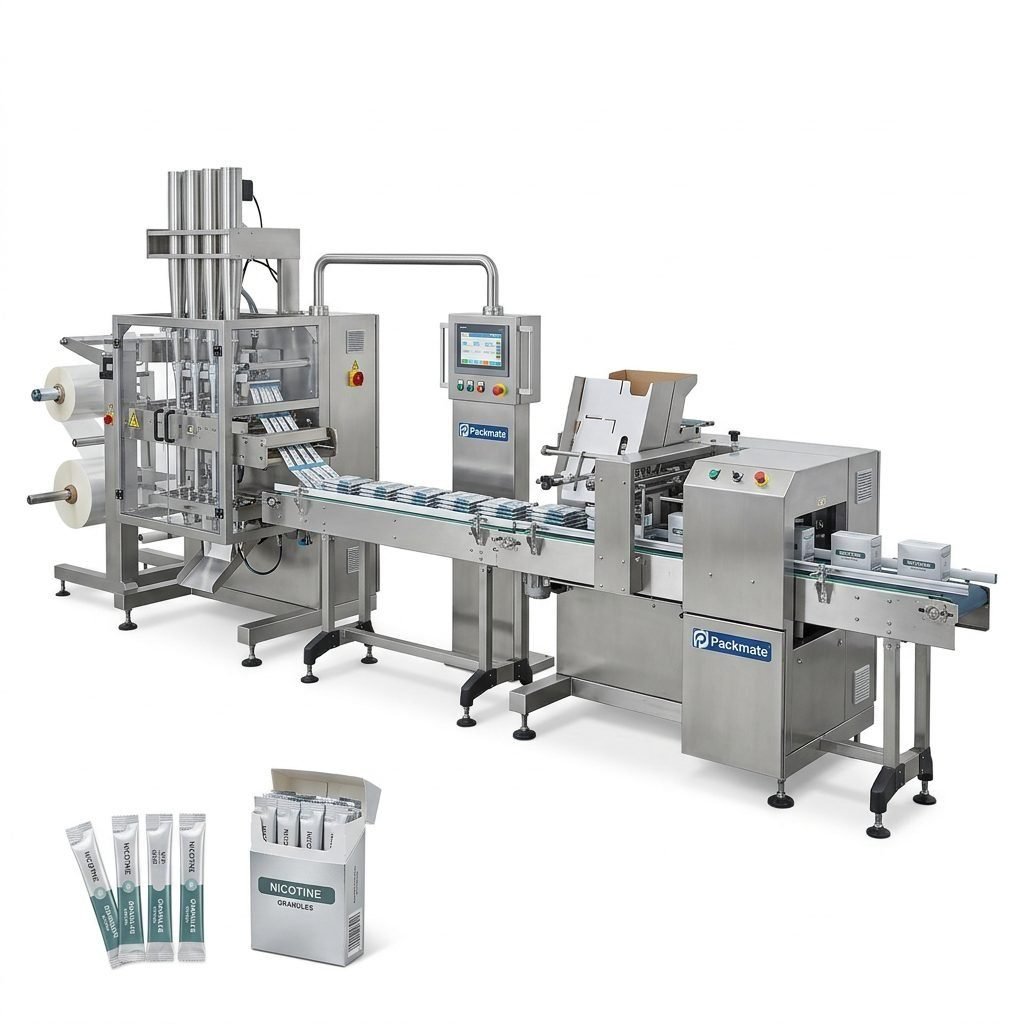
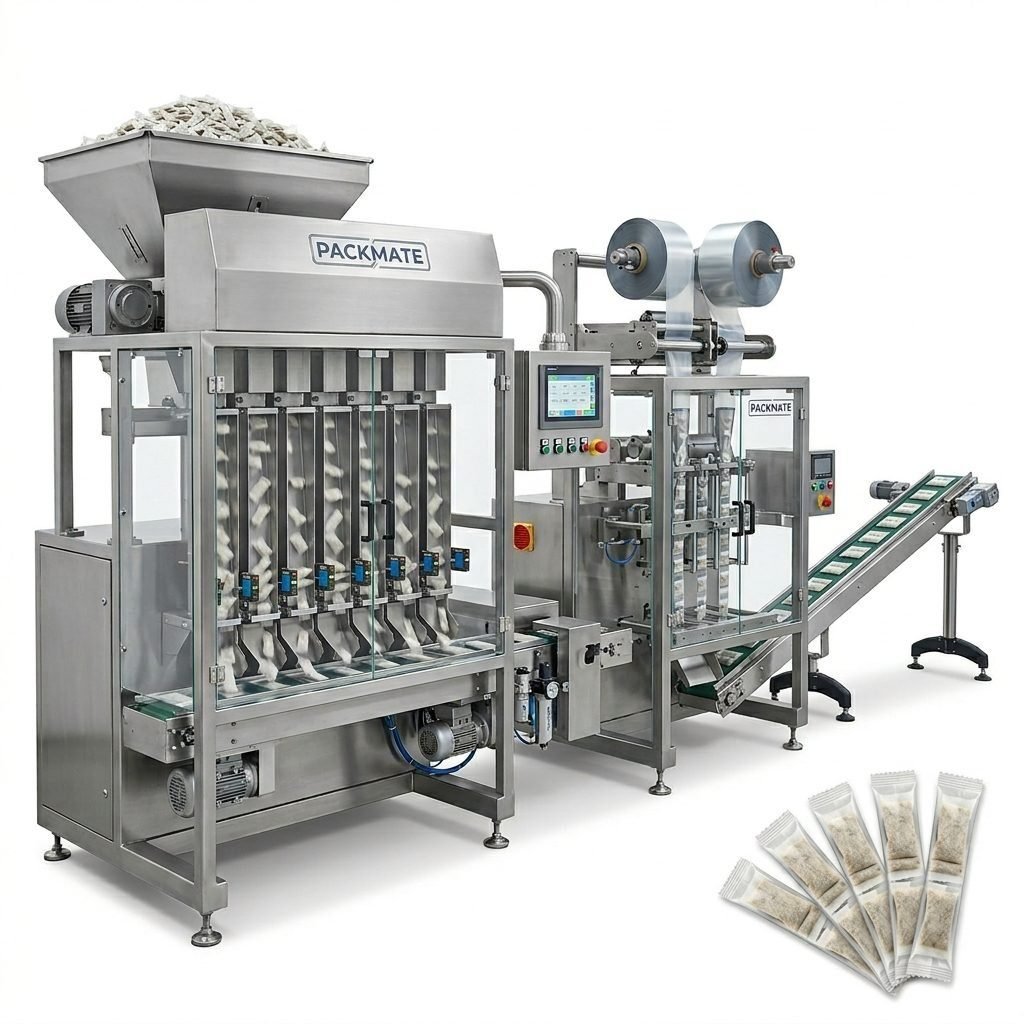
The transition to Industry 4.0 has reshaped modern manufacturing across sectors, and snus/nicotine pouch production is no exception. By integrating smart automation, data-driven controls, and flexible packaging platforms, manufacturers can achieve higher throughput, improved product consistency, and rapid changeovers while meeting strict regulatory and hygiene demands. This article explores practical Industry 4.0 snus line solutions that deliver measurable gains in efficiency, quality, and total cost of ownership.
Why Industry 4.0 Matters for Snus & Nicotine Pouch Production
The snus and nicotine pouch market is characterized by small-dose products, multi-lane packaging formats, and frequent recipe or format changes. Traditional mechanical lines struggle to match the agility and traceability demanded by modern customers and regulators. Industry 4.0 introduces a suite of technologies — intelligent sensors, PLC/SCADA integration, predictive maintenance, and MES connectivity — that allow packaging lines to operate as adaptive, self-optimizing systems rather than fixed-rate conveyors.
Key Benefits at a Glance
🔧 Improved Uptime: Real-time monitoring and predictive maintenance reduce unscheduled stoppages.
⚙️ Higher Flexibility: Multi-lane, modular machines switch formats faster for small-batch or seasonal SKUs.
📈 Better Quality & Traceability: Automated inspection and digital batch records support compliance and consistency.
Core Components of a Smart Snus Line
A modern snus packaging line combines mechanical precision with interconnected electronics and software. The essential components include:
1) Modular Multi-Lane Filling & Forming Units
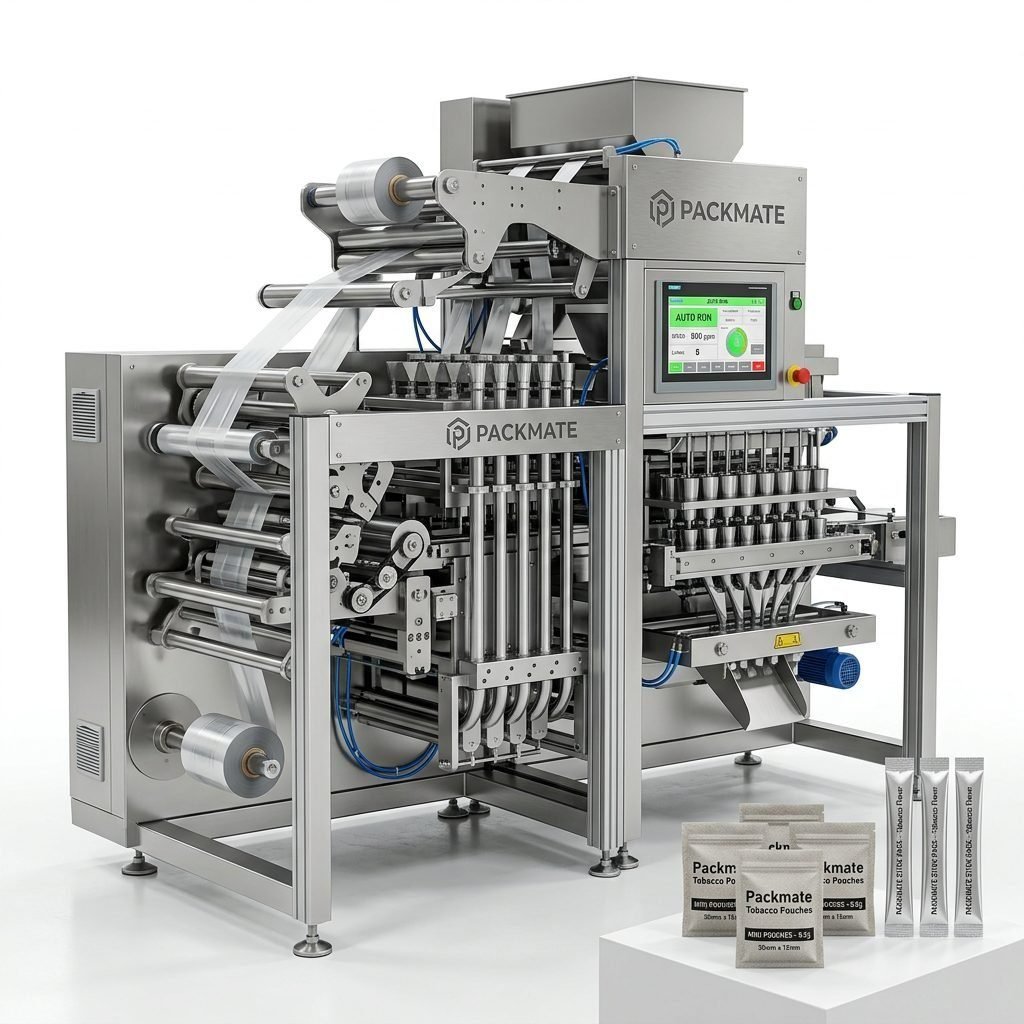
Multi-lane systems enable the simultaneous production of many small pouches, increasing overall throughput without sacrificing accuracy. Key features are quick-change tooling, servo-driven dosing, and synchronized lane control. Packmate’s experience in multi-lane design reduces uneven fill distribution and lane-to-lane variability, crucial for nicotine pouch consistency.
2) Intelligent Weighing & Dosing
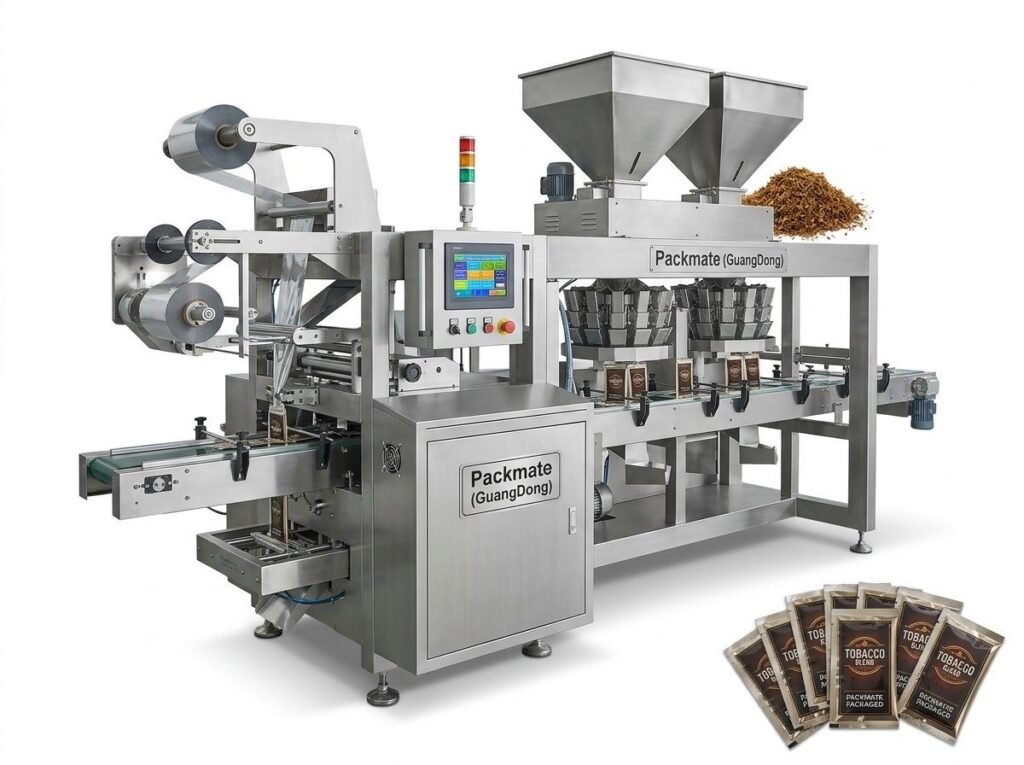
Accurate dosing at gram-level or sub-gram-level precision is vital for regulatory compliance and consumer safety. Modern dosing systems pair high-speed weighers with closed-loop feedback to adjust in real time. See examples in the Weighing & Packaging Systems for integrated solutions.
3) Automated Packaging Machines & Film Handling
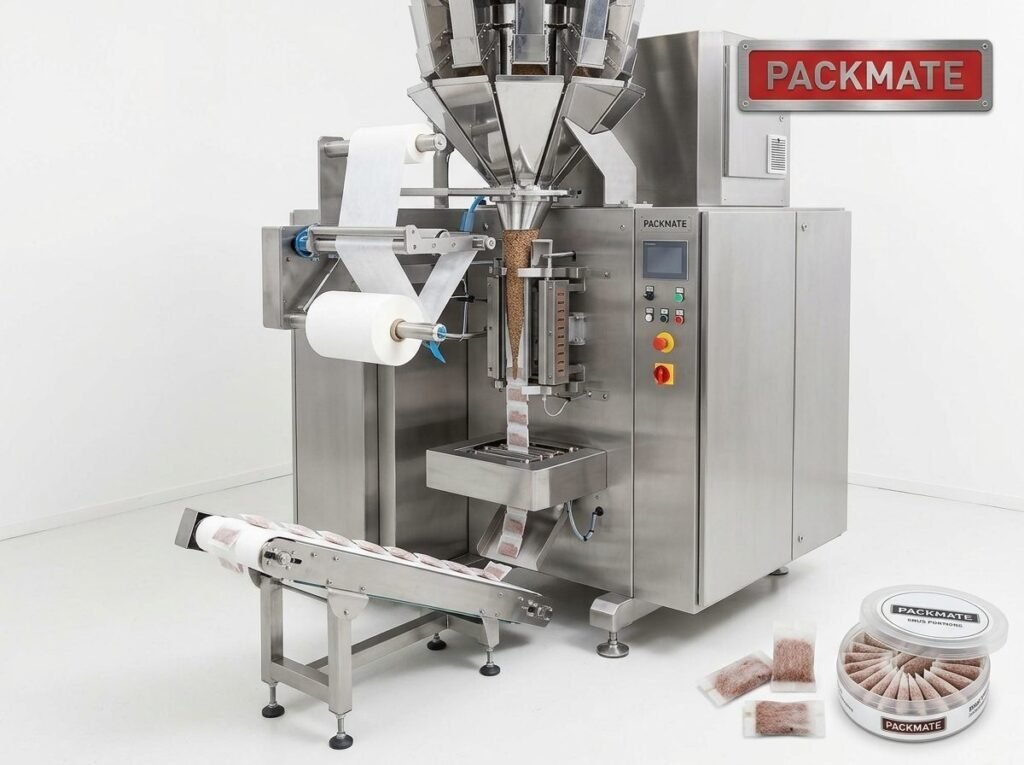
Automated pouch and stick pack machines must reliably handle delicate films and heat seals while maintaining speed. Equipment with advanced film tracking, tension control, and servo motion reduces film waste and improves seal integrity. Explore options under Snus & Nicotine Packaging Machines and Bag & Pouch Packaging Machines for dedicated configurations.
✅ Integration Tip: Ensure film handling systems communicate with upstream dosing to pause the line during film faults and avoid product waste.
Digital Controls: PLC, HMI & MES Integration
Digital control architecture is the backbone of Industry 4.0. Programmable Logic Controllers (PLCs) coordinate machine motions; advanced HMIs provide operators with easy format selection and troubleshooting; Manufacturing Execution Systems (MES) capture batch-level data and integrate with enterprise ERP for end-to-end traceability.
Standardized Data & OPC-UA
Using standardized protocols (such as OPC-UA) simplifies integration across vendors and facilitates secure data flow to cloud analytics platforms. This enables remote diagnostics, performance dashboards, and predictive models that directly reduce downtime and improve yield.
AI and Vision Systems for Quality Assurance
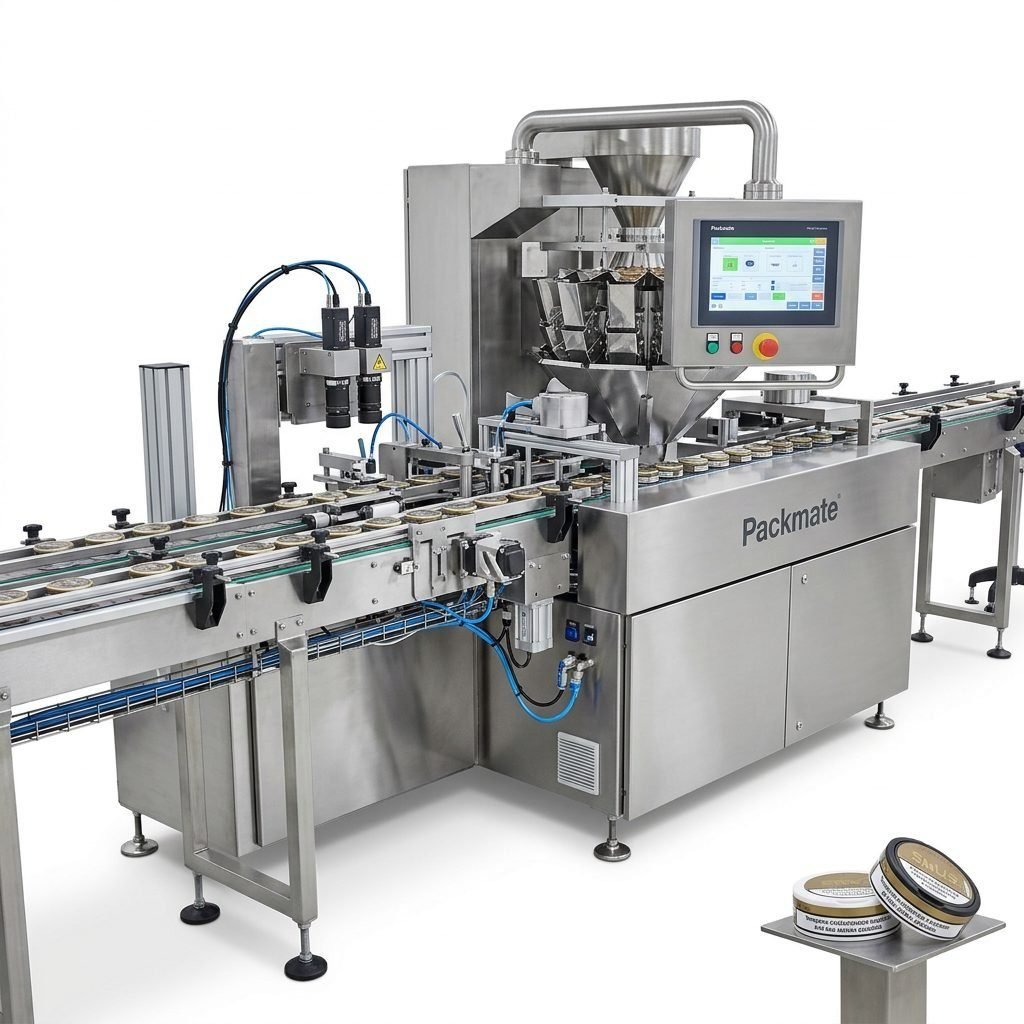
Machine vision paired with AI can detect seal defects, incorrect pouch shapes, foreign particles, and printing errors at production speeds. Combining vision inspection with reject mechanisms ensures only conforming products continue down the line — essential for nicotine pouch markets where consumer safety and labeling accuracy are critical.
Real-Time Statistical Process Control (SPC)
SPC dashboards can alert operators to drift long before out-of-spec product is produced. Automated trend analysis and threshold alarms keep processes centered and provide actionable insights for continuous improvement.
Performance Metrics to Monitor
OEE (Overall Equipment Effectiveness): Availability x Performance x Quality.
First-pass Yield: Percentage of pouches that pass inspection without rework.
Mean Time Between Failures (MTBF): Indicator of equipment reliability.
Flexible Automation Strategies for Small-Batch Runs
Many snus manufacturers produce numerous SKUs with small batch sizes. Flexible automation focuses on:
Quick-Change Tooling & Recipe Management
Tool-less or minimal-tool-change systems reduce downtime between SKUs. Digital recipe management in the HMI loads servo positions, dosing parameters, and inspection recipes automatically when the operator selects a SKU.
Modular Line Design
A modular approach allows manufacturers to add lanes, upgrade dosing modules, or insert inspection stations as demand evolves — minimizing capital expenditure on full replacement lines. Packmate’s turnkey philosophy supports phased upgrades to protect existing investments.
Sustainability & Waste Reduction
Industry 4.0 solutions also support sustainability goals. Reduced film scrap through precise film tracking, optimized dosing to minimize overfill, and energy-efficient servo drives all contribute to lower environmental impact and reduced cost.
Environmental KPI: Track film yield, product-to-pack ratio, and energy consumption per 1,000 pouches.
Compliance, Safety & Traceability
For nicotine pouch production, regulatory scrutiny is high. Industry 4.0 systems improve compliance through immutable digital batch records, traceable ingredient inputs, and automated labeling checks. Integrated tare and lot tracking make recalls fast and targeted rather than broad and costly.
Hygiene & Cleanability
Hygienic design principles — easy-to-clean surfaces, drainable enclosures, and minimal crevices — reduce contamination risk. Automated CIP (clean-in-place) compatibility and materials that withstand frequent washdowns are important design considerations.
Return on Investment: How Smart Lines Pay Back
Investing in Industry 4.0-ready snus lines delivers ROI through several channels:
- Reduced labor costs via automation and simplified operator interfaces.
- Lower scrap and rework due to inline inspection and precise dosing.
- Faster changeovers increase productive run time and enable more SKUs per shift.
- Predictive maintenance reduces emergency repairs and spare-part inventory costs.
Manufacturers often realize payback in 12–36 months depending on baseline performance and utilization rates.
Implementation Roadmap
Moving to a smart snus line can be phased to manage risk and capital outlay:
Phase 1 — Assessment & Pilot
Conduct a process audit to identify bottlenecks and quality pain points. Implement a pilot line segment with sensors and local HMI dashboards to validate data and control strategies.
Phase 2 — Scaling & Integration
Expand automation modules across the line, integrate PLCs with MES/ERP, and deploy vision inspection. Emphasize interoperability and standard protocols.
Phase 3 — Optimization & Analytics
Use historical line data for performance tuning and predictive maintenance models. Continuous improvement teams should meet regularly to turn insights into action.
Case Study Snapshot
A mid-sized producer adopted a Packmate multi-lane snus line with integrated weighing, vision inspection, and MES connectivity. Within six months the plant reported a 23% increase in productive throughput, a 45% reduction in film scrap, and improved first-pass yield by 12 percentage points. Digital batch logs simplified audit preparation and enabled faster market release for new SKUs. You can review similar implementations and success stories in our Case section.
Selecting the Right Supplier
When choosing a partner for Industry 4.0 snus solutions, evaluate:
- Experience with multi-lane, small-dose packaging systems.
- Capabilities for turnkey integration including PLC, HMI, and MES.
- Factory engineering strength and post-sale service network.
- Compliance records and certification (CE, ISO) to meet export requirements.
Packmate Snus Machine brings 30+ years of engineering experience, a 20,000㎡ manufacturing base, and a global footprint of turnkey solutions across snus, sachet, and stick pack formats. Learn more About Packmate and its product ranges including Snus & Nicotine Packaging Machines and Bag & Pouch Packaging Machines.
Best Practices for Long-Term Success
Maintain a strong partnership between production, automation engineers, and suppliers. Invest in operator training, standardized recipe libraries, and spare-part strategies tied to predictive maintenance insights. Regularly review KPI trends and align teams on continuous improvement goals.
Training & Documentation
Well-documented changeover procedures and accessible digital manuals in the HMI reduce operator error and shorten onboarding time for new staff.
Service & Remote Support
Remote diagnostics reduce travel time for service engineers and accelerate troubleshooting. Ensure secure VPN or cloud connectivity and clear SLAs with your equipment provider.
Tip: Define performance baselines before upgrades so you can accurately measure post-implementation improvements.
Conclusion
Industry 4.0 snus line solutions combine mechanical excellence with data-driven intelligence to transform production capability. From multi-lane dosing and precision forming to vision inspection, MES integration, and predictive maintenance, modern lines deliver higher throughput, lower waste, and stronger compliance. Selecting a partner with proven multi-lane expertise, turnkey capabilities, and after-sales support will accelerate time-to-value and ensure sustainable growth in a competitive market.
Common Questions
Q1: How long does it take to upgrade an existing snus line with Industry 4.0 features?
A1: A phased approach typically ranges from a few weeks for pilot modules to several months for full MES integration, depending on scope and existing controls.
Q2: What is the expected ROI for intelligent snus packaging investments?
A2: Many manufacturers see payback within 12–36 months through reduced scrap, labor savings, and higher throughput; specific ROI depends on baseline performance.
Q3: Can multi-lane machines handle many different pouch sizes and formats?
A3: Yes — modular tooling, servo control, and recipe management enable quick format changes across a range of pouch sizes; discuss SKU mix with your supplier for optimal lane configuration.
Q4: How important is supplier certification and factory capability?
A4: Very important — certifications (CE, ISO) and strong manufacturing infrastructure (CNC, precision assembly) indicate the supplier can deliver reliable, compliant equipment and long-term support.
Q5: Where can I find detailed product information and contact a supplier?
A5: For product catalogs, case studies, and direct contact info, visit Packmate’s product and contact pages such as Snus & Nicotine Packaging Machines and Contact Us.