In the modern packaging landscape, snus and nicotine pouch manufacturers are increasingly prioritizing sustainable production methods. As consumer demand shifts toward environmentally responsible products, packaging lines must respond with solutions that minimize waste, reduce energy consumption, and improve material efficiency without sacrificing speed or product integrity. This article explores practical, technology-driven approaches for building an eco friendly snus production line and highlights how Packmate’s expertise in precision packaging machinery can help brands achieve a greener footprint.
Why Eco-Friendly Snus Production Matters
The tobacco and nicotine pouch industry faces unique sustainability challenges: single-use pouches, multi-layer laminates, and high-speed production demands. Transitioning to more sustainable packaging not only addresses regulatory and consumer pressures but can also deliver cost savings over time. Manufacturers that invest in optimized machinery and intelligent packaging designs can reduce material usage, lower energy costs, and improve recyclability—all while maintaining consistent product quality.
Key Environmental Drivers
Several factors push manufacturers toward greener production:
- Consumer demand for recyclable and reduced-waste packaging.
- Regulatory frameworks that encourage material transparency and lower emissions.
- Cost-efficiency gains from material optimization and energy-saving equipment.
- Brand reputation benefits and market differentiation through sustainability initiatives.
⚙️
Quick takeaway:
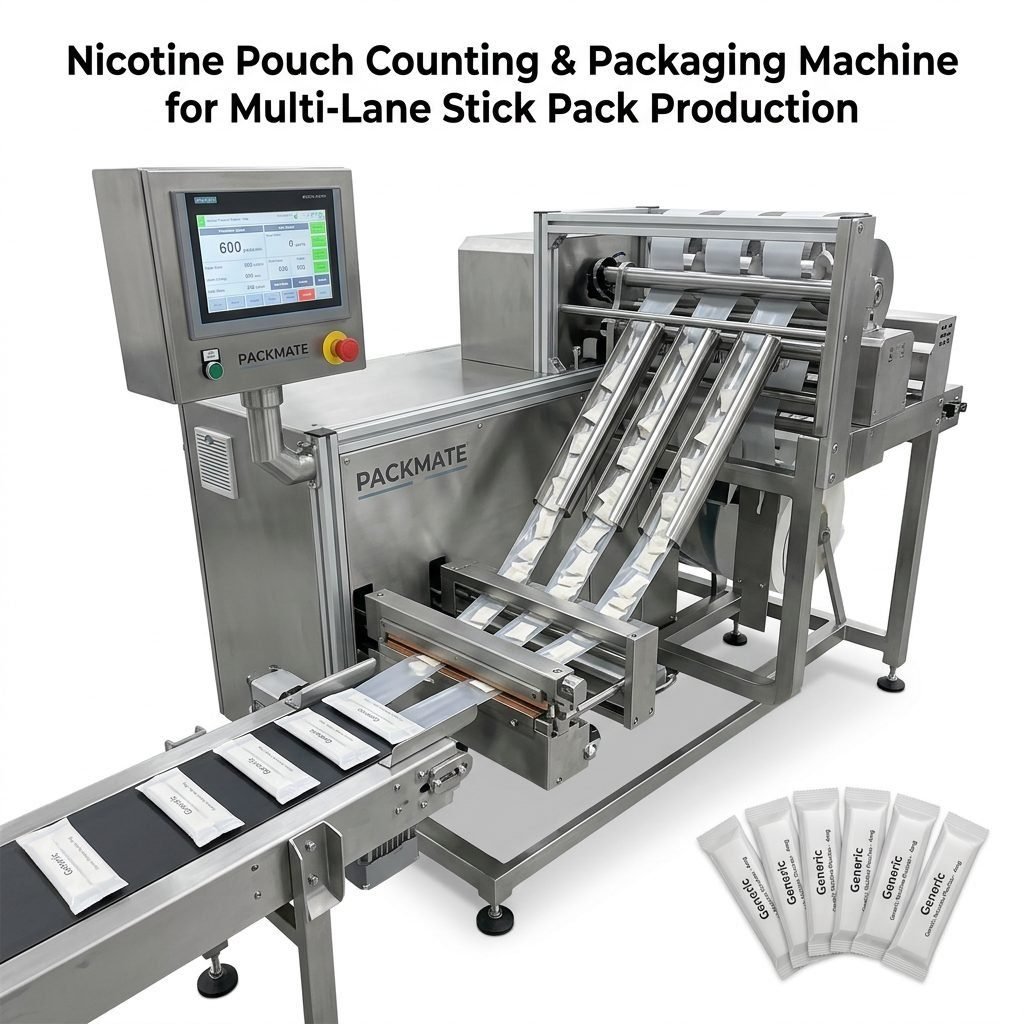
Integrating sustainable machines like precision multi-lane snus packers reduces material waste and improves yield, making sustainability a measurable business advantage.
Designing a Sustainable Snus Packaging Line
Building an eco-friendly line starts at product and package design. Lightweight pouch structures, mono-material films, and optimized pouch shapes all contribute to lower material usage and better recyclability. From there, choosing the right equipment—machines that minimize film overlaps, seal precisely, and reduce rejects—is essential. Machines with adaptive dosing and advanced quality inspection systems ensure consistent filling volumes and fewer wasted pouches.
Core Machinery & Systems
An eco-conscious production line typically includes:
- High-precision feeding and dosing systems to avoid overfill and minimize product loss.
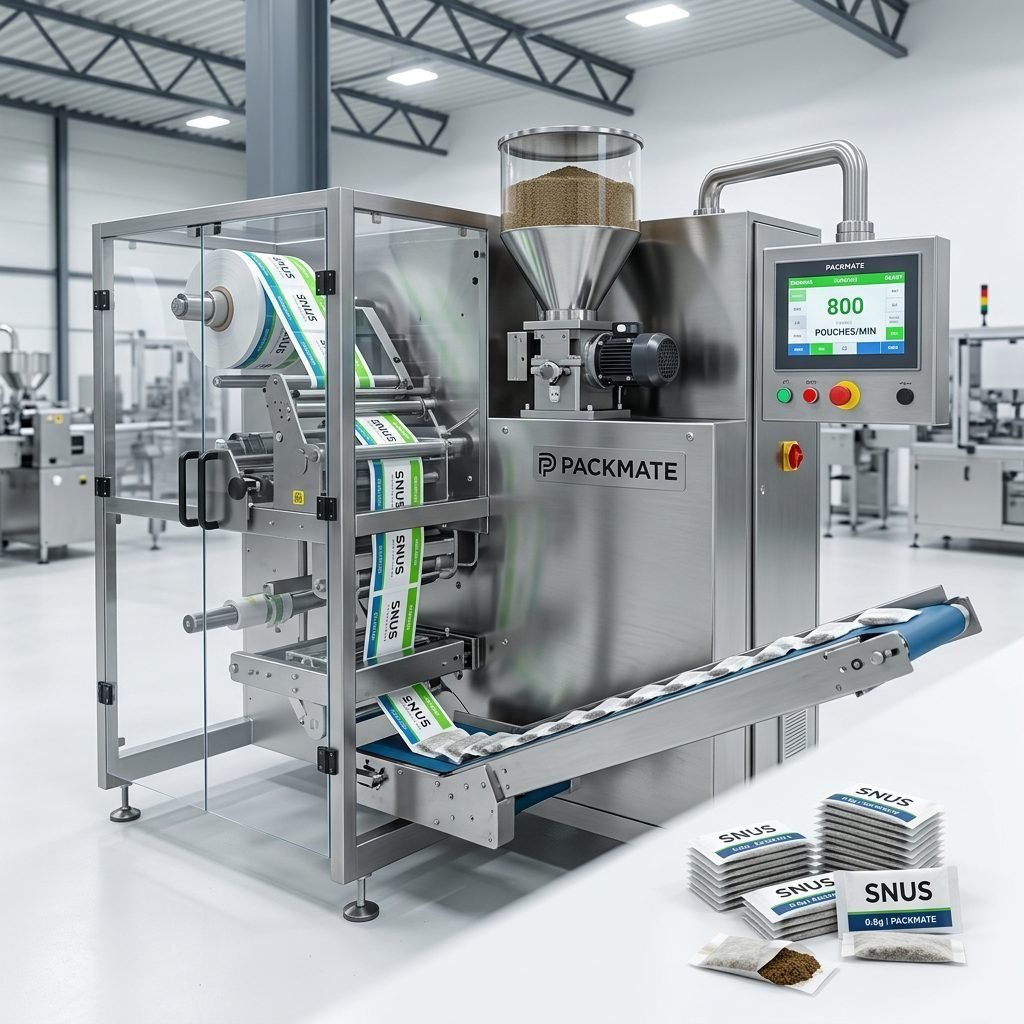
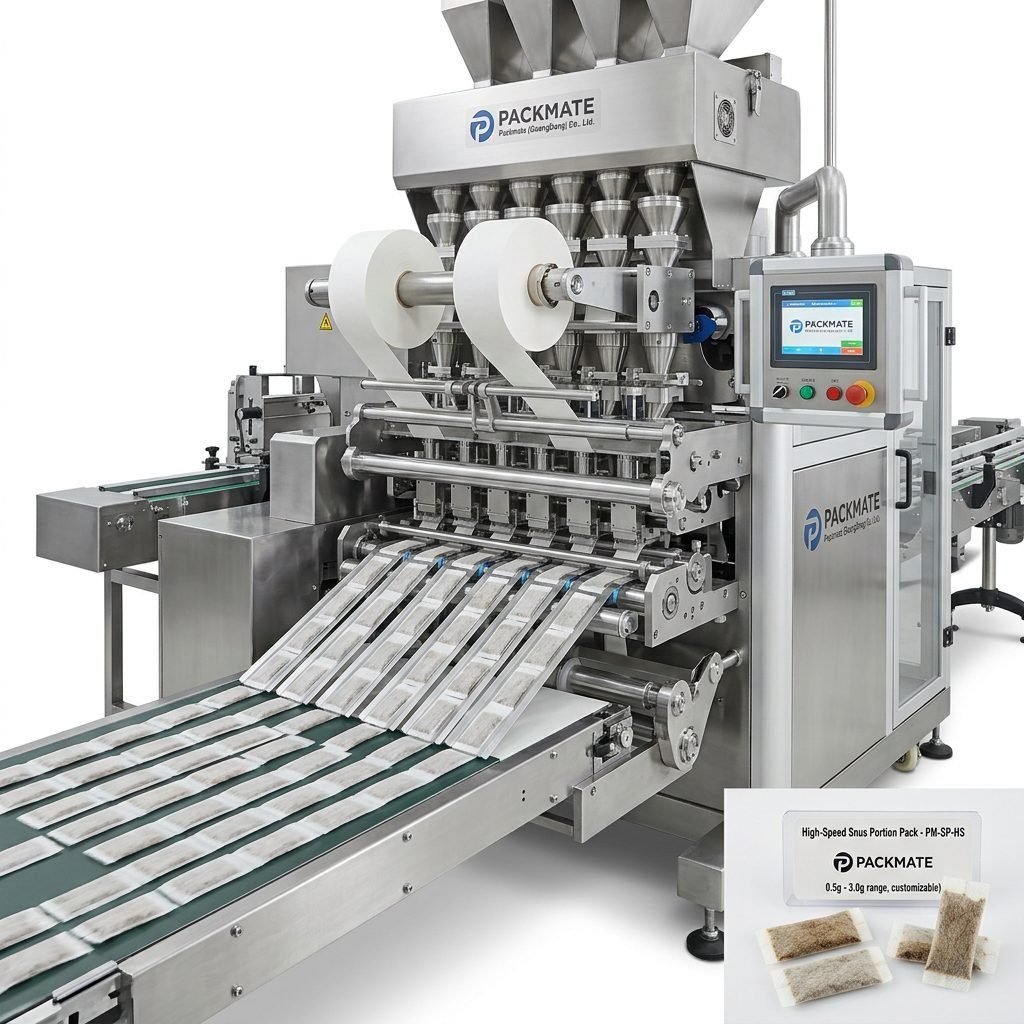
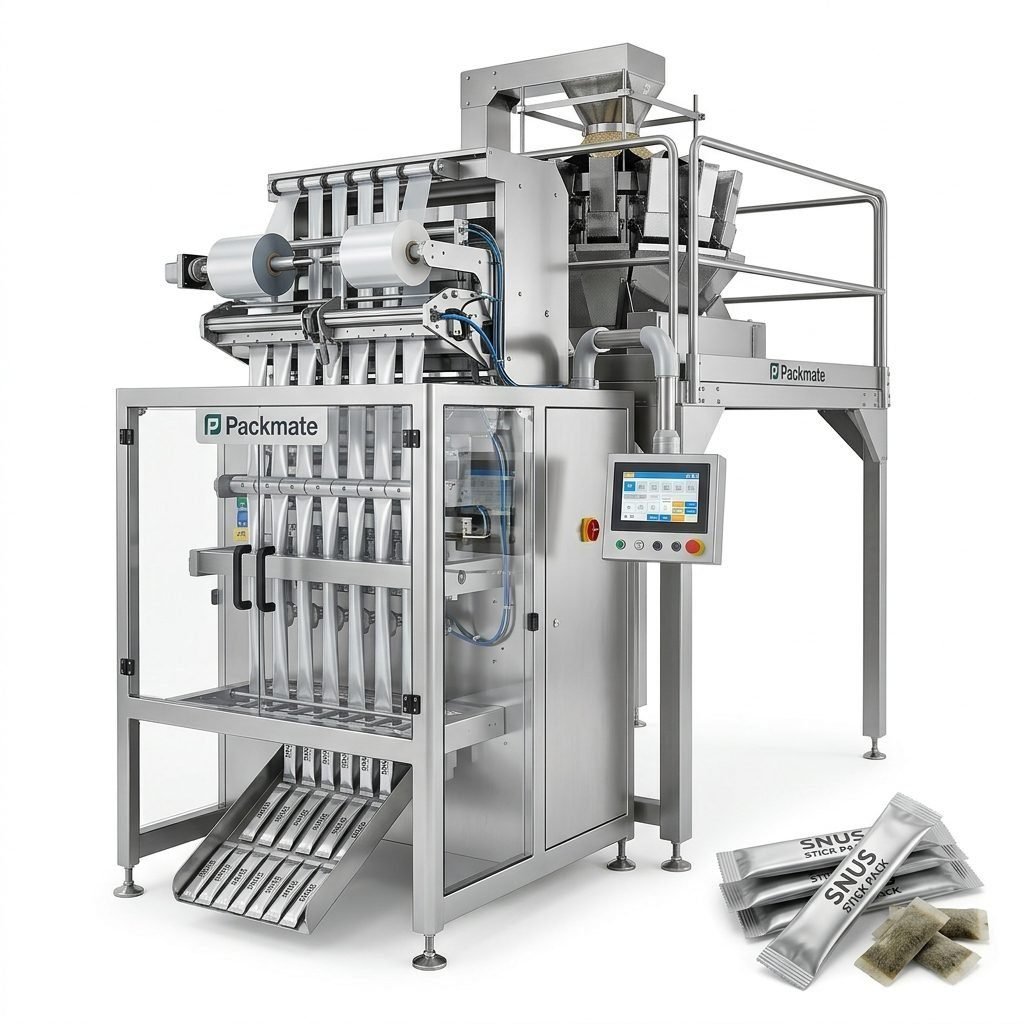
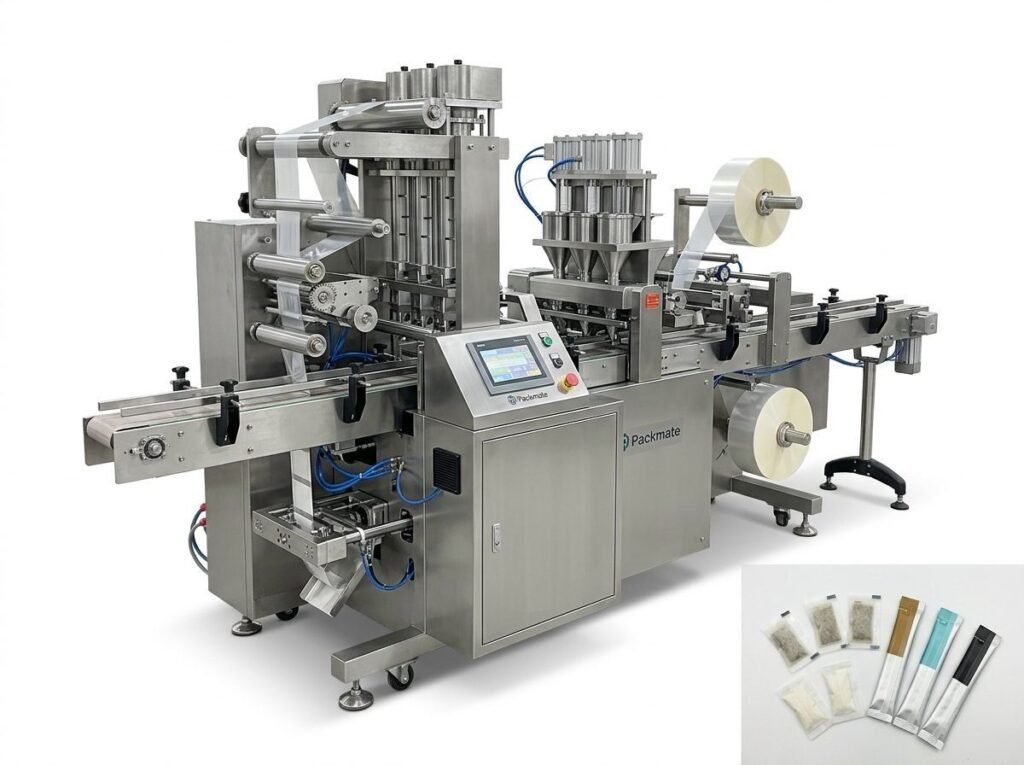
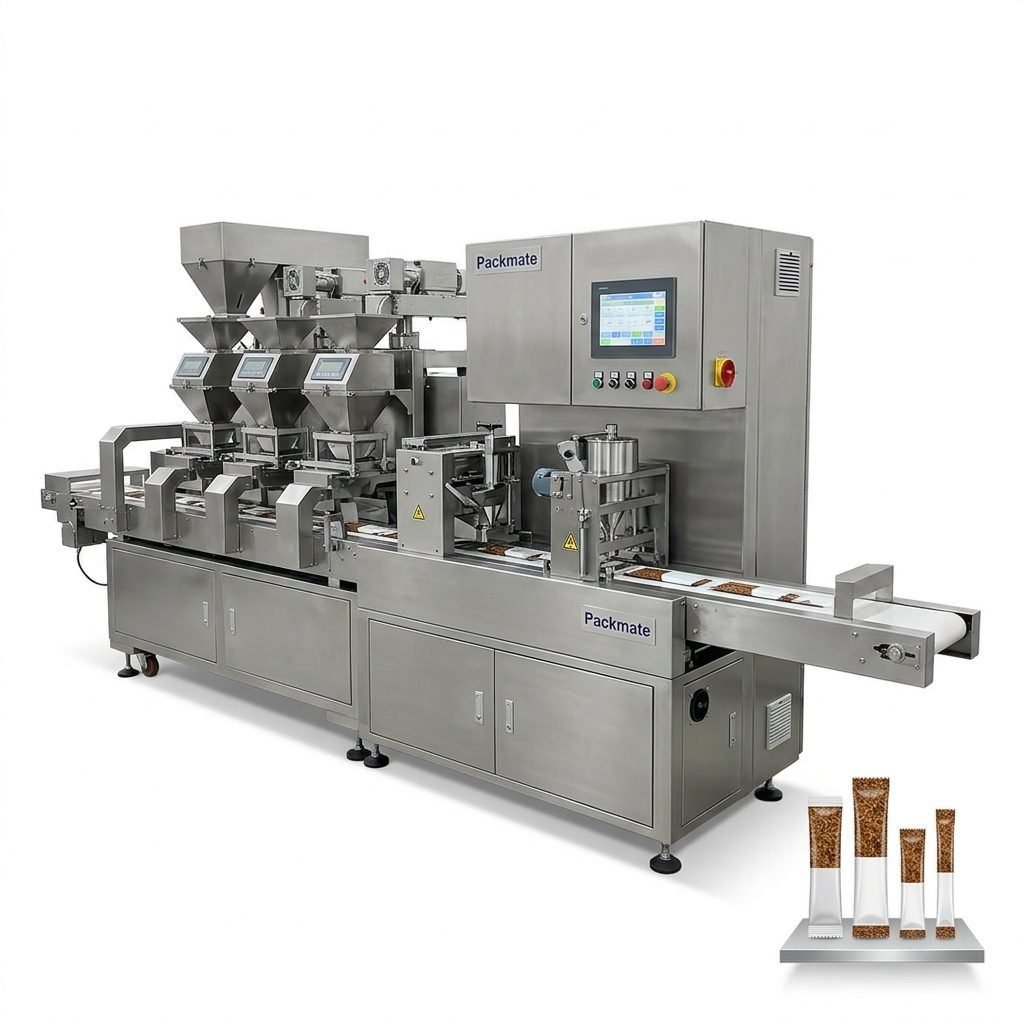
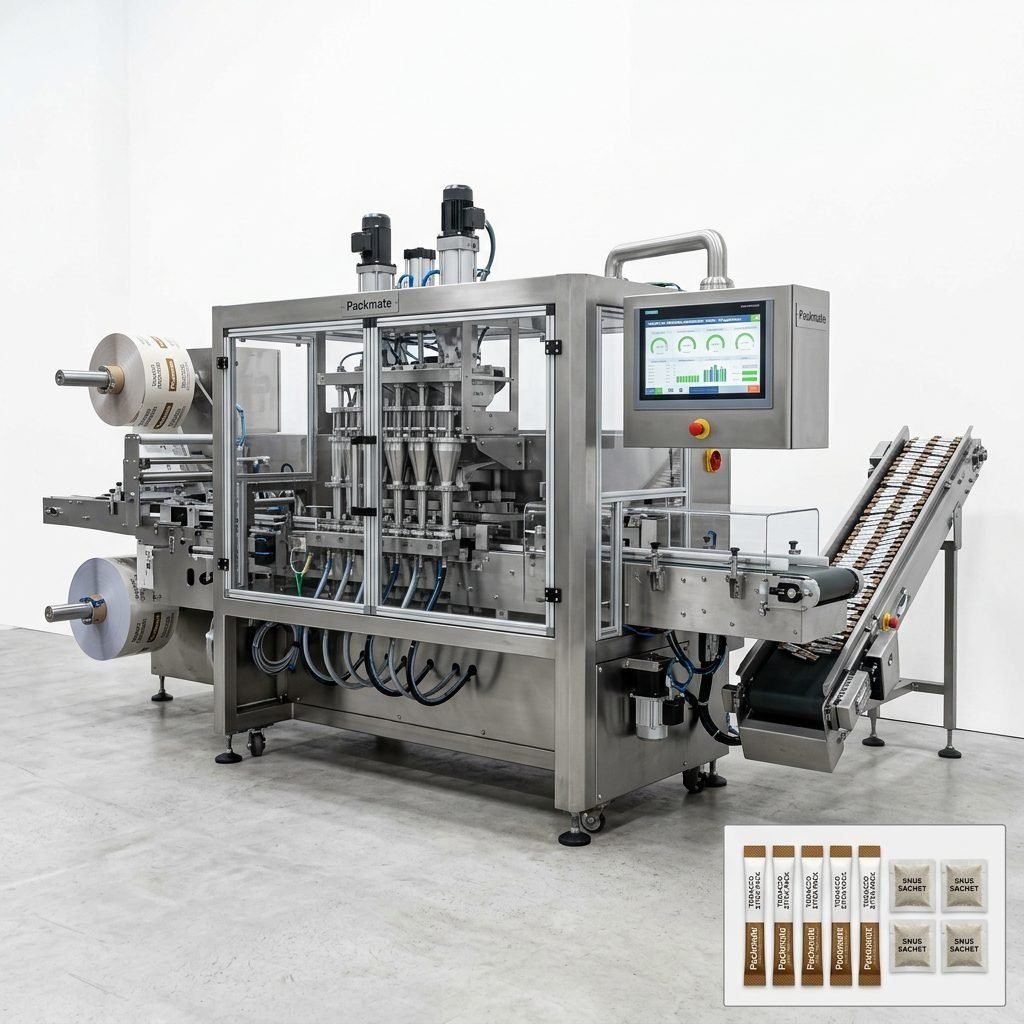
- Multi-lane stick pack and sachet machines that maximize throughput with minimal footprint.
- Servo-driven film handling to reduce material overlap and cutting waste.
- Integrated vision inspection to detect defects early and reduce rework.
- Energy-efficient motors and control systems to lower power consumption.
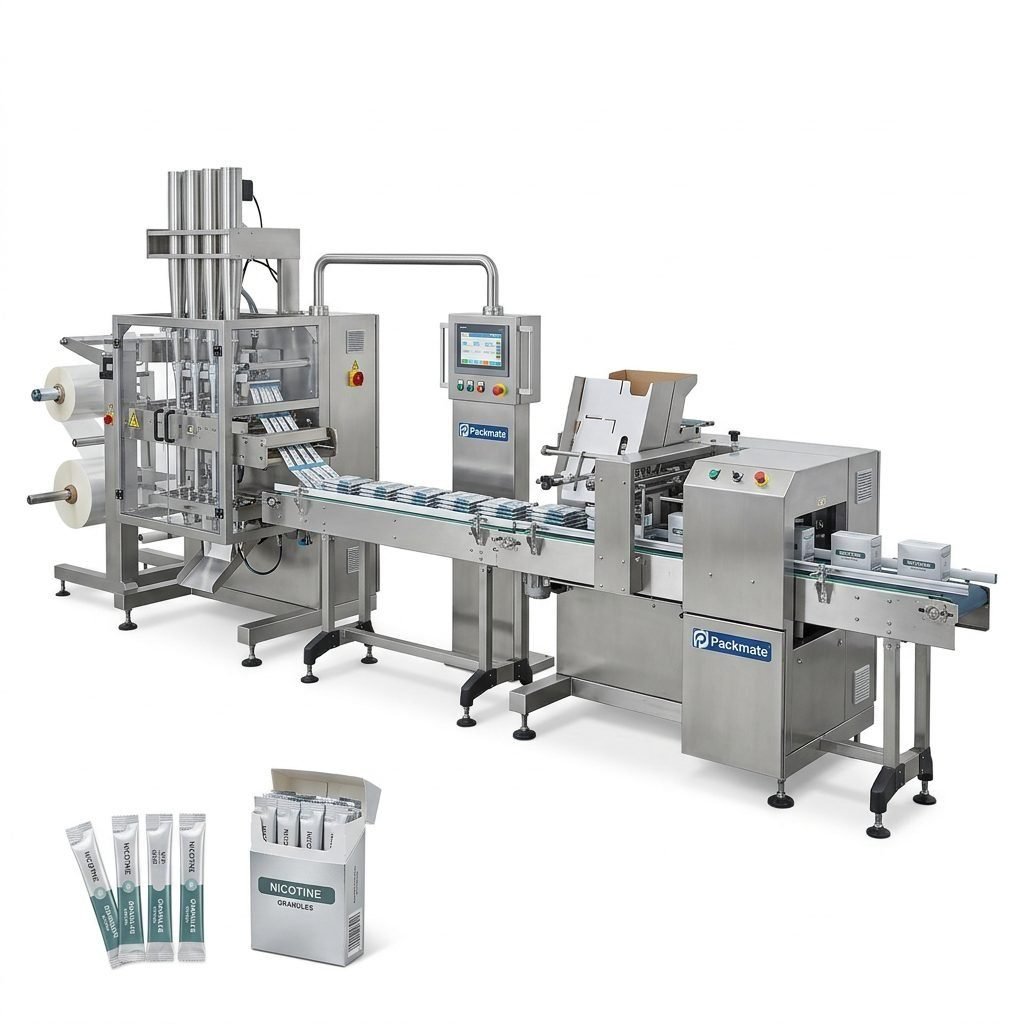
For manufacturers evaluating options, Packmate’s range of Snus & Nicotine Packaging Machines and Sachet & Stick Pack Machines demonstrate how precision engineering supports both sustainability and productivity.
Materials and Packaging Strategies
One of the biggest sustainability levers is material selection. Moving from multi-layer laminates toward mono-material solutions or recyclable film structures can significantly improve end-of-life outcomes. When mono-materials aren’t feasible, designing for material reduction—thinner films, reduced glue use, and streamlined trays—delivers immediate environmental benefits.
♻️
Material tip:
Test mono-polymer films for seal performance on high-speed pouch machines and validate barrier requirements with shelf-life studies to balance sustainability with product safety.
Recycling & End-of-Life Considerations
Collaborate with material suppliers to identify recyclable film structures and advise customers on local recycling options. Clear labeling and consumer-facing guidance improve recovery rates. Additionally, incorporate machine-friendly film formats that enable compact roll changes and reduce consumable waste during setup and maintenance.
Energy Efficiency and Process Optimization
Energy reduction is a central element of eco-friendly lines. Modern machines with servo drives, intelligent standby modes, and optimized heating zones for sealing can cut energy use significantly. Process optimization—reducing downtime, improving changeover speed, and automated recipe management—lowers scrap rates and increases overall equipment effectiveness (OEE).
Automation & Smart Controls
Smart controls enable predictive maintenance and remote diagnostics, preventing unplanned stoppages and allowing machines to run at peak efficiency. Integrated SCADA systems and IIoT-enabled sensors give production managers real-time visibility into energy consumption, reject rates, and throughput—crucial data for continuous improvement.
Packmate’s Weighing & Packaging Systems and auxiliary equipment are engineered to interface seamlessly, enabling energy-aware production and minimized material waste across the line.
Case Study: High-Efficiency Multi-Lane Snus Line
A European snus brand partnered with Packmate to upgrade their production to a five-lane sachet and pouch line. The project focused on:
- Replacing bulky multi-layer pouches with a refined mono-polymer format where feasible.
- Installing servo-driven film handling to reduce web waste by 18%.
- Implementing an in-line vision system that reduced rejects by 30% through early defect detection.
- Optimizing changeover procedures to cut downtime by 40%.
The result was a measurable reduction in material usage and energy consumption while increasing throughput—showing that sustainability upgrades can align with commercial objectives.
What to Consider for Your Upgrade
When planning an upgrade or new line installation, evaluate:
- Compatibility of new materials with existing filling and sealing systems.
- Space and layout constraints for multi-lane configurations.
- Integration needs for weighing, checkweighers, and vision systems.
- Support and spare parts availability from your equipment partner.
📦
Packmate advantage:
With over 30 years of engineering experience and a 20,000㎡ manufacturing base, Packmate offers tailored turnkey solutions—from single machines to complete lines—backed by CE and ISO certifications.
Operational Best Practices
Sustainable machinery must be paired with smart operational practices. Train staff on efficient changeovers, run preventive maintenance schedules, and continuously monitor performance metrics. Small changes—like optimizing film tension, calibrating dosing equipment, and using automated recipe recall—can cumulatively have a large environmental impact.
Maintenance & Training
Regular maintenance preserves sealing performance and reduces scrap. Conduct operator training that emphasizes proper roll handling, waste minimization, and quick troubleshooting. Remote support and spare parts logistics from a reliable partner ensure lines run smoothly and sustainably.
Selecting the Right Partner
Choosing a partner with industry expertise and full-service capabilities is crucial. Packmate’s portfolio spans Bag & Pouch Packaging Machines, multi-lane systems, and auxiliary equipment—offering integrated solutions that tackle sustainability at every stage of production. Evaluate vendors on their ability to deliver tailored engineering, global support networks, and demonstrable case studies.
Global Compliance & Certifications
Ensure your equipment supplier adheres to international standards. CE and ISO certifications provide confidence in safety and quality. For manufacturers selling across borders, sourcing certified machinery helps meet diverse regulatory requirements.
Learn more about Packmate’s capabilities on the company page: About Packmate and view real-world projects in the Case section.
Implementation Roadmap
A phased approach helps manage risk and investment:
- Audit current production to identify waste hotspots and energy use.
- Prototype material and packaging designs and run pilot trials on existing machines.
- Invest in targeted machinery upgrades—dosing systems, sealing heads, or multi-lane modules.
- Optimize processes, train staff, and implement continuous monitoring tools.
- Scale the improvements line-by-line and measure ROI and environmental impact.
Next step:
Contact a packaging expert to run a line assessment and determine the best sustainable upgrades for your production needs: Contact Us.
Conclusion
Transitioning to an eco friendly snus production line is both a technical and strategic undertaking. By combining intelligent material choices, energy-efficient machinery, and process optimization, manufacturers can achieve sustainable outcomes that support brand growth and regulatory compliance. A trusted equipment partner with deep industry experience—backed by proven machine performance and turnkey services—makes the difference between theoretical plans and successful on-floor implementation.
Frequently Asked Questions
Q1: How can I reduce film waste on high-speed pouch machines?
A1: Use servo-driven film handling, optimize web widths and roll alignment, and select machines with precise web tracking and cutting tolerances to minimize overlap and scrap.
Q2: Are mono-material pouches suitable for nicotine pouches and snus?
A2: Mono-materials can work for many applications but must be validated for barrier properties and seal integrity. Conduct shelf-life tests and pilot runs to ensure performance before full-scale conversion.
Q3: What are the fastest ROI drivers for making a line more sustainable?
A3: Reducing material usage, improving dosing accuracy to avoid overfill, installing energy-efficient drives, and lowering reject rates through vision inspection typically deliver the quickest returns.
Q4: How does Packmate support global customers in line upgrades?
A4: Packmate provides turnkey solutions including machine supply, customization, installation support, spare parts, and remote diagnostics. Explore our service offerings and certifications to understand global compliance support: Service and Certificate.