Choosing the right nicotine packaging machine manufacturer for your Slovenian business is a strategic decision that influences production efficiency, regulatory compliance, and long-term costs. This guide walks you through practical steps and local considerations — from production capacity and certifications to cultural and logistical factors unique to Slovenia — so you can select a supplier that matches your operational goals and market expectations.
Understand Slovenia’s Market and Regulatory Context
Slovenia, as an EU member, follows stringent European regulations regarding nicotine products, packaging, and machinery safety. Before investing, confirm that any equipment you consider meets CE and ISO standards and that the manufacturer can provide compliant documentation and support. Local customers and authorities value traceability, high safety standards, and environmental responsibility.
Why EU compliance matters
🔍 CE and ISO certification are not just paperwork — they signal that a machine meets EU safety directives and quality controls. For Slovenian operations, this simplifies customs, inspection, and eventual scaling across neighbouring markets such as Austria, Italy, and Croatia.
Key Technical Criteria to Evaluate
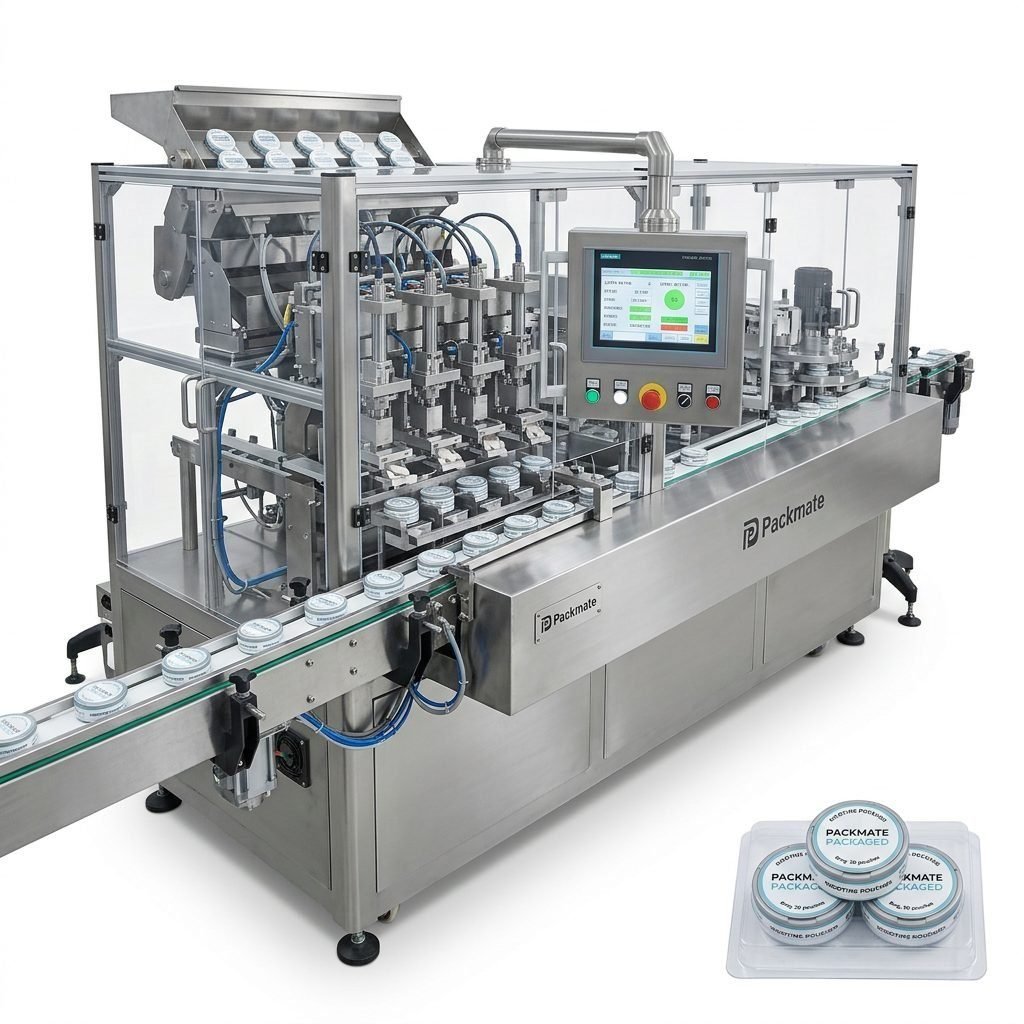
Focus on machine features that directly impact your product quality and throughput: dosing accuracy, multi-lane capability, format changeover speed, and compatibility with nicotine pouch materials. Choose machinery that is flexible enough to handle small artisan runs as well as larger automated batches if you plan to grow.
Important specifications
– Dosing accuracy and consistency (critical for nicotine products).
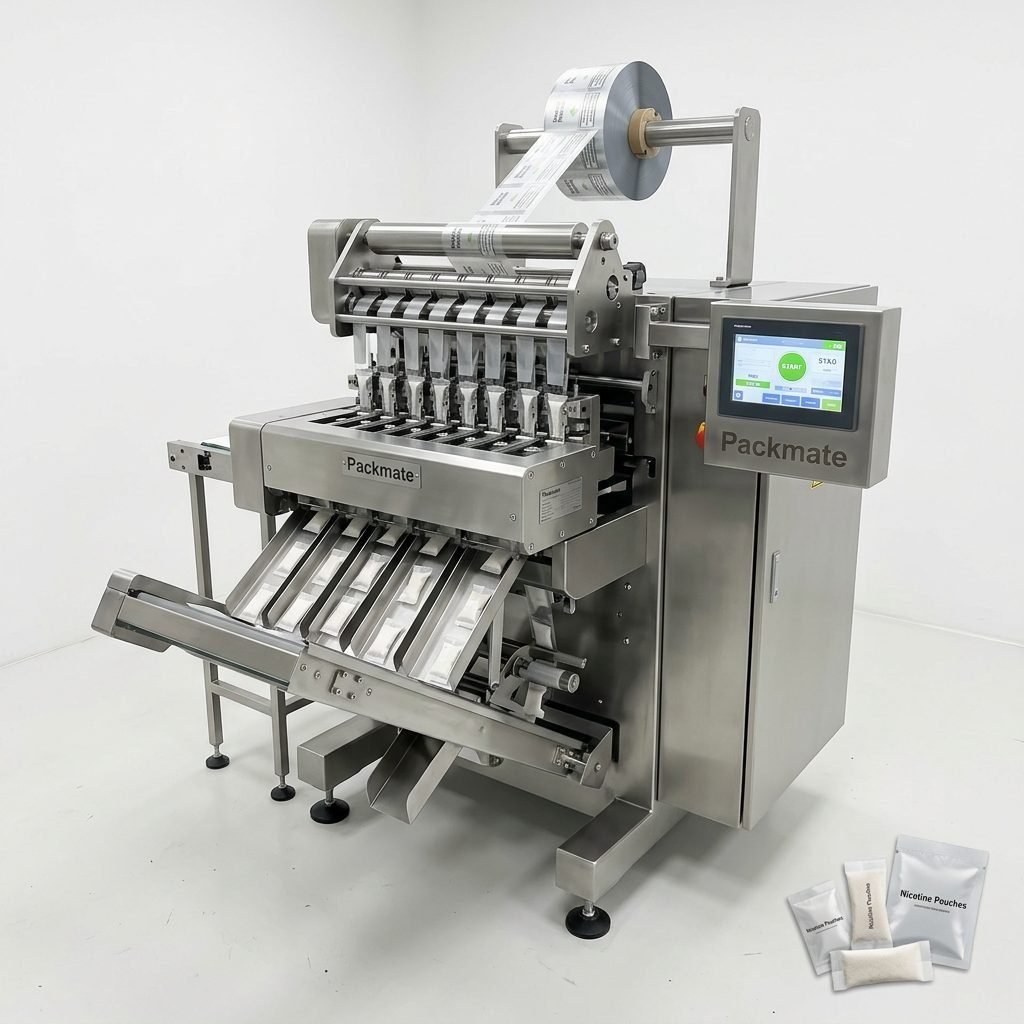
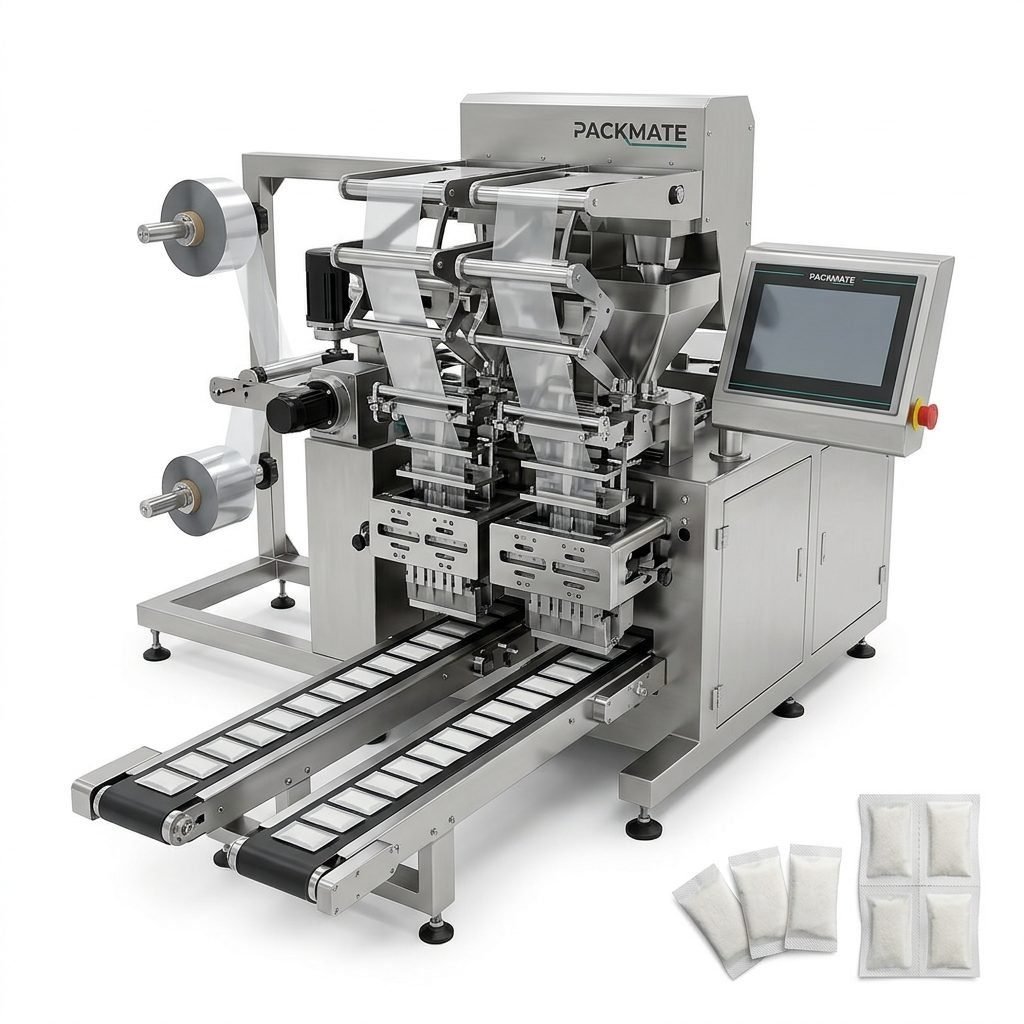
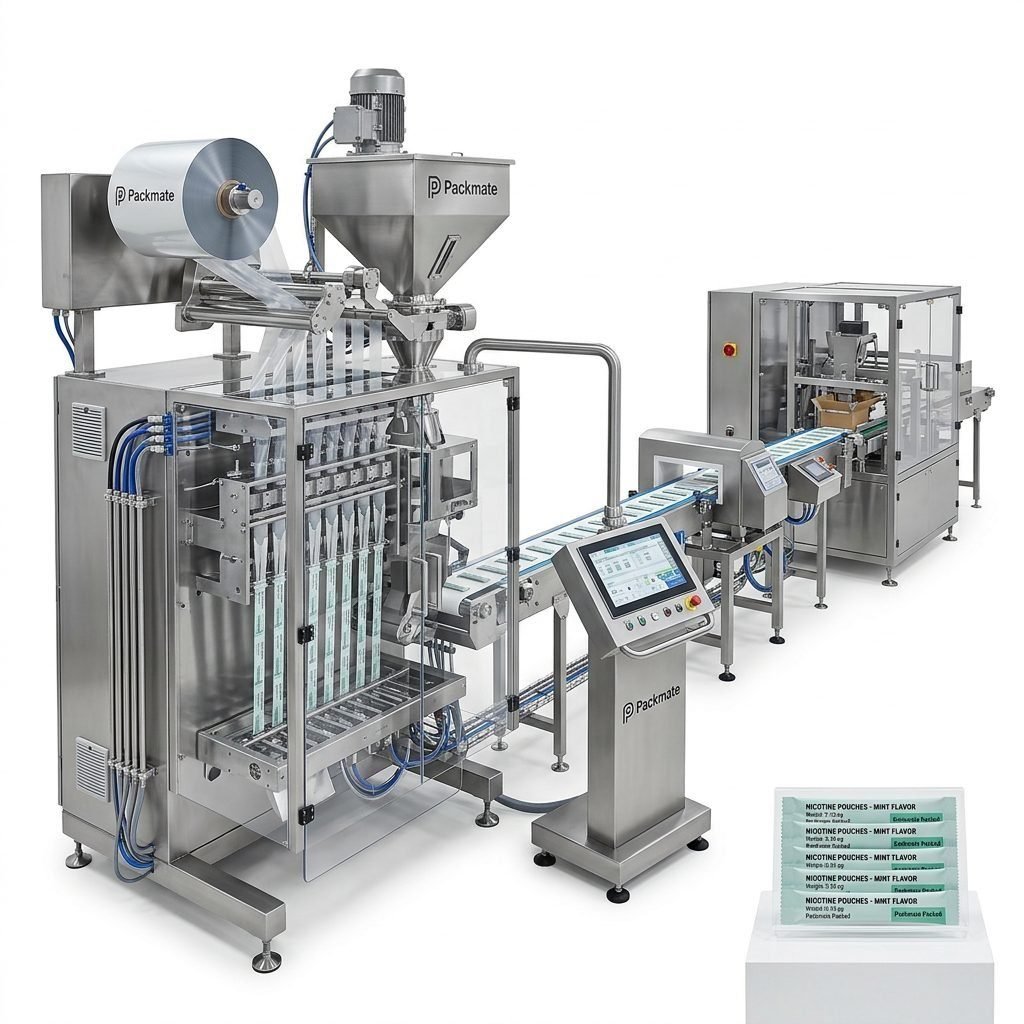
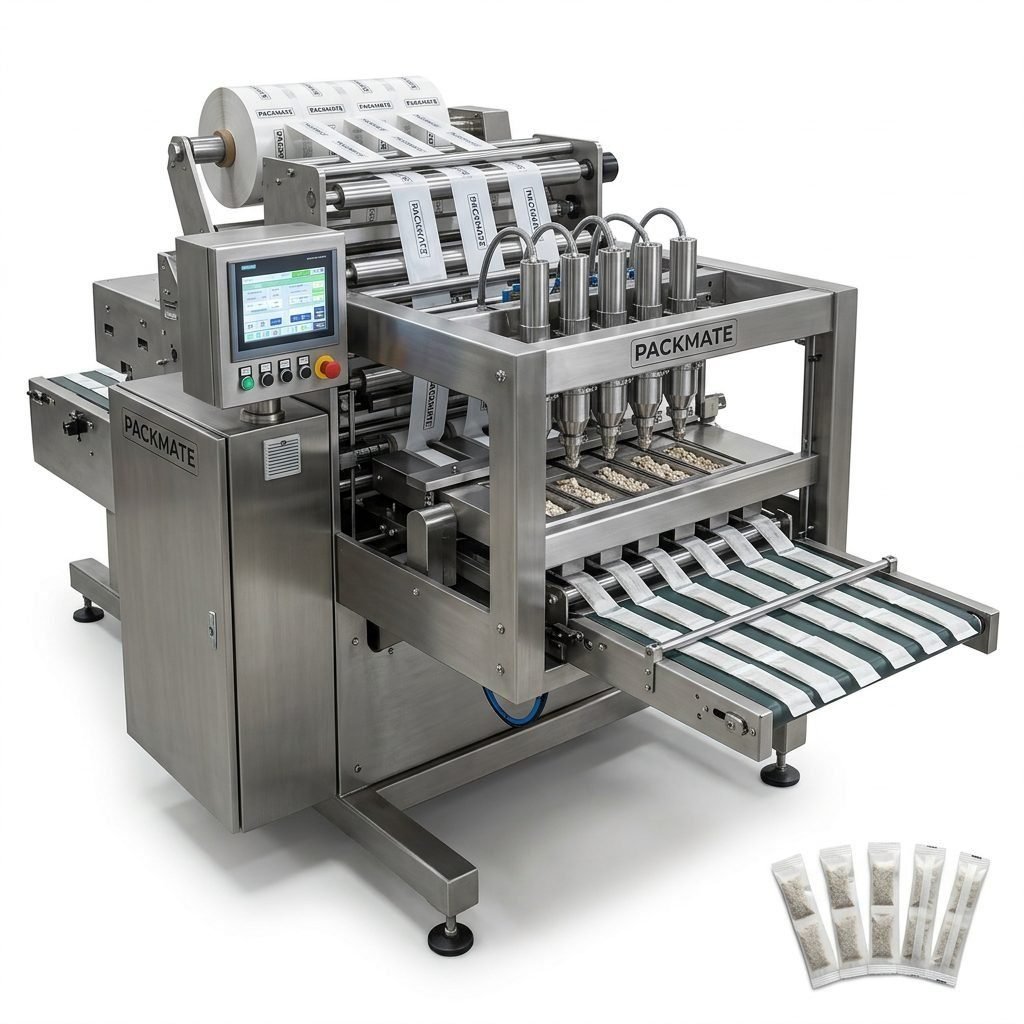
– Multi-lane systems for higher throughput and small-dosage pouch production.
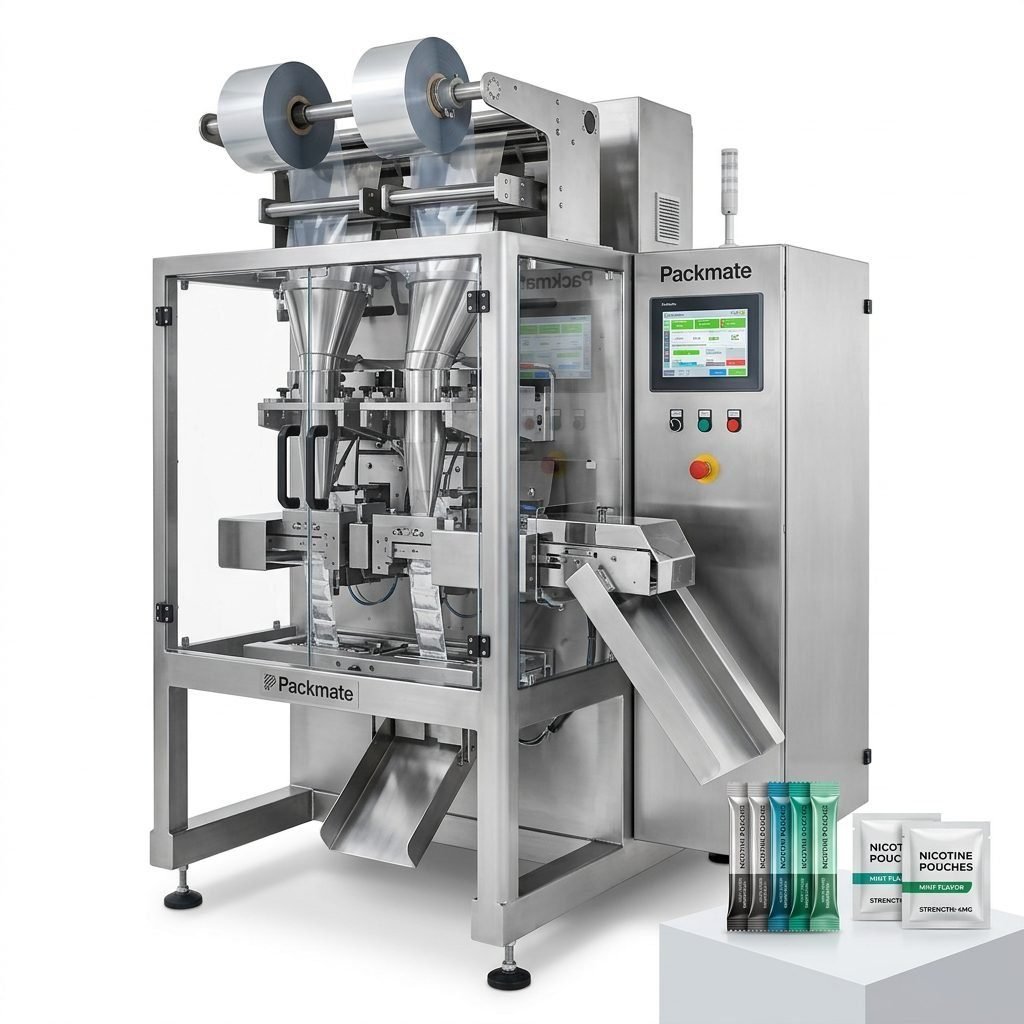
– Easy format changeovers to support different pouch styles (stick pack, sachet, multi-lane pouches).
– Robust control systems and diagnostics for remote troubleshooting.
✅ Tip: If your business emphasizes small-batch premium products for the Slovenian market, prioritize machines with quick changeover and precise low-dose filling to minimize waste and maintain quality.
Assess Manufacturer Experience and Factory Strength
A supplier’s history, production capacity, and factory capabilities are telling indicators of reliability. Manufacturers with decades of machine-building experience, advanced CNC machining centers, and a large, dedicated workshop are better positioned to deliver consistent, long-lasting equipment.
What to look for in a factory
– A sizeable workshop with precision assembly lines and quality testing systems.
– A broad model range (50+ models suggest flexibility) and turnkey solution capabilities.
– Documented case studies and global deployments, including exhibitions and after-sales network.
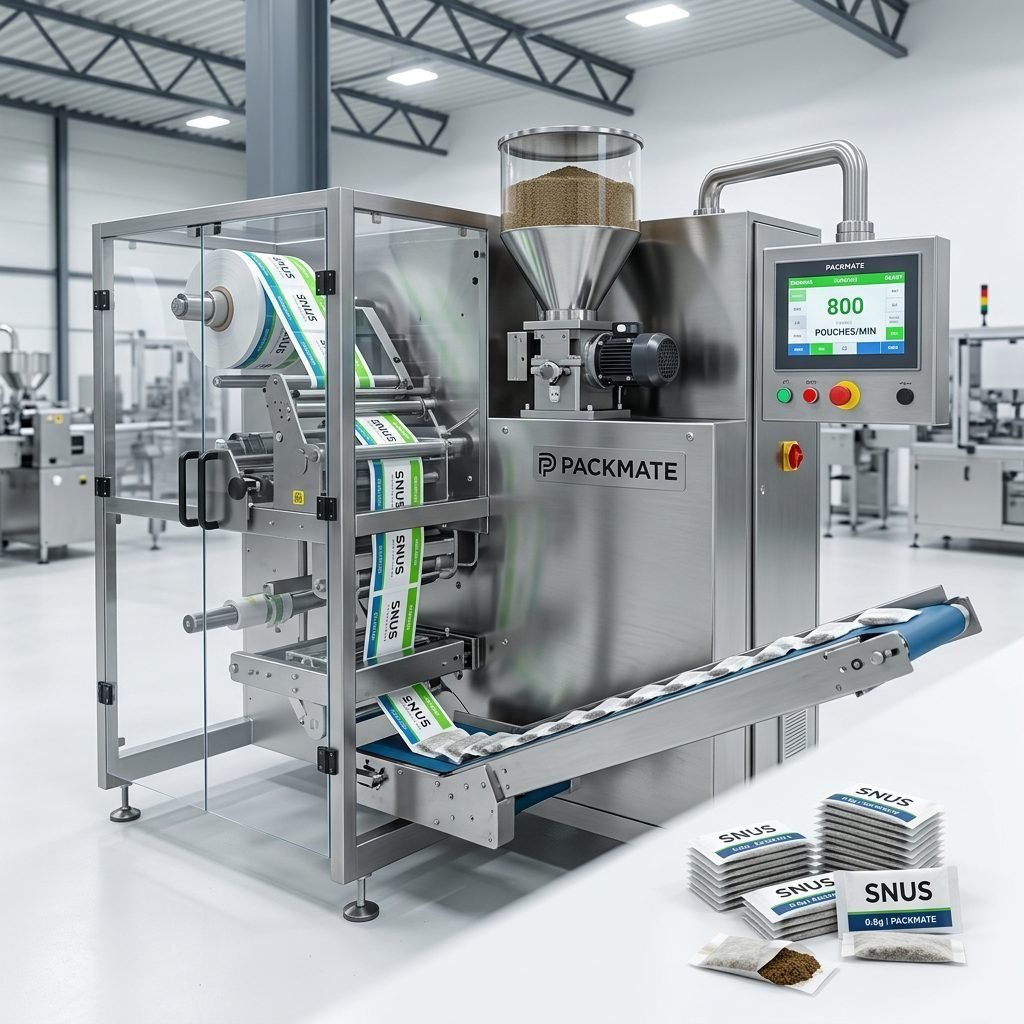
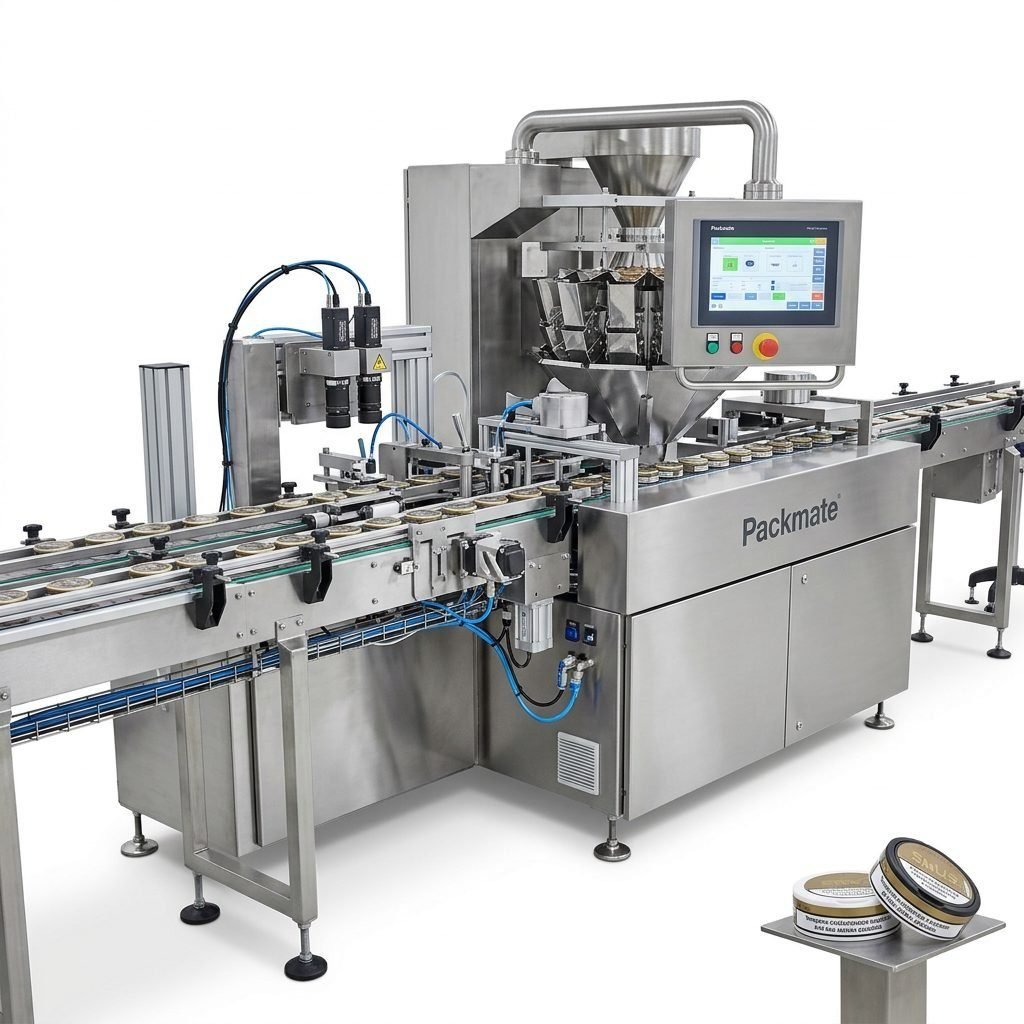
Packmate Snus Machine, for example, operates a 20,000㎡ facility with advanced CNC centers and 30+ years of engineering experience, offering models focused on snus and nicotine pouch packaging. Learn more about their machine lines at Snus & Nicotine Packaging Machines.
Evaluate After-sales Support and Spare Parts Availability
Slovenian buyers often prefer suppliers who provide fast technical response, local language support or reliable remote guidance, and ready access to spare parts. Check the manufacturer’s lead times for spare components, availability of training, and structured maintenance contracts.
⚠️ Red flag: Vendors without clear spare parts delivery timelines or only overseas single-point support can cause long downtimes. Prioritize partners offering documented service processes and references.
Customization, Turnkey Lines, and Integration
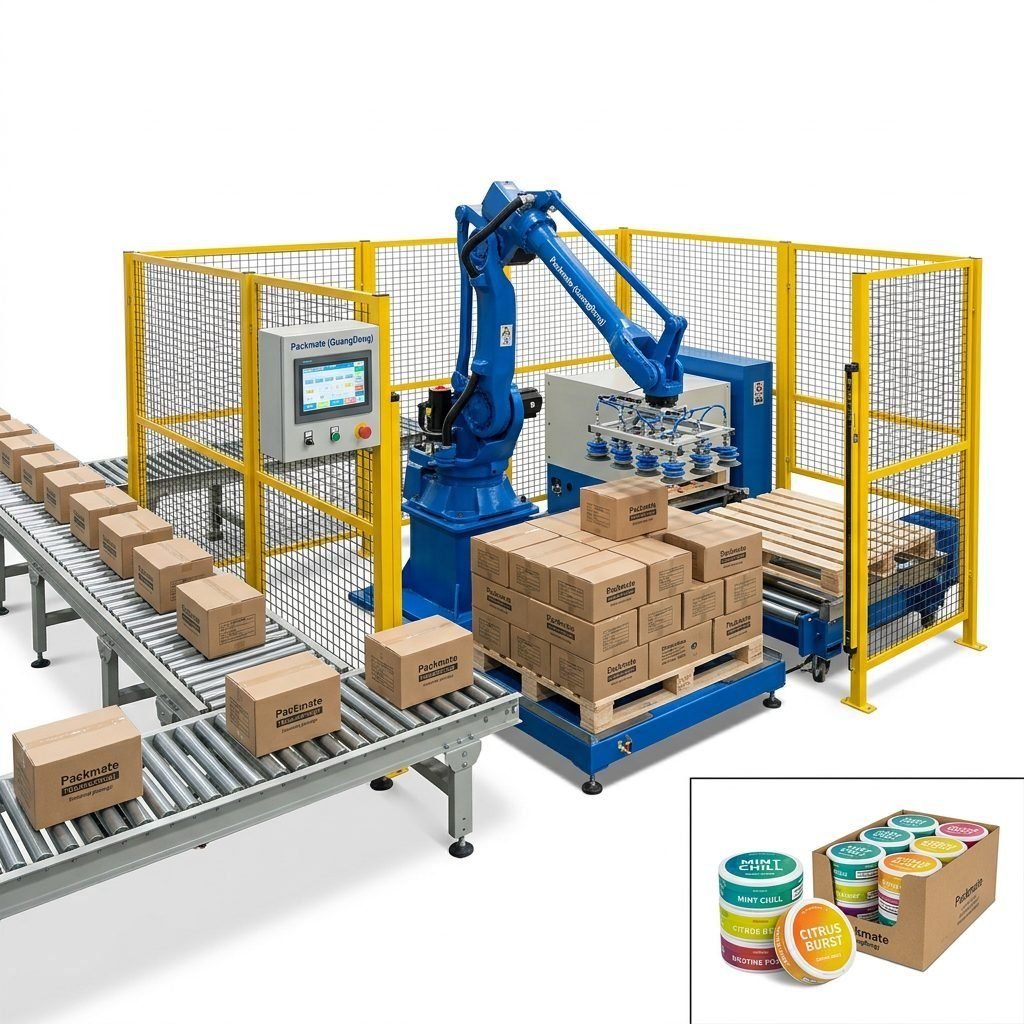
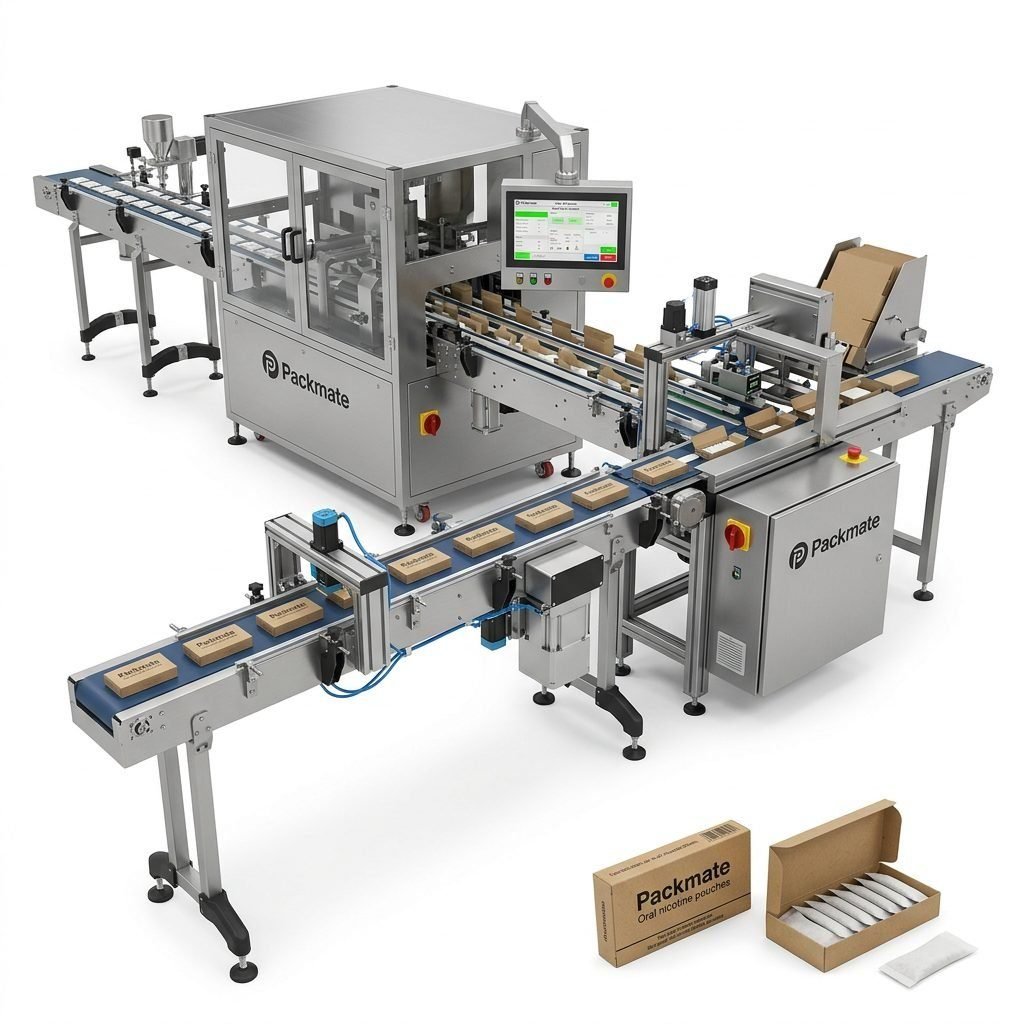
Depending on your product range — nicotine pouches, multi-lane pouches, stick packs, sachets — you may need custom solutions. Choose a manufacturer who offers turnkey production lines and integrative systems including weighing, filling, and auxiliary equipment.
Explore complementary systems when evaluating vendors: Weighing & Packaging Systems, Filling & Packaging Lines, and Auxiliary Packaging Equipment demonstrate a manufacturer’s capacity to supply full lines, reducing integration risk.
Local Considerations: Logistics, Language & Sustainability
Slovenia’s location in Central Europe makes transport and EU customs straightforward, but you should still consider transit time, import duties, and installation services. Slovenian customers often prefer sustainable practices and low energy consumption machinery. Additionally, having multilingual manuals (Slovene or at least clear English) and on-site commissioning options will streamline deployment.
Sustainability and energy efficiency
🇸🇮 Slovenian manufacturers and consumers increasingly value eco-conscious production. Ask manufacturers about energy-saving options, recyclable packaging practices, and the machine’s overall carbon footprint.
Verify Performance Through Case Studies and Exhibitions
Proven performance cases and live demonstrations at trade shows are valuable. Manufacturers who regularly participate in global exhibitions and can provide case studies across Europe are typically more transparent about real-world machine performance.
You can review project examples and exhibition participation to validate a supplier’s claims: Case and Our Exhibition.
✅ Pro move: Request video walk-throughs of the exact machine model you plan to buy and references from clients in nearby countries — this reduces uncertainty on delivery and performance.
Pricing, Total Cost of Ownership (TCO) and Financing
The cheapest initial quote often hides higher long-term costs. Compare TCO including spare parts, energy consumption, expected MTBF (mean time between failures), and training costs. Ask suppliers about warranty details, payment terms, and potential financing or leasing options.
Negotiation points
– Inclusion of installation, commissioning, and on-site training.
– Clear warranty scope and response time SLAs.
– Spare parts kits included in delivery to minimize early downtimes.
Factory Acceptance Test (FAT) and Site Acceptance Test (SAT)
Always request a Factory Acceptance Test (FAT) before shipment and a Site Acceptance Test (SAT) after installation. FAT ensures that the machine meets agreed specifications in the factory; SAT confirms proper integration and performance in your Slovenian facility.
How to Shortlist and Make the Final Choice
Step-by-step approach to shortlist vendors:
1. Compile a list of potential suppliers with EU-compliant certifications and relevant experience.
2. Request detailed technical proposals, references, and FAT videos.
3. Compare TCO and support options, and evaluate logistic feasibility for Slovenia.
4. Conduct site visits or remote demonstrations, and confirm spare parts and warranty terms.
5. Finalize with a clear contract including delivery schedule, FAT/SAT acceptance criteria, and after-sales commitments.
🔑 Bottom line: Prioritize certifications, proven case studies, robust after-sales, and a detailed TCO analysis to ensure the manufacturer is a long-term partner rather than a one-time supplier.
Why Consider Packmate for the Slovenian Market
Packmate Snus Machine brings decades of experience in snus and nicotine pouch lines, a large production facility, and a product portfolio covering stick packs, sachets, and multi-lane systems. Their turnkey approach and demonstrated global cases make them an option worth evaluating for Slovenian producers who require quality, compliance, and scalable production solutions.
For a deeper dive into company background and services, visit About Packmate or contact their team directly via Contact Us.
Checklist Before You Place an Order
– Confirm CE/ISO certificates and machine specs.
– Request FAT videos and customer references in Europe.
– Agree on spare parts delivery times and warranty SLAs.
– Ensure documentation and training are available in English (or Slovene if possible).
– Plan for FAT and SAT acceptance steps in your contract.
⚡ Final reminder: Treat the machine purchase as a strategic investment — verified performance, robust service, and regulatory compliance are the pillars of a successful packaging line in Slovenia and beyond.
Frequently Asked Questions
Q1: Do I need CE certification to operate nicotine packaging machines in Slovenia?
A: Yes. CE certification is essential for machinery sold and operated within the EU, including Slovenia. It demonstrates compliance with safety and health requirements.
Q2: How long does delivery and installation typically take for a turnkey line?
A: Lead times vary by machine complexity and customization. Basic systems can be delivered in a few months, while fully customized turnkey lines may take longer. Always confirm lead times and FAT schedule with the manufacturer.
Q3: What support should I expect after purchase?
A: Expect installation, commissioning, operator training, spare parts supply, and remote or on-site technical support. Confirm warranty terms and response time SLAs in your contract.
Q4: Can machines be adapted to small-batch artisan production common in local markets?
A: Yes. Look for machines with quick changeover features and precise low-dose filling, especially multi-lane solutions tailored for small-dose pouch manufacturing.
Q5: Where can I see real examples of installed lines?
A: Request case studies and FAT videos from the manufacturer, and review exhibition participation. For more references and examples, see the supplier’s case library at Case.