Choosing the right nicotine packaging machinery in Liechtenstein requires balancing local regulatory compliance, the preferences of a quality-focused market, and the technical demands of nicotine pouch production. This guide walks you through practical steps—from assessing machine types and production scales to supplier selection and integration—so you can make an informed investment that fits Liechtenstein’s small but sophisticated industrial landscape.
Understand the Liechtenstein context first
Liechtenstein is a compact, high-income country where customers and regulators expect precision, traceability, and safety. As a member of the European Economic Area, nicotine and tobacco-related products are subject to stringent labeling and packaging rules similar to EU standards. Local buyers often prefer discreet, premium packaging and clear ingredient or warning information in German. Keep in mind logistics: domestic volumes are small, but companies often aim to export across EEA and neighboring Swiss markets. Practical consequence: prioritize machines that deliver high-quality, compliant output with flexible batch sizes and multilingual label support.
Key decision factors at a glance
- Production volume and scalability: pilot runs vs continuous production.
- Packaging format: nicotine pouches (snus), sachets, stick packs, or multi-lane pouches.
- Compliance: CE, ISO, documentation for EEA market entry and export.
- Quality: dosing accuracy, sealing integrity, and contamination control.
- Service & support: installation, spare parts, remote diagnostics, multilingual manuals.
⚠️ Quick checklist:
• Verify dosing accuracy and rejection rates for small-dose nicotine pouches.
• Confirm machine compatibility with barrier films and child-resistant closures if required.
• Ensure labeling module supports German and other export languages.
Which types of nicotine packaging machinery should you consider?
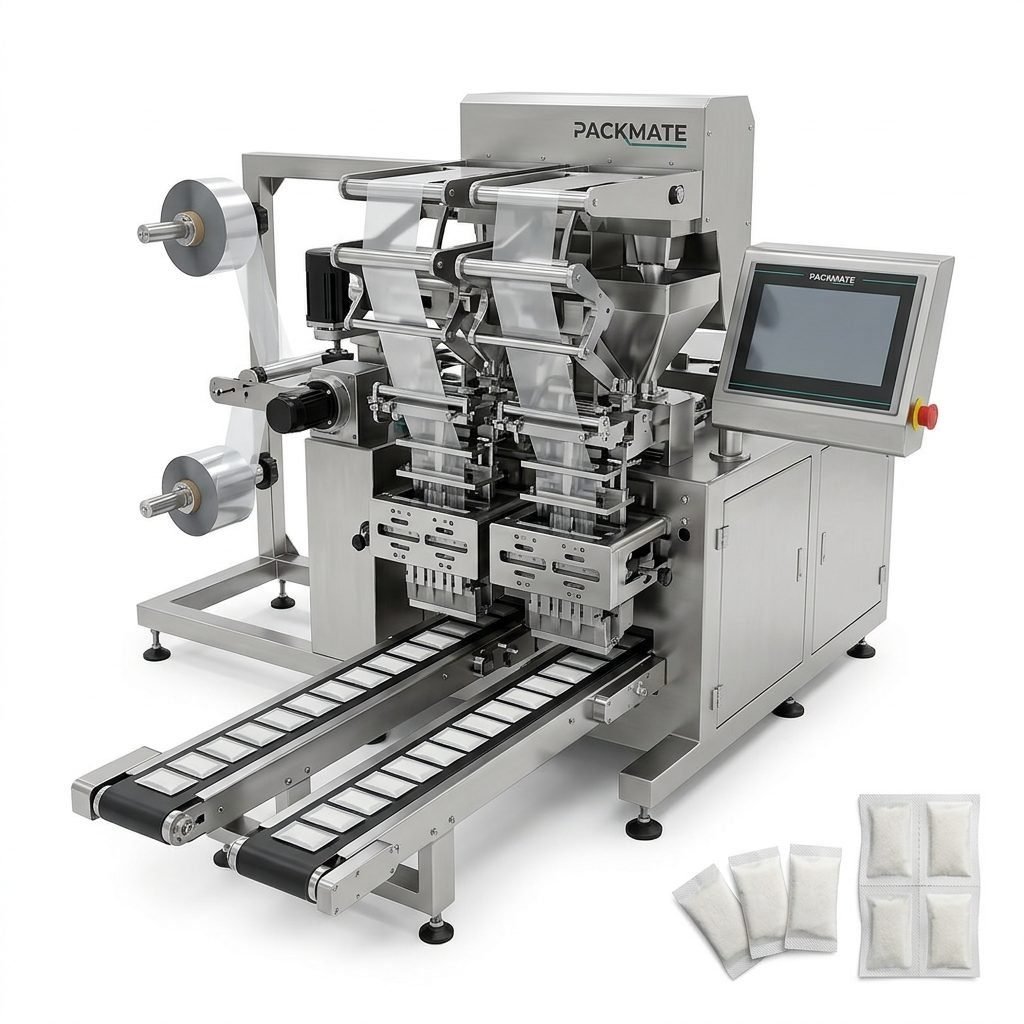
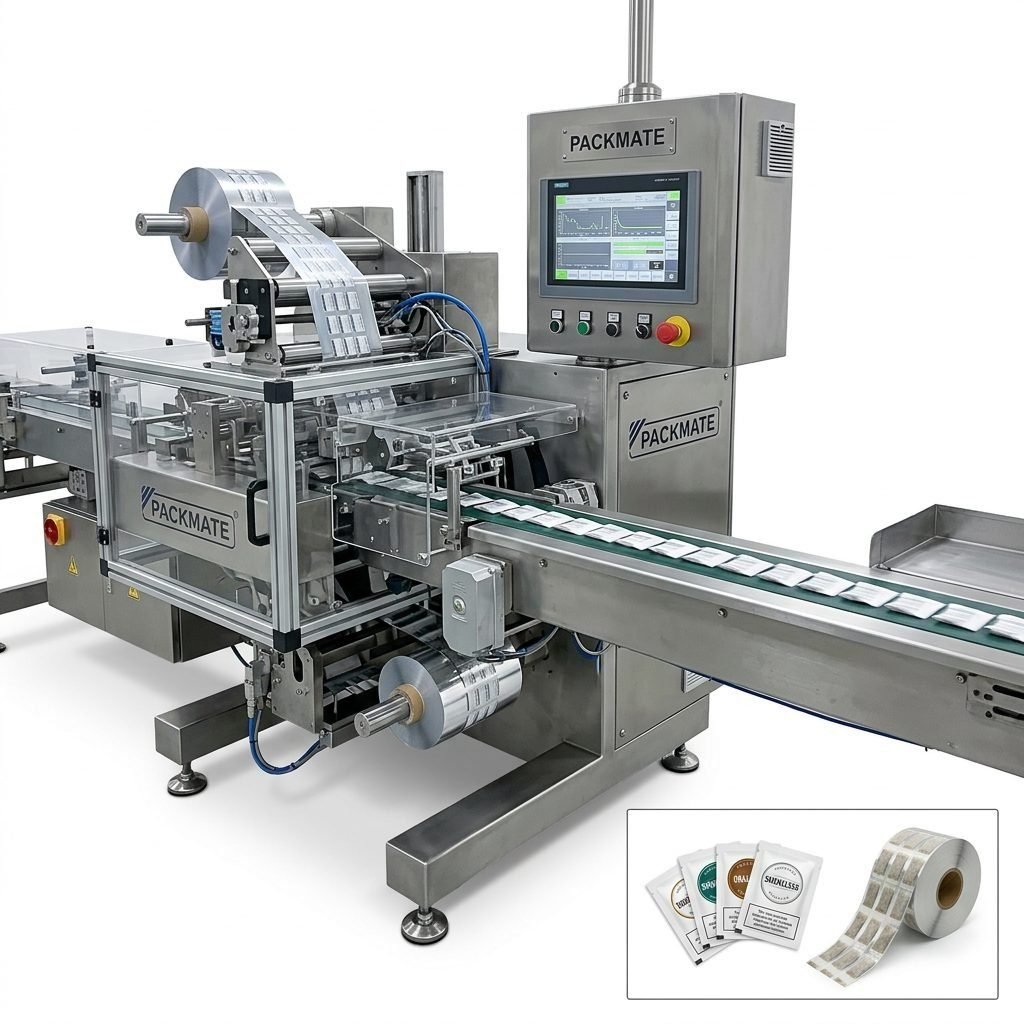
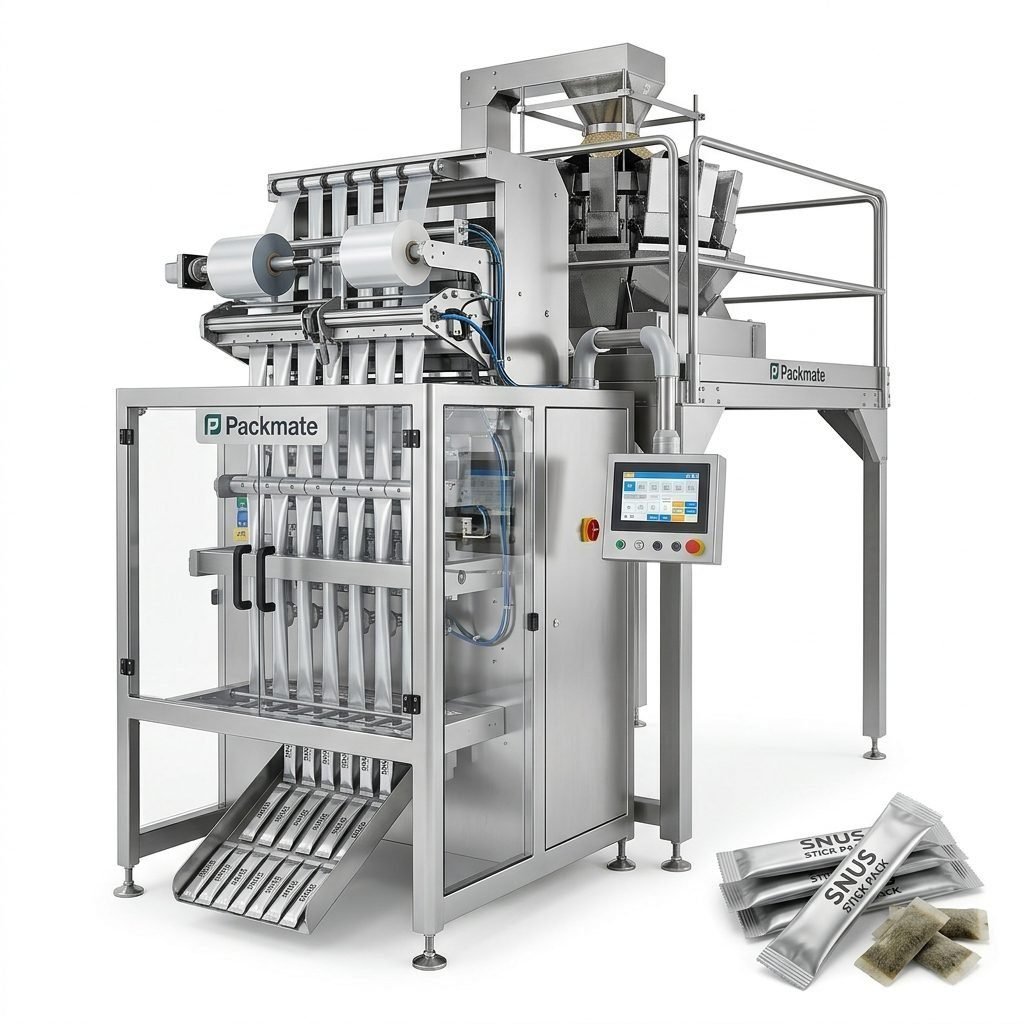
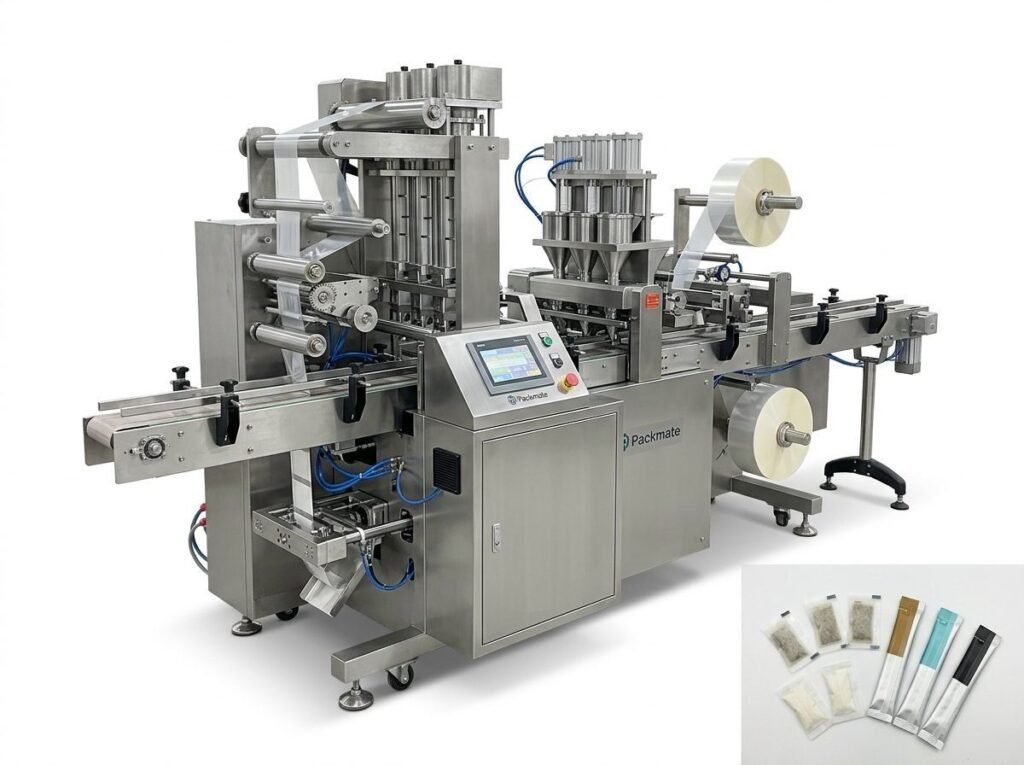
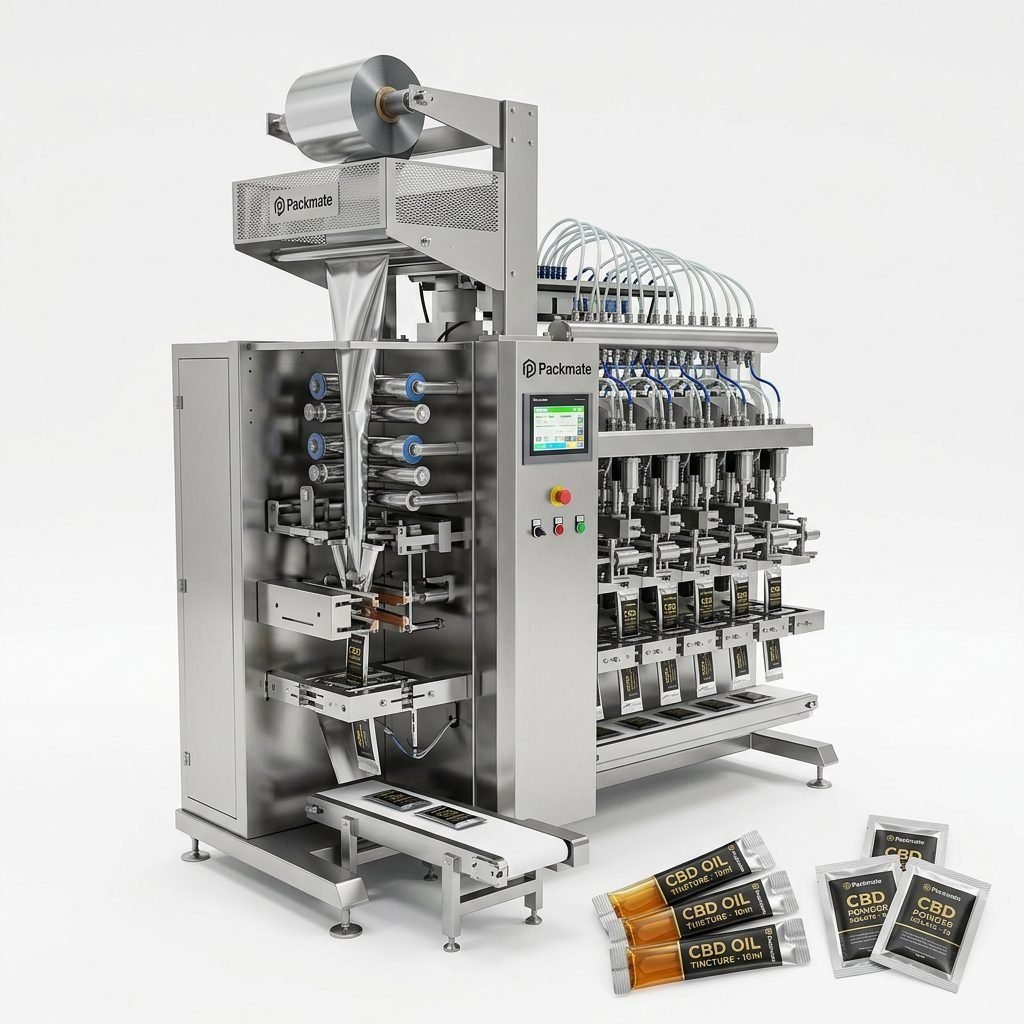
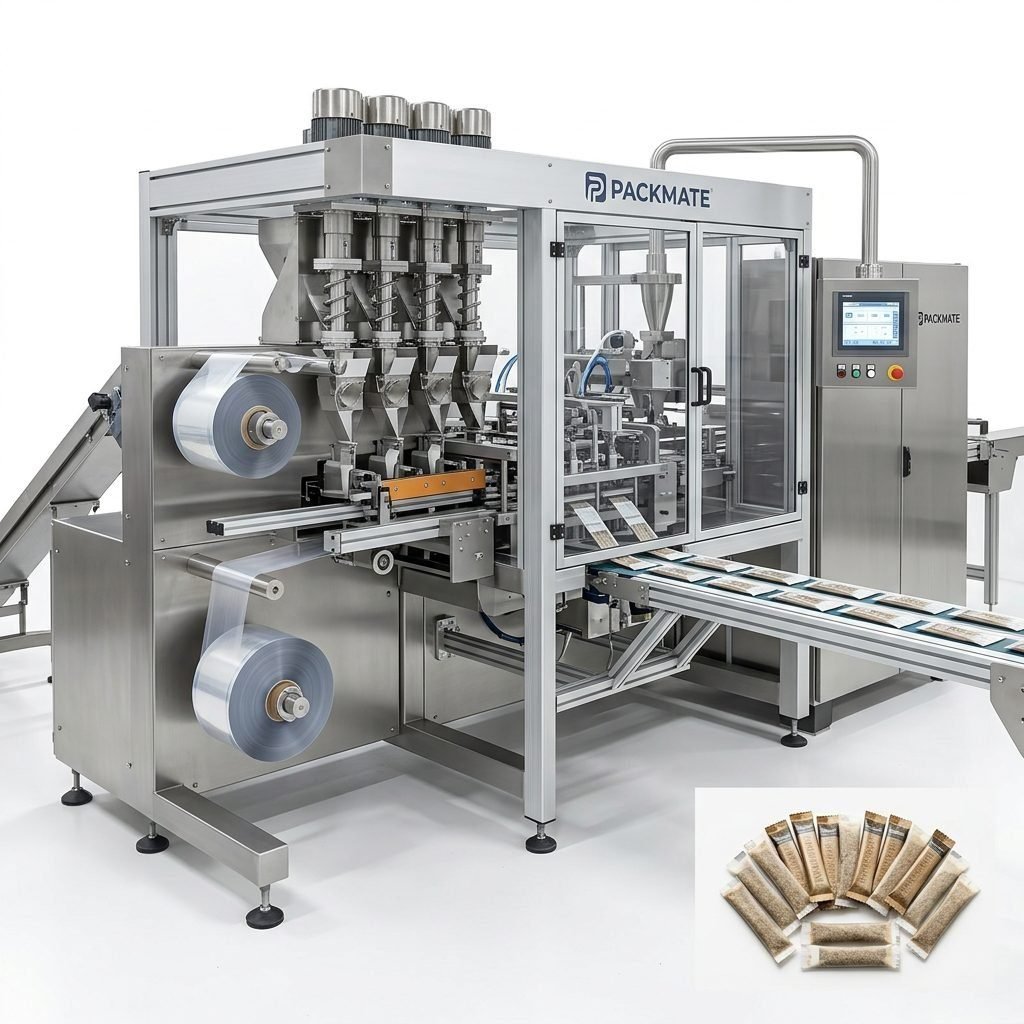
Your choice depends on format and output. Common machine categories include machines specifically designed for snus and nicotine pouches, stick pack and sachet machines, multi-lane pouch systems for high throughput, and fully integrated filling & packaging lines. Each has strengths:
Snus & nicotine pouch machines
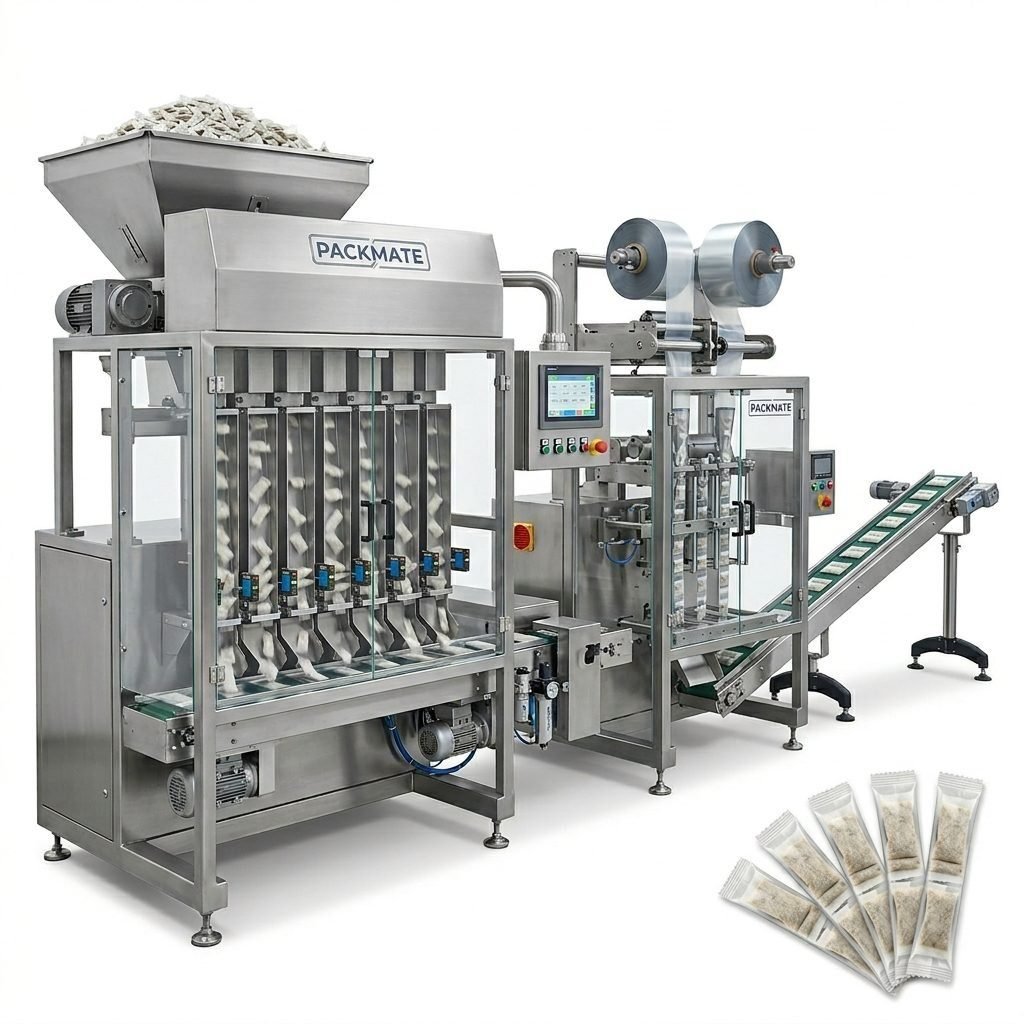
These are specialized for small-dose pouches with strict control of weight and seal quality. Look for precise metering systems, dust-control features, and gentle pouch handling to protect product integrity. Learn more about specialized options here: Snus & Nicotine Packaging Machines.
Sachet & stick pack machines
If your product suits stick packs or sachets, choose machines that allow quick format changes and accurate portioning for powder or granular nicotine formulations. Explore typical models here: Sachet & Stick Pack Machines.
Filling & integrated lines
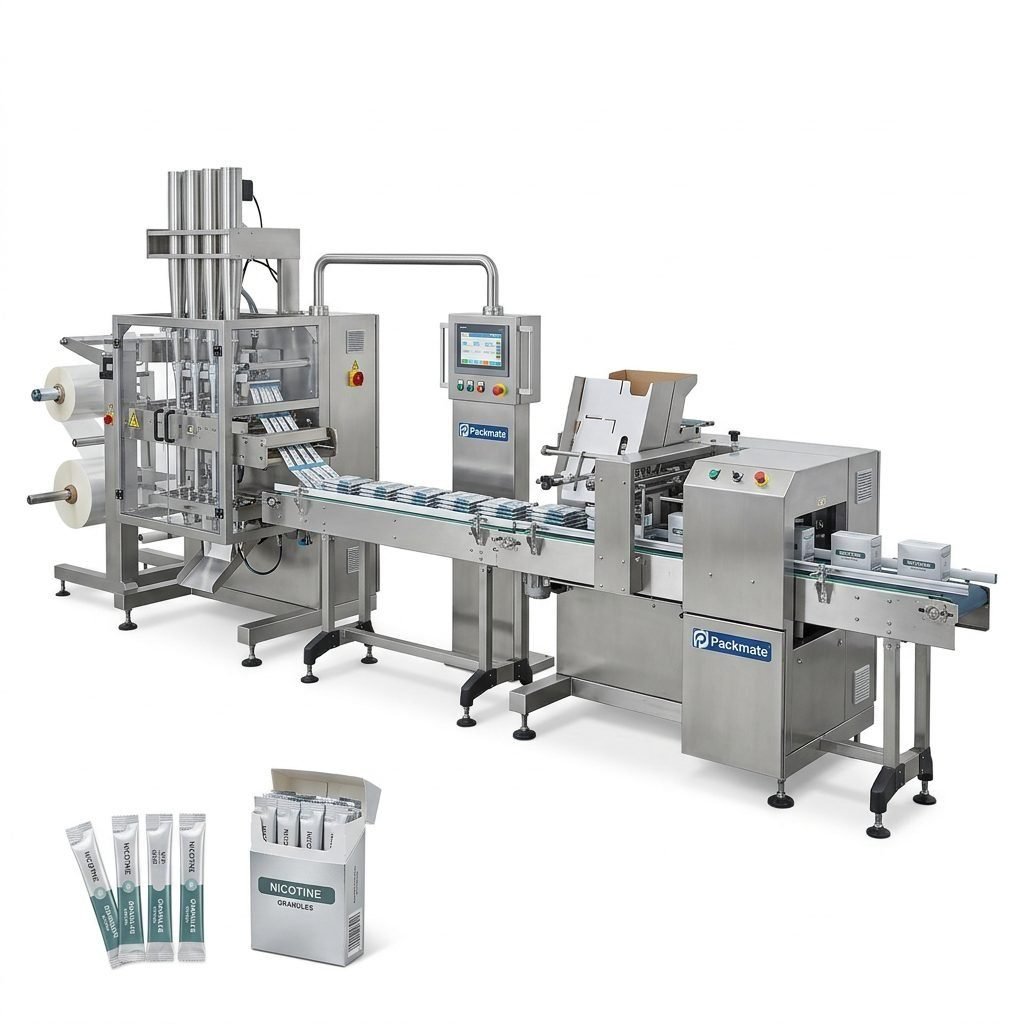
For a turnkey solution, combine metering/weighing systems with automated pouch-making and secondary packaging. These integrated systems reduce manual handling and improve traceability—important for EEA compliance and export. See options: Filling & Packaging Lines.
Capacity, scalability and throughput planning
Assess your current and 2–5 year projected volumes. Liechtenstein producers often value machines that can operate efficiently at lower runs while still offering modular upgrades for higher throughput. Multi-lane systems are ideal if you expect to scale quickly, but single-lane precision machines are better for small-batch premium products. When calculating capacity, include changeover time, downtime for cleaning, and expected yield (reject) rates.
Compliance, certifications and documentation
Ensure machines come with CE and relevant ISO certifications, calibration reports, and electrical/equipment documentation for EEA customs and regulatory checks. Detailed machine documentation is essential for inspections and for proving conformity during cross-border shipping. Packmate’s certification record is documented here: Certificate.
✅ Compliance tip:
Keep machine validation and calibration logs on-site and keep spare parts for critical wear components to minimize downtime during inspections or audits.
Supplier selection: What to expect from a reliable partner
A trustworthy supplier provides clear technical specs, local or regional service options, transparent spare parts pricing, and training programs in relevant languages. Look for companies with a strong manufacturing footprint, global installation experience, and an ability to customize machines for your specific pouch format and label requirements. Packmate’s 30+ years of experience and global turnkey solutions illustrate the type of capability to prioritize—learn more at About Packmate.
Local support and spare parts
Because Liechtenstein’s industrial base is small, confirm the supplier can provide regional service or fast remote diagnostics. Ask about spare part lead times and whether the supplier maintains European warehouses to speed replacement part delivery.
Layout, hygiene and footprint for Liechtenstein facilities
Space is often at a premium; prioritize compact machines with modular add-ons. Noise and energy efficiency also matter in small industrial estates. Plan for:
- Accessible cleaning paths and hygienic designs to meet food/pharma-grade rules.
- Labeling stations positioned for multilingual printing and traceability codes.
- Easy access for routine maintenance and quick changeover tools stored nearby.
Budgeting, total cost of ownership and ROI
Look beyond the purchase price. Calculate operating costs (power consumption, air, maintenance), expected yield, and manpower. Higher upfront precision often reduces waste and rework, accelerating ROI in a tight-margin environment. For accurate budgeting, request a breakdown of consumables, expected lifetime of wear parts, and sample production trials to validate throughput and rejection rates.
Installation, training and after-sales service
Insist on formal installation procedures, operator training in German (and English if relevant), and documented maintenance schedules. Remote support, on-site commissioning, and training reduce errors during ramp-up and ensure regulatory documentation is complete. Explore service options here: Service.
📌 Pro tip:
Request an on-site trial or a visit to a reference site to observe real-world performance before final purchase.
Why consider Packmate (a practical example)
A supplier like Packmate offers a broad portfolio—snus/nicotine pouch machines, stick pack and sachet machines, weighing and packaging systems—backed by 30+ years of engineering and a 20,000㎡ manufacturing facility. Their experience in multi-lane systems is especially valuable if you plan to scale. Review case studies and exhibition demonstrations to confirm capabilities: Case | Our Exhibition.
Customization and turnkey lines
For Liechtenstein businesses that export, turnkey solutions that include dosing, pouch forming, sealing, secondary packaging and automated labeling save integration time. Confirm the supplier provides PLC recipes for different SKUs, production data logging, and remote assist capabilities.
Common pitfalls and how to avoid them
• Buying oversized machines that force continuous full-capacity operation, increasing waste.
• Underestimating spare part needs and lead times for European distribution.
• Skipping on-site acceptance testing and sample runs that validate real-world performance.
• Choosing machines without multilingual support (German) for labeling and SOPs.
Final recommendations
Start with a clear specification: format, target throughput, language and labeling needs, and compliance requirements. Prioritize machines with precision dosing, easy format changeovers, and robust documentation. Partner with suppliers who demonstrate reliable after-sales service and transparent spare part logistics. If you prefer to evaluate options from a proven manufacturer with wide experience, see detailed product categories: Bag & Pouch Packaging Machines and Weighing & Packaging Systems.
📞 Next step:
Contact the supplier for a tailored quote, sample production, and a validation plan aligned with Liechtenstein’s regulatory framework: Contact Us.
Frequently Asked Questions
Q1: What certifications should nicotine packaging machines have for selling in Liechtenstein?
A1: Machines should carry CE marking and relevant ISO certifications; detailed documentation for electrical safety, materials contact, and calibration is required to satisfy EEA regulations.
Q2: Is it better to buy a multi-lane machine or start with a single-lane system in Liechtenstein?
A2: If domestic volumes are low and you prioritize premium, small-batch production, a single-lane precision machine is suitable. Choose multi-lane when you plan significant scaling or export volumes.
Q3: How important is local language support for machine manuals and training?
A3: Very important. Providing German-language manuals and operator training reduces errors, speeds compliance, and improves safety—especially for regulatory inspections.
Q4: What ongoing costs should I expect besides the machine price?
A4: Expect consumables (films, labels), energy and compressed air, routine maintenance parts, calibration services, and occasional spare parts replacement. Include remote support or on-site service contracts in your TCO.
Q5: Where can I view real-world machine performance before purchase?
A5: Request references, case studies, or attend exhibitions where live demos are available. Packmate publishes case examples and attends international exhibitions—check their case and exhibition pages for details.