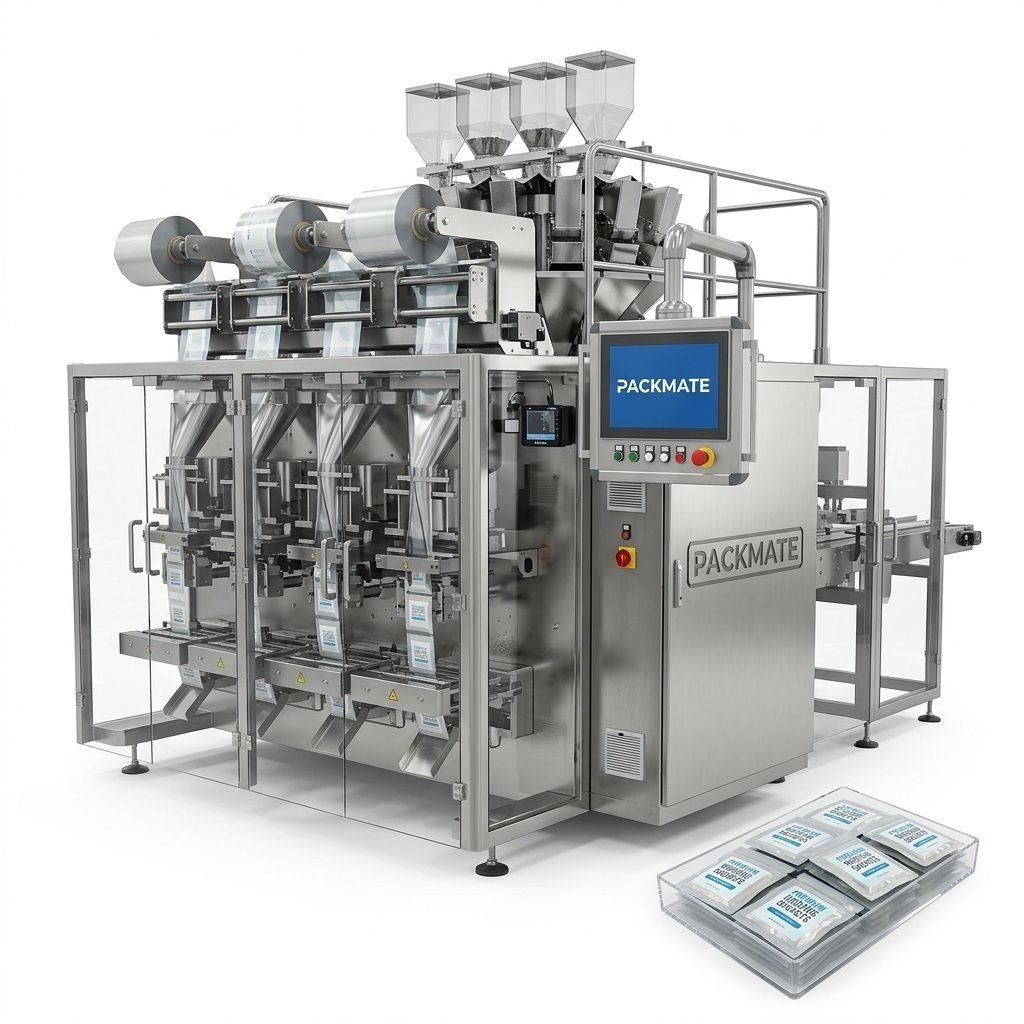
Choosing the right snus packaging machine in Namibia is a strategic decision that affects product quality, regulatory compliance, and long-term profitability. Whether you are launching a local brand, expanding production for export, or upgrading an existing line, this guide walks you through practical steps, machine options, and local considerations to select the best equipment for your production needs.
Understand Your Production Needs First
Start by defining your core production parameters: daily output targets, product formats (single-dose pouches, stick packs, sachets), and filling materials (powder, granule, paste, or liquid). In Namibia, many small-to-medium enterprises favor flexible machines that can switch between nicotine pouches and other loose-fill products due to seasonal demand and export opportunities.
Key questions to answer: What is your hourly throughput target? Which pouch formats will you prioritize? Do you require multi-lane production to boost output while minimizing footprint?
Production scale examples
– Pilot / Startup: 1,000–10,000 pouches/day — prioritize flexibility and lower capital cost.
– SME Growth: 10,000–50,000 pouches/day — consider multi-lane machines or modular lines.
– Industrial / Export: 50,000+ pouches/day — high-speed multi-lane systems and full automation are essential.
Local Market & Cultural Considerations in Namibia
Namibia’s consumer habits and distribution landscape influence packaging decisions. Urban buyers in Windhoek and Walvis Bay may prefer compact, discreet single-dose pouches with modern branding, while rural markets may favor bulk formats and robust packaging that endures heat and rough handling. Cultural attitudes toward tobacco and nicotine products in Namibia require sensitive packaging design and responsible marketing practices.
Types of Snus Packaging Machines to Consider
Know the main machine types and their strengths so you can match functionality to your needs:
Sachet & Stick Pack Machines
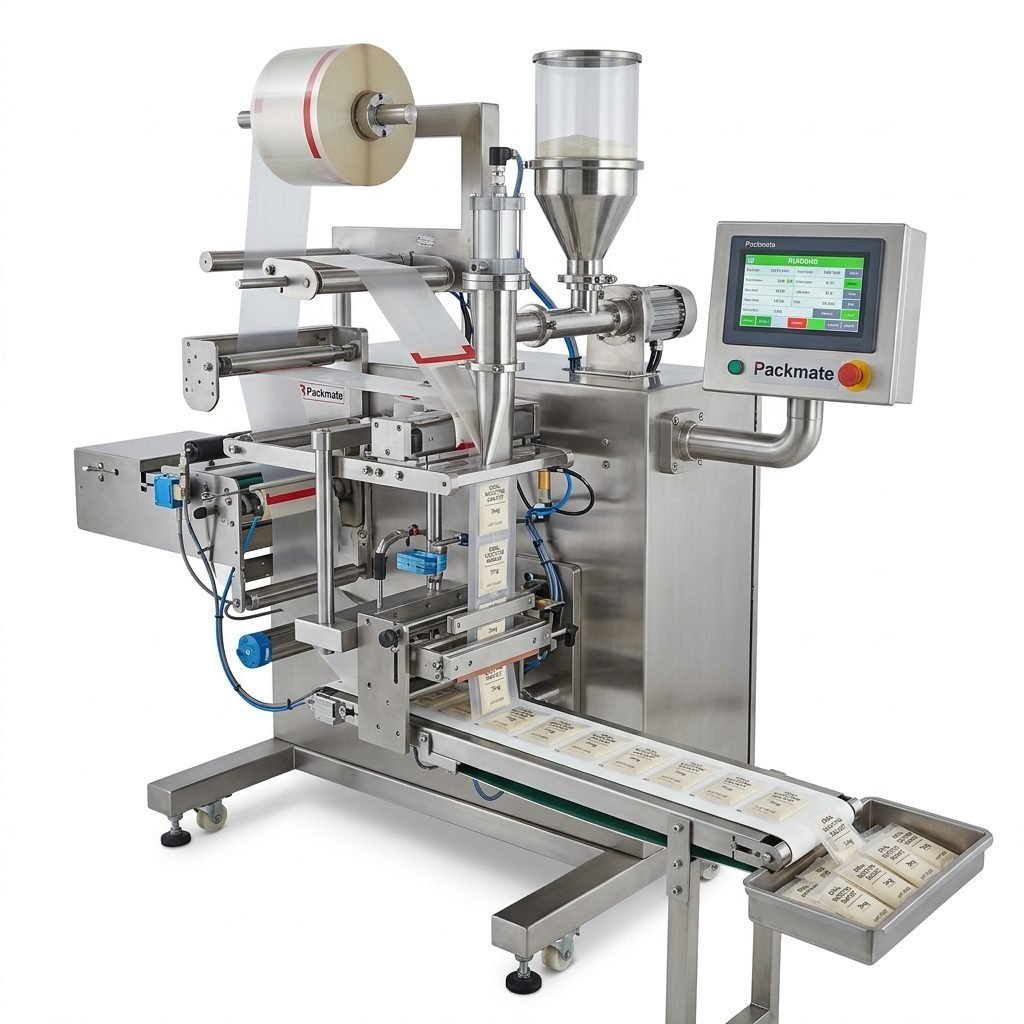
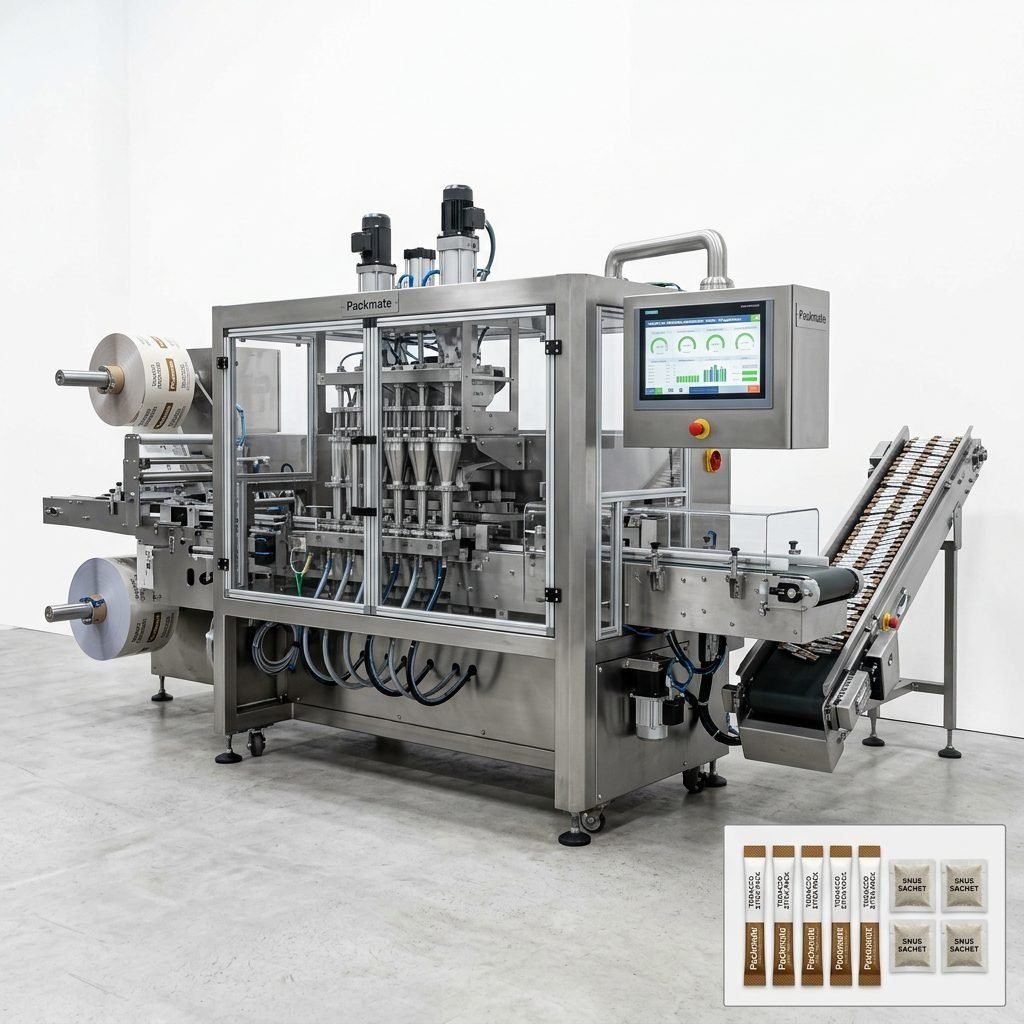
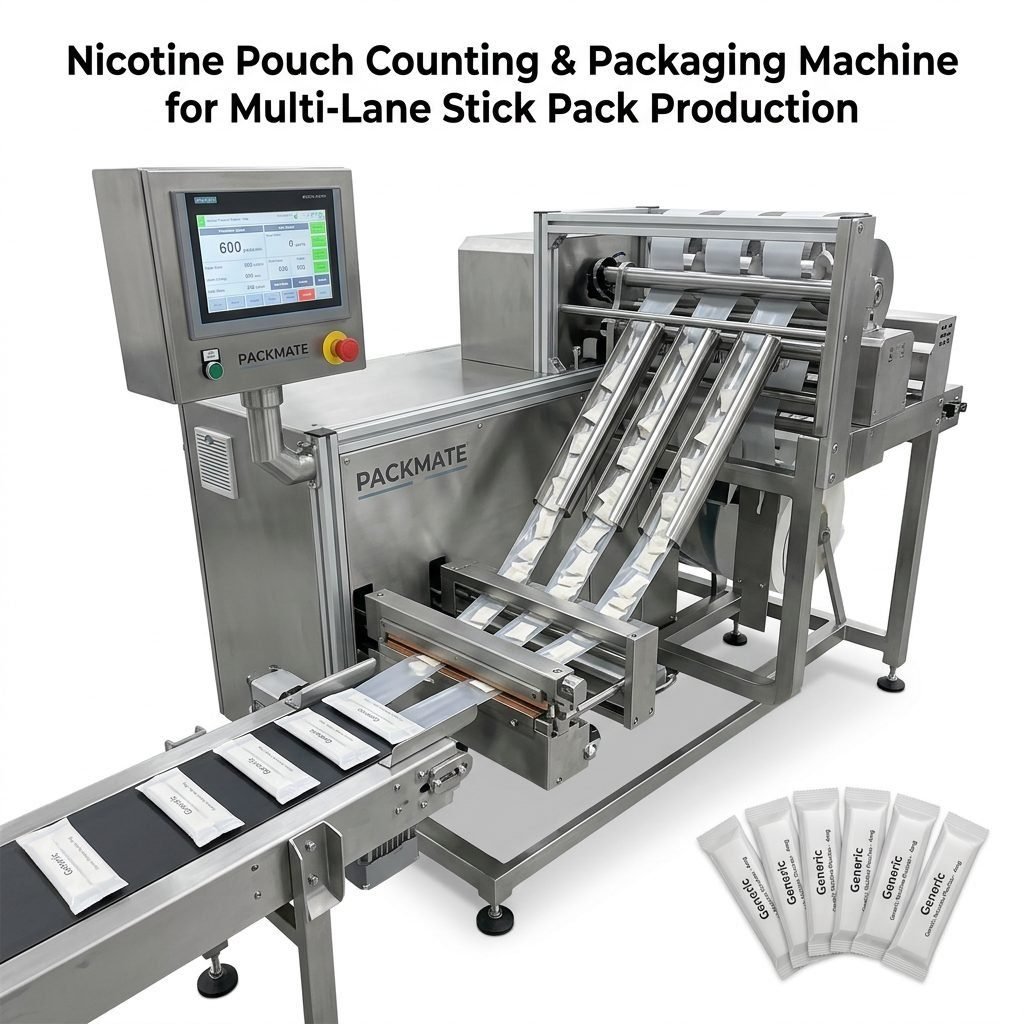
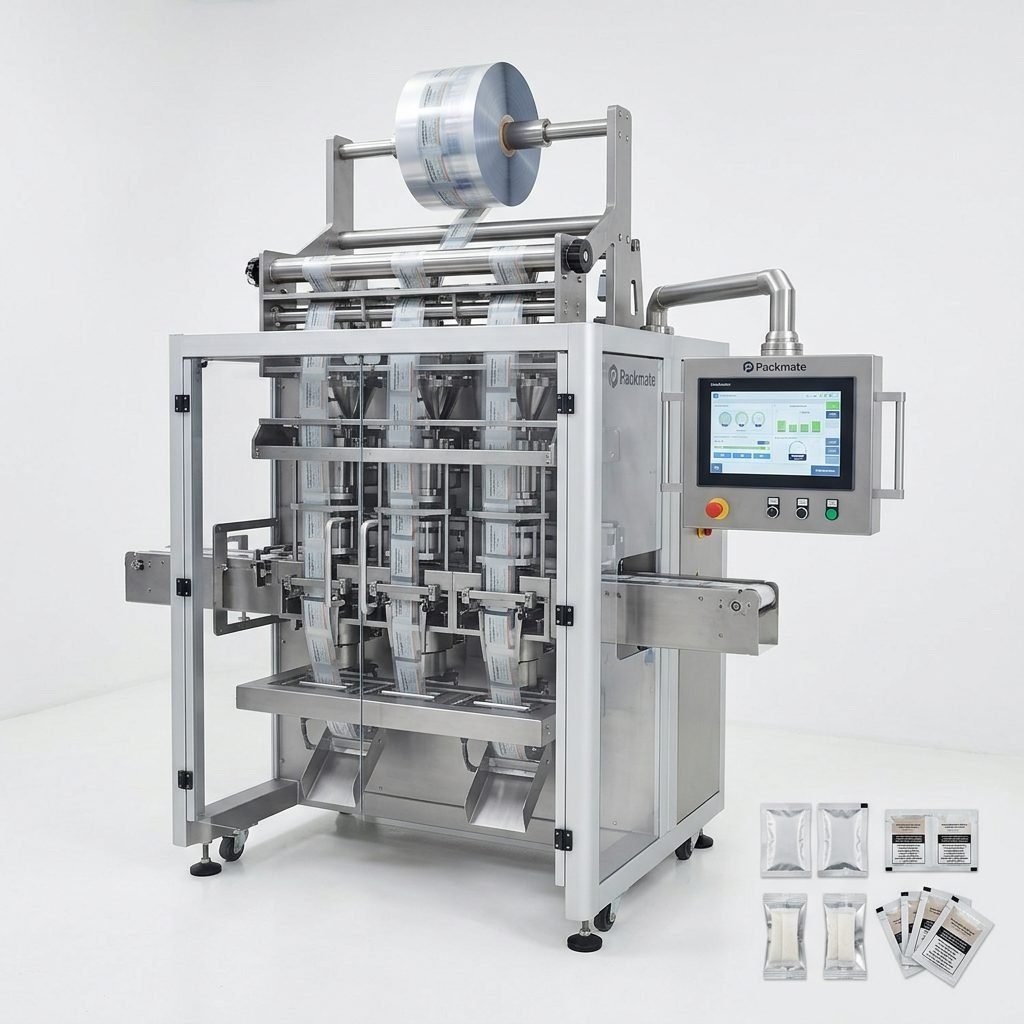
Ideal for single-portion formats and portion control. These machines are compact and often used for flavored nicotine pouches and tea sachets. See compact designs and technical specs at the Sachet & Stick Pack Machines page.
Pouch & Multi-Lane Snus Machines
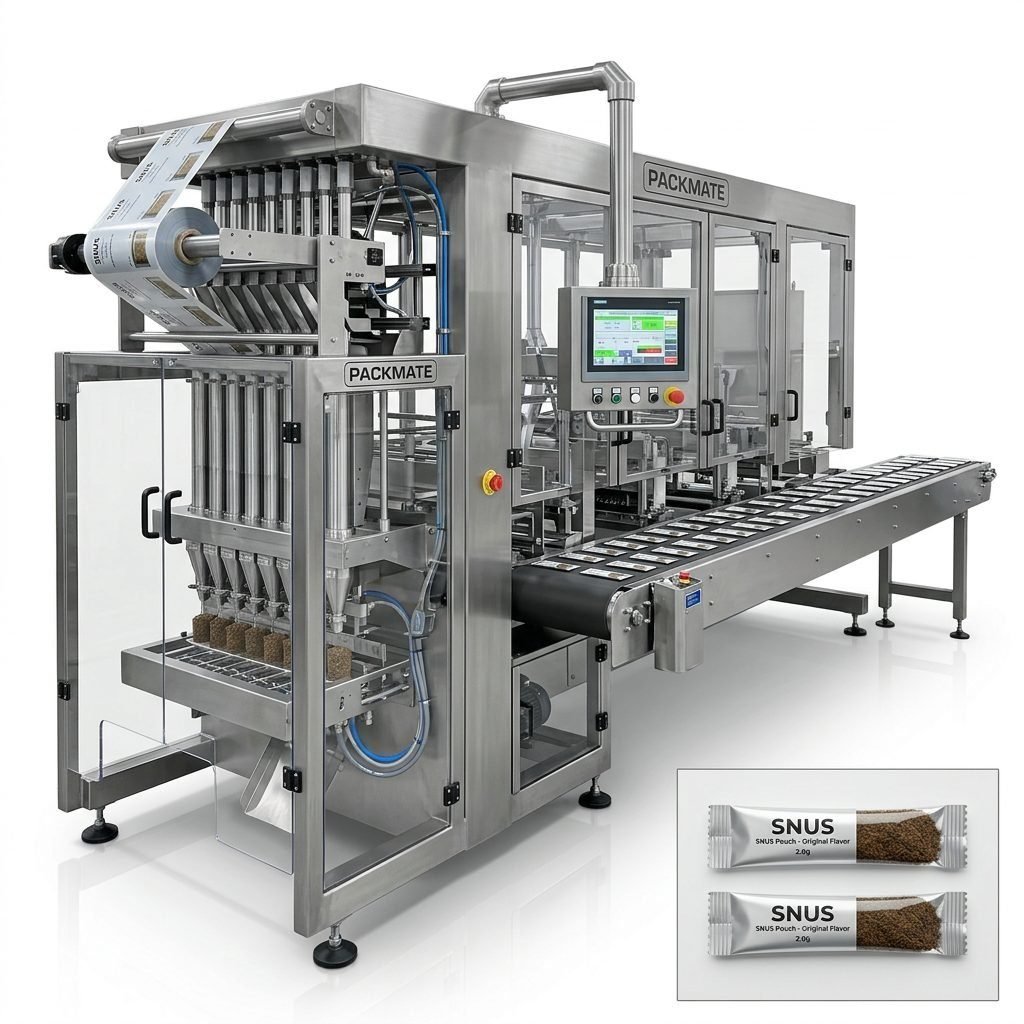
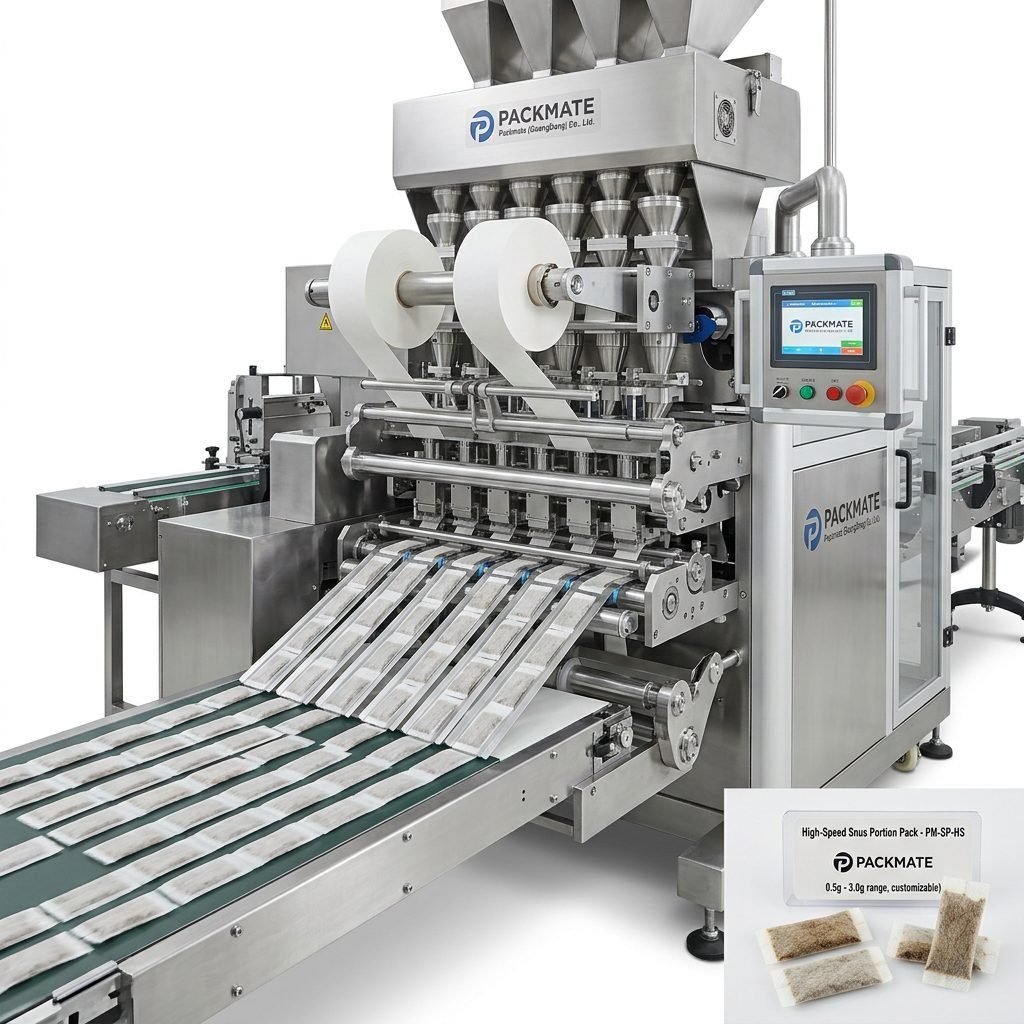
Multi-lane systems greatly increase throughput without doubling floor space. If you plan significant scale-up or export to neighboring markets, multi-lane snus pouch machines are a smart investment. The Packmate snus-specific lines are engineered for such needs — explore Snus & Nicotine Packaging Machines for details.
Filling & Integrated Lines
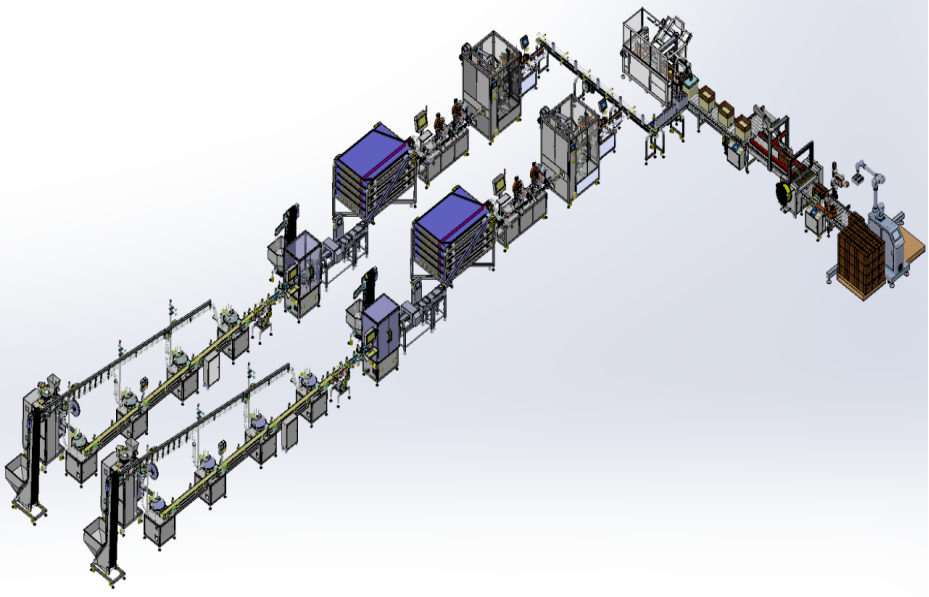
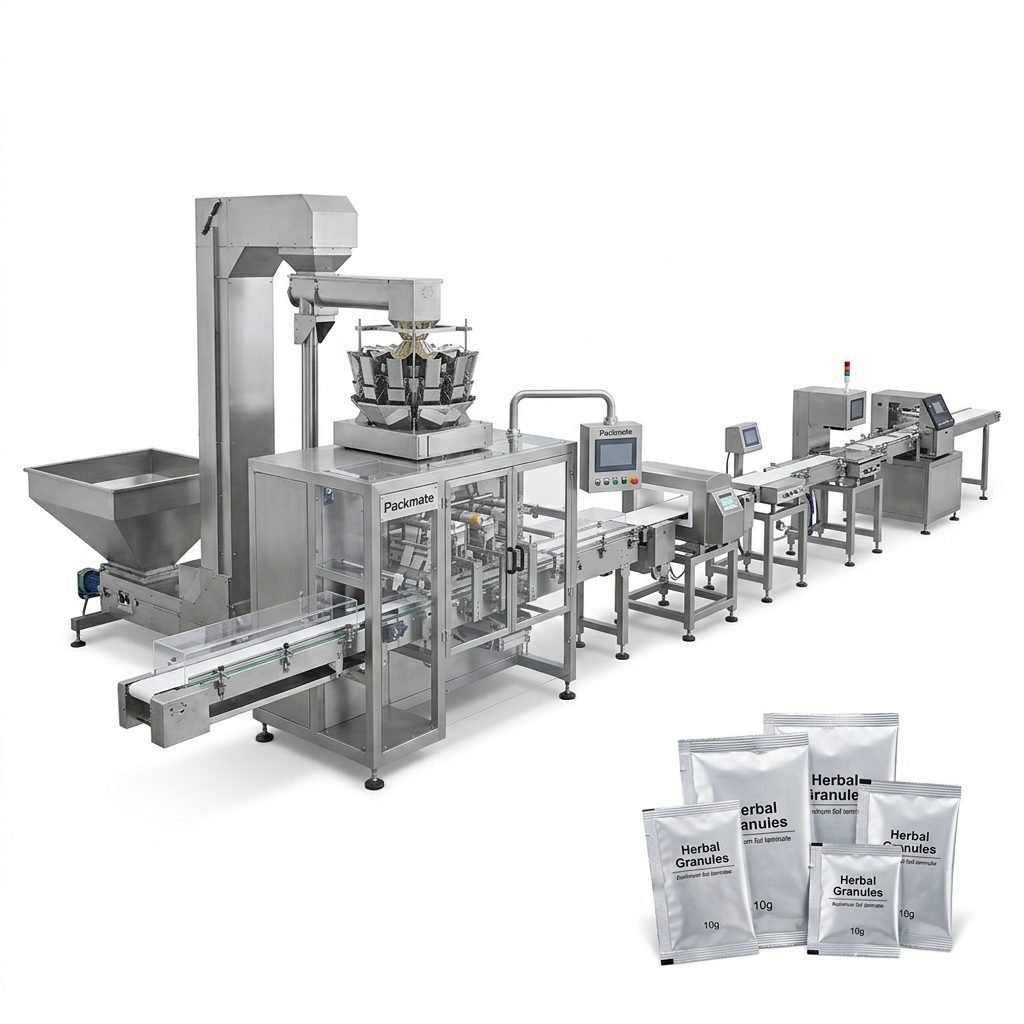
For full automation from weighing to sealing, integrated filling and packaging lines reduce labor and increase consistency. If your product needs precise dosing (especially for nicotine content), look for lines that include high-precision weighing systems. Check Filling & Packaging Lines and Weighing & Packaging Systems for integrated solutions.
Key Technical Specifications to Evaluate
When you compare quotes, focus less on price and more on the following technical metrics that determine performance and product quality.
Critical specs: filling accuracy, pouch format range, speed (pouches/min per lane), lane count, material compatibility, changeover time, and sanitary design for easy cleaning.
Filling Accuracy & Difference Between Materials
Powder and fine granules need high-precision auger or vibration feeding systems; pastes and moist fillers require piston or pump-based dosing. If you will produce multiple product types, select a machine or modular add-ons that allow quick swapping of dosing heads.
Throughput, Multi-Lane Options & Footprint
Multi-lane machines increase capacity while keeping the footprint efficient. For example, a 6-lane snus pouch machine can multiply output without a linear increase in floor space — particularly valuable in Namibian facilities where space and utilities may be limited.
Quality, Certifications & After-Sales Support
Prioritize machines from manufacturers with international certifications (CE, ISO) and proven reliability. Certifications show compliance with safety and quality standards, which simplifies customs and export processes. Packmate machines comply with CE/ISO standards and are built in a modern 20,000㎡ facility with advanced CNC centers, offering a solid warranty and spare-part supply chain.
After-sales and local service partners
Reliable technical support is essential. Ask potential suppliers about remote diagnostics, training programs, spare parts lead times to Namibia, and local technicians who can be trained. A strong service network reduces downtime and protects your investment.
Material Compatibility & Packaging Formats
Choose machines that can handle the films and laminates you plan to use. Heat-seal properties, barrier qualities for humidity control, and print registration for high-quality branding are critical. If you export to EU or South Africa, consider barrier materials that meet their shelf-life standards.
Cost Considerations & ROI Calculation
Total Cost of Ownership (TCO) includes purchase price, installation, spare parts, training, utilities, and expected uptime. Calculate ROI based on throughput increase and labor savings from automation. In Namibia, lower labor costs can favor semi-automated systems, but if export markets are targeted, automated high-speed lines often yield faster ROI.
ROI tip: model a conservative production ramp (60–70% first-year capacity) and include spare-part stock to avoid costly downtime.
Site Preparation & Installation Requirements in Namibia
Check your facility’s power supply, compressed air capacity, floor load ratings, and ventilation. Machines may need stable 3-phase power and dust-free environments for accurate weighing. Plan for local customs clearance and logistics — port handling at Walvis Bay or Windhoek inland transport are common routing choices for imported equipment.
Regulatory & Responsible Marketing Considerations
The legal environment for nicotine products varies. Before finalizing packaging and distribution strategies, consult local regulatory authorities and legal counsel on labeling, nicotine concentration limits, and advertising rules in Namibia. Responsible packaging includes child-resistant features and clear consumer guidance.
Practical Procurement Checklist (Emoji highlights)
✅ Machine type and lanes required
🔧 Dosing accuracy and filling method
📦 Material and pouch format compatibility
🔌 Site utility & electrical requirements
🛠️ Spare parts availability and training plan
📄 Certifications & export documentation (CE/ISO)
Questions to ask suppliers
How fast is typical changeover? What is the guaranteed uptime and service SLA? Can the line handle future format upgrades? Are technical drawings and electrical schematics provided for local electricians? Does the supplier have references or case studies for similar markets — ask for Case examples and client references.
Why Consider Packmate Snus Machine?
Packmate offers over 30 years of engineering experience, over 50 machine models, and turnkey solutions built in a 20,000㎡ factory. Their snus-specific multi-lane systems are tailored for high-precision small-dose pouch production. For technical details and available models, visit Snus & Nicotine Packaging Machines and Bag & Pouch Packaging Machines. If you want to review completed installations and performance, check their Case page.
Financing, Shipping & Lead Times
Lead times depend on customizations and current production schedules — typical delivery windows range from 8–20 weeks. Discuss financing and payment terms with suppliers. For shipping to Namibia, coordinate with an agent experienced in Walvis Bay and Windhoek customs to minimize delays. Confirm spare part kits and training schedules before shipment.
Putting It All Together: A Recommended Approach
1) Define production goals and pouch formats. 2) Shortlist machine types (sachet/stick, multi-lane pouches, or integrated lines). 3) Request detailed spec sheets and visit a demonstration where possible. 4) Verify certifications, after-sales support, and references. 5) Plan installation with local contractors and schedule staff training.
Pro tip: If unsure, start with a modular solution that can be upgraded to multi-lane or integrated systems as demand grows.
Next Steps & Resources
Speak to experienced suppliers to arrange machine demonstrations and line simulations. Useful links for researching equipment and services:
– Snus & Nicotine Packaging Machines: https://www.snusmachinery.com/products/snus-nicotine-packaging-machines/
– Bag & Pouch Packaging Machines: https://www.snusmachinery.com/products/bag-pouch-packaging-machines/
– Case studies: https://www.snusmachinery.com/case/
– About Packmate: https://www.snusmachinery.com/about-us/
Conclusion
Selecting the best snus packaging machine in Namibia means balancing current production goals with future scalability, regulatory compliance, and reliable after-sales support. Prioritize machines with proven accuracy, modular upgrade paths, and suppliers who offer strong training and spare-part support. With careful planning and the right partner, you can build a production line that adapts to local market preferences and grows with demand.
Frequently Asked Questions
Q1: How do I know if I need multi-lane equipment?
A1: If your target output exceeds what a single-lane machine can deliver without running 24/7, multi-lane systems are more efficient and cost-effective in the long run.
Q2: What certifications should I ask for when importing machines to Namibia?
A2: At minimum, request CE and ISO certification documents. Also confirm electrical compliance and request manufacturer declarations for customs processing.
Q3: Are Packmate machines suitable for small batches and multiple SKUs?
A3: Yes. Packmate offers modular and flexible machines designed for rapid changeover, making them suitable for multiple SKUs and small-batch production.
Q4: How do I handle spare parts and maintenance remotely in Namibia?
A4: Establish a spare-part kit with your supplier before shipment, arrange remote training for local technicians, and secure an SLA for priority support.
Q5: Where can I see real-world examples of snus packaging lines?
A5: Visit published case studies and exhibition galleries to review installations and machine demonstrations — see Case and Our Exhibition for examples.