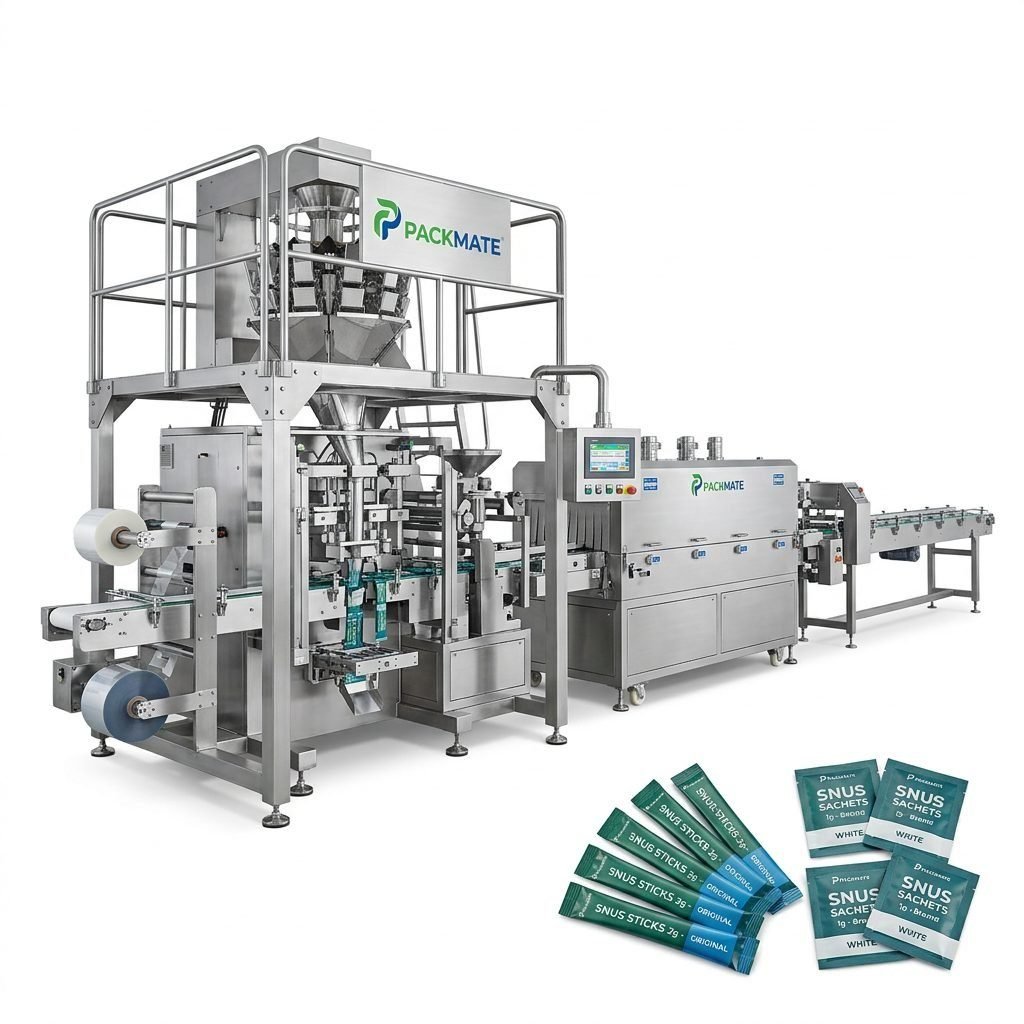
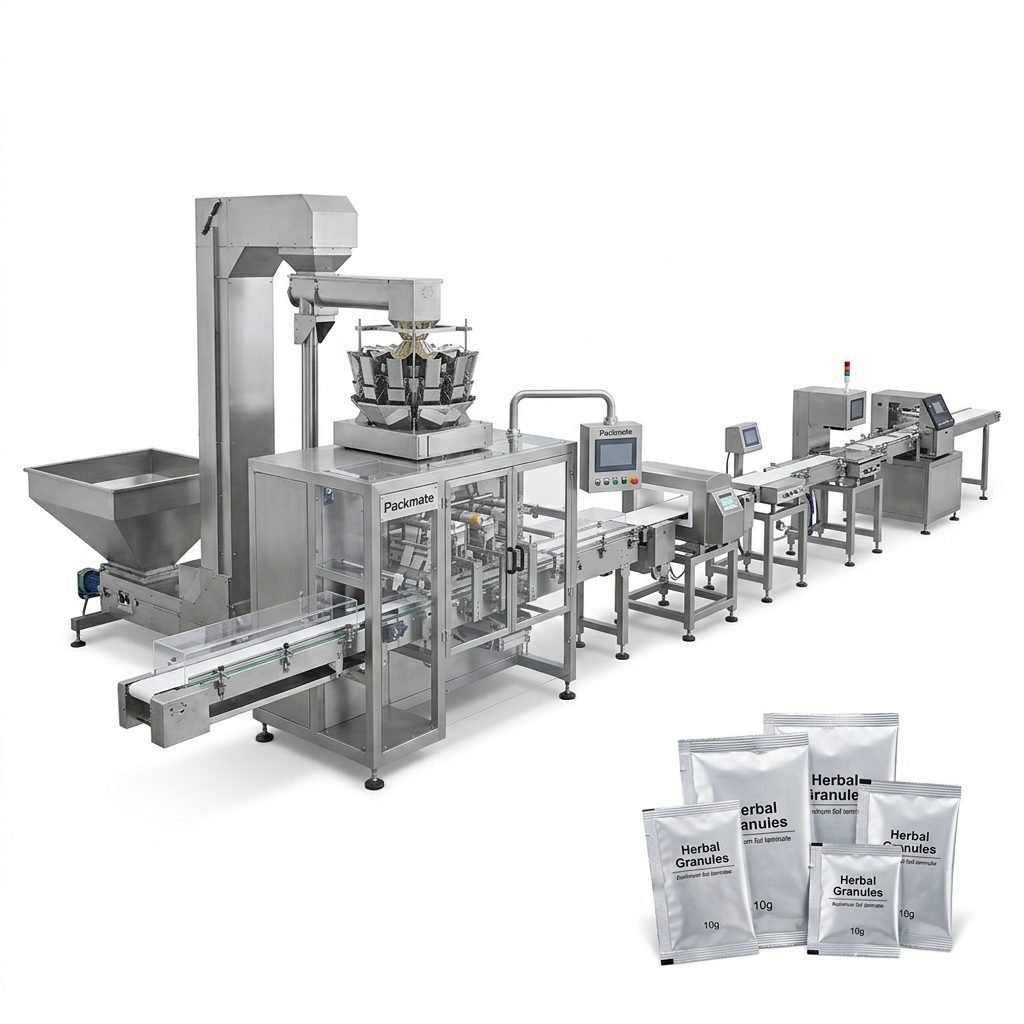
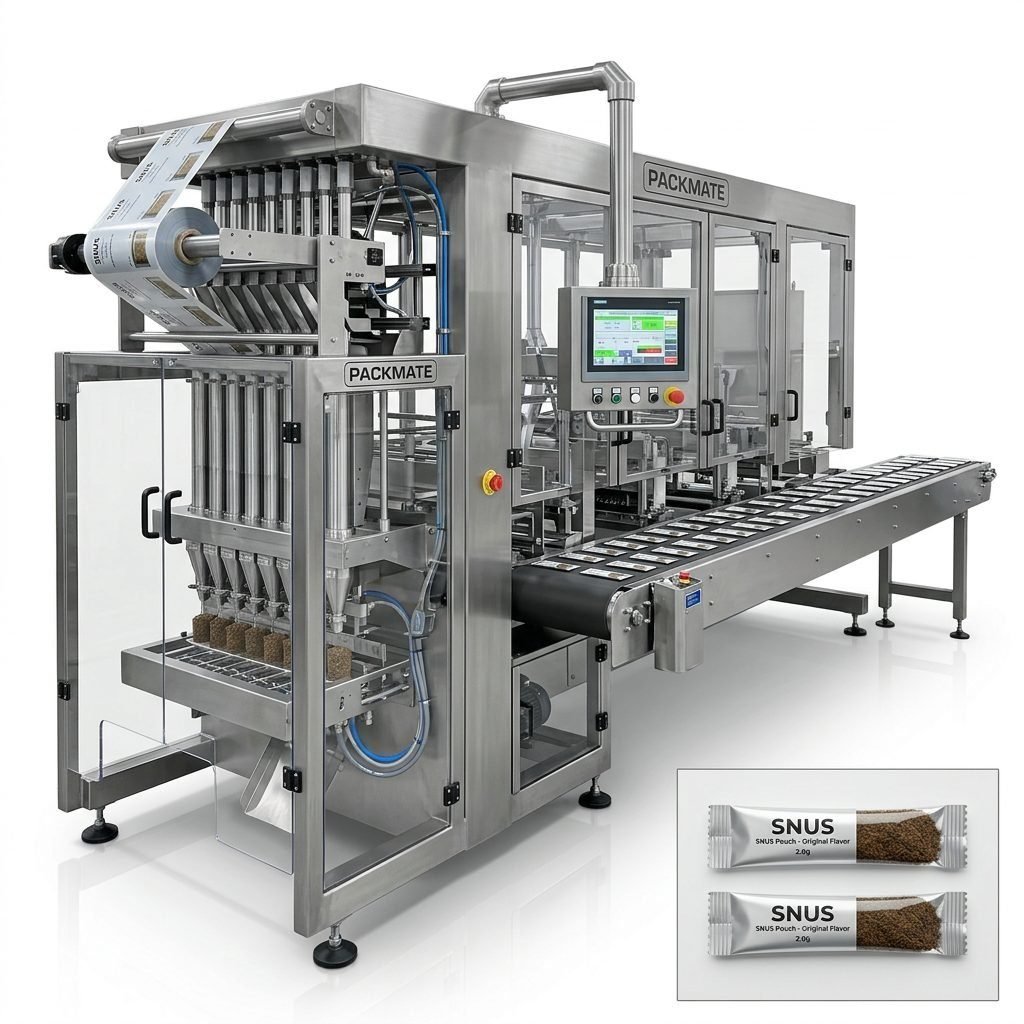
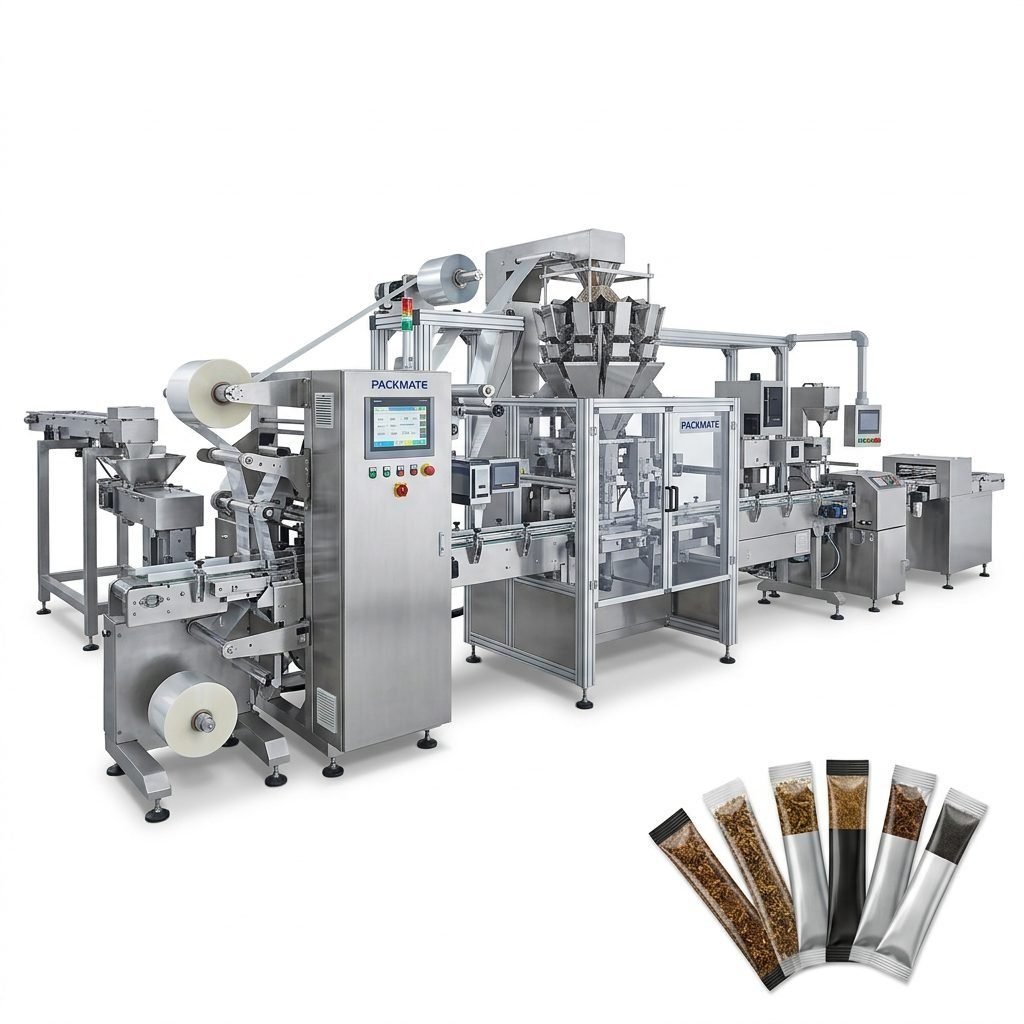
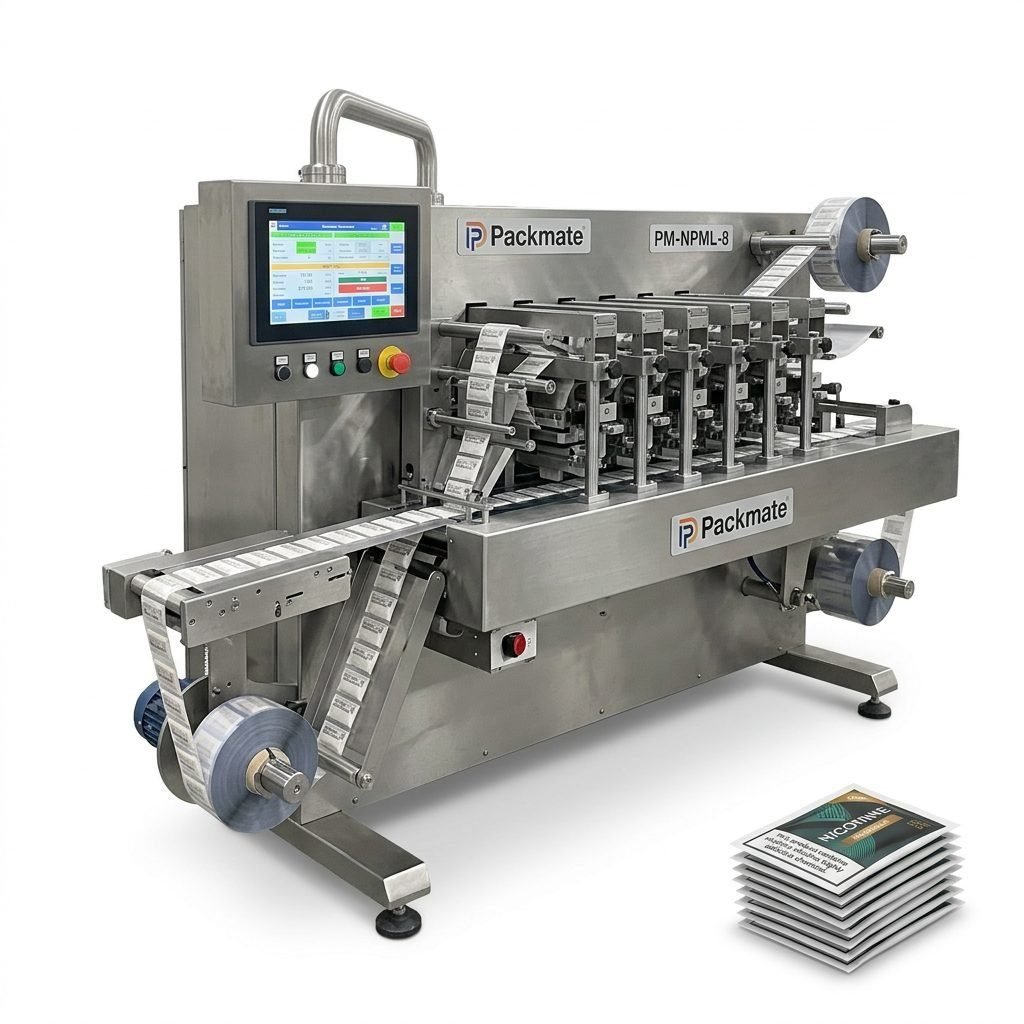
In today’s regulated tobacco and nicotine product markets, an ISO-certified snus production line is not just an advantage — it is a business necessity. Manufacturers require automated, high-precision packaging systems that deliver consistent pouch quality, traceability, and regulatory compliance. This article explores a complete, ISO-compliant snus packing and processing system with an emphasis on production efficiency, safety, customization, and global service.
Why ISO Certification Matters for Snus Production
ISO certification demonstrates that your production line operates under internationally recognized quality management systems, promoting consistent product quality, repeatable processes, and documented procedures. For snus and nicotine pouch manufacturers, ISO compliance reduces the risk of non-conformity during audits and facilitates market access in Europe, the Americas, and Asia.
Key benefits include:
🔧 Traceability from raw material intake to finished packs.
📦 Product consistency across multi-lane and high-speed operations.
🌍 Improved acceptance in regulated markets and better partner confidence.
Core Components of a High-Quality Automated Snus Production Line
A robust snus line integrates multiple systems working in harmony. Below are the core modules you should expect from a fully automated, ISO-certified solution:
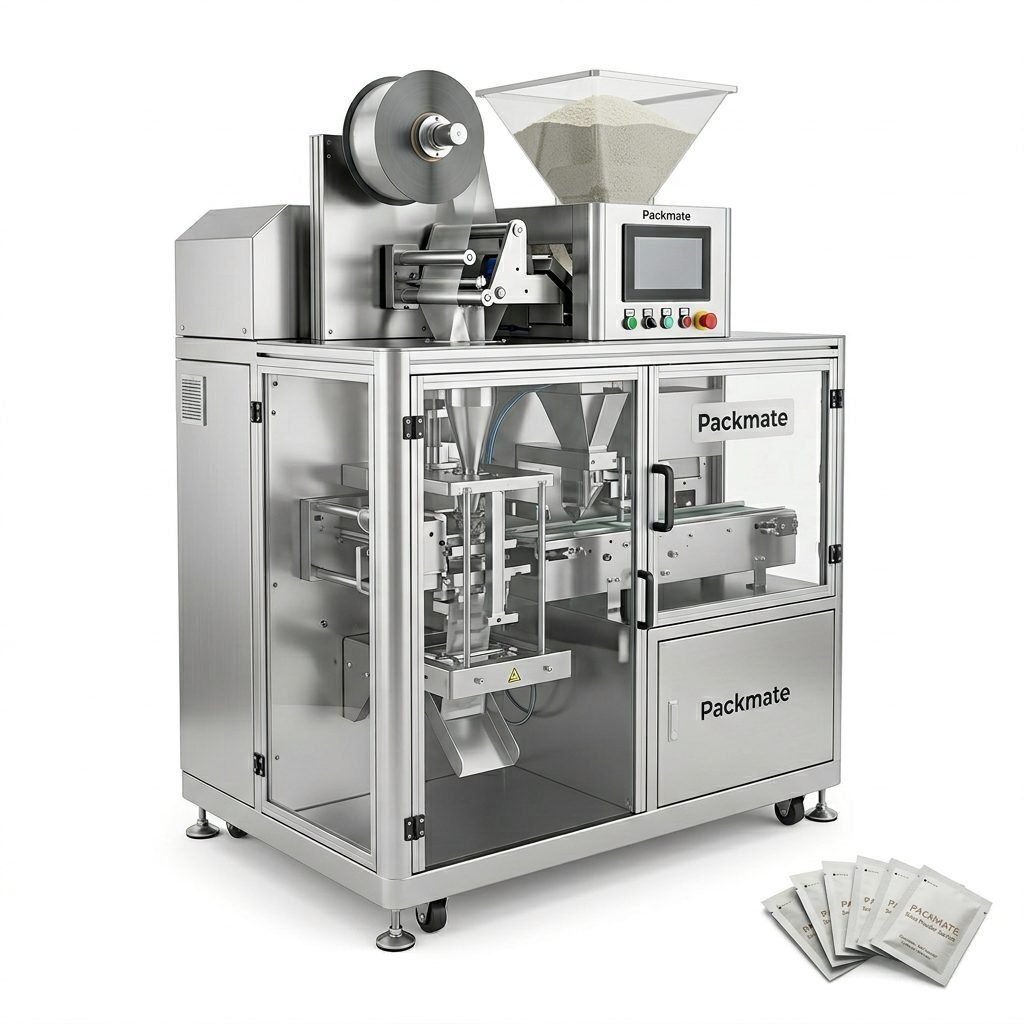
▶️ Feeding & Dosing: precision weighers for powders, granules, or blends to control pouch weight tolerance.
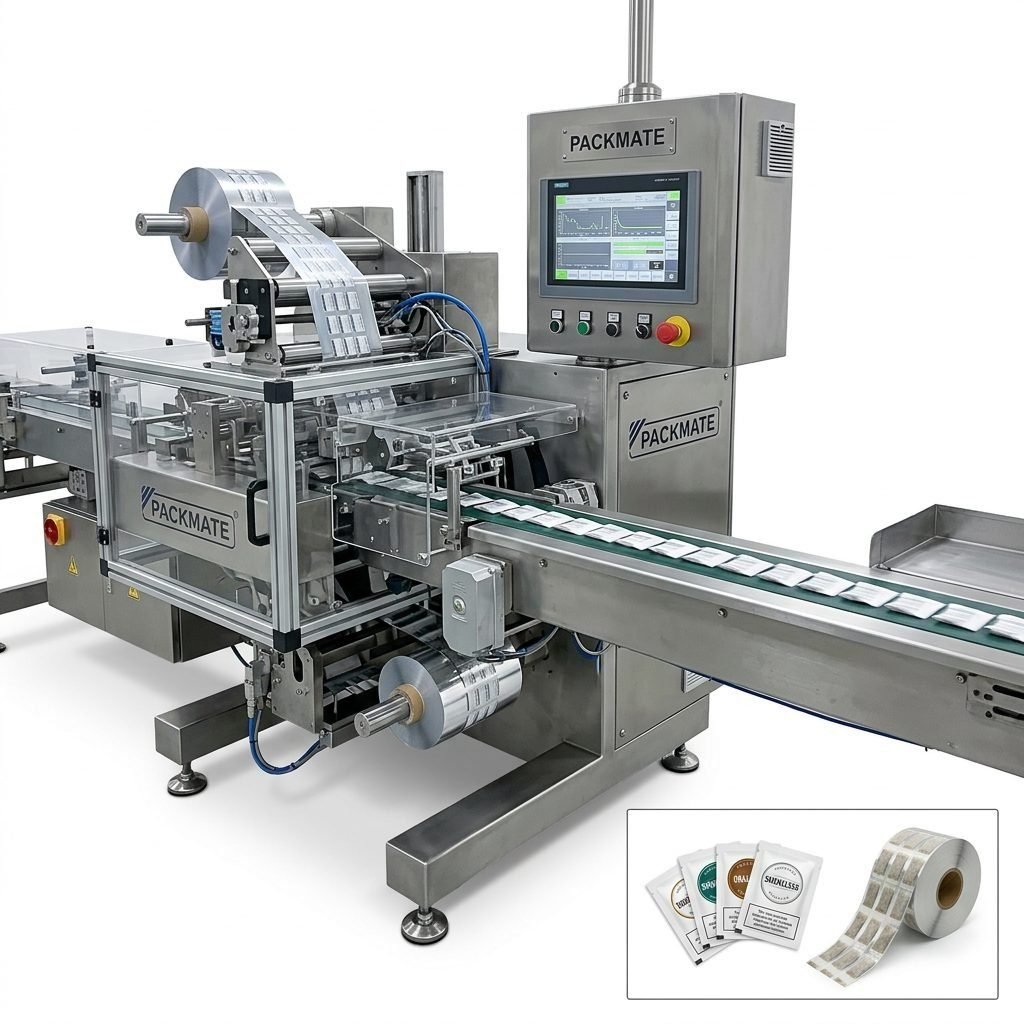
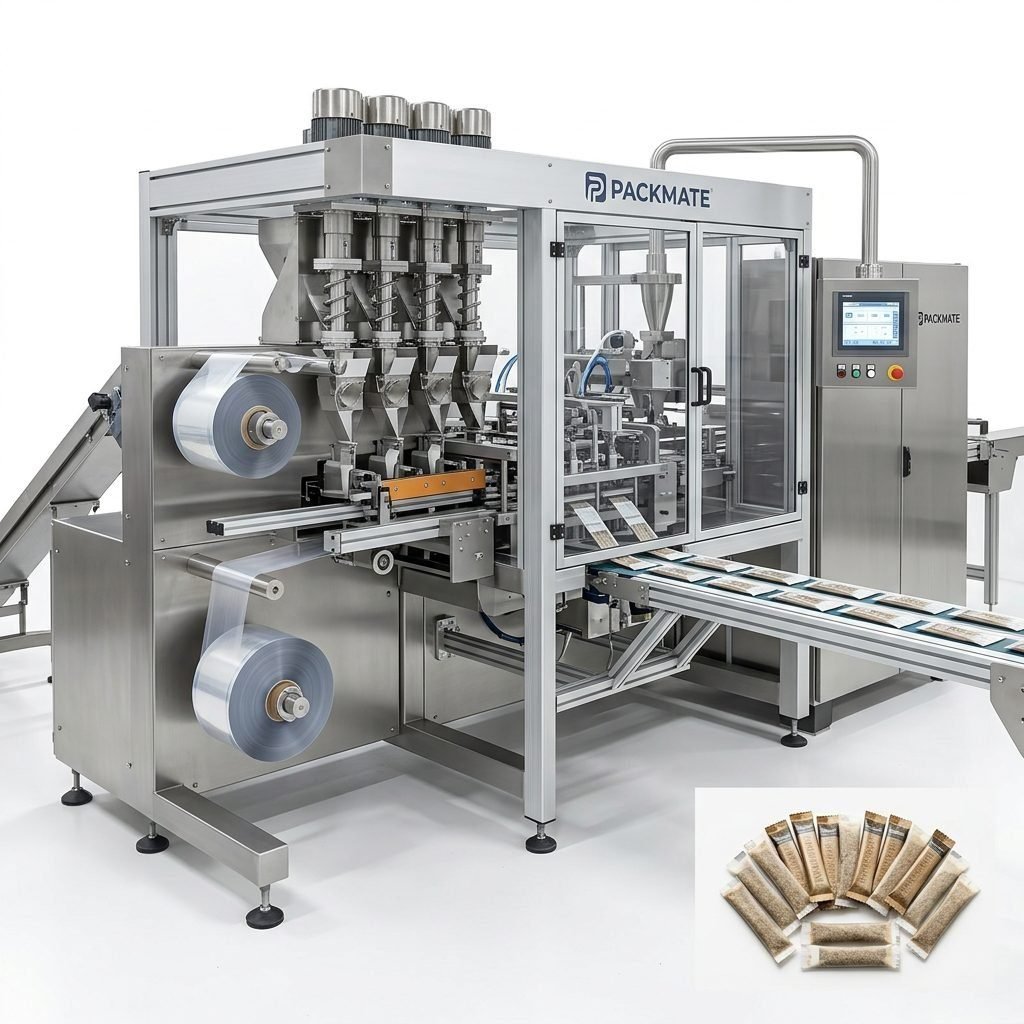
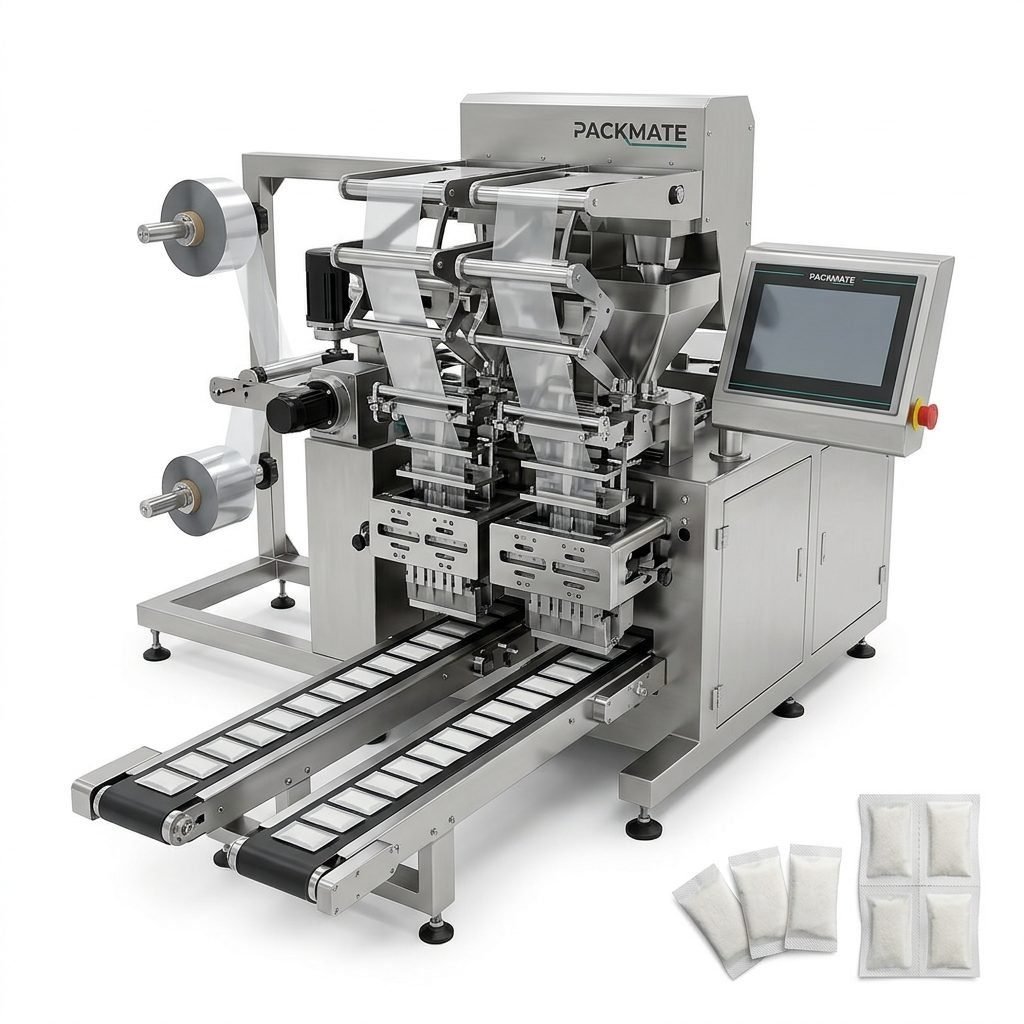
▶️ Form-Fill-Seal (FFS): multi-lane stick pack and sachet systems for small-dose snus pouches.
▶️ Pouch forming & sealing: high-speed sealing jaws with temperature control and monitoring.
▶️ Checkweighers & metal detectors: inline quality control to ensure safety and compliance.
▶️ Cartoning & case packing: automated downstream systems for final packaging and palletizing.
Manufacturing note: For compact production demands, multi-lane sachet machines can multiply throughput while maintaining small-dose accuracy — an ideal approach for nicotine pouch brands scaling across markets.
Automation, Speed and Production Efficiency
Today’s snus packaging lines integrate PLC controls, servo drives and HMI interfaces for repeatable performance. The emphasis is on reducing downtime, optimizing changeover, and enabling predictive maintenance. Typical efficiency features include:
🔁 Quick-reel change systems and modular tooling for rapid format changes.
📊 Real-time production dashboards with output, OEE and alarm management.
⚙️ Servo-driven synchronization across filling, dosing, and sealing stages to minimize product migration and maximize integrity.
These features translate into measurable cost-savings and increased yield for high-volume snus operations.
Quality Control & Regulatory Compliance
ISO certification goes hand-in-hand with CE conformity and harmonized safety systems. An ISO-certified snus production line includes:
• Documented process validation and change control for recipe management.
• Batch-level traceability and digital record-keeping for audits.
• GMP-compatible material surfaces, cleanable designs and hygienic machine layouts.
• Inline inspection tools (vision systems, checkweighers, metal detection) to reject out-of-spec pouches automatically.
Regulatory tip: combine ISO systems with CE-marked modules and documented standard operating procedures to simplify approvals for multiple regions.
Customization & Turnkey Solutions
Not all snus products are the same: pouch sizes, dosages, moisture content and additives require specific handling. A reputable manufacturer provides:
📐 Custom tooling and forming sets for unique pouch geometries.
🧩 Modular lines allowing phased investment: start with filling and sealing, add cartoning later.
🔁 Integrated upstream and downstream equipment such as weighers and palletizers for turnkey delivery.
For complete product portfolios, consider multi-lane systems and flexible packaging modules that accommodate new SKUs with minimal downtime.
Factory & Manufacturing Strength
A production line’s long-term reliability depends on factory capabilities. Look for a manufacturer with:
🏭 Large manufacturing footprint with precision CNC machining centers.
🛠️ Dedicated assembly lines and standardized quality testing procedures.
📈 Proven product range across 50+ machine models and decades of engineering experience.
These capabilities ensure the line is built to specification and supported across its lifecycle. Learn more about a typical product range in the Snus & Nicotine Packaging Machines catalog: Snus & Nicotine Packaging Machines.
After-sales Support & Global Service Network
Global customers require fast spare parts supply, remote diagnostics and on-site commissioning. A strong supplier will offer:
📞 24/7 technical support and remote HMI access for diagnostics.
🧰 Long-term parts availability and preventive maintenance programs.
🎯 Training and documentation packages to keep operators and technicians proficient.
Explore more about company credentials and certificates here: Certificate.
Installation, Validation and Training
A fully commissioned line should include on-site installation, validation support and operator training. Best-practice installations include:
✔️ FAT (Factory Acceptance Test) and SAT (Site Acceptance Test) with documented results.
✔️ IQ/OQ/PQ documentation templates tailored to your process.
✔️ Hands-on operator and maintenance training to reduce long-term downtime.
For real-world examples of installations and customer cases, see the Case studies page: Case.
Applications & Market Fit
ISO-certified snus lines are used across a variety of products:
• Nicotine pouches, snus and tobacco-free oral pouches.
• Tea and herbal sachets for single-dose applications.
• Powder and granule products requiring precise low-dose filling.
The same platform is adaptable for new product launches and regulatory label changes, which is particularly useful for brands entering multiple geographies.
Choosing the Right Line: Key Decision Factors
Selecting the correct snus production line requires balancing capacity, flexibility and budget. Consider these decision factors:
1) Target output (pouches/min) and lane configuration.
2) Product formulation and moisture sensitivity — affects filling technology and sealing methods.
3) Cleanability, GMP-compatible design and materials of construction.
4) Long-term service agreements and spare parts lead times.
Tip: For companies expanding SKU lines, prioritize modular designs and tool-less format changes to limit production downtime.
About Packmate and Global Presence
Packmate Snus Machine brings over 30 years of engineering experience, a 20,000㎡ manufacturing facility, and a product portfolio exceeding 50 machine models. With an emphasis on snus and nicotine packaging systems, Packmate delivers turnkey solutions tailored to global customers. Discover the company profile and mission: About Packmate.
Exhibitions and Live Demonstrations
Meet suppliers at international exhibitions to watch live machine demos, ask technical questions and validate production promises. Check upcoming shows and past events: Our Exhibition.
Additional Resources
For detailed product families and auxiliary solutions, see:
• Sachet & Stick Pack Machines
• Weighing & Packaging Systems
• Auxiliary Packaging Equipment
Final Considerations Before Purchase
Before committing to an ISO-certified snus production line, evaluate references, request FAT reports, and validate spare parts logistics. Performance guarantees and clear SLA terms will protect your investment and ensure consistent production ramp-up.
Contact & Next Steps
For tailored proposals, site surveys and costed turnkey options, reach out to the manufacturer’s sales and service team: Contact Us. Detailed catalogs and FAQs are also available to guide specification decisions: Catalog | FAQs.
In summary: An ISO-certified snus production line ensures predictable quality, regulatory readiness and scalable automation — all critical for success in competitive nicotine pouch markets.
Common Questions
Q1: How long does it take to install and commission a complete snus production line?
A1: Typical installation and commissioning takes 4–12 weeks depending on line complexity, FAT completion and site readiness. Validation documentation and operator training are included in most turnkey packages.
Q2: Are spare parts and long-term service available globally?
A2: Reputable manufacturers maintain global parts distribution and remote support networks. Consider service agreements to ensure priority shipping and scheduled preventive maintenance.
Q3: Can a line handle multiple pouch formats and flavors?
A3: Yes. Modular tooling, quick-change mechanisms and programmable recipes allow rapid conversion between formats, flavors and fill weights — ideal for SKU-rich brands.
Q4: What certifications should I expect with an ISO-certified machine?
A4: In addition to ISO quality systems, many machines carry CE conformity, documented FAT/SAT reports, IQ/OQ/PQ templates, and material certificates for critical components.
Q5: How do I assess ROI on a new production line?
A5: Evaluate throughput, yield improvements, labor savings and reduced waste. Include costs for spare parts, training and downtime in your total cost of ownership model.