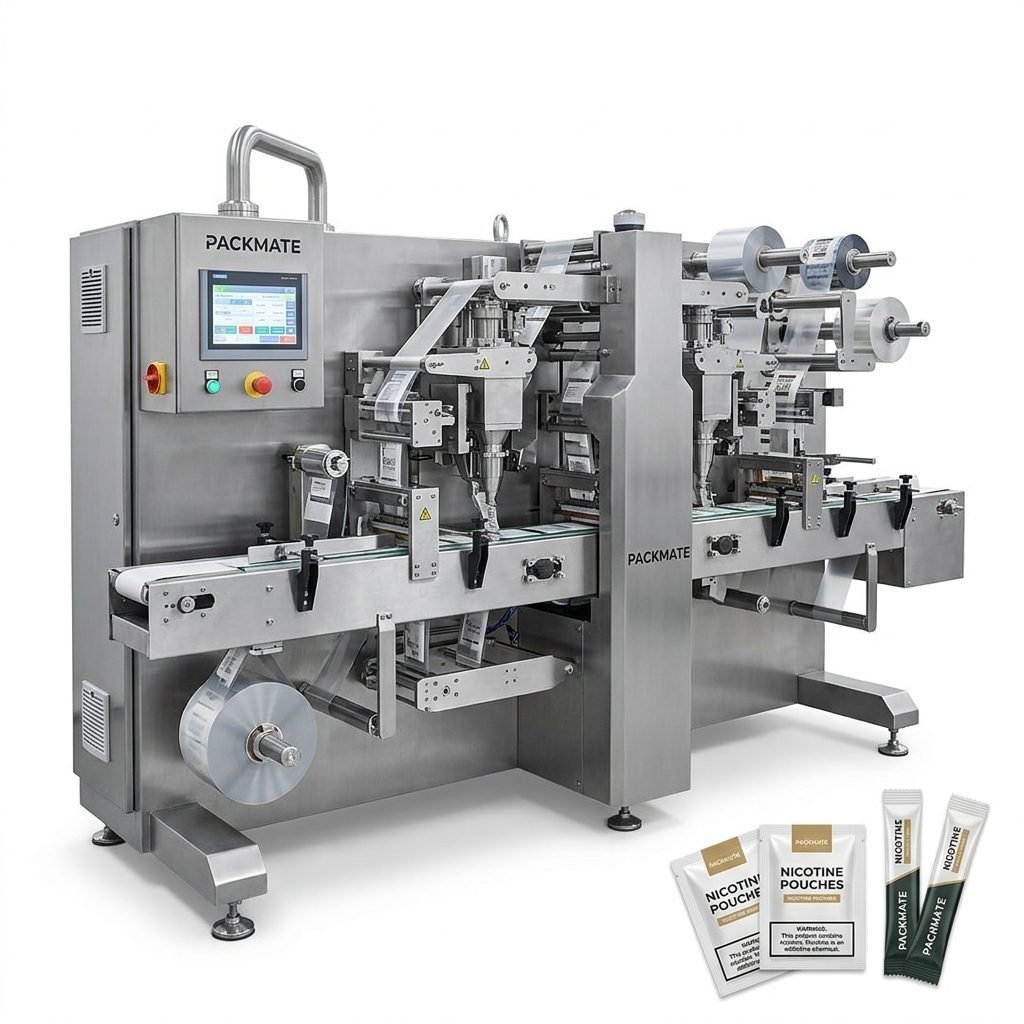
Choosing the right nicotine packaging machine in the Netherlands requires a practical blend of technical understanding, local market knowledge and regulatory awareness. This guide helps manufacturers, brand owners and packagers decide which equipment best fits Dutch distribution channels, consumer preferences and sustainability expectations. It outlines machine types, essential technical criteria, compliance considerations in the Netherlands, and vendor-selection tips so you can invest with confidence and scale efficiently.
Understanding the Dutch market and consumer habits
The Netherlands is a sophisticated European market with strong attention to product safety, recycling and clear consumer information. Dutch consumers often value clean design, sustainable packaging and convenience. Retail channels include specialized tobacconists, online shops and duty-free outlets; each channel brings different pack size, labeling and sealing requirements. If you target local retail, prepare labels in Dutch and consider compact travel packs that meet European transport and display standards.
Must-have technical features for nicotine pouch/snuff packaging machines
The right machine balances precision dosing, hygienic contact parts, speed, and flexibility. Look for these core capabilities:
📌 Accurate dosing — consistent pouch weight is critical for nicotine products where dose uniformity affects consumer safety and regulatory compliance.
📌 High sealing integrity — moisture barrier and tamper-evident seals prolong shelf life and maintain product quality in humid European conditions.
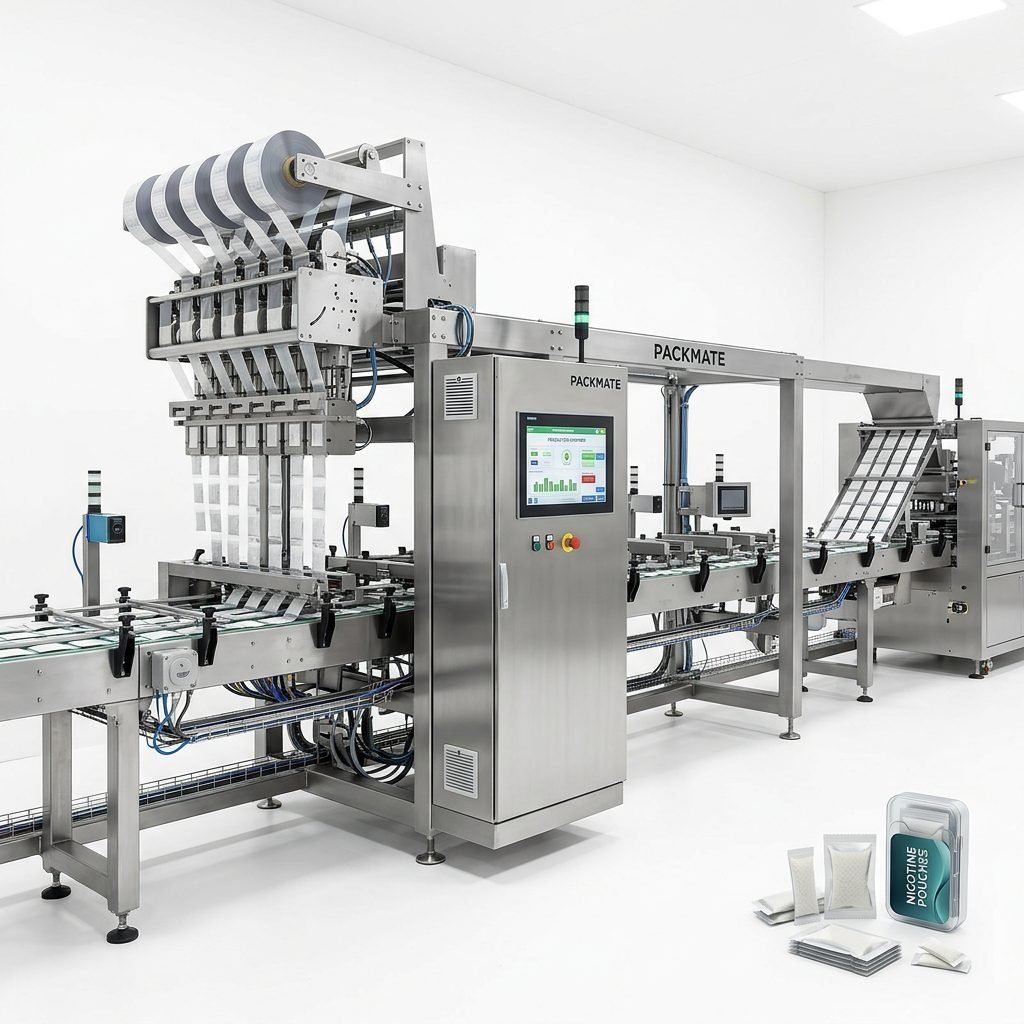
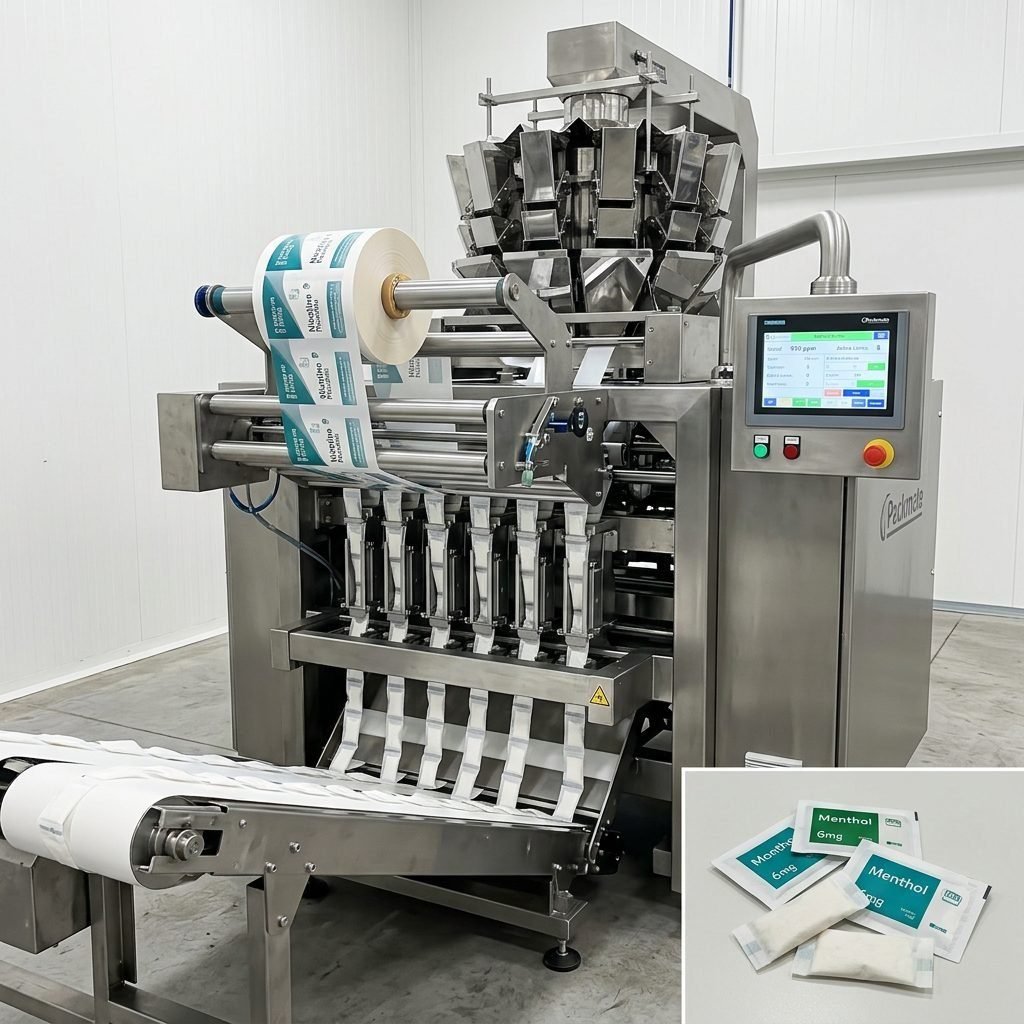
📌 Multi-lane options for scalability — multi-lane pouch lines increase throughput without using extra floor space, a smart choice for growing brands in densely used Dutch production facilities.
📌 Hygienic design & easy cleaning — stainless steel contact parts and quick-release modules reduce downtime and support GMP-like hygiene standards.
📌 Flexible pouch formats — the ability to run sachets, stick packs, and round pouches with minimal changeover helps you adapt to Dutch retailer preferences and promotional SKUs.
✅
Quick checklist:
Choose machines with precision feeding, modular design, and CE/ISO certification to meet European expectations. Consider energy efficiency and waste reduction as purchasing criteria — these are increasingly important in the Benelux region.
Machine types and when to use them
Different product formats require specialized equipment. Below are common machine families and their typical uses:
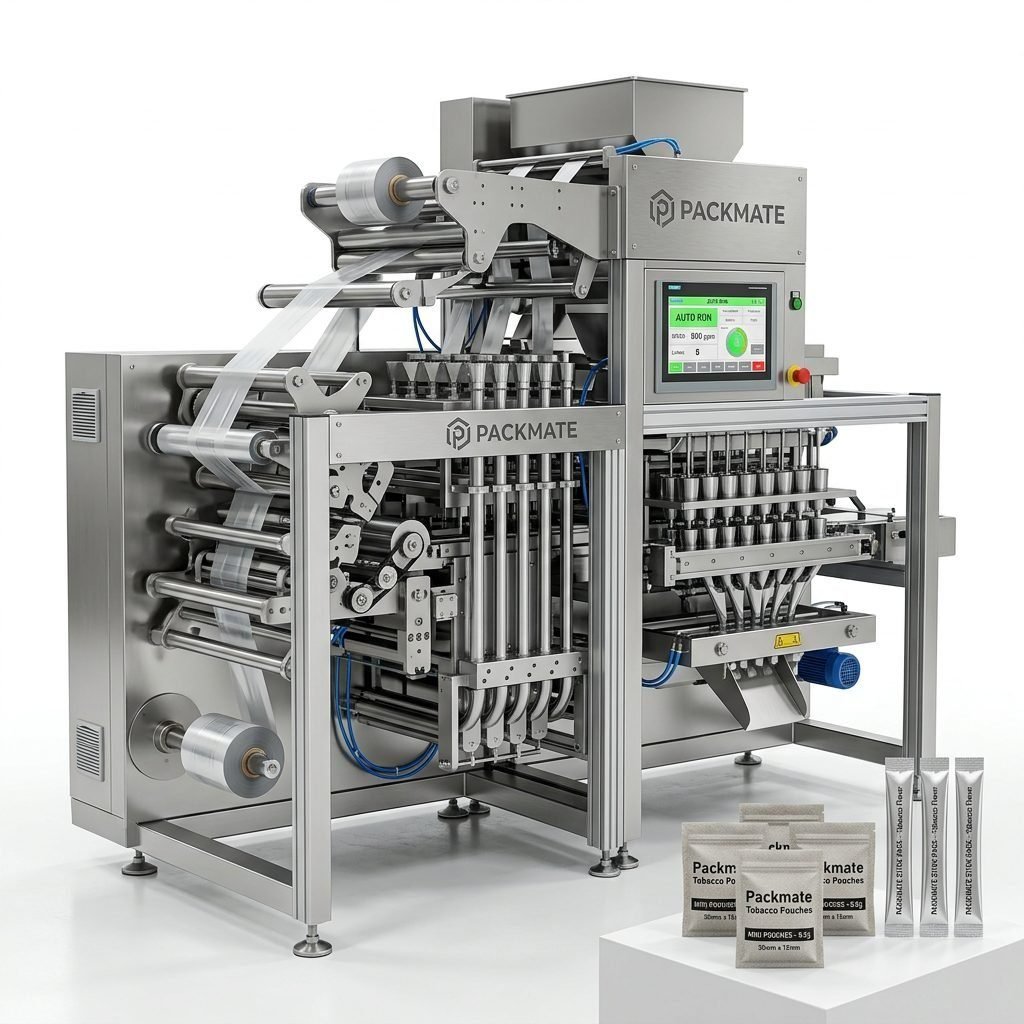
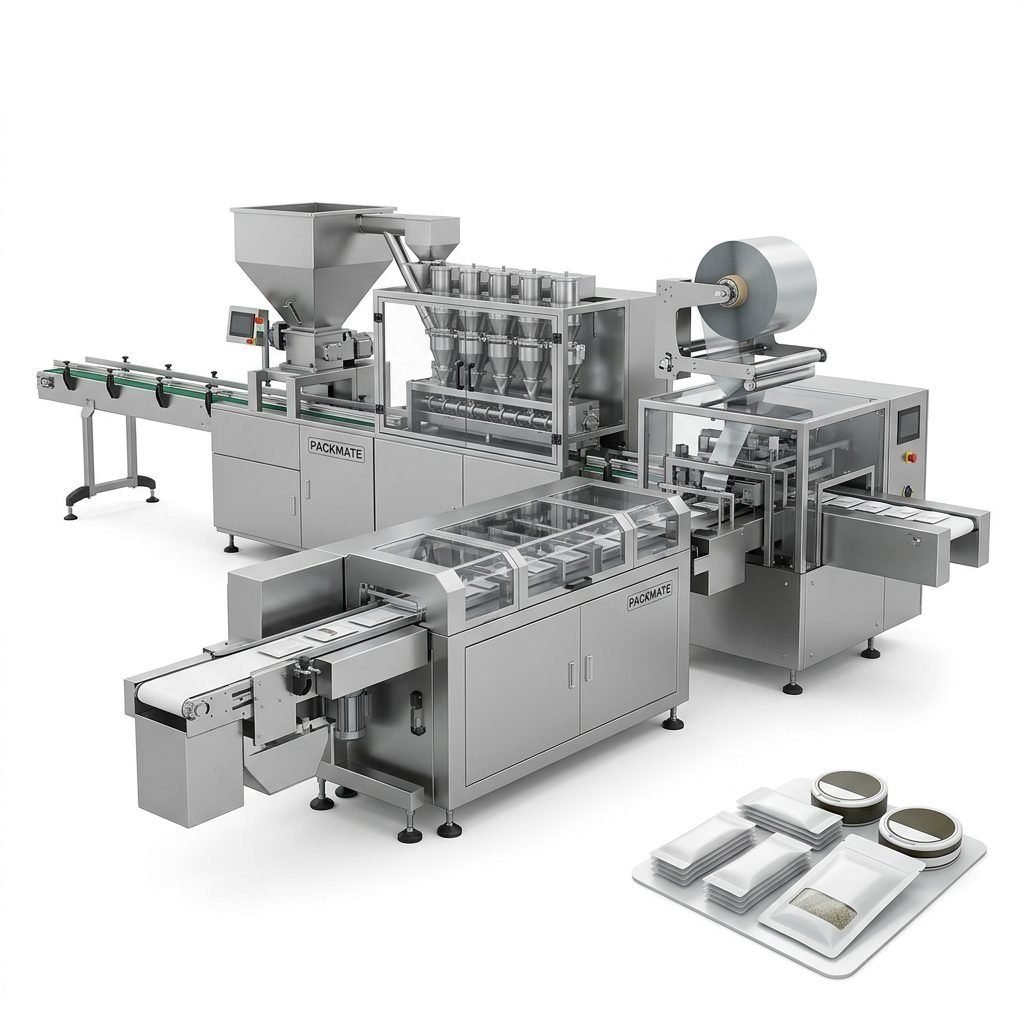
⚙️ Sachet & stick pack machines — ideal for single-dose nicotine pouches and samples. They are compact and cost-effective for entry-level production and promotional runs. See options at Sachet & Stick Pack Machines.
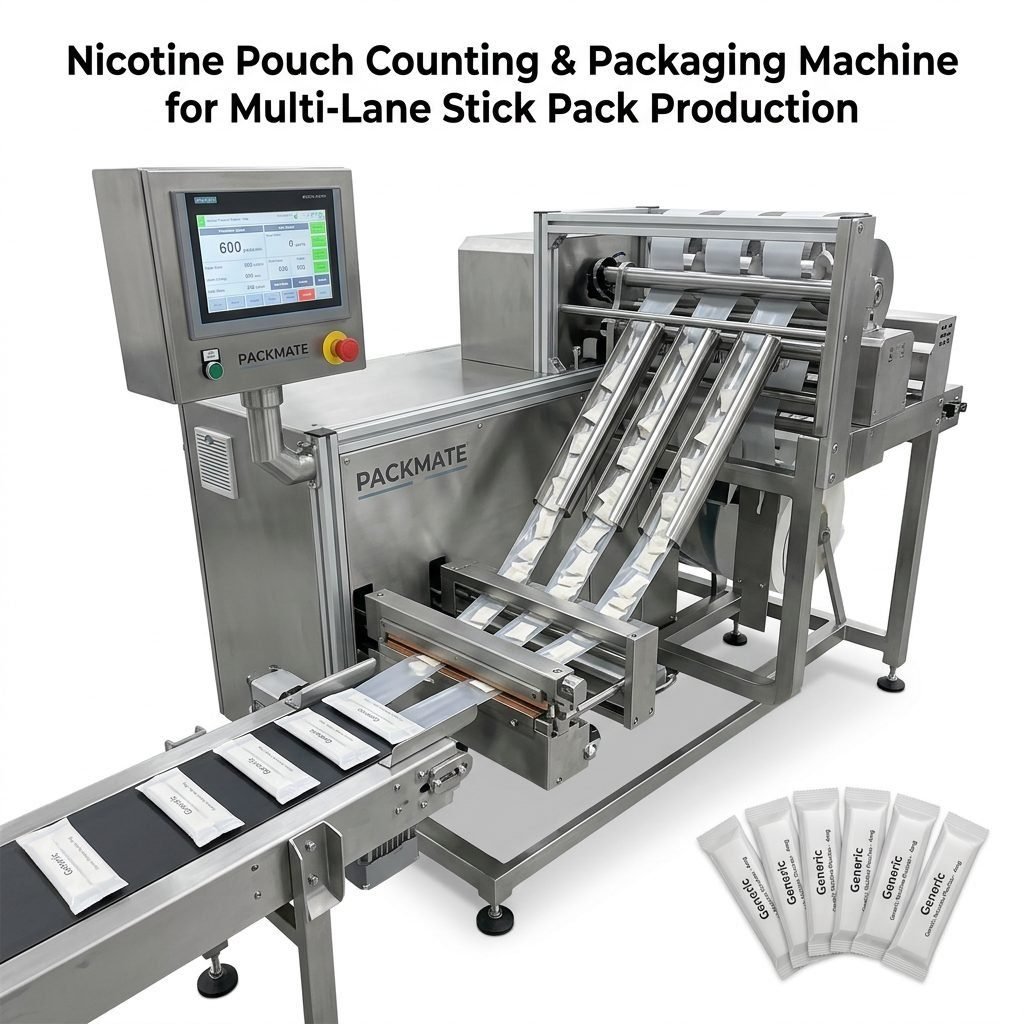
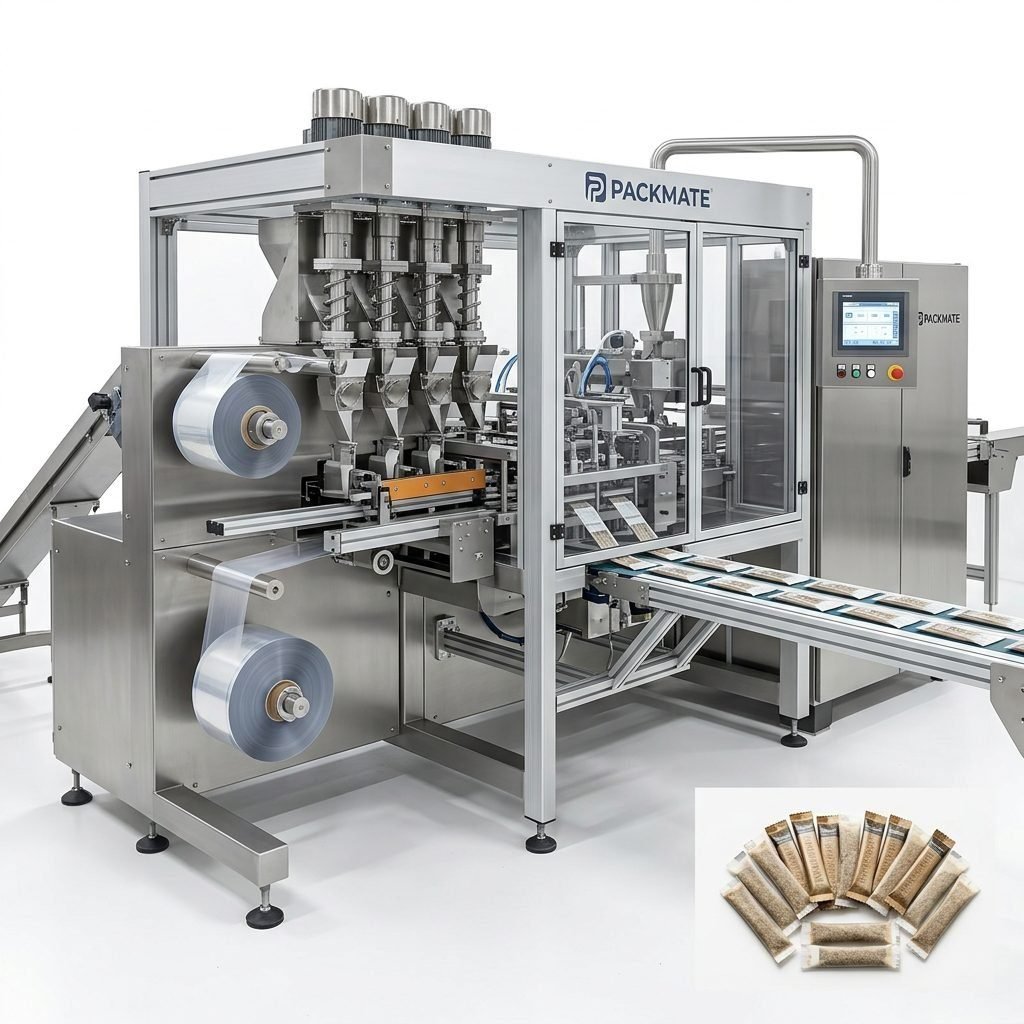
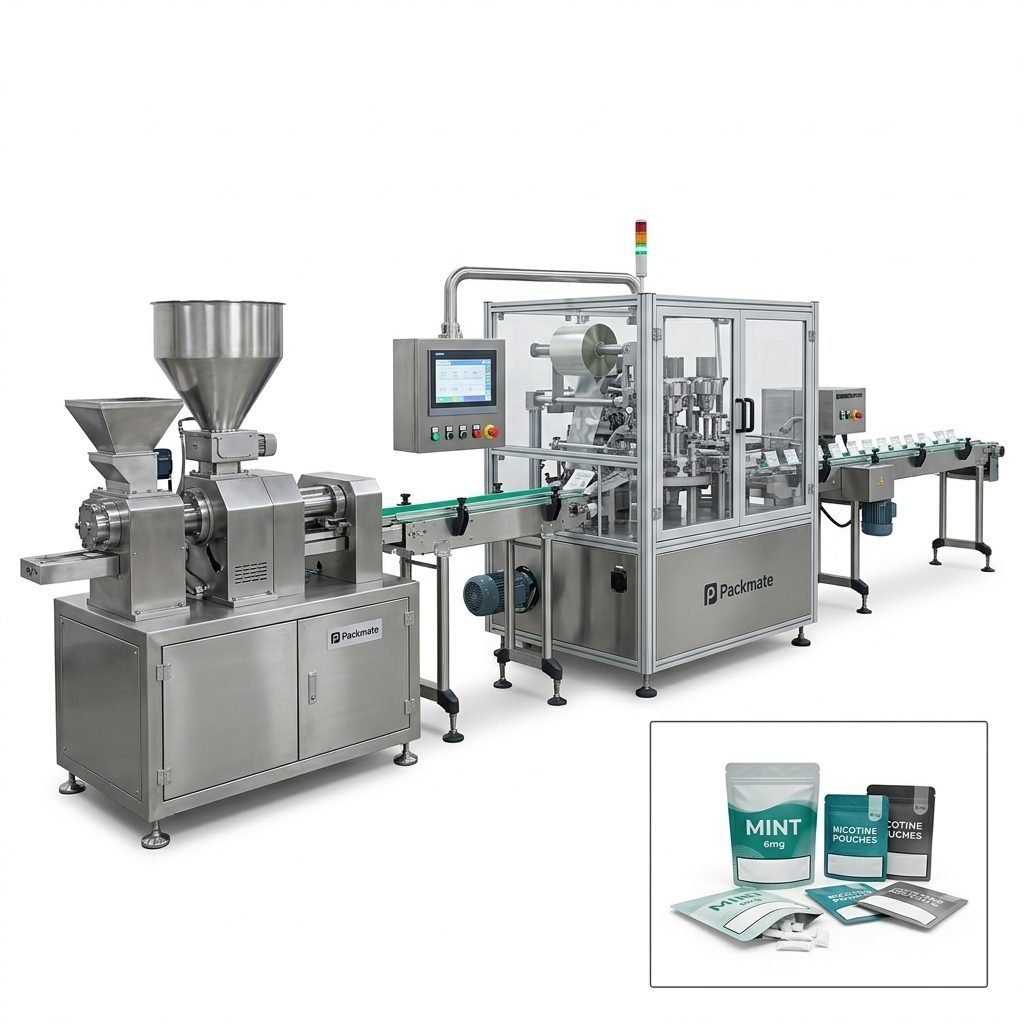
⚙️ Multi-lane pouch machines — designed for high throughput of small-dose pouches (multi-lane reduces production time per unit). Excellent for brands scaling across European markets. Explore Snus & Nicotine Packaging Machines.
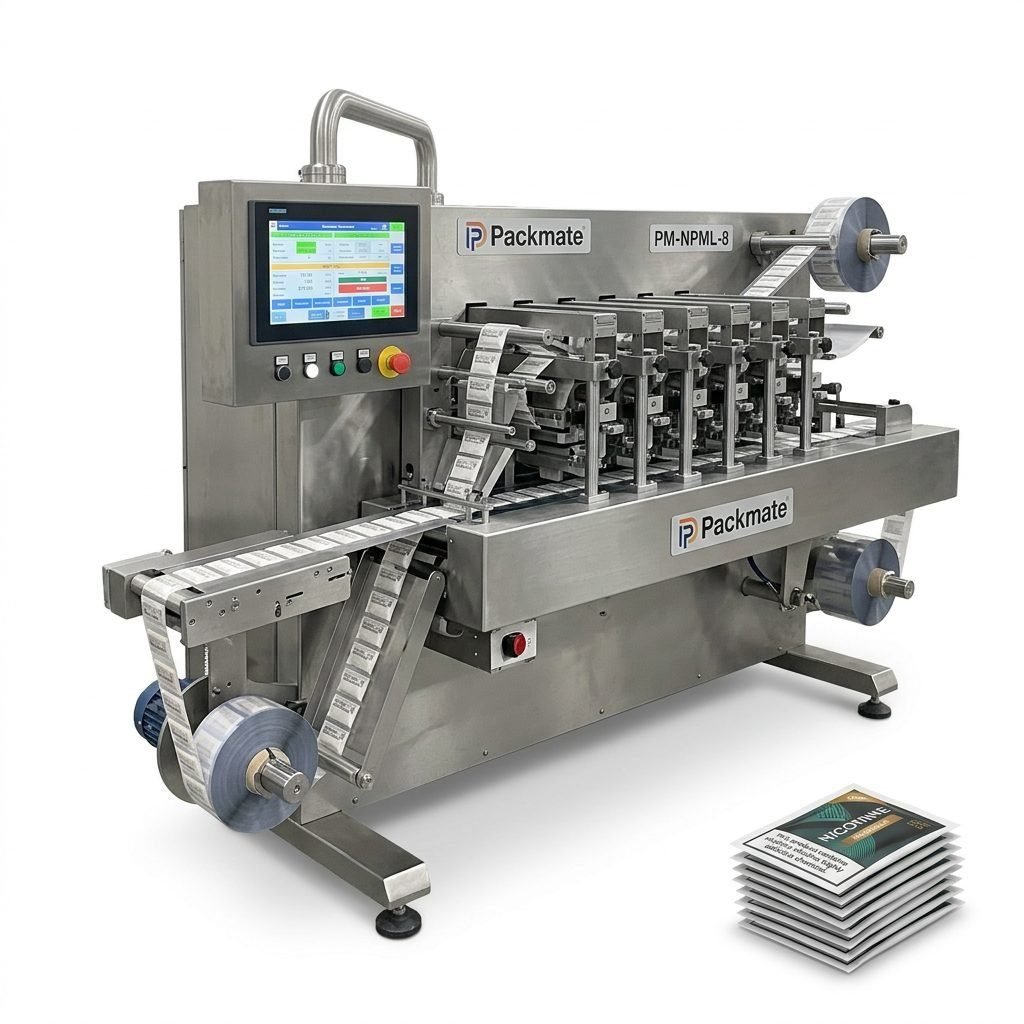
⚙️ Bag and pouch machines — for larger, retail-oriented tins and resealable pouches. These are perfect for mainstream retail and online selling where resealability and branding matter. View Bag & Pouch Packaging Machines.
Production capacity, OEE and throughput planning
Dutch production facilities often aim for lean manufacturing and high overall equipment effectiveness (OEE). When choosing a machine, calculate expected throughput based on:
– Cycle speed (pouches per minute) multiplied by lanes = theoretical capacity.
– Realistic uptime (consider changeovers, cleaning and maintenance).
– Packaging downstream: consider integration with weighing, cartoning and case packing to avoid bottlenecks — Packmate offers complete lines that include weighing systems and filling solutions. For full-line options see Filling & Packaging Lines and Weighing & Packaging Systems.
Compliance, labeling and regulations in the Netherlands
The Netherlands follows EU-level directives and national rules regarding tobacco-related products. While regulatory frameworks can vary, practical steps include:
– Ensure package printing supports required health information and local language (Dutch) labeling.
– Plan for traceability: machine-readable batch codes and clear production timestamps simplify recalls and traceability audits.
– Validate packaging materials for barrier properties; moisture ingress can affect product stability.
– Work with suppliers that offer CE and ISO-compliant equipment and provide documentation for audits.
For regulatory certainty, speak to local consultants and test sample packages in Dutch retail channels before committing to large orders.
Sustainability and material choices — a Dutch priority
Dutch consumers and retailers are increasingly eco-conscious. Packaging decisions influence buying behavior and retailer acceptance:
– Favor recyclable or mono-material films where possible to simplify recycling streams.
– Choose machines that minimize film waste through accurate web handling and efficient trimming; consider options for film recycling or offcuts collection.
– Energy-efficient servo drives and reduced compressed-air usage lower operating costs and appeal to sustainability-minded buyers.
Local tip:
Offer take-back programs or clear recycling instructions on packages to increase retailer acceptance in the Netherlands.
Automation, integration and Industry 4.0 considerations
Modern nicotine pouch lines should be built for smart monitoring and easy integration:
🔧 Remote diagnostics and PLC/HMI compatibility speed troubleshooting and lower local service calls.
🔧 MES-ready machines that export production data help Dutch manufacturers maintain traceability and optimize yield.
🔧 Modular conveyors, integrated checkweighers and metal detectors ensure a compact footprint and consistent product flow to packaging and cartoning.
What to ask potential suppliers
When evaluating suppliers, use clear technical and service questions:
– Can you provide CE/ISO certificates and performance test reports for similar nicotine pouch lines?
– Do you offer on-site installation and operator training within the EU/Netherlands?
– What spare-parts lead times should we expect, and do you have local partners or stock in Europe?
– Can the machine handle our target film materials and pouch designs without excessive tooling costs?
After-sales service, spare parts and training — why it matters
Choosing a reliable supplier is as much about post-sale support as machine performance. Consider vendors that provide:
– Remote support and rapid diagnostic access.
– Structured operator and maintenance training to reduce human error and speed up changeovers.
– Clear spare-parts kits and recommended preventive maintenance schedules that fit Dutch working hours and supply norms.
Packmate’s global turnkey experience and factory capabilities make it a partner to consider — learn more About Packmate.
Budgeting, ROI and total cost of ownership
Purchase price is only a part of the equation. Estimate total cost of ownership including:
– Energy and air consumption.
– Film and consumable usage per 1,000 pouches.
– Downtime impact and spare parts availability.
– Training costs and expected ramp-up time to full efficiency.
Factory acceptance testing and commissioning
Insist on comprehensive factory acceptance tests (FAT) before shipping. A good FAT includes running your actual materials, measuring pouch weights, seal tests and verifying interfaces with upstream/downstream equipment. For customer references and case studies see Case.
Transport and installation considerations in the Netherlands
Dutch warehouses and factories often have limited door heights and narrow streets in historic districts. Confirm machine footprint and crate sizes beforehand. Coordinate with local shipping agents to handle customs paperwork and import logistics if sourcing equipment from outside the EU.
Ready-to-buy checklist:
Match capacity to sales forecasts, verify local support, confirm materials compatibility, and request a FAT while ensuring CE/ISO paperwork is complete.
Where to find reliable packaging lines and support
Work with vendors offering complete lines and EU-ready documentation. Packmate provides a range of solutions from single-machine setups to fully integrated lines. Explore product families like Auxiliary Packaging Equipment and contact local representatives via Contact Us for tailored solutions.
Exhibition visits and factory tours — a recommended next step
Attend major European packaging and tobacco-related exhibitions to see machines running live and meet engineers face-to-face. Packmate regularly participates in global exhibitions — check Our Exhibition to find upcoming events.
In summary, selecting the right nicotine packaging machine for the Netherlands is a strategic decision that blends machine capability, regulatory readiness and local market fit. Prioritize machines that offer precise dosing, hygienic design, modular scalability and reliable EU documentation. Factor in sustainability, integration potential and strong after-sales support to ensure smooth market entry and long-term success.
Frequently Asked Questions
Q: What certifications should nicotine packaging machines have for use in the Netherlands?
A: Machines should carry CE marking and preferably ISO-related quality documentation. Additionally, request test certificates from the supplier showing performance on your materials. Always consult local legal guidance for product-specific requirements.
Q: How can I ensure my packaging meets Dutch sustainability expectations?
A: Use mono-material films where possible, optimize film usage, and include clear recycling instructions on the package. Choose machines that minimize waste and support efficient trimming and offcut handling.
Q: Do I need a multi-lane machine for the Netherlands market?
A: Multi-lane is recommended if you anticipate rapid volume growth or want to reduce per-unit production time. For small runs or frequent SKU changes, single-lane or flexible stick/sachet machines can be more cost-effective.
Q: How important is local support and spare parts availability?
A: Extremely important. Fast access to spare parts and remote/onsite service minimizes downtime. Confirm the supplier’s European support network and spare-parts lead times.
Q: Where can I see real-world examples of nicotine packaging lines?
A: Review supplier case studies and request references. Visit product pages and case pages such as Case and the product catalog to view past installations and customer feedback.