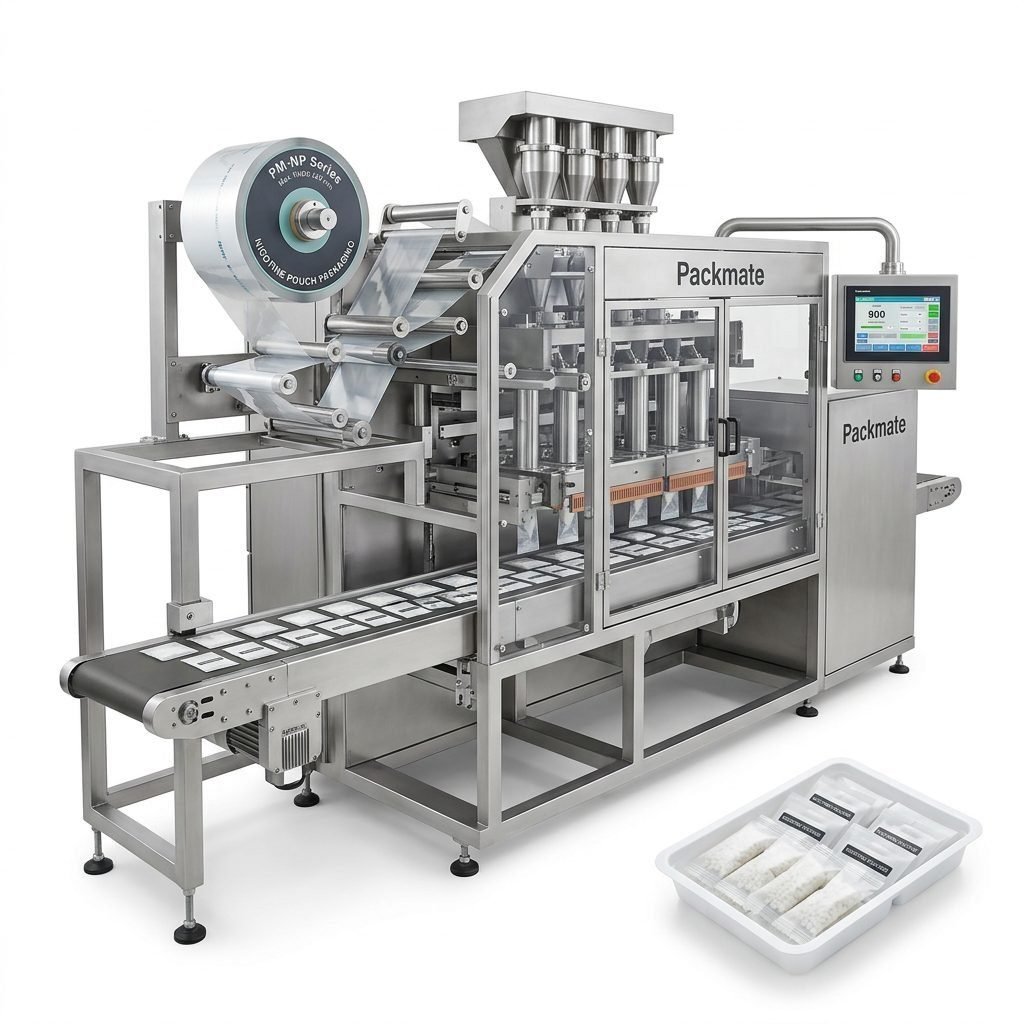
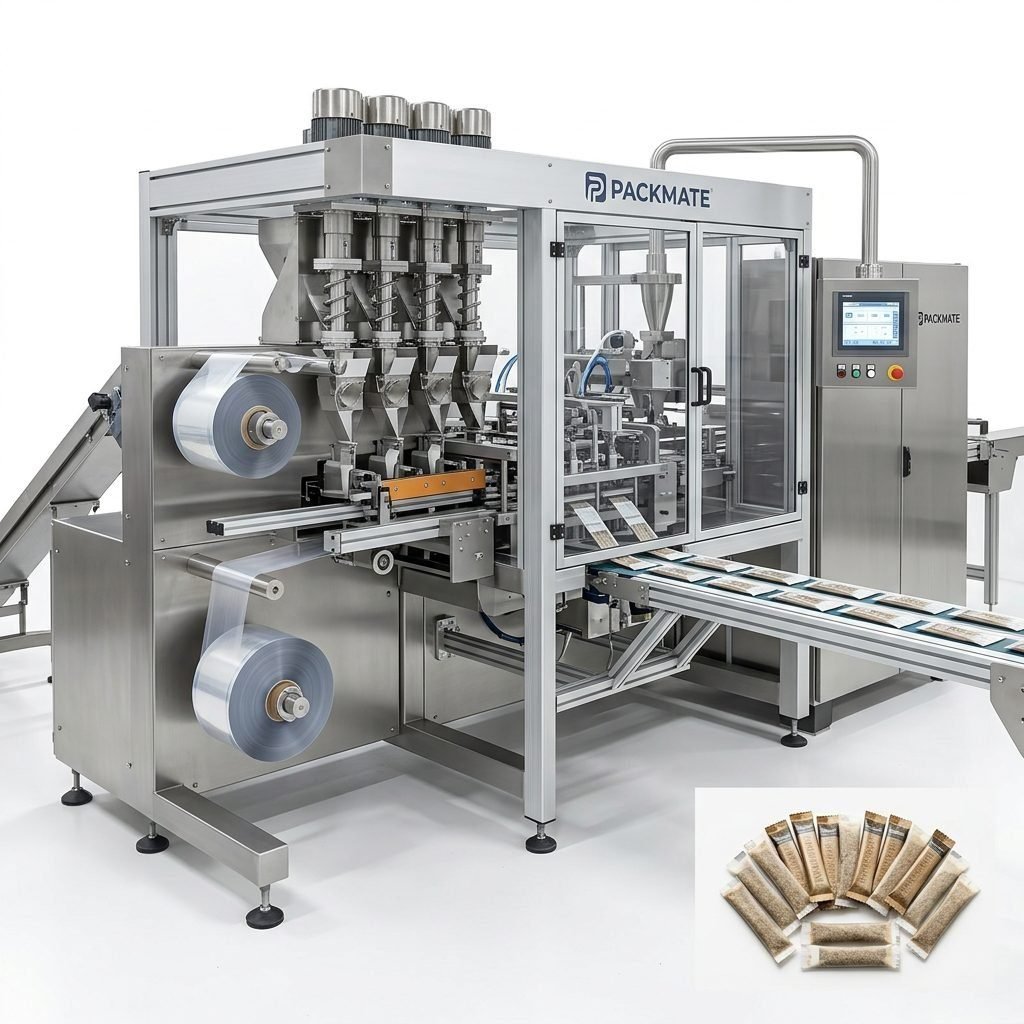
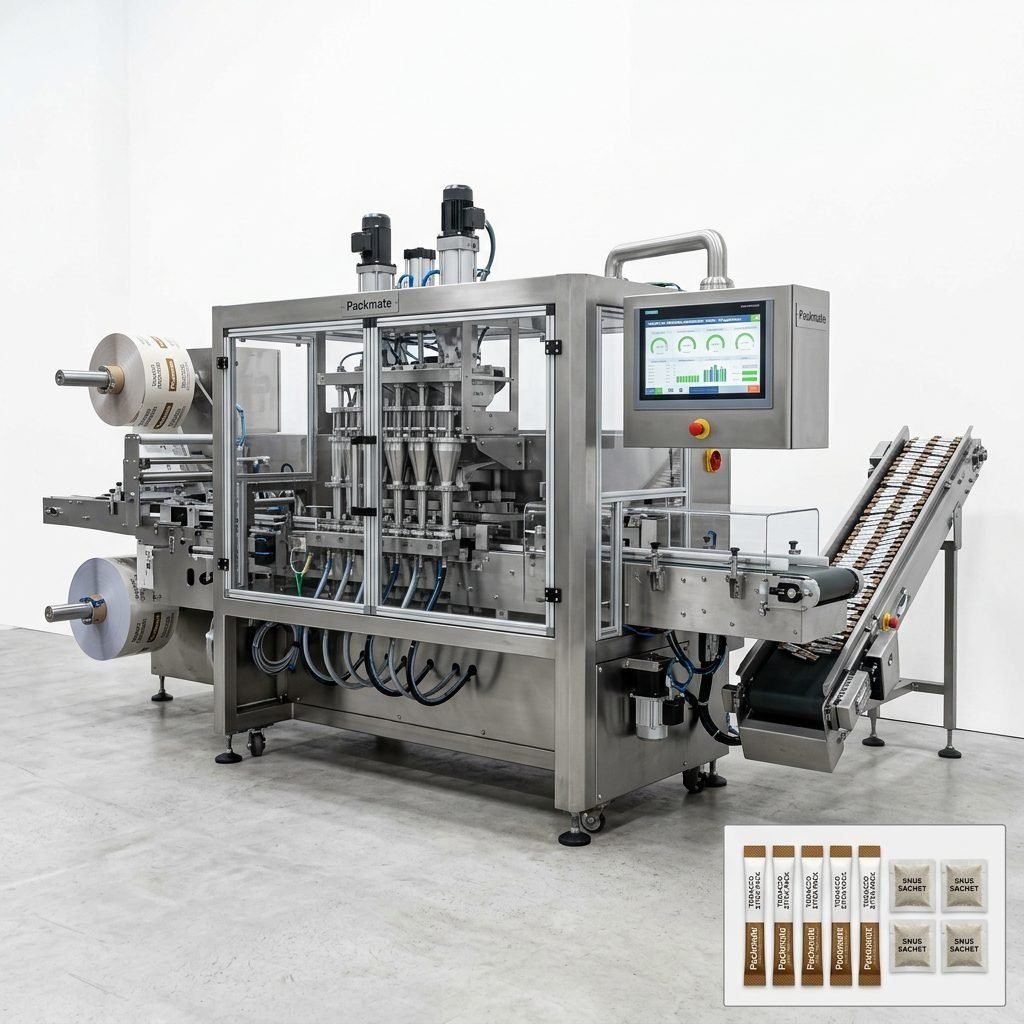
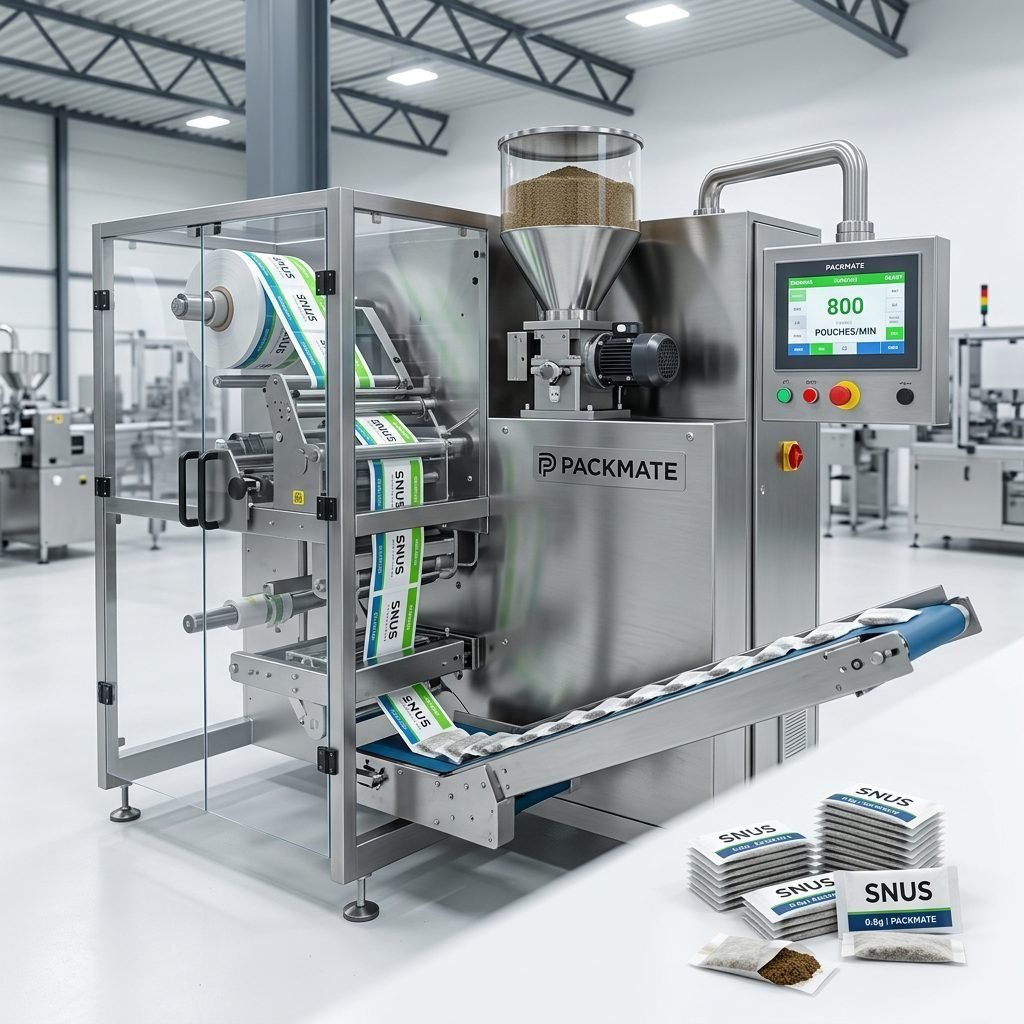
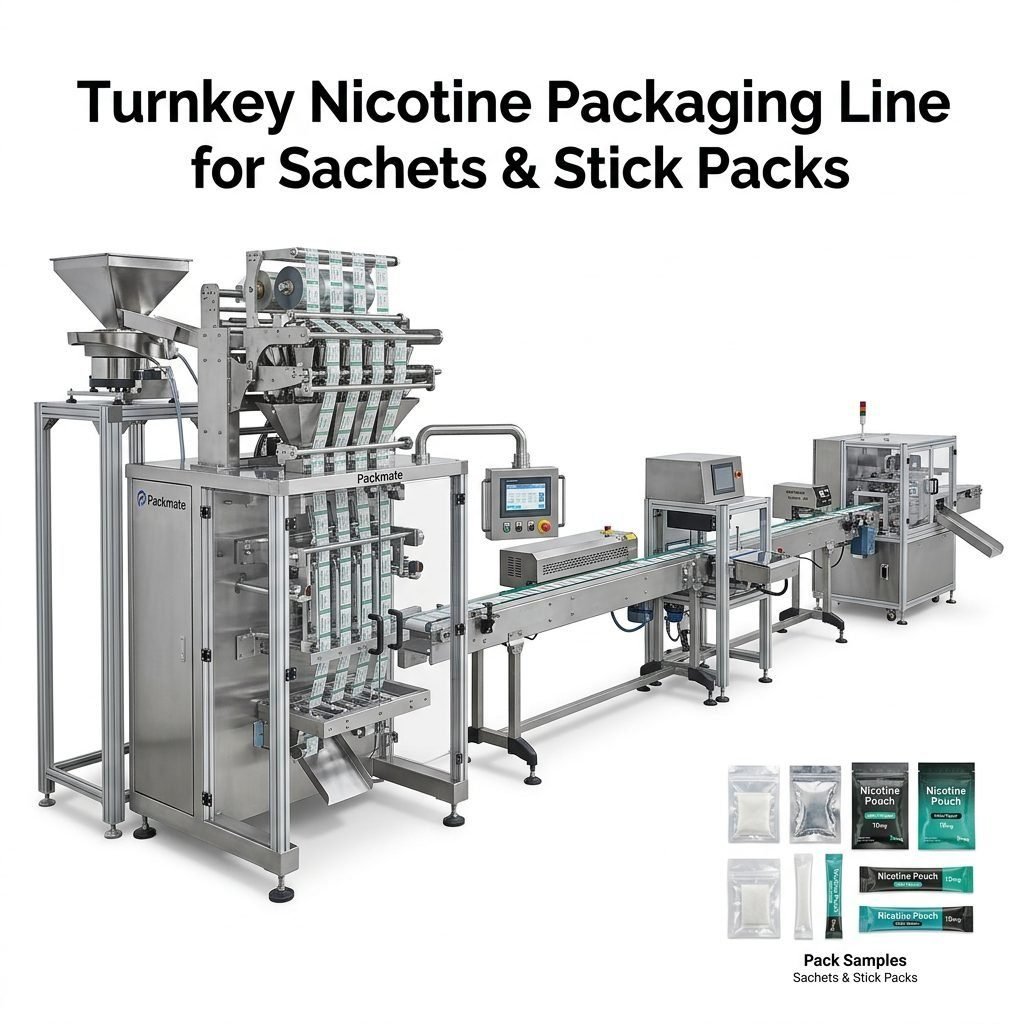
A complete snus production line is more than a collection of machines — it is a carefully engineered, integrated system that turns raw tobacco or nicotine pouch blend into market-ready snus products with consistent quality, regulatory compliance, and high throughput. This guide walks manufacturers, engineers, and operations managers through the essential equipment, step-by-step workflow, cost considerations, and real-world tips for turnkey snus manufacturing lines.
Overview: What a Turnkey Snus Production Line Includes
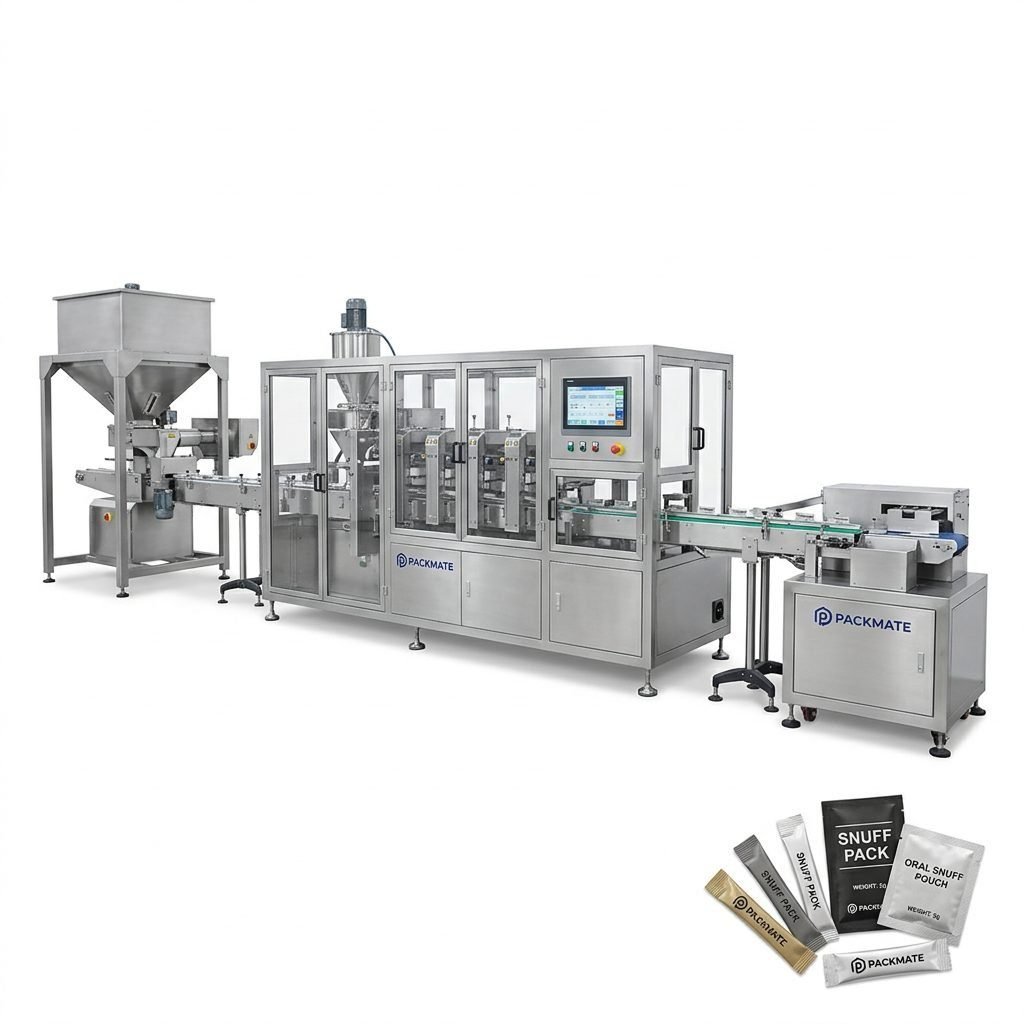
🔧 Turnkey means the supplier delivers a complete, ready-to-run solution: equipment, integration, electrical/mechanical installation, testing, and operator training. Typical elements include:
• Raw material handling and blending (moisture control)
• Portioning, dosing and tobacco/pouch filling systems
• Pouch forming / sachet/stick or multi-lane portion machines
• Sealing and cutting modules
• Secondary packaging (cartoning, wrapping, case packing)
• Weighing & quality inspection (vision systems, metal detection)
• Control system (PLC/HMI) and data logging
Key Machines and Their Roles
Understanding the role of each machine helps with layout, capacity planning, and budget. Below are the core components:
1. Blending & Conditioning Unit
This unit ensures uniform moisture and flavor distribution. Proper conditioning reduces dust and improves pouch integrity. Modern systems include adjustable conveyors, mixers, and moisture sensors for closed-loop control.
2. Dosing & Weighing Systems
Precision dosing is critical: each pouch must meet weight tolerances to comply with regulations and brand expectations. High-speed multi-head weighers and vibratory feeders maintain speed and accuracy.
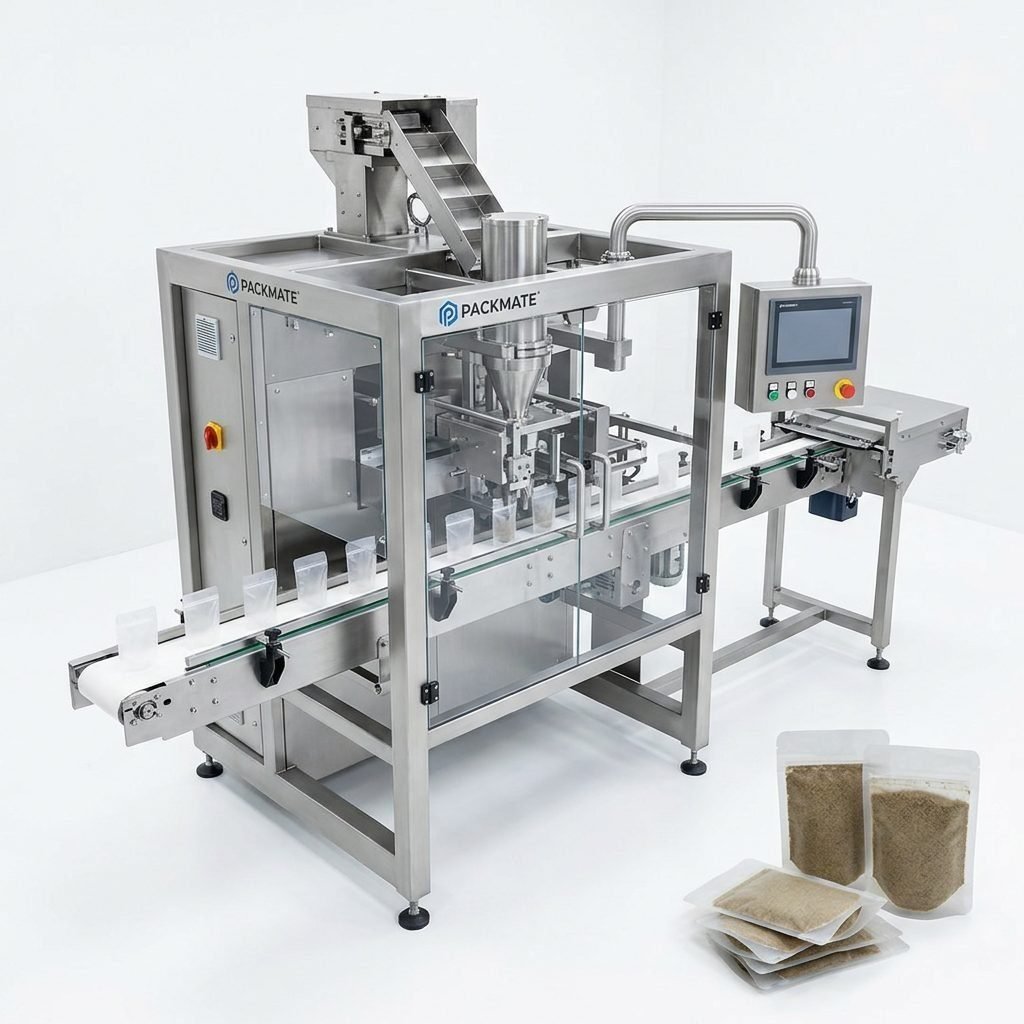
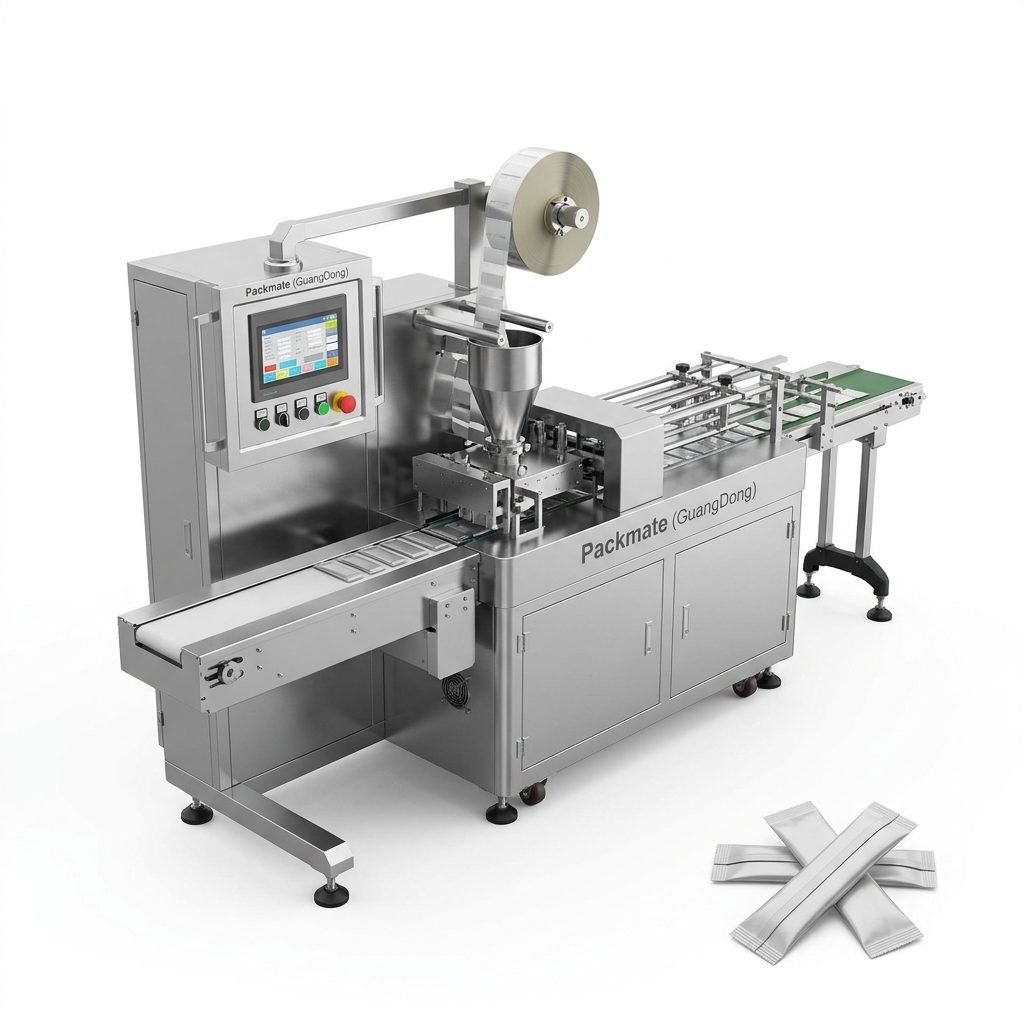
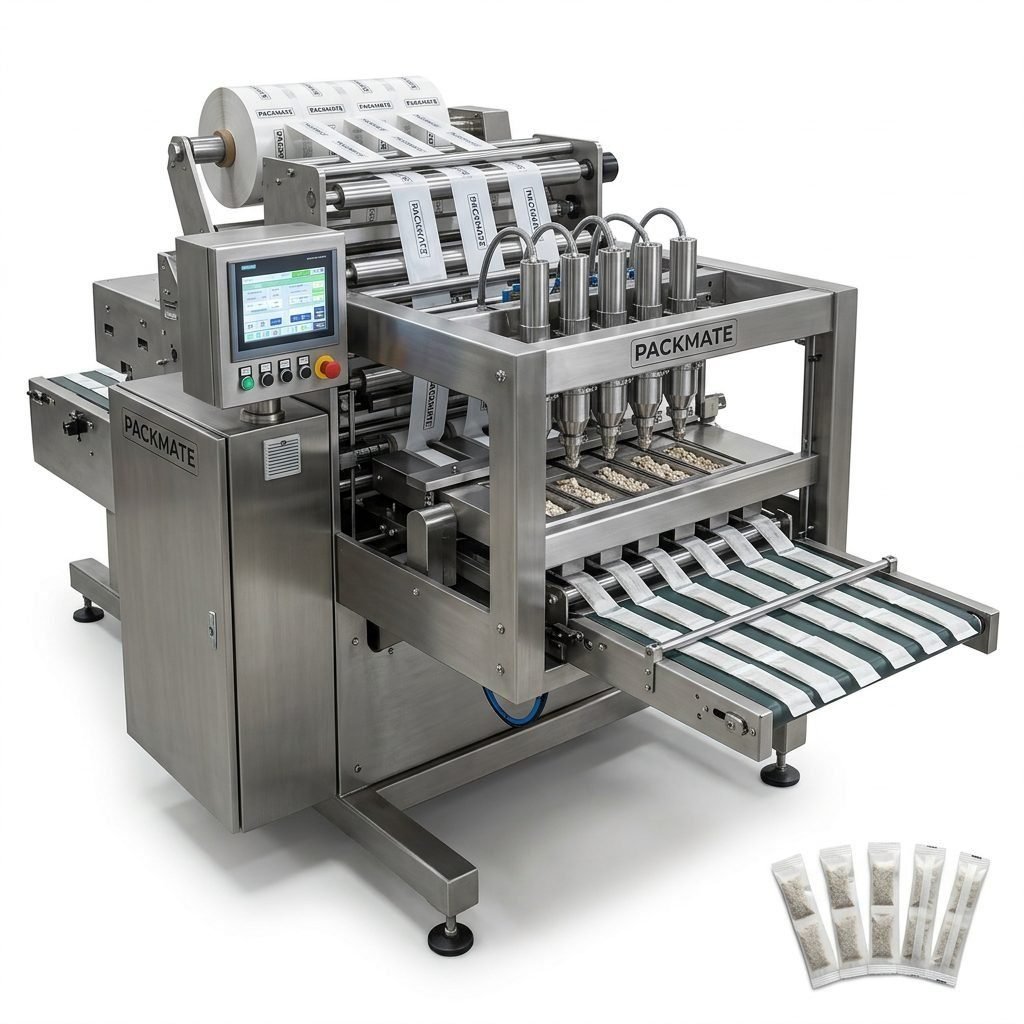
3. Pouch/Forming and Filling Machines
Choose between stick pack, sachet, or multi-lane portion machines depending on product format. Multi-lane systems increase throughput while keeping floor space compact — ideal for high-volume nicotine pouch production.
4. Sealing, Cutting & Finishing Modules
Reliable sealing prevents leaks and ensures shelf life. Options include heat-seal, ultrasonic, or impulse systems based on materials. Precision cutting creates consistent portions for consumer appeal.
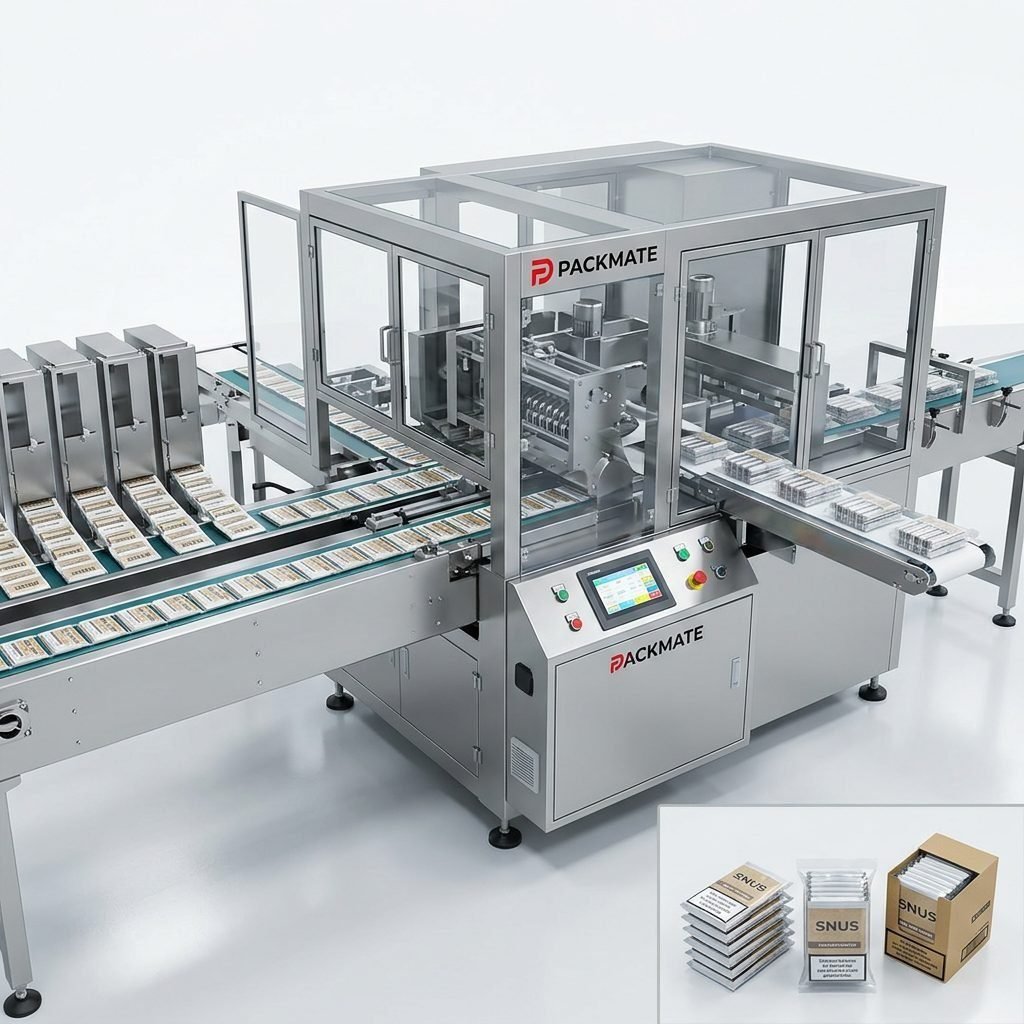
5. Secondary Packaging & Case Packing
After primary packaging, automated cartoners, flow wrappers, and case packers create retail-ready units and pallets. Integration enables continuous flow and reduces manual handling.
Process Workflow: From Raw Mix to Finished Snus
A clear process map supports quality control and regulatory traceability. Typical workflow steps:
1. Raw Material Receipt & QC — verify nicotine/tobacco, flavors, pouch substrates, and additives.
2. Pre-blend & Conditioning — achieve target moisture; remove contaminants.
3. Dosing & Portioning — weigh each portion to tolerance (± specified grams).
4. Pouch Forming & Filling — form substrate, fill, seal and cut with in-line verification.
5. Inspection & Rework — vision systems check seal integrity, weight, and appearance.
6. Secondary Packaging — grouping, cartoning, labelling and case packing for shipping.
Cost Breakdown: What to Expect
Estimated costs vary by capacity, automation level, and local labor costs. Typical categories include capital expenditure (CAPEX), operating expense (OPEX), and installation & commissioning.
Capital Costs (CAPEX)
• Base machines (filling + sealing) account for the largest share.
• Multi-lane systems and high-speed weighers increase upfront cost but lower per-unit production cost.
• Budget extra for PLC/HMI, vision inspection, and packaging automation.
Operational Costs (OPEX)
• Raw materials and consumables (substrates, pouches, flavorings).
• Maintenance, spare parts, and utilities (compressed air, electricity).
• Labor and quality control overhead.
Installation, Training & After-Sales
Most reputable suppliers include on-site commissioning and operator training. Expect additional costs for travel, site modification, and extended warranty or service contracts.
Turnkey Delivery: What Good Suppliers Provide
A strong turnkey provider delivers not only equipment but also engineering expertise, factory acceptance testing (FAT), and integration. Look for these deliverables:
✓ Pre-shipment FAT and video documentation
✓ Full spare parts list and recommended spares package
✓ Operator and maintenance manuals, PLC source code, and training
✓ On-site installation, commissioning, and pilot production support
Quality, Compliance and Certifications
Compliance with regional standards is essential. Equipment should meet CE and ISO requirements, and manufacturing lines must support traceability, cleanability, and hygienic design. Packmate Snus Machine emphasizes certified equipment and documented quality systems that meet global regulatory expectations.
Customization & Scalability: Multi-lane vs Single-lane
If growth is expected, opt for modular multi-lane filling machines. They save floor space and scale production by adding lanes rather than entire machines. Customization options include pouch formats, dosing range, and integrated inspection modules.
Factory Strength & After-sales: Why It Matters
📦 A manufacturer with a large factory and advanced CNC capabilities delivers more reliable machines and faster spare-part availability. Packmate’s 20,000㎡ workshop and 30+ years of engineering experience mean:
• Faster lead times and robust assembly quality
• Better documentation and certified quality control
• Global support network and exhibition presence for live demos
Practical Layout and Installation Tips
Plan the production floor with linear flow: raw material → blending → filling → inspection → secondary packaging → warehousing. Allocate space for:
• Maintenance access and spare-part storage
• Clean zones and separate rework areas
• Utility routing (air, power, wastewater) with allowances for future expansion
Choosing a Supplier: Questions to Ask
When evaluating vendors, consider:
• Can they deliver a full turnkey solution including FAT and commissioning?
• Do they provide references and case studies (request actual production videos)?
• What certifications do their machines carry (CE, ISO)?
• What is their spare-parts lead time and global service capability?
Real-World Examples and Resources
Explore product lines and case studies to understand real deployments and configurations:
• Product overview: Snus & Nicotine Packaging Machines
• Packaging options: Bag & Pouch Packaging Machines
• Company details and history: About Packmate
• Real cases: Case
Maintenance & Lifespan
Preventive maintenance extends equipment life. Key practices:
• Scheduled lubrication, belt and cutter replacement intervals
• Regular calibration of weighing systems
• Software backups and PLC firmware management
Return on Investment (ROI) Considerations
ROI depends on throughput, yield, labor savings, and product margin. Higher automation reduces variable costs per pouch and improves consistency — often accelerating payback when volume is sufficient.
Why Packmate Snus Machine is a Strong Option
📍 With 30+ years of experience, Packmate offers engineered multi-lane solutions, a large manufacturing facility, and turnkey delivery — covering design, production, FAT and global support. Their model range includes specialized machines for sticks, sachets and nicotine pouches.
Contact and Next Steps
To evaluate a snus production line, request a capacity quote, FAT schedule, and layout proposal. For direct inquiries, visit Contact Us or explore available product lines.
Conclusion
Building a complete snus production line requires careful selection of dosing, pouch forming, sealing, and inspection technologies, combined with strong supplier support. A turnkey approach shortens time-to-market and reduces integration risk. Prioritize suppliers with experience, certified equipment, and global after-sales service for predictable performance and fast ROI.
Common Questions
Q1: What is the typical lead time for a turnkey snus production line?
A1: Lead time varies by configuration and capacity — typically from 12 to 26 weeks including FAT, with faster delivery possible for standard configurations.
Q2: How do I estimate the production capacity I need?
A2: Estimate annual volume, convert to pouches/day, and include growth margin. Discuss target throughput with suppliers for multi-lane vs single-lane trade-offs.
Q3: What certifications should the equipment have for global sales?
A3: CE and ISO are commonly required; local market regulations may require additional documentation. Ensure traceability and hygienic design features.
Q4: Can machines be customized for different pouch sizes or nicotine strengths?
A4: Yes — modern systems are modular and configurable. Discuss dosing range and changeover times when selecting equipment.
Q5: Where can I see real-world implementations and video demonstrations?
A5: Review manufacturer case pages and exhibition materials for videos of live machines, for example the Our Exhibition and Case pages.