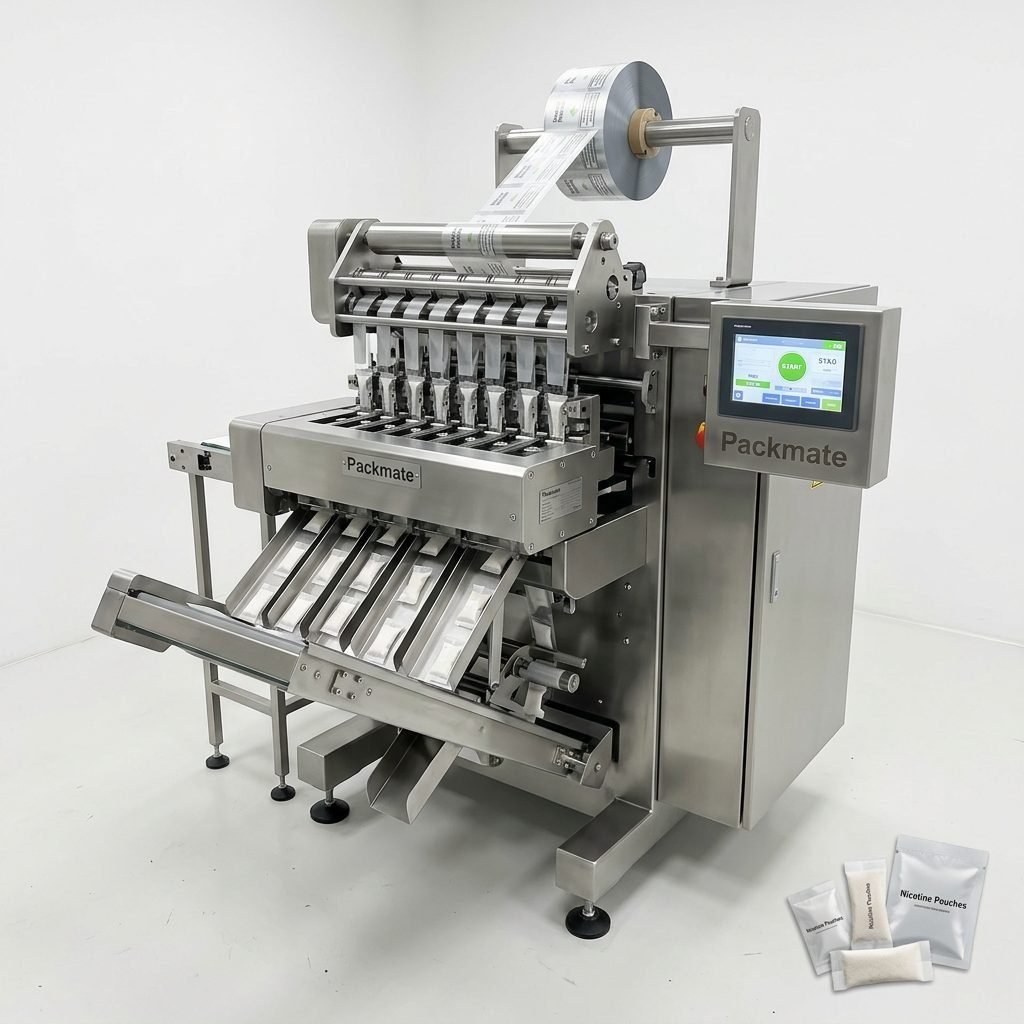
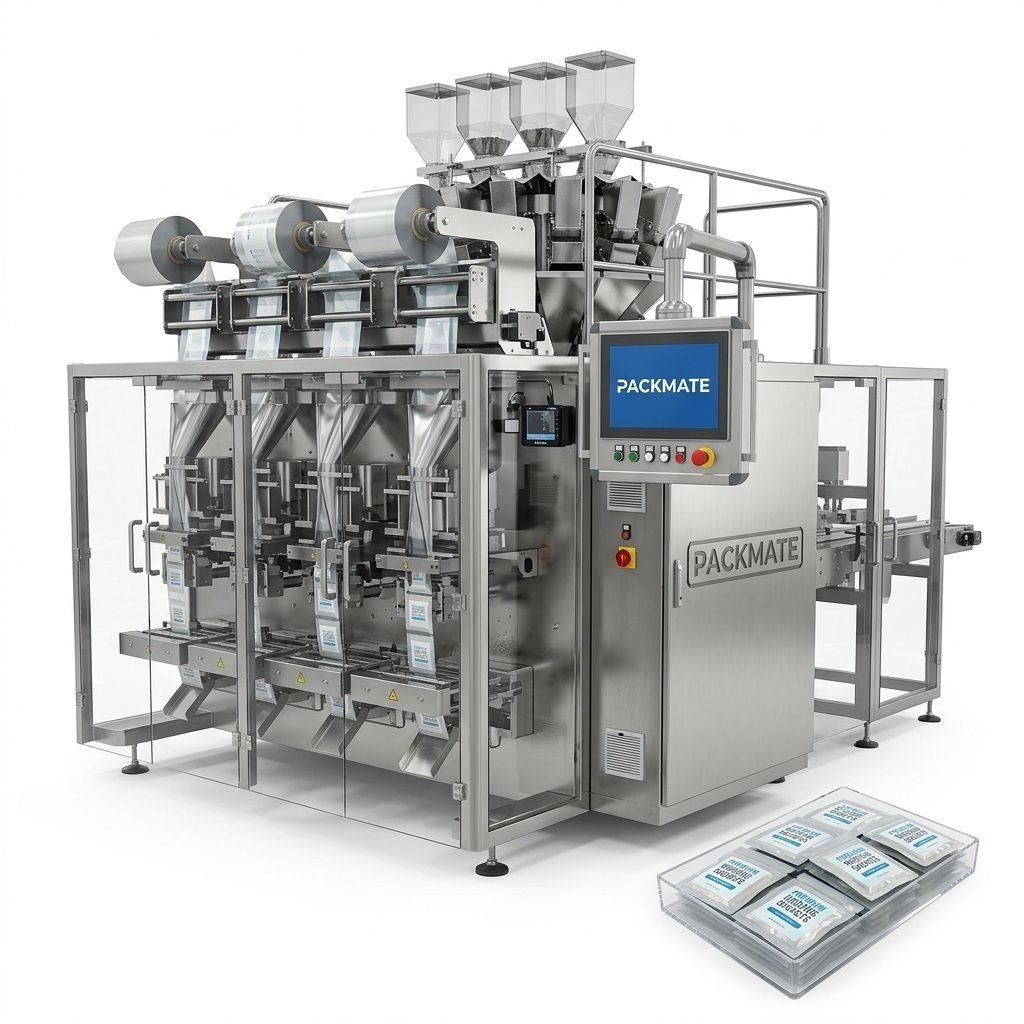
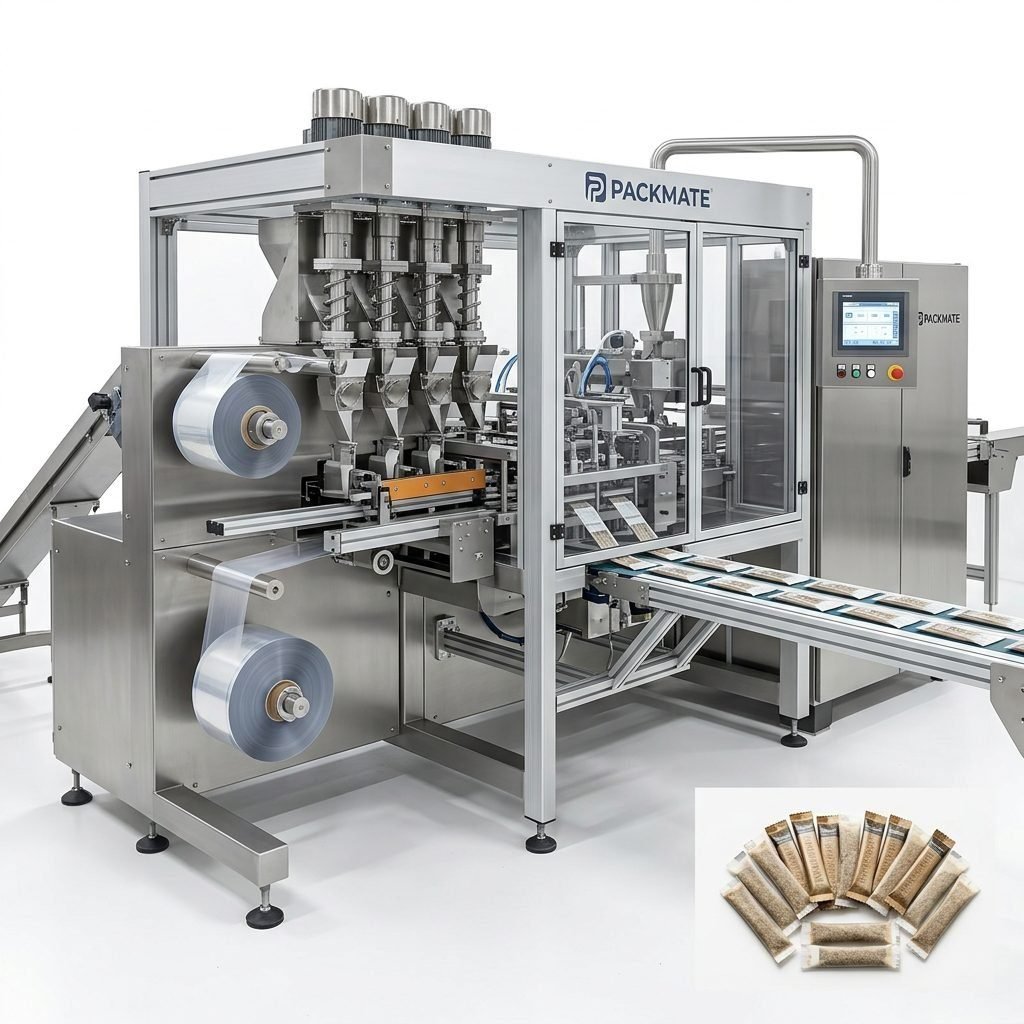
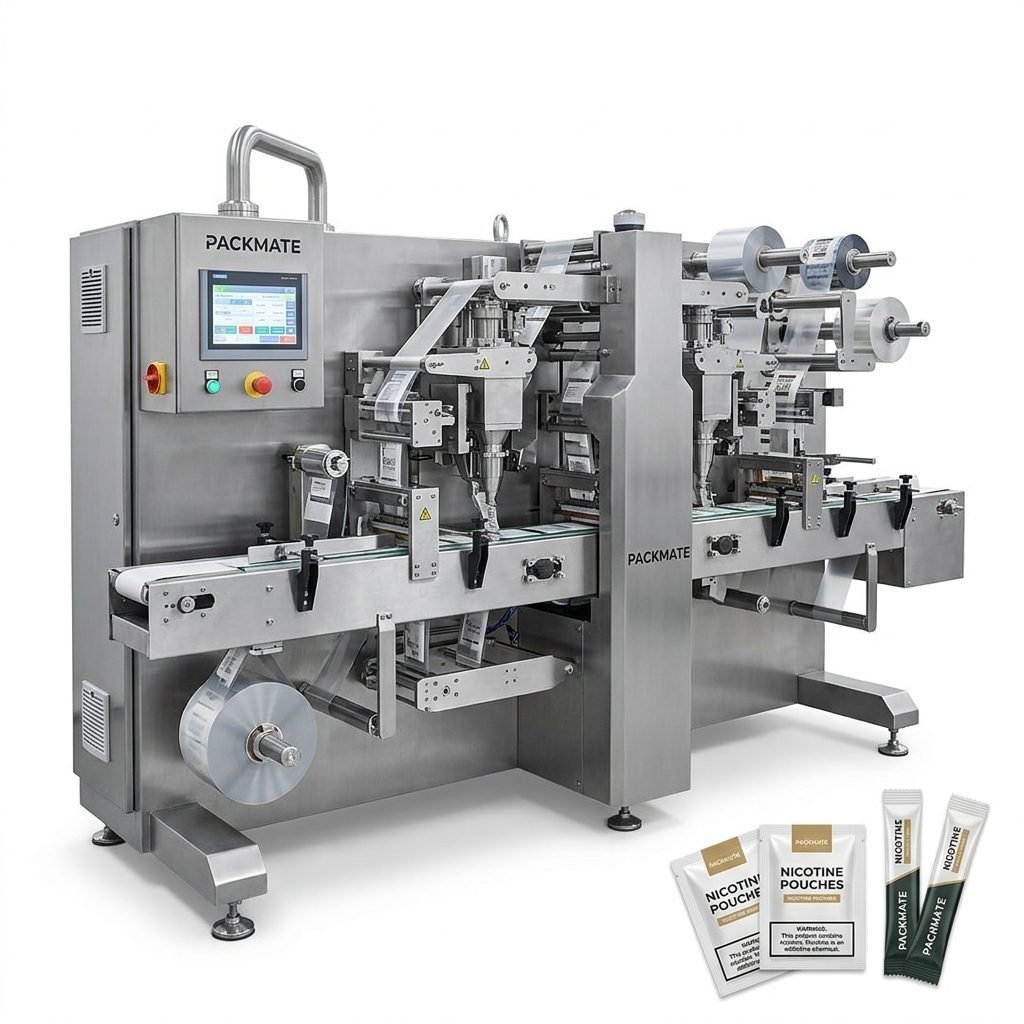
Choosing the right snus packaging machine in Oceania requires more than just comparing specs on paper. Manufacturers need an approach that balances local regulatory realities, product formats, production targets, and long-term serviceability. This guide walks you through practical steps, technical checklists, and supplier-evaluation tips so you can confidently select a machine that matches your business goals in Australia, New Zealand and the wider Oceania market.
Market & regulatory context in Oceania 📍
Oceania is not a single regulatory market. Australia typically enforces stricter controls on nicotine-containing products, while New Zealand has demonstrated more progressive policies around harm reduction products. For manufacturers this means: always confirm import, sales and labeling rules locally before scaling production. Local customs and consumer preferences also shape pack formats — discreet, travel-friendly sachets and small-dose pouches sell well among urban adult consumers.
Start with product format and capacity planning ⚙️
Your first decision is the pouch format and daily throughput. Common options include stick packs, sachets, and multi-lane nicotine pouches. Match format to consumer habits: lightweight sachets for sampling, multi-lane pouches for high-volume SKUs. Define realistic daily and monthly production targets — including growth buffers — because machine selection, floor footprint and auxiliary equipment all depend on capacity planning.
Quick checklist:
production target (units/day), pouch size range, fill type (powder/granule/paste), desired lanes (1-12), budget range, and local compliance needs. ✅
Core machine types and when to choose them
Choose a machine family based on format and flexibility:
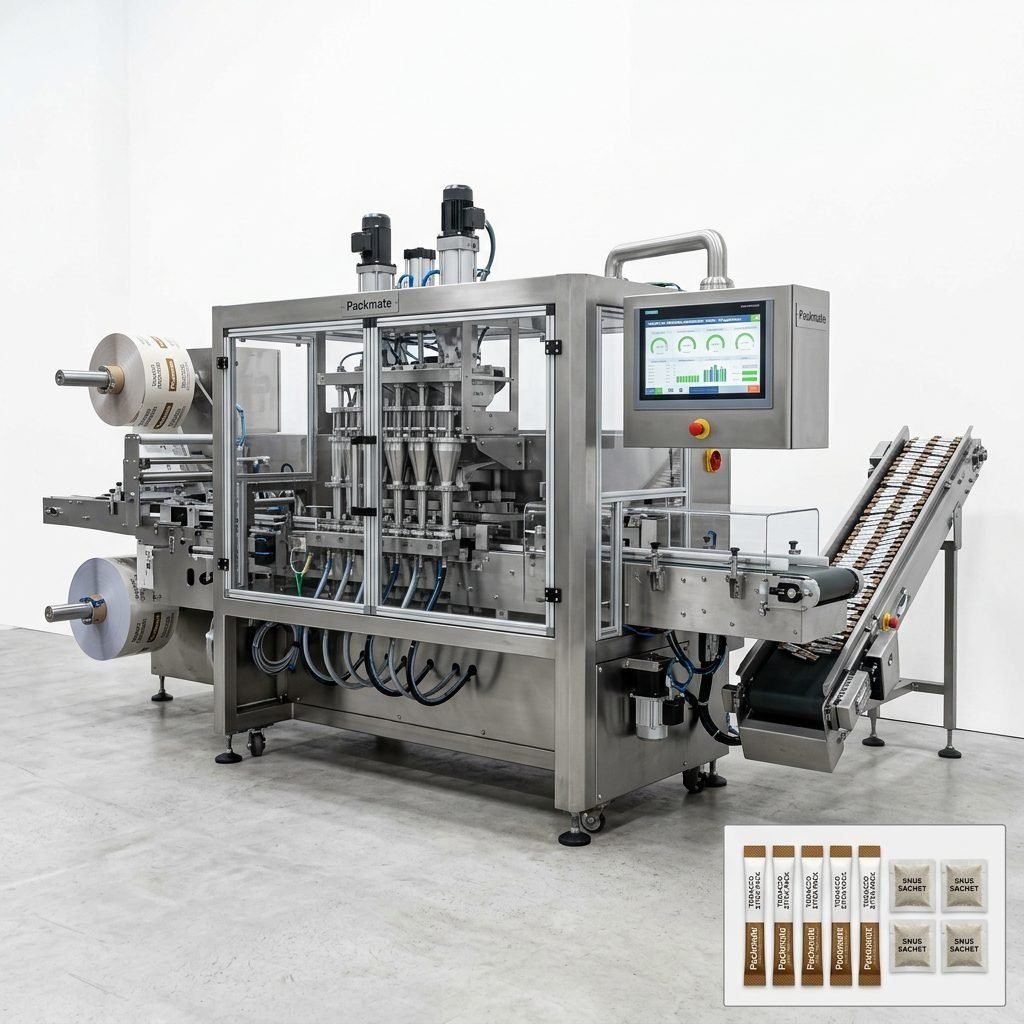
Sachet & Stick Pack Machines
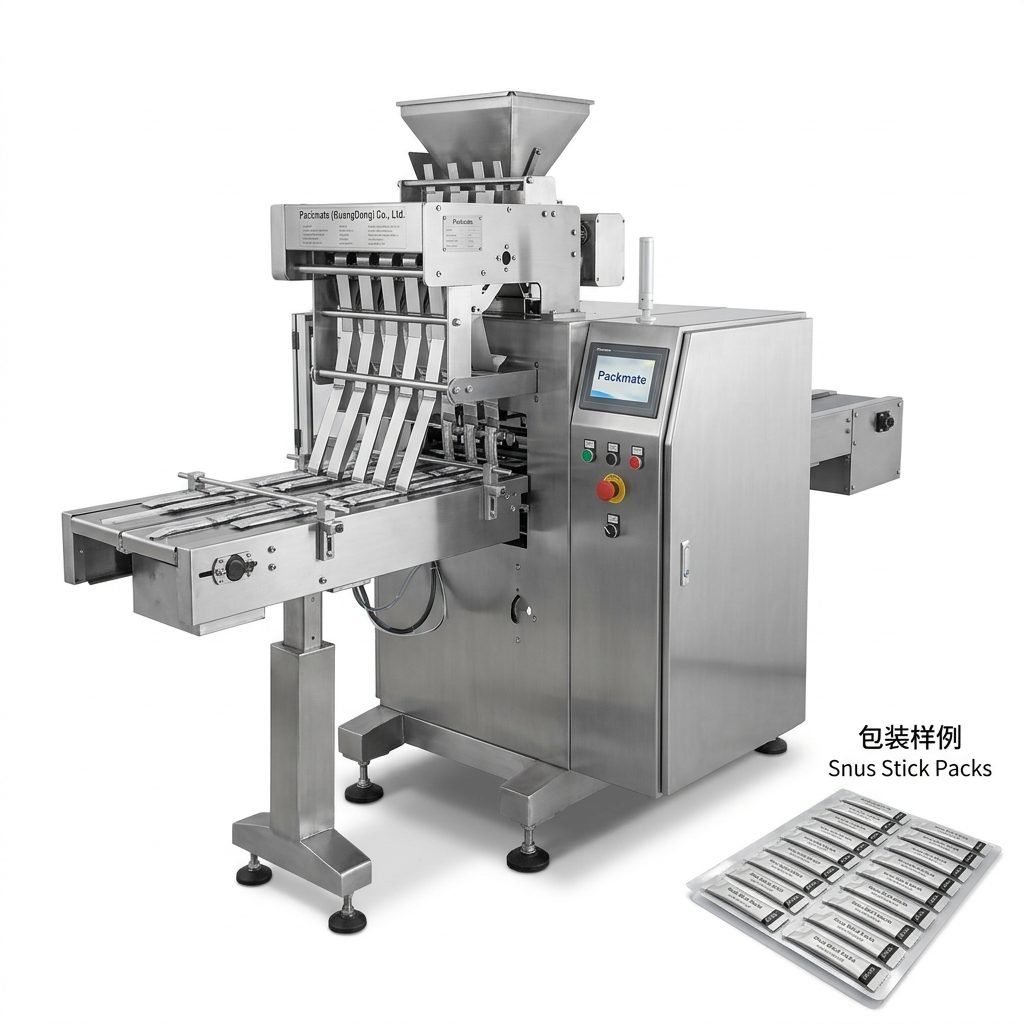
Ideal for single-dose sachets and stick packs. These machines are compact, often with simple changeovers, and suitable for pilot runs or limited SKUs.
Explore proven solutions like those listed under Sachet & Stick Pack Machines.
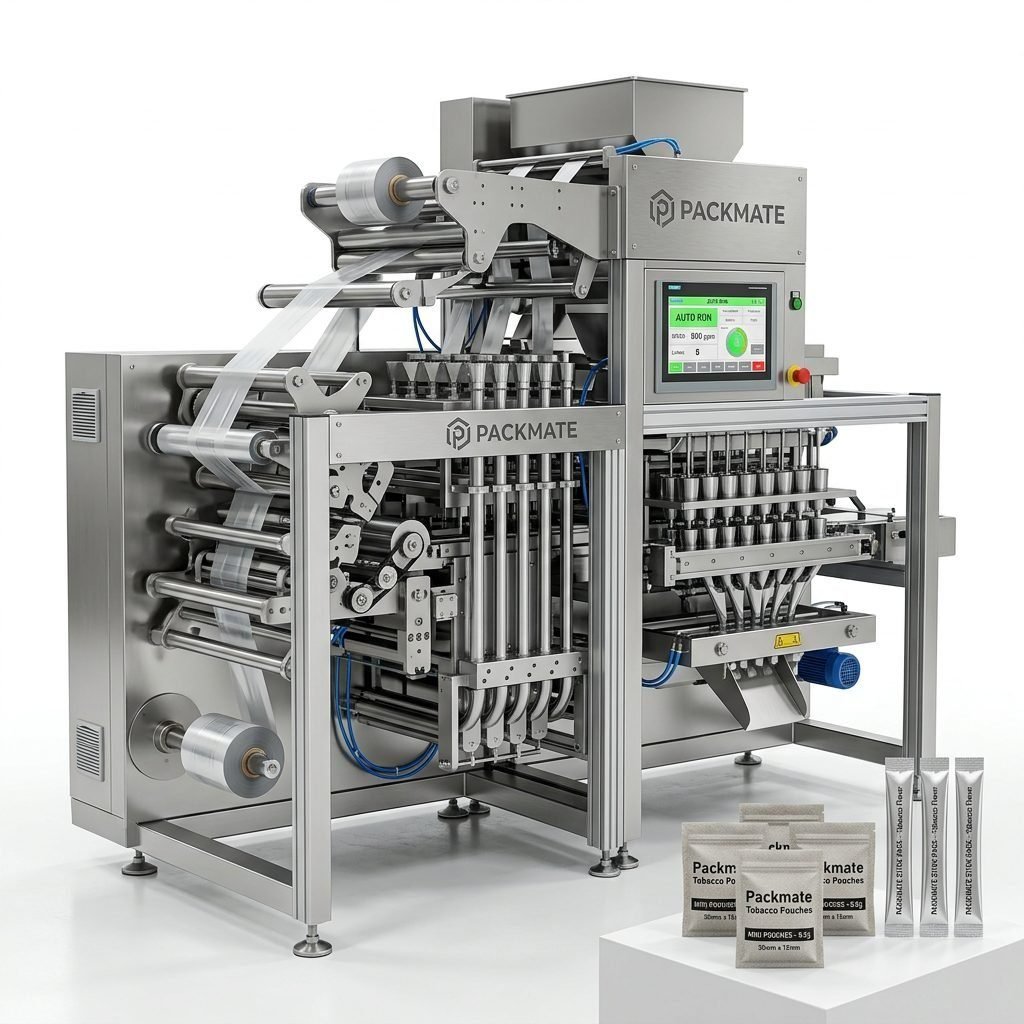
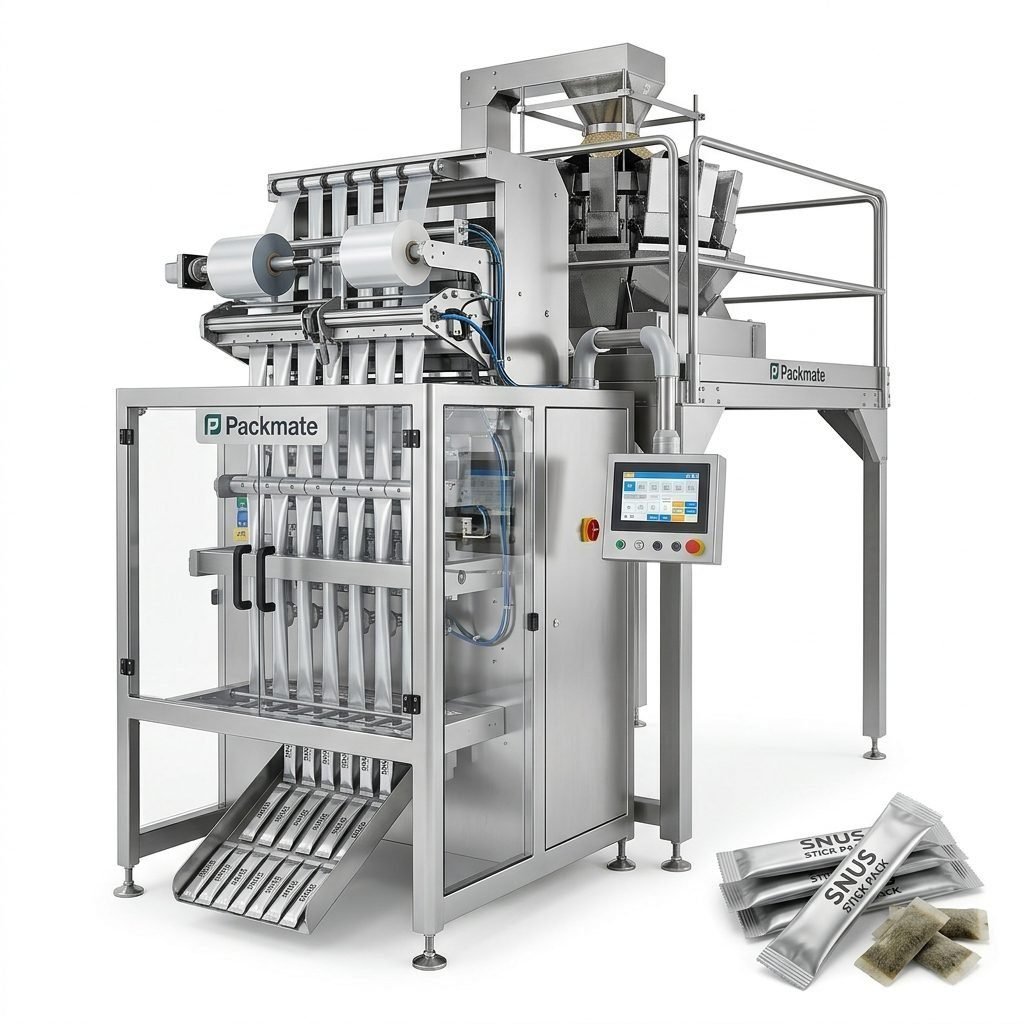
Multi-lane Snus / Nicotine Pouch Systems
Best when high throughput and small-dose consistency are priorities. Multi-lane systems reduce cost per pouch but require more advanced feeding and synchronization systems.
For multi-lane and dedicated snus lines see Snus & Nicotine Packaging Machines.
Bag & Pouch Packaging Machines
For secondary packaging into cartons, display pouches, or resealable bags you’ll need robust bagging equipment integrated downstream. Refer to Bag & Pouch Packaging Machines for options.
Key technical specifications to compare 🔍
When evaluating models, request or verify the following technical details:
- Maximum speed (pouches/min) at target pouch size
- Number of lanes and lane convertibility
- Filling accuracy and type (Volumetric, auger, servo-controlled dosing)
- Material compatibility (powder, granules, wet snus base)
- Changeover time and tool-free adjustments
- Cleaning access and hygienic design (important for food-grade and nicotine powders)
- PLC/controller brand and HMI type for operator usability
- Spare-parts availability and MTTR expectations
Must-have features:
Servo-driven dosing, automatic lane balancing, in-line metal detection option, and a user-friendly touch HMI with recipe management. ⚙️
Automation level & integration with upstream/downstream equipment
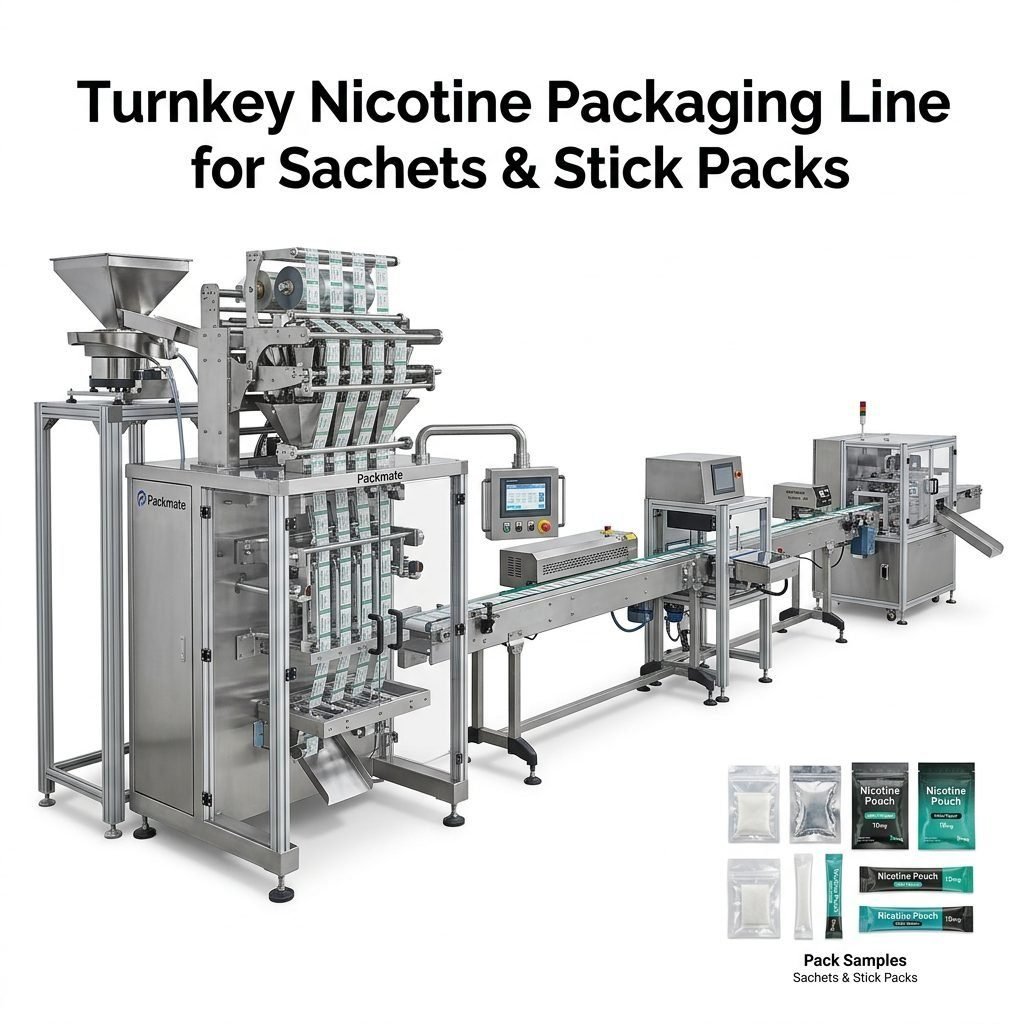
Consider your entire line: weighing systems, feeders, conveyors, packing systems, and end-of-line case packers. Full integration reduces manual handling and improves throughput consistency. Look at Weighing & Packaging Systems and Filling & Packaging Lines to plan the complete layout.
Hygiene, cleaning and maintenance considerations 🧰
Snus and nicotine pouches require machines that are easy to clean with minimal disassembly. Choose stainless steel contact parts, quick-release mechanisms, and accessible surfaces. Ask about recommended cleaning cycles and whether the supplier offers training for GMP-level cleaning procedures.
Quality assurance & certifications
Verify CE and ISO compliance for machine safety and manufacturing quality. Check if the manufacturer performs FAT (Factory Acceptance Testing) and provides documented calibration and traceability for critical components. Packmate highlights certifications and global exhibitions to demonstrate compliance and real-world performance; you can review their credentials via Certificate and Our Exhibition.
Supplier evaluation: questions to ask potential vendors 📝
When contacting suppliers prepare specific RFQ questions:
- Can you provide case studies of machines operating in Oceania or similar markets? (Request video demos.)
- What is the standard lead time and options for expedited delivery?
- Do you provide installation, commissioning, and operator training on-site?
- What warranty and spare-parts packages do you offer? Typical response time for critical parts?
- Can the line be customized for local labeling, language and regulatory requirements?
Supplier scorecard tip:
Prioritize proven reliability and local support over the lowest initial price — downtime in a regulated market can be costly. 📦
Installation, training & after-sales in Oceania
Confirm whether your supplier offers local technicians or remote commissioning support. For Oceania, logistics and technician travel can add time and cost — vendors with regional partners or detailed remote-training programs lower your operational risk. Packmate provides global turnkey solutions and long-term technical support; learn more at About Packmate.
Total cost of ownership (TCO) model
Factor in: purchase price, installation, spare parts inventory, maintenance contracts, consumables, energy use, and expected uptime. A slightly higher upfront investment in better automation and spare-parts availability often reduces TCO by minimizing stoppages and rework.
Logistics, customs & local delivery tips 🚚
Shipping large machines to Oceania involves customs clearance and potentially import duties. Provide accurate HS codes and include crate dimensions and weights early in planning. Arrange for local customs brokerage and consider landed-cost options from suppliers. If possible, request pre-shipment photos and videos and coordinate with local freight forwarders experienced with industrial equipment.
Custom configurations & future-proofing
Ask about modular designs that allow lane expansion or format changeovers without full machine replacement. This protects investment as market demand evolves or as you introduce new pouch sizes and materials.
Real-world checklist before signing a contract ✔️
Ensure the following are in the contract and purchase documentation:
- Delivered performance guarantees (speed, accuracy) and acceptance criteria
- Spare-parts list with recommended stock levels
- Warranty terms and service-level response times
- Training scope and documentation (languages included)
- FAT and SAT (site acceptance testing) responsibilities and criteria
How Packmate can support Oceania manufacturers
With 30+ years of experience, a 20,000㎡ factory and a broad model range, Packmate offers high-precision snus lines and turnkey packaging solutions. Their factory capabilities include CNC machining and precision assembly, and they provide certifications, exhibition demos and global case references. To discuss tailored solutions or technical questions, use the Contact Us page.
Final buying tip:
Combine on-site trials or detailed video FAT, a clear spare-parts plan, and a local support strategy to ensure smooth market entry in Oceania. 🔧
Next steps for prospective buyers
Prepare your product specs, estimated daily volumes, target launch date and regulatory documents. Request an RFQ that includes performance targets and FAT expectations. Visit supplier case studies to see machines running similar products; Packmate’s global work is summarized in their Case section.
Frequently Asked Questions
Q1: How do I know which machine speed I need?
A1: Calculate daily units required and peak shift hours, then add a capacity buffer (typically 10–20%). Match this to machine speed at your chosen pouch size and lane configuration.
Q2: Are nicotine pouches and snus machines heavily customized?
A2: They can be. Many manufacturers start with a standard model and add dosing, lane and feeding customizations for powder moisture content or special pouch films. Discuss customization early to avoid long lead times.
Q3: What post-sale support should I insist on?
A3: On-site commissioning or comprehensive remote support, a clear spare-parts list, and guaranteed response times for critical parts. Training for operators and maintenance staff is essential.
Q4: How important are certifications like CE and ISO?
A4: Certifications demonstrate manufacturing quality and safety adherence, which can ease market entry and satisfy some local regulators and customers.
Q5: Where can I view machine catalogs and request a quote?
A5: Visit suppliers’ product pages and catalog sections to review models, then request an RFQ. For a full catalog and service information, see Catalog and Service.