Choosing the right snus packaging machine in Vietnam requires more than comparing speed and price. Manufacturers must balance local consumer habits, humid tropical conditions, regulatory constraints, and long-term support when selecting equipment for nicotine pouches or snus production. This guide walks Vietnamese manufacturers and international suppliers through practical steps to select the best machine for reliability, cost-efficiency, and compliance.
Understanding the Vietnam Market & Local Considerations
Before evaluating technical specs, spend time understanding how Vietnamese consumers and distribution channels shape packaging needs. Vietnam has a strong culture of social tobacco use among adult men, and demand for modern, discreet alternatives like nicotine pouches is emerging in urban centers. Local preferences often favor compact, easy-to-carry formats and visually appealing designs that stand out in convenience stores and kiosks.
Practical local considerations include:
Climate and humidity: High humidity in many regions of Vietnam increases the importance of robust sealing, moisture barrier films, and humidity-controlled production areas to prevent product spoilage.
Regulatory environment: Regulations for tobacco and nicotine products can vary and evolve. Always verify that your product format and labeling comply with current Vietnamese laws and import/export rules before selecting a machine.
Distribution channels & retail formats: Small mom-and-pop stores and modern convenience chains have different shelf space and display needs—consider flexible packaging sizes and easy changeovers to serve both channels.
Key Machine Types and When to Choose Them
Understanding available machine architectures helps you match equipment to product form, output targets, and budget.
Stick Pack & Sachet Machines
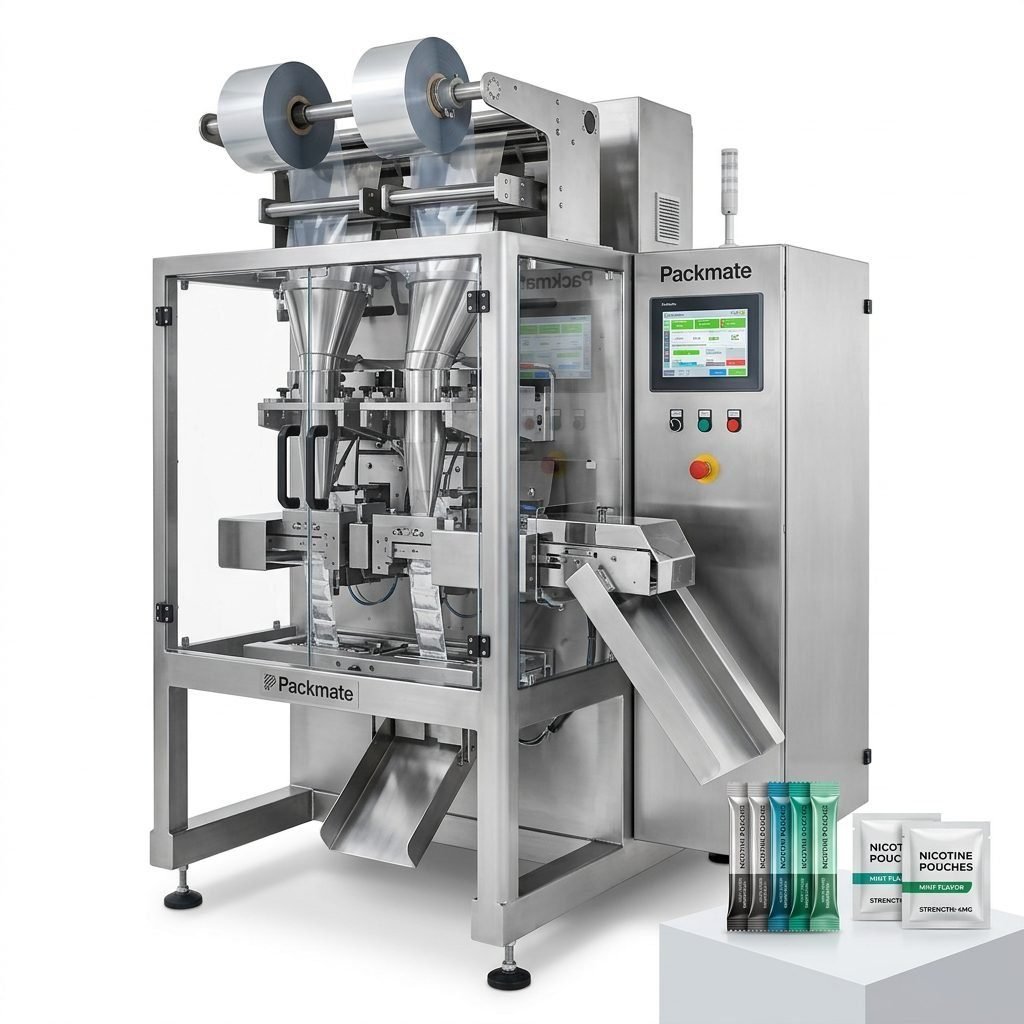
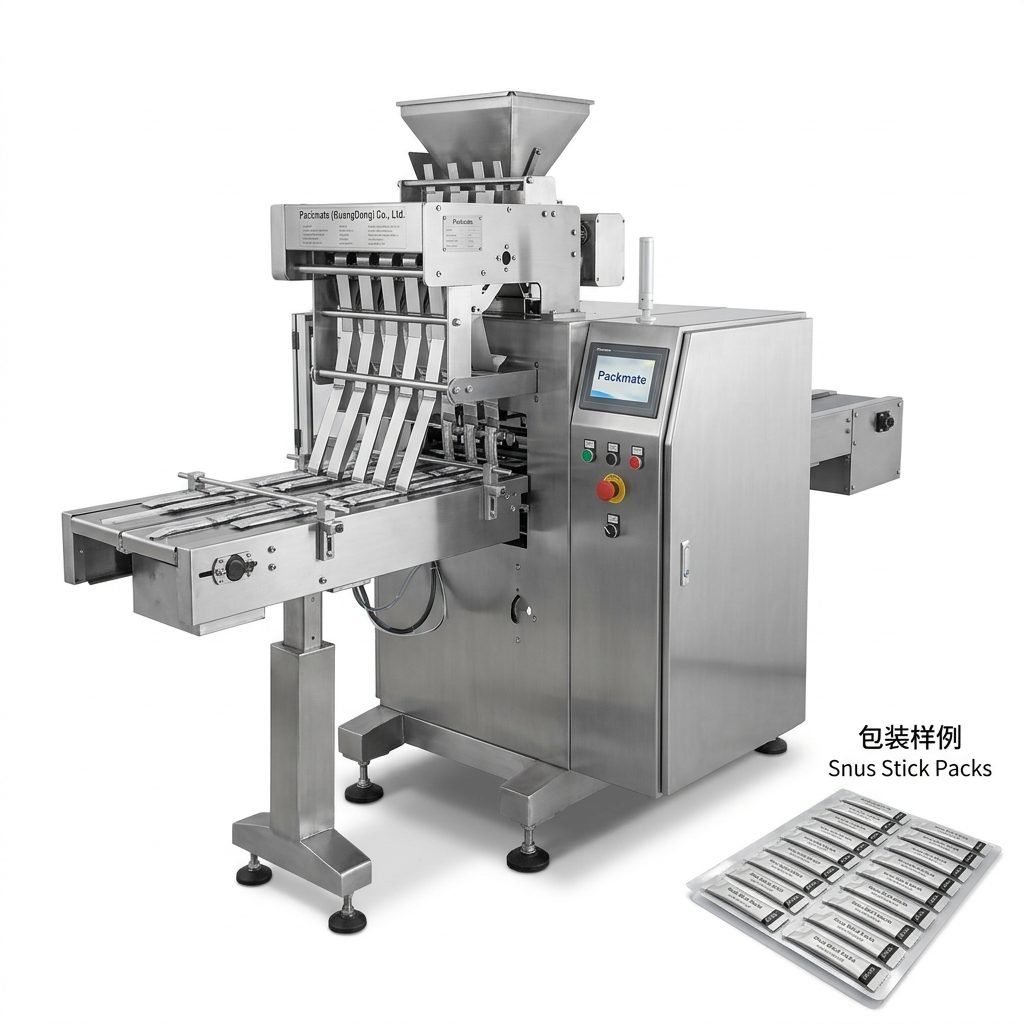
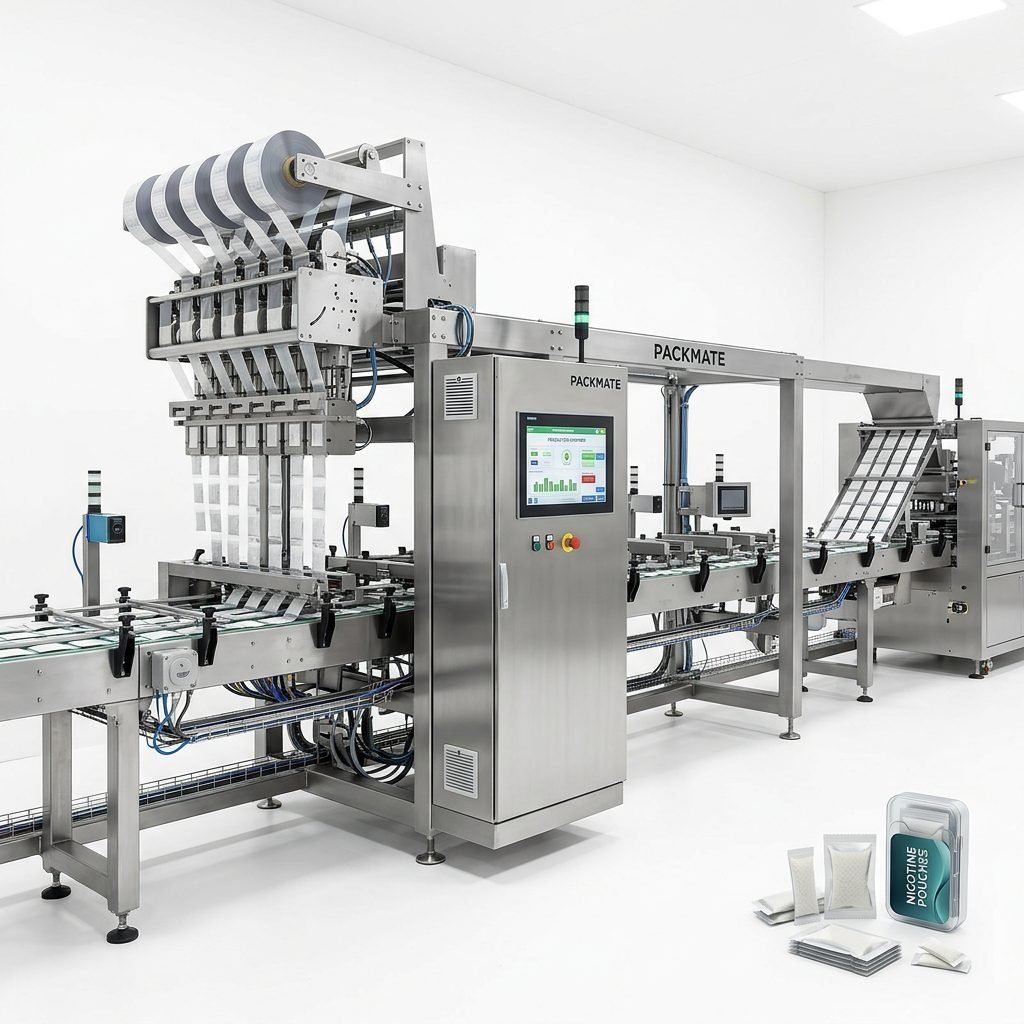
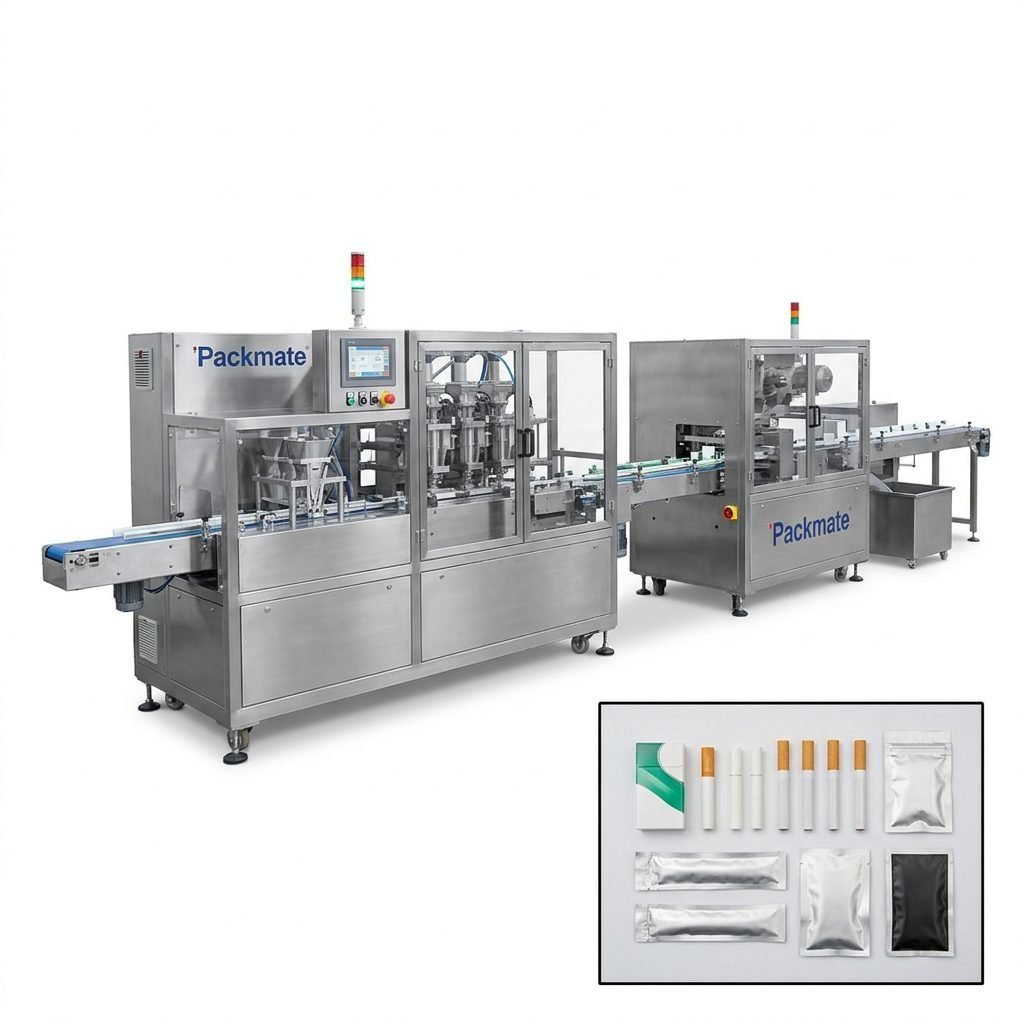
Stick pack and sachet machines are ideal for single-dose nicotine pouches and small sachets. They are compact, relatively low cost, and provide high packaging speed for lightweight products. If you plan multiple dosage SKUs and high-speed retail packing, evaluate machines offering quick format changes and accurate dosing.
Pouch & Multi-Lane Machines
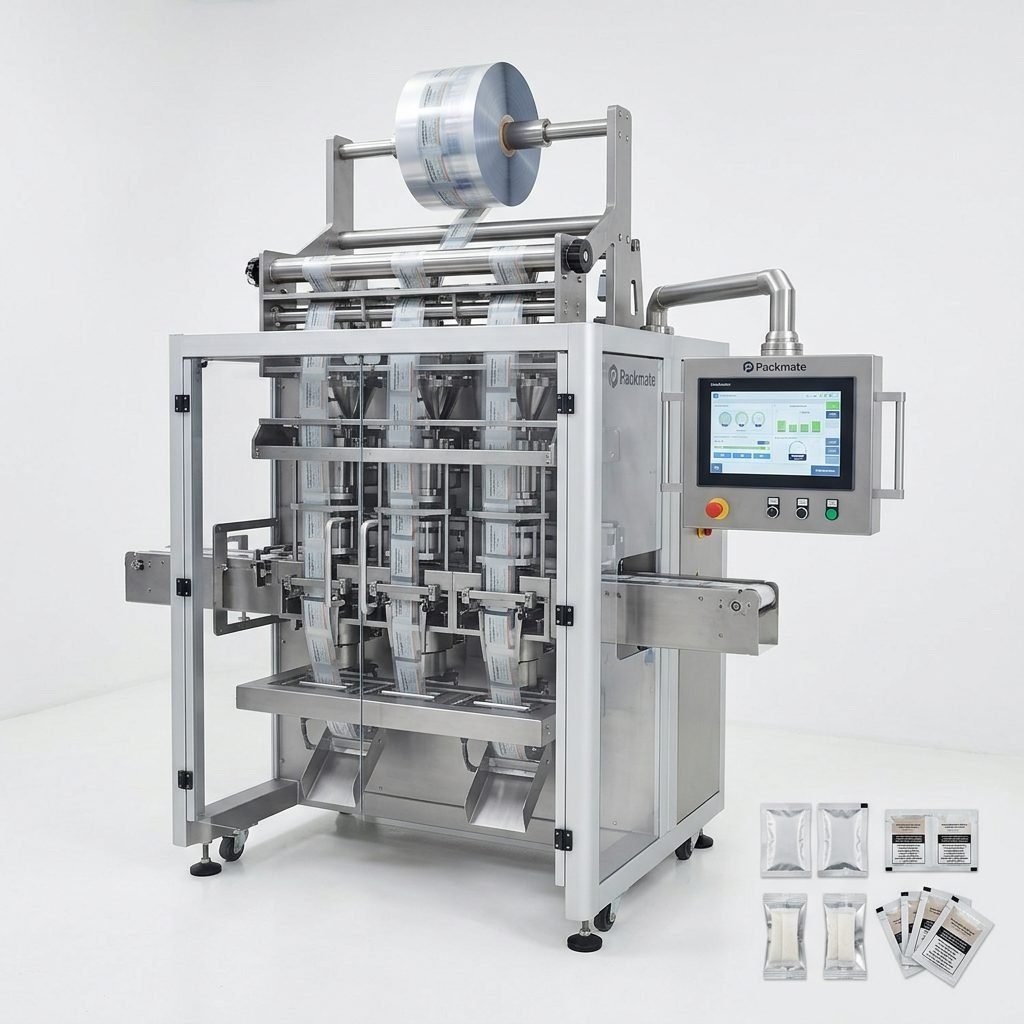
For higher throughput or many small pouches per minute, multi-lane systems significantly increase capacity by running multiple lanes in parallel. These systems are excellent for established brands and contract manufacturers serving large volumes. Look for robust synchronization, easy lane balancing, and servo-driven controls for consistency.
Vertical Form-Fill-Seal (VFFS) & Custom Lines
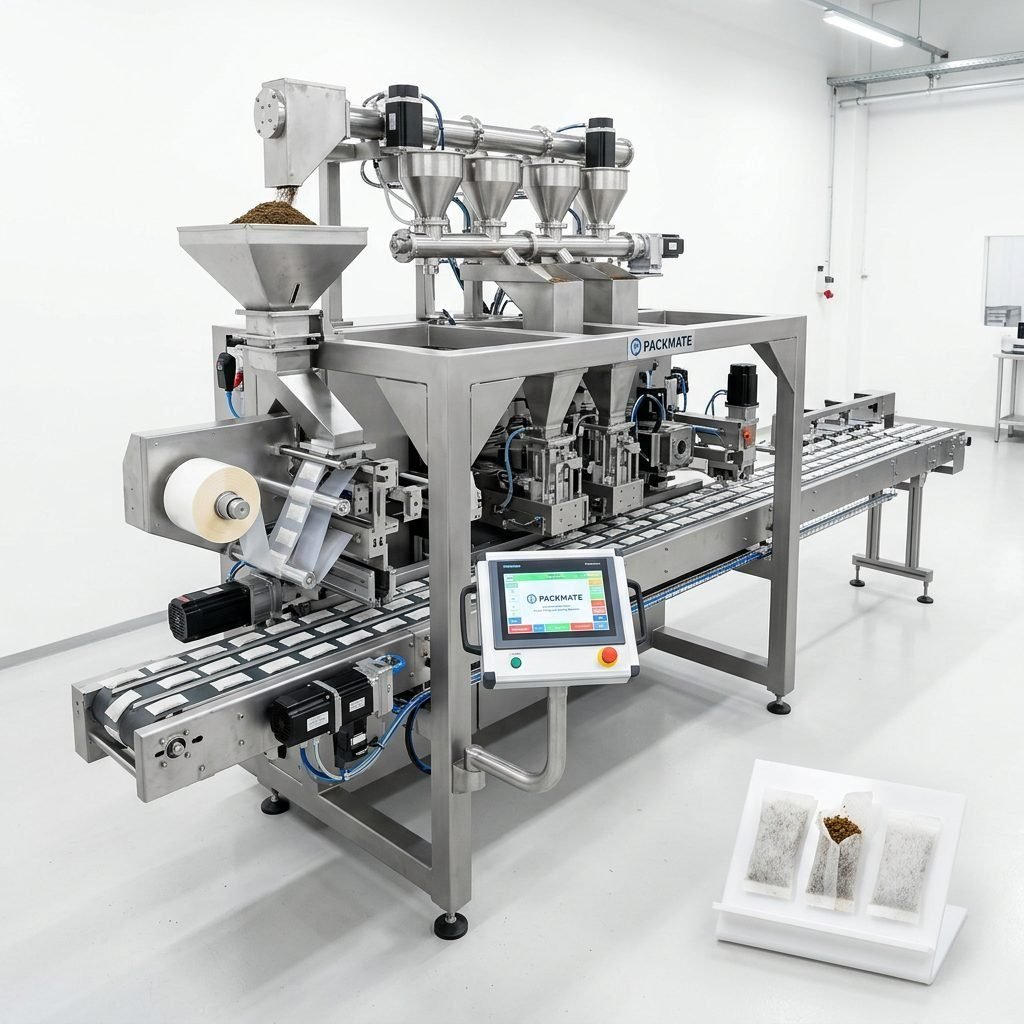
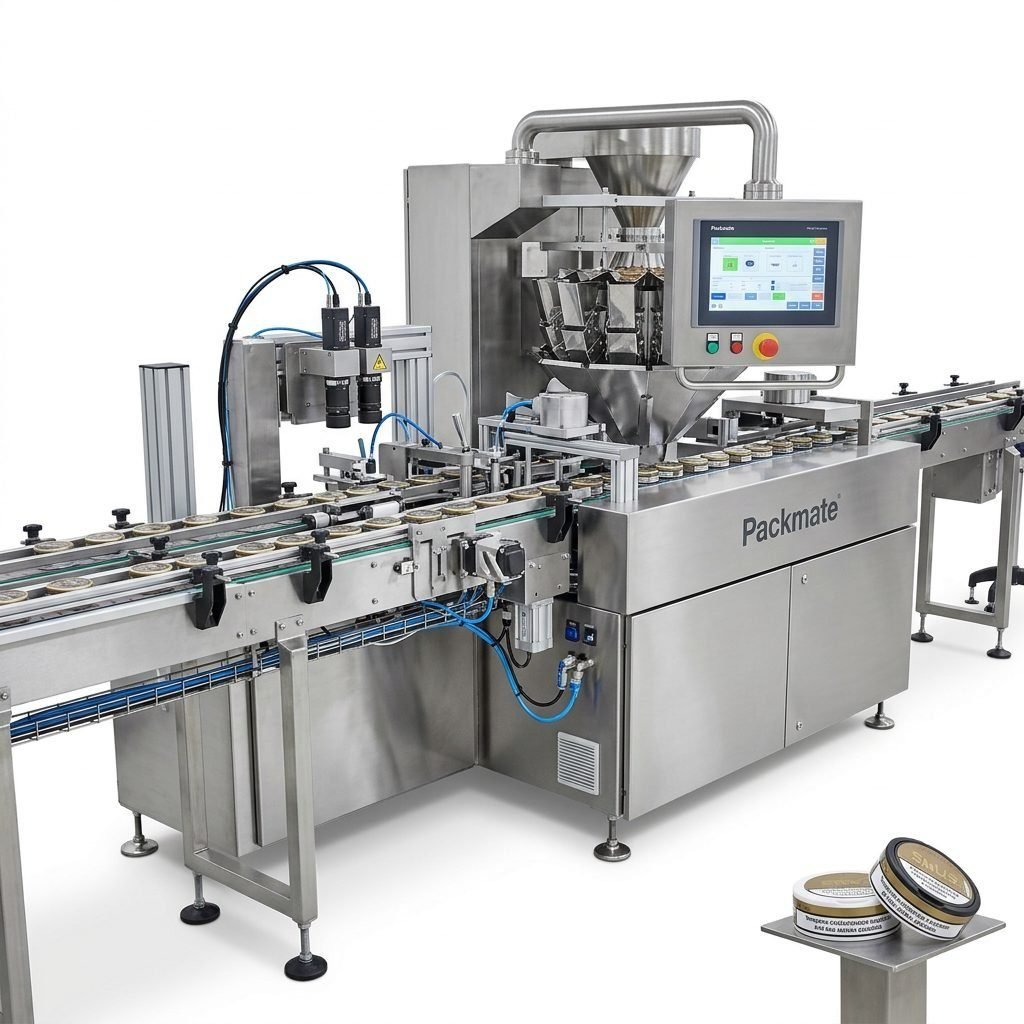
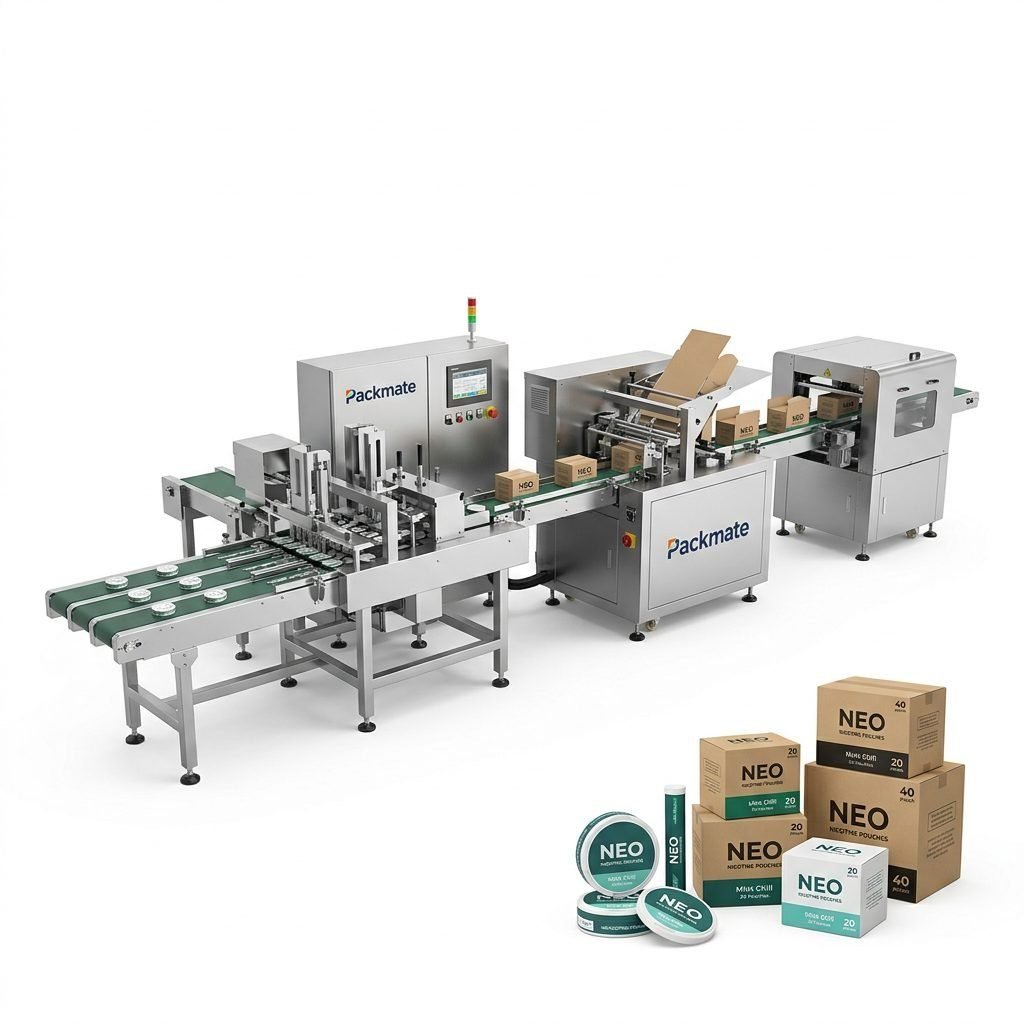
VFFS machines are often used for flexible pouch styles. Combine them with specialized dosing systems (vibratory, auger, or multi-head weighers) for powders or granular nicotine blends. Custom turnkey solutions that integrate filling, sealing, metal detection, and secondary packaging provide a complete production line tailored to local needs.
Top Technical Specifications to Prioritize
When evaluating models, certain specifications directly affect product quality, operational cost, and compliance.
✔️ Speed & Throughput: Match machine rpm and pieces/minute to your annual production targets. Multi-lane machines multiply lane speed but require precise synchronization.
✔️ Dosing Accuracy: For nicotine products, dosing precision is critical. Choose high-accuracy weighers or dosing modules that maintain consistency within regulatory tolerance.
✔️ Sealing Quality & Film Compatibility: Select machines that handle multilayer barrier films and offer reliable heat/ultrasonic sealing to protect against humidity.
Additional specs to evaluate:
Control system & HMI: Modern PLCs and intuitive HMIs reduce operator training time and ease troubleshooting. Look for recipe storage for quick SKU changeovers.
Materials of construction: Stainless steel contact parts, food-grade surfaces, and corrosion-resistant finishes lengthen machine life in humid environments.
Cleaning & maintenance accessibility: Machines designed for quick access to wear parts minimize downtime—valuable when local labor costs and technical skills vary.
Automation Level & Integration for Vietnamese Plants
Decide the automation level according to your workforce skills, production targets, and investment capacity. Semi-automatic machines reduce capital cost but require more manual handling. Fully automatic, integrated lines reduce labor variability and deliver consistent output—valuable for export customers or regulated markets.
Consider modular designs that allow phased upgrades: start with a high-quality pouch maker and add weighing, labeling, and secondary packaging later. This approach reduces upfront capital while enabling growth as demand increases.
Quality, Certification & Vendor Reputation
Equipment that meets international standards reduces regulatory risk and simplifies exports. Look for CE and ISO certifications for mechanical safety and quality management. A vendor with proven experience in snus and nicotine packaging demonstrates understanding of dosing, sealing, and regulatory nuances.
If you want to explore specialized snus packaging lines, check product ranges such as Snus & Nicotine Packaging Machines or broader systems like Filling & Packaging Lines for integrated solutions.
Service, Spare Parts & Local Support
Robust after-sales support lowers total cost of ownership. Prioritize suppliers offering:
Local spare parts stock: Faster repairs minimize production losses.
Training & documentation: Comprehensive on-site training and clear manuals tailored to Vietnamese operators.
Remote support: Remote diagnostics and software updates reduce downtime when travel is difficult.
For manufacturers seeking comprehensive services, companies often describe their support offerings in pages like Service and About Packmate.
Energy Consumption & Running Costs
Evaluate the total cost of ownership, not just the purchase price. Consider energy usage, consumables (films, adhesives), routine maintenance, and spare parts. Energy-efficient servo drives and optimized pneumatic systems lower operating expenses—an important factor in Vietnam where electricity costs and sustainability goals are increasingly important.
Layout, Footprint & Factory Requirements
Factory constraints in Vietnam—available floor space, ceiling height, and access points—affect machine selection. Measure door widths and production area heights before ordering. Multi-lane systems increase throughput but also require larger footprints and more precise installation. Plan for humidity control, ventilation, and waste handling to protect product quality and comply with local environmental rules.
Quick Buyer’s Checklist (Vietnam focus):
📌 Confirm local regulations and labeling requirements.
📌 Choose machines with moisture-resistant sealing and barrier film compatibility.
📌 Prioritize vendors offering spare parts stock and on-site training in Vietnam or nearby regions.
📌 Plan layout for multi-lane options if you expect fast volume growth.
Supplier Visits, Trials & Factory Acceptance
Whenever possible, arrange factory visits or live demonstrations to verify machine performance on your exact pouch film and product formulation. A reputable supplier will provide sample runs, performance data, and reference customers. Inspect production tolerances, sealing integrity, and ease of changeover. If in-person visits are difficult, request a remote demonstration and recorded test runs.
Customization & Future-Proofing
Look for modular machines that accommodate future SKUs, different pouch sizes, or additional quality inspection devices (checkweighers, metal detectors, leak testers). As Vietnamese consumers evolve, the ability to add secondary packaging or premium finishes without replacing core machinery protects your investment.
Why Experience in Snus Packaging Matters
Snus and nicotine pouch products have specific challenges—precise dosing, strict moisture barriers, and sensitive ingredients. Suppliers with a proven snus packaging portfolio can advise on formulation-friendly dosing systems, ideal film selections, and line speeds to prevent product damage. Explore dedicated product categories to compare specialized equipment, for example Bag & Pouch Packaging Machines and Sachet & Stick Pack Machines.
Making the Final Decision: A Practical Roadmap
Follow a structured process to minimize risk and ensure long-term success:
1) Define product SKUs, target throughput, and acceptable tolerances.
2) Shortlist vendors with snus or nicotine packaging experience and relevant certifications.
3) Request sample runs with your materials and evaluate sealing, dosing, and finishing.
4) Verify spare parts lead times, training packages, and warranty terms.
5) Plan installation, factory acceptance testing (FAT), and operator training before final payment.
Choosing Packmate or Similar Experienced Manufacturers
Vendors with decades of automation experience, a wide machine portfolio, and a strong manufacturing footprint provide advantages in custom turnkey projects. For example, manufacturers that emphasize multi-lane snus pouch systems, advanced CNC machining, and global turnkey solutions deliver the technical depth Vietnam producers need. For references and case studies, review vendor case pages and certifications to confirm reliability and global experience: Case, Certificate.
Final Practical Tips
– Start with a pilot line to validate product shelf life and packaging performance in Vietnam’s climate.
– Negotiate included spare parts and a defined service response time in the purchase contract.
– Consider local partnerships for installation and training to reduce downtime.
Bottom Line
Selecting the right snus packaging machine for Vietnam requires a balance of technical capability, regulatory awareness, and vendor support. Prioritize sealing quality for humid climates, dosing accuracy for nicotine products, and a supplier with proven snus experience and spare parts availability. With careful evaluation and pilot testing, you can secure a line that meets both local market preferences and international quality standards.
Frequently Asked Questions
Q1: Are nicotine pouch machines legal to operate in Vietnam?
A1: Regulations evolve—check current Vietnamese laws and customs rules before importing or producing nicotine-containing products. Work with legal advisors and choose machines that support compliant labeling and batch traceability.
Q2: How does humidity in Vietnam affect machine choice?
A2: High humidity increases the need for moisture barrier films, excellent sealing, and possibly humidity-controlled production zones. Choose machines designed for consistent seal pressure and compatible with high-barrier materials.
Q3: Should I buy a multi-lane machine or multiple single-lane units?
A3: Multi-lane systems are more space-efficient for high throughput but require higher initial investment and precise maintenance. Multiple single-lane units offer flexibility and phased expansion but need more floor space and operator attention.
Q4: What post-sale services are essential?
A4: Essential services include spare parts availability, on-site training, remote diagnostics, and guaranteed response times. Confirm warranty coverage and the supplier’s presence or partners within the region.
Q5: Where can I find reliable product and service information?
A5: Review vendor product catalogs, case studies, and service pages—such as their Catalog and Contact Us pages—to verify capabilities and request quotations or demonstrations.