Choosing the right nicotine packaging machinery manufacturer for your production needs in Greece is more than a procurement decision—it’s a strategic step that affects product quality, regulatory compliance, production efficiency, and long‑term profitability. This guide walks you through practical evaluation criteria, technical considerations, and vendor selection tactics so you can confidently select a partner that delivers reliable snus and nicotine pouch packaging solutions.
Understand Your Production Requirements
Before you start contacting manufacturers, define your core production parameters. Consider throughput (pouches/min or lanes), pouch formats (stick pack, sachet, multi‑lane snus pouches), fill types (powder, granule, liquid, moisture sensitive tobacco blends), and batch flexibility for small vs. large runs. A clear production brief helps you eliminate vendors that cannot meet your baseline requirements and narrows the search to specialists who serve the nicotine/snuff market specifically.
Tip: List the most common product sizes and the maximum speed required. This single step can save weeks of unnecessary demos and quotes.
Key Technical Criteria to Evaluate
Look for machines that offer repeatable accuracy, low giveaway, and fast changeover. For nicotine pouch production, dosing precision and sealed pouch integrity are non‑negotiable. Inspect specs for servo drives, multi‑lane synchronization, dust control and sealing technology. Also pay attention to automation features like PLC/HMI controls, recipe storage, and CIP compatibility if dealing with liquid or sticky fillings.
🔍 Critical performance indicators: dosing accuracy, sealing strength (MPa/temperature control), lane synchronization, uptime expectations, MTBF and spare parts lead times.
Machine types for nicotine & snus packaging
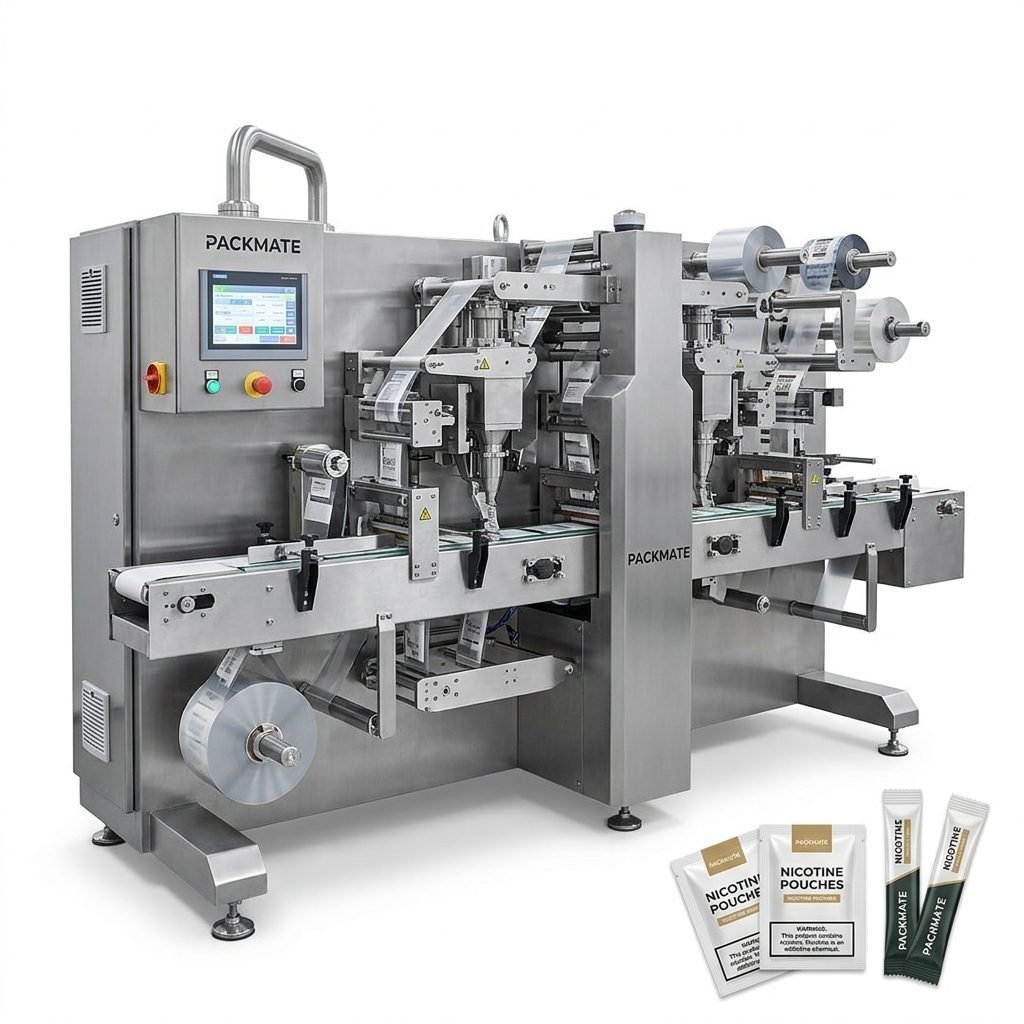
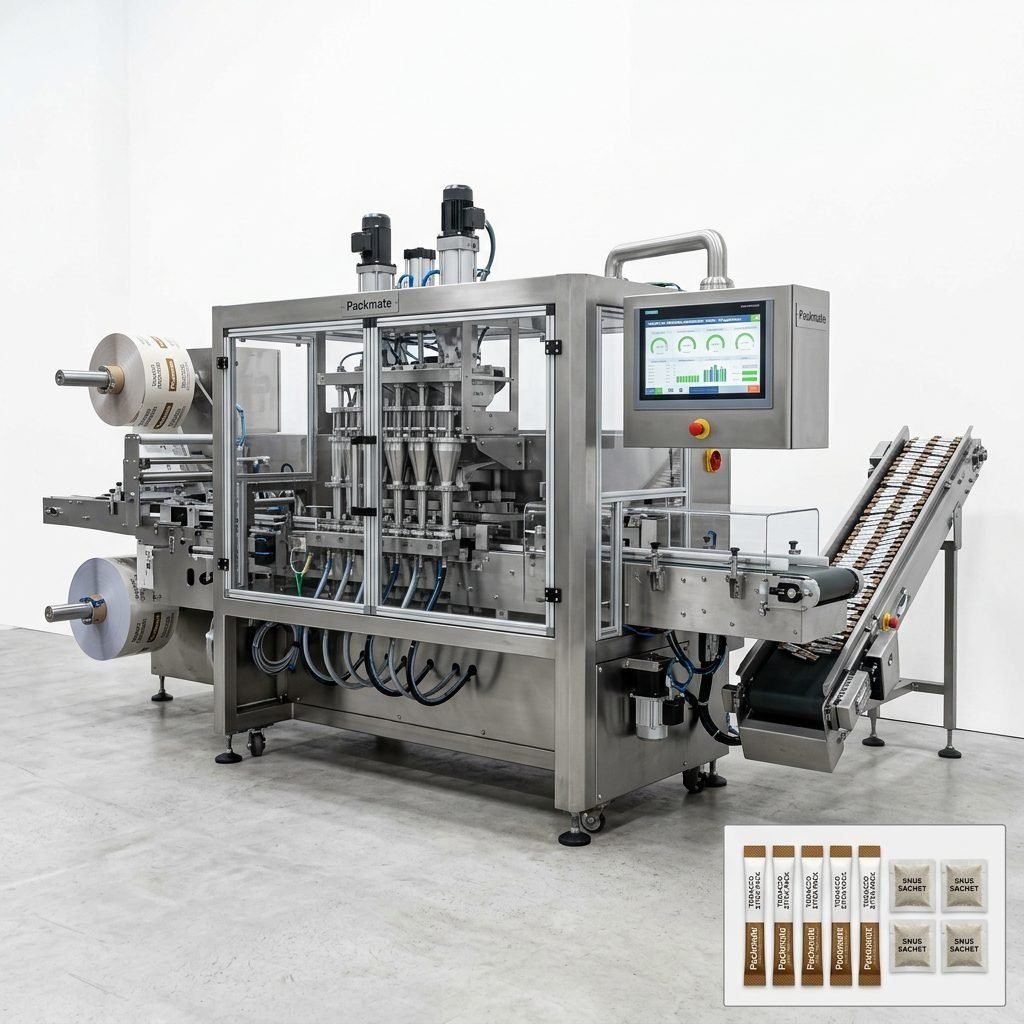
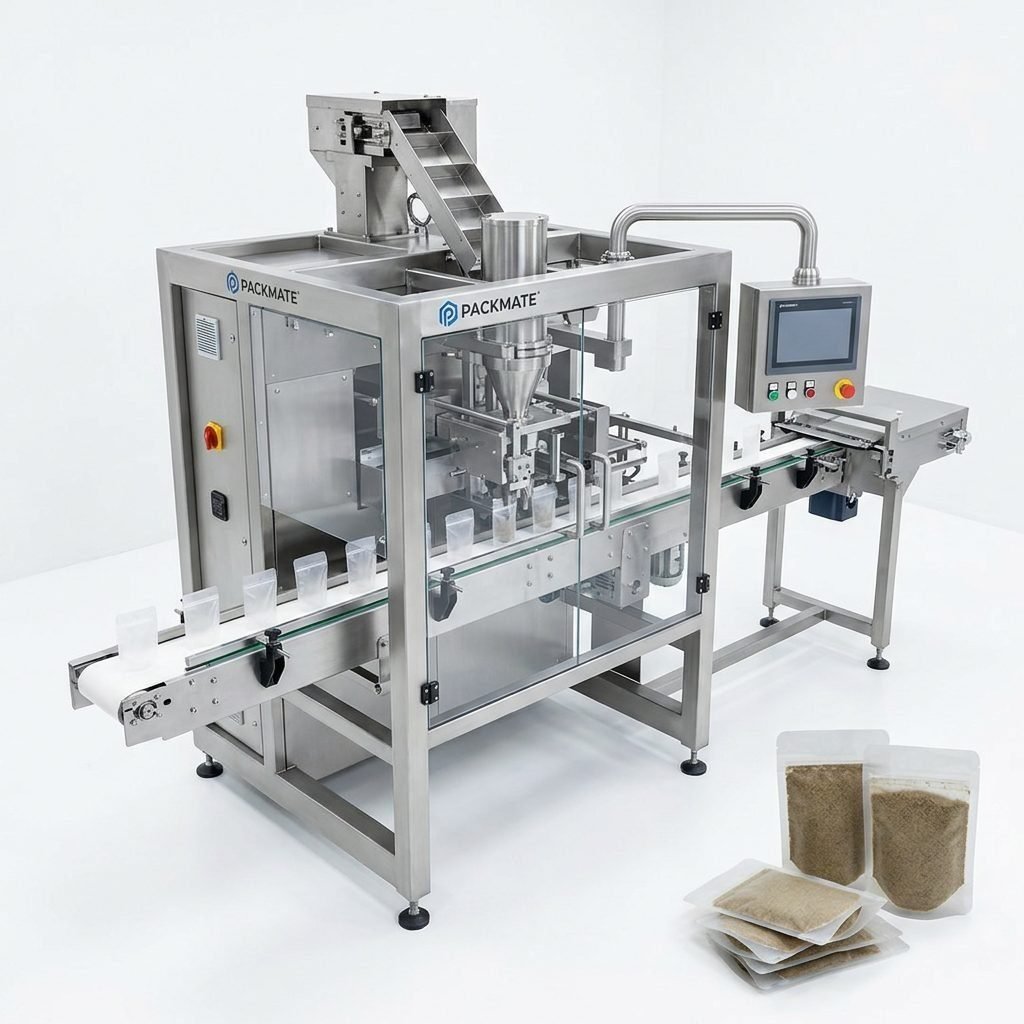
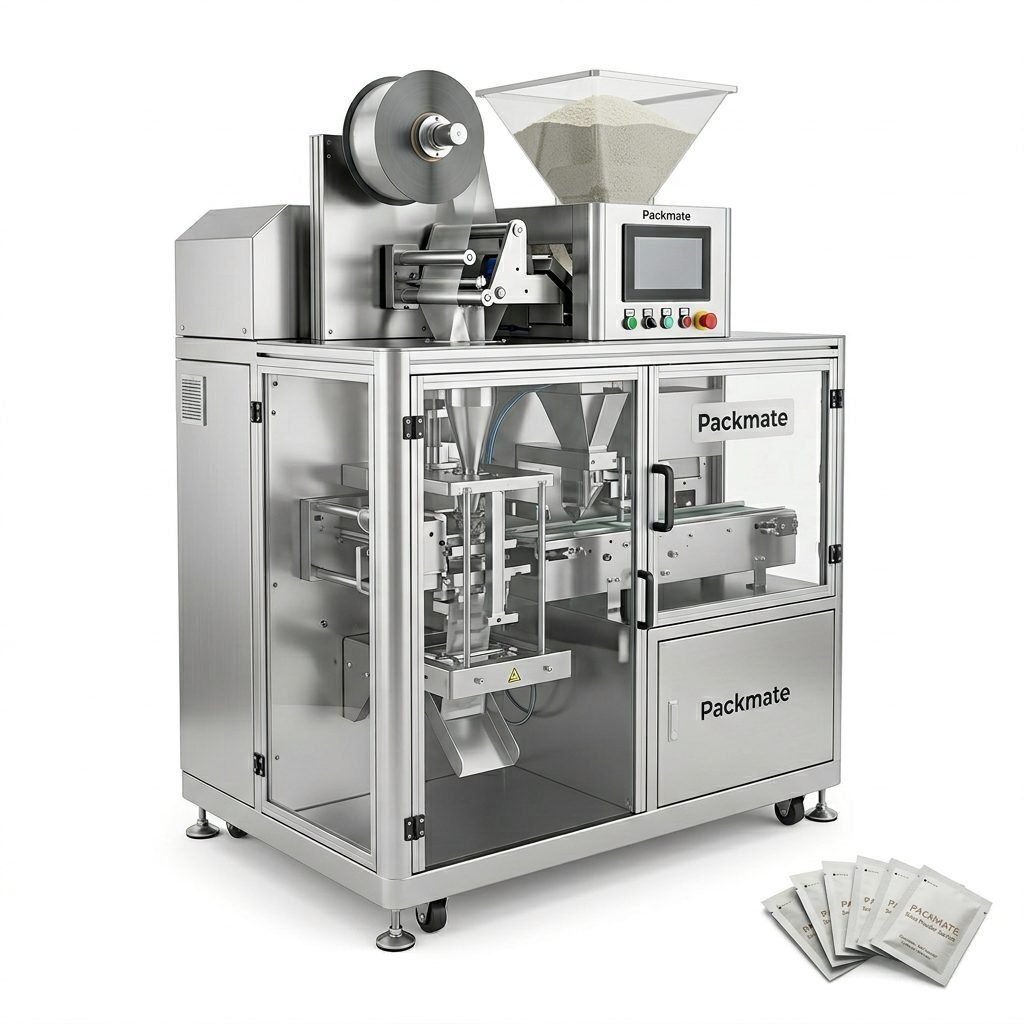
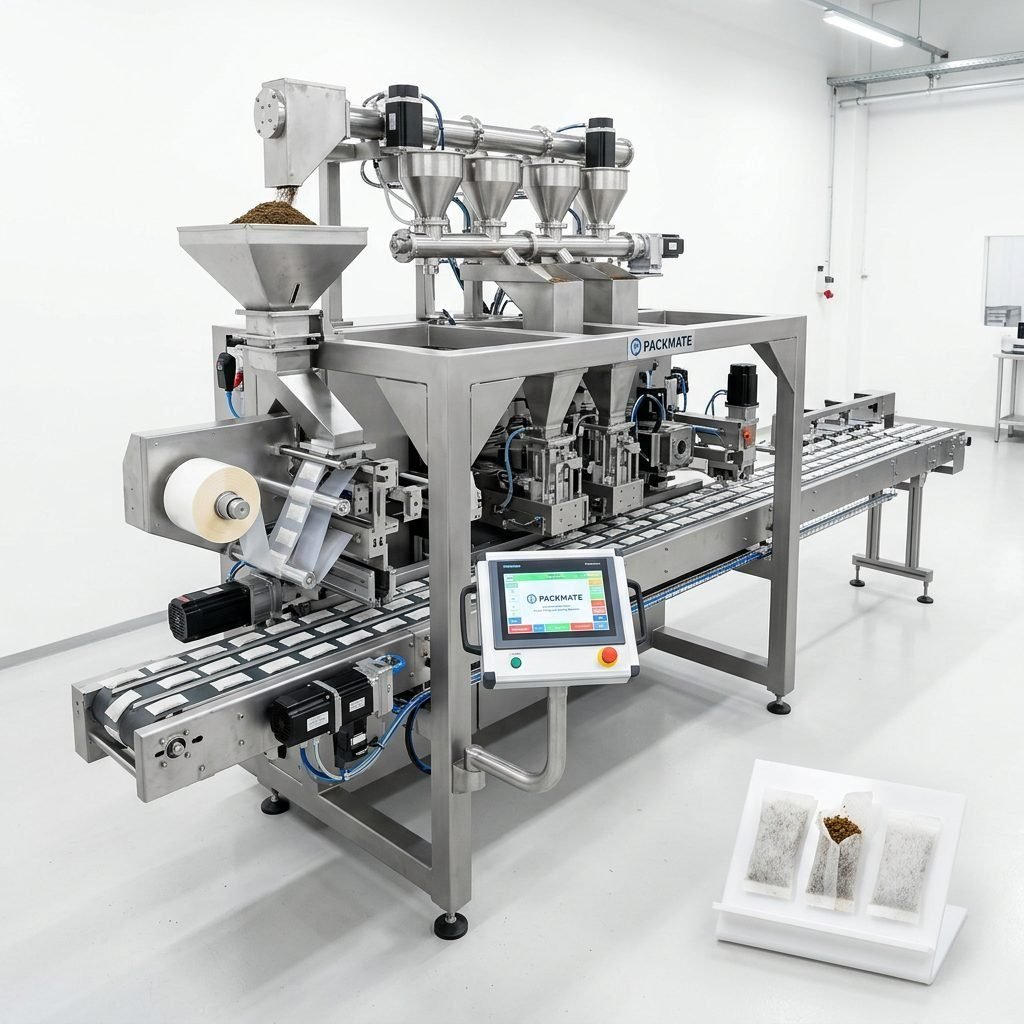
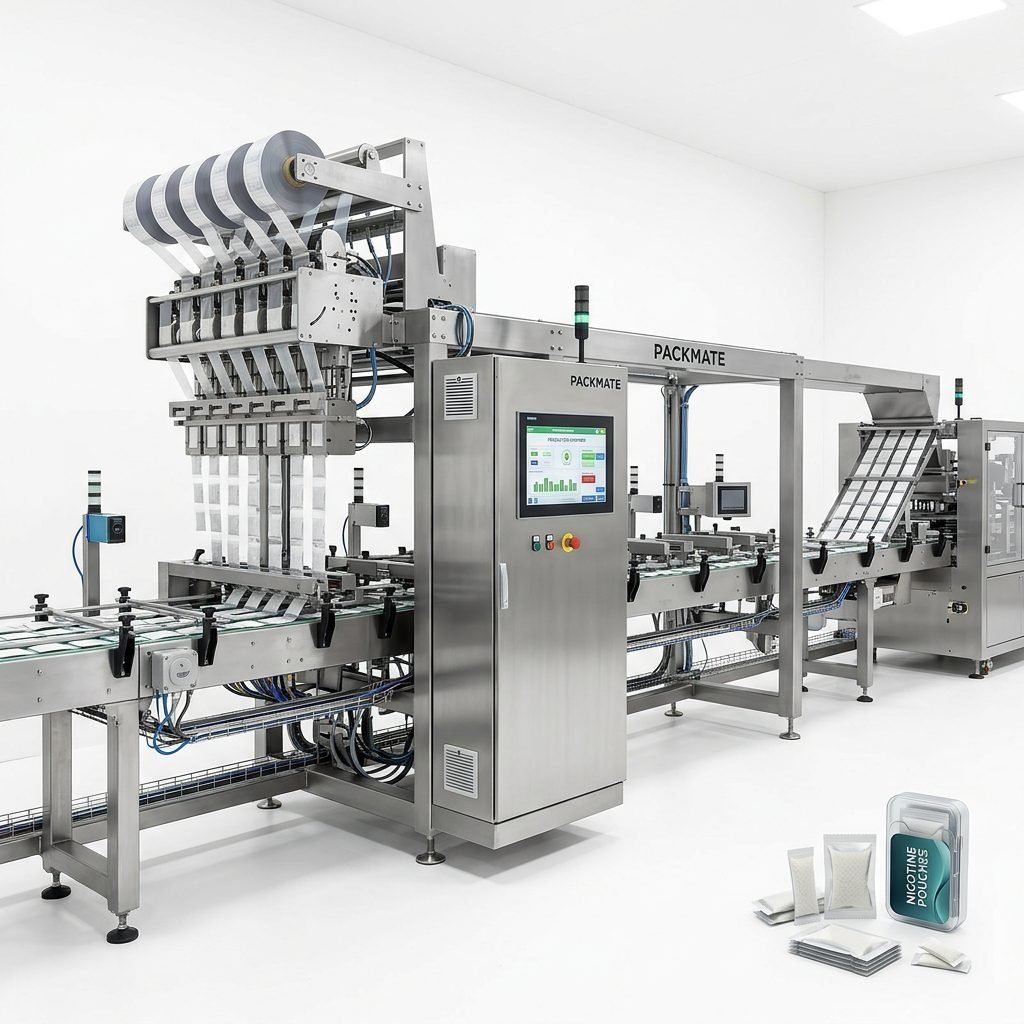
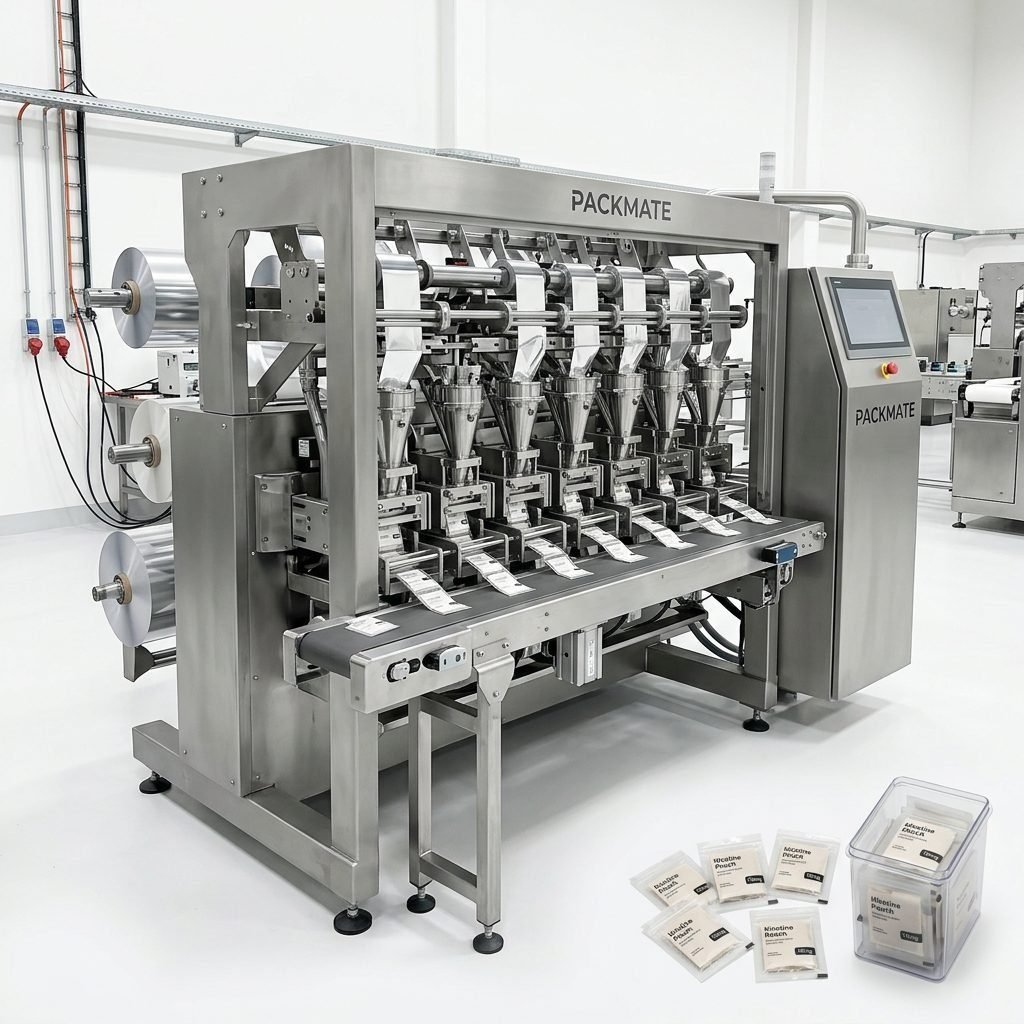
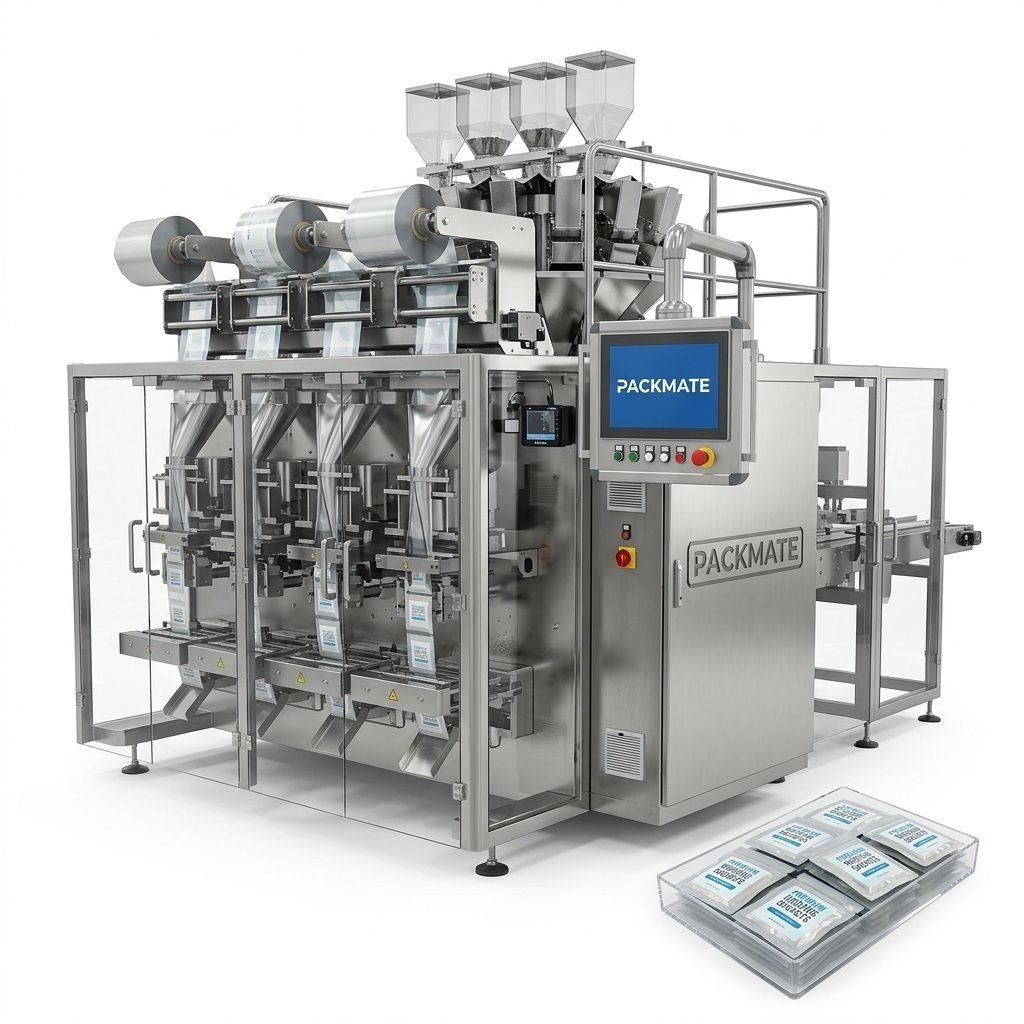
Different product formats require different machines. Common types include stick packs and sachet machines for single dose pouches, and specialized multi‑lane snus packaging machines for small dose pouches. Investigate the manufacturer’s range: can they supply single machines and full filling & packaging lines with upstream weighing and downstream case packing? Check product pages and models to ensure suitability — for example, vendors often list specialized lines on a dedicated page like Snus & Nicotine Packaging Machines and Sachet & Stick Pack Machines.
Manufacturing Capability & Factory Assessment
A manufacturer’s workshop, CNC centers, and assembly processes speak volumes about product reliability. Prioritize suppliers with documented factory scale, precision machining capabilities, and strict quality testing. Look for details such as factory area, precision assembly lines, and on‑site inspection protocols. If possible, schedule a factory visit or virtual tour to confirm machining tolerances, spare parts inventory, and quality control routines.
Red flag: vendors unable to demonstrate consistent quality testing or those who subcontract critical components without traceability.
Certifications & Compliance
For nicotine and tobacco products, regulatory compliance and safety certifications matter. Request CE, ISO certificates and ask about compliance testing for electrical safety, machine guarding, and hygiene standards for food/pharma contact parts. A credible manufacturer should provide certificates and a willingness to accommodate additional audits if you need them for Greek or EU regulatory requirements. You can verify a vendor’s credentials on their company pages such as Certificate.
Customization, Integration & Turnkey Capabilities
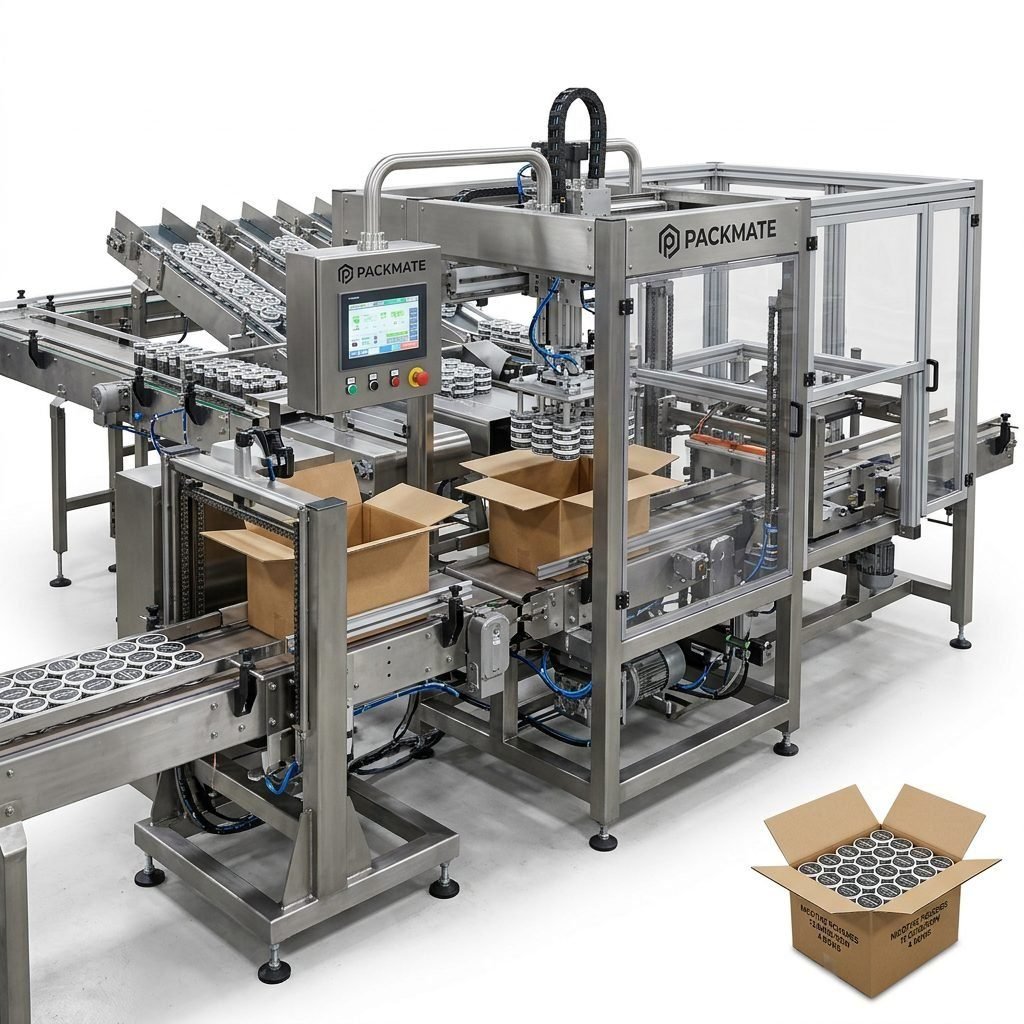
Nicotine pouch production often requires tailored solutions: multi‑lane dosing, variable sachet formats, integrated weighing and metal detection, or full turnkey lines with upstream feeding and downstream packaging. Ask whether the manufacturer provides modular systems and if they can integrate weighing, filling, labelling, and case packing. Vendors with turnkey experience reduce integration risk and shorten time to market.
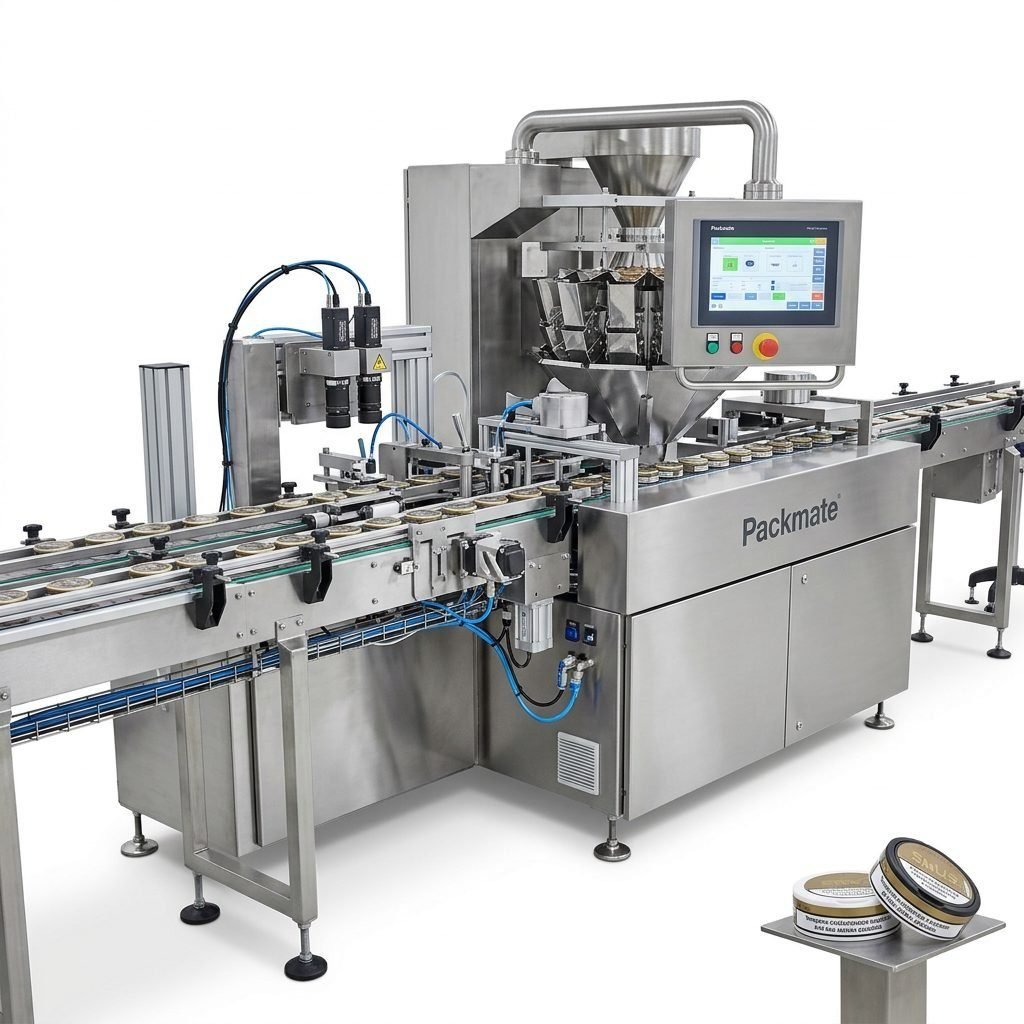
For reference, manufacturers offering complete lines often showcase integrated systems on product pages like Filling & Packaging Lines and Weighing & Packaging Systems.
After‑Sales Service, Spare Parts & Training
Strong after‑sales support is essential for maintaining uptime. Confirm availability of spare parts, typical lead times, and whether the manufacturer keeps common wear parts in stock. Evaluate training offerings—do they provide on‑site commissioning, operator training, and preventive maintenance schedules? Remote diagnostic support and spare parts kits can significantly reduce downtime.
✅ Ask for: spare parts list, service level agreement options, remote support tools, and references from current clients in Europe to confirm post‑sale responsiveness.
Case Studies & References
Request case studies or client references specifically related to nicotine or snus production. A manufacturer that can demonstrate installations in Europe and provide contactable references proves practical experience with regulatory and market challenges. Look for project pages or customer success stories that highlight solving product‑specific issues such as humidity control, small dose accuracy, or multi‑lane synchronization. You can often find examples on a vendor’s case pages like Case.
Evaluating TCO and ROI
Upfront machine cost is only part of the picture. Calculate total cost of ownership (TCO) including installation, operator training, energy consumption, spare parts, and expected production yields. Estimate ROI by factoring improved throughput, reduced giveaway, and decreased downtime. An honest manufacturer will help you model TCO and provide realistic uptime and yield projections.
Lead Times, Scalability & Warranty
Understand typical lead times for standard models and for customized lines. Ask about production slots, delivery schedules, and the warranty period with clear terms on covered components. Scalability is another factor—can the supplier upgrade your line if volumes grow, or add lanes without full replacement?
Commercial Terms & Logistics for Greece
Clarify payment terms, incoterms, installation charges, and VAT handling for imports into Greece. Shipping large automation lines involves coordination—confirm packaging, crating, and customs documentation. Local support presence or European distribution partners can simplify logistics and spare parts delivery.
Pro tip: Request a clear bill of materials and export packing list early so your customs agent can prepare and avoid delays.
Factory Acceptance Test (FAT) & Site Acceptance Test (SAT)
Negotiate an FAT before shipment so you can validate machine performance at the manufacturer’s site. An FAT should include speed testing, dosing accuracy, sealing integrity and sample production runs. After installation, perform SAT to confirm performance under local utilities and product conditions. Include acceptance criteria in the purchase agreement to prevent disputes.
How to Shortlist Suppliers in Greece or Serving Greece
Use the following practical steps to build your shortlist:
• 🔎 Compile vendors with proven nicotine packaging experience and relevant product pages.
• 📞 Request detailed specifications, references, and FAT schedules.
• 🧾 Verify certificates (CE/ISO) and ask for case studies in similar markets.
• 🛠️ Evaluate spare parts availability in Europe and ask about local service partners.
• ✈️ If travel permits, visit the factory or request a live demo. If not, insist on a comprehensive video FAT and remote commissioning plan.
Why a Specialized Manufacturer Matters
Specialists in snus and nicotine pouch packaging understand niche constraints: tiny pouch sizes, dust and moisture control, and regulatory sensitivities. Partnering with a specialist reduces the learning curve and brings proven designs. Suppliers that focus on snus machinery often provide tailored solutions such as multi‑lane systems and low‑giveaway filling modules that general packaging companies may not offer.
Where to Find Reliable Suppliers & Further Reading
Start with manufacturers that publish comprehensive product lines and factory information. Visit the vendor’s about page and contact them to request a catalog and technical datasheets. For additional product categories and auxiliary equipment, review pages such as Auxiliary Packaging Equipment and the company overview at About Packmate. If you’re ready to discuss requirements, use the vendor contact page to arrange quotations or FAT scheduling: Contact Us.
💡 Checklist before signing a contract: defined performance KPIs, FAT/SAT acceptance criteria, warranty & spare parts terms, training plan, and a clear timeline for delivery and installation.
Final Selection & Negotiation Tips
When you’re down to two or three vendors, compare apples‑to‑apples: include installation, training, spare parts package and performance guarantees in total cost. Negotiate milestone payments tied to FAT completion and SAT sign‑off. Request sample production runs during FAT that mimic Greek product conditions (humidity, product density, pouch materials) to reduce surprises during commissioning.
FAQs
Q1: How long does it typically take to procure and install a nicotine pouch packaging line in Greece?
A1: Lead times vary by customization; standard models often ship in 8–16 weeks, while turnkey or highly customized lines may take 4–6 months including FAT and SAT. Local customs clearance and installation scheduling can add time.
Q2: What certifications should I insist on for nicotine packaging machinery?
A2: Ask for CE and ISO certifications as a baseline; also confirm electrical safety, machine guarding and hygiene standards for product contact parts. If you have additional regulatory audits, ensure the vendor will cooperate.
Q3: Are spare parts available in Europe or do they ship from the manufacturer’s country?
A3: This depends on the manufacturer. Prefer suppliers that stock common wear parts in regional warehouses or offer fast courier shipping. Confirm lead times for critical spares before purchase.
Q4: Can I visit the factory or watch a live demo before placing an order?
A4: Reputable manufacturers welcome factory visits or virtual FAT demos. If travel is difficult, arrange a live video FAT with sample production to verify performance.
Q5: What ongoing support should I expect after installation?
A5: Expect a combination of on‑site commissioning, operator training, preventative maintenance schedules, and remote diagnostic support. Confirm SLA options and response times for critical downtime.