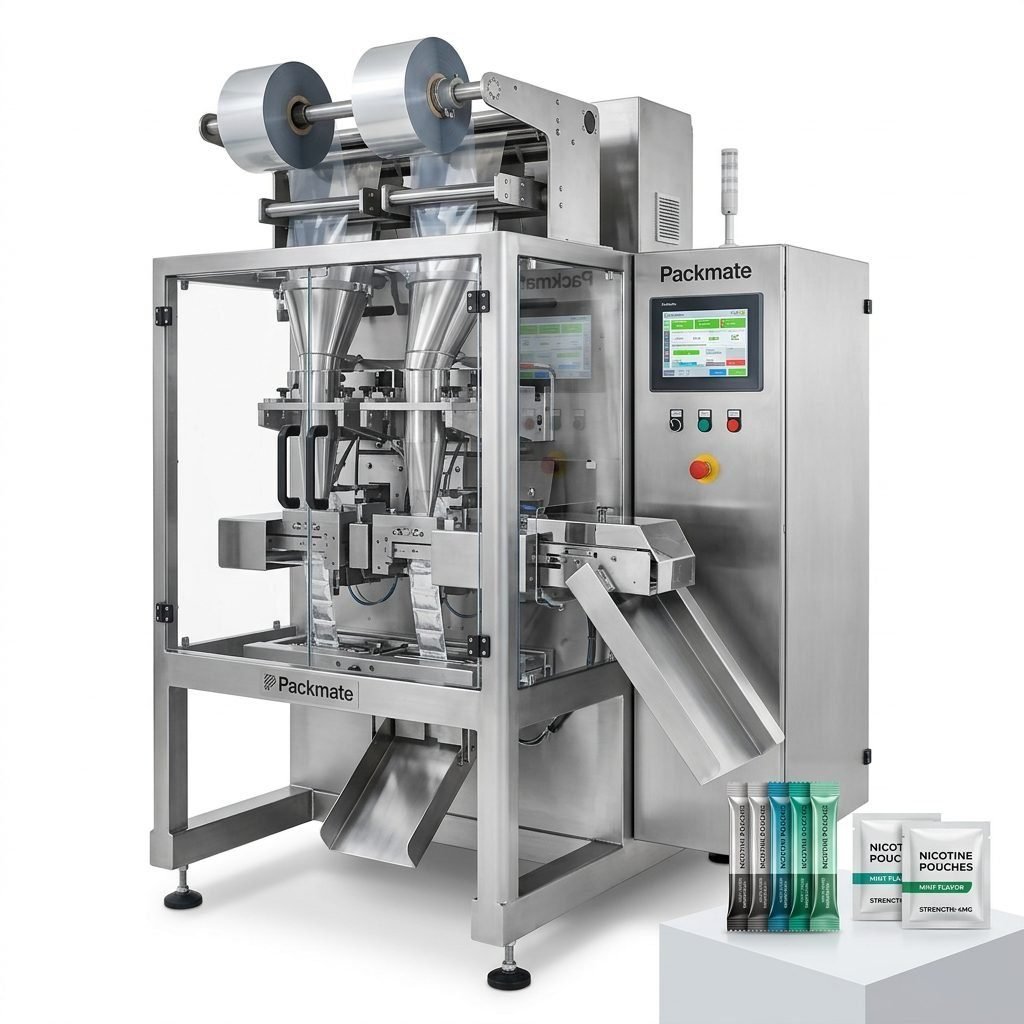
Selecting the right nicotine packaging machinery for global production and export is a strategic decision that affects product quality, regulatory compliance, production cost and your ability to scale into new markets. This guide walks through pragmatic technical, commercial and cultural considerations so manufacturers, brand owners and packaging engineers can choose equipment that supports reliable operations, consistent output and smooth cross-border shipments.
Understand product formats and production targets
Nicotine products come in many formats: portioned snus pouches, loose snus, nicotine pouches, stick-packs and sachets. Each format requires specific filling, feeding and sealing technologies. Before buying machinery, define:
Key targets: the daily or hourly output you need, pouch size ranges (mg/dose or grams), tolerance on fill weight, and whether multi-lane output is required for high throughput.
Production scale and lane configuration
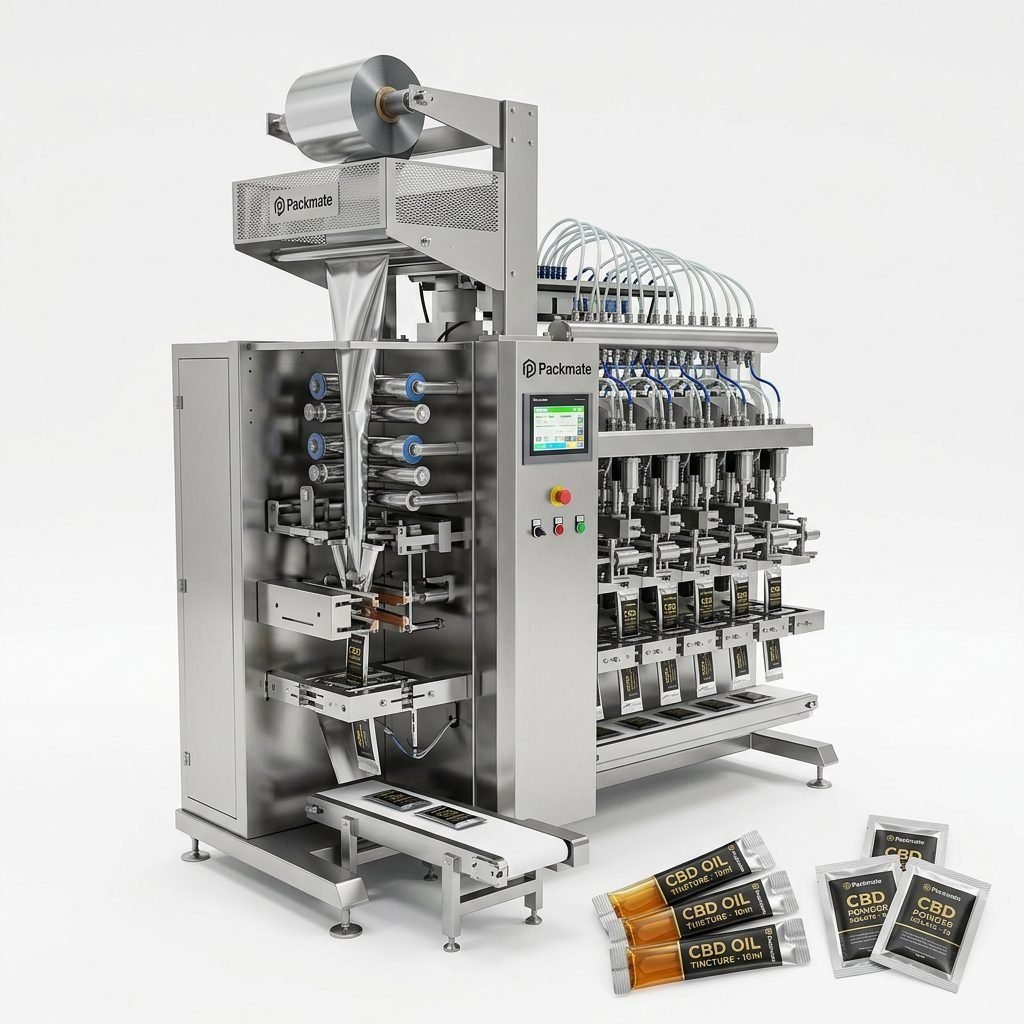
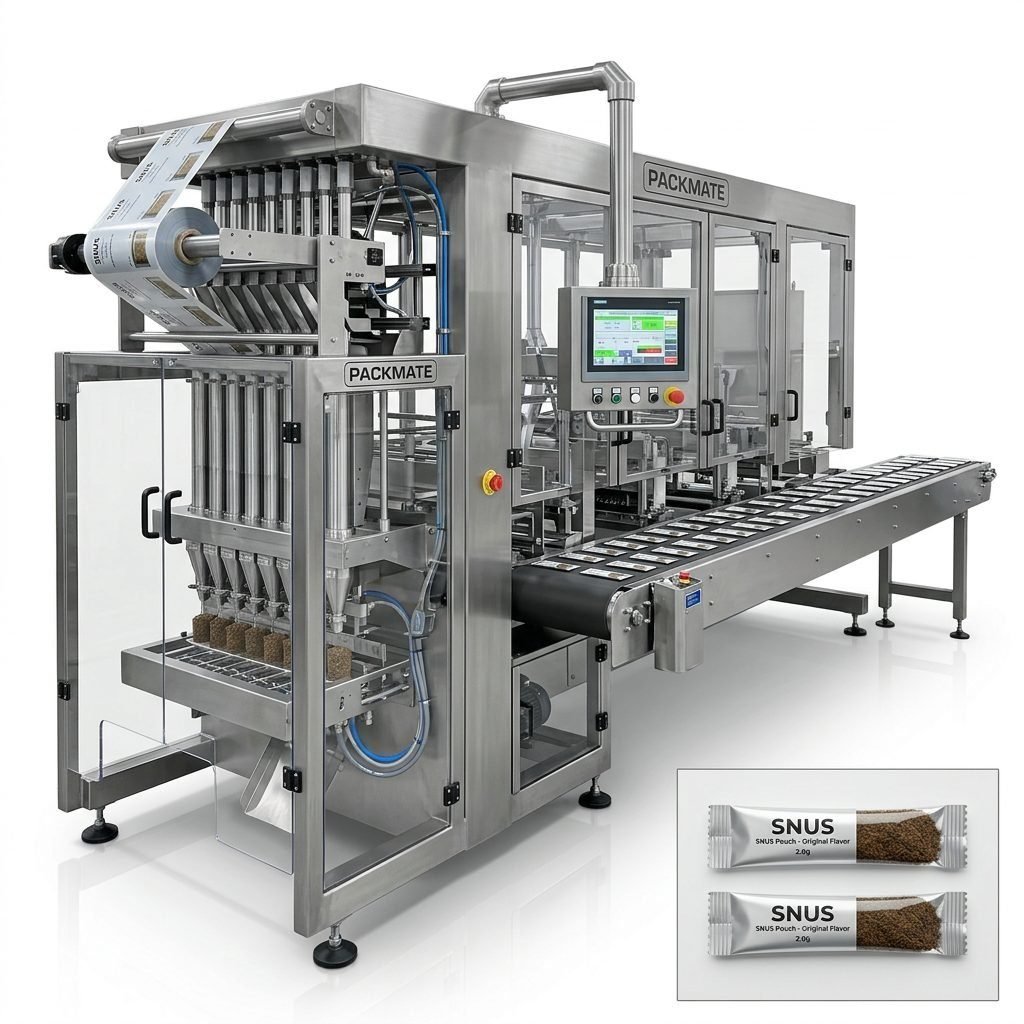
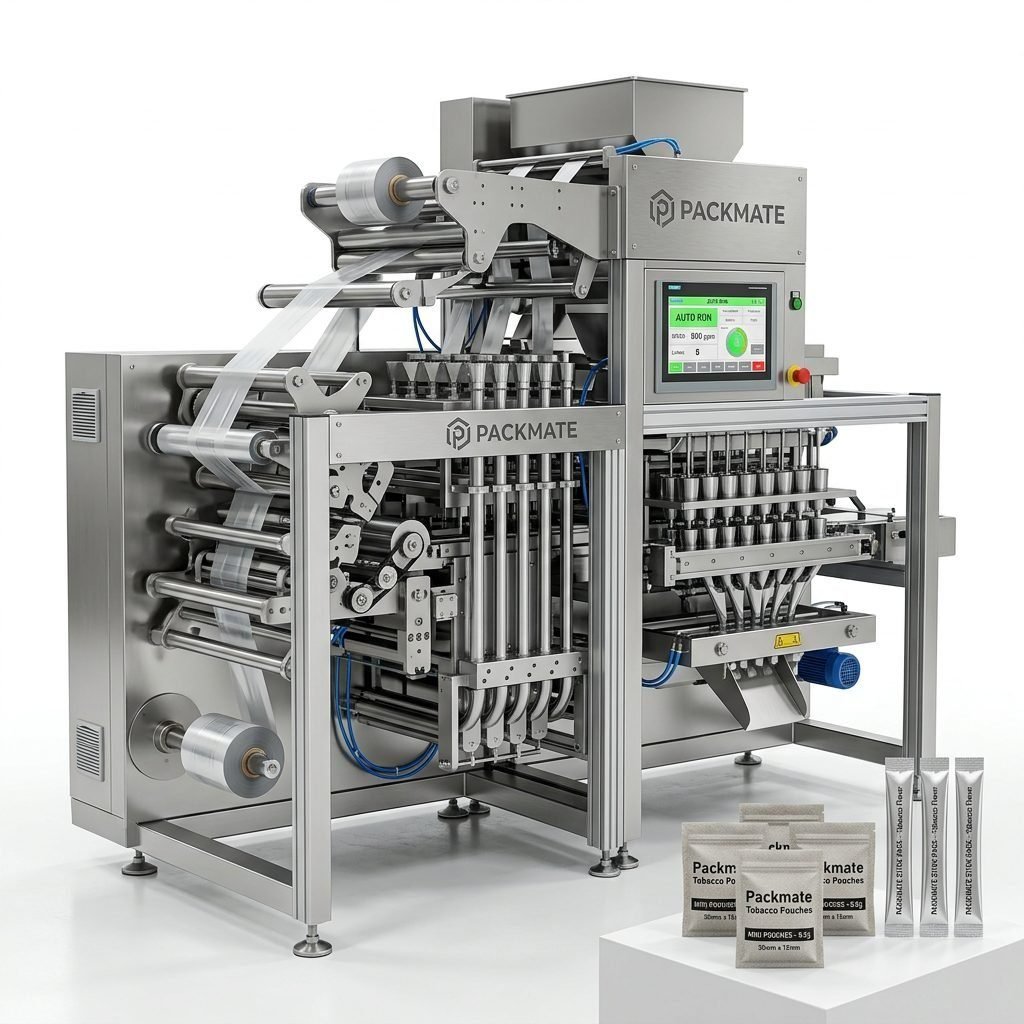
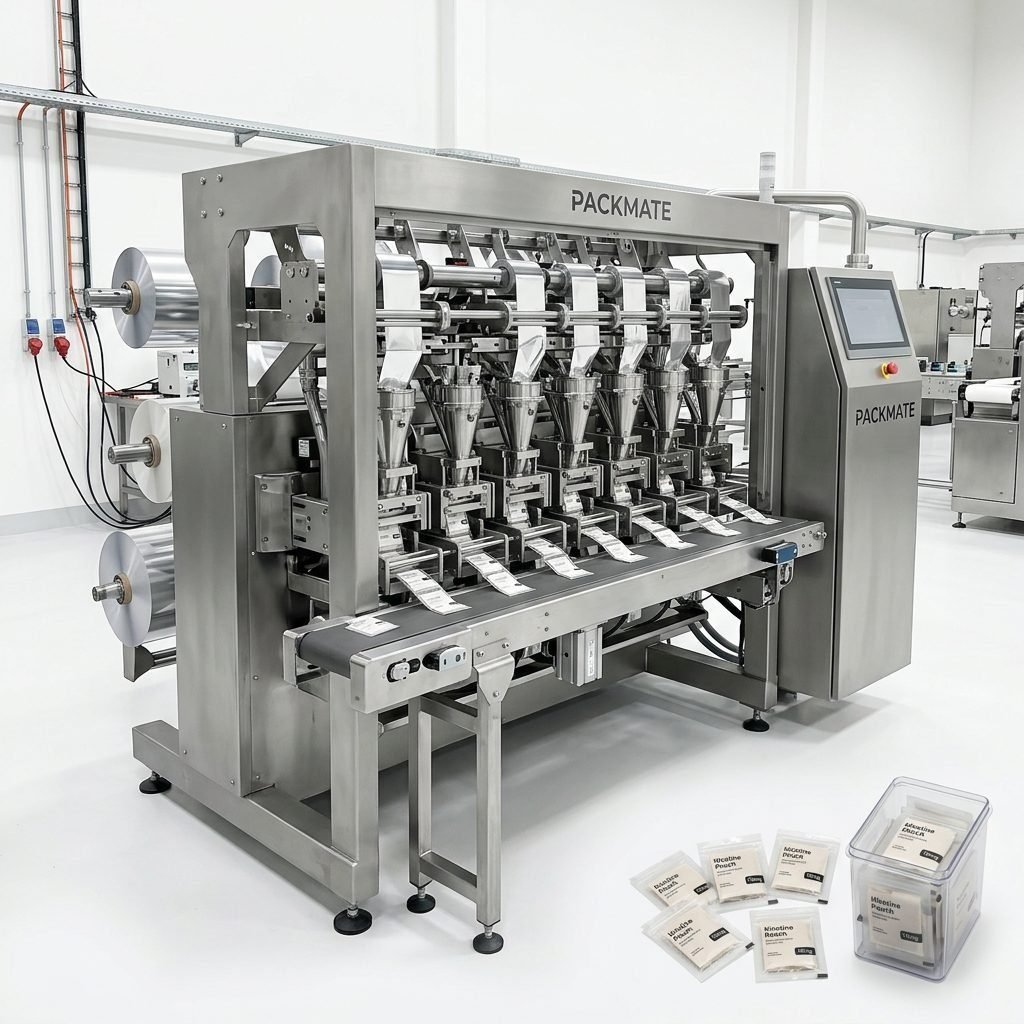
Small-batch producers may choose single-lane or two-lane sachet and stick-pack equipment for flexibility. Large exporters targeting multiple international markets typically invest in multi-lane systems that multiply throughput without increasing footprint. Multi-lane machines also lower labor intensity and reduce per-unit costs when running steady-state production.
Regulatory compliance and certification
Regulatory requirements differ between regions. For export, ensure your machinery supports consistent, documented processes that meet receiving markets’ quality and safety expectations.
Must-have checks: machines built to CE and ISO standards for electrical and mechanical safety, traceable components, and validation procedures. Packmate equipment carries CE and ISO-level compliance to ease market entry.
Market-specific regulatory notes
– Europe: labeling and ingredient disclosure rules vary by country; Scandinavian markets historically have a strong snus tradition so expect mature supply chains and high quality expectations.
– North America: regulatory pathways for nicotine products are complex and may require documented manufacturing controls and product testing.
– Asia & LATAM: some markets prioritize rapid scaling and cost efficiency while others require strict documentation and customs-ready packaging formats.
Hygiene, materials compatibility and cross-contamination risk
Nicotine is a sensitive substance that requires controlled handling. Machinery should be designed for easy cleaning, minimal dead zones and sanitary materials (stainless steel contact parts, cleanable conveyors, and quick-release components).
Pro tip: choose machines with CIP-friendly design and validated cleaning procedures to reduce cross-contamination risk and simplify audits.
Materials and pouch compatibility
Verify compatibility with the film and pouch materials you plan to use: paper-poly, PET/ALU laminates, compostable films, etc. Sealing temperatures, dwell times and cutting methods differ by web material—your machine supplier should test your film before purchase and supply optimized sealing parameters.
Automation, integration and Industry 4.0 readiness
Automation reduces variability. Evaluate PLC and HMI capabilities, recipe management, data logging and integration options for upstream weighing/filling and downstream cartoning or case-packing lines. Modern machines should provide:
Essential features: electronic batch records, OEE data export, remote diagnostics, and modular interfaces for third-party equipment.
Remote support and spare parts
For exporters, rapid spare parts availability and remote troubleshooting reduce downtime. Ask suppliers about global parts distribution, local partners and remote HMI support. Packmate’s global service network and 20,000㎡ factory support capacity make long-term maintenance feasible for international customers. Visit About Packmate for more company details.
Weighing, dosing and fill accuracy
Fill accuracy is critical for nicotine pouches because dosing tolerances affect product claims and regulatory compliance. Evaluate:
Things to verify: gravimetric or volumetric dosing accuracy, dynamic weighing integration, and speed vs. accuracy charts for intended dose ranges.
Fill technology options
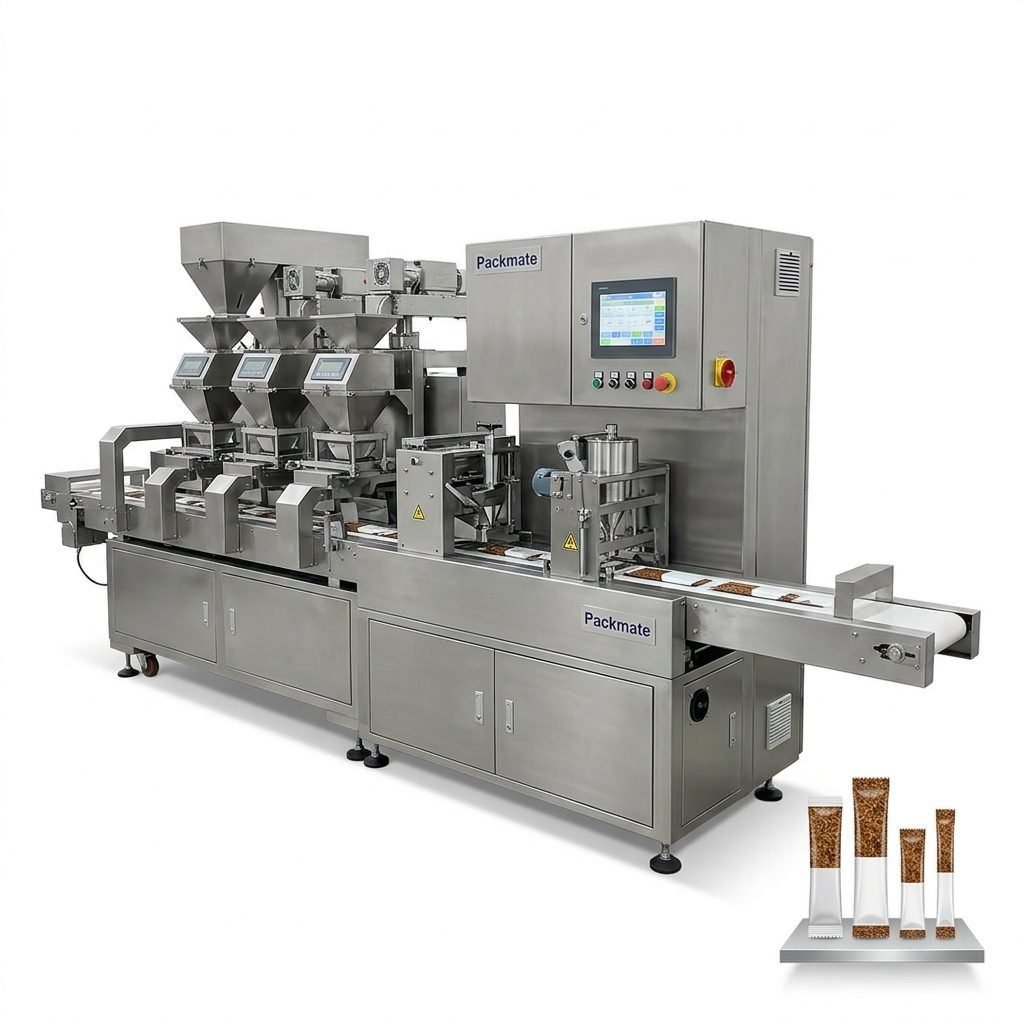
Gravimetric dosing is preferred when precision is paramount. Auger and volumetric systems can be suitable for certain powder blends. For moist snus material, consider positive displacement or custom feeding solutions to prevent bridging and ensure consistent portioning.
Flexibility, format changeovers and tooling
Exporters often supply different markets with multiple pouch sizes and languages. Assess how quickly the machine can be retooled for new formats, and whether changeovers are manual or assisted by quick-change modules.
Operational benefit: shorter changeover time increases production flexibility and reduces inventory risk when you must switch between markets or SKU runs.
Tooling lifecycle and cost
Tool wear affects seal quality and downtime. Ask about spare tooling availability, expected life cycles and refurbishment options. A robust supplier will provide documented expected lifetimes and preventive maintenance guidance.
Energy, footprint and layout for export-ready plants
Consider machine energy consumption, compressed air requirements and facility footprint. For export lines, plan a compact layout that simplifies packing into export cases, meets customs inspection needs and supports ergonomic operator access.
Quality control, inline inspection and traceability
Inline inspection systems (weight checks, vision systems for seal integrity and print inspection) reduce downstream rework. Machines that integrate rejection and divert systems allow only compliant packs to enter export cartons, protecting brand reputation.
Note: traceability is often required by importers; ensure your line can print batch codes, timestamps, and serialized identifiers and that the HMI logs production data.
Export logistics, packaging and cultural preferences
Different regions have distinct packaging expectations and cultural preferences. Scandinavian markets may expect premium look and compact portion sizes for snus, while other regions prioritize cost-effective bulk packaging. Consider:
- Local labeling languages and symbols
- Preferred pack count per retail unit
- Regulatory warnings and health statements
- Retailer shelf presentation and carton sizes for pallet optimization
Cultural example: Scandinavia
In Sweden and Norway, snus is a culturally established product with customers used to specific portion shapes, nicotine strengths and premium packaging. For these markets, invest in machines that produce precise, consistent pouches and support high-quality foil and print finishes.
Choosing the right supplier and service package
A machine is only part of the solution. Evaluate supplier track record, factory scale, and customization experience. Look for companies with:
Supplier checklist: decades of experience, in-house CNC and assembly capacity, global installation references, turnkey line capabilities and aftermarket support.
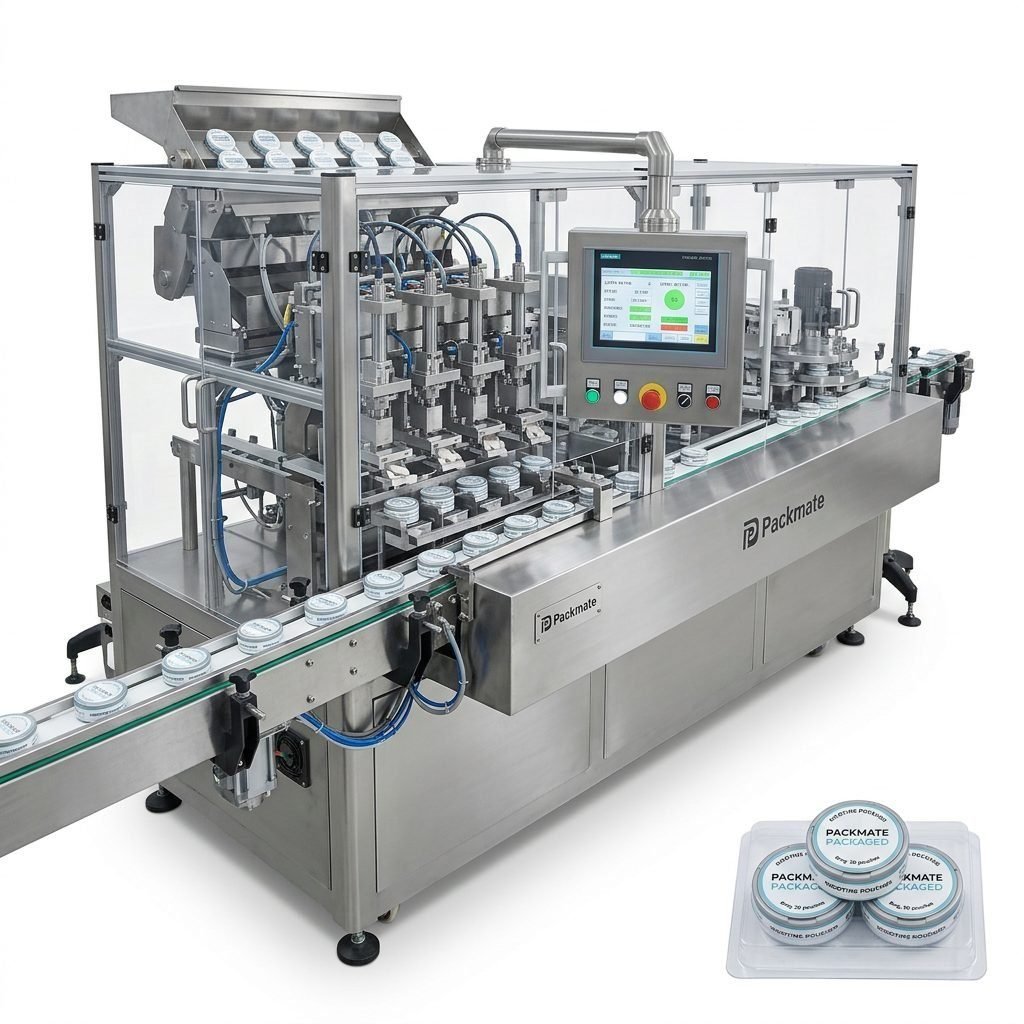
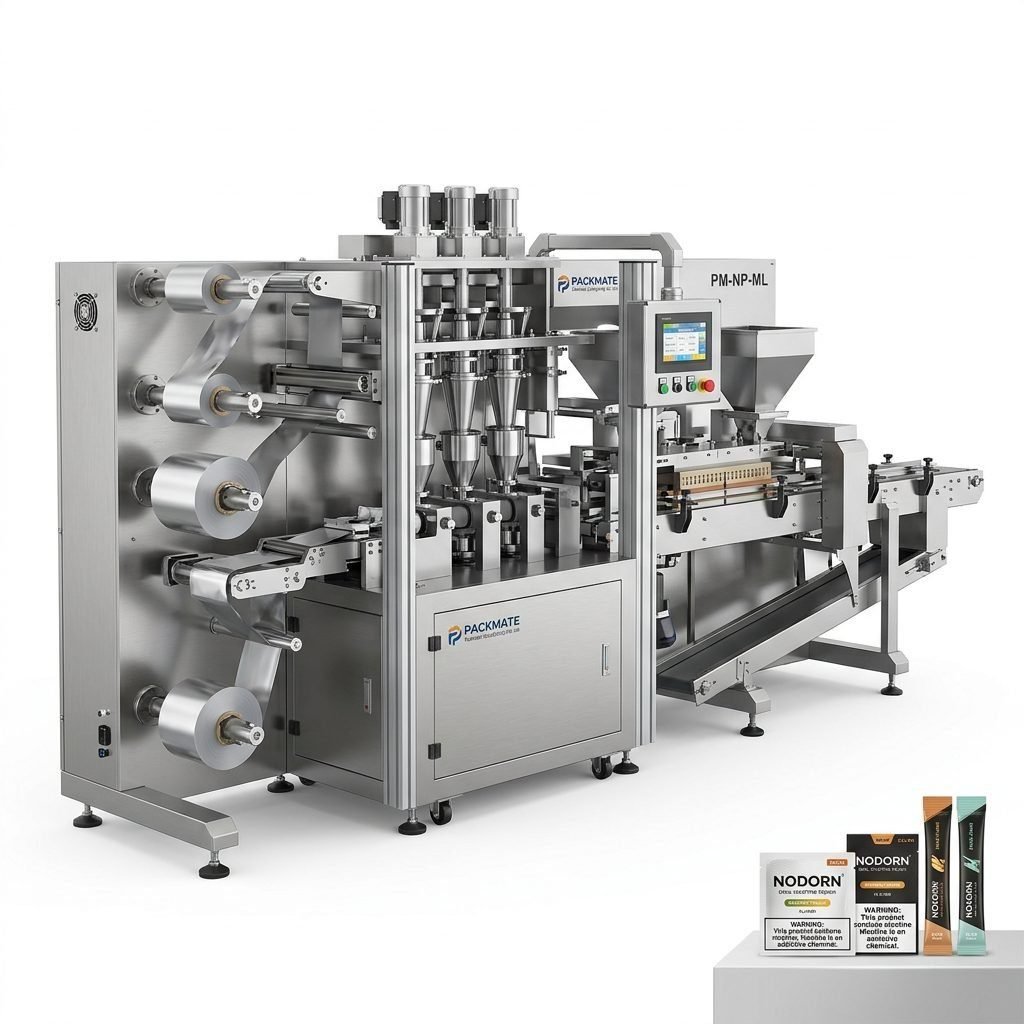
For example, Packmate Snus Machine brings 30+ years of engineering experience and a 20,000㎡ factory with 50+ machine models to support tailored nicotine pouch production lines. Explore Snus & Nicotine Packaging Machines and Sachet & Stick Pack Machines to see typical equipment configurations.
Factory acceptance testing and FAT
Insist on factory acceptance testing (FAT) with your actual materials and process parameters. FAT reduces risk and verifies performance before shipment. Suppliers should provide documented run results and support for installation and commissioning at your site.
Cost planning: CAPEX and TCO
Price is important, but total cost of ownership (TCO) matters more for exporters. Consider energy use, spare parts, tooling wear, expected yields, operator training and downtime risk. A slightly higher initial CAPEX for a robust machine with advanced automation will often pay back in lower labor and waste.
Case study summary: turning requirements into a specification
Start by documenting: target SKUs, dose tolerances, expected throughput, film types, downstream packaging needs and export destinations. Use that specification to evaluate machinery offers, request FAT with your materials and require clear service agreements and spare parts lists.
Quick decision flow: Product format & dose → Throughput target → Filling/feeder choice → Multi-lane vs single lane → Automation & inspection → FAT & service terms.
Where to get started and useful resources
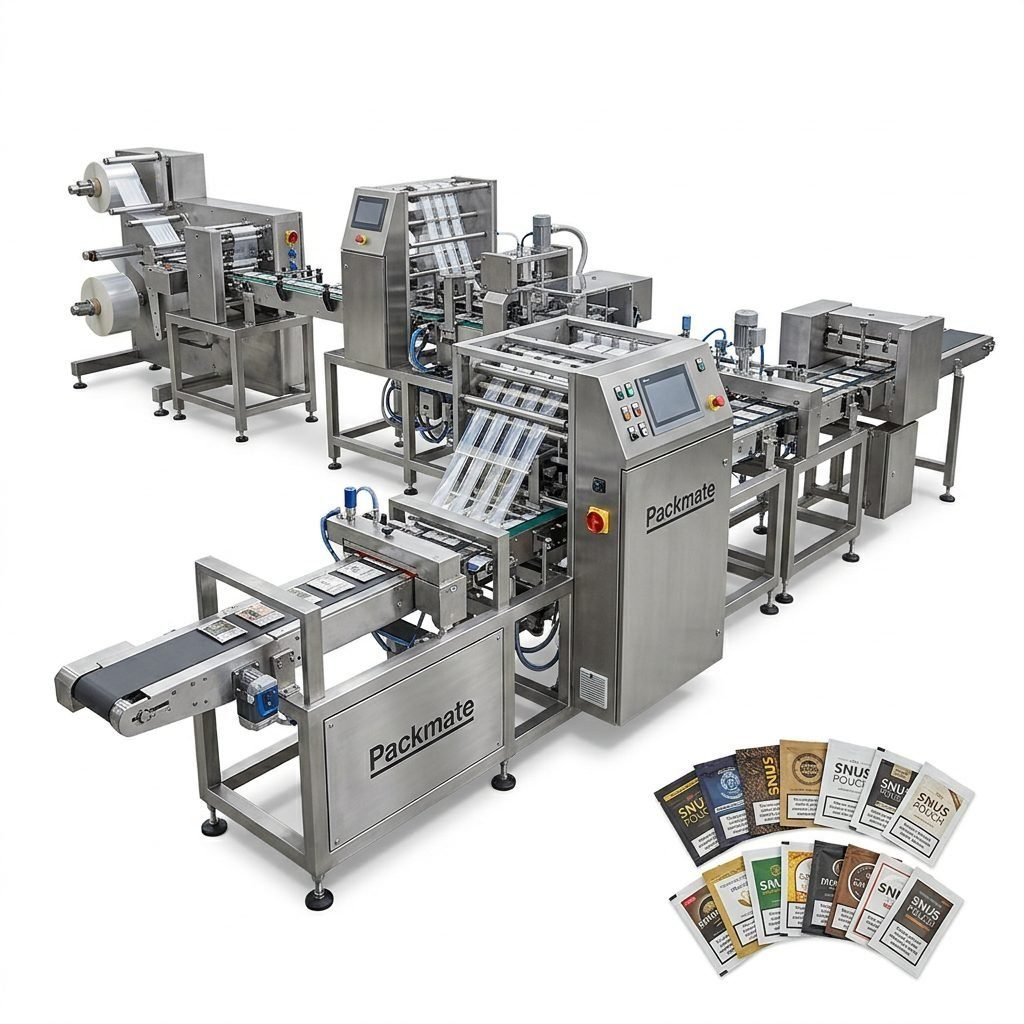
To evaluate practical machine options and see finished installations, review supplier case studies and product pages. Helpful starting points include Packmate’s product pages for Snus & Nicotine Packaging Machines, Bag & Pouch Packaging Machines and Filling & Packaging Lines which show different line configurations and capabilities.
Final practical checklist before purchase
– Confirm film and pouch compatibility and test seals with your materials.
– Require FAT and sample runs with your products.
– Verify spare parts lead times and remote service options.
– Check compliance documentation (CE/ISO) and traceability capabilities.
– Ensure the supplier can supply turnkey solutions including upstream weighing and downstream cartoning if needed.
Icon guide: ⚙️ machine capability • ✅ compliance & testing • 📦 export packaging • 🌍 market fit
If you want tailored recommendations, consult suppliers who offer in-house engineering and FAT—this reduces implementation risk and helps align a line to your export destinations. See Our Exhibition for demonstrations and Case pages for real deployments.
Frequently Asked Questions
Q1: How do I ensure my packaging line meets different countries’ labeling and warning requirements?
A1: Build label printing and inspection into the line, maintain recipe-controlled print templates for each market, and verify through FAT that printed content matches regulatory requirements. Use inline vision systems to detect missing or incorrect text.
Q2: What is the typical lead time for a multi-lane nicotine pouch line and delivery for export-ready installation?
A2: Lead time varies by customization level and supplier capacity. Standard systems may ship in several months; fully customized turnkey lines with FAT can take longer. Work with suppliers who publish realistic timelines and offer clear project milestones.
Q3: Are there common pitfalls when exporting nicotine products that affect packaging machinery choice?
A3: Yes—underestimating labeling needs, ignoring film compatibility, and failing to plan for spare parts and remote service are common. Ensure the machine supports quick format changes and that the supplier has export experience.
Q4: How should I approach dose accuracy verification for nicotine pouches?
A4: Use gravimetric checks and inline weight monitoring, maintain documented sampling plans, and integrate reject systems to remove out-of-spec packs before boxing and shipping.
Q5: Where can I see real machine installations and get a quote tailored to my products?
A5: Request supplier case studies and FAT demonstrations. Packmate provides product and case information and can tailor solutions—see Snus & Nicotine Packaging Machines, Filling & Packaging Lines, and Service pages for more details.