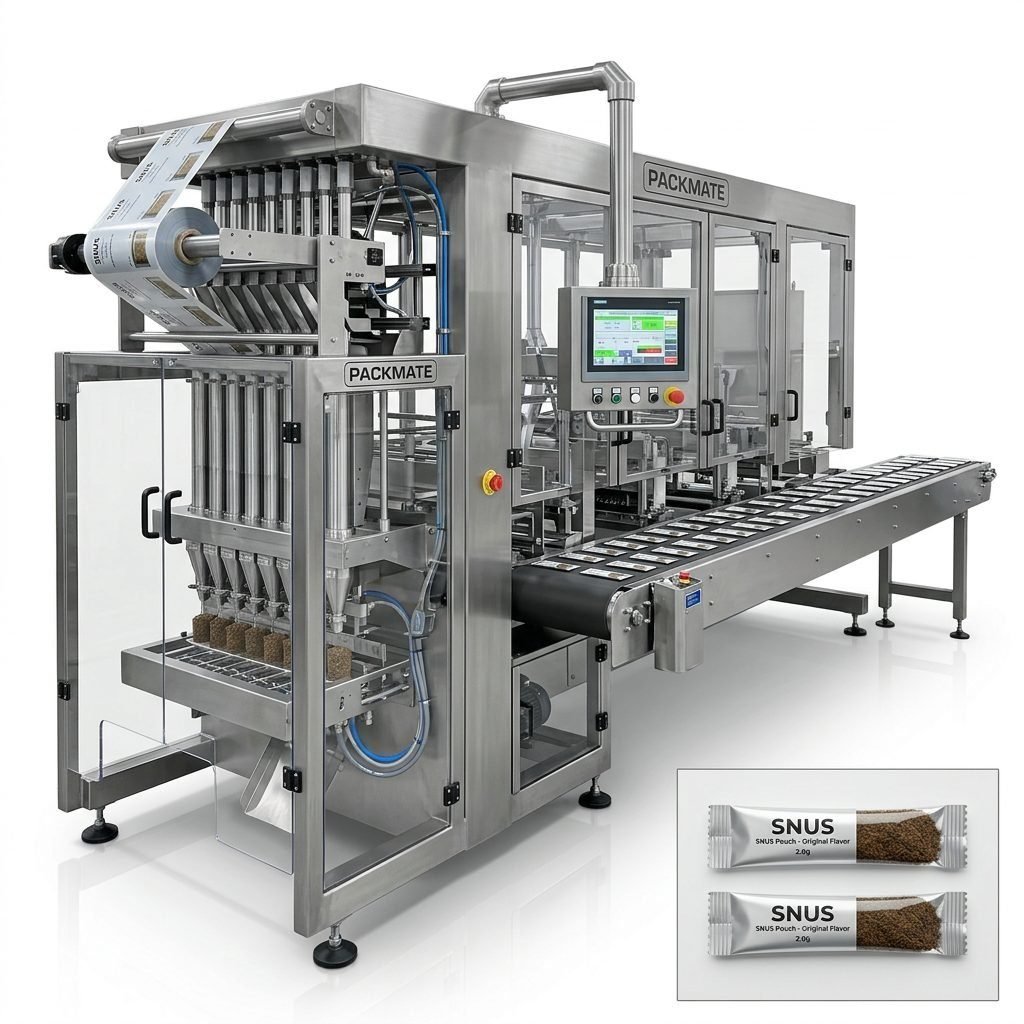
In modern snus and nicotine pouch manufacturing, achieving consistent product quality at high throughput requires a fully integrated, automated approach. This article explores end-to-end production lines tailored for nicotine pouch factories, covering machine selection, line configuration, quality control, regulatory compliance, and operational best practices. Whether you are scaling a new plant or upgrading an existing line, these insights will help you optimize efficiency, reduce waste, and ensure product consistency.
Why Choose an Automated Nicotine Pouch Production Line?
Automated production lines for nicotine pouches combine precision dosing, high-speed packaging, and integrated quality checks to deliver repeatable results. For manufacturers, the benefits include reduced labor dependence, minimized product variability, and improved throughput. A well-designed line supports multiple pouch formats and can be adapted to new flavors, sizes, and materials with minimal downtime.
Key advantages:
✅ Consistent fill weight and sealing integrity
✅ Reduced OEE losses through predictive maintenance
✅ Scalable multi-lane solutions for small-dose pouches
Core Components of an End-to-End Line
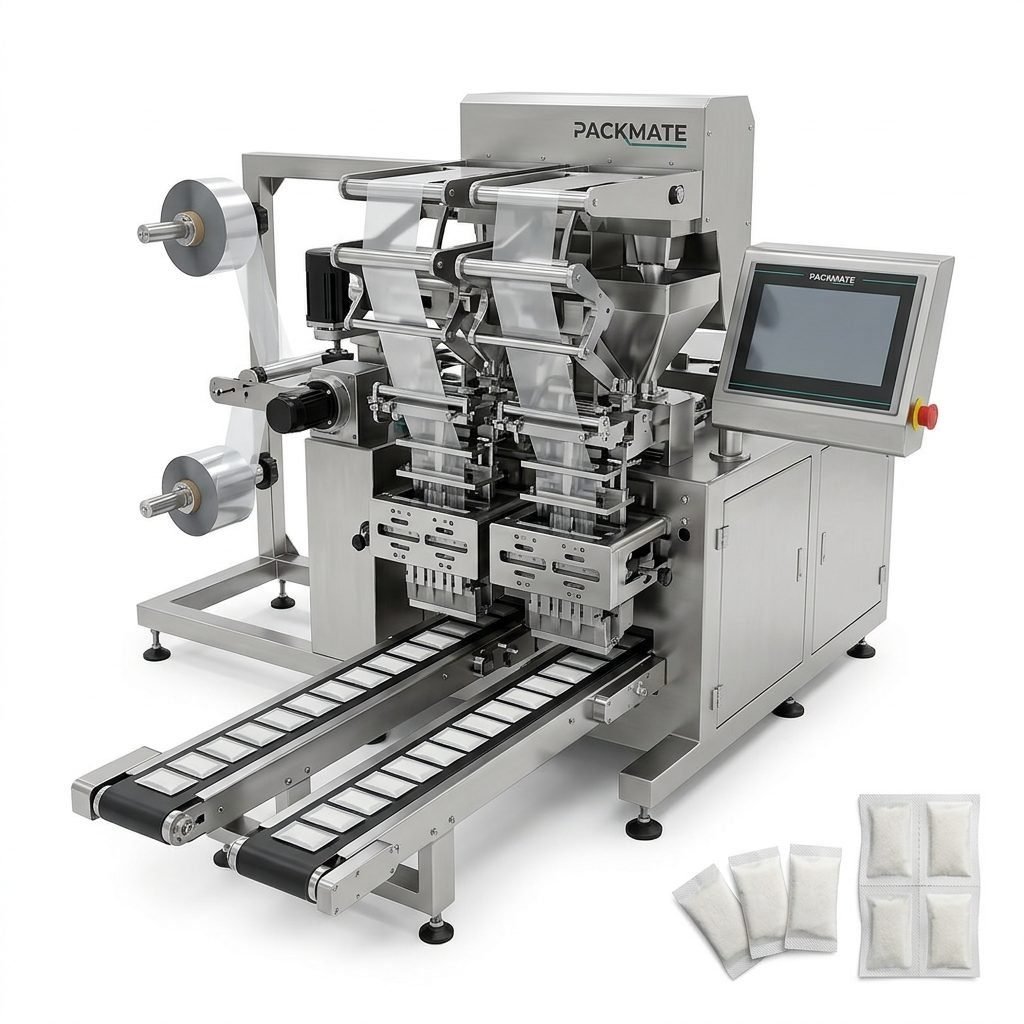
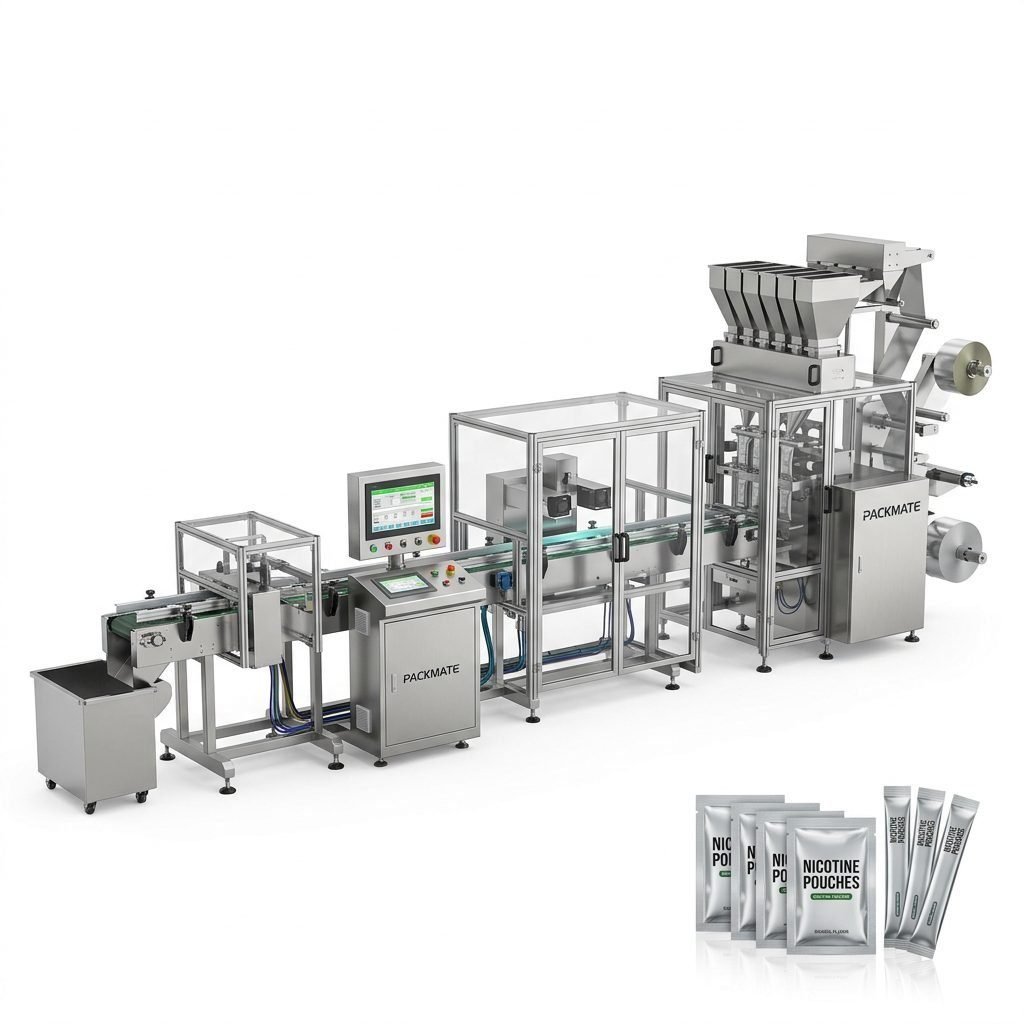
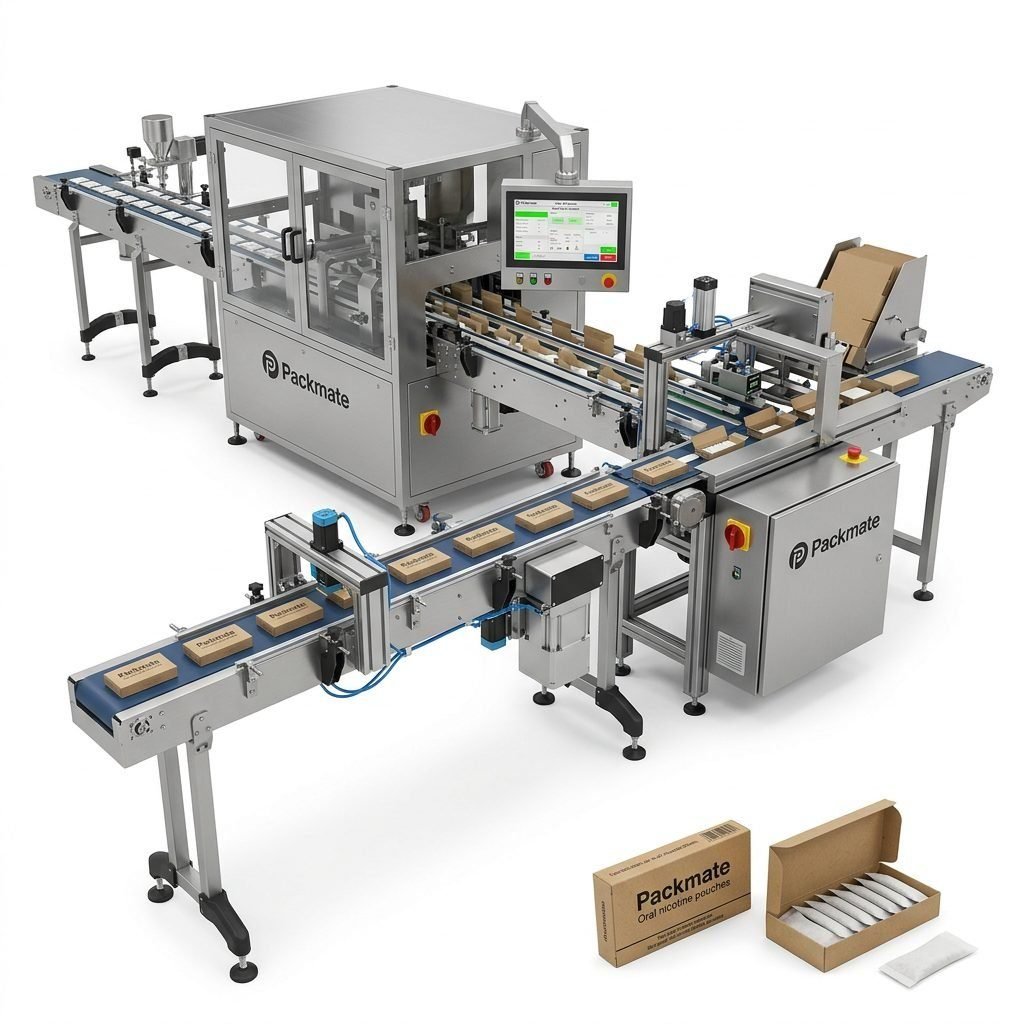
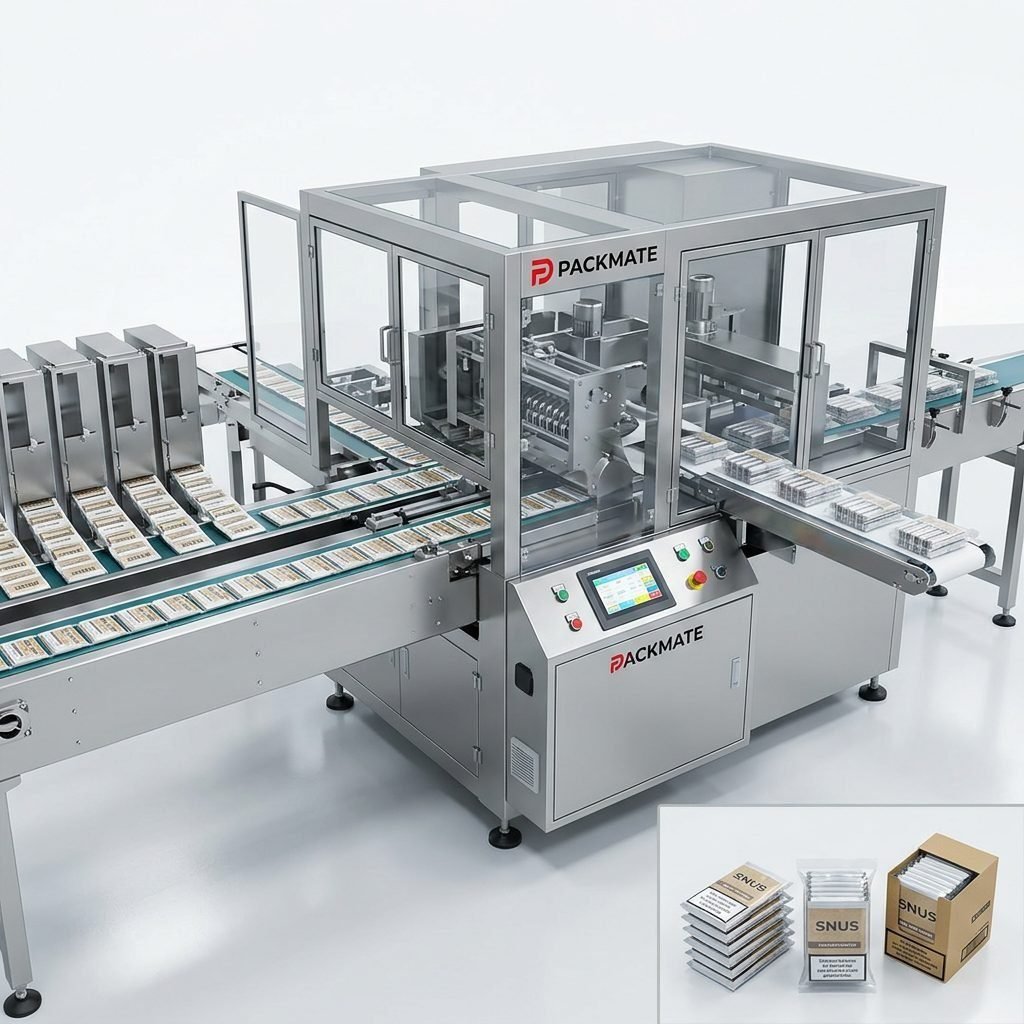
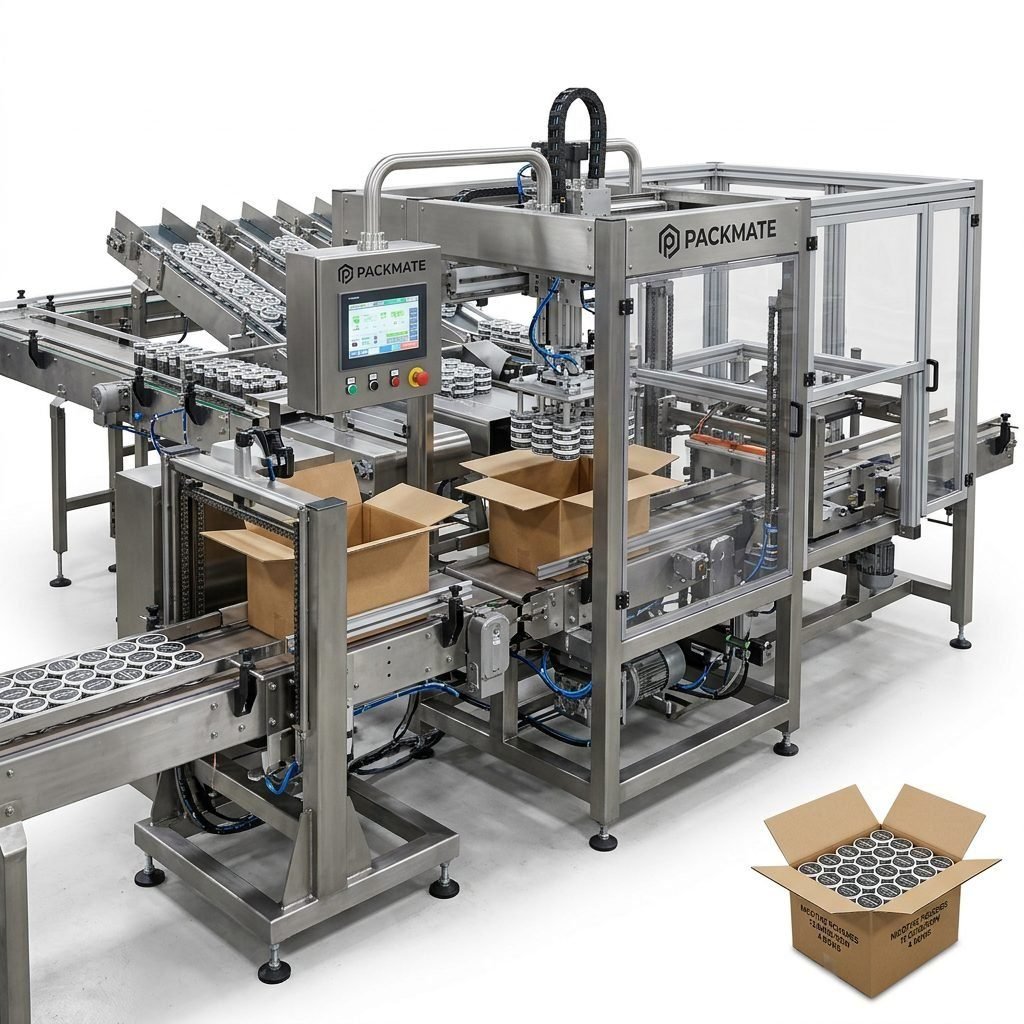
Modern nicotine pouch production lines typically integrate several specialized machines into a synchronized workflow. A typical configuration includes pre-weighing or dosing systems, pouch forming and filling machines, sealing and cutting units, metal detection, labeling and case packing, and palletizing. Each step should be selected based on capacity requirements, pouch format, and regulatory needs.
1. Dosing & Weighing Systems
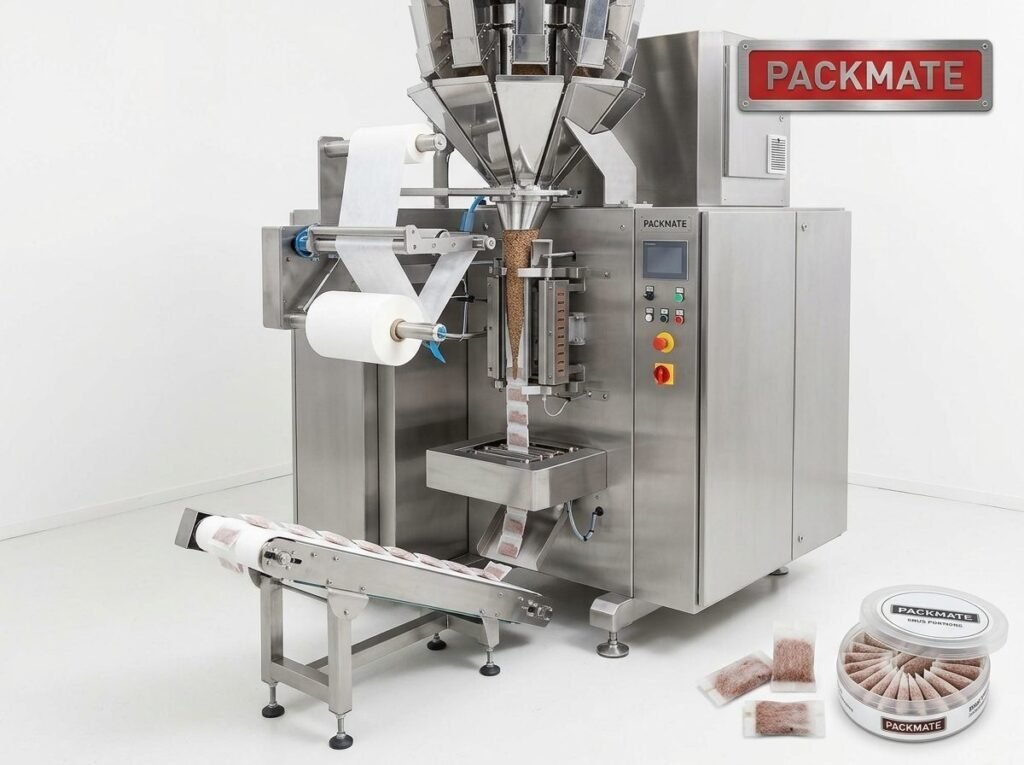
High-precision dosing systems ensure each pouch contains the correct amount of nicotine blend or tobacco-free substrate. For multi-lane systems, synchronized multi-head weighing is essential to maintain uniformity across lanes. Consider systems with quick-change hoppers and CIP-friendly designs for fast product changeovers and sanitation.
2. Form-Fill-Seal (FFS) Machines
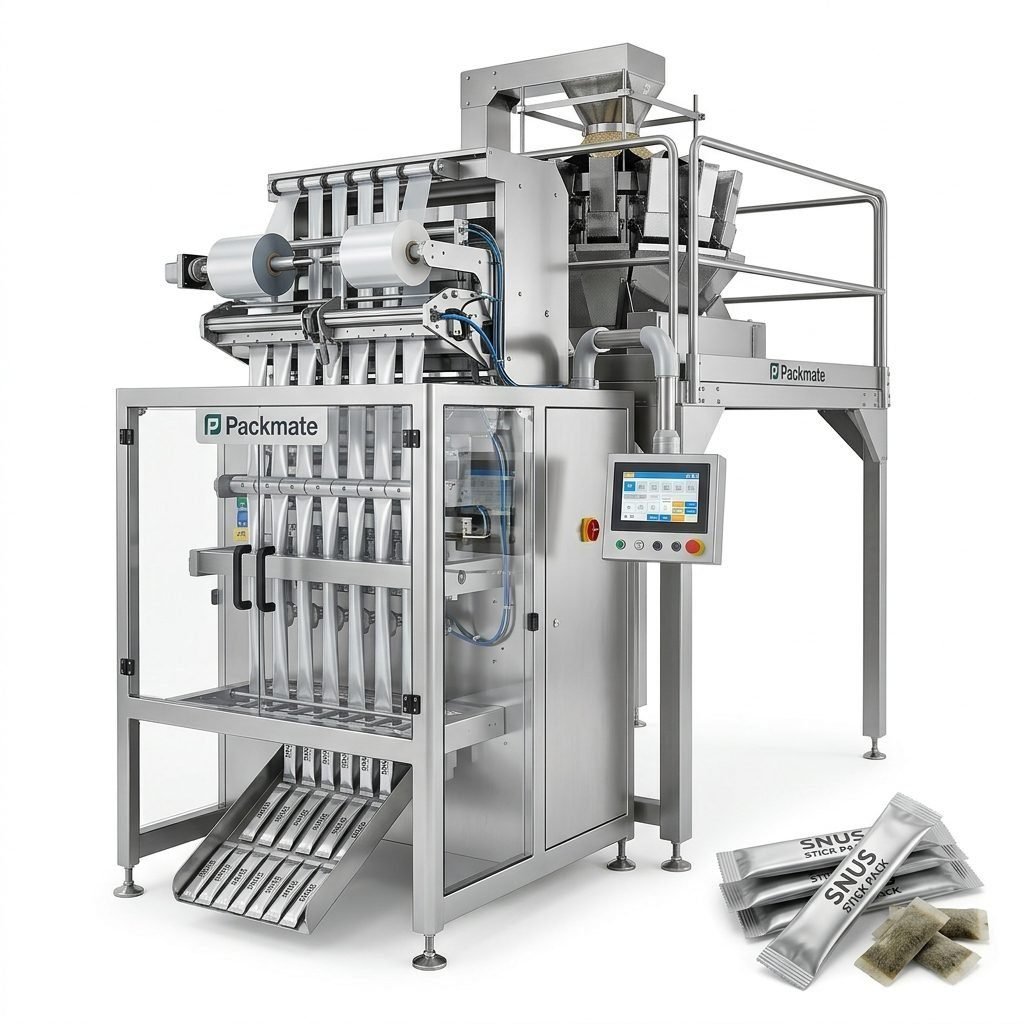
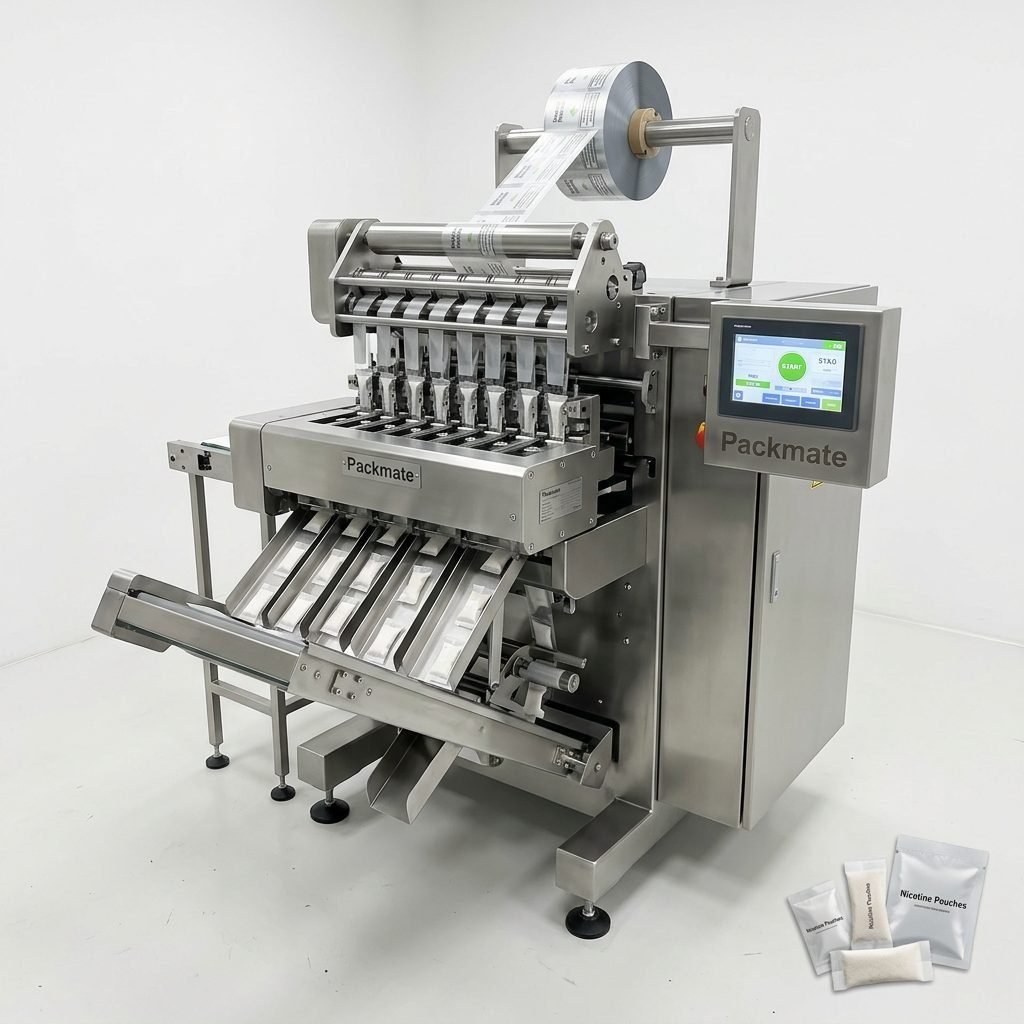
The FFS module shapes the pouch, fills it with the measured dose, and seals the pouch with the required barrier properties. For snus and nicotine pouches, machines capable of handling stick packs, sachets, and multi-lane small-dose pouches are common. Machines with servo-driven film handling and advanced tension control deliver superior seal quality and lower film waste.
Tip:
Choose equipment that supports rapid format changes if you plan to produce multiple pouch sizes or shapes.
3. Inspection & Quality Assurance
Inline vision systems, X-ray or metal detection, and weight control are vital to ensure every pouch meets quality standards. Integrating rejection stations that remove defective packs without stopping the line helps maintain throughput while protecting downstream packaging integrity.
Designing for Efficiency: Multi-Lane vs. Single-Lane Lines
Multi-lane systems are increasingly favored for nicotine pouch manufacturing due to the small pouch size and high output demands. Multi-lane machines reduce floor space per unit output and can dramatically lower labor and maintenance costs per pouch produced. Single-lane systems remain appropriate for small batch production or specialized formats.
Advantages of Multi-Lane Systems
🔧 Higher throughput: Multiple lanes run in parallel to multiply output without linear increases in footprint.
⚙️ Consistent dosing: Uniform dosing modules distribute product evenly across lanes.
📈 Better economics: Lower OEE impact per lane and reduced per-unit energy consumption.
Turnkey Solutions and Customization
Leading suppliers provide turnkey solutions that include machinery, controls, software integration, and installation services. Customization is often required to meet local regulations, specific pouch designs, or integration with existing upstream and downstream equipment. A reputable manufacturer will offer site surveys, 3D layout planning, and FAT (Factory Acceptance Testing).
For examples of broad product portfolios and turnkey lines, see product categories such as
Snus & Nicotine Packaging Machines,
Bag & Pouch Packaging Machines, and
Filling & Packaging Lines.
Automation, Industry 4.0, and Data Integration
Integrate PLCs, HMIs, and MES connectivity to enable real-time monitoring and OEE analysis. Predictive maintenance, powered by sensor data and simple analytics, can reduce downtime significantly. Remote support capabilities allow manufacturers to receive timely troubleshooting and software updates from suppliers, shortening service response times.
Industry 4.0 Features to Consider:
• Remote diagnostics and secure VPN access
• OEE dashboards and automated shift reports
• Recipe management for quick product changeovers
Regulatory Compliance and Certifications
Compliance with international standards is non-negotiable for global distribution. Choose equipment with relevant certifications such as CE and ISO and ensure that the line design supports GMP-like cleanliness, traceability, and allergen control when needed. Suppliers that provide validation documents, calibration routines, and documentation for audits streamline regulatory approvals.
Hygiene, Materials, and Maintenance
Stainless steel contact parts, modular guarding, and easy-disassembly components reduce downtime during cleaning. Consider hygienic design principles: sloping surfaces, minimal crevices, and accessible filters. Scheduled maintenance plans and readily available spare parts kits are essential for sustaining high line availability.
Training, After-Sales Service, and Spare Parts
Comprehensive operator training, preventive maintenance instruction, and remote support agreements maximize ROI. Partner with manufacturers who maintain a global spare parts inventory and provide digital manuals, remote troubleshooting, and periodic on-site service visits.
Case Studies & Global Deployments
Leading manufacturers have successfully delivered lines across Europe, Asia, and the Americas. These deployments demonstrate how configurable multi-lane systems adapt to local product formats and regulatory environments while offering consistent reliability. For project showcases and client stories, consult the provider’s case references and exhibition reports.
View practical examples: Case and find upcoming demos at Our Exhibition.
Selecting a Supplier: What to Ask
When evaluating suppliers, prioritize proven experience in snus and nicotine pouch equipment, transparent project management, and after-sales support. Request references, FAT documentation, sample packs from trial runs, and a detailed spare parts list. Confirm the supplier’s capabilities in CNC machining, assembly, and quality control to ensure robust machine construction.
Essential questions:
• What is the expected output per hour for the chosen configuration?
• How long are lead times for spare parts and consumables?
• Does the supplier provide FAT and start-up support on-site?
Practical Layout and Factory Planning
Efficient factory layouts minimize material handling and support continuous flow. Plan for dedicated receiving and storage for raw materials, a hygienic production zone for the filling and packaging line, and separate QC and finished goods areas. Consider space for future expansion, buffer conveyors, and maintenance access around key equipment.
Environmental and Utility Requirements
Assess compressed air quality, electrical load, vacuum systems, and drainage needs early in the design stage. Proper environmental controls such as dust extraction and temperature stability are important for product consistency and worker safety.
Scalability and Future-Proofing
Invest in modular equipment that can be upgraded or paralleled to increase capacity. Software that supports recipe versioning and secure updates helps future-proof the line as regulations and product formats evolve. Consider leasing or phased procurement to align capital expenditure with market growth.
Why Partner with an Experienced Manufacturer
Manufacturers with decades of engineering experience, advanced CNC facilities, and a broad model range offer the technical depth required to deliver reliable lines. A partner who provides full documentation, certifications, and a global service footprint will accelerate your path to market.
Learn more about the manufacturer’s background and capabilities at About Packmate and explore related product modules under Sachet & Stick Pack Machines.
Implementation Roadmap
A practical implementation plan reduces surprises during installation. Key phases include: site assessment and layout planning, mechanical and electrical preparations, FAT and pre-shipment validation, on-site installation and commissioning, operator training, and production ramp-up with KPI tracking.
Implementation checklist:
• Site utilities verified and ready
• Operator and maintenance training scheduled
• Spare parts and consumables stocked
Conclusion
Building a high-efficiency nicotine pouch factory requires careful selection of equipment, thoughtful factory design, and a reliable supplier partnership. By leveraging multi-lane systems, robust dosing and sealing technologies, and integrated quality controls, manufacturers can achieve high throughput with consistent product quality while maintaining regulatory compliance and operational agility.
Frequently Asked Questions
1. How do I choose between single-lane and multi-lane systems?
Choose multi-lane if you require high output in a compact footprint and consistent small-dose pouches. Single-lane systems are better for small runs, specialized formats, or when incremental capacity increases are planned.
2. What certifications should packaging equipment have?
Look for CE and ISO compliance, along with documentation for material safety, electrical standards, and any region-specific approvals. Equipment that supports GMP-like cleanability and traceability will simplify regulatory audits.
3. How long does it take to install and commission a turnkey line?
Typical timelines depend on complexity: a basic line may be installed and commissioned in a few weeks, while larger multi-lane turnkey projects can require several months for layout, FAT, shipment, installation, and validation.
4. What ongoing support should I expect from a supplier?
Expect operator training, preventive maintenance plans, spare parts supply, remote diagnostics, and on-site service options. Suppliers with global exhibition presence and case references typically offer stronger after-sales networks.
5. How can I validate line performance before accepting delivery?
Request Factory Acceptance Testing (FAT) with production simulations, sample pouches, and witnessed performance metrics. Verify dosing accuracy, seal integrity, reject rates, and OEE data before shipment.