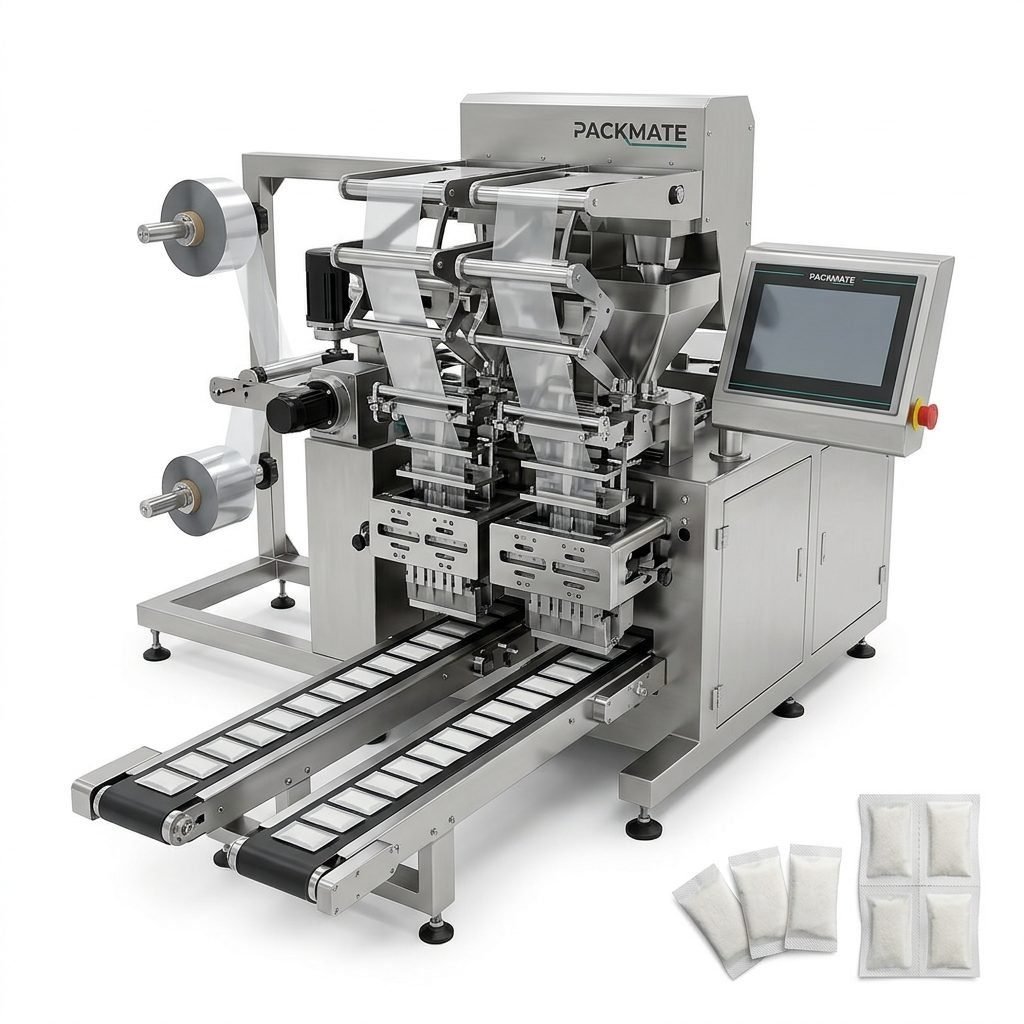
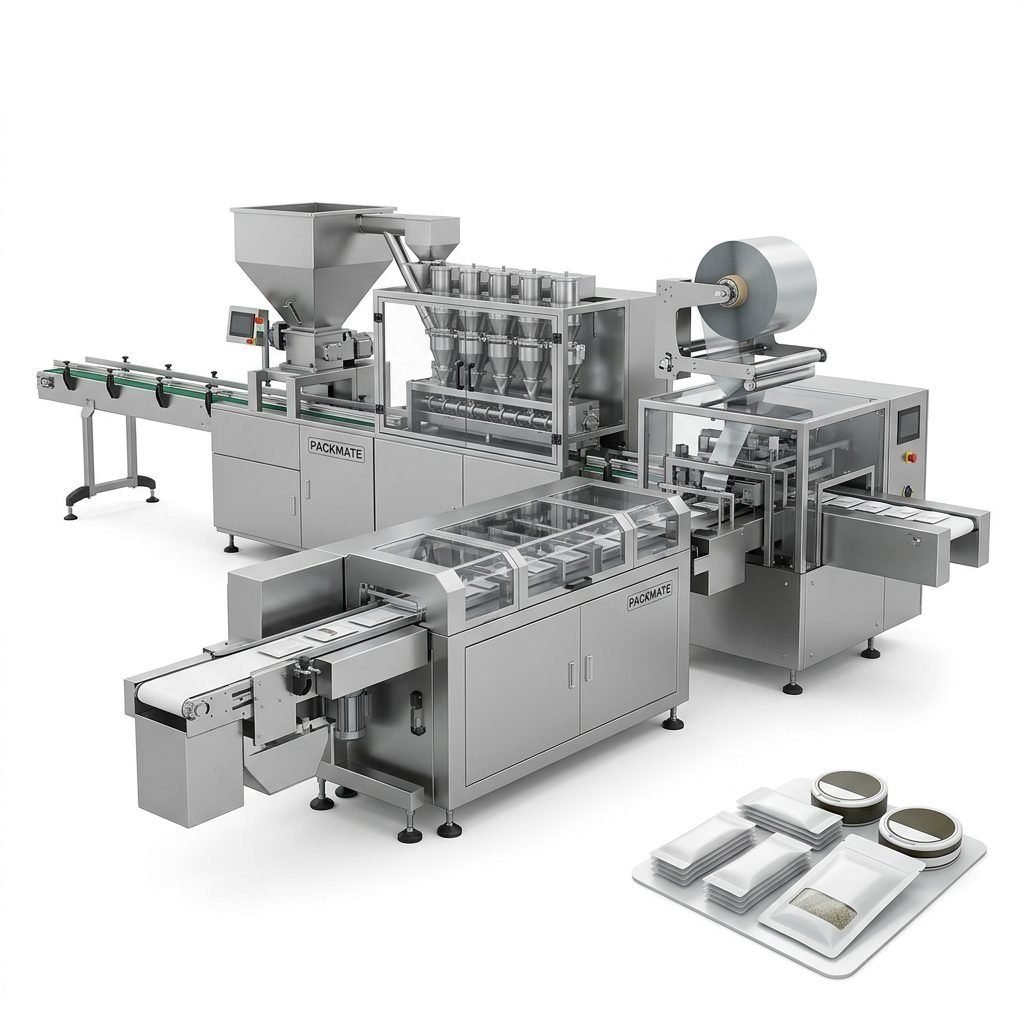
In the highly regulated and rapidly evolving field of snus and nicotine pouch manufacturing, machine engineering plays a pivotal role in ensuring product consistency, regulatory compliance, and production efficiency. This guide walks packaging managers, process engineers, and procurement teams through the essentials of snus machine engineering, from core design principles to turnkey production line optimization, drawing on three decades of practical experience in high-performance packaging systems.
⚙️ Design Principles for Snus & Nicotine Pouch Machines
Good machine design begins with a clear understanding of the product characteristics: pouch size, fill weight, moisture sensitivity, and barrier requirements. Engineers must account for mechanical precision, gentle product handling, and hygienic construction. Core priorities include reliability, ease of cleaning, and modularity so that a production line can adapt to multiple SKU formats with minimal downtime.
Key design objectives: precision metering, synchronized sealing and cutting, low contamination risk, and straightforward human-machine interaction (HMI). Emphasize repeatability for small-dose pouches common in nicotine products.
📐 Mechanical Accuracy & Materials
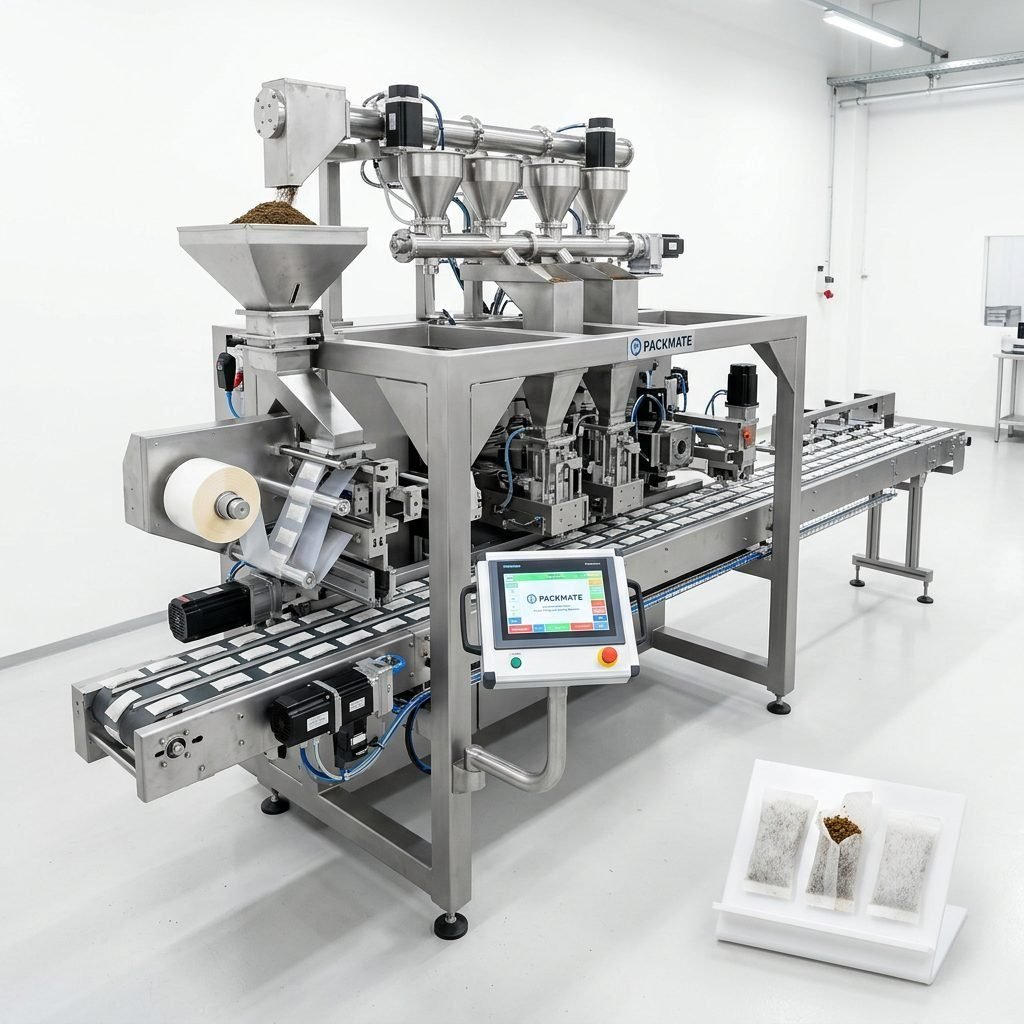
Components that influence accuracy include the dosing mechanism (auger, vibratory, or multi-head weighers), servo-driven film transport, and precision cams or timing belts for plunger and sealing operations. Use corrosion-resistant stainless steel (304/316 where required), FDA/food-grade sealing elements, and surface finishes that support cleaning-in-place (CIP) or easy manual sanitation.
🔁 Modularity & Changeover Efficiency
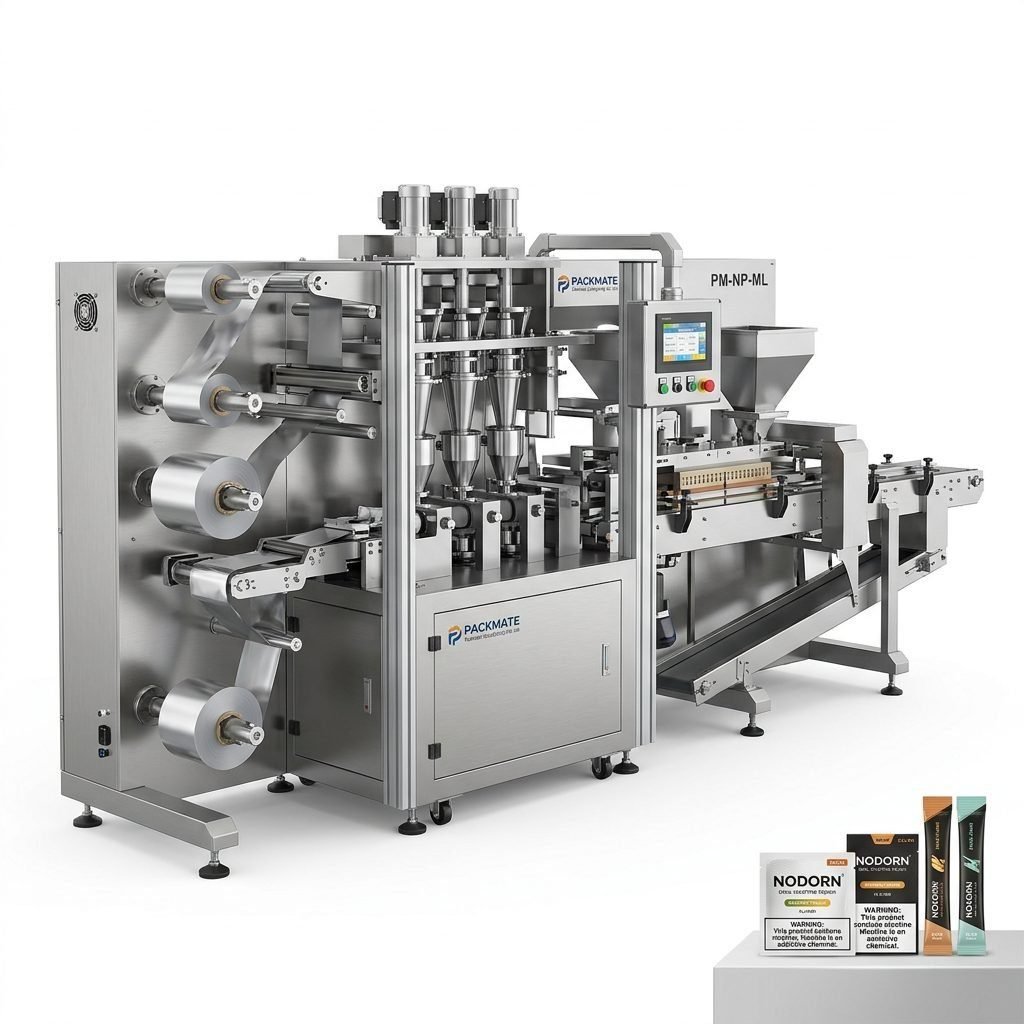
Modular machine sections reduce tool-free changeover time and lower engineering costs for multi-SKU operations. Quick-release forming tubes, adjustable conveyor guides, and pre-set recipes in the PLC/HMI enable a rapid shift between sachet, stick pack, and multi-lane snus pouches without major mechanical changes.
🧩 Core Components of a Snus Packing Line
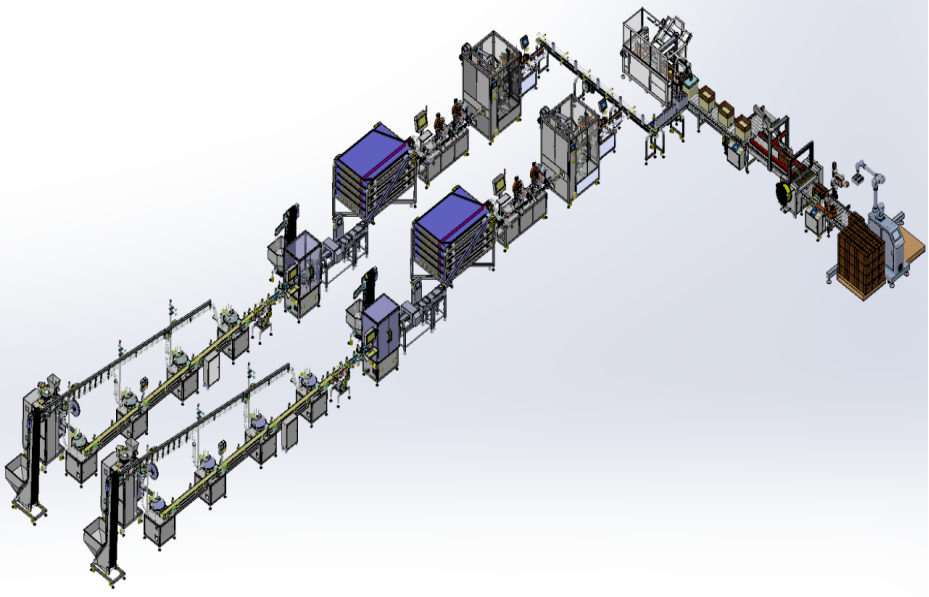
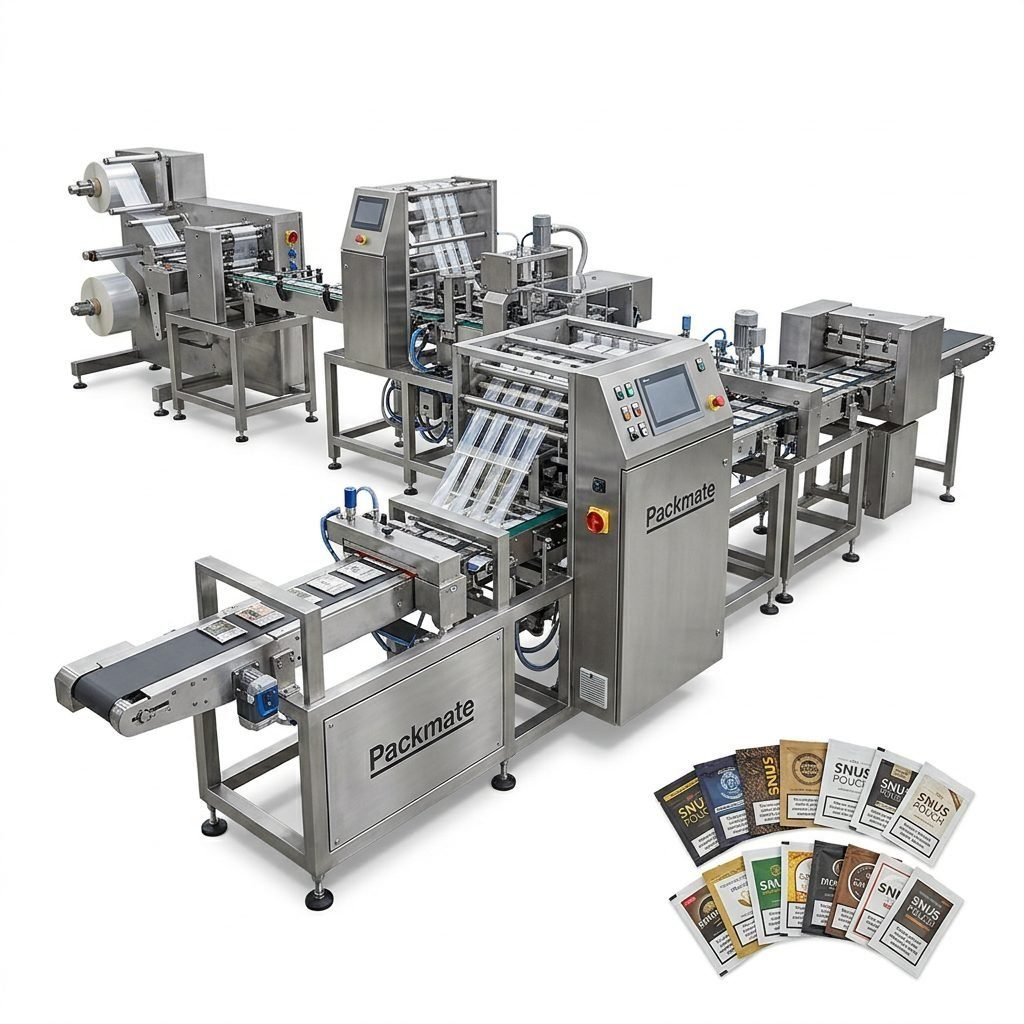
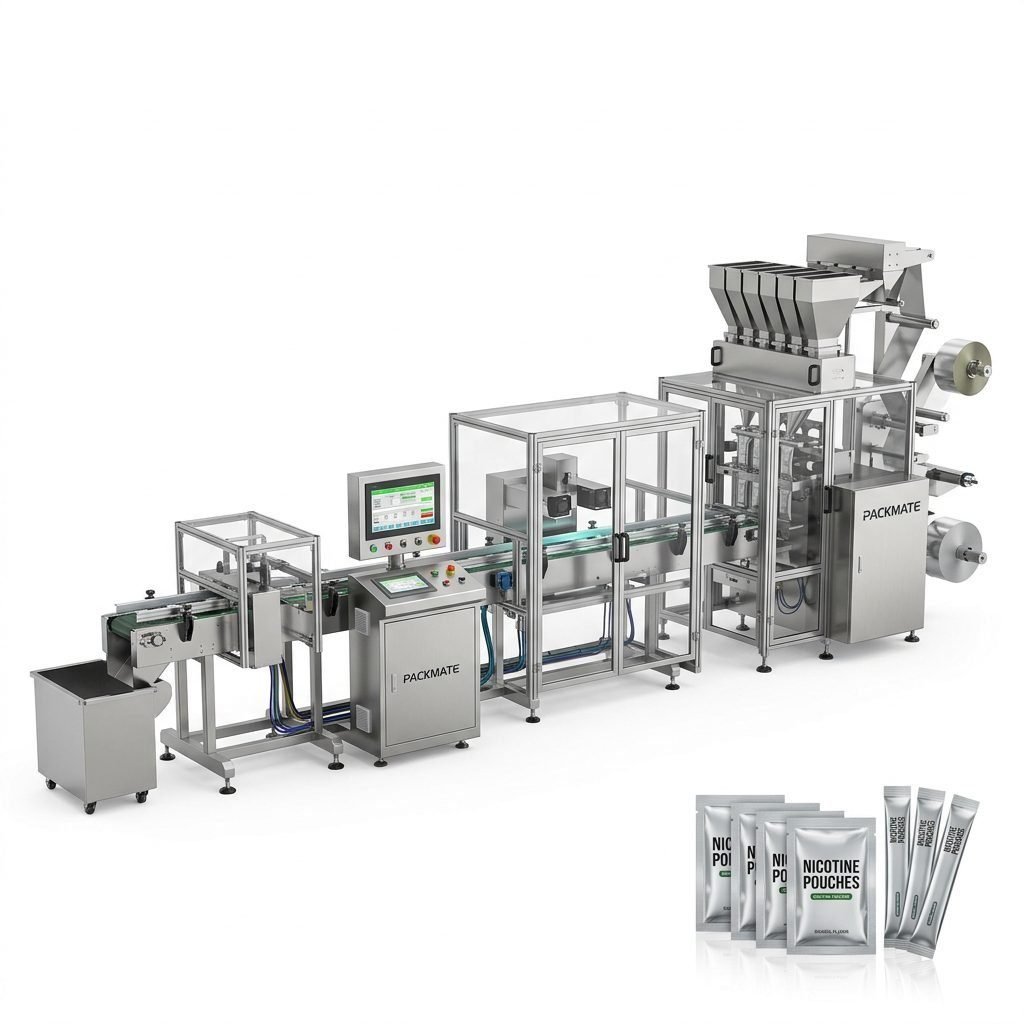
A complete snus production line combines upstream filling/weighing with downstream pouch forming, sealing, coding, and packaging. Integration of auxiliary equipment—such as nitrogen flushing, checkweighers, and metal detectors—ensures regulatory quality and product safety.
Typical components include:
- Feeding and conditioning systems for raw snus material
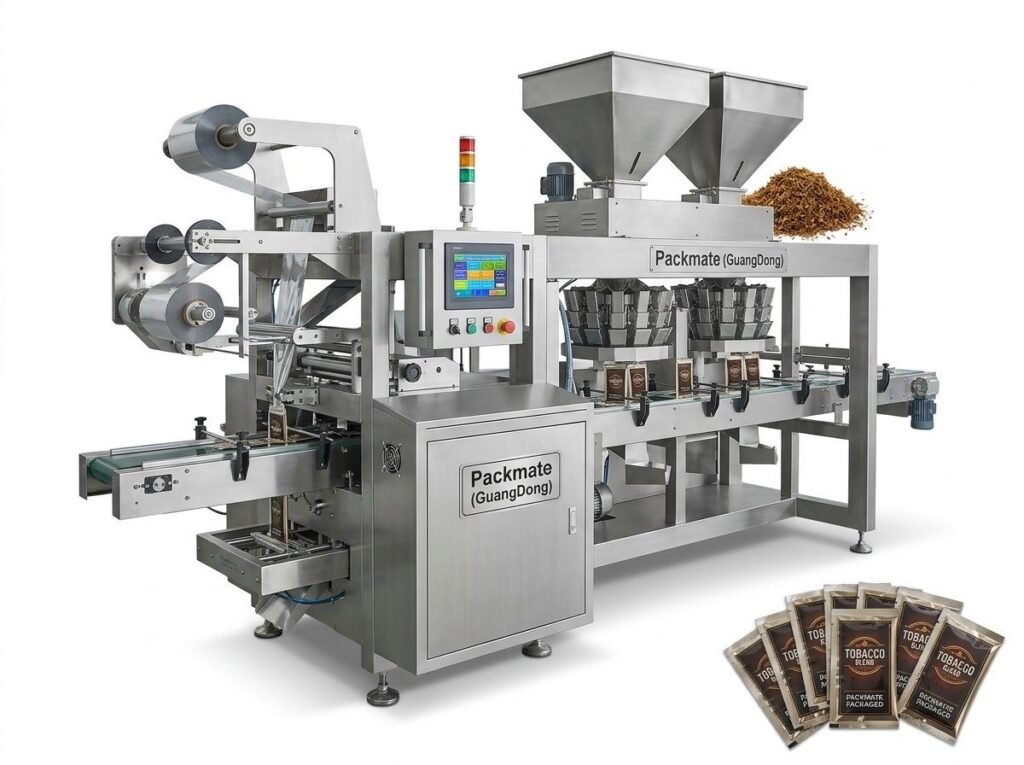
- Precision dosing modules (auger or multi-head weighers)
- Form-fill-seal (FFS) machines for pouches, sachets, or stick packs
- Multi-lane systems for high throughput
- Product inspection and rejection systems
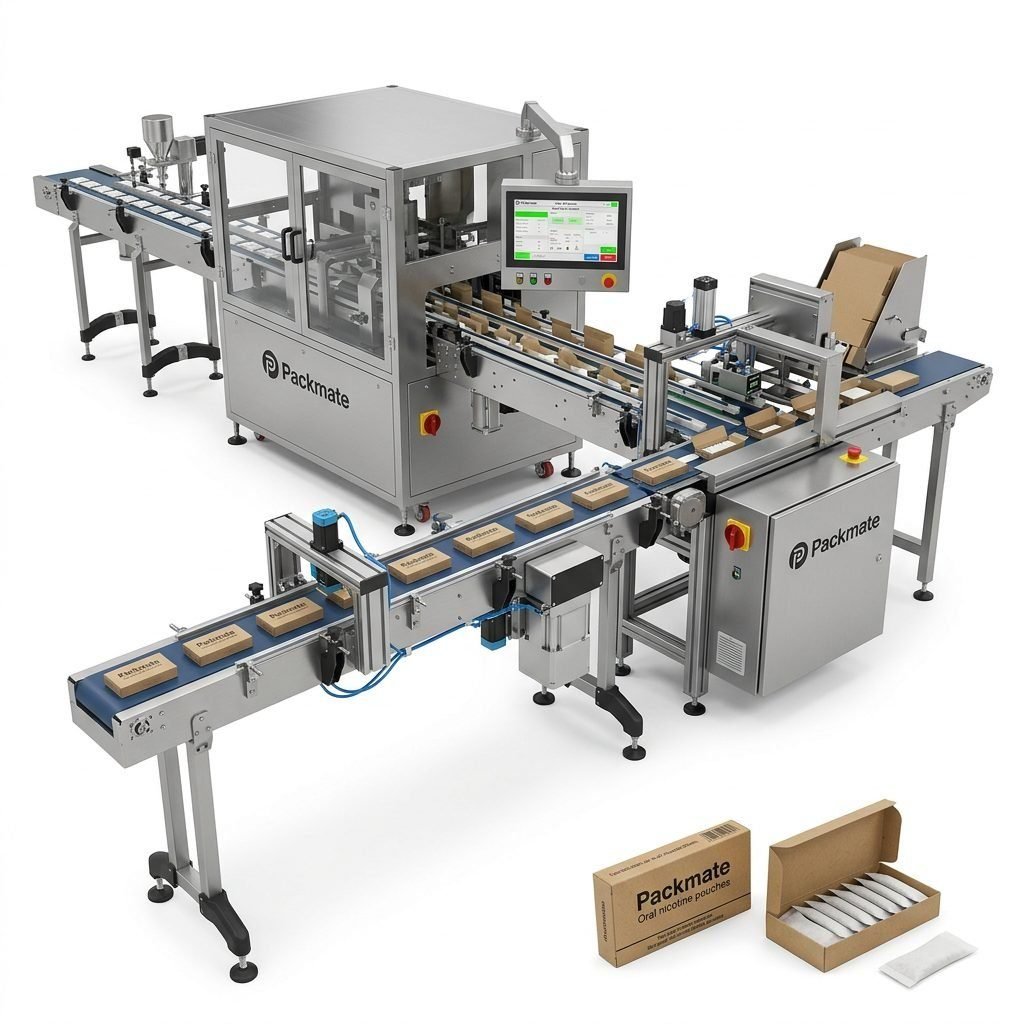
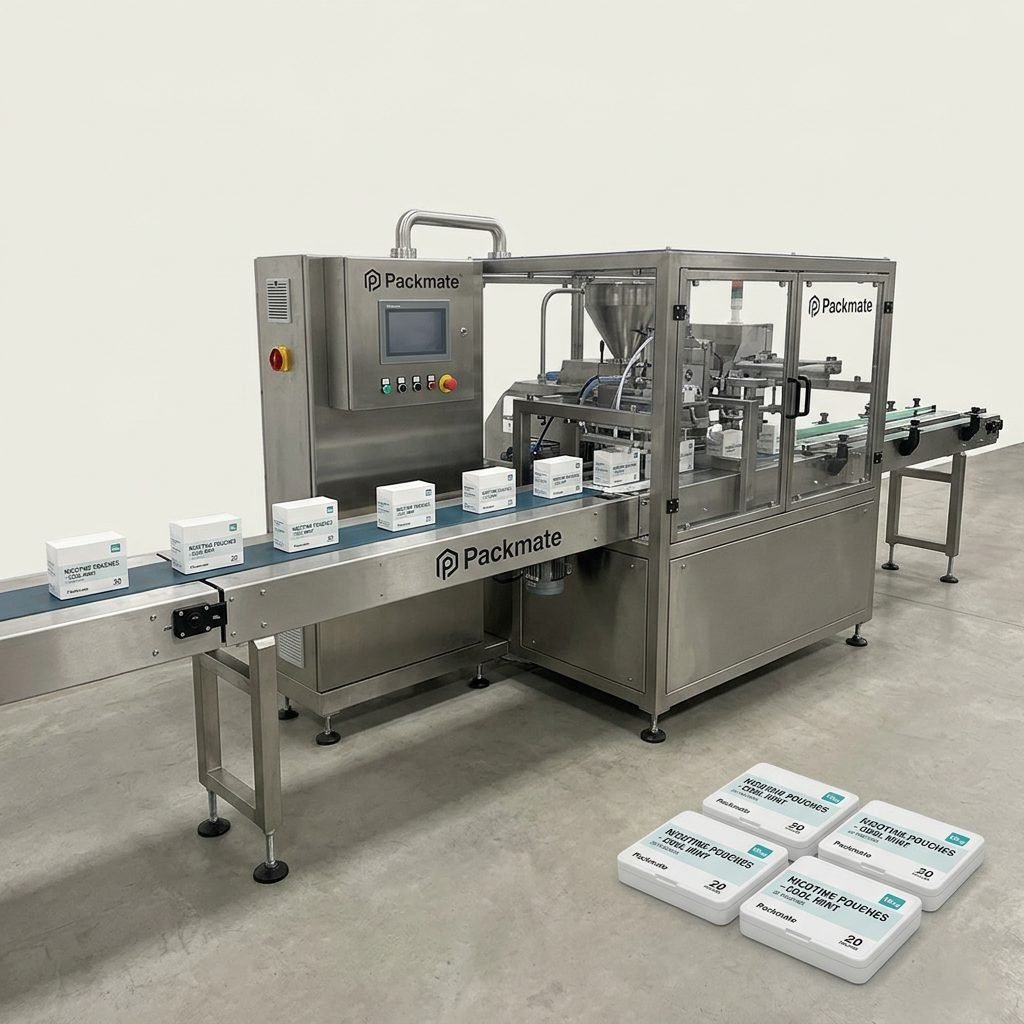
- Secondary packaging: cartoning, flow-wrapping, or case packing
For an overview of machine models that cover these elements, see our product range including Snus & Nicotine Packaging Machines and Sachet & Stick Pack Machines.
🏭 Manufacturing Best Practices & Factory Capabilities
Reliable machines are produced in well-equipped facilities with rigorous process control. A modern packaging equipment manufacturer should provide CNC machining centers, precision assembly lines, and a dedicated testing area for full-speed validation.
Highlights of an effective manufacturing approach:
- Component traceability and batch control for critical parts
- In-house calibration of pneumatic and electrical systems
- Full factory acceptance testing (FAT) at operational speed
- Spare parts planning and documentation
✅ Quality Control & Certifications
Compliance with international standards such as CE and ISO is essential when exporting equipment or operating in regulated markets. Manufacturers should demonstrate certification and a quality management process that includes FAT reports and performance validation.
Packmate’s facilities combine advanced fabrication capabilities with strict testing protocols to ensure each machine meets stated uptime and performance metrics — see our Certificate page for details.
🔗 Turnkey Production Line Solutions & Integration
A turnkey supplier offers end-to-end services: equipment supply, line integration, factory layout, installation, commissioning, and operator training. When planning a new line, consider throughput targets, footprint constraints, utility requirements (compressed air, electrical, vacuum), and regulatory workflows for packaging and labeling.
Key integration elements:
- Synchronize upstream dosing and downstream sealing speeds to avoid product bottlenecks
- Automate sample-taking and in-line inspection to minimize manual intervention
- Use a centralized HMI for recipe management and line diagnostics
For modular auxiliary systems that complement a snus line, review our Auxiliary Packaging Equipment and Weighing & Packaging Systems.
📈 Production Line Optimization Strategies
Once baseline performance is established, continuous optimization can raise output and reduce cost per pouch. Optimization is a combination of mechanical tuning, operator training, and data-driven OEE (Overall Equipment Effectiveness) improvements.
🔧 Process Tuning & Maintenance
Implement preventive maintenance schedules, maintain spare parts inventory, and calibrate sensors frequently. Small mechanical adjustments—belt tension, sealing temperature profiles, and dosing hopper agitation—can significantly reduce scrap rates for nicotine pouches where small weight deviations matter.
📊 Data & Automation
Use production data for trend analysis: downtime causes, reject categories, and operator performance. Integrate PLC logging and cloud-based dashboards to identify recurring issues and quantify the impact of improvements.
🧰 Maintenance, Service & Spare Parts
Fast, predictable service is essential. A supplier must provide clear spares lists, recommended spare inventories, and fast response times for technical support. Remote diagnostics via secure connections can minimize on-site visits and accelerate troubleshooting.
Packmate offers post-sale support including commissioning, operator training, and tailored maintenance plans — learn more at Service.
📦 Case Studies & Global Deployments
Real-world deployments illustrate the value of engineered solutions. Multi-lane snus systems have enabled clients to scale from pilot production to high-volume supply with minimal footprint expansion. Consistent dosing and hermetic sealing are recurring success factors in successful installations.
Explore project references and exhibition demonstrations to evaluate machine behavior under realistic conditions: Case and Our Exhibition.
🧭 Choosing the Right Supplier
When selecting a supplier for snus packaging machines, evaluate technical capability, manufacturing footprint, and post-sale commitment. Important selection criteria include:
- Demonstrated product range that matches your SKUs
- Production facility scale and machining capabilities
- Quality system certifications (CE, ISO)
- Spare parts availability and local service networks
- Ability to provide turnkey solutions, including secondary packaging
For company-level information and mission alignment, visit our About Packmate and Mission & Vision pages.
🔎 Regulatory & Product Safety Considerations
Nicotine pouches are a regulated product in many jurisdictions. Packaging machinery must support traceability, tamper evidence, and labeling accuracy. Incorporate serialization, date coding, and tamper-evident seals as required by your market, and validate cleaning and cross-contamination controls for multi-product lines.
🔮 Future Trends in Snus Machine Engineering
The industry is moving toward higher automation, predictive maintenance, and flexible multi-lane architectures that support rapid SKU proliferation. Expect tighter integration with production analytics, lightweight servo-driven changeovers, and hybrid filling technologies that combine speed with small-dose accuracy.
📌 Practical Checklist Before Buying
Use this quick checklist to prepare for procurement:
- Define throughput (pouches/min) and product spec (weight, moisture)
- Identify utilities and floor footprint constraints
- Request FAT and acceptance criteria
- Confirm spare parts lead times and warranty terms
- Plan operator training and maintenance schedule
📞 Contact & Next Steps
If you are evaluating options for a snus or nicotine pouch packaging line, request a line study and factory acceptance test schedule from experienced suppliers. Timely communication about product changes and production targets will accelerate a successful installation and ramp-up.
For direct inquiries or to schedule a consultation, visit Contact Us or download our machine catalog at Catalog.
Summary — Frequently Asked Questions
Q1: What production speed can I expect from a multi-lane snus line?
A1: Speeds vary by format and fill method; multi-lane FFS systems can achieve hundreds to thousands of pouches per minute aggregated across lanes. Final throughput depends on dosing accuracy and downstream packing.
Q2: How long is a typical lead time for a turnkey packaging line?
A2: Lead times depend on customization and current factory load; standard lead times for engineered turnkey lines are often 12–26 weeks from order to shipment, with additional time for FAT and commissioning.
Q3: What certifications should I expect for export-ready machinery?
A3: Ask for CE and ISO documentation, electrical schematics, and any local country-specific certificates. Manufacturers should provide testing records and compliance statements.
Q4: Can a single packaging line handle different pouch sizes and formats?
A4: Yes—modular machines with recipe-based PLC control and quick-change mechanical parts are designed for flexible format changeovers between sachet, stick pack, and snus pouches.
Q5: What post-sale services are most valuable?
A5: Fast spare parts delivery, remote diagnostics, preventive maintenance contracts, and on-site commissioning/training provide the highest return on investment and reduce unplanned downtime.