Choosing the right nicotine packaging machinery for production in Estonia is a strategic decision that affects product quality, regulatory compliance, and long-term profitability. Whether you are launching a new nicotine pouch product or scaling an existing line, understanding machine types, production capacity, local support options, and compliance requirements will help you invest wisely and avoid costly downtime.
📦 Understand Your Production Needs First
Start by documenting your current and projected output volumes, pouch formats (single-portion, multi-lane, sachet, stick pack), target run speeds, and the range of product materials (powder, granules, liquids, or tobacco-like blends). These parameters determine whether you need a single-lane high-precision machine or a high-throughput multi-lane line. For example, a production plan aiming for tens of thousands of pouches per shift often benefits from multi-lane systems and automated upstream/downstream equipment.
⚙️ Key Data to Collect
Typical inputs include:
- Target daily and monthly output
- Pouch format(s) and sizes
- Product characteristics (moisture, particle size, stickiness)
- Quality tolerances and acceptable rejection rates
- Available factory space and utilities (power, air, drainage)
Pro tip: If you expect rapid growth or product line extensions, prioritize modular machines that allow additional lanes or automated modules to be added without replacing the core machine.
🧰 Types of Nicotine Packaging Machinery to Consider
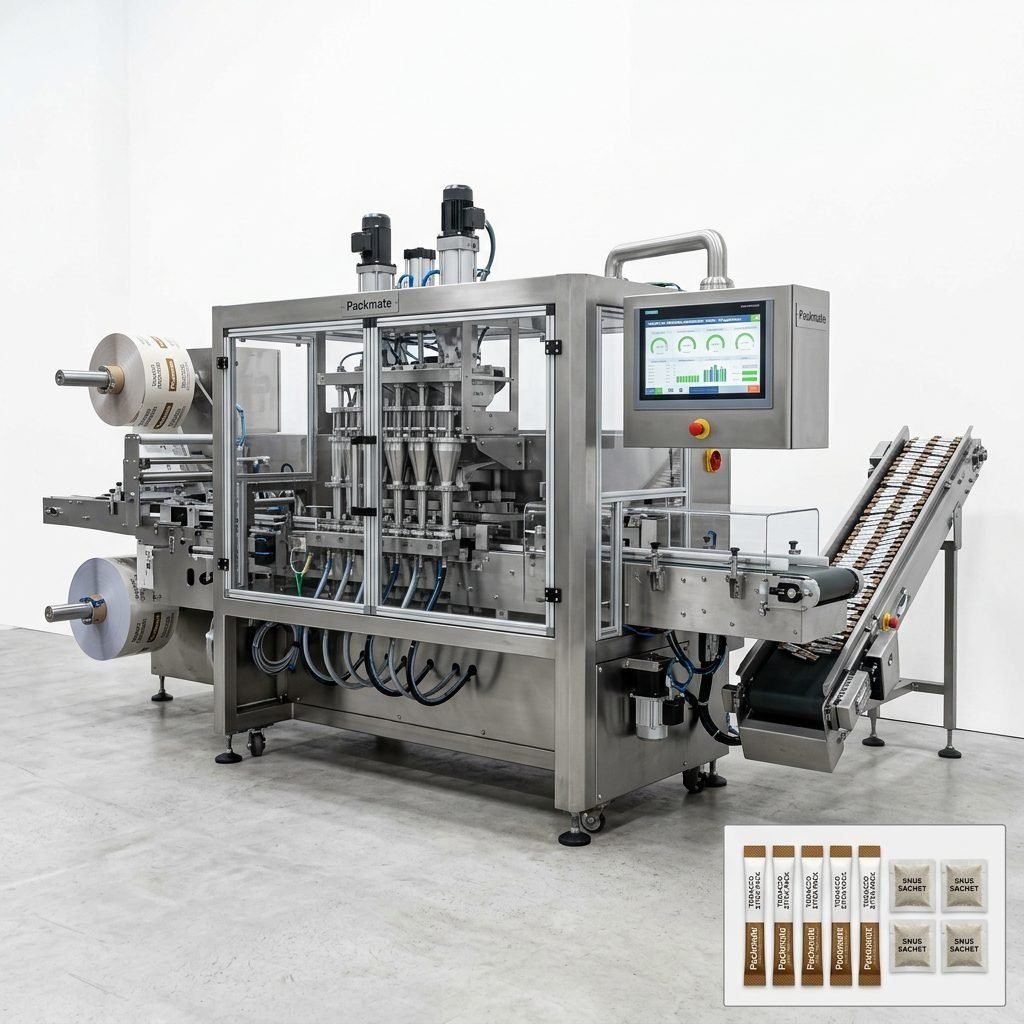
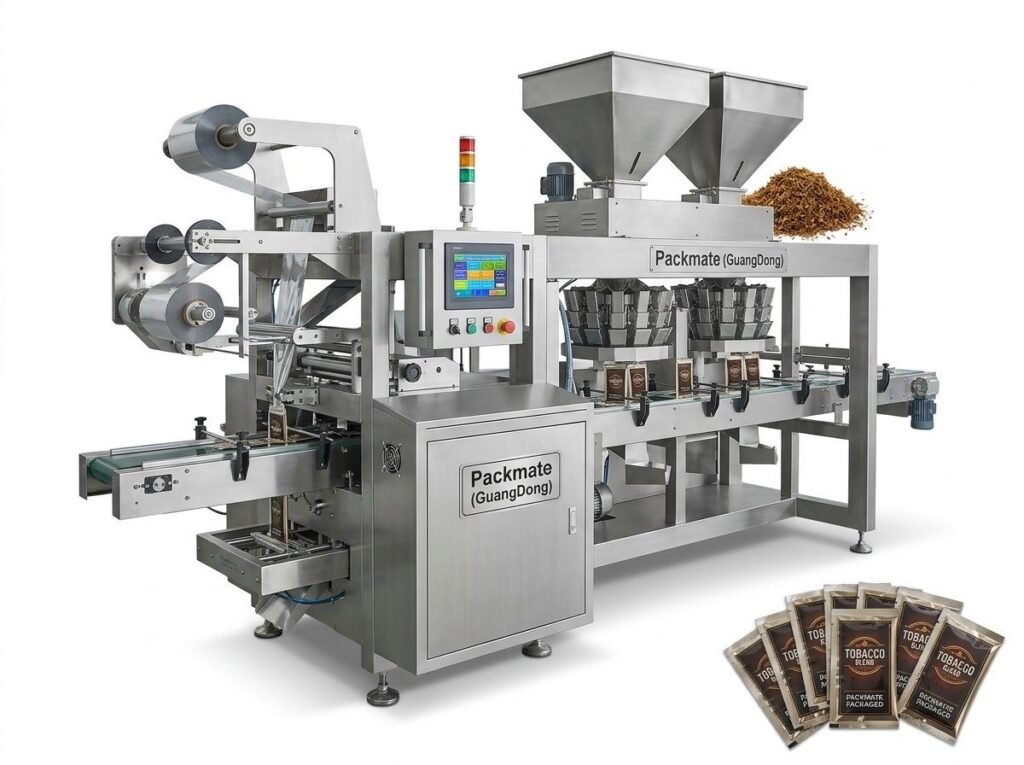
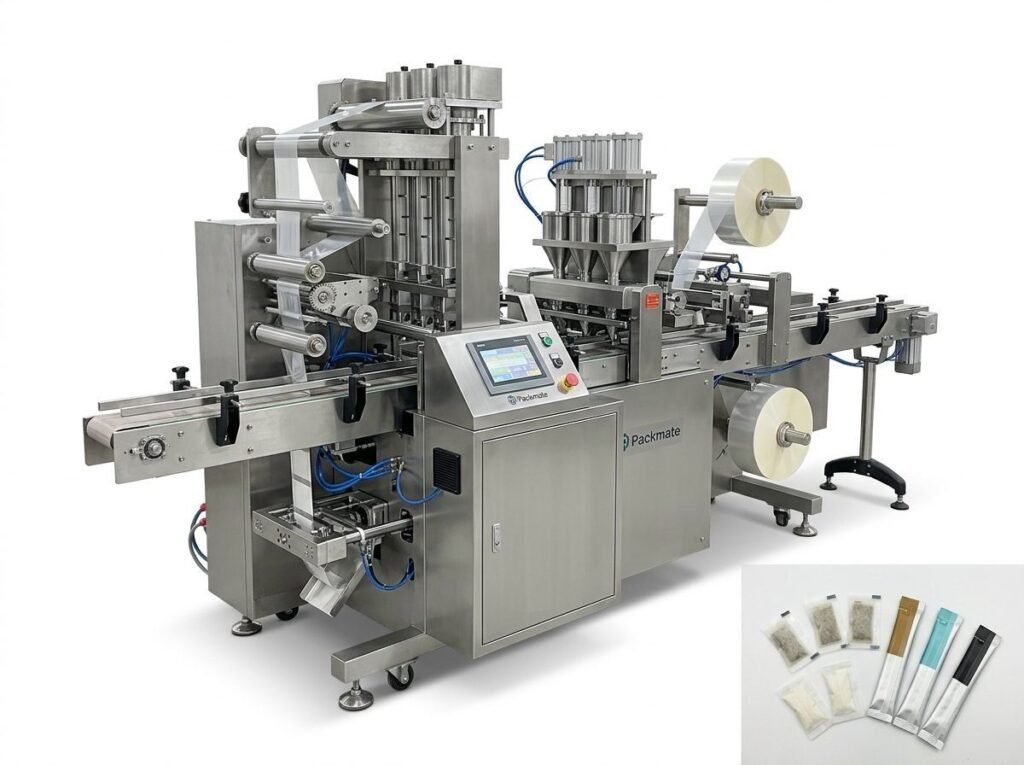
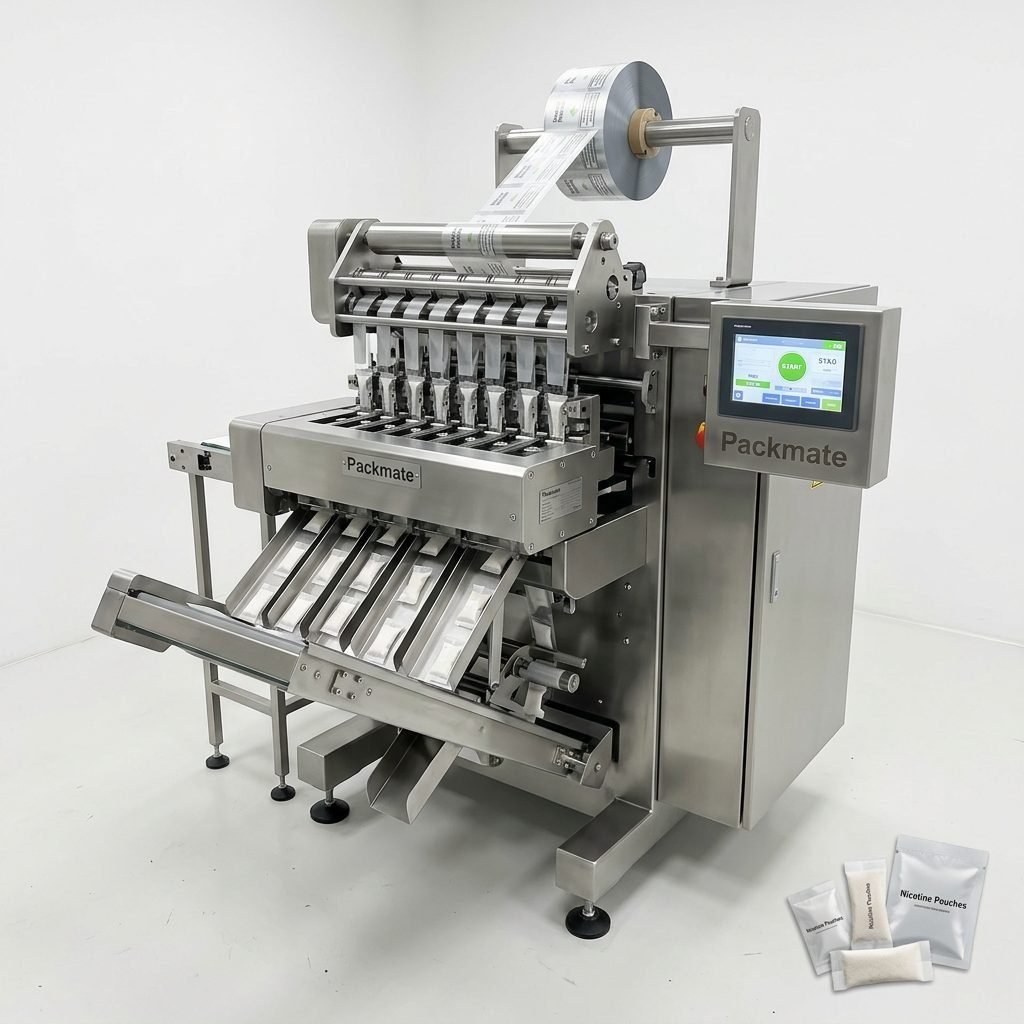
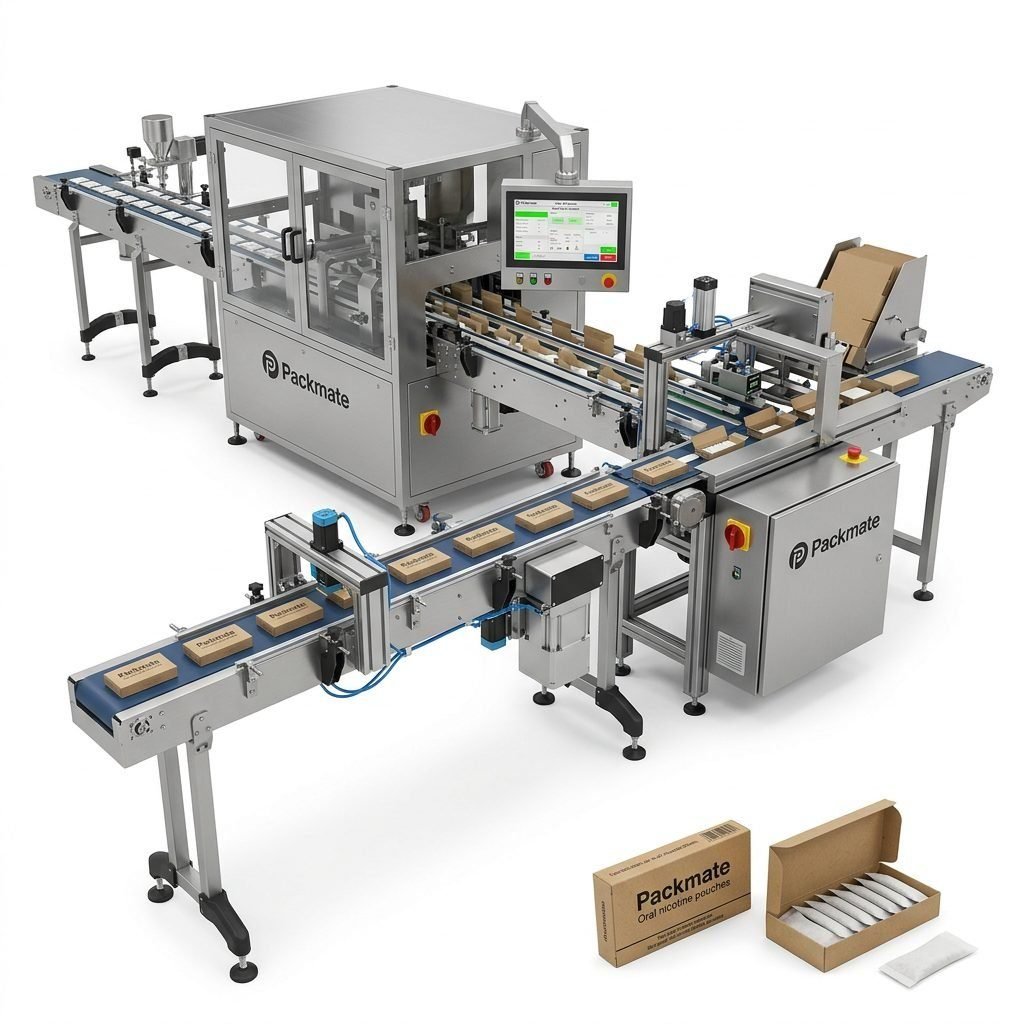
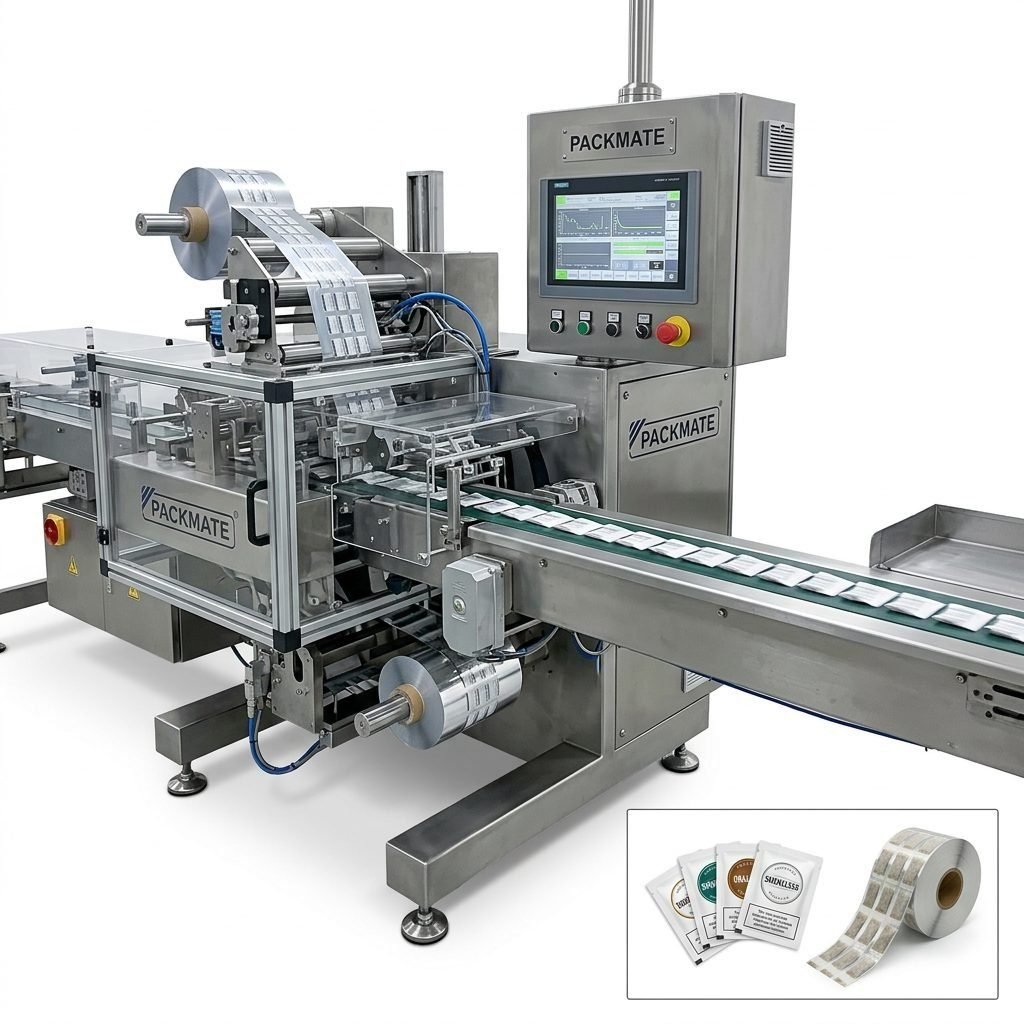
Packaging equipment for nicotine pouches ranges from compact single-lane machines suited for small batches to fully automated multi-lane lines with integrated weighing, filling, sealing, and cartoning. Common machine families include:
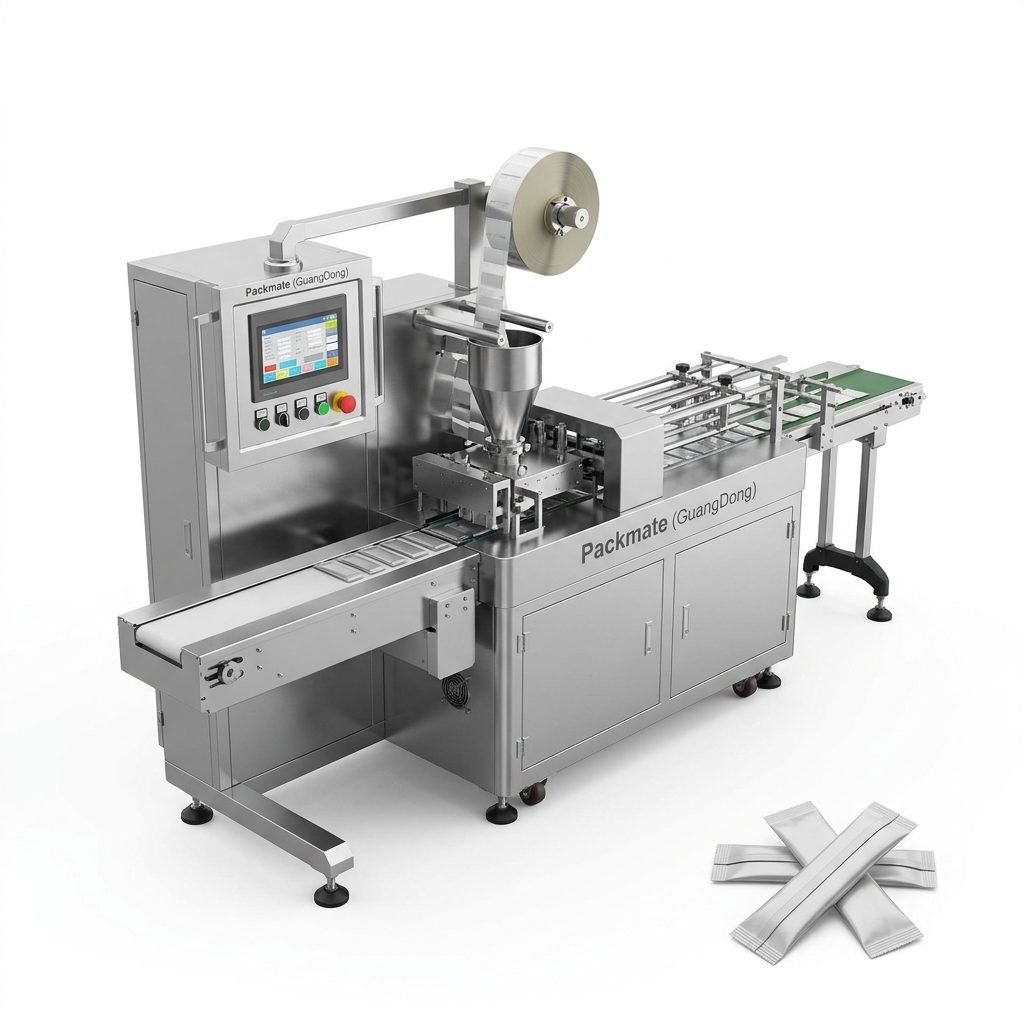
Sachet & Stick Pack Machines
These machines produce narrow, single-portion sealed packs ideal for certain nicotine pouch formats. They can offer high speeds for thin, longitudinal packs. See options at
Sachet & Stick Pack Machines.
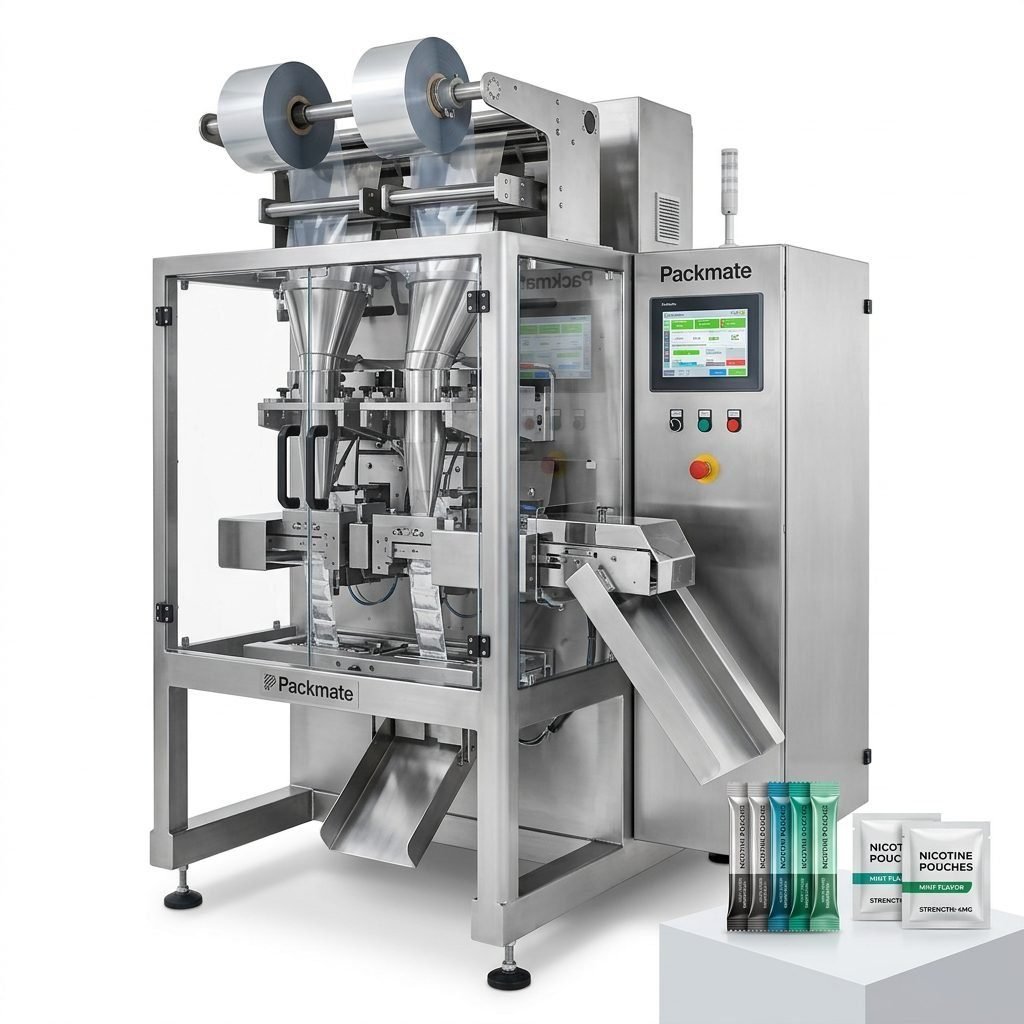
Multi-Lane Snus / Nicotine Packaging Machines
For nicotine pouch makers, multi-lane systems accelerate production by running several lanes in parallel. They are ideal for small-dose pouches where precision and lane-to-lane consistency are essential. Explore Snus & Nicotine Packaging Machines for machine families tailored to pouch formats.
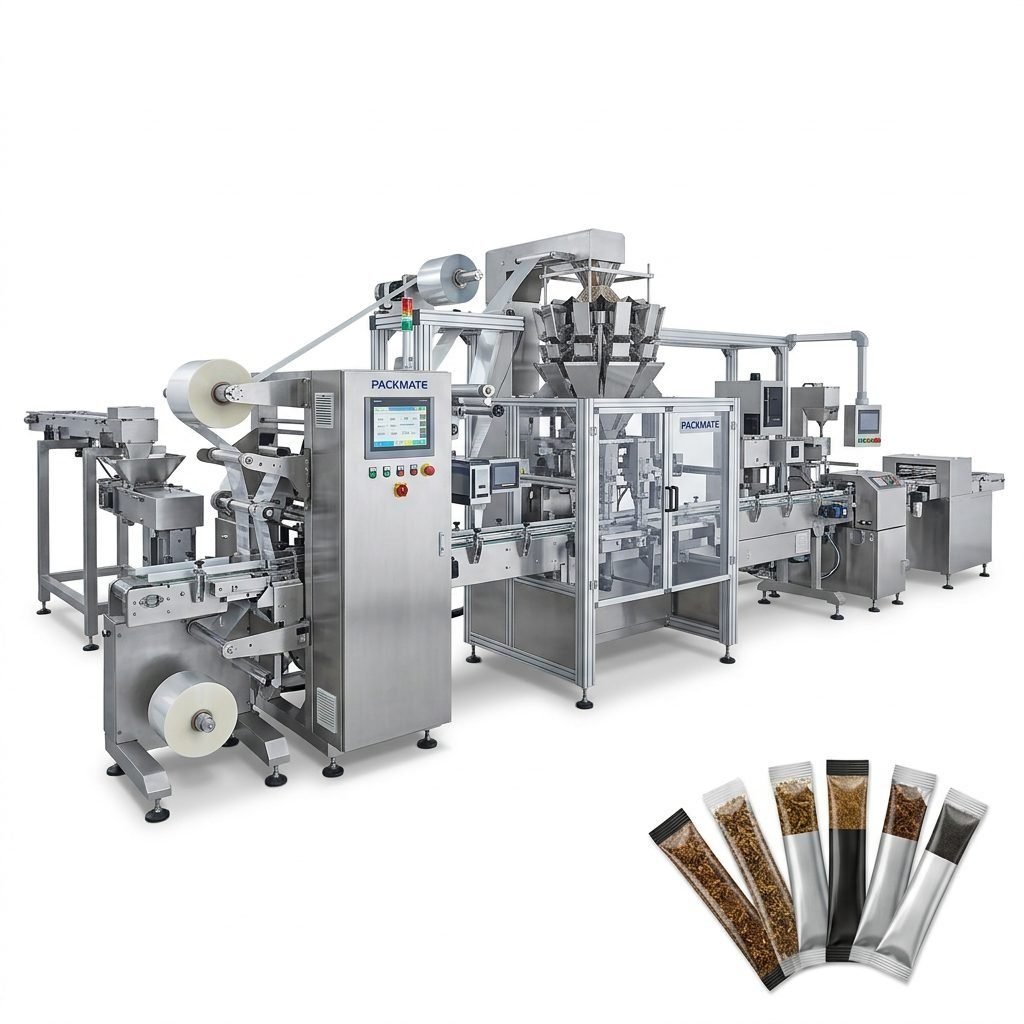
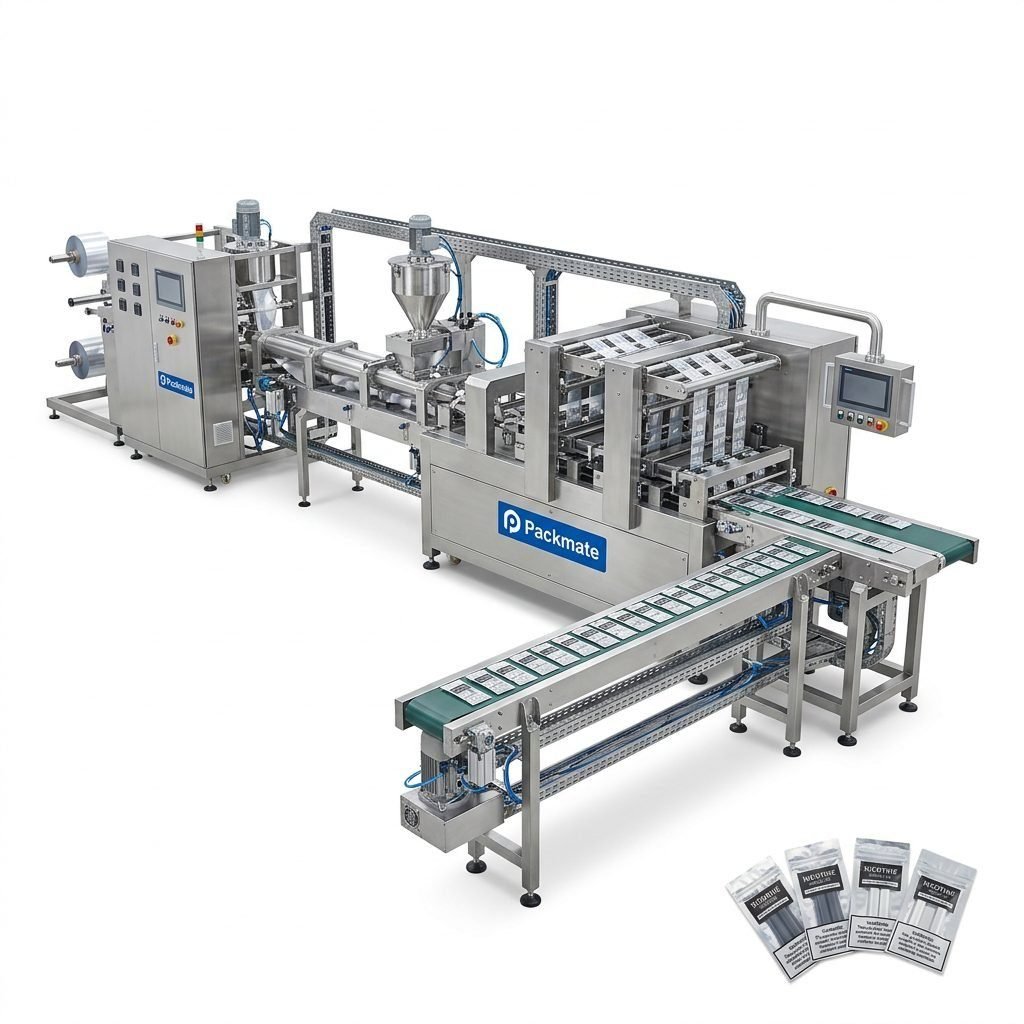
Filling & Integrated Packaging Lines
Integrated solutions combine dosing, filling, sealing and secondary packaging into a turnkey line. These reduce manual handling, improve hygiene, and offer better traceability. Check integrated solutions at Filling & Packaging Lines.
Quick decision checklist: If product variance is high, prefer flexible modular systems; if throughput is the priority, choose multi-lane, high-speed platforms.
🔍 Technical Specifications That Matter
When comparing machines, focus on measurable specs rather than marketing claims. Important technical attributes include:
- Actual throughput measured in pouches/minute at your pouch format
- Filling accuracy and repeatability (± grams)
- Changeover time between formats
- Material compatibility (film types, laminates, biodegradable films)
- Automation level for feeding, rejection, and secondary packaging
- Control systems and HMI language support
Validation & Testing
Request an on-site or factory acceptance test (FAT) using your materials. Ensure accuracy claims are validated at the manufacturer with your blend to avoid surprises after installation.
⚖️ Compliance, Safety & Certifications
Regulatory compliance in Estonia and the EU is critical. Machines should meet international safety and quality standards. Look for CE marking, ISO quality system evidence, and documentation supporting hygienic design for nicotine and food-contact applications. Packmate equipment often carries relevant certifications — find details at Certificate.
Note: Compliance also includes traceability features such as batch coding, integration with labelling systems, and documentation for audits.
🤝 Local Support, Spare Parts & Service in Estonia
Reliable after-sales support reduces downtime. Evaluate suppliers on the basis of local technical support availability, spare parts lead times, remote diagnostics capabilities, and training offerings. A supplier that can provide fast spare parts shipments to Estonia or has local partners will significantly reduce operational risk.
Service & Training
Verify whether the supplier offers installation supervision, operator training, maintenance training, and a clear warranty policy. For full-line projects, consider suppliers that provide turnkey project management and commissioning, such as Packmate’s complete solutions described on their Service page.
💰 Cost, Total Cost of Ownership (TCO) & ROI
Purchase price is only part of the equation. Estimate the long-term TCO by accounting for:
- Energy consumption and utilities
- Spare parts and consumables
- Downtime costs (mean time to repair)
- Labour required to operate and maintain the line
- Projected yield and waste rates
A higher-capability machine with better accuracy and faster changeovers can deliver a faster ROI by reducing waste and labour hours.
🛠️ Installation, Validation & Plant Integration
Plan installation carefully: confirm floor loading, access routes for machine delivery, utility connections, and space for maintenance access. Integration with upstream dosing/weighing systems and downstream cartoning or case packing systems may be required for full automation. Consider vendors that provide complete lines to avoid interface issues (see Weighing & Packaging Systems and Auxiliary Packaging Equipment).
Checklist for commissioning: FAT reports, IQ/OQ (if applicable), spare parts kit, operator manuals in your language, and a training schedule.
🔧 Maintenance Strategies to Maximise Uptime
Preventive maintenance programs and predictive monitoring help maintain consistent production. Ask about:
- Recommended maintenance intervals
- Availability of critical spare parts and consumables
- Remote support features for troubleshooting
- Training modules for in-house maintenance teams
🔁 Customization & Turnkey Project Options
If your product or packaging format is unique, you may need custom tooling, feeders, or control logic. Suppliers with turnkey capabilities can reduce integration risk by delivering a validated, compliant line. Review case studies and references to confirm a supplier’s track record—see project examples at Case.
📌 Choosing the Right Supplier: Key Questions to Ask
Before committing, clarify these points with potential suppliers:
- Can you provide FAT with our materials?
- What are lead times for new machines and spare parts?
- Do you provide local support or a certified partner in Estonia?
- What training and documentation are included?
- Can the system be expanded in the future?
Vendor evaluation tip: Request client references in similar regulatory markets and visit a running line if possible.
🔎 Why Consider a Proven Manufacturer
Choosing a manufacturer with decades of engineering experience and global installations reduces risk. Companies with robust CNC manufacturing capacities, precise assembly lines, and a wide range of models can provide tailored solutions and predictable lead times. Learn about a complete supplier profile at About Packmate.
✅ Final Selection Roadmap
Follow a structured process: define requirements, shortlist suppliers, request technical proposals and FAT, compare TCO and support offerings, and negotiate service agreements. When selecting a machine for nicotine packaging in Estonia, prioritize accuracy, scalability, compliance, and accessible service.
Resource links: Product categories and system overviews can help match machine families to your needs:
Bag & Pouch Packaging Machines,
Filling & Packaging Lines.
Conclusion
Selecting the best nicotine packaging machinery for Estonia requires balancing speed, accuracy, compliance, and local support. By defining your production profile, validating machine performance with your materials, and choosing a supplier with strong service and customization capabilities, you will secure a packaging solution that supports consistent product quality and future growth.
Common Questions
Q1: What is the typical lead time for custom nicotine pouch machines?
A: Lead times vary by complexity; standard models may ship in weeks, while custom multi-lane lines often require several months for design, tooling and FAT.
Q2: Do I need CE and ISO certification for machines in Estonia?
A: Yes, CE is essential for machinery placed on the EU market; ISO-quality systems and hygienic design documentation are recommended for regulated consumable products.
Q3: How can I verify a supplier’s claims about throughput and accuracy?
A: Request factory acceptance tests using your materials and signed performance data, and, if possible, visit a working installation or ask for client references.
Q4: Are turnkey lines more cost-effective than buying machines piecemeal?
A: Turnkey lines reduce integration risks and can be more cost-effective long-term, especially when seamless control, validation and warranty coverage are essential.
Q5: Where can I learn more about suppliers and product lines?
A: Review supplier pages for product families, certifications, services and case studies. For example, explore detailed product categories and contact options at Contact Us.