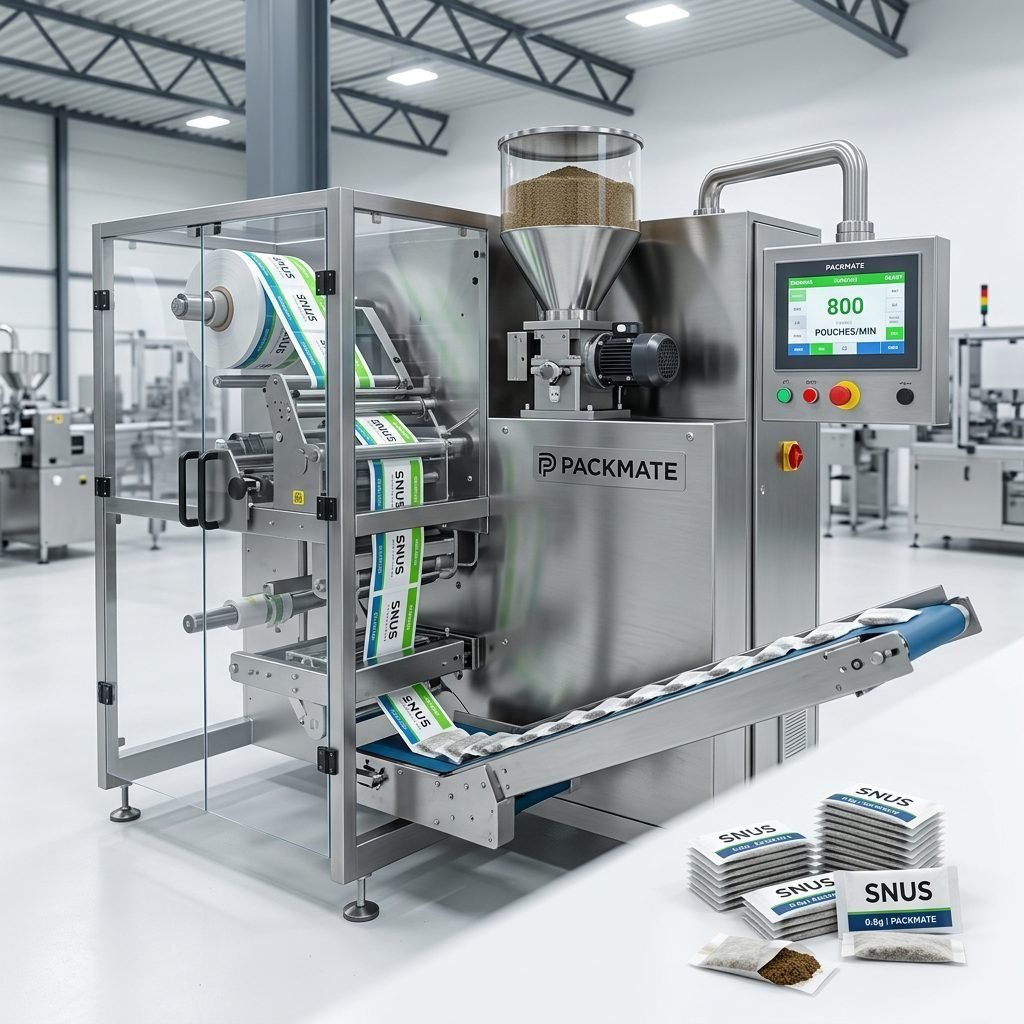
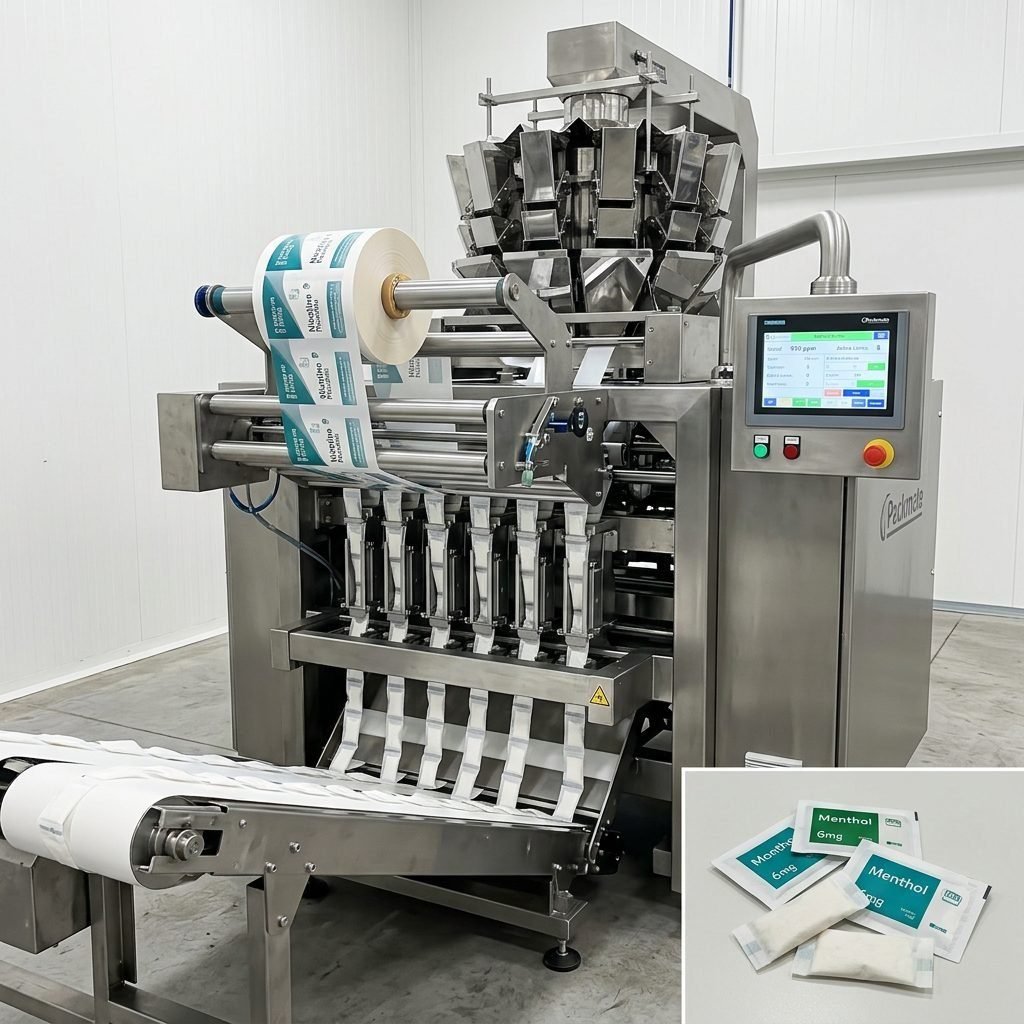
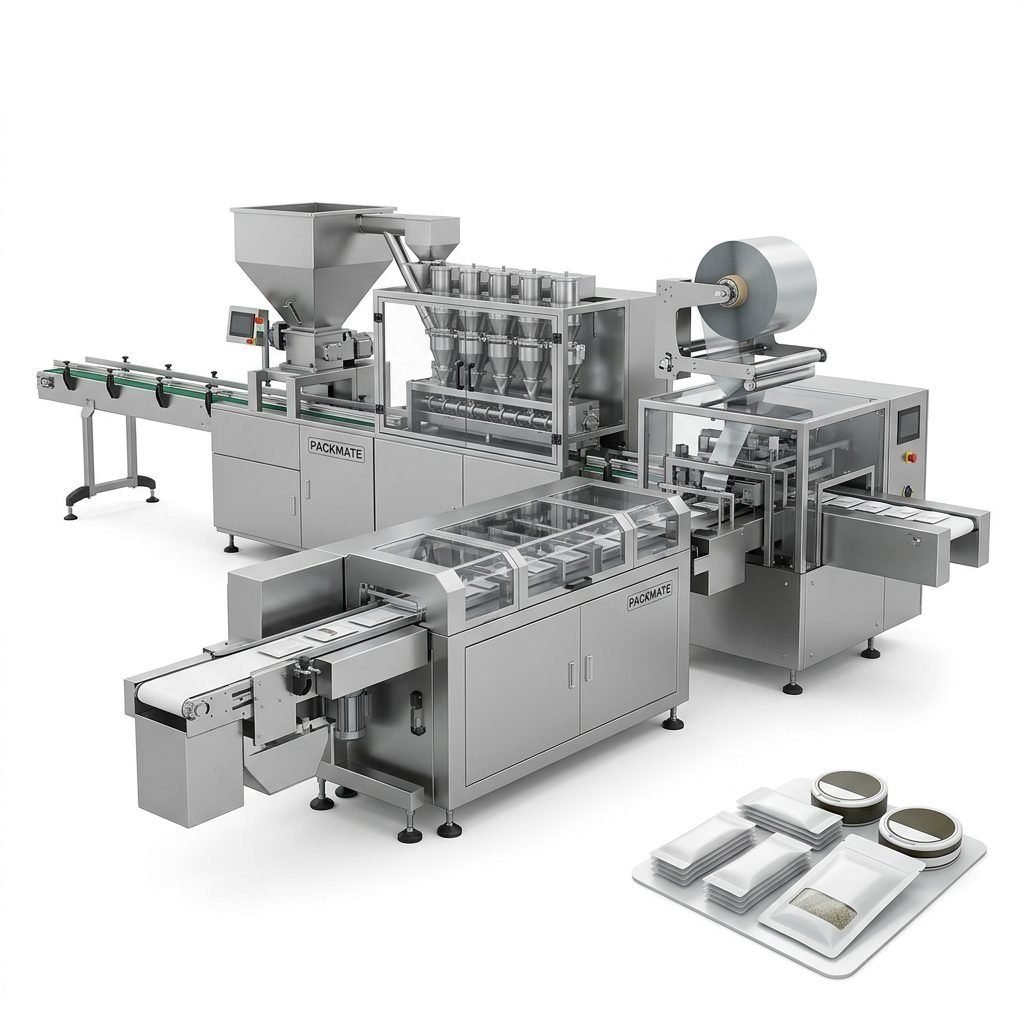
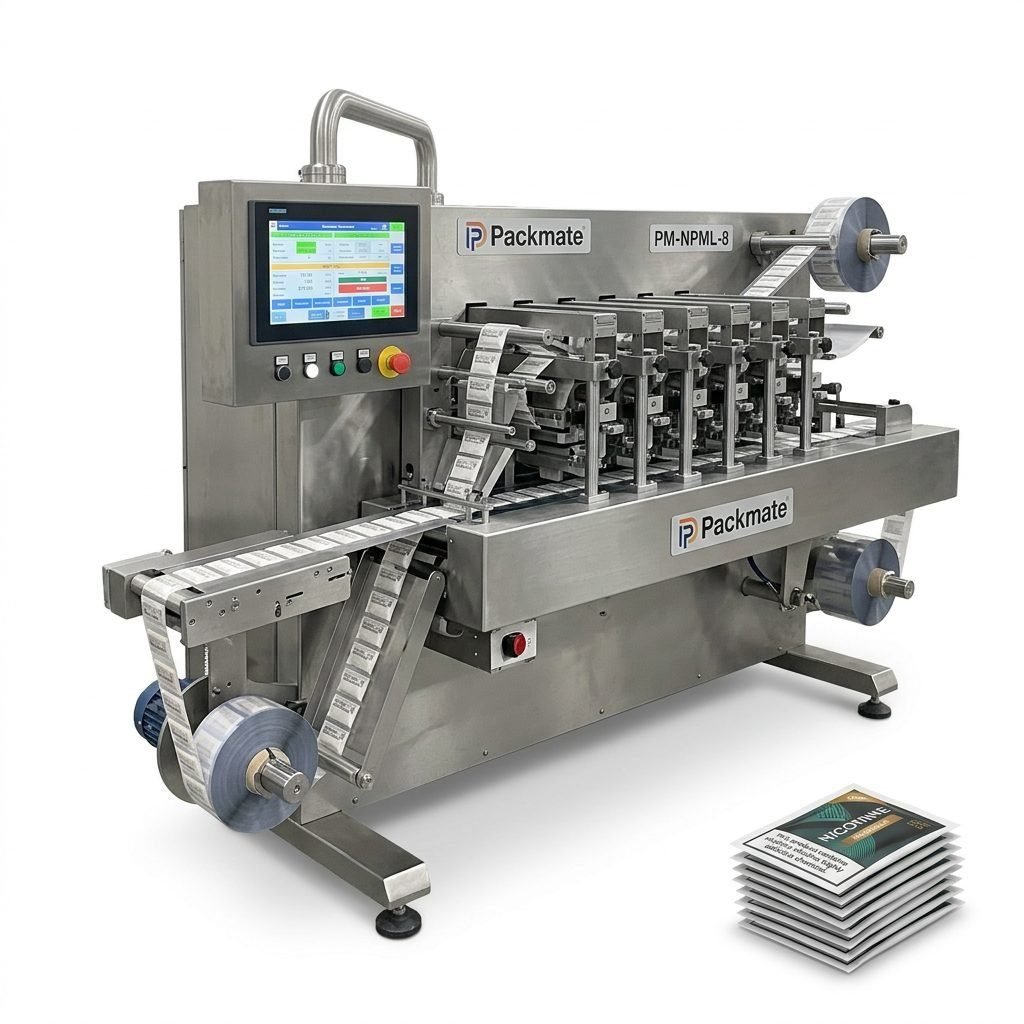
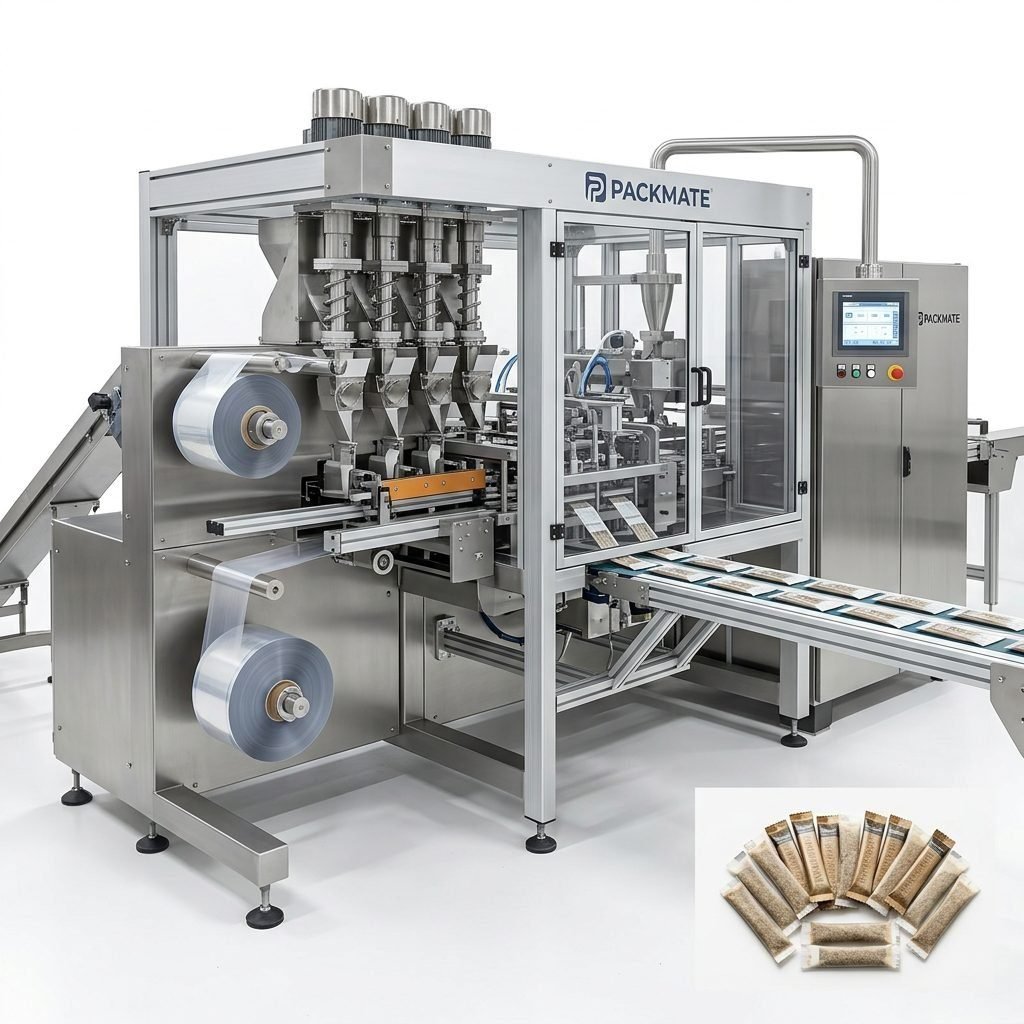
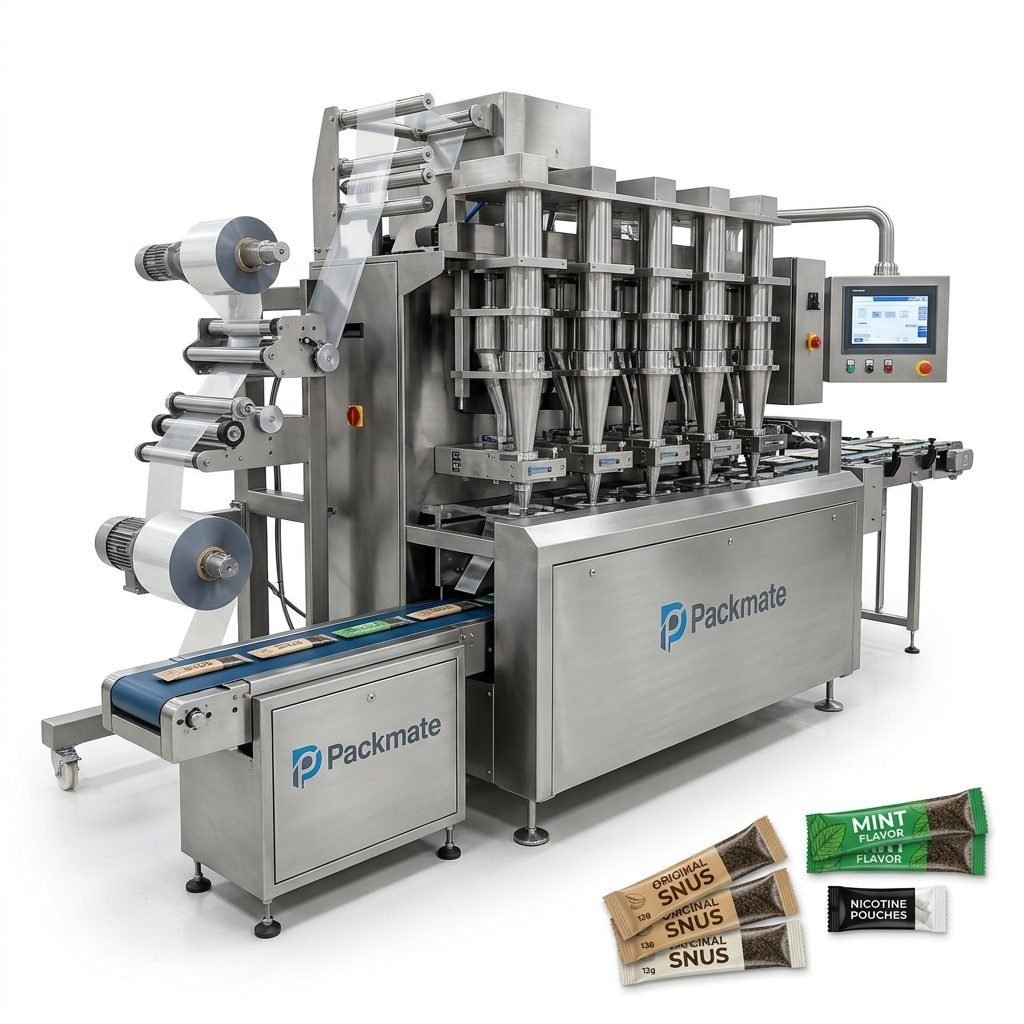
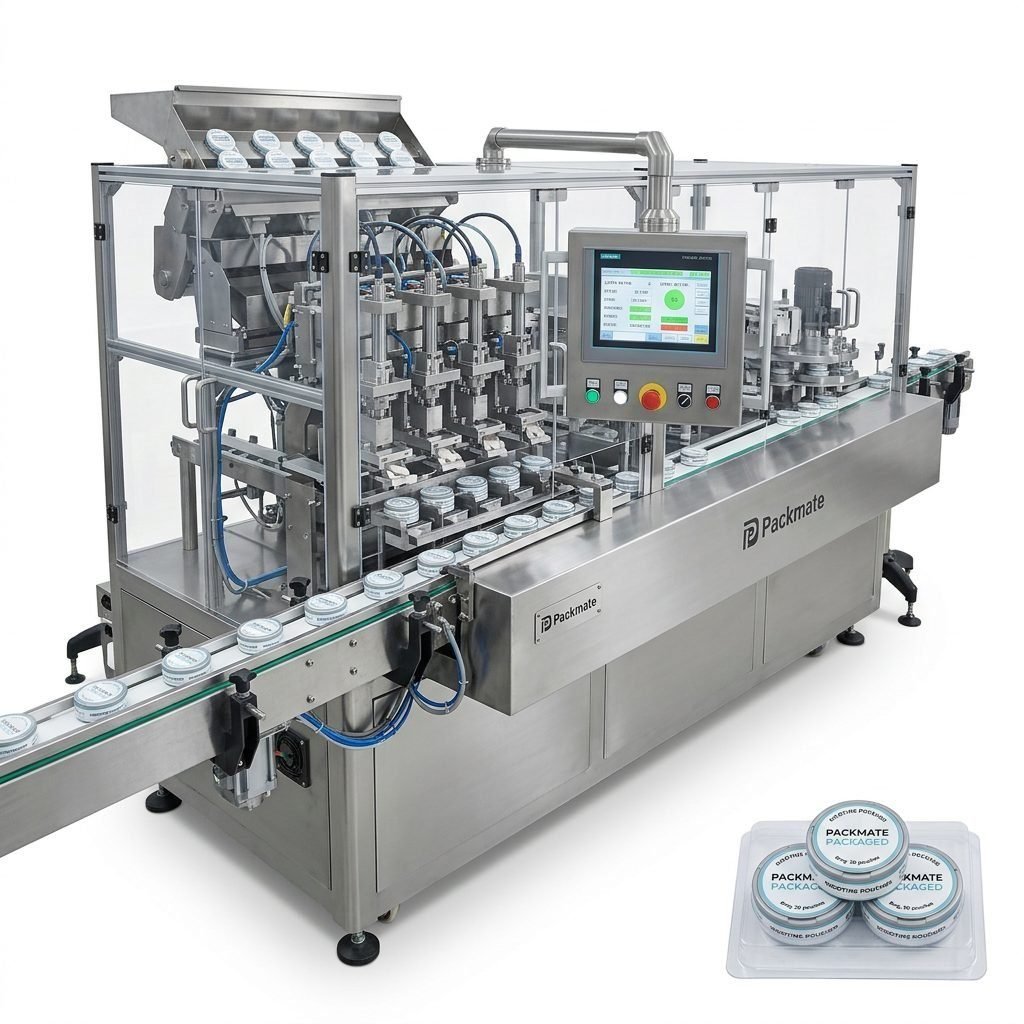
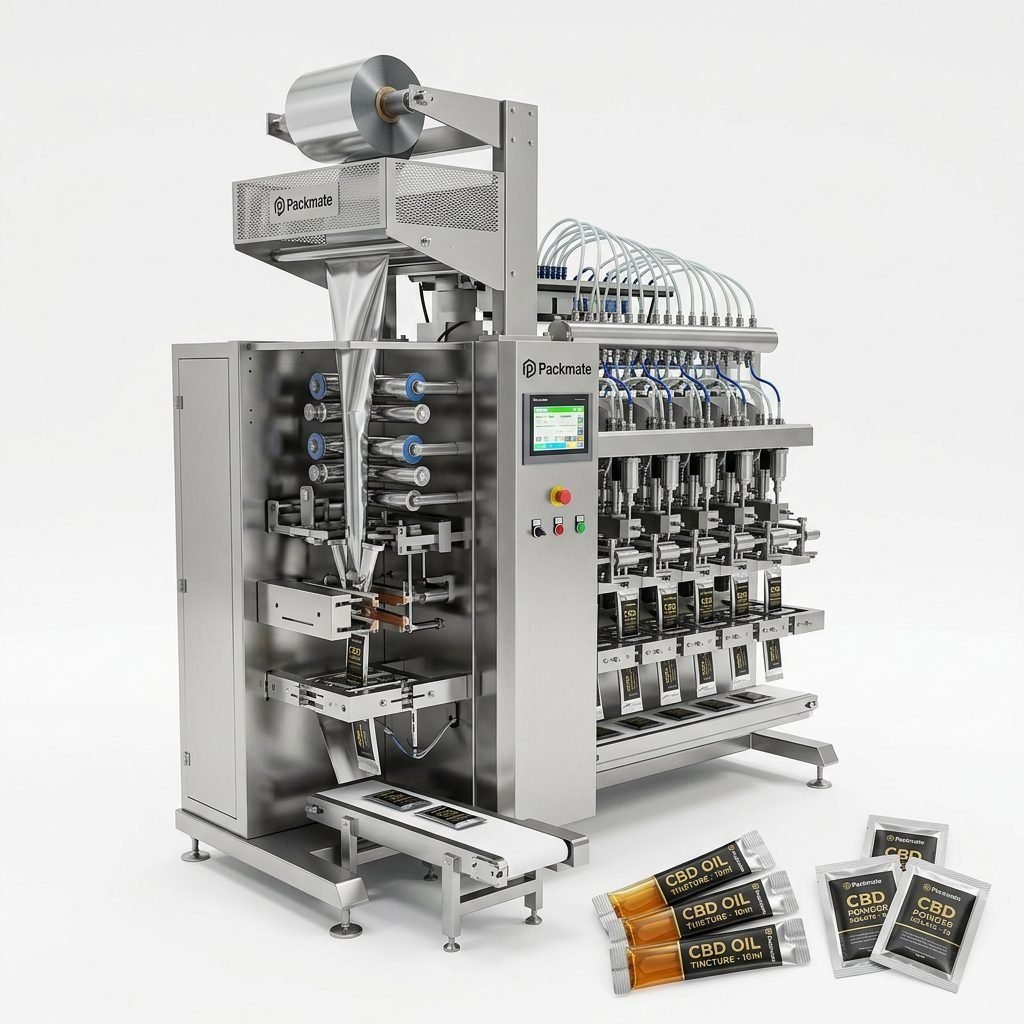
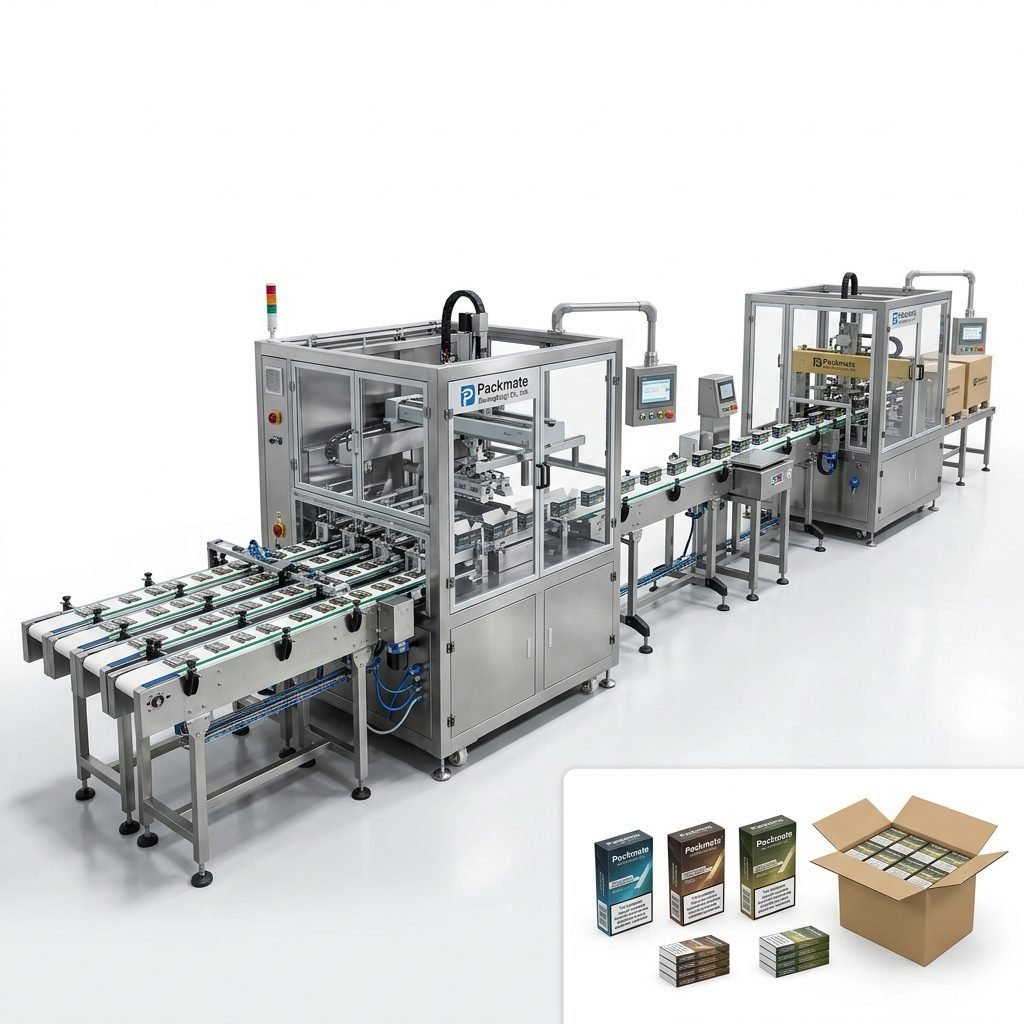
Choosing the right snus packaging machine for the Maldives market means balancing product quality, regulatory compliance, production capacity, and long-term serviceability. This guide walks you through the practical steps, technical checks, and commercial considerations to find a machine that fits your nicotine pouch or snus production needs — from small artisan batches to high-speed multi-lane lines.
Why the Right Machine Matters
🔧 Production stability — an appropriate machine reduces downtime and waste.
📦 Packaging quality — correct sealing and pouch formation protect product freshness and meet retailer expectations.
⚖️ Regulatory compliance — machines that support traceability, labeling, and hygienic design simplify entry into regulated markets.
Step 1 — Clarify Your Product & Capacity Needs
Begin by detailing the exact product formats you plan to run: nicotine pouches, portioned snus, or single-dose sachets. Note pouch dimensions, target weight ranges, and any multi-layer or laminated film requirements. Your daily throughput (pieces per minute × shifts per day) will define whether you need a single-lane machine, multi-lane rotary system, or a high-speed stick-pack line.
Quick checklist
• Target production (units/day)
• Pouch type and size ranges
• Product fill type (powder, granule, paste)
• Future expansion plans
Step 2 — Understand Machine Types & When to Choose Them
Different snus packaging technologies suit different business models. Consider machine types and click through to explore models with proven performance:
• Sachet & Stick Pack Machines — ideal for single-dose sachets and slim stick formats. See options: Sachet & Stick Pack Machines.
• Snus & Nicotine Packaging Machines — machines specifically engineered for nicotine pouches and multi-lane portioned snus production: Snus & Nicotine Packaging Machines.
• Bag & Pouch Packaging Machines or Multi-lane systems — for reclosable pouches or value-added outer packaging: Bag & Pouch Packaging Machines.
Step 3 — Key Technical Specs to Evaluate
⚙️ Speed & throughput: Check speed at your target pouch size — rated speeds are often based on ideal pouch sizes; larger pouches may reduce throughput.
🧭 Accuracy & weighing: For nicotine pouches, tight weight control matters. Confirm integration capacity with your weighing system or choose a model with built-in dosing precision.
🔁 Changeover time: Look for fast tool-free changeovers if you expect frequent product or size changes.
🧼 Hygienic design: Stainless steel contact parts, IP protection, and easy-to-clean surfaces are critical for nicotine and food-contact lines.
Step 4 — Material Compatibility & Pouch Formats
Films for snus/nicotine pouches often require laminated or barrier materials for shelf life. Verify the machine supports your film thickness, sealing temperature, and has proper tension control. If you plan to use reclosable or resealable pouches, confirm the sealing station and zipper applicator options.
Important note
Film testing is crucial. Ask the supplier for trial runs using your exact film and product mix — this avoids surprises during commissioning.
Step 5 — Automation, Controls & Integration
Modern snus lines can be standalone machines or parts of a fully integrated production line including dosing, weighing, feeding, and secondary packaging. Look for PLC/HMI control with recipe storage, remote diagnostics, and industry-standard communication protocols for future integration.
• Recipe management saves time for repeat runs.
• Remote service capability reduces downtime in island markets like the Maldives.
Step 6 — Quality, Certifications & After-Sales
In export markets ensure machines meet CE, ISO, or local compliance. Verify the manufacturer’s testing, documentation, and warranty. Availability of spare parts and local service partners becomes especially important when serving island regions with longer shipping times.
Supplier assessment
Check the manufacturer’s factory capabilities and track record. For example, suppliers with advanced CNC centers and a wide range of machine models are better positioned to provide tailored solutions and timely spares. Learn about a supplier’s background and cases: About Packmate and Case studies.
Step 7 — Logistics, Installation & Training in the Maldives
Plan for freight, customs, and installation. Choose a supplier that offers pre-shipment testing, factory acceptance tests (FAT), and commissioning support. Training for operators and maintenance staff is essential — insist on on-site or remote sessions and clear documentation.
Step 8 — Total Cost of Ownership (TCO)
Evaluate more than the purchase price. Include installation, training, spare parts, consumables, energy use, and expected maintenance intervals. A slightly higher upfront investment in a more robust design often pays off through lower downtime and longer service life.
Buying Checklist for the Maldives Market
✅ Confirm electrical supply and voltage compatibility.
✅ Verify spare part lead times and local stocking options.
✅ Ensure documentation and manuals are in English and include schematics.
✅ Pre-shipment testing and FAT are completed with video reports.
✅ Confirm warranty terms and remote support agreements.
Why Choose a Proven Manufacturer
A supplier with decades of experience in packaging systems brings engineering maturity, standardized components, and a global service footprint. This reduces risk during commissioning and ensures long-term availability of upgrades and parts. If you want to explore advanced lines spanning snus, stick packs, and auxiliary equipment, review integrated solutions such as the Filling & Packaging Lines and Weighing & Packaging Systems.
Final Recommendations
• Start with a clear product specification and required daily output before requesting quotes.
• Request film compatibility tests and on-site commissioning plans.
• Prioritize suppliers with test reports, FAT procedures, and reliable spare parts logistics.
• Consider modular systems that allow future expansion from single-lane to multi-lane without full replacement.
Where to Learn More & Next Steps
If you need real-world examples and product catalogs for snus-specific equipment, explore the manufacturer’s product pages and contact channels to request quotes, technical datasheets, and a factory visit schedule: Catalog, Service, and Contact Us.
Frequently Asked Questions
Q1: How do I know what machine speed I actually need?
A: Estimate daily production (pieces × days) and convert to pieces per minute accounting for planned uptime. Add a margin for maintenance and changeovers. Suppliers can size machines for your target throughput.
Q2: Can a machine handle multiple pouch sizes?
A: Many modern machines support variable pouch lengths and widths with adjustable tooling. Ask about quick-change features and whether the supplier will provide spare tooling sets.
Q3: What documentation is essential for customs and installation in the Maldives?
A: Commercial invoice, packing list, machine drawings, CE/ISO certificates if applicable, and a manual with electrical schematics. Pre-shipment FAT videos help smooth customs clearance.
Q4: How important is local service and spare parts availability?
A: Very important. For island markets, choose a supplier with defined spare part lead times and remote support. Consider stocking critical wear parts locally.
Q5: Should I buy a fully integrated line or piece together modules?
A: If you expect fast ramp-up and minimal assembly work, an integrated turnkey line reduces integration risk. If you want flexibility and phased investment, choose modular systems that can be integrated later.