Choosing the right snus packaging machine for your Brunei production line is a critical decision that affects product quality, regulatory compliance, and overall profitability. This guide walks you step-by-step through the most important factors to consider — from production capacity and pouch format to automation level, material compatibility, and after-sales support. Use these practical insights to select a machine that meets your current needs and scales with your business.
Understand Your Product and Packaging Format
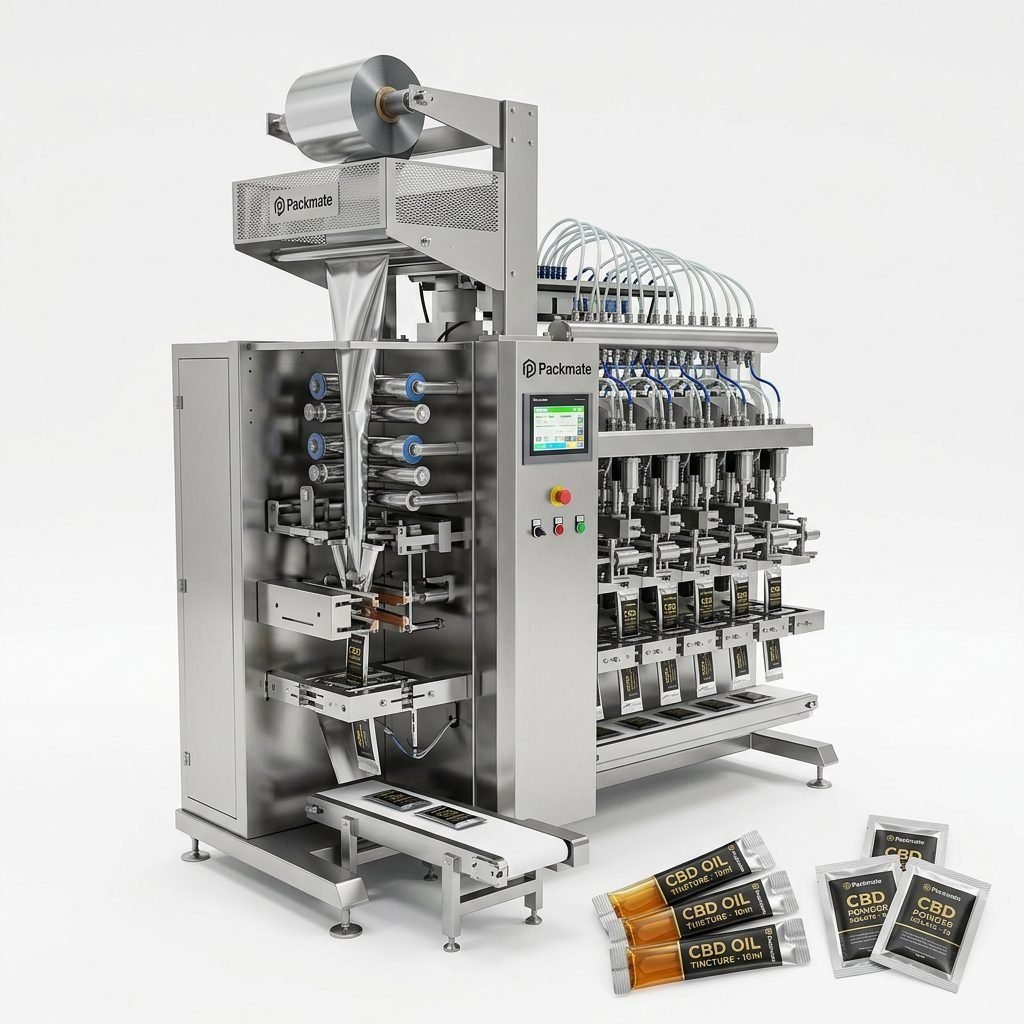
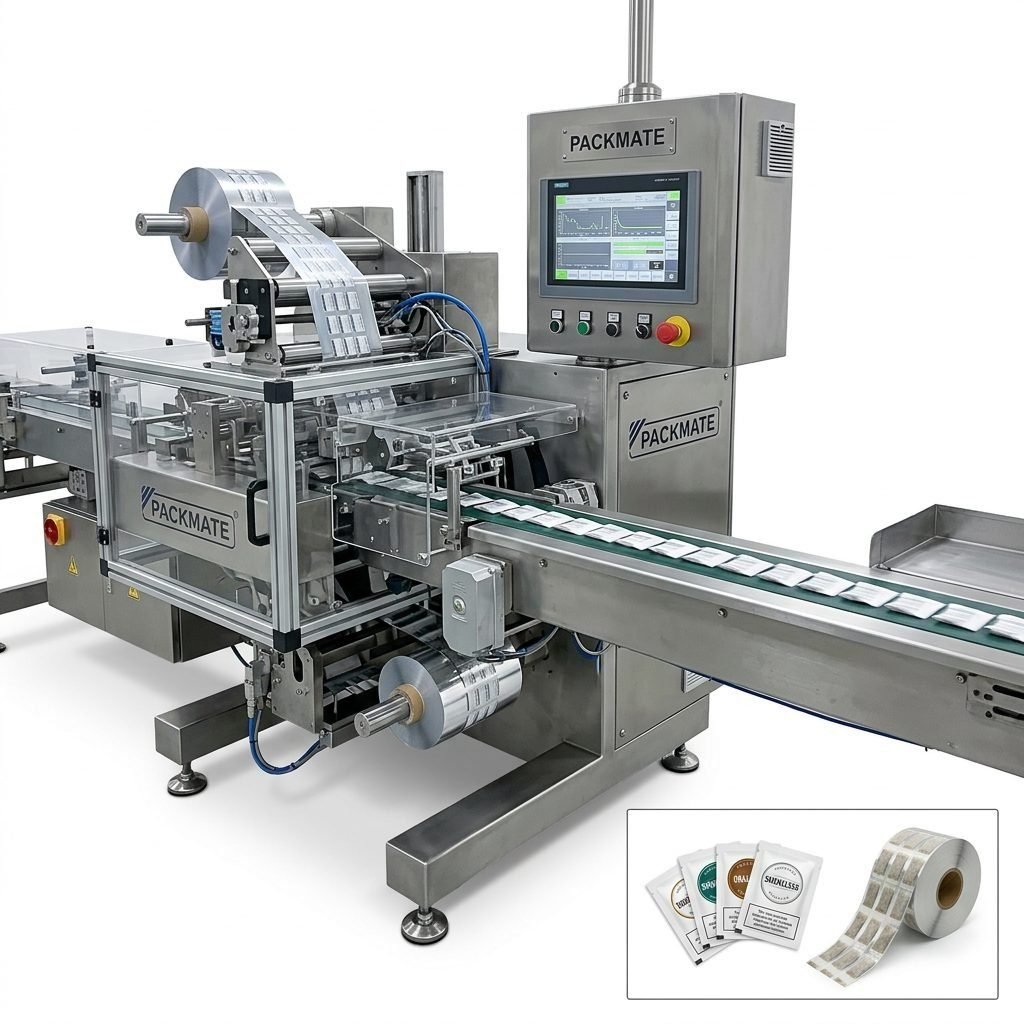
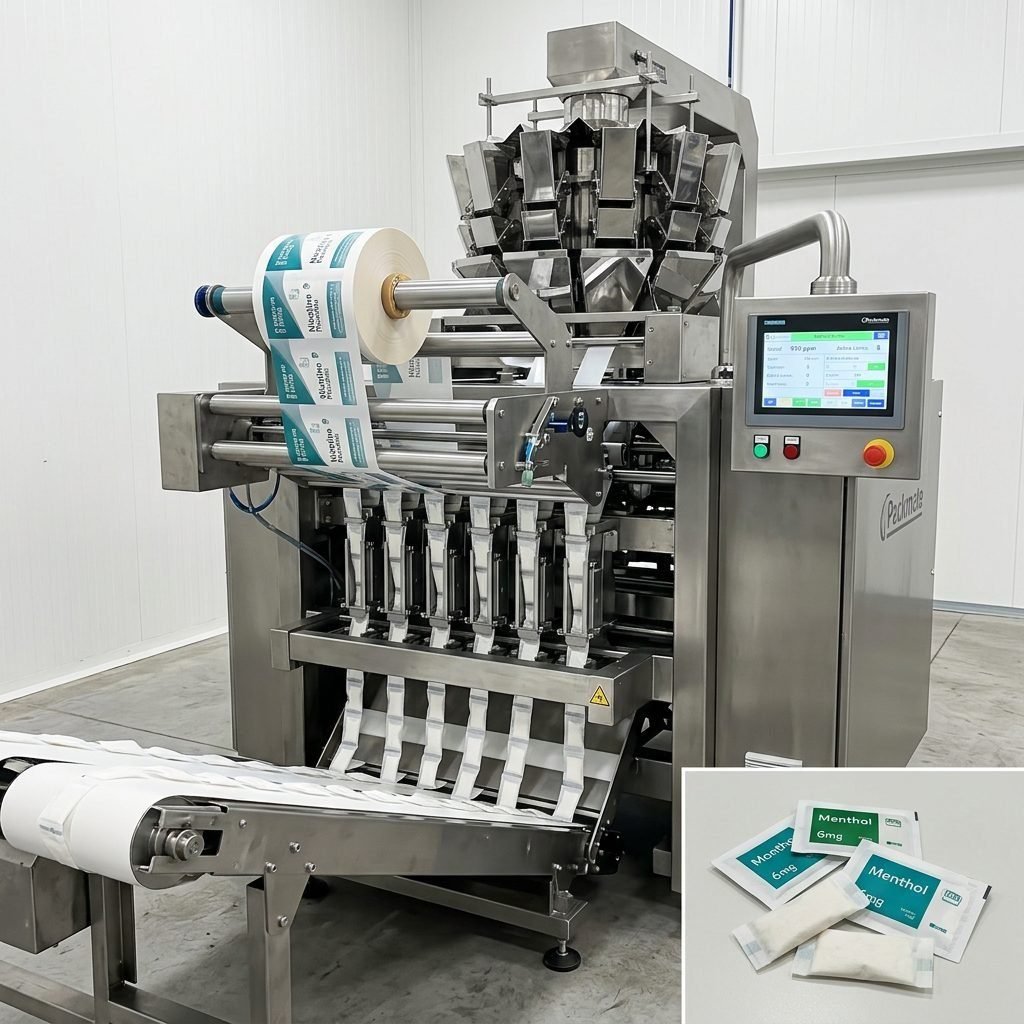
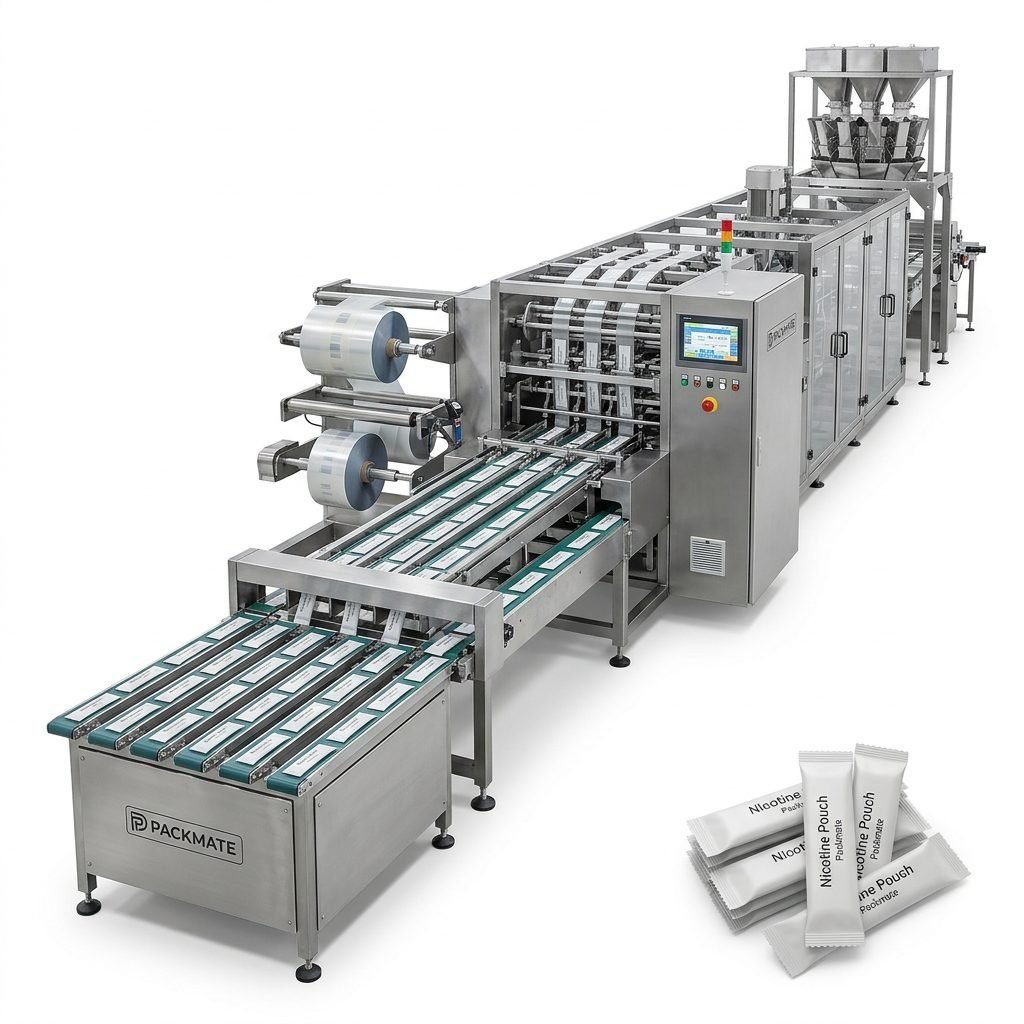
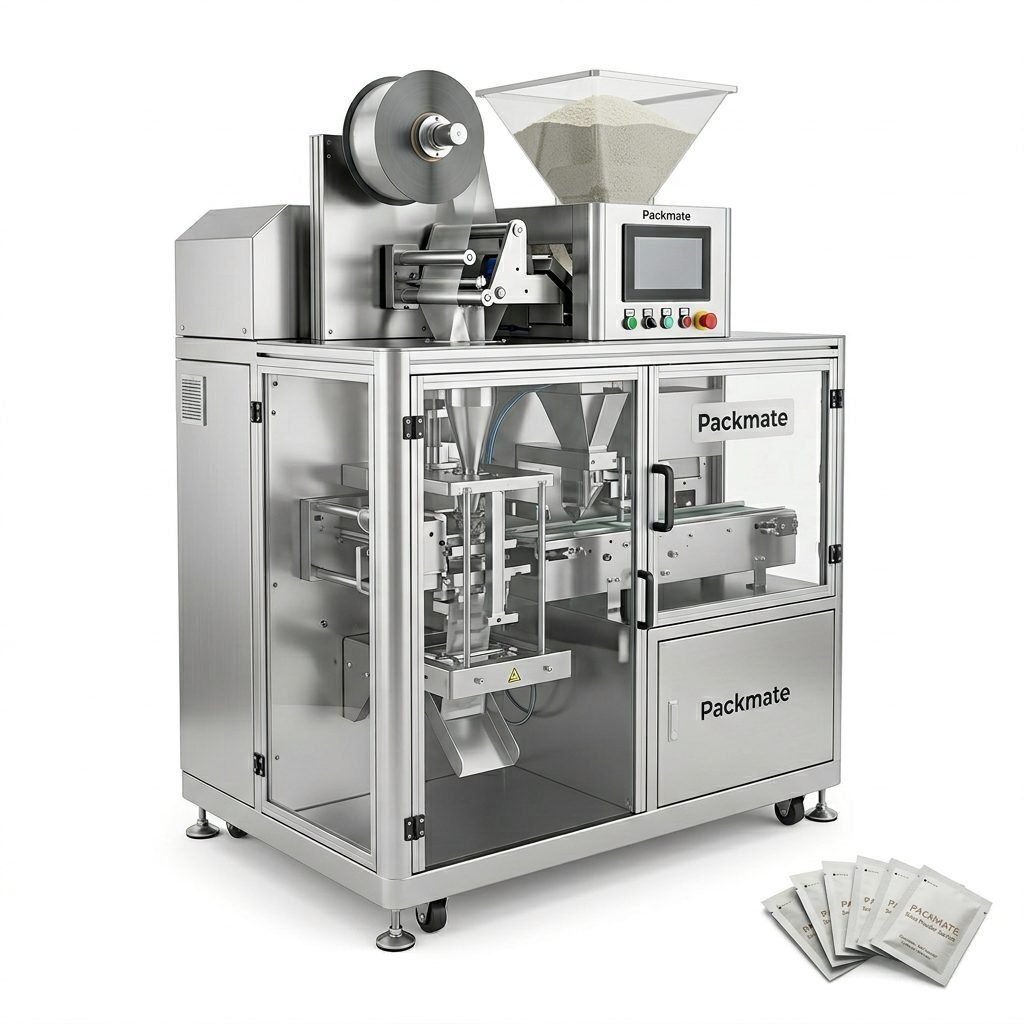
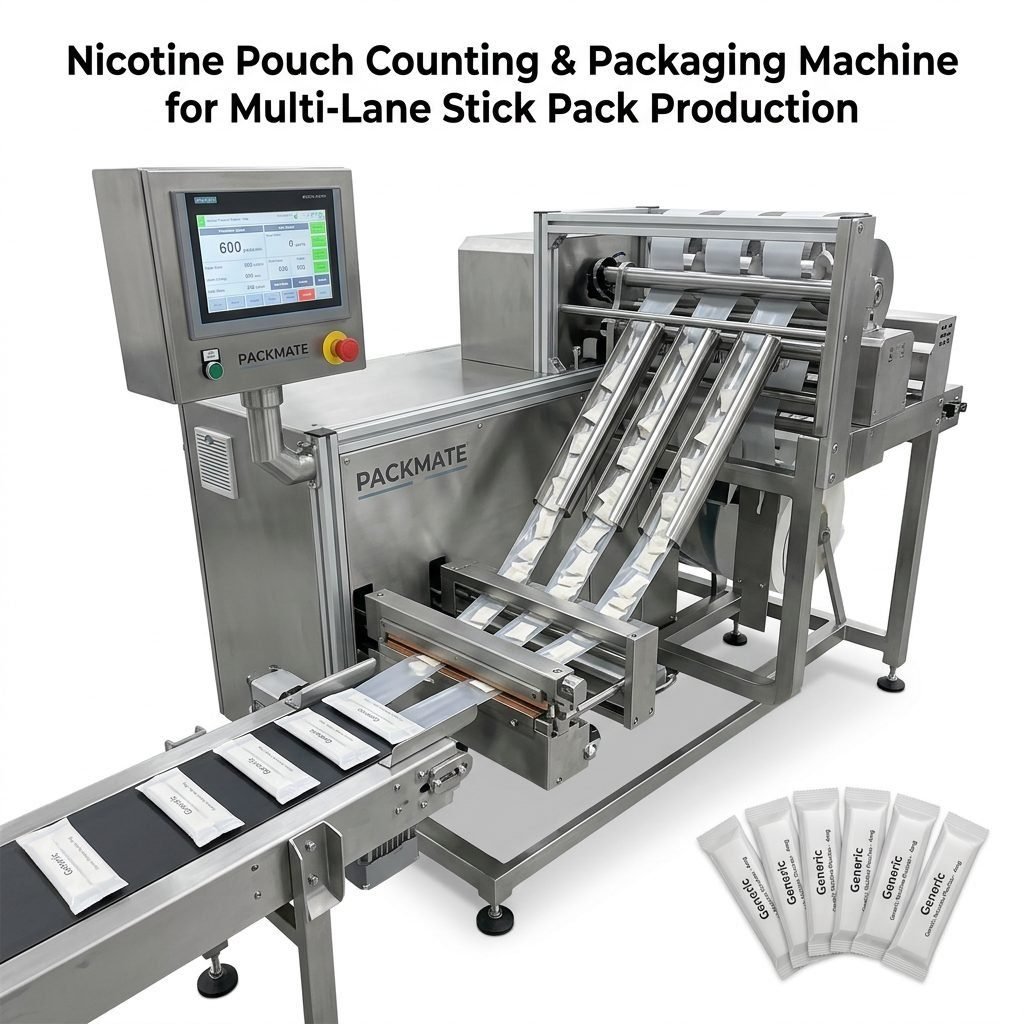
The first step is to clearly define the product you will package. Snus and nicotine pouches come in many forms — loose sachets, pre-formed pouches, stick packs, and multi-lane small-dose pouches. Each format requires different mechanics and tooling. For example, stick packs and sachets typically use a form-fill-seal approach, while multi-lane small-dose systems focus on precise dosing across several lanes simultaneously. Choosing a machine designed for your pouch format ensures better performance and fewer changeovers.
Key product questions to answer:
- What pouch types will you run (sticker, sachet, multi-lane pouches)?
- What are the target portion sizes and dosing tolerances?
- Do you need integrated features such as nitrogen flush, desiccant insertion, or tear-notches?
If you plan to run multiple pouch types, prioritize machines with fast tooling changeovers and modular attachments to reduce downtime.
Determine Required Production Capacity and Speed
Production capacity is one of the strongest determinants of machine selection. Estimate your current and near-future output needs in pieces per minute (ppm) or units per hour. Machines are designed for low-, medium-, and high-speed production. Multi-lane systems can multiply throughput while saving floor space, but they require more precise synchronization and dosing systems.
Considerations:
- Daily and monthly production targets
- Planned SKU expansion over the next 2–3 years
- Line efficiency, OEE targets, and expected uptime
matching machine speed to line up- and downstream equipment avoids costly bottlenecks.
Accuracy, Dosing and Material Handling
For nicotine pouches and snus, accurate dosing is vital for regulatory compliance and consumer consistency. Evaluate whether the machine uses volumetric filling, auger filling, vibrating feeders, or weight-based dosing. Each method has trade-offs in accuracy, versatility, and maintenance. Also confirm the machine’s material handling system is suitable for powders, granules, or leaf blends used in snus production.
What to check:
- Typical filling accuracy (± tolerance)
- Type of dosing mechanism and ease of calibration
- Dust control, feeding consistency, and anti-bridging mechanisms
Materials, Film Compatibility and Seal Quality
The film or packaging material you choose affects the sealing method, machine tooling, and overall shelf life. Verify machine compatibility with laminated films, biodegradable options, and barrier films that provide oxygen/moisture protection. Consistent, strong seals prevent leaks and contamination — an absolute requirement for nicotine products.
request test seals on your chosen film and review micrographs or cross-sections if possible to confirm seal integrity.
Automation, Controls and User Interface
Modern snus packaging lines rely on servo drives, PLCs, and friendly HMI panels for operator efficiency. Look for machines with recipe management, remote diagnostics, and easy PLC integration so you can scale operations or connect to an existing MES. Intuitive controls reduce training time and human error.
Features to prioritize:
- Servo-driven motion for precise index and dosing
- Recipe recall and password-protected settings
- Remote support or IoT-enabled diagnostics
Sanitation, Maintenance and Compliance
Hygiene and maintenance are top priorities for nicotine pouch production. Choose machines built with sanitary design principles: stainless steel construction, easy-to-access components, and minimal crevices where dust accumulates. Check for CE, ISO, and other certifications to ensure regulatory alignment.
request a preventive maintenance schedule and spare parts list — fast access to critical spares reduces downtime.
Integration with Upstream/Downstream Equipment
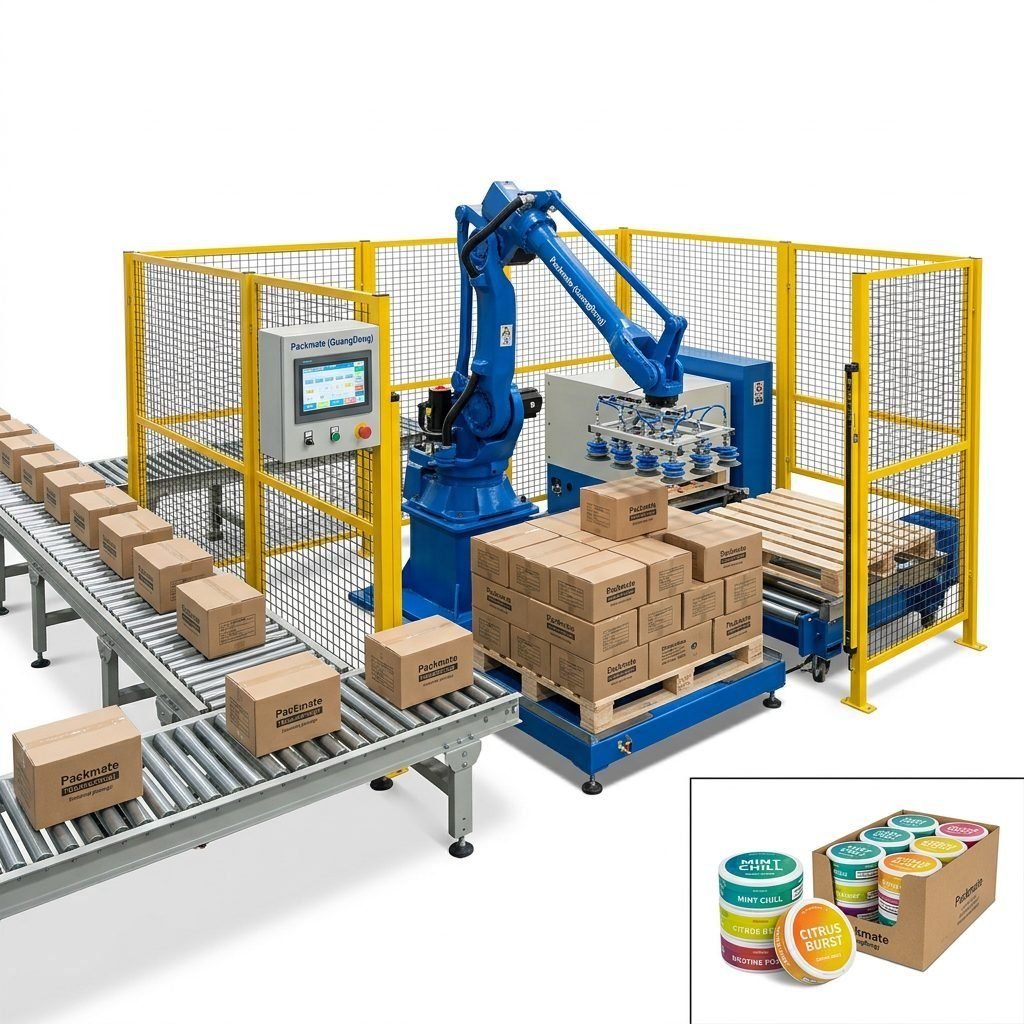
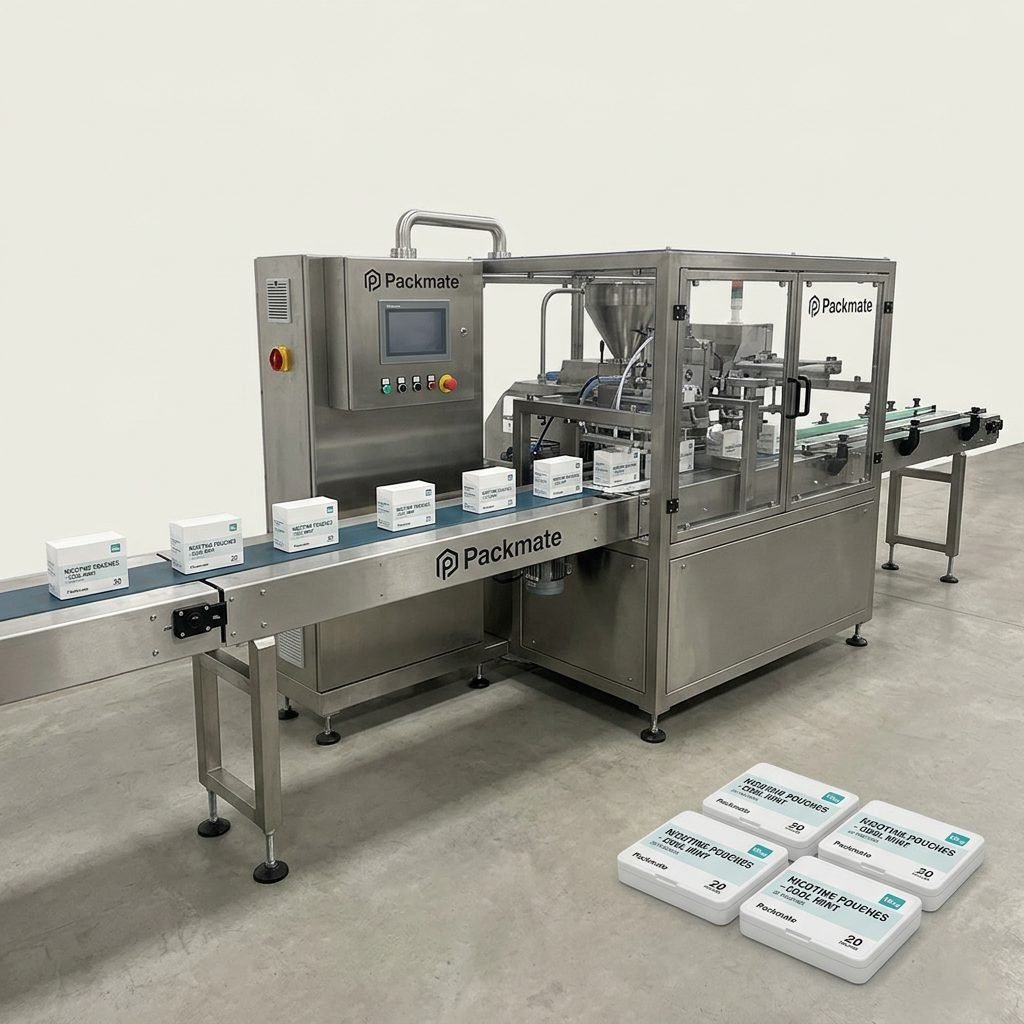
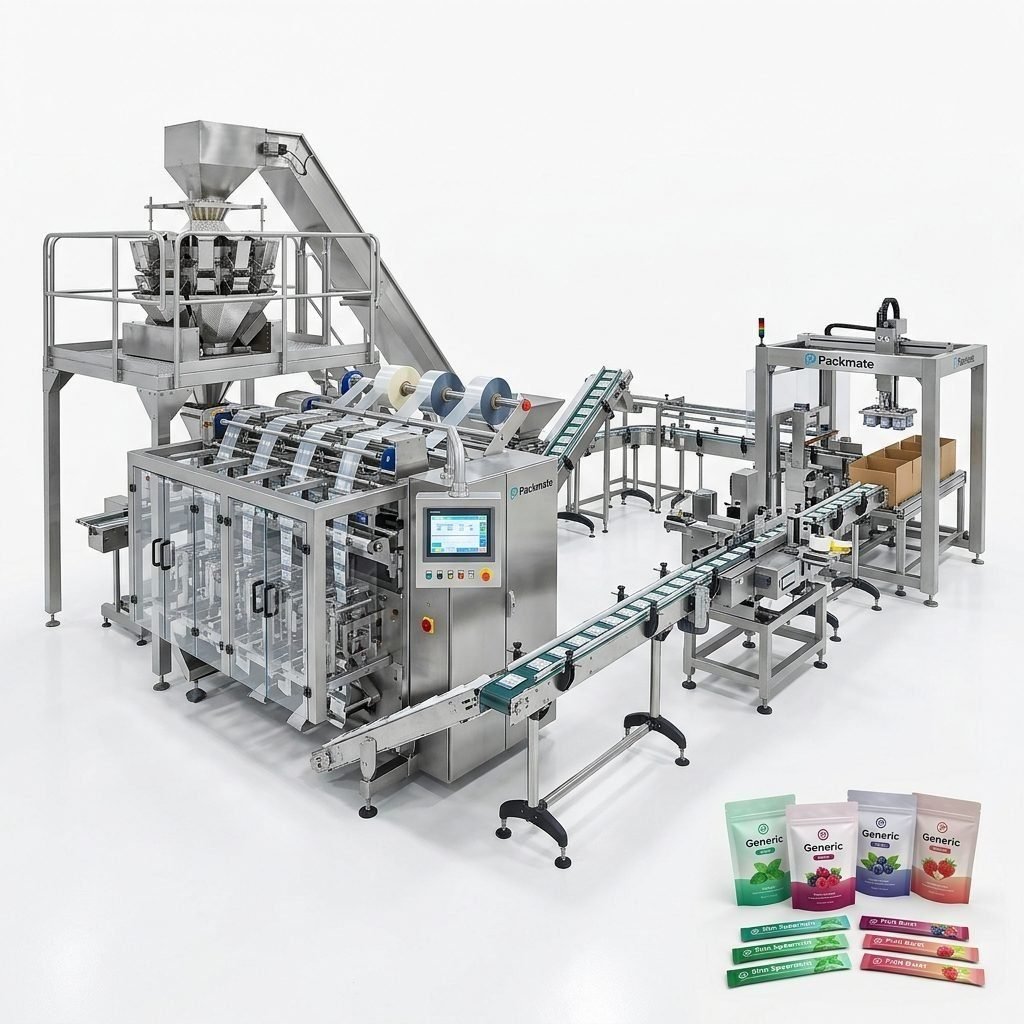
Think beyond a single machine. Your snus production line will often involve upstream dosing/weighing equipment and downstream cartoning, case packing, and labeling systems. Plan for mechanical and electrical integration so machines communicate seamlessly and product flow remains continuous.
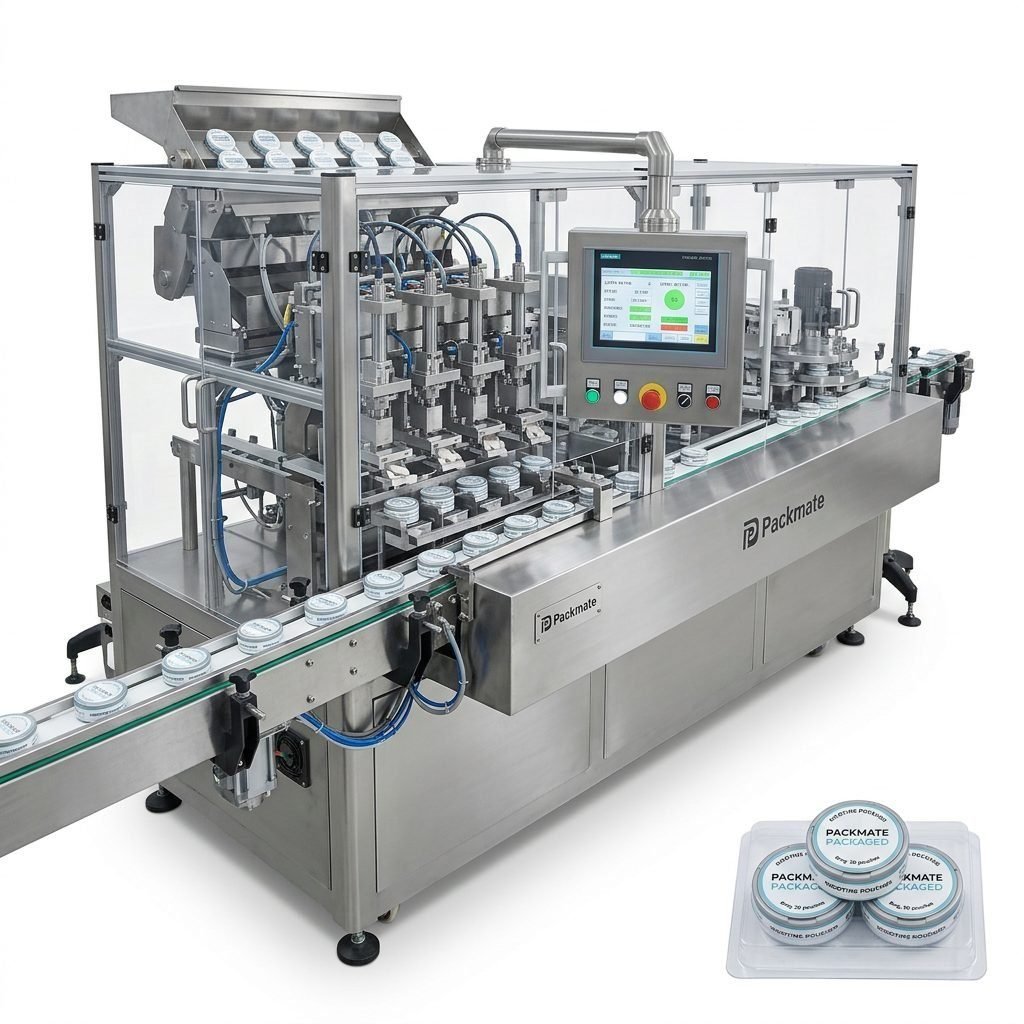
If you need a complete solution, consider suppliers that offer full-line systems — from weighing to final packaging. For example, Packmate provides integrated Weighing & Packaging Systems and Filling & Packaging Lines to reduce vendor coordination and streamline commissioning.
Factory Footprint, Utilities and Site Requirements
Verify the machine’s footprint and the utility requirements (power, compressed air, vacuum, and nitrogen). Multi-lane machines can save floor space relative to multiple single-lane units, but they may require higher power and more precise floor leveling. Coordinate with local installers in Brunei to ensure electrical phase compatibility and adequate utility provisioning.
After-Sales Support, Training and Spare Parts
Excellent after-sales service is crucial, especially when adopting complex multi-lane systems. Evaluate suppliers on local support availability, spare parts stock, remote troubleshooting, and on-site training services. Suppliers with global delivery networks and exhibition presence often provide better long-term support.
For reliable global service and a wide range of models, explore manufacturer pages such as Snus & Nicotine Packaging Machines and Sachet & Stick Pack Machines.
Budgeting and Return on Investment (ROI)
The cheapest option is rarely the best long-term choice. Consider total cost of ownership: purchase price, installation, spare parts, expected uptime, energy consumption, and operator efficiency. A higher initial investment in precision dosing and servo control often yields faster ROI through reduced waste and higher throughput.
- Waste reduction and yield improvement estimates
- Expected uptime and service responsiveness
- Energy and consumables costs
Vendor Selection: Capabilities and Track Record
Select vendors with proven experience in snus and nicotine pouch lines. Look for manufacturers with substantial R&D, CNC machining capability, and a strong history of turnkey projects. A factory with dedicated production and rigorous quality control will give you machines that last. For instance, Packmate (GuangDong) Co., Ltd. highlights its 30+ years of experience, 20,000㎡ factory space, and over 50 machine models — all indicators of robust manufacturing capability.
Learn more about supplier capabilities via their company profile and exhibition history: About Packmate and Our Exhibition.
Factory Acceptance Test (FAT) and Site Acceptance Test (SAT)
Insist on a comprehensive FAT before shipping: run your formulations, verify speeds, check labeling/printing, and inspect sealing performance. After installation, complete a SAT to confirm integration with local utilities and downstream equipment. A clear FAT/SAT process minimizes surprises during commissioning.
Customization and Future-Proofing
Ask about modular options for future upgrades — such as added lanes, automatic changeover kits, or enhanced vision inspection. The ability to retrofit advanced modules preserves capital investment and extends machine lifecycle.
choose suppliers who provide clear upgrade paths and documented compatibility for future modules.
Making the Final Decision: A Practical Checklist
Use this checklist to compare shortlisted machines objectively:
- Does the machine meet required speed and accuracy?
- Is the machine compatible with your films and pouch formats?
- Is sanitation design and maintenance access adequate?
- Are spare parts and service available in your region?
- Is there a clear FAT/SAT and warranty arrangement?
Vendor transparency:
Confirm lead times, spare parts lead times, warranty terms, and training schedules. Transparency in communication is a strong indicator of reliable long-term partnership.
Next Steps — Sample Trials and Contact
Before committing, request sample trials with your exact formulations and packaging film. Many manufacturers offer lab trials or on-site demonstrations at exhibitions. If you want to see case studies or machine performance, review the supplier’s project cases and catalogs.
For detailed machine options and customized lines, check the manufacturer’s case studies: Case and request a quote or consultation via Contact Us.
Summary: How to Choose the Best Snus Packaging Machine in Brunei
Choosing the best snus packaging machine is a balanced process that considers product format, capacity, dosing accuracy, film compatibility, sanitation, automation, and vendor support. Prioritize accuracy and serviceability, validate performance with FAT/SAT runs, and select a partner who can provide turnkey solutions and global after-sales support.
Quick action items:
- Define your pouch formats and production targets.
- Request trials and FAT documentation to validate performance.
- Choose vendors with proven snus/nicotine experience and spare parts availability.
Frequently Asked Questions (FAQs)
Q1: What production speed should I target for a new snus product in Brunei?
Target speed depends on your daily volume goals and SKU mix. Small-batch artisan producers may choose low-speed single-lane machines, while commercial-scale operations typically opt for multi-lane systems to achieve higher throughput. Discuss expected daily output with suppliers so they can recommend the best configuration.
Q2: How important is machine certification (CE/ISO) for nicotine pouch production?
Certifications such as CE and ISO demonstrate compliance with international manufacturing and safety standards. They are important for regulatory acceptance and assure you that the equipment meets recognized benchmarks for design and safety. Always request certificates and ask about local compliance documentation relevant to Brunei.
Q3: Can I retrofit an existing line to run multiple pouch formats?
Many modern machines are modular and allow retrofitting with additional lanes, different forming tools, or upgraded dosing systems. Confirm retrofit options with the manufacturer and verify mechanical and electrical compatibility before purchasing.
Q4: What after-sales services should I expect from a reputable supplier?
Expect documentation, training, spare parts lists, remote troubleshooting, and on-site service packages. Fast spare-part delivery and trained service engineers significantly reduce downtime; choose suppliers with established global logistics and exhibition presence to ensure dependable support.
Q5: Where can I see real-world examples and learn more about full packaging solutions?
Review manufacturer case studies, product catalogs, and exhibition demos. For example, explore the manufacturer’s product pages for Snus & Nicotine Packaging Machines and consult the Catalog for detailed specifications.