The modern tobacco and nicotine pouch industry demands packaging lines that combine speed, precision, and reliability. A High Speed Snus Production Line provides a complete automated solution for producing portion snus and nicotine pouches at scale. This article explores the core features, engineering advantages, and practical benefits of deploying a fully integrated high-speed snus packing system from design through after-sales support.
Why a High Speed Snus Production Line Matters
Global demand for portion snus and nicotine pouches has surged, requiring manufacturers to scale output while ensuring product consistency and food-safe handling. A high-speed production line reduces labor dependence, minimizes human error, and improves throughput. Key outcomes include faster time-to-market, lower per-unit costs, and consistent portion quality — all critical for maintaining competitive advantage.
Business Impact
Investing in a modern automated line can deliver: higher yield, reduced waste, and scalable output. For brands expanding into new markets or increasing SKU variety, the flexibility of multi-lane systems supports small-dose pouches as well as bulk packaging formats.
🔧 Tip: Choose lines that allow quick changeovers and programmable format recipes to switch between pouch sizes and materials without long downtime.
Core Components of a High Speed Snus Production Line
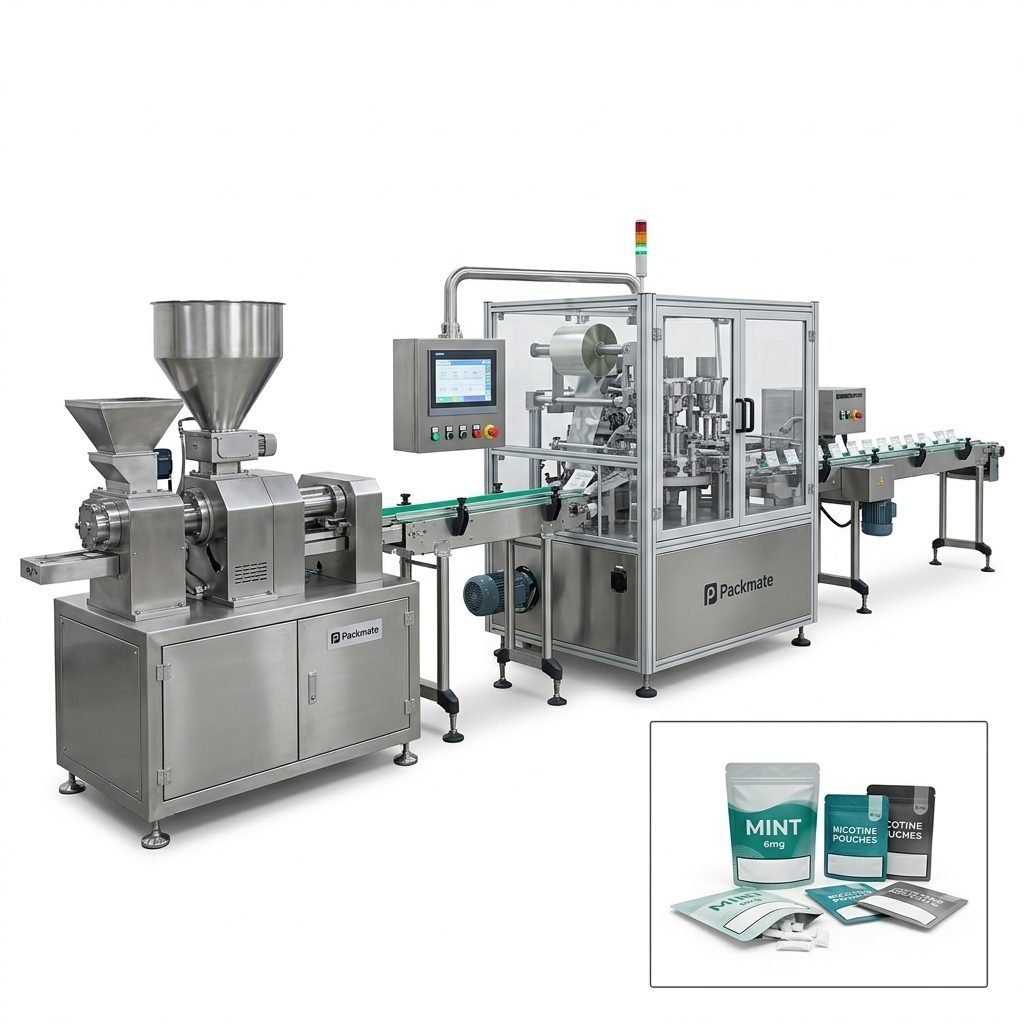
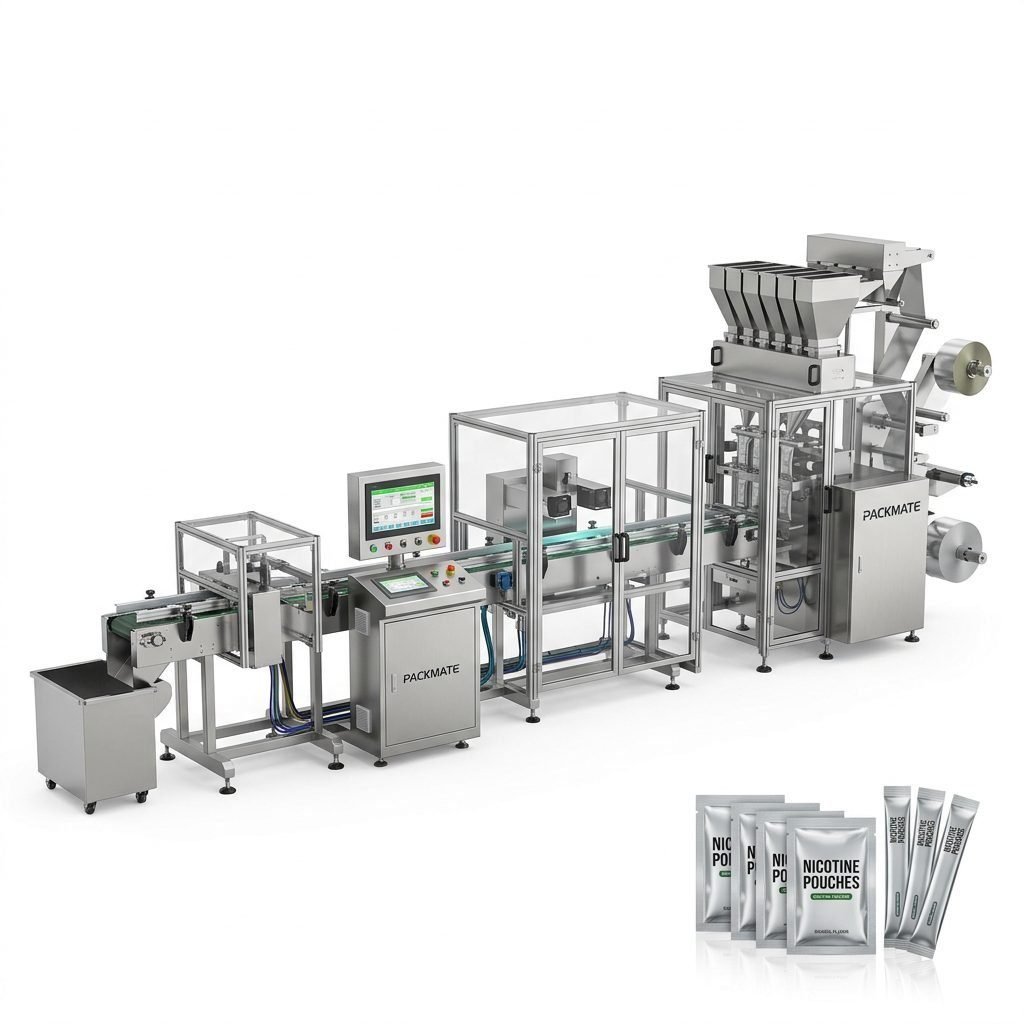
A complete snus production line is an assembly of specialized machines working seamlessly. Typical components include:
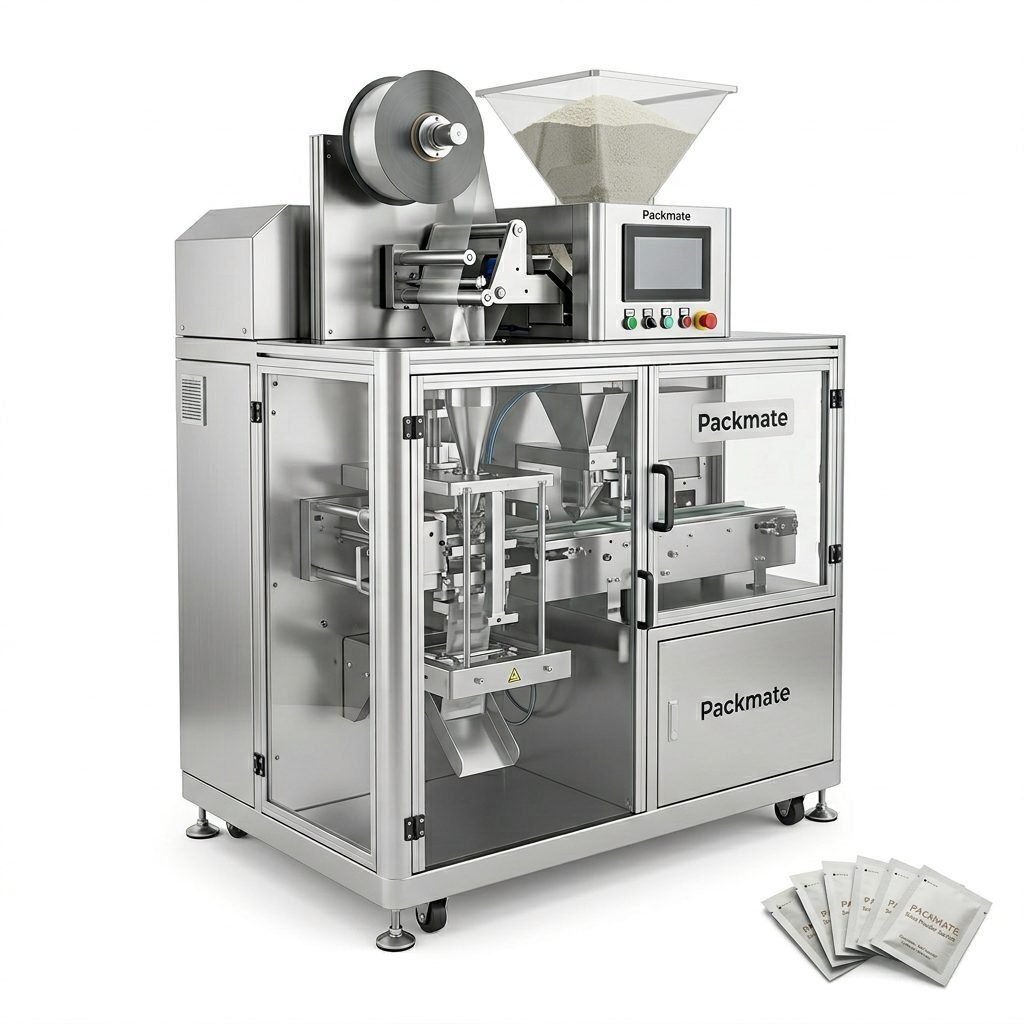
• Feeding and dosing systems for powder or granular nicotine blends.
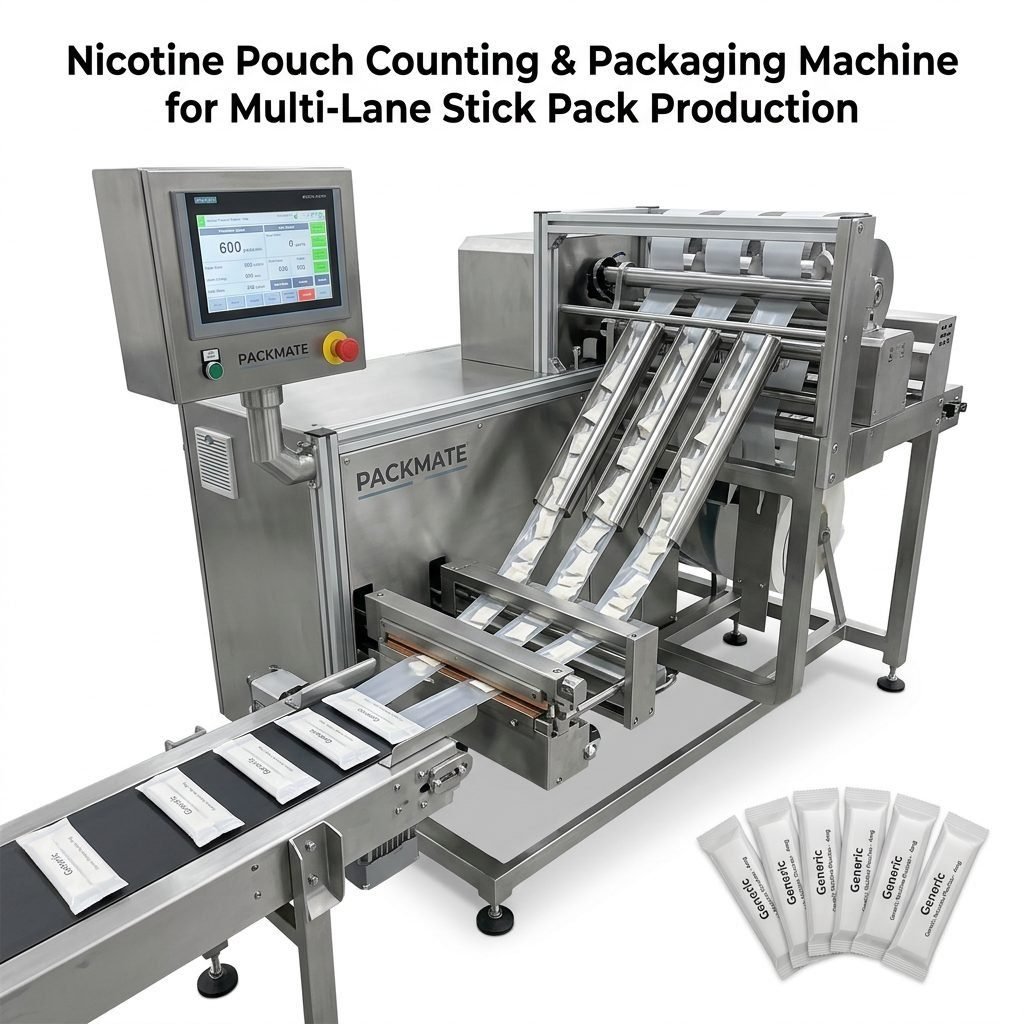
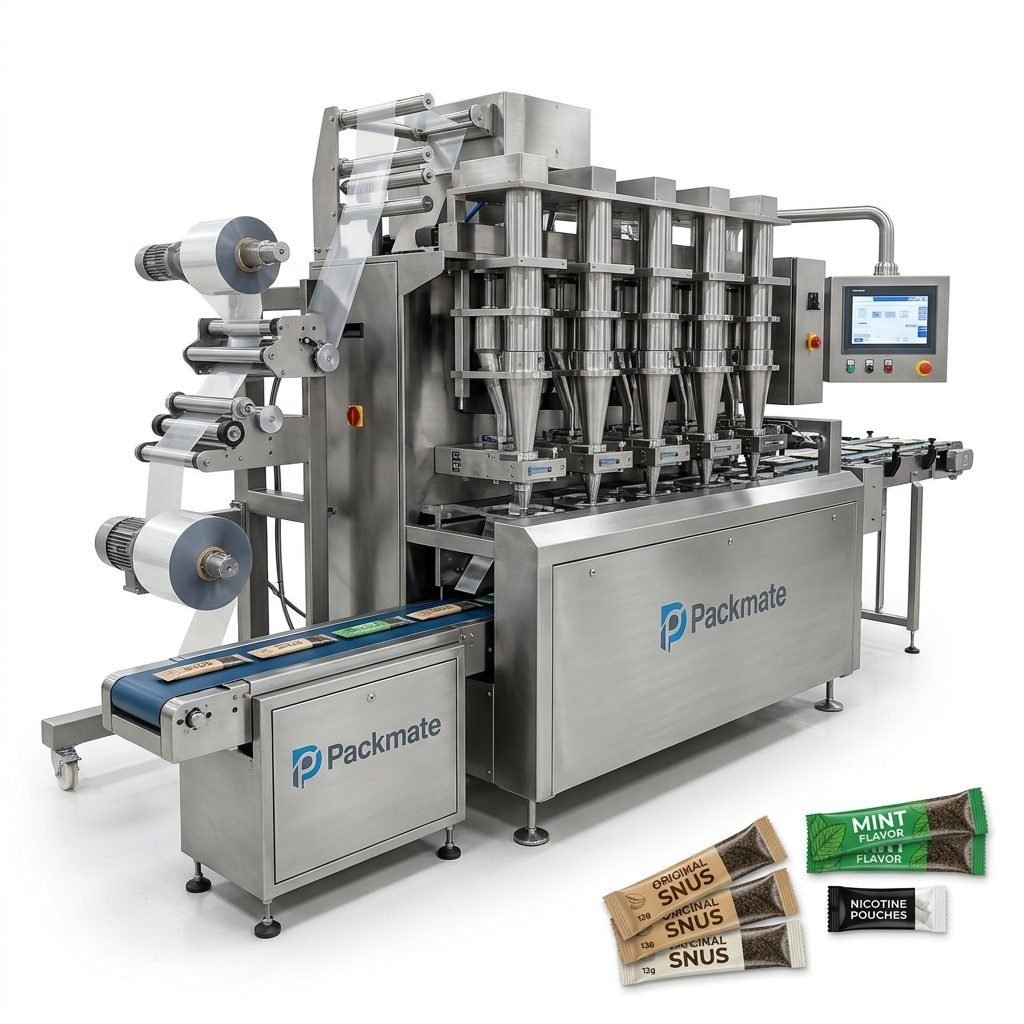
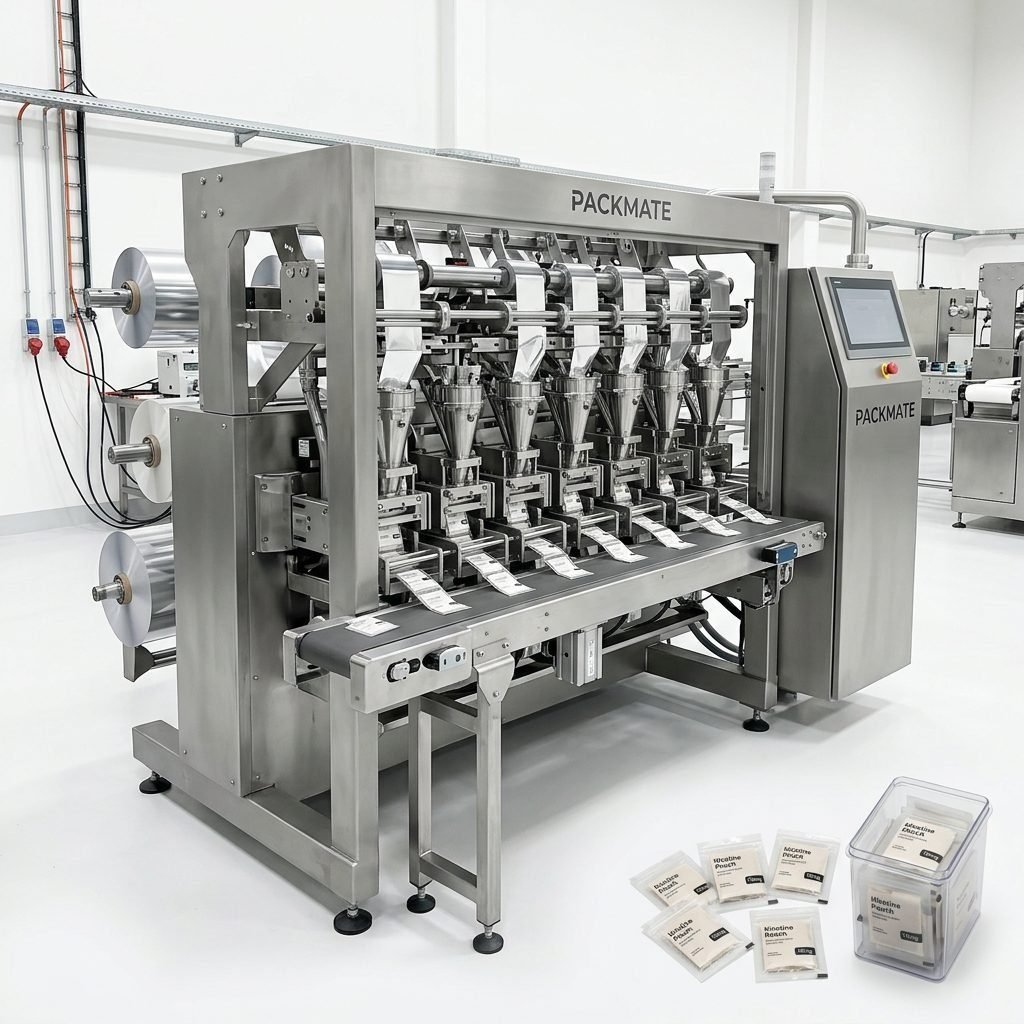
• Multi-lane pouch forming and sealing machines for portion snus and sachets.
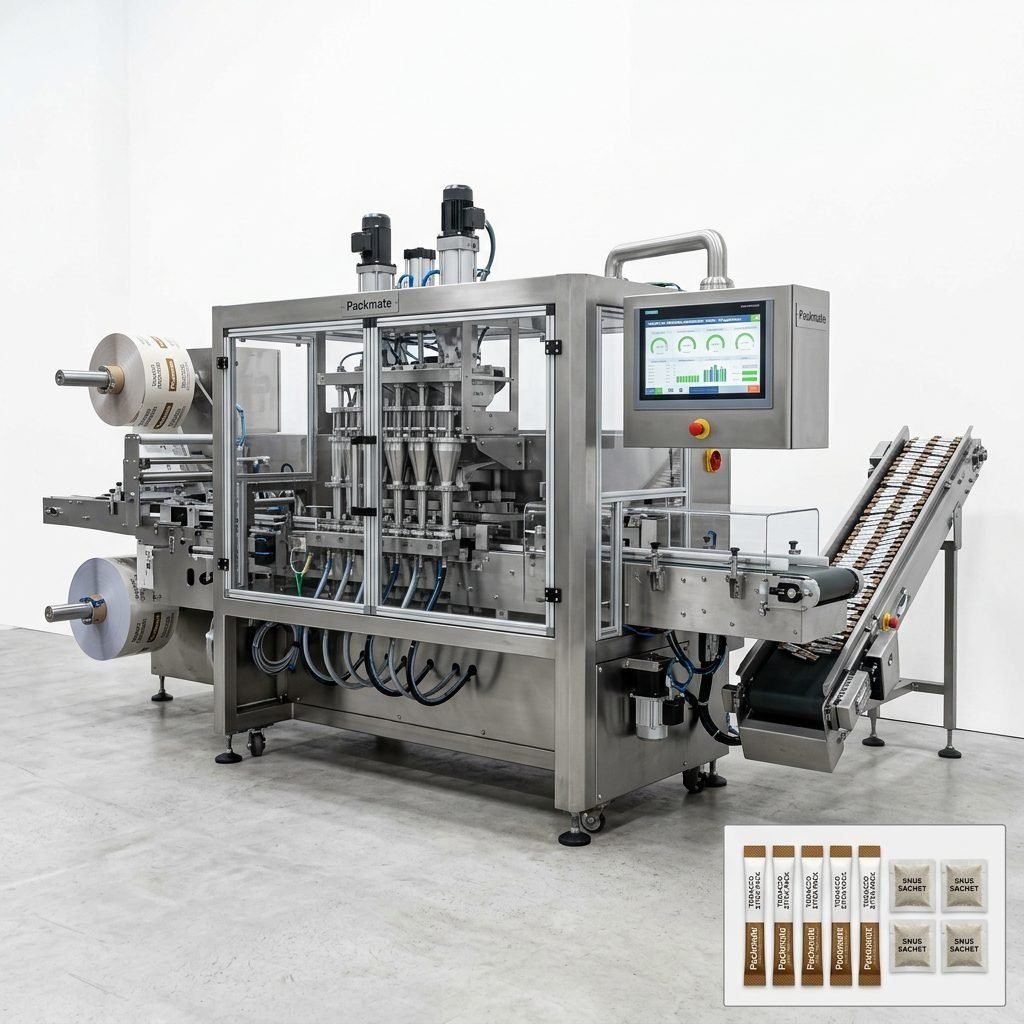
• Stick pack or sachet units for alternate formats.
• Integrated weighing and metal-detection units to ensure quality control.
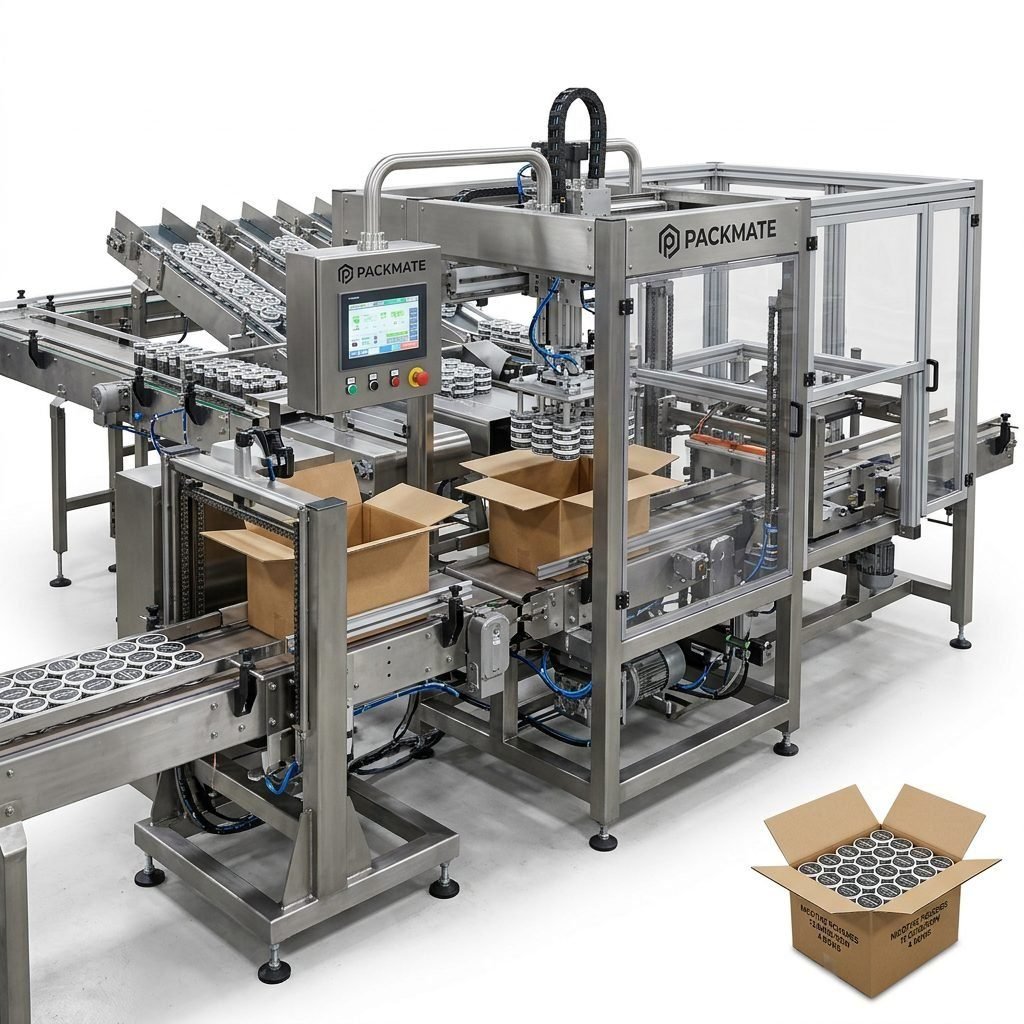
• Conveyors, accumulation platforms, and automated boxing/packaging modules.
Precision Dosing & Weighing
Accurate dosing is crucial for regulatory compliance and consumer safety. Advanced weighing modules and auger fillers deliver precise, repeatable doses even at high speeds. Integration with weighing & packaging systems ensures traceable batch data and reduced giveaway.
Automation, Control & User Interface
Modern lines are driven by PLCs, servo motors, and high-resolution sensors. A centralized HMI simplifies operation: operators can monitor machine status, set production recipes, and access diagnostics. Remote support features enable faster troubleshooting and software updates from the OEM.
⚙️ Automation highlight: Multi-lane synchronization maintains consistent pouch weights across all lanes at maximum speed, avoiding lane-to-lane variability.
Safety & Compliance
Equipment designed for snus production follows international standards like CE and ISO. Material-contact surfaces use food-safe stainless steel with sanitary design to prevent contamination. Built-in interlocks, emergency stops, and operator guards protect personnel while maintaining production integrity.
Design Options: Single-Lane vs Multi-Lane Systems
Manufacturers can select single-lane machines for niche, low-volume SKUs or multi-lane systems to maximize throughput. Multi-lane systems are ideal for small-dose snus where high-speed portioning across many lanes multiplies output without compromising quality.
For detailed product families, explore the Snus & Nicotine Packaging Machines and related Sachet & Stick Pack Machines to identify models suited to your production profile.
Factory Strength & Manufacturing Quality
A trusted supplier often has a large, well-equipped factory with CNC centers and precision assembly lines. Facilities with strict quality testing can deliver machines that meet long-term performance expectations. When evaluating suppliers, consider their manufacturing footprint, test procedures, and available certifications.
✅ Packmate advantage: Over 30 years of engineering experience, a 20,000㎡ manufacturing plant, and 50+ machine models provide the depth to supply turnkey lines and tailored solutions.
Certifications & Global Acceptance
Look for CE, ISO, and other compliance certificates that reflect adherence to safety and quality standards. Certified suppliers also typically participate in major industry exhibitions, offering live demos for validation. See company credentials and exhibition history on the Certificate and Our Exhibition pages.
Turnkey Solutions & Integration
Turnkey lines combine upstream dosing and blending, forming and sealing, secondary packaging, and end-of-line case packing. Integration reduces project complexity and shortens commissioning time. A single-source supplier helps ensure system compatibility, streamlined installation, and one-stop technical support.
Project Lifecycle
Typical phases include consulting and layout design, equipment supply, factory acceptance testing (FAT), installation & commissioning (SAT), operator training, and after-sales service. Clear milestones and KPIs during FAT accelerate on-time handover and production ramp-up.
After-Sales Service & Spare Parts
Reliable after-sales support is essential for continuous operation. Choose suppliers offering rapid spare parts delivery, remote diagnostics, and local service partners. Service packages may include preventive maintenance schedules that reduce unplanned downtime.
📦 Service tip: Ensure the OEM provides a spare parts list and recommends an initial set of wear parts to keep on hand for the first 12 months of operation.
Case Studies & Global Cooperation
Leading manufacturers have deployed high-speed snus lines across Europe, Asia, and the Americas. Successful projects demonstrate improved output consistency, reduced packaging defects, and simplified regulatory reporting. Supplier case pages often highlight real-world validation and customer testimonials; check the Case section for examples.
Selecting the Right Supplier
When comparing suppliers, evaluate:
• Engineering experience and product portfolio.
• Factory capabilities and quality control processes.
• After-sales network and spare parts availability.
• References, certifications, and exhibition presence.
For company background and mission alignment, see About Packmate and their Mission & Vision.
Return on Investment (ROI) Considerations
The ROI of a high-speed snus line depends on throughput, labor savings, and reduction in material giveaway. Calculate ROI using realistic production targets, total cost of ownership (including maintenance and consumables), and the expected life of the equipment. Higher initial capital often translates to lower operating costs and stronger margins over time.
Cost-Mitigation Strategies
Phased upgrades, modular expansions, and leasing options can reduce upfront expenditure. Ensure clear warranty terms and consider extended support packages to control long-term service costs.
Deployment & Training
Effective deployment includes operator and maintenance training, SOP documentation, and on-site commissioning. A comprehensive training program reduces start-up errors and empowers in-house teams to perform routine maintenance with confidence.
🎓 Training note: Request a hands-on training schedule during commissioning and obtain digital manuals and spare-parts diagrams.
Contact & Next Steps
To begin evaluating a High Speed Snus Production Line, reach out for a site assessment and concept layout. OEMs with turnkey capability will offer a tailored proposal including lead times, FAT planning, and logistics. You can contact the supplier directly via their Contact Us page for inquiries, catalogs, and service details.
Frequently Asked Questions
Q1: What speeds can a high-speed snus line achieve?
Speeds vary by machine configuration and pouch format. Multi-lane systems dramatically increase total output with individual lanes running at moderate speeds. The achievable throughput depends on pouch size, dosing method, and downstream packaging. Consult OEM specifications for model-specific rates.
Q2: How long does installation and commissioning take?
Typical timelines range from a few weeks for basic single machines to several months for full turnkey lines. Factory acceptance testing (FAT) can shorten on-site commissioning. Detailed project planning during procurement sets realistic timelines.
Q3: Are spare parts readily available?
Reputable manufacturers maintain spare parts inventories and global distribution channels. Ask for a recommended spare-parts kit and lead times for critical components to avoid extended downtime.
Q4: Can the line handle different pouch materials?
Many modern machines are compatible with a range of laminated films and barrier materials. Verify material specifications with the supplier to ensure proper sealing, pouch strength, and shelf life performance.
Q5: Where can I see real-world installations?
Supplier case studies and exhibition demos showcase real installations and machine performance. Visit the Case page or arrange a live demonstration at an upcoming trade show.