Choosing the right snus packaging machine for your business in the Bahamas requires careful consideration of production goals, local regulations, product format, and long-term service support. This guide walks you through practical steps, technical criteria, and business-focused insights so you can make a confident investment that optimizes throughput, minimizes downtime, and delivers consistent package quality.
📦 Understanding Your Product and Market Demands
Start by mapping your product specifications: pouch size, weight range, moisture content, and whether you need single or multi-lane production. Snus and nicotine pouches come in a variety of formats —flat pouches, stick packs, or sachets— and each format has dedicated packaging technologies. Knowing the exact product profile helps narrow down machines that achieve reliable fill accuracy and correct sealing quality.
🔎 Key Product Parameters to Define
• Target pouch types (loose, sachet, stick, multi-lane pouches)
• Typical pouch weight and tolerance (mg/g)
• Filling medium (powder, granule, paste) and flowability
• Required packaging materials (paper/foil lamination, biodegradable films)
✅ Quick Tip
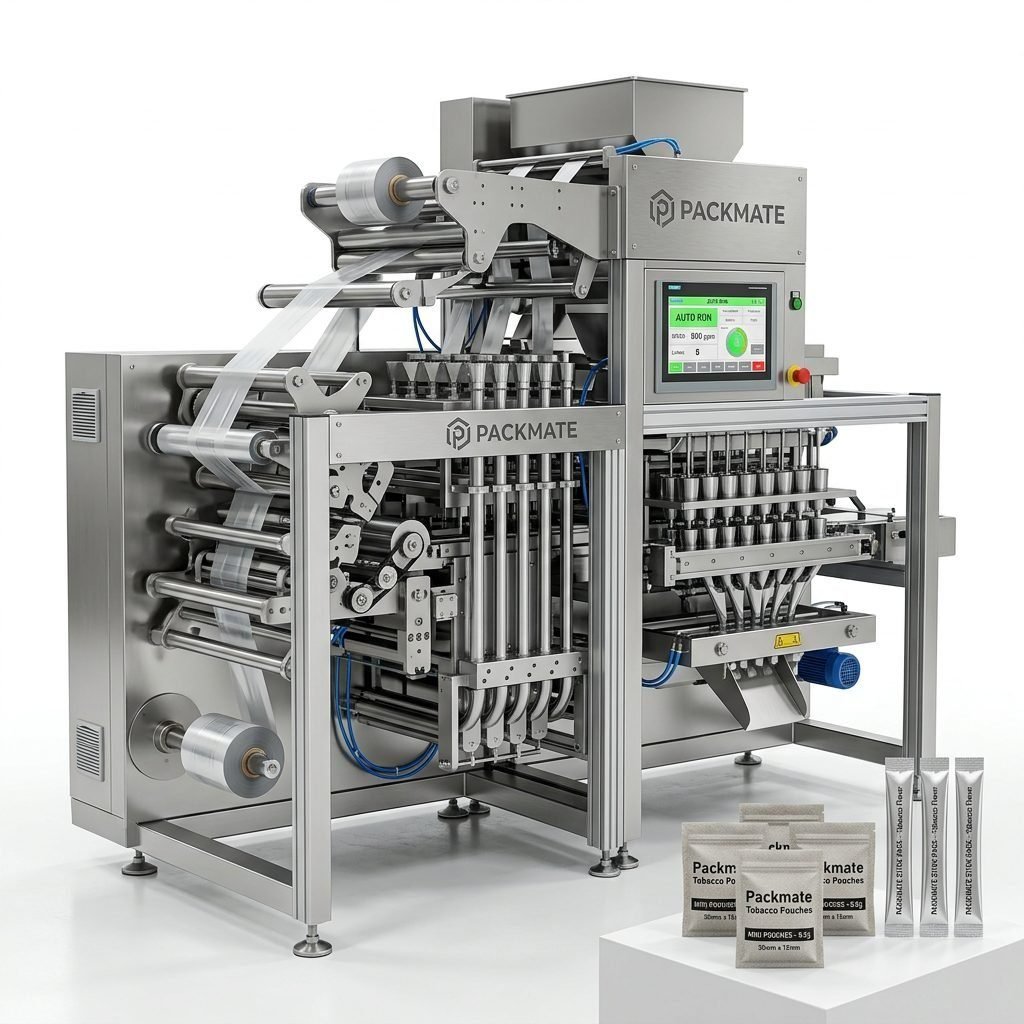
If you plan high-speed small-dose pouches, prioritize machines with multi-lane capability and precise weighers to reduce variation and material waste.
⚙️ Main Types of Snus Packaging Machines
There are several specialized machines for snus packaging. Selecting the right type depends on your format, production capacity, and future scaling plans.
Sachet & Stick Pack Machines
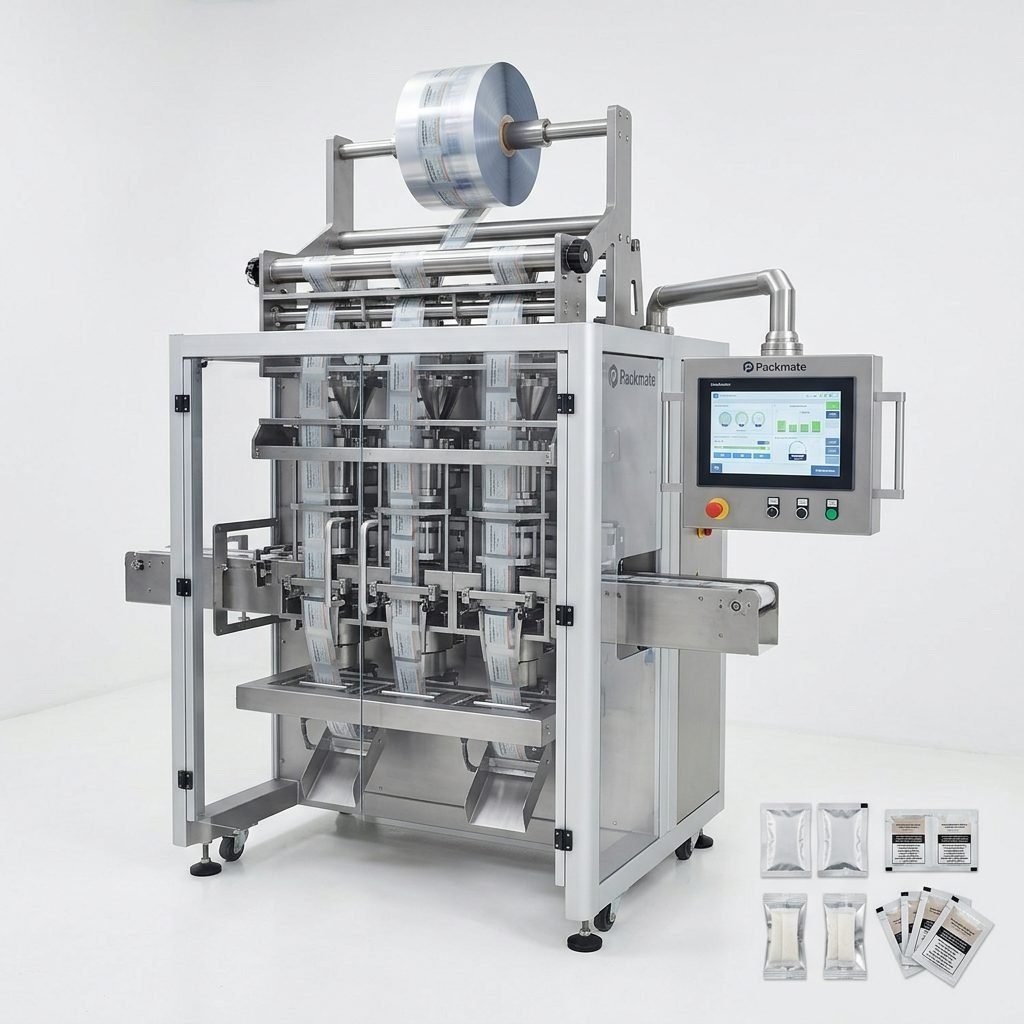
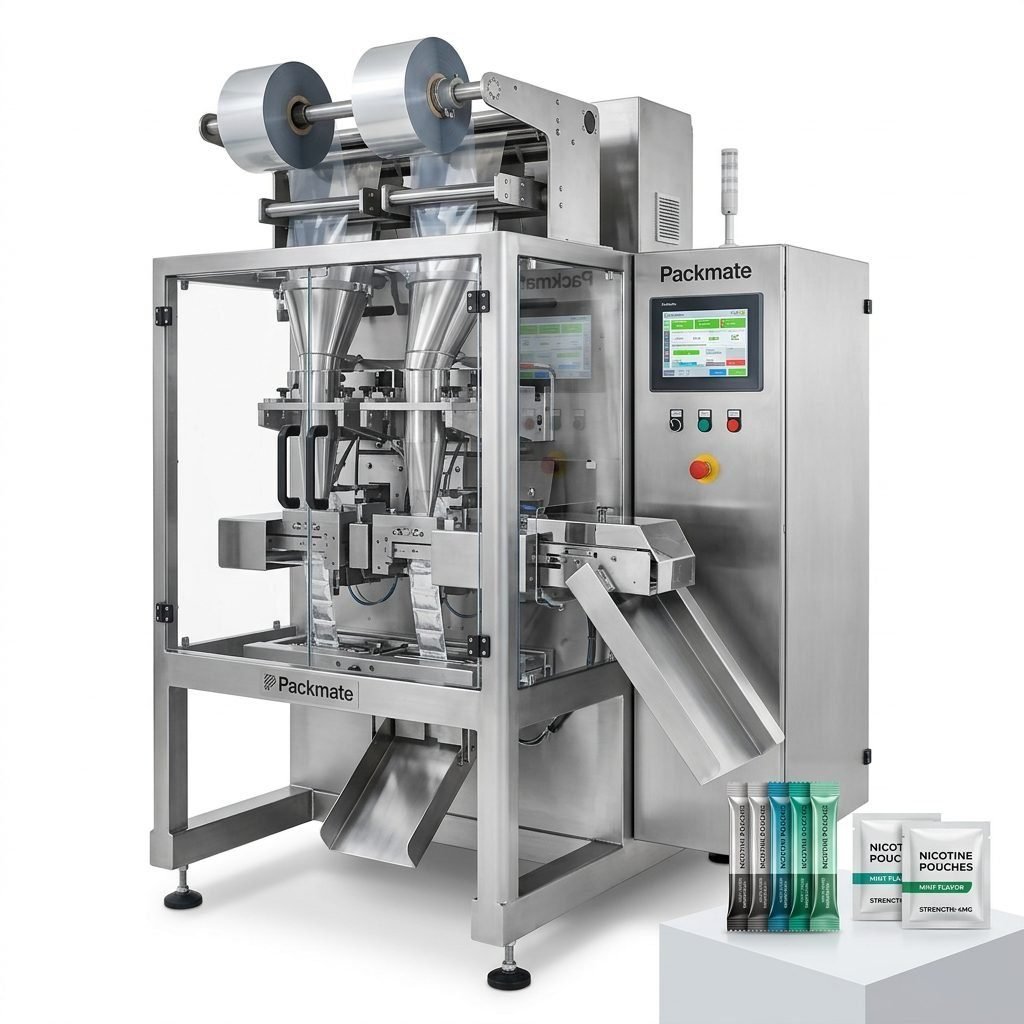
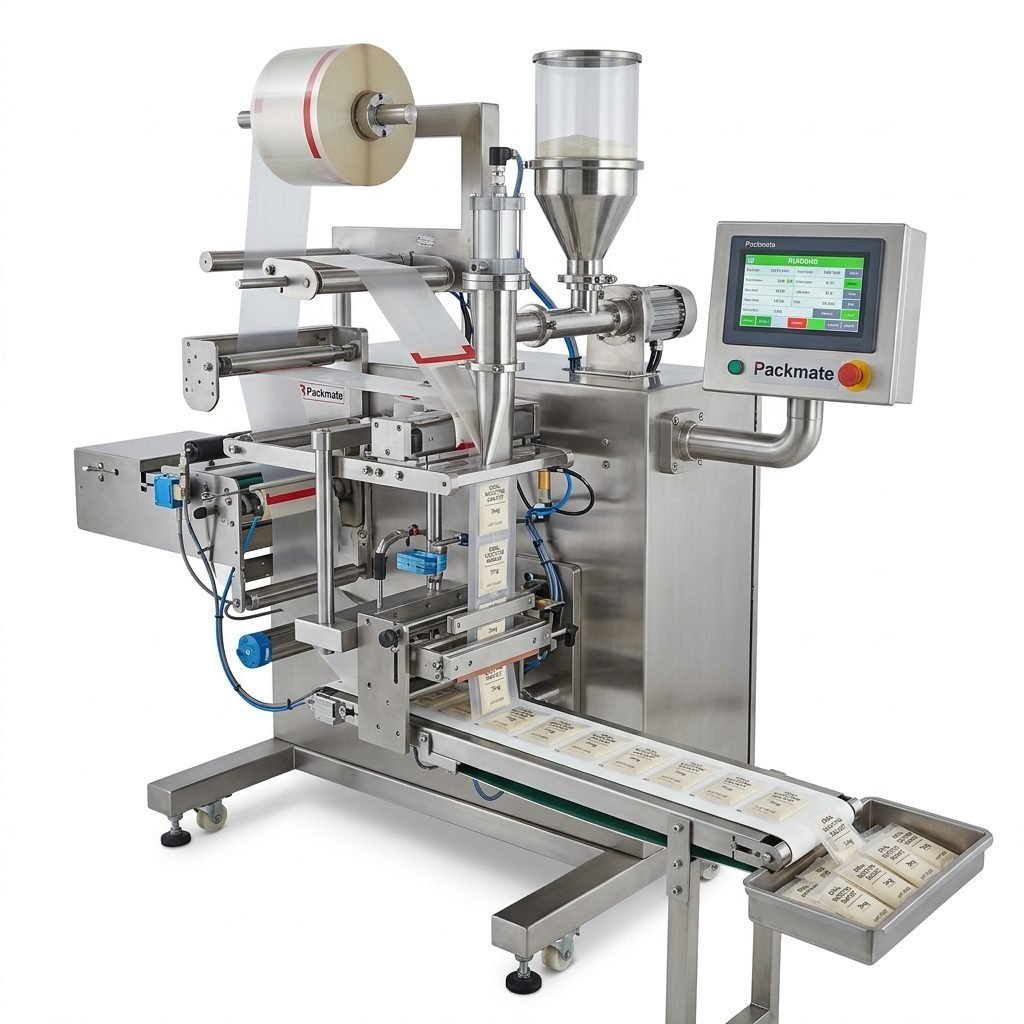
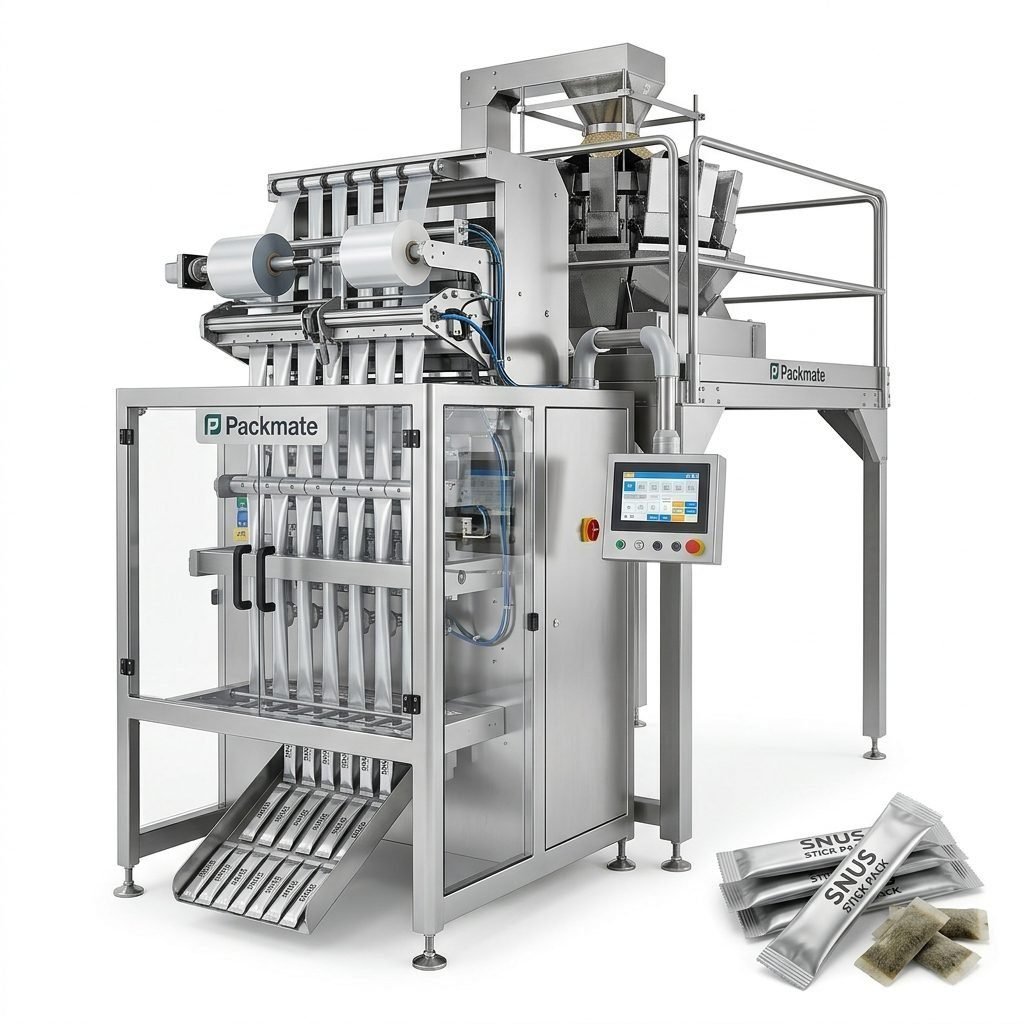
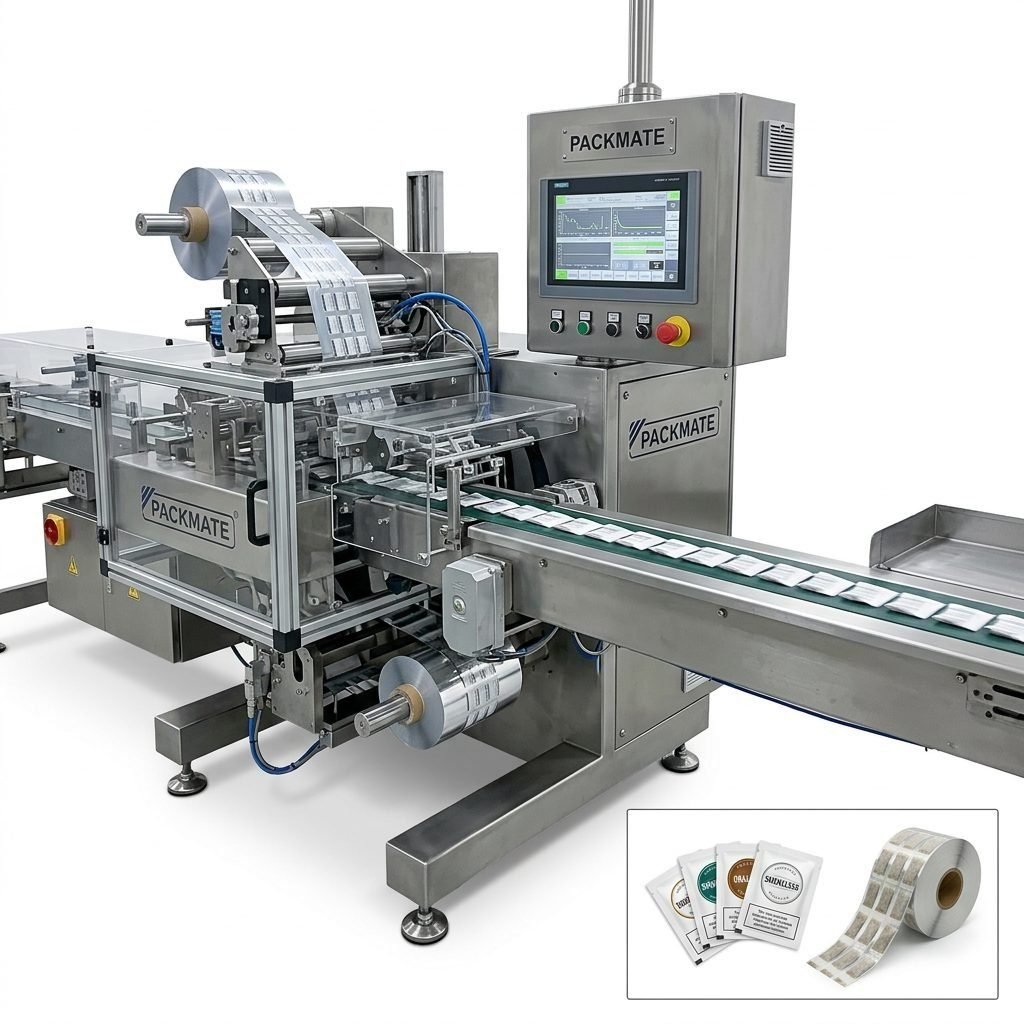
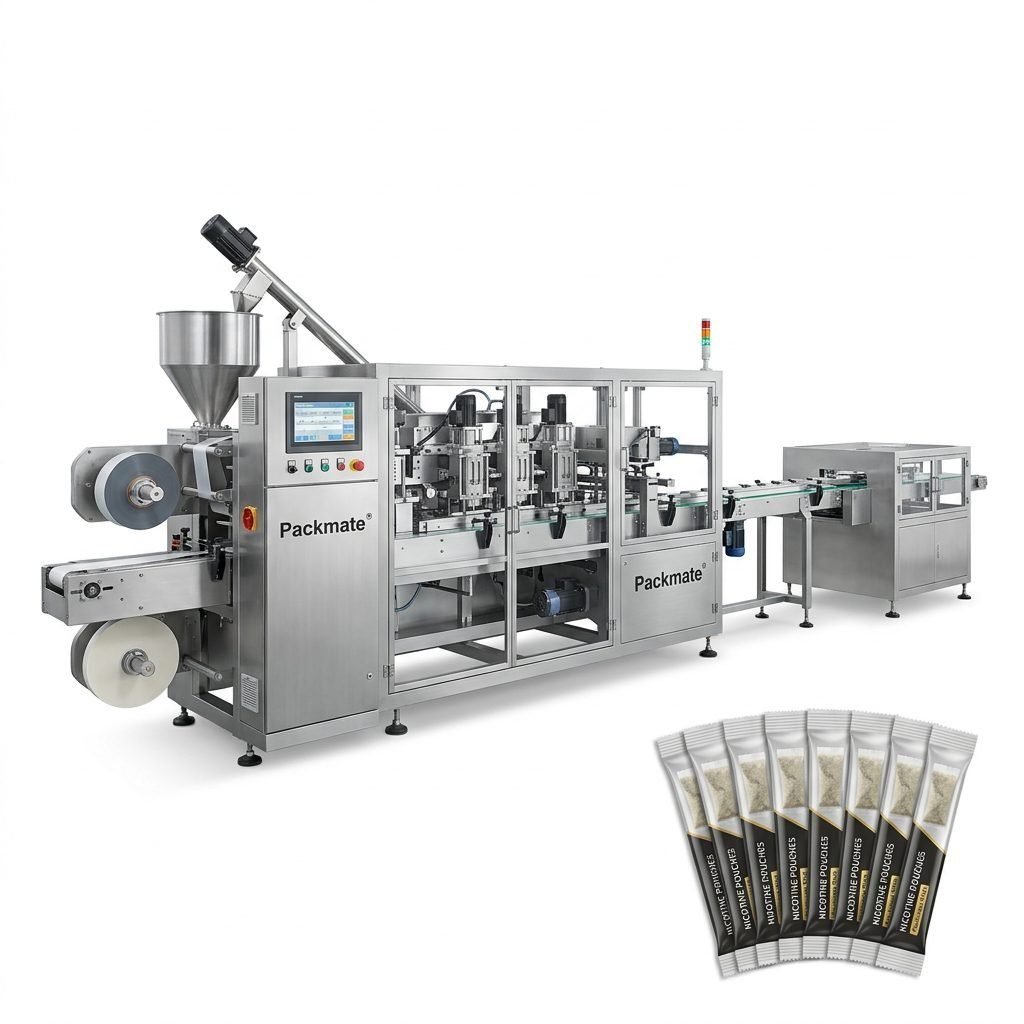
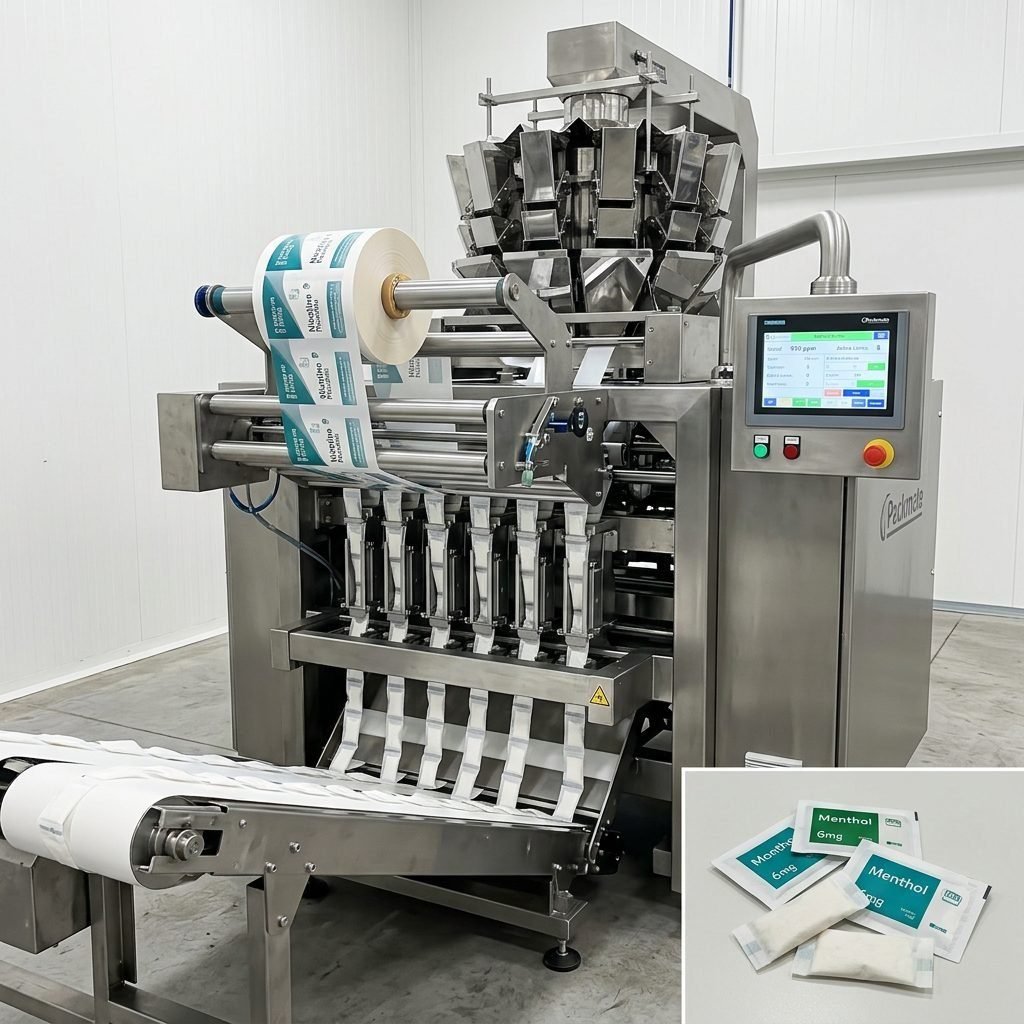
Stick pack and sachet systems are ideal for single-serve nicotine pouches and portioned snus. They deliver fast cycle times and can be paired with multi-lane feed systems for higher throughput. Learn more about available options on the Sachet & Stick Pack Machines page.
(Sachet & Stick Pack Machines)
Multi-Lane Snus & Nicotine Packaging Machines
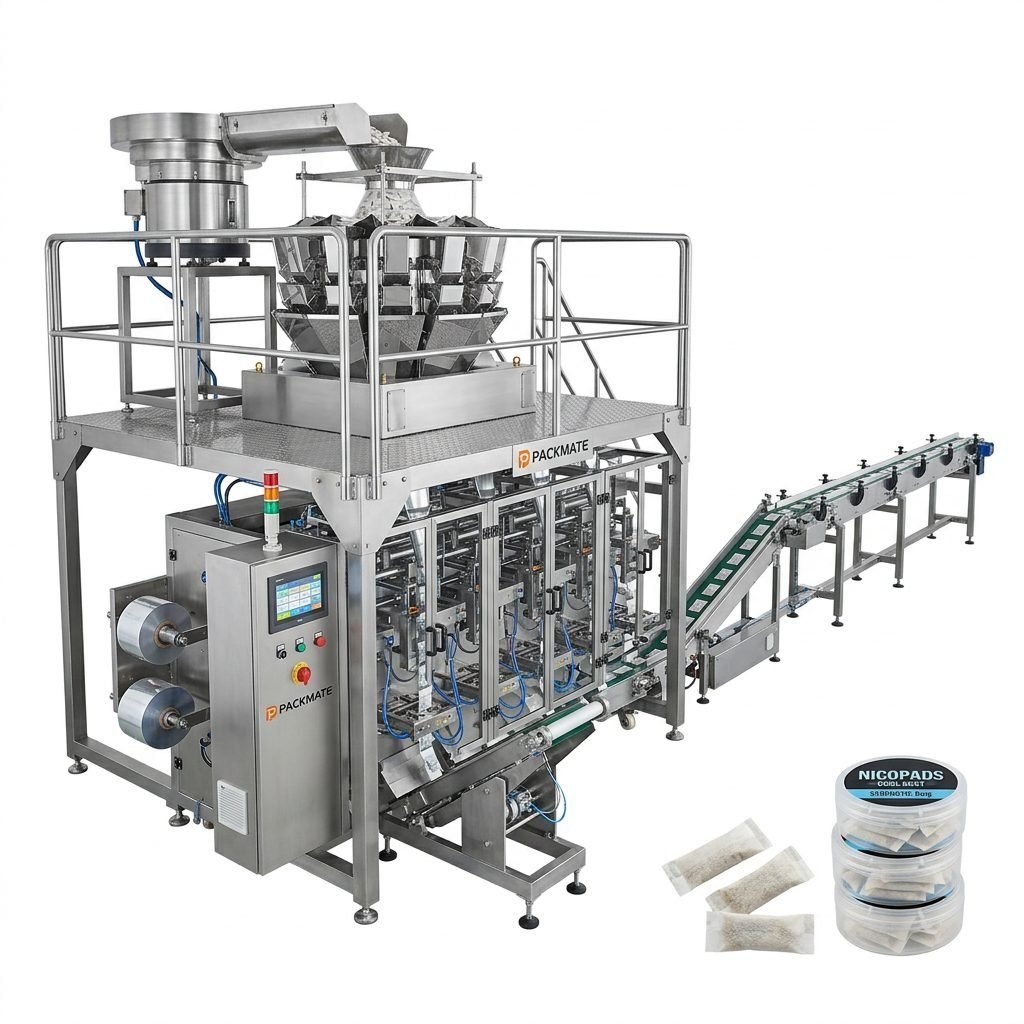
Multi-lane lines allow simultaneous production of many pouches across parallel lanes —great for medium-to-high volumes while keeping machine footprint compact. If you expect rapid growth, a multi-lane solution can scale capacity cost-effectively. Explore the family of Snus & Nicotine Packaging Machines for specifics.
(Snus & Nicotine Packaging Machines)
🔧 Auxiliary & Integration
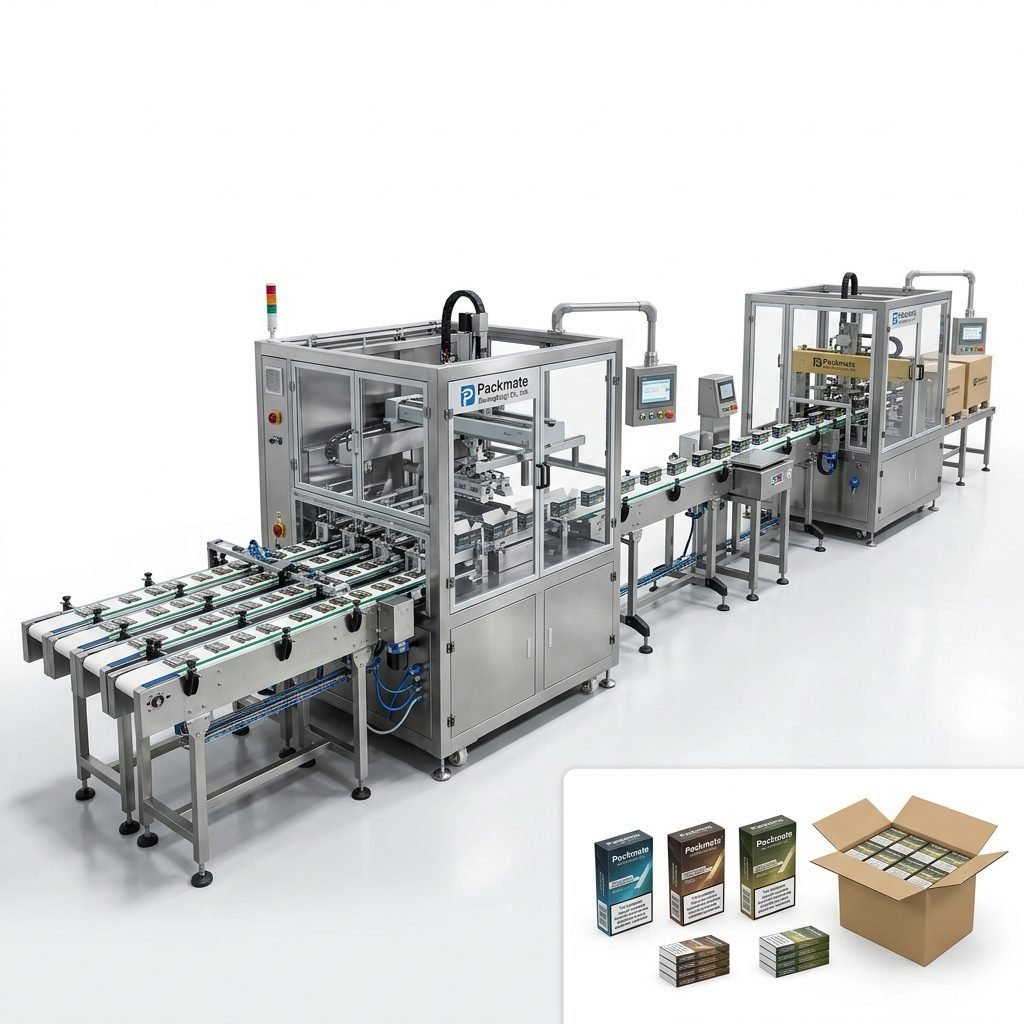
Auxiliary equipment such as feeders, labelers, and vacuum conveyors are essential for seamless automation. Check the Auxiliary Packaging Equipment options to match upstream and downstream modules.
(Auxiliary Packaging Equipment)
📈 Capacity and Throughput Planning
Accurately estimating required throughput is crucial. Consider daily production hours, target SKUs, and planned shifts. A machine rated at high nominal cycles may deliver different net output once changeovers, maintenance, and quality checks are accounted for. Use a safety margin of 15–30% above your current demand to accommodate growth and downtime.
Practical Example
If you target 100,000 pouches per week across 5 working days, calculate hourly needs and select a machine (or multi-lane set) whose effective output meets that number after factoring in changeovers. Discuss real-world throughput with a vendor and request case references similar to your configuration.
💡 Reliability, Service & Local Support in the Bahamas
Equipment uptime is as important as machine price. Evaluate supplier track record, spare parts availability, remote diagnostics, and local service partners. Packmate Snus Machine emphasizes robust after-sales support, CE/ISO compliance, and global turnkey delivery — valuable when importing complex lines into the Bahamas.
(About Packmate)
📌 Service Checklist
1) Local spare parts stocking or rapid shipping options
2) Remote troubleshooting and software updates
3) Training programs for operators and maintenance staff
4) Documented commissioning and acceptance tests
⚖️ Regulatory, Customs & Compliance Considerations for the Bahamas
The Bahamas has specific import procedures, taxes, and health product regulations. Before purchase, consult a customs broker to estimate duties and delays. For nicotine products, ensure packaging and labeling meet local health and age-restriction requirements. Request vendor documentation such as CE or ISO certificates to ease customs clearance and local approvals.
(Certificate)
💸 Cost Factors and ROI Analysis
Beyond the purchase price, include shipping, installation, electrical and air requirements, tooling and mold costs, operator training, and annual maintenance. Consider Total Cost of Ownership (TCO) over 3–5 years and compare with projected revenue from increased production, reduced waste, and labor savings.
📊 ROI Example
If a new line reduces labor by 2 operators and cuts waste by 5%, calculate payback by adding operational savings to incremental sales enabled by higher capacity.
🧰 Installation, Commissioning & Training
Installation can be turnkey or partial. A structured plan includes site readiness checks, utilities verification (power, compressed air), safety systems, and acceptance testing. Ensure the supplier provides on-site or remote commissioning and operator/maintenance training. For established suppliers like Packmate, commissioning packages and long-term service contracts are available to reduce start-up risk.
(Service)
📋 Practical Selection Checklist
Use this checklist when comparing suppliers and models:
• Confirm machine compatibility with your pouch material and sealing method
• Verify actual tested throughput for your SKU (not just nominal speed)
• Ask for references or case studies in similar markets
• Validate spare parts lead time and localization options
• Ensure clear warranty terms and preventative maintenance schedules
🔬 Quality & Testing Protocols
A reliable machine vendor will supply test reports showing fill accuracy, seal strength, and packaging integrity. During acceptance testing, run your actual product to verify results. Insist on documented test cycles and measurement criteria to avoid surprises after installation.
📎 References & Further Reading
Explore product families and turnkey lines that match snus production needs:
Filling & Packaging Lines |
Weighing & Packaging Systems |
Case Studies
📞 Contact & Next Steps
Reach out to suppliers with a detailed specification sheet and request an on-site or virtual demonstration. For inquiries about custom snus production lines and support in the Bahamas, visit the Packmate contact page.
(Contact Us)
Final Recommendations
Choose a machine that balances current needs and future capacity, validates real-world performance with your product, and comes with robust after-sales support. Prioritize multi-lane solutions for faster scale-up, request detailed acceptance tests, and confirm supply chain logistics to the Bahamas. A strategic investment in the right packaging line will reduce per-unit cost, improve product consistency, and support market expansion.
Common Questions
Q1: What machine type is best for low-volume artisan snus producers?
A1: For small runs, a single-lane sachet or benchtop filler with manual loading may be most economical. As demand grows, transition to multi-lane automated lines.
Q2: How do I estimate spare parts inventory for a production line?
A2: Start with critical wear components (seals, belts, sensors) and 3–6 months of common spares. Work with the supplier to tailor the spare parts kit to your expected runtime and service intervals.
Q3: How long does installation and commissioning usually take?
A3: Turnkey installation for a medium line ranges from a few days to several weeks depending on site readiness, utilities, and complexity. Plan for training time in addition to mechanical setup.
Q4: Are there recommended suppliers with proven snus packaging experience?
A4: Choose vendors with decades of packaging engineering experience, CE/ISO certification, and documented global cases. Packmate Snus Machine is one such supplier with specialized snus lines and global turnkey solutions.
(About Packmate)
Q5: How can I verify machine performance before purchase?
A5: Request product-specific trial runs, video demonstrations, and on-site references. Insist on documented acceptance criteria that match your production requirements to ensure the machine meets promised performance.